ON THE STALLED PROCESS OF DEMOCRATIZATION IN PUNTLAND

WDM EDITORIAL

Listening to the on-going debates on DEMOCRATIZATION process in Puntland, one finds misunderstanding and confusion among debaters. There is a mixed-up between holding municipal elections to establish local district councils, and general election for representatives of the House of Parliament and subsequent election of Puntland President. Whose responsibility is it to clear the confusion?

It is the responsibility of the government to campaign for and send out clear message that the job descriptions of TPEC (Temporary Puntland Election Commission) are limited to holding elections of District Councils only. The electoral data or registrations so produced in local elections could be used for the next parliament and presidential elections, given available time and necessary constitutional reforms done. Local elections are also designed to make room and democratic space for viable political parties based on their popular support to compete in subsequent elections.

Direct Parliament and Presidential elections may require certain revisions of Puntland Constitution. But holding local elections are overdue. It is Puntland Government which is sitting on the issue and creating obstacles and confusion in the way of moving the process forward. The administration is projecting fake public image that they are committed to holding the elections. Some observers believe that the authorities have hidden agenda in prolonging the debate with the intention of attempting to seek extension of its five-year mandate, a dangerous proposition based on the history of the State.

President Said Abdullahi Deni and his administration must come out clean on Puntland DEMOCRATIZATION process. They should send unequivocal message that they are serious on the issue and take all the necessary measures, actions and commit all resources by mobilising local and international assistance to complete the remaining elections of the local councils.

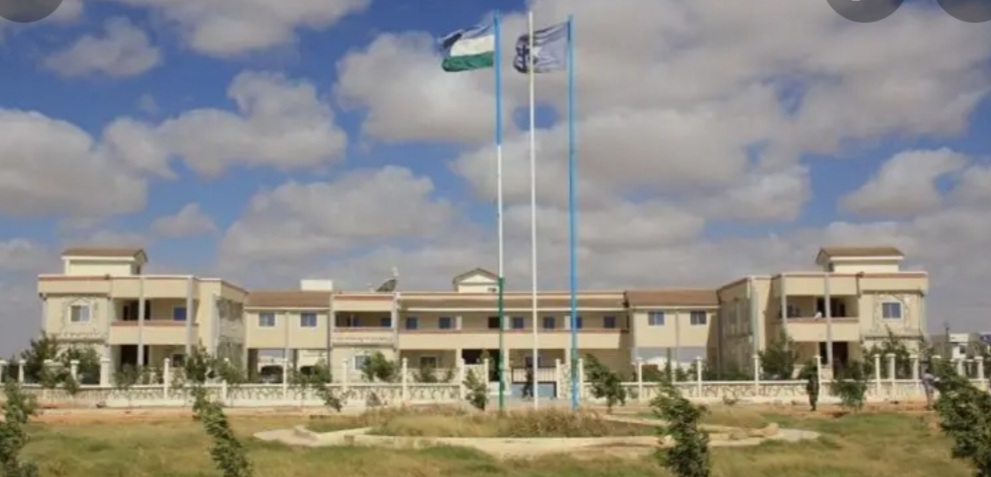
THE WHITE HALL OF PUNTLAND STATE

Puntland Government Quarters

That entire location to the Northern hills of Garowe City as the state property and future offices of Puntland Government was the plan and design by the first administration. Former President Faroole, who started constructing it, was then a minister in the 2nd half of that term. We even brought Indian civil engineers and architectors to do the first sketches. Late Mohamed Abshir Waldo helped us in that regard. The idea was born at conclusion of the Constitutional Congress at 54th Military Garrison Campound off Garowe town and formation of Puntland Government in 1998. It was clear then that Garowe was a crowded village and government offices wouldn’t fit into it.

Further, we knew that, in case of civil disturbances and public demonstrations, government premises would not be safe in overcrowded and tightly constructed Garowe. The late President, Abdullahi Yusuf, being a military man, often emphasized this matter. The Indians Mr Waldo brought for the purpose were masons from Nairobi.

The hills are now the site of Puntland Presidency and various government ministries and State and International Agencies.

TRIALS AND ERRORS IN PUNTLAND GOVERNANCE

A review of last night’s political debate called for by President Said Abdullahi for a chit-chat at Presidency ensued today between participants over a teatable conversation at a hotel lobby. Since some of us weren’t privy to the substance of the overnight’s debate, we were good listeners to those who wanted to compare notes among themselves and didn’t mind our presence at table. The issue was Puntland democratization and how to better manage traditional tribal mechanism. That event at Presidency is one of President Deni’s rarest occasions he was improvising lately, after many trials and errors in governing Puntland from the perspective of one man show, as other state institutions are weakened almost beyond repair.

Some of us, who casually had happened to be around at that hotel table, tried to contribute to the interesting discussion. We were looked at as outsiders since we weren’t privy to the last night’s prestigious auspice granted by the President to a selected group of Puntland VIPs not considered out of favor from the Presidency. Some of the participants in last night’s get-together with the President came from Somali Diaspora communities. Although they were in deep learning curve on Puntland governance and history of the young Federal Member State, they were eager to offer new ideas to the debate on Puntland socio-economic developments, we learned.

As our round hotel table discussion developed further, we came to debate on the notion of democratization of Puntland system of governance and how to manage the disadvantages of tribal system in the State and Somalia, in general. The issue is management of clans in a democratic society or a tribal society desirous of establishing a modern democratic society as in the case of Puntland. One of us asked the question: “In a country of laws, who is sovereign or supreme, traditional leadership or the rule of law by the state’s institutions?” This fundamental inquiry sparked off fierce debate at table. Although there was no common understanding reached here, the consensus was that successive Puntland administrations were to blame on the state of affairs of Puntland governance. Political leaders had failed Puntland, a situation that led to stagnation of the state in all sctors.

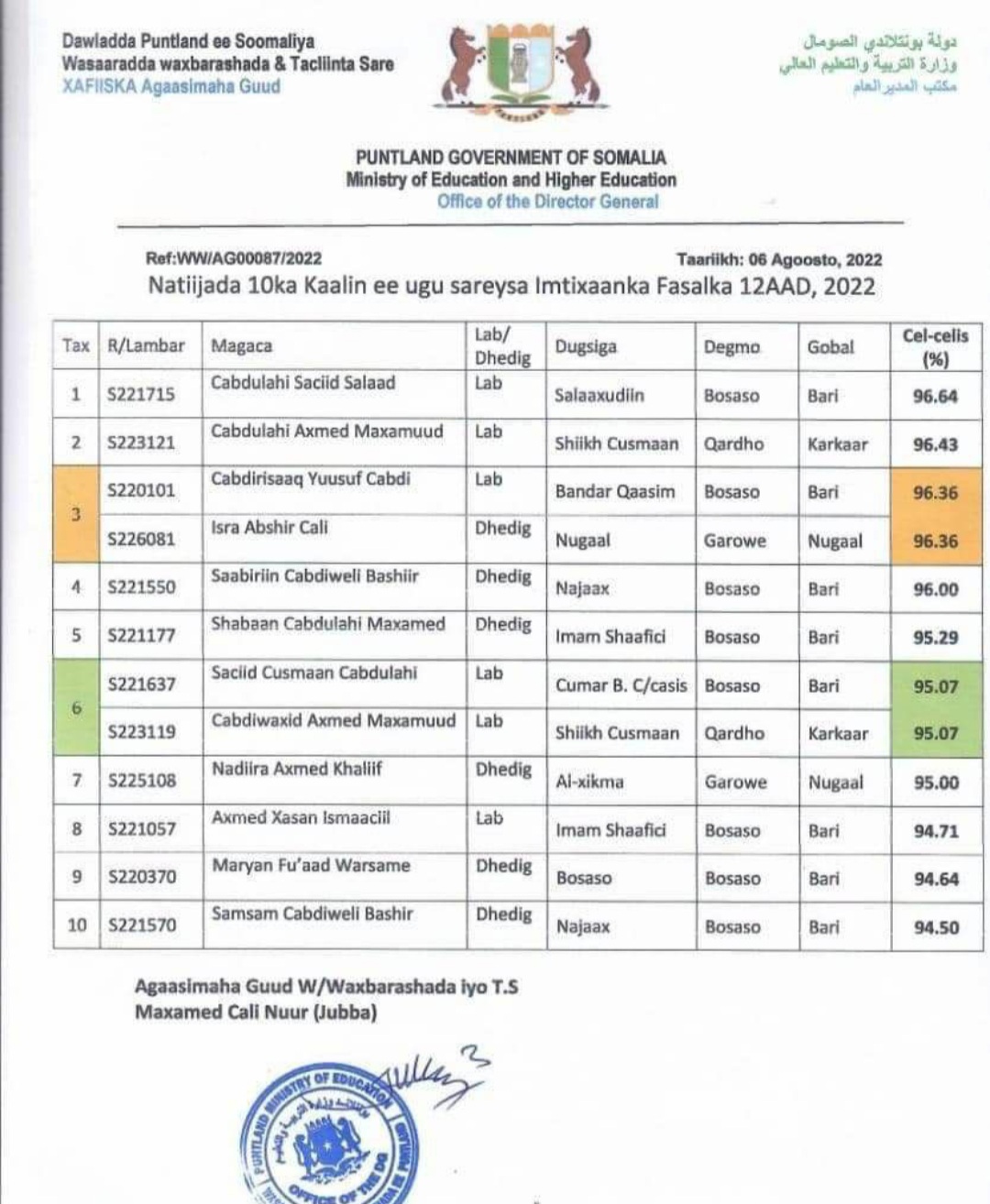
PUNTLAND LEFT BEHIND IN EDUCATION AND HEALTH SERVICES

WDM EDITORIAL

In an early article from this blog, https://ismailwarsame.blog/2022/07/31/the-bleak-situation-of-readership-in-somalia/, we articulated that people who don’t read isn’t only literally backward, but it is also safe to say that they will have no future because they will not only lose their freedoms, but also their country. Tell me any county of nomadic population, which had established a strong nation. You won’t find one. Why? Besides their backward ways of existence, they don’t go to school to learn new and modern ways to make societal progress?

Although Puntland education was lagging behind Mogadishu and Somaliland, we hear these days that even textbooks for students whose primary and secondary schools were historically struggling to stay open, are beyond reach of already poor purchasing power of these students and families. Certain social media and radio broadcasts are reporting stress signals and interviews from parents on the issue. Some even speculate that mercyless and politically connected Puntland merchants are exploiting the situation with sales offer of more than fifty US dollars a class. Such prizes even in rich countries are not acceptable.This is worse than loanshark business, taking advantage of poor and low income population. Health sector fares no better either with Puntland sick traveling long distances to Hargeisa, Mogadishu and beyond.

Puntland Government must step in to address the alarming state of affairs with education, health and other important social services sectors.

Warsame Digital Media ANNUAL SUBSCRIPTION FEE

Dear Subscribers,

Kindly send us WDM Annual subscription Fee of US$37 to Sahal Account at +252 90 703 4081 or MyCash at 71 681 4371, Garowe, Puntland. or/and, ECVPLUS at +252 61 588 388, Mogadishu, Somalia.

DEMOCRATIZATION STALLED AGAIN IN PUNTLAND

Like typical Puntland administration behavior at end of its term in office, the current government has run out of steam in pushing the agenda forward. Some politically naive persons or interest groups are propagating the notion that there is no enough time left to elect remaining local councils and have them in place before next parliament and presidential elections, not understanding a job half done is better than not doing anything at all. Members of Puntland House of Representatives fare no better than the so-called “AARAN JAAN” spin doctors in that regard, on the top of being a rubber-stamp institution for decades.

Since there is no long term vision by each of successive Puntland administrations, important public tasks are left for next administrations or generations to attend, thus becoming a vicious cycle not to initiate and administer any meaningful programs towards Puntland future governance. The State never laid down and worked out any significant public policy. It operates on ad hoc fashion as its modus operandi. Residents get accustomed to political thinking in the space of one term or one administration- for them, tomorrow doesn’t exist. Starting programs to be completed by the next administration isn’t in their books. But, the worse of all is the fact that authorities of the day see only the problems, not the opportunities. Most are likely to reason with you why this job can’t be done because of these impediments. It is people who love to raise their hands up in the air in surrender when they are challenged. They don’t get the world moves on with or without them.

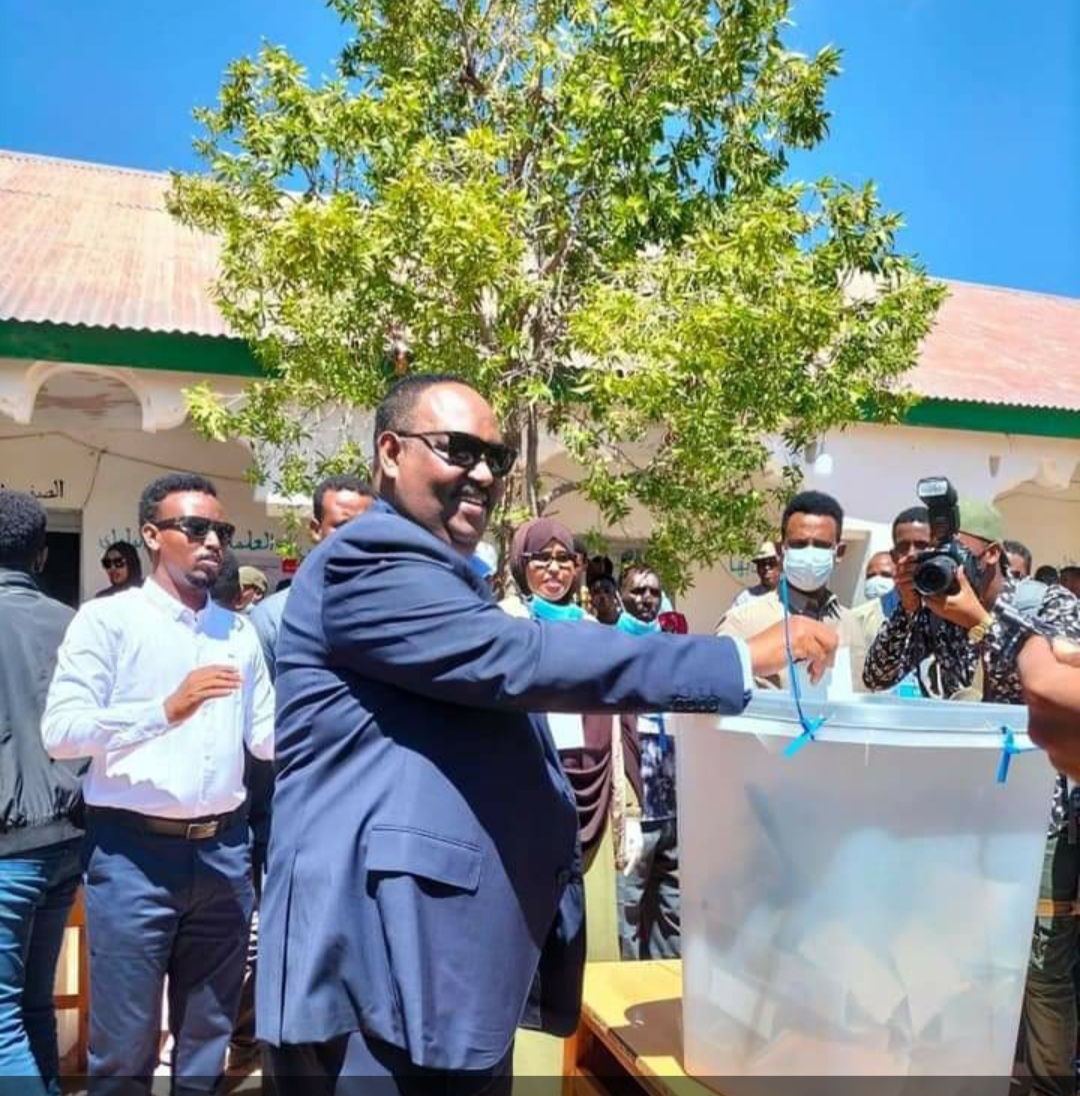
People of the State of Puntland had observed how it was easy to hold municipal elections in Uffayn, Qardho and Eyl districts just recently. There aren’t any excuses not to hold similar elections in other districts of the State. Negative thinking on the part of interest groups and the government of President Said Abdullahi Deni are now the real obstacles to democratization in Puntland State of Somalia.

HAPPY PUNTLAND 24TH ANNIVERSARY, AUGUST 1ST! CONGRATULATIONS!

SECURITY SECTOR REFORM IN PUNTLAND AT FAULT

Today I had the chance of interacting with former officers of Puntland paramilitary forces, the Drawiish, and police. The issue involved security sector reform bragged about by current Puntland Administration. Experienced officers acknowledged that some training and screening of rank-and-file only to satisfy payroll requirements didn’t produce able officers and commanders to lead the forces. They said that it was the core problem that Puntland forces couldn’t pacify the Port-city of Bosaso in recent confrontations and violence. Officers accepted the military doctrine that the combination of good training, effective command and leadership, logistics and public support are all that count for success. They all acknowledged that, in recent clashes between opposing forces in Bosaso, there was poor command and absence of command structure that brought about the near defeat of government forces still loyal to the current Administration.

It is also known that the Chief-of-Staff of Puntland Drawiish Forces is a close relative of the mutinying elements of the armed forces, another factor for the goverment military failure in Bosaso. He couldn’t lead and command counter-offensive against his own kinship. All accepted the fact that Puntland Security Sector reform, one of the Achelles heels of the State historically, didn’t go far enough with regards to command efficiency and required preparation of Cadet officers for military leadership.

The debating group bursted into load laughter when an officer joked: “Were President Deni belonged to Al-Itihad Al-Islami, instead of Al-Islah Sect, he could have understood military expertise better. It was hilarious.

SEARCH FOR POTENTIAL RESOLUTION TO BOSASO MILITARY STANDOFF

There was a debate among friends last night over tea on how to resolve the impending confrontation and potential for violence in Puntland Port-city of Bosaso, a dangerous situation that went out of control twice already. The issue here involves two government forces, one acting as renegade with the blessings of traditional elders in Bari Region opposed to the rule of President Said Abdullahi Deni. Since titled elders in Puntland are divided and bickering along political lines due to prolonged absence of democratization in the State, there is diminishing returns to find compromise in conflict resolution.

Observers believe that President Deni and elders are on collusion course as all possibilities of negotiated settlement is unlikely to occur, given the environment of mistrust between two opposing centers now posed for potential outbreak of violence in a port-city constituting the backbone of the economy and commercial activities of Puntland State of Somalia.

Other colleagues in the debate, Warsame Digital Media WDM, among them, suggest to convene an all inclusive congress to deliberate on what went wrong in stability, good governance and progress of the State. Despite the pressing need to hold such important gathering, Puntland Administration seems not to understand the gravity of the time-bomb that could explode anytime with far-reaching consequences for Puntland self-government. The circumstance resembles a scenario when an English man once said “Wherever God builds a house of prayer, the devil erects a chapel there, and it has been found upon examination that the devil has the biggest congregation”. There are always elements within the society engaged in ill-wish for the people of Puntland. Let us all think about finding lasting solution to this unfortunate political and security situation.

PUNTLAND IS ROCKING

BREAKING NEWS

There are five things that make the residents of Puntland State troubled now:

  1. Severe drought, following failure of two consecutive seasons;
  2. Unprecedented inflation. Skyrocketing prices beyond the reach of ordinary people;
  3. Impending violence and armed confrontation to follow current military standoff in the Port-city of Bosaso. Keen observators notice slow preparations for war to resolve leadership contest between Puntland State leadership, particularly the President, on one side, and the revolt and mutiny led by PSF/Boqor Burhan of Bari Region, on the other. Each side sees no alternative to fighting it out, an unprecedented development, given the fact that Puntland regions were famous for traditional mechanism for conflict resolution. This is caused by the fact that neither side recognizes the other for its leadership role. Hence, many residents see no way out of Bosaso standoff, with increased likelihood of violence, displacement and great harm to Puntland peace and Stability ;
  4. Stalled municipal elections, following the win of opposition parties in the poll in all three pilot elections in the districts of Uffayn, Qardho and Eyl in a back-to-back setting with the Federal Elections. This has been further exacerbated by the defeat of Puntland President, Said Abdullahi Deni, in the Federal Presidential Race in Mogadishu. Stalled elections in Puntland is another dangerous layer of instability.
  5. Titled traditional elders have been steadily losing their moral authority as they melted into political sides at all levels of Somali administrations – thus the demise of traditional SELF-GOVERNMENT known for this part of Somalia.

Puntland House of Representatives is now showing signs of life to challenge the Executive Branch after two decades of slumber. Observers say it is too little too late. Nevertheless, it is never too late to save what remains of Puntland. Good luck!

PUNTLAND HOUSE OF REPRESENTATIVES: IT IS NEVER TOO LATE TO DEFY RUBBER-STAMP STATUS

Listen to the New Debate Approach on accountability in Puntland Affairs:

https://fb.watch/et1V9o0QHS/

WHO IS RESPONSIBLE FOR QUALITY CONTROL IN PUNTLAND? TAYO-DHAWRKA?

Recently I bought a few cans of green beans from a seemingly premium grocery shop in Garowe. Shortly after, I removed the label paper from one of the cans bought to find out the container is covered by rust. You can guess it was dangerous goods not even fit for animal consumption.

I do recall that Puntland State had had all laws in place, mostly issued by the First House of Representatives from 1998. Moreover, Puntland Constitution stipulates that, in the case that there were no particular Puntland legislation, the State draws it from 1960 Somali Constitution.

Under Puntland municipality laws, expired and banned products shouldn’t be on sale. Markets, shops, groceries and restaurants are subject to regular checks for violations. These are all drawn from public policy, evaluation and implementation. Does Puntland have Public policy?

Under existing Puntland laws, there are huge industrial products banned to import through ports of entry. A plastic bag is among them, for example. These laws are collecting dust in the shelves of Puntland public institutions. One cannot export breeding herds as well as sick ones to protect our livestock markets. The list of banned import/exports is long and exhaustive. They require enforcement and seriousness to protect public health. Sometimes, one is tempted to ask the question: Whose country is this? Remember, Somali State had failed in 1991 when no one could claim it during the reign of General Siyad Barre. Every national used to wake up in the morning and hit the road to steal, loot and bribe for their own selfish gains until the whole public system had collapsed. Have we learned anything?

[This article was updated after posting].

BOSASO REPORT

According to residents and eyewitness reports, the Red Sea Port City of Bosaso is coping with uneasy peace as two opposing Puntland forces are facing each other, each one monitoring the other as who would start shooting first. In the mix, are Bari clans and subclans getting ready for the next clashes by stockpiling arms and ammunition. Certain quarters of the Port City are no go at night. Regional authorities are worried and their security resources are no match with the arsenal of the confronting forces there. City commercial activities are greatly impacted and there is capital flight to Hargeisa and Mogadishu. Consumer confidence is at lowest level amid insecurity, worsened by high inflation on basic goods and energy.

Puntland Government shows no signs of urgency to seriously address and fundamentally resolve the impendimg security crisises in Bosaso and Galkayo. It looks that the recent Federal Elections had taken life and initiative out of current Puntland political leadership. The situation is worsened by confusion and news blackouts. Nobody knows what is happening in Puntland. Leadership is reportedly isolated. Titled traditional elders are either compromised, absent from the country or part of the insecurity in Bari and Mudugh.

Barring effective government intervention, Puntland stability enjoyed for a long time in the past could be in jeopardy.

Watch “Hal qof iyo hal cod” on YouTube

Watch “Galkayo oo amni darro lasoo daristay” on YouTube

Watch “Call for congress for Renewal of Puntland” on YouTube

Watch “Violence in Bosaso, Puntland, Somalia” on YouTube

BOSASO DID IT AGAIN

BREAKING NEWS

Same forces are involved in this violence. External political forces are added to the mix and initiated this confrontation. The State President is absent from the scene of action. Puntland officials were caught by surprise, they reported- no prior information was available to them on the trip of a Federal delegation to Bosaso. At least 16 persons have lost their lives in the crossfire, according to preliminary reports. Bari traditional elders complain about turning away airborne federal officials from Bosaso Airport and aid handouts they were carrying, instead of lives lost in this renewed violence in Bosaso. Nobody is talking about the existence of rogue Puntland forces there. Puntland State political uncertainty continues. This looks like waning days of Garowe Regime. Inside observers are worried and extremely concerned about Puntland Stability.

[This news was updated since posting].

POLITICAL UNCERTAINTY SETS IN IN PUNTLAND

Elections have consequences, and this is true to Puntland State as well. The defeat of President Said Abdullahi Deni in the recent Somalia’s presidential race in Mogadishu had impacted negatively not only on the president, but also on the entire Puntland administration and political system as a whole, including the planned one person one vote forecasts, whereby there is diminished political will to go ahead despite the pronouncements that he was committed to implementing the project of holding municipality elections.

Although President Deni has never been accused of being open to the general public and even to members of his own administration in his closed poor policy of running Puntland affairs, he is now more isolated than ever before. Nobody knows what he has been doing lately, other than he was often traveling overseas solo without any prior public announcement and any attempt to justify his over-rated trips to foreign cuntries, in particular, to Dubai and Nairobi.

Members of Puntland Cabinet are as disillusioned as the general public.The representatives of the House of Puntland Parliament are restless nowadays, only to reject the submitted list of the composition of Puntland Supreme Court by the President. The list was intended to fill in a long-time existing vacuum in Puntland judiciary. The President has used veto, however, to override the House Resolution by re-submitting the same list to the House to reconsider it at next session.

Political opposition in Puntland is slowly getting assertive following the defeat of Deni in the Federal elections, including the betrayal by his own hand-picked and funded MPs from Puntland and Jubaland.

There is anxiety and political uncertainty now in the State that worries everyone. To get out of this dilemma, Puntland political elites must get serious to embark upon political path of democratization and general elections as the only remaining option to govern.

[This article has been updated since posting.]

SOMALIS CARE MORE ABOUT INTER-CLAN MARRIAGES THAN DEFENDING THEIR OWN CLAN TERRITORIES

The wedding ceremony for Ms Suban Hussein Khalif Haji Jama Attosh and Mr Qalib Barud, hailing from Majertaine and Dhulbahante respectively was held in Beerta Barako at 22 Km off Garowe City yesterday afternoon. Eminent traditional leaders from both Harti subclans were present to give their blessings to this important traditional event. A dozen of Puntland Cabinet ministers were invited, among many prominent personalities in the crowd. Someone was wondering why Puntland President wasn’t there too.

This event attended by people of diverse political opinions and travelling from different regions and even from continents makes one wonder why they couldn’t put their acts together to liberate and unify Puntland regions, some of which are still occupied forcefully by Somaliland Administration in Hargeisa.

Yesterday’s spirit of union in attending this family event is a clear demonstration that Somalis care more about their family relations in inter-clan marriages than defending their own territories and securing their freedoms. Generally, this could be true for Somali clans, who raise livestock and inhabit in semi-desert, keen to forge ties with other clans because of scarcity of water and grazing areas for their herds, just in case these relationships would bring benefits when desperately needed.

Certainly, yesterday’s wedding ceremony for Suban and Qalib was well attended.

Congratulations!

WDM EDITORIAL: POLITICAL DISFUNCTION IN PUNTLAND

Puntland Presidency is in disarray. Appointment of officials by the Vice President and refusal of the President to endorse it poses a direct security threat of destabilization of the State by own leadership. These appointments are not in the best interests of both the President and Vice President. The President wants to campaign in Mogadishu for Somalia’s Presidency with a peace of mind, and the Vice President would be better off in inheriting a functioning administration of Puntland.

Right now, neither of them is leading a sound policy for the people of Puntland. They seem to be playing a game of drones among themselves. This is ridiculous and laughable for men of such advanced age to behave like school skids, oblivious to the heavy responsibilities entrusted in them. They truly failed Puntland.

Stop the baby game.

President Deni
Vice President Ahmed Elmi Osman (Kraash)

BOSASO INCIDENT: BREAKING NEWS

Digniin Hore

UNTOLD FACTS OF PUNTLAND HISTORY

  1. Puntland Security Force (PSF) isn’t military units for a family, but Puntland State anti-terrorist forces.
  2. Sons of late Osman Diyaano had inherited a golden spoon in their mouth, knowing nothing about the tremendous efforts and struggle to secure USA assistance for the creation of PSF in a provisional state not recognised by any state or government in the world.
  3. Those opposing Diyaano sons now, and who are currently in power in Puntland State were then against the stability of Northeast Regions and foundation of Puntland State, some of its current ministers even participated in extemist violence against the people of Northeast Regions. They were under the spell and deranged mind of terrorist Hassan Dahir Aweys.
  4. On Faroole, Abdiweli Gaas and Omar Abdirashid: a) Faroole wanted to destroy the Founding Congresses of Puntland in 1998, and when failed, he had fled to Australia. There are still multiple eyewitnesses in Garowe now of his desperate campaigns and attempts to foil Puntland Constitutional Congress then.

b) Gaas have been insulting the founding leaders of Puntland State by dismissing them as alcoholics.

c) Omar Abdirashid was an unknown quantity until recently, only to exploit the brand name of his late father, particularly from among sub-clans of Abgaal and Sa’ad Habargidir.

This is the hidden political history of Puntland State to fresh up your minds for context of the ongoing Bosaso military standoff.

Maxay tahay ujeedada shaqaaqada Bosaso?

WDM BREAKING EDITORIAL

A ceasefire announced in Bosaso, Puntland, on military standoff between Puntland forces must be made permanent. A negotiated settlement must include transfer of military hardware and personnel to Puntland Government. Puntland current Government must show flexibility and restraint in handling the issue. It isn’t about my way or the highway. Bosaso residents impacted by the armed violence must get help in re-building their lives.

Caught in a Political Crossfire, U.S.-Trained Somali Commandos Suspend Fight Against Islamic State.

With American forces gone, a skirmish breaks out over one of Somalia’s elite counterterrorism units.

By

Michael M. Phillips
World Street Journal.

Dec. 10, 2021 9:08 am ET

NAIROBI—A Somali commando unit trained by Central Intelligence Agency operatives and U.S. Navy SEALs has become so entangled in local political power struggles that it has ceased operations against the Islamist militants it was created to fight.

Until last year, the 600-strong Puntland Security Force had reported directly to U.S. forces and was largely independent of Somali government control. But now the unit, the main force combating Islamic State’s Somali affiliate, ISIS-Somalia, has abandoned the front lines and returned to its headquarters in the northeastern port of Bosaso, overlooking the Gulf of Aden, according to U.S. officials and Somalis familiar with the situation.

The troops have dug defensive positions around their headquarters building in a standoff with forces loyal to the state president of Puntland, a semiautonomous region, who is trying to bring the unit under his control.

The unit has also halted missions against al-Shabaab, al Qaeda’s local franchise and the most powerful insurgent group in Somalia.

“Already they have vacated all of their front-line positions, and ISIS and al-Shabaab have free rein to move around and expand—nobody’s stopping them,” said Mohamed Mubarak, a Somali political analyst and executive director of an anticorruption charity, marqaati.
U.S. military and diplomatic officials are worried about the impasse, which undermines the post-Sept. 11 American strategy of enlisting elite local forces to fight extremist groups in Africa, the Mideast, South Asia and elsewhere around the world.

“One of our key concerns for this kind of intragovernmental fight is the ability of ISIS-Somalia, especially in Puntland, and al-Shabaab across the country, to generate forces and expand operations,” said a U.S. official familiar with the situation.
Somalia is one of the oldest fronts in the sprawling U.S. campaign against Islamist militants that followed the Sept. 11 hijackings.

The CIA began building up the Puntland force in 2002, amid concerns that al Qaeda elements were operating in East Africa.
President George W. Bush deployed a small number of U.S. troops to Somalia in 2007 to combat the rise of al-Shabaab. President Barack Obama ordered drone strikes against the group’s leaders. Initially, President Donald Trump intensified airstrikes and built the U.S. presence in the country to 500 Navy SEALs, Army Green Berets, Marine Corps Raiders and other troops. But the month before he left office, Mr. Trump withdrew American forces and relocated them to neighboring bases in Djibouti and Kenya.

U.S. commandos make periodic trips into Somalia to train local forces.
The Pentagon has been reviewing U.S. troop deployments around the world for almost a year. President Biden has yet to announce whether he will send American forces back into Somalia on a permanent basis.

The U.S. alliance with the unit that became the Puntland Security Force began shortly after the Sept. 11 attacks. At first, CIA agents paid and trained the fighters—“two Americans and a bag of cash,” in the words of one Puntland Security Force veteran. About a decade ago, Navy SEALs took over the mission of training and supervising the unit.

The Americans taught combat driving, sniper, reconnaissance and other skills. The U.S. sent FBI agents to teach crime-scene analysis.

U.S. commanders considered the Puntland Security Force one of its most reliable and effective allies in a chaotic country riven along clan, political, regional and ideological fissures.
“This is one of the few professional forces in all of Somalia,” said Mr. Mubarak.

After the U.S. withdrawal last year, however, the unit’s status was ambiguous. It was no longer an American asset, but it didn’t exactly belong to the central government in Mogadishu or the state government in Puntland either.

The Americans took away the unit’s U.S.-made rifles, sniper rifles, machine guns and night-vision gear, and left it with U.S.-supplied weapons from the former Eastern Bloc countries, according to the Puntland Security Force veteran.

“They armed. They equipped. They trained heavily. And they left,” he said. “Since they left it’s been like a vacuum.”

In some ways the unit resembles a family business. The majority of soldiers are from the same Osman Mohamud sub-clan. The original commander gave way to his son, who in turn gave way to his brother, the latest commander, Brig. Gen. Mohamud Osman, known by the nickname Diyaano.

After the U.S. pulled its support, the family picked up some of the unit’s expenses, the unit veteran said.

Unlike some other military outfits in Somalia, the Puntland Security Force largely steered clear of politics and focused on fighting Islamic State and al-Shabaab.

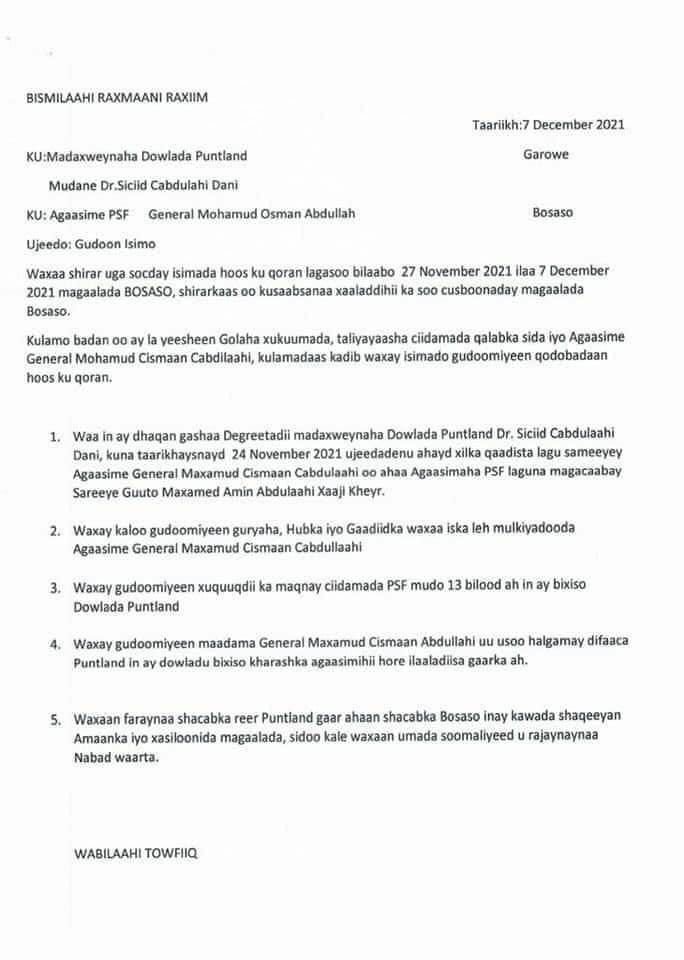
That changed, however, on Nov. 24, when Said Abdullahi Deni, the president of Puntland state, issued a decree dismissing Gen. Mohamud. Mr. Deni named an ally as the new commander, a man unpopular in the ranks of the Puntland Defense Force, according to the unit veteran.
Gen. Mohamud refused to surrender his command. On Nov. 26 the Puntland Security Force issued a statement suggesting that the soldiers didn’t trust the man Mr. Deni wanted to put in charge. “We will continue to defend our people and our land,” the statement said.
Through an intermediary, Gen. Mohamud declined to be interviewed.

Mr. Deni flooded the streets with troops loyal to him. “Deni brought in a lot of firepower to Bosaso to threaten them basically,” said Mr. Mubarak.

Asked for comment, Mr. Deni’s spokesman referred The Wall Street Journal to the president’s written statements.

Gen. Mohamud responded by summoning hundreds of his own troops from their outposts, where they had been fighting al-Shabaab and Islamic State, according to people close to the situation. They dug foxholes around the headquarters building. Schools in the neighborhood closed for a few days amid escalating tensions, although there have been no reports of actual violence, according to the people familiar with the developments.

As the standoff continued into this week, half a dozen clan elders—influential figures in Somali society—stepped in to mediate. On Tuesday, the elders announced their proposed solution: Gen. Mohamud would give up his post, but retain the unit’s weapons, vehicles and headquarters building. The government should provide back pay to the soldiers and personal security to Gen. Mohamud.

This time it was the president who balked, issuing a statement rejecting the elders’ proposal and calling upon Gen. Mohamud to surrender his command, his weapons, his vehicles and his headquarters. The unit, the government official said, belonged to the state, not the commander.

“The government of Puntland is strongly committed to safeguarding the peace and stability of Puntland with respect to the rule of law and constitutional legitimacy,” Mr. Deni’s administration said.

American officials have watched the standoff with concern. The chargé d’affaires at the U.S. Embassy in Mogadishu spoke twice with Mr. Deni, pressing him to find a peaceful way out of the impasse, according to a senior U.S. diplomat in Mogadishu.

“Generally we are urging that forces of any sort in Somalia refrain from getting involved in politics,” the senior U.S. diplomat said. “We urge all security forces to focus on fighting violent extremist organizations like al-Shabaab and ISIS-Somalia.”

Write to Michael M. Phillips

WDM BREAKING NEWS

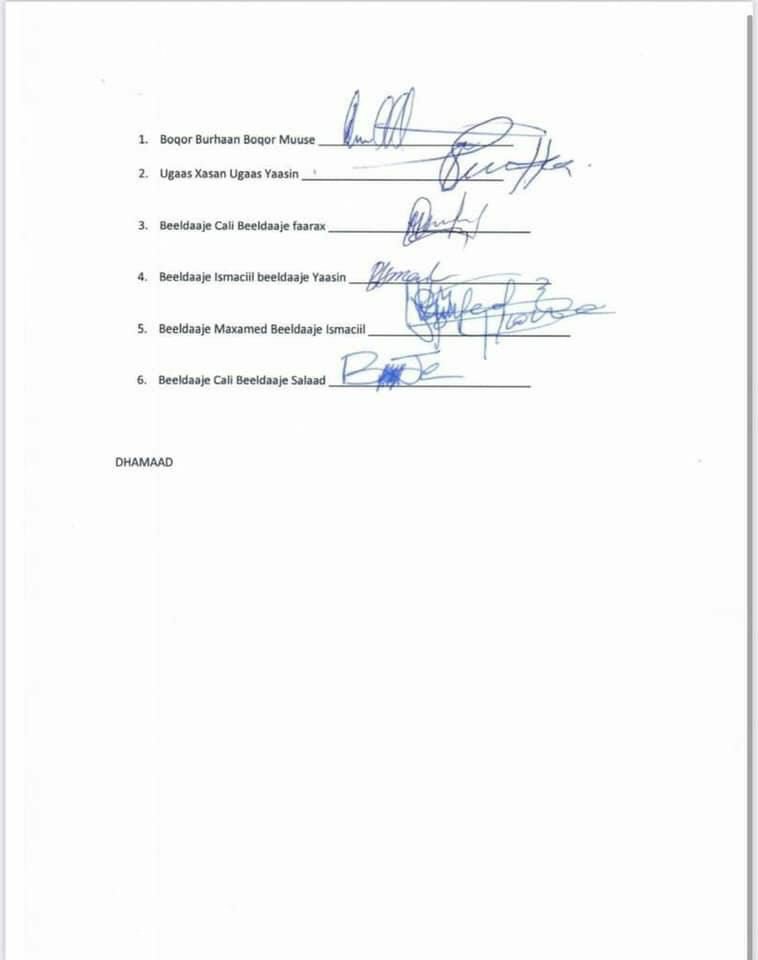
The undersigned traditional elders have issued a statement forfeiting their role in peace-making and conflict resolution. Instead, they put more fuel to the fire. Their partial recommendations to the Puntland Government is flatly unacceptable. It is an offer designed for Puntland Government to reject outright.

These titled #elders in #Bari Regions of #Puntland State have proved to be a party to Bosaso standoff. They have finally lost any credibility for the good of Puntland.

It is historically important to note that these titled elders, who have issued this document represent exactly the same sub-clans in Bari Region that rose against Puntland President then, Abdullahi Yusuf, exactly for the same reasons for power struggle in 2000-2001.

CONFEDERAL SYSTEM IS NOT NEW TO SOMALIA, BUT SOLIDLY BUILT INTO ITS TRIBAL FABRIC


Terms or names like Hawiye, Digil, Mirifle, Raxanweyn, Isaak, JareerWeyn, Dir, and even the country’s name Somalia, have no common ancestral relations as individual groups. Each of these names are political and social constructs for reasons beyond the scope of this short article. Paradoxically, these confederal tribes are now resisting to apply the term to the collective name of “Somalia”. Whom are they kidding?

Now, two junior researchers from ill-gotten and privately misappropriated SIMAD College in Mogadishu, illegally acquired, owned and operated by former Somali President Hassan Sheikh Mohamud, AbdiNor Dahir and Ali Yassin Sheikh Ali, have just used their first professional work to denounce federalism as inapplicable to Somali governance, fraudulently disregarding the fact that Somalia is a confederation of tribes, and thus ignoring this fundamental truth in Somali governance that lie in the state failure and entire predicament of Somalia as a country and nation-state.
These junior researchers from SIMAD even dared to call Puntland and Somaliland as children born out-of-wedlock in the federation in the sense that they were established before Galmudugh and Hirshabelle Federal Member States. AbdiNoor Dahir and Ali Yasin Sheikh Ali, in a pseudo-research paper called Federalism in Post-Conflict Somalia, have come up with half-truths: https://doi.org/10.1080/13597566.2021.1998005

Nowadays, since most Hawiye scholars try not to come out openly against federalism due to the fact that it was enshrined in the Provisional Federal Constitution, and that their Hawiye constituencies are now parts of the federation, they find the term “Decentralisation” fashionable as way of resisting federalism, confederalism or anything outside “city-state”.

JUST IN CASE YOU WANT TO KNOW

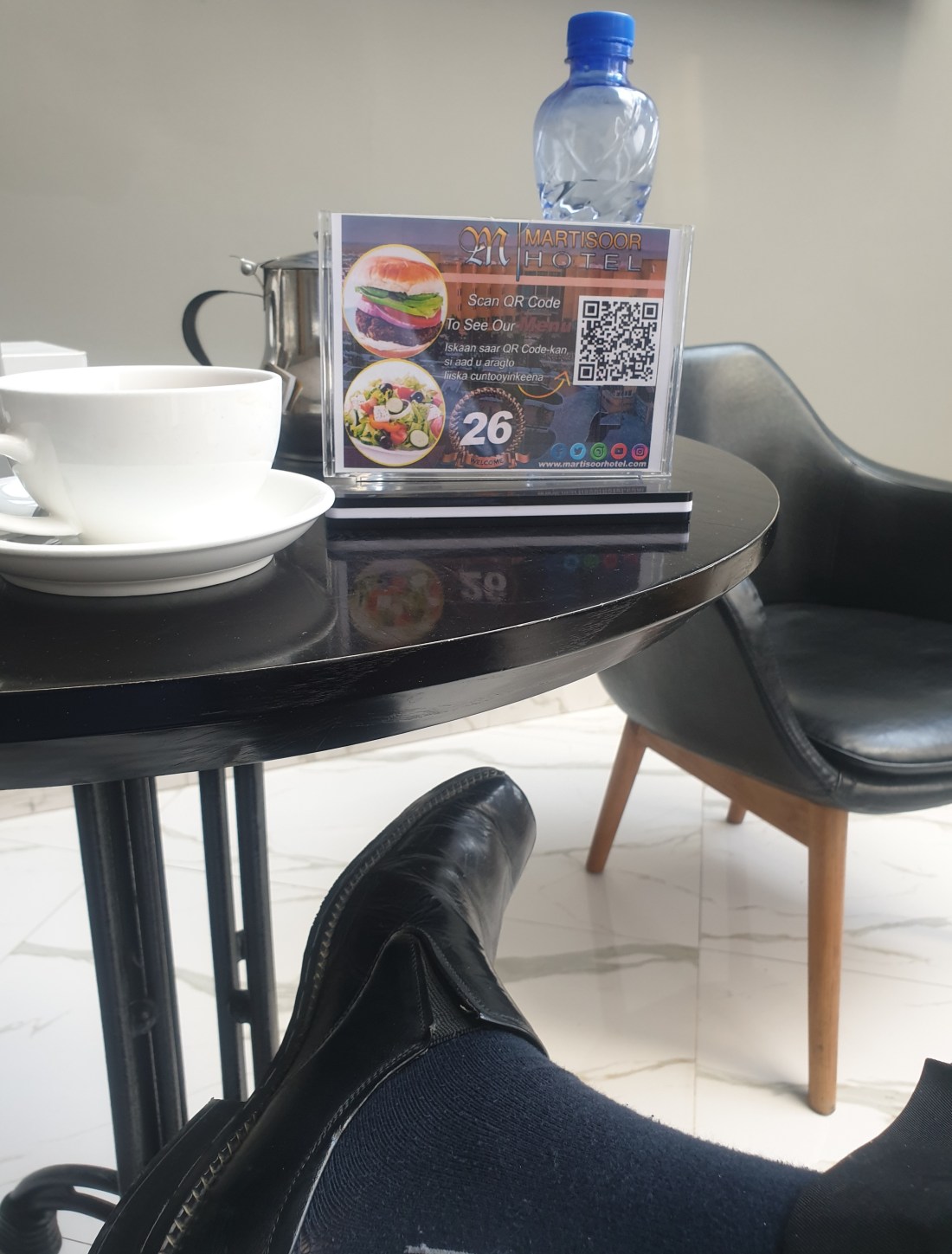
http://martisoorhotel.com/restaurant/menu.html

Garowe, Puntland, Somalia.

DARSI LA BARTAY

AN OPEN LETTER TO PUNTLAND PRESIDENT SAID ABDULLAHI DENI

Mr. President,

Perhaps you had had heard that I was one of the key people, if not the key Puntland official then, who had created PIS/PSF as anti-terrorist units against foreign cells in major urban centres of Puntland. They were not established for local use.There were a number of foreign intelligence agencies’ proposals like UK, USA and others to recruit, fund and equip our units. These units came under the Presidency since they were specialized forces and didn’t fit into other security forces. We also did this command structure to prevent manipulations by foreign intelligence services.

President Bush’s War on Terror finally got our acceptance. These units were highly effective and useful in their operations against Al-Qaeda cells in Bosaso and Galkayo.

Now, to diffuse the standoff in Bosaso between PSF and other forces, I would suggest that you appoint PSF Commander, and under him, two Deputy-commanders, one of them being drawn from PSF units to release the tension and give them face-saving.

Mr. President,

Avoid accident, premature action and miscalculations. Puntland Government is a shared entity based on clan consensus. Its President, until now, isn’t popularly elected and his powers are limited if major tribal conflicts break out, despite the provisions of Puntland Constitution.

Moreover, Farmajo and his Co. are undermining Pl Government and determined to exploit the situation. Besides, any major escalation of hostilities in Puntland now could damage your political capital both locally and nationally.

Finally, the commanders of PSF must understand that they can’t exist outside the laws and control of Puntland Government. If they try to ignore Puntland leadership, they risk being decommissioned and disbanded all together.

Ismail Warsame

WDM EDITORIAL

A GIGANTIC STEP FORWARD IN DEMOCRACY

We have been saying all along that a political move in democratization by Puntland State would lead the way to free and elections in Somalia. It is happening today. It is the beginning of an era in Somalia’s politics, which heralds the overdue process of the rule of law and the power of the citizen. This will really have domino effect in the rest of Somalia.

The presence of the members of the international community and Somalia’s civil society as observers of these pilot elections in three districts of Puntland State is an indication of the overwhelming support and best wishes for the success of this gigantic endeavor by the people of Puntland State. It is a great step forward for the people of Somalia in a troubled nation.

FAILURE OF CORPORATE RESPONSIBILITY AND LACK OF BUSINESS AESTHETICS IN PUNTLAND

Today I paid visit to Golis Headquarters in Garowe to top-up my SAHAL ACCOUNT. I parked my vehicle in a pool of rain – water infront of the Golis office building. Getting out of the vehicle wasn’t an easy task without submerging my legs into muddy water. Think of women dressed in long gowns sweeping the street around them to get into the offices of the company across a pond-like reservoir of rain-water at front gate. Women clients of the firm constitute probably the bulk of the customer population. During rainy season they return home to mind washing their gowns each time they visit Golis Headquarters.

At the time of my today’s visit, I asked one of company staff member why wasn’t the company taking care of this problem at its gate. He responded that it was a government problem, not company’s. I put the same question to another in a different office section. He said jokingly that he would hope this issue will be addressed in the year “2026”.
You would notice that the problem of cleaning up and addressing the office aesthetics isn’t unique to Golis. Many have no taste for decorations and beauty. You would also notice that the richer the companies are and more their services essential, the more they become indifferent to the care of their working environment.

If Golis HQs expect Puntland Government to construct a 40- metre pavement space at gate of their offices, God save the people of Puntland State.

Here is a similar situation of Somalis in the North Eastern Kenya, but in a different light:

PUNTLAND HIGHWAY AUTHORITY (PHA): SIMPLE ADMINISTRATIVE PROBLEM COULDN’T FIND SIMPLE SOLUTION

First and foremost, there is no technical candidate in Somalia more qualified in civil engineering than Dr. Eng Abdulkadir Janagale, the dismissed chairperson of Puntland Highway Authority. I know he has a track record of achievements in multiple technical qualifications both in the USA and Canada. Whether he fits into the Administration of President Said Abdullahi Deni is completely another issue. Eng Janagale, however, had administrative issues with a number of Puntland State departments. He was known to have submitted Authority’s complaints to the attention of highest authorities in the land, including the House of Representatives. Instead of looking into the matter and finding the problem therein, Janagale was sacked summarily. This looks like triger-happy approach to fire a senior civil servant without due process. It makes no sense and it is certainly an arbitrary action to avenge his resorting to media coverage of his agency’s difficulties with a number of influential ministers in Puntland Cabinet.

The State President is the ultimate arbiter for justice in internal departmental conflicts. There are written job descriptions to follow as guidelines for sorting out cross-cutting issues of various departments. Here the ministry of finance can have no issue with the public works of PHA beyond collecting agency’s levies and dispensing them as required to the Authorities.

People of Puntland State expects from President Deni to strengthen public institutions, not weaken them. The case of Puntland Highway Authorities requires investigation and a just solution to the problems courageously exposed by Dr. Abdulkadir Ali Hersi Janagale. PHA, historically known as NESHA (NORTHEAST HIGHWAY AUTHORITY) is the oldest parastatal agency in Puntland, being established long before Puntland foundation. It is an historic institution that needs care and consideration. According to Eng Janagale in his recent press statement, the agency has become a dumping ground for undesirable persons from other departments and a spot for the creation of unrequired jobs to fill in unavailable vacancies on patronage.

A few international partners would be willing to deal with PHA now because of this government interference. The Agency has lost its semi-independent status and its board of directors deemed ineffective or dysfunctional. The previous Gaas Administration also had fired the PHA Managing Director with devastating outcome for the Agency.

Have your say.

WHY MEMBERS OF FEDERAL PARLIAMENT FROM SOMALILAND AND PUNTLAND SHOULD JOINTLY SUPPORT GOOD PRESIDENTIAL CANDIDATE FROM THEIR RESPECTIVE CONSTITUENCIES

By Ismail Warsame, Opinion Columnist

Apart from artificial and fabricated historical distortions of facts, peoples of Puntland and Somaliland have more in common in their political, economic and cultural cooperation than anything that divides them. Despite persistent anti- Majertein propaganda promoted by opportunistic politicians from deep Southern Somalia, and those from Somaliland, who were engaged in campaigns to harm the political career of late Somali Prime Minister Mohamed Ibrahim Egal, the history of political cooperation between the two far outweighs than other issues that might had divided them. Proximity of geographical location and cultural affinities are also major factors that bind them. The destiny of disputed boundary and its inhabitants are issues that Puntland and Somaliland can alone amicably settle with the consent of the people concerned. The fact that there are disputes of whatever sort make the destiny of the peoples of Puntland and Somaliland intertwined, and therefore, that creates common political interests between the two. To understand this reality requires political maturity and sophistication, discarding the long-held propaganda of fake barriers by opportunistic political elite in Hargeisa.

Read also https://ismailwarsame.blog/2019/05/22/self-governance-options-for-somaliland-%ef%bb%bf/

I have every confidence that enlightened and shrewd politicians from both sides will make politically calculated moves to discover that common interests between Somaliland and Puntland that bind them permanently.

Have your say

ON THE FOUNDATION OF PUNTLAND

https://fb.watch/8ksdhSjmad/

ON THE IMPORTANCE OF DEMOCRACY AND DIRECT ELECTIONS IN PUNTLAND/SOMALIA

Take a listen

PROFICIENCY AND ON THE JOB TRAINING ARE MORE IMPORTANT THAN ACADEMIC CREDENTIALS

By Ismail Warsame, WDM Opinion COLUMNIST

Here in Puntland, and to a greater extent, Somalia, on the job training is either non-existent or not a priority in public sector. Imagine members of parliament, who had no prior legal training nor had job experiences of any sort. Imagine a member of legislative assembly who doesn’t understand what his or her job is all about. What kind of legislations do you expect coming out from a house of representatives, who have no idea of what they were supposed to do? Could they differentiate their job descriptions from that of the Executive Branch? Do they know that corruption and tax evasions are among the highest crimes committed against the people and state? What do they understand about the checks and balance of power? How could they handle an abusive Executive Branch? Do they have an idea of inquiry and Question Period in parliament sessions?

Finally, why do we blame them for doing what they were doing if qualifications were not among the options for public service prior to their selection/election? What is the job of the speaker and his assistants with regards to raising legislative knowledge of members and their ethical standards?

This problem applies to other public departments as well, including the judiciary. This is a critical issue, and without addressing it, there is little hope for good governance in Somalia. Let us not kid ourselves.

https://amazon.com/author/ismailwarsame

WDM EDITORIAL

FIND CONSENSUS ON PUNTLAND DEMOCRATIZATION PROCESS

There are reports, press statements and counter-press statements by Puntland political associations and NGOs on the timely holding of pilot (test) elections in some Puntland towns. The question is: Can Puntland hold both the Federal and provincial elections back-to-back (at same time)? If that can be done demonstratively, then why don’t we go ahead with these pilot elections in Eyl, Uffayn and Qardho?

Based on historical experience, this planned local election experiment will surely remain only on paper without Puntland Government pushing it. If current Puntland leader, Deni, were to get elected as President of Somalia in this forthcoming presidential election, there would be no guarantees that the next Puntland President would be in favor of multiparty democracy. This is a one-man show exercise, not a popular movement or political trend in the State as Puntland/Somalia population hadn’t been prepared for the process for many decades.

It is also important to note here that the recipients of donors’ funds like PRDC, PUNSAA, TPEC, among other non-state actors involved in the stalled democratization programs in Puntland State, are partial entities and have vested financial interests in the process and debate on the matter. The new political associations of Puntland are taking their lack of election experiences and low capacities to multi-task into account. It is a legitimate concerns.

We recommend to all parties to come together to reach at consensus on the way forward and inform Puntland Government and donor community accordingly.

https://amazon.com/author/ismailwarsame

WHY BOTH SIDES OF MUDUGH REGION IS IN SIMMERING POLITICAL CRISIS

North Mudugh Region and Galmudugh State are both in crisis of identity, political and traditional leadership vacuum, with elders in North Mudugh heavily politicized and predominantly absent in the Region most of the time, and political leadership in Galmudugh having no vision and in disarray because of President Qoor Qoor’s unstable temperament and shifting positions.

Geopolitics is a factor with regards to regional stability or instability, depending on a given situation. Peace-making and political harmony in the regions of Mudugh (North and South) are interlinked. The security turmoil in Galmudugh with violence from Al-shabab, its volatile leadership character and fluid relationships with Farmajo have exposed Galmudugh weaknesses, a situation that prevented them from pursuing coherent policy objectives that was being encouraged recently by Galmudugh elders and intellectuals to live in peace within and with others in the neighborhood. Galmudugh political and security disarray have geopolitical impact also on residents of North Mudugh. Destabilising factors from Farmajo Team of Puntland origin have indirect role to play in the manufactured political noises in Galkayo of late regarding the planned Federal elections. There are some residents of North Galkayo and persons of Mudugh origin now playing with fire, while jeopardizing the recent gains of the Region such as the construction of one of the biggest seaports in the African sub-region, successful security operations against Al-Shabab and planned repairs of Garowe-Galkayo Road, among other projects. This is typical Somali nomadic character that prosperity brings violence and instability to the people of Somalia.

People should wise up and learn from their past mistakes.

https://amazon.com/author/ismailwarsame