About the blogger:
This blog is associated with the former Chief of Staff in Puntland State Presidency, 1998-2004. He also worked with the UN and World Bank Joint Secretariat for Somalia’s Re-construction and Development Program (RDP), 2005-2006, as a Zonal Technical Coordinator for Puntland and later as National Aid Technical Coordinator with the Transitional Federal Government of Somalia and European Union. He is now an independent political analyst and commentator on current issues and occasionally gives historical perspective on modern Somalia’s politics. He lives and works in Toronto, Canada. He can be reached at: ismailwarsame@gmail.com
“Ahmed Hussen has been promoted to Minister of Families, Children and Social Development.
This new portfolio represents over 1/3 of all of Canadian Government spending every year and is the fourth largest government ministry with over 24,000 employees!
He will be the leader of a strong team of Ministers, supported by the Minister of Labour, Minister of Seniors, Minister of Employment, Workforce Development & Disability Inclusion.
This new role is in charge of but not limited to:
CMHC which is the largest Crown corporation in terms of assests)
All Housing including Affordable Housing
-Canada Child Benefit
-Childcare
-Education
-Service Canada
Social innovation including funding social
enterprise for the first time in Canada
Old age income security
And much more!
This portfolio will play a leading role in delivering on major campaign commitments made by the Liberal Party to make life better for all Canadians in the areas of affordable housing and supporting families. We wish Ahmed Hussen and his team the best of luck in delivering these goals”.
It had been said by security experts and relevant academics that if you want to break down a nation and deterimentally harm its social fabric, you don’t necessarily need to engage in shooting or hot war. It is easier and less expensive to penetrate into its institutions and discredit its core values and cement divisions and discord among its constituencies (people, political parties, religious and ideological groups etc). This is what was happening in the USA with the successful intelligence operation of Putin’s Russia. Why? Because mainly Russia wants to revenge on the leading role of USA in the collapse of the Soviet Union.
Russian intelligence and political strategists took advantage of USA partisan politics to create a false narative for then Republic candidate Trump and President Trump that the Democrats were subverting and undermining Trump by funding the infamous Steele’s Dossier on Trump and allegedly his long relationships with Russian mafia and oligarchs in his real estate business. Mr. Steele was the British MI5 intelligence officer, who compiled the Dossier on Trump interactions with Russian personalities.
According to all in the know, including intelligence community, Russian government operatives had meddled into US 2016 election to help Trump win. All researched facts had proved the validity of Russian interference. Most of his campaign associates went to jail. Others in his administration might follow to serve long prison terms, when the dust settles on his Impeachment Inquiry, and after the US elections in November 2020.
President Trump couldn’t shake off the popular impression that he was an illegitimate president as he was also incompetent to handle the affairs of the Republic. To counter that, he resorted to vicious twitter campaign of disinformation, false alternative narative and character assassination of anybody who comes his way. He had invented “Fake News” slogan to discredit US mainstream media.
This Impeachment Inquiry is a break for Democrats, following the less than satisfactory Mueller Report that failed to show clearly Collusion and Coordination between 2016 Trump Election Campaign and Russian operatives, although Special Prosecutor, Rovert Mueller, had found multiple instances of abuse of power and obstruction of justice on the part of Trump. The President got away with his misconducts because of his man in the person of US Attorney General Bill Bar, who had successfully watered down the Mueller Report, against the dismay of many.
To win re-election in 2020, President Trump has been trying to utilyze a strategy similar to 2016 election by enlisting a foreign power again, this time, Ukraine, into opening an investigation into his political rival, Joe Biden, former US Vice president and Democratic Party front-runner 2020 election. He smeared and removed long serving and anti-corruption US Ambassador in Ukraine, Marie Yovanovich. in the attempt. He had created a shadow foreign policy team to do his dirt work in Ukraine, and had put on hold a Congress-appropriated military assistance and an important White House visit by the newly elected president of Ukraine, Mr. Zelensky. He got caught, however, this time around, by a group of dedicated civil servants within his administration and outcry that followed with the removal of US Ambassador in Kiev. Ukraine is at war with Russian supported separatists in eastern part of the country. Russia also had annexed Ukrainian Cremea in the Black Sea.
Mr Trump and his staunch Republic colleagues are still propagating Russian intelligence misinformation and discredited narrative that Ukraine, not Russian, meddled into US 2016 Election to help Hillary Clinton win. This was a debunked narative that Russia still promotes to push America into disarray and disunity. It has been succeeding so far.
But, don’t get it wrong. US successive governments have been doing these Russian intelligence and subversive games against weaker nations for many years, including assassinations of its perceived and real enemies, overthrowing governments, toppling national leaders, installing and protecting their stooges in power.
If Trump is impeached, any outcome would depend on the Senate Majority, which is Republican that is unlikely to convict Donald Trump and remove him from him office before the election in November next year.
Puntland House of Representatives is in session today to pick up a New Speaker, following the impeachment and pushing out of SpeakerAbdihakim Dhoobo-Daareed in an acrimonious fashion and confrontation with the Executive.
Whoever the New Speaker turns out to be, people of Puntland expects accountability in government, not just replacement of one corrupt official by equally another. The New Speaker shouldn’t be pro-executive or anti-executive. He or she should protect and preserve the Constitution of the State. He or she should provide leadership to insure that checks and balance in government are in place and strictly adhere to the rule of law.
One of the first functions of a parliament is approval of Government Annual Budget and insuring its right appropriation. That is the first test of a competent House Speaker. Watch out how would-be the New Puntland House Speaker handles him/herself soon.
It was an ugly scene to watch a Somali university professor exercising violence against a hungry cat in an open-air eating space at hotel last night. I agree cats can be nuisance here in town, not only begging for a bite to share, but aggressively demanding a portion of your lunch.
Instead of throwing some pieces of the cake, you won’t expect a supposedly educated fellow to stand up in manly fight against a domestic animal, throwing splastic bottles and splashing water at animal and his surroundings. People were mesmerized by the spectacle of the enraged professor and his swearing at feeble poor pet.
Talk about animals’ rights and human cruelty against them. Animals of the world unite against mistreatment at hands of men.
The idea is to eliminate the influence of election corruption and clannism in the process in order to produce truly representative parliament. To do that, People’s Congresses are held simultaneously in each of Federal Member States- each Congress comprising two thousand delegates from all its constituent regions proportional to the number of existing members of the local and Federal members of parliaments.
Step One
Congress preparatory committee, whose mandate is to convene the Congress of two thousand delegates coming from all constituency regions, is formed. This committee’s mandate ends with the convention of the congress. This committee is formed by the government and local parliament in consultation with opposition elements, if any, and reputable members of the civil society.
Step Two
The Congress elects the presidium, electoral and conflict resolution committees to manage the congress from thereon.
Step Three
Each constituent region puts forward their unlimited numbers of candidates to compete for the number of allocated slots in the Federal Parliament. The entire session of the two thousand delegates elect members of the Federal parliament from the candidates from each region among high scorers in turn. Minorities and women representation should be taken into consideration.
The parliament so formed elects the new leaders of Somalia for the next mandate
This is not only practical, but also corruption-free. It is also trouble-free. It would be a fair play on a plane field.
The Federal Government of Somalia, and to greater extent, the Federal Independent Election Commission, have failed to work out a credible, participatory and transparent electoral model for the pojected 2020/21 elections, and N&N’s way is not only secretive and suspicious, but also solidly impractical as it would be illegitimate as well. Extension of term in office for this divisive government is unacceptable. Doing nothing until the current government expires is not an option, if not amount to criminal negligence.
The alternative is commencing now preparatory works for holding People’s Congresses in all Federal Member States to elect their respective members of the Federal Parliament on time, who would subsequently elect the national leaders of Somalia for the next mandate. This is as practical as it is a legitimate option to produce representative government.
Inaction and indifference on the part of the Federal Member States to move the electoral process forward is irresponsible in this regard.
A Confederal Party of Somalia would be a non-profit, non-sectarian and non-partisan political party advocating for expanded devolution of the powers of the Central Government in Somalia to Federal Member States through review and reforms of the Provisional Federal Constitution.
The Confederal Party of Somalia (CPS), XISBIGA AWOOD-QAYBSIGA BAAHSAN (XAQBA) doesn’t advocate for secession, but for constitutional reforms for harmonious relationships between the Government of a Confederal Republic of Somalia and its Confederal Member States as Confederal Partners in governance.
Political Objectives of the Party:
The Confederal Party of Somalia would be committed to the unity, sovereignity and territorial integrity of the Confederation.
National Policyof theParty:
The Confederal Party of Somalia shall engage Somali masses in constructive political discourse and national dialogue for suitable governance alternative to isolate sectarianism, clannism and corruption from Somali politics. The Party should seek resolutions to current constitutional impasse between the Federal Government and existing FMS.
The Party would advocate for review of the current Provisional Federal Constitution to opt for a confederal system that could clearly define and enshire the powers of the FGS and FMS in a negotiated confederalism. The Party is not seeking undue power grab by the FMS.
On the Electoral Process 2020/21
On the electoral process of 2020/21, preparatory work has to start now to hold People’sCongress in each of the FMS to elect respectively the next members of both chambers of Somalia’s Parliament under the existing quota of 4.5 clan power-sharing arrangement for a final time. At the simultaneous convention of FMS People’sCongresses, federal Parliament would be dissolved at expiration of the mandate. Would-be elected representatives by all FMS People’s Congresses would gather in a suitable peaceful town like Garowe, for instance, to elect the Federal President and Speakers of the Parliament. The current political impasse could be resolved expeditiously this way.
Constitution–making
New Confederal Constitution should be drafted under a review process of the existing Provisional Federal Constitution, subject to a National Referendum.
This Concept Note is a follow-up of recent Policy Paper by a group of Puntland intellectuals and policians.
Welcome on-board and join the debate on the search for better Somalia.
It was a bright day for both parents and 190 young graduates from East Africa University (EAU), GAROWE BRANCH in multiple disciplines of sciences, social studies, environmental protection and business management.
According to EAU President, Aden Sheikhdon, about another 600 students graduate this year from the main campus in Bosaso. It was remarkable to note that five of the six honor graduates from the 190 students were girls.
EAU President had re-minded the audience of the history of long struggles of Puntland Education over the years since the collapse of the Somali Central Government in 1991. Former and long serving Somali Minister of Education, Aden Mohamed Ali, spoke on the occasion, emphasizing the importance of strengthening studies in Education, Health and the Environment.
Puntland President, Said Abdullahi Deni, whose background is in building basic education schools in Puntland, spoke elegantly on the occasion, pointing out the challenges accompanying with each university graduation in terms of availability of job opportunities and need for skill training for today’s labour market.
The gathering, however, had failed to address the pressing concerns of Puntland students on having legitimate and equal opportunities in national scholarships, whereby the Federal Government of Somalia is an obstacle to equal distribution of overseas scholarships and educational grants.
While at it, I am pleased to remind all that I, as former Chief of Staff at Puntland Presidency, had worked out with the First Team of Puntland Educators, to properly license the EAU. It took several rounds of tough talks for the Team to produce and satisfy the university standards needed to get Puntland State License in 1999.
A few days ago the Ordinary Session of Puntland of House Representatives had opened in Garowe, the Capital of the State, in an atmosphere of peace. By Constitution and tradition, the State President opened the Parliament Session.
As usual, invited dignitaries delivered speeches on the occasion. Suddenly, and inconsistently with the Parliament protocols and tradition for any opening session, an MP, Awil Hassan Daad, rose up on the floor with the explicit permission by the Speaker, and asked the President scathing questions. The President answered the MP’s questions, but got annoyed and stormed out of the Session. By the way, the President was not required legally to stay on in the session after he had delivered his opening speech.
Now, legally, an MP can ask a member of the Executive Branch any question in the public interest. In doing so, there is no crime committed that warrant the Attorney General to issue a legal action against the MP for asking the President hard questions. That MP had a question and the Speaker gave him the floor of the House to ask. He must be safe on the floor.
Besides, the House is co-equal branch of the government and couldn’t be silenced by the Executive Branch or Judiciary.
True, protocols and civility matter in their conduct by all branches of government.
In conclusion, people of Puntland badly need independent public institutions. But, that also applies to the Judiciary to avoid being seen as an Executive tool to silence government critics. Equally, people of Puntland will not tolerate their representatives being used and manipulated by external forces against the vital interests of the people of Puntland.
October 27, 2019 The Ordinary Session of Puntland House of Representatives opens on schedule. Every peaceful session of the House is a victory and progress for the people and government of Puntland. Usually, the House Session starts with an Opening Ceremony full of speeches by dignitaries, citations and adoption of legislative agenda of the session. What happened yesterday in the Opening Session was out of the ordinary. The Opening Session turned into unscheduled aggressive “question period”. It looked like preemptive strike or ambush by some members of the House against the President. Gentlemen and ladies, it doesn’t work that way. The Opening Session of the House invites guests, both foreign and local, and it is purely ceremonial for Day One. It is not appropriate for any member of the House to disregard the norms and regulations of the House and turned it into fight with the State President on the first day of the session. Nevertheless, and under the circumstance, President Deni answered well the member’s provocative questions directly attacking the President The President, however, seemed to have lost his cool and had stormed out of the Session prematurely and angrily. The President should be the last person to show personal emotions. Yes, he should act in self-defense calmly, appreciative of his position as the Head of the State and Head of the Government. When a President gets annoyed, half of the population gets angry. Puntland House members should learn the protocols and parliamentarian rules. Question Period is very important to bring the Executive branch into account, it must be, though, scheduled and properly conducted. https://ismailwarsame.blog @ismailwarsame
We, the members of Puntland Focus Group (PFG), express our deep concern about the on-going attempts and political moneuvering by the current leadership of Puntland Administration to extend its Term in Office in gross violation of the State Constitution.
Puntland Focus Group, conveying the democratic choices and desires of the overwhelming majority of the people of Puntland State of Somalia, appeals to Puntland House of Representatives, Traditional leaders, leaders of the Civil societies, public institutions and media, as well as the International Community, to openly come out and oppose this wanton disregard of the Constitution and infringement of people’s civic rights to choose their next members of the House of Representatives and President on January 8, 2019, when the Mandate of Incumbent Administration duly expires. Any Term Extension of any duration is unacceptable and unwarranted.
Puntland Focus Group informs Puntland people and the International Community that the incumbent President’s attempt to unconstitutionally seek an additional mandate is premeditated as he failed to fulfill his 2014 election campaign promises and commitment to democratization and multi-party elections in the year 2019.
The PFG unequivocally calls upon the Incumbent President of Puntland State, Dr. Abdiweli Mohamed Ali (Gaas), not to use the present conflict with Somaliland as a pretext and a cynical ploy to delay Puntland Election in 2019. This would constitute a shameful breach of public trust as it is unlawful.
Puntland Focus Group reminds all concerned of ample historical evidences in Puntland State, whereby similar unlawful actions or attempts by an out-going President to prolong his term in office had led to civil unrests, violence and destabilization.There are no guarantees this will not happen again. We all have an obligation to forewarn our people of such possibilities by unwisely giving in to abuse of power by the present Puntland Head of the Excutive.
htt In conclusion, we appeal to the entire population of Puntland State of Somalia to maintain peace and their unity, and, to defend their State patriotically against external and internal security threats. By PFG members:Cabdi Faarax Saciid (Juxaa)Cabdirisaaq Cabdulahi Jaamac (JanogaleCali Xaaji Warsame Faarax Cali ShireJamiila Saciid MuuseXaji Maxamed Yaasin IsmaaciilCiise Maxamud Faarax (Dhollowaa)Khalif Ciise MudanMaxamud Axmad Xasan (Dhagaweyne)Saciid Cabdullahi DeniDr Maxamed Salaad Qoryooley Spokesperson Ciise Maxamud Faarax (Dhollowaa)
I met with the late Poet Khalif Sheikh Mohamoud on numerous occasions. He was a modest and humble young man, not keen at talking at all, when he was among his friends, but always attentive, a rather reserved and even shy. Unlike many of the Somali poets, singers, and artists at the time, he did not have any personal vices, or addictions like Qat-chewing or smoking. Politically, he was not a conformist, and often his vision and convictions came into clashes with the Somali Salvation Democratic Front (SSDF) leadership of the day. Khalif always supported the underdog in political and ideological confrontations within the exiled opposition organization. He discretely, but quietly criticized SSDF leaders for poor management of resources and opportunities available to them at the time, and often sided with its opponents within the leadership on the overall conduct of the armed struggle. He was a strategic thinker and seized the events of moment with poems, which had affected and shocked the core of the Somali society like an earthquake. He was a creative genius, who had sparked off a decade of literary renaissance throughout Somalia. He dreamt of a free society, free from dictatorial suppression. He envisioned a nation free to exploit its immense potential, a proud people whose riches are immeasurable. The obstacle to his vision of future Somalia at the time was Siyad Barre’s regime as amply described by his major anti-regime poems.
Yet, when Siyad Barre resorted to and intensified his traditional divisive tactics against Somali society in order to cling to his collapsing power and to counter growing influence and popularity of Khalif Sh. Mohamoud, by encouraging what they then termed as“Ergo Daarood” with a series of poems with the intention of inciting clan hatred and tribal conflicts, Khalif Sh. Mohamoud refused to be drawn in, or to respond to the critics of his poems and cause. He had a political vision above the mudane and petty political bickering intended for the survival of the regime. Instead, Khalif let Dhoodaan and others to respond to his critics at the expense of Siyad Barre.
I met Khalif Sheikh Mohamoud in Jijiga for the first time in 1982 in a Somali restaurant with a group of young SSDF activists and fighters. He had just come from Addis Ababa at the time to visit fighters at frontline stations. I was posted there as a Political Officer for our mobilization and propaganda campaigns directed towards Northern Somalia. As we were eating our meals of meat and rice, he suddenly asked me whether I knew the Somali phrase: “Macaan Dharakla”. I answered him with the literal meaning of the phrase as a kind of delicious and favorite piece of meat located at lateral sides of the camel below the hum. Someone from his entourage asked me whether I heard about the poetic verses: “Macaan Dharaklayahay Ceebtu Waa Meheradiinii eh” from the celebrated Khalif’s Poem “Hurgumo”.
The Late President of Somalia, Siyad Barre, was reportedly in shock when he heard Poet Khalif Sheikh Mohamud was killed in action in a battle between SSDF fighters and Somalia’s Army in Galdogob in the former’s offensive to capture the District. Although SSDF had succeeded in winning that battle,Poet Khalif was among the fallen fighters , Siyad Barre was reported saying that with the death of Khalif Sheikh Mohamud, SSDF had conclusively lost the war against his regime. No doubt, Siyad Barre was fond of Khalif’s poems, and he was reported many times instructing his aides to hunt and collect all poems of the poet.
Siyad Barre was often seen replaying Khalif’s scathing verses against his repressive regime, especially one citing “Mareexaan, Majeerteen waxay isuyihiin waa iska moogtahay eh …… Mabda’a, siyaasadda xun iyo maamulkaan nacay eh”. A relative of Siyad Barre and one of the last caregivers of the ailing and sick leader in exile in Nigeria, had reported from Siyad Barre’s death bed that Barre was repeatedly saying the name, “Khalif Sheikh Mohamud”, until his last breath before he passed away. The dying leader didn’t explain or was too weak to elaborate what he meant by repeating Khalif’s name. The attendant neither understood at all nor knew Khalif Sh. Mohamoud. One possible explanation or interpretation is that Siyad Barre believed that his dictatorial military regime fell partly due to the powerful influence, popularity, venomous and contagious nature of poems by Khalif Sheikh Mohamoud.
Khalif was a master of both straight and oblique art of poetic communications.
Ismail H. Warsame is the Former Director of SSDF General Secretariat (1983-1989) and Founding Member and First Chief of Staff of Puntland Presidency (1998-2004).
We welcome the submission of all articles for possible publication on WardheerNews.com. WardheerNews will only consider articles sent exclusively. Please email your article today . Opinions expressed in this article are those of the author and do not necessarily reflect the views of WardheerNews.
WardheerNew’s tolerance platform is engaging with diversity of opinion, political ideology and self-expression. Tolerance is a necessary ingredient for creativity and civility.Tolerance fuels tenacity and audacity.
WardheerNews waxay tixgelin gaara siinaysaa maqaaladaha sida gaarka ah loogu soo diro ee aan lagu daabicin goobo kale. Maqaalkani wuxuu ka turjumayaa aragtida Qoraaga loomana fasiran karo tan WardheerNews.
Ahmed Hussen, Canada’s Minister of Immigration, Refugees and Citizenship, has just won overwhelmingly his Parliament Seat in Toronto York South-Weston Liberal Party Riding. Congratulations!
Yassmin Abdel-Magied’s experience matches those of journalists and activists around the world targeted by online hate mobs trying to suppress criticism of those in power
Carly Nyst is a technology and human rights consultant
The story is increasingly a familiar one: a journalist or activist speaks out against the status quo, and is confronted with a barrage of abusive and violent remarks online. Public figures, representing the status quo under threat, encourage or endorse the abuse, either through action or inaction. The target of the attack is intimidated into silence. The status quo holds strong.Advertisement
That is the story of Yassmin Abdel-Magied, engineer, writer and social advocate, who was bombarded with hateful Twitter and Facebook posts after several outspoken remarks brought her within the crosshairs of Australian politicians. It is also the story of dozens of other journalists and activists across the world. Each of them has been the target of online hate mobs wielding violent and abusive threats in an attempt to suppress legitimate criticism of those in power.
In some countries, the state itself incites such attacks, urging its supporters to exploit the virility and familiarity of social media to amplify government messages and take down dissenting voices. In other cases, the government’s role is more oblique; individual politicians and media personalities fuel online campaigns aimed to discredit critics, while the government leverages the incident for political gain.
Each of these is a case of what we call “patriotic trolling”. An international research coalition, of which I am part, has been studying this phenomena for over a year, working to catalogue and dissect these attacks in an attempt to describe their origins and impacts in a forthcoming report.Advertisement
In countries from Venezuela to Turkey, Ecuador to India, we have documented cases in which journalists and activists have been deliberately targeted with violent, misogynistic and hateful messages online at the behest, or with the endorsement or implicit approval, of the state. Armed with memes and hashtags, and deploying not only abusive language but bots, malware and doxing, patriotic trolls seek to muzzle, discredit and abuse those who criticise or advocate against the status quo.
The attack against Abdel-Magied resembles others we have documented against journalists in China, Finland and India
Abdel-Magied’s case is emblematic of what is arguably the most insidious form of patriotic trolling attacks, in which government-backed actors fuel existing social media campaigns, manipulate public biases, and leverage online abuse for offline intimidation. In Abdel-Magied’s case, a blaze of social media abuse in response to a controversial Anzac Day tweet was further fuelled by a tweet by a member of parliament, George Christensen, who encouraged Abdel-Magied to consider “self-deportation” and called for her firing from a casual presenting position at the ABC. Australia’s immigration minister, Peter Dutton, called the activist a “disgrace” and welcomed the subsequent cancellation of her television show.
The attack against Abdel-Magied resembles others we have documented against journalists in China, Finland and India; like the Australian writer, those journalists were likewise sent death threats, rape threats and videos of beheadings. The attack also contains echoes of patriotic trolling campaigns in Turkey, where pro-government media personalities have sparked Twitter attacks against journalists reporting on the Gezi Park protests and the July 2016 coup attempts.
In Turkey we witnessed the increasing sophistication of patriotic trolling attacks over just a few short years: whereas early attacks were ignited by ruling party figures, over time they have appeared increasingly remote from the government, as the task of inciting and fuelling patriotic trolling attacks shifted to pro-government media proxies.
The auto-virility of patriotic trolling campaigns is one of their most disturbing features: states need only implicitly encourage patriotic trolling campaigns, referencing them with approval or leveraging them for political gain, to create an environment in which online hate mobs will self-ignite and self-sustain in pursuit of the government’s own objectives.Advertisement
The emergence of patriotic trolls puts at risk human rights and values that are critical to the proper functioning of any democracy. Patriotic trolling attacks undermine the rights of individuals to freely impart and receive ideas, of journalists to report free from arbitrary influence, and of activists to live free from invasions of their privacy and personal safety.
But these campaigns harbour an even more pernicious import. Among the many promises that technology offers, there is this: as the ability of governments to control information is subverted, despotic regimes will no longer thrive under the cover of media censorship and state propaganda. A worldwide web of internet-connected flashlights will illuminate the dark places where human rights violations multiply and evil flourishes, so the promise goes. With the help of technology we may never see another Pol Pot, another Pinochet, or another Hitler, again.
Yet, although this may be the reality that we want (and, as a privacy advocate, I’m not sure it is), without widespread and radical change, it will certainly not be the reality we get. Instead, governments the world over are co-opting digital technologies to serve their own ends, with perverse consequences for human rights. Having ceded control of information, states are seeking to exploit its abundance: monitoring their citizens online, manipulating social media, spying on journalists and activists and, now, sending online hate mobs after those who would criticise them.
Online platforms and the mainstream media both have a responsibility to deprive patriotic trolling campaigns of the exposure and sensationalism that feeds them. But we, ordinary citizens, also have a role to play; we must take a more critical and investigative eye to what we too often cynically cast as innocuous and isolated instances of online harassment. Otherwise, we may never see another Martin Luther King, another Glenn Greenwald, another Yassmin Abdel-Magied.
Since you’re here…
… we have a small favour to ask. More people are reading and supporting The Guardian’s independent, investigative journalism than ever before. And unlike many news organisations, we have chosen an approach that allows us to keep our journalism accessible to all, regardless of where they live or what they can afford. But we need your ongoing support to keep working as we do.
The Guardian will engage with the most critical issues of our time – from the escalating climate catastrophe to widespread inequality to the influence of big tech on our lives. At a time when factual information is a necessity, we believe that each of us, around the world, deserves access to accurate reporting with integrity at its heart.
Our editorial independence means we set our own agenda and voice our own opinions. Guardian journalism is free from commercial and political bias and not influenced by billionaire owners or shareholders. This means we can give a voice to those less heard, explore where others turn away, and rigorously challenge those in power.
We need your support to keep delivering quality journalism that’s open and independent. Every reader contribution, big or small, is so valuable. Support The Guardian from as little as $1 – and it only takes a minute. Thank you.Support The Guardian
President Mohamed Abdullahi Farmaajo, like
Donald J. Trump, is a populist thriving in symbolism, empty slogans on
patriotism and revolutionary flavour. Farmaajo became the Prime Minister of
Transitional Federal Government under Sheikh Sharif Sheikh Ahmed through the
lobbying of family connections from Farmaajo’s wife. He was born to
a low-income family, unlike Trump, and raised in Mogadishu. His father, Farmaajo Senior, was a
gate-keeper at Public Works Ministry in the civilian Somali government before
it was overthrown by General Siyaad Barre of the same sub-clan of Mareexaan as
Farmaajo. A military dictatorship, practising nepotism and cronyism gave
Farmaajo’s family the first break from poverty.
As young adolescent, Farmaajo junior and his
playmates ran into legal problems. The family had persuaded the Military
Despot to post this youth to Foreign Service in the Embassy of the Somali
Democratic Republic in Washington DC, thus allowing him to escape from a criminal liability
in Mogadishu.
He was granted political asylum in the USA as the Somali Government
had collapsed in January 1991.
Farmaajo’s formative years had witnessed public deceptive slogans of Siyaad Barre’s “Kacaan” (Revolution), and under-handed operations of the ruling family, whereby secret family consultations were held at night and decisions implemented during the day – frequently sending pre-eminent and public figures to jail in the wee hours of the night, many never coming back to their loved ones. This was widely and extensively practised throughout the existence of the dictatorship for twenty-one years.Thousands had perished in maximum security jails like “labaatan-Jirow”. Many others were purged and destroyed, while hundreds of thousands fled the country to all directions of worldwide for their own safety. Somalia now, even the under the occupation of thousands of foreign troops disguised as AMISOM, doesn’t send out such huge number of refugees, fleeing from repression by their own government as Siyaad Barre’s. Farmaajo has sympathy and antipathy for certain politicians and sub-clans in the country. This personal characteristic explains also his anti-federalist policies and attitude. Welcome to Confederalism! If that wouldn’t solve his problem for good, then only a psychiatrist could try to help him.
Young Farmaajo grew up in the atmosphere of a dictatorship, where kangaroo courts, hand-picked rubber-stamp parliament and personal fear for life, devoid of any civil liberties, were supreme daily occurrences. Unexplainable in Farmaajo’s strange populist phenomenon includes the fact that many young Somalis in the country and within the diaspora, ignorant of the country’s recent ugly history, are engaged in advocacy for N&N deceptive social media misinformation. The sudden erection and unmasking of nationalistic statues in Mogadishu these days to coincide with the anniversary of Siyaad coup d’etat, while the entire country is in dire situation, are powerful tools and deceptive political symbolisms par excellent by a demagogue. The whole exercise is to misdirect the people’s concerns with what is happening with Somalia-Kenya Maritime Dispute.
Fond of specious mask and using propaganda
that he stood for the interest of the common man and country in an uninformed
and gullible society, and portraying himself as a different patriotic
politician, who was paying soldiers on time and caring for the veterans of 1977-1978 Ogaden
War with Ethiopia, he rode on a strange phenomenon of rare populism in
Mogadishu, and to some extent, Somalia.
His popularity in Mogadishu became apparent after he was
unceremoniously fired by joint decisions of Sheikh Sharif Ahmed and Sharif
Hassan Adan as result of what is known as the Kampala Accord.
Surprisingly, certain sections of Mogadishu residents led by Murursade, his wife’s sub-clan,
employing the grievances of disabled War Veterans occupying Di Martino
Hospital, and hired IDPs in Mogadishu
camps, rose up in public demonstrations, decrying the dismissal
of Farmaajo as the Prime Minister. Mogadishu
politicians had noticed Farmaajo’s popularity phenomenon.
Competing factions within President Hassan Sheikh Mohamud Damul-Jadid Government were on loggerheads as who would replace just fired Prime Minister Abdiweli Sheikh, with Fahad Yassin and Farah Abdulkadir competing for influence. Farah Abdulkadir had won the battle, but not the war. Fahad’s anti-Hassan and anti-Farah political campaign had ended up Farmaajo’s win of the Presidency in 2017, when on the eve of the election night, nearly 60 MPs close to Daljir Party suddenly switched from Sheikh Sharif’s Presidential candidacy to Farmaajo’s.
Now that Farmaajo is the President of Somalia,
all other branches of the government, the Parliament and Judiciary are as
paralyzed as they were during the Regime of Siyaad Barre.This had resulted in
total political stalemate in the country. It won’t stay that way. Something has
to happen soon. We only pray for the better.
Correction: an early version of this essay wrote incorrectly “Farmaajo’s election as President in 2016. “Daljir Party” was said to be the face of Union of Islamic Courts supported by Turkey. It was managed by Ahmed Moallim Fiqi during the presidency of Hassan Sheikh Mohamud, with the knowledge of Sheikh Sharif, who hooked them up with Turkey. Ahmed Fiqi briefly got appointed Chief of Staff at Villa Somalia before he was pushed out by Fahad Yassin.
Excerpts from the Introduction of the book, Talking Truth to Power in Undemocratic and Tribal Context
Articles of Impeachment
A collection of short political essays, contemporaneously memorializing Somalia’s recent history in an independent critical analysis.
by Ismail H. Warsame, former Chief of Staff at Puntland State Presidency (1998-2004):
This book of four hundred pages is a timely record of political events in Somalia as they are happening or being debated on. The book could be a good source material for students and teachers learning English as a 2nd language in their composition papers and reporting skills. The book could also enlighten foreign diplomats and politicians on current political issues in Somalia, and efforts being made by Somalis to re-instate and re-construct their failed state. The articles in the book are thought provoking as they are fearless to talk truth to power. They have been enjoying wide readership and circulation in the author’s blog. Many readers, however, advised the author to compile them into hard copy. I have responded to their requests.
The book has appendices of A to K, capturing historic documents on reviving the nation-state of Somalia.
Foreword by Ambassador Mohamed Ahmed Awil, former Somali Ambassador to the People’s Republic of China.
ICJ HEARING OF SOMALIA-KENYA MARITIME DISPUTE DERAILED
The postponement of ICJ hearing of the case until June 2020 is at least suspicious, if not already a breach of public trust. I believe this is the 2nd ICJ postponement of the hearing. But, this time, the situation is different with a cloud of suspicion as what has transpired between Somalia and Kenya under the mediation efforts by the new Nobel Peace Laureate, Prime Minister Abyi Ahmed of Ethiopia.
It looks that a deal on the case has been struck to postpone the ICJ hearing to an unacceptable long period before its suspension and eventual withdrawal from the Court altogether.
President Farmaajo must go live urgently to address this issue and the subsrance of his latest interactions with President Uhuru of Kenya, IGAD Mediation Team and Prime Minister Abyi Ahmed of Ethiopia on the case. There is a rotten fish to smell, so to speak.
Somali people are stunned by the silence of President Farmajo on his multiple secret MoUs, agreements and treaties with Ethiopia. This is very discomforting.
They say, give the devil his dues. The former Somalia’s Presidents of the Federal Government, Hassan Sheikh Mohamud and Sheikh Sharif Sheikh Ahmed, have become politically mature enough to keep engaged in Somali affairs, irrespective of their political ambitions to seek 2nd chance at the Federal Presidency. That is citizenship. They sought public service to a make a difference. They know they had left huge problems behind and figured out that they still could contribute to a better Somalia. The mere fact that they are still publicly engaged in to help resolve Somalia’s predicaments as active and enlightened citizens of Somalia is highly commendable. Compare them with Abdulqassin Salad Hassan and Ali Mahdi Mohamed. What do you say to that?
Also engaged and still politically active is former federal Prime Minister, Ali Mohamed Geedi. He deserves praise for still getting involved in fixing Somalia. Compare him with the two Abdiwelis, CCC and Saacid. Are they even comparable to him? I know they would say that they had had their term and they couldn’t meddle in other politician’s mandate. But, we all know that they are still politically as ambitious as Farmaajo and Khayre.
Former President of Puntland State, Senator Abdirahman Faroole, turned out to fare far better politically speaking, and in terms of good citizenship than the two Abdiwelis, CCC and Saacid combined. Would you argue?
In fact, one could argue that those politicians, who have turned out to be indifferent to Somalia’s plight and daily suffering and struggles of the citizens, after they were rewarded with the full trust of the masses in the highest offices of the land, were fake and selfish, in the first place. Do you agree?
It is rather disappointing as it is surprising that even Abdirahman Abdishakur Warsame is doing a much better job in Somalia’s politics than a bunch of our former prime ministers and state presidents.
Now that N&N have successfully disabled all public institutions, including the Parliament and Judiciary, and having most Federal Member States of Galmudugg, Southwest and Hirshabelle irreparably destroyed, it is time for N&N to launch a clandestine operation on how to implement a digital project of stealing people’s votes nationwide through digital fraud in 2020/21.
We have warned the public and covered this N&N policy projection for 2020/21 general election in previous articles of Warsame Digital Media WDM. The clandestine registration of voters in most urban centres of Somalia is well underway as it has been going-on for a while with secret registration units or cells operating in all regions of Somalia, including Puntland.
Surprisingly, the Chairwoman of the Federal Electoral Commission, Halima Yarey, was forthcoming to confirm this fraudulent registration project of would-be voters nationwide. Listen to her in the video recording of her most recent interview below.
This is a wake-up call for the members of Puntland Electoral Committee as well as Puntland Government.
So, Ahmed Madoobe is proclaimed President of Jubaland for 3rd time, now three times consecutively, in exchange for the destruction of Jubaland natural environment and perinnial rainforest, turning the entire vinicity and Kismayo Port black with coal ashes; with extremists still occupying entire Jubaland, save Kismayo City, which still enjoys the administration of warlordism and one-man show, with the extra security threat this time around to Somalia’s sovereignty and territorial integrity from Kenya at mercy of autistic-like political leader at the helm of the Federal Government of Somalia.
Was the whole purpose of Madoobe’s Inauguration involves in doing more harm to the causes of the residents of jubaland and Somalia under the incompetent, short-sided, selfish and vengeful leadership of Farmaajo-Khayre feeble and pity dictators?
Where do we go now from here to try to fix this mess created by Farmaajo Team?
Read what the Ethiopian intellectuals and scholars are concluding on FGS, in their October 2019 CDRC DIGGEST Journal, Vol 4 No 4:
“This is similar to how the Islamic Courts Union dealt with their opponents to emerge as the sole power in Southern Somalia from 2005 until early 2007. Currently the SFG is facing a dual challenge: addressing the threats that Al-Shabaab poses on the one hand and asserting itself as the de facto and de jure government of the entire country and the federal member states on the other.
It appears that the SFG has yet to show progress on both fronts. The assault it has waged on the FMS has created fault lines that Al-Shabaab is manipulating. The situation of the Sourhwest, Galmudug and Hir-Shebelle states and the strength that AlShabaab is showing indicate these fault lines. Puntland and Jubaland have survived the onslaught of the SFG and are reasserting themselves in their respective areas of control, although the SFG is trying to asphyxiate them, Jubaland in particular. But these confrontations will not help either the SFG or these contesting FMS, as resources spent on self-defense and attacks could have been used to strengthen each other against a common enemy”
Prime Minister Abyi Ahmed of Ethiopia has just won the Nobel Peace Price for job well done for the entire Region, while President Farmaajo is being accusing of dismembering his own country and allowing extremists to multiply and get bolder under his watch.
“The changes in Ethiopia and the rapprochement with Eritrea created an opportunity for Somalia’s Federal Government to join a tripartite effort towards economic integration. It is very well known that Somalia has yet to establish a government that fully exercises a monopoly of coercion in the entire country, and there are a number of Federal Member States (FMS) that have resisted dictation from the current officials of the Somalia Federal Government. This tension emerged following the election of the current officials of the SFG in 2017. The FMS had created alliances to show strength and make a better deal with the SFG, but the SFG preferred to weaken the states individually through coercion or inducements. Rather than engaging them as a united front, the SFG opted to deal with them one by one and try to fragment their alliances. The SFG has succeeded to some extent and has changed the leadership in some of the FMS, and eventually ensured that the alliances the FMS created are no longer functional. This is similar to how the Islamic Courts Union dealt with their opponents to emerge as the sole power in Southern Somalia from 2005 until early 2007. Currently the SFG is facing a dual challenge: addressing the threats that Al-Shabaab poses on the one hand and asserting itself as the de facto and de jure government of the entire country and the federal member states on the other. It appears that the SFG has yet to show progress on both fronts. The assault it has waged on the FMS has created fault lines that Al-Shabaab is manipulating. The situation of the Sourhwest, Galmudug and Hir-Shebelle states and the strength that AlShabaab is showing indicate these fault lines. Puntland and Jubaland have survived the onslaught of the SFG and are reasserting themselves in their respective areas of control, although the SFG is trying to asphyxiate them, Jubaland in particular. But these confrontations will not help either the SFG or these contesting FMS, as resources spent on self-defense and attacks could have been used to strengthen each other against a common enemy. Obviously, if the SFG had created a framework of cooperation with all the Federal Member States, the war on AlShabaab and the creation of governance institutions that will allow the government to slowly exercise a monopoly of coercion legally would have been easy to achieve. If the international community cannot push this, it will not help Somalia consolidate its achievements. There is no doubt that the Somalia Federal Government with the support of the international community is trying to exercise its de jure legitimacy. But this effort has yet to bring the necessary result since the leadership does not seem to have used a wise approach with the Federal Member States such as engaging them in dialogue to create a common platform for joint governance and consolidate peace elsewhere. Eventually the SFG could claim the progress in these administrations as its own success. The new leadership of the SFG that came to 8 CDRC DIGEST OCTOPBER 2019 VOL. 4 NO. 4 power in 2017, rather than following a process of institution-building on the basis of existing structures and nurturing federalism and coordinating itself with the regional administrations, opted to undermine the Federal Member States and impose itself on them. Rather than considering them as partners of governance and jointly addressing the threats of Al-Shabaab and ISIS, the confrontation with the FMS created more opportunities for the extremist groups to manipulate the fault lines between the SFG and the FMS. And while some of the regional administrations have succumbed to the intrusions of the SFG leadership, others have resisted and survived. For example, the effort to influence the elections in Puntland and Jubaland faltered, while the SFG succeeded with the support of local actors and others from the neighborhood in unraveling some of the achievements of the FMS in Galmudug, Southwest State, and HirShebelle. The SFG successfully imposed its own president on the Southwest after jailing Muktar Robow, and it dismantled the Galmudug administration. The recent agreement with Ahlu Suna Wal Jamaa is not going anywhere although millions of dollars have changed hands. Obviously, the SFG will sway the upcoming election in Galmudug in its favor. But this may not ensure a long-term and sustainable peace, and might create further crisis instead. Since the area was the first that challenged al-Shabaab leadership and broke the myth regarding the group, and being adjacent to Ethiopia’s buffer zone one cannot ignore the challenge it poses and hence needs a serious follow up. Given these realities, the possible role of the SFG is the regional integration scheme needs a scrutiny. As indicated earlier, the changes in Ethiopia and the rapprochement that followed with Eritrea created an opportunity to bring the Somalia Federal Government onboard for regional integration. But this goodwill might have complicated the situation in Somalia as the SFG misused the effort to undermine the FMS. Two consecutive meetings that were held in Asmara and Gondar between the leaders of the three countries emboldened Farmajo and his colleagues to take aggressive and forceful measures to assert themselves on the ground through destabilizing the FMS that were in the process of transition through elections or setting up better administrative apparatuses. It appears that the SFG has been advised to reverse federalism in Somalia. But this is not an easy feat. In actual fact, rather than contributing to regional integration by mobilizing the regional administrations to consolidate peace and security, the SFG is using the tripartite framework as a source of power and external legitimacy to intimidate the FMS. Eritrea’s leaders consider federal structures as balkanization of Somalia and do not support federal arrangements. The Eritrean leaders have encouraged the SFG leadership to destroy the federal structures in Somalia. Since the leaders of Eritrea have a very hostile attitude towards federalism in general, including in their own country, it would not be too surprising if these suspicions were found to be well-grounded based on Somalia’s experience and SFG’s actions. Even if one contests the application of federalism in Somalia, one should look at the challenges in a manner that considers facts on the ground and the way most 9 CDRC DIGEST OCTOPBER 2019 VOL. 4 NO. 4 administrations are created. Hence more emphasis should be made on how to support Somalis create frameworks of dialogue for institutional development that Somalis can eventually build consensus around. Somali leaders should refrain from using external leverage to force changes that are not sustainable and lead the country to further fragmentation. Moreover, protests are heard regarding the benefits of, for example, clanbased power sharing in the country. The 4.5 formula—a framework was put in place in a reconciliation conference in Djibouti in 2000 and one that ensures equal representation to all the major clans and fair representation to the remaining ‘minority’ clans—might not be an optimal arrangement and may reveal a number of fault lines. But as a framework of power sharing, it had solved part of Somalia’s problems. It has also expanded the relatively peaceful areas and developed them as local administrative mechanisms. These local level structures have also facilitated indigenous governance institutions that have immensely contributed to uprooting extremist groups. It should be emphasized that these processes have created beneficiaries and losers and that those who have benefited have the capacity to sustain them. But when the SFG introduces huge financial inducements, fault lines widen and affect the equilibrium existing on the ground. Although the SFG claims to provide a unitary governance structure in Somalia, most Somalis may feel that federalism is helping to address some of the fault lines as well as the decentralization of power that Somali communities resent when a single community or clan overuses nationalism. The contestation between these divergent views will continue to consume resources and energy in the country. Given the local contestation in Somalia between the SFG and the FMS, the positions taken by opposing communities in support of this or that group further deepen existing fault lines. The export of the Gulf crisis into Somalia that is witnessed in the support of contesting local actors financially and logistically will worsen the situation further, making the SFG’s effort to assert itself in Somalia an uphill struggle. The recent election in Jubaland and the failure of the SFG to influence the process to its liking has further complicated the situation. The embargo that the SFG imposed on Kismayo will affect the normal life of the population there. The positions the regional actors and governments took regarding the election in Jubaland added fuel to the fire. These differences further complicate the upcoming election in Mogadishu for the new leadership, since the recent difference between the SFG and Jubaland leadership is the beginning of the contest of the 2020/21 elections. Puntland and Jubaland have boycotted the ongoing Somalia Partnership Forum, which will eventually affect the role of the partners, which could be sanctioned by the SFG. These complex factors will prevent the SFG leadership from contributing its share to regional integration and overall peace and security in the Horn. The capacity of the SFG to address the challenges of Al-Shabaab, without having a clear roadmap to bring Somalia’s actors together, is feeble. The major strategy therefore should be to ensure that the SFG and the FMS sort their 10 CDRC DIGEST OCTOPBER 2019 VOL. 4 NO. 4 differences amicably and aim to address bigger challenges Somalia is facing”
Have you ever heard an Arab man’s comedy story about a snoring colleague? جىب نوم التانى, which roughly translates into “have another type of sleep”.
You could also ask Somalis to have another type of election. The old method through clan selection sounds like that snoring Arab man. It isn’t credible anymore. All past selections in Federal Member States are discredited, including of those of Puntland, which became a reference point and role model for all political bad actors of the rest of FMS.
Another type of election could come only by doing the hard and honest work of preparing people for general elections through the ballot-box. To do that, it requires selfless leadership to make history, and leaders, who, the potential outcomes of those elections couldn’t deter their determination to see that through.
Mature democracies hold elections not because they want specific candidates to win, but because elections are the only instruments to prevent political stalemate, gridlocks and societal unrests. Transparent elections give people free choices to blame only themselves, if their choices result in bad leadership, therefore they would think wisely next time around, thus establishing a tradition of democracy and peaceful transfer of power.
The winning of Nobel Peace Price by Prime Minister of Ethiopia in 2019, Abyi Ahmed, is a significant development for the people’s of East Africa. The news shall dramatic positive impact on the present and future leaders of the Horn and entire African continent in regard to governance and bold selfless leadership.
I had a number of debates with people, who thought that Mr Ahmed was too hasty in his reform programs and quick outreach to Ethiopia’s real and perceived enemies. My argument was based on the thinking that if he weren’t quick in his pace of change in Ethiopia, he wouldn’t survive to see the results of his policy initiatives. There were too many people in the Ethiopian establishment wanted him fail or get him eliminated. He had to act faster to get them sidelined first. The outcome of being “too hasty” is today’s announcement of the Nobel Price for leadership.
I also often encounter people, who likewise criticize US Congresswoman, Ilhan Omar, for getting into issues of non of her business. I disagree. She has made history in the US legislature already, American society and the world. Somalis, too, are proud of Ms. Omar. Many other peoples of the world are empressed by Omar’s achievements and talents. Even Israel is surprised by Omar’s challenge to its unfair treatment of Palestians in the occupied territories and its powerful influence in US politics.
Don’t get surprised if she becomes next in line for the Price.
Since the adoption of the Provisonal Charter of 2004, a political battle has been raging on between federalists and centralists. A turning point in that political war came to half-way win for the federalists in confronting then former FGS President Hassan Sheikh Mohamud, who had eventually capitulated to the formation of Jubaland. That was a strong message to the centralists that the clock couldn’t be turned backed to the departing position of one city-state status.
President Hassan Sheikh Mohamud and his team of Damul-Jadiid had no choice, but to rush up a centrally sponsored formation of Hirshabelle and re-invigrated Galmudugh, as there was a political panic among Hawiye, as they saw themselves being left behind as the rest of Somalia had embraced upon federalism.
The centralists, however, didn’t give up their political struggle to turn the tide of popular desire for decentralization, even after formation of federal member states of Southwest, Hirshabelle and Galmudugh. They had to think of another way to continue the fight against federalists. Since they assumed the Daroods were spearheading the new notion of federalism, they had to find a Darood leader willing to sacrifice his constituency, like Siyaad Barre, for the position of a nominal presidency in Somalia. They struck gold in President Mohamed Abdullahi Farmaajo, a Mogadishu born politician of former military regime, whose italian nickname, Farmaajo (cheese), sounds sweet to the residents of Banadir.
Farmaajo, heavily promoted and advertised by centralists, once elected under limelight of popular welcome, immediately started a war against what was supposed to his own power-base in Somalia’s clan politics, just in the same manner his former late boss ran things from Mogadishu then, while trying very hard to unravel the gains of the 2nd Republic. The only difference is that Farmaajo had deceptively chased out even the Marehans to project an inital image that they too aren’t welcome in Villa Somalia.
Regardless of whether the recent Jubaland election was properly and legally conducted or not, the bigger issue was that the centralists were using Farmaajo in the same way they were using HSM then. It looks that Jubaland is another turning point, again, that Somalia resists the temptation to restore one city-state dictatorship.
Those, who are still talking about Federalism in Somalia are way behind the times. Federalism is history here, at least in the minds of Somali thinkers. That is because N&N Government managers have been interpreting federalism to mean nothing more than a dictatorship by a city-state in the same way former Somali leaders ruled, until the fall of the Military Regime in 1991.
The debate is now raging on, on how to implement a fair and reliable governance formula consistent with Somali values as confederal system.
Confederation is a term understandable to most Somalis as confederate clans existed throughout Somali history. Raxanweyn or digil&Mirifle, Isaaq, Cawl-Yahan of Ogaden etc, are all confederate clans respectively, not blood-related. They are purely political confederates – even Hawiye is a confederate of clans.
Now, we are debating on macro-confederates at state level based on Somali traditional history and anthropology to officially formulate confederalism as the most suitable system of government.
As a starting point, the Provisional Federal Constitution must be revised to reflect on that reality with constitutionally defined powers for the shared central authority and confederal member states.
The future prime ministers of the shared central authority of Somalia should come from confederal member states on rotational order at consultations of confederal member states and the shared Somali central authority. The President of the shared central authority should be elected by all confederal member states in a national electoral process through one-person-one-vote. Choosing one of the leaders of confederal member states includes in this arrangement. Example, Dubai Ruler, Sheikh Mohammed, is the Prime Minister of UAE.
Confederalism is a native idea whose time and yours have come at right moment. Seize it.
There is no doubt that Ahmed Madoobe’s election or self-election, depending on your perspective, is contraversial. The international Community led by the Representative of the UN Secretary-General to Somalia, James Swan, had yet to welcome the result of Jubaland Election. IGAD member countries, save Kenya, didn’t endorse it. Puntland State has good working relationships with those international partners and IGAD Member States, including Kenya.
Puntland’s interests come first before Jubaland’s, unless you think they are the same. Puntland Government should weigh this before venturing out to send a delegation to Kismayo. So far, Puntland Government had managed the dispute between FGS and Jubaland well. President Deni cannot afford to act in the same way Sheikh Sharif, Hassan Sheikh Mohamud and Sharif Hassan do. These politicians are, only not in opposition, but they also hold no positions of public responsibilities.
On the one hand, sending a Puntland delegation to Kismayo would have political consequences on which Puntland ought to consider carefully in regards to her relationships with other partners, including future cooperation with the Federal Government. Here, Puntland’s interest overwheighs all other considerations, emotions and sympathy for Jubaland.
On the other hand, not sending a delegation to Kismayo has optical and political negativities for Puntland State. However, if the Speaker of Puntland House of Representatives could participate in the Inauguration of Omar Finish as the New Mayor of Mogadishu, why is he not able to lead a Puntland delegation to Kismayo now?
The international community, including her neighbours consider Somalia dangerous, not because of the extremists she produces, foreign radicals she hosts or sending huge refugees to the Western World. These can be easily defeated or managed as they aren’t more difficult than those in Syria or Iraq. Somalia is regarded dangerous because of the characters of her people. From her colonial rulers and observers to the present Somali Partners’ Forum, the conclusion is keeping Somalia under indirect rule or containment, taking clue from past colonial anthropologists, explorers, travelers, administrators and leaders of colonial powers of Great Britain, Italy and France as well as historically hostile neighbors of Somalia, Ethiopia, Kenya, and even Tanzania, which has no borders with Somalia, and lately Djibouti, exploiting the spoils of collapsing Somali Central Government.
As the Somali Central Government had failed in 1991, the International Community had set up the Somali Aid Coordinating Body, the SACB, to direct and manage the problems of Somalia, basically taking over the sovereignty of the Somali State. As the Transitional Federal Government of the Somali Republic, TFG, was elected in 2004, the Somali Coordinating and Monitoring Committee, CMC, was created immediately to hang on to Somali sovereignty and not letting it go. That is why the TFG couldn’t operate. Somali Partners’ Forum is the similar grouping as SACB with just different friendly name, doing the same function of indirect rule of Somalia.
The common character of these groups, specifically designed to handle Somalia, is their lack of accoubtability. They aren’t accountable to anyone. They have no common address. Their membership is difficult to know as International NGOs and foreign security services often take part in their activities. They often issue no-reply statements. They always take advantage of high turn-over of naive and inexperienced Somali leaders. The problem is that Somalia, in her desperate humanitarian, governance and security situations, needs the individual countries and organizations that make up such Western oranizations as they need or interested in Somalia too.
In my personal capacity as representative of Puntland Government then, I had to reject the decisions and letters from SACB at the time, reiterating the fact that Puntland was not signatory to 1993 Addis Ababa Treaty on creating the SACB, its Code of Conduct and Policy Paper On Working With Responsible Somali Authorities. In 1993, only Somaliland existed. The rest of these “Responsible Authorities” were traditional leaders, local NGOs and other civil societies, if any.
The reasoning behind the mindset of these foreign organizations is based on historical writings of Richard Burton, Sir Richard Ellot, Enrico Cerrulli, I.M. Lewis, Gerald Hanley and others, descriping Somalis as proud, firecely independent, extremely intelligent and violent by nature. If not contained and marginalized, they would move beyond their native borders to own up entire East Africa first, after which they could surprise the rest of the world. Their danger lies in the fact that they consider themselves more equal than the white European people. To paraphrase one British colonial administrator of East Africa, the white man couldn’t accept a black man, who thinks he is superior than the European man. They should be contained within the borders of Jubaland. Take a listen to Sir Richard Eliot:
It is Somalia and Tanzania to regulate the intersection or overlap of their continental shelves. Kenya is out of the matter as it doesn’t have a Continental shelf.
I was driving west on my way to a joint inauguration of new traditional leader, Ali Said Samater and Chief Elder, Adirizak Haji Awil Isse, of Omar Muse, sub-clan of Dir clan, in Puntland State of Somalia.
Before reaching my destination at Hiddo-Raac resort, about 20 Kms off to the west of Garowe, the State Capital of Puntland, I had to stop in the way. To dress up for the event, I had to put on my suit tie, which was in the gloves compartment of my vehicle. I came to halt at a free space between the compound of UNPOS Garowe and Amal Bank. Unaware that this spot was the most dangerous in town. I was putting on my suit tie, when a uniformed man approached my vehicle cautiously to make sure that I wasn’t exploding in a suicide bomb-blast.
In a saddened voice, and perhaps, silently thanking Allah for my safety, he asked me “what are you doing here”, after I pulled down my side window? I said nothing other than “what is wrong here”? He asked me, “don’t you see you are on the cross-hairs of a gun”? “What”? I looked up at my left. Exactly, there was a guard on the top of UNPOS compound, aiming at me, ready to shoot to kill. I quickly drove away, not daring to signal left, moving improperly onto the road. Momentarily, I glanced at guard still aiming at me. I was extremely lucky. Allah meant me to live on. Paradoxically, the New Sultan is a local employee of the UN.
There were a number of times that I had noticed UN security personnel were over-reacting and engaged in unproportional security precautions that make Garowe look like Mogadishu. I understand that there were a few security incidents in as many years during the entire existence of Puntland, but not to that extent that the UN Garowe is show- casing now in a peaceful city. Garowe is much safer than the Nairobi they are fond of. I fully understand, however, UN presence in Garowe, as in any other town in Somalia, justifies their employment and careers in a way a Nairobi security incident couldn’t impact them, but, they are too over-protective, triger-happy and security paranoid to endanger innocent lives by accident.
Glad to inform you that the inauguration of Sultan Cali Said Samater and Elder Abdirisaaq Xaaji Cawil, went exceedingly well with the attendance of large group of Puntland prominent traditional leaders, elders and large crowd of popular supporters. Congratulations to the traditional leaders of Cumar Muuse, Dir, Puntland!
Could anybody pinpoint the policy objectives of Puntland Government on the way forward locally and nationally? If you can do, share these policy goals with us.
I don’t see a Policy Paper on what Puntland State is doing or intends to do for all its residents to know and work towards achieving these objectives involving socio-economic targets; formulating State policy towards the rogue policies of the Federal Government; General Election 2020/21; its relationships and coordination with other Federal Member States; working with international partners and organizations; security and stability of Puntland State, among other issues of vital importance.
Puntland State seems unable or reluctant to formulate adequately a coherent policy on her political differences with the Mogadishu Regime, thus creating a confusion in the minds of Puntland people as from whom they take the political lead in going forward with regards to Somali national and local affairs. It looks that the State is in permanent political limbo situation. This is isn’t acceptable as it is dangerous – citizens not knowing where their country is heading to, how to help the State and what to hope for.
President Said Abdullahi Deni and his administration officials should know that the status quo is no longer acceptable, and that Puntland couldn’t stay put to wait for something happening to her, instead of Puntland State leading something to happen and shaping its future and that of Somalia.
There should be a White Paper on Puntland’s political objectives and actions to back them up. This should come out upon studies and thoughtful deliberations to produce serious policy alternatives on pressing issues of the State and Somalia. There should be mass communication strategy to inform Puntland general public and that of the people of Somalia and international community. Get the confusion and dilemmas out of the way. Puntland shouldn’t be playing Proverbial Ostrich.
“Finally, it is highly recommendable to recall all Puntland representatives, members of Federal Parliament and the Senate to come home for urgent consultations as a first step to work out a new Puntland strategic policy”
“These are serious obstacles to national unity. In the end, this constituency could be responsible for the breakup of Somalia”
0ctober 1, 2019
How come Somalis aren’t asking the most obvious and key question to all current predicaments of Somalia? Doesn’t it look like a weird behaviour of a medical doctor not interested in diagnosing the sickness of his/her patients suffer from, while prescribing medical remedies?
Have you ever asked yourself about this vitally important question of national significance that could make or break Somalia? Don’t you think that this is the over-arching problem, its solution of which is the panacea to resolve all problems?
You guessed, it is a national reconciliation without which Somalia could never rise up again. Mark my words here. There is a vicious civil war, bordering on genocide, and not being followed by national reconciliation efforts.
But, who is refusing to swallow that powerful medicine in the vital interests of Somalia? Think hard about whom?
There are obvious forces opposing a Somali National Reconciliation Process.
Here they are:
(A) Hawiye/Banadir leaders
Most Somali presidential contesters hail from Hawiye/Banadir Region because of the proximity to the Capital City and using it as their stronghold. 1. Their political constituency prefers to keep the status quo for economic and political reasons. 2. National Reconciliation is a complex process requiring (a) long term, huge national efforts, sustainable policies and programs (b) Material compensation and return of misappropriated public and private properties (c) Repentance for wrong-doing (d) Fair administration of justice and regulations to prevent such crimes never happening again (e) Special Status for the Capital City of Mogadishu as State property, never to be claimed on tribal basis again. Any Hawiye leader wouldn’t accept these preconditions in exchange for national reconciliation. These are serious obstacles to national unity. In the end, this constituency could be responsible for the breakup of Somalia.
(B) Non-Hawiye leaders
Any non-Hawiye leader in Mogadishu has little or no say in Banadir affairs, and for reasons of political self-preservation, he/she doesn’t want to rock the boat for the duration of their short stints in office.
(C) Predatory Banadir Business community
They are the real economic, security and political power, not only in Mogadishu, but also in entire Somalia, Northwest Regions included. They don’t want to give up these powers through national reconciliation and strong public institutions.
(D) Islamists
Various Islamist factions grew prosperous, influential and independent in the absence of Somali government. They had thrived in the power vacuum. Most aren’t interested in Government regulations and functioning public institutions to avoid supervision over their activities. Islamists have been focusing on religious fundamentalism, education without subjects of Somalia’s context and history, and economic sectors.
(E) Humanitarian and Aid Industry
These organisations prefer conditions in Somalia that help their aid and humanitarian appeal to be effective. Problems of hunger, diseases and insecurity is, perhaps, all they need to be relevant. That is not because they wish ill-will for Somalia, but that is the nature of their employment and professional careers. Good governance and strong public institutions are bad news for them.
(F) Federal Members States
Most leaders of FMS have no national vision as they are also struggling for their own political survival from threats of their selfish colleagues at national level. As incompetent as most may appear, they are also busy counting the passing days of their term in office.
(G) Somali Pseudo-Intellectuals
These are superficial intellectuals, who have never been accused of engaging in deep societal studies, do more harm than good in confusing the general public. They also mislead the international community by distorting realities in Somalia. They are part of the problem in dividing the masses.
These are the forces in the way of national reconciliation, based on observations, recent history and Mogadishu political conundrum.
Now that President Farmaajo has clarified his position on Somalia-Kenya maritime dispute, and provided Somalia’s ICJ Court victory, it would be in the best interest of Kenya to accept such court verdict to earn the goodwill of Somalia for mutually beneficial future cooperation. Kenyans will benefit immensely from Somali oil and gas explorations in the Indian Ocean in many ways, including high employment of Kenyans and huge other economic benefits.
Somalia has the longest Indian Ocean and Red Sea coastlines, almost unutilyzed and unexploited. It makes no economic and sustainable security sense not to allow sharing this economic potential with the land-locked countries in Region, Ethiopia being the first to benefit. It is huge opportunity for Somalis to tap into the largest markets of Ethiopia in exchange for lasting peace, cooperation and friendship.
Somalis just need to sort out their governance problems first to become one of the most prosperous and powerful nations in Africa.
To achieve this objective, and as a starting point, let all Federal Members States thrive in peace and stability together with a Federal Government, respecting the laws of the land and working towards national reconciliation.
If an election were held in Puntland today, whom do you think would vote in support of N&N? It isn’t a wild guess work, but a predictable scenario based on keen observation on the mood, utterings and attitudes of sections of the Puntland population.
Historically, there were portions of the population in the State, who are uncomfortable with the numerical superiority of the Majertain sub-clan groupings. These would vote N&N at expense of Puntland interest.
There are young and politically naive social media fans, who know neither the history of Puntland struggle nor what N&N stands for.
There are people, who fell victim to Dr. Ali Khalif Galayr’s type of hate speech directed at Puntland State.
Consequently, all these groups are turning out to be anti-federalists and anti-self-government in their campaign to discredit the formation of federal member states in favor of a strong N&N led central government, even dictatorship from Mogadishu.
Historically, this political culture of hatred towards certain sections of Northeastern population had been cultivated and developed by the former military regime of Siyaad Barre. President Farmaajo is a product and student of that repressive regime. This is Farmaajo’s basis for purging Puntlanders from Federal Public Service, exactly in the same way Siyaad Barre did then. That is why Puntland students are being punished for belonging to the wrong Federal Member State. He isn’t learning from recent Somali political history. As he got chance and a shot at Somali politics, he didn’t know enough persons of Puntland origin. As TFG Prime Minister, he was compelled to tap someone seemingly from Northeastern Regions of Somalia. He placed his bet on Abdiweli Mohamed Ali (Gaas), his fellow resident of US Buffalo NY State, the only one person he knew from Majertain, and also Gaas was former resident of Dusa-Mareeb in Galgaduud Region of Central Somalia, where Farmaajo sub-clan family hails from. President Farmaajo now thinks that even Abdiweli Gaas had betrayed him as the former had lost the Somali Prime Ministership to the latter.
Given the situational analysis of Puntland, any administration in Puntland ought to study and pay attention to these societal contradictions, as it should address any real or perceived grivances harbored by certain sections of Puntland residents, including Somali IDPs.



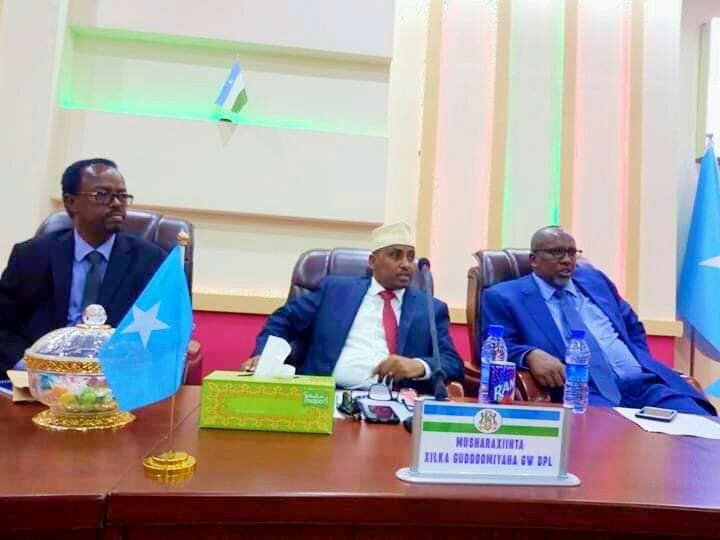 November 14, 2019


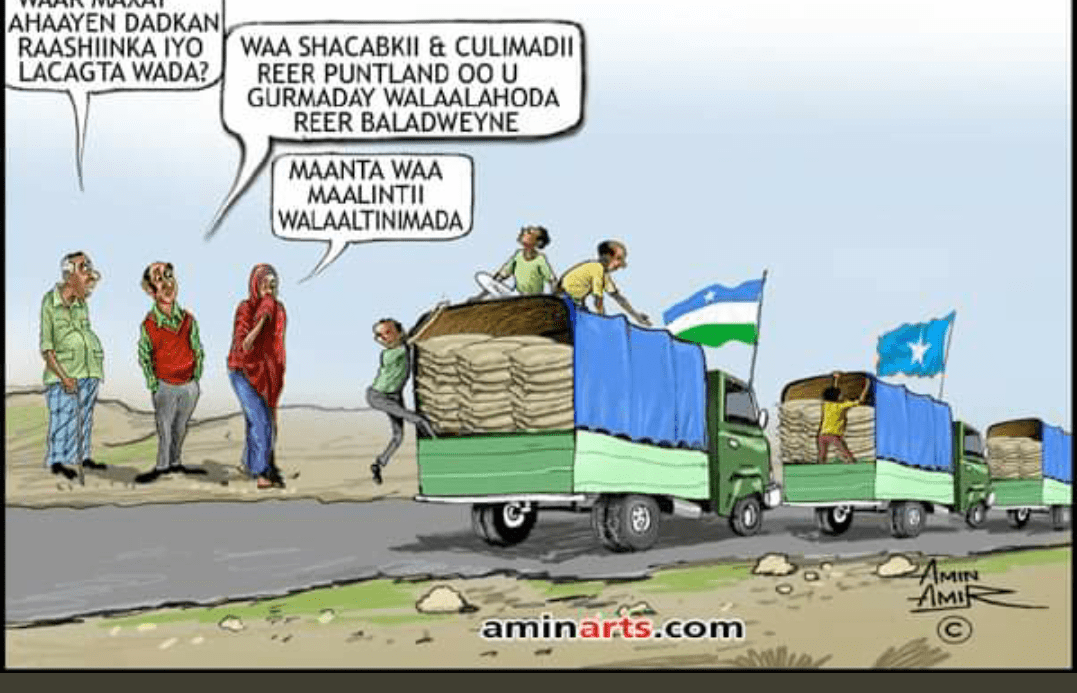


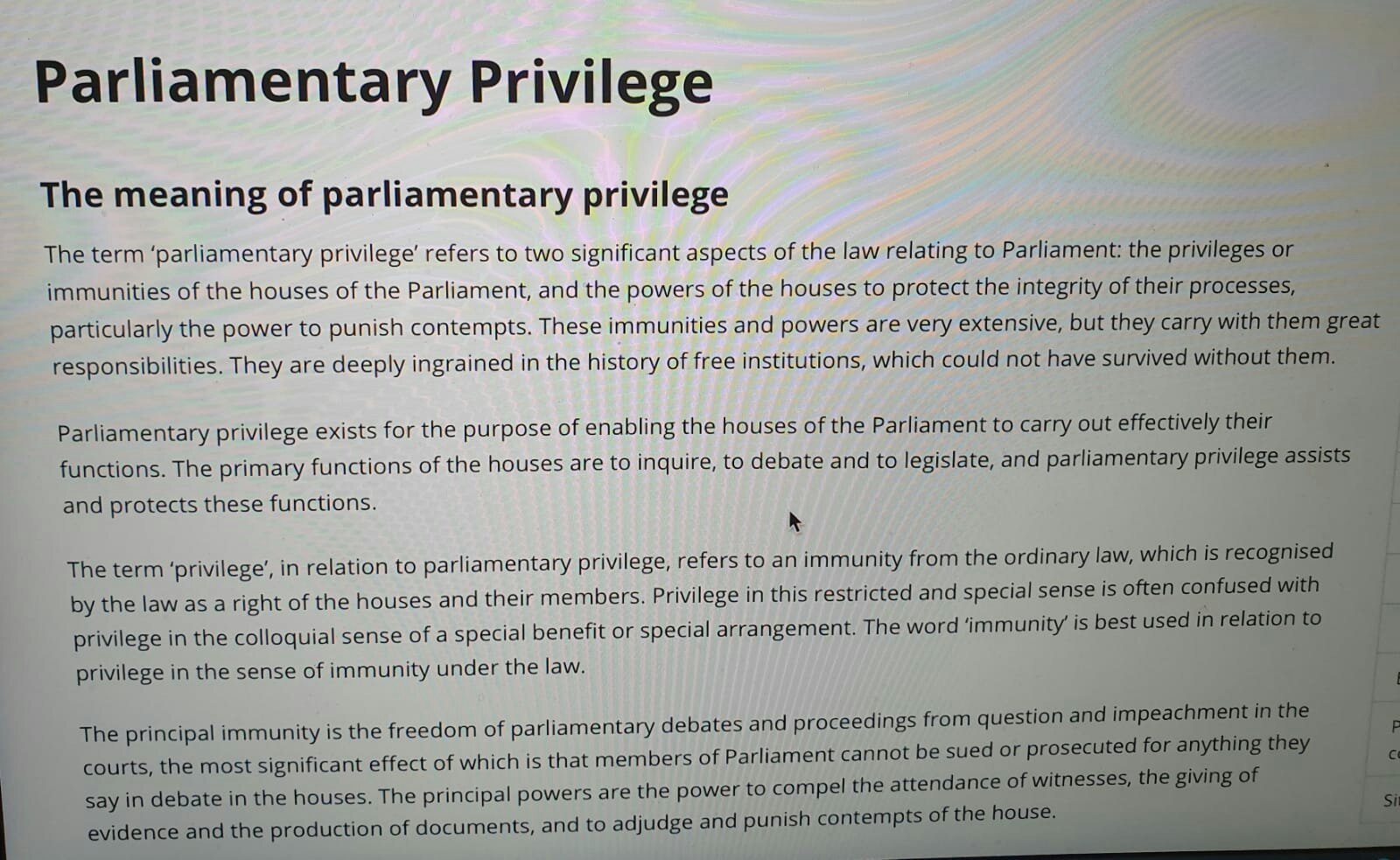

 October 27, 2019
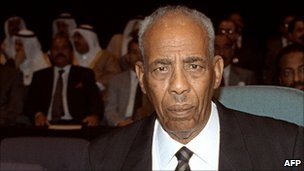
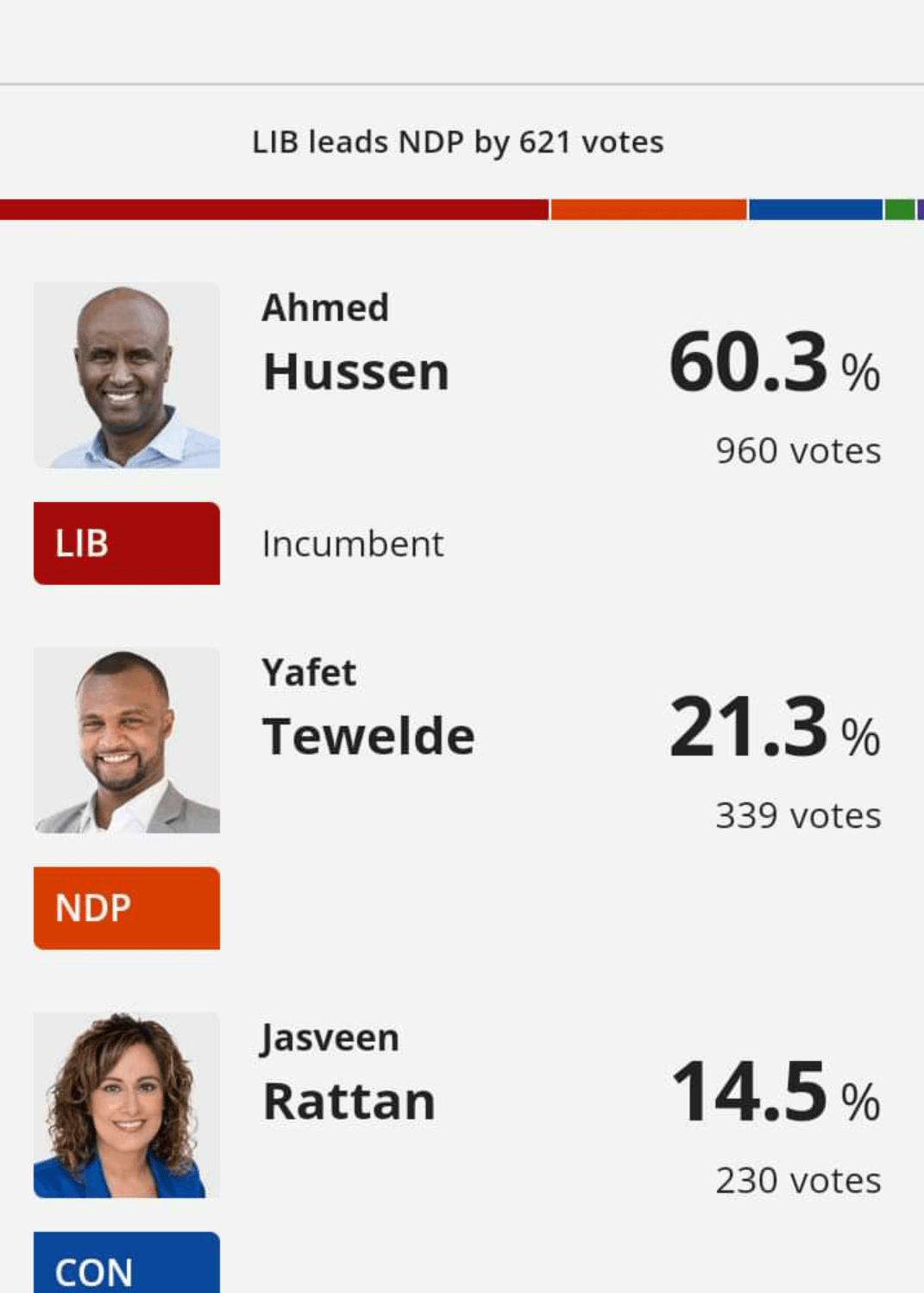
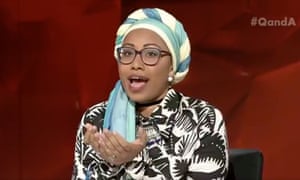
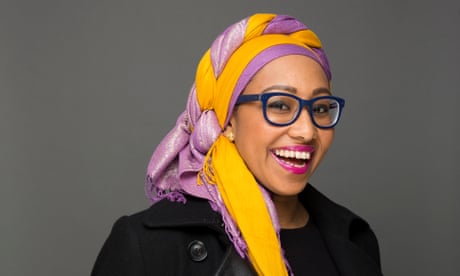


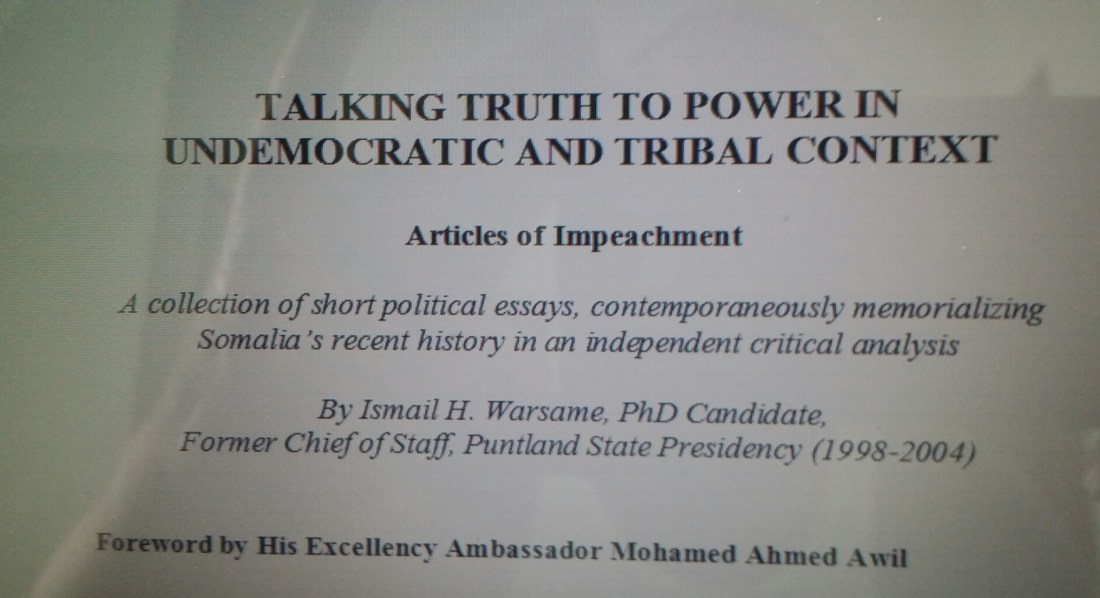

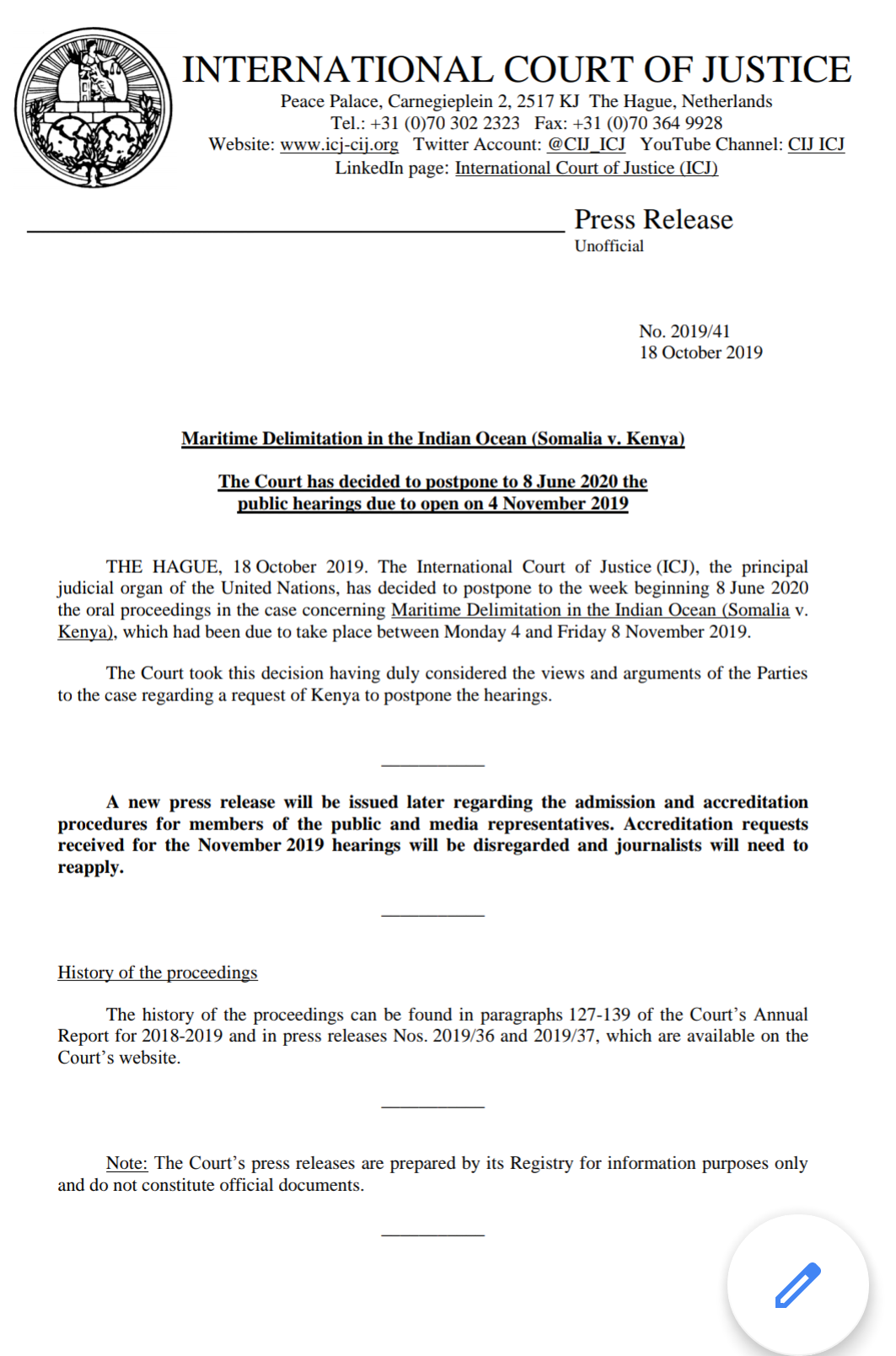
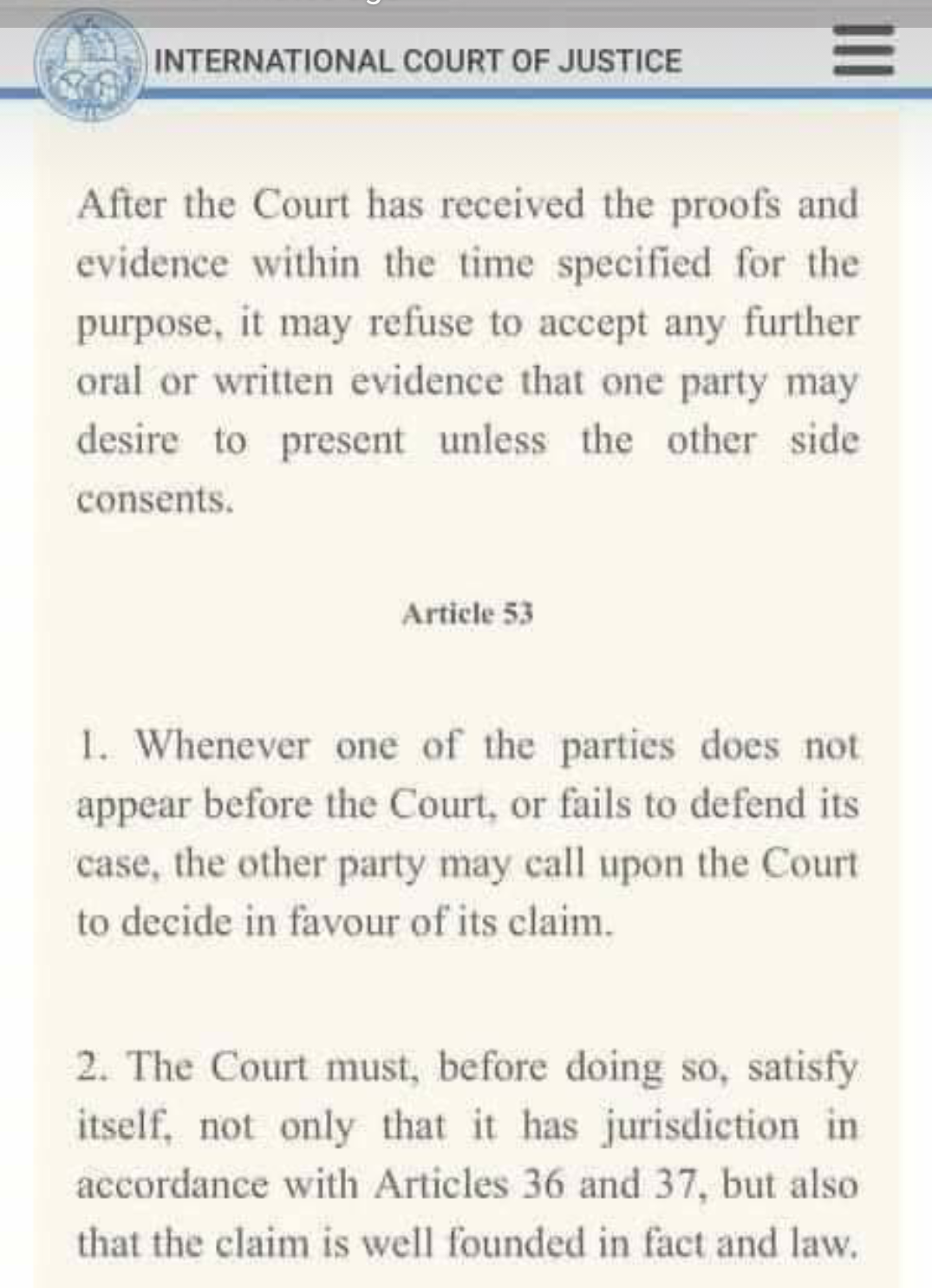
 October 18, 2019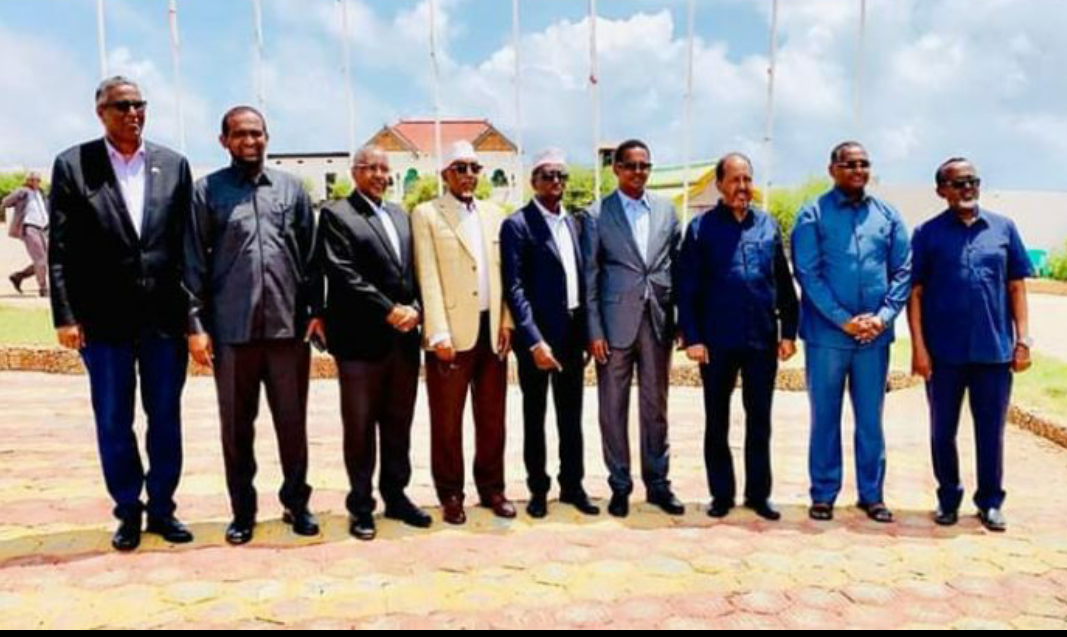
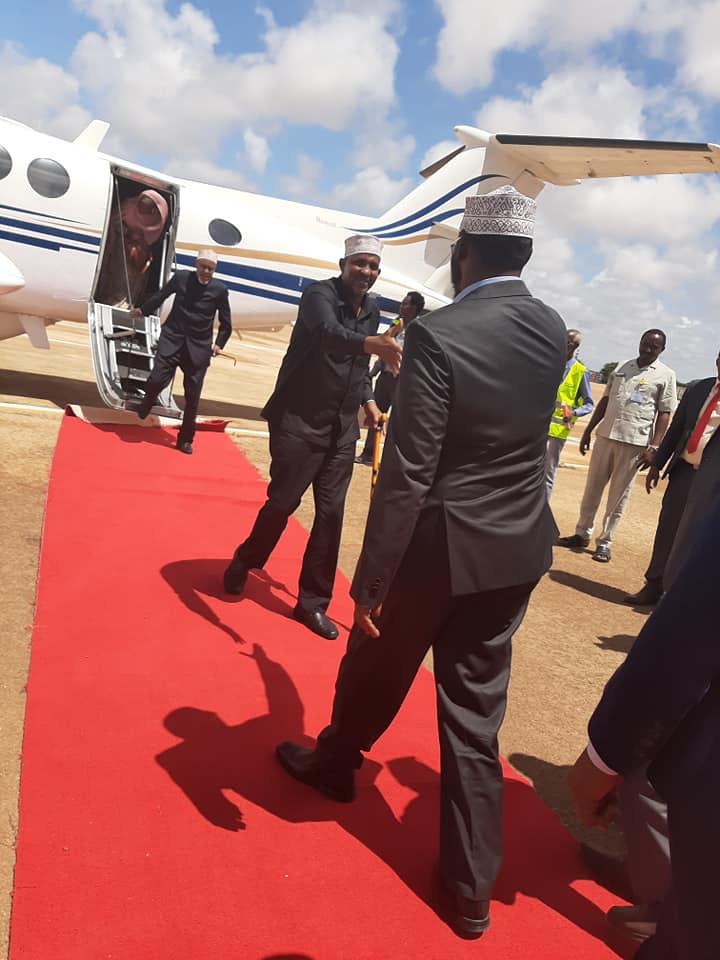


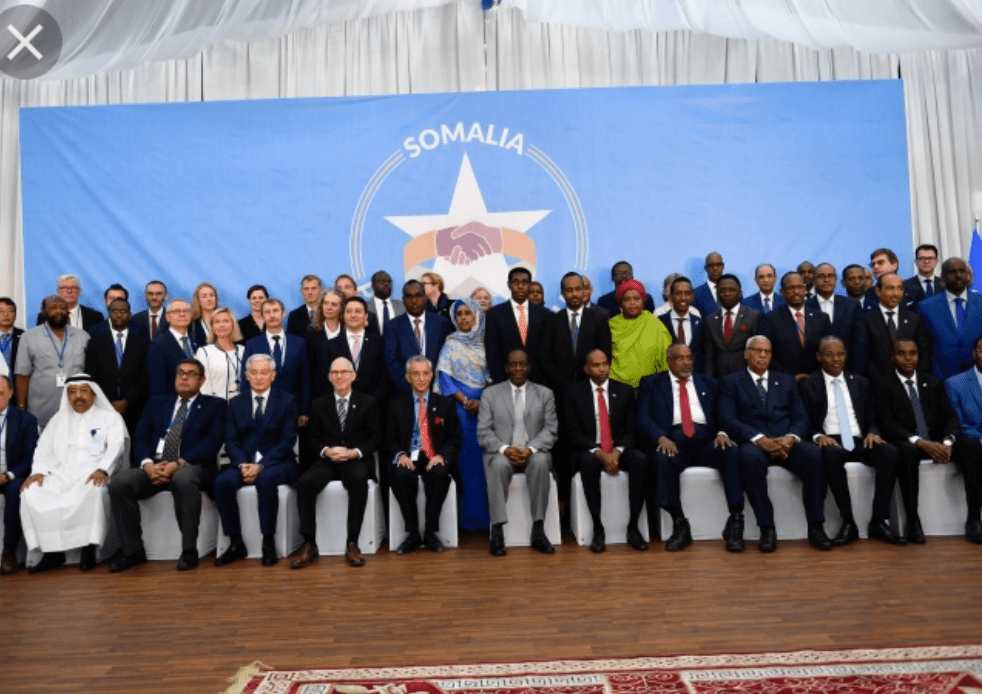
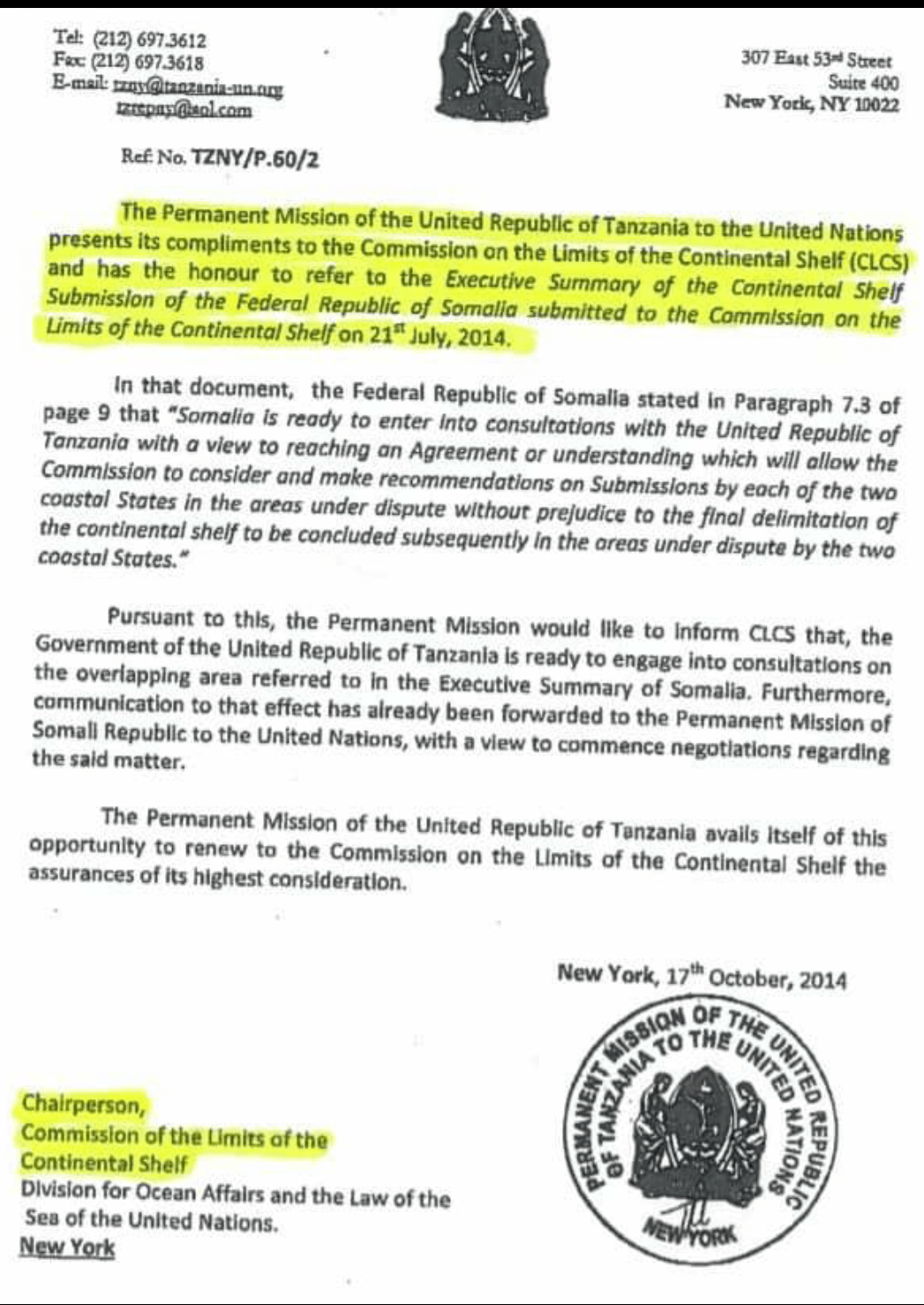



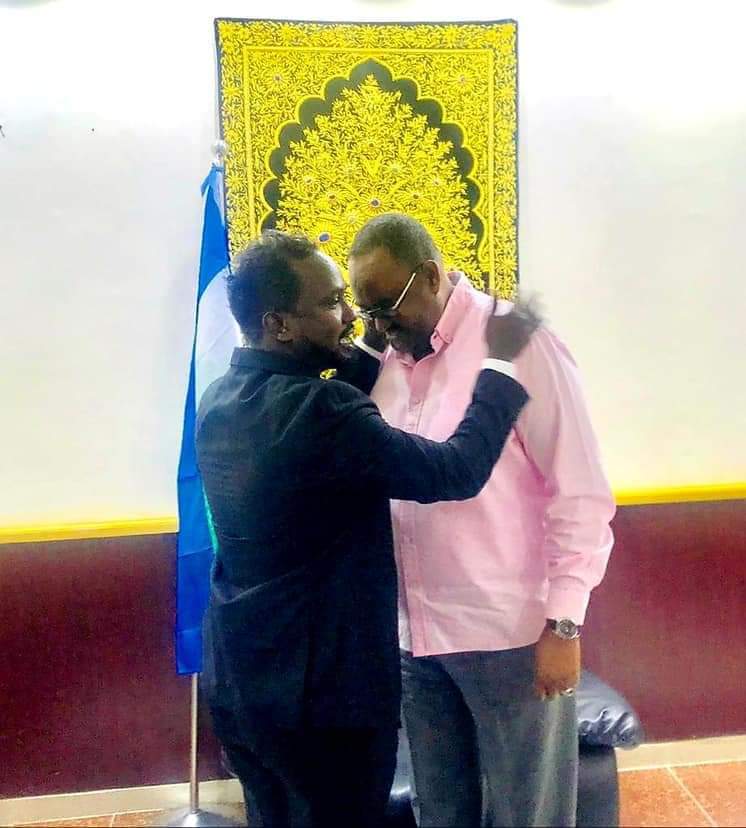

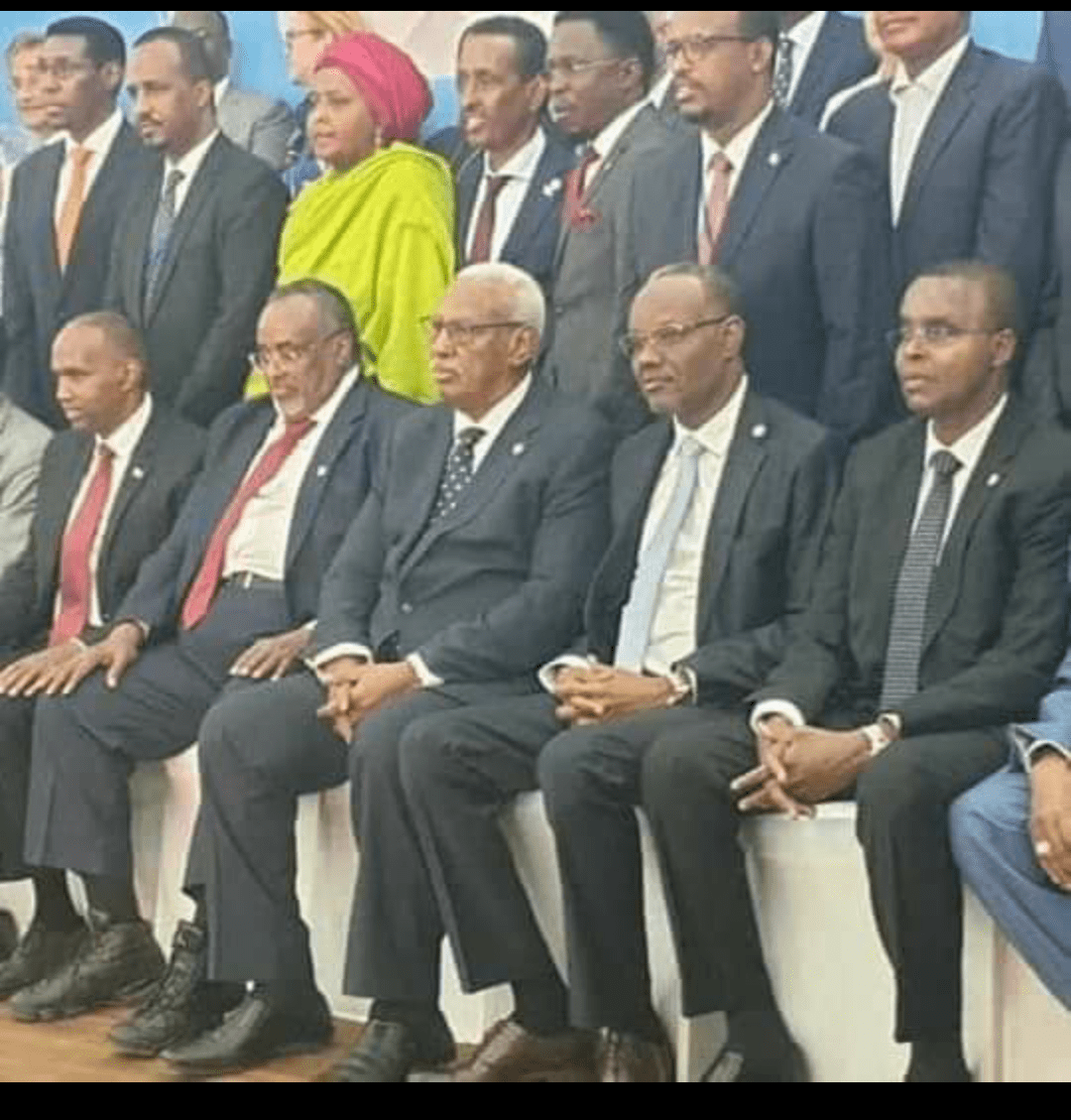

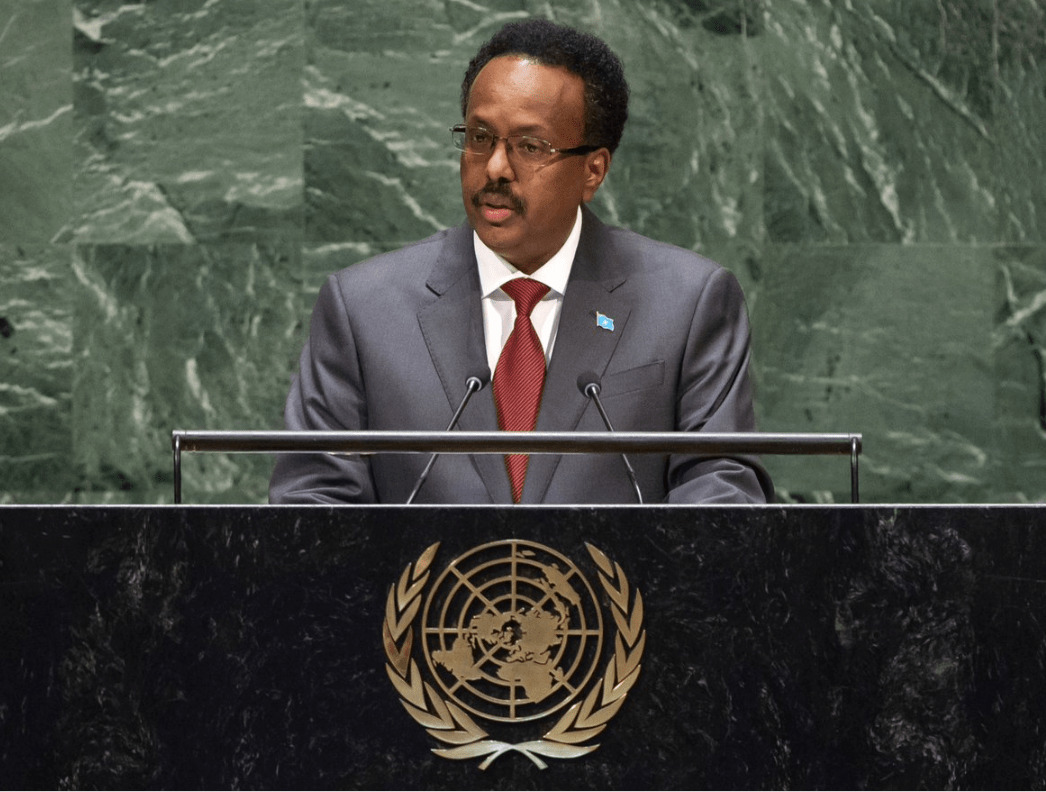

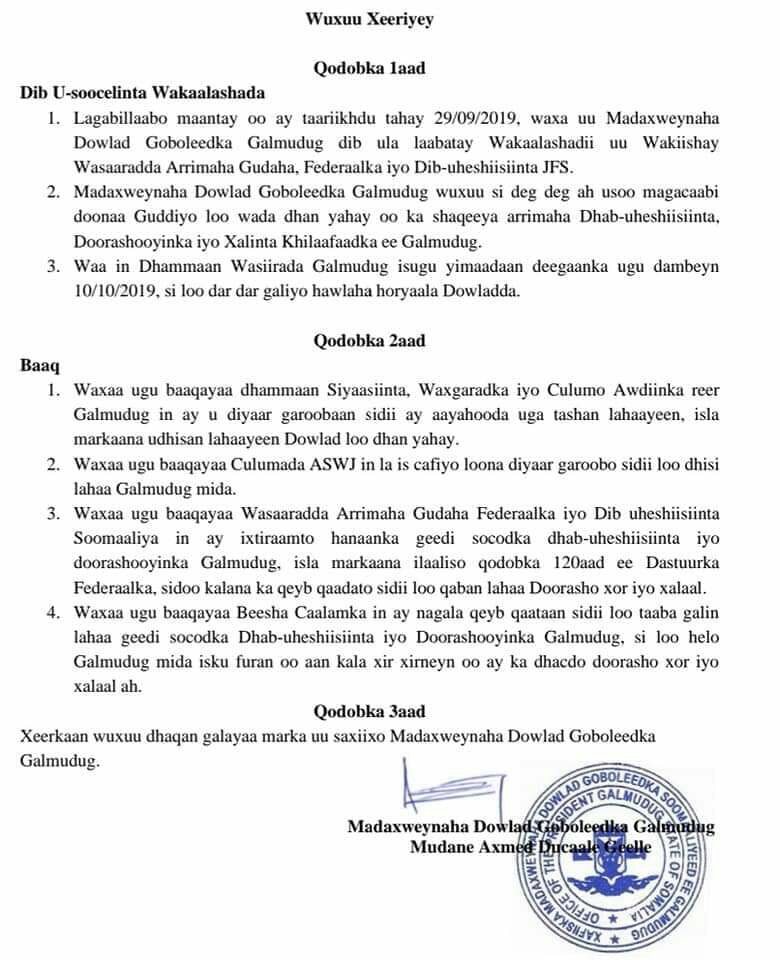

 Warsame Policy & Media Network (WAPMEN)
You must be logged in to post a comment.