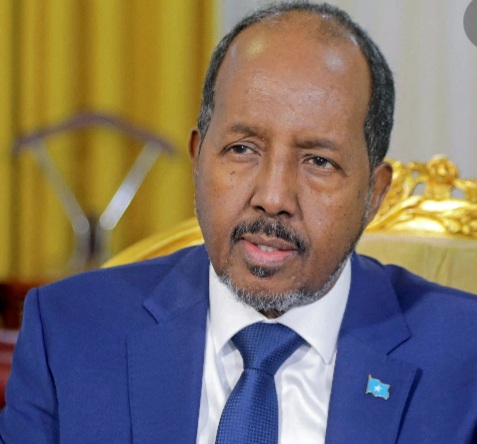
PRESIDENT HASSAN SHEIKH MOHAMUD OF SOMALIA HAS NEITHER SHAME NOR CREDIBILITY

A micromanger by nature surrounded by members of his long time sick-kicks and cronyies of Damul-Jadid clique, a revisionist and ideologically a USC politician, Hassan Sheikh Mohamud has messed up things already in Somali politics since his recent election. To start off, he couldn’t shake off his loyalty and close relationships with TPLF (Tigrean People’s Liberation Front) to sideline current Ethiopian administration of prime Abyi Ahmed. In Somali affairs, he kick-started by annoying almost all leaders of the Federal Member States by the composition of his Cabinet. To add insult to an injury, he brought Mukhtar Roobow Abu Mansur to the government without any assurance that the Alshabab terror leader would be of any benefit to Somalia’s fragile security situation.

In the next few days, Mohamud is reportedly heading to visit Puntland, a state he never understood or recognized its leading role in the formation of Somalia’s State and of Somali history. Whether he knows it or not, President Hassan Sheikh is in political and security mess, some of which he is partially responsible for not taking the time and efforts needed in Mogadishu immediately after he was sworn-in as president. Puntland authorities, who claim they were critical in securing Mohamud’s presidential victory, are reportedly not satisfied with both his style of leadership and appointment of his cabinet. One wonders about the meaning of his visit to Garowe and what offer he could bring to the table other than seeking help out of the mess he is now in.

Mohamud’s weakened political position in Somalia now even before the first 100 days of his presidency saw Jubaland Administration extending its term mandate to one more year without public debate at all in that Federal State. Mohamud has no any leverage, legal or otherwise, to have a say on President Madoobe’s pre-emptive political strike. What is troubling now is that Jubaland’s move could be a harbinger for what other leaders of Federal Member States could do next.

In Somalia’s neighborhood, Abyi Ahmed is fighting back by reconnecting to the leaders of Somali provinces, sideling the center. It is a direct interference in the internal affairs of Somalia, the same way Melez Zenawi used Somali warlords in the height of Somali Civil War. Would Mohamud be able to sail safely in this troubled waters? Time will tell.

IN SOMALIA’S  POLITICS, NOTHING MOVES WITHOUT PUNTLAND

https://ismailwarsame.blog/2019/04/28/in-somalias-politics-nothing-moves-without-puntland/

ON THE STALLED PROCESS OF DEMOCRATIZATION IN PUNTLAND

WDM EDITORIAL

Listening to the on-going debates on DEMOCRATIZATION process in Puntland, one finds misunderstanding and confusion among debaters. There is a mixed-up between holding municipal elections to establish local district councils, and general election for representatives of the House of Parliament and subsequent election of Puntland President. Whose responsibility is it to clear the confusion?

It is the responsibility of the government to campaign for and send out clear message that the job descriptions of TPEC (Temporary Puntland Election Commission) are limited to holding elections of District Councils only. The electoral data or registrations so produced in local elections could be used for the next parliament and presidential elections, given available time and necessary constitutional reforms done. Local elections are also designed to make room and democratic space for viable political parties based on their popular support to compete in subsequent elections.

Direct Parliament and Presidential elections may require certain revisions of Puntland Constitution. But holding local elections are overdue. It is Puntland Government which is sitting on the issue and creating obstacles and confusion in the way of moving the process forward. The administration is projecting fake public image that they are committed to holding the elections. Some observers believe that the authorities have hidden agenda in prolonging the debate with the intention of attempting to seek extension of its five-year mandate, a dangerous proposition based on the history of the State.

President Said Abdullahi Deni and his administration must come out clean on Puntland DEMOCRATIZATION process. They should send unequivocal message that they are serious on the issue and take all the necessary measures, actions and commit all resources by mobilising local and international assistance to complete the remaining elections of the local councils.

WHY SOMALI POLITICAL DOCTRINE IS STILL VALID

The Somali Political Doctrine of never re-electing a president to 2nd term is proved right again, indicating why it was an accident to return Hassan Sheikh Mohamud (HSM) to the seat of power. He had already failed in his first term in office as he was coming from the cold in 2012 presidential election as the leader of Damul-Jadid Group, a semi-religious interest clique. See what is already happening in the security sector under his watch with emboldened Alshabab, while government security apparatus is breaking down due to politicization as they are being treated like political agents of Mohamud’s predecessor, Farmajo.

HSM is a microcosm of all Somali political leaders, who ignorantly defy continuity of government in public affairs- a tendency of every new president to run things anew from the scratch. This is a huge loss of hard works over many decades or at least four years of modest endeavors by previous administration. Wise leaders build on previous societal achievements, and it is the art of statecraft to benefit from experiences and history of a nation.

Every elected (selected) Somali politician has a track record of both his mudane achievements and failures, doing often more harm to the society. Often the failures overshadow any achievements, signaling that they cannot be politically rehabilitated and given a 2nd chance. The Somali Political Doctrine is right even with the rare accident of re-electing President Hassan Sheikh Mohamud.

You are right – you are thinking about the political ratings of the leaders of the Federal Member States. Given your impression of their performances so far, do you think anyone of them deserves re-election?

Have your say.

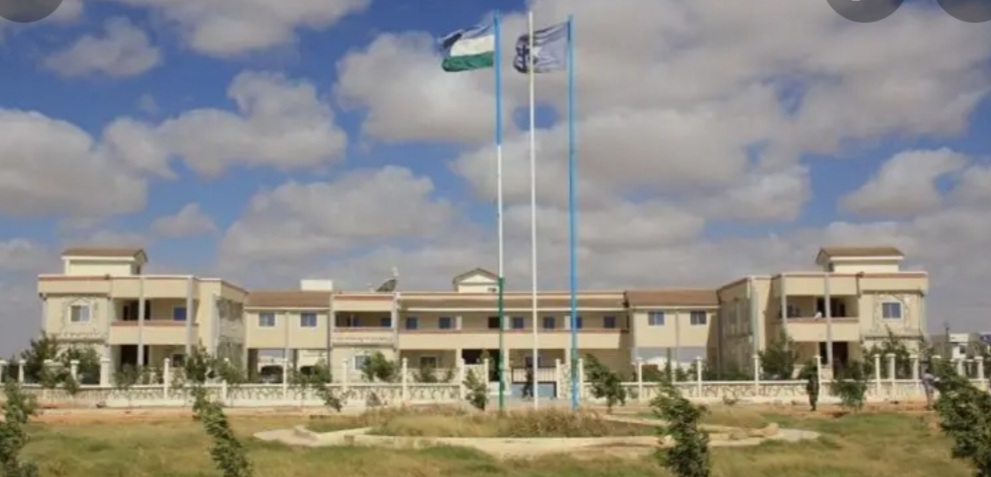
THE WHITE HALL OF PUNTLAND STATE

Puntland Government Quarters

That entire location to the Northern hills of Garowe City as the state property and future offices of Puntland Government was the plan and design by the first administration. Former President Faroole, who started constructing it, was then a minister in the 2nd half of that term. We even brought Indian civil engineers and architectors to do the first sketches. Late Mohamed Abshir Waldo helped us in that regard. The idea was born at conclusion of the Constitutional Congress at 54th Military Garrison Campound off Garowe town and formation of Puntland Government in 1998. It was clear then that Garowe was a crowded village and government offices wouldn’t fit into it.

Further, we knew that, in case of civil disturbances and public demonstrations, government premises would not be safe in overcrowded and tightly constructed Garowe. The late President, Abdullahi Yusuf, being a military man, often emphasized this matter. The Indians Mr Waldo brought for the purpose were masons from Nairobi.

The hills are now the site of Puntland Presidency and various government ministries and State and International Agencies.

Inter-Racial Implications of the Ethiopian Crisis | Foreign Affairs

(Courtesy of ForeignAffairs.com)

Inter-Racial Implications of the Ethiopian Crisis A Negro View By W. E. B. Du Bois.

October 1935 Emperor Haile Selassie in Dessie, Ethiopia, February 1936 Wikimedia Commons Share Save THE hands which the Land of Burnt Faces is today stretching forth to the God of Things-that-be are both physical and spiritual; and today, as yesterday, they twine gnarled fingers about the very roots of the world. Physically, Ethiopia’s fingers are those rough mountain masses of Northeast Africa which form the defensive rampart of the continent and against which Egyptian and Persian and Turk, British and French and Italian, have so far hammered in vain. It is a great pear-shaped mountain mass, cut into island-like sections which are separated by deep gorges and ravines. “It looks,” says the traveller, “like a storm-tossed sea, suddenly solidified.” In these highlands both the Blue Nile and the Atbara rise, and thus Abyssinia commands a full half of the waters of the Nile. It was a German who said that the power which held the Abyssinian highlands could dominate the imperialism of Europe in Africa. On these stark physical facts is built a spiritual history almost as old as man and yet half forgotten even in the recent revival of strained interest in the Land of the Blacks. Why, for instance, is Haile Selassie Emperor of “Ethiopia” and not of “Abyssinia,” as his predecessors often called themselves? Abyssinia is a word of Semitic origin, but Ethiopia is Negro. Look at the pictures of Abyssinians now widely current. They are as Negroid as American Negroes. If there is a black race they belong to it. Of course there are not and never were any “pure” Negroes any more than there are “pure” whites or “pure” yellows. Humanity is mixed to its bones. But in the rough and practical assignment of mankind to three divisions, the Ethiopians belong to the black race. In the mountains of Abyssinia the black hordes from the region of the Great Lakes have been mixed with Semitic strains from the shores of the Red Sea, where Asiatic upheavals have driven Jews and Arabs to Africa. The trading station at Axum, near modern Adua, was a gateway for merchants and brought Ethiopia and Abyssinia in contact. This kingdom took its name “Abyssinia” from a Semitic tribe, “Habesh.” But the people of Habesh were neither contented nor safe in being simply Abyssinians. Trade and defense forced them toward ancient Ethiopia in the Nile valley, and they disputed with the Arabs and Nubians over the domination of the island of Meroe. Here they claimed sovereignty as early as 356 A. D., and actually destroyed the capital a century later. Greek and Roman influence filtered into Abyssinia from the East, and trade made Axum flourish. Myths about its origin began to arise: the Jewish myth of the descent of its royal house from Solomon; the Negro myth of its descent from Aethiopis, whose tomb was pointed out in Axum. The new Christian religion came to Abyssinia in the fourth century and thus a third great center of Christianity, after Rome and Constantinople, was established. Then came waves of conquest from the north, and the history of Abyssinia becomes dim and shadowy. As Gibbon has written, “Encompassed on all sides by the enemies of their religion, the Ethiopians slept near a thousand years, forgetful of the world by whom they were forgotten.” It was not until the sixteenth century that the Portuguese again brought Abyssinia to the attention of the world, by locating there the source of the legend of Prester John, that ghostly Christian ruler who during the Middle Ages was supposed to reign in Africa or India. Stay informed. In-depth analysis delivered weekly. Sign Up II This is the land that in 1935 comes suddenly to the world’s attention by being involved in war and rumors of war, a threat to the sanctity of international agreements, a crisis in Christianity, foreboding a new orientation in the problems of race and color. To understand this let us note the changes through which the color problem has passed. The mediæval world had no real race problems. Its human problems were those of nationality and culture and religion, and it was mainly as the new economy of an expanding population demanded a laboring class that this class tended here and there to be composed of members of alien races. The attempt, however, to expand the application of the factory system to the new land of America met difficulty: first, the opposition of right-thinking men and women to the methods of slave trading; and secondly, the democratic movement to lift the laboring classes. With the end of the slave trade and the general emancipation of slaves, the problems of race did not disappear but simply were transformed. The imperialist nations of Europe first used their African colonies as reservoirs from which to import slaves. But in the nineteenth century they began exploiting their African subjects on a large scale in the development of Africa itself. No problem of race and color need have arisen, under such circumstances, had there not been so wide a difference in cultural level between European and colonial peoples. The belief that racial and color differences made exploitation of colonies necessary and justifiable was too tempting to withstand. As a matter of fact, the opposite was the truth; namely, that the profit from exploitation was the main reason for the belief in race difference. When Germany, Belgium and Italy saw what chances for profit were furnished the other Powers through the possession of colonies, they determined to construct their own colonial empires. Indeed, they felt that if they were to follow the path of modern industrialism, they must do so or die. Asia, South America and Africa were the areas open to expansion, but in differing ways. Asia, the seat of highly developed civilizations and states, was less susceptible to direct political control by Europe than to its economic tutelage through capital investments. Yet before the war Japan alone seemed destined to escape European dominance. South America was protected from European political interference by the Monroe Doctrine. The white ruling classes there were served by the Indian peons and laborers, against whom racial discrimination was practiced, though not so sharply as in Asia and Africa. In Africa, however, and in the West Indies, the policy was definitely to dominate native labor, pay it low wages, give it little political control and small chance for education or even industrial training; in short, to seek to get the largest possible profit out of the laboring class. There were of course local variations of this general economic problem. In the United States, chiefly in the South, eight or ten million former slaves formed a laboring class with the nominal rights of free laborers but actually subject to caste. In the West Indies, both British and French, there was a similar condition, except that the exploiting capitalists were fewer and recruited their ranks from among the rich natives. Three black countries were nominally free: Haiti, by revolution; Liberia, by settlement of American blacks; and Ethiopia as a strange survival of one of the most ancient human states. Cutting across these economic arrangements, buttressed by theories of race and color, ran the effort of the Christian religion to spread its propaganda among the natives. The result is one of the most astonishing and baffling phenomena of modern times, one which because of the contradictory nature of the facts involved makes it almost impossible to argue about race problems. For instance, it is undoubtedly true that Christian missions were a great factor in the civilization of the African and American Negroes, and that they exercised some influence in Asia. On the other hand, there also is no doubt that industry and economic exploitation continually used Christianity as a smoke-screen to reduce the natives to submission and keep them from revolt. Sometimes the Christian workers were entirely unconscious of their rôle in this respect. At others, they rationalized the whole system and argued that the best thing which could happen to the poor natives was to become docile Christian workers under the profit-makers of Europe. One can see current cases of this sort in the work of the White Fathers in Uganda and of both Protestant and Catholic missions in the Belgian Congo. Such was the situation at the time of the World War. The war brought about a revolution of thought in regard to race relations. Japan, instead of being regarded as the exception, came to be looked upon as heralding a new distribution of world power. It was no longer considered the destiny of the white race to rule the world, but to share the world with colored races who more and more would become autonomous. The question was how thoroughly and how quickly they could assume self-rule. It was, for instance, generally admitted that when China got over the birth-pains of evolving a new order, she was going to be a self-ruling nation freed of white dominance. When the movement for self-rule in India became formidable, a small measure of self-government had to be granted, with the distinct promise that in the long run India would become a dominion within the British Empire. Haiti, after being occupied by the United States for twenty years, gained a nominal political freedom, though at the price of shouldering an enormous debt which will keep her in chains for many generations. Liberia was practically mortgaged to the Firestone Rubber Company after being threatened with absorption by both France and Great Britain. Ethiopia, on the other hand, had kept comparatively free of debt, had preserved her political autonomy, had begun to reorganize her ancient polity, and was in many ways an example and a promise of what a native people untouched by modern exploitation and race prejudice might do. Against the current of the new ideals strikes the program of Italy—a program conceived in the worst of the prewar ideology. It accuses Ethiopia of savagery because she is not an industrialized state and because she still harbors the institution of domestic slavery, forgetting that the slavery which survives in Ethiopia has nothing in common with the exploitation of slaves through the slave trade or modern industrialism. Italy proposes openly to deprive this African people of its land, always the first step toward rendering them economically and politically helpless. This was one of the first measures taken by England, France, Portugal and Belgium to establish their economic power in Africa. In India and in China it lies at the bottom of economic exploitation. But in most of these cases the process is hidden by legal phrase and chicanery. Seldom has it been so openly and brazenly declared as in the present case where Italy simply says that she needs the land of the Ethiopians for her own peasants. There seems to be little doubt that the demand of certain states to participate in an increased colonial exploitation of Africa was a principal cause of the World War, and that it heightens the danger of another similar conflagration. Germany before the war had economic footholds in Asia and Asia Minor which seemed to promise well for the future. But she was not satisfied in Africa; she regretted her loss of Uganda and the chance to share in the exploitation of the upper Nile valley. She undoubtedly proposed sooner or later to dispossess Belgium in the Congo, and she did not intend to allow France to monopolize Lake Chad and the upper valley of the Niger. Her determination to accomplish these objects was one of the reasons why she welcomed war. Today in somewhat the same way Germany is determined to have back her colonial empire and Italy is determined to make France and England fulfill to her the indefinite promises of the Treaty of London of 1915. Toward this end Mussolini and Hitler sought to cement an alliance, but the project was suddenly ended by the attempt of the Nazis to take possession of Austria. This alarmed both France and Italy and threw them into each other’s arms, with the result that France withdrew her opposition to Italian expansion in Ethiopia. But if Italy takes her pound of flesh by force, does anyone suppose that Germany will not make a similar attempt? Then, too, there are other fears. The Arabs hate Italy for the ruthless slaughter which accompanied her seizure of Tripoli and Cyrenaica. Japan has gained a considerable part of Ethiopia’s trade, while Indian merchants have invaded all of East Africa. This oriental influx has raised the problem of political rights and civil liberty in an acute form; the white exploiters of Africa have repeatedly asked that Asiatics be excluded. Italy has now mobilized against Ethiopia, in spite of the League of Nations, in spite of her treaty of arbitration, in spite of efforts at conciliation and adjustment. She does not disguise her intention to seize Ethiopian territory. She may not attempt complete subjugation—the inner citadel is very strong. But annexation of the plateau and economic strangulation would accomplish much that direct force cannot do immediately. All this is not pleasant reading for those who pin their faith on European civilization, the Christian religion and the superiority of the white race. Yet these are the bare facts. They might be differently interpreted and variously supplemented, yet under any form they remain a story of selfishness and short-sightedness, of cruelty, deception and theft. III The probabilities are that Italy, by sheer weight of armament and with the complaisance of Europe, will subdue Ethiopia. If this happens it will be a costly victory, both for Italy and the white world. There will be not only the cost in debt and death, but the whole colored world—India, China and Japan, Africa in Africa and in America, and all the South Seas and Indian South America—all that vast mass of men who have felt the oppression and insults, the slavery and exploitation of white folk, will say: “I told you so! There is no faith in them even toward each other. They do not believe in Christianity and they will never voluntarily recognize the essential equality of human beings or surrender the idea of dominating the majority of men for their own selfish ends. Japan was right. The only path to freedom and equality is force, and force to the uttermost.” Nor will Italy’s indefensible aggression prove to the dark peoples their weakness; rather it will point the path to strength: an understanding between Japan and China will close Asia to white aggression, and India need no longer hesitate between passive resistance and open rebellion. Even black men will realize that Europe today holds Africa in leash primarily with African troops, a religion of humility, vague promises and skilfully encouraged jealousies. One of these days the very troops by which Europe holds Africa may cease to play the part assigned them. Turning from this drear prospect of blood and waste, suppose we contemplate the possibility that Ethiopia succeeds in repulsing Italy or even in holding her for months in check. This does not now seem probable, but it is possible. What would be the result? A grim chorus from the dark worlds: “The spell of Europe is broken. It is the beginning of the end. White can no longer depend on brute force to make serfs of yellow, black and brown.” Such reasoning may be fallacious and fail to accord Europe and the white race due credit for bringing the mass of men into the circle of human culture. But it is inevitable. Italy has forced the world into a position where, whether or not she wins, race hate will increase; while if she loses, the prestige of the white world will receive a check comparable to that involved in the defeat of Russia by Japan. Black men and brown men have indeed been aroused as seldom before. Mass meetings and attempts to recruit volunteers have taken place in Harlem. In the West Indies and West Africa, despite the efforts of both France and England, there is widespread and increasing interest. If there were any chance effectively to recruit men, money and machines of war among the one hundred millions of Africans outside of Ethiopia, the result would be enormous. The Union of South Africa is alarmed, and in contradictory ways. She is against Italian aggression not because she is for the black Ethiopians, but because she fears the influence of war on her particular section of black Africa. Should the conflict be prolonged, the natives of Kenya, Uganda and the Sudan, standing next to the theater of war, will have to be kept by force from joining in. The black world knows this is the last great effort of white Europe to secure the subjection of black men. In the long run the effort is vain and black men know it. Japan is regarded by all colored peoples as their logical leader, as the one non-white nation which has escaped forever the dominance and exploitation of the white world. No matter what Japan does or how she does it, excuse leaps to the lips of colored thinkers. Has she seized Korea, Formosa and Manchuria? Is she penetrating Mongolia and widening her power in China itself? She has simply done what England has done in Hong Kong and France in Annam, and what Russia, Germany and perhaps even the United States intended to do in China. She has used the same methods that white Europe has used, military power and commercial exploitation. And yet in all her action there has been this vast difference: her program cannot be one based on race hate for the conquered, since racially these latter are one with the Japanese and are recognized as blood relatives. Their eventual assimilation, the accord of social equality to them, will present no real problem. White dominance under such circumstances would carry an intensification of racial differences. Conquest and exploitation are brute facts of the present era, yet if they must come, is it better that they come from members of your own or other races? To this question Italy is giving a terrible answer. Though the center of the Catholic Church and the home of the Renaissance of modern culture, she says flatly: We are going to subdue an inferior people not for their good but for ours. We are going to take Ethiopia just as we took Somaliland and as England took Kenya. We are going to reduce black men to the status of landless serfs. And we are going to do this because we have the power to do it, and because no white nation dare stop us and no colored nation can. The moral of this, as Negroes see it, is that if any colored nation expects to maintain itself against white Europe it need appeal neither to religion nor culture but only to force. That is why Japan today has the sympathy of the majority of mankind because that majority is colored. Italy’s action in Ethiopia deprives China of her last hope for aid from Europe. She must now either follow Japan or fall into chaos. In India, Gandhi made one of the finest gestures of modern days toward realizing peace and freedom in a distracted land. To this and other forces England has yielded enough not to endanger the profits of her investors or the domination of her army. Her skilful use of the differences between Mohammedans and Hindus, between the upper castes and the untouchables, between the princes and the popular leaders, may make real progress in India negligible for many generations. The result of Italy’s venture must inevitably tend to destroy in India whatever faith there is in the justice of white Europe. Let us turn now to the Africas, which may be said to include the British West Indies and the Negroes of the United States. In South Africa a small white minority of Dutch and English descent have already done much to reduce the natives to the position of landless workers. They propose to further this degradation by drastic means; to deprive of the right to vote even those few educated Negroes who now enjoy the franchise; and to continue to deny the colored population any representation in the legislature. Educational facilities for the blacks are to be increased very slowly, if at all. All this is to be done with the intention of forming an abject working class below the level of the white workers. This program the Union of South Africa is enforcing not only on its own black citizens but on those of its mandate, South West Africa. In order to make it uniform, the Union is trying to obtain control of the British colonies in Basutoland and the Rhodesias, thereby consolidating the serfdom of the black man in South Africa. Italy now proposes to do exactly what South Africa has done without the frank Italian statement of aims. South Africa rightly fears resentment and disillusionment among her own blacks, who are still being fed with the idea that Christianity and white civilization are eventually going to do them justice. For the more radical natives and the few with education, the Italian program merely confirms their worst fears. British East Africa consists of three parts: Tanganyika, Kenya and Uganda. In Kenya, a system of seizing native land and denying the natives education and all political rights has been persistently followed, with little real change even under the British Labor Government. The whites of Kenya have gone so far as to regard themselves as defending a modern Thermopylae against a new attack from Asia in the form of Indian merchants and Japanese commerce. They openly say that since Asia presents more and more limited opportunities for white exploitation, Europe must concentrate on the domination of African land and labor. In Tanganyika and Uganda, there have been different degrees of the celebrated British “indirect” rule, namely the method of supporting in power such native rulers as pursue policies favorable to the ruling whites. This method preserves native customs, but stifles reform and keeps education at a minimum. It brings peace, but usually peace without progress. This is the case in Tanganyika; but in Uganda, where there was considerable native culture before annexation, native development may break its bonds and go forward. Such peaceful and natural development, however, depends upon the faith which the people of Uganda have in the justice of the British. Such faith will not be increased by the action of Italy and the hesitation of white Europe. This venture of African conquest may well bring back to the intelligent people of Uganda a memory of the outrageous way in which Protestants, Catholics and Mohammedans murdered natives in Uganda for the glory of God. In British West Africa we find the widest development of the principle of indirect rule, which approaches autonomy in some cases. Moreover, these colonies were established and had some political power before the policy of land sequestration had begun. Thus black West Africa owns its own land and this gives it unusual economic power. Nevertheless, legislation is largely in the hands of the governors and the British Chambers of Commerce (a curious political development which has not been widely noticed), and there is in West Africa a continuous, overt, or partly concealed, battle between the educated blacks and the exploiting British. The British have lately tried to circumvent the black intelligentsia by increasing the power of the chiefs, even to the extent of conferring knighthood on two of them. In this situation the action of Italy and the weakness of the League will make a very unfavorable impression. The leaders of black West Africa, some of whom have been educated in the best English universities, will be convinced that the policy of submission and dependence upon the good will of Europe will never insure eventual autonomy and economic justice in black Africa. French and Portuguese Africa present quite different problems. The French have put forth every effort to make it possible for educated and ambitious natives to be absorbed into the French nation. Contrary to the British custom, the French schools are not blind alleys which prevent natives from going too far in education, but are articulated with the French university system. This does not mean, however, that education is widespread in French black Africa. The exploitation of labor precludes this. At most this liberty means a chance for the few that can take advantage of it; but they are very few, and the result is mainly to drain off and Frenchify the native leadership of the blacks. This class of educated natives becomes a part of the ruling French caste and leaves little to choose between white and black exploiter. The black man educated in France has no native ideals for the uplift of his fellows. There is, in Senegal, Algiers and Tunis, no such color line as one finds in India and South Africa and Sierra Leone. But there is, on the other hand, just as great poverty, exploitation and stagnation. Will not the masses of the French black world be taught by new white aggression in Africa that leadership from without offers nothing, even though that leadership is placed partially in black hands? In the Belgian Congo the unrest of the black masses has long been manifest. There the policy has been to educate no Negro leaders and to develop no black élite. There have been fierce native revolts, but there has been scarcely a single instance of an educated black leader whom Belgium has tried to use for the uplift of the black mass. Even without adequate leadership, the unrest will increase. The mulattoes of the British West Indies, and the richer and more intelligent blacks, have been so incorporated with the ruling British that together they hold the mass of black workers in a vise. The number of voters and landholders is limited. The means of livelihood depend entirely upon the employers, and the wage is low. Masses of the workers migrate here and there. They built the Panama Canal. They work in Cuban cane fields. They came to the United States. The unrest in these islands is kept down only by starvation and severe social repression. Only a word needs to be said concerning the Negroes in the United States. They have reached a point today where they have lost faith in an appeal for justice based on ability and accomplishment. They do not believe that their political and social rights are going to be granted by the nation so long as the advantages of exploiting them as a valuable labor class continue. Moreover, while some of them see salvation by uniting with the white laboring class in a forceful demand for economic emancipation, others point out that white laborers have always been just as prejudiced as white employers and today show no sign of yielding to reason or even to their own economic advantage. This attitude the action of Italy tends to confirm. Economic exploitation based on the excuse of race prejudice is the program of the white world. Italy states it openly and plainly. The results on the minds and actions of great groups and nations of oppressed peoples, peoples with a grievance real or fancied, whose sorest spot, their most sensitive feelings, is brutally attacked, can only be awaited. The world, or any part of it, seems unable to do anything to prevent the impending blow, the only excuse for which is that other nations have done exactly what Italy is ” https://www.foreignaffairs.com/articles/ethiopia/1935-10-01/inter-racial-implications-ethiopian-crisis#:~:text=Explore,what%20Italy%20is

Watch “Populism, Explained Simply” on YouTube

https://ismailwarsame.blog/2022/07/07/watch-populism-explained-simply-on-youtube/

DR ABDIRAHMAN BEYLE: THE SOMALI PRINCE OF CORRUPTION, NEPOTISM AND PUBLIC THEFT

https://ismailwarsame.blog/2022/06/30/dr-abdirahman-beyle-the-somali-prince-of-corruption-nepotism-and-public-theft/

SECURITY STATUS QUO IN MOGADISHU IS UNSUSTAINABLE

WDM EDITORIAL

Residents of Mogadishu and fledgling Federal Government of Somalia have been coexisting with extremist groups and various religious Tariqas for decades now. You can’t fight back against these extremists when the society itself is split along religious lines, when the government is headed by one of those religious sects (Damul-Jadid), the rank-and-file of the security forces are infiltrated by terrorists or recruited mainly from a few subclans from the vicinity of Banadir Region, with mistrust caused by Civil War still fresh in the minds of people, and Federal officials and administrators are being intimidated by Al-Shabab and ISIS on daily basis.

Unless there is a serious commitment on the part of impowered Judiciary (judges, police, secret services) with sound public policy behind them to address the epidemic of Al-Shabab and underlining problems of government security apparatus, Mogadishu and rest of the country will coexist with another government by the extremists, who are bent to take over the country and beyond in the same way Taliban have been projecting, and eventually succeeded.

Alshabab, Alqaeda and ISIS are no different from other historical Mafia groups. They coexist with corrupt societies and compromised security personnel. Since they thrive in intimidating members of the general public, they extort money and new recruits..

World community can’t help out Somalia in this fight in the absence of Somali authorities ready to get rid of the menace of terrorism from their own land.

SOMALIA: A COUNTRY WHOSE GOVERNMENT OFFICIAL TITLES CORRESPOND NO MERIT

In 1969 the post-colonial government of Somalia had been overthrown by a military junta led by general Siyad Barre, the commander, with the help of the Soviet KGB. Soon the junta declared a pseudo-socialist order in Somalia. The military regime started pursuing policy of house cleaning by uprooting the educated, especially those from Majeertaine community. These were considered anti-revolutionaries and reactionary bourgeoisie. They were purged from public and security services in the same way Pol Pot of Kampuchea (Khmer Rouge) did. Soon the junta found itself with huge job vacancies in all government departments. They couldn’t afford to hire expatriates like Indians, Pakistanis, Philippinos, etc. The junta instead devised “Crush and Literacy” campaigns to prepare cadre resource to fill in the employment gaps. In 1975 these ill-prepared semi-literate favorites of the “revolution” graduated from adult night schools to take up jobs in all badly affected sectors of the country. Anybody among the recruites could be appointed to any job title, or any police and military rank. It isn’t an exaggeration that an office cleaner had been appointed director general of the same ministry he was a cleaner only recently. Official titles lost any meaning of merit. This is the main reason why Somalia’s State had failed.

“Somalis are the most dangerous people. They call you General, Ambassador, while they know you are neither of them. By hearing this address so often, you would finally accept the title”, Said Col. Gebre, the Ethiopian military/political commissar, when I met him in Baydhaba in 2006.

Later, resistance to the military dictatorship grew within all Somali clan system proportional to the repressive measures by the junta, until the regime withdrew in its last breath in January 1991 – a total collapse of public institutions taking place and expulsion of its dictator, Siyad Barre, from the country. He died in exile in Nigeria a decade later.

As Somali State collapsed in 1991, former government officials and high ranking security officers found themselves refugees mainly in Europe, Australia and North America. To earn one’s living in those countries, one has to get a job. You can’t get hired without relevant labour and social skills. Big titles from Siyad Barre Regime couldn’t do the trick.

We should return to meritocracy, the value of hard work and experience and quality education.

WHY SOMALIS SHOULD BE WORRIED BY MARCH OF HISTORY

Nearly 6 decades have passed since Somalis made first missteps in their attempts to create a strong nation-state. They blame a few things for their misfortune: Neo-colonialism, tribalism and religious sectarianism. They never find faults in their ways of life and attitudes towards collective bargaining. They are adverse to critical thinking and unemotional take of stuff they deal with on daily basis is amazing. They are quick to self-defence and don’t go half-way to consider other party’s interests. They don’t appreciate the ingenuity and entrepreneurship of their rivals in every field of human endeavors. Clan rivalries over centuries had created a peudo-culture of cynicism towards each other. In politics, they don’t agree on anything, even among long-term friends and school classmates. One may tempted to consider this phenomenon as egalitarianism, but think how destructive it may be to discover people who couldn’t agree on their own common good. Many of them don’t understand the importance of these statements and to ask questions about the way they live and upbring their offsprings could put you in trouble, citing convenient religious messages to avoid accountability. They desire for everybody to fail. Isn’t this a recipe for failure for all?

Note, time and history aren’t waiting for you to put your house in order. History marches on with or without you. A nation, nationality and race are like company businesses – if they don’t compete, they die and give way to the rise of more adventurous and successful entrepreneurs. It is already happening here with foreign troops in our country because we couldn’t govern ourselves, we have defenseless, porous and stretched borders with our historical enemies, and unguarded longest coastline in Africa, and most unfortunately, we have merceless extremists tearing us apart and inside out, and with no agreed upon public policy and strategy to fight back. Our political leaders have no vision beyond staying on under their poorly performing titles. Our traditional elders no longer represent fair arbitration within subclans. Some of them desire to keep their entitlements while acting as politicians/king makers, turning famed tribal mechanism for conflict resolution upside down. Our intellectuals produce no more than internet chat rooms to spread gossips and uninformed personal opinions. Our traditional nomadic life is deeply impacted by globalization of plastic vessels (containers) and dangerous habit of Qat chewing among herders. Worst of all, our social sector is broken with education suffering from lowest quality as a result of unscrupulous entrepreneurs caring only the business bottom line taking over with mass printing of fake graduation certificates. Somalia now exports sick population to India, Turkey, Kenya, among others, for basic medical care. We don’t even listen to each other without foreign intervention. We talk past each other. We have been left behind long time ago. Can we mend things together to try do some catching-up?

DESPITE ELECTION VIOLENCE, CORRUPTION AND CONTROVERSY KENYA IS MATURING INTO VIBRANT DEMOCRACY

I was in Kenyan capital, Nairobi, watching the local TV stations when late President Mwai Kibaki unilaterally crowned himself president of Kenya for 2nd term in office in December 2007. It happened in a such dramatic fashion that tallying election results were discontinued suddenly and Kibaki declared president in disbelief! Rival Raila Odinga then, his supporters and the whole country were in shock as they couldn’t fathom what was unfolding in the State House. By eight o’clock local time I could see through the windows of my apartment in Chester House that city streets were deserted for fear of election violence. Nairobi is the home of huge poverty-stricken slums like Kibera whose residents no army could stop them as they could storm the city in protest. The atmosphere breathed trouble for all. Many had lost their lives in Rift Valley towns and other precincts as a result. The controversy and election challenges continued for a year or two, prompting intervention and mediation by foreign statesmen, including late Secretary-General of the United Nations, Koffi Anan.

Looking back at that election incident, one would find that Kenya has history of election disputes and results were never accepted or conceded by the losing party.

By world election standards, there could be always some poll irregularities even in advanced democracies, but the final judgement lies in the fact whether these irregularities amount to a degree that significantly change the election overall results.

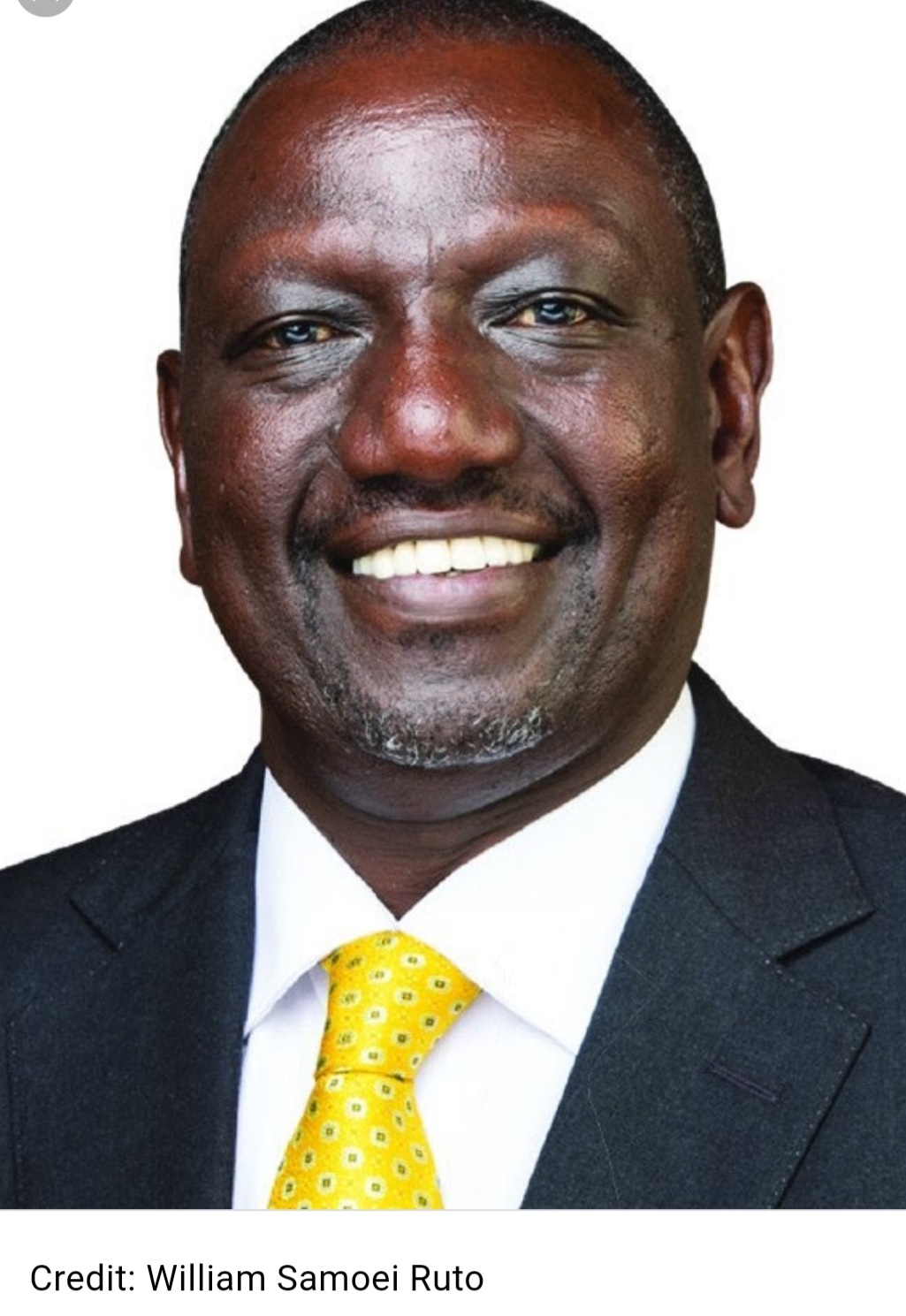
Enter 2022 general election. William Ruto has been just declared President-elect, this time by the Chairman of IEBC ( Independent Electoral and Boundary Commission). The Chairman, however, had some members of his team boycotting the ceremony for declaring Ruto President-elect, a typical scenario consistent with Kenya’s election history.

In this election, it is fair to say that there will be protests, even violence in some counties and court challenges, but the election win of William Ruto will prevail as this was the most transparent election in Kenya’s history. Despite its devastating culture of corruption, election manipulation and violence, Kenya has matured into a thriving democracy. Congratulations!

Garowe: The Glass Houses of Puntland

https://ismailwarsame.blog/2019/03/20/garowe-the-glass-houses-of-puntland/

TRUMP: THEY GOT HIM RED-HANDED THIS TIME

Barring pardon by President Joe Biden, former US President, D Trump, is in real legal trouble after FBI raid of his Mar-A-Lago home, Florida, recently to retrieve a huge quantity (27 boxes) of government documents marked top secret (TS), sensitive compartmented information (SCI)) and confidential. These documents can’t be read without highest security clearance in approved rooms called SCIFS) of the US government facilities, let alone to remove them. They said the laws Trump violated in removing these government properties, including Espionage Act, don’t need any classification to avoid criminal charges.

Not charging Trump this time will set a precedent other future criminals would use to avoid accountability for acts like Espionage and removal of US secret documents.

The world is watching US Department of Justice how they would handle the crimes of Donald J Trump.

(C) 2022 Warsame Digital Media WDM

Reconfiguring the Somali Nation: Changing conversations, shifting paradigms, a review

By
Abdirahman A. Issa
August 13, 2022

|Gorfayn Reviews

Author:      Abdirachid M. Ismail
Publisher:  Adonis & Abbey Publishers
Pages:       144
Publication date ‏: ‎ 2019

Since the collapse of the central government in 1991, Somalis and foreigners have been looking for answers to the causes of the demise of the Somali state and how it can be resurrected. Perhaps the search for answers befits the Somali saying: ninba Dahab lumay, si u doon doon (everyone searches the lost gold in their own way). The dominant narrative holds that the Somali state collapsed due to ‘clannism, corruption and dictatorship’ and Abdirachid M. Ismail’s book ‘Reconfiguring the Somali Nation: Changing conversations, shifting paradigms’ argues that these are symptoms of what he calls the failure of the “Somali Union Project” which, he believes, was dead on arrival at its inception in 1960. Abdirachid offers an alternative perspective on the debate on state failure and proposes fresh ways the country can be reconstructed from the bottom up, as the Somali saying goes: haani guntay ka tolantaa (a wooden bucket is sewn from the bottom up).

Devoid of local context, Caddaan theoroticians of state building have, for thirty years, used Somalia as a petri dish to test out their theories. However, Somali academicians are turning the page and have started to untangle Somalia’s governance challenges. Localised perspectives are offering fresh takes that are contextually and historically suitable. Abdirachid Ismail is one of the few scholars who turned away from the conventional wisdom of blaming clannism on Somalia’s ills and provides new insights into the Somali state collapse, which he argues, is rooted in “culture”.

In this book, Abdirachid provides a historical background of the evolution of the ‘Somali Union Project’ and the causes of its failure. He differentiates the ‘Somali unity’ which he describes as a people who share a common language, culture, and way of life and the ‘Somali union’, which is a political project to unify Somali people into one state, president, and parliament. He argues that ethnic unity is an established fact, but the political union project was imported and a colonial construct.

He contends that Sayid Mohamed was the first Somali to appeal to the Somalis to transcend the clan and tried to form a trans-tribal project to fight the colonialists, but his project was dealt a fatal blow when most clans refused to follow him and toe his line. Sayid Mohamed was defeated, he maintains, not by the British but inadequate support from Somalis and their rejection of the “trans-tribal power of the Sayid”. The project was continued, he adds, by the Somalis who travelled to the Muslim and Western world and were “strongly influenced by foreign conception of state building”.

He states that the social organisation of Somalis was incompatible with the union project. Somalis have been under clan chiefs who administered through consensus and had no experience in a highly centralised system. Therefore, the foreign conception of state-building was antithesis to their mode of organisation. The inherent structure of the society was that every man is for himself and never recognises any authority above him except that one of almighty. Somalis were not accustomed to the complex organization required by the modern state. The colonial and post-colonial leaders have disrupted Somalis’ way of life and imposed a system ill-suited to their context. Unlike Europeans, Somalis were refused the privilege to draw from their tradition and experience and to gradually morph into the modern State.

The Somali Youth League (SYL) and the nationalist movements succeeded, to some extent, in raising the consciousness of Somalis to free themselves from the yoke of colonialism causing nationalism and self-determination to spread like a wildfire in all Somali-inhabited regions. However, the post-colonial leaders could not reconcile Somalis’ tribal way of organising themselves and the imported system of centralised governance inherited from the departed colonialists. The State ended up operating only in the urban centres, while the vast countryside was left to traditional leaders to govern through time-tested customary laws.

Mohamed Siad Barre’s repressive regime worsened the situation after imposing Marxism-Leninism ideology and criminalised clan identity, while he and his military junta practiced it in secret. Mohamed Siad Barre further centralised the system and became “the absolute Sultan of Somali clans, but without the legitimacy given by the customary clan laws”. Abdirachid notes that post-colonial leaders were transforming society at a fast pace incompatible with the natural progression of society. Ironically Barre’s socialist rule prompted all clans to rise and overthrow his regime. The clan reasserted itself as a potent force and reigned supreme to the extent that each clan returned to and regrouped in their ancestorial turf creating the modern-day federal member states.

During colonisation, he says, Somalis were separated and divided into five, but now, the two entities that united in 1960 are no longer together and the core in the south is also fragmented and this, he argues, is due to the imported Western system of governance. Abdirachid calls Somalis to come to terms with the Somali Union Project’s failure and recommends the use of Xeer, Somalis’ centuries-old customary law, to reconstruct the state. He advocated for how Xeer can be used to reconstruct the Somali nation. He recommends adopting a loose system of federalism based on kinship.

The author criticises the Somali intelligentsia, who argue that the clan is divisive and unsuitable for modern times without proposing an alternative.

There is a disconnect between the Somali individual and their state. The state is still alien to most Somalis who rarely interact with it. The Somali individual interacts with three unreconciled legal systems: secular, customary law (Xeer) and Sharia law. The Somali customary law is the most original tool Somalis have ever devised to solve their problems. However, the Xeer is negatively affected by urbanization, education, internal migration, political corruption and general moral decadence1. The Xeer suffered from a lack of adaptability to the ever-changing and complex modern world but still is the most useful tool for conflict resolution, even in the urban centres in Puntland and Somaliland. He mentions how Somalis in the North have been able to achieve and sustain peace due to their time-tested traditional ways rather than contemporary conflict resolution methods.

Furthermore, the Justice system in Somalia is broken and mired by corruption, and lack of enforcement, thus the People of Somaliland and Puntland still rely on traditional elders for conflict resolution through Xeer.

Abdirachid argues that the only way Somalis can be reconstituted is by returning to basics and their clan-based customary laws.

The author refutes the notion that the more the state is centralised, the more the clan diminishes, and the more the state is decentralised, the more the clan becomes prominent. The author does not provide a plausible explanation for this argument and contends that clannism should not be looked through the “restrictive lens” of the West but should be situated in its “sociological, historical, and geographical reality”.

Abdirachid’s argument is not fully developed in the book as he does not adequality address the incompatibility of the customary law and the modern state or how, since the clock can’t be turned back to the old system, to reconcile the two.

Abdirachid does not discuss the increasing role of politicised Islam in the last three decades and what the role of religion would be in reconfiguring the Somali nation. Nevertheless, the book warrants to be widely read and discussed by intellectuals and policy makers who, I doubt, has the appetite or inclination to find a system that is suitable to the Somali experience.

WHO IS DONALD J TRUMP?

Donald J Trump was 45th President of the United States. He was a real estate tycoon from New York, USA, before his election as a Republican Party Nominee. He succeeded Barack Obama in January 20, 2017. He is a descent of German immigrant family. That is how much they know about him accurately. Trump, however, has dark side still to be uncovered by US and the world.

Donald Trump tried to stay on in power as the 46th President after he lost presidential race in 2020. To do that, he staged a coup by organizing, assembling and ordering thousands of right wing rioters in January 6, 2021, to attack the US Capitol to stop certification of his successor’s election win.

Donald Trump tried to weaponize US Justice Department, State Department, Homeland Security, Department of Defence and others against his political opponents and to overthrow US Government. It was unprecedented security and political situation US had ever faced.

As all his illegal attempts to stay in power failed, he refused to concede election defeat to his successor, Joe Biden, something never happened in modern US presidential history. He left the White House reluctantly on January 20, 2021, for his private golf club, Mar-a-Lago, in Florida Palm Beach County. That wasn’t surprising by the standards of Donald Trump. What is surprising, though, is the fact that since he left the White House, they knew that he had in possession of US most secret documents, boxes and boxes full of classified top secrets, looted from the White House. Negotiations with him and subpoenas produced little results. Finally, the Department of Justice through court order had the FBI to raid Trump’s Mar-a-Lago home to retrieve boxes of secret documents. As expected, leaders of the Republican Party have rallied around Donald Trump in support, despite his crimes.

Among the probable causes for raiding Trump’s home were violations of several US laws, including Espionage Act, increasing the long held suspicion that he could be a foreign government asset, given his documented connections with Russia. Trump faces multiple investigations in the US. Despite all these legal problems, he could be the next Republican Presidential Nominee in 2024, and US could risk electing Donald Trump again.

(C) 2022 Warsame Digital Media WDM

LOST COUSINS OF SOMALIS

THE ELUSIVE REGIME OF DEMOCRACY

My understanding of democratization is that there is no better alternative to it. It is an arbitration of conflict between political opponents to avoid violence and harm in the society and to themselves and supporters. As far as corruption is concerned, this is where strong institutions and rule of law come in. Checks and balance could be elusive, if the public institutions are weak and the executive branch takes advantage.

There could be more, but I strongly believe that where there is no freedom of press and independent judiciary, there can be no democracy for only these two public institutions can reign in corruption and abuses of power.

Freedom of the press cannot thrive in any given country without people understanding and supporting it. You can’t have successful independent media among non-readers and mostly illiterate or semi-illiterate citizens. People with no culture of readership and curiosity can’t have democracy. You can’t also have an independent judiciary in a poor society where judges are hired with little or no pay.

You also need to teach civic education in schools. People should consume quality information and learn facts and history. You can’t do that without people developing the habit of readership.

Here, we don’t have to seek the ideal situation of good governance, but to start the process towards a long journey. You can’t do that without continuity-based governance and preserving historical records.

WDM ANNOUNCEMENT

Warsame Digital Media WDM will share articles with those readers, who show interest in the topics and issues we write about. The only way we can measure this show of interest is:

  1. By subscriptions
  2. By comments and interactions
  3. By contributions of information and articles.

We are encouraged by the above readers’ activities. For a number of years WDM has been sharing articles, essays and video clips to groups of internet networks and chat rooms, Meta groups as well as colleagues and individuals. This free sharing of WDM contributions to the development of a free society symbolized by free media as Warsame Digital Media WDM should operate sustainably with the support of our esteemed readers. We are, therefore, doing away passive readers and those, who show no interest in WDM Puntland and national news coverage and debate.

For those, who would like to join WDM, our contact info is

Tel/WhatsApp: +252 90 703 4081
Chief Editor’s email account: ismailwarsame@gmail.com
Annual Subscription Fee is US$37 only.

We thank for your generous support.

Send fee by PayPal at ismail.warsame@yahoo.ca or remit to the following accounts:
a) Sahal +252 90 703 4081
b) eDahab +252 66 679 4548
c) EVCPLUS +252 61 588 388. d) MyCash +252 71 681 4371

Chief Editor,
Garowe, Puntland, Somalia

TRIALS AND ERRORS IN PUNTLAND GOVERNANCE

A review of last night’s political debate called for by President Said Abdullahi for a chit-chat at Presidency ensued today between participants over a teatable conversation at a hotel lobby. Since some of us weren’t privy to the substance of the overnight’s debate, we were good listeners to those who wanted to compare notes among themselves and didn’t mind our presence at table. The issue was Puntland democratization and how to better manage traditional tribal mechanism. That event at Presidency is one of President Deni’s rarest occasions he was improvising lately, after many trials and errors in governing Puntland from the perspective of one man show, as other state institutions are weakened almost beyond repair.

Some of us, who casually had happened to be around at that hotel table, tried to contribute to the interesting discussion. We were looked at as outsiders since we weren’t privy to the last night’s prestigious auspice granted by the President to a selected group of Puntland VIPs not considered out of favor from the Presidency. Some of the participants in last night’s get-together with the President came from Somali Diaspora communities. Although they were in deep learning curve on Puntland governance and history of the young Federal Member State, they were eager to offer new ideas to the debate on Puntland socio-economic developments, we learned.

As our round hotel table discussion developed further, we came to debate on the notion of democratization of Puntland system of governance and how to manage the disadvantages of tribal system in the State and Somalia, in general. The issue is management of clans in a democratic society or a tribal society desirous of establishing a modern democratic society as in the case of Puntland. One of us asked the question: “In a country of laws, who is sovereign or supreme, traditional leadership or the rule of law by the state’s institutions?” This fundamental inquiry sparked off fierce debate at table. Although there was no common understanding reached here, the consensus was that successive Puntland administrations were to blame on the state of affairs of Puntland governance. Political leaders had failed Puntland, a situation that led to stagnation of the state in all sctors.

Analysis | Merrick Garland seeks to call Trump’s bluff

https://www.washingtonpost.com/politics/2022/08/11/garland-trump-warrant-unseal/

PRESIDENT MOHAMUD’S GRUDGES AGAINST SOMEONE OR COMMUNITY GO ALL THE WAY TO APPOINTING ILHAN OMAR’S EX-HUSBAND

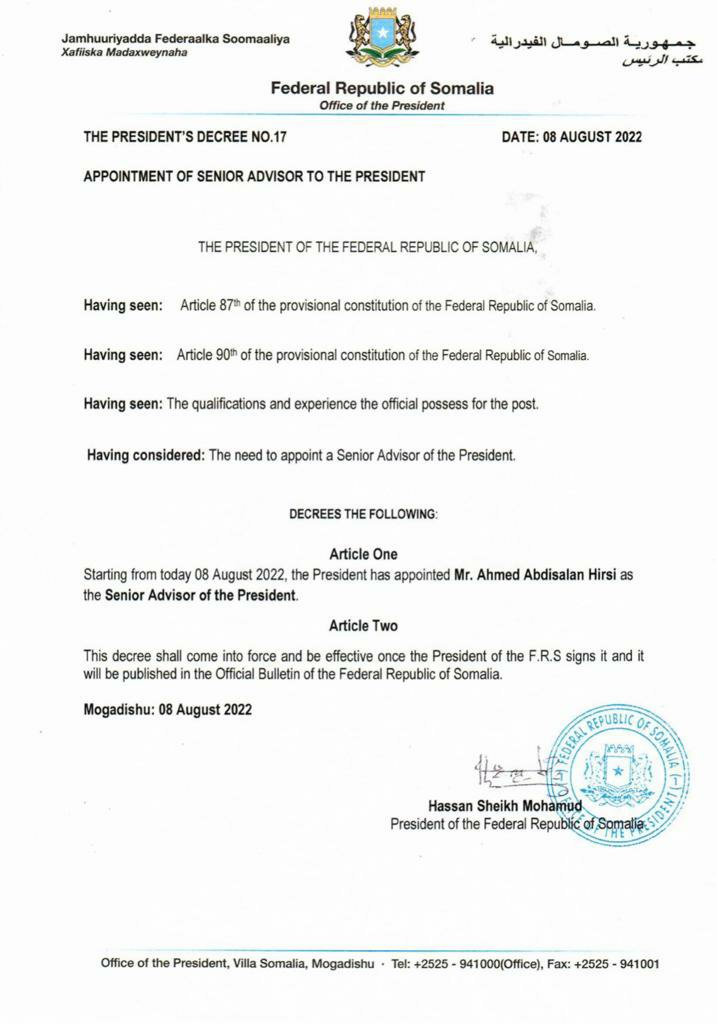
President Hassan Mohamud’s Villa Somalia seems to be engaged in a feud with someone or community hard to fathom. Multiple cabinet appointments he made recently to the ire of leaders of the Federal Member States look like he is picking a fight that seems to undermine their authorities. This kind of political shenanigans is called “Dagaal Shaanshiyeed in Somali language political jargon (an attack below the belt). Appointing the ex-husband of Ilhan Omar as his senior adviser without indicating any area of expertise is not only ethically wrong, but can also be interpreted as ill-motive on the part of the President.

Ilhan Omar is a powerful Representative from Minnesota’s 5th District Electoral Riding, who is serving in the US Congress Foreign Relations Committee, and she won’t tolerate such a problem children to harm Somali-US cooperation for peace and security in the Horn of Africa.

One would only speculate that the New Appointee will not conspire against the mother of his own kids. At the least that is the common sense, contrary to the motive of his new boss. Here, nobody is suggesting that Abdisalam has no rights and equal opportunity to get hired as a Somali citizen, but his political appointment as Mohamud’s Team Member sounds fishy to independent observers. Initial reports from persons familiar with or briefed on this appointment said that Abdisalam would be working on a government project involving inter-parliamentary relations with the US, a personal capacity too ambitious for him as he had had neither the connections beyond his ex-wife nor the experiences to deliver on such government mission.

Presidential Decree on the appointment of Ex-husband of Senator Ilhan Omar

MASSIVE POPULAR DEMONSTRATIONS IN SOMALILAND

Public demonstrations are taking place in all major towns of Somaliland. Violent clashes resulting at least three deaths in Hargeisa and Erigabo are confirmed by the police. Dozens were reportedly wounded. The issue is about which comes first, chicken or egg? Reform of political parties or holding presidential poll? Failing to reach consensus on the issue has led to this political confrontation between the Regime of President Muse Bihi Abdi and political parties.

The elephant in the room, however, is the fact that the Gooni-isu-Taagii Somaliland (secession or unilateral declaration of Somaliland independence) has come to a dead end. Diminishing returns for Somaliland “project” have led to the flight of thousands of Somaliland youth to either perish in the highest seas or move to other parts of larger Somalia, seeking livelihoods and opportunities.

President Muse Bihi behaves like inexperienced soldier playing with gun fire. He should be careful about initiating renewed clan wars in that part of Somalia.

SOMALIS ARE LUCKY STILL TO EXIST IN THE COUNTRY

A strange man, sitting across at my teatable, and suspecting I was from the diaspora, asked me the other day, “what is the strangest thing you noticed in Somalia since you came back?” That was a question I didn’t expect, and I must admit that I was almost helpless to come up with any response. After a few minutes of uncomfortable silence, I uttered an equally surprising answer: “Somalis don’t pay attention to studying and preserving their national heritage”. They seem to be borrowing lifestyles from the Arabs and West. He said that he didn’t look at Somali traditions and customs that way. A colleague of mine joined us right there at that moment and sat beside me. I informed him that the other gentleman sitting opposite us whom I met first time asked me what was the strangest thing I have noticed in Somalia lately. “Why didn’t you tell him that five livelihoods Somalis depend on are livestock, fish, frankincense, agriculture and environment. None of them constitute a priority for their care. Do you think Somalis will survive in the long-term?” My colleague lectured. I was dumbfounded to suddenly realize the fundamental fact exposed and how common sense it was.

Consider the facts that there were no vocational schools or colleges in fishery, livestock, frankincense, farming and the environment, critical areas of our survival in this country as human species. There are no records or historical references and statistics on these livelihoods for centuries.

The irony of our existence is how come we never consider this truth about our paradoxical existence? Is it too late to do something about it?

Ladies and Gentlemen, we are all wrong-headed in life. Let us seek salvation for our continued survival by paying more attention and care to our livelihoods.

Article: Donald Trump’s home raided by FBI agents

Donald Trump’s home raided by FBI agents https://f7td5.app.goo.gl/ZT1dfh Sent via @updayUK

HSM NEEDS TO LEARN THE ROPES OF DIPLOMACY

WDM EDITORIAL

You don’t go to visit a foreign country and start negotiations at the top as a Head of State or Head of Government. Instead, you send diplomats and subject-matter experts upfront to prepare and negotiate on behalf of your government. Then, the head of your government goes there for photo opportunity and signing ceremony. The 2nd option is to select respective teams to work out together the details of possible agreement upon arrival of the delegation for signature and joint press briefing by the heads of State or Heads of government. That is how it works and President Hassan Sheikh Mohamud should abandon amateur foreign visits and adequately prepare before he leaps into diplomatic fiasco. Look at what had happened in Uganda only yesterday, with two Heads of State negotiating and washing their dirty linens in Public.

What is amazing to note here is that Mohamud and Museveni press briefing was about military and security situation in Somalia, an issue that should be kept close to chest. This is good news for the extremists and enemies of Somali peace and stability monitoring Mohamud’s hasty foreign adventures. To President Mohamud: If you are unable to learn and grow, don’t try to lead.

Watch: https://youtu.be/5x22ct9PFNg.

Postscript

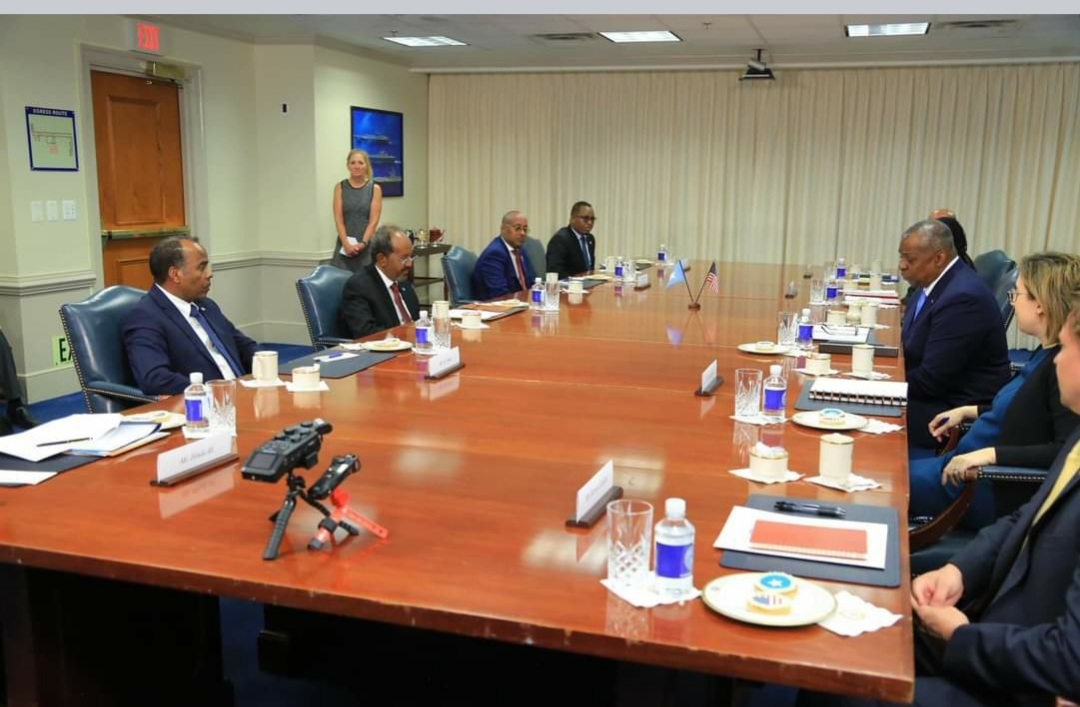
Here we go again. Look carefully at this photo. President Hassan Sheikh Mohamud meeting with US Defence Secretary Austin. On the Somali side, who is attending? His Chief of Staff and rightly the Somali Ambassador to Washington. But, what has happened to Mohamud’s security and military personnel? A Somali cameraman is out of place in this meeting. He shouldn’t be there. Mohamud is either doing these diplomatic and protocol irregularities intentionally, or he is damn inert to learn the art of diplomacy and statecraft. Why isn’t there the Somali Foreign Minister?

U.S. STRATEGY TOWARDS SUB-SAHARAN AFRICA

Possible andImpossible Solutionsto Ethnic Civil WarsChaim Kaufmann

WARSAME DIGITAL MEDIA WDM

WDM thrives on encouragement and support of the people of Somalia, friends, colleagues and subscribers. Our plan is to build a large media network to reach at our objectives of informing our society and to expose misuse of power and public resources. We sometimes turn to the pages of Somali history. We have a long way to go yet in these endeavors. We thank you all for support.

Article: War in Ukraine set to enter ‘new phase’ as Russian forces massing in south, UK says

War in Ukraine set to enter ‘new phase’ as Russian forces massing in south, UK says https://f7td5.app.goo.gl/Gf7bM9 Sent via @updayUK

PUNTLAND LEFT BEHIND IN EDUCATION AND HEALTH SERVICES

WDM EDITORIAL

In an early article from this blog, https://ismailwarsame.blog/2022/07/31/the-bleak-situation-of-readership-in-somalia/, we articulated that people who don’t read isn’t only literally backward, but it is also safe to say that they will have no future because they will not only lose their freedoms, but also their country. Tell me any county of nomadic population, which had established a strong nation. You won’t find one. Why? Besides their backward ways of existence, they don’t go to school to learn new and modern ways to make societal progress?

Although Puntland education was lagging behind Mogadishu and Somaliland, we hear these days that even textbooks for students whose primary and secondary schools were historically struggling to stay open, are beyond reach of already poor purchasing power of these students and families. Certain social media and radio broadcasts are reporting stress signals and interviews from parents on the issue. Some even speculate that mercyless and politically connected Puntland merchants are exploiting the situation with sales offer of more than fifty US dollars a class. Such prizes even in rich countries are not acceptable.This is worse than loanshark business, taking advantage of poor and low income population. Health sector fares no better either with Puntland sick traveling long distances to Hargeisa, Mogadishu and beyond.

Puntland Government must step in to address the alarming state of affairs with education, health and other important social services sectors.

ETHIOPIA’S “BUFFER ZONE”FOREIGN POLICY THEORY TOWARDS FAILED STATE OF SOMALIA

“IT IS GRATIFYING TO LIVE LONG ENOUGH TO LEARN WHAT YOUR SEEMINGLY FRIENDS THEN WERE DOING OR UPTO“, Ismail Warsame

Seyoum Mesfin, the late long-serving Ethiopian Minister for foreign affairs and Ambassador to the People’s Republic of China, and Abdeta Beyene, Executive Director of Ethiopia’s Center for Dialogue, Research and Cooperation (CDRD) and Director General of the same ministry, were people I knew and interacted with, as a member of the National Salvation Council (Sodare Group) 1996-1997, and as an official of Puntland Government (1998-2004). These two gentlemen authored an essay published in American Academy of Arts and Sciences (Daedalus) and called it “The Practicality of Living with Failed States“. The issue is mainly explaining Ethiopian foreign policy towards the “Failed State of Somalia”. The authors had extensively deliberated how Ethiopia has been infiltrating into and meddling in the internal affairs of Somalia, using the excuse of lack of capacity on the part of Somalia to maintain internal stability and security at its borders with other countries like Ethiopia and Kenya. The authors tried to broaden the concept of Ethiopian Foreign Policy intervention of “Buffer Zone” (areas of influence and proxies) establishment as an academic discourse worthy of publication in reputable journals.

What is particular interesting in this essay is the unexpected and frank exposure of Ethiopian Foreign Policy towards different state and non-state actors inside Somalia, some of which they had intentionally created and others so formed on their own to provide “Buffer Zone” for Ethiopia’s security against Alshabab and other extremist groups. In dealing with stateless Somalia, the terms of sovereignty and territorial intergrity had lost any constraints in the thinking of Ethiopian policy makers, and paradoxically suggest to the international community some lessons to learn from Ethiopian experiences outside the constructs of international law and relations. Because of the security threats to Ethiopia from Somali regions of Gedo, Bay and Bakool, through the use of extremists as launching areas for attacks against neighboring countries, they said Ethiopia had to occupy forcefully these regions and create proxies like Raxanweyn Resistance Army (RRA) and SNF, according to the paper by these men. In Mogadishu, they claimed that Ethiopian forces entered to wipe out Islamic Courts Union (ICU) after it had threatened Ethiopia, and to support the fledgling Transitional Federal Government of Somalia (TFG). They also claimed that Ethiopian authorities helped Somali regional federal state in Central Somalia and South West after Ethiopia had benefitted from the security and stability in Puntland and Somaliland. They said, after some delay, Ethiopia helped Sunna Wal-Jamaac Group in its fighting with Alshabab, and to reconcile the group with Galmudugh authorities, which was treated as a buffer zone for Ethiopia.

The overarching objective of this exposition was to explain why Ethiopia was interfering in the internal affairs of Somalia, regardless of the letter and spirit of the International Law. Finally, they also asserted that Kenya was creating its own buffer zones with Somalia too, but unlike Ethiopia, Kenya was using Somali local Ogaden politicians to invade Jubaland. However, corruption had weakened Kenya’s efforts to manage its buffer zones successfully.

I would say, as a long time observer of this policy, there is nothing new here other than the frankness of the authors of this essay, for Ethiopia has been historically hell-bent to weaken and isolate Somalia from Emeror Menelik, onwards. Somali armed opposition fronts of SSDF, SNM, USC and others in the 1980s, were part of the proxies Ethiopia has been using, although to the opposition, there was no other option, but to work with the devil in order to get rid of Barre’s oppressive Military Regime in Mogadishu then.

WDM ANNUAL SUBSCRIPTION FEE

Read or Listen to Ismail Warsame Books and Audiobooks

https://www.scribd.com/author/514715674/Ismail-Warsame

JOIN WARSAME DIGITAL MEDIA WDM

Warsame Digital Media WDM is delivering the goods. Join us and subscribe below:

Kindly send your annual subscription fee to

+252 90 703 4081 or 252 71 681 4371 or 252 66 679 45 48.

Thank you.

WHY HANDING POWER TO UNTESTED SOMALI POLITICIANS HAS BEEN THE DISASTER THE COUNTRY COULDN’T STAND ON ITS FEET FOR DECADES

This is profound understatement of the year. Somalis never learned that choosing untested politicians is the most dangerous risk society could do to harm their nation. It is equally true that those politicians, who have been tested failure could never be allowed to return to politics. This is a chronic problem that supercedes everything else and prevents public accountability in any field of human endeavors in Somalia. This is a troubled country with no remedy possible in the foreseeable future. To fix Somalia’s governance is increasingly becoming like filling up a bottomless barrel. Why on earth we habitually choose unknown new quantities, losers and failures as our leaders? To name names of these real losers in this short article would become problematic because of this culture of impunity for these losers to avoid accountability and through vetting to hold public office.

For heaven’s sake, how a Head of State or Head of Government in his right mind embrace a terrorist leader in government? Who would work with him when he taints his administration with the inclusion of terrorist figures? Even worse is the state of mind of these men in their consideration for selection of Cabinet members. How sadistic and ill-motive it was! Roobow isn’t reportedly alone in this Cabinet selection- they are at least two or more, who have links to the terror group.

What about the incompetence of regional leaders who have no idea of how their societies function, and prone to administrative and political blunders every move they make?

It looks that Somalia is the home of a dystopian society thriving in shameless corruption as a way of life, mediocrity, primative societal existence and permanent disfunction, no matter how much resources and thinking you put into it.

How to fix such problems? Local and national elections are the remedy we are searching for. Do you have an alternative? Democratic and egalitarian nations couldn’t find an alternative to giving power to the people to choose their own leaders.

Warsame Digital Media ANNUAL SUBSCRIPTION FEE

Dear Subscribers,

Kindly send us WDM Annual subscription Fee of US$37 to Sahal Account at +252 90 703 4081 or MyCash at 71 681 4371, Garowe, Puntland. or/and, ECVPLUS at +252 61 588 388, Mogadishu, Somalia.

WDM ANNUAL SUBSCRIPTION FEE

Kindly send your annual subscription fee to

+252 90 703 4081 or 252 71 681 4371 or 252 66 679 45 48.

Thank you.

Somalis join WDM in congratulations to Ismail and Munira on Primaries victory in Ohio State, USA.

HSM’S ELECTION CAMPAIGN PROMISES BROKEN

“XASAN SHIIKH MAXAMUUD INTUU YAQAANAY WAA DHAAFTAY” (Hassan Sheikh Mohamud is doing more than he could handle).

Wada Ogool” (Governing by Consensus) and “Soomaali Wada Heshiis ah, Dunidana Heshiis la ah” (Somalis in agreement with themselves and with the world community) were big slogans and promises President Hassan Sheikh Mohamud repeatedly uttered during his presidential campaign for election or re-election, given he broke the Somali Doctrine for the first time in Somali history (winning re-election). That was quite impressive. But election campaign promises became inconvenient to keep once elected, and now he is doubling-down on Former President Farmajo’s disdain for consensus building and working with Federal Member States. Strangely, he started governing by non-stop foreign visits without his new government in place, something even Farmajo couldn’t do. He made high profile appointments immediately after he was sworn-in. It took him more than a month to screen out able and potential candidates for efficient Cabinet. While he was busy in unilateral decision-making on Cabinet formation and foreign visits without even his foreign policy team instituted, a few things were happening:

  1. Alshabab got bolder and deadlier;
  2. Ethiopia stepped in to reconnect with Federal Member States;
  3. Scramble for Miraa import from Kenya was occurring in Mogadishu among supporters and non-supporters of Hassan Sheikh Mohamud in Mogadishu.

Since his campaign promises meant nothing now, political cynicism sets in in most Somali regions. It looks that Mohamud didn’t take advantage of popular optimism generated by the recent change of guard in Villa Somalia. Can he mend things and regain lost momentum? Some observers say that HSM’s mind on governance is already set like his predecessor, but in the case of HSM, he is a micromanager, who wouldn’t delegate even to his Prime Minister.

Have your say.