Now that President Farmaajo has clarified his position on Somalia-Kenya maritime dispute, and provided Somalia’s ICJ Court victory, it would be in the best interest of Kenya to accept such court verdict to earn the goodwill of Somalia for mutually beneficial future cooperation. Kenyans will benefit immensely from Somali oil and gas explorations in the Indian Ocean in many ways, including high employment of Kenyans and huge other economic benefits.
Somalia has the longest Indian Ocean and Red Sea coastlines, almost unutilyzed and unexploited. It makes no economic and sustainable security sense not to allow sharing this economic potential with the land-locked countries in Region, Ethiopia being the first to benefit. It is huge opportunity for Somalis to tap into the largest markets of Ethiopia in exchange for lasting peace, cooperation and friendship.
Somalis just need to sort out their governance problems first to become one of the most prosperous and powerful nations in Africa.
To achieve this objective, and as a starting point, let all Federal Members States thrive in peace and stability together with a Federal Government, respecting the laws of the land and working towards national reconciliation.
If an election were held in Puntland today, whom do you think would vote in support of N&N? It isn’t a wild guess work, but a predictable scenario based on keen observation on the mood, utterings and attitudes of sections of the Puntland population.
Historically, there were portions of the population in the State, who are uncomfortable with the numerical superiority of the Majertain sub-clan groupings. These would vote N&N at expense of Puntland interest.
There are young and politically naive social media fans, who know neither the history of Puntland struggle nor what N&N stands for.
There are people, who fell victim to Dr. Ali Khalif Galayr’s type of hate speech directed at Puntland State.
Consequently, all these groups are turning out to be anti-federalists and anti-self-government in their campaign to discredit the formation of federal member states in favor of a strong N&N led central government, even dictatorship from Mogadishu.
Historically, this political culture of hatred towards certain sections of Northeastern population had been cultivated and developed by the former military regime of Siyaad Barre. President Farmaajo is a product and student of that repressive regime. This is Farmaajo’s basis for purging Puntlanders from Federal Public Service, exactly in the same way Siyaad Barre did then. That is why Puntland students are being punished for belonging to the wrong Federal Member State. He isn’t learning from recent Somali political history. As he got chance and a shot at Somali politics, he didn’t know enough persons of Puntland origin. As TFG Prime Minister, he was compelled to tap someone seemingly from Northeastern Regions of Somalia. He placed his bet on Abdiweli Mohamed Ali (Gaas), his fellow resident of US Buffalo NY State, the only one person he knew from Majertain, and also Gaas was former resident of Dusa-Mareeb in Galgaduud Region of Central Somalia, where Farmaajo sub-clan family hails from. President Farmaajo now thinks that even Abdiweli Gaas had betrayed him as the former had lost the Somali Prime Ministership to the latter.
Given the situational analysis of Puntland, any administration in Puntland ought to study and pay attention to these societal contradictions, as it should address any real or perceived grivances harbored by certain sections of Puntland residents, including Somali IDPs.
Veni, vidi, vici. I came, I saw, I conquered – Julius Caesar.
Waa duni la kala iibsadoo nala ogaysiine. We live in a world where our resources are taken and traded by third parties without our consent – Nur Farah, an anti-imperialist Somali poet.
Summary
Kenya has been claiming oil-and-gas-rich Somali territorial waters in the Indian Ocean since the early 2000s which has escalated conflict further following Kenya’s granting of exploration concessions to companies. According to the Norwegian Peacebuilding Centre, Kenya’s traditional low-risk, non-interventionist approach to peacebuilding and peace-making, which used to be grounded in “good neighbourliness” and respect for national sovereignty, has shifted dramatically since 2011, with its unprecedented military operation in Somalia. The same report indicates that the oil factor and concessions granted by Kenya [for foreign multinationals] are major factors contributing to the escalating tension between Kenya and Somalia. This essay examines the casus belli behind Kenya’s maritime claims at the expense of Somalia; and the strategic and economic foreign interests propelling Kenya to a collision orbit with Somalia. Particularly, the document sheds light on France’s overt and covert interests in the region and its multi-faceted and unconditional support for Kenya in the context of the Kenyan-Somali conflict. Based on the analysis of available empirical evidence, it appears that France has been supporting Kenya in its quest to initiate the diplomatic crisis by claiming Somalia’s territorial waters and invading Somalia to militarily ‘secure’ the concerned maritime area. The essay further discusses how, with few exceptions, the Kenyan elite have failed to examine the matter in the broader global and regional contexts. In effect, the Kenyan government and prominent politicians have been riding the emerging nationalistic wave against their neighbours without considering the ongoing international arbitration of the International Court of Justice (ICJ). It is argued that Kenya has fallen prey to international proxies at the expense of a good diplomatic relationship with Somalia which is in Kenya’s best interest. A lose-lose scenario.
Background
The two neighbouring East African countries of Kenya and Somalia have been drawn into a bitter conflict arising from the opposing claims over the ownership of the huge maritime zone between the two nations. According to Journalists For Justice, in line with the provisions of the Article 15 of the UN Convention on the Law of the Sea (UNCLOS) , Somalia wants the maritime borderline to be a median line “which is formed of points at the same distance” from the respective coasts of the two countries. On the contrary, Kenya claims a border along the same longitude as the point where the land border between the two countries meet with the Indian Ocean. To complicate matters further, the concerned area, which reportedly contains at least eight oil blocks, is particularly rich in oil and gas. Based on numerous international literature sources, it is evident that rather than genuine Kenyan (security) interests, powerful foreign strategic and economic interests have pushed Nairobi to take the fierce fight for oil and gas to Somalia. In particular, some Western countries and their partners from Gulf states have immense economic interests in the region. The volatile oil and gas prospecting industry is primus inter pares; France, Norway, UK, USA, Italy, China, Qatar and the UAE are all mentioned as stakeholders in the quest for hydrocarbon resources in East Africa. Among all the foreign interests in the Somali-Kenya sea borderland, the French stakes seem to be particularly high to the extent that the transalpine country openly supports Kenya’s claim for Somali resources. The golden opportunity presented itself when the deadline set by the UN Commission on the Limits of the Continental Shelf (CLCS), to declare the outer limit of the continental shelf beyond 200 nautical miles, came about in May 2009. Kenya asked Somalia to negotiate and subsequently sign in Nairobi a dubious Memorandum of Understanding (MoU). At the time, Somalia was in total disarray following long-lasting state collapse and the worst humanitarian crisis in the world, exacerbated by the violent conflict raging in Mogadishu. The country was not in a state to negotiate complex international agreements. According to a secret memo released by Wikileaks, the Minister who signed the MoU on behalf of Somalia was not trusted by his bosses in Mogadishu. In this context, through the treacherous terms of the said MoU, for the first time in history, Kenya had managed to snatch from the Somali representative a state of alleged “maritime dispute” between the two countries. The nature and intensity of the dispute took a dramatic turn in 2011 when the Kenyan Defence Force (KDF) invaded Somalia under the pretext of creating a ‘buffer zone’ to defend itself from the incursions of the Somalia-based militant group, Al-Shabaab. The unilateral incursion dubbed the “Operation Linda Nchi” had no international authorisation or mandate from the United Nations Security Council (UNSC) nor from the African Union (AU), let alone enjoying Mogadishu’s blessing. In fact, the then Somali President had denounced the unauthorised cross-border military operation. Along with the KDF, multiple international sources confirmed the involvement of France in the Operation Linda Nchi, including the French navy which, according to a KDF spokesman, had bombarded the Somali coast.
Al-Shabaab was eventually driven out of the Somali port city of Kismayo by allied forces of the local Raskamboni brigade militia and the KDF. However, far from preventing the infiltration of Al-Shabaab into Kenya, KDF’s reign in Jubbaland and the simultaneous repressive reprisals of the Kenyan police targeting Somali ethnic population in Kenya itself resulted in: (i) increased Al-Shabaab attacks in Kenya (examples of high profile include attacks on West Gate and Garrisa University); and (ii) systematic violation of the human rights of the Somali ethnic population living on both sides of the border.
At the same time, the Kenyan military in Somalia had been found to be deeply involved in all kinds of illegal businesses including cross-border smuggling thereby siphoning off millions of dollars of ill-gotten revenue and directly contributing to Kenya’s insecurity. Factually, it has been established that the KDF generals colluded with the Al-Shabaab militia, the original declared target of the unauthorised Kenyan invasion, along various stages of the multiple chains of illegal business.
Cashing on the Vulnerabilities of the Weakened state of Somalia
The intensified Kenyan efforts in the last two decades to claim the adjacent Somali territorial waters, as well as the 2011 Kenyan invasion, took place against the backdrop of a long-lasting humanitarian, security and political crisis that has affected Somalia. In this context, the Somali government could not defend itself from the internal enemy or from the immorally predatory external actors. However, unlike its belligerent neighbour, Somalia brought the case of the sea row to the ICJ in The Hague in 2014. An act that has apparently dismayed and angered Kenya further.
It is worth mentioning that for almost four decades, after the independence of Somalia and Kenya in 1960 and 1963 respectively, Kenya has never raised such a maritime border issue. Somalia did declare its sea territory in a series of legislations starting with the Law No. 37 on the Somali Territorial Sea and Ports. At this critical point, a pertinent question would be why Kenya all of a sudden had to trigger the sea row after all those decades?
Towards the end of the 2000s, the world had been struggling with an acute global financial and energy crisis. The food and fuel prices skyrocketed with the ensuing social unrest in different regions of the world. The price of crude oil peaked in 2008 when it reached 147.5 US dollars. This coincided with an extremely violent and politically turbulent period of time in Somalia as the then resource-deprived Transitional Federal Government (TFG) battled to impose its authority and end the long-lasting civil strife and political transition period. It was in this context that the Kenyan authorities, pushed by impatient foreign oil and gas multinationals that had been eying up the rich territorial waters at the borderland between Somalia and Kenya for a long time, started engaging with Somali officials in dubious circumstances. Kenya engaged (or bribed, according to some accounts) a Somali minister to settle an inexistent maritime dispute which was unknown until that moment to both the public of the two neighbouring nations and the rest of the world.
Subsequently, in 2009, a MoU was signed in Nairobi by the concerned Somali Minister and his Kenyan counterpart. Outraged by the sheer idea of Kenya disputing the Somali territorial waters, the then Transitional Federal Parliament (TFP) of Somalia almost unanimously rejected the concerned MoU. It follows that Kenyan authorities and their sponsors had triggered the sea border row in an attempt to cash in on the existing vulnerabilities of the weak Somali state, as well as the prospect of tapping into the highly profitable rich oil, gas and mineral resources beneath the targeted sea waters.
Global Wars for Natural Resources and the French Proxies in East Africa
Since the advent of colonialism, including the Scramble for Africa, the quest for natural resources has been the driving factor for a long list of criminal conquers and brutal conflicts around the world. The new scramble has been going on for quite some time.
Michael T. Klare, Professor of Peace and World Security Studies at Hampshire College, sums up the previous few decades: The great colonial expansion by the European powers that began in the 15th century and continued until the early 19th century was largely driven by the pursuit of resources—land, timber, gold, minerals, spices, slaves, furs, rubber, and oil, among others (…) What we call the French and Indian War, for instance, was sparked by the conflict between Great Britain and France over the control of resource-rich territories in North America, India, Africa, and Asia. Many of the skirmishes that led up to World War I, especially those arising in Africa, also had this character. Quite paradoxically, in the 21st century, we live in a time where international law is ignored and the legitimate rights of the less powerful countries (e.g. fragile states like Iraq, Syria and Libya, etc.) are ignored. The fundamental human rights of their citizens are gravely violated with total impunity, their natural resources looted, natural environment polluted and their cultural heritage destroyed in broad daylight by leading world powers including members of the UN Security Council.
In this desperate and destructive search for grandeur, those who were supposed to promote and keep the world peace and international order seem to be increasingly involved in a fierce battle for prominence, wicked imagined world leadership and global influence. The renewed scramble for so-called “last frontiers” of the remaining natural resources is the prime target for these failed world powers.
In the 21st century, with all the technological innovations and fanfare regarding human rights, the battle for scarce resources engaged by the global powers is raging virtually at every corner of the globe. The catastrophic invasion of Irak is an example of this. In this respect, in 2006, Der Spiegel stated the following in an article on the ongoing global wars for natural resources:
We live in an age of dramatic distribution battles over resources that are becoming increasingly scarce and yet required in ever-growing amounts. It’s also an age in which international politics are increasingly determined by questions of energy security […] All major powers — the United States, Europe, Russian and up-and-comers China and India — have now made resource security a top priority political issue. As they court the custodians and owners of the resources, trickery, bribery and bargaining have become the order of the day.
In this context, following the global financial and fuel crisis of the late 2000s, foreign oil and gas multinationals convinced Kenyan politicians to partake foreign proxies for resources in Somalia. While, as already mentioned, many other foreign companies and countries are involved in the quest for hydrocarbons in the region, the role of the French government and its multinationals stand out in the escalating Kenyan-Somali conflict.
In the run-up to the invasion of Iraq, President Chirac of France rightly obtained an immense sympathy from around the world for his refusal to jump on the Bush-Blair bandwagon. But, since then, starting from the era of the Nicolas Sarkozy presidency, France seemingly felt deprived of its perceived ‘fair share’ of the global spoils conquered by her peers with the big guns at the expense of the world peace and human rights in the fragile countries. Kenya’s leading Financial Newspaper wrote earlier this year, perhaps the French leader is also “desperate for world recognition”. If that is the case, a potential way for France’s President to recover from a similar perceived setback is to follow the footsteps of his peers who invaded Iraq on totally fabricated premises, i.e. possessing dangerous weapons of mass destruction.
France’s One-Sided Involvement in the Kenyan-Somali Conflict
As of late, France has been pushing for the acquisition of virgin natural resources in East Africa, despite fully exploiting natural resources in Western Africa. Consequently, in the last two decades, France has established a rapidly growing complex web of strategic, economic and geopolitical interests in Kenya. The French President Emmanuel Macron conducted the first-ever state visit earlier this year and signed a series of new business deals worth circa three billion dollars. Suspicious Franco-Kenyan projects aside (from Somali perspective), including a deal on dubious “coastal and air surveillance”, at its face value, the said foreign direct investment (FDI) should be fine although some French companies operating in Kenya were accused of exploitative and corrupt practices.
But more worryingly, France’s geopolitical and commercial interests are promoted in Kenya with a clear strategy to undermine Somali interests, rights and sovereignty. In fact, by examining the available empirical evidence, albeit partly, it becomes quite obvious that France’s selfish interests have not only been pushing Nairobi to claim a strategic portion of Somalia’s territorial waters, but France has also been supporting Kenya in invading Somalia’s militarily under the pretext of regional security, while the real target was and remains the Somali resources. This approach is evidenced further by the neo-imperialistic speech of Emmanuel Marcon in Nairobi in March 2019 in the company of his Kenyan counterpart in which he, to make Kenya’s President content, promised (also by speaking on behalf of the European Union from which President Kenyatta had lamented) to work with Kenya and others “to design preferred options” regarding Somalia. At incredulous eyes and ears of Somalis, this sounded as if we were back in 1884 Berlin, during the Scramble for Africa.
In sum, by analysing European geopolitical analysts’ accounts, general Somali public opinion, statements of Kenya’s top politicians and the Kenyan and international media in general, it is obvious that: (i) foreign interests have been pressuring Kenya to claim the maritime borderland with Somalia; and (ii) France openly sides with Kenya for its own strategic and economic interests.
Demystifying France’s Real Motives
Although France has no significant historical presence in East Africa, except the former Somali French Coast (Djibouti), in the last two decades France’s economic interests in Kenya have rapidly increased. In 1999, France included Kenya in its special solidarity partners. Since then Kenya has become France’s first trade partner in East Africa. By 2017, more than 70 French companies were operating in Kenya including Peugeot, Schneider Electric Air France, Danone, Total, Bollore, L’Oreal East Africa, Fairmont, Alcatel, Alstom Grid, Sanofi, Veritas, Ceva Animal Health, Thales, Michelin, Sagem and Egis group. The growing interests of the French (oil and gas) multinational total includes more than 150 petrol stations in Kenya.
Against this backdrop, and based on the available evidence, it is easy to get a sense of France’s blatant overt and covert diplomatic and military support for Kenya’s quest to invade Somalia and “secure” the “disputed” maritime zone for the sake of realising France’s economic interests and other neo-imperialistic geopolitical ambitions in the region.
First of all, French oil multinationals want to be granted and exploit the rich oil, gas and mineral resources that are lying beneath Somalia’s sea bed bordering with Kenyan territorial waters. Secondly, France’s unconditional support for Kenya’s maritime dispute and its recently found interventionist regional posture towards Somalia and the subsequent unauthorised invasion of Somalia, seem to be part of a desperate search for an apparently lost past grandeur at the global stage in a rapidly changing (quasi-lawless) world with emerging powers.
In the mind of the “nationalist” circles of the French elite, if restored, albeit through typically Machiavellian manoeuvres (i.e. by any means without worrying too much about moral and ethical implications), such a (real or imagined) past glory would enable France to (re)gain a greater influence and projection of power internationally. At the same time, it would enable Paris to distract public attention from the long-lasting domestic social upheavals, economic crisis and civil disorder as symptomised by the Mouvement des gilets jaunes or “the movement of the yellow jackets”.
Thirdly, within the context of the global battle for resources and markets for the French companies, France wants to counter China’s (and other emerging powers like India’s, Turkey’s) growing rival economic and political clout in Kenya, as well as the broader African continent, which has reportedly forced many French companies out of the market competition particularly in Kenya. Finally, France’s other new international neo-interventionist ally, the United Arab Emirates (UAE), which hosts French military bases paid generously by Abudhabi, is also involved in this complex regional conflict by allegedly funding Kenya’s hostile campaigns against Somalia. UAE and Saudi Arabia, on the one hand, along with Turkey and Qatar have also been pursuing other equally harmful proxies throughout Somalia in the last few years.
Anecdotal evidence
In regards to the foregoing analysis, to further prove the points made, the following are a few anecdotal pieces of evidence: 1. According to Limes, a highly reputed Italian international geopolitical magazine, prior to the unilateral Kenyan invasion of the Jubbaland State of Somalia back in 2011, the “French diplomacy has been working secretly for more than one year to enable Nairobi to expand its territorial waters at the expense of Somalia.” Before Kenya, as Limes had reported, France was always eying up the oil and gas resources in Somali waters. France has tried its luck first by supporting the creation of a Somali state called Azania led by the former Defence Minister of the TFG. Limes’ illustrates that although Azania did not take off due to the political and military inconsistencies of the concerned former Somali minister, that French venture in Jubbaland/Azania exposed the strong French interest in Southern Somalia and its Machiavellian manners to secure the said strategic resources in a very fragile and vulnerable country in the middle of civil war. The unsuccessful attempt has accelerated the subsequent proxies in the same Somali region via Kenya. 2. The former Kenyan Minister of Foreign Affairs, Moses Wetangula, interviewed by Kenyan television said that the concerned maritime area hosts some of the richest tuna fishing grounds in the eastern coast of Africa as well as proven rich gas and oil reserves. Mr. Wentangula implied that foreign multinationals were uncomfortable, hence, impatient with Somalia’s prolonged dysfunctional state which hindered them from exploiting those resources. Without specifying the involved countries, the current Kenyan Foreign Minister, Ms. Monica Juma, confirmed that: (i) foreign commercial interests are driving the Kenyan-Somali conflict; and (ii) powerful foreign actors are taking advantage of Somalia’s weakness. As a matter of fact, Somalia did not start the escalating conflict, Kenya did by granting exploration concessions to foreign oil companies. At this juncture, an important question is who has been taking advantage of whom? Who has allowed themselves to play proxies on behalf of foreign multinationals? 3. Professor Macharia Munene, a Kenyan expert in international relations, also declared the Kenyan media that politically and financially powerful people in European capitals were driving the dispute although, he did not specify who these powerful entities were. 4. The French President’s speech in Nairobi in March 2019, says it all in relation to French intentions including the support of military and economic support activities in Kenya at the expense of Somali interest to the extent that Mr. Marcon publicly hands over a blank cheque to the Kenyan President to design a “preferred option” for Somalia with France’s full support. This has been agreed by the parties because the Kenyan President had complained about the more prudent approach when it comes to international interventions. Mr. Marcon should have been more mindful of the long-lasting negative consequences of the first European scramble for Africa, particularly for the Somali nation which is still suffering from the permanent damage of the erstwhile scramble for Africa. Below is the full statement of the French President:
As you [President of Kenya] mention this is the very first official visit of French President after the independence. So, I think this is a new page we are writing together. We had very good discussion with the President, and I think…if I go straight to the point I think what we are going to do is to build a new partnership for the [East Africa] region and for the bilateral relationship. We had very good discussion about different situations. Mr. President [of Kenya] told me his concerns regarding Somalia and AMISOM. And, he told me about the fact that he was not comfortable about the European Union. I think what we need now, and we all concur [on this], is [to achieve] concrete results. So, what I think we should do together is, perhaps with Kenya and Ethiopia and African Union, to design, I would say, a preferred option [for Somalia] and to convince different [inaudible] partners to work with us on open agenda.
Summa Summarum, in a world where world powers regularly communicate, if not govern, through social media, an interesting proxy indicator of France’s lacking political neutrality and one-sided diplomacy in East Africa can be observed by simply looking at the twitter account of the Somalia and Kenyan’s France Ambassador. By doing so, one struggles to find any tweet referencing Somalia. Not only at the diplomatic relationship level but also at the level of human compassion. For example, the Ambassador has been regularly tweeting her condolences to Kenyans whenever a Kenyan MP, a Kenyan Professor or other notable Kenyan passes away on their respective sick beds. On the other hand, back in Somalia, even when terrible violent attacks struck the Somali capital in which senior public officials, like the Mayor of Mogadishu, were assassinated, the Ambassador never expresses her sympathy towards the aggrieving host country. At least via her twitter account as is the case for Kenya.
Kenya’s Relentless Diplomatic Harassment and the Collective Nationalistic Fever
In early 2018, Kenya’s international legal battle to delegitimise the ICJ on the grounds of non-jurisdiction over the case of the sea row between Kenya and Somalia has been rejected by the ICJ. As the Journalists For Justice point out, similar steps (i.e. challenging the ICJ jurisdiction) is “very frequently taken by countries that are afraid to lose the case on the merits.”
Enraged by the unfavourable verdict, since then, gradually but surely, Kenya has been stepping up its relentless multi-faceted pressure on Somalia for the latter to withdraw the on-going litigation case from the ICJ arbitration. The hostile measures against Somalis to which Nairobi has resorted include, but are not limited to: repeated threat to expel hundreds of thousands of Somali refugees; severing diplomatic ties (e.g. Kenya expelled the Somali Ambassador to Kenya); mandatory extra stopover of all flights to and from Somalia midway between the two capitals (at Wajir) under the pretext of additional security clearance; incessant complaints against Somalia in major international stages starting from the AU to the UN, purposefully meddling with the internal Somali affairs and costly deliberate destruction of economic infrastructure in southern Somalia by way of air bombardments. Nonetheless, despite Kenya’s painful bites, Mogadishu has thus far largely ignored Kenya’s hostile campaign. Mindful of her current political and military condition, Somalia has adopted a much more composed and diplomatic approach, if determined in its diplomatic efforts to get justice at the international level.
Meanwhile, Kenya seems to be gripped by a haughty collective nationalistic fever with Kenyan intellectuals and mainstream media constantly spewing hostile comments inciting planned pre-emptive surprise expedition of the Kenyan navy beyond the sea border between the two neighbouring courtiers.
As for Somalia, weakened but not defeated by nearly three decades of statelessness, internal civil strife, natural disasters, local and international terrorism and highly deregulated international counter-terrorism, competing for colossal international strategic interests, the timing of the escalating aggressive conflict started by Kenya with France’s support could not come at a worse time. Yet, Somalia’s diplomatic and down-to-earth approach coupled with strong arguments to defend its rights and sovereignty over its territorial waters has proven effective throughout this debacle. Whilst, Somalis, whether in Somalia or elsewhere in the world, are following very closely the above-described ill-fated international manoeuvres.
Concluding Remarks
From the foregoing analysis, it can be concluded that: 1. Pushed by foreign oil and gas multinationals, Kenyan authorities and their sponsors had triggered the sea border row in an attempt to cash in on the existing vulnerabilities of the weak Somali state and the prospect of tapping in on the highly profitable rich oil, gas and mineral resources beneath the targeted Somali sea waters. 2. Kenya’s 2011 invasion of Somalia, both by sea and land, was not (entirely) intended to counter Al-Shabaab as declared in the first place. In fact, as established by international accountability bodies, the KDF has since colluded with Alshaba in a vast racket, siphoning tens of millions of dollars of public revenue from Somalia and perfectly undermining Kenya’s own security. It is now obvious that Kenya and its foreign supporters were motivated by the desperate scramble for oil and gas resources in a time of global scarcity and exorbitant commodity prices at the international markets. The adopted Machiavellian strategy has been particularly brutal. With powerful foreign support, Kenya wanted to twist Somalia’s hand in a difficult moment to relinquish or renounce rights and sovereignty over the resources lying beneath its sea waters. 3. In this context, among all other external actors, France stands out. Based on the analysis of the specialised international geopolitical magazines, international media, and the Kenyan media, France has been loyal only to its own interests. The French government squarely and openly supported Kenya before and after the invasion of Somalia in 2011 as its oil and gas multinationals had been eying up the hydrocarbon resources beneath the Somali territorial waters adjacent to Kenyan waters, but did not have enough patience to wait for the Somali political and security crisis to be over. As member of the UNSC and G7, which comes additional international responsibility (e.g. the need to observe the international law, principles such as do no harm and non-interference of other nations’ affairs), perhaps pushed to unchartered international territory by the selfish interests of its oil multinationals and other perceived strategic interests including its quest to counter the Chinese influence in the region. France has worked both secretly and openly not only to support and equip the KDF to invade Somalia but also support Kenya’s claim of the Somali territorial waters. 4. The French tend to also (ab)use the European Union by declaring to be acting on behalf of the block while siding and publicly supporting countries in East Africa at the expense of Somalia in the ambit of a conflictual context. 5. By staging protracted hostile, diplomatic, military and commercial campaigns against neighbouring Somalia, Kenyan politicians ignored the collective interest of their own people, the importance of the long-standing friendly diplomacy and the good neighbourhood relationship with Somalia. Nor did they take into account the potential negative consequences for regional peace and stability. Clearly, Kenyan politicians chose all of that over the selfish interests of foreign multinationals and their respective home governments. The latter have dragged Kenya into an unprovoked and uncalled for conflict with its neighbour while inciting and supporting Kenya to claim Somalia’s territorial waters. 6. Some French companies operating in Kenya have been accused of corruption and scandal including the violation of the rights of the local labourers. More specifically, as experience has taught Africans elsewhere in the continent (e.g. Nigeria), the oil and gas multinationals are known to defy human rights of the local populations and their natural environment. These companies do not have Africa’s best interests at heart.
References:
________________________
The author can be reached at shakiib.sheikh@gmail.com
My country, Somalia, was collapsing since 1960, mainly because the country belonged to no one. Nobody of its supposed citizens could hear and heed its cry for help.
I am afraid that trend is irreversible and no one could guess what would happen, even in the foreseeable future. Ismail H. Warsame
Warsame Digital Media WDM would like people of Somalia to get used to FREE PRESS.
Everyone or entity is urged never to take WDM critical articles personally, as WDM is fair and faithful to journalistic ethics, never targeting anybody or organization for harm specifically.
We are only interested in creating a better world.
Briefly explained, the “Political Roadmap” of Farmaajo-Khayre fledgling Federal Government (Federal by name only) consists of the following stages:
Return to power 2020/21 by any means necessary;
Dismantle and destruction of the Federal Member States in former Italian Somalia;
Negotiations with former British Somaliland on a “New South-North Federalism”.
Somali observers believe that N&N Regime is already succeeding in the implementation of that bold Policy Roadmap with the elemination of resistance from Southwest State, Galmudugh and Hirshabelle, thus the hard nuts to crack becoming Puntland and Jubaland. Jubaland is being tackled with right now, Puntland has been infiltrated at both civil society and political establishment levels. There are many people from Jubaland and Puntland states openly supporting N&N wild anti-federalist and destructive policies. These supporters constitute core supporters and base, who would prop up and follow N&N Government treasonous policies no matter what, acting in the same manners the hardened base supporters of US President Donald Trump.
Now that the N&N policy Roadmap is decoded, WDM readers, and Somali people as whole, could understand the strange behavior of President Farmaajo and Prime Minister towards Federal Member States. This is also the reason behind the purging of Puntlanders from Federal Public Service, and replacing them with personnel of Somaliland origin.
The Administration of “Somaliland” is in complicit in the implementation of this N&N Policy Roadmap, though indirectly, in two ways:
Support to Al-Shabab terrorist operations in Southern Somalia, thus denying security and stability in South-Central Somalia.
Dismantle of Federal Member States
Have you ever heard the leaders of “Somaliland” condemning N&N destructive actions and abuses against Jubaland, Southwest, Galmudugh and Hirshabelle? Why, after all these are Somalis, whose human rights are being violated by regime supposed to protect them? Think about it.
Don’t be surprised if N&N Government cuts a deal with Kenya on the Maritime Dispute at expense of Jubaland to get rid of Jubaland resistance to N&N wild and adventurist Political Roadmap.
Warsame Digital Media WDM welcomes debate, interviews and comments. You don’t have to be necessarily a proponent or opponent of this governing concept of Confederalism – you may ask questions for clarification or submit comments as your way to contribute ideas to the on-going debate.
Former Somali Finance Minister, Hussein Halane, the Keynote Speaker at PDRCTALKS tonight, was candid, knowledgeable and truthful on his take on the latest political developments in Somalia. His narrative on the challenges facing the nation with regards to respecting the rule of law, federalism, cooperation between the Federal Government and Federal Member States was commendable as it was superb in presenting facts. Hussein’s presentation had added value with enjoyable sense of humor and beauty of Somali poetry.
The panel and contributors were competent and knowledgeable of the issues under debate. Questions and comments from the audience were highly sophisticated and current, but uncontrollablly long and wasteful of time. Former Federal Interior Minister, Abdi Farah Juxa, was brilliant in presenting a convincing argument on confederalism as the most suitable fallback to Somalia’s alternative governance, given the undeniable fact that the current leaders of Somalia had turned out to be anti-federalists.
PDRCTALKS event tonight, however, has ended in spectacular, unexpected and unsatisfactory fashion. The event exposed that there were no coherent PDRC Policy Guidelines on how to approach to common topical issues of Somalia, as obviously, the Centre has no Policy and Steering Team to thoughtfully work out guidelines for debaters and audience inputs in running the show. The Centre seemed to have not worked out constants and variables upon which to solicit for new ideas and monitor the variables in Somali fluid issues and situations.
There was disconnect in vetting PDRC workers’ statements. At the closure of the shows, the Centre often fails to summarize, for the audience, the topics covered and main conclusions in the interactions, and if any consensus emerged from the show.
Uncharacteristically, tonight’s event has suddenly ended up with a political statement by one of PDRC Senior worker, blatantly endorsing the political views of an opposition leader in Mogadishu, former President of Somalia, Sheikh Sharif Sheikh Ahmed. That public statement of support to the political opinions of that figure got both the audience and Keynote Speaker by surprise. Many wonder whether that seemingly unvetted political declaration by a PDRC worker is in line with its academic and research policy.
That was a loose canon, unhinged, childishly provocative to condemn confederalism without any consideration that it was an idea worth considering as research item.
He disrespectively and personally opposed Puntland intellectuals, who responsibly moved the Policy Paper for public attention.
PDRC shouldn’t condone such reckless personal behaviour under its name. It was an unfortunate incident that shouldn’t be done. Such misconduct will have consequences for the Center.
That worker’s job was expected to deliberate on what has transpired in the show, point out of any consensus reached at and thank everybody for coming in and having contributed to the success of the event. Period. No lone gunman political declarations, no endorsement of or opposition to any politician.
Previous PDRCTALKS events had fared far better than tonight’s event.
In Mogadishu, hundreds of thousands of its “New Residents” had lost their lives; same number got maimed and disabled; equal number needs social and medical rehabilitation; huge number became hardened criminals beyond rehabilitation; a large portion of youth under the spell of drug-addiction; unaccountable size of people are living in squatters; almost everyone occupies illegal public or private property; an estimated number leads lives of predatory businessmen and businesswomen; visible number of the population are NGO- foreign agents; guest-workers; stray-politicians of Farmaajo-type; first-time new prime ministers of Khayre stock and hostages of circumstances as members of Parliament, all boosting up Mogadishu to remain the Capital City of the 2nd Republic of Somalia.
It is a town suffering from coup de grace on daily basis by dark forces of suspicious nature, blaming on and using a worn-out cliche: Extremist bomb-blasts and assassinations happening there to explain, but in reality, unknown who is carrying out these crimes in Mogadishu.
On the top of that burden, thousands of foreigners are in town to fight for the scramble and fight for the spoils of Somalia.
Welcome to a town desperately looking for salvation from unitary city-state governance of 1960s. Could that happen again? Wishful thinking.
U.S. and Saudi officials didn’t anticipate a strike from inside Iran, officials said, rather than through one of its proxy forces or elite military units.
Saudi and U.S. focus had been largely on the kingdom’s southern border with Yemen, where Riyadh has been fighting Iranian-backed Houthi rebels in Yemen’s civil war, the officials said. The attacks, however, originated from Iranian territory in the northern Persian Gulf, …
…The absence of air-defense coverage left Saudi’s eastern flank largely undefended by any U.S. or Saudi air-defense systems, … The glaring blind spot also left Saudi Arabia exposed to a threat despite spending billions annually on its defense budget.
“You know, we don’t have an unblinking eye over the entire Middle East at all times,” Marine Gen. Joe Dunford, chairman of the Joint Chiefs of Staff, told reporters near London on Tuesday. (emphasis added)
These are nonsensical statements.
The whole Persian Gulf defense apparatus which includes strategic US and allied military facilities is based on “anticipating” strikes from Iran. Saudi Arabia’s Air defense is coordinated by the Royal Saudi Air Defense Forces (RSADF) which constitutes a separate branch of the Armed Forces.
The Eastern flank of Saudi Arabia is not “undefended”. Quite the opposite: it is protected by the US multibillion dollar Patriot Air Defense system. Western defense analysts know this inside out.
Moreover, that Eastern flank of Saudi Arabia is heavily militarized. It includes several important US and allied military facilities in Saudi Arabia (as well as in the UAE, Bahrain, Kuwait, Qatar and Oman). The Gulf is among the most militarized regions on the Planet.
According to reports, US and Saudi officials were taken by surprise. Again a nonsensical statement.
They did not expect that the attack would come from the North. According to the Saudi Defence ministry spokesman Colonel Turki Al-Maliki,
“The attack was launched from the north and unquestionably sponsored by Iran, … We are working to know the exact launch point. … This is the kind of weapon the Iranian regime and the Iranian IRGC are using against the civilian … facilities”
Why did the air defense system fail? The underlying statements intimate that the air defense umbrella so to speak was geared towards defending Saudi Arabia solely from attacks coming from the South. A totally absurd proposition. The North-South issue is irrelevant. We are dealing with an advanced computerized military structure including a sophisticated and integrated air defense network.
At the same time Coronel Al Maliki at the press conference contradicts his own statements, stating that the Houthis did not have the capabilities of attacking them from the South beyond 700 km.
Listen carefully to the Aramco press conference: Colonel Turki al-Maliki. (17’00) (Al Arabya, published September 18, 2019)
When questioned on why the air defense system failed, Colonel Al Maliki stumbled. (17′.30″),
“Mark Stone from Sky News. With respect, this is quite an embarrassing display for the Saudi military because it’s quite clear that your air defenses failed incredibly badly that so many missiles and drones were able to penetrate deep into Saudi Arabia”
He did not answer the question. He pointed to the very large number of ballistic missiles and UAVs which had previously been intercepted (since 2015). But no mention on the number of missiles and UAVs intercepted on September 14:
“We are pretty proud about our air defense. Our air defense has intercepted until now almost 232 ballistic missiles[no details provided]. There is no country in the world [which has] been attacked with such [a large] amount of ballistic missiles and no attack to any country with 258 UAV. Our air defenses with the ability we have and our officers, NCOs and the community we have as air defense to locate as a tactical disposition on the ground. We save our nation. We save our country. If you think they are (INAUDIBLE), we are very proud of our defense. I’m sure the Saudi nation, they are pretty proud about our air defense.” (emphasis added)
Failure of the Air Defense System? Or Was the Patriot System “Disabled” on September 14?
Why did it fail?
There is of course the fashionable thesis that the US Patriot System is flawed in comparison to Russia’s state of the art S-400 air defence system. This assessment is correct but is it relevant?
Other reports point to the fact that the cruise missiles and UAVs were flying at low altitude (and could not be detected by the radar system).
“These were low-flying cruise missiles. They were coming in far below the engagement zone for Patriot. So you wouldn’t have tried to hit them with Patriot.” (CNBC)
But this does not explain the total failure of Saudi Arabia’s air defence system on that particular day.
The Patriot system (PAC) is extremely versatile and advanced. The apologetic reports on the failure of the Patriot Missile system in intercepting low-flying missiles are contradictory (focusing allegedly on weak radar capabilities at low altitude).
The US-made Patriot mobile air defense system produced by Raytheon is specifically “designed to intercept tactical ballistic missiles, low-flying cruise missiles and aircraft.” (I24news.tv, May 10, 2019). It uses an advanced aerial interceptor missile and high-performance radar systems.
The attack on Saturday September 14, was made up of a total of 18 drones (UAVs) and seven missiles.
Strategic targets had been carefully selected. An early report on the 14th of September suggested that the Patriot air defense system could possibly have been “disabled by the rebels” (as occurred in previous attacks):
“the rebels have flown drones into the radar arrays of Saudi Arabia’s Patriot missile batteries, according to Conflict Armament Research, disabling them and allowing the Houthis to fire ballistic missiles into the kingdom unchallenged.” (CNBC, September 14, 2019, emphasis added)
This report intimates that the Patriot Air System might have been inoperative on September 14, which suggests that drones or missiles were not detected or intercepted.
The data on the interception of missiles and UAVs in previous attacks against Saudi Arabia is routinely reported. No “official” data, however, was released with regards to the September 14 attacks. Nor was the issue mentioned in the press conference.
Whereas the Wall Street Journal acknowledges the failures of the Patriot System while blatantly “inflating” the number of missiles and UAVs launched, the data on how many were intercepted is simply not mentioned:
U.S. and Saudi military forces and their elaborate air-defense systems failed to detect the launch of airstrikes aimed at Saudi Arabian oil facilities, allowing dozens of drones and missiles to hit their targets, U.S. officials said.
“Dozens”? There were 18 drones and seven missiles.
How many of these were intercepted? Defense specialists are mum on the subject and official statements have carefully avoided discussing it. Visibly that information is being withheld.
That leads us to the smoking gun question.
Was the Patriot Air Defense functional on September 14? This matter has to be investigated.
Was it the rebels (operating inside Saudi Arabia) who disabled the Patriot system (as mentioned in the CNBC report) or was it something else? Was there an explicit order emanating from US and/or Saudi officials not to activate the air defense system on that day?
18 drones and 7 missiles were launched. Major strategic targets –which had been carefully selected– were reached without impediment.
In other words, while it may be premature at this stage, we should not exclude the possibility that this was a False Flag with major repercussions on energy and financial markets.
The financial reaction was immediate. Saudi stocks fell, the oil prices rose, then settled and later fell again. It was an immediate reaction of major banks’ algorithmic speculation with about 10,000 operational hits a second. A trial for larger things to come? (Peter Koenig, Global Research, September 21, 2019)
Colonel Turki Al Maliki’s Press Conference
Aired September 18, 2019 – 11:00 ET
RUSH TRANSCRIPT (source CNN)
[11:00:00]
UNIDENTIFIED MALE: So is it Iran?
COL. TURKI AL-MALIKI, SAUDI DEFENSE MINISTRY SPOKESPERSON: Thank you.
UNIDENTIFIED MALE: So is it Iran?
AL-MALIKI: Thank you.
UNIDENTIFIED MALE: Is it Iran?
AL-MALIKI: Thank you. Will you please. I am controlling the press conference. Have a seat please.
MARK STONE, SKY NEWS: Thank you very much, Mark Stone from Sky News. With respect, this is quite an embarrassing display for the Saudi military because it’s quite clear that your air defenses failed incredibly badly that so many missiles and drones were able to penetrate deep into Saudi Arabia. First of all, why did your air defenses fail? And secondly, what will the response of Saudi Arabia by to quite such a substantial attack?
AL-MALIKI: Thank you. We are pretty proud about our air defense. Our air defense has intercepted until now almost 232 ballistic missiles. There is no country in the world been attacked with such amount of ballistic missile and no attack to any country with 258 UAV. Our air defenses with the ability we have and our officers, NCOs and the community we have as air defense to locate as a tactical disposition on the ground. We save our nation. We save our country. If you think they are (INAUDIBLE), we are very proud of our defense. I’m sure the Saudi nation, they are pretty proud about our air defense.
The other question. Right now, we are working as I mentioned to determine the exact position of the launch point. Either that it launched from Yemen, launched from somewhere else. Those people, they will be accountable and this is the decision of the political level in our country and we are just a military tool. That’s for the — I cannot say exactly what’s the decision would be taken and that level for a spokesman for the ministry of defense.
STONE: But just to clarify, you did say that they definitely were not launched from Yemen, correct?
AL-MALIKI: Yes, thank you.
UNIDENTIFIED MALE: (INAUDIBLE) from NRV TV. Colonel al-Maliki, I mean, it’s obviously that the world is suffering from terrorism all around, whether it’s from wish of countries and governments. And you’ve asked for the international community to acknowledge and take action towards these militias and the government which are attacking and provoking the area and all the world. What actions are you looking for? What actions are you hoping for?
AL-MALIKI: Thank you so much. I do agree with you. We know the terrorist act, as your friend here, he asked before, the terror act just needed tools. When terrorist act or terrorist group, they have conducted an attack in Europe, U.K., Spain, South Asia, United States, Saudi Arabia, it doesn’t mean there is a system had been failed. But those mind of ideology, they’re trying to go from the system and to do such terrorist attack to the civilians and they don’t believe in (INAUDIBLE).
The threat that we are facing, all of us, as I mentioned in the beginning, not just for the kingdom of Saudi Arabia. The Iranian regime, the lion activity has been around in (INAUDIBLE) and also the Africa and they are working to support the terrorist group around the world. One of the things that we’re working — will not allow such capability and we have seen the Iranian regime or the IRGC, have given such capability to the Houthi and they are using it against the civilian people and the Saudi or the GCC.
I think it’s their responsibility for the whole international community to stop Iran from the blind activity to put accountability on them from the United Nations, the Security Council and that threat that’s not just for Saudi but are attacking Saudi Arabia today. They are supporting other terrorists’ groups in Lebanon, in Syria, in Yemen and around the world. So it’s their responsibility for the whole international community. Thank you.
The last two questions, please.
UNIDENTIFIED FEMALE: Sir (INAUDIBLE).
AL-MALIKI: Would you please move close to the mic.
UNIDENTIFIED FEMALE: Sir, could I ask. You say you’re trying to pinpoint exactly where these missiles were fired from. Do you believe in the end you will find that they came from Iran itself and from Iranian soil?
AL-MALIKI: I believe that we will spot the launch point of this terrorist attack.
UNIDENTIFIED FEMALE: Do you think that’s most likely going to be Iran?
AL-MALIKI: I am sure we’ll spot it.
[11:05:00]
And we are working and whoever is responsible about it, they will take that accountability.
UNIDENTIFIED FEMALE: In a military way?
AL-MALIKI: Next question.
IAN LEE, CBS NEWS: Ian Lee from CBS news. My question for you is Secretary of State Pompeo is going to be visiting today. What do you want to see from the Americans? What concrete steps would you like to see the Americans take to prevent something like this from happening again? The other question is we’ve seen — as you’ve shown, there’s been what looks like hundreds of attacks, many attacks, yet Saudi hasn’t responded militarily to Iran. When is the breaking point? What is the red line for you where you feel like you’ll be compelled to respond militarily?
AL-MALIKI: Thank you very much. Yes, of course, we do have a strong relationship with the United States in terms of military relationship that we’re working together to face the threat that we — it’s not just for the Saudi and for the international community. We’re working together to preserve the peace and stability in the region and to also secure our national security.
What we need, we are working together to share the information. In Saudi Arabia there are more than 54,000 American people that are living with us. Of course, we are sharing such information with the Americans first. As I mentioned, this kind of information to save our people and the people that are living here in Saudi Arabia and to know exactly the OTTB of the tactic procedure for the Iranian regime how they’re using such weapons in a terrorist attack.
It comes to the other question, it’s not — we are working right now to know the launch point. I think I mentioned it for you and for your friends. That we are working to know exactly the launch point. And when we have it, we will have the evidence. And the decision is not at my level.
LEE: If this is coming from Iran, though, that you say all this is Iranian backed, if it’s not directly coming from Iran, it’s Iranian backed. Do you see this as — do you see there being a need to go after Iran if Iran is going after you?
AL-MALIKI: I think they are now — they figure out they have discovered that we have a common understanding about the threat that’s coming from the IOGC. It’s our responsibility all of us to stop that Iran activity. And we are working together in that aspect. The decision I think not just for the GCC country, but also for the allies because they are threatening them many time, and we know the act lately it’s been conducted in the region.
Disclaimer: The contents of this article are of sole responsibility of the author(s). The Centre for Research on Globalization will not be responsible for any inaccurate or incorrect statement in this article. The Centre of Research on Globalization grants permission to cross-post Global Research articles on community internet sites as long the source and copyright are acknowledged together with a hyperlink to the original Global Research article. For publication of Global Research articles in print or other forms including commercial internet sites, contact: publications@globalresearch.ca
www.globalresearch.ca contains copyrighted material the use of which has not always been specifically authorized by the copyright owner. We are making such material available to our readers under the provisions of “fair use” in an effort to advance a better understanding of political, economic and social issues. The material on this site is distributed without profit to those who have expressed a prior interest in receiving it for research and educational purposes. If you wish to use copyrighted material for purposes other than “fair use” you must request permission from the copyright owner.
On 2001-2004 Somali National Peace and Reconciliation Conference in the Kenyan City of Eldorate and then moving to Mbagati in Nairobi, the undersranding and proposal of Puntland State delegation was Confederalism, not federalism, as it is understood and written in the Federal Constitution now. The bulk of delegations from different Somali factions and civil societies either didn’t understand the concept or were against it. Puntland negotiating partners both at Steering Leaders Committee and delegates even refused to recognize Puntland as a regional state. They had adamantly refused to write “regional state” into the TFG Provisional Charter. You may easily find out that from original TFG Charter.
This was one of the two sticking issues in the Conference. The other thorny issue was the status of Mogadishu as the national capital city, with some delegates suggesting that it couldn’t be Somali capital anymore, after what had happened there, while others proposed to agreeing on a special status for it.
A compromise was reached on the two difficult issues:
Federalism or creation of a Central Government and Regional Administrations (later called regional states) to bring Somalia back together and revive the failed state.
Mogadishu shall have “Special Status” as a Federal entity.
These compromises were made possible, when delegates from Mudulood, Digil & Mirifle and Dir, had softened their resistance to the option of Federalism.
Both compromises have yet to be implemented fully because of those forces, who are interested only in maintaining the status quo.
I would, therefore, recommend to all to keep this historical background in mind when deliberating on Federalism vs Confederalism vs Unitary Government.
The stalemate on KISMAYO is affront to rationale and human imagination. Here, you have a part of the country on blockade by the national government for political reasons. To do that, the only repressive tool available to N&N Regime is the recently transferred control of Somali Aviation and air space . Now, think what they could have done against Jubaland or any other Federal Member State, given more tools like stronger security forces and naval power at its disposal. Won’t it be the most repressive regime on earth? This is the most important reason why N&N guys can’t be trusted with power.
Do you remember what had happened in Baydhaba with the ousting of Southwest State leader a half year ago? We aren’t defending or advocating for Sharif Hassan here, but, the way he was removed or compelled to leave office, and other presidential candidates got arbitrarily arrested, was a wake-up call for all those, who love freedom and civil liberties.
What is the core of the problem in KISMAYO political conundrum?
It is nothing other than the confrontation and conflict between two outlaws: the Federal Government in gross violation of all laws of the land and Ahmed Madoobe, who keeps grabbing power in Jubaland. This is also a political follow-out from August 2019 contraversial Jubaland Election, in which many believe that Ahmed Madoobe had managed to outmatch and outmanouever all other parties, including the FGS, while sheltering under the security protection of the Kenyan Defence Forces (KDF) as part of AMISOM in Kismayo and support of influencial Kenyan-Somali politicians with Kenyan Government. This made N&N Political Faction mad and irrational.
And with Kenya claiming a portion of Somalia’s Indian Ocean waters, Jubaland issue is dangerously becoming more complicated by the day.
How to resolve this conflict?
Talks between all stakeholders within Jubaland and between FGS and all FMS is the way to go. The IC and IGAD member states should facilitate these dialogues. You can’t play Proverbial Ostrich with this dangerous situation.
It is also imperative to review the entire worsing relationships and cooperation between FGS and FMS with a critical eye to constitutional prerogatives of each.
Our older generation had initiated and owned up federalism against great resistance by centraliist forces in Southern Somalia. It was a brilliant leadership with unyielding patriotism.
It is now your turn to own up this great idea of confederalism to continue the struggle and lead the masses to the next stage to reach at truly power-sharing governance institutional stractures for a country known for liberalism and egalitarianism.
Remember, thoughout history of mankind, a great idea is first denied, then ridiculed, and finally accepted as normal and common sense.
Our long struggle have reached the final stage of federalism, confederalism, a type of evolved federalism suitable for Somali traditional culture of freedom, collective decision-making and shared ownership. This is the most suitable system of shared values known for all Somalis in all parts of the country, and among the nomads and farmers, the bulk of the population. It is a governance system that all Somalis could relate to. No dictation from the center or foreign powers- a total liberation of the Somali man and woman in the street or countryside.
Please, meet the challenge of the time. Get out of your comfort zones and embrace new ideas.
If the choice is between federalism on South-Northern arrangement and return to unitary city-state, then that is not the federalism we had in mind, and you really don’t have a federalism to defend -hence federalism we need becomes confederalism.
Be warned. It isn’t wild imagination, it is happening now. Besides, they say, if you don’t foresee developments in the future, you don’t understand developments at the present time.
Meet or watch Somalis debating on all kinds of subjects and issues on earth: politics, news, religion etc., while they enjoy their cups of tea lazily at Caffè shops.They all sound experts in debates. You wonder in which colleges and universities they teach or lecture. Staying with them to know more about them, you would discover why Somalia has been producing so many poets and singers earning the name “land of poets” for Somalia. They have been debating all their lives and they are the sons and daughters of skillful historical debaters.
The problem is that these poems and songs can be deadly used for clannish incitement for hatred and violence. This is partly what happened in the Somali Civil War: Northerners against the Southerners, one clan family against the other, one politician or group of politicians against other groups. Weapon in the form of clan literature has big political marketplace in Somalia and can used dangerously to do harm.
If you do research on most Somali clan conflicts, you would discover poems play critical role in incitement for clan hatred and murder. Infamous poems like Guba, Hurgumo, Ergo Darood, Deeley, Guuroow, Shirib, Geeraar, Buraanbur, among others, were fatally used to cleanse, kill and destroy others. We all experience the legacy of such anti-human rights songs like “Sama-diidow, Dadbaa meelu buktaa, or slogans for clan-cleansing like “Faqash, Haraadi, Kacaan-diid, Qurmis, Ninkii dhoof-ku-yimi baa geerudu dhibaysaa“ That doesn’t mean that Somali literature is not used for virtue and good purpose.
Often poems are utilized for noble objectives as well. But, bad ones sell better traditionally, much faster and remembered better. Why? We leave that phenomenon to the experts in the field, but it is a fact-based experience in Somalia. Because of that cultural background, most Somali debaters are confrontional in their approach to civil discourses, often resort to personal attacks as they badly handle criticism.They take it personal and uncontrollably counter-attack. We don’t have the skills of conflict management, although our ancestors were famously good in conflict resolution.
It is never too late to go back and re-learn the virtues of our forefathers and expertise to bring our nation together again. We have to do away unproductive and ceaseless teashop debates, meaningless Internet chats and take concrete actions for purposeful objectives.
According to informed sources, N&N 2020/21 Election Strategy is now boiling down to an extension of the mandate of current Federal Institutions. The whole exercises of election modalities and discussion on proportional representation is a smoke-screen for term extension.
The sources added, that all documents put forward by various federal entities on elections and constitutional review are full of contradictions and unsyncronized in contents and article citations. They are unworkable as they are unreliable for any meaningful purpose. It is becoming absurd to present to rational audience.
This week, as part of Covering Climate Now, a global consortium of 250 news organizations, The Intercept has intensified its climate coverage in preparation for the U.N. Climate Action Summit in New York.
As the Amazon burns, the Brazilian government is planning to develop the sparsely populated rainforest with projects such as dams, bridges, and highways designed to attract non-Indigenous settlers, leaked documents and audio reveal. The Baron of Rio Banco project revives the Brazilian military’s ambitions to fortify the northern border and plays on paranoid fears of a “globalist campaign” by environmentalists to undermine the country’s sovereignty.
Fascist and militaristic reactions to the climate breakdown are on the rise, Naomi Klein writes, and present a likely endgame for climate denialism as our coastal cities sink into the sea, storms intensify, and ever larger portions of the planet become uninhabitable.
It was 1983. It was a meeting between the leaders of Somali Salvation Democratic Front (SSDF) and Mengistu in Addis Ababa. Among the SSDF Side, there were Abdullahi Yusuf, Front’s Chairman, and Abdirahman Caydiid, a member of the Executive Committee and leader of the left wing of the organization. On the Ethiopian Side, there were Mengistu Haile-Marian, the Chairman of the Ethiopian Dergue, and the two Ethiopian Cabinet Ministers of Public Security and National Defence with their respective top aides. It was one of the routine occasional meetings on the Front’s operational and defence cooperation issues. It wasn’t supposed to be as controversial as it turned out to be in that day.
Suddenly and unexpectedly, Caydiid went solo to accuse Dergue Security and Defence Ministers of anti-revolutionary activities against Socialist Ethiopia, and sabotage against SSDF. This sent shock-waves across the faces in the meeting. It was clear that the meeting couldn’t go on that day. Mengistu, however, before signing off, had requested (rather instructed) Caydiid to submit a report on his allegations against the ministers. Caydiid agreed.
In a few weeks later, someone claiming to represent the Office of Chairman Mengistu had phoned Caydiid to inquire about the progress of the “Report”. Caydiid was ready to submit it. In just just hours later, an officer appeared at doorsteps of Caydid’s residence in Addis Ababa to demand handing-over the report. In a few days, the Permanent Secretary of Ministry of Public Security, Moges Habte-Mariam, warned Caydiid “to leave us alone”. Caydiid agreed to that on two conditions. First, Caydiid claimed that he was the President of a Somali Communist Party. He had cadres all over the world to reach out and travel to. He needed two facilities from Ethiopia:
Diplomatic passports for himself and his supporters on demand.
Travel funds for his occasional delegations.
The Permanent Secretary accepted Caydid’s demands by informing him to submit official request from the SSDF Chairman, Abdullahi Yusuf. In 1984, about one year later, after those developments, Abdirahhman Caydiid and his colleague, Iikar Haji Mohamed Hussein, were assassinated in the City of Dire Dawa in eastern part of Ethiopia. Abdi Muhumad, the famous Somali song-writer, was slightly injured in that murder case.The Dergue Government didn’t conduct any investigation on the crime.The wife of Abdirahman Caydiid, Amina Nur Godane, initially accused Ethiopian Security to be behind her husband’s assassination, but, later she had changed her story, accusing the Chairman of the SSSDF of the murder, which didn’t make sense at all.
In another, possibly, related incident, SSDF INTELLIGENCE UNIT had foiled a plot to assassinate the Chairman of SSDF, Abdullahi Yusuf. SNM Chairman then, Ahmed Mohamed Siilanyo, the same Amina Nur Godane and a top Ethiopian intelligence officer were implicated in that plot. Upon receiving the news of the failed plot, Abdullahi Yusuf was arrested. That action paved the way to SSDF dismantling as an effective armed opposition to the Regime of Siyad Barre.
Following John Bolton’s departure from the White House, Saudi Arabia’s oil facility was attacked by drones operated by the Houthi rebels of Yemen. Trump and his Secretary of State, Mike Pompeo once again claimed that it was the Iranians who committed the attack without any supporting evidence.
Make no mistake, the neocons are still in the White House and they want a war. The neocons or the neoconservatives want the U.S. to promote its form of democracy throughout the world and want to ensure its interests takes center stage in international relations through its military power. The neocons made a comeback with the George W. Bush Jr. administration and their allies in the Middle East including Israel and Saudi Arabia who orchestrated the September 11th attacks. President George W. Bush Jr. gave a speech while the U.S. population was still in shock and named the Axis of Evil which was North Korea, Iran and Iraq.
According to Bush Jr., Iran was a threat to the U.S. and the world when he said that
“Some of these regimes have been pretty quiet since September 11, but we know their true nature. North Korea is a regime arming with missiles and weapons of mass destruction, while starving its citizens. Iran aggressively pursues these weapons and exports terror, while an unelected few repress the Iranian people’s hope for freedom.”
The Bush administration was full of neocons who wanted to launch a war against Iran, but settled with attacking Iraq instead and we know what was the outcome. Bush’s neocons included Vice President Dick Cheney, Undersecretary of State John Bolton, Deputy Defense Secretary Paul Wolfowitz, former Secretary of Defense Donald Rumsfeld, Chairman of the Defense Policy Board Advisory Committee Richard Perle and several others who were determined to spread their vision of a new world order. Now Trump has a few prominent neocons in his administration including Vice President, Mike Pence, Secretary of State Mike Pompeo and neocon relic from the 1980′s during the Iran-Contra affair, Elliott Abrams. The Trump administration is continuing the same neocon approach by blaming Iran for everything that happens in the Middle East and threatening military action every chance they get.
Mainstream media outlet ABC News reported on September 14th that
“Secretary of State Mike Pompeo on Saturday blamed Iran for a massive attack on a critical Saudi oil facility that has put the region on high alert. Houthi rebels in neighboring Yemen claimed responsibility for the assault, which was conducted using drones and hit the world’s largest oil processing facility hundreds of miles from the Saudi-Yemen border.”
Without any evidence, Pompeo was quick to blame Iran.
“A senior official told ABC News more than 20 drones were used in the strike and that Iran definitely was behind it. “It was Iran,” the senior official said. “Houthis are claiming credit for something they did not do.”
One day after, ABC News ran with the story with the headline ‘Iran fired cruise missiles in attack on Saudi oil facility: Senior US official’ and said that
“Iran launched nearly a dozen cruise missiles and over 20 drones from its territory in the attack on a key Saudi oil facility Saturday, a senior Trump administration official told ABC News Sunday.” admitting that “It is an extraordinary charge to make, that Iran used missiles and drones to attack its neighbor and rival Saudi Arabia, as the region teeters on the edge of high tensions.”
The report mentioned U.S. President Trump who “warned the U.S. was “locked and loaded” to respond to the attack on Sunday, waiting for verification of who was responsible and for word from Saudi Arabia on how to proceed.” Washington is seeking any excuse to launch an attack on Iran, but there is no proof. The only evidence that Washington has is coming from the Saudis themselves. A report by Reuters titled ‘Saudi-led coalition: Evidence indicates Iranian arms used in Saudi attack’ said the following:
The Saudi-led military coalition battling Yemen’s Houthi movement said on Monday that the attack on Saudi Arabian oil plants was carried out with Iranian weapons and was not launched from Yemen according to preliminary findings. Coalition spokesman Colonel Turki al-Malki said that an investigation into Saturday’s strikes, which had been claimed by the Iran-aligned Houthi group, was still going on to determine the launch location.
“The preliminary results show that the weapons are Iranian and we are currently working to determine the location … The terrorist attack did not originate from Yemen as the Houthi militia claimed,” Malki told a press conference in Riyadh
Did Saudi Arabia give the “smoking gun” evidence to Washington? What will the Trump and his neocon war mongers do now? Remember when Iran was blamed for the attacks on two oil tankers in the Gulf of Oman? The Trump regime was quick to point fingers at Iran. Even Japan and Germany wanted clear evidence, but Washington was convinced that Iran was behind the attacks on the Norwegian-owned Front Altar and the Japan’s Kokuka Courageous in the Gulf of Oman. Pompeo was on ‘Fox News Sunday’ during the crisis and claimed that there was “no doubt” that Iran was responsible for the attacks. Pompeo said that
“The intelligence community has lots of data, lots of evidence. The world will come to see much of it, but the American people should rest assured we have high confidence with respect to who conducted these attacks as well as half a dozen other attacks throughout the world over the past 40 days.”
But the whole accusation was false. Plus, why would Iran attack an oil tanker belonging to Japan whose Prime Minister Shinzo Abe was about to meet his Iranian counterparts in Tehran to establish greater economic cooperation between Japan and Iran to bypass U.S. economic sanctions? One question remains, how would have Iran benefited from such an attack in the first place?
Washington’s inner circles which are full of neocons on both sides of the aisle, both Democrats and Republicans want a war with Iran regardless of how they get it. They want to make Israel and the Saudis the dominant power in the Middle East, but a war with Iran means a war with Russia and China. One other factor for those in Washington, Tel Aviv and Riyadh seem to forget is what is in their way before they can launch a full scale attack on Iran, and that is Hezbollah, Syria, the Houthis of Yemen and the Palestinians. As long as Hezbollah, Syria and the axis of resistance remains strong enough to repel any aggression by Israel or Washington’s “good” terrorists, no war on Iran would take place anytime soon.
Washington’s aggressive behavior towards Iran is about oil since Iran has one of the largest oil reserves in the world. But it is not only about oil, it’s also about Iran’s reluctance to use the U.S. dollar. Iran is de-dollarizing out of Washington’s economic deathtrap to end their dependence on the petrodollar. Iran is also looking east and establishing multilateral trading blocs with Russia, China and several other countries. The bottom line is that the U.S. and its allies in the Middle East are losing control, so war might be their last option to remain in control, if of course, they come out of World War III victorious, but that will be a long shot.
*
Note to readers: please click the share buttons above or below. Forward this article to your email lists. Crosspost on your blog site, internet forums. etc.
This article was originally published on the author’s blog site, Silent Crow News.
I was disappointed by the blackface/brownface photos that have emerged recently in the media. They are hurtful images. I, like many of my constituents in York South-Weston, have dealt with racism in our daily lives. It is hurtful, it is disappointing, and it keeps Canadians of colour from achieving their full potential.
I am encouraged by the fact that Justin Trudeau has unequivocally apologized for his actions and acknowledged that his actions have hurt racialized Canadians. However, I, like most Canadians, recognize that a person can change and evolve over two decades.
Justin Trudeau’s drive for a more inclusive Canada was one of the main reasons I ran for office under the Liberal banner in 2015. I saw his commitment to breaking down systemic barriers and fighting racism. I believed in it then and, having witnessed him in action over the past four years, I believe in it even more now.
He is the first sitting Prime Minister to acknowledge that systemic racism exists in Canada. He committed Canada to recognize the United Nations Decade for People of African Descent and to carry out the obligations contained in that recognition. His leadership has resulted in a new Canadian Anti-Racism Strategy as well as dedicated funding to address challenges faced by Black Canadians.
But, there is more work to be done. A lot more. I have been speaking with local residents & civic leaders over the past two days, and my hope is that this national conversation will allow us as a country to better understand the experiences of racialized Canadians and to dedicate ourselves to fight racism and discrimination in our society.
The book doesn’t contain any secrets that haven’t already been made public; the government simply doesn’t want more discussion and debate of the mass surveillance systems he revealed.
The good news is that the six-year attempt to silence Snowden has so far failed spectacularly, in no small part because of The Intercept’s coverage. Our team spent years combing through the Snowden archive, publishing over 100 stories and partnering with major news organizations, and we continue to fearlessly report on spying by governments and corporations across the globe.
This new lawsuit shows that the government remains determined to silence whistleblowers and journalists. As attacks on press freedom continue to mount, The Intercept increasingly depends on the financial support of our readers.
At The Intercept, we take pride in pursuing fierce, adversarial investigative journalism that holds the powerful accountable.
We know that a lot of people in power don’t like our journalism — and that’s a big part of what makes it so time-consuming and expensive. Because lives and livelihoods are at stake, we have to take legal, security, and technological precautions far beyond those of many other news organizations.
Over the last few months, the threats to our reporting have only grown. Our team here in Brazil has received death threats, and the president himself has publicly threatened to imprison me. Meanwhile, sources have recently told us that a team including ex-NSA operatives discussed hacking The Intercept’s computer systems on behalf of the government of the United Arab Emirates.
We don’t run ads at The Intercept. We’re a nonprofit. Our goal is to be supported by as many of our readers as possible, because we know that the best way to have truly independent journalism is to depend on those who read it.
Glenn Greenwald Co-founding Editor of The InterceptFirst Look Media Works is a 501(c)(3) charitable organization (tax ID number 80-0951255). The Intercept’s mailing address is: First Look Media P.O. Box 27442 Washington, DC 20038
The Intercept is an award-winning nonprofit news organization dedicated to holding the powerful accountable through fearless, adversarial journalism. Our in-depth investigations and unflinching analysis focus on surveillance, war, corruption, the environment, technology, criminal justice, the media and more. Email is an important way for us to communicate with The Intercept’s readers, but if you’d like to stop hearing from us, click here to unsubscribe from all communications. You can also update your subscription preferences to change the kind of emails you want to get from The Intercept. Protecting freedom of the press has never been more important. Become a member of The Intercept today and support our independent journalism.
Puntland Concept on Federalism, from the inception, has been always confederalism (devolution of more powers of the Central State to Member States).
Federalism has been distorted so much that even Puntlanders are disillusioned with it. Let us go back to the original concept of Confederalism. This will flush out the confusion surrounding federalism. This will also spell out clearly the desire and intention of member states demanding more power for their respective local jurisdictions. No more contradictions in the debate. From now on, we will talk about “who has power over what” – Central Government or a member state.
There is no value in being stuck on the old and tired term “Federalism”, a concept distorted many times over during Somali debate on formulating power and resources sharing system, following the Civil War.
The term Federalism” has lost both its legal and constitutional definition in Somalia as a result of intentional and unintentional distortions. It was confederalism vs city-state, in the orginal thinking. Let us stick to original concept. Let us go back to the basics.

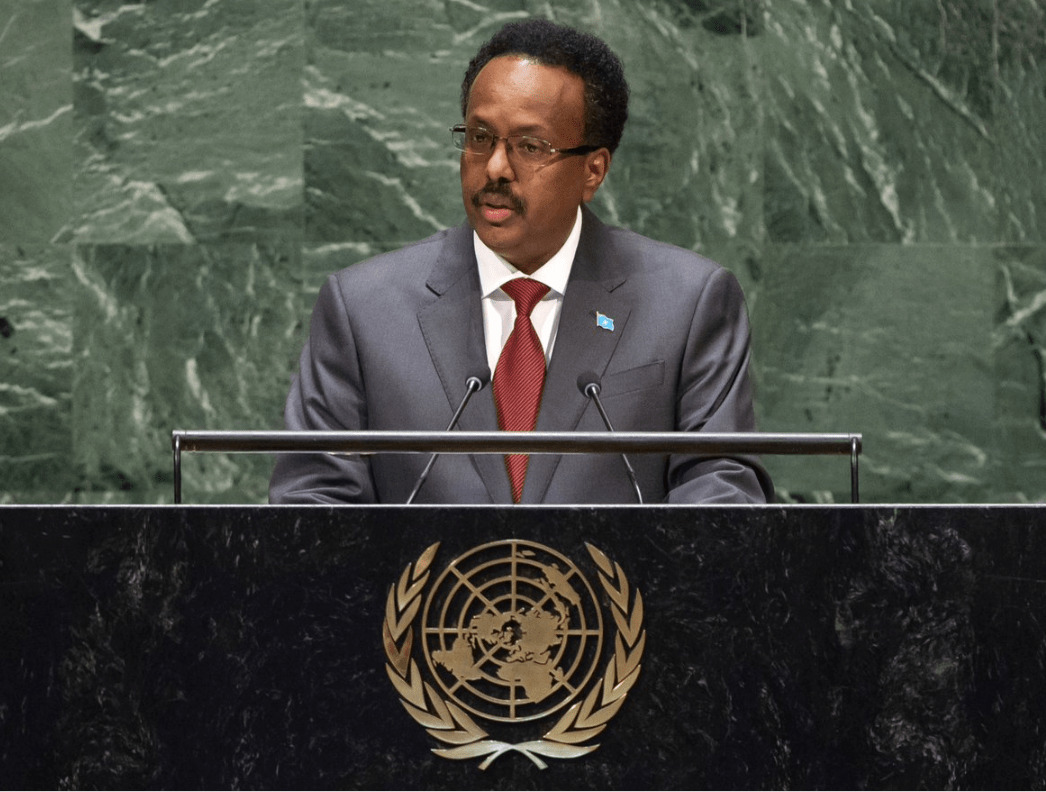

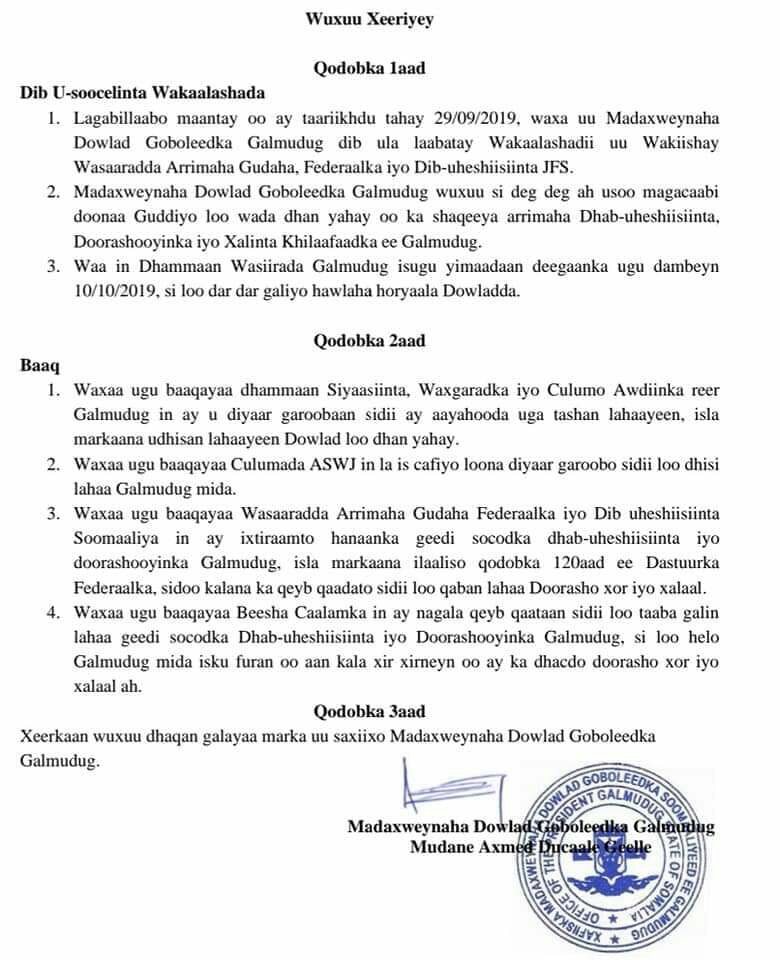


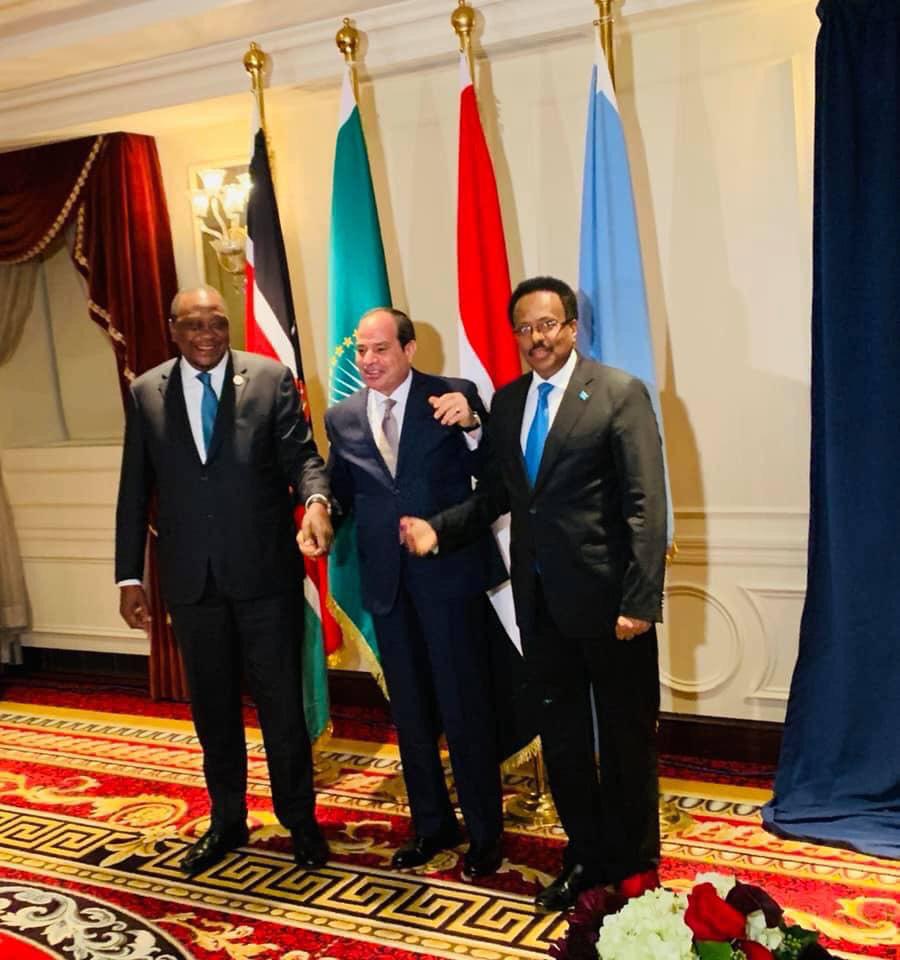


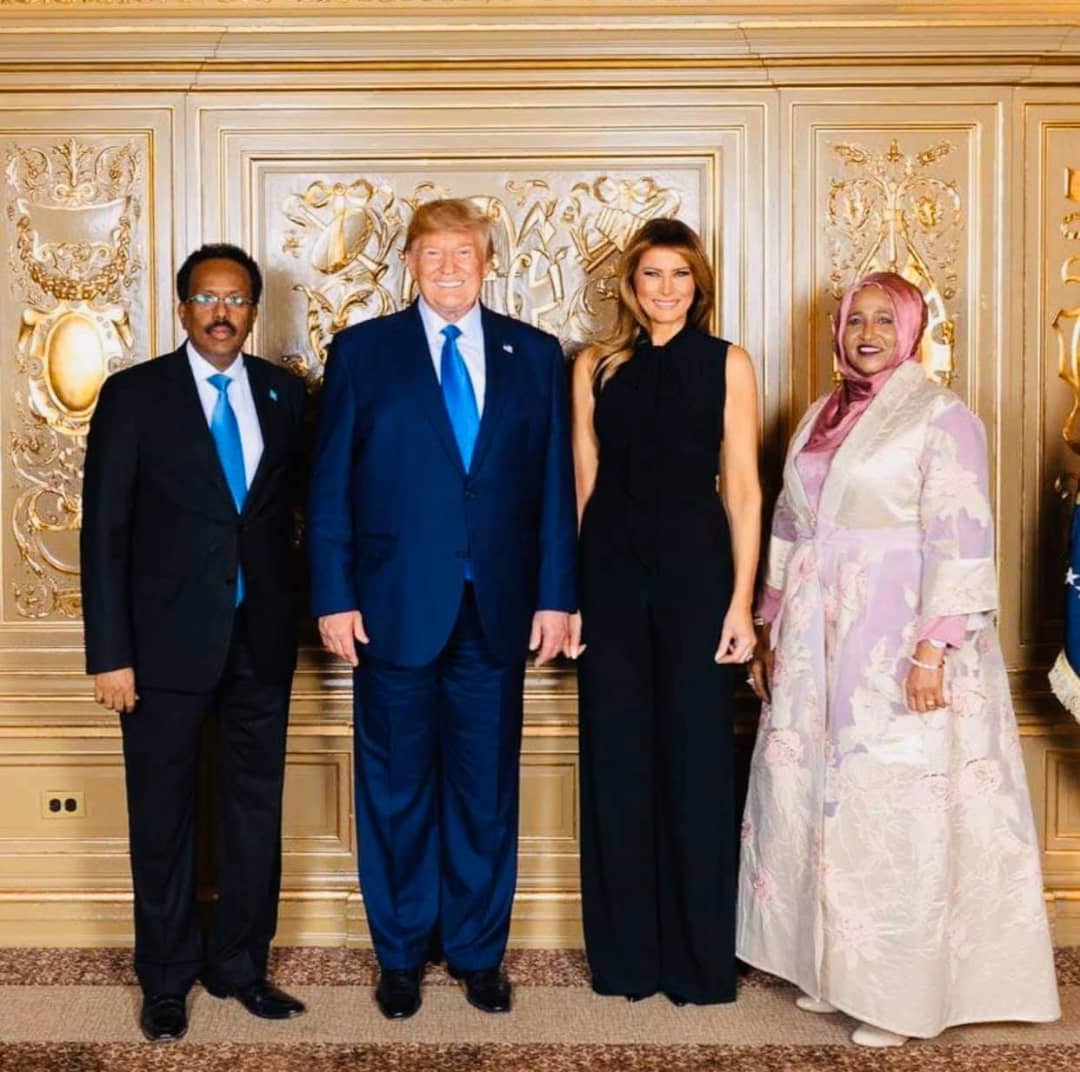
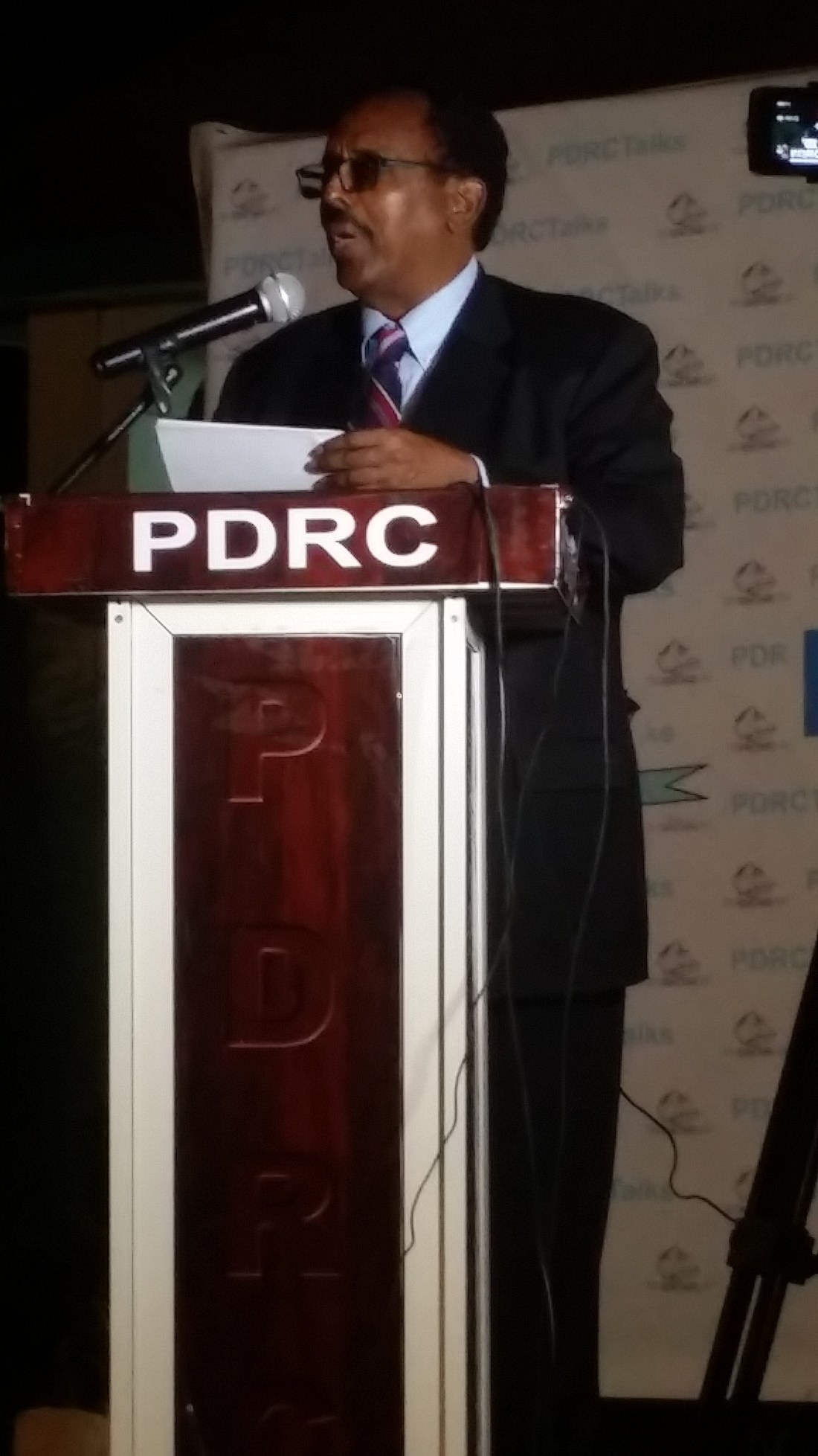


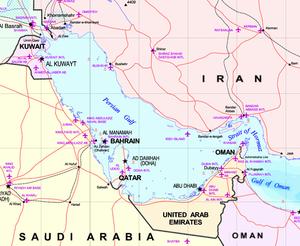
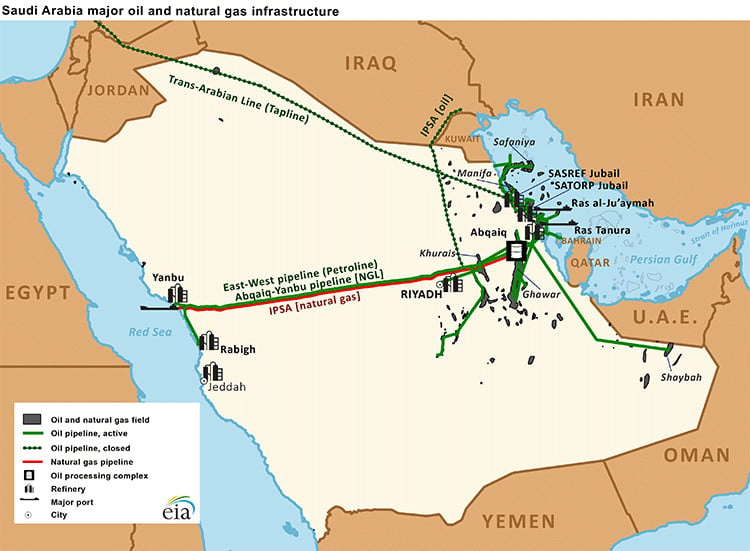

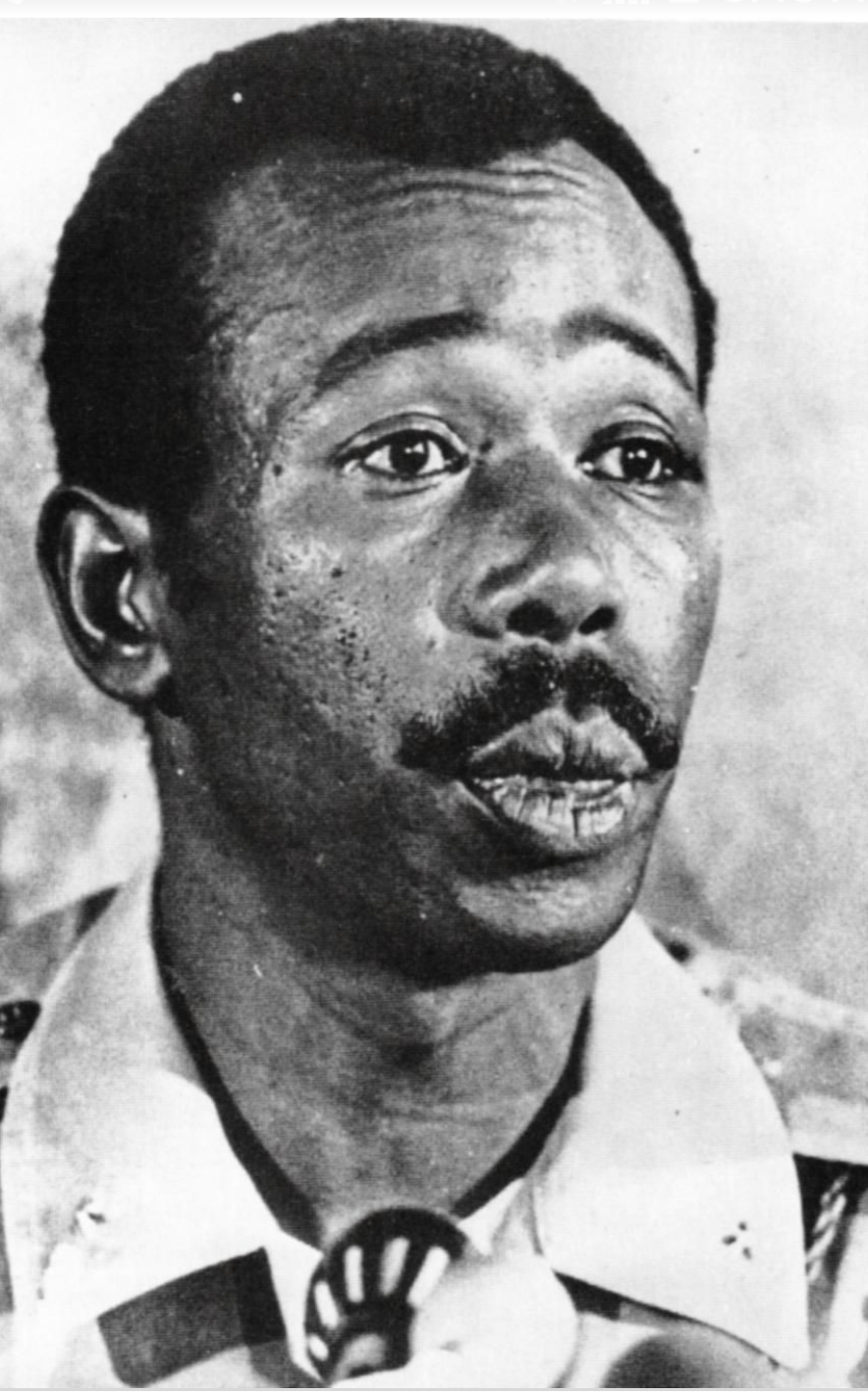


 Warsame Policy & Media Network (WAPMEN)
You must be logged in to post a comment.