Now that the recent Djibouti Agreement between Galmudugh President Ahmed Du’ale Haaf and his Dusamareb political partner, Sunna -wal-Jamaacah led by Premier Sheikh Shakir has been revoked, all previous political arrangements between the two factions are in tatters and irreconcilable.
That is because Sheikh Shakir Group has just switched their allegiance to the leaders of the Federal Government at expense of Haaf, betraying the warlord when he needed them most against Prime Minister Hassan Ali Khayre.
Haaf had temporarily found himself in no man’s land as he had escaped from Dusamareb on the eve of Khayre’s arrival in town, and he couldn’t enter Cadaado without negotiating his way through with his other rival faction leaders of the broken Galmudugh Parliament in Cadaado. He finally got allowed to enter Caado with the understanding that he had lost politically. That realization brought him to his sense and had accepted the inevitable that election is the only way out for all competing parties.
But, the dust has not settled down yet in Galmudugh conundrum as election campaigns got started, and as usual, those who have deeper pockets and financial backing of Villa Somalia have bigger chance to win.
Galmudugh has additional legitimacy complications of not fulfilling the Federal Constitutional requirements to qualify for regional state status, failing short of having territory of at least two regions.
Now that the recent Djibouti Agreement between Galmudugh President Ahmed Du’ale Haaf and his Dusamareb political partner, Sunna -wal-Jamaacah led by Premier Sheikh Shakir has been revoked, all previous political arrangements between the two factions are in tatters and irreconcilable.
That is because Sheikh Shakir Group has just switched their allegiance to the leaders of the Federal Government at expense of Haaf, betraying the warlord when he needed them most against Prime Minister Hassan Ali Khayre.
Haaf had temporarily found himself in no man’s land as he had escaped from Dusamareb on the eve of Khayre’s arrival in town, and he couldn’t enter Caado without negotiating his way through with his other rival faction leaders of the broken Galmudugh Parliament in Caado. He finally got allowed to enter Caado with the understanding that he had lost politically. That realization brought him to his sense and had accepted…
AUTHORS: Colleen Devlin, Sarah M. Glaser, Ciera Villegas, Natasia Poinsatte
OVERVIEW: As competition for finite fisheries resources increases, the risks of violent conflict over fisheries also rise. Where and when can we expect fisheries conflict to occur? Which actors are most likely to participate in fisheries conflict? What are the most frequent causes of fisheries conflict? How often does conflict result in arrests, property damage, or death? What can be done to mitigate fisheries conflict? Rough Seas: The Causes and Consequences of Fisheries Conflict in Somali Waters explores the frequency, intensity, and drivers of fisheries conflict in Somali waters between 1990 and 2018.
By analyzing event-level conflict data collected from public news reports, we expanded upon our Fisheries Conflict Database. This database contains 186 discrete instances of fisheries conflict, called Fisheries Dispute Events (FDE), in Somali waters. Each entry contains information on the date, location, actors, drivers, and consequences of the FDE. Furthermore, we derived scores measuring the intensity of fisheries conflict, on a scale of 0 to 3, for each Somali region and each year of coverage.
Our findings are as follows.
There were three distinct periods of conflict with different defining characteristics: conflict between domestic and foreign fishers (1998–2000), conflict driven by piracy in Somali waters (2007–2010), and conflict resulting from the return of foreign fishing fleets (2014–2015).
The five primary causes of fisheries conflict in Somali waters were the presence and actions of foreign fishers (legal or otherwise), illegal fishing, low governance capacity to deal with fisheries conflicts, limitations on access to fishing grounds, and piracy.
Foreign fishers were the most common actor in conflicts.
In Somali waters, the presence of the international community—both warships and fishing vessels—is one of the major causes of maritime instability and fisheries conflict. The international community must take responsibility for its presence in Somali waters.
To learn more and see what steps can mitigate fisheries conflict, download our full report.
Secure Fisheries employs a science-based approach to eliminating unmanaged competition over fisheries resources and reducing fisheries conflict. Our work supports the development of sustainable fisheries in the service of long-term food security, economic security, and community resilience.
Secure Fisheries is a program of the One Earth Future FoundationSubscribe to the One Earth Future Quarterly Newsletter for updates on Secure Fisheries and other One Earth Future programming.
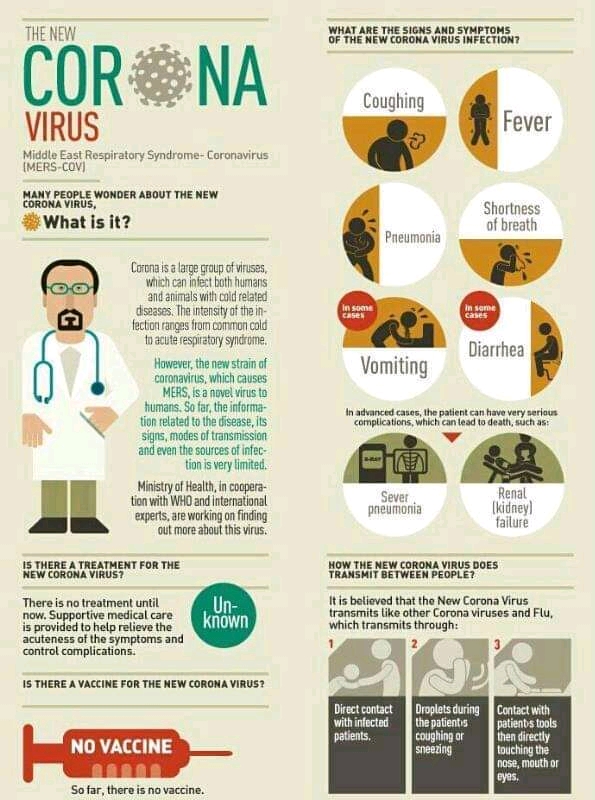
“The coronavirus arrived in Djibouti. A Chinese man who works in the Free Zone of Pk23 has been quarantined. He came back from his holiday in China and passed out in their office, feeling feverish . Please take care and inform the family”
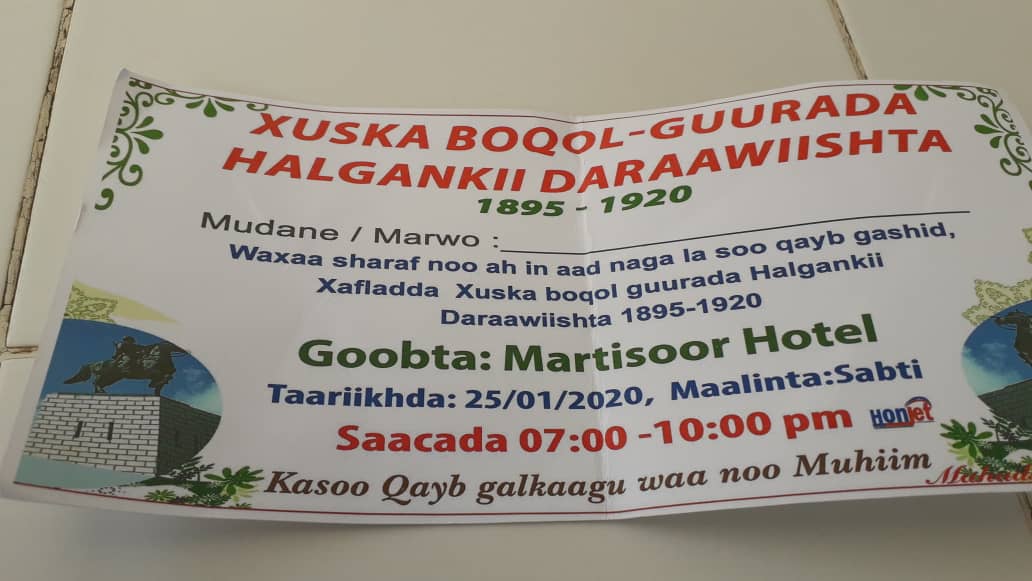
Waxaan aad ugu farxay markii mudanayaal iyo marwooyin asxaab iyo sheeko wadaag anu nahay ii geeneyn martiqaad kasoo qaybkal xaflad lagu maamuusayey 100 sanadii ka wareegtagay Ustaad Sayid Maxamed Cabdulle Xassan. Xafladdu waxay ka dhacaysay ama lagu qabanayey Hudheelka Martisoor, ee sida Sheratonka Djibouti u dhisan, haseyeeshee buurta waqooyi ee Garoowe ka duldhisan. Waraaqda martiqaadka ama “tikidka” la iigeenay ayaan durba yaraha eeg. Markiiba waxaan xusustay heestii ari la-joogtii reer Sool oo tiri erayo ay ka mid yihiin: “War ariga niman baa leh, oo niman ku dila yaa leh, Alle iyo Ustaadkaa leh”.
Anoo, si rayraynu ku dheehantahay uga jawaabcelinaya martiqaadka asxaabta, ayaan gaarigayga goor fiidkii u kaxaystay dhanka waqooyi ee Magaalada Garoowe, anoo kusii jeeda Hudheelka Martisoor ee xaflad loogu maamuusayo taariikhda Ina Cabdulle Xassan ama Ustaadka. Waxaa sandule igu noqotay in aan sii maro afar jid-gooyo oo ay dhigteen Ciidamada Amniga Madaxtooyada Puntland. Waxaa taa ka darnayd in markii an gaaray Hudheelka xuska Sayidku ka socdo, jidkooyo kale igu amartay in an gaarigayga ka fogeeyo hudheelka ugu yaraan nus kiiloomitir. Waa soo kala wareegay.
Waxan sahamiyey goob nus Km hudheelka u jirta oo gaari aan ilaalo la joogin meel mugdi ah la dhigan karo, hadna mugdi kasoo lugeyneysid, kuna sii lugeyneysid hadow. Waxaan go’aansaday in aan xafladda gabi ahaan isaga laabto oo aan gurigaygii isaga goosho. Habka uu u dhisanyahay jidka loo aado Hudheelka Martisoor, Madaxtooyada iyo xafiisyada wasaaradaha Puntland kuuma oggalaaneyso in aad ka baxdo adoon kusoo laaban jidka Isla Hudheelkii Martisoor, taa oo ku abuureysa Ciidamada Madaxtooyada shaki amni ee gaariga meesha kusoo laalaabanaya.
Waxaa kaloo iyana xusid mudan in waxaa oo jidgooyo ah, in la joojiyey, aan mar keli ah lagu baarin, aniga iyo gaarigaba. Xirfadda iyo aqoonta aminiga ee ciidamada dawladduna waa taa.
Ku guuleystay in aan ciriiriga ka lug baxo, si nabadgelyana ku gaaro deegaankaygii.
Waxan ka fakaray su’aasha ah: Tolow imisa qof ayey u suuragashay cawa in ay xafladdaa ka qaybgalaan?
Maanta ayaan baraha bulshada ka daawaday in odayaal 70 sano dhafay, oo intay labo go’ oo cad cad iyo funaanado aan uurkooda buuran asturikarin dadka meesha isu yimi hortaagan. Waxay garan waayeen in dhilinyarada taba-baraan, deedna ku wareejiyaan daadihinta xafladda.
Waxaa kaloo lagu wargeliyey in dadweynaha Puntland markasta kala kulmaan dhibtaan xafladda noocaan ah ee madaxda Puntland kasoo qaybgalaan. Xalay malaha Madaweyne Ku-Xigeenka, Axmed Kraash, ayaa xafladda Siyidka tagayey.
Madaxda Puntland waxa laga codsanayaa in dib uga fakaraan hab-maamuuska isku imaadkaan oo kale iyo sidii loo toosin lahaa khaladkan, loona sameynlaa hanaan ku haboon amniga, oo dadweynaha aan loo dhibin.
Waxaa kaloo mudnaanta koowaad leh dhalinyarada in ay hormood ka noqdaan hawlaha bulsho oo noocaan ah. https://ismailwarsame.blog
4.5 Somali Clan Power-Sharing Formula was a temporary political arrangement for the allocation and distribution of delegates among then Warring Factions of Somalia to the National Peace Reconciliation Congresses in an attempt to re-institute the failed Central State of Somalia. It was never meant to perpetuate injustice and never meant to use it as a system of governance in Somalia. At that time there was no alternative to sending symbolically representative delegates to the reconciliation national conferences being held in exile. 4.5 Formula was to be discontinued after the successful formation of the Transitional Federal Government in 2004. A National Reconciliation Conference with a series of bench-marks for implementation was to be held and the nation would move to hold a general election. That plan was to finish with the temporary political arrangement of 4.5.
To try to perpetuate it today would be one of the biggest disservices to an already broken nation.
The Trump administration is threatening to destroy Iraq’s economy by withholding a critical source of money that is controlled by the Federal Reserve. The threat is a response to the Iraqi parliament’s unanimous decision to end Washington’s 17 year-long military occupation. The Iraqi people and their representatives in parliament are incensed by the recent assassination of Iran’s most revered general, Qassem Soleimani, who was savagely incinerated by a Hellfire missile on the direct orders of Donald Trump. Iraqi prime minister, Adel Abdul-Mahdi, and his supporting MPs believe that the US committed a gross violation of Iraq’s sovereignty by killing a visiting dignitary without first obtaining the government’s permission. This is why the parliament and the prime minister have asked the administration to respect the wishes of the Iraqi people and withdraw all US troops from the country. Read more…
Last Wednesday, the coup government of Bolivia launched a massive military operation claiming to be a pre-emptive strike against the expected violence to occur this Wednesday during Plurinational State Foundation Day celebrations that memorializes the change in the name of the country and the adoption of a new constitution in 2009 under the Presidency of Evo Morales. Heavily armed military personnel on the streets, arrest warrants and the denouncements of deputies who are intimidated by violent groups has just continued under the U.S.-backed coup government in La Paz. Read more…
US government-funded technology companies have recorded an increase in the use of circumvention software in Iran in recent weeks after boosting efforts to help Iranian anti-regime protesters thwart internet censorship and use secure mobile messaging.
The outreach is part of a US government programme dedicated to internet freedom that supports dissident pressure inside Iran and complements America’s policy of “maximum pressure” over the regime. Read more…
The US targeted assassination, via drone strike, of Maj. Gen. Qassem Soleimani, apart from a torrent of crucial geopolitical ramifications, once again propels to center stage a quite inconvenient truth: the congenital incapacity of so-called US elites to even attempt to understand Shi’ism – thus 24/7 demonization, demeaning not only Shi’as by also Shi’a-led governments. Read more…
Secretary of State Mike Pompeo stated in a Friday radio interview that he had not been previously aware that former US Ambassador Marie Yovanovitch had been under surveillance in Ukraine. “Until this story broke, the best of my recollection, I’d never heard of this at all,” said Pompeo. During the interview, Pompeo failed to defend Yovanovitch or to express concern about the alleged stalking of a US diplomat. Read more…
The Bush, Obama and Trump administrations all routinely lied to the American people about the success of the 18-year war in Afghanistan. They exaggerated progress and inflated statistics to create an illusion that that the war was winnable. But after the deaths of 157,000 people at a cost of $2 trillion, corruption is rampant and the carnage continues. Read more…
The purpose of tariffs is to protect domestic producers from foreign competition by raising the price of imported goods. What Trump, his administration, and the financial press did not understand is that at least half of the US trade deficit with China is the offshored goods produced in China by such corporations as Apple, Nike, and Levi. The offshored production of US global corporations counts as imports when they are brought into the US to be sold to Americans. Thus, the cost of the tariffs were falling on US corporations and US consumers
As you continue to observe and study governance options for traditional nomadic societies like Somalia, Yemen, Gulf states, Albania and many countries of Africa, you discover that peoples’ aspirations for better lives in good governments are becoming delusional and unrealistic dreams. That is because transforming a tribal and nomadic community into a modern state, experiencing a modicum of law and order is like producing a communist state out of feudalism, by-passing capitalism.
In the case of Somalia, it is increasingly becoming a choice between a loose confederalism or centralized dictatorship. To establish the required highly centralized authority, you need immense economic and human resources for suppression.
To do that in Somalia, you need to exploit the rich natural resources like oil, gas, water, minerals, among other potential wealth of this country. That is why the next escalation of conflict and civil strive would come from the “curse of oil and gas”. Whoever could control this, would control Somalia.
The only option left for by-passing the next mayhem in Somalia is to explore now other governance systems that would guarantee peaceful development and coexistence, confederalism being the most suitable here, in my humble opinion.
Finally, if European experience has any historical lessons to learn from on governance and lasting peace after two devastating world wars and ugly history of internal civil strives in each, there has to be democratization of all countries in the Horn of Africa. They say, “Two democracies don’t fight”. Today it is hard to contemplate two Western European countries starting a war upon each other. Somalia and its neighborhood in the Horn must work out and develop common values of democracy to stay stable and peaceful.
Friday, 17 January 2020 8:00 AM [ Last Update: Friday, 17 January 2020 8:23 AM ]
File photo of US troops in Saudi Arabia (Via US Air Force’s Facebook page)
Saudi Arabia has reportedly paid $500 million to begin to cover the cost of US military operating in the Arab country, a US official says.
The payment was made in December 2019, according to the report.
“Consistent with the President’s guidance to increase partner burden-sharing, the Department of Defense has engaged Saudi Arabia on sharing the cost of these deployments, which support regional security and dissuade hostility and aggression. The Saudi government has agreed to help underwrite the cost of these activities and has made the first contribution,” said Rebecca Rebarich, Pentagon spokeswoman.
Last week, President Donald Trump claimed that the Saudis had “already deposited $1 billion in the bank”.
“We’re sending more [troops] to Saudi Arabia, and Saudi Arabia is paying us for it,” Trump said. “I said, ‘Listen, you’re a very rich country. You want more troops? I’m going to send them to you, but you have to pay us.’ They’re paying us. They’ve already deposited $1 billion in the bank.”
Critics, including independent representative Justin Amash, slammed the move, accusing Trump of using American troops as “paid mercenaries.” “He sells troops,” Amash tweeted.
Speaking to MSNBC, Democrat representative Barbara Lee claimed Trump deposited the Saudi money in a personal bank account and said the president is “selling our soldiers as mercenaries to foreign governments.”
Later, Pentagon spokeswoman Rebarich said discussions were ongoing to formalize the contributions.
“Discussions are ongoing” is quite different from Trump’s unequivocal claim that Saudi Arabia had “already deposited $1 billion in the bank.”
The Saudi funds are to cover the overall costs of deploying troops, as well as fighter jets and Patriot missile defense batteries to protect Saudi oil installations, CNN reported.
The deployments began after what the Saudis and Americans claimed were Iran’s attacks on Aramco oil facilities in September 2019. Iran has denied any involvement in the attacks, for which Yemen’s Ansaraullah movement claimed responsibility.
The military buildup has come despite Trump repeatedly claiming that he wants to reduce the US military commitment in the Middle East.
France to deploy its only aircraft carrier to Mideast
Meanwhile, French President Emmanuel Macron said on Thursday his country will deploy the Charles de Gaulle aircraft carrier and its battle group to support French military operations in Middle East.
“The aircraft carrier will support Chammal operations (in the Middle East) from January to April 2020 before deploying to the Atlantic Ocean and the North Sea”, Macron said at a New Year speech to the French military, according to Reuters.
The deployment comes amid growing tensions between Iran and the United States, which escalated following Washington’s assassination of top Iranian general Qassem Soleimani, in Baghdad.
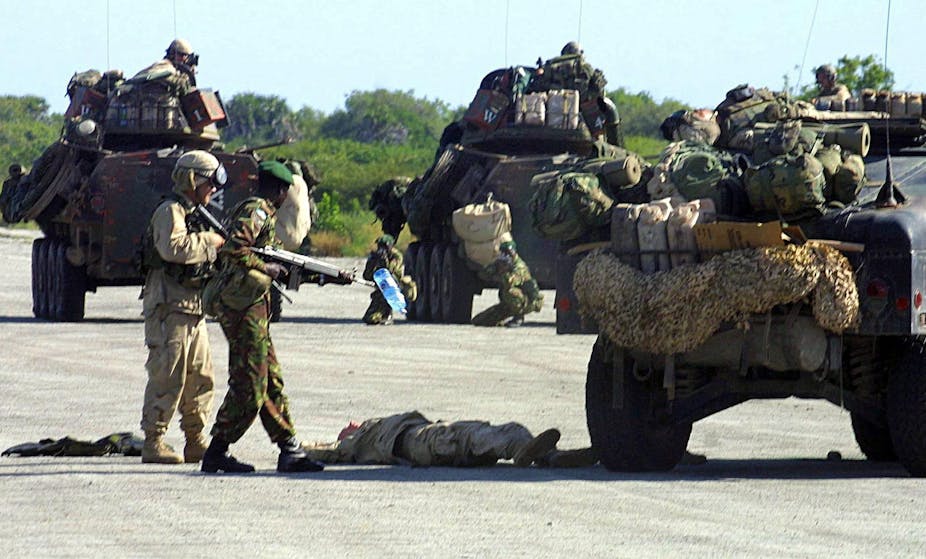
Kenyan military troops and US marines carry out a joint military exercise in Manda Bay near the coastal town of Lamu. EPA/Simon Maina
Two significant attacks have been carried out by al-Shabaab in recent weeks. On 6 January 2020, the Somali-based terrorist group attacked a Kenyan military base close to the former coastal holiday destination of Lamu. The killing of a US service man and two US contractors in this attack inflicted the first ever American military combat losses inside Kenya.
The other attack was on 28 December when a bomb went off at a checkpoint used by vehicles entering Somalia’s capital Mogadishu from the nearby city of Afgoye. Among the 85 killed in the attack were two Turkish engineers. Al-Shabaab claimed responsibility, saying the target had been a convoy of Turkish and Somali forces.
The two attacks, though different, shared some similarities: both targeted some of the group’s main enemies outside the region, Turkey and the US. Al-Shabaab’s global enemies have figured in its propaganda for more than a decade. Turks and Americans have been targeted before. And as recently as last year a US base in Somalia was targeted.
Al-Shabaab portrayed the Manda Bay attack as a direct response to the US administration’s designation of Jerusalem as the capital of Israel. The group further claimed that the attack was conducted under the “guidance and direction” of Al Qaeda leader Ayman al-Zawahiri.
It is significant that these attacks come at a time when the US – as well as other western countries such as France – are increasingly discussing scaling down their military efforts against African extremist organisations, as well as drawing in new partners to share their burden.
Moving pieces
Scaling back involvement is influenced by the failure to fully defeat any of the jihadist organisations on the continent. It is also informed by the fact that outfits such as al-Shabaab, Mali’s Jama’at Nasr al-Islam wal Muslimin, as well as the Islamic State in West Africa choose local or regional targets. This makes them a smaller threat to European and north American countries.
The third factor is the Trump administration’s insistence on sharing the international security burden among allies, and its reluctance to stage costly foreign interventions.
But the US and France still have each other, which could explain some changes in focus. For example, recent signals of a US scale down in West Africa but not in the Horn of Africa might be because of the French presence in that region. The US’s heavy investment in some countries in the Horn might also make it less willing to scale down its engagement in those countries.
But France’s unpopularity in the region, and the recent French talk of “burden sharing” mirroring the American rhetoric, signals that this solution also faces several dilemmas.
US dilemmas
The two recent attacks highlight three dilemmas the US will face if it pursues a withdrawal strategy. The first is the increasing involvement of international players across the continent.
For example, Turkey has expanded its presence in Somalia while Qatar and the United Arab Emirates have expanded their engagement. The extent of this was reflected recently when Turkish papers as well as sources within Somali security services claimed that the Emirates where behind the 28 December bombing.
Such claims must be seen in the light of foreign rivalry, particularly between the UAE and Qatar.
Declining US involvement in the region will leave a vacuum that others can fill.
Last year, for example, Russian mercenaries were deployed to Mozambique to fight the Islamic State affiliated militias there.
China, which has a naval base in neighbouring Djibouti, might also fill the vacuum in the future.
The second dilemma the US faces is the fact that, although al-Shabaab and other African jihadist organisations don’t launch attacks in Europe and the US, they do target US citizens, interests and investments in Africa.
On the issue of vulnerability the attacks demonstrate how non-military personnel, in this case Turkish engineers, can become threatened by local groups such as al-Shabaab. Some of these non- military activities will continue even if the US end their military efforts.
This is especially true as oil exploration in Somalia and the Horn is about to intensify. In this sense foreign citizens, including US citizens, are in harm’s way also after an American withdrawal.
While foreigners are seemingly the target of the recent attacks, we must avoid concluding that this signifies a “globalisation” of al-Shabaab. The targets of the two attacks are far from atypical. The Manda Bay base is located in the county of Lamu, adjacent to the Boni forest and the Ras-Kamboni forests. This is an old hotbed of al-Shabaab activity, as well as older jihadist groups. It is a region in which the local Muslim population was hurt badly by land reforms during Jomo Kenyatta’s presidency. This was in fact mentioned in al-Shabaab’s statements on the Manda bay attack.
Indeed, the Manda Bay attack underscores the real problem of both US and French engagement in Africa: addressing local conflicts that jihadists can take advantage of. The lack of success in curtailing their activities stems partly from a neglect of local conflict dynamics and civilian protection.
The third dilemma is the humanitarian suffering created by jihadists in the region. This will not end with US withdrawal.
I watched and listened to President Deni’s State of Union Speech on his First Year in office last night. While the efforts of his administration are commendable in many aspects, I felt that there is a long way for him to go to address root causes as to why Puntland State is falling behind in many fronts, including, first and foremost, democratization process, public service, judiciary and public security reforms. But, what is clearly noticiable and overarching problem of Puntland is the absence of strategic policy planning on:
Puntland policy objectives towards poverty reduction, youth unemployment, the crisis of health sector, whereby there is no a single quality hospital in State after 21 years of statehood.
Economic benchmarks to strive for in the next five years, at least.
Education goals, where Puntland State has fallen behind Somaliland and Banadir Region, especially in quality of its higher learning.
Think Tank and academic research centres.
Competent State advisory boards and professional associations tackling with issues of state and national interests on daily basis.
Provision of proactive policy and strategy in dealing with the fledgling Federal Government in the making of a “New Somalia”. Puntland should cause things to happen, not to wait for things to happen to her and reacts to events. It should take the lead in national political developments. It should make noises and alerts of its dissatisfaction to Somalia’s International Partners and all stakeholders.
Unlike the rest of Somalia, Puntland has immense human and natural resources to exploit effectively. It has a huge diaspora population. It has rich cultural heritage and long history of self-government. In the past, it had played critical and leading roles in Somalia’s statecraft and statehood. These are historical achievements it couldn’t abandon to be quite visible and proactive. It has to re-assert itself, reset and reboot.
Finally, Puntland should proclaim policy guidelines on fighting maladministration, cronyism, nepotism and abuses of public office. There must be developed and known standards for handling issues of malpractice in both public and private sectors.
In conclusion, the Head of the Administration must launch a policy of public accountability and must do away the notion of ‘Madax-Ka-Nool’, whether it is perceived or real. This will be a break from the past mistakes or abuses of power. All branches of government must operate in the accordance with the Constitution. That is what people of Puntland deserve after long and historic struggle for a better life. This will also set the record for Somalia’s governance, and act as another Puntland contribution to Somalia’s continued nation-state.
It is my sincere hope that President Deni’s Administration would wake up and wise up to meet the challenges of the time.
America’s hegemonic military agenda in the Middle East has reached a dangerous threshold.
The assassination of IRGC General Soleimani ordered by the President of the United States on January 3, 2020 is tantamount to an Act of War against Iran.
President Donald Trump accused Soleimani of “plotting imminent and sinister attacks”: “We took action last night to stop a war. We did not take action to start a war…. we caught him in the act and terminated him.”
US Defense Secretary Mark T. Esper described it as a “decisive defensive action” while confirming that the operation ordered by POTUS had been carried out by the Pentagon. “The game has changed” said Esper.
What the media has failed to acknowledge is General Soleimani’s central role in countering ISIS-Daesh and Al Qaeda terrorists in both Iraq and Syria.
The Iranian Revolutionary Guard Corps-Quds Force (IRGC) under the helm of General Soleimani consisted in waging a real counter-terrorism campaign against ISIS-Daesh mercenaries, who from the outset were funded, trained and recruited by the US and its allies.
Trump’s action plan to “stop a war” consists in “protecting” America’s ISIS and Al Qaeda affiliated foot-soldiers.
US Extrajudicial Assassinations
While the assassination of General Soleimani constitutes a criminal act on the part of President Trump, the US practice of extrajudicial assassinations of foreign politicians has a long history.
What distinguishes the assassination of General Soleimani from previous extrajudicial killings, is that the president of the US has formally announced that he gave the order.
This sets a dangerous precedent. It was “overt” rather than “covert”, i.e. a covert operation by the CIA or by a US sponsored Al Qaeda affiliate acting on behalf of Washington.
It is important to note that it was not Trump but in fact Obama who formalized (“legalized”) the practice of extra-judicial assassination (ordered by the president):
And if the president [Obama] can kill anyone, including US citizens, without judicial review, what power does he not have? Any but the most formal distinction between democracy and presidential dictatorship is swept away. (Joseph Kishore, wsws.org, October 31, 2012)
Trump’s Response: More Troops to the Middle East
While the Pentagon announced that it is “sending thousands of additional troops to the Middle East”, a unanimous vote in Iraq’s parliament was reached demanding the immediate withdrawal of all US forces.
The legislation requires the Iraqi government to “end any foreign presence on Iraqi soil and prevent the use of Iraqi airspace, soil and water for any reason”.
Note: Death to America: refers to the US Government, Not the American People
Backflash: A Digression. The Obama Air Raids (2014-2017)
Concurrently the Iraqi parliament suspended the corrupt 2014 agreement with the Obama administration which invited the US to lead a fake counterterrorism operation directed against the Islamic State (ISIS-Daesh), made up of mercenaries who are funded, trained and recruited by US-NATO, with the support of Saudi Arabia and the UAE.
The decision of the Iraqi parliament is in this regard fundamental. This operation was used by the Obama administration as a pretext to justify a third phase of the Iraq War (1991, 2003, 2014). Initiated in June 2014 by Obama under the disguise of a counterterrorism operation, a new phase of killing and destruction was launched.
Why was the US Air Force unable to wipe out the Islamic State which at the outset was largely equipped with conventional small arms not to mention state of the art Toyota pickup trucks?
From the very outset, Nobel Peace Laureate Barack Obama’s air campaign was NOT directed at ISIS. The evidence confirms that the Islamic State was not the target. Quite the opposite. The air raids were intended to destroy the economic infrastructure of Iraq and Syria.
Look at the following image which describes the Islamic State convoy of pickup trucks entering Iraq fromn Syria and crossing a 200 km span of open desert which separates the two countries.
This convoy entered Iraq in June 2014.
What would have been required from a military standpoint to wipe out an ISIS convoy with no effective anti-aircraft capabilities?
Without an understanding of military issues, common sense prevails.
If they had wanted to eliminate the Islamic State brigades, they could have “carpet” bombed their convoys of Toyota pickup trucks when they crossed the desert from Syria into Iraq in June 2014.
The Syro-Arabian Desert is open territory (see map right). With state of the art jet fighter aircraft (F15, F22 Raptor, F16) it would have been –from a military standpoint– “a piece of cake”, a rapid and expedient surgical operation, which would have decimated the Islamic State convoys in a matter of hours.
But if that had happened, they would not have been able to implement their “Responsibility to Protect” (P2R) bombing campaign over a three year period (2014-2017).
Instead what we witnessed were drawn out relentless air raids and bombings which culminated with the so-called liberation of Mosul (February 2017) and Raqqa (October 2017) by the US led coalition.
And we were led to believe that the Islamic State had the upper hand and could not be defeated by a powerful US led military coalition of 19 countries.
The people of Iraq and Syria were the targets. Obama’s bombing raids were intent upon destroying the civilian infrastructure of Iraq and Syria.
ISIS-Daesh were never the target of US aggression. Quite the opposite. They were protected by the Western military alliance.
US Troop Withdrawal: Yankee Go Home (2020)
While a major US troop withdrawal is unlikely in the foreseeable future, “America’s War on Terrorism” is in jeopardy. Nobody believes that America is going after the terrorists.
In Iraq and Syria, everybody knows that all Al Qaeda, ISIS-Daesh affiliated entities are supported by US-NATO.
The “Yankee Go Home” process has commenced. The US is not only being ousted from Iraq and Syria, its strategic presence in the broader Middle East is also threatened. And these two processes are intimately related.
In turn, several of America’s former allies including Turkey, Kuwait, Oman, Qatar and Egypt have normalized their relations with Iran.
Trump’s Punitive Bombings. Will They be Carried Out?
In recent developments, Trump has warned that if Tehran responds to the assassination of General Soleimani, he will “target 52 Iranian sites” intimating that they would be “HIT VERY FAST AND VERY HARD.”
Donald Trump wants to hit back. But he has a serious logistical problem on his hands of which he may not even be aware of.
Normally a punitive operation of this nature directed against Iran would be entrusted to USCENTCOM’s forward headquarters in the Middle East located at the Al Udeid Air Force base in Qatar.
With 11,000 US military personnel, the al-Udeid Air Force base close to Doha is “one of the U.S. military’s most enduring and most strategically positioned operations on the planet” (Washington Times). It has led and coordinated several major Middle East war theaters including Afghanistan (2001), Iraq (2003). It was also involved in Syria.
But there is a problem: The forward base of USCENTCOM at the al-Udeid Air Force base is in Qatar. And since June 2017 Qatar has been “sleeping with the enemy”. Qatar has become a staunch ally of Iran.
What both the media, as well as foreign policy and military analysts fail to acknowledge is that US CENTCOM’s Forward Base headquarters at the al-Udeid military base de facto “lies in enemy territory”. And it would seem that POTUS is totally unaware of this situation.
“Qatar has always been an exceptional partner, and this base from which we are operating is a great base, and CENTCOM has no intention of moving anywhere,” said CENTCOM’s deputy commander, Chance Saltzman.
More recently, they have been discussing the establishment of Iran-Qatar bilateral military ties.
Having decided that Al Udeid (located in enemy territory) could not be moved to another location in the Middle East, the Pentagon then envisaged a scenario of moving Al Udeid air and space operations to South Carolina: “to 7,000 miles away in South Carolina”. It was a simulation. “The temporary switch” lasted only 24 hours.
Lessons Learnt: You cannot effectively “wage war” in the Middle East without a “Forward Base” in the Middle East. This “South Carolina Test” borders on ridicule.
Are US military planners desperate?
Since May 2017, following the break up of the Gulf Cooperation Council (GCC) the Pentagon has NOT BEEN ABLE TO MOVE USCENTCOM FORWARD BASE (including its air force striking capabilities) OUT OF ENEMY TERRITORY (QATAR) to a “friendly location” (e.g. Saudi Arabia, Israel) in the broader Middle East region.
Military analysts now admit that in the case of a conflict with Iran, Al-Udeid would be an immediate target. “The base’s defence system is said to be ill-equipped to defend itself against the low-flying cruise missiles and drones…”
Mr. President: How on earth can you launch your punitive bombings on Iran from the territory of a close ally of Iran?
From a strategic point of view it does not make sense. And this is but the tip of the iceberg.
While the bombing and missile attacks can be dispatched from other US military bases in the Middle East (see diagram below) as well as from Diego Garcia, US aircraft carriers, submarines, etc, the regional USCENTCOM Forward Base at Al-Udeid, Qatar, plays a key role in the command structure in liaison with USCENTCOM headquarters in Tampa, Florida, and US Strategic Command (USSTRATCOM) at the Offutt Air Force Base, Nebraska.
Source: Statista
While Qatar and the US have a longstanding bilateral cooperation agreement pertaining to the al-Udeid Air Force base, Qatar has military cooperation agreements not only with Iran but also with Hamas and Hezbollah, all of which are “enemies” of the USA:
The challenge for Washington is that while Qatar hosts al-Udeid, it’s also friendly with the Gaza-based Islamic Resistance Movement (Hamas), it is close to the Hezbollah’s leadership … [Qatar also] has cozy relations with Iran. Indeed, if Qatar didn’t host America’s largest air base in the Middle East, it would be under pressure from the U.S. to cease much of this behavior.”
And to top it off, Qatar is also friends with Russia. A military technical cooperation agreement pertaining to air defense was signed with Moscow, immediately following Qatar’s rift with Saudi Arabia in June 2017.
Turkey’s Incirlik Air Force Base
“A sleeping with the enemy situation” also prevails with regard to Turkey’s Incirlik Air Force base which was established in the 1950s by the US Air Force. Incirlik has played a strategic role in all US-NATO led operations in the Middle East.
With about five thousand airmen, the US Air Force is now hosted in a country (aka Turkey) which is an ally of both Russia and Iran. Turkey and Iran are neighbouring states with friendly relations. In contrast, US and Turkish supported rebels are fighting one another in Northern Syria.
In mid-December 2019, Turkey’s foreign minister Mevlüt Çavuşoğlu dropped a bombshell, intimating “that the United States could be barred from using two strategic air bases [Incirlik and Kurecik]in retaliation to possible US sanctions against his country” regarding Turkey’s purchase of the Russian S-400 missile defence system.
America’s Conventional Warfare Capabilities
For several reasons, US hegemony in the Middle East has been weakened in part as a result of the evolving structure of military alliances.
America’s command capabilities have been weakened. Two of the region’s largest strategic Air Forces bases, namely Incirlik (Turkey) and Al-Udeid (Qatar) are no longer under the control of the Pentagon.
While war against Iran remains on the drawing board of the Pentagon, under present conditions, an all out Blitzkrieg (conventional theater war) involving the simultaneous deployment of ground, air and naval forces is an impossibility.
While the US does not have the ability to carry out such a project, various forms of “limited warfare” have been contemplated including targeted missile attacks, so-called “bloody nose operations” (including the use of tactical nuclear weapons), as well as acts of political destabilization and color revolutions (which are already ongoing) as well as economic sanctions, manipulations of financial markets and neoliberal macroeconomic reforms (imposed via the IMF and the World Bank(.
The Nuclear Option against Iran
And it is precisely because of US weaknesses in the realm of conventional warfare that a nuclear option could be envisaged. Such an option would inevitably lead to escalation.
Ignorance and stupidity are factors in the decision making process. According to foreign policy analyst Edward Curtin “Crazy people do crazy things”.
Who are the crazy people in key decision-making positions?
Trump foreign policy advisers: Secretary of State Mike Pompeo, national security adviser Robert O’Brien and Brian Hook, (Special Representative for Iran and Advisor to Pompeo), could “advise” President Trump to authorize a “bloody nose operation” against Iran using tactical (B61 bunker buster) nuclear weapons, which the Pentagon has categorized as “harmless to civilians because the explosion is underground”.
The bloody nose operation” as designated by the Pentagon, conveys the idea of a military op (using a low yield “more usable” tactical nuclear weapon) which allegedly “creates minimum damage”. It’s a lie: the tactical nuclear weapon has an explosive capacity between one third and 12 times a Hiroshima bomb.
Tensions between the United States and Iran are spiraling toward a military confrontation that carries a real possibility that the United States will use nuclear weapons. Iran’s assortment of asymmetrical capabilities—all constructed to be effective against the United States—nearly assures such a confrontation. The current US nuclear posture leaves the Trump administration at least open to the use of tactical nuclear weapons in conventional theaters. Some in the current administration may well think it to be in the best interest of the United States to seek a quick and decisive victory in the oil hub of the Persian Gulf—and to do so by using its nuclear arsenal.
We believe there is a heightened possibility of a US-Iran war triggering a US nuclear strike…
Of significance, the use of tactical nukes does not require the authorization of the Commander in Chief. That authorization pertains solely to so-called strategic nuclear weapons.
Despite the warnings of the Bulletin of Atomic Scientists, present circumstances do not favor the conduct of a US “bloody nose” tactical nuclear weapons’ operation.
The US Air Force’s tactical nuclear weapons arsenal is stored and deployed in five non-nuclear European countries including Germany, Belgium, Netherlands, Italy, Turkey at military bases under national command.
According to Hans Kristensen and Matt Korda (Bulletin of Atomic Scientists, 2019 report), the US possesses an estimated 230 tactical nuclear weapons of which 180 are deployed in the five non-nuclear European countries. Some 50 B61 bunker buster bombs with nuclear warheads (gravity bombs) are stored and deployed at the Incirlik air force base which is under Turkey’s jurisdiction. (see table above)
Conclusion:
A US president committed to war crimes.
A failing “War on Terrorism” narrative,
Weakened military command structures,
Failing alliances,
Sleeping with the enemy,
Unpredictable foreign policy analysts,
Deception and mistakes.
At this juncture: The US’ most powerful weapon remains dollarization, neoliberal economic reforms and the ability to manipulate financial markets.
The story of USA-IRANIAN relationships goes deeper than assassination of General Suleimani. Their troubled relations predate the regime of Ayatollahs, when the Iranian Savak Security Services loyal to then the Shah and CIA reigned acts of terror and repression against the ordinary Iranians. Hatred to America and revenge were cemented in the minds of all Iranians since then.
Secondly, USA don’t tolerate any independence policy by any developing country. The core of USA problem with Iran rests on the pursuit of independent policy by Ayatollahs.
Thirdly, the USA policy in the Middle East is shaped by Israel and Sunni Arab states, who are mostly anti-Iran for ideological reasons.
Fourth, USA and Western countries see Iran as a threat to their economic interests in the Middle East.
Fifth, Iran is located in geo-strategic part of the world with Russia and China.
Sixth, Iran is a Muslim power with ambitions for a detergent military might, including nuclear capabilities.
Seventh, Iran has coherent and long-term strategic objectives towards the Middle East as the hegemonic power to be in the Region and to become the dominant centre of the Islamic World. America and the West are resisting Iranian socio-economic and military ambitions.
Right now, USA punishing economic and financial sanctions on Iran is the fire to be extinguished first.
Finally, the Iranians are too shrewd politically to allow escalation of this current confrontation with President Trump. They have bigger objectives.
Under this circumstance, Somalis call it “Barortu urgiga ka weyn” ( it is a false pretext).
That was a question by a well-known and deeply informed retired employee of the Federal Government of Somalia, to answer my curiosity question with a question of his own. He said that in terms of peace, the fighting with Al-Shabab is still raging around Villa Somalia, Maka Al-mukarama Street and Aden Abdulle International Airport. Al-Shabab has become a parallel government, generating more revenue than the FGS, and controlling swathes of the land. The Constitutional arrangement is still in deadlock. Other branches of the government have no teeth or been totally marginalized. Federal system has been undermined with some FMS existing by name now – FGS has defied a commonly followed principle “Do no harm” in an already bad situation.
While all this is happening, foreign powers are engaged in subversive activities to unravel any modest gains since 2004 when the 2nd Somali Republic was created.
Paradoxically, yesterday’s clan militia of Union of Islamic Courts and Al-Shabab in Mogadishu localities are being recruited by FGS in cooperation with invested foreign powers into a national army, police force and security services, a recipe for disaster and preparation for renewed clan hostilities of yesteryears. This is now the root cause of Mogadishu epidemic insecurity and constant bomb-blasts. One couldn’t know for sure who is doing what in the security sector; Is it Al-Shabab or FGS security forces, or perhaps the combination of both of them doing this terror war in coordinated operations – a security dillemma that Farmaajo-Khayre Group couldn’t be trusted to resolve any time soon, or never.
It is never too late, though. They have to go first in order to try to rectify the worsening Somalia’s bad state of affairs.
This may seem a pessimistic view of the Farmaajo-Khayre performance in more than three years of their mandate, but if you have anything contrary to this assessment, you better share with us.
Buuggani wuxu ku saabsan yahay gabar Soomaaliyeed, Muraayo Geelqaad, oo markay u qaxday dal ka mid ah wadamada Yurub sida kumayaal Soomaaliyeed ee iyada la mid ahi yeeleen, go’aansatay in ay walaalaheed iyada ka yar yar kasoo saarto dhibka dagaalka sokeeyee ee Soomaliya, oo yagana soo geliso dalka ay joogto. Dhaqanka iyo shuruucda adag ee socdaalka iyo qaxootinima wadamada Reer Galbeedku kuuma oggalo in aad keento caruur aadan dhalin or ama aad cadayn karto in aad adigu mas’uul ka tahay.
Muraayo waa inan dawr iyo labaatan jir ah, welina aan guursan. Muraayo markay ku guuleysatay in ay dalka keento walaalaheed Axmed Geelqaad iyo Maxamed Geelqaad, ayaa iyada nin Soomaaliyeed soo doonay. Markii lagu heshiiyey guurka Muraayo, ayaa loo baahday in reerka cusub laga diwaangeliyo hay’adaha dawladda ee arrintaani la xiriirto. Mar haday inantani tahay mid la qabo marka laga eego dhanka waraaqaheeda ay dalka ku joogto iyo caruurta walaalaheeda ee ay hooyada ugu qoranyihiin, waa suurtoo-wiweyday diwaangelinta guurka cusub. Halkaa ayaa waxa bilaabatay durba isqadkii qoys ee ugu horeeyey.
Muraayo Geelqaad, iyadoo hadba qiiq isku qarineysa, waxay bilowday dooda in Soomaalidu yihiin dad Muslim ah oo aan u baahnayn isti-waangelin habka gaalada. Waxay soo jeedisay in wadaad Soomaali ahi arrinta guurkeeda ku filanyahay.
Ninka soo doonay Muraayo Geelqaad waa ilbax garanaya in guurka si toolmoon loo habeeyo, mas’uulliyada reerka cusubna sifo shuruucda dalka waafaqsan lagu saleeyo. Muraayo arrinta wey ka warwareegtay,waayo kiiskii laamaha socdaalka dib hadii loogu noqon, beenteedii baa soo baxaysa, waxana suurtowda in sharcigeedii dalka ay ku joogtay la tirtiro. Haday iskudaydo in ay ku andacooto in ninkeedii hore xijaabtay, waxa laga rabaa Muraayo warqaddii dhimashada ninkeedii hore. Taana ma hayso.
Waxa intaa soo dhan ka daran, Muraayo waxay qarineysaa ceebta kashifmidoonta hadii ay sheegto in ay aabaheed ka dhigtay ninkeedii sida ugu qoran waraaqaheeda hay’addaha socdaalka iyo qaxootinimada ee dalka ay joogto.
Dhibkani Muraayo Geelqaad gaar uma aha. Waxa jira dad badan oo la mid ah, waa ka mid dhibaatooyin qoys ee qurbajoogta Soomaliyeed haysata.









 Warsame Policy & Media Network (WAPMEN)
You must be logged in to post a comment.