Watch “Puntland-Ethiopian Relations” on YouTube

Watch “Abdullahi Yusuf and Jama Ali Jama” on YouTube

REGIONAL POWER PLAYS ON CARTA SOMALI CONFERENCE OF YEAR 2000

Watch “Shirkii Carta, Djibouti, Puntland, Somalia” on YouTube

Watch “How DJIBOUTI erred in its relations with Puntland” on YouTube

HOW PUNTLAND HAD SAVED DJIBOUTI FROM UNION WITH ETHIOPIA

NOTICE

Some WDM subscribers are still slow sending in their Annual subscription Fees of $37. Please expedite your support in order not to lose your membership. Use one of the following payment methods:

Tel/Sahal/WhatsApp: +252 90 703 4081; EVCPLUS: +252 61 588 388; MyCash :+252 71 681 4371

PayPal/bank e-transfer Accounts: ismail.warsame@yahoo.ca

HOW DJIBOUTI ERRED IN ITS RELATIONS WITH PUNTLAND

https://wp.me/p32mpX-3Fv

ON THE HISTORY OF PUNTLAND-DJIBOUTI RELATIONS

In 1991 [corrected] Djibouti, under the late President Hassan Guled Abtidon, hosted a Somali Peace Conference. Former Somali top officials, including Abdirisaq Haji Hussein and Mohamed Haji Ibrahim Egal attended the conference. Djibouti treated Somali dignitaries differently, offering preferential hosting treatment to delegates from Mogadishu, a fact that caused the resentment of late prime minister, Abdirisaq H. Hussein. Mr Hussein, famous for his wits in Somali language, reminded Hassan Guled of the fact that Djibouti “received some of us as brothers and some of us as friends”. Hassan Guled was stunned. He immediately drew the attention of his aides to discontinue such different standards for Somali guests.

In 1996 Abullahi Yusuf and I passed through Djibouti from Addis Ababa on our way to the commercial city of Northeast, Bosaso. We checked in Sheraton Hotel Djibouti for two nights to prepare our flight connection to Bosaso. We were officials of the National Salvation Council (the Sodare Group). While there, Ismail Omar Ghuelleh, the Chief of Staff at Djibouti presidency and Director of Intelligence then, heard about our presence in town. One afternoon Guelleh invited us for a tea at his home. We met him in his Qat-chewing room. We also learned later that Djibouti First Lady was having her own Qat session next room. Ghuelleh was watching a large TV screen on the wall with Ethiopian Satellite channel on. Further into our chit-chat, he informed us that Djibouti couldn’t survive on its own. They were contemplating about Djibouti joining Ethiopia. Abdullahi Yusuf advised him not to do that and that Djibouti should better hang on while we are trying to revive the failed state of Somalia. Guelleh seemed unpersuaded. The rest is history. Djibouti didn’t join Ethiopia because of our help in the Somali peace and reconciliation process.

Later as Ghuelleh became president of Djibouti, we met him again and submitted a letter to urge him to take up Somali peace and reconciliation process from foreign hands as he was a Somali man himself. He agreed.

From our side, we had mobilised the entire Somalia’s political elites, factions and warlords to help Djibouti take up the job of Somalia’s national reconciliation process. We had convinced the international Community to abandon parallel initiatives on Somali talks and persuaded Kenyan President, Daniel Arab Moi, to hold off any plans of convening Somali conference in Nairobi, as we asked him to talk to Meles Zenawi to help Ismail Omar Ghuelleh to be able to host Somali peace conference. He agreed. Thus, we developed the concept of “Frontline States” working together on Somalia’s issues. But the problem was that Ethiopia was an AU-sponsored “Mandated Country” then for Somalia’s Peace and National Reconciliation. Puntland and Djibouti jointly had successfully pushed this agenda despite Zenawi’s annoyance and disappointment.

Meanwhile, we convened all Somali factions, except Hussein Aideed’s Salbalaar faction, to Garowe to establish a new alliance, the Somali Peace Alliance (SPA). Puntland had led this alliance as one delegation to Djibouti. We met with Ghuelleh in his office at Presidency.. He said, “you have done more than half the job”.

Enter our next meeting with President Ghuelleh in Djibouti. Abullahi Yusuf and I were transiting through Djibouti on our way to London via Addis Ababa. It was private medical check-up for Puntland President in the UK. While there, Ghuelleh wanted to see Abdullahi Yusuf. The encounter so happened that Ismail Thani, Ghuelleh’s Chief of Staff, visited us in Sheraton Hotel and informed us that President Ghuelleh wanted to see President Abullahi Yusuf. We both stood up to go to the Presidency. Thani advised me to stay behind as Ghuelleh wants only Mr Yusuf. At presidency, Thani too was asked to leave the two Presidents alone. Nobody knew what had happened between the two men, save what Mr. Yusuf told me afterwards. However, Mr Yusuf returned to our hotel annoyed, Here lies the extreme rift between Puntland and Djibouti, or rather, disagreement between the two men. It is my understanding, though, that Abdullahi Yusuf felt the same resentment Abdirisaq Haji Hussein had expressed then in 1991, after the former met privately with Mr Ghuelleh.

See related topic:

https://ismailwarsame.blog/2022/09/20/how-djibouti-erred-in-its-relations-with-puntland-2/

Watch “President Hassan Sheikh Mohamud of Somalia has taken over the Executive Branch of the Government” on YouTube

HAS US GOVERNMENT BEEN DECEIVED BY SOMALI CLAN POLITICS?

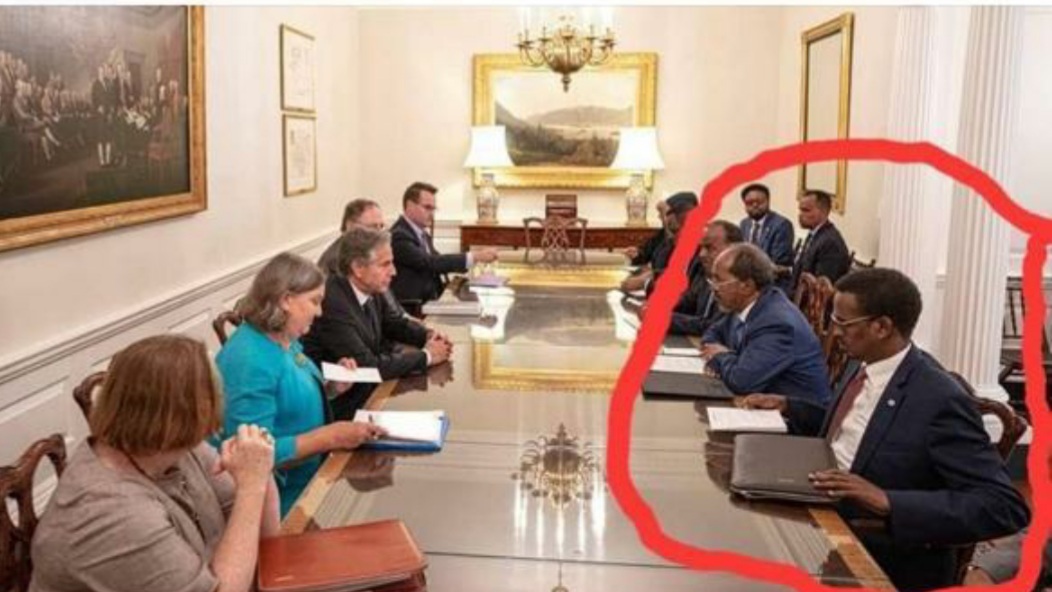
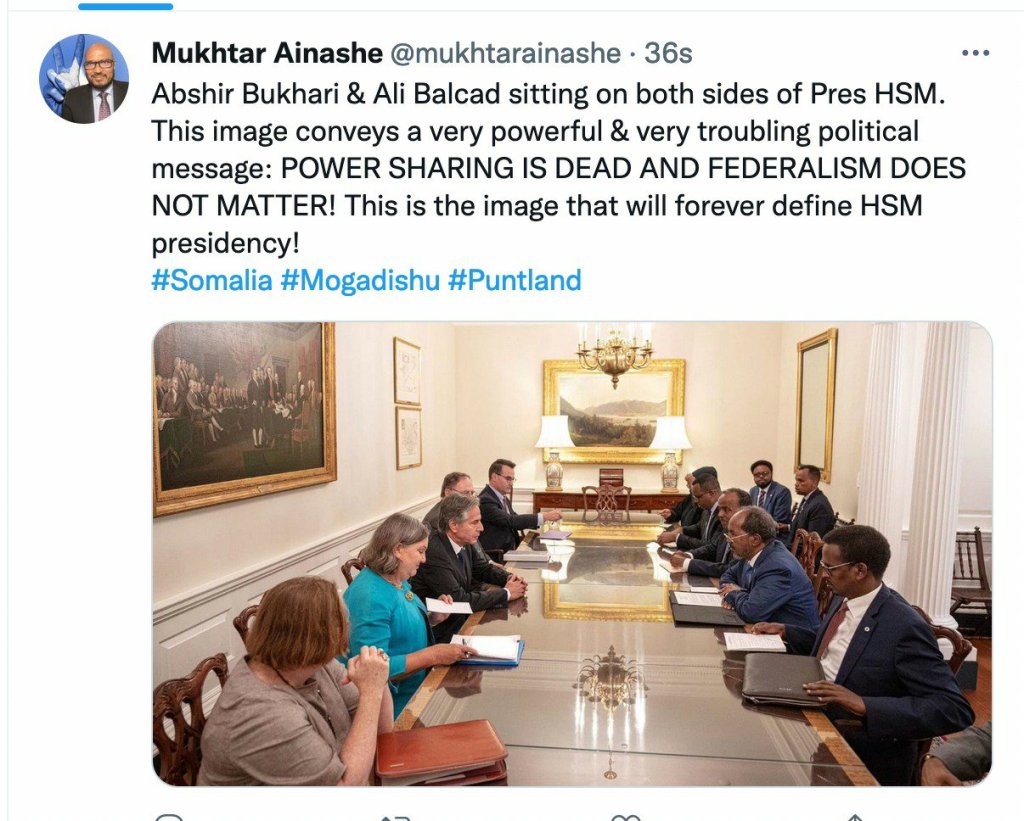
There is a strange and odd Somali saying of recent origin stating “a truth teller is shame teller”. But strange as it may sound, sometimes telling the naked truth is uncomfortable to people. This story is one of those stories when stating the fact is uneasy to both the truth teller and the audience. The issue here is that the President of the Federal Republic of Somalia, Hassan Sheikh Mohamud, has led a delegation of his own sub-clan to visit United States of America as official Somali state delegation. Although many members of his entourage of the same sub-clan have been denied US entry Visa, according to multiple independent sources, those junior officials who got through were Mohamud’s close aides, some of which are either distant relatives or his Damul-Jadid party associates, but still from same sub-clan.

Foreign Secretary Blinken meeting with Mohamud’s sub-clan members under the disguise of FGS delegation

I know the fact that many foreign officials dealing with Somalis since the failure of Somalia’s state in 1991 are weary of these clan nuances, and that there is no genuinely representive Somali person, but a clan member, according to them. Any foreigner, who had experienced Somalia’s mayhem, would ask you the question, “whose clan are you speaking for? You can’t speak for other Somalis or Somalia”. This is the tragedy of Somalia’s story.

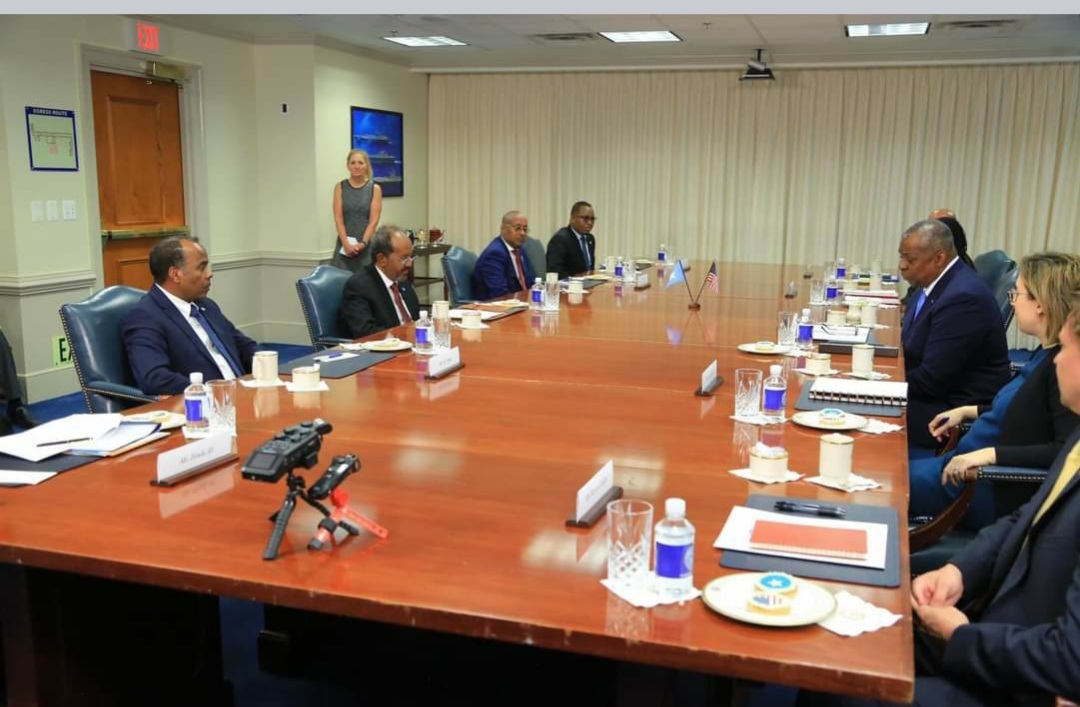
Defence Secretary Austin meeting with the boss of Somalia’s sub-clan-FGS delegation at Pentagon.

Knowing this reality makes this story less scandalous and understandably less impressive as one could be tempted to ask, “what makes your story different from numerous other clanish bashing?” A vulnerability and Somalia’s weakness that foreign powers exploit to their advantage in handling Somali issues at personal, regional and national levels. This story is different because the facts are there in pictures and in substance that one cannot argue. This is unprecedented development in US-Somali relationships.

Whatever the issue here under debate, the purpose of this story-telling is not to create doubts in the minds of US policy-makers, but to help them engage better with Somalia and its government of the day. The intention here is also to expose malpractice in public services, and that US government and others should be weary of Somali clan politics, especially under the leadership of President Hassan Sheikh Mohamud.

Amazingly, most of his meetings in the US are at ministerial level. Being a micromanger is the trademark of HSM in politics. Remember, we warned about that in several earlier WDM articles. HSM, keeping this in mind, picked up his party aide, Hamse Abdi Barre, as the prime minister of Somalia.

Postscript

You remember clan organizations during the Civil War?

  1. HAG
  2. Somali Concern
  3. United Somali Alliance

Here we go again:
https://apnews.com/press-release/ein-presswire-newsmatics/africa-united-states-district-of-columbia-somalia-hassan-sheikh-mohamud-f3009483bd9e09985445d2f2ffac95f5

LISTENING TO HSM ATTENTIVELY IN WASHINGTON YESTERDAY.

Waiting for being appointed PM after Hamse Dismissal, perhaps in two-three year’s time.

PICTURE OF THE DAY. USC AGAIN OR FGS?

USC OR FGS?

WDM BREAKING NEWS

According to reliable news sources, most members of President Hassan Sheikh Mohamud’s delegation planned to accompany him to visit United States were denied Entry Visas. These members of Mohamud’s delegation were either Damul-Jadid Party members or drawn from his own sub-clan. These included Minister of education, Farah Abdulkader, Defence Minister, Abdulkadir Mohamed Nur, Minister of internal Security, Doodishe, Spy Chief, Mahad Salad, National Security Adviser, Hussein Moallim Mohamud, among others. This is unprecedented development in US-Somali relations.

Observers also noted that even President Hassan Sheikh Mohamud was given a restricted visa waiver by US State Department as he was denied Entry Visa before after the end of his first stint in Villa Somalia. Stay tuned.

Watch “Protocol irregularities of President Hassan Sheikh Mohamud in foreign visits” on YouTube

Hassan in the Emirates with Somalia’s Chief Intelligence Officer as Arabic translator
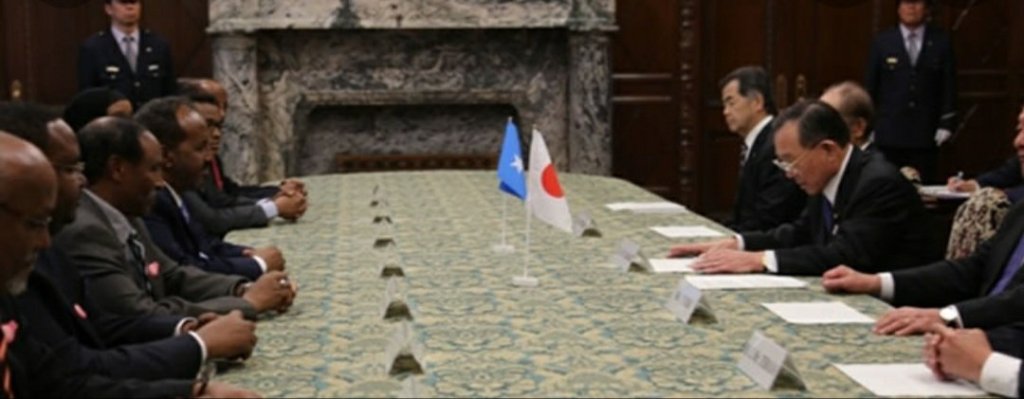
Hassan in a meeting in Japan with no one taking any notes from Somali side. It was his first term as Somalia’s President. Look at Japanese side, all with papers and pen.
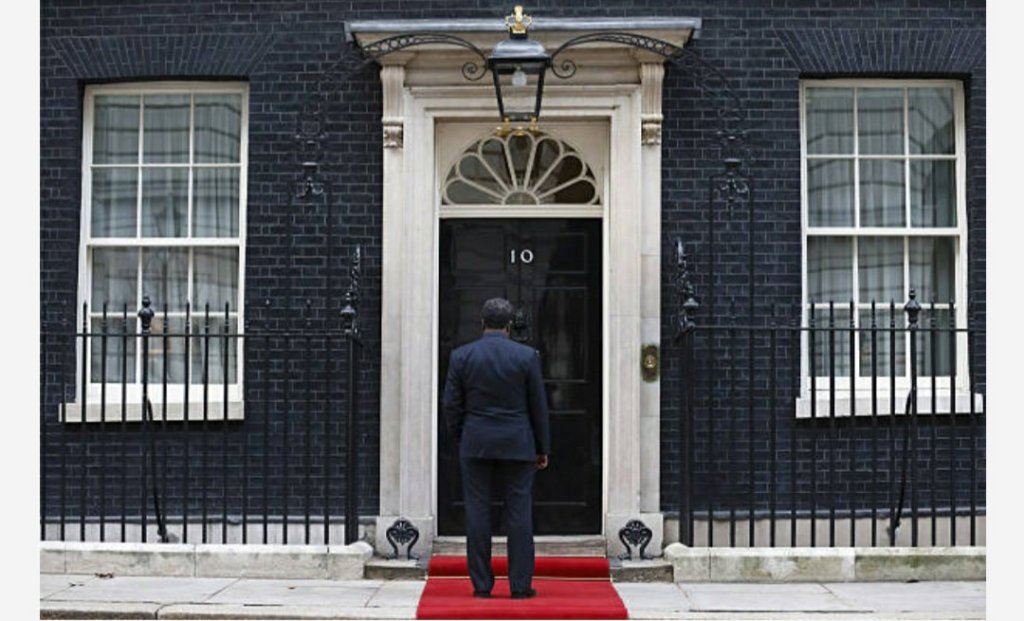
Hassan at door of 10 Downing Street alone with no one to receive him.

WHY SOMALIA IS HARD TO RUN

The political slogan by President Hassan Sheikh Mohamud (HSM), “Somalia in peace with itself and with the rest of the world” was too good to be true. It was inconsistent with both the political character and past deeds of the Somali leader. To have a nation in peace with itself, especially in the case of Somalia, means to me that political leaders must be chosen by the people. That is the first condition, I believe, to secure national peace. You can’t maintain peace, harmony and trust when leaders come to power through manipulations, corruption, interest groups and religious Tariqa. You can’t earn trust of your citizens, if you are known to be greedy and out there to accumulate wealth through corruption and misuse of public office.

Now, think of discussing resources-sharing with such politicians symbolized by President Hassan Sheikh Mohamud. Whether it is fiscal federalism or equitable and fair management of petroleum and other mineral resources, it would look and sound like debating with General Mohamed Farah Aydid on re-instating the failed state of Somalia. HSM and his political constituency aren’t yet ready to share the spoils of Somali state, no matter what system of governance Somalis agreed upon. It is winner takes all -a zero-sum game in political and clan rivalry.

Only recently it was the meeting in Mogadishu of finance ministers of FGS and FMS, failing to reach consensus on fiscal federalism due to the political interference by the Federal President. In HSM’s style of leadership and in direct violation of the Federal Constitution, the Cabinet and Prime Minister don’t exist. The only obstacle to HSM’s absolute power is the existence of Federal Member States. How would he then share resources and power with them? This is the basis for Puntland State argument on the brewing dispute on petroleum management with the administration of President HSM. This is also one of the key factors making Somalia hard to run.

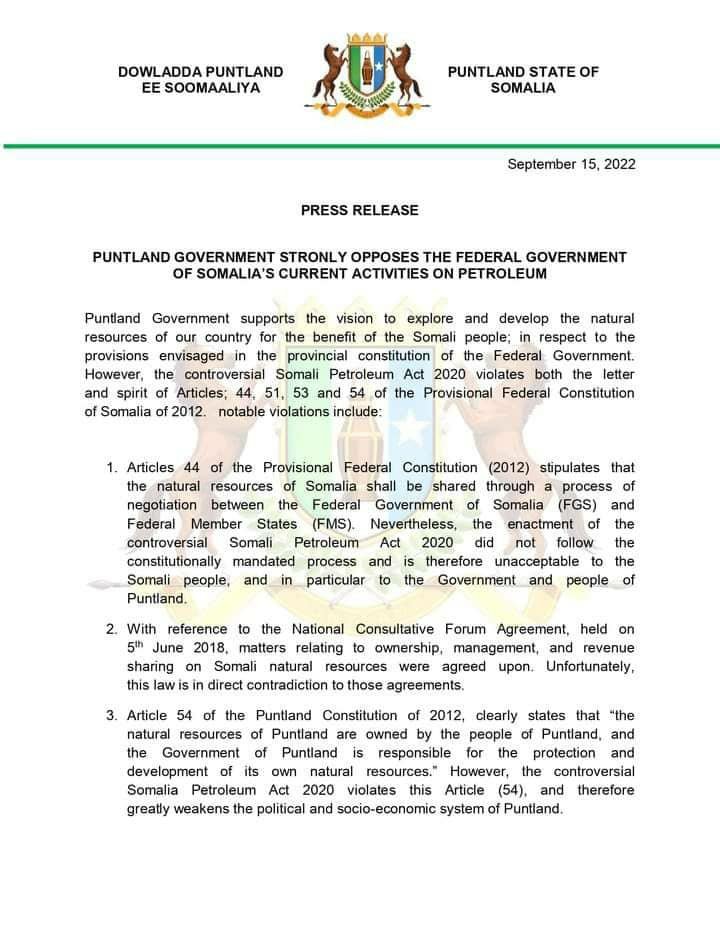
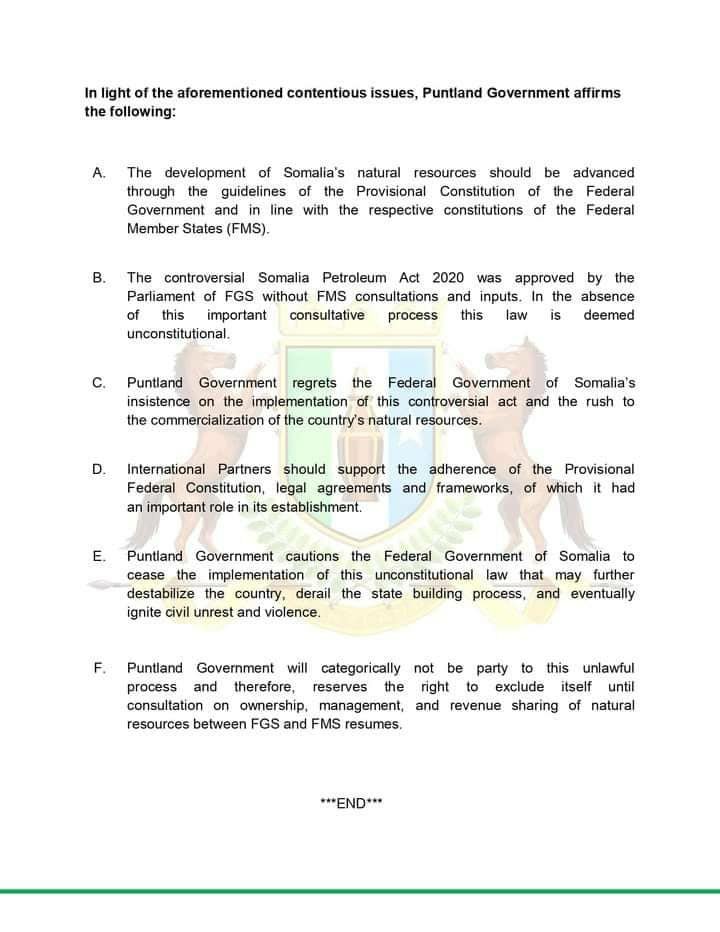
PUNTLAND RESPONDS TO SOMALIA’S UNILATERAL MISMANAGEMENT AND ABUSES OF PETROLEUM RESOURCES

Puntland response

UNELECTED COUNCILS IN PUNTLAND DISTRICTS RISK DISMANTLE

Any unelected City Council is subject to a summary dismissal for whatever reasons or excuses. Only elected officials would make sense in Puntland State from now on. Puntland political stagnation also lies in unelected district councils, unresponsive to the needs of residents, running the show for far too long. They usually serve the interests of those who appointed them. As long as they are doing their boss’s bidding, they are safe in their unearned public positions. If you notice someone being removed, it isn’t about job performance, but about disalignment with the politics of those who hired them. It isn’t often job related.

But, now there is an awareness by many progressives of the State that Puntland has come to a dead end to continue business as usual. Politicians now see the writing on the wall. It becomes obvious to them that, even if they barely succeed in taking over Puntland presidency to exercise one man show prerogatives like in the past, year after year it is increasingly becoming difficult to govern the State. Puntland political stagnation turned everyone to a cynic and suspicious towards politicians, especially those in positions of power. Nepotism, cronyism and despotism have become the style of Puntland governance, and as a result, the culture and political traditions of the State.

The only way out of the political quagmire is radical reform of the system through free and fair elections. Initially, it will be hard to implement elections because of the inertia of the decaying system and reluctance of the residents to embrace change. Democracy needs to take roots in the society, eventually becoming a way of life and ordinary. But, you will never succeed if you don’t try the experiement hard enough and get committed to realizing the democratic principle of one person one vote. So, let us move on to democratization. It provides more job security and public confidence for all, including Puntland District Councils.

WDM NEEDS YOUR SUPPORT IN THE FORM OF SUBSCRIPTIONS AND DONATIONS

Warsame Digital Media WDM is a volunteer digital news outlet and critical analyst on current affairs of Somalia, the region of Horn of Africa and wider international community. Although WDM is a volunteer, subscription-based and independent media, and has captured the imagination of readers worldwide, it is still under-performing due to absence of required capabilities in equipment, transportation, data collection and adequate volunteer writers. We don’t pay salaries. Everyone at WDM is a volunteer. We don’t accept donations or funds from state actors to safeguard WDM editorial independence. We deliver our media coverage without fear or favor. We represent a new dawn in media independence in Somalia. We need your support and encouragement from all those who care for freedom of thought and expression, if you would like, freedom of publication of all that make sense and worthy of reporting in a transparent manner, as well as exposing malpractice in public services.

We publish this appeal for assistance because we believe in transparency in what we do here in Wasame Digital Media WDM.

Thank you,

Our contact info:

Tel/Sahal/WhatsApp: +252 90 703 4081; EVCPLUS: +252 61 588 388; MyCash :+252 71 681 4371

PayPal Account: ismail.warsame@yahoo.ca

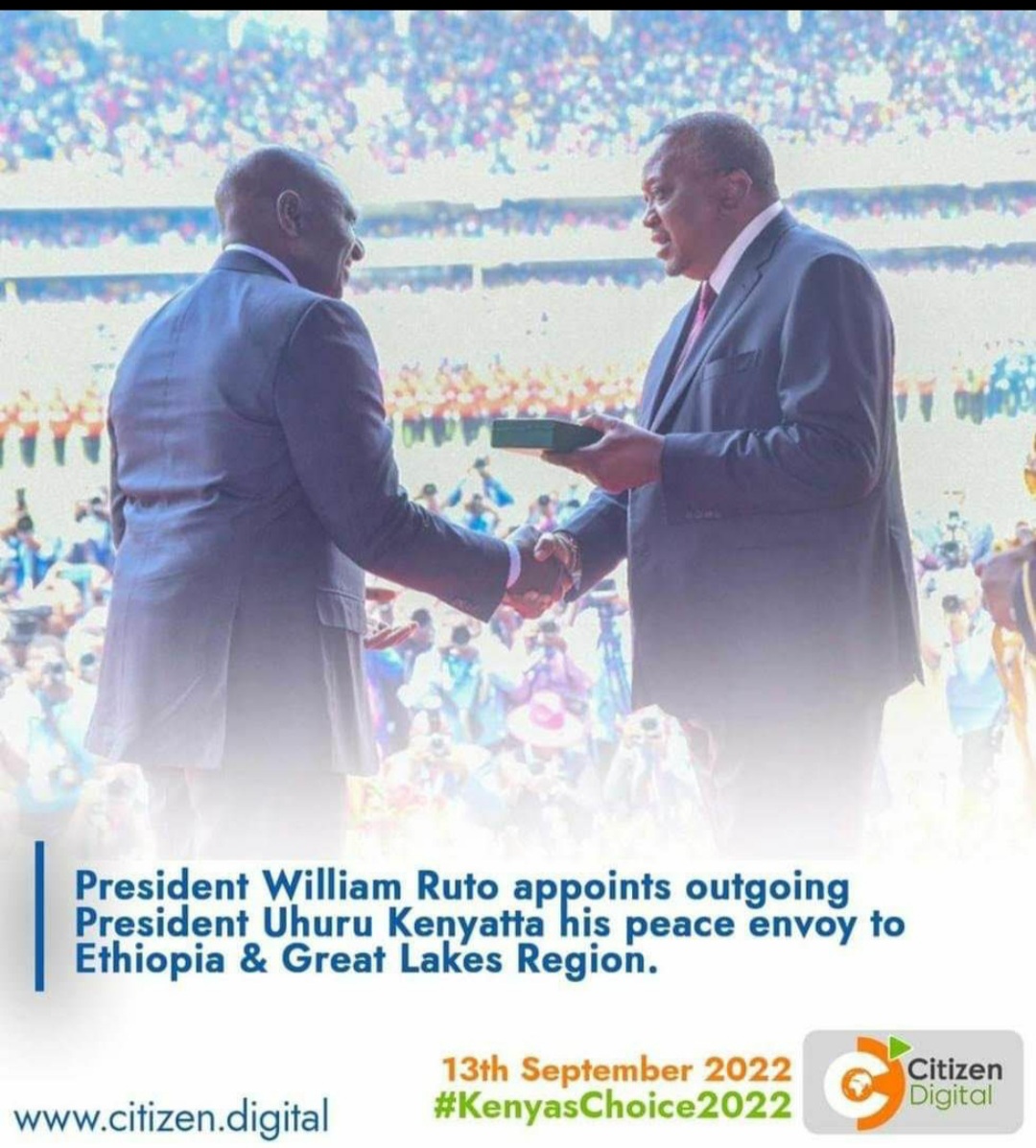
PEACEFUL TRANSFER OF POWER IN KENYA

Peaceful transfer of power captures the essence of democracy. In that sense, Kenya, Somalia’s neighbor, has made gigantic move forward and joined to world democracies with its African heritage of multiple tribes and numerous ethnic groups, proving most Somali analysts deeply wrong in their debates on the subject. Clans aren’t the problem in Somalia. It is the politicians who use them for opportunistic and selfish aims, cultivating divisions and hatred among clans in the process.

The cornerstone of democracy is respect and adherence to the spirit and letter of the constitution. That solemn civil contract is what binds the citizens to constitute a nation-state, exercising the laws of the land. Clans, in the case of Somalia, are positive forces of identification as genuine Somalis and belonging to a clan solidifies its ownership as a stakeholder. There is no other way to define or distort this reality. When discoverers of 4.5 Clan Power-sharing Formula in Somali politics introduced their invention, they struck at elusive discovery of Somali reality, hypocritically denied by many. Inventors of the Clan Formula didn’t hide the fact that it is good only before general free and fair elections take place, after which the Formula requires some adjustments for Power-sharing and clan balance reasons. For example, the Head of State and Head of Government cannot come from the same sub-clan of the 4.5 clan political configuration. There must be a clan balance in government. Even after general elections, you are dealing with the 4.5 sort of a scenario.

Welcome to Kenya, whereby save the President, every elected person is picked by his/her own constituency in most cases. In tribal politics, it is hard to discover a neutral party. Only laws are needed in place to make public servants apolitical. Other than that, accept the reality and move on.

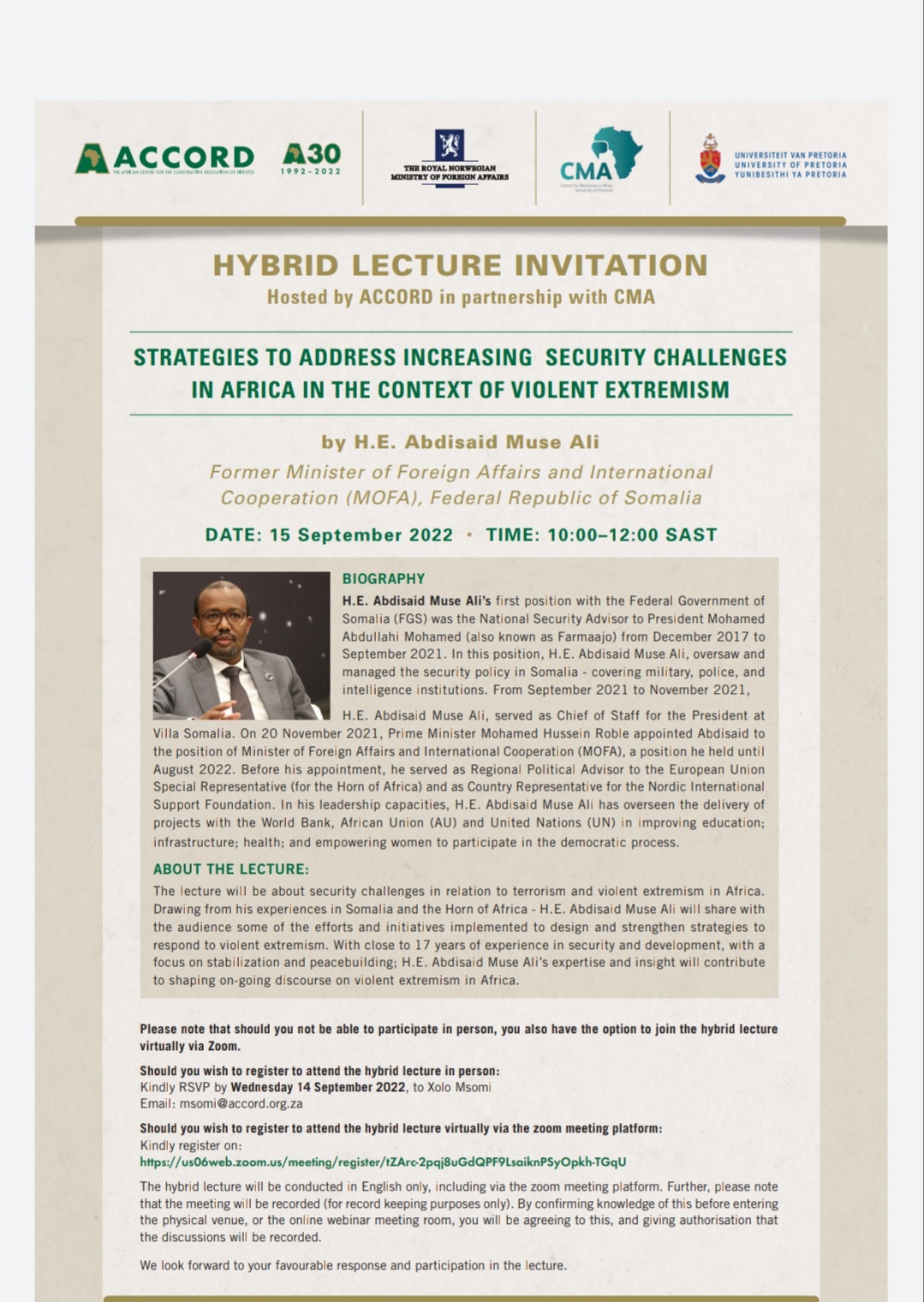
INVITATION TO ATTEND

SOMALIA’S INTERNATIONAL PARTNERS ENGAGE WITH FEDERAL MEMBER STATES

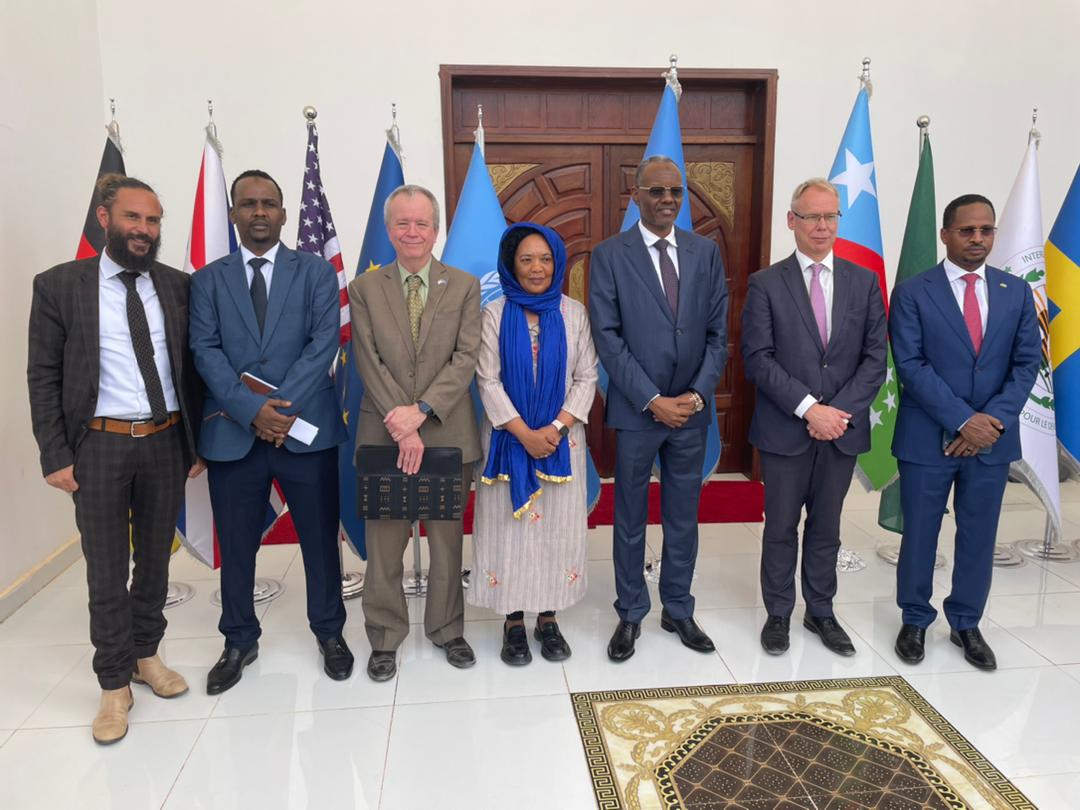
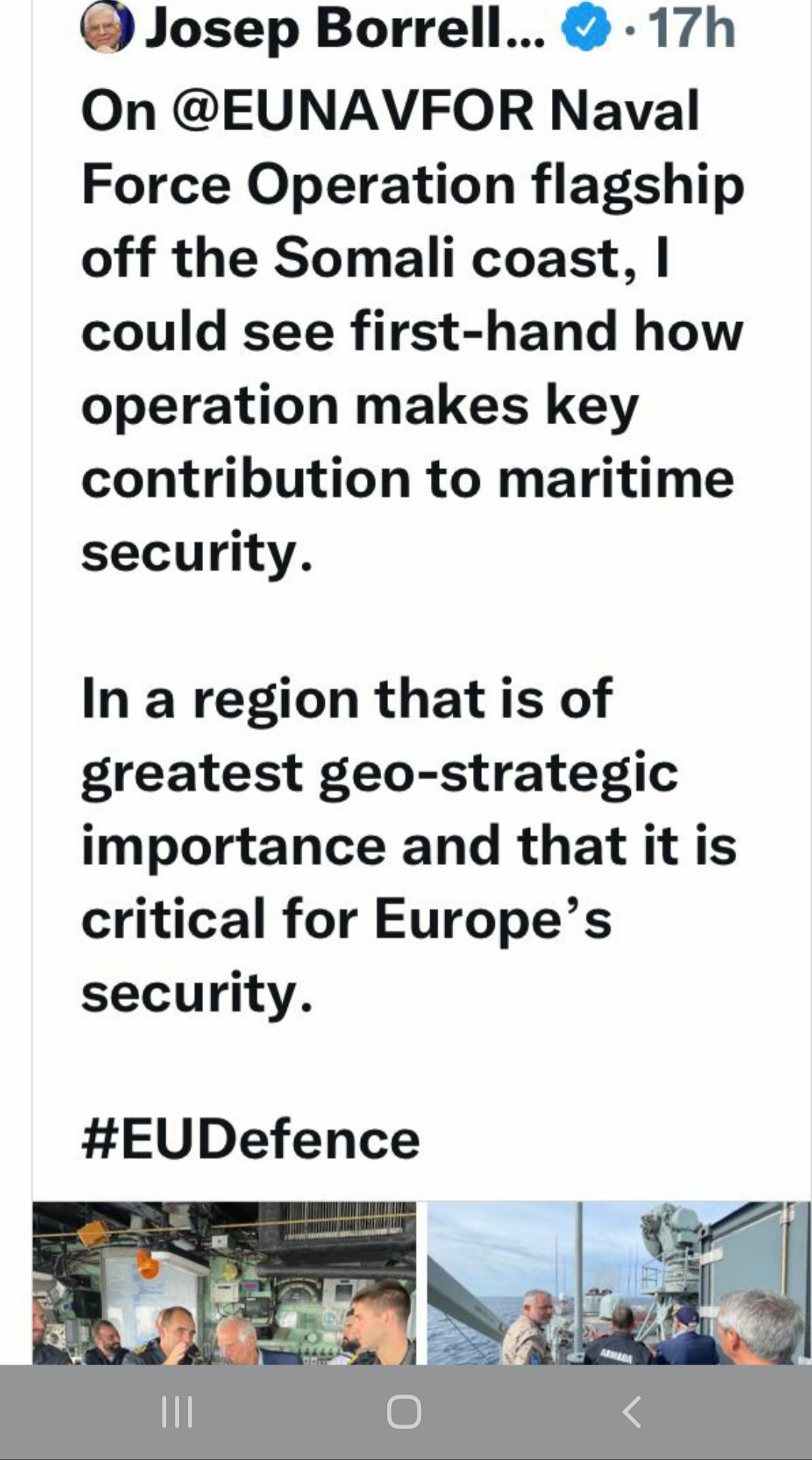
Following high profile visits by diplomats and military personnel recently from Western nations to Somalia’s capital city, Mogadishu, including the visit by EU High Representative for Foreign Affairs and Deputy President of the European Bloc, Josep Borrell, ambassadors of Somalia’s International Partners accredited to Somalia are showing signs of renewed interest also in the situation of the Federal Member States.

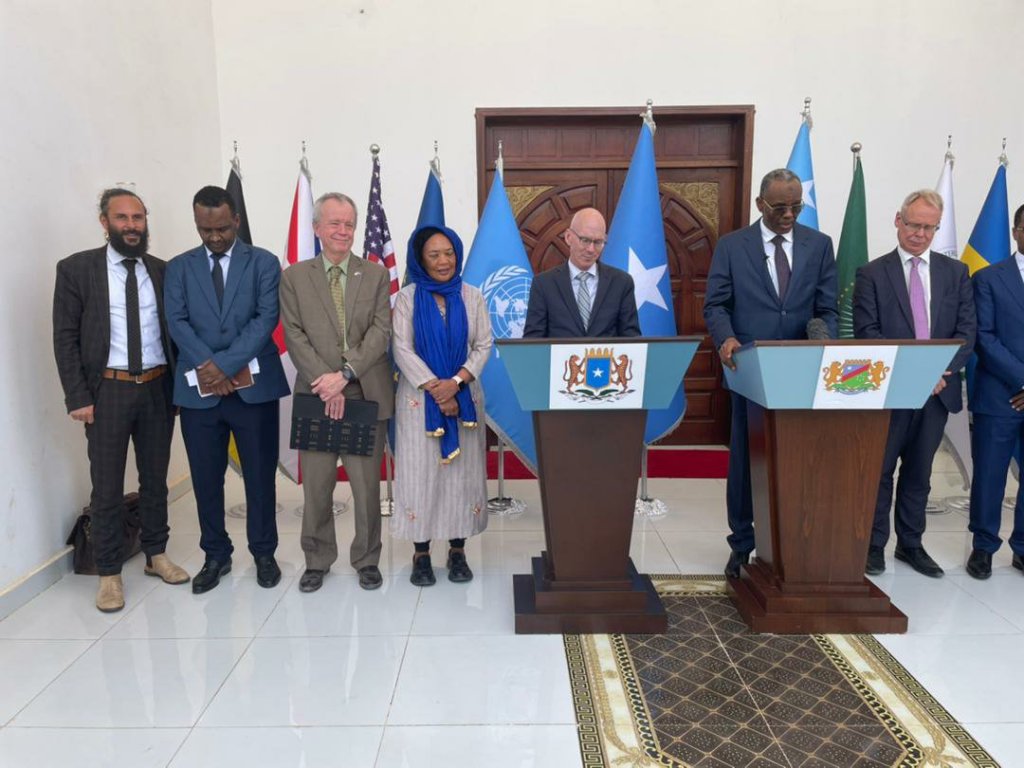
Among the diplomats, who are now paying diplomatic working visit to Baydhaba, Southwest State, include UN SRSG James Swan, US Ambassador to Somalia, Larry E. Andre Jr, AU Acting SRCC, Fiona Lortan, Swedish Ambassador, Per lindgärde, Ethiopia Ambassador, IGAD Representative, EU Rep, German Deputy Ambassador, among others. They held talks at State House in Baydhaba with the President AbdulAsis Laftagareen of Southwest State of Somalia.

This diplomatic visit to Baydhaba could act as the beginning of other visits to follow by the diplomats to a number of FMS. Certainly, among priorities for discussion, as far as Somalis are concerned, are the severe drought impacting upon all regions of Somalia and security issues.

Stay tuned.

TRANSFER OF TECHNOLOGY AND KNOW-HOW

Have you ever heard Marshall Plan? What about the rise of China as an economic and technological giant? What about Japanese progress after the 2nd World War? All these countries had benefitted from foreign investments and expertise.

“The Marshall Plan, also known as the European Recovery Program, was a U.S. program providing aid to Western Europe following the devastation of World War II. It was enacted in 1948 and provided more than $15 billion to help finance rebuilding efforts on the continent. The brainchild of U.S. Secretary of State George C Marshall”.

Democracies are like-minded people with common interest aligned to their governance. That is why they have confidence in investing in each other’s country. The key here is political stability. China is a different case, attracting Western investment because of its cheap, huge labor force, and automatically receiving transfer of Western technology and know-how, while still maintaining its communist regime status. The result is now stiff competition from China as the 2nd world economic power. Japan had been devastated by US retaliation after Pearl Harbor attack during the 2nd WW, suffering nuclear blasts in the towns of Hiroshima and Nagasaki, leading to its Armistice, an experience that never have to be repeated anywhere in the world. US had moral obligations to rebuild Japan. In my younger years I remember any manifactured item from Japan was looked down and 2nd rated. Now they talk about fine Japanese engineering.

But the purpose of writing this piece is to shed some light on the need to train future Somali workers for the coming investments in petroleum industries, mineral exploration and exploitation, fishery, meat processing plants and farming. Training Somali personnel must be an important component of any Foreign contracts in the future. Otherwise you risk importing labor force because your population is unskilled. How would you create jobs for people if you don’t prepare workers? How about vocational schools to take greater part of the burden in preparing Somali future workers? Can you dream of Somalia’s industrialization without native-born labour force? We must learn from the mistakes of the Arab Gulf States.

Somalia: Speech by High Representative/Vice-President Josep Borrell at the joint medal parade with EUCAP and EUTM Somalia

 11.09.2022  

Mogadishu

 EEAS Press Team

Thank you. Thank you, Commanders for hosting me today in Mogadishu. Thank you to all of you for joining this ceremony.  

Mogadishu is a long way from Brussels. I made this long way to come and see you, and the new leadership in Somalia.  

Somalia and its broader region remain critical for [the] Europeans’ security and interests.  This is why we are deploying here three missions [and operations] of our Common Security and Defence Policy (CSDP). And the European Union’s Delegation need to continue working side by side in Somalia.  And this is why the European Union needs to sustain its efforts in this difficult and troubled part of the world.  

But every policy needs men and women to implement it, and your personal efforts are crucial to implement this strategy.  

I commend your commitment and your hard work here in Mogadishu – I know that it must be difficult -, but also in Hargeisa, Garowe and Berbera. I know that it takes courage and resilience. And on behalf of the European Union, I have to thank you. 

Your dedication to promote and to protect the European Union’s values and interests here in Somalia, and in the region, is fully recognised in Brussels and across the European Union Member States.  

It is difficult, but we need to continue. We need you to continue to strive for tangible results. 

I just had a meeting with the Somali President [Hassan Sheikh Mohamud] and recalled to him that the EU Training Mission (EUTM) has already trained 8,000 Somali military [personnel] so far. And thanks to this mission and thanks to your work, the Somali National Army has increased its capacity to train its personnel by itself. Because we hope that we are not going to stay here forever, and they should be able to take their responsibilities. Recently, it took responsibility for a fully manned and equipped training centre in Mogadishu.  

Another tangible action on which we need to continue to build: two out of the four Somali National Army Battalions trained by us – by you, by this mission – have received equipment funded by the African Peace Facility. And now, with the European Peace Facility – a new financial tool – we are scaling up this support.  

And a last example that comes to my mind: in the port of Mogadishu, the EU Capacity Building Mission in Somalia (EUCAP Somalia) has considerably improved the efficiency and the working conditions for the Maritime Police Unit. I know that is not enough, and the Somalis are far away from being able to replace the EU Naval Force Somalia – Operation ATALANTA. But we have to look for an exit for the EU Naval Force Somalia – Operation ATALANTA.  

In the meantime, EU Naval Force Somalia – Operation ATALANTA’s contribution to maritime security on the coast of Somalia and the EUCAP [Somalia]’s efforts on shore to build the capacity of the Coast Guards and police continue and are mutually reinforcing.

When I will come back to Brussels, I will recommend the Member States to extend the mandate of [EUCAP Somalia and EUTM Somalia] missions by two years. This is part of our strategic engagement in Somalia.  

In the next two years, your missions will need to continue demonstrating professionalism and ambition; striving for concrete results. Neither EUTM [Somalia] nor EUCAP [Somalia] have yet fulfilled all their objectives – this is certainly an understatement.  

We have to continue. And I have discussed with the Somali President the reason why this is the case and the challenges facing Somalia and its security sector, in particular.  

I told the President that our objective is to continue to strengthen the security institutions while diminishing gradually our support to the African Union-led operation – the so-called ATMIS (African Union Transition Mission in Somalia).  

Somalia needs to take full ownership for its own security by the end of 2024. I assured the President that you would stand by the [Somali National] Army, by the Police and the Coast Guards of Somalia to help them to fulfil this objective. 

This is critical for Somalia in the first place, but it is also critical for European security. Our fellow citizens should know that their security starts far away from our borders. The security of Europe starts also in Mogadishu. That is why your missions, and your daily work, are so important.  

It was my honour to be here in Mogadishu today with so many men and women in uniform, as well as civilians serving this objective.

Thank you for that and keep up the good work.

CONTACT DETAILS

PETER STANO

Lead Spokesperson for Foreign Affairs and Security Policy

peter.stano@ec.europa.eu

+32 (0)460 75 45 53

JENNIFER SÁNCHEZ DA SILVA

Press Officer for International Partnerships/Foreign Affairs and Security Policy

Jennifer.Sanchez-Da-Silva@ec.europa.eu

+32 (0) 229 58316

SOMALIA: MENACED BY EXTREMISTS, ITS CAPITAL CITY OCCUPIED BY FOREIGN TROOPS AND COUNTRY BESIEGED OFF SHORE

It was a democratic country until a general of the National Army seized power in a coup in October 21, 1969. At the time, for more than two decades the country was a playground for Cold War rivalries – until all hell got loose, leading it to a failed state status in 1991. Power vacuum so created had offered opportunities for all sorts of dark forces: War lords, Islamic Courts, Alqaeda, Alshabab and UN Military Mission for Somalia (AMISOM, now ATMIS). This was followed by UN Naval Force Operation off Somali Coast (UNNAVFOR) seiging the country at sea from the Red Sea to the Indian Ocean.

Somali fishermen and fishing communities at Somal territorial waters have been decimated within a year, many have been seized with their fishing nets deemed pirates and transported to distant foreign lands without legal representation.

Yes, there were pirates, but they were symptoms of foreign illegal fishing, not the root causes of the problem, and initially, a reaction to the destruction of the environment and abuses against fishing communities by aggressive foreign fishing trawlers along Somali shores. One is tempted to ask the question: Did UNAVFOR stop illegal fishing and toxic waste dumping? The answer is unequivocally no. Instead, they provided protection for foreign trawlers with banned fishing gears. Give us one incident when UNAVFOR caught just one foreign vessel fishing illegally in Somali waters? You wouldn’t find one example.

The successive fledgling administrations of the Somali Federal Republic were unable to reclaim sovereignty over their territory and sea waters, as they have been coerced to enter into treaties of protection under unfavorable conditions. Somalia’s sovereignty is only theoretical at international forums and doesn’t extend to its own territory.

Former Government of Farmajo, demogogic as it was, tried to show some sort of resentment against foreign meddling in the domestic affairs of Somalia. It refused to renew UNAVFOR agreement. Enter 2nd Administration of Hassan Sheikh Mohamud, who willingly re-endorsed that treaty yesterday, after a little of more than hundred days in office. One would wonder whether Somalia’s Federal Parliament has any teeth to look into HSM’s latest political shenanigans and seemingly power abuses, and unlawful embrace of foreign contracts and suspicious deal-making.

EXERPTS FROM STORIES OF MY FATHER HAJI WARSAME AHMED GUREY JOWJOWLE

Once upon a time my father, Haji Warsame Ahmed Gurey Jowjowle, lived in Medina of Xijaas ( present day Saudi Arabia). One day he asked an Arab colleague of his to help him cut his nails. The Arab got annoyed with this strange request, considering it disrespectful. My father told the Arab that he (father) got used to people cutting his nails. Then, the Arab man agreed to cutting father’s nails.

In Xijaas, a Somali woman of Northwest Somalia reportedly got abused by her Arab husband. She heard that Haji Warsame was a prominent Somali Sheikh in the area. She approached the Haji for help. After listening to her, he took her to the local Sharia court to advocate for her divorce from the abusive husband. My father, in lawyering for the Somali lady, argued that this Arab man wasn’t fit to marry this lady in the first place. The Judge accepted father’s legal argument.

While my father was still staying in Medina, a group of Arab religious Sheikhs proposed changing the name of Harti Mosgue in Medina. My father, a well respected member of the community then and attached to the Mosque, intervened to strongly protest against changing the name of the Mosque. My father won the case and Harti Mosque remains open to this day in Medina.

In another related story, my father was the Sheikh of Erigavo. His title was Sayyid Warsame, a title he inherited after the collapse of Derwish Movement of Sayyid Mohamed Abdulle Hassan, as my father was a young mufti member of the organization. In Erigavo he represented Sayyid Muhammad Salih of Saalixia Tariqa of the Sudan. Based in Erigavo, my dad helped send Somalis to perform their Hajj obligations in Mecca. Out of jealousy, some unscrupulous personalities like Haji Afqalooc passed false reports about my father to the Saalixia leader in Medina. My dad was recalled to Medina. There in Medina, my father had strong argument ending up in fist fight with the leader. Saalxia leader ordered for the beheading of my father. Fortunately, a group of Harti community leaders intervened and secretly transported my father on a boat bound to Berbera. The situation led to the overthrow of Sayyid Warsame in Erigavo and looting of his properties by Dhulbahante and Warsangeli men.

My dad, after this, had joined the struggle for Somalia’s independence, becoming one of key elders of SYL (Somali Youth League), the main political party in the fight for freedom, getting arrested many times by the colonial Italian police and exiled once to Qardho, Somalia. Disillusioned with SYL policies after independence, he helped to form the Great League (Somali Democratic Union, SDU), a splinter political party of SYL. SDU was a leftist political party having ideological links to the former Soviet Union and China during the height of National Liberation Movements, a global anti-colonial rise of peoples in Africa, Asia and elsewhere in the world.

Salihiyya (SomaliSaalixiya; UrwayniyaArabic: الصالحية) is a tariqa (order) of Sufi Islam prevalent in Somalia and the adjacent Somali region of Ethiopia. It was founded in the Sudan by Sayyid Muhammad Salih (1854-1919). The order is characterized by a puritanism typical of other revivalist movements.

Diagram showing Urwayniya as well as other Sufi orders.

Postscript

(You would read the full story in the book “HAYAAN” by the same author) at this link:

https://amazon.com/author/ismailwarsame

Watch “Mahadcelin” on YouTube

BRITAIN’S BETRAYAL OF ITS ROYAL SUBJECTS IN SOMALIA

OFFICE OF GOVERNMENT OMBUDSMAN

OMBUDSMAN is a knowledgeable person of government to look into or troubleshoot complaints against government department(s) or personnel by private person(s). Members of the general public may apply for the assistance of the government ombudsman on complains they have with a government department. Ombudsman acts as subject-matter expert. He or she submits recommendations to the appropriate body on options for the resolution of such complaint. Unaddressed public complaints may end up in conflict and violence. It would tarnish government reputation and credibility as a public servant.

How would a citizen handle his/her complaint on government agency? Would he/she go to the courts against a government agency? Can courts consider and handle a complaint against a minister or an official? This is where government ombudsman comes in as a neutral arbiter to look into such matters and make recommendations to the relevant government body for possible remedy.

Ombudsman is a common practice in most advanced countries as a neutral way to address and resolve complaints by private individuals against an official in a government agency.

This is the most effective public relations exercise a government does to project fairness and give the members of the general public a sense of justice in their dealing with government agencies. It is a smart way of diffusing tensions and anger against real or perceived abuses by official(s) of a given government department.

Ismail H. WARSAME on the record

Al-Shabaab: the latest addition to Ethiopia’s woes – Ethiopia Insight

by Muktar Ismail

Ethiopia’s weakened security apparatus is increasingly being confronted by al-Shabaab militants. In late July, al-Shabaab militants carried out an attack on three towns, Aato, Yeed, and Washaqo, which are on the Ethiopia-Somalia border. The group claimed to have overrun regional special force bases stationed there and reportedly killed hundreds of members of the Somali Liyu police. A few days after the attempted incursion, the Somali regional President, Mustafe Omer, wrote on Twitter that his forces had killed more than 800 al-Shabaab members and captured nearly 100 fighters in the recent clashes. He further boasted that the group’s aggression ended with “a rout” and assured that al-Shabaab would never dare to get close to Ethiopia’s border again. Nonetheless, the figures given appear exaggerated to many who believe the statement does not reflect the reality on the ground. In fact, the governor of Bakool, the region of Somalia bordering Ethiopia in that area, spoke to the media and stated that, while the clashes described above were ongoing, several other heavily armed al-Shabaab units entered Ethiopia from east of El-Barde town without encountering resistance. This leads security experts to speculate that the militant group’s assaults on Aato and Yeed were a diversionary tactic. Before elaborating further on recent events and explaining al-Shabaab’s reasons for attacking Ethiopia now, a short historical recollection is required. Ethiopia-Somalia relations In 2006, Ethiopia intervened militarily in Somalia to back the Transitional Federal Government (TFG) against its rival political force, the Islamic Court Union (ICU). The ICU was accused of having links to Islamic terrorist movements, which led to US’s support for the operation. Many ICU members and Somali youths, who perceived the Ethiopian forces as invaders and were therefore moved by nationalistic sentiments, became radicalized, fuelling the growth of a nascent radical Islamic youth movement, al-Shabaab. Ethiopia withdrew its forces from Somalia in 2009, claiming to have nullified the threat of Islamist rule. Contrary to the claims and despite Ethiopian efforts and the deployment of the Africa Union Mission in Somalia (AMISOM) UN peacekeeping mission since 2007, a significant share of the country remained in the hands of the insurgents. Since then, Ethiopia has continued meddling in Somalia’s politics, undermining Mogadishu’s central government, arming various Somali clans against one another, and implementing a divide and rule policy that enabled it to install regional leaders willing to serve Addis Abeba’s interests. Over the past decade, al-Shabaab has managed to regroup in Somalia and carried out attacks in neighboring countries. Despite the group’s acrimony towards it and in striking contrast to Kenya, which suffered several attacks, it rarely successfully hit any target in Ethiopia. Many experts reason that Ethiopia was able to prevent attacks thanks to its strong intelligence and security apparatus. Afar-Somali border dispute can be resolved peacefully by Muktar Ismail Over the last four years, Prime Minister Abiy Ahmed enjoyed a good relationship with Somalia’s former President, Mohamed Abdullahi Mohamed (Farmaajo), and his administration rectified the EPRDF’s policy of interfering in Somalia’s internal affairs. The association between the two leaders was formalized in the 2018 tripartite alliance between Ethiopia, Eritrea, and Somalia, which aimed to reshape the regional governing system to reflect personal political ideologies—favoring a centralized government and strong executive. Unfortunately, since Hassan Sheikh Mohamud became Somalia’s president in May 2022, relations between the two countries seem to have worsened again. The new president visited neighboring countries with a stake in the region, such as Eritrea, the UAE, Turkey, Kenya, and Djibouti. He also traveled to Egypt, where he discussed the Grand Ethiopian Renaissance Dam (GERD) issue with President Abdel Fattah El-Sisi. The meeting between the two leaders culminated in a jointly held press conference during which they condemned Ethiopia’s unilateral decision to fill the dam. Somalia’s criticism of this crucial project for Ethiopia and the cancellation of Hassan Sheikh’s planned visit to Addis Abeba have triggered real or perceived diplomatic tensions between the neighboring countries. Al-Shabaab’s tactics While al-Shabaab routinely targets Ethiopian forces deployed in Somalia with the African Union (AU) peacekeeping mission, attacks on Ethiopia or on Ethiopian National Defense Forces (ENDF) positions close to the border are rare. So why did the group strike now? Concerns regarding the impact of restructuring Ethiopia’s intelligence and security sectors on the ENDF’s effectiveness have been raised since the 2018 political transition led to a revision of the previous government’s repressive approach to internal security. Ethiopian forces’ woes have only been exacerbated since. The country currently faces multiple insurgencies, from the war in the Tigray region that began in November 2020 to the Oromo Liberation Army (OLA) insurgency in Oromia. The conflict in the north has been particularly devastating for the forces, as experienced Tigrayan members were purged from the ENDF’s ranks. In addition to the internal crises, Ethiopia is at loggerheads with some of its neighbors and other regional powers, such as Sudan and Egypt. All these active conflicts have prompted internal divisions, fueled ethnic violence, stretched intelligence resources, and thus limited the country’s capacity to reinforce the thinly spread security forces along its borders. New faces, old problems: reforms, clans, and parties in Ethiopia’s Somali region by Abdirahman Ahmed Regardless, as recently as May 2022, Ethiopian security officials still seemed capable of preventing infiltration, when they claimed to have foiled an al-Shabaab attack on the capital. Following the shock of this incursion, the Ethiopian government claimed al-Shabaab fighters intended to reach mountainous areas on the border of Somali and Oromia to connect with OLA. While some al-Shabaab members of Oromo ancestry were caught during the recent fighting, the government’s allegations aren’t backed by any evidence, and security experts question that link because jihadists and ethnic nationalist insurgents have very different ideological beliefs. Security experts believe that the group’s attack in Ethiopia was meant to expand its presence across the region and perhaps recruit new members inside Ethiopia. In any case, the group still poses a danger to countries in the Horn of Africa. Moreover, despite the rhetoric, no large-scale operation against al-Shabaab has been conducted by Somalia federal forces yet, enabling the group to mobilize the resources for such an operation. Nevertheless, observers believe that due to the renewed U.S. drone strikes in Somalia, the militant group is desperately looking to Ethiopia’s mountainous areas as an alternative territory to hide from the aerial attacks. Recent confrontations During the first days of the confrontation, the bulk of the fighting was done by Somali region’s forces. The Liyu police have long been present in the Bakool region of Somalia, protecting supply routes and providing logistical support to ENDF contingents operating as part of the AU mission in Somalia, which are based in Baidoa, the capital of the South West State. Despite losing most vehicles, some al-Shabaab fighters managed to pass through the defendants’ positions after the attack on border towns described above. Nonetheless, two days after the initial incursions, the police force carried out a counteroffensive, encircling and defeating the al-Shabaab unit that had entered through Yeed near Hulhul. On the same day, the regional officials reported having repelled another 200 al-Shabaab fighters in Lasqurun village, which is only 20 kilometers from Ferfeer town near the Ethiopian border with the Hiran region in central Somalia. They claimed to have killed 85 al-Shabaab fighters during the clashes. Three weeks after the first attacks, the regional Liyu police were involved in renewed fighting with al-Shabaab militants in the village of Sanku Dhooble near Qallaafo town in the Shabelle region on 11 August. This episode occurred just one week after the regional president declared that al-Shabaab had been defeated and was not capable of fighting inside the region any longer. We need your support to analyze news from across Ethiopia Please help fund Ethiopia Insight’s coverage Worryingly, a U.S. Africa Command (AFRICOM) assessment suggests al-Shabaab fighters may have penetrated as far as 150 kilometers into Ethiopia before being stopped. Stephen Townsend, the general at the helm of the command, warned that the al-Shabaab incursion was not a fluke or a one-off. As detailed above, contrary to what authorities previously reported, the operation was very intense and complex, requiring the intervention of federal forces as well. Fortunately, not everybody is in denial of the threat. Some Ethiopian officials, diplomats, and security officers admitted to the media that some 50 to 100 al-Shabaab fighters had reached their target, Elekere, a mountainous terrain between the Somali and Oromo regions. It’s not clear if the government is still pursuing the militant groups that have reached there. In an attempt to prevent further attacks across the border, federal forces have recently gone on the offensive. ENDF has carried out air raids and ground forces are expected to advance into Somalia to create a buffer zone. Thousands of heavily armed Ethiopian troops have been deployed to Southern Somalia and established a military base at an airport in the Dolow and Balad-Hawo districts. Political quicksand? Incapable or unwilling to engage with Somalia’s federal government, Addis Abeba has resumed its divide and rule policy towards its neighbor, bypassing the central government to engage directly with the country’s federal states and regions. Over the past weeks, Ethiopian security officials have been shuttling between Somalia’s federal states, holding meetings with several senior officials there. Moreover, the federal government has invited several regional states’ leaders to Ethiopia to sign security cooperation deals. In response, South West State president Abdiaziz Laftagareen became the first to heed the call, arriving in Jigjiga on 8 August, where he met Mustafe Omer in a visit aimed at ensuring border security and jointly fighting al-Shabaab. Other senior-level engagements were reported with Hiiran, Jubaland, and Puntland states. Authorities of the Gedo region, who are close to former president Farmaajo, have also welcomed the renewed Ethiopian deployment. Given the group’s secrecy and constant internal evolution, regional cooperation against al-Shabaab aimed at understanding the insurgent’s capabilities, identifying existing security gaps, carrying out joint operations, and sharing intelligence seems to be the only way forward in combating this jihadist threat. However, not all Somali actors support Addis Abeba’s new policy to bypass the central government. Allies of Somalia’s president believe these political engagements and military operations are intended to fuel tensions and undermine Somalia’s federal administration. Grievances against Ethiopian forces—especially the regional paramilitary force known as Liyu Police —could threaten the fragile security cooperation in the border areas between the two countries. This skepticism can be reduced if Ethiopia’s Somali region and federal forces consult with the Somalia government before conducting military operations across the border. While waiting for the actualization of regional cooperation, it remains to be seen whether the overstretched ENDF can defend the country’s borders and defeat the jihadists or if this hasty decision to move troops inside Somalia will further destabilize the embattled administration in Addis Abeba.

NEW PUNTLAND PORT

WHAT IT MEANS TO HAVE REPRESENTATIVE GOVERNMENT

WDM EDITORIAL

It means people choose their own representatives in government. It means people can change their political leaders and representatives periodically. It means politicians are held accountable for their policies and actions. It means nobody is above the law of the land. It means corruption and bribery are serious crimes to be prosecuted to the full extent of the law. It means tax evasion is equally serious crime. It means closed-door deals by people in public office are evading public scrutiny and they should be exposed. It means people ask questions and seek clarifications for the policies and public programs. It means leaders and representatives cannot retaliate for investigative media coverage on power abuses and malfeasance in public services. It means adequately vetting people before they take up public office.

Compare this notion of representative government with what was happening in post-civil war central and regional governments of Somalia. Do you find anything resembling close to what we are talking about? The culture of political marketplace, elite bargaining, vote rigging and buying openly with impunity could happen in a country beyond redemption. Nothing short of radical reform in all aspects of life would save such a nation.

Representative government goes hand-in-hand with free media, freedom of expression of thought and protection of human rights. There is no room for incompetence, cronyism, nepotism and influence peddling in the fair delivery of public services. It means insuring certainty and predictability in the behavior of public figures. It means public officials and institutions serve all citizens of various faith and beliefs, guests and visitors alike.

I sometimes reflect upon what many Somalis have been saying all along- it is still a long way for Somalia’s statehood to function normally as a democracy, serving its own citizens and pursuing vital national interests. I agree.

Postscript

While you are here, consider supporting Warsame Digital Media WDM to continue delivering unbiased media coverage and editorial contents unmatched by today’s media outlets on Somalia’s current affairs.

You can reach us at ismailwarsame@gmail.com

Tel/WhatsApp at +252 90 703 4081

PayPal/inter-bank e-transfer at ismail.warsame@yahoo.ca

AFRICA/SOMALIA – From the port of Garacad a road that brings development and hope to the entire area

AFRICA/SOMALIA – From the port of Garacad a road that brings development and hope to the entire area

Thursday, 8 September 2022

Garowe (Agenzia Fides) – There is recent news of an important road project launched in Somali Puntland that will favor strong development of the area.
It is a regional project with strategic importance that involves the Horn of Africa, in particular Ethiopia. The new road will connect the new port located in the historical city of Garacad, 700 km from Mogadishu, with the city of Galcayo and Galdogob, on the Ethiopian border. Once completed, it will allow the goods arriving in the port (Indian Ocean and Gulf of Aden) to arrive in the country in a short space of time. The aim of the project is to serve the Horn of Africa, central Somalia and the south-eastern region of Ethiopia by providing new trade routes accessible to the rest of the world, in particular to the Persian Gulf and Asia, also helping the populations of Oromia, Ogaden, far from the port services of Djibouti.
“The Administration of the port of Garacad hopes to create commercial relations and relations with the entire maritime world, a new port needs international relations”, said Prof. Sonkor Geyre, President of the IFSA Institute of Federalism and Security Analysis. “It will thus be possible to sort out goods and goods useful for the humanitarian crises of the entire area. In addition to the contacts already underway – explains Sonkor – we are inviting maritime authorities from all over the world to visit the port which will be inaugurated in October. This is the largest project in Somalia in the last 40 years”.
The port of Garacad, in the Modug region, borders Ethiopia to the west and the Somali regions to the north and south, and is a development point for the whole area. The Garacad-Galkacyo-Galdogob corridor crosses an area inhabited by about 1,000,000 Somalis, most of them farmers in an area under development.
The study of the 309 km that will connect the cities is carried out by the Puntland Highway Authority, the government body responsible for road transport and infrastructure in the state of Puntland in Somalia, and sees the participation of the KAAD Institute and foreign engineers and will allow transport goods arriving in the port of Garacad as far as Ethiopia. (GF/AP) (Agenzia Fides, 8/9/2022)

DEEP-WATER SOMALI PORT GIVES LANDLOCKED ETHIOPIA NEW TRADE ROUTE -BLOOMBERG.COM

“Somalia will open a deep-water port on its northern coast next month, with a road link forging a new trade route connecting Ethiopia’s south-eastern region with the city of Gara’ad.
The development is part of a $531 million investment plan aimed at boosting the export of livestock, fish, minerals and agricultural commodities, according to Saed Faadi, the chief executive officer of Wadagsan LLC, the developer.

The first two deep-water berths in the Puntland state’s city will be capable of docking 40,000-ton container ships and provide services such as modern loading equipment, refrigerated storage facilities and feeding grounds for animals.
“The port will also provide easy access to food imports from the outside world,” Faadi said in an interview. “This will allow food to be less expensive and enhance food security in the region, which is plagued by droughts and famine.”

The Gara’ad port will be the Horn of Africa nation’s fifth deep-water facility providing access to the Indian Ocean, but it’s the closest to Ethiopia, a landlocked country of 115 million people whose economy was one of the fastest growing in the world before the coronavirus pandemic and conflict curbed expansion.”

BREAKING NEWS

DANGEROUS SIGNALS AND UNCONFIRMED REPORTS ON ARMS DISTRIBUTION TO MOGADISHU RESIDENTS TO FIGHT ALSHABAB

If true, that is a dangerous move by the Administration of President Hassan Sheikh Mohamud. There are world efforts to curtail small arms, especially in areas of civil conflicts like Somalia. Release of arms to non-state combatants is a recipe for civil war and disaster. This was what had happened in Somalia. This is what is happening in Ethiopia today in its conflict with TPLF. In developing countries, the right to bear arms must exclusively be reserved to the state security apparatus. Here in Somalia, you can’t fight Alshabab by distributing more arms to the civil population without risking widespread violence again. By doing this, you do more harm. In war-torn countries like Somalia, arms should be confiscated instead of issuing more to the general public. Mogadishu and other towns are full already of huge amount of arms, ammunition, and even battle-wagons (technicals).

Reports from Mogadishu, though unsubstantiated, are alarming. If true, nobody is safe there. There could be renewed civil war and violence that would make Alshabab menace look like a minor security inconvenience.

In his previous stint in Villa Somalia, President Mohamud had been accused of being behind the incident of break-in then into arms cache at presidency.

Watch “Xafladda Dib u furitaanka Hudheelka News Rays One.” on YouTube

Turkish Foreign Policy During Ataturk’s Era


“Peace at Home, Peace in the World”Mustafa Kemal Ataturk, the great leader of our National War of Independence who pioneered the revolutions and reforms that founded modern Turkey, appeared for the first time in the stage of history through his military genius, though the characteristics that make him immortal in the hearts of the Turkish people and place him in a privileged position among the most important leaders of the world are his statesmanship, the outstanding success he showed in the field of governance and his peaceful and democratic vision, which is still valid today. The foreign policy vision adopted by Ataturk, the goal set with his maxim of “Peace at Home, Peace in the World” and the resolute policies he followed to that end have constituted the most significant factors that have enabled the Republic of Turkey to attain her current position.Following international developments, diplomacy and foreign policy closely since his youth Ataturk was aware that the Republic of Turkey, the establishment of which he dreamt of even at those times, could attain a well-deserved position among modern nations only with an effective foreign policy and foreign relations on a solid basis. For this reason, foreign policy and Turkey’s position in the international arena had always been a high priority for Ataturk. He thought that Turkey’s future depended on a solid vision and resolute policies to be followed in this direction.Ataturk approached every issue primarily through the lens of rationalism and realism. This was reflected in his foreign policy vision as well. Thus, the foreign policy stance adopted during the arduous National War of Independence, was first and foremost consistent with the main goal of establishing an independent Turkish State within national borders. This attitude, rejecting adventurous and expansionist inclinations without compromising on independence, left its mark on a set of developments that secured the unconditional independence of the Republic of Turkey. Among those developments were declaring as unacceptable the provisions postulated in the Treaty of Sevres and Armistice of Mudros and the negotiation and implementation of the Treaty of Lausanne in line with national interests.The primary objective of Turkish foreign policy was gaining independence through military and diplomatic struggle against the warring states of that time. Afterwards, Turkey’s fundamental foreign policy principle was defined as “peace”. This objective has found its best expression in Ataturk’s “Peace at Home, Peace in the World” maxim and today continues to be the basic guiding principle of our foreign policy.


“A direction of peace aiming at the security of Turkey and which is not against any nation will always be our principle.”In line with this objective, efforts were exerted in order to create a regional and international environment of safety and stability that would enable Turkey to realize her great potential in every field. Likewise, the Republic of Turkey, which was founded on modern values and making headway in order to become a secular, democratic and social state of law, strengthened her friendly relations with countries that share the same principles. This was realized without being hostage to the problems of the past and a friendly and cooperative hand was extended to all countries, as required by Turkey’s interests. The most concrete example of this was Turkey’s bringing to an end the antagonism towards Western states against whom she conducted her struggle of independence, trying to benefit to the maximum extent possible from the opportunities offered by peace and laying solid foundations of relations with these countries that would subsequently strengthen further.Furthermore, in this period, the value attributed to peace by the young Republic of Turkey that came out of longlasting battles, was reflected in every field of foreign policy. In this framework, all problems were aimed to be solved through diplomacy and negotiations by considering mutual interests. Turkey’s participation in 1929, in the Kellog-Briand Pact which stipulated that all disagreements should always be solved through peaceful means, constitutes a natural reflection of this understanding. Likewise, the settlement of several issues such as Turkish-Greek problems, Mosul, Hatay and the Question of the Straits in a peaceful way through diplomacy formed the most striking examples of the realistic diplomacy implemented in light of the conditions of the time as well as the importance Turkish foreign policy attached to peace.Thanks to this balanced and rational foreign policy pursued during her weakest period in military and economic terms, Turkey reinforced her sovereignty over the Turkish Straits; the country’s geopolitical and strategic integrity was maintained; Hatay which was part of the National Pact was integrated to Turkey without any wars; an improvement which was not witnessed before in Turkish-Greek relations was achieved and resulted in a period of friendship and cooperation between the two countries which also spread throughout the Balkans. As regards the Mosul Question, the League of Nations’ arbitration was accepted instead of unilateral acts. As a result of this, although Mosul was not assigned to Turkey, this demonstrated very clearly her respect for international law and peace. Thus, Turkey became the only country to be invited to the League of Nations without submitting an application and she joined the organization in 1932.Hence, the most important characteristics of Turkish foreign policy during the Ataturk era are its peaceful nature, its realism, the utmost importance it attributed to international law and legitimacy, the priority it gave to regional and international cooperation and dialogue. Furthermore, another remarkable feature of Ataturk was his capacity to monitor closely the developments in the international arena, foresee their evolution accurately and take timely steps as deemed necessary in Turkey’s interests.


“Elimination of disputes should be the primary wish of civilized humankind.”In this framework, assessing thoroughly the developments in the world and especially in Europe, Ataturk predicted years in advance that a new world war would break out. In his discussions and statements; he touched on this issue as early as in 1932. At a time when the Nazi Party came to power in Germany, Italy made efforts to expand to the Mediterranean and the Balkans, and the European states were engaged in an arms race, Ataturk accelerated regional cooperation efforts upon accurately analyzing these developments threatening world peace and the process leading to World War II. Consequently, on 9 February 1934, the Balkan Entente was signed between Turkey, Greece, Yugoslavia and Romania, and on 8 July 1934, the Sadabad Pact was signed between Turkey, Iran, Iraq and Afghanistan. Thus, Turkey took important steps to ensure security and cooperation both in the east and the west at a time when the whole world was being dragged into a new all-out war. Furthermore, Turkey paved the way for the policy of neutrality she would follow during World War II.Foreign policy achievements of the first years of the Republic were the results of the policies of Ataturk who accurately analyzed the period, turned the situation in favor by waiting for the conditions to mature and acted in cooperation with all countries in accordance with the country’s interests. Consequently, the Republic of Turkey established an external environment that could enable the comprehensive reforms and revolutions to take hold inside the country and she could mobilise her energy and resources to realize those. It was for the same reason that the Republic of Turkey born from the ashes of an empire could focus on her future rather than her past, determine her interests calmly and with common sense and take the necessary steps intrepidly. Thanks to its characteristics and achievements, the foreign policy of the Ataturk era served as an example for several other countries. Furthermore, it became a successful model testifying that the essential warrant of independence and welfare was peace, not war.These fundamental principles and orientations of the foreign policy of the Ataturk era provide the basis for and shed light on current Turkish foreign policy. As a matter of fact, also today, Turkey wants to achieve peace, stability and security to the widest extent possible starting from her neighborhood . Furthermore, she aspires to ensure that all countries become an indispensable part of a common area of prosperity with a win-win mindset and in line with mutual interests. Pursuant to recent changes in the international environment and positive developments increasing her means and possibilities, Turkey exhibits a more active approach in this direction and takes firm steps forward in accordance with the objective and vision set by Ataturk.Thus, our foreign policy efforts focus on the establishment of a fair and sustainable political, economic and social order from which all parties will benefit by means of political dialogue, economic cooperation and cultural harmony in the world, starting from our region. Our efforts to that effect continue resolutely. Ataturk’s principle of “Peace at Home, Peace in the World” still constitutes the cornerstone of Turkish foreign policy today.Turkey is a country whose friendship and cooperation are sought more and more in the international arena, whose active efforts are needed to a greater extent in the settlement of disputes and who makes concrete contributions to global peace through her enterprising and humanitarian foreign policy implemented in her region and beyond. Turkey takes pride in being able to follow on Ataturk and the fundamental principles he set in our foreign policy.

By https://publicpolicy.pepperdine.edu/academics/research/policy-review/2009v2/peace-at-home-peace-in-the-world.htm

ADEEGSIGA AFKA HOOYO MEESHII MID DOOLAALLEED

https://ismailwarsame.blog/2015/09/01/adeegsiga-afka-hooyo-meeshii-mid-doolaalleed/