
WDM is a New Kind of media in world arena talking truth to power. Give us a hand. Subscribe to it. https://ismailwarsame.blog
Month: October 2022
TALKING TRUTH TO POWER IN UNDEMOCRATIC AND TRIBAL CONTEXT

This book by a veteran Somali
political writer Ismail Haji
Warsame can be bought from Amazon of different countries, Barnes & Noble, Apple, Scribd, Smashwords and many other large bookstores of the world and digital libraries.
It is in two volumes,
each costing $11.99. The books
are excellent sources of
information on contemporary
Somali political history. It could
be used as a learning tool in
essay and English
composition writing for students
in high schools, colleges and
universities. This book could be
useful for Somali politicians and
foreign diplomats as well as
researchers on Somalia.
REMEMBERING THE UNSUNG AND FORGOTTEN HEROES OF LABAATAN JIRROW
ON THE CONTINUING SAGA OF GARA’AD PORT
FURTHER ON THE HISTORY OF GARA’AD PORT

Garacad 2015 after completing assessment of Chinese team. I was then Minster of Education. The Chinese engineer then told me in confidence that ” Garacad is a natural port”.
KISMAYO: ABSOLUTE POWER CORRUPTS ABSOLUTELY
They say power corrupts and absolute power corrupts absolutely. The current administration of Jubaland has been in power for far too long in the hand of one man, Ahmed Madoobe. It is already rotten to the core and has run out of ideas to address the grave security situation in Kismayo, which is continually a target of terrorist attacks at major city landmarks like hotels. That is because the regime is frozen in time and space to learn from previous security incidents and vulnerabilities over many years now. Vast parts of Jubaland is still in the hands of terrorists and other extremist entities, with no one challenging them.
Ahmed Madoobe Regime has two objectives in Jubaland:
1. How to stay in power forever.
2. How to keep Kismayo and its seaport hostage to the current regime forever.
Forget about expanding Jubaland Administration beyond Kismayo. Neither Ahmed Madoobe nor Kenyan Defence Forces (KDF) attached to ATMIS are interested in confronting extremists. They want to maintain the status quo. Extremists, too, seem to prefer that way with occasional attacks in Kismayo to make their presence persistently relevance. No movement by either side. The alarming security situation in Jubaland is justification for the continued presence and influence of Kenya in that part of Somalia. They want to keep Alshabab in their security equation as a necessary evil for their stay there.
Those who dig graves for human burial to earn their livelihoods are interested in more persons to die everyday. Similarly, the presence of Al-Shabab and terrorist activities in Kismayo are much needed security menace for Jubaland regime and Kenyan policy-makers on Jubaland occupation.
[Title of the article changes.]
AKWARD DIPLOMATIC STANDING UP

MISSING A HISTORIC OPPORTUNITY
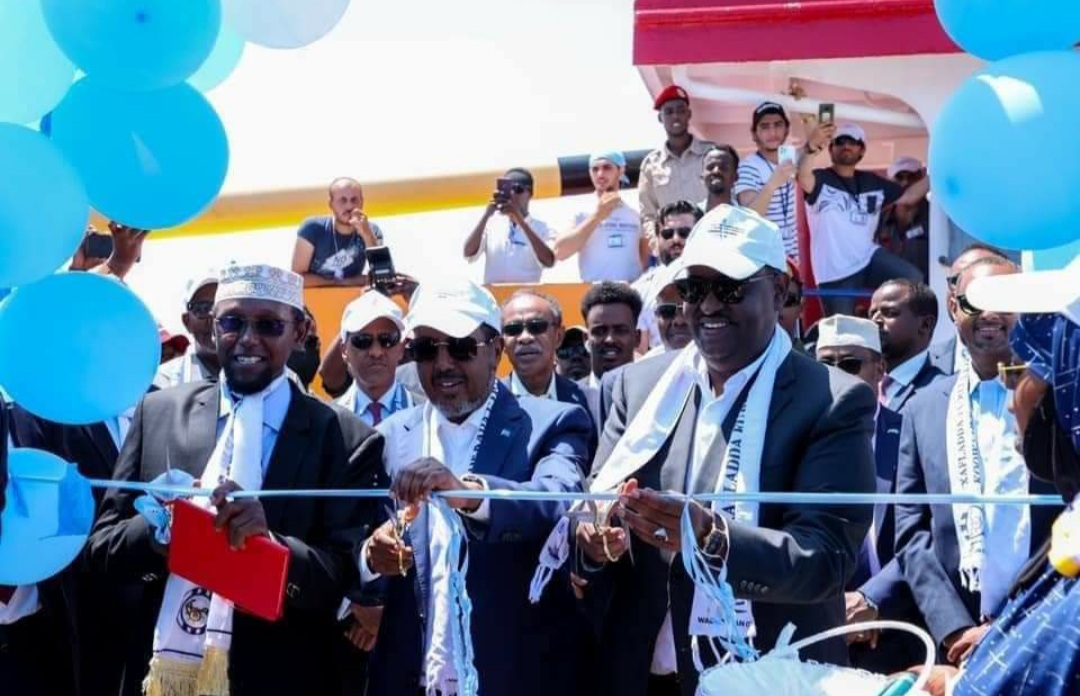
In 1964 a war broke out at boundary between Somalia and then Imperial Government of Ethiopia. At the time, Somalia was conducting a national election. There was a tremendous public pressure to cancel the election in order to defend the country. Late Somali President of the Republic, Aden Abdulle Osman (Aden Adde) spoke on the Ethiopian attack, saying then the infamous sentence, ” we will fight with our fingernails”. The Prime Minister, Abdirashid Ali Sharma’arke spoke after the President to say that “Somalis will fight with one hand and vote with the other”. The Prime Minister’s statement turned out to be a wild fire for national resolve in time of war and election. He had seized the opportunity and thus made history.
A few years ago, former President Mohamed Abdullahi Farmajo and his Prime Minister Hassan Ali Khayre were invited to seize the historic opportunity of laying the foundation stone for the construction of one of the biggest investment projects in Africa, Gara’ad Seaport, entirely funded privately by Somali business community. Unfortunately, they both missed out.
President Hassan Sheikh Mohamud has the imagination and vision not to miss this historic ceremonial event, which is happening under his watch and leadership. He is lucky to cut the ribbon for Gara’ad Port opening for business. Congratulations to all, who made this gigantic community achievement possible, including Puntland Government under the leadership of President Said Abdullahi Deni.

( picture: Courtesy to Dalmar Media)
DO YOU RECALL THESE PHOTOS OF CHINSESE PORT, AIRPORT AND ROAD ENGINEERS AT GARA’AD PORT SITE IN AUGUST 24, 2008?
GARA’AD PORT POLITICAL CONTROVERSY BRIEFLY EXPLAINED
GARA’AD PORT, A MAJOR PEOPLE’S UNDERTAKING
PORT OF GARA’AD, MUDUGH, PUNTLAND, SOMALIA
COASTLINE EXPLORATION (SOMA OIL) AND SOMALI GOVERNMENT COULDN’T SHAKE OFF SUSPECTED ILLEGALITIES AND CORRUPTION
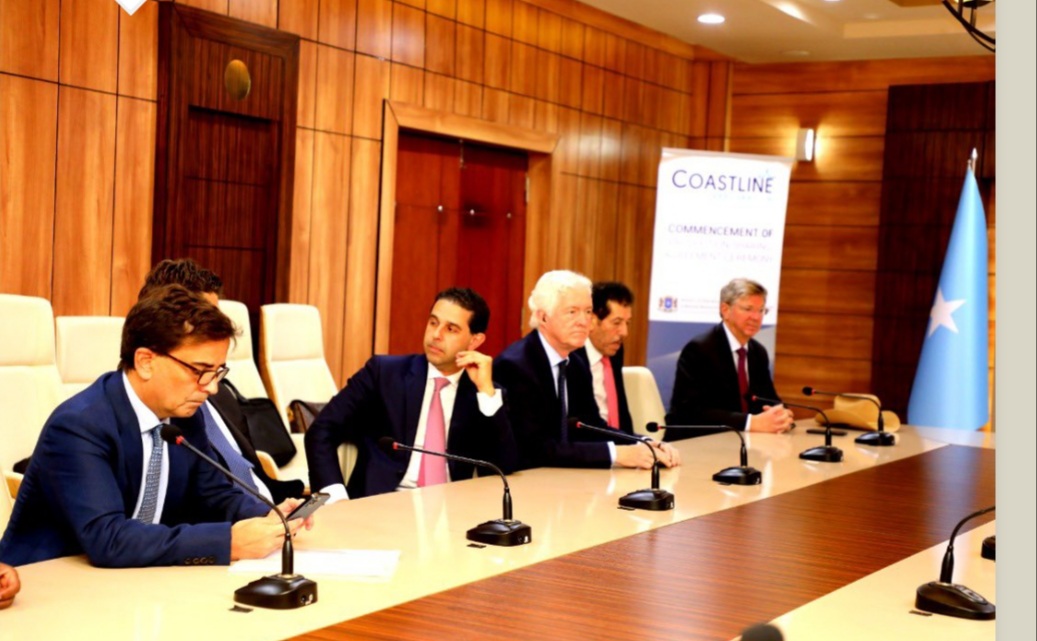

Any deposit to Somali Central Bank must be transported physically since it has no transaction facilities, including operational SWIFT CODE. It is still a store. We doubt very much that Coastline Exploration has produced $7 million cold cash and deposited into that store.
PUNTLAND: SHOWCASING INSECURITY IN TOWNS
Bad Leaders, Declining Nations: UK, Italy and Russia
EXPOSING IMPORTANCE OF FUTURE GARA’AD PORT FOR LANDLOCKED ETHIOPIA TO LATE PREMIER MELEZ ZENAWI

In 1999, interacting with late premier of Ethiopia, Melez Zenawi, on the economic and security importance of still to be built Gara’ad Port was an eye-opener for him. The late Puntland President and I came to his office at Arati-Killo in Addis Ababa one day on appointment. At his campound gate, there were only two security guards. The campound seemed deserted with no visible security detail, unlike presidential buildings of most Somali leaders in Villa Somalia and capital cities of the Federal Member States. At door we were met by a sole office worker. We went through a narrow passage with a number of closed doors on each side, presumably offices, until we reached a sitting place where the premier was waiting for us. Melez was chain-smoking his cigarette brand of Rothmans, I noticed, while Yusuf was unusually nervous as he indicated that by his constant scratching on the edge of the sofa. I put my hand over his to stop him scratching persistently.
During a little chit-chat, Melez asked Mr Yusuf, “tell me about your cousins”. Yusuf responded, “you know Generals Gabyoy and Morgan better than I do, for you interacted with them when TPLF was a rebel organization based in Mogadishu during Siyad Barre regime, and you and I know how General Omar Haji Masale misbehaved during Somali Talks in Cairo in 1997”.
We started talking business. Melez was a good listener and habitually never interrupts someone, based on my earlier encounters with him. Among our priorities for discussion included our plan to construct Gara’ad Port on the shores of the Indian Ocean in Mudugh Region of Puntland. Somehow, Melez sounded that he heard about our desire to have a seaport there, but he seemed not to have paid any attention before. He looked concerned about Eritrean issue and frictions with Isaiah Afewerke.
Abullahi Yusuf explained to Melez how would-be Gara’ad Port could become a game-changer in terms of Ethiopian economy and marine transport needs, especially for Eastern Ethiopia. Mr Yusuf briefed him that in the event Ethiopia wanted to pump Shilabo gas through pipes to tankers at sea, there are three routes, the shortest and most secure of which would be Gara’ad Port. The route to Gara’ad Port passes through Darood sub-clans while the routes to Berbera and Obbiyo pass through multiple Somali sub-clans, who were traditionally antagonistic to each other. The operation of gas pumps have to consider safety as a priority. Melez had warmed up to the idea of Ethiopia having an alternative and safer sea-route to the Indian Ocean. Ethiopia should now take advantage of the newly built Gara’ad Port. They should invest in the construction of well-built highways to Gara’ad Port.
WHY THE PORT OF GARA’AD IS NEEDED – A BRIEF PERSONAL ACCOUNT
PUNTLAND BREAKING NEWS

Diplomats of mostly Western nations, accredited to Somalia, IGAD and AU have been gathering in Garowe, Puntland, to participate in round-table discussions on Puntland forthcoming Council Elections and to express donor support to Puntland efforts on the democratization process. The high profile diplomats, including UN Secretary-General Representative to Somalia, AU and IGAD Representatives, ambassadors of USA, Sweden, Britain and representatives from Norway, among others, are all in-hand in Garowe, the Capital City of Puntland State.
It is a crucial exposure of Puntland elections to the International Community. Western donor support is a critical component to conduct these historic elections.
CORRECTION: Earlier in this Breaking News, we reported incorrectly arrival of CNN and Al Jazeera news outlets in Garowe. An apology to our readers.
Stay tuned.
Postscript
Diplomats visiting Puntland State House today had issues and questions to the authorities here, according to persons familiar with the subjects discussed. IC and donors wanted clarifications on a number of topics involving forthcoming Council polls, urging authorities to conduct free and fair elections in a competitive and inclusive environment. A successful Puntland Council elections would set a precedent and model for the rest of Somalia, they urged. Puntland authorities have expressed commitment to seeing this process through.
WARSAME DIGITAL MEDIA WDM

Watch “Puntland waa in ay doorasho aadaa” on YouTube
WDM IS AN INDEPENDENT MEDIA WITHOUT FEAR OR FAVOR
INTEREST IN POLTICAL PARTICIPATION BY RESIDENTS OF SOMALI REGIONS

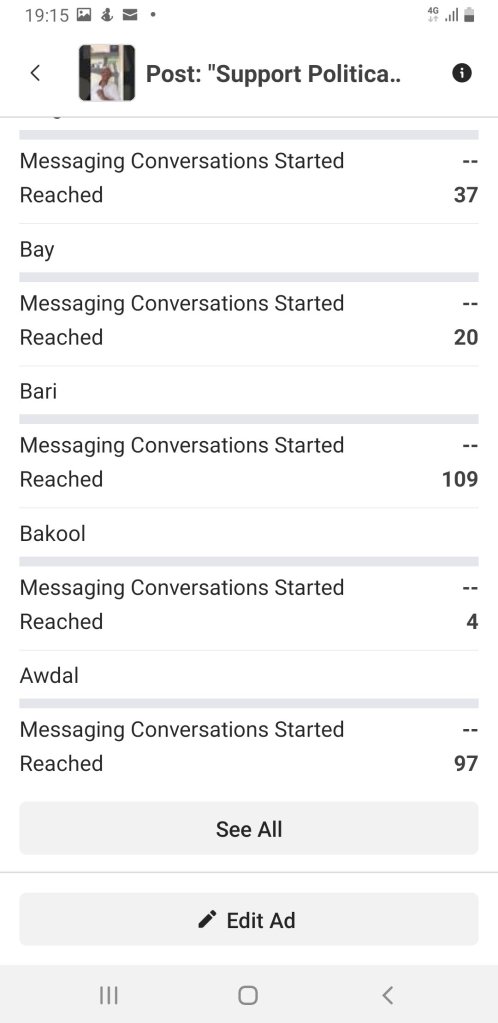
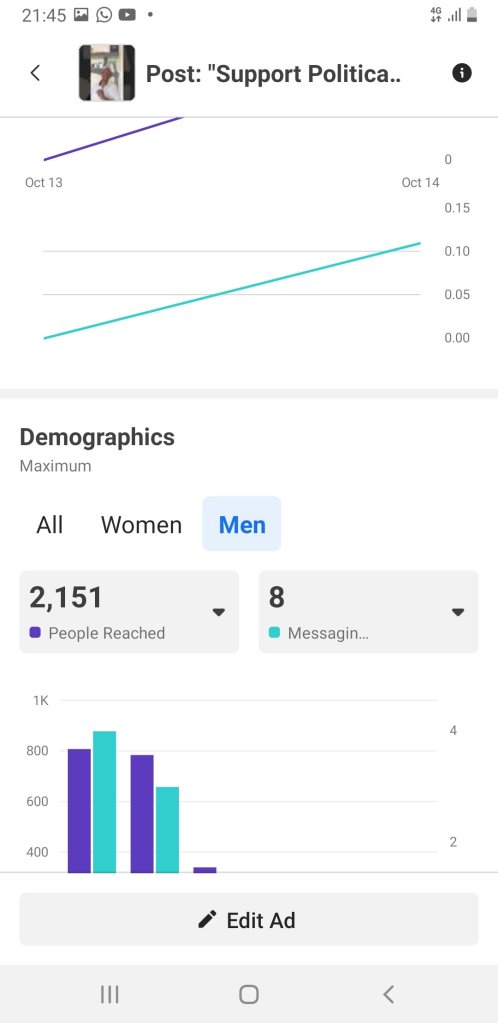
Warsame Digital Media WDM has conducted a survey through the Facebook to test interest in politics among the demographics in all regions of Somalia. Methodology: Release of a video clip directed at Somalia’s constituencies only. It was a Youtube video clip broadcasted through the social media. The clip wasn’t framed as normal survey, but a podcast reminding population to support political associations and parties in order to insure the independence of these organizations to survive, compete in the political arena and make government authorities accountable.
We believe that the result of watching rate to this video reflects upon participation and interest in Somali politics, on the top of many other factors of interest to researchers .
Based on the number, age and gender, residents of Banadir, Waqooyi Galbeed (Sonaliland) and Bari (Puntland) came out respectively first. The lowest rate came from Gedo, Bay, Bakool and Hiiraan. The rest of the regions are in-between. Read here the result of test:
https://ismailwarsame.blog/2022/10/15/interest-in-politics-along-age-and-gender-and-by-region/
INTEREST IN POLITICS ALONG AGE AND GENDER AND BY REGION. WDM TEST






Watch “Support Political Associations to be viable Political Parties” on YouTube
ON COUNCIL ELECTIONS IN PUNTLAND
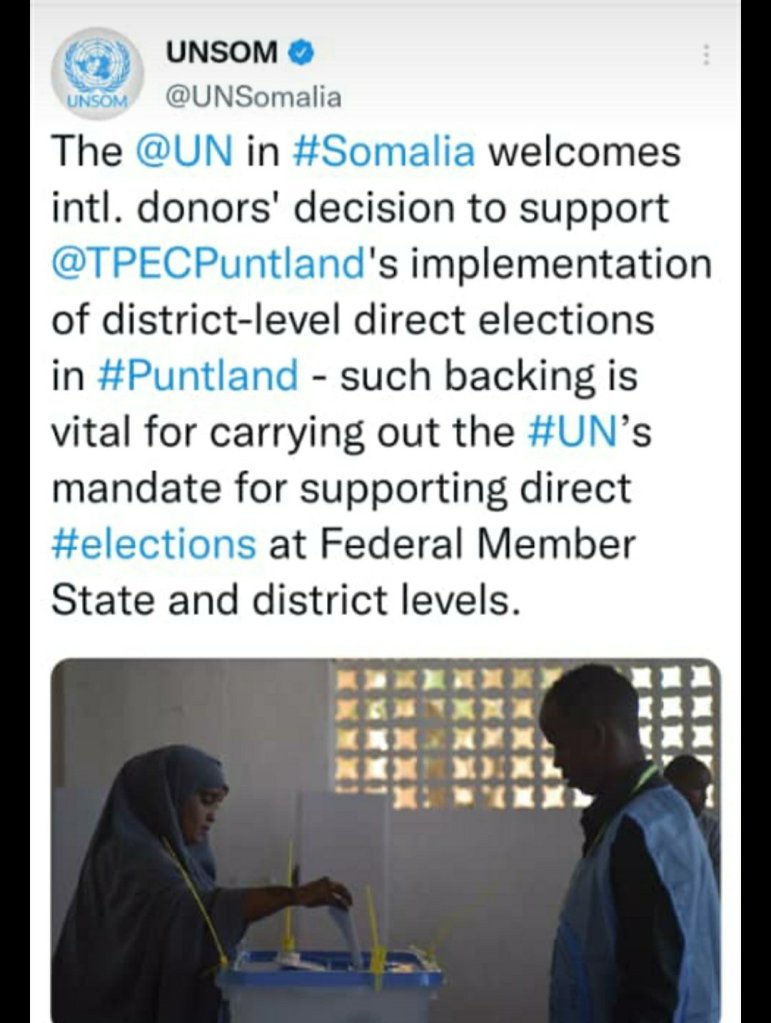
ELECTIONS ARE CONDUCTED WITH MASSIVE PUBLICITY AND DISSEMINATION OF INFORMATION AND CITIZEN EDUCATION. THIS ISN’T HAPPENING IN PUNTLAND NOW.
WDM EDITORIAL
Puntland Government and Temporary Puntland Election Commission (TPEC) are missing in action with no visible preparations for elections as far as advertisements and public information are concerned. Other than occasional statements by the State President and limited officials that there will be Council Elections in the State, Puntland districts don’t feel the euphoria that comes with elections. Political associations seem nonexistent at all. The voice of small opposition elements to holding elections is louder than the proponents’. Misinformation and probability of government election failure grow by the day. TPEC seems to be concerned with technical aspects of executing elections than educating the public on the forthcoming council polls.
There is danger that misleading information, falsehoods and rumors may take hold and sway public opinion against elections. There is an urgent need to prevent this from happening and to take measures to counterattack negative information on Puntland Government intentions to hold free and fair elections. This is a wake-up call for the government, TPEC and pro-election political associations to act now before it is too late.
Cultural Heritage
Watch “Institutional Memory, Faroole, Gaas, Deni, elections” on YouTube
FORMER PUNTLAND PRESIDENTS GAAS AND FAROOLE SHOULD LET IT GO

WDM EDITORIAL
It is human nature that people hate someone else succeeding where they failed badly. The three successful Pilot Council Elections in Qardho, Uffayn and Eyl recently must have been a shock to Faroole and Gaas. That much we understand in regard to human situation of former leaders of Puntland State, but now they hurt our expectations of them to act as Puntland/Somali statesmen. What is wrong with our yesterday’s leaders and supposedly experienced politicians?
President Faroole tried his best and his administration did a huge ground work in his attempt to hold Council elections. In the end, he didn’t see the process through successfully. This trial was commendable and Puntland is now building on these efforts. It is perplexing to see him opposing the same work he had started. Shame! People of Puntland deserve better.
What some Puntlanders may find extremely odd, however, not surprising, is the case of Gaas opposing Puntland moving forward without listening to his sadistic utterings. Many Puntlanders couldn’t be deceived by any more shenanigans by a politician whose entire political career was built on shameless corruption, and abysmally failed Puntlanders in their time of need in both war and peaceful reconstruction. Gaas, a doctor in economics, was reportedly quoted as saying “Little corruption is good for the economy”.
But, let us cut chasing the wild goose – Gaas can’t have further say in Puntland affairs. People of Puntland are still reeling from the dilapidating harm done by Gaas and his despotic litte cronies of Aaran Jaan types. Recall scandal involving Garowe-Galkayo Road and P&O Bosaso Port, the infamous “15 million Dollar Golden Handshake”, on the top of unprecedented, huge, daylight bribery in Puntland House of Representatives to sell out the only Puntland port then. Where does he come from to oppose Puntland transition to democracy? Can he be a model for anyone of decent reputation? When talking to Gaas, ask him about his experience with “Tukaraq Fiasco”. Gaas is the author of the infamous “Ban Ki-moon Stament” as prelude to sell his soul and Puntland interests to President Hassan Sheikh Mohamud.
Residents of Puntland State of Somalia will march on and pass-by the lovers of doomsday and “after me, the dèluge”.

IN MEMORY OF PUNTLAND PRESIDENT MOHAMUD MUSE HERSI BOQOR

A Political Journey with General Mohamud Muse Hersi Boqor: Reflections on Leadership and Legacy
Early Encounters: Radio Kulmis and the SSDF Struggle (1983)
My first encounter with the late General Mohamud Muse Hersi Boqor (Cadde Muse)—later President of Puntland State—occurred in 1983 at the studio of Radio Kulmis, the clandestine broadcaster for the Somali Salvation Democratic Front (SSDF), then operating via the shortwave antenna of the Voice of the Gospel near Maskel Square in Addis Ababa. The General visited the studio alongside Abdullahi Yusuf, then Acting Chairman of the SSDF. I vividly recall posing a bold question to Cadde Muse: “Why did you join the struggle so late?” Before he could respond, Yusuf interjected, asserting that “everyone joins the struggle when the time is right.”
Unbeknownst to me then, Cadde Muse had recently defected from his post as Military Attaché at the Somali Embassy in Ottawa, Canada. His departure coincided with the impending arrival of Somalia’s dictator, Siad Barre, for an official visit to Canada. According to diplomatic sources, Barre’s inquiry about Cadde Muse’s whereabouts reportedly embarrassed the Somali Ambassador, who had no knowledge of the General’s disappearance. Barre correctly speculated that Cadde Muse had fled to Addis Ababa—a testament to the General’s strategic timing and the regime’s unraveling intelligence apparatus.
Military Leadership and SSDF Folklore
Cadde Muse soon rose to become the SSDF’s Chief of Staff, commanding its guerrilla forces. His leadership style, however, became a subject of lighthearted anecdotes within SSDF circles. Known for his affable demeanor and distinctive Banadir dialect, he defied the stereotypical image of a stern military leader. Despite this, his commitment to the anti-Barre cause was unwavering.
After Barre’s regime collapsed in 1991, Cadde Muse returned to Canada, where he transitioned into small business ventures while remaining active in the Somali diaspora community. His political ambitions, however, were far from extinguished.
From Exile to Puntland’s Turbulent Politics
The General reemerged in Somali politics during Puntland’s formative years. In the early 2000s, he resurfaced in the Karkaar region, commanding remnants of Jama Ali Jama’s short-lived administration. After suffering defeat, he fled to Ceel-Afweyn in Somaliland-administered Sanaag, where he and his loyalists reportedly endured harsh treatment from local authorities—a reflection of the volatile clan dynamics that often overshadowed broader political alliances.
During the 2002 Somali Peace and Reconciliation Conference in Eldoret, Kenya, I received a call from Boqor Buur Madow, a respected elder from Ceerigabo. He urged me to broker dialogue between Abdullahi Yusuf and Cadde Muse. Reluctantly, Yusuf agreed to engage. The call with Cadde Muse was fraught with tension; he unleashed a torrent of grievances against Yusuf and me. Yet, this marked the beginning of an unlikely political reconciliation.
Yusuf and Cadde: An Unlikely Alliance
Post-reconciliation, Yusuf and Cadde Muse forged a close partnership, so much so that Puntland’s Vice President Mohamed Abdi Hashi once quipped, “Who is really in charge here?” Observers misunderstood their dynamic: Yusuf, eyeing Somalia’s presidency, needed Cadde’s support, while Cadde leveraged Yusuf’s influence to consolidate his own authority.
When Cadde Muse assumed Puntland’s presidency in 2005, his administration became a critical lifeline for Somalia’s nascent Transitional Federal Government (TFG). His pragmatic collaboration with federal institutions underscored Puntland’s role as a stabilizing force amid Somalia’s chaos.
The 2007 Mogadishu Agreement: A Forgotten Pact
In late 2007, during a TFG-Puntland delegation visit to Mogadishu, Cadde Muse tasked me with drafting a landmark agreement. The document stipulated that Puntland would represent federal institutions until other member states were established—a strategic move that secured $3 million of the $38 million Saudi Arabia grant to TFG for Puntland State. Signed by Yusuf, Cadde Muse, and Prime Minister Ali Mohamed Gedi, the pact remains a forgotten footnote in Somalia’s federalism saga, ignored by subsequent Puntland administrations.
A Surprising Offer and Final Reflections
During that same visit, Cadde Muse summoned me privately. After dismissing his ministers, he made an unexpected proposition: “Ismail, Eng Caydaruus can’t handle the presidency. I want you to take the job.” Stunned, I declined, advising him that “kings do not make servants of their kin.” Caydaruus, a descendant of sultans, was ill-suited for subordination. Cadde Muse later appointed Khalif Nur Ali Qonof—a decision emblematic of the delicate clan calculus underpinning Somali leadership.
Legacy of a Pragmatist
General Cadde Muse’s legacy is one of contradictions: a military defector turned diaspora businessman, a guerrilla leader mocked yet respected, and a president whose tenure bridged regional and federal ambitions. His ability to navigate Somalia’s treacherous political terrain—often through personal charisma and clan alliances—cemented his place in Puntland’s history. Yet, his story also reflects the unresolved tensions between federalism and centralized governance that continue to plague Somalia.
Though the 2007 agreement faded into obscurity, Cadde Muse’s tenure remains a testament to the complex interplay of loyalty, ambition, and survival in Somali politics—a narrative as unscripted and unpredictable as the man himself.
Poor countries have become a global lab for the experiments of companies and humanitarian organizations | DIIS
“contrast, it is much easier to measure whether a new treatment is working, or whether it helps to give money directly to a family. According to Adam Moe Fejerskov, this altered focus helps to promote certain types of knowledge and exclude others. – The experimental regime has a belief that you can create an objective system in which numbers reveal the right policy, and thus there is no need for political processes. This has a major impact on who defines politics and political issues. If all policy is to be conducted on the basis of mathematical knowledge, then certain types of science – and therefore certain people – will control the agenda. Some knowledge is seen as legitimate and everything else is outside. This is a very anti-democratic way of conducting politics that clearly determine who should be heard and who should not be heard in the search for political solutions, says Adam Moe Fejerskov. Politics of avoidance One of the problems is that the experimental leads to a special kind of knowledge and thus some limited political understandings. Another problem is that, in today’s crises, we often find ourselves in situations that we do not know how to handle. In such situations, we are more likely to engage in political experiments with unknown effects. The experiments come to serve as a “solution” when politicians do not dare to make the necessary choices. The climate crisis is a good example of this dynamic. – The climate crisis is first and foremost a political question, but we approach it with an extreme degree of experimentality. One third of the reductions needed to reach the Paris target should come from experimental technologies. But we have no idea what these technologies look like or whether they are effective. Technology becomes a form of politics of avoidance. We dare not press the policy buttons required to make certain slowdowns or changes in our industry and energy systems. Therefore, we hope that the technologies will solve it for us. In this way, we leave not only our own, but the future of the entire planet to the politics of experimentation. Adam Moe Fejerskov SUSTAINABLE DEVELOPMENT AND GOVERNANCE Senior Researcher +45 32698779 admo@diis.dk” https://www.diis.dk/en/node/25944#:~:text=contrast%2C%20it%20is,admo%40diis.dk
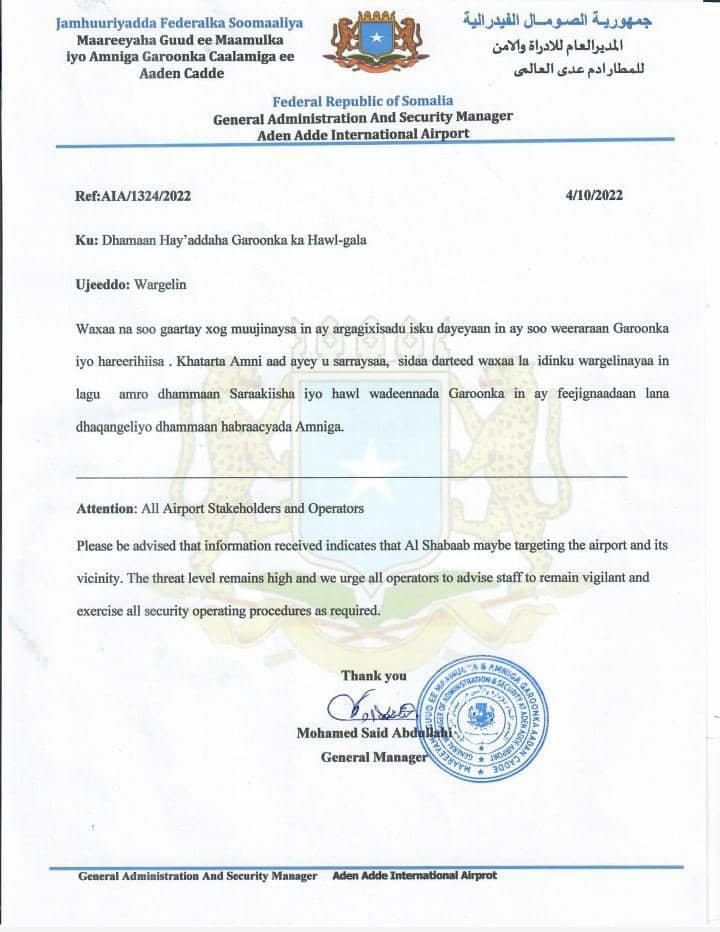
BREAKING NEWS: US SECURITY WARNING
OCTOBER 6, 2022
Location: Somalia
Event: Security Situation
The U.S. Embassy in Mogadishu continues to closely monitor the security situation in the city of Mogadishu, including Aden Adde Airport. The U.S. Embassy in Mogadishu introduced travel restrictions for U.S. government personnel in Mogadishu for the immediate future, including outside the international campus and UN compound.
The U.S. Embassy reminds the public of Somalia’s Travel Advisory , which states that terrorists continue to plot kidnappings, bombings, and other attacks in Somalia. Attacks may occur with little or no warning, targeting airports and seaports, government buildings, hotels, restaurants, shopping areas, and other areas that attract large crowds and are frequented by Westerners, as well as government, military, and Western convoys. Methods of attack can include car bombs, suicide bombers, individual attackers, and mortar fire, among others. Terrorist attacks involving the indiscriminate use of explosive devices and other weapons can take place anywhere in Somalia at any time without warning.
Actions to Take:
- Exercise vigilance at events, places of worship, and locations with large crowds.
- Review your personal security plans.
- Have evacuation plans that do not rely on U.S. government assistance.
- Be aware of your surroundings.
- Monitor local media for updates.
Assistance:
- U.S. Embassy Nairobi, Kenya
United Nations Avenue, Gigiri
+254 (0) 20 363 6451
+254 (0) 20 363 6000 (after hours)
kenya_acs@state.gov
https://ke.usembassy.gov/ - State Department – Consular Affairs
+1-888-407-4747 for calls from the United States or Canada
+1-202-501-4444 for calls from overseas (Somalia) - Somalia Country Information
- Enroll in Smart Traveler Enrollment Program (STEP) to receive alerts
- Follow us on Facebook and Twitter
THE PENALTY OF LEADERSHIP
This advertisement for Cadillac automobile in regard to its competitors is worth repeating as it captures human nature eloquently. Take a read:
“In every field of human endeavour, he that is first must perpetually live in the white light of publicity. Whether the leadership be vested in a man or in a manufactured product, emulation and envy are ever at work. In art, in literature, in music, in industry, the reward and the punishment are always the same. The reward is widespread recognition; the punishment, fierce denial and detraction. When a man’s work becomes a standard for the whole world, it also becomes a target for the shafts of the envious few. If his work be mediocre, he will be left severely alone – if he achieves a masterpiece, it will set a million tongues a-wagging. Jealousy does not protrude its forked tongue at the artist who produces a commonplace painting. Whatsoever you write, or paint, or play, or sing, or build, no one will strive to surpass or to slander you unless your work be stamped with the seal of genius. Long, long after a great work or a good work has been done, those who are disappointed or envious, continue to cry out that it cannot be done. Spiteful little voices in the domain of art were raised against our own Whistler as a mountback, long after the big world had acclaimed him its greatest artistic genius. Multitudes flocked to Bayreuth to worship at the musical shrine of Wagner, while the little group of those whom he had dethroned and displaced argued angrily that he was no musician at all. The little world continued to protest that Fulton could never build a steamboat, while the big world flocked to the river banks to see his boat steam by. The leader is assailed because he is a leader, and the effort to equal him is merely added proof of that leadership. Failing to equal or to excel, the follower seeks to depreciate and to destroy – but only confirms once more the superiority of that which he strives to supplant. There is nothing new in this. It is as old as the world and as old as human passions – envy, fear, greed, ambition, and the desire to surpass. And it all avails nothing. If the leader truly leads, he remains – the leader. Master-poet, master-painter, master-workman, each in his turn is assailed, and each holds his laurels through the ages. That which is good or great makes itself known, no matter how loud the clamor of denial. That which deserves to live – lives“.
(Courtesy)
HEARTFELT CONDOLENCE TO THE FAMILY OF WDM ACTIVE READER

Colonel Abdullahi Ulle. Ulle passed away in Holland recently. RIP!
RECOLONIZATION OF THE HORN OF AFRICA
Take a listen
TAKE A NOTE
POOR AND DEADLY FRAUDULENT EDUCATION SCHEMES IN SOMALIA
Civil War in Somalia had produced not only warlords, Union of Islamic Courts, Alshabab, Alqaeda, ISIS, but also fraudulent education merchants engaged in dangerous schemes to exploit mercilessly parents and their kids for business profit. These fraudsters give out education certificates to youth who can’t read and write any legible literature. “Students” are required only to pay their fees to pass exams. Whatever subjects they try to imitate teaching, civic education isn’t one of them. Their schemes don’t produce Somali personality. The schemes are spoiling generation after generation to produce illiterate population, “graduates” of the fraudulent education schemes throughout Somalia.
Parents of these kids have to choose between two evils:
1. To leave them to their own devices with the potential of becoming juvenile delinquents, perish in the high seas looking for better opportunities overseas, radicalized and recruited by extremists.
2. Or to allow these kids to fall victims to the fraudulent education schemes in their own country.
Since youth “graduates” from fraudelent systems are miseducated, on the top of lacking labour skills, they are hardly expected to get jobs in the limited labour market here in Somalia. At this stage, parents are still in a dilemma of what to do with these young “graduates” . Here start parents’ struggles to seek job openings for these ill-prepared youth through cronyism, nepotism and corruption. While engaged in this process, they try to secure loans to lease vehicles used as taxis called Dhaweeye (UBER) to keep these youth busy and out of trouble.
Somalia’s fraudulent education cartels have been attracting education crooks as well from neighboring East African countries like Uganda and Ethiopia. But, you would rarely see Somali college graduates from Kenya for they have high standards in their education system and strict admission requirements. In Uganda, these fake education crooks had established the so-called ” Kampala International University” specifically deviced to take advantage of the misery of Somali youth looking for better education overseas. Students need only to register there and pay tuition fees. Getting certificate is guaranteed.
To illustrate this point, one day, a few years ago, I received a phone call from a Somali man in Garowe, Puntland. He informed me that he was with a Ugandan friend from “Kampala International University” visiting Puntland, and they wanted to see me. I told them about the place to meet, which was a hotel lobby. The Ugandan identified himself as “Ahmed”, an unlikely name for his obvious African features. To make a long story short, “Ahmed” wanted Warsame Digital Media to place an advertisement for his “University”. I asked him what subjects they were teaching there. His answer was stunning. Among the subjects he told me that they teach included “Bachelor of Surgery”. In conclusion, I asked him to show me the curriculum and fields of studies of “Kampala International University”. He promised to come back next morning to show me the literature. He never returned.
(This article has been updated since posting.)
FAILING EDUCATION IN SOMALIA
Watch “Musuqmaasuq dhan waraaqa ah ee siyaasiinta iyo hawlwadeenna Koonfur Somalia” on YouTube
UNINTENDED CONSEQUENCES OF MOGADISHU UNION OF ISLAMIC COURTS
Who is the mother of Al-Shabab? Do you have any argument that Al-Shabab was a faction or part of the defunct Union of Islamic Courts (UIC)? If you have any objections to raising this question, then probably you don’t have any question regarding Damul-Jadid faction of Islaax Somalia fighting along UIC against Transitional Federal Government of Somalia (TFG) in 2006. President Hassan Sheikh Mohamud, who was then leader of Damul-Jadid, led the group to join the fight along Al-Shabab and militia of UIC. Students of SIMAD College were transported to the battlefield in the vicinity of Baydhaba, the Seat of TFG then, unprepared and untrained, to fight along Al-Shabab or UIC militia. Former Interior Minister, Odawaa, commanded this operation in which SIMAD students were routed out by joint counter-offensive of TFG and Ethiopian forces. Like thousands, who had perished in Mogadishu following the outbreak of the Civil War from 1991, SIMAD College students were unaccounted for and nobody was held accountable for this heinous crime.
Trying to follow up and attempting to express remorse for past mistakes or crimes is an initial positive step forward by perpetrators. I don’t see this happening. This, in turn, makes everybody skeptical of President Mohamud’s sincerity in fighting Al-Shabab. Until he shows otherwise, the burden of proof is on the President.
 Warsame Policy & Media Network (WAPMEN)
You must be logged in to post a comment.