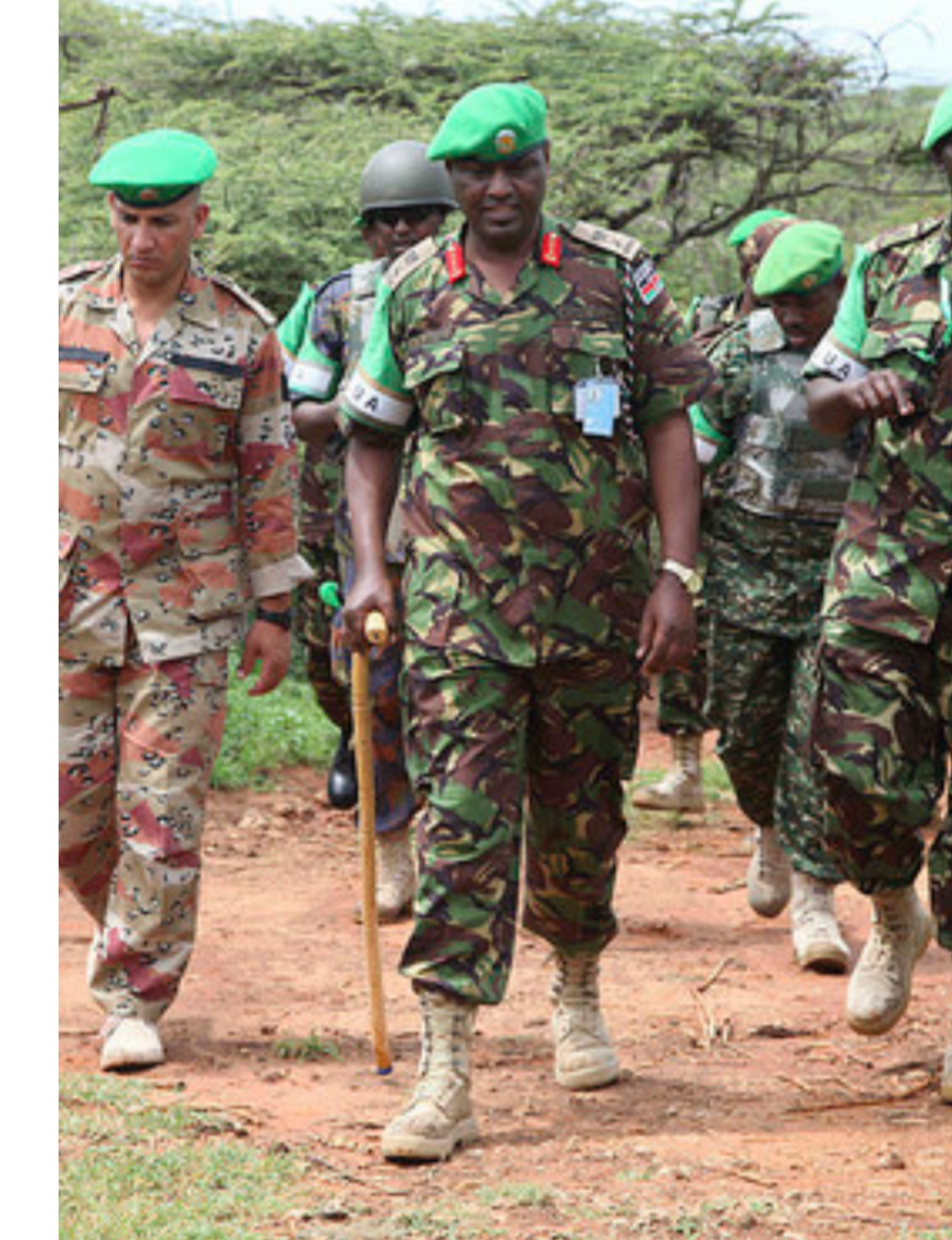
What is required to get AMISOM out of Somalia? Does that question sound strange to you? But, why do you contemplate keeping these foreign troops in a sovereign country for more than a short period of time? Who is keeping them in the country, is it us or them, who is responsible for keeping them here? Why do you unknowingly compel our East African queens to seek alternative love and marriage against their inner cultural feelings?
The answer to these questions is fundamentally very simple. Stop fighting among themselves. If you do, AMISOM have no reason to stay in Somalia. Period. They will get out within days, which means we were keeping them here in the first place and that is because of our own stupidity to figure out that simple solution to most of our existential threats.
Alshabab and other extremist elements hold the primary responsibility to keep AMISOM here. They say they are fighting for AMISOM expulsion, but their actions keep AMISOM needed in Mogadishu. Is that difficult to figure out? Likewise, AMISOM is very much interested in insuring and helping Alshabab keep fighting to justify their stay in Somalia. It is simple business consideration. It is an unofficial, mutually beneficial and transactional business. How else would you describe this undeclared mutual business relationship?
Freeze this undocumented business contract and AMISOM would find its troops outside the gate. Once that happens, there will be no need for their presence within the borders of Somalia.
You would say, it is easier said than done. Ask Alshabab to stop the urban warfare and bomb blasts in towns and see what would happen to AMISOM and Ethiopian presence in parts of the country. If you don’t want these foreign troops out, then carry on what you have been doing. The status quo pays you and AMISOM handsomely. Then why do you hypocritically blame and complain about the presence of foreign soldiers in the country to falsely justify your unpatriotic and distorted political position and wrong-headed course of action.
Garowe, March 29 – Ahmed TAAJIR, a 19th century local hero, famous trader and king’s Representative symbolizes the complexities of Bendar Qassim (Bosaso), deriving its ancient name from the founder of this coastal town on the shores of the Red Sea in the 14th century.
The commercial city of Puntland Sate of close to one million residents is a metropolitan seaport centre and International Airport, hosting thousands of internally displaced people, Ethiopian migrants, fortune hunters, fishermen of multiple nationalities, traders of livestock, handcrafts, from all over Somalia and beyond, and merchants of every trade imaginable, including those practising in urban decadence industry.
Bosaso is also a recent attraction of extremist elements of pseudo-religious affiliations bent on murder and assassinations of prominent members of the society, including professionals, politicians, religious leaders and state security personnel.
The numerous city’s sub-clan composition, historical tensions between and local rivalry for trade and politics is 2nd to none in Somalia. Mogadishu cannot even come close, despite the opinions of many to the contrary.
Bosaso is the main seaport of Puntland, traditionally exporting the world famous native frankincence, fish of every type and name, red lobster, huge livestock population and much more.
Bosaso Port is now ensnared in contraversial long-term contract with P&O of Dubai, UAE. Nobody, except former Puntland President, Gaas, and a very few of his close advisers, has ever seen the secret business deal. In the opinions of many and according to some reports, President Gaas didn’t transfer the documents on the P&O – Bosaso Contract to his successor strangely.
President Deni took considerable time of his learning curve period holed-up in Garowe, the State Capital. He is paying now a much awaited visit to Bari Region, but on his way to Bosaso, he couldn’t afford by-passing the City of Qardho, Karkaar Region, in order to soothe and smooth-up some post-election hard feelings there.
Once in Bosaso to address the complex issues of security, economy, Port, on the top of the balancing act required to check and reign in the bickering nature of Bari factional sub-clan system, he will be on the spot to show understanding of the complexities and competing interests of the residents of Bosaso in-waiting to test the leadership skills of the New President.
Definitely, Reer Bari will resort to their local political trade-mark motto or refrain, “Aa la tahay” ( Who he thinks he is?)
Garowe, March 27 – Somalia’s Coastal and rural communities are the mainstay and backbone of the national economy, and they are the least developed as if by design. It is a paradox. This under-development in these vital economic sectors is one of the main factors next to bad governance and poor leadership as to why the country is among the least developed nations.
Rural and coastal communities have been suffering from inaccessibility and absence of infrastructure to move goods and people to urban centers, to transfer and receive know-how and ideas.
Historically, fascist Italy sent thousands of poor farming folks from its overcrowded agricultural sector to Shabelle and Jubaland regions of Somalia. Colonial administrations had little interest in developing other areas of the colony. They were obsessed in relieving Italy’s unemployment burden. Italian boys were not trained to raise camels in a semi-desert in Africa. They were not fishermen either. Somalia’s rural and coastal communities were left to their own devices.
British colonial administrators faired no better. They were interested in exporting loads of meat to their military garisons in Aden, South Yemen, and fighting off Drawish Movement led by Sayyid Mohamed Abdullah Hassan. Their side interest was their much advertised hobby, the so-called “Sports in Somaliland” ( shooting to kill wild animals without mercy).
Enter Somalia’s administrations following the colonial ones. They changed no iota to the Colonial mode of production, labour and economic management. They seemed to imitate and copy the minds of yesterday’s colonial men. Mind you, most of these new Somalia’s leaders after the nominal independence were of nomadic background, and ironically they never looked back to contemplate about improving the lives of their respective communities, to forget about fishing communities, which were treated like untouchable Indian caste.
To develop this country in a meaningful way, we need to do the hard work of constructing extensive road network linking up rural, coastal and urban communities as priority in any future economic planning. Any alternative plan is not worth the bits and bytes typed in.
One more thing: if you do not train youth pouring in to urban centres to acquire labor skills they will turn to violence and substance abuses, and become beggers and refugees.
Garowe, March 27, 2019– “Nambarkaan ma wicikartid” (“You can not call this number”)—a phrase every Somali knows all too well. Despite paying for telecom services, customers are locked into provider silos, unable to call friends, family, or businesses on competing networks. Only a few operators, like Golis, Hormud, and TeleSom, have limited interconnectivity, forcing many to juggle multiple phones or dual-SIM devices. Why does this persist? In a functioning economy, regulators and companies prioritize interoperability, recognizing that communication is a public good—not just a corporate battleground. Yet in Somalia, telecoms still operate with a fragmented, war-era mindset, treating customers as captive revenue streams rather than partners in progress. There are solutions—if stakeholders choose to act: Regulatory Intervention – The government must enforce mandatory interconnectivity, as seen in other markets. No telecom should profit from artificially isolating customers. Revenue-Sharing Agreements – Competing providers can adopt fair pricing models for cross-network calls, ensuring mutual profitability without harming consumers. Public Pressure – Customers, businesses, and civil society should demand better, voting with their wallets and voices for unified communication. Nationalist Vision – Somali telecom leaders must rise above zero-sum competition. A connected Somalia benefits everyone—including their long-term bottom line. The current system is unsustainable. As Somalia rebuilds, its institutions can not afford to replicate the failures of the past. History will judge whether today’s leaders fostered division or laid the groundwork for a truly connected nation. Ismail H. Warsame iwarsame@ismailwarsame.blog @ismailwarsame
Most Somalis perceive the loose long-sleeved traditional tribal Arab gown, the Khamis, as religious dress and sign of pious relevance. The Abaya with burqa veil hijab of various tribal identification is also widely used now throughout Somalia, whereby a woman in the street without it is perceived as blasphemous and risks all kinds of verbal abuses and ostracism in the society. You wouldn’t know whether the woman walking nearby is your mother-in-law, sister or your own daughter.
Men’s attire is split between Western (on the decrease ), Arab tribal Khamis and the traditional Yemeni costume, the Mawis-gown with increasing societal pressure on men to dress up with Khamis, especially during religious holidays and on Fridays.
People seem to be in crisis as to which country and nationality they belong to, whether they are Arabs, Africans or Afghanis.This is the result of thirty years living in statelessness situation. It is no longer the historical Somalia you knew. There is a national crisis of identity. It is the legacy of the Civil War.
It will take a long time and hard work to re-claim our country, and in the process, our national identify too. Let us work on that.
But, don’t get me wrong. I am advocating for neither Western style dress nor an African one. What I am saying is, let us have our own dress, encourage and promote it.
Meet or watch Somalis debating on all kinds of subjects and issues on earth: politics, news, religion etc., while they enjoy their cups of tea lazily at Caffè shops.They all sound experts in debates. You wonder in which colleges and universities they teach or lecture.
Staying with them to know more about them, you would discover why Somalia has been producing so many poets and singers earning the name “land of poets” for Somalia. They have been debating all their lives and they are the sons and daughters of skillful historical debaters.
The problem is that these poems and songs can be deadly used for clannish incitement for hatred and violence. This is partly what happened in the Somali Civil War: Northerners against the Southerners, one clan family against the other, one politician or group of politicians against other groups. Weapon in the form of clan literature has big political marketplace in Somalia and can be used dangerously to do harm.
If you do research on most Somali clan conflicts, you would discover poems play critical role in incitement for clan hatred and murder. Infamous poems like Guba, Hurgumo, Ergo Darood, Deeley, Guuroow, Shirib, Geeraar, Buraanbur, among others, were fatally used to target, cleanse, kill and destroy others.
We all experience the legacy of such anti-human rights songs like “Sama-diidow, Dadbaa meelu buktaa, or slogans for clan-cleansing like “Faqash, Haraadi, Kacaan-diid, Qurmis, Ninkii dhoof-ku-yimi baa geerudu dhibaysaa“
That doesn’t mean that Somali literature is not used for virtue and good purpose. Often poems are utilized for noble objectives as well. But, bad ones sell better traditionally, much faster and remembered better. Why? We leave that phenomenon to the experts in the field, but it is a fact-based experience in Somalia.
Because of that cultural background, most Somali debaters are confrontional in their approach to civil discourses, often resort to personal attacks as they badly handle criticism.They take it personal and uncontrollably counter-attack. We don’t have the skills of conflict management, although our ancestors were famously good in conflict resolution.
It is never too late to go back and re-learn the virtues of our forefathers and expertise to bring our nation together again. We have to do away unproductive and ceaseless teashop debates, meaningless Internet chats and take concrete actions for purposeful objectives.
GAROWE, March 24 -Ample paved roads, highways, parks, ambulances, free health benefits, emergency telephone numbers, shetlters for the needy and social services, among many other public amenities are things that people in the West take for granted.
When you travel overseas to any of most developing countries, you are on your own for all your personal needs, unless you are a person of Somali origin blessed with strong, extensive and extended family support even in case of emergency. This is why Somalis are unique people to survive through nearly 30 years of statelessness in the absence of public services and institutions. Who can beat them in that regard?
A few months ago, I was among the mourners at burial ceremony of my old friend, General Abdullahi Ali Mire (Carays), who sadly passed away unexpectedly. Puntland government gave full state honor and managed the entire ceremony. Among mourners in attendance included the New President of Puntland, Said Abdullahi Deni, most of his soon to be appointed cabinet members and Puntland military brass.
The ceremony took a considerable time of at least three hours under the burning sun of the Horn of Africa. While we were busy in lining up and watching the ceremony protocol arrangement and procedures, and because it was a large gathering, something we didn’t notice happened there. An ailing former Somali politician, Hon. Mohamed Abdi Yusuf, fell down because of health issue. Evidently, some persons among the mourners noticed him and immediately took him to the nearest medical Centre. It turned out that he had nothing medically serious- just fainting for standing up too long under the sun. But, the doctors took care of him very well, and learning that he came from Holland, where there is a free medical benefit for its citizens, said that Puntland is bigger than Netherlands and could easily afford to take care of this man for free.
On hearing the incident, my friend and I drove to the hospital, after he checked out, took him out of the hospital in my vehicle. Hon. Mohamed Abdi Yusuf didn’t need any medical insurance or health benefit in Garowe, Puntland, Somalia.
There are four obstacles to Somalia’s progress and modern statecraft:
1. Tariqa wars
2. Politicized clannism
3. Epidemic corruption inbedded in all spheres life of the society
4. Mistrust among clans as a result of the Civil War.
Which one is relatively new to Somalia’s public square?
What is new in the political public square is mistrust among the warring clans that threaten the territorial integrity and sovereignity of Somalia. Mistrust created by Civil War and city-state legacy is the key as why Somalia is taugh to reconstruct. 1, 2 and 3 problems have been in existence in various degrees throughout the history of Somali clans. That is why restoring that missing trust is the fundamental task of all Somali political and clan leaders as well as all other leaders in their all walks of life. Recognition of wrong doing, Reconciliation with material compensation and repentance are critical here for successful conclusion of the process with all elements of adjudication and legal enforcement.
Mistrust is a new obstacle, more dangerous than the current Tariqa wars. If there is no trust, we have nothing in common and we will not be able to have a common country, let alone a unified state. Let us not kid ourselves.
GAROWE, March 23 – There are a few signs that indicate positive signs of societal freedoms and safety of citizens. Among them are the traffic police to maintain the rules of the road, the existence of an independent judiciary and free press. Go to any big city in any given country. See the existence, behavior and efficiency of traffic police. Pick up some local newspapers to get an idea of how free they are. Enquire about the independence of courts and read the sections and columns on crime and sentencing.
In Puntland, not to talk about other parts of Somalia, there is no single print newspaper, independent or otherwise. That tells you how an uninformed this society is. Where there is no press at all, expect no human progress and no monitoring of abuses of any kind including gross violations of human rights. You say tribalism is bad, but there is no alternative Avenue here to clannism either to seek justice or use it as a tool to gain undeserved priviledges. Society living under such situations, rumor-mongering, gossips, misinformation and wild speculations thrive and feed the mind of the general public. Doom and despair captivate the citizens. Nobody knows the truth anymore. There is a sense of general paralysis in the country. People just talk about all kinds of topics as wondering and confused minds. This is real in Puntland – no exaggeration.
But, let me go back to the issue of traffic police in Puntland. You rarely see traffic police here, and when you encounter a few of the officers, they are either begging for a lunch or extorting money from drivers on the road without driving license. There are no rules of the road whatsoever and everybody drives to any empty space he or she can squeeze the vehicle into left and right. One of the biggest traffic problems is drivers habitually stop vehicles in the middle of the road chatting, across the open car windows with driver-colleagues doing the same illegal car operation, while dozens of other drivers are jammed behind them with the horns blasting mad. Fortunately, road rage is moderately controlled by time-tested people’s patience.
Under these driving conditions, traffic police is nowhere to be seen. This situation exemplifies chaos, anarchy and total absence
of government, local, state or central.
Can something be done about this unspoken breakdown of law and order? Whose responsibility is it?
By now the President should have in place a major reform package for the State’s suffocating and duplicating bureaucracy. By now the President must have shown his vision as to where he would take Puntland State. By now the President must have committed himself and his administration to a democratization process as the old clan POWER-SHARING arrangement had hit the dead-end and should be discontinued. By now the President should have inspired the people of Puntland for renewal of hope and revitalization of socio-economic life in this part of Somalia. By now the President should have cleared the confusion surrounding on how to move forward in terms of cooperation between Puntland and its international partners. By now the President should have studied the dubious P&O and DP WORLD Bosaso contract and clarified Puntland position on whether to revise the infamous contract or discard it all together. Puntlanders had never seen or shown publicly this suspicious Bosaso Port Deal with the UAE ambitious and aggressive firm, the P&O. The President needs to hire a team of highly experienced business and civil contract lawyers to look into this contract with P&O. And by the way, does President Deni have seen that contract? Nobody in Puntland, including the previous members of House of Representatives ( the Parliament), who corruptedly approved the deal, had reported seeing it.
We see only slow piecemeal steps and occasional visits to various departments in Garowe, but no meaningful announcements or significant undertakings on the part of Deni Administration until to-date. If there is something you know, please share it with us.
By tradition, Puntlanders are extremely patient to wait and give chance to any Puntland incoming administration, but they are anxious this time around to see bold steps and tangible results from President Deni.
Too much time spent on a learning curve indicates the President is not yet ready to govern and would waste the first year of his administration as the 100 days measured in sizing up the President without achieving any major item of his election platform.
Puntlanders’ eyes are on the President to deliver the goods and quickly.
And one final thing: leadership doesn’t operate in the dark. It is about openess or transparency and public guideness.
Puntlanders seek medical help beyond the State. Why? You would be surprised to find out the main reason behind hundreds of Puntlanders routinely traveling to Mogadishu and Hargeisa for their personal medical care.
It is simply unchecked and run-away corruption in the heath department, whereby health management personnel and health professionals are engaged in massive embezzelment of donated funds and medicine for private business profit. The dire situation reminds one of Somali aid workers selling donated relief food in the black markets in Mogadishu in the height of Ogaden War refugee crisis after the war of 1977-78.
This is the reason why successive Puntland administrations couldn’t build, at minimum, one or two decent qualified hospitals in the State. Mind you, health professionals are in abundance in Puntland – there is no shortage of doctors, but they take the lead from the Health Ministry to indulge in predatory practices and inhumane greed.
The Ministry of Health comes next to Puntland Ministry of Finance in creating millionaires busy in constructing mansions and villas in Garowe and Nairobi with illegally acquired funds. You would say, this an exaggeration. Make credible enquiries yourself about the serious misuse of resources in these two Puntland Ministries.
President Deni New Administration has daunting tasks to fix this mess.
Postscript
Reports on theft of donated medicines and equipment from Qardho, Galkayo and Garowe are alarming. No prevention of looting or accountability in place in all public hospitals in the State.
Feature picture: Nurses on strike against return of corrupt official to workplace in Qardho General Hospital.
Would you do business and invest in risk and unstable country even if this is your own land and you are a patriot?
You would say, yes. Mogadishu is the best example where bomb-blasts and quick bucks go hand in hand. Kkkkk
This is the field called risk management enterprises where the types of Blackwater Security firm thrives and business predators take advantage of. Certainly selling contraband goods and services worth the risk of getting rich overnight.
One story I had read somewhere still keeps popping up in my mind. During the 2nd World War, Hitler Regime was engaged in the “Final Solution” in which Jews and other vulnerable minorities were targeted. Nazis were harvesting hairs, skin tattoos and gold teeth cappings from the exterminated. When that was happening in Hitler Europe, some American businessmen got together then to discuss the possibility of providing know-how and equipment to Hitler to do a better job in that regard. It is obvious that some businessmen are so immoral and risk their lives to do anything that brings them huge profit margins like those in Mogadishu.
In the case of Puntland, the commercial cities of Bosaso and Galkayo are economically depressed because of worsening security situation and risk business environment. Unless that urgent issue is quickly addressed, Puntland economy is up for collapse.
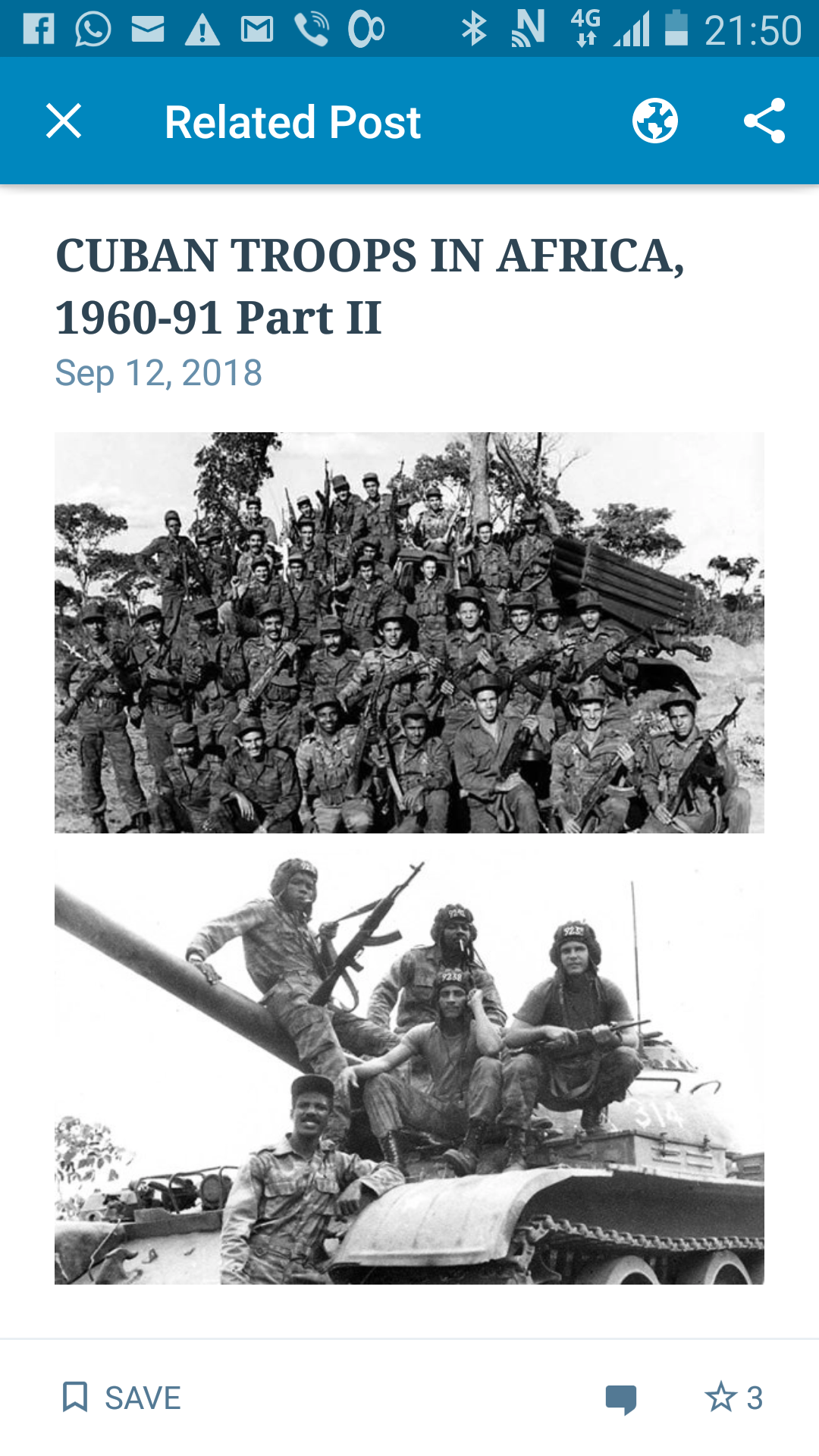
By the late 1980s, the world balance of power was changing. The Soviet Union was disintegrating, and along with it, Cuba’s capacity to continue its commitment to the MPLA. Throughout the 1980s, the MPLA grew weaker as the UNITA grew stronger, in large measure due to UNITA’s support from South Africa and increasingly the United States.
In November 1987 the MPLA was in full retreat following a defeat at Mavinga (650 mi SE of Luanda). Cuba’s most successful general, Arnaldo Ochoa Sanchez, and 15,000 Cuban reinforcements, including frontline pilots, were rushed to Angola. Ochoa remarked, “I have been sent to a lost war so that I will be blamed for the defeat.”
On January 13, 1988, South African-led forces attacked three MPLA brigades east of Cuito Cuanavale (580 mi SE of Luanda). The Cubans wanted these MPLA troops to retreat and then consolidate a new position; they were either unwilling or incapable of doing so. On February 15 the South Africans crashed through the MLPA’s defenses and encircled the 59th MLPA Brigade. Seven Cuban tanks counterattacked; all were destroyed but the 59th Brigade was able to escape. Cuban General Cintra Frias now arrived on the scene to take command of field operations (Ochoa remained the senior Cuban in Angola) and the defenses finally held at Cuito Cuanavale.
Both sides maneuvered on the battlefield to gain advantages at the negotiating table. Should the South Africans attack, Castro instructed Ochoa to “be ready to counter-attack with as many aircraft as possible to completely destroy the Ruacana water reservoirs and transformers [on the border with South African-controlled Namiba].” Apparently, the MLPA knew nothing of these orders; it had a tacit understanding with the South Africans that the Ruacana dam complex was off-limits. Finally, in late 1988 Cuba agreed to withdraw by July 1, 1991, leaving the MPLA to its own fate.
ANGOLAN OBSERVATIONS
During 1975 the Cuban army saved the MPLA from defeat by its internal rivals and external enemies. However, Cuba’s military rescue committed that Caribbean nation to the long term protection of the MPLA regime which required not only military but also economic aid. In the long run, this was unsustainable. The MPLA’s internal rivals were numerically superior, although initially disorganized; but throughout the 1980s the MPLA’s rivals grew stronger as the United States and South Africa became increasingly willing to supply them with aid.
Cuba’s initial military success may be attributed to Castro’s willingness to raise the ante beyond what either the United States or the Union of South Africa was willing to do in 1975. The Cuban commitment probably peaked near 36,000 troops, and possibly 150,000 troops rotated through Angola.
Although Cuba has not released data concerning its casualties, they are estimated to be 3,000 killed (including Gen. Raul Arguello) and 3,000 wounded. These figures do not include the casualties related to disease. Although Cuban logistics were primitive, having to resort to a few aging commercial aircraft, small cargo ships, and large fishing vessels to support a major, long range military operation, nonetheless, these assets got the job done.
Castro’s massive military commitment to Angola revealed inequities within Cuban society. The commanding officer of Cuban air units in Angola during the mid-1970s, Gen. Rafael del Pino, revealed, after defecting to the United States in May 1987,
The people, the officers resist going to Angola. This is not only because … we have converted ourselves into a mercenary army … but it is that our officers see that the problem is that neither the sons of the members of the Politburo [n]or the sons of the principal leaders of the government go to Angola, do not go into military service.
Also, the Cuban economy was adversely affected. To fight on the scale required in Angola forced Cuba to call up its reservists. Many of these individuals were the most technically trained people on the island. As they were removed from their normal jobs, the economy suffered. For example, aircraft required two full crews to make the flight across the Atlantic. These additional crews came from small Cuban airlines, effectively shutting them down. And in spite of attempts to protect the sugar industry, as men were increasingly pulled from the fields, production dropped and, as a consequence, so did Cuban hard currency.
The intervention by the South African army was a political failure for that nation. Although it won battles in 1975, the Union of South Africa, possessing no international support due to its racist policies, could not take political advantage of these victories. During 1975 it committed perhaps 2,000 combat troops to Angola and held a reserve force of some 4,000 men near the border. The subsequent policy of providing support for the UNITA, which at times included employing South African armor and aircraft, was much more successful.
ETHIOPIAN BACKGROUND
In 1974 widespread national strikes crippled Ethiopia as demonstrations and riots spread against the authoritarian regime of Haile Selassie. The military refused to take action against the people. The Dergue (Armed Forces Coordinating Committee) emerged out of the confusion as a powerful political element. By late summer the Dergue arrested the Prime Minister and over one hundred other officials of the government. The Dergue finally seized power on September 12, deposed the Emperor, and established the Ethiopian Provisional Military Government. Fidel Castro was the first foreign head of state to visit Ethiopia following these events.
Over the next few months, the military government systematically destroyed the remaining civil leadership. Executions were common. However, at the same time, Ethiopia was to fight ethnic Somalis who lived in the Ogaden Desert in its northwest corner and wanted to be made part of Somalia. This fighting had profound implications for Ethiopia, since many ethnic groups who desired independence were within its borders.
Somalia had renewed its interest in annexing the Ogaden Province in 1969. Gen. Mohammad Siad Barre, who had come to power in that year through a coup, desired to incorporate those regions outside the nation which had Somali majorities. These included parts of Ethiopia, Djibouti, and Kenya. In 1974 Siad Barre provided the Soviet Union a naval base at Berbera in exchange for weapons and training, which allowed him to aggressively pursue his ambitions. Some of these weapons and training ultimately reached the “West Somali Liberation Front” (WSLF), which was fighting to separate the Ogaden Desert from Ethiopia and join it to Somalia.
When the deposed Ethiopian Emperor died in August 1975, a number of grass-roots organizations demanded increased civil rights. The military government struck swiftly, openly murdering the opposition. These massacres intimidated those who survived. On February 3, 1977, Brig. Gen. Teferi Bante, head of the highly volatile Dergue, was killed in a coup led by Lt. Gen. Mengistu Haile Mariam—a gunfight literally errupted during a military council meeting. The Cuban news media hailed this as a great victory.
Later in February, Gen. Arnaldo Ochoa, commander of the Cuban troops in Angola, headed a military delegation to Addis Ababa. This was followed by a two-day, unannounced visit by Castro, who tried in vain to resolve the border differences between Ethiopia and Somalia. In April Ethiopia asked the United States to withdraw its personnel from that country.
However, by April the Somali separatists won some clear victories in the northeast, and fighting also erupted in southeastern Ethiopia. In May Mengistu traveled to Moscow seeking military hardware; the request was granted. This infuriated the Somalis, who after all had a friendship treaty with the Soviet Union. As a consequence, Somalia increased its aid to the WSLF and on June 17 Somali troops invaded Ogaden forcing the Cubans and Soviets to openly choose sides. Both Cuba and the Soviet Union believed that Ethiopia was more important to their long-term interests than Somalia.
OPPOSING SIDES IN ETHIOPIA
In 1975 the Ethiopian army was composed of almost 41,000 troops. It possessed almost no armor or tracked vehicles, essential for desert fighting. Because of poor leadership, training, and equipment, it had little fighting ability.
The WSLF had about 6,000 fighters. Many had been trained by the Cubans before Castro chose to side with Ethiopia and were supplied from Somalia.
The Somali army was composed of 23,000 men. It possessed 250 tanks and 310 armored personnel carriers, mostly older Soviet equipment. Although its leadership, training, and equipment were poor, they were superior to those of the Ethiopian army.
Prior to December 1977, no Cuban combat troops were in Ethiopia.
OPENING STRATEGIES IN ETHIOPIA
In July 1977 Somalia chose to escalate the fighting from guerrilla actions to open warfare in order to take advantage of its superior army vis-a-vis Ethiopia. Its strategy was to seize the Ogaden Desert and then threaten the heartland of Ethiopia. Initially, Ethiopian strategy was purely defensive.
THE FIRST SOMALI OFFENSIVE
Throughout the summer of 1977, the Ethiopian army lost ground on both the northwest and southwest fronts against the guerrillas while Mengistu carried out bloody purges against those suspected of opposing his rule in Ethiopia. Guerrillas sabotaged the Addis Ababa-to-Djibouti single-track railroad, which carried over half of Ethiopia’s foreign trade, by destroying five bridges. Meanwhile, in July Somalia reacted to Cuban and Soviet assistance to Ethiopia by expelling its Soviet military advisors and accepting military aid from the United States and Great Britain.
On July 17 a Somali force of 250 tanks, twelve mechanized brigades, and thirty war planes invaded the Ogaden Desert. By August the Somali army had seized 112 hamlets and towns and much of the desert. On the eighteenth Ethiopia declared a mass mobilization, and in September Cuban military help to Ethiopia began to increase. These were not enough to reverse the defeats. As a consequence of Cuba’s actions, Somalia expelled the Cuban chargé d’affaires. Late in September the Somali army captured the city of Jijiga (375 mi N of Addis Ababa) and the Kara Marda Pass which was the gateway to central Ethiopia.
By October Ethiopia had received large quantities of military hardware from the Soviet Union, but the Ethiopian army was totally unprepared to employ these. The Ethiopian Foreign Minister traveled to Cuba to seek Cuban training and combat troops as a last resort. However, by October 31 the Somali advance had been halted.
THE SECOND SOMALI OFFENSIVE
On November 13 Somalia expelled all Soviets, took back its base concessions, and aborted its 1974 friendship treaty. It also broke diplomatic relations with Cuba. On the twenty-second Somalia launched a second offensive; the objective was the city of Harar (250 mi E of Addis Ababa). On December 22 Cuba began a secret, massive airlift by Soviet aircraft of its combat troops from Angola, the People’s Republic of the Congo, and the Caribbean to Ethiopia. The Cuban combat force grew from 400 men in December 1977 to 16,000 men in April 1978.
ETHIOPIA-CUBAN TROOPS IN COMBAT
In January 1978 Raúl Castro flew to Addis Ababa and then on to Moscow. On January 24, the Ethiopian and Cuban troops counterattacked from Harar. The Somalis sustained 3,000 casualties and began to retreat. In February Cuban troops launched a major offensive and recaptured much of the lost desert. On March 5 the Kara Marda Pass was recaptured and by the eighth the Somali army had been driven back into its own territory and was in a state of shambles. The fighting was over.
In 1981 Ethiopia, supported by Cuban and Russian advisors (but not combat troops) invaded Somalia, attempting to drive Siad Barre from power. This failed in part because the United States provided Somalia $50 million in military aid. By 1984 the Ethiopian army was fighting six separatist guerrilla movements and the country was in chaos. Peace between Ethiopia and Somalia was agreed to on April 6, 1988, and the last Cuban left Ethiopia on September 9, 1989.
ETHIOPIAN OBSERVATIONS
In 1977 Cuban combat troops were able to snatch victory from defeat because of the introduction of an overwhelming force (16,000 men) against Somalia in a little more than seven weeks. Although farther from Cuba, logistics were easier than the Angolan operation because many Cuban troops were pulled from Angola and the Republic of the Congo, and more importantly, the Soviet Union provided most of the air transportation. Cuban casualties are cited as being high, although no numbers are offered.
As in Angola, Fidel Castro attempted to direct combat operations from Cuba. Division Gen. Leopoldo Cintra Frías stated:
We maintained permanent contact with the Commander in Chief; daily he was sent cables with information. He replied to everything and gave pertinent instructions. … He would order you to place a cannon in a place, how to do it, with how many men, etc. He had it all at his fingertips.
GENERAL OBSERVATIONS
Foremost, Cuba’s fighting in Africa was at its own intiative and not that of the Soviet Union. General Cintra Frías, who served in both Angola and Ethiopia, stated, “The Soviets were never able to control us although I think that was their intention on more than one occasion.” José Raúl Alfonso, a former member of the Cuban intelligence community, stated, “the opinion [of those going to Angola in 1975] was that the Soviets did not know what we were going to do, so much so that Fidel told us that if things went wrong, we should not expect aid from them, not even from the Socialist camp.”
In some respects, the Cuban experience in Africa paralleled that of the United States in Vietnam. The Cuban army could win battles, but because Cuba did not understand the nature of the struggle, these victories did not lead to political success. In Angola particularly, Cuba saw this as a struggle against colonialism and capitalism where, in fact, it was primarily an internal feud between competing tribes. And, like Lyndon Johnson for Vietnam, Fidel Castro for Africa attempted to fight the war from his command post at home.
In the context of the cold war, Cuba’s efforts in Africa were a waste of resources. Cuba’s interventions were costly in men and treasure, contributing to a sharp downturn in its domestic economy. Additionally, Cuba’s military actions in Africa cost Cuba any possible rapprochement with the United States. Far less significant, these military actions did win Castro the good will of some black Africans who perceived neocolonialism as their greatest threat.
By late 1977 Cuba and the Soviet Union more clearly agreed upon foreign policy, as was demonstrated by their cooperation in Ethiopia, which had been somewhat lacking in Angola. One consequence of Cuba’s troops fighting in Africa was that Soviet pilots and technicians replaced Cubans in the defenses of the Caribbean island so that the Cubans could serve in Africa. Also, from 1970 to 1979 Soviet troops in Cuba increased from 1,000 men to some 5,000 men, and in 1979 Cuba acknowledged that a Soviet combat brigade was stationed on the island. Sarcastically, the People’s Daily of Peking wrote:
Question: What’s the largest country in the world?
Answer: Cuba. Its heart is in Havana; its government is in Moscow; its graveyards are in Angola and Ethiopia; and its people are in Miami.
One essential psychological, and therefore also political, factor in the Cuban involvement was the fact that many Cuban soldiers were either black or of mixed race.
One source states that over 300,000 Cuban military personnel and civilian experts served in Africa. It also states that of the 50,000 Cubans sent to Angola, half caught AIDS and that 10,000 Cubans died as a consequence of Cuban activity in Africa, although these numbers seem high. All Cubans had left Africa by May 1991.
Garowe, Puntland, March 21 – The banquet Hall is comfortable and fully air-conditioned in the hot and burning wheather of the Horn of Africa. It might be of interest to note that neither the bridegroom nor the bride was present in the ceremony, but their respective representatives. This family arrangement is known as marriage by proxy.
The new episode in today’s marriage procedure was a condition or a request I heard for the first time that, and perhaps new to Somalia’s marriage tradition, upon a request to give her hand, the girl’s representative demanded that the bridegroom should take the bride to the Hajj in Mecca. The representative of the bridegroom had to accept this request without much fuzz.
Based on my enquiry, both the bridegroom and the bride were happily married with this novel arrangement.
I also noticed that there was no need for women to be present in a marriage ceremony by proxy. It was only men’s business.
Relationships between different parts of Somalia, now and then.
Nowadays one would notice in Garowe, especially in hotels, guest houses and city restaurants a considerable number of new and repeat visitors from different corners of Somalia across the spectrum of Regional States. These visitors include not only politicians, but also business people, professionals, Somali passport applicants, private transporters, educators and non-governmental agencies.
One would appreciate that despite the unnecessarry political tension between Puntland and “Northwest State of Somalia” (Somaliland), the bulk of the new daily visitors of Garowe are coming from urban centres such as Hargeisa, Burco and Berbera. Many among them are looking for business and professional job opportunities in Puntland. Education and hospitality sectors benefit tremendously from the influx of job seekers from the Northwest.
Puntlanders go to Hargeisa and Mogadishu for medical care due to the fact that the leaders of Puntland had abysmally failed to address the acute health needs of the people of Puntland during the entire course of twenty years of state’s existence. Shame and dereliction of national responsibility! Trade and commerce never stopped between Puntland and Somaliland and Northeast and Southern Somalia even in the height of the War.
Nearly a decade ago, it was a taboo-like topic to share information on movement of people between between Mogadishu-Garowe-Hargeisa axis. Relationships between different regions of Somalia had changed since then. Public trust is key here after the most vicious civil war in the history of Somalia. There is an opportunity and golden chances for those perpetrators of the War to come forward and show repentance for heinous crimes and pillages they had committed. Compensation is due to the children of the victims of the War. It is time for them to ask for forgiveness.
The quote that people in “glass houses don’t throw stones” is certainly true for the local residents of Garowe, State of Puntland, Somalia. Instead, they are busy in cutting business deals with NGOs and government agencies and constructing more hotels and villas to rent out to the highest bidder, oblivious to the fact that their City is facing military seige and badly needs campaigns for mobilizing situation awareness, re-enforcement, internal state security and intelligence capabilities.
Garowe construction business now resembles that of Abu Dubai in the height of oil and gas boom. There is no feel at all of security threat in Puntland. On the top, the existential economic and security threats of Bosaso and Galkayo is now a daily fact of life for the entire people of Puntland.
Nobody can guess when the reality of the security situation would sink in in the minds of the population of Puntland.
We only hope for the New Administration of President Deni would be done quickly with its learning curve, and claim the ownership of the precarious security vacuum.
“If we historians fail to provide a nationally defined history, others less critical and less informed will take over the job for us.” Prof. Degler
Could a nation or country continue to exist while discarding its history and heritage and therefore its national identity? Interesting question for academics to explore, but by layman’s gut feeling or rather say, educated guess, it won’t last long in historical terms..
Since when did you hear that Somali schools ceased teaching Somali history? What other school subjects have replaced it? Who is feeding the minds of the young generation? Whom would they become after a while even in the foreseeable future? What national identity will they have?
In Garowe you would know that something is amiss when you observe that nobody is looking for former teachers of history and educators of Somalia’s departments of education. Somalia’s education curriculum is history as one of the victims of the Civil War?
In the past few months I had the privilege of interacting with Hon. Aden Mohamed Ali, the long-time educator and long serving Somalia’s Minister of Education. Some people call him the father of Somalia’s education. I was so happy recently to introduce Hon Ali to the outcoming Puntland’s Minister of Education, Dr. Abshir Aw Yusuf at Grand Hotel in Garowe. The Minister thanked me later for the introduction. Dr. Abshir contacted Aden Mohamed Ali the next day to invite the latter to meet the Minister and Ministry’s staff at Ministry. Aden Mohamed Ali went there enthusiastically to find nobody there. The Education Minister was nowhere to be seen! Aden Mohamed Ali went home rather disappointed.
We are witnessing our man-power resources – our aging and experienced educators passing away one after another without us even noticing them. This is a wake-up call to all Somalis.
Why does one living in Cape Gardaffui (Ras Casair) on the tipmost of the Horn of Africa has to travel two thousand Kms away on dangerous rough roads over inaccessible mountains, ancient Puntland caves and Maidi-infested territories to the Capital Mogadishu to get his/her passport or driving licence?
I put this question to a senior former politician of Siyad Barre Regime. He responded, “it should be so because Mogadishu is his/her Capital City”
Nowdays, one would obtain his or her passport almost in all urban centres of Somalia, enabling residents living in remote localities of the country to reach service delivery centers within hours. One also doesn’t require permission from Mogadishu to go overseas. People can catch flights in all urban centers enroute any destination of their choice.
Regions wouldn’t wait for legislations being enacted in the Capital. They have their own legislature assemblies and city councils. Financial services are readily available even in remote villages. Telecommunication is second to none.
People are free to debate on the best way forward for Somalia and about reconstructing the New Somalia.
There is a growing regional cooperation and slow and steady economic integration with robust movement of people, goods and information between the regions of East Africa.
Can someone in a position of authority or influence in Somalia turn the clock back and compel people to return to one city-state status? Is it intellectual sound and sane to contemplate about discarding the gains of “Federalism”, call it decentralization or power devolution that had been made defacto immediately after the vicious civil war?
Is federalism cast on stone or is it a temporary governance arrangement as a first step to restore lost trust among Somali clans? Who would represent Somalia in regions for talks at National Table to re-instate Somalia as a viable state again? You would say Warlords, rebellious organizations (Fronts), Union of Islamic Courts, clan elders, or legitimate and elected leaders from the regions with national vision and commitment to re-build Somalia from the ashes of the Civil War?
That is why the establishment of federal states or regional administrations were necessary as first step to rebuild Somalia, not to destroy it as the Senior former politician of Military Regime believes. He thinks that the federal states are anti-national tribal organizations created by the enemies of Somalia.
I asked him, “how would you bring Somaliland to the fold of the New Somalia?” He said, “By Force”. But, isn’t yours take my way or the Highway”?, I asked. “Negotiation with them is recognition”, he declared.
“That is not the best way to re-construct the New Somalia”, I finally told him to rebuff his hardline attitude.
Federal Education Minister, Godax, has just again added insult to an injury by trying to bend the Federal Constitution to his whims and wishes of the “Daladaha Waxbarashada Muqdisha” ( Mogadishu Private Education umbrellas). By attempting this, he is dismissing outright all the provisions of the Federal Constitution that the Federal states are responsible for education and other social services in their respective states. He now turns against Puntland State Education Ministry for refusing to play ball with him in his abusive game
to grab the constitutional authorities of the federal states. That won’t fly with Puntland, he should be better advised.This is travesty of justice, fair play and normal administration. A shameless abuse of position of authority and privilege and total disregard of national interest to self-appoint oneself as the chairman of a national commission and office assistants as secretary-general and secretary, and to subject Somali student population to the whims and exams of conmen disguised as education merchants. Allah save Somalia and Somalis from own traders of misery and despair.https://m.facebook.com/story.php?story_fbid=10218691920157180&id=1473969186
To whine and complain about the existence of a problem, leading to doing nothing about it.
To think positive and look for solutions leading to taking concrete action.
The 2nd approach involves in defining objective or desired outcome, case study, compiling alternative solutions and carrying out concrete steps or actions to reach that defined objective.
The 1st approach is associated with the circles of debate or arm-chair fighting (Fadhi-ku-Kudirir in Somali).
The 2nd approach comes from the circle of influence planning for taking real action to solve an existing problem instead of complaining about it.
I noticed that most Somalis belong to the circles of debate. Most existing problems in the country don’t get resolved because of that attitude to problem solving.
But, please take note that when debating on issues and trying to solve problems, there will be always conflicts of ideas. Management of these conflicts is key here.






 Federal Education Minister, Godax, has just again added insult to an injury by trying to bend the Federal Constitution to his whims and wishes of the “Daladaha Waxbarashada Muqdisha” ( Mogadishu Private Education umbrellas). By attempting this, he is dismissing outright all the provisions of the Federal Constitution that the Federal states are responsible for education and other social services in their respective states. He now turns against Puntland State Education Ministry for refusing to play ball with him in his abusive game
 Warsame Policy & Media Network (WAPMEN)
You must be logged in to post a comment.