About the blogger:
This blog is associated with the former Chief of Staff in Puntland State Presidency, 1998-2004. He also worked with the UN and World Bank Joint Secretariat for Somalia’s Re-construction and Development Program (RDP), 2005-2006, as a Zonal Technical Coordinator for Puntland and later as National Aid Technical Coordinator with the Transitional Federal Government of Somalia and European Union. He is now an independent political analyst and commentator on current issues and occasionally gives historical perspective on modern Somalia’s politics. He lives and works in Toronto, Canada. He can be reached at: ismailwarsame@gmail.com
It is the target of folklore jokes for different reasons:
It produces daring and assertive residents, characteristics considered negative or derogatory by more urban residents of old Mogadishu, and by others as well.
It attracts envy from rest of Somalia for contributing the finest soldiers to the Somali National Army.
It is the home town of prominent Somalia’s politicians, leaders and top military officers.
It had led the way in the struggle for national independence. For the bravery of its residents, Italian Colonial Administration Authorities called it “Rocco Littorio”, after the name of Italian Warship for brave soldiers.
Galkayo was the epicenter of repression and persecution by the Military Dictatorship of General Barre for no good reasons other than the strong character of its residents.
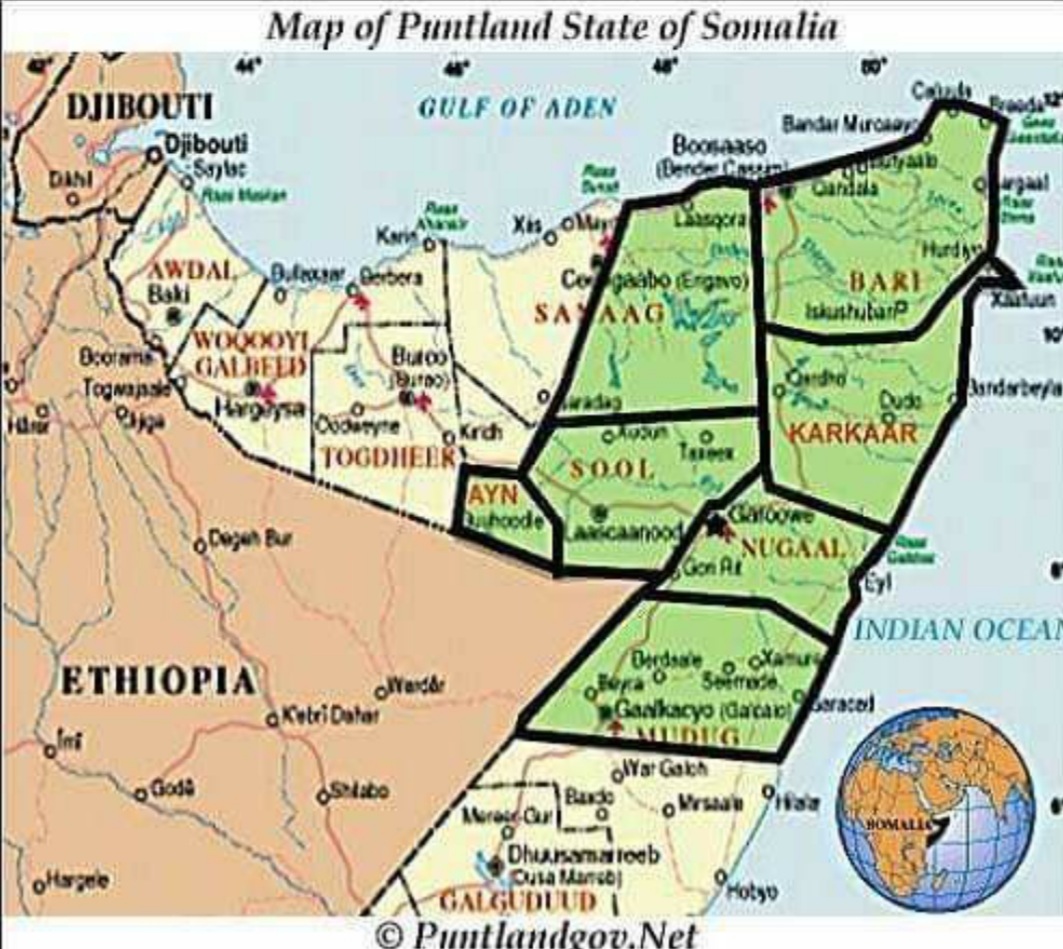
Lately, since the foundation of Puntland State, Galkayo and entire North Mudugh Region had been neglected in terms of good governance and development projects, dismissing it as nuisance frontier and despicable Puntland trouble spot. It has been left to its own device as irredeemable enclave and ungovernable location of the State. Since the inception of Puntland State Galkayo has been suffering from Administrative vacuum. Regional authorities there were appointed in nominal fashion without any meaningful State backup to address the the unique chronic issues and historical problems in the absence of well-intended governance strategy. The City has been treated as an outcast in the family. Even Galkayo road links to the rest of Puntland State had been disowned and allowed to deteriorate beyond repair. It is now three times easier and faster to travel more than four hundred Kms on the way to Bosaso on the shores of the Red Sea in the east than to drive a little more than two hundred Kms to Galkayo from Garowe, the main administrative center of Puntland State. Any vehicle that reaches Galkayo safely from Garowe would need total overhaul and expensive repairs. A multi-clan Somalia’s town of a quarter million residents with the potential to become the future National Capital City has been let go to ruin and rot.
As a result of despair due to neglect, residents of Galkayo became disillusioned and lost any hope in the future. Youth have been taken advantage of by Al-Shabab and other extremist organizations of all forms and shapes. Youth have been recruited as killers and murderers of their own kinship. Even elders gave in to Al-Shabab intimidations.The cream of its residents had been assassinated by local hopeless youth under the spell of Al-Shabab. For the first time, strange questions on whether Galkayo belongs to Puntland or Galmudugh were raised. Some residents of the city have been contemplating the idea of seceding from Puntland altogether since being part of the State has lost all meaning. In the words of the New Governor of North Mudugh Region, Abdilatif Sanyare, “Galkayo was no different from the two regions of Shabelles” in Southern Somalia with regards to the menace of Al-Shabab terror.
Most recently, a break has come to the residents of North Galkayo:
Relationships and good neighborliness with the Southern Galkayo have significantly improved.
Relative security and calm have returned to the City of Galkayo in both parts of the town.
Dozens of Al- Shabab assassins have been apprehended and persecuted, a security campaign still underway as we write this article. These prisoners of Al-Shabab assassins have been narrating, in their debriefings, graphic details of their murder exploits. But, it is still premature to conclude that the Dystopian Somalia’s City of Galkayo is out of the woods. It is too good to see Galkayo that lucky.
The president of the Swiss Confederation, also known as the president of the Confederation or colloquially as the president of Switzerland, is the head of Switzerland‘s seven-member Federal Council, the country’s executive branch. Elected by the Federal Assembly for one year, the office holder chairs the meetings of the Federal Council and undertakes special representational duties.
President of the Swiss Confederation Official names
Bundespräsident(in) (German)Président(e) de la Confédération (French). Presidente della Confederazione (Italian). President(a) da la Confederaziun (Romansh)
First among equals, the president of the Confederation has no powers over and above the other six councillors and continues to head the assigned department. Traditionally the duty rotates among the members in order of seniority; the vice president of the Federal Council assumes the presidency the year after the officeholder’s tenure. The president of the Confederation is not the head of state because the entire Federal Council is the collective head of state.[2]
The constitutional provisions relating to the organisation of the Federal Government and federal administration are set out in Section 1 Organisation and Procedure of Chapter 3 Federal Council and Federal Administration of the Title 5 Federal Authorities of the Swiss Federal Constitution[3] at articles 174 to 179. Article 176 specifically relates to the presidency
The answer to this question lies in the interest shown by readers of the blog. Many readers find the blog not only informative, but also enlightening in fully understanding Somalia’s current issues and their historical perspectives.
Why don’t you join them to get every article immediately to your inbox as posted?
Subscribe to the blog. Send your WhatsApp number to +252 90 703 4081 to receive your fresh copies of WDM articles.
This is from Dr. Geetha Krishnaswamy, Please give your 2 minutes and read this:
1. Let’s say it’s 7.25pm and you’re going home (alone of course) after an unusually hard day on the job. 2. You’re really tired, upset and frustrated. 3 Suddenly you start experiencing severe pain in your chest that starts to drag out into your arm and up in to your jaw. You are only about five km from the hospital nearest your home. 4. Unfortunately you don’t know if you’ll be able to make it that far. 5. You have been trained in CPR, but the guy who taught the course did not tell you how to perform it on yourself. 6. HOW TO SURVIVE A HEART ATTACK WHEN ALONE? Since many people are alone when they suffer a heart attack without help, the person whose heart is beating improperly and who begins to feel faint, has only about 10 seconds left before losing consciousness. 7. However, these victims can help themselves by coughing repeatedly and very vigorously. A deep breath should be taken before each cough, and the cough must be deep and prolonged, as when producing sputum from deep inside the chest. A breath and a cough must be repeated about every two seconds without let-up until help arrives, or until the heart is felt to be beating normally again. 8. Deep breaths get oxygen into the lungs and coughing movements squeeze the heart and keep the blood circulating. The squeezing pressure on the heart also helps it regain normal rhythm. In this way, heart attack victims can get to a hospital. 9. Tell as many other people as possible about this. It could save their lives!! 10. A cardiologist says If everyone who gets this mail kindly sends it to 10 people, you can bet that we’ll save at least one life. 11. Rather than sending jokes, please… contribute by forwarding this mail which can save a person’s life. 12. If this message comes around you… more than once… please don’t get irritated… You should instead, be happy that you have many friends who care about you & keeps reminding you how to deal with a Heart attack.
Please SHARE THIS VERY IMPORTANT MESSAGE WITH AS MANY PEOPLE AS YOU CAN. YOU HELP SAVE LIVES.
According to reliable eyewitness report, private Sharia Courts have been operating in Puntland Capital City for sometime now. These courts are reportedly attending land and properties disputes. They charge high fees for their services, according to an eyewitness, who was called in to testify about a land disputes between parties.
This is happening outside Puntland administration of justice. If allowed to continue to function in Puntland, these unofficial private Sharia courts shall turn into Al-shabab style system of parallel judiciary administrations similar to those operating in Southern Somalia. It is a new dangerous development unheard of its existence in Puntland before.
Thank you very much indeed for your commitment to WDM subscription as valued digital readers. Please, welcome on-board.
We are pleased to inform you that each WDM subscription is good for one full year from the day you signed on. We are happy to serve you as our valued readers.
Congratulations on your wise decision to continue reading WDM. We appreciate your membership and look foward to your feedback in the future as we move forward together to a better world of enlightenment and positive critical analysis.
PS: We encourage all our readers to subscribe to the WDM blog. Keep abreast with Somalia’s news and critical analysis behind the news. It is about the latest Somali history in the making. Support the blog keep publishing.The Annual fee is $37 only. Pay at PayPal at Ismail@ismailwarsame.blog or Taaj at +252 90 703 4081/611 588 388 (Warsame Digital Media).
The Dictatorial Military Regime led by General Barre lasted for twenty-one years in Somalia. The henchmen of this tyranny got away with crimes against humanity after committing indesscrible abuses of power and gross violations of human rights and dignity. Then, came United Somali Congress (USC) banditry of mass-murder, looting, rape and clan cleansing, which made the abuses of preceding tyrannical regime look incomparable in magnitude and scale. USC leaders got away with these heinous crimes. Since then, sense of justice and rule of law have lost any meaning in the country, still technically in civil war as meaningful national reconciliation had never happened. It is now hard to think of establishing public institutions to tackle with the epidemic of lawlessness and cultural impunity for all sorts of crimes, corruption, theft and looting of public resources. That is why many politicians aspire to replace General Barre, trying to acquire absolute power in a city-state thuggery. To prevent the repeat of that dark era in Somali governance, regions had opted for federalism as safe governing system for a country with bitter experience in misrule.
To make things even worse, USC mayhem is followed by religious extremists undeterred by known traditions of Islamic culture and studies. Wanton murder and extortion became the norm and modus operandi of peudo-religious elements of suppression, public intimidation and mass violence with daily bomb-blasts, mostly directed at civilian targets and their private properties and businesses for not paying up protection money.
But, what are the root-causes of this culture of impunity?
To answer this, one would be required to study whether there is an existence of individual guilty or responsibility for crimes committed by persons in Somali society.
Somali tribal laws or customary laws (Xeer) deal with collective responsibilities, not individual accountability. An individual’s wrong-doing is collectively shared by the entire clan in terms of responsibility. The wrong-doer escapes individual responsibility as a member of the collective tribal system. The crime committed by one member is considered as a crime perpetuated by the entire clan family. Consequently, every Somali leader, even a dictator or an abuser in government belongs to that same tribal system that is designed to protect him or her from accountability for wrong-doing.
Based on the native customary laws of this society, the whole exercise for installing a functioning Somali state would continue to be a joke, until that time that all Somalis agree upon guiding principles on inserting individual responsibility into administration of justice, that everyone, alone, is individually responsible for his/her actions – no collective clan responsibilities.
PS. An incident took place in North Galkayo sometime ago. Two students from Southern part of Galkayo were having a good time in Northern part of the city.. They wer4 spotted by a group of men there. suspicious, these men asked the students to identify themselves in terms of their clan names. These students were smart not to identify themselves except in a police station. At police station, they identified themselves in front of the Puntland police commander. The police station instantly became a target of mob seige to take the two students by force from the police custody. Luckily, the school boys were rescued that way. What crime did these boys commit to warant this personal danger? Tribal collective responsibility.
Mark Buchanan is a physicist and science writer based in Europe. June 10, 2021
In April 2020, the Defense Department released videos recorded by infrared cameras on U.S. Navy aircraft that documented the planes’ encounters with a variety of “unidentified aerial phenomena.” Pilots reported seeing objects flying across the sky at hypersonic speeds and changing direction almost instantaneously, capabilities far beyond that of any known aircraft. Support our journalism. Subscribe today.
What were the pilots seeing? Bizarre atmospheric phenomena? Alien spacecraft? Something else? Several branches of the government have been investigating the events, motivated in part by concern that adversaries such as Russia or China might have made some spectacular technological advance, and later this month, the government plans to publish a report revealing what they know. Reportedly, the government will say there’s no proof of extraterrestrial activity, but that the incidents remain unexplained.
Chances are, though, that we should all be grateful that we don’t yet have any evidence of contact with alien civilizations. Attempting to communicate with extraterrestrials, if they do exist, could be extremely dangerous for us. We need to figure out whether it’s wise — or safe — and how to handle such attempts in an organized manner.Story continues below advertisementhttps://6b1937c3389fdfe97bdf148c9b8a80bd.safeframe.googlesyndication.com/safeframe/1-0-38/html/container.html
Some scientific circles have already been debating questions around whether to try to contact other civilizations. It’s a topic of profound importance for the entire planet. For 60 years, scientists have been searching with radio telescopes, listening in for possible signals coming from other civilizations on planets orbiting distant stars. These efforts have largely been organized by the SETI institute in California — the acronym stands for Search for ExtraTerrestrial Intelligence — and so far, they’ve had no success. Getting impatient, some other scientists are now pushing for a more active program — METI, for Messaging ExtraTerrestrial Intelligence — that wouldn’t just listen, but actually send out powerful messages toward other stars, seeking to make contact.
The search for aliens has reached a stage of technological sophistication and associated risk that it needs strict regulation at national and international levels. Without oversight, even one person — with access to powerful transmitting technology — could take actions affecting the future of the entire planet.
That’s because any aliens we ultimately encounter will likely be far more technologically advanced than we are, for a simple reason: Most stars in our galaxy are much older than the sun. If civilizations arise fairly frequently on some planets, then there ought to be many civilizations in our galaxy millions of years more advanced than our own. Many of these would likely have taken significant steps to begin exploring and possibly colonizing the galaxy.Story continues below advertisementnull
Hence, it’s a profound mystery — known as the Fermi Paradox, after the Italian physicist Enrico Fermi — why we haven’t yet seen any such aliens. Many resolutions of the paradox have been proposed, among them the suggestion that all civilizations, once reaching sufficient technological capacity, eventually destroy themselves. Or perhaps aliens are so alien and unlike humans that we simply cannot interact with them.
More alarming is the possibility that alien civilizations are remaining out of contact because they know something: that sending out signals is catastrophically risky. Our history on Earth has given us many examples of what can happen when civilizations with unequal technology meet — generally, the technologically more advanced has destroyed or enslaved the other. A cosmic version of this reality might have convinced many alien civilizations to remain silent. Exposing yourself is an invitation to be preyed upon and devoured.
I’ve written about METI in the past, suggesting such activity takes a huge risk for very little gain. But these concerns don’t convince supporters of trying it, who have some counterarguments. Douglas Vakoch of METI International argues that it’s unrealistic to worry about the danger of an alien invasion. We have, after all, been sending radio and television emissions into space for a century, and a civilization far more advanced than our own will probably have already detected these. If they wanted to invade, they already would have.Story continues below advertisementnull
He also argues that, in assessing risks, it’s important not only to consider the risk coming from taking an action, but also from not taking that action. Our world faces a number of potentially existential threats, including global warming and destabilization of the environment, and it’s possible that far more advanced civilizations may have already faced these issues and found solutions. If we don’t send out signals, Vakosh writes, we risk “missing guidance that could enhance our own civilization’s sustainability.” It’s also conceivable, he suggests, that we’re making a spectacular misjudgment — and some super-advanced alien civilization may attack us precisely because we haven’t reached out.
For obvious reasons, much of the thinking about these issues has to be rather speculative. The best way forward, perhaps, is to broaden the discussion. If all of humanity is exposed to the possible consequences trying to contact alien civilizations, then more people should be involved in making decisions about what is wise and what isn’t. It shouldn’t be left to a handful of radio astronomers.
One vocal critic of the idea of reaching out to aliens proactively — astronomer John Gertz of SETI — has developed proposals to move toward more inclusive public consideration of these activities. What we need, he suggests, are laws and international treaties to govern more explicit contact attempts. Without prior broad agreement from some globally representative body, Gertz says, contacting extraterrestrials should be considered “as the reckless endangerment of all mankind, and be absolutely proscribed with criminal consequences, presumably as exercised at the national level, or administered through the International Court of Justice in The Hague.”Story continues below advertisementnull
Currently, no such prohibitions exist. Some informal protocols for interacting with alien civilizations have been adopted by researchers involved in SETI, but these are far from legally binding governmental regulations. That’s mostly because, up to now, talking about meeting or contacting aliens has seemed widely speculative — if not a little deranged — despite the apparent scientific plausibility of such an event.
It’s not easy to weigh the pros and cons of activities around which so much remains unknown. We don’t know if there are any aliens. They might be friendly. They might not be. Given the potential risks involved with trying to make contact, perhaps it would be safer and wiser to just wait — we can always reach out later, and meanwhile, our abilities to do passive listening are rapidly growing more powerful.
In 2015, SETI launched a new 10-year program called Breakthrough Listen, funded by a $100 million donation from Israeli-Russian billionaire Yuri Milner. As a result, SETI is now recording more signals than ever before, over a frequency range some tenfold larger, and bringing more computational power to bear on analyzing the recorded signals. It’s impossible to know how close or far from making a discovery we may be, but Gertz estimates that our chances are at least 100 times greater than they used to be.Story continues below advertisementnull
The search is also benefiting from astronomers’ knowledge of exoplanets — planets in orbit around stars other than the sun. Since the first exoplanet was found in 1992, we’ve identified nearly 5,000 more, and the rate of discovery is accelerating. Each one give SETI researchers new promising targets to scrutinize.
Personally, all of this makes me dead-set against any experimentation with attempting to contact other civilizations. Why take cosmic risks when we may have a far safer pathway to discovering them, if they’re out there? Of course, even listening comes with some potentially fraught governance issues also: If and when someone really identifies an alien signal, we’ll need to decide if we should reply — and if so, how. Surely such an act — putting all of humanity at risk — ought to be the result of some collective decision. But there’s no mechanism to encourage that now. Any individual or nation could take the human response into their own hands.
Both paths — listening for aliens or trying to call them — have reached the stage where they require broader public discussion, with an eye to developing sensible regulation. That’s going to take the efforts of leaders from many nations, presumably coordinated through the United Nations or some similar international body. It should happen now. Or soon. Before it’s too late.
Could you imagine the Government of the United States of America 🇺🇸 breaking diplomatic ties with the Government of the United Kingdom and Northern Ireland (Great Britain)? Could they do it successfully? It is the same thing Somalia trying to sever relationships with Djibouti, Kenya or Ethiopia. These relationships have been developing over many centuries in a multi-dimensional fashion, and most importantly, between peoples of these nations. Nairobi is now the irreplaceable Somali business and travel hub. An amateur and naive politician like Farmajo couldn’t simply appear in the scene and try blindly to do away the historically cemented relations without doing much harm to Somalia’s vital national interests and economic havoc in the entire region.
Even a Somali camel man grazing his herds in the country knows full well that cutting ties with Kenya isn’t only practical, but also infeasible and wrong, for he is, at least, aware of his relatives in refugee camps in Kenya. With today’s globalization, he is in constant communication with his kinship in Dhadhaab Refugee Camp, not to talk about others in all urban centres of Kenya.
This is not to say nice things about Kenyan Authorities – they share much of the blame in worsening relationships with Somalia. But, the unwise experiment in this diplomatic fiasco hurt not only many lives and livelihoods, but also did great damage to the national economies of both countries. The losses could be in the billions of dollars. I wonder if any lessons learned from this childish and futile exercise.
Residents of Garowe are the most patient people on earth, enduring the public inconveniences practised by authorities for years. It so happens that the State President, or more often, the Vice President attending an event in a public place in town seizes and seals off the entire area with unproportional security forces. Patrons reluctantly and patiently turn around and go home sadly. The protocols and related security departments couldn’t fix this problem since the foundation of the State, mainly because of the fact that the bosses are fond of seeing their presence and power felt by the public repeatedly.
Ironically, those who are now perpetuating this overzealous VIP security protection turn into ordinary human beings overnight when voted out or replaced. Right now, sitting near my table at hotel lobby is a former Puntland Minister of Public Security. He is alone without a single security guard. But the new comers or replacements go into same cycle of abuse of power or showmanship once installed.
This VIP security protection showmanship is happening tonight at Grand Hotel in Garowe with Puntland Vice President in attendance. I have been told that the whole security fuss and public inconveniences so created is about a school graduation ceremony. I also know that residence of the Vice President isn’t far off from the hotel – it doesn’t require carloads of security personnel to occupy forcefully and seal off the entire area. Why does it need such a show of force by a civilian administration in every event in town? I think it is more than ignorance. There is a dimension of public abuse as well. All they need here is a well trained and efficient police force to maintain law and order in such events. Puntland doesn’t need individual collections of personal bodyguards that would disappear with that VIP of the day once he goes away.
Next time you hear blaring car siren along the road in Garowe, don’t think it is an ambulance transporting a sick patient to a hospital emergency – it is the either the President or Vice President owning up the public highway.
Do Puntland authorities understand why zonal security rating is lower in Garowe than in Hargeisa? The reason is that Garowe showcases guns and technicals (battle wagons) in town. Puntland Capital City looks like dangerous war zone. Authorities should learn addressing security issues without the display of tools of intimidation and fear.
UN HQ in New York and that of European Union in Brussels require international workers not to stay overnight in Garowe without permission from them, while these same workers are allowed to bring their families with them to Hargeisa and spend time in town without security escorts for shopping, sightseeing and entertainment. There is a night curfew (from 6 pm) in place for internationals staying overnight in Puntland urban centres.The perception of security fear created by Puntland authorities in Garowe doesn’t exist even in dangerous Mogadishu, where expatriates do the bulk of their businesses, staying in as long as it takes.
Puntland authorities create a perception of insecurity in Garowe and other peaceful towns to unintentionally lower secutity rating in Puntland. This artificial exercise by busy bodies should be curtailed. The pattern also indicates that authorities do not understand the other soft means of keeping peace: intelligence and use of plainclothed security personnel. Visible guns in public view create the impression of fear and insecurity in urban centres. They must kept invisible, but ready in discrete stations, just in case.
Historically, the epidemic of the spread of acquiring bodyguards in Puntland State was initiated and used by former cabinet members, Hassan Abshir Farah Waraabe and Ali Ismail Abdigir, two former officials of Siyaad Barre Regime, against resentments by others.
Recently I authored the article below to raise the urgent need for vetting public servants, government officials and politicians. Mr. Abdikarim Hussein Guled, a current presidential candidate in the election 2021 is a shining example of what is wrong with Somalia’s system of personnel selection, an appointment to a high position of public service and responsibility and to an elected office. Take a look at how he falsely and ignorantly see Somali history. The article reads this way:
There has been a lot of resentments from Somali locals towards returning members of the diaspora getting hired more likely in public service. The locals are also angry to witness returning intellectuals in positions of political leadership (Parliament, presidency cabinet, heads of departments, etc). This is also true to all Federal Member States. The locals consider the existing situation as an invasion of Somali diaspora to steal them of opportunities in their own turfs.
But, that is one side of the story. There is another side in employing members of Somali overseas communities for public services. There is suspicion with regards to whom they represent and where their loyalty lies as the diaspora members are dual citizens. This is where the government needs to establish vetting regulations to insure that Somali national security isn’t compromised. Since independence, Somalia has been extremely weak in vetting public servants and security forces. Beside the lack of sophistication, poor knowledge of statecraft, clannish influence, the problem is exacerbated by the national constitution enshrining that all persons of Somali origin have equal rights, no matter where they come from, Ethiopia, Kenya, Djibouti, Tanzania, among many others. As Somalis fled to different corners of the world, following the outbreak of the Civil War in the 1990s, the constitution and citizenship regulations have not been updated due to the absence of full-fledged functioning central government. No tools for background checks are in place for civil service recruitment, and nobody could be sure whether a candidate for government job belongs to Alshabab or foreign intelligence service. That is why there is a dangerous situation of not knowing who works for the Somali government of today, from the highest office in the land to the lowest ranking employee with any government department or public sector. It is a fatal oversight failure again in Somalia’s statehood.
It isn’t a crime or liability for being a refugee elsewhere in the world, given what had happened in Somalia for people to flee for their own safety, but it is a gross negligence on the part of the government of the day to disregard security vetting of its employees and their background checks.
Click the link below to read about the short modern history of Somalia in order to flush out distortions by the likes of Abdikarim Hussein Guled.
One Person One Vote (1P1V) didn’t bring about gender equality in Somaliland elections. Not a single woman candidate has won a seat in the local parliament. This is the closest indication that 1P1V wouldn’t help the cause of women in somalia’s general elections either. Foreign missions to Somalia and gender sensitive countries of Scandinavian types keep pushing for higher percent of women participation in Somali political bodies. foreign experts and advisers to those governments don’t bother studying the issue before demanding women quota in Somali political and administrative systems. Nobody knows where the core of the issue lie in Somali society.
Foreign proponents of gender equality should know that the issue is rooted in Somali traditional system on the top of Islamic tradition and teachings. Before we try to impose women quotas in Somali governance, we have to look into the role of women in traditional clan leadership. Why don’t women play a role there? Why aren’t there women titled elders in Somali clan system (isimmo, nabadoonno)? How do you expect to break the political barriers before you dismantle the traditional obstacles along the way to a woman leadership? Don’t we need studies on that issue before we complain about lack of gender equality? Isn’t it imperative for women to focus on resolving the core impediments along the way to women leadership role in the society?
We would like to see debates along this line of thinking to enhance women position in Somali politics. Foreign demands for gender equality in Somalia are counterproductive and dangerous to Somali core values and national unity. It has to stop. We, Somalis, have to find local solutions to this societal problem and build upon our own native approaches.
Somaliland has held elections after it has been frozen in time and space for 15 years. But, it is important to note here that these elections are different from past practices- this time it looks that the elections are close to realities on the ground with regards to Sool and Sanaag Regions. The claim to British colonial legacy that these regions were parts of Somaliland couldn’t hold any water and the empty political rhetoric has been exposed. The contrast with previous sham elections is that these elections aren’t as fake as they used to be – stuffing in fake ballots at clan borders and announcing cooked up election results. Polls that have boycotted participation are almost reflected on this outcome.
The parts of regions of Sool and Ayn that allegedly took part in these elections portray a picture of Isaaqs taking over parts of Sool and Ayn Regions. “Udub-riix” or push-over into other people’s lands has been in the making for many years in the regions of Sool and Togdheer, resulting in these elections producing more Isaaq MPs than Dhulbahante’s. This scenario always happens to land owners, who have neither the vision nor unity of purpose in protecting their land.
There are two winners and two losers in the Somaliland Election 2021:
Sanaag Region and Somaliland opposition parties are winners.
Sool Region and Kulmiye Party are losers.
Sanaag Region is a winner as they proved to be the true owners of their land. Congratulations!
In order to understand about the currency crisis in Somalia we have to understand about the money; the essence of the money, what the money is all about; and to understand that we need to go back to the history of it. How its usage had started and how it has came to the way it’s used now. We have to also understand about the bank and how it correlates with the money.
At first the people used to barter, or trade their extra produces that they can spare (don’t need) for the other items that they need which they don’t/can’t produce themselves but others have labored to produce it. In order something to have a value it has to be a produce on which time and energy had spent by someone.
Then came the coins. The usage of the money started with valuable coins: made of precious metals gold, silver, bronze. These coins, themselves a produce, have their own value: buying power. So the people used to exchange/trade their extra seasonal produces, perishable or not, for these valuable items which can be stored for longtime time in order to save something for the bad weather. Also they used to buy with these valuable items for the necessities they themselves don’t produce.
Then come the Bank: which simply started as a safe-room and a record keeper. The people entrusted the bankers with their valuable coins to keep them safe for them against the losses: of burning, of thievery, etc. The bankers produced paper receipt which can easily be moved around with than the heavy metal coins. Those receipts were simply a guarantee that the bearer of that receipt will be paid at request the amount of gold, silver, or bronze coins on that receipt by the guarantor, the issued bank. The people used those receipts, money paper, for their current trades while knowing that its last owner should go to the counter of the issued bank and could anytime collect its value written on it, in gold, silver or bronze.
Sometime later some cheat bankers, like our later-day’s Gass, realized that it will be unlikely to happen that all the depositors come to bank at one time to collect all their deposits; that means they (bankers) will always be in possession of someone’s coins; those cheat bankers then started producing their own paper receipt which they loaned, of course with interest, to the propertied business people and the rulers/governments who needed the cash. This is where the usury ( ribaa) started; because borrowers used to payback more of the same coins on top of ones written on the money paper (receipts) they borrowed! Same as the way the banks loan us today.
So recently, has the rulers and the state governments came into involving in the banking business as regulators and overall guarantors of the private banks still with a money ( paper receipt and precious metals coins) based on gold; after sometime the governments also issued their own money, still based on gold, for the same purpose as of the cheat bankers, issuing money papers for which they don’t have its gold. Eventually, the peoples of world found themselves chasing around valueless paper money (paper receipts and cheap metals coins) with no guarantee of its value in gold. Yet, very recently, and before the Bretton Woods Agreement, the value of any money in the world were pegged to its respective gold values.
The goodness in governments’ involvement of the money business was in the regulating of its issuance; controlling the counterfeit; collecting taxes with it; and most importantly enforcing its circulations by paying with it the salaries of its workers. Those regulatory actions, by boosting the confidence of the consumers, have lended it an artificial values which enabled it to buy real valuable items on which the time and the energy had spent! The artificial value of any paper money depends on consumers confidences on its owner government which in turn depends on the monetary or military power of that government. The rich governments, who collect more taxes on their rich and productive peoples, are rich and military powerful and thus their moneys are strong and more valuable. The poor governments, whose people are less productive thus collect less taxes and/or who spent their tax money wrongly, their moneys value less than the rich governments’ ones; and sometimes become worthless. It recently happened to ZIMBABWE to found its dollar currency , when consumers confidences on it has fallen to the bottom for political reasons, overnight became worthless which forced the Mugabe government to switch to the usage of US dollar and South Africa’s rand!
In order for some thing to have a value, time and energy have to be spent on producing it; that means there must be a need for that thing, so that time and energy have to be spent on it. Every little time or no time has spent on producing money and thus there is intrinsic values in it: (paper receipts and cheap coins) have no value themselves.
Conclusion: with the above in mind, let us ask ourselves these questions about the Somali shillings: who is its legitimate owner? Which government/who regulates its issuance and controls its counterfeit? Who can enforce its circulation and with what means?
These are the factors that set the artificial values of itself inherently valueless paper moneys. Without valid answers to these questions, more importantly when there is regulator of its issuance, when anyone foes or friends can print it out, there is valid money in there. As a result the currently-in-circulation Somali Shillings are all nothing but worthless counterfeits!
Therefore, switching to other currency is imperative for the sake of the Somalis businesses and consumers, if something are to saved from already dilapidated economy.
Suggestions: with every limited options: a) an issuance of our own new currency b) a usage of US dollar c) or a usage of another friendly government’s currency, I should only commend the option B; for option A not being affordable whereas C is unavailable!
Hayaan, Safarkii Dheeraa ee Wiilka reer Miyiga wuxu falanqayn doonaa arrimo badan ee la xiriirra jawaabaha su’aallaha kor xusan iyo kuwo kaloo muhim ah, si dadban iyo si toosba ah, aadna xasaasi u ah, oo geesinimo dheeraad ah u baahan si buuggu u noqdo mid dhacal gal ah, oo caadifad qabiil iyo mid shakhsiba ka fogaada. Sidaa aweed, waxay noqoneysaa in loo dhabar adayg, canaan iyo maagba buuggani muggisu soo jiidandoono. Gaar ahaan, buuggani wuxu baallal badan ama qoraal dheer siindoonaa taariikhdii iyo dhacdooyinkii siyaasadeed ee Soomaliya waayihii dambe sida:1.Baraarrugii ugu horeeyey ee siyaasadeed ee Qoraaga mudadii lixdamaadkii iyo taariikh nololeedkiisii.2.Taariikhdii Jabhadda Dimoqoraadiga Badbaadinta Soomaliya (SSDF), mucaaradkii siyaasadeed iyo ciidan ee abaabulaa ee ugu horeyey, oo ka soo horjestay Dawladdii Saraakiishii uu u sareeyey Maxamed Siyaad Barre ee hogaamiye u ahaa. SSDF waxay asaasantay ka dib Dagaalkii Ogaden 1977-1978. Halgangii SSDF wuxu keenay in ay ka daba abuurmaan Dhaqdaqaaqa Wadaniga Soomaaliyeed (SNM) iyo Golaha Midowga Soomaaliyeed (USC), oo iyadu ahayd koox ka go’day SSDF, markii burbur siyaasadeed kusii dhacay Soomaaliya, halganka hubaysan ee SSDF iyo fasaad dhaqan-dhaqaale gudaha Soomaaliya awgood.3.Dadaaladii ku aadanaa middaynta uruurrada ka hor jeeda si loo fuliyo afgambi xoog ah oo lagu sameeyo Dawladdii keli taliye Siyaad Barre. Ujeedooyinka Mengistu Haile Mariam ka lahaa dhismaha ururro mucaarad Soomaaliyeed. Weli ma isbedeshay, laga soo bilaabo Menelik, danaha Ethiopia ka leedahay Soomaaliya? Intee bay gaarsiisantahay heer aragtiga iyo cabirka madaxda Soomaliyeed markay arrimuhu taaganyihiin danno qaran oo maguuraan ama joogta ah? 4.Wada-wadalladii ama Shirarkii Soomaaliyeed ee Dib-u-Heshisiinta Qaran, 1997-2004 ee qoraagu la jaan-qaaday.5.Dadaalkii loo soo maray dhismaha Dawladda Puntland ee Soomaaliya-aasaskeeda oo ruunti salka ku haya: A) Ismari waagii siyaasadeed ee Shirarka Dib-U-Heshisiinta Soomaaliyeed markii ugu dambaynsana lagu baajiyey Shirkii Qaran ee Boosaaso 1997, isla sanadkaana kii Qaahira oo loogu tagalay in looga hortago kan Boosaaso, luguna fashiliyo. B) Dadweynaha Puntland oo diidan ilaa maanta in dib loogu laabto xukuumad dheexe ee awood badan, oo wada marooqsata talada dalka. C) Ujeedooyinka laga lahaa dhismahii Dawladda Puntland. D) Ujeedoonyinka Somaliland iyo Puntland oo ugu dambayntii isku mid ah balse leh soojin iyo hanaan kala duwan, marka laga eego dib-u-dhis qaran Soomaaliyeed oo xoogan iyo dawlad dhexe oo si siman loo wadaago iyo ismaamul gobolleedyo awood dawladnimo balaarran leh.6.Dhismihii Dawladda Federaal Ku Meel Gaar ah ee Jamhuuriyedda Soomaaliya ee Shirkii Dib-u-Heshisiinta Qaran ee Eldorate/Mbagati/Kenya, 2001-2004.
DO YOU KNOW THAT WITHOUT THE PIONEER WORKS OF ADAM JAMA BIHI WITH HIS WAR-TORN SOCIETY, THE CREATION OF PUNTLAND STATE WOULD HAD BEEN DIFFICULT, IF NOT IMPOSSIBLE? ASK AROUND TO KNOW ABOUT HIM?
As Project Manager of War-torn Society operating in North East Regions (now called Puntland), an international NGO owned, financed and based in Switzerland, Adam Jama Bihi had diverted the entire resources of the organization, including personnel to the successful conclusion of the two founding community congresses in Garowe with the product result: The Puntland State of Somalia. He had helped in hiring five Western European Constitutional lawyers and one Egyptian lawyer to help draft the founding Puntland Charter. Because of his bold and patriotic act in helping create the New State, he was severely reprimanded and sanctioned by his overseas bosses then, including Matt Bryden, the current VIP of SAHAN AFRICA. This sanction against Adam Jama Bihi had continued for many months after the successful establishment of Puntland State. Bihi’s actions are justified in the sense that he was helping a war-torn society, the true mission of that organization.
Adam had died in a car accident at “Xalima Dheere Mountain” near Garowe while he was traveling from Galkayo before War-torn Society operations came to an end in Puntland. His passing away was one of my saddest moments in life. He was gifted and genius, perhaps, in par with Einstein, if not more talented.
As activities of War-torn society were concluded, following Adam’s death, Puntland Presidency had moved to create PDRC (Puntland Development and Research Centre), mainly thanks to Adam Jama Bihi’s works under War-torn Society. I had pushed the idea and drafted the initial papers to establish PDRC, becoming myself a member of the Founding Board together with Waldo, Jurile, Abdiqawi of ICJ and Ali Isse Abdi of SSC Regions (Khaatumo), among a few more. We had appointed Abdirahman Abdulle Shuke as its Director-General under PL Presidency. It was a parastatale agency, but, because we didn’t have the funds to support the agency, we allowed it to operate as NGO. Abdiqawi and Ali Isse Abdi had never contributed anything meaningful to PDRC establishment or operations.
Like many of the talented personalities in Puntland, Adam had political frictions with then PL President Abdullahi Yusuf. In fact, I was the binding link between the President and perceived or real opposition elements in the country and overseas. These included General Cadde Muse, Mohamed Abshir Waldo, to name just a few of many others.
The late President had been accusing Adam Jama Bihi of collecting and empowering the opposition. One evening President Abdullahi Yusuf, Mohamed Abshir Waldo, Adam Jama Bihi and I were discussing an issue at sitting room of the President in Garowe. Hot argument broke out between Abdullahi Yusuf and Adam Jama Bihi. Nothing was spared between them except physical blows. As Waldo and Bihi had left us, I advised the President to allow me to look into the accusations that Bihi was supporting the opposition. He accepted my offer. I started attending Bihi’s War-torn Society workshops. I found out that a civil war breaks out when members of any society stop talking to each other. Adam Jama Bihi was facilitating that talk or dialogue happening and getting stronger in North East Somalia. Unfortunately, the President misunderstood Bihi’s noble and patriotic mission. I had, however, reported back to the President, warning him of his misconceptions. I don’t believe that he had heeded my advice as he continued bashing anyone perceived to belong to the opposition.
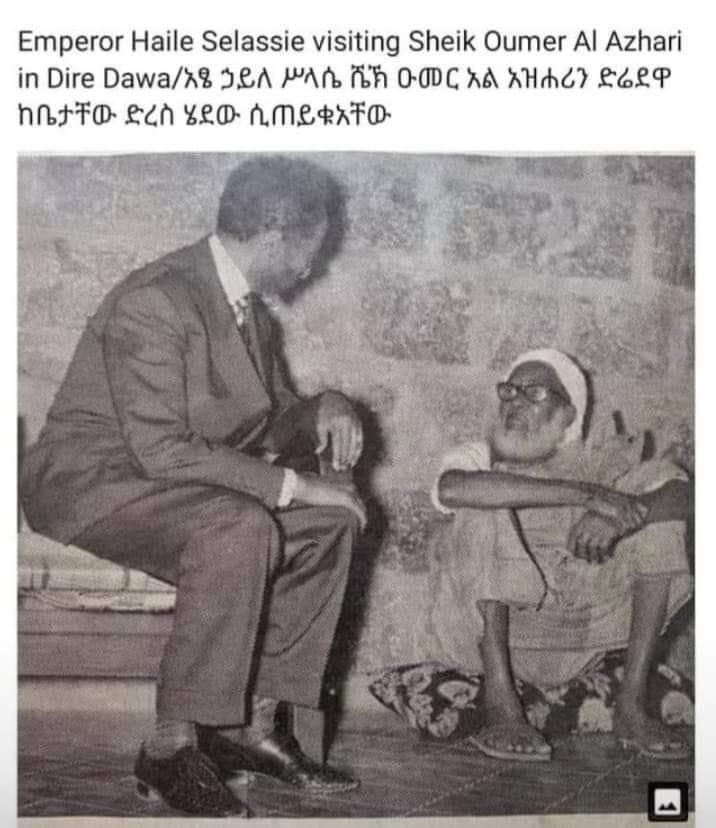
The Military Regime of Siyad Barre had recalled Ambassador Yusuf Omar Azhari from the Somali Mission in Washington DC immediately as they overthrew the government and took over the country. He was put under severe military drills in “Xalane”, Mogadishu and so-called “Orientation Regime” designed to break the spirit of human beings. Later, Ambassador Azhari was thrown into Regime’s prison torture cell for several years without any charges. One day, the Ambassador had shown me the scars left permanently on his wrists by arrest-chains. To understand the humanity of this diplomat, he had traveled all the way to Abuja, Nigeria, to forgive the dictator in exile there, who had caused him so much sufferings.
I was lucky to know and work with Amb. Azhari. He was a diplomat of high calibre with the training in Western Somali secrecy with the touch of Ethiopian Emperial confidentiality and individualism. He operated and moved around the world quietly. He had traveled widely in every corner of the globe silently without drawing much public attention.
He participated and contributed immensely to the Somali National Reconciliation. “Awrkaagu haku qaado” (Don’t swallow more than you can chew), he told General Mohamed Farah Caydiid, not too impressed by the latter’s insane political ambitions in Somali politics.
Yusuf, as Amb Extraordinary and Plannepotentiary, was posted to Washington DC and served some time in Bonn, Germany. As highly experienced diplomat and smooth operator, he attracted the attention of Abdullahi Yusuf, the late president of Somalia, to act as his right-hand diplomat and political envoy. Amb Azhari shuttled missions between Abdullahi Yusuf and late Mohamed Ibrahim Egal of Somaliland on how to resolve the legacies of Somalia’s Civil War. See https://ismailwarsame.blog/2019/05/22/self-governance-options-for-somaliland-%ef%bb%bf/
A personal story from Amb Yusuf Omar Azhari. While Yusuf was posted in Bonn as First Secretary at Somali Embassy, General Mohamed Abshir Muse Mataan, the Commandant of Somalia’s Police Force then, came to visit Germany as that country trained and equipped Somali police. One night the General requested Azhari to take him to a German nightclub. The General came along with a German General with his daughter. General Mohamed Abshir was generous to entertain everyone with pleasures and delicacies of the night bar. In late hours of the night, the German General had left the bar, leaving his daughter in the custody of the other General. It was time to pay the bill, and the General had discovered that he left his cash money behind in his hotel room during a dress change. He pushed the huge bar bill to Azhari to settle it. “You are the one, who had invited us, General”, the young First Secretary, pushed back the tap to the General. General Mohamed Abshir was too angry to talk to Azhari at table. Finally, when the General spoke again, he requested Azhari for paying the bill on loan. They were never friends afterwards.
In his thick book, “Ethiopia At Bay: Personal Account of Haile-Sellassie Years” (40 years), John Spencer, PhD, a French speaking and Special Advisor to the Emperor talked about Sheikh Omar Al-Azhari as a member of Emperor’s Protest Delegation to Geneva on Italian Fascist Aggression against Ethiopia during the League of Nations that preceeded the United Nations.
“It was with great sadness that I heard the passing of Ambassador Azhari. Amb Azhari was very quiet diplomat, honest, kind, thoughtful, and approachable person. He was a highly effective Diplomat, always pushing for smart policies that advanced and helped Somalia interest. We need more Somali Diplomats of his integrity character”
We are on the eve of self-destruction through ingenuity and technological advance. No person, country or nation is safe anymore – it started with the splitting of atoms to produce nuclear warheads designed to erase human race from the earth many times over in a matter of minutes. Human capacity to do harm didn’t stop there. Enter the era of Internet and cyberwars. This invention makes the possibility and potential of a nuclear war even more impulsive than the use of a spear in yesterday’s world. Nowdays you don’t need a nuke strike to shut down a country or entire continent in a matter of nanoseconds. With biological weapon similar or deadlier than COVID-19, you could wipeout human race from the globe within a matter of a few weeks. How would you describe the invention and potential use of the above trifecta of holocaust tools differently from the Eve of Doom’s Day?
There is total elimination of personal privacy and potential for inflicting harm to anybody with internet connection or travels by public transportation like airlines and trains, as everybody is under constant remote surveillance. Your electronic devices are spying on your every move, even recording the sound of your steps, breathing, conversations, transmitting your pictures continuously with no need for your permission. Switching off your devices doesn’t help either as almost all of them operate under safe mode in the same way your subconscious mind can’t turn off.
Whether you feel and aware of, or not, our world is finally coming to the end of the road.
I met with Hirsi Magan for first time in 1981 in Ras Hotel in Addis Ababa. At the time, I was a young university graduate and a fresh defector to the opposition from Somali Civil Service. At that particular moment, as he seemed to me that he was preaching religious messages to a group of SSF (Somali Salvation Front) comrades sitting around him, he struck me as a deeply religious man with a radical approach to the spread of Allah’s Message.
Later, I knew him as a strong political opponent of then SSF chairman, Abdillahi Yusuf. Like all exile armed oppositions, SSDF had developed into different wings and factions within. There was stiff political infighting among the leaders of the organization. The Derg regime of Mengistu Haile-Mariam had been facilitating and enhancing internal conflicts with the organization for its political ends in Somalia. Mr. Magan belonged to the religious Wing as opposed to the Left led by Abdirahman Aydid’s Communist Party and Labour Party headed by Said Jama, with hardline and hardened attitude to issues of political contention. While this was happening with the organization, he asked me one day casually, “are you simply an engineer, not a politician at all?”. I was puzzled as I had no answer for him. Luckily, he had changed the subject quickly, to my great relief.
His opposition to the leadership of SSDF had led him eventually to join SNM (Somali National Movement), a secessionist Northwestern Somali armed opposition front. Later, he was reportedly regretted joining SNM. Nevertheless, he wasn’t happy with the slow pace of armed struggle against Barre Dictatorship in Somalia. That is why he had decided to fake defection to the Regime, only to attack government officials and security forces in the District of Eyl in Nugaal Region in 1987 with a small group of his followers. He was chased out of the Eyl, but that was recorded as the most daring ambush yet against Barre’s authority in Nugaal Region.
Hirsi Magan, the father of the notorious critic of Islam, Ayan Hirsi Ali, was a pioneer in Somali script writing called Osmania, through Somali Language Club (Goosanka Afka Soomaaliga) in the 1940s. He was a great short stories writer and literary man. He was a graduate of Columbia University Faculty of Anthropology in New York, USA. Many had enjoyed his famous radio program series “Laaska Daawada” (The Holy Water), broadcasted over SSDF rebel Radio (Radio Kulmis, the Voice of SSDF) at the time. Laaska Daawada was a hard-hitting and popular satire and critique of Barre Military Dictatorship. It is considered a major opposition literature, together with the famous poems of Khalif Sheikh Mohamud. As a teenaged, Hirsi Magan was a recognized Somali Youth League (SYL) activist and among the young vanguards of the organization leading the struggle for Somali independence. That distinction gave him an opportunity to secure SYL- sponsored scholarship to America. During the foundation of Puntland State of Somalia in 1998, Hirsi Magan’s son competed for the New State’s presidency, securing only one delegate’s vote. That vote was casted for him by Abdullahi Yusuf, then Pl President-to-be and late President of Somalia.
A government by nature could be a dangerous organization, if it falls into wrong hands. It is benevolent and useful when handled well. There are many types of government, which indicate the imperative need to be careful in choosing one’s government. Some types of government are, among many others:
Democracy or representative government differs from the rest significantly as each of them represents only one or a group of people. But, no matter how messy and chaotic democracy could be, the world community couldn’t find better alternative in self- government.
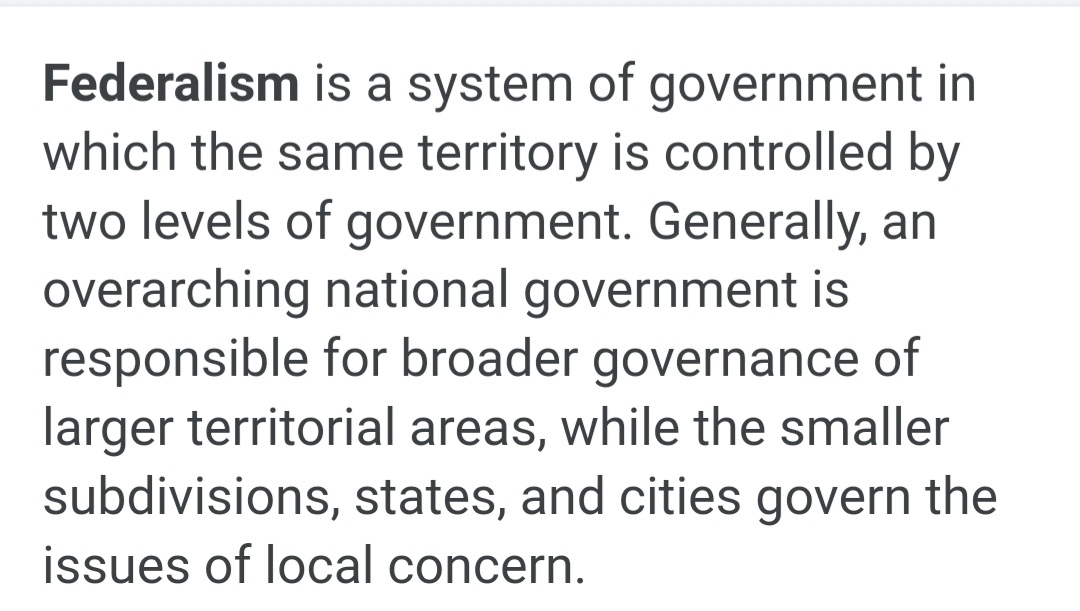
Then, why do we beat about the bush and couldn’t move forward with the best democratic system in the world, federalism, allowing and empowering regions of a country to attend and manage their own local affairs under a representative federal government? After all, this is a little more than a delegation of power to grown-ups in a family business. The problem, however, is that, like in a democracy, every citizen has an uninformed opinion on federalism here. Moreover, anything unfamiliar or untraditional sounds bad to everyone. Many Somalis, like their counterparts in other nations, mostly don’t know what they are talking about when expressing their layman’s opinions on federalism. Why not leave this issue to neutral and impartial experts and wishes of residents in the regions on the best way forward for Somalia’s governance?


.svg)








 Warsame Policy & Media Network (WAPMEN)
You must be logged in to post a comment.