I met with Hirsi Magan for first time in 1981 in Ras Hotel in Addis Ababa. At the time, I was a young university graduate and a fresh defector to the opposition from Somali Civil Service. At that particular moment, as he seemed to me that he was preaching religious messages to a group of SSF (Somali Salvation Front) comrades sitting around him, he struck me as a deeply religious man with a radical approach to the spread of Allah’s Message.
Later, I knew him as a strong political opponent of then SSF chairman, Abdillahi Yusuf. Like all exile armed oppositions, SSDF had developed into different wings and factions within. There was stiff political infighting among the leaders of the organization. The Derg regime of Mengistu Haile-Mariam had been facilitating and enhancing internal conflicts with the organization for its political ends in Somalia. Mr. Magan belonged to the religious Wing as opposed to the Left led by Abdirahman Aydid’s Communist Party and Labour Party headed by Said Jama, with hardline and hardened attitude to issues of political contention. While this was happening with the organization, he asked me one day casually, “are you simply an engineer, not a politician at all?”. I was puzzled as I had no answer for him. Luckily, he had changed the subject quickly, to my great relief.
His opposition to the leadership of SSDF had led him eventually to join SNM (Somali National Movement), a secessionist Northwestern Somali armed opposition front. Later, he was reportedly regretted joining SNM. Nevertheless, he wasn’t happy with the slow pace of armed struggle against Barre Dictatorship in Somalia. That is why he had decided to fake defection to the Regime, only to attack government officials and security forces in the District of Eyl in Nugaal Region in 1987 with a small group of his followers. He was chased out of the Eyl, but that was recorded as the most daring ambush yet against Barre’s authority in Nugaal Region.
Hirsi Magan, the father of the notorious critic of Islam, Ayan Hirsi Ali, was a pioneer in Somali script writing called Osmania, through Somali Language Club (Goosanka Afka Soomaaliga) in the 1940s. He was a great short stories writer and literary man. He was a graduate of Columbia University Faculty of Anthropology in New York, USA. Many had enjoyed his famous radio program series “Laaska Daawada” (The Holy Water), broadcasted over SSDF rebel Radio (Radio Kulmis, the Voice of SSDF) at the time. Laaska Daawada was a hard-hitting and popular satire and critique of Barre Military Dictatorship. It is considered a major opposition literature, together with the famous poems of Khalif Sheikh Mohamud. As a teenaged, Hirsi Magan was a recognized Somali Youth League (SYL) activist and among the young vanguards of the organization leading the struggle for Somali independence. That distinction gave him an opportunity to secure SYL- sponsored scholarship to America. During the foundation of Puntland State of Somalia in 1998, Hirsi Magan’s son competed for the New State’s presidency, securing only one delegate’s vote. That vote was casted for him by Abdullahi Yusuf, then Pl President-to-be and late President of Somalia.
A government by nature could be a dangerous organization, if it falls into wrong hands. It is benevolent and useful when handled well. There are many types of government, which indicate the imperative need to be careful in choosing one’s government. Some types of government are, among many others:
Democracy or representative government differs from the rest significantly as each of them represents only one or a group of people. But, no matter how messy and chaotic democracy could be, the world community couldn’t find better alternative in self- government.
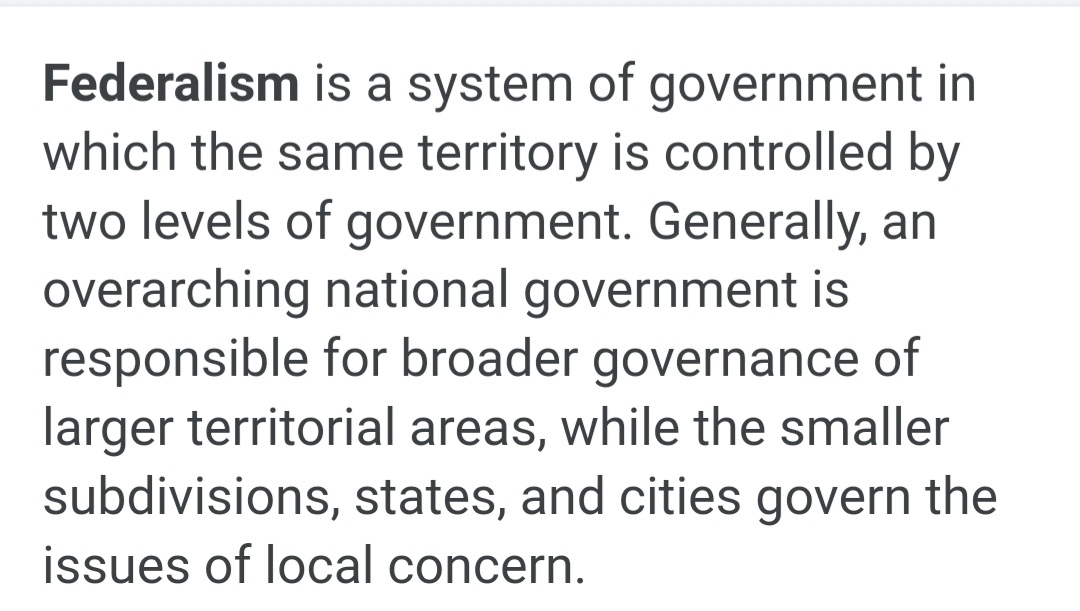
Then, why do we beat about the bush and couldn’t move forward with the best democratic system in the world, federalism, allowing and empowering regions of a country to attend and manage their own local affairs under a representative federal government? After all, this is a little more than a delegation of power to grown-ups in a family business. The problem, however, is that, like in a democracy, every citizen has an uninformed opinion on federalism here. Moreover, anything unfamiliar or untraditional sounds bad to everyone. Many Somalis, like their counterparts in other nations, mostly don’t know what they are talking about when expressing their layman’s opinions on federalism. Why not leave this issue to neutral and impartial experts and wishes of residents in the regions on the best way forward for Somalia’s governance?
When flames of fire is extinguished, there are still remnants of live hot pieces of firewood simmering beneath the ashes. Similarly, in Mogadishu there are heavily armed clan militia in the quarters of Kaaraan, Circolo Ufficiale and elsewhere in the City and surrounding areas. They are ready to be activated for violence at short notice. Alshabab is engaged in not only co-governing Mogadishu, but also control large swathes of territory in the entire South-Central Somalia. The local and Central governments have no exclusive possession of arms and instruments of power, and in an election environment this poses serious security challenges. The diplomatic niceties and smiles among Mogadishu presidential candidates will fade away soon, adding more security problems in towns.
Prime Minister Mohamed Hussein Rooble has acquired now higher political profile following his successful leadership in bringing opposing parties together in this Summit between FGS and FMS. If he has political ambitions, I believe he will choose one of two options: Supporting one presidential candidate from Darood camp to keep his current job, or move his name forward among presidential candidates. In the first option, observers believe that Rooble will support Farmajo’s candidacy amid absence of apparent other electable presidential candidates among the Daroods. Somalis say, “in the pains of labour, a woman has no choice in privacy. The plans of Rooble in this election will be exposed soon in the next few weeks. However, whatever he decides, this would be interpreted as a collective stand of Sacad/Habargidir. Either way, his political choice, apart from remaining a neutral technocrat, would add more tension to an already dynamic and volatile political atmosphere in Mogadishu and beyond.
Team Nabad iyo Nolool didn’t give up yet to re-run. But, this time around, their chance in re-electing Farmajo lies in the divisions and disunity of opposition leaders, especially among Hawiye presidential candidates, which is likely to happen as election campaigns heat up.
People of Somalia came back from the brink of abyss involving potential re-ignition of flames of civil strive and civil war. Luckily, they are winners with the successful conclusion of this Summit at Mogadishu Aviation Hangar (Avizione) today. The system of federalism resisting the return to dictatorship and restoration of city-state in Somalia is a winner too. For the consolidation of the modest gains of federalism, it is a turning point of no return. No Somali leader would ever attempt to unravel decentralization of Somali central governance.
Puntland state of Somalia led the way to restrain Farmajo’s coup attempt to overthrow the federal institutions. President Deni of Puntland is a therefore a winner today, while President Madobe of Jubaland got a much needed relief from Farmajo’s military and political pressure with regards to Gedo issue.
The Speaker of the Upper Chamber of the Federal Parliament, Abdi Hashi, came from the cold and political isolation imposed on him by Farmajo’s attempt to marginalize representatives of the Federal Member States.
Representatives of international community and foreign missions accredited to Somalia got a break from the pressure of the Somalia’s electoral impasse. They can now justify the expenditures from their tax-payers’ money spent on resolving Somalia’s political quagmire, and sustaining the fledgling Federal Government of Somalia.
The Team of Farmajo, presidents Qoor Qoor of Galmudugh, Guudlaawe of Hirshabelle and Laftagreen of Southwest are losers, with Farmajo and Qoor Qoor losing all credibilities as politicians in the eyes of the Somali general public and international community.
Now that the electoral impasse has been resolved, the hard work of holding peaceful, free and fair elections is about to begin.
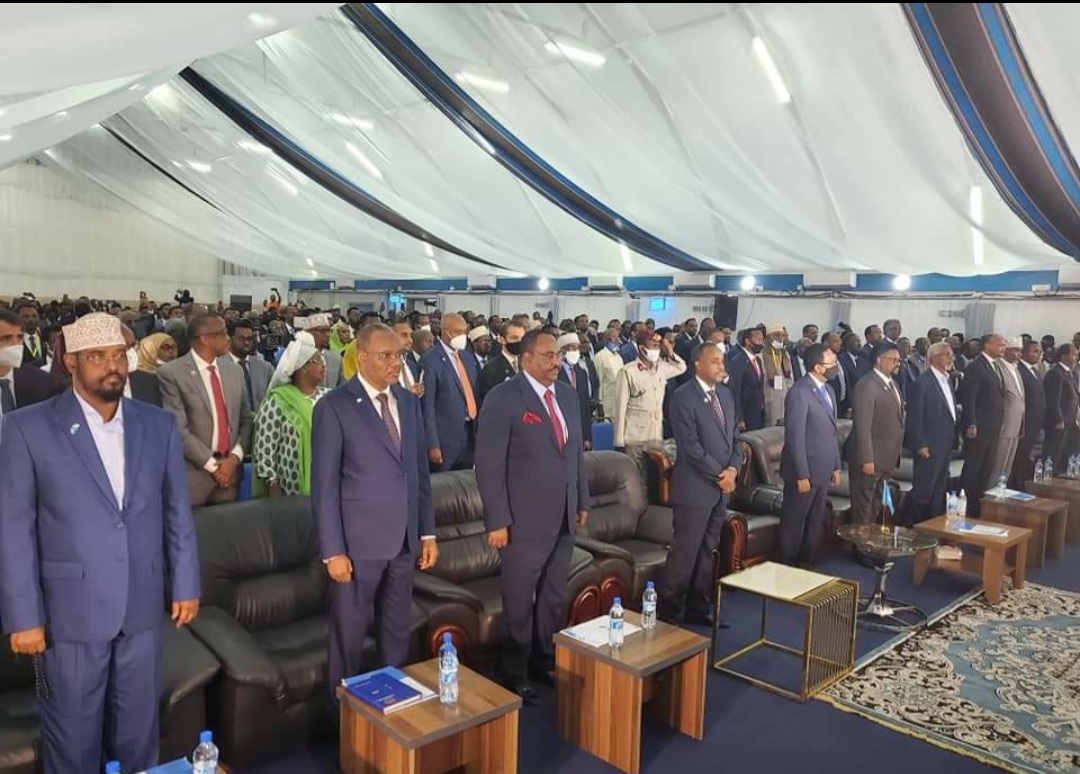
At the conclusion of Somali leader’s Summit at Mogadishu Aviation Hangar today
International Partners Welcome the Successful Conclusion of the FGS-FMS Summit
Mogadishu, 27 May 2021 – Somalia’s international partners* welcome the successful conclusion of the Federal Government of Somalia – Federal Member States (FGS-FMS) summit in Mogadishu.
We commend Prime Minister Mohamed Hussein Roble for his leadership of this process, as well as the Federal Member State Presidents, the Governor of the Banadir Administrative Region, and other political figures who engaged constructively in the talks. We thank President Mohamed Abdullahi Mohamed ‘Farmaajo’ for his appeal on 1 May to revert to the consensus-based 17 September electoral model.
We now urge all stakeholders to move forward swiftly to organize inclusive and transparent elections without delay. We call on Somali leaders to resolve any future disputes through regular dialogue among the signatories of the 17 September Agreement.
International partners stand ready to support Somalia’s leaders to implement this historic agreement.
African Union Mission in Somalia (AMISOM), Belgium, Canada, Denmark, Djibouti, Egypt, Ethiopia, European Union (EU), Finland, France, Germany, Intergovernmental Authority on Development (IGAD), Ireland, Italy, Japan, League of Arab States (LAS), Netherlands, Norway, Organisation of Islamic Cooperation (OIC), Poland, Qatar, Russian Federation, Sudan, Sweden, Switzerland, Turkey, Uganda, United Kingdom, United States, and the United Nations.
You hear these days that Egypt is seeking military and security cooperation or pact with Kenya, South Sudan, and even as far as Congo? Guess against whom? You know Somalia, Ethiopia and Eritrea had entered into similar accord or understanding, and you wonder against whom? You know big powers are in the game of seeking hegemony and spheres of influence in any corner of the globe. That may be understandable as USA, China, among others, are engaged in stiff rivalry and competition for resources and alliances. What isn’t clear is a small nation with limited economic and military resources trying swallow more than she can chew like Eritrea and Kenya. One possible explanation is that these ambitious small nations feel insecure and vulnerable to external security threats beyond their borders. They want to project an image of readiness to counter perceived security threats. In other words, they want to be seen as power-players in geopolitical terms. They are also sending signals to big powers that they should be counted for in the rivalry equation as far as their respective sub-region is concerned. To put it in a different form, small nations are trying to attract the attention of big powers for financial aid, resources and favors.
Put all these together, it is called regional or global power-plays.
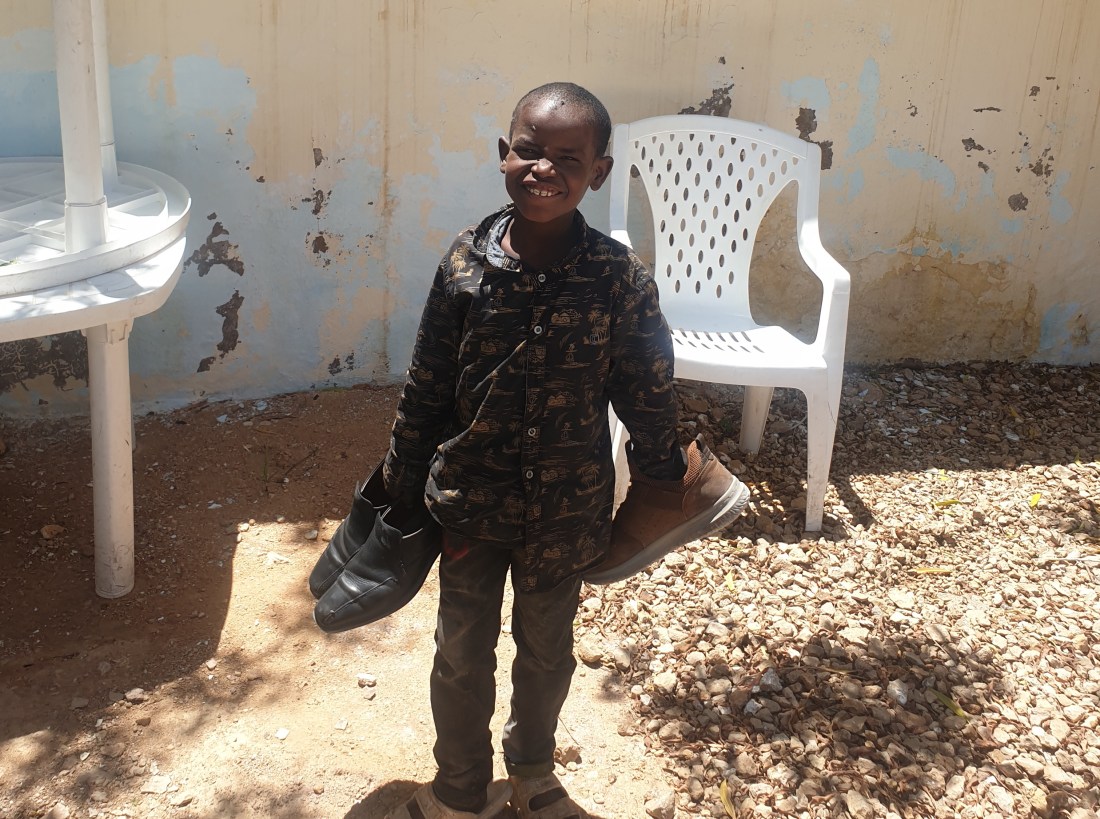
This boy of eight years old had moved with his mother from Mogadishu to Garowe just before Ramadan, seeking better life in Puntland. I asked him one question: “Does your mother work in Garowe?” “Not yet”, he responded. “But, I work for her”.
They say wherever the USA state of Iowa goes in an election, so goes the rest of the country. Is it equally true that wherever the State of Puntland goes, so goes Somalia?
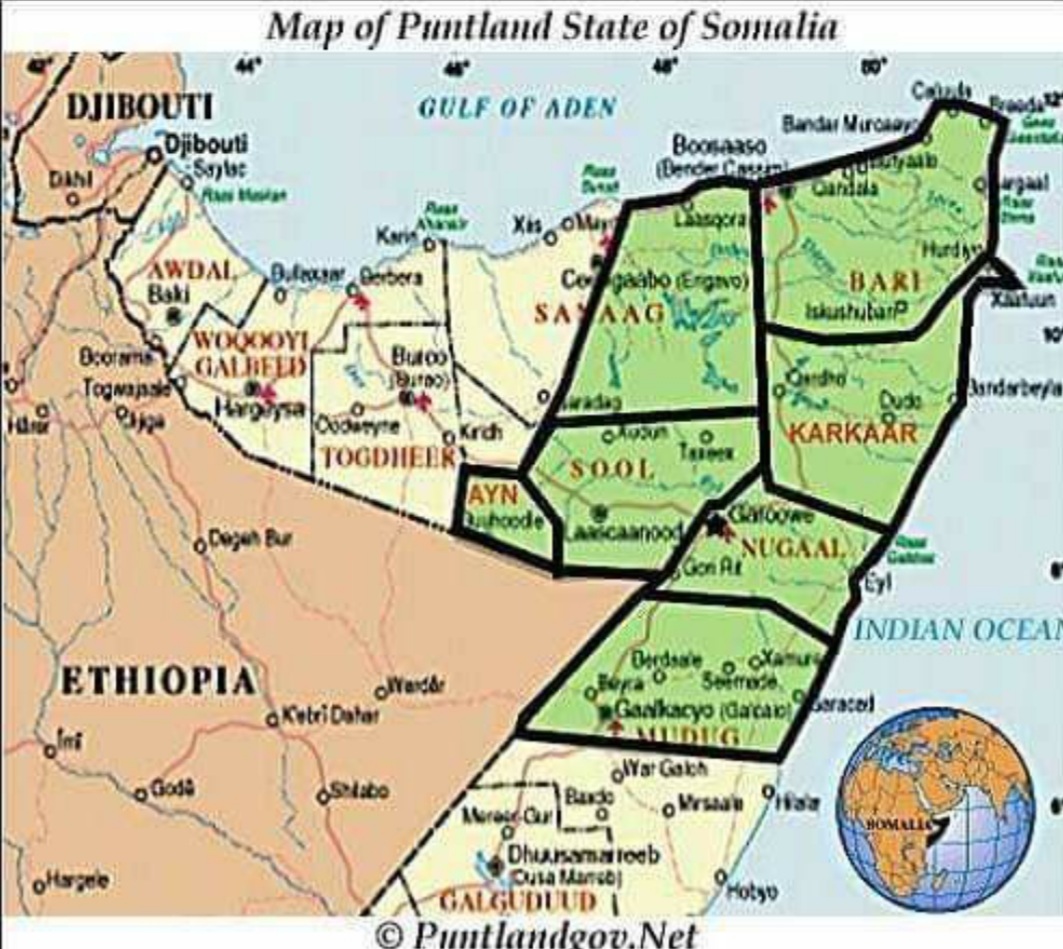
Puntland State of Somalia was created in 1998 as the first pillar for the foundation of the 2nd Somali Republic. The establishment of other Federal Member States followed suit. Puntland sponsored the federal system of governance in Somalia, and rest of the country, region by region, followed suit. Other member states had adopted Puntland Constitution, replacing only the name of Puntland with their respective names of the state like Galmudugh State of Somalia, Southwest State of Somalia, Hirshabelle State of Somalia and Jubaland State of Somalia. There is nothing wrong in modeling after successful enterprise. Human progress and experiences indicate similar copycat modeling. People follow the leader.
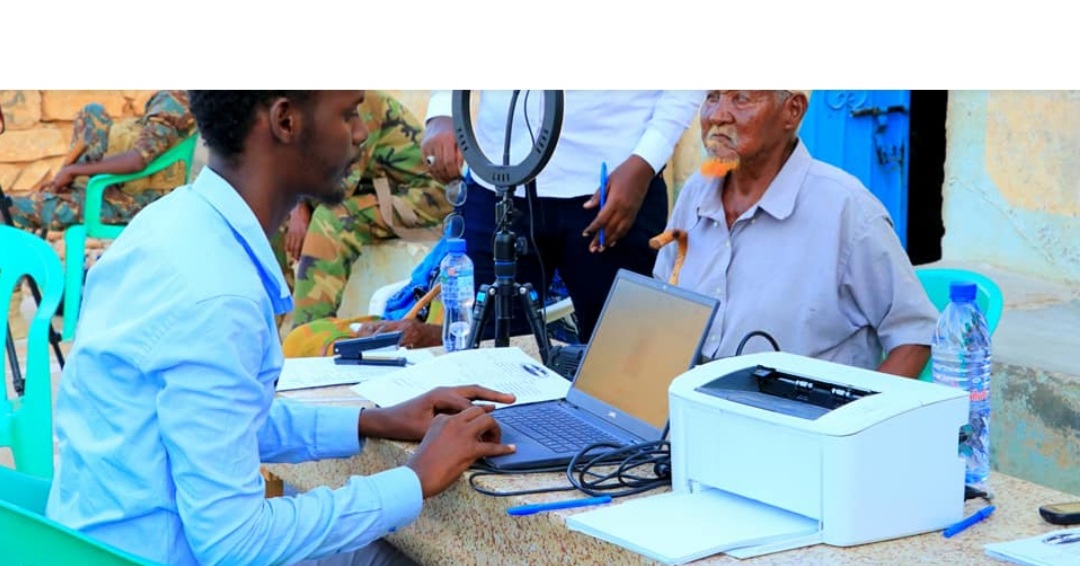
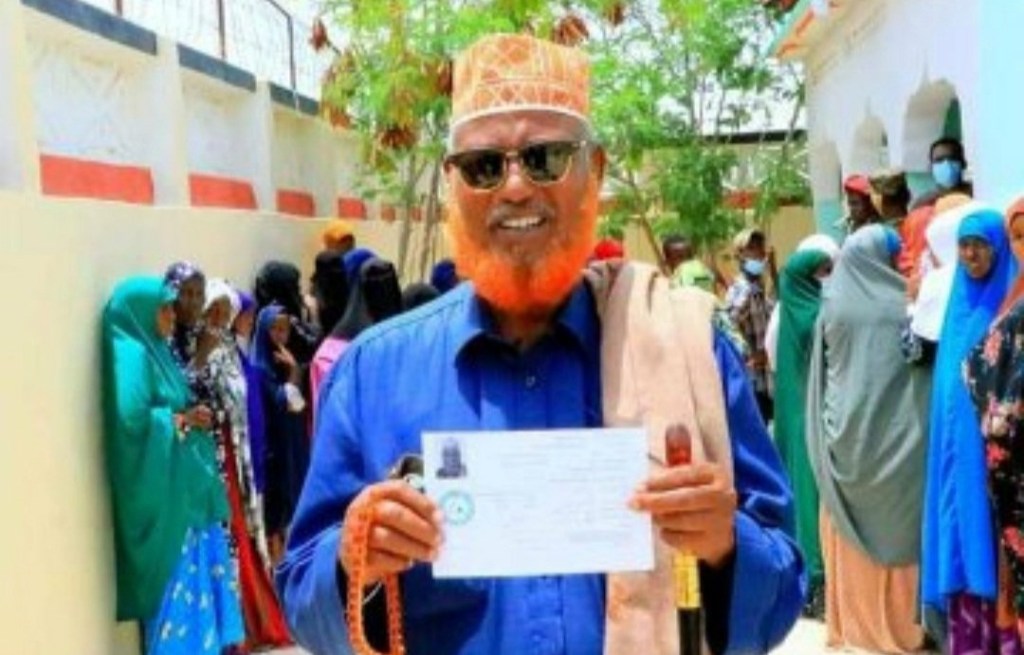
We have been saying all along that One Person One Vote (1P1V) wouldn’t happen in Somalia until Puntland showed the way. It is happening now with pilot vote registrations in Puntland towns of Eyl (Nugaal Region), Qardho (Karkaar Region) and Uffayn (Bari or Bareeda Region). If successful, all the rest of Puntland towns will follow this vote registration lead. This vote registration would be the first critical phase for general elections for state presidency and House of people’s Representatives. By experience, the rest of Somalia will follow Puntland experiment in democracy post-Civil War. Stay tuned. Have your say.
Experiences have shown that most Somali meetings end up in failure for the simple reason of putting the cart before the horse – they address the elephant in the room first, before they deliberate on and agree upon the principles and setup of a system under which they would operate.
What is that elephant in the room? It is leadership. For successful talks, leadership should be treated as blank spaces to fill in at conclusion. Starting with a leadership contest is a recipe for collapse of the meeting, based on Somali experience – any conference that started with leadership competition had failed. Formation of Federal Member States didn’t start with leadership rivalry – this came up much later in the deliberations.
Enter the National Consultative Summit now taking place at Mogadishu Afysione. Some observers are already worried. They see jockeying for power is now underway. This is on the top of the issues in the electoral impasse begging for quick resolutions. However, fierce campaigns for presidential aspiration are overshadowing the objectives of the Summit – bridging the gaps in the electoral process.
Prime Minister Roble was enjoying a modicum of unity from Hawiye Presidential Candidates until now, for the fear that their disunity helps Farmajo’s chances. But, Farmajo knows full well that Hawiye unity is fake, and he is working day and night to sow seeds of doubt and disarray in the ranks and file of Hawiye Co. Farmajo’s proxies like Qoor Qoor are already busy blasting clannish bombshells within Hawiye in a series of highly loaded tribal dinners and meetings, on the sideline in Mogadishu. These tribally charged meetings by Sacad politicians would act as harbinger for what is coming up in retaliation by other sub-clans of Habargidir, to be followed by similar fragmentations of Mudullood Hawiye. These are bad omens for the electoral process.
One thing is sure, however, collapse of this Summit isn’t an option. No matter how going gets taugh, Somalis and international community wouldn’t allow this to happen this time around. There is no room for failure. The sticking issues in the electoral process should be resolved quickly and in this session.
Stay tuned for more comments and critical analysis. In the meantime, have your say.
Tomorrow morning (25 May), the Security Council is scheduled to meet in person in the Security Council chamber for an open briefing, followed by closed consultations, on the situation in Somalia. Special Representative and head of the UN Assistance Mission in Somalia (UNSOM) James Swan and Special Representative of the AU Commission Chairperson for Somalia and head of the AU Assistance Mission for Somalia (AMISOM) Francisco Madeira will brief on the latest political, security and humanitarian developments in the country. They will also brief on the work of UNSOM and AMISOM. The report of the Secretary-General on the situation in Somalia (S/2021/485) was submitted to Council members on 19 May and covers developments from 10 February to 7 May.
During tomorrow’s meeting, Council members are expected to take stock of the turbulent political situation in Somalia. On 27 April, facing intense domestic and international pressure, Somali President Mohamed Abdullahi Mohamed “Farmajo” reversed his 13 April decision to extend his presidential term and the term of the House of the People, Somalia’s lower house, by another two years. Farmajo had justified the move with the need for more time to organise direct (one-person, one-vote) presidential and parliamentary elections, after preparations had stalled for indirect elections in line with the 17 September 2020 Agreement between the federal government and five of its federal member states. The 17 September Agreement stipulates that the country will hold indirect legislative and presidential elections—whereby clan representatives elect members of the House of the People, which in turn elects the president—instead of direct one-person, one-vote elections, due to security and logistical challenges.
Somalia’s Prime Minister, Mohamed Hussein Roble, has stated his readiness to implement the 17 September Agreement. On 20 May, he convened a consultative meeting between the federal government and its member states, which is still ongoing at the time of writing, to discuss various issues related to the elections. All leaders of the federal member states are in attendance. The issues discussed are expected to include disagreements over the composition of the electoral management bodies, the selection of Somaliland representatives, the management of elections in the Gedo region of Jubaland, and the technical modalities for holding the elections.
Security Council members may want to hear from Swan about progress towards the holding of indirect elections, associated timelines and potential UN support for the electoral process, with a view to full implementation of the 17 September Agreement. Given their emphasis on consensus-based solutions to avoid another political stalemate between the federal government and its member states, some Council members may want to learn more about the ongoing consultative meeting on the elections, and about any efforts to increase dialogue and foster an environment of mutual trust between the Somali government and the different regions of the country.
Council members are united in their call for a return to the provisions of the 17 September Agreement, and they are likely to show unified support for the ongoing consultative meeting. However, members may hold different views regarding the role of the Council in facilitating consensus between the federal government and its member states in the matter of the elections. Some may emphasise that this is an internal affair where the Council should tread lightly, while others may maintain that the Council will have to continue to play an active and engaged role in helping Somalia through the political difficulties.
The challenging security and humanitarian situations in Somalia will likely also be a focus of the meeting. The report of the Secretary-General noted a monthly average of 275 security incidents and a total of 260 civilian casualties, including 116 persons killed and 144 wounded, during the reporting period. Al-Shabaab continued to be the main driver of the unstable security environment. The population faces drought in some areas of the country, increasing levels of food insecurity and violence-induced internal displacement.
Council members may wish to learn from Madeira how AMISOM is preparing for the upcoming electoral period and about any progress made towards handing over security responsibilities to the Somali security forces in accordance with the Somalia Transition Plan (STP). Efforts are underway to develop a joint Somalia National Army (SNA)-AMISOM operationalisation plan to fully implement the STP’s provisions. A review of AMISOM’s Concept of Operations (CONOPS) was mandated by the Council in resolution 2568, to be completed and submitted to Council members in August. The financing of security operations may also be of interest, as the Secretary-General’s report draws attention to the depletion by June of the UN Trust Fund in support of SNA forces in joint operations with AMISOM. An independent AU assessment of AMISOM is currently being conducted and is due by the end of this month.
The question of continued financial support to AMISOM has repeatedly been a subject of Council members’ interventions. African members Kenya, Niger and Tunisia, along with Saint Vincent and the Grenadines (the A3 plus one), have frequently argued in favour of financing AMISOM operations through assessed contributions and had requested a reference to such contributions as a possible option for future AMISOM financing in resolution 2568, which reauthorised the mission until the end of this year. The request was not accepted, however.
The regional dynamics of the situation in Somalia will also be of interest to Council members, who may want to hear about future AU involvement in the country. On 22 April, Somalia criticised AU Peace and Security Council discussions on the situation in the country, claiming that Djibouti and Kenya were both attempting to adversely influence the outcome of the meeting. Somalia initially welcomed the appointment by the AU of former Ghanaian President John Dramani Mahama as an AU special envoy assigned to help Somalia’s political stakeholders find a mutually acceptable compromise to the country’s electoral impasse. However, Somalia subsequently withdrew its support for Mahama, indicating that AU engagement was no longer needed after it had renewed its commitment to the 17 September Agreement and that the envoy should be impartial with no prior connections to the region, after having alleged that Mahama had strong links with Council member Kenya
1. They are for strong central governments in their respective countries.
2 They are anti-federalist and anti-devolution of power.
3 They are tin-pot dictators.
4. They repressive demagogues.
5. They have agreed to seize Somalia through joint military force under the pretext of propping up Farmajo, but, perhaps with wider strategic political objectives.
5. They have regional, political and strategic designs for East Africa, replacing IGAD as a regional block.
6. Ironically, each of them came to power through deceptive populism and false promises of better government and life for their respective peoples.
7 in the end, each of them had turned out to be the enemy of the people. They must be stopped before they do more harm.
Women are still unpreviledged and nearly unrepresented at all levels of decision-making political bodies, but first and foremost in traditional leadership, in particular. There are no women traditional leaders in all Somali clans and regions, and this is the core of the problem in woman standing in Somali society. In a nutshell, a woman has no voice in Somali traditional governance, and this is the major factor as to why women are under-represented politically.
As the Civil War broke out in 1991, and even before that as armed opposition struggle against tyranny of Military Regime started a decade earlier, women and kids had suffered most, on the one hand, and women became the breadwinners of families as men either went to war or fell prey to societal epidemic of qat-chewing addictions and abandoned family responsibilities, on the other hand.
Fledgling federalism in Somalia has restored relative peace to regions and therefore alleviated the pains and suffering of families, empowering women and giving some voice in getting some women and minorities elected to political bodies – still not enough though, and it is a long shot to go to achieve fair play and plane field for all in this country
Attempts to empower women in Somalia by international organizations, local non-state actors and representatives of foreign missions are viewed negatively here by male-dominated Somali society. This negative perception is about harm being done to Somali traditional values on woman belonging to the household rather than becoming a leader in the society. There is a strong pushback from men to maintain the status quo. This is a major obstacle to women empowerment and I believe it will take many generations to change the existing centuries-old societal attitudes and cultural barriers towards gender equality in Somalia.
To achieve parity with men and claim their Allah-given human and civic rights, Somali women should challenge their fathers, husbands, sons, brothers and men colleagues why they aren’t being recognized as equal partners.
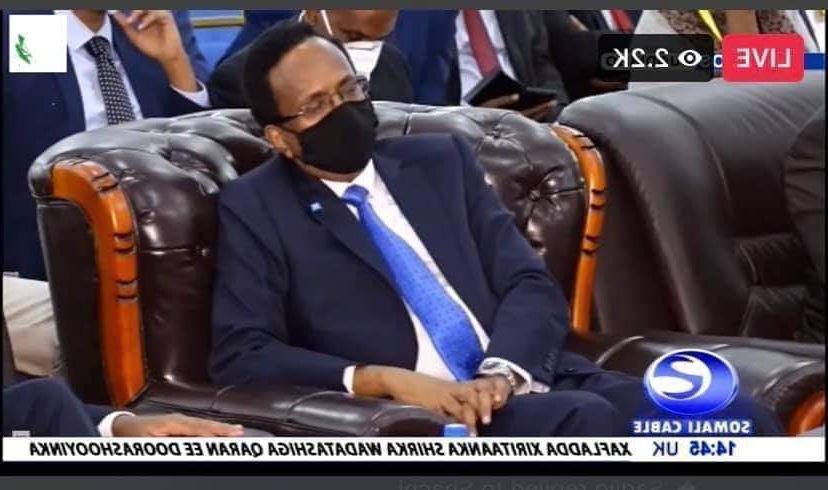
One thing is noticeable in this Mogadishu Summit. Whatever the outcome, it has started with calm and businesslike. To some like Omar Finish and Guudlaawe, it looks boring though, judging from their body language. It is possible that they are irritated by the animated conversations between PM Mohamed Hussein Roble and those seated near him. Perhaps, that particular theme under discussion at that moment wasn’t their favorite, and therefore, doesn’t attract their attention. There could be other possibilities for their dull looking faces.
But one thing is sure, though – when the stumbling obstacle (Farmajo) to peaceful talks and political bargaining, was removed, things started to look normal. There is sense of relief that he is no longer in the equation in a meaningful way. So be it.
You have lived recently through important milestones in major political and cultural developments in Somalia, namely the electoral impasse, armed clashes in Mogadishu as result, and most importantly, fulfilling your religious obligations in the holy month of Ramadan Almubarak. WDM has been keeping you informed tirelessly on the latest developments in Somalia and greater Horn of Africa. Consequently, many of you have realized by now the importance of free press for the society, especially for societies like ours with considerable portion of the population living in exile as the diaspora. What is uniquely important in WDM press coverage is the unbiased critical analysis of events and news without fear or favor. Many readers like you appreciate this fact.Once you become a paid subscriber, you will never miss an article as posted via your WhatsApp number immediately. You will also get WDM exclusive feature stories.Now, since you are here, support WDM for Somalia. Send in your subscription of $37 a year to keep this blog running. Sahal Account 496091 or e-Dahab Account 77731;Tel/WhatsApp +252 703 4081; By credit card via PayPal at Ismailwarsame@gmail.com ismail.warsame@yahoo.ca.
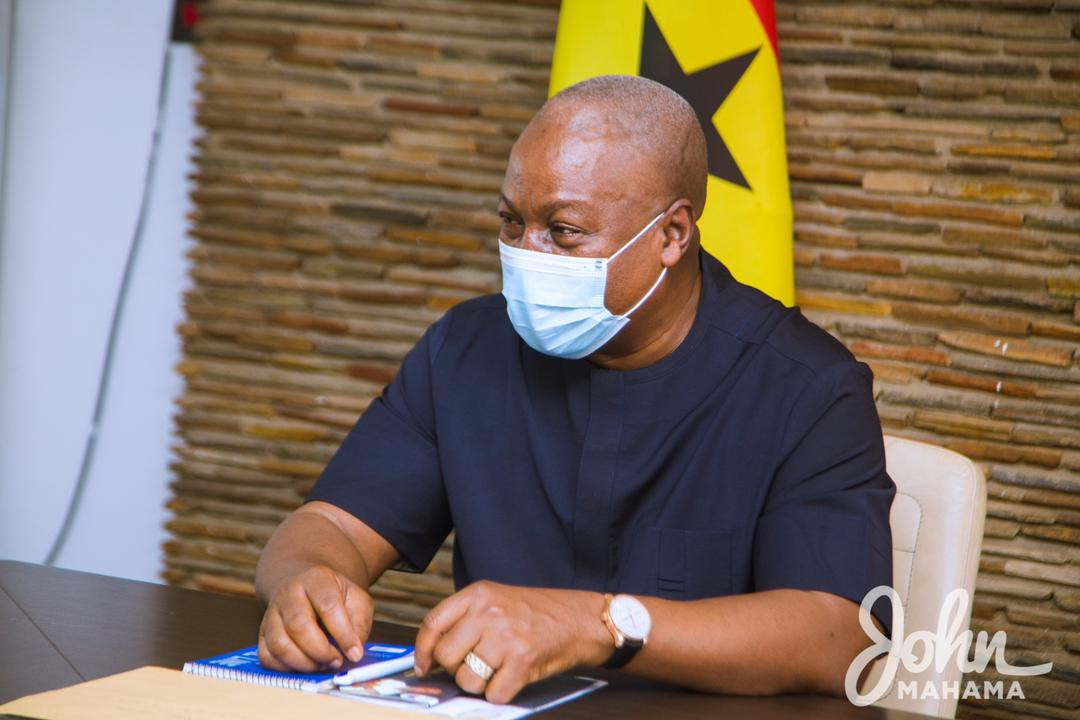
Former President John Dramani Mahama has in a letter to the Chairperson of the African Union Commission withdrawn his acceptance of the continental body’s appointment as its High Representative for Somalia.
While thanking the AU for the confidence reposed in him, Mr. Mahama noted that, “the high political importance of the proposed assignment requires that the High Representative enjoy the unalloyed support and co-operation of all political stakeholders.”
President Mahama whose appointment as the AU envoy has been roundly welcomed by the Council of Presidential Candidates of Somalia, and the Coalition of Somalia’s Federal Member States, further cautioned in his letter to the AU Chairperson, Moussa Faki Mahamat, that the lack of support by the Federal Government could jeopardize the whole process and undermine the hopes that the entire world has in bringing peace to the esteemed land of Somalia.
The former Ghanaian President who continues to receive requests from various international bodies and groups and is widely respected for his commitment to democratic consolidation, peace building and development used the opportunity to reaffirm his commitment to the African Union’s vision of an integrated, prosperous and peaceful Africa, that includes Somalia.
SIGNED: Joyce Bawah Mogtari Special Aide Thursday May 20, 2021
A signing ceremony on the previous agreements and understanding reached on the electoral impasse.
An official declaration and commitment to transparent conduct of free and fair elections in Somalia now and in the future. Attempts to extend mandates and any pretext to delay elections must be eliminated for good, based on lessons learned from Farmajo’s recent constitutional/security attempt at coup d’etat.
Adherence to system of laws, monitoring violations and abuse of power by authorities with FGS and FMSs.
Emphasis on the rescinding by Federal Parliament on the unconstitutional extension of mandates in April, 12, 2021.
Prevention of any interference by Villa Somalia in the conduct of elections.
The election must be run by an independent electoral commission agreed upon by all political stakeholders, including the opposition.
Leaders of FMSs must be also prevented interfering in elections taking place in their respective states. Allow the will of voters to flourish and decide the future and destiny of this country. Let Somalia move forward. Let us be a nation-state and keep our place among world community. No other option. This is not only a national interest, but verily an existential necessity.
Finally, we expect this summit to proceed in an atmosphere of peace and calm with responsible cold heads without resorting to settlement of scores and political shenanigans.
AFTERMATH OF ISRAELI AIRSTRIKES ON GAZA CITY (AP PHOTO/KHALIL HAMRA)
Impossible problems tend to inspire outlandish solutions. The Israel-Palestine conflict is a case in point: just consider the Uganda Scheme (the early-1900s proposal to create a Jewish homeland in Africa) or former political adviser Jared Kushner’s more recent but equally absurd attempt to buy off the Palestinians with a little cash.
The Biden administration should keep the history of such gambits — and the fact that all of them failed — in mind this week as pressure mounts to intervene in the fighting.
It’s easy to understand why leaders around the world want the United States to do something: the skirmish between Israel and Hamas has already killed more than 227 Palestinians and 12 Israelis, trashed Gaza’s decrepit infrastructure, sparked the country’s worst intercommunal violence since the 1930s, and torpedoed the formation of a historic Israeli left-right-Arab governing coalition to replace Israeli Prime Minister Benjamin Netanyahu following the recent election.
Horrible as the situation is, however, getting too involved now would still be a mistake for Washington. While the two sides can be convinced to hit pause, there’s only one way to actually solve their fundamental dispute: a two-state solution. And that’s not on the cards any time soon.
Elephant in the room
The notion that a two-state solution — the creation of an actual, viable country called Palestine alongside a physically secure Israel — is the only way to finally resolve this very long, very bloody conflict may seem obvious. But it bears restating because it’s a truth all key leaders — in Israel, the US, the Palestinian Authority (PA), and the broader Arab world — have recently forgotten or simply ignored.
Let’s start with Netanyahu. For years, he has tried to convince Israeli voters only he can protect them — whether from war, terrorism, or the coronavirus — and safe behind their walls, they could disregard the Palestinian question while enjoying their comfortable prosperity.
Once a grudging supporter of the two-state option, more recently Netanyahu has tried to sideline and diminish the salience of the Palestinian question in Israel’s national debate while focusing instead on bolstering his country’s vibrant economy, vaccinating its citizens, and normalising ties with Arab states.
Under former president Donald Trump, the US worked hard to facilitate this agenda. The Abraham Accords, which established formal relations between Israel and Bahrain, Morocco, Sudan, and the United Arab Emirates, were premised on the belief these and other Arab countries had come to care more about their own economies and security than they did about solidarity with the Palestinian cause.
And as 2020’s diplomatic breakthroughs showed, Netanyahu and Trump read the region right. After standing by the Palestinians for many years — during which the PA rejected one deal after another — Arab officials in the Gulf and North Africa had decided they were no longer willing to put that issue ahead of their own priorities. At the same time, they’d become increasingly frightened by Iran and recognised the fact that their enemy’s enemy could prove an enormously powerful asset and ally in this regional cold war.
Preserving power
Even Palestinian leaders effectively abandoned independence and the two-state solution. Although Mahmoud Abbas, the PA’s president, still nominally supports it, he’s now sick, 85 years old, and 16 years into a four-year term — and so far more concerned with preserving his own power than he is about making peace.
As for Hamas, it’s never cared about resolving the conflict. What it wants, instead, is to use an eternal armed struggle to justify its oppressive, undemocratic rule and corruption.
As the Biden administration now fields ever-louder calls from Europe, the United Nations, and left-leaning members of the Democratic Party to intervene, its decision-making should incorporate the hard truth that there’s only one way to really resolve the fundamental battle between Israel and Palestine — and none of the key parties are interested in making the sacrifices such a deal would entail.
Meanwhile, Biden should keep two lessons from the 20th century in mind. The first is as countries from Ireland to Israel to India to Indonesia have shown, the desire for national self-determination can’t be ignored or suppressed forever — no matter how much dominant powers may try to do so. The second truth, however, is combatants rarely if ever make peace before they’re ready — no matter how much outsiders push and cajole them.
That doesn’t mean Biden should do nothing. Israel has already accomplished its primary goals: degrading Hamas’s military capacity and reestablishing deterrence by reminding the Palestinians it will respond ferociously to any provocation. More fighting will just cause more carnage and more misery without achieving other strategic objectives. So it’s time for Washington to start pushing for a ceasefire, as Biden did yesterday on a call with Netanyahu.
As it does, however, Washington should be realistic about the limits it’s likely to achieve and should avoid the temptation — so seductive to past US presidents — to get drawn into a larger peace process. While the two sides can be pressured into holstering their guns for now, their underlying conflict will drag on until their fundamental grievances are addressed.
The only plausible way to do that is with a two-state settlement. But neither side has the capacity or is in the mood to strike such a deal right now — no matter how much Washington or other outside powers might wish they would.
Jonathan Tepperman is Foreign Policy’s former editor-in-chief. He tweets at @j_tepperman.














 Warsame Policy & Media Network (WAPMEN)
You must be logged in to post a comment.