Perhaps you had had heard that I was one of the key people, if not the key Puntland official then, who had created PIS/PSF as anti-terrorist units against foreign cells in major urban centres of Puntland. They were not established for local use.There were a number of foreign intelligence agencies’ proposals like UK, USA and others to recruit, fund and equip our units. These units came under the Presidency since they were specialized forces and didn’t fit into other security forces. We also did this command structure to prevent manipulations by foreign intelligence services.
President Bush’s War on Terror finally got our acceptance. These units were highly effective and useful in their operations against Al-Qaeda cells in Bosaso and Galkayo.
Now, to diffuse the standoff in Bosaso between PSF and other forces, I would suggest that you appoint PSF Commander, and under him, two Deputy-commanders, one of them being drawn from PSF units to release the tension and give them face-saving.
Mr. President,
Avoid accident, premature action and miscalculations. Puntland Government is a shared entity based on clan consensus. Its President, until now, isn’t popularly elected and his powers are limited if major tribal conflicts break out, despite the provisions of Puntland Constitution.
Moreover, Farmajo and his Co. are undermining Pl Government and determined to exploit the situation. Besides, any major escalation of hostilities in Puntland now could damage your political capital both locally and nationally.
Finally, the commanders of PSF must understand that they can’t exist outside the laws and control of Puntland Government. If they try to ignore Puntland leadership, they risk being decommissioned and disbanded all together.
Why did Abdullahi Yusuf Ahmed, the late president of the Transitional Federal Government, propose to the late president of Somaliland, Mohamed Ibrahim Egal, to seek the post of Somalia’s president, given the fact Mr. Yusuf had been struggling all his life to become the President?
Why did friends-officers, Col. Abdullahi Yusuf and General Mohamed Farah Aydid couldn’t agree to unite USC–SNA and SSDF to form a united national government?
How history would treat the leaders of Somali National Movement ((SNM)? These and more will be exposed in this short story.
It is generally agreed Abdullahi Yusuf was extremely ambitious to become one day Somali president and that he had been working hard towards that goal in all his adult life. Becoming a rebel SSDF leader in exile in Ethiopia after a failed coup is part of his struggle to attain the goal. When the Somali Republic had failed, he saw diminishing returns for that dream of ever becoming a Somali president. Here re-instating the failed state of Somalia became his top priority, using any means to realize the foundation of the 2nd Somali Republic.
Establishment of Puntland State is a major part of that political vision. Abdullahi Yusuf saw the territorial disputes on Sool and Sanaag between Puntland and Somaliland as an obstacle to Somali unity and persistent factor for security instability in Northern Somalia (Puntland and Somaliland). He approached Late Mohamed Ibrahim Egal for peaceful resolution of the issue, including encouraging the latter to seek post of Somalia’s president. Despite Egal’s known bold past decision-making, he couldn’t dare to confront Somaliland public, who in delusional way, bought into the idea of “gooni Isutaag (secession from Somalia). At the time the Head of the BBC Somali Language Section, Patrick Gilkes, told the author of this article that Mr Egal couldn’t stay President of Somaliland one day more, were he to return to the issue of Somaliweyn politics.
General Aideed of USC and Abdirahman Tuur of SNM had conspired with Mengistu Haile-Mariam of Ethiopia to overthrow the already dying regime of Siyad Barre, and split the spoils of Somali State among their factions in Mogadishu and Hargeisa. It was agreed that in post-Siyad Barre, power would be shared between Hawiye and Isaak. Darood would be marginalized in this power grab. This is how and why Abdullahi Yussuf and Aideed couldn’t strike a deal.
When talking about the issue of “Somaliland”, in reality, people don’t appreciate the difference between Isaak clans and the rest of other clan system of Harti (Mainly Dhulbahante and Warsangeli), Issa, Samaroon (Gadabursi) that technically constituted the former British Protectorate of Somaliland. By the way, Dhulbahante clan wasn’t a party to that Protectorate arrangement as they were conquered by the British Military Administration with the help of Isaaks’ British conscripts and help.
Now, the leaders of rebel SNM, expressing real and perceived grievances against the politicians and officials of former Italian Protectorate, represented only the interests of Isaak. Somaliland is now nothing more than an Isaak identity. Many of SNM leaders were former officials of Somali Republic, who had contributed to its progress, turning up against it in the end. How history would treat them is to be seen.
We have been saying all along that a political move in democratization by Puntland State would lead the way to free and elections in Somalia. It is happening today. It is the beginning of an era in Somalia’s politics, which heralds the overdue process of the rule of law and the power of the citizen. This will really have domino effect in the rest of Somalia.
The presence of the members of the international community and Somalia’s civil society as observers of these pilot elections in three districts of Puntland State is an indication of the overwhelming support and best wishes for the success of this gigantic endeavor by the people of Puntland State. It is a great step forward for the people of Somalia in a troubled nation.
WHY KENYA SHOULD ACCEPT ICJ RULING ON MARITIME DELIMITATION WITH SOMALIA
KENYA is a neighbor of Somalia. Here she has no choice. Kenya is a economic and diplomatic hub for mainland Somalia. Kenya is a home of hundreds of thousands of Somalis as its citizens and as host of a huge population of Somali refugees. Kenya is the first country to benefit from offshore oil and gas drilling in Somalia. Somalia and foreign oil firms would be needing Kenyan skilled labour and professional assistance in Somali oil industry. It is in the vital economic interests of Kenya to improve its diplomatic, security and political cooperation with Somalia.
Still Kenya has gained a considerable portion of Somali waters of the Indian Ocean through through ICJ arbitration. Somalis were surprised to learn that the ICJ has been too generous to award Kenya with 15% of the maritime zone under dispute. Somalis consider this award unfair and political on the part of Court judges. Neverthertheless, Somalis don’t mind sharing marine resources with their Kenyan brothers and sisters and closest neighbor. Kenyan leaders should deliberate on this wisely. They have more to gain working with Somalis at home in Kenya proper and with Somalis in mainland Somalia. They should look before they leap.
At ICJ decision today on the maritime border delimitation between Somalia and Kenya, Kenya didn't get all she wanted, but gained something out of her dispute with Somalia, with the latter winning most of her arguments. This map now shows today's decision. pic.twitter.com/bsn3sIMBCD
Today I paid visit to Golis Headquarters in Garowe to top-up my SAHAL ACCOUNT. I parked my vehicle in a pool of rain – water infront of the Golis office building. Getting out of the vehicle wasn’t an easy task without submerging my legs into muddy water. Think of women dressed in long gowns sweeping the street around them to get into the offices of the company across a pond-like reservoir of rain-water at front gate. Women clients of the firm constitute probably the bulk of the customer population. During rainy season they return home to mind washing their gowns each time they visit Golis Headquarters.
At the time of my today’s visit, I asked one of company staff member why wasn’t the company taking care of this problem at its gate. He responded that it was a government problem, not company’s. I put the same question to another in a different office section. He said jokingly that he would hope this issue will be addressed in the year “2026”. You would notice that the problem of cleaning up and addressing the office aesthetics isn’t unique to Golis. Many have no taste for decorations and beauty. You would also notice that the richer the companies are and more their services essential, the more they become indifferent to the care of their working environment.
If Golis HQs expect Puntland Government to construct a 40- metre pavement space at gate of their offices, God save the people of Puntland State.
Here is a similar situation of Somalis in the North Eastern Kenya, but in a different light:
Kenya’s insatiable greed for Somalia’s waters begun following when Woodside petroleum company ended its offshore oil and gas explorations in western coast of Kenya in 2007, citing it was unable to find hydrocarbons in its Pompoo well.
Woodside petroleum disclosed in its press release issued on that day that according to satellite images it conducted on Somalia’s waters close to the border of Kenya and subsequent seismic tests found considerable traces of potential oil and gas deposits in the triangle area. With its deep knowledge of maritime laws, however, Woodside refused to take such risk of drilling oil and gas without the consent of Somali authorities.
Given this setback, in 2008 Kenya colluded with other multinational companies (MNCs) willing to steal Somalia’s resources with reduced costs, in the assumption that they can take unfair advantage of Somalia’s current circumstance and coerce its leaders to enter into dodgy bilateral agreement with Kenya, chipping away 100,000 square kilometres of Somalia’s maritime waters believed rich in oil and gas into Kenya.
To realise this strategic and economic objective and to build the confidence of MNCs investing in this area, Kenya launched the 2011 Operation Linda Chi and invaded Somalia on the premise of anticipatory self-defence, which is one of the reasons that the UN allows states to use force as set out under article 51 of the UN Charter: ‘Nothing in the present charter shall impair the inherent right of individual or collective self-defence if an armed attack occurs against a member…’
Not only did the attacks and the kidnapping incidents that Kenya cited as grounds for her invasion in Somalia were nowhere near the threshold that could trigger such military action, but also did the perpetrators behind those incidents themselves were Kenyans reacting to ATPU’s heavy handed tactics and extrajudicial killings meted out to coastal communities.
It is widely held that the low intensity insurgency hitherto brewing in Kenya’s coastal areas arose from the fact tacit government policies aimed to de-populate coastal communities & to transplant them to ethnic Kikuyus & Luo so that the demographic makeup in that area is permanently altered.
Rather than addressing those local grievances, Kenya has opted to externalise her domestic issues and policy failures with a view of adding another layer of external conflict driven by economic imperatives.
Kenya’s stated strategic objectives of its military intervention in Somalia was to drive Al Shabab out of the border area; establish a buffer zone; install an administration that is complaint to Nairobi; and use it as a bargaining chip to coerce Mogadishu government to accept Kenya’s terms.
Despite this, UK and France scrambled to the United Nation and African Union HQ to include Kenya in AMISOM troop contributing countries to save face and provide her with legal cover and international funding to realise her strategic and economic objectives by which both countries are allegedly direct beneficiaries
Throughout this period, Kenya has been at loggerheads with three successive Somali Federal governments. The latest of which is current FGS, which has come under a lot of pressure from Kenya to withdraw the case from ICJ, however, refused to budge & upheld Somalia’s sovereignty & territorial integrity
Apart from artificial and fabricated historical distortions of facts, peoples of Puntland and Somaliland have more in common in their political, economic and cultural cooperation than anything that divides them. Despite persistent anti- Majertein propaganda promoted by opportunistic politicians from deep Southern Somalia, and those from Somaliland, who were engaged in campaigns to harm the political career of late Somali Prime Minister Mohamed Ibrahim Egal, the history of political cooperation between the two far outweighs than other issues that might had divided them. Proximity of geographical location and cultural affinities are also major factors that bind them. The destiny of disputed boundary and its inhabitants are issues that Puntland and Somaliland can alone amicably settle with the consent of the people concerned. The fact that there are disputes of whatever sort make the destiny of the peoples of Puntland and Somaliland intertwined, and therefore, that creates common political interests between the two. To understand this reality requires political maturity and sophistication, discarding the long-held propaganda of fake barriers by opportunistic political elite in Hargeisa.
I have every confidence that enlightened and shrewd politicians from both sides will make politically calculated moves to discover that common interests between Somaliland and Puntland that bind them permanently.
These days the social media war between supporters of former President Farmajo and Caretaker Prime Roble has reached new heights. WDM had even issued WARSAXAAFEED (press statement) on the issue.
But, of particular interest is the negative campaign aimed at character assassination against the Prime Minister Roble, alleging his past drug abuse in Sweden – claiming a court conviction against him written in English. First of all, Sweden doesn’t operate in English, and even it were true, drug abuse is a regular occurrence among the youth of Western countries. Most of them there get off the hook after a few years.
Again, if it were true, it meant Farmajo had failed in vetting him for the position of the prime minister of Somalia. It isn’t Roble’s fault. Roble didn’t lie to get elected. He was appointed by the President, whose responsibility was to vet his appointees thoroughly.
And if that were true, the Federal Parliament had had a role in confirming Roble as the Prime Minister.
We spent hours discussing and debating the dynamics of Somali National Peace and Reconciliation Conference that was in progress at time in Embagati, Kenya. I briefed General Muhoozi Kainerugaba to brief his dad, M7 of Uganda, in Kampala. He did a good a job then. He was an army major at the time. This general is not novice to Somali issues and politics of conflict. His intervention now is bad news for current Somali leaders. Remember Villa Somalia, and to a greater extent, Mogadishu, is an occupied institution by AMISOM troops for protection as their core mission to Somalia.
Now, after nearly two decades, notice the style of these meetings in Mogadishu today. Farmajo was met solo, too sensitive session to share with his team. Rooble had the presence of an eyewitness from his team.
A decade ago, Farmajo was a Somali Prime Minister. He was as difficult as he is today moving this country forward. He was asked then by AMISOM and President M7 not to be an obstacle to the TFG Transitional Process. He was removed and replaced eventually. This meeting sounds like Kampala Accord 2.0. It is a national tragedy, however, for foreign generals and soldiers to pay a visit to a Head of State in his own office, perhaps under security threats and sanctions. Shame on Farmajo!
Kenya is on high alert ahead of next month’s judgment on the Indian Ocean boundary dispute with Somalia, which is expected within government circles to be adverse.
The International Court of Justice (ICJ) will announce the decision on October 12, ending a protracted case between the two neighbours that the war-torn Horn of Africa nation filed in 2014.
Its verdict is final. The timing of the judgment – it coincides with the 10th anniversary of Kenyan troops storming Somalia to fight the al-Shabaab terrorists – is also being considered a “slap in the face”.
The Nation has learnt Kenya will not accept a hostile ruling and a decision has been taken within the highest level of government to defy the court.
Disregarded
Some of the court’s verdicts have in the past been disregarded, including by the US, which in 2018 rejected the court’s order that sanctions against Iran should not include humanitarian aid or civil aviation safety.
And in 1986, the US had also attacked the court after it ruled America owed Nicaragua war reparations.
Kenya has also vowed not to accept what it considers “an illegitimate process” by an international entity.
“We are proceeding on the assumption that the verdict will be adverse. The manner in which the court conducted itself when dealing with Kenya, including rejecting a string of merited applications, is a key pointer,” a senior Kenyan official told Nation yesterday.
The official went on: “A lot is being done, including security-wise. It’s a matter with huge national security implications. A nation must guarantee the security and wellbeing of its people.”
According to the official, even what would be considered a compromise by the court would involve surrender of a part of the territory, which is unacceptable to Kenya.
Treated unfairly
Kenya contends the court treated it unfairly by rejecting a string of merited applications, including one asking that judge Ahmed Yusuf, a Somali, should step down over conflict of interest.
Justice Yusuf had been at the helm of the court since 2018 and was replaced as president of the ICJ in February by judge Joan Donoghue from the United States.
Kenya has also alleged some world powers with interests in vast minerals within the contested area have been meddling with the case to ensure Somalia, which attempted to sell some oil blocks at an international auction in London, UK, takes over the area.
Nairobi boycotted the ICJ’s public hearings, leaving Somalia to argue its case in one-sided proceedings that closed in March in The Hague.
Bias
Judge Donoghue then announced that even without Kenya’s participation, the court would rely on previous documents filed by Kenya, which accuses the world court of bias.
Before Kenya notified the court of its withdrawal from the case on March 11, it had applied to be allowed to submit new evidence that has been “missing” and is “highly relevant”.
“Most particularly, the Republic of Somalia (“Somalia”), while asserting that its 1988 Maritime Law’s reference to a ‘straight line’ refers to an equidistance line, conveniently failed to produce the map included in the law,” Kenya stated in court papers filed in February.
“This Somali map, which the court should reasonably expect Somalia to produce, is critical since it has the potential of undermining Somalia’s entire claim … Whatever Somalia’s missing map depicts is categorically not an equidistant line.”
Kenya argued that any consideration of the equidistant claim would set a dangerous precedent as it would not only reward Somalia’s belligerent conduct but also had the potential of disturbing already established boundaries, triggering disputes including with neighbouring Tanzania that could escalate to South Africa.
The dispute
As adjacent coastal states facing the Indian Ocean to the east-south east, the maritime claims of Somalia and Kenya overlap, including in the area beyond 200 nautical miles.
The parties disagree about the location of the boundary in the area where their maritime entitlements overlap, according to court records.
Somalia, which filed the case in 2014, argues the maritime boundary between the parties in the territorial sea, exclusive economic zone (EEZ) and continental shelf should be determined in accordance with the United Nations Convention on the Law of the Sea (Unclos) Articles 15, 74 and 83, respectively.
Article 15 of Unclos states: “Where the coasts of two states are opposite or adjacent to each other, neither of the two states is entitled, failing agreement between them to the contrary, to extend its territorial sea beyond the median line every point of which is equidistant from the nearest points on the baselines from which the breadth of the territorial seas of each of the two states is measured.”
But there is a rider. “The above provision does not apply, however, where it is necessary by reason of historic title or other special circumstances to delimit the territorial seas of the two states in a way which is at variance therewith.”
Article 74 states: “The delimitation of the exclusive economic zone between states with opposite or adjacent coasts shall be effected by agreement on the basis of international law, as referred to in Article 38 of the Statute of the International Court of Justice, in order to achieve an equitable solution.”
The same provision applies under Article 83 with respect to the delimitation of the continental shelf.
In both instances, the Articles provide where there is an agreement in force between the states concerned, questions relating to the delimitation of both the EEZ and continental shelf shall be determined in accordance with the provisions of that agreement.
Equidistance principle
Somalia’s argument is based on the use of the equidistance principle as the method of determining states’ maritime boundaries.
Accordingly, Somalia argues, in the territorial sea, the boundary should be a median line since there are no special circumstances that would justify departure from such a line.
With regard to the EEZ and continental shelf, Somalia contends, the boundary should be established according to the three step process that the court has consistently employed in its application of Articles 74 and 83.
But Kenya’s case is that a boundary along the parallel of latitude has developed through the consent of Somalia since 1979.
Since Somalia never protested for that long, Kenya contends that a boundary was established by a tacit agreement between the two states.
Straight line
Accordingly, Kenya’s position on the maritime boundary is that it should be a straight line emanating from the states’ land boundary terminus, and extending due east along the parallel of latitude on which the land boundary terminus sits, through the full extent of the territorial sea, EEZ and continental shelf, including the continental shelf beyond 200 nautical miles.Close
Kenya measures the breadth of its territorial sea and EEZ from a series of straight baselines covering the full length of its coast.
These baselines were first declared in the 1972 Territorial Waters Act and have been amended from time to time.
Kenya’s submission to the Commission on the Limits of the Continental Shelf (CLCS) is that the outer limit of its continental shelf lies fully 350m from its coast.
Kenya asserts that all its activities including naval patrols, fishery, marine and scientific research as well as oil and gas exploration are within the maritime boundary established by Kenya and respected by both parties since 1979.
However, in 2014, shortly before filing its case with the ICJ, Somalia claimed a maritime boundary along an equidistance line, ignoring the 35-year recognition of the maritime boundary along a parallel of latitude.
Court decision
The court will determine, on the basis of international law, the complete course of the single maritime boundary dividing all the maritime areas appertaining to Somalia and to Kenya in the Indian Ocean, including in the continental shelf beyond 200 nautical miles.
Also, the ICJ judges will determine the precise geographical coordinates of the single maritime boundary in the Indian Ocean.
The judges are Yusuf, Peter Tomka (Slovakia), Ronny Abraham (France), Mohamed Bennouna (Morocco), Antônio Augusto (Brazil), Xue Hanqin (China), Julia Sebutinde (Uganda), Dalveer Bhandari (India), Patrick Robinson (Jamaica), James Crawford (Australia) Nawaf Salam (Lebanon), Iwasawa Yuji (Japan) and Georg Nolte (Germany).
In December 1992, as an infantry platoon commander, I was among the first Marines to land in Mogadishu at the onset of Operation Restore Hope. It was a mission that made sense to me and my fellow Marines at the time: to keep the warring factions in check and enable the delivery of relief supplies to the long-suffering population. Ten months later, after the death of nineteen US servicemen and hundreds of Somalis in the Battle of Mogadishu, that mission seemed much less clear. It dissolved altogether with the withdrawal of US forces in March 1994 and the subsequent collapse of the UN mission less than a year later. Somalia, as prevailing wisdom had it, was an irredeemable disaster, a place destined to wallow in its own misery, where the benefits of intervention were unlikely to be worth the price.
In 2019 and 2020, I returned to Mogadishu, this time as a civilian helping to train officers of the Danab Advanced Infantry Brigade. It was clear to me then why General Stephen Townsend, the commander of US Africa Command (AFRICOM), was able to cite Somalia as a place where the command was seeing real progress. But last December, despite this progress, US troops were withdrawn.
In June of this year, I visited Mogadishu again. Conditions were worse in every respect and the war against al-Shabaab was not going well. Two of the seventeen Somali army officers I had helped train the previous year were dead, and several others seriously wounded. Mogadishu had the feeling of a city under siege.
There are compelling reasons for the United States to reengage in Somalia—an important front in the fight against global extremist networks. Learning from recent mistakes, the United States now has the opportunity to implement a coherent policy to counter this threat and protect its limited but real interests in the region.
Why Somalia?
For the last few months Afghanistan has dominated the headlines, but in East Africa another threat gathers momentum. Since the withdrawal of US forces in December, the al-Qaeda–affiliated organization al-Shabaab has resurged to a position of dominance in Somalia—recapturing lost territory and launching repeated attacks in the capital, Mogadishu. The organization is regarded by AFRICOM as being the most imminent threat to US interests in the region and has recently evinced intent to strike at the homeland. This threat is unlikely to have diminished with the Taliban’s recent victory.
President Joe Biden should reverse his predecessor’s decision to withdraw troops from Somalia, or face increasing regional instability and the not unlikely prospect of al-Shabaab conducting a transnational mass-casualty attack from its Somali sanctuary. Although Biden, like President Donald Trump before him, has pledged to end the “forever wars,” the hesitancy to reengage in Somalia reflects a misunderstanding of the very real threat posed by Salafi-jihadist groups, such as al-Shabaab, once they consolidate their positions locally. It represents a misplaced conviction that what happens on the other side of the world cannot harm US interests, a belief that sadly has been disproven time and again. And it conveys the false perception that the only alternative to getting involved in “forever wars” is a policy of isolationism—rather than a mature strategy of engagement with clear objectives.
In February, Secretary of Defense Lloyd Austin announced a global posture review, but the outcome of this review has not been announced, and the president has yet to come to a decision on his plans for the region. One hopes that the review will result in a strategy for Somalia that combines security, political, economic, and diplomatic efforts in a campaign supported by the same light military footprint that was previously having some success. Such an approach offers infinitely better prospects in terms of cost and risk than abrupt disengagement.
What Success Looks Like: A Niche Capability
Until last December, the fight against al-Shabaab was showing progress. A US special operations task force (SOTF), numbering some seven hundred personnel, was achieving results out of proportion to its size. Partnering with a specialized Somali force—the Danab Advanced Infantry Brigade—the SOTF’s mission was to advise its counterparts in operations against al-Shabaab. Although barely the size of a US battalion, the Danab is by far the most capable element of the Somali National Army (SNA), and the only unit involved in offensive operations. It was a partnership that exemplified one of the US military’s “niche capabilities”—a term used by Gen. Townsend in his posture statement to Congress.
The plan was to win back key terrain outside Mogadishu by focusing on the road networks connecting the capital to provincial cities. It was a version of the inkblot strategy, made famous by the French in Vietnam, and widely adopted—at least in theory—by other Western nations since. In this case, the inkblots were the various towns along each route, won back and strong-pointed by the SNA with some support from the African Union Mission in Somalia (AMISOM), whose troops man a handful of bases in the lower Shabelle valley. Lacking heavy weapons, medics, and organic fire support, the Danab soldiers were largely dependent on their US counterparts. The most substantial support came from a fleet of US Special Operations Command U-28 aircraft, which launched from local airfields to deliver devastatingly accurate fires in support of the Danab. And little by little, despite circumstances that weighed on the side of al-Shabaab, it was happening.
It was an example of how partnering should work: a relationship based on trust, forged by shared goals against an imminent threat. And, for US policymakers, a demonstration of how small units, comprising the right people with responsive air support, can have strategic effect at little cost.
A Policy of Withdrawal leads to Greater Risk
The US SOTF faced obstacles aplenty, perhaps the most stringent of which were self-imposed. Restricted by increasingly limited permissions to accompany their partners, a policy intended to reduce risk, SOTF personnel were, by mid-2019, largely confined to their forward operating bases. Ironically, it may have been this policy that emboldened al-Shabaab into direct attacks. The principle here is a fundamental rule of counterinsurgency—indeed of basic infantry tactics—which is that static units, sitting behind the wire without pushing out into the surrounding area, cede ground and initiative to an aggressive opponent. On the other hand, it could simply be coincidence that, as US forces hunkered down, AFRICOM’s director of intelligence reported “a definitive shift” in al-Shabaab’s plans to attack US interests in the region.
In a statement to the Senate Armed Services Committee shortly after the Manda Bay attack, Gen. Townsend described al-Shabaab as “the largest and most kinetically active al-Qa’ida network in the world,” and “the most dangerous to U.S. interests today.” A few months later, President Trump made the decision to withdraw US troops—apparently ignoring AFRICOM’s warning and the hard-learned lessons of the previous year. The move was also a rebuttal to Townsend’s advice to Congress, that “a secure and stable Africa is an enduring American interest.”
The withdrawal, completed by mid-January 2021, couldn’t have happened at a worse time. Al-Shabaab retook much of the country, recapturing the road networks that are the country’s lifelines, and launching frequent attacks against the capital.
Remote Counterterrorism Doesn’t Work
In late July, the United States resumed drone strikes against al-Shabaab after a seven-month hiatus—but these “decapitation” strikes differ in terms of purpose and effect from the use of close air support for a partner-nation force. In any case, the recent flurry of strikes is not likely to be repeated anytime soon due to policy concerns about using deadly force for collective self-defense.
“We’ve developed counterterrorism over-the-horizon capability that will allow us to . . . act quickly and decisively if needed,” President Biden said this month. If only this were true. The idea of being able to destroy our enemies and restore stability from a distance, without risk, is naturally an appealing prospect for any administration, but remains, in reality, a tantalizing chimera. Remote terrorism does not work without an effective force on the ground, especially against insurgent groups with popular support. Somalia fails this test on both counts.
A strategy based on drone strikes reflects a misunderstanding about the nature of the threat. Al-Shabaab is a product of civil war in Somalia—which in turn is caused by a range of social and environmental issues that, until resolved, will be a continual source of instability in the region. In rural areas, young Somalis flock to join al-Shabaab, induced by the remorseless effects of climate change, extreme poverty, and a perception that the Islamists offered terms under a social contract that were more reliable than those of the government. No counterterrorism strategy, however lethal, that fails to address these issues will affect al-Shabaab’s ability to draw on popular support.
The United States Doesn’t Need to Go It Alone
The international coalition whose mission it is to stabilize Somalia includes an African Union force, a United Nations mission, and training missions from the European Union, the UK, and Turkey. One of the ramifications of the US troop withdrawal and subsequent lack of policy direction has been to sap the effectiveness of these potential partners. Concerned about security, UN personnel are confined to their lodgings at Mogadishu’s airport. And though some AMISOM units had previously been willing to venture out on operations with the Danab and their US advisors, they now seldom do so. For our partners, even a light US footprint confers a heavy moral weight.
The British have plans to reinforce their small commitment in Somalia by deploying their newly formed Ranger Regiment. In a recent visit to Fort Bragg, UK Minister of Defense Ben Wallace seemed to be under the impression that in doing so, the British Rangers would be serving alongside US Special Forces. If this turns out not to be the case, it’s unclear how this will affect the decision to deploy the unit to Somalia.
All of this highlights two important points. First, whether the United States wants to acknowledge its position as a global leader, other countries still have that expectation. And second, Washington has the opportunity to reengage in Somalia as part of a coalition effort.
Accordingly, the United States should take the lead in overall coordination—failure to do so would likely result in the same disjointed patchwork of national efforts that caused such confusion in Afghanistan. But each sub-effort—economic assistance, governmental support, development, security, and building partner capacity—should be assigned to a framework, or lead nation.
A Coherent Strategy
Success in Somalia doesn’t mean winning on the battlefield. It means undermining the causes that have led to civil war in the country for the last three decades. It means leading with a coherent strategy that combines political, economic, diplomatic, and security efforts with a light military footprint. It means driving toward a negotiated solution between the government and the federal states and the most powerful clans whose frequent clashes are in themselves a significant source of instability. And it means inducing the Somali government to negotiate with al-Shabaab—providing a political offramp from conflict.
Like the Taliban in Afghanistan and the Houthis in Yemen, al-Shabaab is embedded into the social and political fabric in Somalia, intertwined with the mosaic of clans that form the backbone of Somali society, and at least some of its leaders have shown themselves willing to be part of the political process. And however much effort the United States puts into defeating al-Shabaab militarily, it is unlikely to happen—the group has proven to be remarkably resilient. US airstrikes, which rose significantly under the Trump administration, had little to no effect on al-Shabaab’s ability to conduct offensive operations.
Al-Shabaab has no reason to negotiate unless reduced to a position of disadvantage. Organizations like al-Shabaab—or the Taliban for that matter—derive their popular support not from ideology but from their ability to close the gap between local needs and the local government’s ability or willingness to meet those needs, and herein lies an opportunity to undermine that support.
It may be that the EU or a nation with experience in conducting overseas relief operations, might be induced to lead this effort in Somalia. With Washington contributing financially, and the US and UK militaries advising SNA units in the field, someone else could lead the drive to enable local and federal administrations to provide basic services and—with the support of NGOs—focus on mitigating the conditions that provide support for al-Shabaab.
A coalition—led by the United States in this regard—will need to tie economic support to political incentives for the federal government to do the right things. Failure to do so was one of the US government’s fundamental mistakes in Afghanistan.
AFRICOM has already demonstrated that it is possible to provide effective US military assistance with a light footprint. To sustain the long-term relationships essential for this mission, advisors should deploy in rotation from the same pool of specialized units. They will require responsive air support from the type of low-cost, expeditionary platform that US Special Operations Command plans to field. And the mission must entail advising, but not leading our partners. This is an all-important distinction: the former method, under the right conditions, tends to work; the latter is more likely to fail.
While a small US special operations task force supports our partners in the fight, the coalition military mission will focus on capacity building. Here the UK, with its newly formed Ranger Regiment and experience of leading a similar project in Sierra Leone, would be a good candidate to take the lead. There is an opportunity here to avoid the mistakes of the past, by targeting corruption among senior SNA officers and using biometrics and other assessment methods to verify and track recruitment and training. The same lead-nation approach should be taken with the various nations involved in developing Somalia’s police and law enforcement services.
The Missing Piece
For Washington to implement such a plan abroad requires a functioning foreign policy establishment at home, with unity of effort among all departments and agencies. The outcome of Secretary Austin’s global policy review will be flawed unless it reflects input from stakeholders across government, and a proposal to establish a policy process that relies on close collaboration—from genesis to implementation. This was a fundamental flaw with US policy in Afghanistan: an absence of clear objectives, and a readiness to rely instead on a behemoth but futile military effort.
The precipitous withdrawal from Afghanistan should remind us that Washington needs to take stock before labeling every foreign policy commitment as a “forever war” or “nation building,” thus implying intolerable cost. The United States lost fewer than one hundred soldiers over the last five years in Afghanistan—roughly the same number of Americans who die from COVID every two hours. A better approach would be to regard these types of commitment as an insurance policy. If the premiums are affordable and seem like a fair trade when balanced against the worst-case scenarios of not being covered, then the policy makes sense. Afghanistan, arguably, was just such a case, and Somalia undoubtedly so. Perhaps the most consequential deficit in US foreign policy is strategic patience.
As US involvement in Afghanistan ends in tragedy and a welter of recrimination, now is the time to avoid making the same mistakes in the Horn of Africa. We have learned that the deceptive panaceas of troop surges and counterinsurgency by saturation do not work, but neither does remote counterterrorism or influence from a distance. The plan to reengage in the Horn of Africa doesn’t have to be an all-or-nothing decision unless the United States chooses to make it one.
This administration should instead implement a cross-government and multinational plan, supported by a light military footprint. This plan should define objectives, cost, and acceptable levels of risk. Far better to do so upfront, than experience again the irreversible damage that our nation has sustained this past month.
Andrew Milburn retired from the Marine Corps as a colonel in 2019 after a thirty-one-year career. His final position in uniform was deputy commander of Special Operations Command Central, and prior to that commanding officer of the Marine Raider Regiment and Combined Joint Special Operations Task Force – Iraq. Since retiring, he has written a critically acclaimed memoir, When the Tempest Gathers. He is a cohost of the Irregular Warfare Initiative’s Irregular Warfare Podcast. He tweets at @andymilburn8.
The views expressed are those of the author and do not reflect the official position of the United States Military Academy, Department of the Army, or Department of Defense.
Somali traditional clan system was reportedly famous for tribal conflict resolution. However, upon close examination of the issue, one would find out that this mechanism for settlement of disputes was never fond of setting up neutral or independent bodies. The negotiating sides were selected from the opposing parties, each side advocating for the interests of their respective party. The protagonists must trust the judgment of their envoys to be reliable defenders and effective advocates. The main takeaway of this tool of conflict resolution is their intention to lower the temperature of the conflicting parties by keeping them talking and to address their grievances to each other. In the end that approach may produce:
Restraint
Appreciation of each other’s points of view.
Mutual understanding and reconciliation
Compromise with possible outcome of settlement of dispute(s).
That is why one notices that this approach also applies to politics in Somalia, and in a situation where Federal public institutions have lost legitimacy, the only way to avoid conflagration of violence and civil conflict is to appoint persons representing the main antagonists in the conflict. Mohamed Abdullahi Farmajo selected his political allies in the name of Speaker of now defunct Federal Parliament, Mohamed Mursal, who attempted to extend President’s mandate to two more years just recently, and Galmudugh President, known as Qoor Qoor, Ahmed Abdi Kariye, who owes his position in Galmudugh presidency to only Farmajo’s help. This approach is also true to Caretaker prime minister, Mohamed Hussein Roble, with the selection of loyal junior ministers in the Caretaker Federal Cabinet.
They say that a civil war breaks out when parties to a conflict stop talking to each other. As long as there are talks going on between the parties in Mogadishu political stalemate, including the opposition elements, there will be still a chance to settle down the political and security tensions there.
But, regardless of the outcome of Mogadishu power struggle within the leadership of the Federal Government of Somalia (FGS), Federal Member States (FMS) must proceed to hold the elections to expeditiously resolve the logjam in Mogadishu by electing a new federal parliament, which will elect a new Federal President. Act now before the conflict in Mogadishu gets out of hand.
ELECTIONS FOR THE LOWER HOUSE OF SOMALI FEDERAL PARLIAMENT SHOULD PROCEED WITHOUTDELAY
The Federal Member States (FMS) should conduct elections expeditiously as the only legal instrument to break the political logjam and power struggle in Mogadishu. They should take note of the senseless confrontations between the Caretaker prime minister, Mohamed Hussein Roble and former president, Mohamed Abdullahi Farmajo, whose constitutional mandate to stay in Villa Somalia had expired eight months ago, but still stuck there issuing unlawful executive orders.
The idea behind enshrining a federal system in the Federal Constitution was to allow Somalia to continue to function under similar circumstances of political and security upheavals in the Capital City. This is the time to show Somalis and world community at large that Somali State shall never collapse as it did in 1990s.
Donors and members of the international community (IC) should understand this fundamental historical change in Somalia’s governance – that there are functioning federal states in the country, which need all the support and logistics necessary to hold the elections now, despite the political paralysis at Federal Government leadership. This is the time to act decisively at both FMS and IC levels. Let us not miss this golden opportunity.
Did you get yet the main reason for the present political confrontations between #Farmaajo and #Rooble? Is it Ikram’s case, elections, Kenya, Qatar, UAE or something else?
The main reason for this conflict is the politicization of security forces by Farmaajo. Directors of NISA and commanders of Police Force and Somali National Army, SNA, had been recruited for political purposes by Farmaajo to stay in power. It was impossible to conduct free elections with the security and financial grip of Farmaajo in the country. The mastermind of this policy was Fahad Yassin. This policy was in the making for the entire mandate of Farmaajo. Countries like Turkey, Ethiopia, Eritrea and Uganda had been used for this objective in mind only, whether they knew it or not didn’t matter. Farmaajo and Rooble are struggling now for the control of security forces, especially the powerful NISA secret and intelligence service.
This dangerous situation was exposed during Farmaajo’s attempt to illegally extend his term to two more years and subsequent armed confrontations between the forces of the opposition and government. Lives had been lost in exchange for foiling Farmaajo’s military and constitutional coup.
Ikram’s case, among many others, yet to be contested are excuses and symptoms of the conspiracy to a power grab before everybody’s eyes. It is really madness to ignore the laws of the land to attempt to cling to power in this 21st century. It is simply not normal state of mind to try this nowadays.
By Rachel Chason and Omar Faruk Today at 1:38 p.m. EDT
NAIROBI — The disappearance of a young intelligence officer in Somalia has led to a rapidly escalating power struggle between the president and prime minister that has torn the government apart and potentially gives new openings to al-Qaeda-linked militants.
Details of what happened to Ikran Tahlil Farah, a 25-year-old cybersecurity analyst, are still murky. But her abduction led President Mohamed Abdullahi Mohamed on Thursday to suspend the powers of the prime minister, who has accused him of obstructing justice in Tahlil’s case.
The political showdown risks becoming a security crisis, experts say, and has blown up any pretense that Somalia’s federal government is functioning. That could strengthen the hand of al-Shabab — which Somalia’s government has been fighting for years, aided by billions of dollars in security support from the United States.Story continues below advertisementnull
“Anytime you have this level of political infighting, it benefits al-Shabab in so many ways,” said Omar Mahmood, senior Somalia analyst at the International Crisis Group. “This narrative paints into everything they say about the federal government. That it is ineffective, weak, divisive and provides nothing to the public. And it is hard to argue against that.”
Implications of the back-and-forth between the president, known by his nickname, Farmaajo, and Prime Minister Mohamed Hussein Roble rippled Friday across international borders. The president’s office accused neighboring Djibouti of illegally detaining the former head of the National Intelligence and Security Agency, Fahad Yasin, as he tried to board a flight to Mogadishu. Roble suspended Yasin — who is known as the president’s right-hand man — earlier this month in connection with Tahlil’s disappearance.
The events were just one example of increasing tensions that could risk further delaying an already slow-moving election process, Mahmood said. The elections involve committees of sub-clan elders convened around the country to elect members of Parliament, which then elects the president. Only 37 of the 330 open seats, including the presidency, have been filled, he said. The president is currently serving more than seven months past his term.
“It’s time to start talking about more punitive measures from the international community to keep everyone in line before the election,” Mahmood said.
Among officials in Washington, there has been increased concern about the situation in Somalia since February, when gunfire broke out on the streets of the capital, Mogadishu, after the president did not hold scheduled elections. That raised questions about the depth of Somalia’s political instability — and about whether U.S. strategy needs to shift.
But there have been few changes to U.S. policy since the Trump administration ordered the removal of 700 U.S. soldiers from the country, with the United States continuing to support military operations in the region against al-Shabab.
Al-Shabab controls the majority of Somalia’s interior and has about 10,000 active fighters in the country, experts believe, with a much larger network of supporters. An attack it launched in Kenya last year killed one U.S. service member and two American private contractors, according to a U.S. military statement. But the biggest risk al-Shabab poses, experts say, is to residents within Somalia and to its neighbors in the region, where attacks are regular.
Biden’s top intelligence official said Monday that the greatest terrorism threat to the United States does not come from Afghanistan but from countries including Somalia, Yemen, Syria and Iraq.
Members of the U.N. Security Council released a statement Saturday expressing “deep concern about the ongoing disagreement within the Somali Government and the negative impact on the electoral timetable and process.”
Rep. Michael McCaul (Tex.), the ranking Republican on the House Foreign Affairs Committee, said he is closely monitoring current political divisions within Somalia and “deeply concerned about the trajectory of the country.”
“With the withdrawal of U.S. forces from Somalia and an emboldened al-Qaeda network from the continued debacle in Afghanistan, al Shabaab is surely taking notes,” McCaul said in a statement. “They remain a dangerous and capable threat to U.S. interests and the homeland. Unfortunately, years of support to the Somali armed forces and billions of dollars of assistance has barely moved the needle toward lasting stability in the country.”
It was not too long afterward — on June 26 — that the analyst Tahlil was abducted, said her mother, Qali Mohamud Guhad, in an interview. The last time she spoke with her daughter was via a WhatsApp call that night, Mohamud said. Tahlil told her that she was going to see the security chief Yasin, who she said had been calling her all day.
The intelligence agency announced in early September that an investigation found that al-Shabab had killed Tahlil. But the terrorist group quickly denied it, saying it takes responsibility for attacks on intelligence officers and did not kill her.
Mohamud said she is still holding out hope that her daughter is alive somewhere in captivity. She said she does not know why Tahlil was abducted, but noted that her daughter had information about soldiers from Somalia who were rumored to have been sent by the government to fight in Ethiopia, which has been one of the many political weak spots for Somalia’s president.
Mohamud personally met this month with Roble, who she said assured her that he would take the steps necessary to achieve justice.
Roble’s decision to suspend Yasin — over the objections of the president — reportedly led this month to a brief military standoff, after each selected a different person to lead the intelligence agency. Roble’s spokesman, Mohamed Ibrahim Moalimuu, said in an interview Saturday that he views the president’s suspension of his powers as unconstitutional and that the prime minister is committed to seeing the elections through.
“The more [the president] stays and keeps doing these illegal and unconstitutional behaviors, the closer we get to a civil war,” said Ismail Osman, a former NISA deputy chief, who is based in Washington.
Matt Bryden, director of Sahan Research, a Somalia-focused think tank, said that al-Shabab’s strength is always in inverse proportion to the weakness of its adversaries.
“It fills a vacuum,” he said. “And this is a protracted vacuum.”
The UK is deeply concerned by the escalation of the current political crisis in Somalia. The situation threatens to undermine the credibility of Somalia’s leadership and risks the safety and future of the Somali people.
It is vital that Somalia’s leaders refrain from unilateral actions that could deepen political tensions, including any further public statements and personnel announcements which could increase the risk of violence.
We urge that all stakeholders maintain peace to avoid any risks to Somalia’s stability and security. Likewise, it is important that Somalia’s security forces remain focused on countering the common threat of Al Shabaab, who stand to gain from this ongoing political crisis. As champions of the debt relief efforts, the UK also urges the de-politicisation of Somalia’s finances to protect the gains made through the process.
This is a moment for statesmanship, restraint and compromise. We look to Somalia’s leaders to engage in meaningful mediation and to agree ways forward that de-escalate the situation and restore the focus on the priority of conducting peaceful elections, as agreed on 27 May, without further delay. Somalia needs effective governance. The continued failure to move quickly towards elections will increase insecurity and exacerbate the grave humanitarian challenges the country is facing.
A continued deterioration in the situation leading to further electoral delays will have a substantial impact on the legacy of Somalia’s leaders.
In April 2021, after Somalia was on the brink of civil war, it seemed for a long time that the solution would be found in a tough (s)election process. The May 27, 2021 agreement and Prime Minister Roble’s timetable presented at the end of June stipulated that this process would be completed by October 10, 2021. A new president would then also be elected by the new deputies of both chambers by the end of the year. With just over a month to go before the end of this deadline, events in Mogadishu are coming to a head. In order to grasp the significance and impact of these upcoming events, the protagonists must be introduced once again:
(1) Mohamed Abdullahi Mohamed (“Farmajoo”) came to the presidency with great sympathy in February 2017. However, his tenure has been marked by increasing political violence and a politicization of the security and army apparatus. Although there has been modest economic growth, little progress is visible in the areas of state-building, political freedoms, anti-corruption, or democratization. He is considered an ally of Ethiopian Prime Minister Abiy Ahmed and Eritrea’s autocratic president, Isayas Afewerki. With other neighbours, conflicts have been repeatedly reported. Conflicts that triggered breaking points in diplomatic relations. In the spring of 2021, his attempt to extend his term by two years provoked considerable opposition both in Somalia itself and among international partners.
(2) Fahad Yasin, was until recently head of the notorious NISA intelligence agency and is considered a close confidant of the president. After the largest terrorist attack in the country’s history, on October 14, 2017, with nearly 600 dead, the intelligence service was initially disbanded and shortly thereafter reconstituted with presidential loyalists. Fahad Yasin is considered the mastermind of the strategy of using violence, intimidation, and pressure on individuals as political tools. This included the targeted recruitment of employees of certain clan affiliations to secure loyalties. NISA has since evolved to be an uncontrollable force in the country. Al Shabab has never claimed responsibility for the devastating attack in 2017. Suspicions suggest that this only served as a smokescreen to reorganize the intelligence service at the time as well as Somalia’s entire security apparatus accordingly. Fahad Yasin is also considered Qatar’s representative in Somalia. He is said to have ties to Al Shabab and Al Qaeda. Many political assassinations claimed by Al Shabab, such as the assassination of the former mayor of Mogadishu, Abdirahman Osman (“Yerisow”), were only possible through insider knowledge. As a result, rumors of cooperation between NISA and the terrorist organization have surfaced time and again.
(3) Ikraan Tahliil, (was) a young woman from Mogadishu who was considered highly gifted in mathematics as a child. She was recruited early by NISA and trained in cybersecurity. It is said about her that she had no concerns with the new direction of the intelligence agency. She quickly made a career for herself, arguably gaining information about intelligence activities that made her a danger to Fahad Yasin and other top regime officials, such as the background of certain assassinations. This was followed by her flight to Great Britain. After apparently threatening her family, she returned to Mogadishu in late June 2021. After a brief visit with her family, relatives report, she was picked up by a high-ranking NISA employee in an official vehicle. After that, her trace was lost. The parents put pressure on the public and worried about the fate of their daughter. Calls for an independent investigation were made. Two months later, in early September, Radio Mogadishu (a pro-government station) announced, without further background, that she had been murdered by Al Shabab. This account was followed by widespread public scepticism, especially on social media. How could an experienced intelligence officer have been abducted and murdered from one of Somalia’s most secured buildings – the NISA headquarters? Shortly after the radio reports, Al Shabab also denied having anything to do with the young woman’s disappearance.
(4) Prime Minister Mohamed Hussein Roble is formally the head of government and thus also the chief executive. After former Prime Minister Hassan Ali Khaire was unexpectedly dismissed without prior political debate in July 2020, Farmajoo appointed the politically completely unknown Roble, a man from the Swedish diaspora, as the new prime minister on September 23, 2020. Judging by his past actions, he seems committed to a prompt and transparent election. He is supported by the opposition in this. He has repeatedly been said to have presidential ambitions, though he has always expressed the opposite view. On one of his conspicuously frequent visits abroad, he recently said that he could not be a neutral mediator in the elections if he ran himself. He is seen as a reconciler with neighbouring Kenya and also strikes more moderate tones with regard to Somaliland and Saudi Arabia.
A lot has happened between these actors in the last two weeks. After public protest regarding the alleged death of Ikraan Tahliil did not die down, Roble set a 48-hour deadline for the head of NISA to personally brief him on the background of the case. After 24 hours, Fahad Yasin then published an open letter in which he made a counter-proposal. He suggested reporting to the Presidential Security Council instead. It was not the intelligence chief’s first disrespect for the prime minister. When Roble removed Deputy Intelligence Chief Abdullahi Kulane a few weeks ago for intimidating opposition politicians on behalf of the government and being responsible for various acts of violence within the country, Fahad Yasin promptly appointed him as his personal security advisor. It was an affront that called into question the prime minister’s authority. Immediately after the counterproposal, Roble therefore dismissed Fahad Yasin and appointed a new intelligence chief. Farmajoo, whose term expired Feb. 8, 2021, strongly criticized this decision, calling it unconstitutional – also on social media. After initially trying to keep his confidant Fahad Yasin in office, he later appointed him his personal security adviser and promoted the NISA chief of Mogadishu, who was loyal to him, as the new Somali intelligence chief. He published this decree via also the official account of the Somali Chancellery, Villa Somalia (413,246 followers). These two political counter-positions physically clashed at NISA headquarters. While the headquarters was surrounded by Farmajoo loyalists to prevent the prime minister-appointed chief from entering, Robles’ supporters took control inside the building, according to media reports. Concern is high that there will be fighting between government forces. The opposition, as well as some states, support the prime minister’s actions. So do large parts of the cabinet. After some ministers declared that they were loyal to the prime minister, Roble took advantage of this moment to dismiss another of the president’s confidants, the minister of security (interior minister).On September 9, 2021, he instructed the Minister of Finance to disburse all payments from public budgets, including funds provided by the IMF, only after prior approval by the Prime Minister’s Office.
1 Month Before the Elections
With just over a month to go before the elections, the country is therefore once again on the brink of armed conflict. Not so much between the opposition and the government, as was the case in April 2021, but the split appears to be running amidst the government. If the goal of either side was to make the situation as confusing as possible, it has succeeded very well. Outsiders, such as the international community, find it difficult to comprehend the moves of the individual actors, and the comments are correspondingly thin-lipped. On the prime minister’s credit side, despite these events, the upper house elections in Puntland, Jubaland, Galmudug and South West State have already been completed, and the elections in Hir Shabelle and for Somaliland seats will be concluded shortly. What impact this will have on the electoral process for the lower house and the support of each presidential candidate is unclear. One can assume, however, that in many places the actual political course has already been set with the upper house elections in mind, and that the lower house elections can be realized much more quickly. In Mogadishu itself, however, the situation has intensified. If Roble prevails, Farmajoo seems significantly weakened politically. With Fahad Yasin, he loses his eyes and ears as well as his arsenal of threats. In addition, he loses the ability to appeal to and mobilize his still quite numerous supporters in the military and security apparatus through the usual chains of command. He and his supporters also appear to have lost access to finances, one of the most important instruments in Somali political practice, especially with regard to the loyalty of the security forces.
While now the president’s (remaining) supporters argue that the prime minister was originally given the power to organize only the election and therefore there is something unconstitutional about his behaviour, the prime minister’s supporters take the position that only with this power can the ongoing disruptive manoeuvres on the part of Villa Somalia be prevented and the elections properly conducted. The point, they say, is to prevent continued negative influence on the elections and thus not to jeopardize the credibility of the incoming government. However, the whole skirmish is more than just about who has the real power in the country. It is also a bit about the soul of the country. Is it permissible to have a power in the country, NISA, that can get away without a judicial process even in targeted killings? An experience the country has had over decades of Siad Barre’s dictatorship. The appointment of those responsible as advisors to the government currently serves primarily to protect them from prosecution. Thus, part of the conflict is also the question of whether the case of Ikraan Tahliil will be investigated by a military court or whether-as Farmajoo has suggested-there should only be a compensation payment to the family to prevent a public investigation. Already, the first voices are being raised to prevent a possible departure/escape of those responsible, including Farmajoo, so that his reign can be judicially reviewed. These voices are matched by other cases being brought all over the country, such as against those responsible for the kidnapping of the Islamist and then candidate for state-president of South West State, Mukhtar Robow. The latter has reportedly been held without trial in house arrest in Mogadishu since 2018. Several people were killed in the demonstrations against this detention. If one wants to find something positive in this situation, it is ultimately these reflexes to the rule of law that make one optimistic. Should Somalia succeed in electing a new and accepted government, the population and also the (clan-) system would have proven resilient to autocratic structures-despite all prophecies of doom. The international community should honor this fact accordingly.
Hopelessness is a dangerous dead-end. As with people, nations need a sense of hope to exist and deal with the inevitable challenges confronted throughout their development and existence. But that sense of hope must be grounded on reality; otherwise, it turns into delusion.
With the so-called election being around the corner in Somalia, it is fair to say that this systematically eroding nation is in the thick of that season of delusional self-assurance. Positive change is inevitable without making any change in method and mindset.
Many candidates are lined up to replace the de facto President, Hassan Sheikh Mohamud, whose term has ended on September 10th, who is enjoying an extension without mandate, who himself is a candidate. The Parliament is sidelined as in 2011 right before the transitional period came to an end. Worse, there is no Constitutional Court to judicially arbitrate.
These candidates, by and large, have only one thing in common: the conviction that “The president must go.” This sentiment which resonates with the majority of Somalis has ironically rendered any substantive inter-candidate debate on critical issues unnecessary, at best.
Most seem confident that a replacement would automatically bring about the direly needed change to repair brokenness and rectify ills. However, history reminds us of successive disappointments that resulted from such false assumption in the past decades.
Governance by Tourism
Four years ago, I have privately counseled and publicly cautioned that the newly elected President was bound to fail if his government does not provide direly needed public services, make genuine reconciliation and transparency to end corruption his top priorities. And fail, he did.
Against this backdrop, President Mohamud has been expanding his authority by issuing unconstitutional decrees that are intended to become part of the policies shaping the electoral process. His effective tactics worked like this: He would issue a decree that clearly overreaches the legislative authority of the Parliament, and then swiftly, before any public outcry or any candidate could react, IGAD and UNSOM would issue their respective congratulatory statements. Implementation ensues.
Meanwhile, in order to present a façade of legitimacy, the coopted Speaker of the Parliament is granted a symbolic seat at the so-called National Leadership Forum. The NLF is an IGAD concocted and international community supported political sham that grants a handful of regional actors and government officials with clear conflict of interest the exclusive political authority to decide Somalia’s existential fate. Make no mistake; this can only lead into a never-ending process of transitioning out of transition, bloodshed and perpetual dependency.
Smoke-screened by this political theatrics, the reinvention of President Mohamud is smoothly underway. He is in effective hands of professional image-makers who are capable of making miserable failures look like exemplary successes. In this recent article with all dramatic visual and sound effects, President Mohamud, the man under whose watch Ethiopia got a blank check to run the Somali political affairs and al-Shabaab became more lethal than ever before, claims to have a new plan to restore security and defeat that terror group.
On their part, the Council of Ministers has completed the National Development Plan or the cosmetically enhanced version of the cash-sucking New Deal Somali Compact 52 days before their term expired. The subsequent political fanfare by the advocates of status quo was hardly surprising.
Never mind that the current leadership are yet to designate national currency and are yet to address how having US dollar, the Ethiopia’s Bir, and Kenya’s Shilling–the national de facto currencies—contribute to inflation and make life economically unbearable for the average Somali. People are led to believe that these same leaders whose ‘national budget’ is made of salaries and operation costs, who are yet to set up a single government-funded clinic or feeding and housing centers for the nearly one million internally displaced persons (IDPs) in Mogadishu alone, are set to improve the Somali per capita income and reduce poverty.
Meanwhile, suits are pressed, shoes are shined and suitcases are packed. The Somali leadership team is anxiously waiting for the next great conference being convened somewhere across the seas.
Coercive Institutionalization of clan federalism
Ever since certain members of the political elite accepted that clan-based federalism is a viable governance system; that false narrative has neither faced serious scrutiny nor serious setback. Well, at least not until the government, IGAD, and UNSOM have at various times attempted to lure, pressure, and coerce the traditional leaders of Hiiraan to merge into an arbitrary union with Middle Shabelle and immediately form a federal-state before the upcoming election. Apparently this trio has forgotten Hiiraan’s historical reputation as the womb of Somali patriotism.
So, Hiiraan became ‘Laf dhuun ku taagan’ or the ‘bone that stuck in the throat’ of the trio and a major setback against the political formula engineered to make the reconstitution of the Somali state impossible, and inter-clan perpetual enmity and bloodshed the political order.
Which of the Presidential Candidates might be the right one?
In identifying the right person, it is critical to establish criteria through which each candidate could be evaluated. None should be granted advantage based on name recognition, clan affiliation, or cash cushion. Election or selection should be criteria-based:
– Does he or she have a clear vision, grand strategy and a viable implementation plan to help him or her shake up the current externally manipulated political order?
– Is he or she willing to cut the umbilical cord of dependency and spearhead a nation willing to mainly rely on itself?
– Is he or she willing to put genuine reconciliation, public service and transparency on top of his or her priority list?
– Is he or she willing to pushback against IGAD & UNSOM diktats and accept the fact that the authority to govern comes from the people, and that he who grants you that authority can also take it away from you?
– Does he or she recognize the existential importance of having one or two strategic partners instead of an array of states and interest groups of conflicting interests?
If these criteria seem too difficult to meet, rest assured, they are. No one should be misled to believe otherwise.
Sowing Before Harvesting
The succeeding president and government will not make substantive change so long as they do not put genuine reconciliation, followed by constitutional convention that addresses all critical issues ignored by the current counterfeit document, at the top of their priority list.
The new constitution must overhaul the political order of the day. It may acknowledge the social relevance of clan structure but must declare in no uncertain terms the separation of clans and state and ensure that clans have no political authority and that clan-based distribution of political power is done with. In their very nature, clans promote exclusive rights and perpetual zero-sum strife against other clans.
Somalia may not get a candidate who meets every aspect of the criteria but it cannot afford not to raise the bar. It is time for the public to demand accountable leaders with transformational vision. It is time to resist getting intoxicated with political rhetoric. It is time to end the mirage-chasing game.
In this conflict between former President Farmaajo (whose mandate has expired) and Caretaker Prime Minister Rooble, institutions have lost relevance. The Caretaker Cabinet is non-existent. It is a fight between two persons in sheer power struggle. Here government is absent. Rooble is a lone gunman.
This situation was probably brought about by the fact that since former prime minister Khayre was topled, Farmaajo has been acting both as Head of State and Head of Government (prime minister) in the same way former president, Hassan Sheikh Mohamud, was acting during the stint of prime minister Saacid Shirdoon.
It looks that Rooble doesn’t have the entire support of the Caretaker Cabinet.
None has declared candidacy yet. Each one of the two is currently in a position of power and influence. Each has the resources at his disposal to push his presidential ambition. Each enjoys frontrunner status from their respective constituencies, according to public opinion – Deni among the Daroods, Rooble among the Hawiye. Each hails from one of neighboring Federal Member States of Puntland and Galmudugh. Regionally, they have common interests geopolitically, economically and in security cooperation. They could be complementary as president and prime minister of Somalia. They have federal ambitions at a time when Galkayo is no longer a divided city along clan lines. They seem, therefore, to realize their political chance has arrived.
While this is, at this moment, a pure speculation, there is a potential that both would run in this federal election.
One would ask what about other possible candidates, especially from Hawiye camp. Good question. Give me names. Sheikh Sharif Ahmed, Hassan Sheikh Mohamud, to name just two of those running now as they look frontrunners among individuals in that camp. Each of the two was a former president. None was impressive enough to be given a 2nd shot at Presidency. The Somali Doctrine of not re-electing a president plays out here too. Moreover, the two are antagonistic too as they were rivals in previous presidential race. They are unlikely to form a joint front in this race.
In conclusion, expect surprises in these Federal elections as Somali politics is as unpredictable as peace and war among Somali nomads.
The young, inexperienced and inmature Somali media outlets in various platforms worldwide have exposed themselves to the general public in terms of their lack of any resemblance of objectivity and enthusiasm for spreading lies and misinformation, especially in the past few days. If you look at them from the side of national security and unity, they could be deemed dangerous. Particularly perilous and damaging are their video clips to lie and mislead non-critical minds of the bulk of Somali gullible population.
The current confrontation within the leadership of the Federal Government of Somalia 🇸🇴 has exposed the sinister roles of these media outlets, fanning out the venoms of tribalism and clan hatred. Whether they are the infamously known CBB individuals or equally notorious flame- video internet producers as worst examples, they are disseminating poisons of hate and tribal conflicts. People may not realize that they are the most dangerous public entertainners of our time. They are interested in only their internet public ratings than the well-being and unity of their country of origin (mostly they reside in foreign countries). It looks the phenomenon is unique among Somalis of Internet age. They are bounded neither by professional self-censorship nor cultural ethics. They are tribal wolves on the loose, a new phenomenon of media carnage destroying Somalia 🇸🇴 willingly.
We need to look into this media phenomenon deeper with subject matter research and eventually try to reach out those destructive individuals to discontinue their distabilizing careers.
People should get right the political fundamentals of the current situation in the country:
1. Mandates of the legislative and executive branches of FGS have expired. 2. As a result, there is political agreement between FGS and FMS reached in September 17, 2020 and subsequent amendments with caretaker designation for the prime minister to conduct elections and ensure the security of the polls. Neither the president nor the prime minister has full authority of their current temporary positions. Both are in so-called lame-duck situation. It is obvious that they will be running routine day-to-day operations of the government until their replacements. No major executive decisions unrelated to holding elections were expected from them. One has to prove NISA case is related to election security since there are alleged reports of former Head of the agency intervening in elections as he was himself a candidate for parliament membership. Since NISA is a suspect in the disappearance of Ms Ikram Tahlil, at least the Head of Agency should step aside until the case is resolved through proper investigations and cleared by a court of law. Farmajo is wrong and outside the norms of government behaviour to appoint him to a new positions before this clearance.
It is common sense and legally required from responsible leadership of any institution to investigate a crime and leave its deliberations to competent authorities. There shouldn’t be any fuzz about it.
The whole current conflicts in Mogadishu, therefore, boils down to a power struggle between politicians who have no constitutional legitimacy after their mandates have expired. It is actually a struggle between politicians to predetermine the final election outcome. These chronic infightings, especially in this crucial election time, have irreparably damaged any remaining positive image of the fledgling Somali government in the eyes of both Somalis and international community. It is unfortunate reoccurance.
To answer a question put to WDM on the subject, here is our take:
They both host religious radicals and extremists/terrorists.
They are primative societies engaged in dangerous tribal rivalries.
They are ancient people historically.
They are both particularly proud of their cultural heritage that provides moral values for popular resistance against foreign invaders.
Alqaeda Somalia was a branch of Alqaeda at large led by its founders. It is possible that Alshabab might have developed ties with Taliban of late, but there were no historical relationships because there were no movement of people, goods and ideas between peoples. There is no geographical proximity between the peoples of these countries and have little historical ties.
Globalization, instant news and the Internet have impact on terrorist networks and their interactions too.
Finally, animosity of these extremist movements towards Western culture, particularly USA, may bring these groups closer together.
All of the above put together means that the peoples of Somalia 🇸🇴 and Afghanistan 🇦🇫 are anthropologically different, therefore we can only talk about common trends in religious extremism in terms of Alshabab, Taliban, Alqaeda, ISIS and other radical groups.
Nowadays and for while during the past two decades, Somali thinkers, writers and politicians were keenly debating on best way forward for Somalia’sgovernance and political arrangements Post-Civil War. This debate is extremelycrucial for the survival of Somalia as a country as well as a strong cohesive nation-state.
While many among debaters were and are still sincerelyl ooking for best possible governance system (s) and pros and cons of each ofthe “Menu of options”, a few of them continue to ignore the status quo (current Somalia’s political situation) dismissing it as sidetrack and unimportant clannish nuisance or refuse to acknowledge the extent ofpublic mistrust following the vicious civil war involving heinous crimes of ethnic cleansing, mass murder, forceful and illegal landing-grabbing, plunder of both public and private wealth and barbaric destruction of national heritageand state archives in Mogadishu and elsewhere.
In my humble opinion, any politician of conscience at any level of government (President, Cabinet and parliament members) whose political power base had committed such grave and gross human rights abuses, national robbery, national betrayal and treason should apologize to the nation and resign immediately. If that is not forthcoming, it would be mean that the civilwar is still technically on, and there is no guarantee that history would not repeat itself. Such politicians have no moral legitimacy to govern until they come clear and publicly accept their personal and power-base responsibilities for what happened in Somalia during the Barre regime and following the final collapse of Somalia’s central state in 1991. Somalis, please be warned. One should never entertainwith the idea to translate the recent US recognition of the current Somali Government as a victory of one faction over others in theCivil War, and again attempt to misuse state resources to try to subjugate others. That would be a futile exercise and would unfortunately hasten the disintegration of Somalia as we know it. It is the expectation of all Somalis from the world community to watch out any signs for the repetition of that sad saga.
During the past ten years we witness multiple self-proclamations of regional federal mini-states such as Makhir State,Khatumo State,Awdal State,Galgamud State, Hibin and Heeb State, Asania State,Ras Asayr Stateamong many others. With keen observation, one would realize that those self-proclamations were characteristically peaceful and surprisingly did not spark off any clan fighting with the unique exception of Khatumo, rightly resisting aggressive occupation of its territory by “Somaliland”militia. Why? This could be a case-study; of all clan wars in the country, the self-proclaimed federal mini-states brought relative peace to their respective constituencies. In my opinion, one ofthe main reasons for such peaceful environment within for all sub-clan systemsis the fact that their constituencies see themselves as equal stake-holders inthat mini-entity (state), which acts as the accepted and shared mechanism for conflicts resolution and constitutes common interest for all. Logically and practically, one would therefore take note of this new development to expand the concept to a national level in Somalia’s long journey to restore lost trust among its people and regions.
For historical prerspective, a few months after we had established the Puntland State of Somalia in August 1998, a sub-sub-subclan among the inhabitants of coastal Indian Ocean Mudugh town of Gara’ad andsurrounding areas including the District City of Jeriiban unilaterally announced the creation of Coastal State, declaring its independence fromPuntland State, following sub-clan grievances regarding their expected share inthe newly constituted Puntland Parliament. That grievance was actually proved to be the mistake or intentional concession of their allocated Parliament seatto another sub-clan in Mudugh Region by their local traditional elder. The subclan members opposed the move by the elder. To address the issue and resolveit, a delegation led by the Late State President, Abdullahi Yusuf Ahmed and meincluded, went to the District and met with all stake-holders. One of the first questions we asked our interlocutors was: “How many sub-subclans belong to orcreated the Coastal State, and how many regions are there in the proclaimed entity?” The audience looked at each other,and surprisingly, the answer was obvious. The District belonged to the larger Mudugh Region and even most of the inhabitants of the Jeriiban District alone via their representatives did not belong to and were not party to the “Coastal State”. That was the end of the story. I believe, Coastal State was the first unviable mini-state created in Somalia.
The lesson we learned from that experience was that a statewhether it is a national or regional must enjoy the trust of all its constituencies to survive, safeguard its unity, develop and prosper in peace and harmony. Anyone aspiring to see the Somalia he or she wants or imagines must take this lesson seriously into account.
Those Somali writers debating on federalism lately almostall of them ignore the fundamental reason for the debate itself on the issueand failed to find the answers to two critical questions:
What is the main reason that has brought us here to debate on Somalia’s governance options?
How would you restore trust of the people nation-wide in a central authority when people of Somalia have not yet officially and technically ended the Civil War in the absence of comprehensive national reconciliation given what happened?
President Hassan, in athoughtful, prepared and defiant speech to the Somali Diaspora in his recentvisits to US and Belgium says openly, “ if you look back on what happenedyesterday, you lose the opportunities of today”, thus dismissing outright any possibility for accountability for crimes of mass murder, crude human rights abuses, robbery and plunder of personal and public properties. With such a vision for Somalia,forget about reconciliation and peaceful conflict resolutions!
Finally, I am aware that many Somalis would like to give thecurrent government in Mogadishu the benefit of the doubt and wish her to succeed in the best interest of the entire nation. To those I say the taste of pudding is in the eating. Anyone who helps Somaliare cover from its present predicament will be highly appreciated and undoubtedly recognized.
Frankenstein is a work or agency that ruins its own creator. State secret services or intelligence organizations are frankenstein that pose existential threats not only to the general public, personal safety and liberties, but also to the governments that create them. The tragic story of Ms Ikram Tahlil, an internet security expert with the National Intelligence Services Agency (NISA), might not have been an isolated case, but one of many unexplained murders, bomb-blasts, blackmail and raids in Mogadishu and elsewhere in Somalia 🇸🇴. Such crime incidents had historical narrative here – at time it was Ethiopian Intelligence to blame. It was an Alqaeda operations at other times, and now they claim that all murders were committed by Alshabab. The case of Ms Ikram is different, though, in the sense that nobody, including Alshabab themselves, is willing to buy NISA story on the demise of this young lady at her workplace inside the maximum security headquarters of her employer. The subsequent coverup of the murder is a giveaway tip to the common sense. The fact that Alshabab never denies its heinous crimes against government workers and officials, and now its rejection and distancing itself from NISA claim of Ikram murder has clearly exposed the directors of that agency and its collaborators.
Until the officials of this Caretaker Government come clean on the disappearance and murder of Ms Ikram, they are all suspect and accomplices.
Since posting of this article, the Caretaker Prime Minister of the Somali Federal Government, Mohamed Hussein Rooble, had rejected NISA Report that Alshabab was responsible for the murder of Ikram Tahlil Farah. He instructed the Director of the Agency 48 hours to submit a credible report on the case.
Here in Puntland, and to a greater extent, Somalia, on the job training is either non-existent or not a priority in public sector. Imagine members of parliament, who had no prior legal training nor had job experiences of any sort. Imagine a member of legislative assembly who doesn’t understand what his or her job is all about. What kind of legislations do you expect coming out from a house of representatives, who have no idea of what they were supposed to do? Could they differentiate their job descriptions from that of the Executive Branch? Do they know that corruption and tax evasions are among the highest crimes committed against the people and state? What do they understand about the checks and balance of power? How could they handle an abusive Executive Branch? Do they have an idea of inquiry and Question Period in parliament sessions?
Finally, why do we blame them for doing what they were doing if qualifications were not among the options for public service prior to their selection/election? What is the job of the speaker and his assistants with regards to raising legislative knowledge of members and their ethical standards?
This problem applies to other public departments as well, including the judiciary. This is a critical issue, and without addressing it, there is little hope for good governance in Somalia. Let us not kid ourselves.

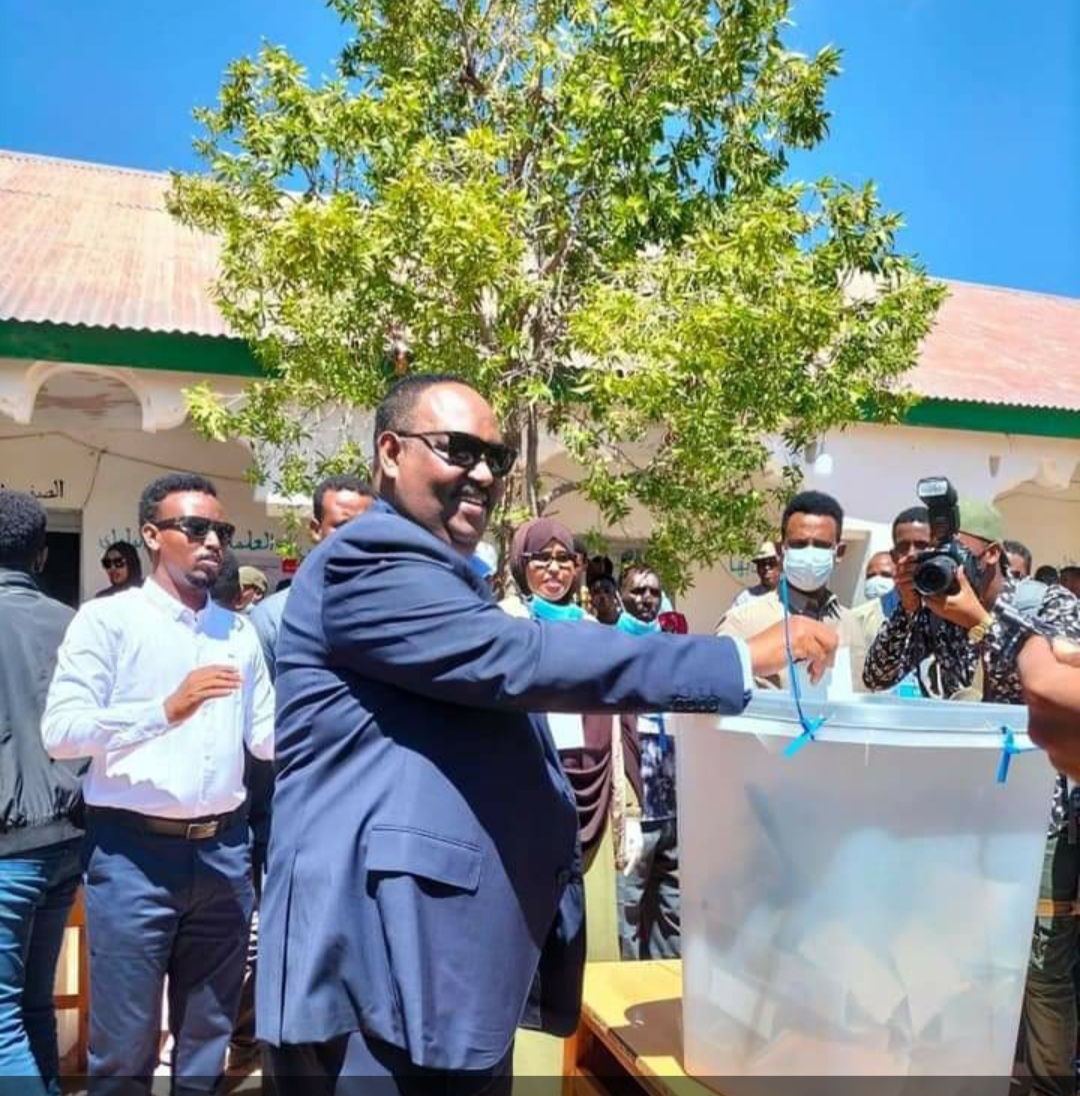

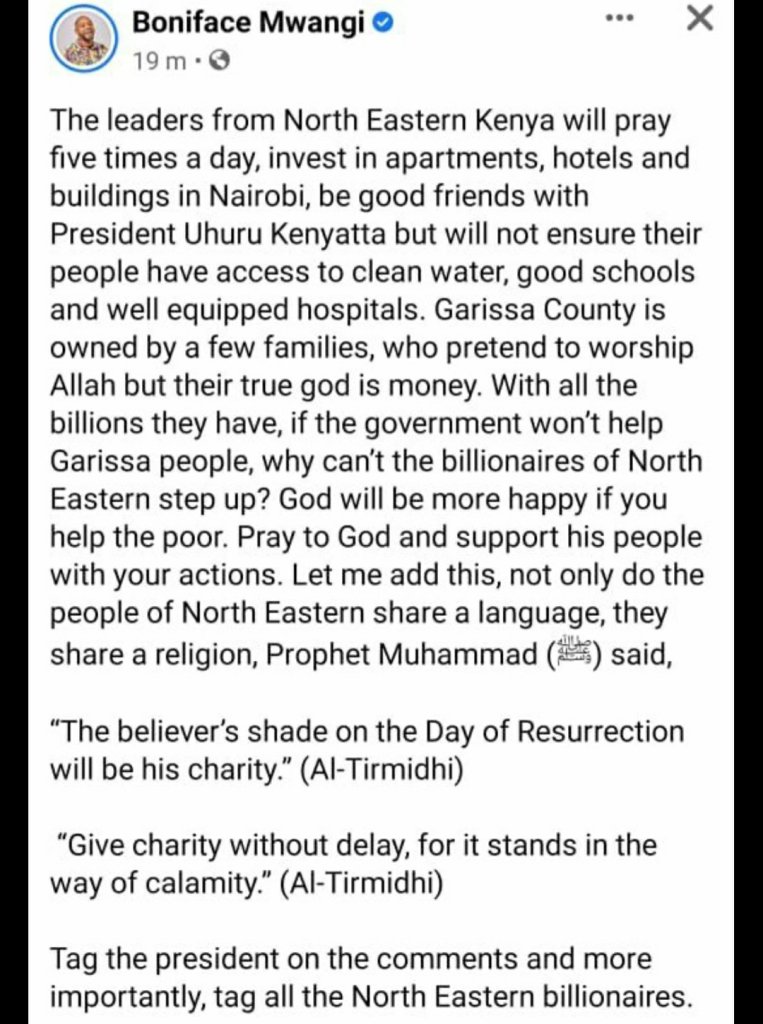


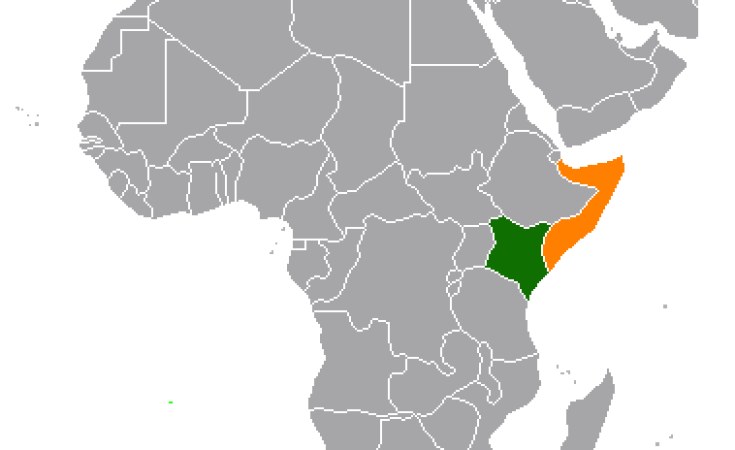
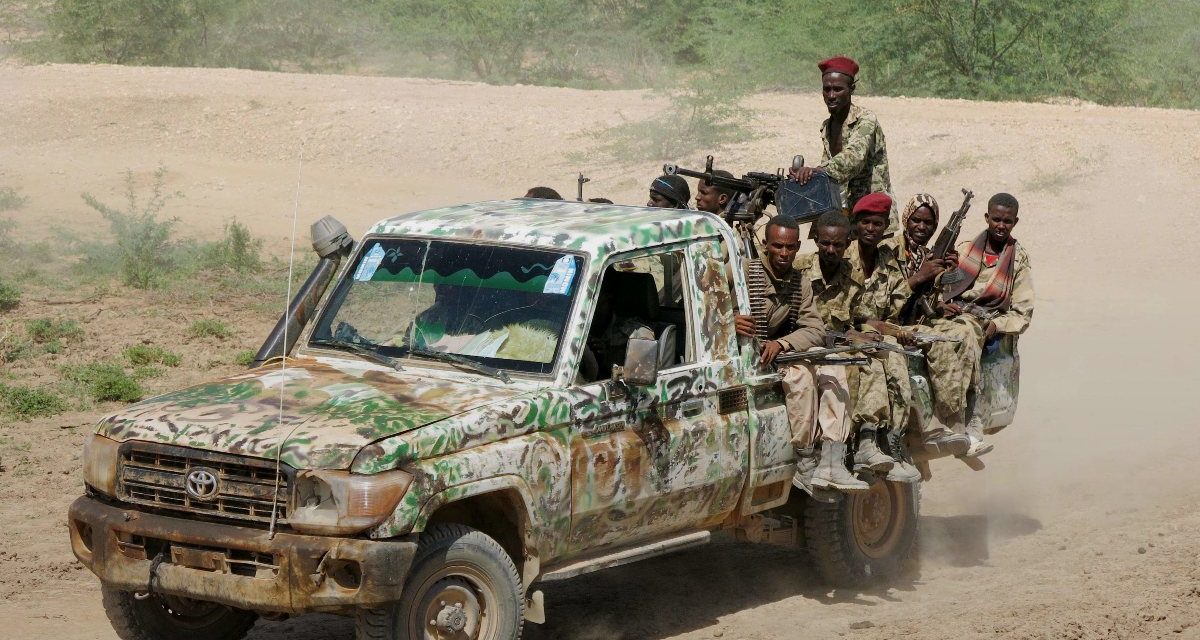
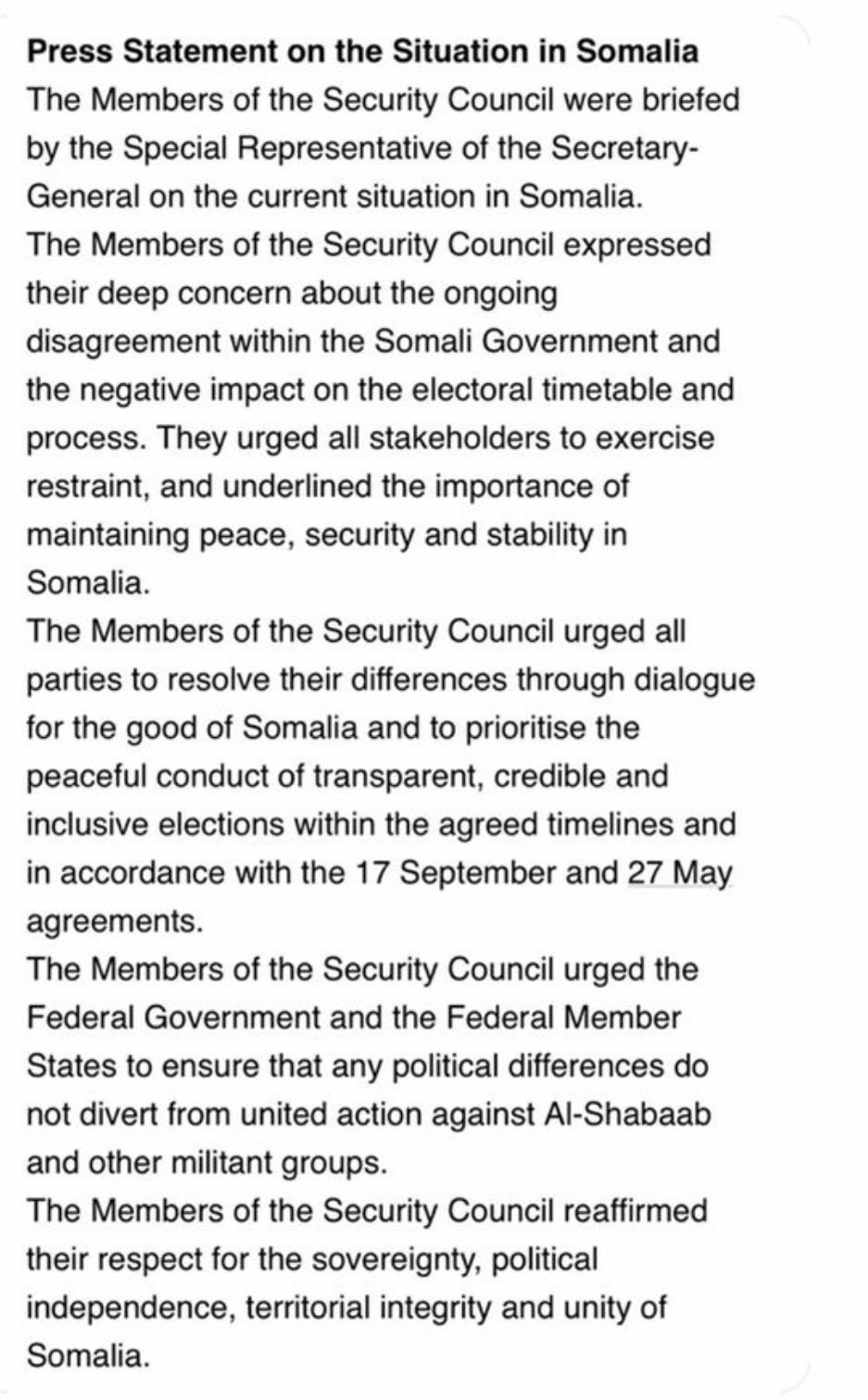


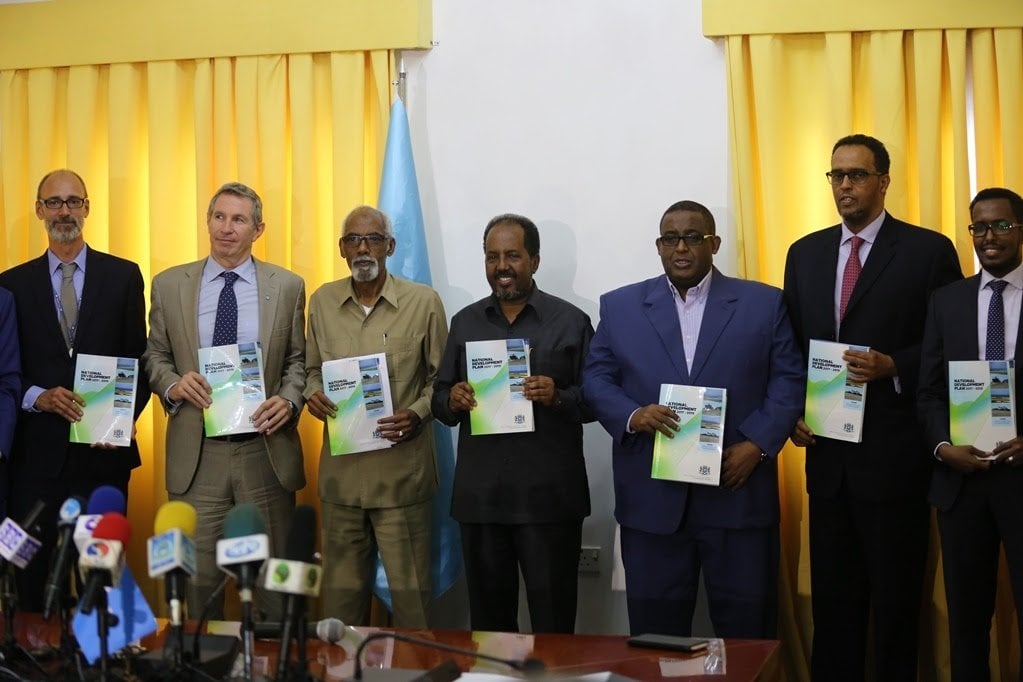


 Warsame Policy & Media Network (WAPMEN)
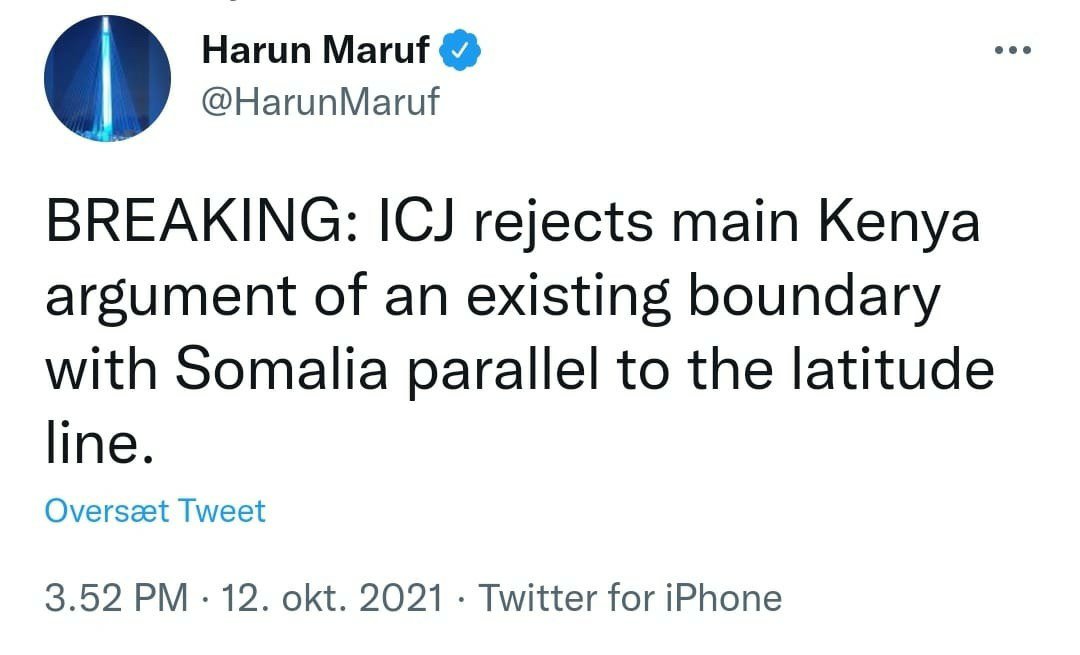
You must be logged in to post a comment.