Puntland Government and Temporary Puntland Election Commission (TPEC) are missing in action with no visible preparations for elections as far as advertisements and public information are concerned. Other than occasional statements by the State President and limited officials that there will be Council Elections in the State, Puntland districts don’t feel the euphoria that comes with elections. Political associations seem nonexistent at all. The voice of small opposition elements to holding elections is louder than the proponents’. Misinformation and probability of government election failure grow by the day. TPEC seems to be concerned with technical aspects of executing elections than educating the public on the forthcoming council polls.
There is danger that misleading information, falsehoods and rumors may take hold and sway public opinion against elections. There is an urgent need to prevent this from happening and to take measures to counterattack negative information on Puntland Government intentions to hold free and fair elections. This is a wake-up call for the government, TPEC and pro-election political associations to act now before it is too late.
It is human nature that people hate someone else succeeding where they failed badly. The three successful Pilot Council Elections in Qardho, Uffayn and Eyl recently must have been a shock to Faroole and Gaas. That much we understand in regard to human situation of former leaders of Puntland State, but now they hurt our expectations of them to act as Puntland/Somali statesmen. What is wrong with our yesterday’s leaders and supposedly experienced politicians?
President Faroole tried his best and his administration did a huge ground work in his attempt to hold Council elections. In the end, he didn’t see the process through successfully. This trial was commendable and Puntland is now building on these efforts. It is perplexing to see him opposing the same work he had started. Shame! People of Puntland deserve better.
What some Puntlanders may find extremely odd, however, not surprising, is the case of Gaas opposing Puntland moving forward without listening to his sadistic utterings. Many Puntlanders couldn’t be deceived by any more shenanigans by a politician whose entire political career was built on shameless corruption, and abysmally failed Puntlanders in their time of need in both war and peaceful reconstruction. Gaas, a doctor in economics, was reportedly quoted as saying “Little corruption is good for the economy”.
But, let us cut chasing the wild goose – Gaas can’t have further say in Puntland affairs. People of Puntland are still reeling from the dilapidating harm done by Gaas and his despotic litte cronies of Aaran Jaan types. Recall scandal involving Garowe-Galkayo Road and P&O Bosaso Port, the infamous “15 million Dollar Golden Handshake”, on the top of unprecedented, huge, daylight bribery in Puntland House of Representatives to sell out the only Puntland port then. Where does he come from to oppose Puntland transition to democracy? Can he be a model for anyone of decent reputation? When talking to Gaas, ask him about his experience with “Tukaraq Fiasco”. Gaas is the author of the infamous “Ban Ki-moon Stament” as prelude to sell his soul and Puntland interests to President Hassan Sheikh Mohamud.
Residents of Puntland State of Somalia will march on and pass-by the lovers of doomsday and “after me, the dèluge”.
(Feature picture: Garowe-Galkayo Highway now under construction where Mr. Gaas had failed and messed up).
Anti-democratic extensions of mandate is becoming fashionable in most Federal Member State (FMS) in Somalia. The Federal Government of Somalia (FGS) is reticent about the new political shenanigans by the heads of FMS. Silence on the illegal power grab could be interpreted as conniving with the power abuses in the FMS. Somaliland, which had never re-elected its Upper House in more than three decades and only twice in the Lower House, constitutes the most undemocratic entity and leads the pack of power grabbers in Somalia, followed by Jubaland, Galmudugh, Southwest and Hirshabelle. In the case of Somaliland, the Upper House (Guurti) has just extended its legislative mandate to yet another five-year term, thus becoming a parliament for life, and Somaliland, the mother of all mandate extensions. The President has extracted two-year term extension for himself by creating artificial constitutional crisis in Somaliland. Other FMS have opted for constitutional manipulations to prolong their stints and lives of misrule.
In Puntland State, public debates are raging in towns between supporters and opponents of democratic transition. Here at least the government isn’t talking about mandate extension. There are people among the debaters, though, who say cynically or in good faith that the idea behind One Person One Vote planned in Puntland State, is to seek extension of current administration’s term to finish up the process. They say the taste of pudding is in the eating. Until that happens, let us keep the faith to see these elections through.
Based on conversations, debates and discussions in towns, Puntland is ready for democratic elections. There is a general public understanding that the old system of indirect selection has reached the dead-end. Many believe that Puntland will not survive with the repeat of that clan selection process. The salvation lies in the introduction of democratic principles that has no alternative historically in governance.
Current Puntland Administration has no other choice but to accept the reality on the ground and expedite the process of District Council Elections. Failure to meet this challenge will be a colossal miscalculation that will see existential threat to Puntland self-government.
So, let us not waste time in political bickering. Let us move forward full of hope and confidence that better days are ahead of us.
I was in Kenyan capital, Nairobi, watching the local TV stations when late President Mwai Kibaki unilaterally crowned himself president of Kenya for 2nd term in office in December 2007. It happened in a such dramatic fashion that tallying election results were discontinued suddenly and Kibaki declared president in disbelief! Rival Raila Odinga then, his supporters and the whole country were in shock as they couldn’t fathom what was unfolding in the State House. By eight o’clock local time I could see through the windows of my apartment in Chester House that city streets were deserted for fear of election violence. Nairobi is the home of huge poverty-stricken slums like Kibera whose residents no army could stop them as they could storm the city in protest. The atmosphere breathed trouble for all. Many had lost their lives in Rift Valley towns and other precincts as a result. The controversy and election challenges continued for a year or two, prompting intervention and mediation by foreign statesmen, including late Secretary-General of the United Nations, Koffi Anan.
Looking back at that election incident, one would find that Kenya has history of election disputes and results were never accepted or conceded by the losing party.
By world election standards, there could be always some poll irregularities even in advanced democracies, but the final judgement lies in the fact whether these irregularities amount to a degree that significantly change the election overall results.
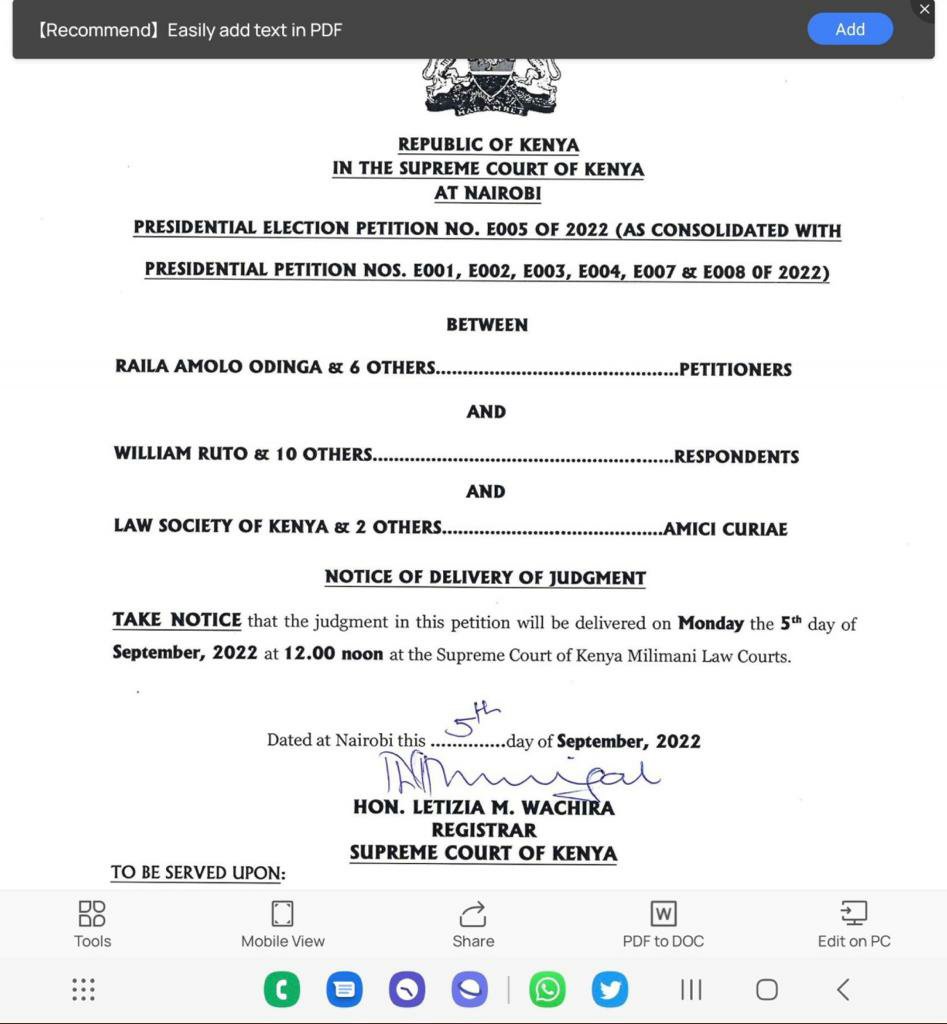
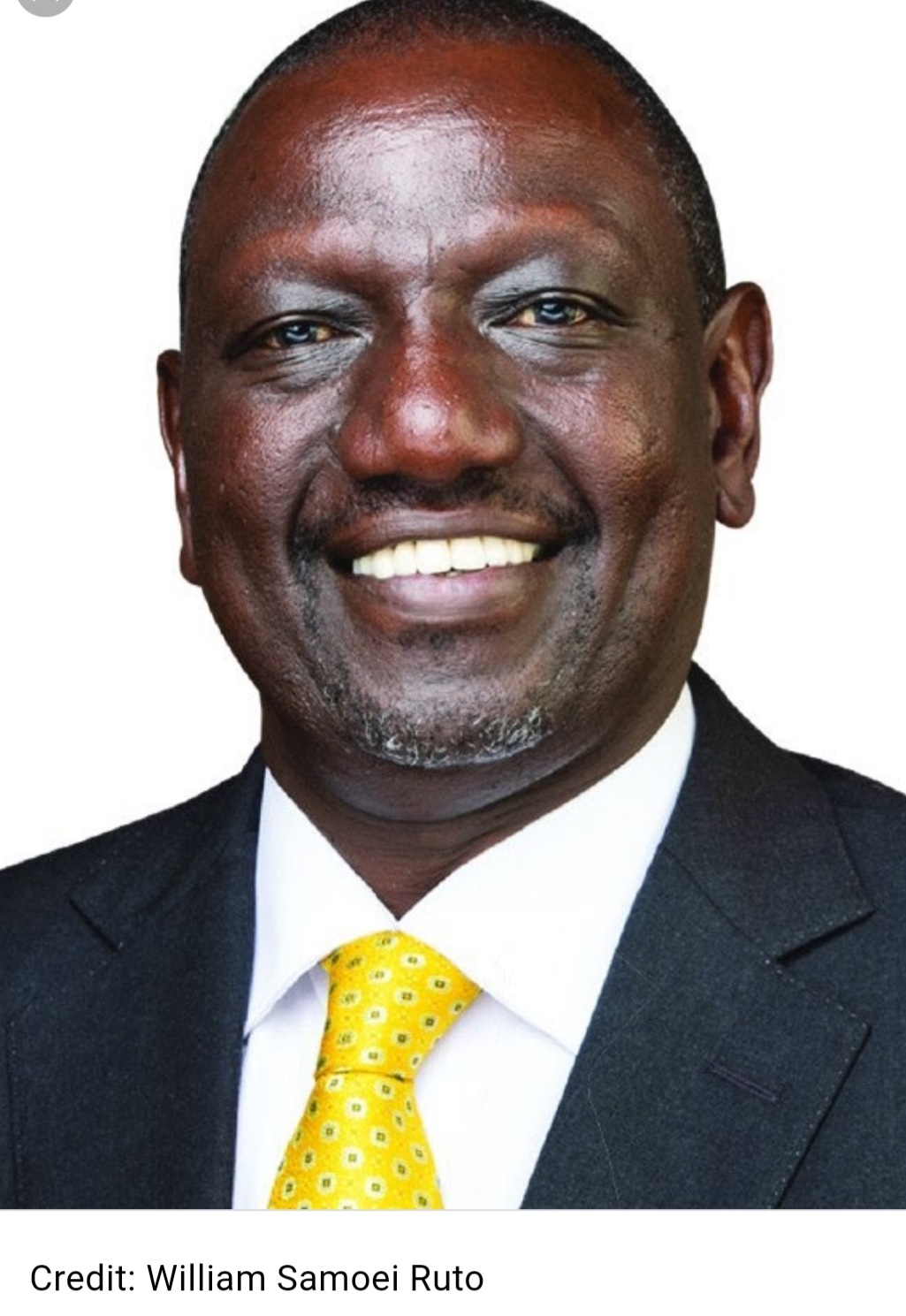
Enter 2022 general election. William Ruto has been just declared President-elect, this time by the Chairman of IEBC ( Independent Electoral and Boundary Commission). The Chairman, however, had some members of his team boycotting the ceremony for declaring Ruto President-elect, a typical scenario consistent with Kenya’s election history.
In this election, it is fair to say that there will be protests, even violence in some counties and court challenges, but the election win of William Ruto will prevail as this was the most transparent election in Kenya’s history. Despite its devastating culture of corruption, election manipulation and violence, Kenya has matured into a thriving democracy. Congratulations!
There are five things that make the residents of Puntland State troubled now:
Severe drought, following failure of two consecutive seasons;
Unprecedented inflation. Skyrocketing prices beyond the reach of ordinary people;
Impending violence and armed confrontation to follow current military standoff in the Port-city of Bosaso. Keen observators notice slow preparations for war to resolve leadership contest between Puntland State leadership, particularly the President, on one side, and the revolt and mutiny led by PSF/Boqor Burhan of Bari Region, on the other. Each side sees no alternative to fighting it out, an unprecedented development, given the fact that Puntland regions were famous for traditional mechanism for conflict resolution. This is caused by the fact that neither side recognizes the other for its leadership role. Hence, many residents see no way out of Bosaso standoff, with increased likelihood of violence, displacement and great harm to Puntland peace and Stability ;
Stalled municipal elections, following the win of opposition parties in the poll in all three pilot elections in the districts of Uffayn, Qardho and Eyl in a back-to-back setting with the Federal Elections. This has been further exacerbated by the defeat of Puntland President, Said Abdullahi Deni, in the Federal Presidential Race in Mogadishu. Stalled elections in Puntland is another dangerous layer of instability.
Titled traditional elders have been steadily losing their moral authority as they melted into political sides at all levels of Somali administrations – thus the demise of traditional SELF-GOVERNMENT known for this part of Somalia.
Puntland House of Representatives is now showing signs of life to challenge the Executive Branch after two decades of slumber. Observers say it is too little too late. Nevertheless, it is never too late to save what remains of Puntland. Good luck!
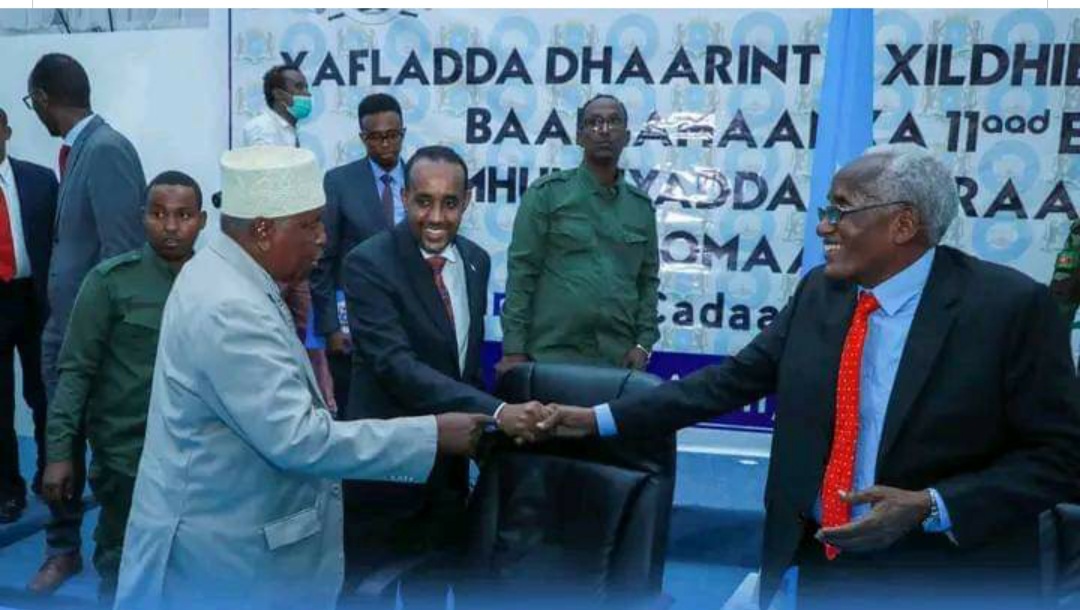
It has been a long time home-coming to reach at this stage – a controversial election produces controversial outcome, however. Despite press reports and multiple eye-witness accounts of election manipulations at constituencies levels, though, the New Parliament composing of two chambers is finally constituted with the election of the temporary speakers today, based on age criteria, until the leadership of the both houses are voted for. The temporary speakers are Senator Mohamed Ali Yusuf (Gaagaab) from Puntland State and MP Abdisalam Haji Ahmed (Dabancad) from Galmudugh State.
Given the long delays, political controversy and in-fightings between different levels of the government and FEIT (Federal Electoral Implementation Team), today’s Swearing-In Ceremony is significant.
Today’s proceedings in Mogadishu is shadowed, however, by incomplete conduct of election in Gedo of Jubaland State, and Beletweyne and Jowhar of Hirshabelle State, a total number of MPs close to 30 still to get elected. At this moment, the New Parliament has more than the Quorum to sit and pass resolutions. Whether they would go ahead to hold sessions without waiting for the remaining unelected MPs is to be seen.
WHAT is happening in Somalia now is holding fixed parliament elections before our eyes, discarding any notion that we had learned anything from the mayhem of three decades of turmoil and statelessness. A failed state still means nothing to most Somalis, based on my personal observations.
At moment, we are at brink of a renewed civil war. If we don’t step back, that could herald the end of Somalia as we knew it. It looks with more certainty that we won’t have a 2nd chance this time around, if we don’t stop Federal election shenanigans immediately. We have never seen a history of such sham elections, where the entire command and directors of intelligence service (NISA) of a country had conspired to steal an election with the help and consent of a Head of State and Head of Government. This is beyond serious development. It is a felony.
Shall we continue sleepwalking along this trajectory of doom, or hold back to survive? This decision is ours only, and no one else to blame for our stupidity.
We have been saying all along that a political move in democratization by Puntland State would lead the way to free and elections in Somalia. It is happening today. It is the beginning of an era in Somalia’s politics, which heralds the overdue process of the rule of law and the power of the citizen. This will really have domino effect in the rest of Somalia.
The presence of the members of the international community and Somalia’s civil society as observers of these pilot elections in three districts of Puntland State is an indication of the overwhelming support and best wishes for the success of this gigantic endeavor by the people of Puntland State. It is a great step forward for the people of Somalia in a troubled nation.
Apart from artificial and fabricated historical distortions of facts, peoples of Puntland and Somaliland have more in common in their political, economic and cultural cooperation than anything that divides them. Despite persistent anti- Majertein propaganda promoted by opportunistic politicians from deep Southern Somalia, and those from Somaliland, who were engaged in campaigns to harm the political career of late Somali Prime Minister Mohamed Ibrahim Egal, the history of political cooperation between the two far outweighs than other issues that might had divided them. Proximity of geographical location and cultural affinities are also major factors that bind them. The destiny of disputed boundary and its inhabitants are issues that Puntland and Somaliland can alone amicably settle with the consent of the people concerned. The fact that there are disputes of whatever sort make the destiny of the peoples of Puntland and Somaliland intertwined, and therefore, that creates common political interests between the two. To understand this reality requires political maturity and sophistication, discarding the long-held propaganda of fake barriers by opportunistic political elite in Hargeisa.
I have every confidence that enlightened and shrewd politicians from both sides will make politically calculated moves to discover that common interests between Somaliland and Puntland that bind them permanently.
The threat of holding fresh elections everytime there is an intractable political conflict at leadership level is the way forward. The government of the day has to fall and announce fresh elections. This is a political remedy we could to apply to diffuse or resolve recurring political confrontations. Often, in Somalia, the government becomes part of the problem than the solution. It has to disband and gets itsel rid of.
Such mechanism is practised in many parts of the world where there is a democracy. One would ask the question: How would you resolve if the instigator of problem is the Head of the State? Good question. That is why the procedure of impeachment exists in many world jurisdictions. Impeach the President for violations of the articles of the constitution and misdemeanors. This is within the constitutional mandate of the parliament.
Elections are the only way to resolve current political crisis in Mogadishu. Expediate the elections for the Lower House of the Federal Parliament.
ELECTIONS FOR THE LOWER HOUSE OF SOMALI FEDERAL PARLIAMENT SHOULD PROCEED WITHOUTDELAY
The Federal Member States (FMS) should conduct elections expeditiously as the only legal instrument to break the political logjam and power struggle in Mogadishu. They should take note of the senseless confrontations between the Caretaker prime minister, Mohamed Hussein Roble and former president, Mohamed Abdullahi Farmajo, whose constitutional mandate to stay in Villa Somalia had expired eight months ago, but still stuck there issuing unlawful executive orders.
The idea behind enshrining a federal system in the Federal Constitution was to allow Somalia to continue to function under similar circumstances of political and security upheavals in the Capital City. This is the time to show Somalis and world community at large that Somali State shall never collapse as it did in 1990s.
Donors and members of the international community (IC) should understand this fundamental historical change in Somalia’s governance – that there are functioning federal states in the country, which need all the support and logistics necessary to hold the elections now, despite the political paralysis at Federal Government leadership. This is the time to act decisively at both FMS and IC levels. Let us not miss this golden opportunity.
Did you get yet the main reason for the present political confrontations between #Farmaajo and #Rooble? Is it Ikram’s case, elections, Kenya, Qatar, UAE or something else?
The main reason for this conflict is the politicization of security forces by Farmaajo. Directors of NISA and commanders of Police Force and Somali National Army, SNA, had been recruited for political purposes by Farmaajo to stay in power. It was impossible to conduct free elections with the security and financial grip of Farmaajo in the country. The mastermind of this policy was Fahad Yassin. This policy was in the making for the entire mandate of Farmaajo. Countries like Turkey, Ethiopia, Eritrea and Uganda had been used for this objective in mind only, whether they knew it or not didn’t matter. Farmaajo and Rooble are struggling now for the control of security forces, especially the powerful NISA secret and intelligence service.
This dangerous situation was exposed during Farmaajo’s attempt to illegally extend his term to two more years and subsequent armed confrontations between the forces of the opposition and government. Lives had been lost in exchange for foiling Farmaajo’s military and constitutional coup.
Ikram’s case, among many others, yet to be contested are excuses and symptoms of the conspiracy to a power grab before everybody’s eyes. It is really madness to ignore the laws of the land to attempt to cling to power in this 21st century. It is simply not normal state of mind to try this nowadays.
Hopelessness is a dangerous dead-end. As with people, nations need a sense of hope to exist and deal with the inevitable challenges confronted throughout their development and existence. But that sense of hope must be grounded on reality; otherwise, it turns into delusion.
With the so-called election being around the corner in Somalia, it is fair to say that this systematically eroding nation is in the thick of that season of delusional self-assurance. Positive change is inevitable without making any change in method and mindset.
Many candidates are lined up to replace the de facto President, Hassan Sheikh Mohamud, whose term has ended on September 10th, who is enjoying an extension without mandate, who himself is a candidate. The Parliament is sidelined as in 2011 right before the transitional period came to an end. Worse, there is no Constitutional Court to judicially arbitrate.
These candidates, by and large, have only one thing in common: the conviction that “The president must go.” This sentiment which resonates with the majority of Somalis has ironically rendered any substantive inter-candidate debate on critical issues unnecessary, at best.
Most seem confident that a replacement would automatically bring about the direly needed change to repair brokenness and rectify ills. However, history reminds us of successive disappointments that resulted from such false assumption in the past decades.
Governance by Tourism
Four years ago, I have privately counseled and publicly cautioned that the newly elected President was bound to fail if his government does not provide direly needed public services, make genuine reconciliation and transparency to end corruption his top priorities. And fail, he did.
Against this backdrop, President Mohamud has been expanding his authority by issuing unconstitutional decrees that are intended to become part of the policies shaping the electoral process. His effective tactics worked like this: He would issue a decree that clearly overreaches the legislative authority of the Parliament, and then swiftly, before any public outcry or any candidate could react, IGAD and UNSOM would issue their respective congratulatory statements. Implementation ensues.
Meanwhile, in order to present a façade of legitimacy, the coopted Speaker of the Parliament is granted a symbolic seat at the so-called National Leadership Forum. The NLF is an IGAD concocted and international community supported political sham that grants a handful of regional actors and government officials with clear conflict of interest the exclusive political authority to decide Somalia’s existential fate. Make no mistake; this can only lead into a never-ending process of transitioning out of transition, bloodshed and perpetual dependency.
Smoke-screened by this political theatrics, the reinvention of President Mohamud is smoothly underway. He is in effective hands of professional image-makers who are capable of making miserable failures look like exemplary successes. In this recent article with all dramatic visual and sound effects, President Mohamud, the man under whose watch Ethiopia got a blank check to run the Somali political affairs and al-Shabaab became more lethal than ever before, claims to have a new plan to restore security and defeat that terror group.
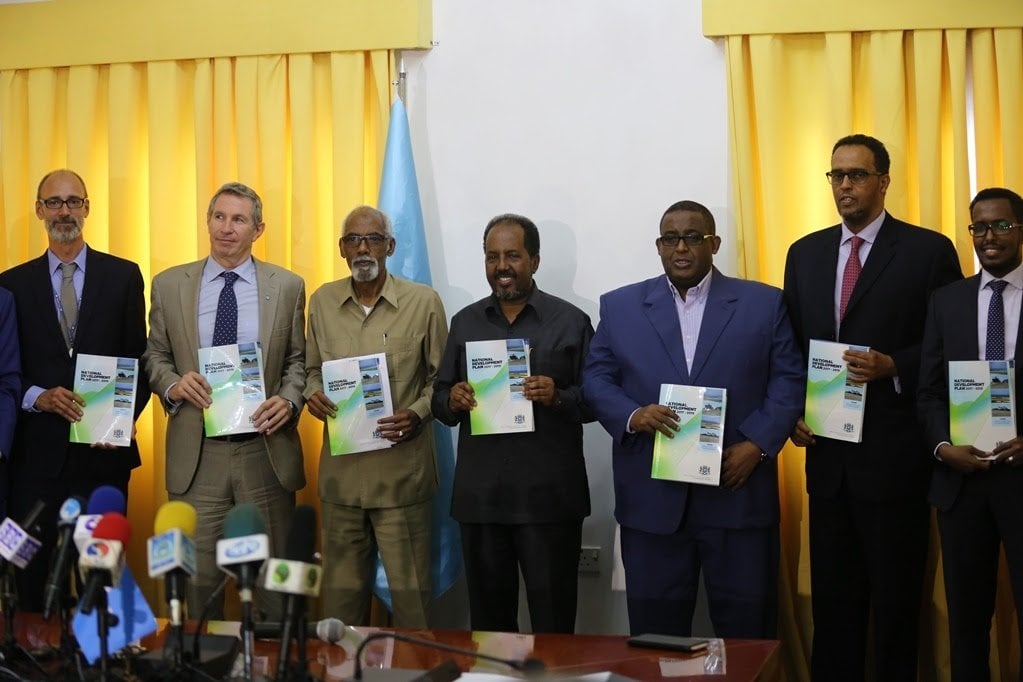
On their part, the Council of Ministers has completed the National Development Plan or the cosmetically enhanced version of the cash-sucking New Deal Somali Compact 52 days before their term expired. The subsequent political fanfare by the advocates of status quo was hardly surprising.
Never mind that the current leadership are yet to designate national currency and are yet to address how having US dollar, the Ethiopia’s Bir, and Kenya’s Shilling–the national de facto currencies—contribute to inflation and make life economically unbearable for the average Somali. People are led to believe that these same leaders whose ‘national budget’ is made of salaries and operation costs, who are yet to set up a single government-funded clinic or feeding and housing centers for the nearly one million internally displaced persons (IDPs) in Mogadishu alone, are set to improve the Somali per capita income and reduce poverty.
Meanwhile, suits are pressed, shoes are shined and suitcases are packed. The Somali leadership team is anxiously waiting for the next great conference being convened somewhere across the seas.
Coercive Institutionalization of clan federalism
Ever since certain members of the political elite accepted that clan-based federalism is a viable governance system; that false narrative has neither faced serious scrutiny nor serious setback. Well, at least not until the government, IGAD, and UNSOM have at various times attempted to lure, pressure, and coerce the traditional leaders of Hiiraan to merge into an arbitrary union with Middle Shabelle and immediately form a federal-state before the upcoming election. Apparently this trio has forgotten Hiiraan’s historical reputation as the womb of Somali patriotism.
So, Hiiraan became ‘Laf dhuun ku taagan’ or the ‘bone that stuck in the throat’ of the trio and a major setback against the political formula engineered to make the reconstitution of the Somali state impossible, and inter-clan perpetual enmity and bloodshed the political order.
Which of the Presidential Candidates might be the right one?
In identifying the right person, it is critical to establish criteria through which each candidate could be evaluated. None should be granted advantage based on name recognition, clan affiliation, or cash cushion. Election or selection should be criteria-based:
– Does he or she have a clear vision, grand strategy and a viable implementation plan to help him or her shake up the current externally manipulated political order?
– Is he or she willing to cut the umbilical cord of dependency and spearhead a nation willing to mainly rely on itself?
– Is he or she willing to put genuine reconciliation, public service and transparency on top of his or her priority list?
– Is he or she willing to pushback against IGAD & UNSOM diktats and accept the fact that the authority to govern comes from the people, and that he who grants you that authority can also take it away from you?
– Does he or she recognize the existential importance of having one or two strategic partners instead of an array of states and interest groups of conflicting interests?
If these criteria seem too difficult to meet, rest assured, they are. No one should be misled to believe otherwise.
Sowing Before Harvesting
The succeeding president and government will not make substantive change so long as they do not put genuine reconciliation, followed by constitutional convention that addresses all critical issues ignored by the current counterfeit document, at the top of their priority list.
The new constitution must overhaul the political order of the day. It may acknowledge the social relevance of clan structure but must declare in no uncertain terms the separation of clans and state and ensure that clans have no political authority and that clan-based distribution of political power is done with. In their very nature, clans promote exclusive rights and perpetual zero-sum strife against other clans.
Somalia may not get a candidate who meets every aspect of the criteria but it cannot afford not to raise the bar. It is time for the public to demand accountable leaders with transformational vision. It is time to resist getting intoxicated with political rhetoric. It is time to end the mirage-chasing game.
None has declared candidacy yet. Each one of the two is currently in a position of power and influence. Each has the resources at his disposal to push his presidential ambition. Each enjoys frontrunner status from their respective constituencies, according to public opinion – Deni among the Daroods, Rooble among the Hawiye. Each hails from one of neighboring Federal Member States of Puntland and Galmudugh. Regionally, they have common interests geopolitically, economically and in security cooperation. They could be complementary as president and prime minister of Somalia. They have federal ambitions at a time when Galkayo is no longer a divided city along clan lines. They seem, therefore, to realize their political chance has arrived.
While this is, at this moment, a pure speculation, there is a potential that both would run in this federal election.
One would ask what about other possible candidates, especially from Hawiye camp. Good question. Give me names. Sheikh Sharif Ahmed, Hassan Sheikh Mohamud, to name just two of those running now as they look frontrunners among individuals in that camp. Each of the two was a former president. None was impressive enough to be given a 2nd shot at Presidency. The Somali Doctrine of not re-electing a president plays out here too. Moreover, the two are antagonistic too as they were rivals in previous presidential race. They are unlikely to form a joint front in this race.
In conclusion, expect surprises in these Federal elections as Somali politics is as unpredictable as peace and war among Somali nomads.
Current political crisis in Mogadishu could degenerate into violence. The political confrontation between the leaders of the Federal Government could lead into disarray and unraveling of public institutions, massive displacement of residents and pull-out or evacuation of members of the international community. Only cool heads and common sense to understand and appreciate the potential danger could save the situation.
Tribal incitements reminiscent of 1990s insurrection would make the matter worst. Removing stubborn leaders by mob force would lead to destruction of Somali State again. Law and order in the Capital must be maintained at any cost. Mohamed Abdullahi Farmaajo must put all his cards on the table and accept whatever cooler heads advise him to do now. He must realize that he has no presidential mandate to govern and could remain in Villa Somalia only quietly until elections are held in the country. He can’t afford to rock the boat. He should listen to the deep public concerns about his illegal occupation of the presidency. He must see the writing on the wall that he has no further political future in Somalia, and should try to save whatever might have remained of his reputation. There is a zero chance that he could continue to stay on any longer by political manipulations or force. It is in his best interest to go away quietly. That way he spares his country too from the experience of more troubles. Let the Caretaker government hold elections peacefully.
FIND CONSENSUS ON PUNTLAND DEMOCRATIZATION PROCESS
There are reports, press statements and counter-press statements by Puntland political associations and NGOs on the timely holding of pilot (test) elections in some Puntland towns. The question is: Can Puntland hold both the Federal and provincial elections back-to-back (at same time)? If that can be done demonstratively, then why don’t we go ahead with these pilot elections in Eyl, Uffayn and Qardho?
Based on historical experience, this planned local election experiment will surely remain only on paper without Puntland Government pushing it. If current Puntland leader, Deni, were to get elected as President of Somalia in this forthcoming presidential election, there would be no guarantees that the next Puntland President would be in favor of multiparty democracy. This is a one-man show exercise, not a popular movement or political trend in the State as Puntland/Somalia population hadn’t been prepared for the process for many decades.
It is also important to note here that the recipients of donors’ funds like PRDC, PUNSAA, TPEC, among other non-state actors involved in the stalled democratization programs in Puntland State, are partial entities and have vested financial interests in the process and debate on the matter. The new political associations of Puntland are taking their lack of election experiences and low capacities to multi-task into account. It is a legitimate concerns.
We recommend to all parties to come together to reach at consensus on the way forward and inform Puntland Government and donor community accordingly.
Mogadishu – Somalia’s international partners* welcome the convening of the National Consultative Council (NCC) on 21 and 22 August, and commend the regular NCC consultation towards furthering the electoral process.
We note the finalization of the Upper House elections in Puntland and South West State and the start of the process in Jubaland and Galmudug. We also note concerns that have been raised regarding the Upper House process and call on the NCC to address these issues in support of a transparent, timely, inclusive and credible process for the House of the People elections.
Recalling that 24 per cent of the Upper House seats have so far been filled by women, we call for the redoubling of efforts to achieve at least the 30 per cent quota of seats in both Houses of Parliament going to women.
We welcome the establishment of the National Electoral Security Committee and call for the resumption of meetings of the committee to ensure security arrangements are in place in all polling locations ahead of the Lower House elections and that consideration is given to women delegates, candidates and committee members security.
The partners share with the NCC and other stakeholders the belief that the integrity of the electoral process is critical for the stability of Somalia, and we therefore encourage the NCC to take the necessary steps to ensure the credible, transparent and timely completion of the electoral process.
International Partners look forward to continued partnership towards the transparent and timely implementation of the electoral process.
* African Union Mission in Somalia (AMISOM), Belgium, Canada, China, Egypt, Ethiopia, European Union (EU), Finland, Germany, Intergovernmental Authority on Development (IGAD), Ireland, Italy, Japan, Kenya, League of Arab States (LAS), Netherlands, Sweden, Switzerland, Turkey, Uganda, United Kingdom, United States, and the United Nations
HOW TO UNDERSTAND THE NOISES SURROUNDING SOMALI LEADERS’ COMMUNIQUE ON ELECTION
People have short memories on recent developments on the issue. They fail to recall political impasses and stalemates that have degenerated just recently into violence between the opposition elements and Federal Government. A number of Mogadishu residents and security personnel got hurt or lost their lives. Signs of 1991 Civil War appeared in Mogadishu with clan militiamen occupying parts of the Capital City, threatening to storm Villa Somalia. At the time, even the leaders of Federal Member States were in disarray and at each other’s throat. There were sticking issues of Jubaland/Gedo, Hirshabelle/Hiiraan, composition of Federal electoral commission and more. Somalis alone and by themselves couldn’t resolve these problems – members of the international community had to intervene. Somali election impasse got reported to UN Security Council. The situation was getting bad and bleaker.
Yesterday’s Communique by the leaders of FMS and Prime Minister came out with unanimous decision and on consensus to hold the elections. Their decision is political rather than constitutional. It is the only option available to move Somalia forward. It is an outcome based on compromise. Somalis need to welcome it.
None of the two are democratic and remotely fair. Both are arbitrary and extremely unjust. In elders’ selection the abuse could be widespread within the society and harmful to the cherished traditional values of fair arbitration by clan elders. In the other, it could be one man’s abuse of power. At least that goes into his political and leadership CV, if he would be held accountable at appropriate timeframe. In the case of elders, there is no mechanism for removal or impeachment. The decisions of the elders in the selection process that contradict their traditional roles could have far reaching societal damages.
If you are asking me the question which option is better than the other?, I recall a question of a graduate student asking his his professor “what is the difference between totalitarian and authoritarian regimes”? The professor responded, “you are asking me how to choose bad from worst”?
However, I would say this: None of the above selections is desirable. I hate to say that critics of what is happening in this indirection election or selection aren’t concerned with the core issue of this political crisis: Reluctance of all to recognize the urgent need for general elections on the basis of 1P1V. If you don’t want to fight for your civic rights through national suffrage, then your criticism against implementing the political understanding reached at National Consultative Summit in September 17, 2020 is disingenuous.
Until Somalis are ready to go to the national polling stations and press their political establishment to conduct general elections in a free and fair fashion, election injustice will continue to prevail. When you rely only on the sense of justice and goodwill of a politician, then you don’t understand how politics works. Blame only yourself, not the leader of the day.
The infamous 4.5 Clan Power-sharing Formula for Somalia’s major tribes and minorities has been modernized lately to meet the electoral challenges at micro level, that is at regional state level. WDM has coined the term BinarySelection asthenew formula in a revised 4.5. Somalis call it “Manxiisin” or “Manxiisad (provision of bestman or bridesmaid) as in wedding ceremony. Some people call it “Marxal” (arrangement for short time marriage). The Binary Selection entails nomination of one primary election candidate by the authorities with the attachment of a secondary candidate specifically nominated not to pose real competition or winning challenge to the government sponsored primary candidate. It is done in two ways:
If you want a particular sub-clan to win the parliament seat in contest, both the primary and secondary candidates must hail from the same sub-clan.
If you want anyone from a cluster of sub-clans to win the seat, the primary and secondary candidates wouldn’t be coming from same sub-clan. That way you can rotate a parliament seat within a selected group of minority sub-clans every election year as long as the “IndirectElectionModality” based on 4.5 formula prevails in the country. With presidential nominations, many ambitious and electable candidates are eliminated from the race with no recourse for arbitration.
The pitfall of the Binary Selection is that the primary candidate picks own competitor as secondary candidate. That way the primary candidate sponsored by the regional government of the day searches to find a weak secondary candidate from his/her sub-clan that poses no election threat, and often in a pre-arranged fashion. Secondary attachment could be even a close relative or extended family member of the primary candidate. One of the reasons as to why they use manxiis or manxiisad is to prevent local corrupt parliament members to have chances to extort bribes from government- sponsored candidates. Once a secondary candidate withdraws from the race, there is no chance to demand bribes or extortion money for MP vote.
The Binary Selection of Somalia’s Indirect Electoral Process is a by- product of the 4.5. It is being applied throughout FMS. It is devoid of real competitiveness; It is deceptive and extremely unfair. This is another way to eliminate undesirable candidates from the election race altogether. Under these circumstances, think of conducting free and fair elections in Somalia. It is time to look for national salvation from holding direct general elections on the basis of world-tested one-person-one-vote democracy.
Garowe is experiencing shortages of parking spaces and hotel accommodations due to unprecedented influx of candidates, political lobbyists, clan elders, influence-peddlers and spectators of election campaigns. As far as one remembers, there have never been such huge crowds engaged in idle chatters in Garowe before. Paradoxically, they have no say in the decision-making process. Garowe is relatively a small town that cannot handle both the annoying auto- traffic jams and election campaign money that requires extraordinary lunch and dinning tables and banquet spaces, on the top of housing needs of large number of invited guests from other Puntland cities and around the world within the Puntland diaspora.
[Dear reader, while you are here, consider supporting WDMblog by subscribing to it. Send your request via WhatsApp # at +252 90 703 4081 or email at ismailwarsame@gmail.com.]
There is a great deal of anxiety here among many candidates trying to squeeze themselves into the list of 11 senators-to-be. The State President, Said Abdullahi Deni, who decides upon the fate of unprecedented number of senate aspirants, is keeping his list of names close to his chest, not allowing any leaks on his wishes or intention to come out publicly. Surprisingly, he doesn’t consult with anyone in his selection process. In business, public service and in the world of politics nobody gets a job without vetting and going through an interview. Perhaps, Somalia adheres to lower bar standards based on political loyalty only that is deduced from gossipping groups and chat sessions.
It also shows that one man can keep a secret against the backdrop of the story that Somalis have no secrecy. The news blackout by the Presidency of Puntland on the date of release of the much expected list of senator-nominees have created a situation rife with rumors and wild speculations on who would be in that elusive list. This political situation and the system in which a legislator is selected exclusively by one official begs for answers from Somali population for the sake of their continued survival in a viable nation-state.
The political tension waiting to explode into violence in Dusa-Mareb, Galmudugh, conflict in Beletweyne, Hirshabelle, and arrests of businessmen associated with candidates and banning of opposition candidates to come to Baydhaba, Southwest State, are all indicators that the prevailing electoral process in Somalia isn’t only wrong, but also too dangerous to sustain.
These days Garowe City of Puntland State resembles USA Ohio City in election primaries. On the eve of Somali elections, Garowe draws in huge visitors, not only from other urban cities of Puntland, but also a considerable number of public office seekers around the world among the diaspora of Puntland origin. Playing well by producing qualified and able politicians as members of parliament, the State of Puntland could have swaying influence in Somalia’s future governance. The State, however, shouldn’t leave its Federal MPs and senators to their own devices, but support and guide them along its political and legislative objectives.
Influence-peddlers, political pundits and election compaigners for Federal Presidential candidates are also visible in public places here. This is the time Puntland clan elders turn again overnight into shakers and movers of Puntland candidates for Upper and Lower Houses of Somalia’s Federal Parliament. Elders are taking advantage of their unique and privileged positions of selecting sub-clan delegates, who would choose members of parliament from among the clan-sponsored representatives, under the existing Somalia’s controversial 4.5 Clan Power-sharing Formula.
[While here, consider supporting WDM blog by subscribing to it. Send your request via WhatsApp # at +252 90 703 4081 or email at ismailwarsame@gmail.com.]
The difference between Garowe and Ohio, in terms of election campaigning, is that here in Garowe everybody, who happens to play a role in Somalia’s future destiny is almost ignorant, hungry, if not destitute. Unfortunately, campaign funds go to private pockets to alleviate the pain of poverty among electors. Think of electors, who cannot support their livelihoods while staying at locations of election polling stations. Imagine the financial burden and stress they cause to public office seekers. Think of low qualities of candidates, who finally emerge successfully by outbidding other political rivalries or opponents. This is the tragedy of Somali politics.
Unless the democratic principle of One-person-One-vote (1p1v) gets real track in Somali political debate and implemented, drop your hope for successful Somalia, not to mention about the bitter struggle required for attaining good governance.
Most of them act like busy bodies (seem to be doing something), mainly spreading the word that they are candidates. Those seeking re-election are more experienced and strategic in their approaches. They have more connections in trying to secure support and fund-raising. They have personal experiences and knowledge of presidential candidates. Over the past four years, they have been maintaining cordial communications with their respective constituencies and traditional elders. They have personal advantages of story-telling about Mogadishu politics and emphasize more about the importance of re-election rather than sending someone new to the corruption-infested political schemes of the Capital City
Depending how successful someone’s fundraising is, many are afraid of over-bidding. All of them are bit shacken by the fear of potentially losing out to others in the stiff competion for favors from the elders in their respective sub-clan system. What worries them most are the reports on some traditional elders already succumbing to Farmajo corruption in buying elders’ loyalty to promote favorable candidates in the selection process involving delegates. If true, this is the height of political corruption in the country and dangerous new developments in this election cycle.
Those aspiring to be senators in the Upper Chamber of the Federal Parliament are busy securing appointments with heads of FMSs, cabinet members and members of regional House of Representatives. They are after anyone of some influence to get those appointments. That is why personalities within the circles of influence are trying to avoid contacts with these Federal Parliament candidates in the fear of persistent requests for vetting, personal recommendations and influence-peddling with the state presidents. It is difficult time for everybody in town.
They say there is calm before the storm. There are multiple political problems simmering currently in Somalia as a whole. Let us start with issues at peripheries (Federal Member States).
PUNTLAND: The recent move by Puntland Parliament to raise up the stakes required to remove a sitting MP in direct challenge to the powers of the State President, and the speculation about Puntland President Said Abdullahi Deni being an undeclared Federal Presidential Candidate look like a harbinger of what is about to happen next in the State, politically. Obviously, there is resistance on the part of Dhulbahante MPs to the policy of the government of Puntland on the planned 1P1V as their political fortunes in One Person One Vote elections look in jeopardy in swathes of SSC territory (mostly Sool Region). President Deni and his Aaran Jaan political allies are no longer cohesive with regards to their expectations from the outcome of Somalia’s national elections. Aaran Group prefers a Hawiye candidate to win in order to have a say in the appointment of the next prime minister. Forgetting about the good fortunes the Speaker of the Puntland Parliament, Mr. Abwaan, had been enjoying because of the help he had received at expense of others from the State President, he decided to venture out on his own and take risks he doesn’t know how it would play out.
GALMUDUGH: The flip-flop political positions of Galmudugh State President, Qoor Qoor, Federal presidential candidacy of Abdikarim Guled and governance and security challenges posed by Al-shabab make the political situation precarious in that State.
HIRSHABELLE: The State exists only in the books, never succeeding as self-sustaining entity away from Mogadishu shadows. Hiiraan Region isn’t integrated with State Capital City, Jowhar – a situation that makes too difficult to reach at consensus in holding a Federal election in the State.
SOUHTWEST: Sharif Hassan, the former state president and now a Federal presidential candidate, continued incarceration of Al-Shabab leader, Roobow, and State’s preference to maintain the 4.5 Clan Power-sharing arrangement in Somalia make the political situation unpredictable in Southwest State.
JUBALAND: Gedo Region issue is unresolved and therefore the impasse still holds out.
BANADIR: Farmajo is using deep-state to meddle in the independence of the Electoral Commission, planting already his men at its chair and vice-chair, and using Prime Minister Rooble as a Trojan Horse against the chances and political ambitions of other candidates.
With all predictions and analysis, there could be political storms in many parts of Somalia in the run-up to the Federal elections. Stay tuned.
Reliable news source has relayed to this blog,WDM, a tragic story on Puntland election corruption in 2018. The story narrates that a titled elder at the time approached a man to request for lending a car on the eve of Puntland Presidential Election. The elder didn’t want to use his car for fear of being identified. The elder took four newly elected Puntland MPs in the loaned car and visited every presidential candidate that night. When he failed to return the car to the owner for the following next four days with his phone unreachable, the owner started searching for the whereabouts of the elder. When, finally, the elder had been located, he confessed to the man that on the eve of Puntland Election 2018, the elder and his accompanying four MPs were at door steps of one of the vice presidential candidates when the morning prayer was called for from Garowe mosques.
The tragedy is that this story holds true everywhere in Somalia, while Mogadishu is considered the town worse hit by the epidemic of runaway political corruption. Mind you, this wasn’t an isolated story, but a typical one in the scale of widespread corruption in politics.
Somaliland has held elections after it has been frozen in time and space for 15 years. But, it is important to note here that these elections are different from past practices- this time it looks that the elections are close to realities on the ground with regards to Sool and Sanaag Regions. The claim to British colonial legacy that these regions were parts of Somaliland couldn’t hold any water and the empty political rhetoric has been exposed. The contrast with previous sham elections is that these elections aren’t as fake as they used to be – stuffing in fake ballots at clan borders and announcing cooked up election results. Polls that have boycotted participation are almost reflected on this outcome.
The parts of regions of Sool and Ayn that allegedly took part in these elections portray a picture of Isaaqs taking over parts of Sool and Ayn Regions. “Udub-riix” or push-over into other people’s lands has been in the making for many years in the regions of Sool and Togdheer, resulting in these elections producing more Isaaq MPs than Dhulbahante’s. This scenario always happens to land owners, who have neither the vision nor unity of purpose in protecting their land.
There are two winners and two losers in the Somaliland Election 2021:
Sanaag Region and Somaliland opposition parties are winners.
Sool Region and Kulmiye Party are losers.
Sanaag Region is a winner as they proved to be the true owners of their land. Congratulations!
When flames of fire is extinguished, there are still remnants of live hot pieces of firewood simmering beneath the ashes. Similarly, in Mogadishu there are heavily armed clan militia in the quarters of Kaaraan, Circolo Ufficiale and elsewhere in the City and surrounding areas. They are ready to be activated for violence at short notice. Alshabab is engaged in not only co-governing Mogadishu, but also control large swathes of territory in the entire South-Central Somalia. The local and Central governments have no exclusive possession of arms and instruments of power, and in an election environment this poses serious security challenges. The diplomatic niceties and smiles among Mogadishu presidential candidates will fade away soon, adding more security problems in towns.
Prime Minister Mohamed Hussein Rooble has acquired now higher political profile following his successful leadership in bringing opposing parties together in this Summit between FGS and FMS. If he has political ambitions, I believe he will choose one of two options: Supporting one presidential candidate from Darood camp to keep his current job, or move his name forward among presidential candidates. In the first option, observers believe that Rooble will support Farmajo’s candidacy amid absence of apparent other electable presidential candidates among the Daroods. Somalis say, “in the pains of labour, a woman has no choice in privacy. The plans of Rooble in this election will be exposed soon in the next few weeks. However, whatever he decides, this would be interpreted as a collective stand of Sacad/Habargidir. Either way, his political choice, apart from remaining a neutral technocrat, would add more tension to an already dynamic and volatile political atmosphere in Mogadishu and beyond.
Team Nabad iyo Nolool didn’t give up yet to re-run. But, this time around, their chance in re-electing Farmajo lies in the divisions and disunity of opposition leaders, especially among Hawiye presidential candidates, which is likely to happen as election campaigns heat up.










 Warsame Policy & Media Network (WAPMEN)
You must be logged in to post a comment.