
Author: warsame digital media
About the blogger:
This blog is associated with the former Chief of Staff in Puntland State Presidency, 1998-2004. He also worked with the UN and World Bank Joint Secretariat for Somalia’s Re-construction and Development Program (RDP), 2005-2006, as a Zonal Technical Coordinator for Puntland and later as National Aid Technical Coordinator with the Transitional Federal Government of Somalia and European Union. He is now an independent political analyst and commentator on current issues and occasionally gives historical perspective on modern Somalia’s politics. He lives and works in Toronto, Canada. He can be reached at: ismailwarsame@gmail.com
Protected: THE NICKNAME OF 31ST DAY OF THE MONTH NOW BELONGS TO WHOM?
HISTORY
CREDIBLE FINANCIAL INSTITUTIONS BREATH AUDIT

Annual subscription $37.00
August 24, 2019
No audit, no business and no survival for financial institutions, whether they are banks, ministries of finance or any other public and private entities handling public money and wealth.
Governments dealing with foreign financial institutions on regular basis must produce audited documents to be trustworthy. Failure to honor this financial rule is to prepare for closure of the business, and that too requires audited financial statements for those who lost money, including tax-payers.
Without sound and certified financial audit and system of paper trail, there is nothing one can do to assist Puntland rudimentary financial institutions attached to the Ministry of Finance. Deni Administration must act fast to show transparency in that regard before it becomes too late to rectify the situation of Puntland financial institutions. Auditor-General and Accountant- General must be empowered and set independent. No credible audit, no financial credibility and no business.
Home Remedies for Tuberculosis
Take a read.
PUNTLAND DEPUTY-MINISTER IS AS CONFUSED AS VICE-PRESIDENT
Annual subscription $37.00
Protected: PUNTLAND DEPUTY-MINISTER IS AS CONFUSED AS THE VICE-PRESIDENT
FROM BRITISH ARCHIVES
FROM BRITISH ARCHIVES

Annual subscription $37.00
Do you agree with their characterization of Somalis?
Watch “President Obama FIRE BACK on Trump, GOP in Full Speech From Illinois” on YouTube
JUBALANDERS ARE THE VICTIMS OF SHAM ELECTIONS

Annual subscription $37.00
August 24, 2019
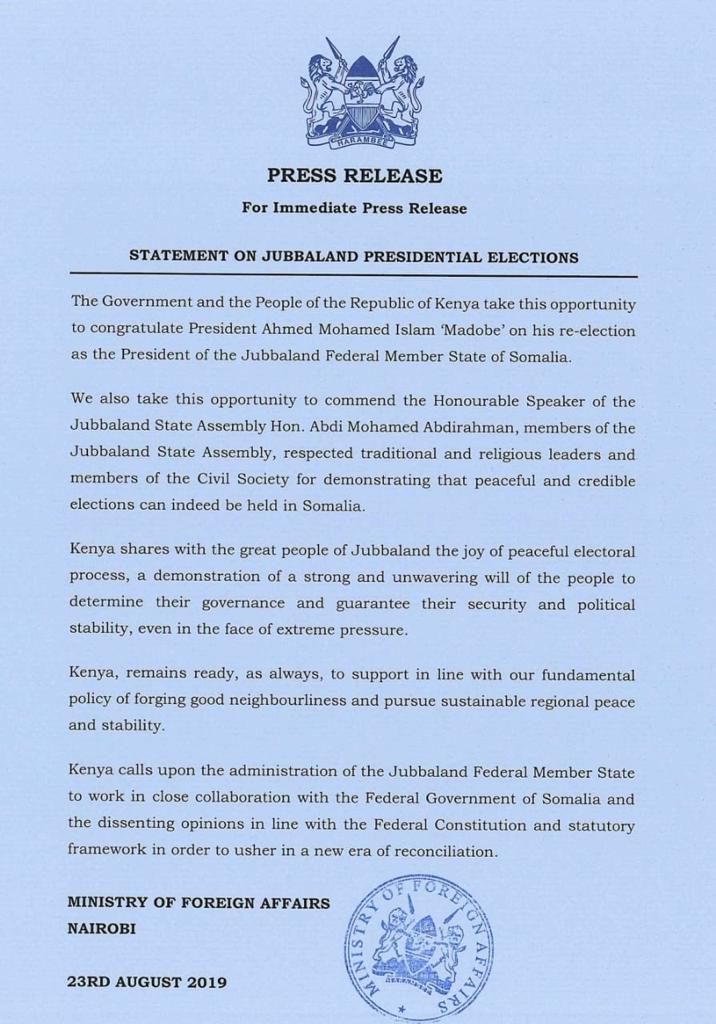
We have read the Kenyan congratulatory note on Jubaland sham elections 2019. We watched the videos of celebrating Kenyans in Eastleigh of Nairobi on the same. However, we have yet to see jubalanders welcoming the various self-elections of several power-hungry and mediocre politicians of dubious backgrounds and characters.
The tension and anxiety are increasingly high in Jubaland. There is also a triangle of three government rivalry in Jubaland: Somalia, Kenya and Ethiopia. Soon, Eritrea will join the fray. UAE and Qatar are in stiff competition to prop up their ever-willing and highly paid proxies in Somalia. Somali foreign partners are still recovering from their shell-shock condition, following the latest developments in Jubaland, and increasingly daring terrorist bomb-blasts in Mogadishu on weekly basis, causing the elimination recently of the City Mayor, Abdirahman Yarisow.
In the light of the above developments, the N&N leaders are putting more fuel to the fire on Jubaland political conundrum, which they had created in the first place, after they had messed up things in Galmudugh, Southwest State and Hirshabelle.
Handing Banadir Administration over to warlord Omar Finish, and reshuffling and replacing seasoned officers of the security sector is an indication of wrong-headed N&N strategy to command junior officers to engage in hostile military operation against Jubaland in gross violation of the laws of the land.
Both the Governments of Kenya and Ethiopia are ill-advised to interfere in the internal affairs of Somalia. Their meddling will definitely do a tremendous damage to their long-term relationships with the people of Somalia. They are better advised to exercise restraint in getting into Jubaland internal quagmire.
All should know that the N&N leaders are solely responsible for the turn of events in Jubaland and other Federal Member States. Somalia is at risking of unraveling the modest gains of the past decade. There is an urgent need for fresh thinking to freeze at least the down-turn spiraling of events.
(Photo: Seraar and Xidig)
A STRATEGIC OR TACTICAL MISTAKE? HAVE YOUR SAY.
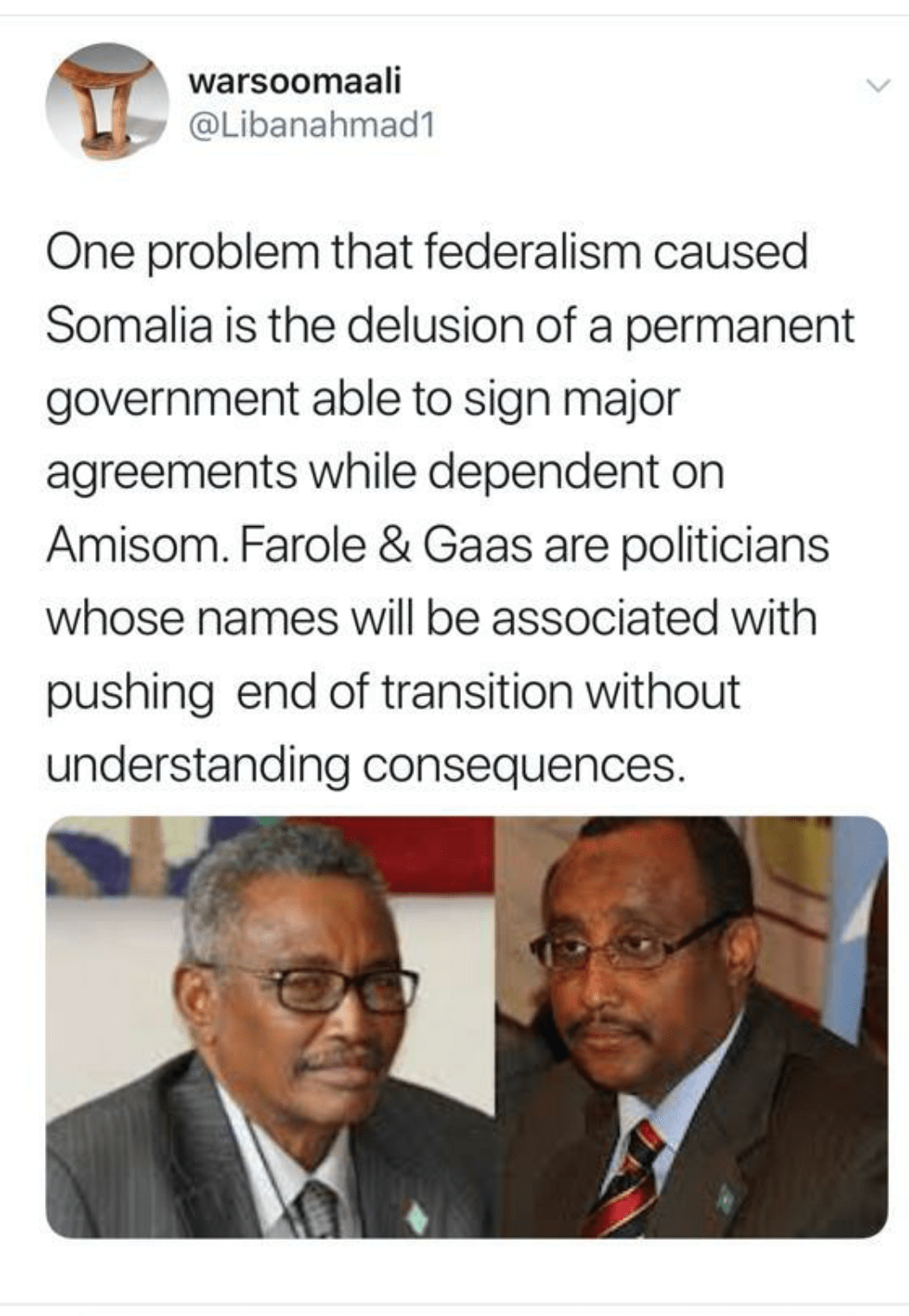
Was getting Somali Transitional Federal Government out of Transition a mistake?
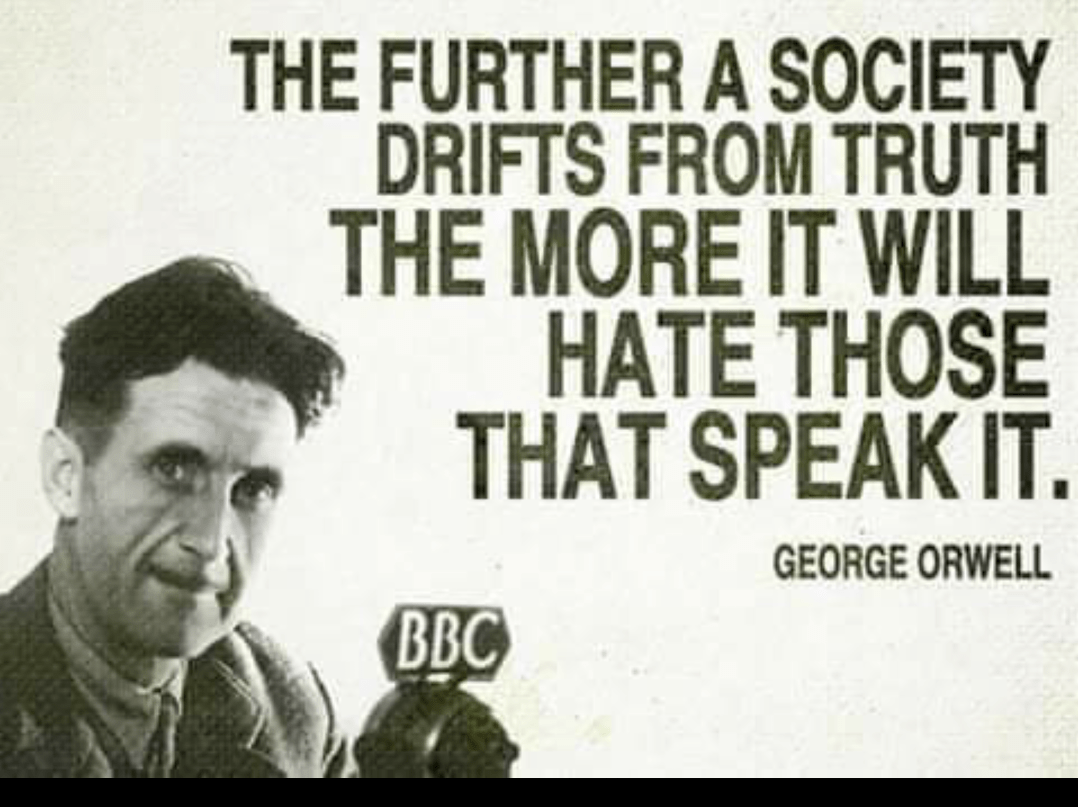
TALKING TRUTH TO POWER
Support WDM with
Annual subscription
$37.00
ISMAAN-DHAAF, ISFARAGELIN IYO ISKAHOR’IMAAD
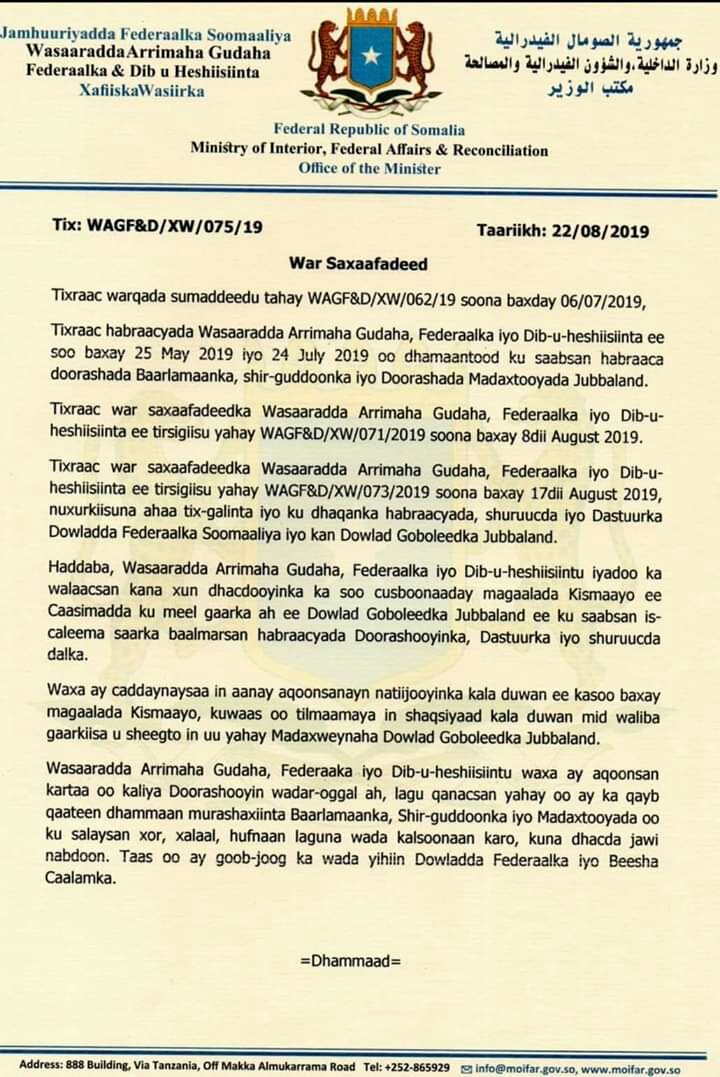
Fursadaan yaa siyey Kenya? La dagaalkanka Dawladaha Xubnaha ka ah ee Dawladda Federaal Soomaaliyeed soo ma abuurin khatartaan?
N&N 2020 ELECTION STRATEGY IN TATTERS
Protected: N&N 2020 ELECTION STRATEGY IN TATTERS
Analysis: Does Somalia’s Jubaland Leader Deserve Another Term?
By the end of this August, clan elders from Somalia’s Jubaland region will select a new assembly whose parliamentarians will vote for a regional president. It is accepted as a virtual certainty that the incumbent president, Ahmed Madobe, will retain his post.
After the former al-Shabaab ally seized the regional HQ of Kismayo with Kenyan troops in 2012, he has won successive elections in 2013 and 2015 – the last with 94% of the parliamentary vote. In both instances, it was strongly understood that the regional assembly was installed from the beginning with his supporters.
This time around, Marehan clan elders and the Federal Government of Somalia (FGS) again have expressed concerns about the elder selection process and the integrity of the election more broadly. Madobe did himself no favors in batting down these suspicions, as a clan elder was recently arrested at Kismayo airport, reportedly for not supporting Madobe’s own plans for re-election.
The Jubaland administration has taken other steps to stifle political activities of his opponents in the presidential race:
· On July 25, Jubaland “banned” federal leaders from traveling to Jubaland until the election was complete. The move is an escalation of Jubaland’s previous order that the Federal Government of Somalia (FGS) officials would not be involved in elections. The threat of overzealous involvement from the FGS is not without reason. In previous regional elections, the FGS has taken direct steps to advantage its preferred candidates. In the December 2018 SW region election, Ethiopia and the FGS conspired to arrest on dubious grounds candidate Mukhtar Robow, the ex-senior al-Shabaab leader who had received amnesty and was a frontrunner in the race.
· Also on July 25, Jubaland security forces in Kismayo rounded up at least 100 youth during security operations in several neighborhoods suspected to harbor threats to the August election; these neighborhoods included Guulwade, Dalacaadda, Via Afmadow and Dalxiiska; many of the suspects were reportedly taken to Fiat prison (operation by Jubaland’s intelligence agency) for investigation.
· Since February, Jubaland forces have blocked supporters of rival candidates from greeting them at the airport on at least two occasions. One such incident in May involving candidate Abdinasir Seerar, who was Madobe’s spokesman before falling out of favor, resulted in a clash between Seerar’s security detail and Jubaland troops.
In this context, it is difficult to imagine a scenario in which Madobe loses the regional election. There are no signs yet that there will be popular protests that would force the regional administration to re-think its approach. Similarly, Madobe is taking all the measures he can to prevent any coalition of militias from emerging that could present an additional security threat to al-Shabaab – which only weeks ago executed a deadly hotel raid in Kismayo that shook the nation.
The more important question is whether Madobe deserves to be re-elected. Al-Shabaab still controls many rural areas and the entirety of the Middle Jubba, including the nominal capital of the region in Bu’ale. If Madobe could control the current HQ in Kismayo without African Union troops, he has taken no initiative to prove it. (Of course, there is certainly an incentive among all parties to postpone any departure from Kismayo to benefit from the lucrative –albeit illicit— trade of charcoal and sugar.)
If Madobe does indeed win the upcoming election, he ideally would divert some of his attention to regional development needs rather than the overwhelming focus on power-sharing disputes with the FGS.
BREAKING NEWS

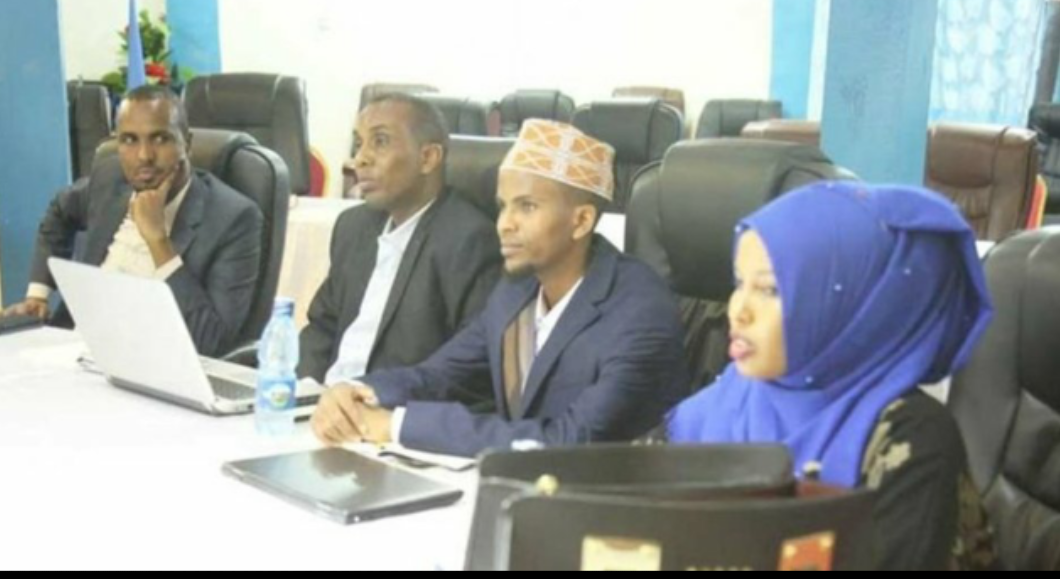
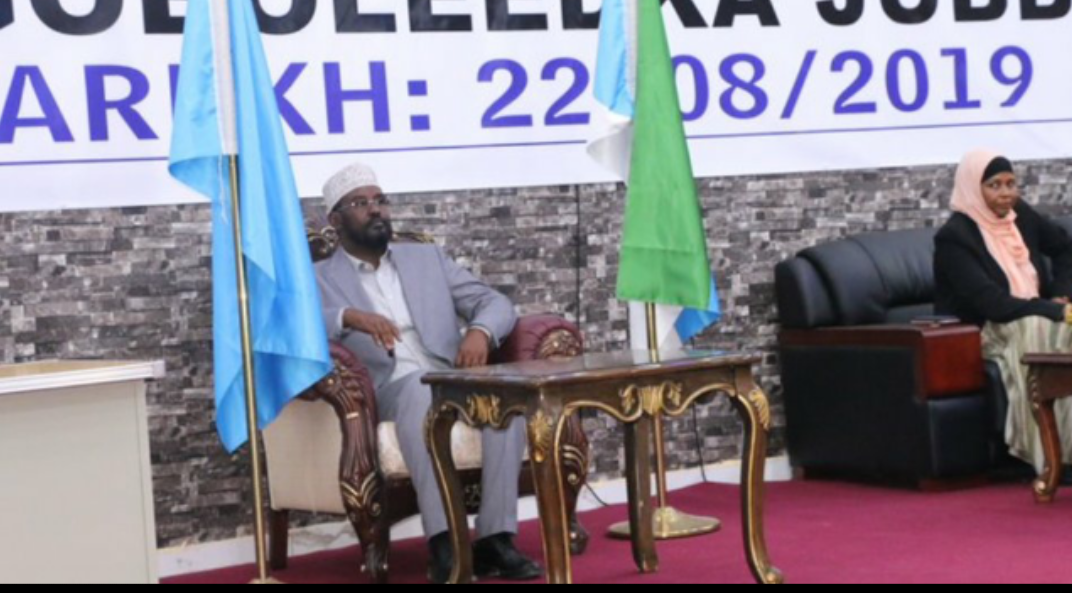
August 22, 2019
By Staff Reporter in Kismayo
The selection of Abdirashid Xidig by Jubland Opposition Group as their candidate for president symbolizes a political victory for Ahmed Madoobe and fatal defeat of N&N strategy of dividing Jubaland community.
Abdirashid Xidig has no any political or moral credibility to represent Jubland. Jubaland opposition has just made poor judgement and irreversible mistake in betting on Xidig.
The political and security fallout from this controversial election, however, will be apparent within the next days and weeks.
Postscript:
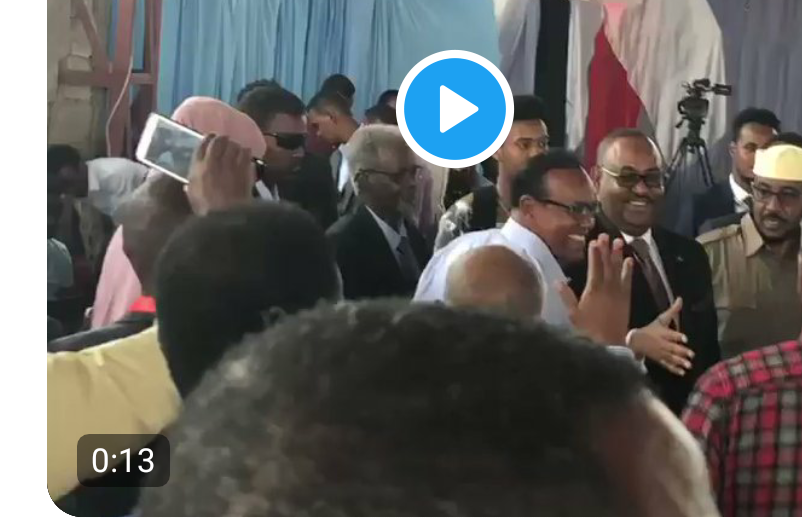
I have been watching the entire process of voting in Jubaland controversial election today at Ahmed Madoobe HQ or Side of voting. I hardly saw a single persson smiling or happy in the attending crowd, including the candidates themselves. They all looked like anxious prisoners – it was un-Somali and surreal. There was tremendous tension in the hall, seemingly ready to explode any time.
It was a difficult election never to be repeated in Somali election history.
AT SECURITY COUNCIL

UNDERSTAND THE MAIN CONSTITUTIONAL MANDATE OF PUNTLAND VICE-PRESIDENT (BAXTISUGE MADAXWEYNE)

August 20, 2019
The main constitutional mandate of PUNTLAND Vice-president is to replace the State President in case and when he is incapacitated to carry on his/her duties to avoid a constitutional crisis or power vacuum.
All other duties of the vice-president in the Puntland Constitution are secondary. There is no clan-ticket or representation that gives the vice-president special or extra powers outside the constitution of the State.
The Constitution of PUNTLAND is exactly the same as that of the USA with regards to the Constitutional job descriptions of the Vice-president, who is in reality, a “Stand-by President” of the State (Baxtisuge Madaxweyne).
Often, the State President assigns or delegates him/her duties on behalf of the President and only upon the policies and instructions of the President. There is no loophole or ambiguity in PUNTLAND CONSTITUTION in that regard.
Puntland vice-president doesn’t have even to stay in Puntland to be called upon from outside the State to take over the Presidency in case the president is permanently incapacitated.
UNDATED KENYA

A PHOTO OPPORTUNITY AT GAROWE INTERNATIONAL BOOK FAIR 2019

TAKE NOTE

Regional Somali airport refuses to allow Ethiopian plane to land
MOGADISHU (Reuters) – Kismayo airport in southern Somalia refused to allow an Ethiopian plane to land on Monday, a witness said, amid heightened tensions between the federal government and the regional leadership ahead of elections on Thursday.
Somalia’s central government said on Saturday it would not recognize the result of an upcoming vote to elect a president of Jubbaland, a key battleground state for counter-terrorism operations, saying the candidate selection process violated the national constitution.
The Jubbaland election commission has said the vote would go ahead on Thursday.
Security analysts say the spat has the potential to cause friction between neighboring Kenya and Ethiopia, longtime allies each with significant numbers of peacekeepers in the Horn of Africa nation.
A staff member at Kismayo airport, who gave his name as Ismail, said the plane took off from Gode in southeastern Ethiopia and eventually landed in the Somali town of Baidoa. It was not certain if the plane was civilian or military.
“It wanted to land at Kismayo airport but was denied clearance because it did not send information in advance,” Ismail told Reuters by telephone.
Incumbent Jubbaland President Ahmed Mohamed Madobe, who is seeking re-election this week, is a key security partner for Kenya, while Ethiopia has grown closer to the federal government in Mogadishu in the last year.
Writing by Hereward Holland, editing by Ed Osmond
DR ABDIQAFAR YASIN FARAH, A PUNTLAND OFFICIAL, DELIVERING SECURITY RELATED LECTURE IN THE USA TODAY

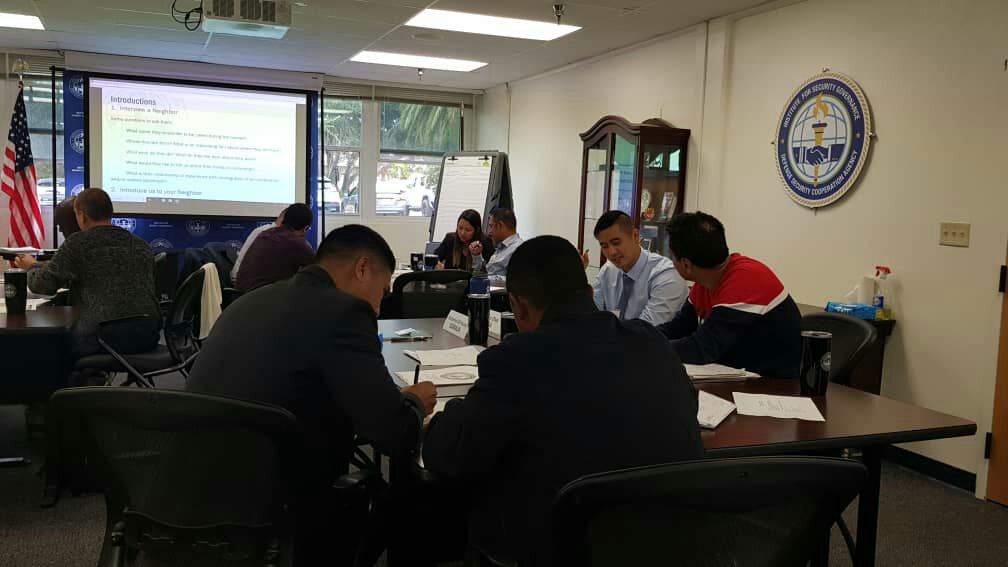
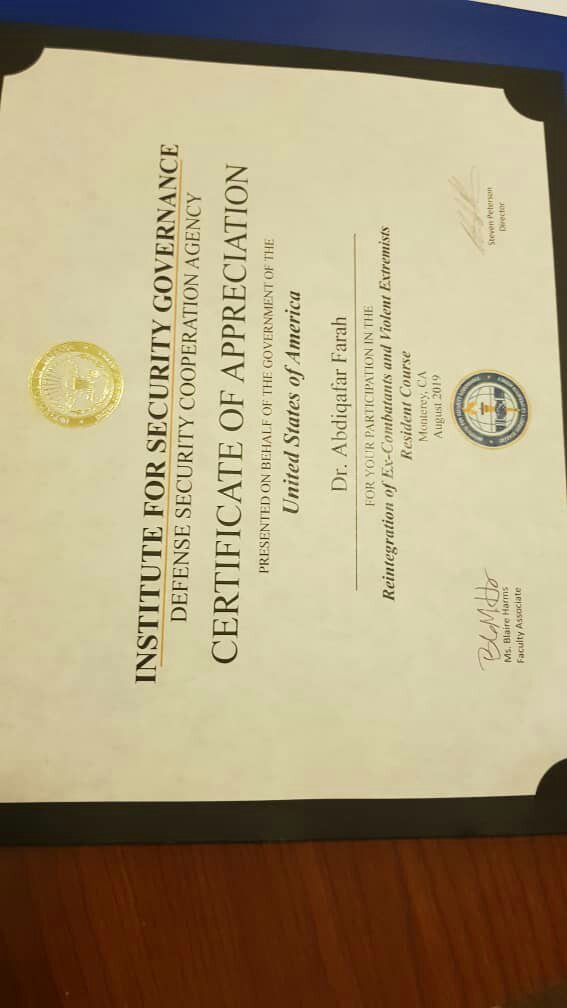
 Read more about Dr Farah at this link
PRESIDENT SAID ABDULLAHI DENI SUPERVISES LARGEST PUNTLAND GOVERNMENT

August 19, 2019
President Said Abdullahi DENI of Puntland doesn’t behave or act like an economist, or even a businessman. From the outset of his administration, he is creating the largest government bureaucracy in the history of PUNTLAND State. He has already become the talk of the town as the biggest employer in the locality. How would he pay for this cumbersome goverment bureaucracy?
The sheer size and weight of his highly duplicated personnel leave no room for efficiency and accountability? Are these political appointments planned in the Annual Budget? Are these appointments notified to the Account-General and Auditor-General? Are these appointments discussed in Cabinet Sessions? Are these appointments being proposed by the heads of relevant government departments?
The Presidential Decrees appointing all these new officials are simplistic and poorly prepared documents, citing no references of specific articles of the Puntland Constitution, details of experience of appointees, credentials or qualifications of appointees, references to curricula vitae, job descriptions for positions or vacancies or openings to fill in. Look at latest Presidential Decrees- they read like a writing prepared by a teen-ager at first year of an intermediate school, devoid of any convincing reasons for these government appointments.
This happens when there is no an Independent Civil Service Commission.
The problem is that large government and bureaucracy lead to severe budget deficits and that, in turn, paves the way to under-development and cuts of funding to social services and public security. You cannot afford to do that under the current Somalia’s political climate and volatility.
President DENI should change course and immediately.
PUNTLAND VICE-PRESIDENT’S ADVICE IS NOT LEGALLY BINDING
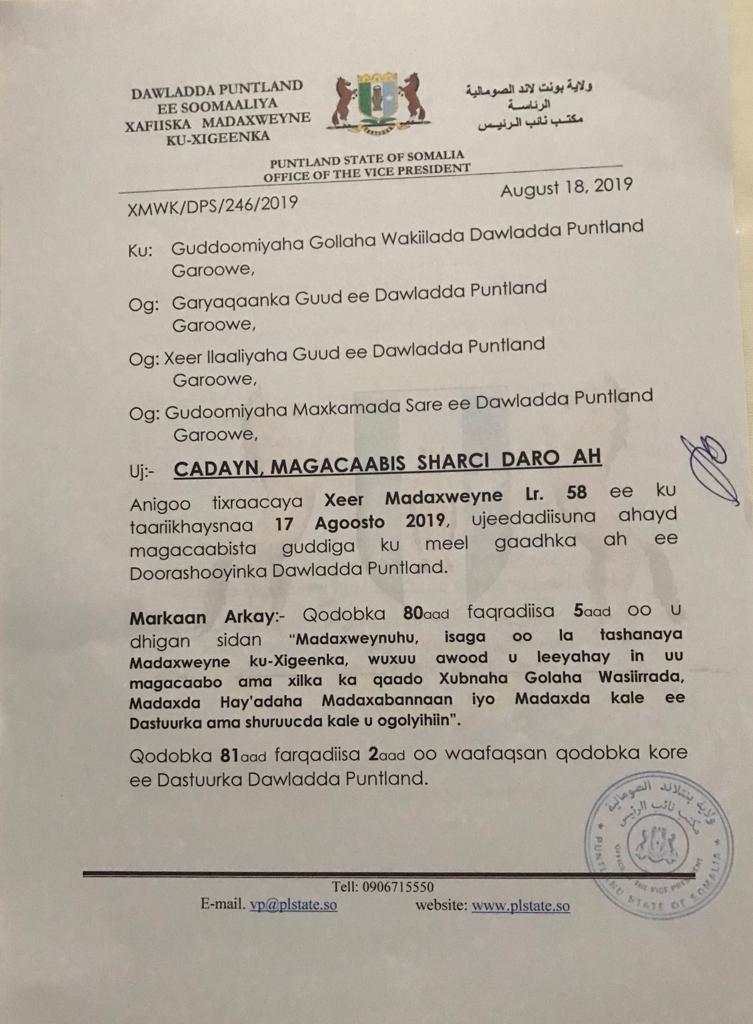
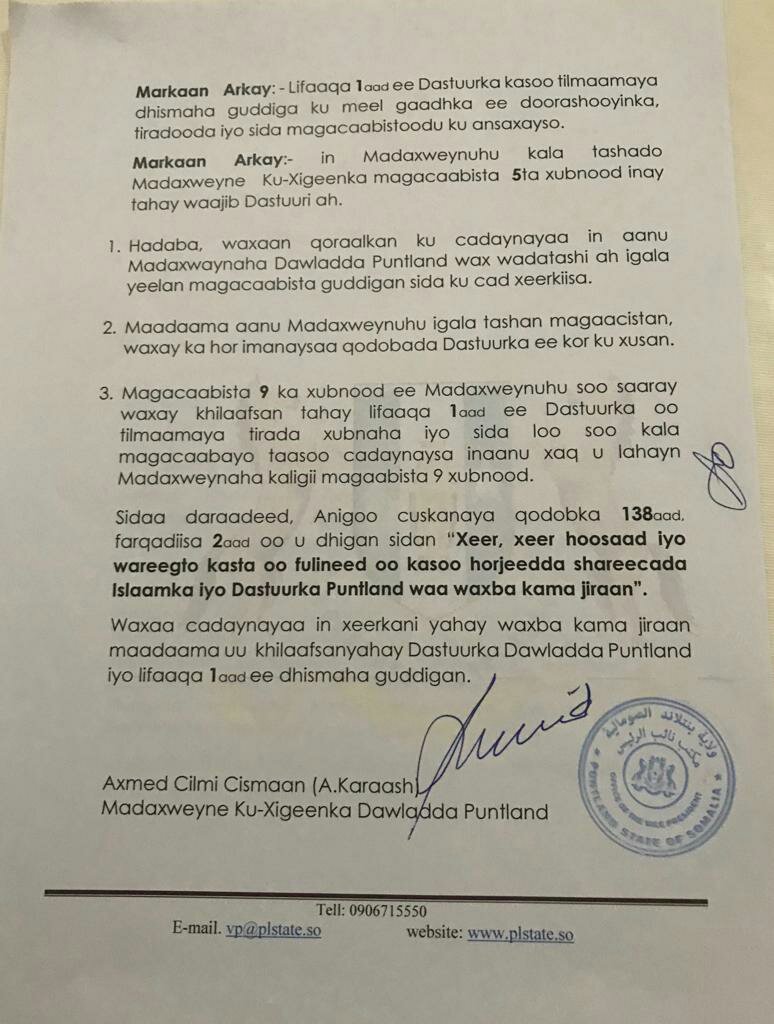
August 18, 2019
Consultation between Puntland President and Vice-president is not binding in decision-making just like any other advice to the President. The President doesn’t have to accept vice-president’s advice necessarily. The vice-president’s advice to President could come in different format or setting like casual conversation between the two on an issue. Once issued, the Vice-president has no case or legal basis to challenge a presidential decree. This is in accordance with both the Constitution and tradition of Puntland history of government. There is no ambiguity here.
Puntland State Presidency has no two presidents at one time. It is one office headed by the President, who is the Head of State and Government too. The Vice-president has no Executive Powers in the presence of the President. He does only what the President assigns and delegates to him.
Background of such political wrangling in Puntland is based purely on vested interests of certain clan groups and politicians to foil any Puntland attempt to proceed to democratization. They want to keep Puntland hostage to clan-quota formula.
It is time for Puntland State to break away from this hostage trap.
INTELLECTUAL PROSTITUTES
John Swinton,
former Chief of Staff of the most powerful and prestigious newspaper on earth, The New York Times, when asked to give a toast to the “free press” at the New York Press Club stated:
“There is no such thing, at this date of the world’s history, in America, as an independent press. You know it and I know it. There is not one of you who dares to write your honest opinions, and if you did, you know beforehand that it would never appear in print. I am paid weekly for keeping my honest opinion out of the paper I am connected with.
Others of you are paid similar salaries for similar things, and any of you who would be so foolish as to write honest opinions would be out on the streets looking for another job. If I allowed my honest opinions to appear in one issue of my paper, before twenty-four hours my occupation would be gone.
The business of the journalists is to destroy the truth; to lie outright; to pervert; to vilify; to fawn at the feet of mammon, and to sell his country and his race for his daily bread. You know it and I know it and what folly is this toasting an independent press? We are the tools and vassals of rich men behind the scenes. We are the jumping jacks, they pull the strings and we dance. Our talents, our possibilities and our lives are all the property of other men.
*”We are intellectual prostitutes.”*
ABSENCE OR LACK OF CRITICAL THINKING?

Think about this. What kind of leader this person would be?
WDM EDITORIAL


August 18, 2019
The most dangerous threats to Somalia’s Federal System are now exclusively coming from:
1. Ahmed Madoobe of Jubaland.
2. N&N of the Federal Government of Somalia, the FGS.
3. Proponents of One City-state in South-Central Somalia, and
4. Confused, ill-informed and unenlightened Somali masses, and unintelligent educated Somalis, who don’t weigh in and appreciate where the country was coming from and at what price spent in coming up with the federal governance arrangement.
There are ample examples and actions, searchable now in the social media and Internet to prove that the above conclusions are valid. The staunchest anti-federalist, however, is Ahmed Mohamed Islaan, Ahmed Madoobe, and so on in that order.
There are multiple video clips of Ahmed Madoobe in the Internet, personally opposing Federalism, while he was still the State President of Jubaland. Make no mistake that Ahmed Madoobe is a dangerous man to peace, elimination of extremists in Jubaland and building of Federal institutions in Somalia.
The International Community and Somali foreign partners are right in demanding transparency and inclusivity for all stakeholders in Jubaland Election 2019.
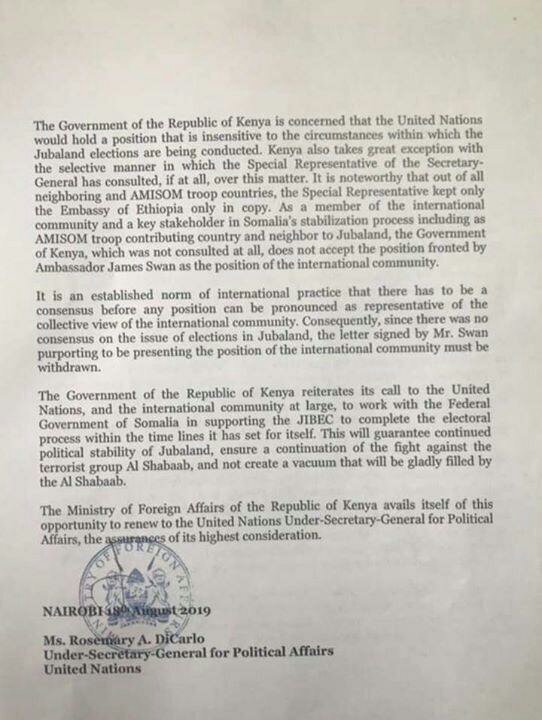
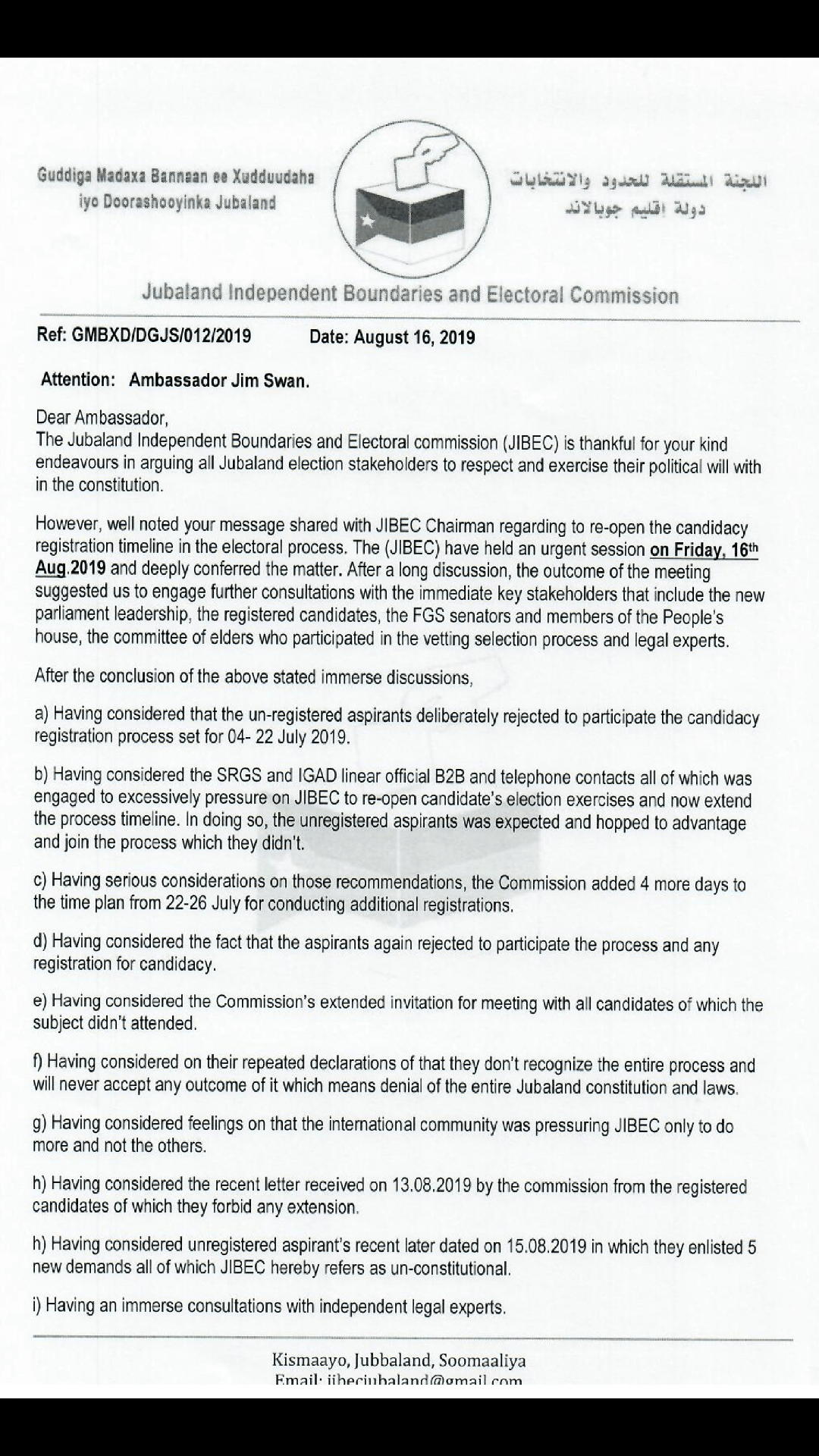
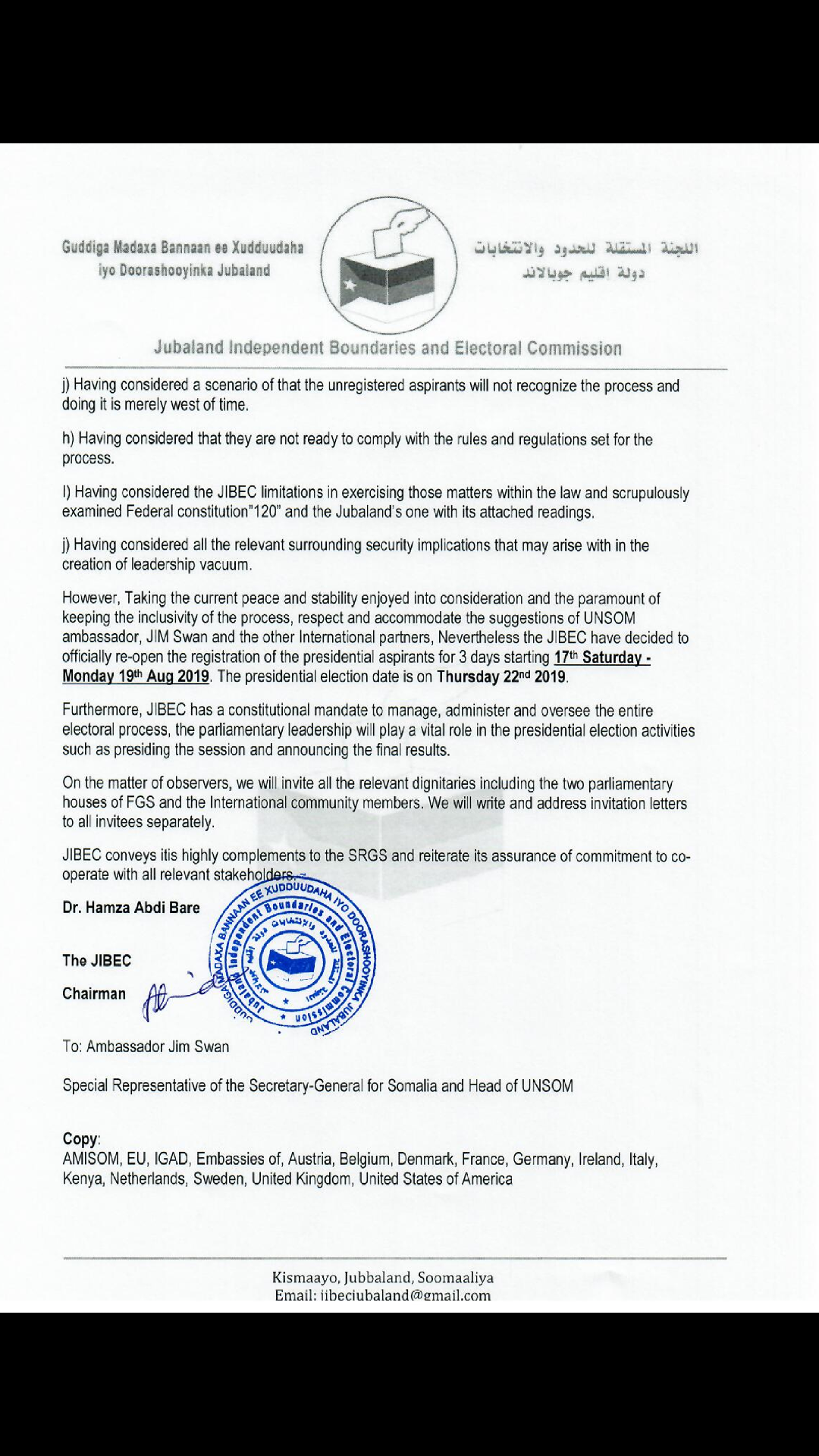
HOW TO UNDERSTAND JAMES SWAN’S LETTER TO JIBEC

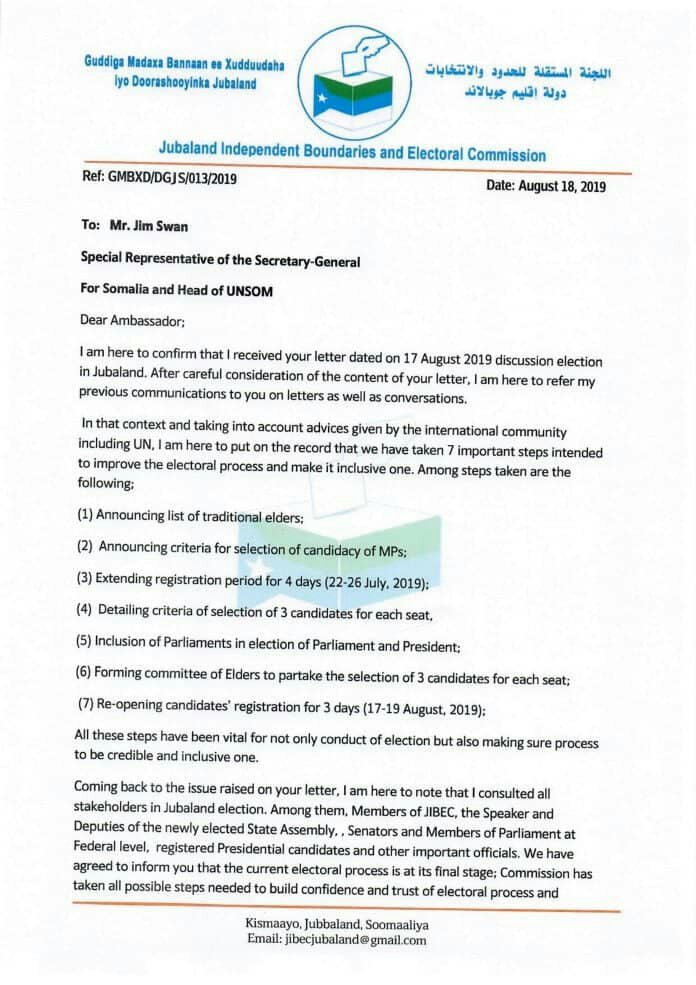
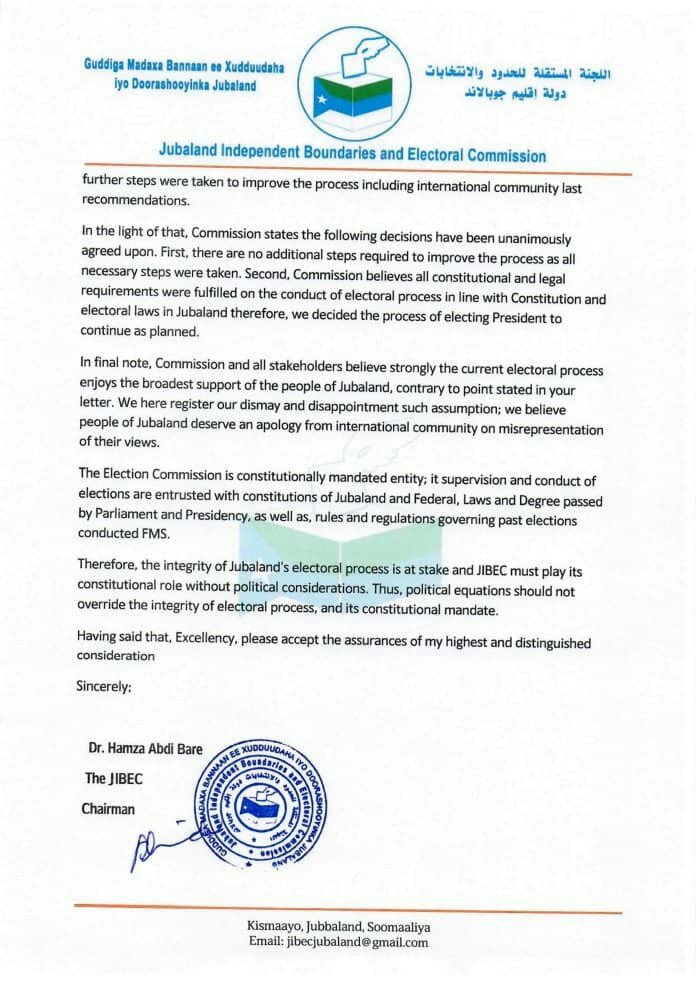
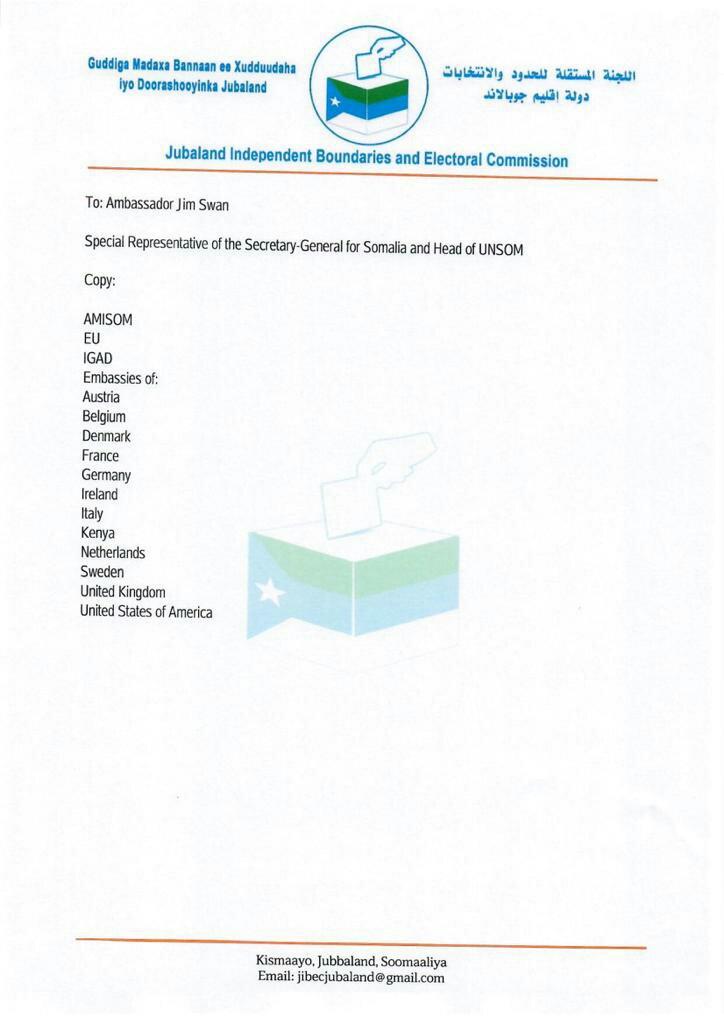
Take a read. Mr Swan has issues with the election timeline and inclusivity of all stakeholders.
There is a veiled threat implied in James Swan’s letter of the risk of not recognizing the outcome of Jubaland Election, if the IC terms aren’t met by JIBEC.
THE QUR’AN: RECEIVE, READ AND RECITE.
“Receive, read and recite”
Ismail Haji Warsame
King Saud University has released the long-awaited Complete Qur’an Site. Dont leave anyone out, send them The Qur’an as a gift. KSU have made great efforts in its preparation and made it user friendly.
Full complete Qur’an & its interpretation just by touching the screen from left to right.
http://quran.ksu.edu.sa/m.php?l=ar#aya=1_1
Voice + recite + translation +
DEEQA COL-UJOOG: A LIFETIME OF PUBLIC SERVICE

August 17, 2019
Mohamed Ibrahim Egal (RIP), the Late President of Somaliland is reported to have said, “the two Deeqas should leave me alone” (“Labo Deeqo hay daayeen”). One Ms Deeqa was his wife, whom he decided to divorce, and the other, Deeqa Col-Ujoog, who was his Cabinet Minister at presidency at the time, and he wanted to fire her. Mr. Egal had divorced his wife, Deeqa, while letting Deeqa Col-Ujoog go.
Today, however, was a great day to introduce the lifetime works of Ms. Deeqa Col-Ujoog, a book in the making for half a century, capturing the experience of the author in public service and contributions to her society. In this book, special attention or focus is given to the urgent need for peace-making and leadership skills necessary to realize peace and good governance.
In this book-launching event held in Garowe, Puntland, at PDRC Conference Room, Deeqa had acted as her own Keynote Speaker in an enlightening, colorful and moving manner that brought the audience to a standing ovation.
President Said Abdullahi Deni of Puntland State, who had participated in this book event, took the opportunity to offer peace proposal between Puntland and Somaliland.
The book-launching was well attended. Whether that translates into high book sales is yet to be noticed. But, make no mistake, this is a great work.
Congratulations to Ms. Deeqa Col-Ujoog
ON JUBALAND ELECTORAL PROCESS? DOUBLE-CHECK IT.
Symptoms of Heart Attack

BY EMPRESS2INSPIRE AUGUST 16, 2019
When a person is experiencing one or more warning signs of heart attack or stroke, calling for an ambulance or driving them to a hospital is almost always the fastest way to get lifesaving treatment.
Some heart attacks are sudden and intense, causing someone to gasp dramatically, clutch her heart and drop to the ground. No one has any doubts about what’s happening. But most heart attacks start slowly, with mild pain or discomfort. Often the people affected aren’t sure what’s wrong and wait too long before getting help. Here are some of the signs that can mean a heart attack is happening:
Sweating – Similar to stress sweat, rather than sweating from exercise.
Fatigue – Extreme tiredness.
Chest Pain or Discomfort – The pain can be anywhere in the chest, not just the left side.
Shortness of Breath – Typically trouble breathing for no clear reason.
Pain in the Arms, Back, Neck, or Jaw – Pain can be gradual or sudden.
Nausea – Flu-like symptoms, including nausea, may occur a few days before a heart attack.
Stomach Pain – Can range in intensity from heartburn-like pain to severe abdominal pressure.
If you or someone you are with has chest discomfort, especially with one or more of the other signs, don’t wait longer than five minutes before calling for an ambulance.
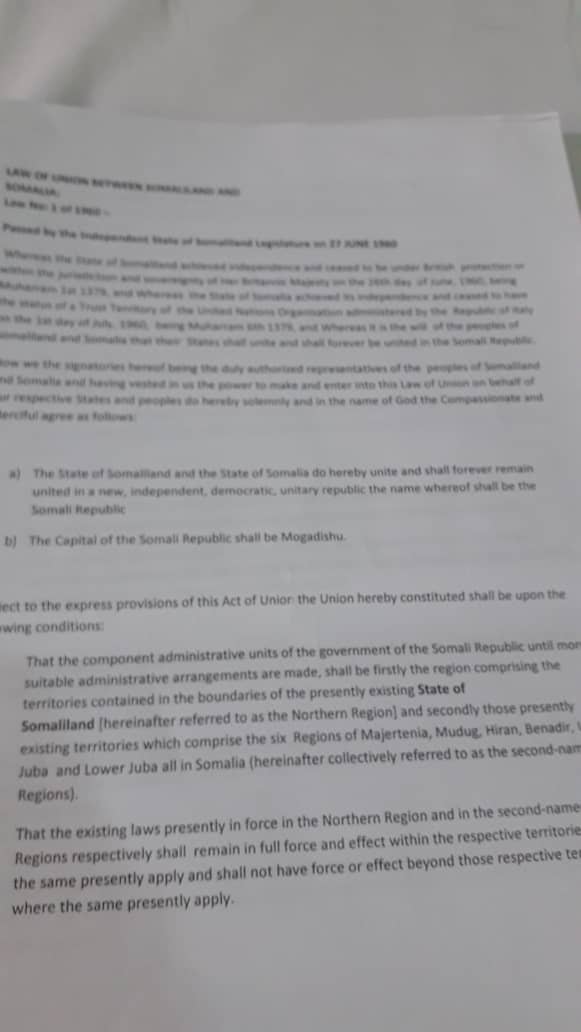
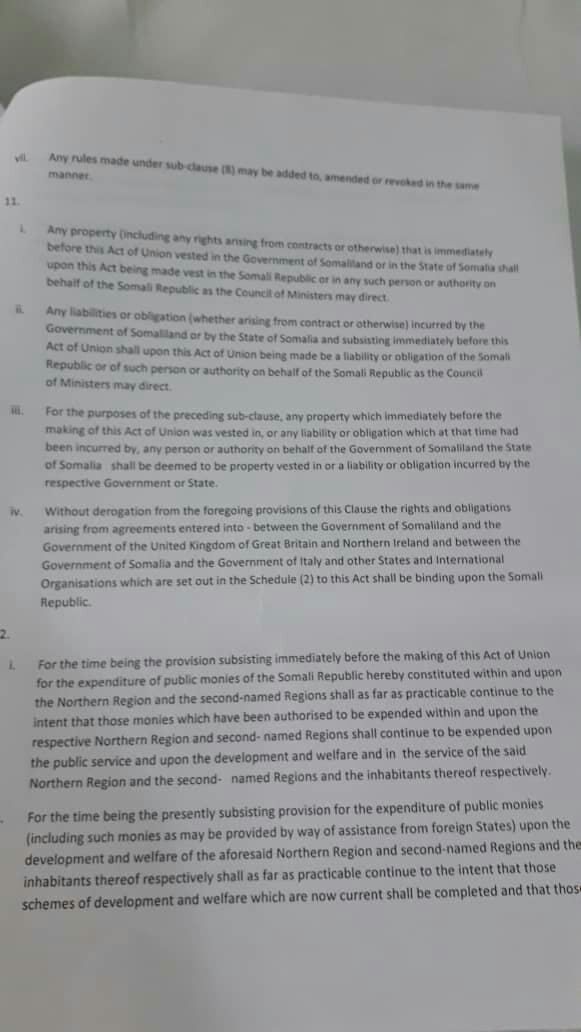
Somali Act of Union of 1960


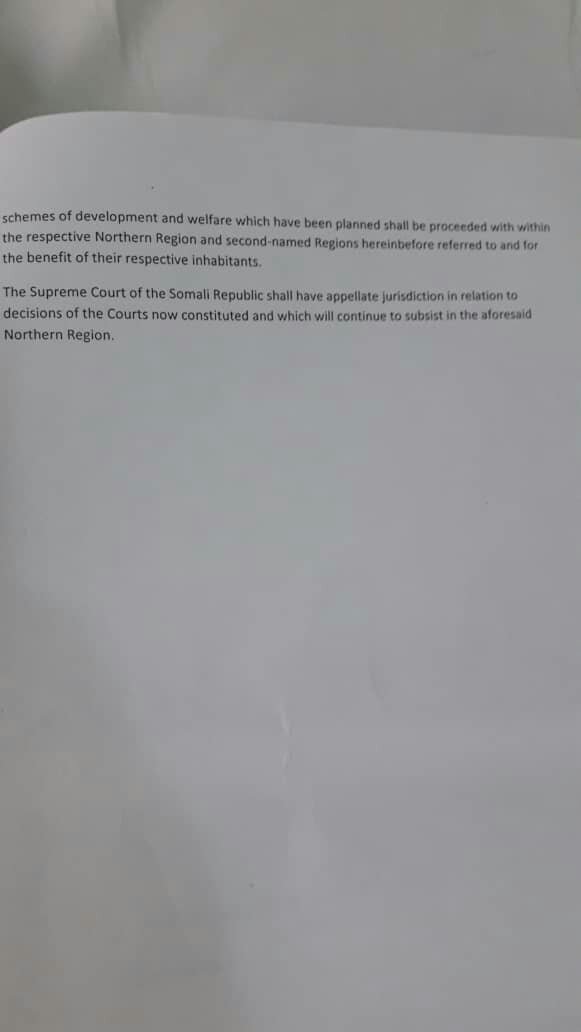
JUBALAND EXPOSED

August 15, 2019
Whatever the outcome of Jubaland political conundrum, it will never be the same again. Jubaland political and clan conflicts had started with the regime of Siyad Barre in the 1970s with the destabilization of a peaceful community by imposing provocative and draconian fascist personal laws under severe suppression of human rights to uproot the traditional residents of Kismayo. General Aideed and USC-NSA took Siyad Barre’s lead to finish the job of clan cleansing, followed by mayhem of clan conflicts and permanent state of civil strive and marauding militia of barbaric culture. This gave way to the birth of unholy alliance of Marehan and Habar-gedir units of substance- addicted bandits and mooryaans of Central Somalia, the Juba Valley Alliance (JVA) led by warlords, Barre Hiiraale, Yusuf Mire Seraar and Goobaale.
Jubalanders’ suffering continued with the occupation of Al-Shabab and Alqaeda extremists led by Sheikh Sharif Sheikh Ahmed, Hassan Dahir Aweys and Ahmed Madoobe. UIC in Mogadishu and Kismayo had attacked Baydhaba, the Seat of TFG. from South and East.That is when Ahmed Madoobe was taken prisoner by the Ethiopians, wounded in fighting along the UIC forces. These were later dethroned in 2006 by the combined forces of Ethiopia and Transitional Federal Government (TFG). However, a group of Al-Shabab led by Hassan Turkey filled the vacuum in Kismayo temporarily.
Ahmed Madoobe out of Ethiopian prison under mysterious circumstances, and heading a brute battalion of Ras Gambooni Brigade as remnants and splinter group of the Union of the Islamic Courts (UIC), and Kenyan Defence Force (KDF) as part of AMISOM over-ran Kismayo.
Larger UIC had retreated to the countryside to re-group now as Al-Shabab, Alqaeda and ISIS to engage in urban and roadside terrorism.
Ahmed Madoobe had managed to declare himself President of Jubaland with Kenyan help and Ethiopian blessing as their former rehabilitated and high profile prisoner. Madoobe is set now to disprove the Somali Political Doctrine that no out-going leader could return to power. But, he acts the same way Hiiraale and Morgan had acted before him, just another warlord stuck in the Port-city of Kismayo, supervising Al-Shabab destructive operations of turning Jubaland jungle into charcoal for profit.
There is no limit to the suffering of the residents of Jubaland, Kismayo, in particular.
Kenya and Somalia’s maritime border spat risks degenerating
By Morris Kiruga, in Nairobi
Posted on Tuesday, 13 August 2019 09:27
Kenya’s President Uhuru Kenyatta addresses a news conference after attending the Intergovernmental Authority on Development (IGAD) summit in Somalia’s capital Mogadishu, September 13, 2016. REUTERS/Feisal Omar
As the Somalia-Kenya maritime dispute escalates into a legal and diplomatic spat, peace and security concerns take centre stage.
From September 9 to 13, the International Court of Justice (ICJ) in the The Hague will hear submissions from Somalia and Kenya over their maritime territorial dispute.
Somalia contends that its maritime boundary with Kenya should run on a diagonal, extending from its land border and not in the current flow parallel to the line of latitude.
The contentious triangle measures about 100, 000 square kilometres; for Kenya, it places 51, 000 sq km of its Exclusive Economic Zone and 95, 000 sq km of its continental shelf in jeopardy.
While the main resource issue has been the potential hydrocarbon deposits in the contested area, the dispute has the potential to escalate security issues in the region, especially as it encourages brinksmanship.
Both countries have officially accused the other of auctioning oil blocs in the disputed waters.
In the Kenyan media, Somalia’s claim has been referred to as a ‘land grab’ and Somalia has been accused of “sticking a finger up the nose of [its] benefactors’ .
President Mohammed Farmajo has been accused of using the conflict to shore up his position ahead of next year’s elections, the first universal suffrage in Somalia since 1969.
They have also been engaged in a diplomatic tit-for-tat, which escalated this year.
In February, Kenya recalled its ambassador to Somalia and expelled Somalia’s envoy in Nairobi.
In May, Kenya suspended direct flights from Somalia to Nairobi. Then it denied entry to three top Somali officials at the Jomo Kenyatta International Airport.
In response, Somalia said its officials would no longer attend meetings in Nairobi, and banned all Kenya-based NGOs working in the country.
In June, Kenya closed its border crossing with Somalia in Lamu citing security concerns.
Somalia first filed the case with the ICJ in August 2014, with Kenya raising preliminary objections on the court’s jurisdiction over the matter. Although the ICJ threw out the jurisdiction issue in February 2017, there will be other other issues at play when the case is heard.
A key one is that the current President of the court, Judge Abdulqawi Ahmed Yusuf, is a Somali national.
Yusuf has served in the court since 2009, and as Vice President from 2015 until 2018, when he was elected President.
Another is that a decision for Somalia would have a ripple effect on Kenya (it has another maritime boundary with Tanzania) and other countries along the Indian Ocean coastline.
Protests to the UN and military deployment
A bipartisan motion now before Kenya’s parliament seeks to compel the executive to do more to resolve the issue. One proposed solution is an official letter to the United Nations protesting Somalia’s “aggressive legalistic stance” to file with the ICJ without first using alternative dispute resolution mechanisms. As a last resort, the motion calls for the government to deploy the military in the disputed waters.
Kenya would rather the dispute is first considered by the African Union, the Intergovernmental Authority on Development, and the East African Community. A 2009 memorandum of understanding had provided for alternative dispute resolution.
A mediation attempt by Ethiopia’s Prime Minister Abiy Ahmed earlier this year also failed.
Ministry of Foreign Affairs
✔
@MofaSomalia
The #Arab Parliament calls on #Kenya to stop its hands on #Somali territorial waters, which are an integral part of the Arab waters, and rejects its false pretensions to draw up a new, unfounded map while rejecting its threats to interfere in #Somalia’s internal affairs.
640
11:05 AM – Jun 20, 2019
Twitter Ads info and privacy
565 people are talking about this
Among the security concerns is that the escalating diplomatic spat threatens Somalia’s peace and stability, and with it, the security of the entire region as well as international shipping routes.
It would also, according to Kenyan legislators, hamper the ongoing construction of a land border wall between the two countries and the fight against al-Shabaab.
Kenya has been battling the terror group in Somalia since 2011, and is now a core part of the African Union Mission in Somalia (AMISOM) forces holding Somalia’s fragile peace together. In the front lines, cooperation between Kenya’s and Somalia’s security forces is essential to combating terrorism.
While there are fears that Kenya could leverage this to force Somalia’s hand, its presence in Somalia is primarily for its own security. Ceding its gains against al-Shabaab to force the territorial dispute would be as costly for Kenya as it would be for Somalia, which has been rocked by multiple terror attacks this year. In late July, the mayor of Mogadishu was killed in one such attack.
While coordinated efforts by several navies managed to stop piracy off the coast of Somalia, pirates attacked two shipping vessels in April, raising concerns of a likely resurgence.
Bottom line: For Somalia, a win at the ICJ would be a diplomatic coup. However, without the support of its economically and militarily bigger neighbour, especially as al-Shabaab escalates its attacks on Mogadishu, it would be a Pyrrhic victory.
EDITORIAL: DIVERSITY OF POLITICAL VIEWS

August 14, 2019
Part of the political mission of this blog is to develop a culture of pluralism, diversity of views and political opinions on issues and subjects of national importance for a healthy and free society we all aspire to have.
Some people, not well versed with democratic principles, see non-conforming personal positions as troublesome. That is not the case in most instances. The landmarks of a free society is freedom of thought, expression and association.
Secondly, there must be a free press and clear constitutional separation of power.
In the absence of the above, you would be flatly wrong to call any other society as free men and women in any given country.
(photo credit: ABAJournal.com)
 Warsame Policy & Media Network (WAPMEN)
You must be logged in to post a comment.