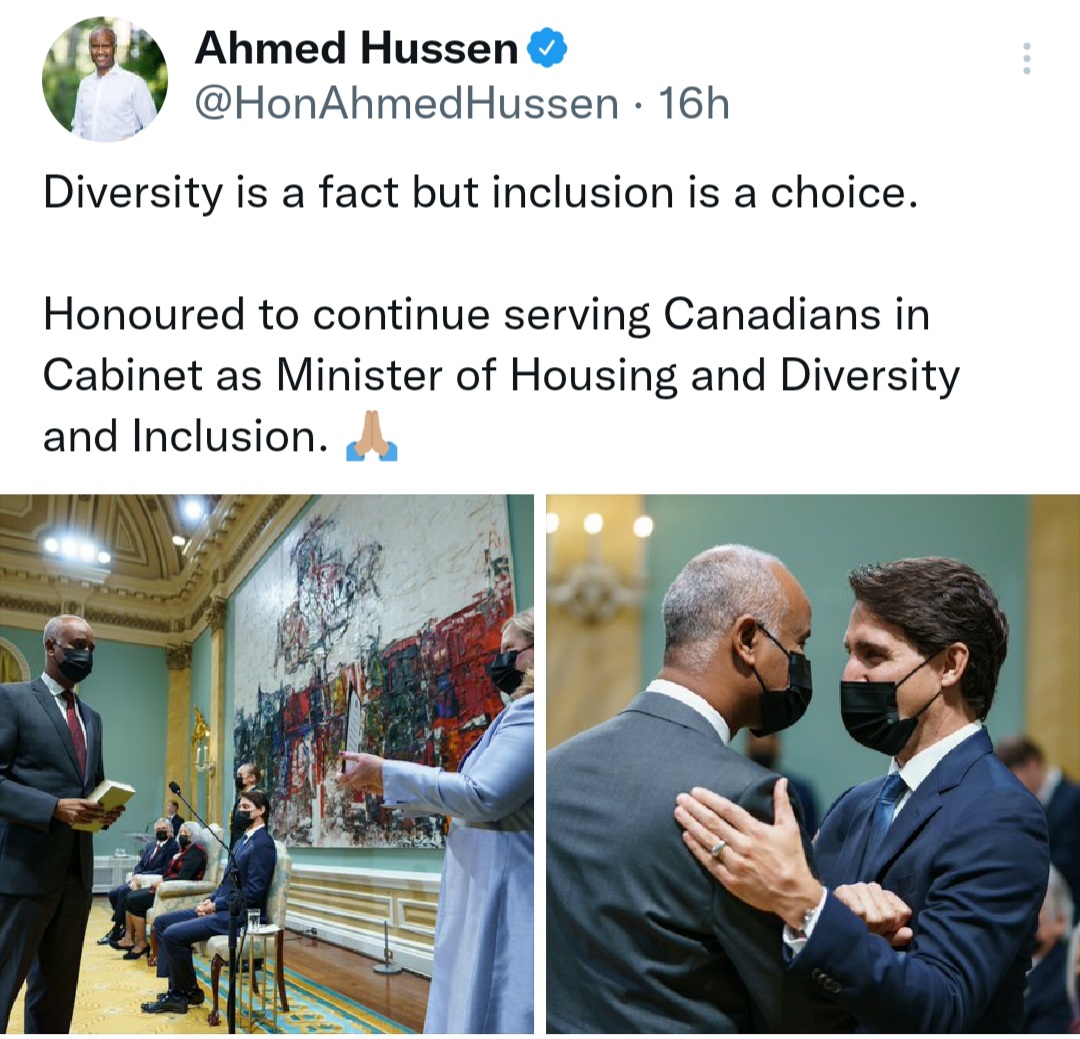
MINISTER AHMED HUSSEN OF CANADA HAS MADE HISTORY AGAIN

Minister Ahmed Hussen, a Canadian MP of Somali origin from York South-Weston Federal Liberal Riding in Toronto, has just made history again, not only by being re-elected twice (3rd time in Parliament), not only by being in Prime Minister Justin Trudeadu Cabinet three times with major portofolio like Immigration, Family Services and Housing, but also joining the high inner circle of advisers to Canada’s Prime Minister.

Minister Hussen now leads a major and complex department of Housing, Diversity and Inclusion, following the recent Federal election. Ministry of Housing has been created for the first time in the history of the government of Canada to address the thorny election issue on the acute and chronic housing shortages in that country. It is said to be among government priorities.

Hussen’s current portofolio will handle diversity issues of racism, inequality in opportunities and access to government programmes by visible minorities. It also includes review and reform of criminal justice, an overdue program in the administration of justice in Canada. In a nutshell, Minister Hussen has earned the trust and loyalty of Prime Minister Justin Trudeau. Congratulations!

WDM EDITORIAL

VIOLENCE BETWEEN SOMALI STATE AND SUUFI SECT HISTORICALLY UNPRECEDENTED

Many politicians in the era of Alshabab and religious extremism don’t realize that the Suufi religious sect in Somalia has the biggest loyal following. Current Guriceel fighting will have a lasting negative effect on the relationships between the state and the group, no matter who wins in this confrontation.

It is historic conflict/violence between a Somali Government and Suufi Sect. The Suufi group was a traditional ally of the state against other radical groups. The size of this fight in Guriceel is a new political development in Somalia. It could herald dangerous trend of delegitimizing the state. From now on, expect Somali government as an isolated secular entity.

Galmudugh conflict, public mistrust and hard feelings so created in this crisis are unlikely to be settled short of full power-sharing between parties.

WHY GALMUDUGH QOORQOOR HAS TO GO

https://ismailwarsame.blog/2021/10/09/why-galmudugh-qoor-qoor-has-to-go/

A GIGANTIC STEP FORWARD IN DEMOCRACY

WDM EDITORIAL ON SOMALIA-KENYA MARITIME DELIMITATION

WHY KENYA SHOULD ACCEPT ICJ RULING ON MARITIME DELIMITATION BETWEEN SOMALIA AND KENYA

KENYA is a neighbor of Somalia. Here they have no choice. Kenya is economic and diplomatic hub for mail mailand Somalia. Kenya is a home of hundreds of thousands of Somalis as its citizens and as host of huge population of Somali refugees. Kenya is the first country to benefit from offshore oil and gas drilling. Somalia and foreign oil firms would be needing Kenyan skilled labour and professional assistance. It is the vital economic interests of Kenya to improve its diplomatic, security and political cooperation with Somalia.

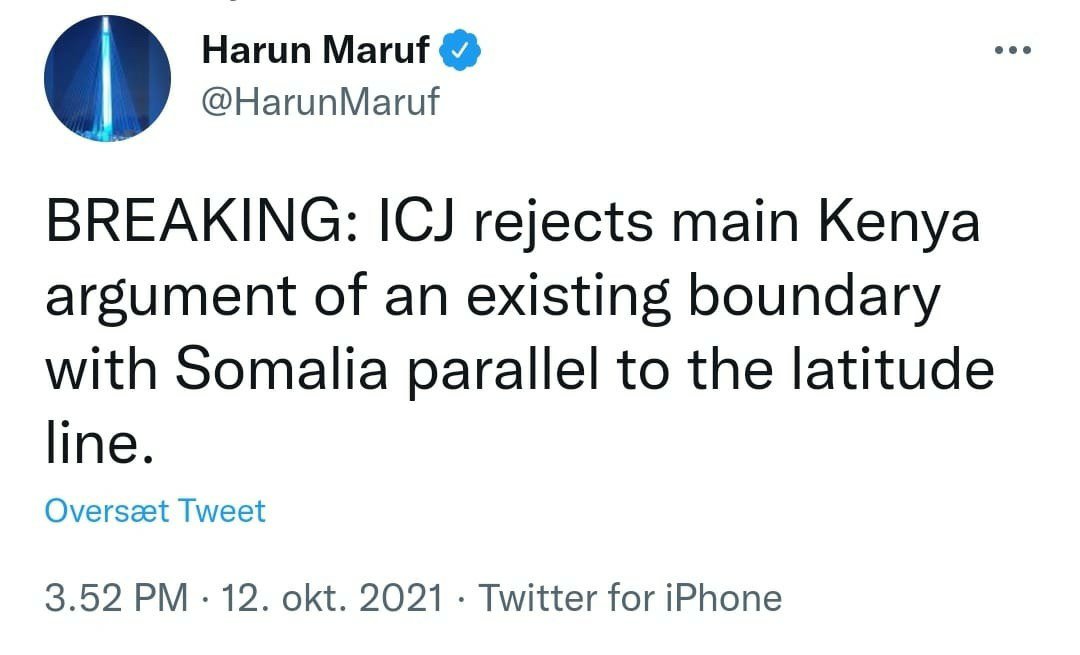
Still Kenya has gained a considerable portion of Somali waters of the Indian Ocean through through ICJ arbitration. Somalis were surprised to learn that the ICJ has been to generous to award Kenya with 15% of the maritime zone under dispute. Somalis consider this award unfair and political on the part of Court judges. Neithertheless, Somalis don’t sharing marine resources with their Kenyan brothers and sisters and closest neighbors. Kenyan should deliberate on this wisely. They have more to gain working with Somalis at home in Kenya proper and in Somali mailand. Look before you leap.

WDM EDITORIAL

A GIGANTIC STEP FORWARD IN DEMOCRACY

We have been saying all along that a political move in democratization by Puntland State would lead the way to free and elections in Somalia. It is happening today. It is the beginning of an era in Somalia’s politics, which heralds the overdue process of the rule of law and the power of the citizen. This will really have domino effect in the rest of Somalia.

The presence of the members of the international community and Somalia’s civil society as observers of these pilot elections in three districts of Puntland State is an indication of the overwhelming support and best wishes for the success of this gigantic endeavor by the people of Puntland State. It is a great step forward for the people of Somalia in a troubled nation.

DIASPORA WRITERS AND INTELLECTUALS HAVE LOST IN TOUCH WITH REALITY IN SOMALIA

Editor’s note: I watched Dr Afyare Abdi Elmi making presentation at PDRC Talks last night, and his answers to subsequent questions from the audience. I couldn’t help, but share some excerpts from the book on my take on the subject of federalism in Somalia.

SOMALIA IN SEARCH OF STATEHOOD

AN ESSAY ON THE STATE, CLANNISM AND NATIONALISM

By Ismail H Warsame

AUTHOR’S CONVICTION ON THE SUBJECT MATTER UNFRONT

“The name Somalia as a united entity is relatively a new term, following the beginning of colonial administrations in the country. Clannism in Somalia isn’t the core problem of state building, but a symptom of system vulnerability in governance in regulatory fashion: For example, the separation of state and clan allegiance in public service in the same manner the Western World managed to do on the separation of the state and the church is the way forward. Here you can keep your clan belonging, but don’t mix it with public service. It would be a violation of the state law if you do it. Therefore, there is a mismanagement and lack of regulations on the clan system in Somalia. Tendency in Somalia’s governance to tyranny and dictatorship is fear of losing state control, on the top of selfish interests on the part of the leaders of the day, clan rivalry and self-preservation. Anti-decentralization or anti-federalism is a paranoid of losing central state power. Under these fears, stakeholders in national matters are unnecessary nuisance to central authorities. Nationalism means distraction from difficult issues of nation-building and necessary national development projects expected of state leaders. Patriotism, promotion of Somalia’s cause and learning Somali history aren’t encouraged. Power-sharing is misused to weaken meritocracy and competence, leading to the consolidation of a client state and patronage in public service. Checks and balance of power between branches of the government is perceived in Somalia as a power struggle and a threat to those in executive positions”.

INTRODUCTION

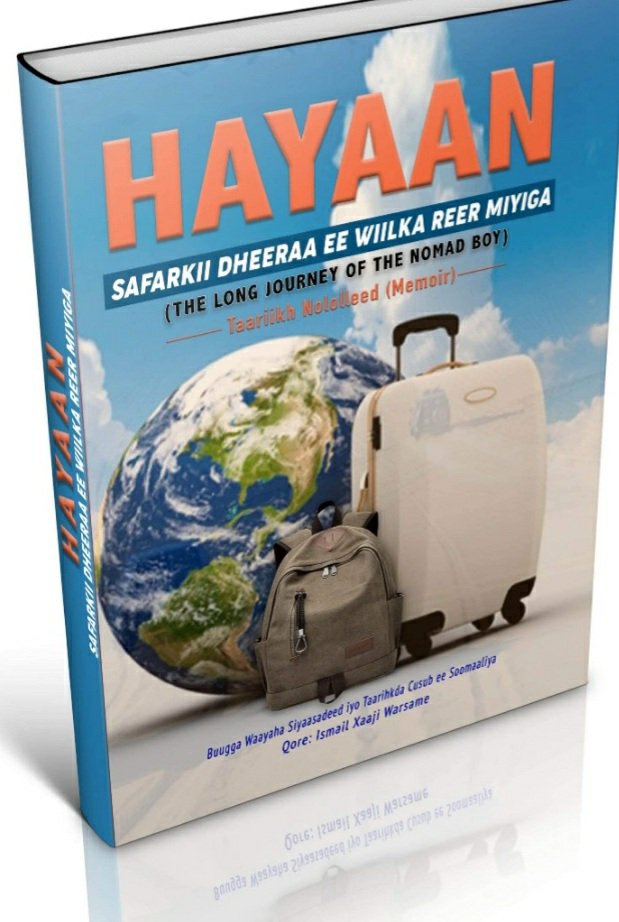
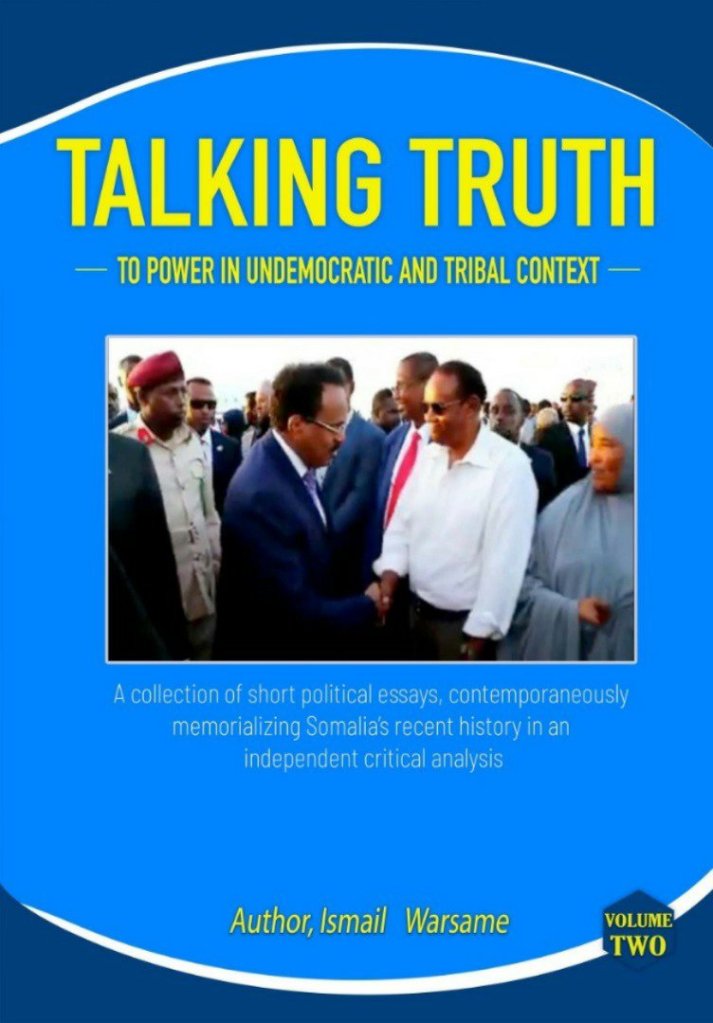
Writing Talking Truth to Power in Undemocratic and Tribal Context, Articles of Impeachment and HAYAAN, The Long Journey of the Nomad Boy (Safarkii Dheeraa Ee Wiilka Reer Miyi), has convinced me that the subject needs further writing and deeper analysis. Hence the title “Somalia In Search of Statehood, An Essay on the State, Clannism and Nationalism, was conceived. Much has been written on the subject, but these works were either produced by foreign writers with limited understanding of Somali culture (literature and language) or by native minority writers whose motivation was to expose their grievances against majority rule to advocate for minority rights in the country. The first group of writers were not adequately informed, but the 2nd group couldn’t escape bias in the subject in their exposition. Both couldn’t adequately reflect on the true picture of what went wrong in Somali politics. Foreign anthropologists and historians of I M Lewis type on the subject were influenced by colonial legacy in Somalia.

There is another group of Somali writers, the diaspora. This group is mostly remnants or survivors of the Somali Civil War. They subliminally believe in strong central government. They interpret devolution of power and federalism as foreign instigations and manufacture with the intention to weak the Somali State. They don’t recognize that federalism is a defacto reality rather than de jure following a vicious Civil War that ended up in clan cleansing in Mogadishu, the Capital City, and elsewhere in the country. They blame Ethiopia for establishing ethnic federalism in that country and managing to replicate it in Somalia, using proxy agents of Somali warlords and politicians. Predominantly, these diaspora writers either had grown up and lived under the iron-fist of the Military Regime of Siyad Barre or had influenced the younger generations in the diaspora. Many of them avoid travel to Somalia and the few who come down don’t venture out beyond, the centre of what is wrong now in Somalia, Mogadishu, where law and order is a thing in the distant past and their yardstick to evaluate current situation of Somalia. They have lost sense of reality elsewhere in the country.

But, most dangerous of all are the ignorant masses who see different heads of state and government of the Federal Member States as something strange and symbol of what was wrong in Somalia as they hear or see strong nation-states around Somalia. They don’t recall that Somali State had failed and to put it back together, it was needed to restore trust among warring clans via decentralized or autonomous regions, the Federal Member States (FMS). Now FMS isn’t cast on stone – they could change over time in a negotiated fashion as the central authority stands on its feet again and expands its influence throughout the country”. Federalism in Somalia could be a temporary arrangement. But, what isn’t acceptable anymore is return to city-state status in Mogadishu”.

THE LATE PROFESSOR SAID SHEIKH SAMATER, 1990

The Late prof. Said Sheikh Samater, one of the best minds ever born to Somali race.

A NEW BOOK

SOMALIA IN SEARCH OF STATEHOOD

THE STATE, NATIONALISM AND CLANS

By Ismail H Warsame

Coming up in both paperback and digital formats in July 1st, 2022.

The name Somalia as a united entity is relatively a new term, following the beginning of colonial administrations in the country. Clannism in Somalia isn’t the core problem of state building, but a symptom of system vulnerability in governance in regulatory fashion: For example, the separation of state and clan allegiance in public service in the same manner the Western World managed to do on the separation of the state and the church. Here you can keep your clan belonging, but don’t mix it with public service. It would be a violation of the state law if you do it. Therefore, there is a mismanagement and lack of regulations on the clan system in Somalia. Tendency in Somalia’s governance to tyranny and dictatorship is fear of losing state control. Anti-decentralization or anti-federalism is a paranoid of losing central state power. Under these fears, stakeholders in national matters are unnecessary nuisance to central authorities. Nationalism means distraction from difficult issues of nation-building and necessary national development projects expected of state leaders. Patriotism, promotion of Somalia’s cause and learning Somali history aren’t encouraged. Power-sharing is misused to weaken meritocracy and competence, leading to the consolidation of a client state and patronage in public service. Checks and balance of power between branches of the government is perceived in Somalia as a power struggle and a threat to those in executive positions.

#HAYAAN: NOW MAKING ROUNDS IN GAROWE CITY.

Also doing great is the book “Talking Truth to Power”.

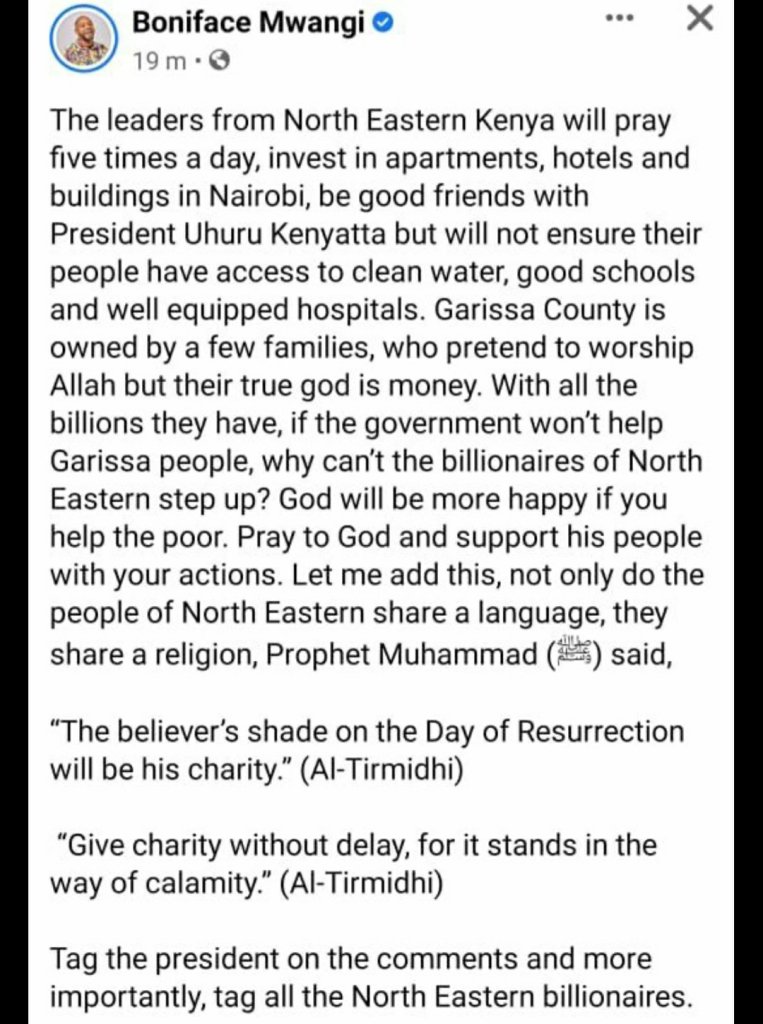
STUPIDITY

A hate speech.
https://www.facebook.com/1659093746/posts/10218505725948612/?d=n

This Kenyan person does not know what he was talking about. How does instability in Somalia benefit Kenya? Does political crisis in Kenya benefit the people of Somalia? Does he understand the impact of geopolitics in the region. He is an asshole.

POLITICAL GEOGRAPHY NOW

https://www.polgeonow.com/2021/10/kenya-somalia-maritime-dispute-maps.html

WDM EDITORIAL ON SOMALIA-KENYA MARITIME DELIMITATION

WHY KENYA SHOULD ACCEPT ICJ RULING ON MARITIME DELIMITATION WITH SOMALIA

KENYA is a neighbor of Somalia. Here she has no choice. Kenya is a economic and diplomatic hub for mainland Somalia. Kenya is a home of hundreds of thousands of Somalis as its citizens and as host of a huge population of Somali refugees. Kenya is the first country to benefit from offshore oil and gas drilling in Somalia. Somalia and foreign oil firms would be needing Kenyan skilled labour and professional assistance in Somali oil industry. It is in the vital economic interests of Kenya to improve its diplomatic, security and political cooperation with Somalia.

Still Kenya has gained a considerable portion of Somali waters of the Indian Ocean through through ICJ arbitration. Somalis were surprised to learn that the ICJ has been too generous to award Kenya with 15% of the maritime zone under dispute. Somalis consider this award unfair and political on the part of Court judges. Neverthertheless, Somalis don’t mind sharing marine resources with their Kenyan brothers and sisters and closest neighbor. Kenyan leaders should deliberate on this wisely. They have more to gain working with Somalis at home in Kenya proper and with Somalis in mainland Somalia. They should look before they leap.

UHURU REJECTION OF ICJ DECISION

https://www.president.go.ke/2021/10/13/statement-by-h-e-hon-uhuru-kenyatta-cgh-president-of-the-republic-of-kenya-and-commander-in-chief-of-the-defence-forces-on-the-international-court-of-justice-judgement-in-maritime-delimitation-ca/

ICJ JUDGEMENT ON MARITIME BORDER DELIMITATION BETWEEN SOMALIA AND KENYA

SOMALIA WINS MARITIME BORDER DISPUTE WITH KENYA AT ICJ TODAY

Murdered Spy’s Saga Casts Shadow OverVote in War-Torn Somalia

By Simon Marks and Mohammed Omar Ahmed
9 October 2021, 07:00 GMT+3

Mohamed Abdullahi Mohamed Photographer: Vladimir Smirnov/TASS/Getty Images.

President Farmajo accused of frustrating probe into killing
U.S. sees nation posing terror threat, seeks stability
The killing of a senior Somali spy, who according to Western officials had knowledge
of a secretive regional security accord and the formation of a new elite military unit,
has cast a shadow over the war-torn nation’s long-delayed elections.
The plebiscite was originally scheduled for February, but was delayed by a dispute
over voting modalities, and subsequent plans to hold it on Sunday were derailed by
administrative glitches. A new date has yet to be set and there are fears that militant
groups Al-Shabaab and the Islamic State could fill a power vacuum should the
political process collapse.
Al-Shabaab, which wants to impose its version of Islamic law, has waged an
insurgency in Somalia since 2006 that’s spilled over into neighboring countries and
threatened regional stability. The African Union has deployed almost 20,000 troops
to try and shore up the government and maintain stability, and a failure to hold
credible elections will make their task substantially more difficult.
President Mohamed Abdullahi Mohamed, who is widely known as Farmajo, was due
to face off against an array of contenders in his bid for another term. They include
Hassan Sheikh Mohamud, his predecessor, and Abdirahman Abdishakur, the leader
of the Wadajir Party and one of his most vocal critics.
Farmajo’s prospects of winning have been clouded by a dispute with his prime
minister and one-time ally Hussein Roble over his handling of the killing of 24-yearold
Ikran Tahlil, a cyber-security expert at Somalia’s National Intelligence and
Security Agency. While the agency blamed the spy’s death on al-Shabab, the al-
Qaeda-linked Islamist group denied involvement.
Read more: African Union Seeks UN Backing For Somalia Peacekeeping Effort
Roble accused Farmajo of obstructing a probe into Tahlil’s disappearance in June,
and a five-member panel has been established to seek justice in the case. The U.S.,
which sees Somalia posing a major terror threat and has pushed for stability to be
maintained, last month called on the two leaders to resolve their dispute
“immediately and peacefully.”
There is widespread belief in Somalia that the government is trying to cover up the
circumstances surrounding Tahlil’s death, according to Western officials and analysts
who’ve been tracking the case. Her family have also alleged the probe into her killing
is flawed because the intelligence agency is participating.
Tahlil possessed intimate knowledge of a security agreement forged in 2018 between
Eritrea, Ethiopia and Somalia, details of which the three nations wanted to keep
secret, according to three United Nations and Western officials, who work in Somalia
and spoke on condition of anonymity because they aren’t authorized to discuss
confidential intelligence assessments.
Somalia had long suspected Eritrea’s government of lending support to al-Shabab,
and the accord helped ease tensions between the two nations’ security forces, the
officials said. They also revealed that the tie-up saw Eritrean intelligence officers
being stationed in Somalia and Ethiopia, giving its President Isias Afwerki an
important foothold in the region. Eritrea has been backing Ethiopian Prime Minister
Abiy Ahmed’s fight against dissidents in the northern Tigray region.
Read more: what to Know About Ethiopia’s Challenge in Tigray: QuickTake
Revelations about the substance of the accord and the reasons behind Tahlil’s death
could stoke diplomatic tension in the Horn of Africa region, said Omar Mahmood,
Somalia expert for the International Crisis Group.
Uganda, Kenya and South Sudan, who are members of the Intergovernmental
Authority on Development, a regional body in charge of peace and security, are
among those likely to be unnerved by the emergence of a new power bloc.
Tahlil, who spent several months training in forensic cyber-security at London’s
Scotland Yard in 2019, also possessed sensitive information related to about 5,000
Somali soldiers, who were sent to Eritrea last year to participate in military
exercises, according to one of the officials. About 450 of those troops were recruited
into an elite fighting unit whose whereabouts and exact role remain unclear, he said.
Tahlil was “poised to blow the whistle” on the controversial military operation,
according to a report released last month by the International Crisis Group.
Ongoing Probe
The Somali probe has yet to be completed, and it remains to be conclusively
established why Tahlil was killed.
The Somali presidency and prime minister’s office didn’t respond to queries on the
tripartite security accord, the unit or Tahlil’s disappearance. Yemane Gebremeskel,
the Eritrean Information Minister, and Billene Seymoum, Abiy’s spokeswoman, also
didn’t reply to questions.
The saga isn’t the only threat to Farmajo’s hold on power.
Clan groupings and leaders from the Puntland and Jubaland regions are aggrieved by
his decision to change the voting system to allow universal suffrage, rather than
allowing clan leaders to chose their lawmakers. Opposition officials have also
accused the president of changing the rules in order to cling to power.
The latest in global politics
Get insight from reporters around the world in the Balance of Power newsletter.
Please enter a valid email address
Sign Up
Bloomberg may send me offers and promotions.
By submitting my information, I agree to the Privacy Policy and Terms of Service.
Enter your email
Terms of Service Do Not Sell My Info (California) Trademarks Privacy Policy
©2021 Bloomberg L.P. All Rights Reserved
Careers Made in NYC Advertise Ad Choices Help
— With assistance by Gem Atkinson

FAILURE OF CORPORATE RESPONSIBILITY AND LACK OF BUSINESS AESTHETICS IN PUNTLAND

Today I paid visit to Golis Headquarters in Garowe to top-up my SAHAL ACCOUNT. I parked my vehicle in a pool of rain – water infront of the Golis office building. Getting out of the vehicle wasn’t an easy task without submerging my legs into muddy water. Think of women dressed in long gowns sweeping the street around them to get into the offices of the company across a pond-like reservoir of rain-water at front gate. Women clients of the firm constitute probably the bulk of the customer population. During rainy season they return home to mind washing their gowns each time they visit Golis Headquarters.

At the time of my today’s visit, I asked one of company staff member why wasn’t the company taking care of this problem at its gate. He responded that it was a government problem, not company’s. I put the same question to another in a different office section. He said jokingly that he would hope this issue will be addressed in the year “2026”.
You would notice that the problem of cleaning up and addressing the office aesthetics isn’t unique to Golis. Many have no taste for decorations and beauty. You would also notice that the richer the companies are and more their services essential, the more they become indifferent to the care of their working environment.

If Golis HQs expect Puntland Government to construct a 40- metre pavement space at gate of their offices, God save the people of Puntland State.

Here is a similar situation of Somalis in the North Eastern Kenya, but in a different light:

Key Drivers of Kenya’s 2011 Military Intervention in Somalia

From https://sharkieanalysis.com/

Kenya’s insatiable greed for Somalia’s waters begun following when Woodside petroleum company ended its offshore oil and gas explorations in western coast of Kenya in 2007, citing it was unable to find hydrocarbons in its Pompoo well.

Woodside petroleum disclosed in its press release issued on that day that according to satellite images it conducted on Somalia’s waters close to the border of Kenya and subsequent seismic tests found considerable traces of potential oil and gas deposits in the triangle area. With its deep knowledge of maritime laws, however, Woodside refused to take such risk of drilling oil and gas without the consent of Somali authorities.

Given this setback, in 2008 Kenya colluded with other multinational companies (MNCs) willing to steal Somalia’s resources with reduced costs, in the assumption that they can take unfair advantage of Somalia’s current circumstance and coerce its leaders to enter into dodgy bilateral agreement with Kenya, chipping away 100,000 square kilometres of Somalia’s maritime waters believed rich in oil and gas into Kenya.

To realise this strategic and economic objective and to build the confidence of MNCs investing in this area, Kenya launched the 2011 Operation Linda Chi and invaded Somalia on the premise of anticipatory self-defence, which is one of the reasons that the UN allows states to use force as set out under article 51 of the UN Charter: ‘Nothing in the present charter shall impair the inherent right of individual or collective self-defence if an armed attack occurs against a member…’

Not only did the attacks and the kidnapping incidents that Kenya cited as grounds for her invasion in Somalia were nowhere near the threshold that could trigger such military action, but also did the perpetrators behind those incidents themselves were Kenyans reacting to ATPU’s heavy handed tactics and extrajudicial killings meted out to coastal communities.

It is widely held that the low intensity insurgency hitherto brewing in Kenya’s coastal areas arose from the fact tacit government policies aimed to de-populate coastal communities & to transplant them to ethnic Kikuyus & Luo so that the demographic makeup in that area is permanently altered.

Rather than addressing those local grievances, Kenya has opted to externalise her domestic issues and policy failures with a view of adding another layer of external conflict driven by economic imperatives.

Kenya’s stated strategic objectives of its military intervention in Somalia was to drive Al Shabab out of the border area; establish a buffer zone; install an administration that is complaint to Nairobi; and use it as a bargaining chip to coerce Mogadishu government to accept Kenya’s terms.

Despite this, UK and France scrambled to the United Nation and African Union HQ to include Kenya in AMISOM troop contributing countries to save face and provide her with legal cover and international funding to realise her strategic and economic objectives by which both countries are allegedly direct beneficiaries

Throughout this period, Kenya has been at loggerheads with three successive Somali Federal governments. The latest of which is current FGS, which has come under a lot of pressure from Kenya to withdraw the case from ICJ, however, refused to budge & upheld Somalia’s sovereignty & territorial integrity

WDM BREAKING NEWS

Somali playwriter, author, chairperson of Somali Federal Constitution Review Commission and Director of Somali Language Regional Academy, Dr Mohamed Dahir Afrah, has passed away in St Thomas hospital in London, UK, today.

According to family sources of the deceased, Senator Abdirizak Jurile in London, a family friend of the Late Dr Mohamed Dahir Afrah, and former Puntland Minister of Education, Ali Haji Warsame in Garowe, Afrah had suffered a massive stroke recently.

The Late Afrah was known for his famous Somali stories: “Galti-Macruuf, Guur-Ku- Sheeg and Maana-faay” authored in the 1970s. He will be missed not only by family and friends, but also by many in the literary world.

Here is a note as well from Professor Abdisalam Isse Salwe in London:

“Walaalayaal

Innaa lillahi waa lillahi wa inaa ulayhi raajucuun.

Walaalkeen Maxamed Daahir Afrax wuu geeriyooday. Waxay ahayd 18:3…

Hadda isbataalka St Thomas ayaan joogaa, qolkii uu ku jiro Afrax ayaan la joogaa.

Nasiib darradayda markaan soo salaamay ayuu geeridiisa ila kulansiiyay.

Walaalkeen u soo duceeya inuu qabrigiisa qaboojoyo. Jannadii Fardowsa inuu ka waraabiyo.

Kulligeen ehelka suugaanta iyo dhaqanka soomaaliyeed, iyo ummaada Soomaaliyeed Allaha samir innaga siiyo.

Aamiin”.

WHY GALMUDUGH QOORQOOR HAS TO GO

By Ismail Warsame, Opinion Columnist

The political crisis in Galmudugh is a result of lack of leadership. Galmudugh State President, Abdi Kariye Qoorqoor, came to power through similar crisis with Ahlu Sunna Group as impostor from the leaders of the Federal Government at the time when there were reconciliation talks going between Galmudugh authorities and Ahlu Sunna with the issue of Dusa-Mareb as the capital city of the state resolved. It is noteworthy to recall that the Ahlu Sunna Group at that time had made a grave mistake in their betrayal of former Galmudugh State President, Ahmed Duale Gelle (Xaaf) under the deception and conspiracy of the Federal Government. They entered into bad deal only to be pushed out violently with their forces taken over by Mogadishu regime. Qoorqoor was part of that conspiracy. Galmudugh State residents, eager to preserve the peace and stability of their state, accepted Qoorqoor imposition.

Qoorqoor, still loyal to his masters in the Federal Government, abandoned his official duties in Galmudugh to act as a political broker in Mogadishu politics. A power vacuum set in in Galmudugh State. Ahlu Sunna has now taken advantage of this situation to seize power.

Qoorqoor is part of the problem, not the solution. In fact, ministers like Ahmed Moallim Fiqi were showing able leadership, doing an excellent job in the Region, engaging in keeping the peace and carrying out reconciliation works. Qoorqoor has to go. Also note that Galmudugh State is recycling former warlords for the leadership of the new Federal Member State and within the Federal Government and Parliament. It is a problem too.

Now, the situation there is explosive. GALMUDUGH, however, can’t escape the nature of a regional state alla Somala: A State brought about by power-sharing and consensus among clans living in the same or adjacent geographical locations can’t dictate its own terms in conflict resolution. To resolve disputes by military means would backfire, leading to violence and potential breakup of the state.

PEN-POWER BY SOMALI WOMEN

[Courtesy: BBC, HIIRAAN ONLINE]

https://hiiraan.com/news4/2021/Oct/184192/how_somali_women_are_breaking_tradition_to_write_novels.aspx?utm_source=hiiraan&utm_medium=SomaliNewsUpdateFront

KAALINTA SUUGAANTA

https://fb.watch/8wfPaTmu2-/

SOMALILAND OFFICIALS EXPELLED INFANTS WITH MOTHERS FROM LAS ANOD CITY AND A PUNTLAND CITY MAYOR TOOK THEM TO HIS HOME.

PRIME MINISTER ABYI OF ETHIOPIA HAS FORMED A WAR CABINET FROM OROMO AND AMHARA

Basically, Abyi has formed a government by Oromo and Amhara. It is a war cabinet marginalizing Tigreans. Somalis were never a part to the Ethiopian political establishment. They were historically a marginal entity. But, it is the first time they were allowed to join the main ruling party of the day, the Abyi’s Prosperity Party, PP.

Xukuumada Ethiopia. 1. Raysalwasaare = Oromo 2. Wasiirka Macdanta = Oromo 3. Wasiirka Dalxiiska= Oromo 4. Wasiirka Biyaha iyo Tamarta = Oromo 5. Wasiirka Dhaqanka iyo Ciyaaraha = Oromo 6. Wasiirka Beeraha = Oromo 7. Wasiirka Magaalooyinka iyo Horumarinta Aasaasiga = Oromo 8. Raysalwasaare Ku Xigeen Ahna Wasiirka Arimaha Dibadda = Axmaar 9. Wasiirka Warshadaha = Axmaar 10. Wasiirka Dakhliga = Axmaar 11. Wasiirka Curinta iyo Tignoolajiyadda = Axmaar 12. Wasiirka Gaadiidka iIyo Saadka = Axmaar 13. Wasiirka Nabadda = Axmaar 14. Wasiirka Waxbarashada = Uraag/Axmaar 15. Wasiirka Gaashaandhigga = Tigree 16. Wasiirka Caafimaadka = Tigree 17. Wasiirka Ganacsiga Iyo Isku Xidhka Manadaqada = Woleyta (Dhabuub) 18. Wasiirka Arrimaha Haweenka iyo Bulshada = Hadiya (Dhabuub) 19. Wasiirka Shaqada Iyo Xirfadaha = Silde (Dhabuub) 20. Wasiirka Cadaaladda = Sidaama 21. Wasiirka Qorshaynta Iyo Horumarinta = Sidaama 22. Wasiirka Waraabka iyo Xoolo-Dhaqatada = Canfar 23. Wasiirka Maaliyadda

Leaked with much embarrassment

FASCISM, XENOPHOBIA, BARBARISM

21st century barbarism

You can’t allow self-government for such barbarians.

ON THE ISSUE OF “SSC”

When we talk about the issue of “Sool, Sanaag and Cayn” (SSC), Sanaag is misplaced here for Warsangelis don’t identify themselves with this political claim of Dhulbahante.

Also note the following facts:
1. When Puntland State was in Sool after its establishment from 1998, the international community (IC) said it was a disputed territory and IC didn’t allow humanitarian and development projects to be implemented either by Puntland or IC independently. Why? It is a disputed territory?

2. When Somaliland happened to be in Sool, Puntland said it was an occupied territory. There is a number of Sool politicians, who are divided along sub-clan allegiances, political opportunism in every Somali factions in Hargeisa and Mogadishu, and betrayal of Dhulbahante cause.
3. Somaliland can implement projects in Laascaanod and IC doesn’t mind that, while IC immediately protests what they called Puntland interference and provocations in a disputed land.
4. As an informed person, I can assert that the issue on the positions of Puntland and Somaliland with regards to Sool and  Dhulbahante territory, in general, could be resolved readily, if Dhulbahante men and women were to understand that they belonged to their Darood/Harti community and avoid identifying themselves with the myths of their Isaxaaq  brothers as a part of “Somaliland” project. Moreover, Dhulbahante alone aren’t assigned to the cause of Somali Unity that they often claim. This is also a myth they have been telling to each other for quite sometime. On Somali unity, they aren’t more important than the Samaroons in Borama.

Another fact: Political leaders, MPs, traditional leaders, civil servants, security forces of  Dhulbahante origin are all here in Puntland State since its inception. They aren’t guests here in the same way they have been treated in Hargeisa. They are equal stakeholders in Puntland State. The noises you heard around against Puntland State are coming from those Dhulbahante individuals that have been deceived or misled by opportunistic politicians of Ali Khalif Galaydh type. Good luck! It makes no sense to claim they had helped the establishment of both Puntland and Somaliland to which they belonged none! Dhulbahante of laascanood City and politicians are powerless in preventing Somali citizens being expelled from the city while they are engaged in empty rhetoric and claim that they stand for Somali unity. Until Dhulbahante politicians and intellectuals accept blame for their contributions to the abysmal state of Dhulbahante affairs, nobody will be able to help them find solution to their situation. Finally, the case of Buhodle (Cayn) is different from the rest of Dhulbahante land because of the fact that it is located at a border point between Somalia and Ethiopia. Ethiopia doesn’t allow escalation of hostilities from Somaliland to spill over her Eastern part, on the top of modest support from Puntland authorities.

Set the record straight

KAALINTA SUUGAANTA

https://fb.watch/8oRCxdQhl0/

ANOTHER WISHY-WASHY STATEMENT

How to Create a Regional State in Somalia’s Context

https://ismailwarsame.blog/2013/03/12/creation-of-regional-state-in-somalias-context-made-simple/

Getting it wrong to create Galmudugh and  Hirshabelle states. Take a read how to establish a regional state.