
It looks like a fierce political competition between Ahmed Madoobe of Jubaland and Hamse Abdi Barre, the federal prime minister, with the support of Hassan Sheikh Mohamud is underway. Each is vying for the support of Somali Ogadens inside and outside Jubaland. But the buck stops at the president, and therefore, Mohamud is responsible for instigating and creating the whole conflict on and inside Jubaland for quite different strategic objectives. Hassan Sheikh Mohamud is using Hamse Abdi Barre as a tool to tople Madoobe. However, Madoobe is more upset by Barre’s challenge than Mohamud’s tribal agenda on Jubaland.
Month: November 2024
CONDOLENCE TO THE SOMALI OWNERS OF A DECEASED CAT
BREAKING NEWS
Lifting of United Nations ARMS EMBARGO on Somalia has resulted in authorities’ abrogation of the hard negotiated Somali Federal Constitution following the Civil War, and has led to renewed violence and arms proliferation and trafficing, and loss of modest governance gains in Somalia. Somali people hold United Nations Security Council accountable to the current security disarray in the country.
Somalia’s Federal Authorities now armed to the teeth, are behaving as outlaws in a fragile state designed to be a federal democratic country in a power-sharing system involving a federal government and member states.
Al-shabab, the extremist elements in Somali society, is now posed to fill in the space and security vacuum created by Federal President Hassan Sheikh Mohamud in his unconstitutional efforts to pick up fights with Somali Federal States of Jubaland and Puntland. Next on Mohamud’s focus is the Southwest State, which is trying to hold its elections, too.
Defending Federalism – The Federal Government vs. Jubaland: A Constitutional Crisis Unfolding
By Dr MP Abdillahi Hashi Abib
https://x.com/MPDrAbib/status/1862588634433822989?t=8Xl_FO99xQExJkimtYLnsA&s=09
[Courtesy].
BREAKING
According to informed and independent news sources in Nairobi, Somali-Kenyan politicians and Ogaden elders in Kenya have advised prime minister Hamse Abdi Barre to resign immediately due to his ineffectiveness in Somalia’s real body-politic, and even reality on the ground in his own country.
The Somali Prime Minister Barre is currently in Nairobi, Kenya, on a private visit.
WHY PRESIDENT HASSAN SHEIKH MOHAMUD OF SOMALIA IS THE MAN HE IS. FOR HIM NO FEDERAL OR STATE CONSTITUTION EXISTS ANYMORE AS HE DECLARES WAR ON MEMBER STATE
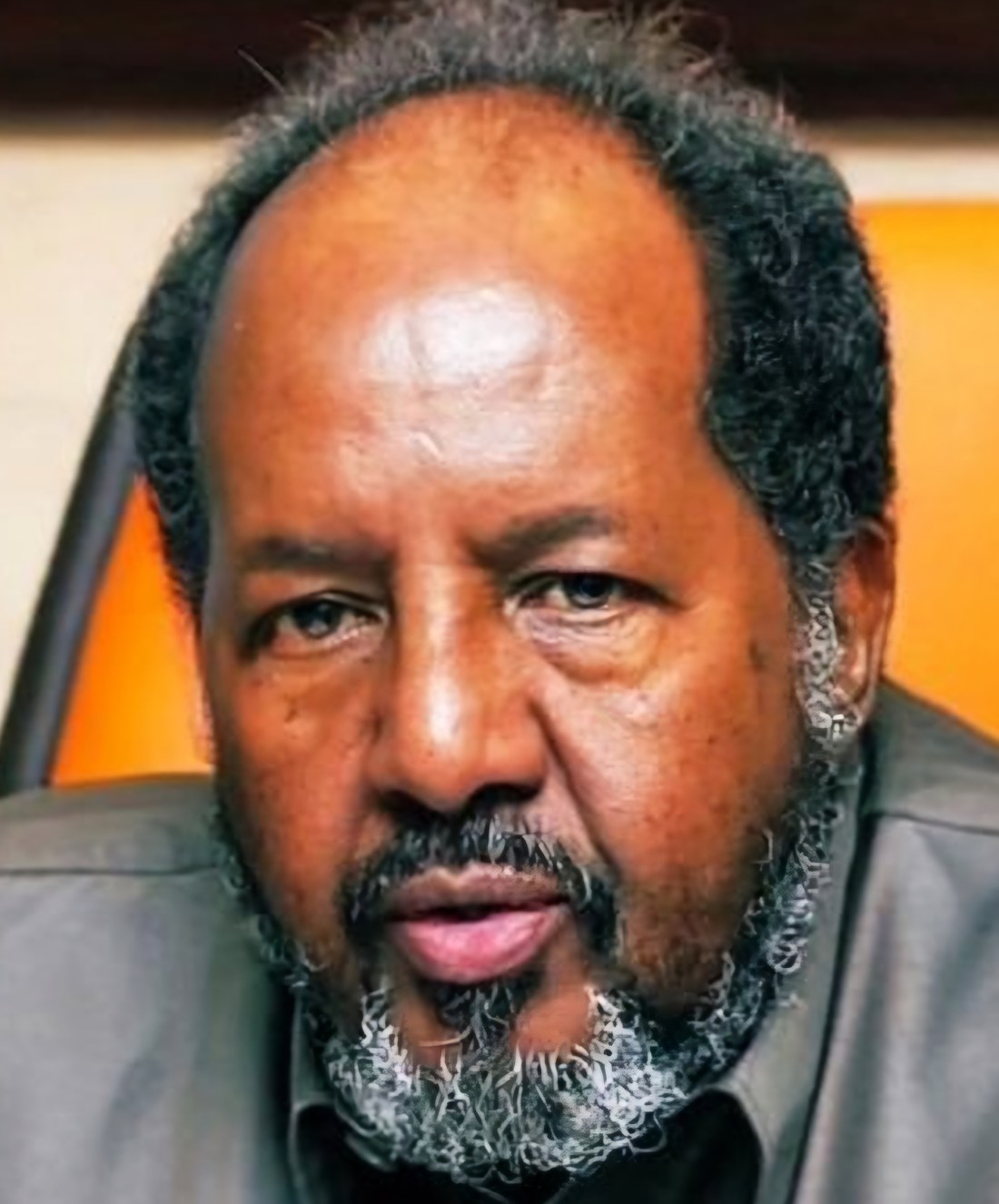
First, President Hassan Sheikh Mohamud believes that public office is the vehicle for personal enrichment to escape his family and youth poverty – once in a lifetime opportunity to seize. There is no argument about his insatiable greed and corruption for the collection of wealth.
Second, he believes that he comes to power through and by clan ticket. He thinks he could do it again by fooling and persuading his tribal base one more time.
These two factors alone have blinded him off the historic role he could play to be the president of all Somalis – a reality he will never be able to change. Redemption of the man is out of question. No wishful thinking about him.
Given what has become of him over the years, and the fact that Somali people have now discovered his true nature, unfortunately too late, he understands that he will not get re-elected by the free will of his own people, and that is why he is trying to tamper with the Federal Constitution to incite clan wars and violence again in order to divide citizens along clan lines, a method deceptively employed by defunct United Somali Congress (USC), and its related tribal groupings: Hawiye Action Group (HAG), Somali Concern, and United Somali Alliance. Damul Jadid, his political/religious mentor, is mainly clannish, too. And that is why, on top of all, he had installed a token prime minister from Darood constituency, Hamse Abdi Barre, to unconstitutionally grab all powers of the three branches of the government. For Hassan Sheikh Mohamud, there is no constitution now as he has declared war against a president of a Federal Member State (Jubaland State). It is over!
Hamse Abdi Barre and Sheikh Adan Madoobe, the Speaker of the rubber-stamped Federal House and possibly the most corrupt human life on earth, together with a senile Abdi Hashi, Speaker of the Senate, act as Mohamud’s lapdogs/sidekick.
So, the man is pre-made politically and culturally unredeemable in any shape or form. You will get what you see (YWGWYS).
[ This article was updated after posting].
US SECURITY CONCERNS OVER SOMALIA’S INSTABILITY
DECLASSIFIED DOCUMENT
Summary:
Purpose of the Report
The report evaluates the Somali Federal Government’s military interference in Jubaland and its impact on counterterrorism operations against Al-Shabaab and the Islamic State in Somalia (ISS). It responds to a U.S. Congressional tasking.
Key Findings
- Misuse of U.S. Resources:
U.S.-trained Danab Special Forces and U.S.-supplied arms have been redirected to clan-driven campaigns, undermining counterterrorism goals.
These actions create operational gaps exploited by Al-Shabaab.
- Regional Instability:
Puntland and Ethiopia are mobilizing forces in response, risking a broader regional conflict.
- Federal Disunity:
Clan-driven policies deepen Somalia’s internal divisions, threatening federal cohesion and governance.
- Congressional Scrutiny:
Bipartisan dissatisfaction may lead to suspending U.S. aid until Somali leadership realigns with counterterrorism objectives.
- Empowerment of Al-Shabaab:
Operational gaps have allowed Al-Shabaab to reclaim territory and increase recruitment.
Strategic Implications
Counterterrorism at Risk: Al-Shabaab exploits gaps, endangering U.S. operations.
Heightened Conflict Risk: Regional tensions, especially Ethiopia’s involvement, could escalate conflicts.
Reduced U.S. Leverage: Aid suspension may weaken U.S. influence in Somalia and the region.
Recommendations
- Diplomatic Engagement:
Pressure Somali leadership and allies like Egypt to prioritize counterterrorism over clan agendas.
Collaborate with Ethiopia and the African Union to stabilize the region.
- Oversight and Accountability:
Audit U.S. military aid and enforce stricter compliance measures.
Require regular reporting on resource use.
- Realign Counterterrorism Strategy:
Increase intelligence and surveillance efforts.
Support regional partners over federal entities for counterterrorism.
Origin
The report was produced by the National Intelligence Council (NIC) under the direction of U.S. Africa Command (AFRICOM) and declassified on November 26, 2024. It is derived from intelligence, including statements from Somali officials, military observations, and analysis of Al-Shabaab propaganda.
This document outlines urgent challenges in Somalia, emphasizing the need for recalibrated U.S. strategies to safeguard national security and regional stability.
Somali President Hassan Sheikh Mohamud’s Secret Trip to Nairobi Tonight Sparks Speculation
Reports:
“Somali President Hassan Sheikh Mohamud’s unannounced and secretive trip to Nairobi tonight has drawn widespread speculation. Sources reveal that the President boarded a Kenyan government plane from the Afisyoni compound near Aden Adde International Airport and travelled to Kenya’s capital under tight security.
In Nairobi, President Hassan Sheikh reportedly held a 45-minute meeting at the VIP lounge of Jomo Kenyatta International Airport with Kenyan President William Ruto and Kenya’s Intelligence Chief, Noordin Haji. The discussion is said to have focused on escalating tensions in Jubaland and the deployment of Somali federal forces to the Raaskambooni area.
Kenyan officials reportedly urged the Somali leader to de-escalate the military buildup in Jubaland and pursue negotiations with Jubaland leader Ahmed Madobe. They also advised Madobe to refrain from attacking federal forces and to await their withdrawal before engaging in dialogue.
Kenya is believed to be resisting President Hassan Sheikh’s plans for Jubaland, aiming to preserve its strategic influence in the region. This development highlights the complex political and military dynamics at play between the two neighbouring nations.
President Hassan Sheikh returned to Mogadishu shortly after the late-night meeting, but no official statement has been released about the outcomes of his Nairobi visit. “
Other reports said Hassan Sheikh Mohamud was summoned at the US Embassy at Halane Airport Campound in Mogadishu.
ONLF TUNES IN
BREAKING
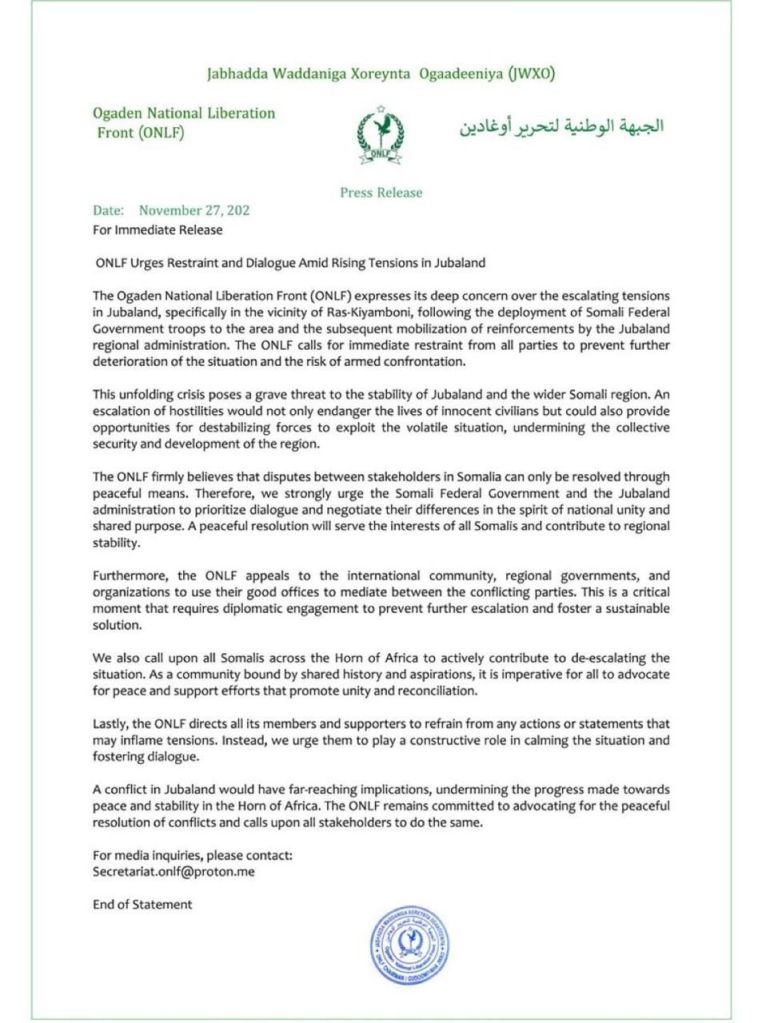
DR ALI ISSE ABDI ON CONFLICTING INTERESTS IN SOMALIA’S GOVERNANCE
Take a listen
WDM BREAKING NEWS
Federal troops President Mohamud has airlifted to Rascambooni to attack and destabilise Jubaland State following the election of Ahmed Mohamed Islam (Ahmed Madoobe) were selected from Abagal/Wacaysle, President Hassan Sheikh Mohamud’s sub-clan, and Habargedir and Hawaadle clans. The commanding officer is General Haseey Abiikar Maalin from President Mohamud’s Wacaysle sub-clan. It is assumed that these troops will use speedboats to attack Kismayo from the Indian Ocean shores.
CHALLENGES FACING SOMALI FEDERALISM
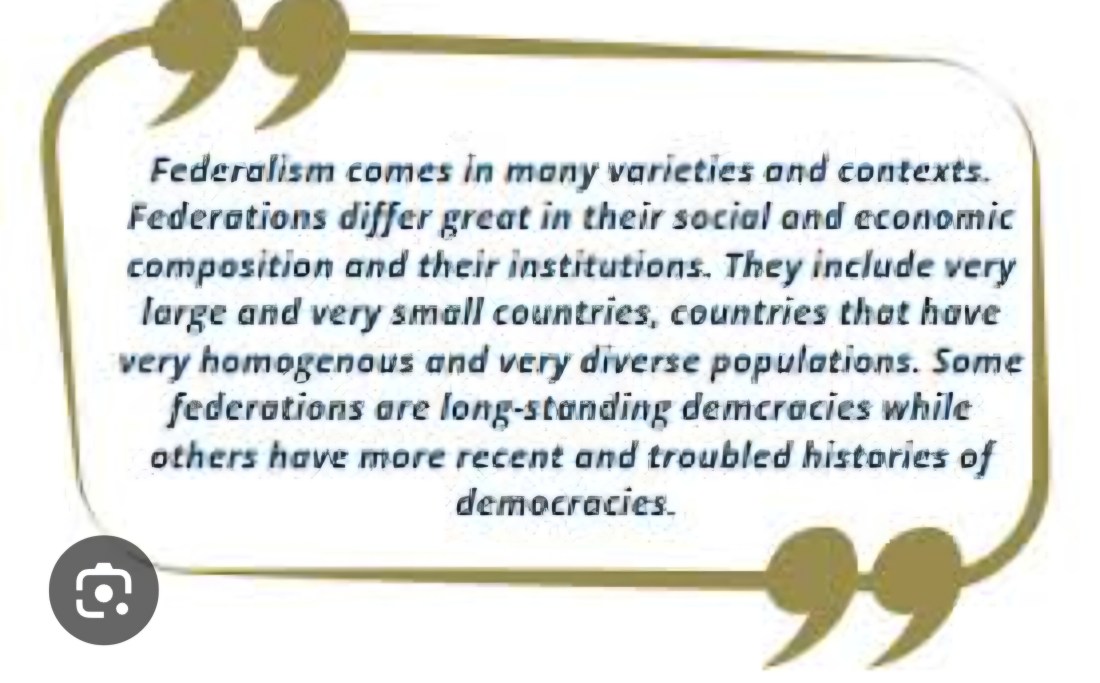
“Definition of Federalism: Federalism is a governance system that distributes power between a central government and member states, facilitating shared authority and collaborative decision-making.
Challenges in implementation: Current and previous Somalia’s Federal Presidents and their administrations have faced challenges in adhering to federal principles, resulting in tensions between the federal government (FG) and federal member states (FMS).
Risks of Independent Decision-Making: Unilateral decisions by the Federal Parliament, particularly regarding elections, undermine the foundational principles of federalism. Such actions can marginalize states that prioritize federalism and the rule of law.
Necessity of Collaboration: Effective federalism requires renewed negotiations and cooperation between the FG and FMS. The urgent need for a new Prime Minister in Somalia is crucial to restoring trust between these entities.
Concerns with Electoral Reforms: The proposal for a one-person, one-vote system by the federal government, lacking inclusive dialogue, poses significant risks. It threatens the established federal system. It reduces federalism to a mere formality. It disregards dissenting states, jeopardizing national unity.
Concentration of Power: Granting excessive power to federal president can undermine democratic principles and stability, presenting a considerable challenge to governance.
Recommendations for Strengthening Federalism:
1. Promote Inclusive Dialogue.
2. Ensure that all stakeholders, including states with differing viewpoints, are involved in discussions regarding electoral reforms and governance.
3. Establish Clear Guidelines. Develop frameworks that clearly define the responsibilities and powers of both the FG and FMS, preventing overreach and ensuring adherence to federal principles.
4. Encourage Accountability: Implement checks and balances to hold leaders accountable for decisions that impact the federal structure.
5. Foster Cooperation: Create mechanisms for regular communication and collaboration between the FG and FMS to proactively address emerging issues.
6. Educate on Federalism: Enhance awareness and understanding of federalism principles among leaders and citizens to build collective support for the system. By addressing these challenges and implementing the proposed recommendations, there exists a significant opportunity to cultivate a more stable and unified federal system in Somalia. “

WDM BREAKING NEWS
According to reliable news sources in Germany, Somalia’s Hassan Sheikh Mohamud and a local German company there had struck a deal during Mohamud’s recent visit to Germany on the disposal of toxic nuclear waste in Somalia.
It looks that Mohamud has decided to take cues from the Late Ali Mahdi Mohamed, then the Mogadishu Warlord following the collapse of Somalia’s Central Government in the 1990s, and the Italian Mafia in providing industrial toxic waste burial sites in Somalia, mainly areas predominantly inhabited by Hawiye clans, and Southwest. Find out why Prime Minister Hamse Abdi Barre‘s Environment Minister Khadija Al- Makhzoumi is also important in this connection.
This is a dangerous health and environmental threat to Somalia. Hassan Sheikh Mohamud must be stopped before it is too late.
[Editor’s Note: This breaking news has been updated since posting].
SOMALI FEDERAL GOVERNMENT CANNOT FUNCTION UNDER THE CURRENT TINPOT DICTATORSHIP
WDM EDITORIAL
President Hassan Sheikh Mohamud has to go. He doesn’t know what he is doing even when he is plunging the country into a renewed civil war. Only recently, he was carrying the banner of anti-Shabab slogans only to give up his campaign to confront Federal Member States through the abuse and violations of the Federal Constitution, First, with Puntland and Southwest State, and now with Jubaland State.
That is why a group of intellectuals from Puntland State has proposed an expanded type of federalism with a clear definition of constitutional mandates between the central authority and federal member states. Take a read:
CONFEDERAL SYSTEM IS NOT NEW TO SOMALIA, BUT SOLIDLY BUILT INTO ITS TRIBAL FABRIC
LET US TALK ABOUT SUPPORTING WDM

Many of you share a lot of content from social media. These contents are rarely neither your products nor your creations. Whether you know it or not, you are helping the producers of these materials by spreading and pushing their ideas worldwide. They appreciate this help without knowing you at all. Facebook, X, Tik Tok, YouTube, WhatsApp, and other social media platforms are full of other people’s ideas and products you circulate worldwide without receiving anything in return.
However, when you subscribe to a service you are recognized and appreciated. You become a member of a community of like-minded people, supporting each other in bad times as well as in good ones. As members you get to know each other and spread community ideas, and creativities within and without. Everybody has a voice and contribution to the common good. When a community member needs help you stand up for them. You commend the individual efforts of a community member and you offer them any support they need. You feel good about supporting a community member and urge others to do the same. That way you help build a healthy society based on your community values. You help expose corruption, power abuses, human rights violations, and bad governance. You promote competence and meritocracy in public service. You are for checks and balances of power in government. You expect transparency and accountability in running public affairs.
Your community wants to see maladministration and government abuses exposed in the media. You want free, fair, and accurate objective reporting on developments and events occurring in your country and beyond. You want a kind of media that doesn’t have fear or favor for taking up tough issues. In other words, you want an independent and competent media. This is where WDM comes in. Support it.
Contact info:
Tel/WhatsApp/Sahal account is +252 90 703 4081
Email is ismailwarsame@gmail.com
Our social media handle is @ismailwarsame
The Risk of Having an Incompetent Political Leader in a Fragile State Recovering from Civil War and Clan/Sub-Clan Conflicts | by Yasmin A Salad | Nov, 2024 | Medium
ISRAEL HAS BEEN FORCED TO ACCEPT CEASEFIRE FOLLOWING ITS DEFEAT AT BORDERS WITH LEBANON
BREAKING
Hezbollah has not only stopped the Israeli invasion of Lebanon but also defeated it at its borders, forcing it to agree to an American salvation proposal in the form of ceasefire between Hezbollah and Israel. Netayahu had to go back to its aggressive ambitions to change the balance of power in the Middle East. Lebanon is still an independent country, and Hezbollah is still intact despite losing its top military and political leaders.
The dramatic developments today in Lebanon make ceasefire in Gaza more likely, too, with the release of Israeli captives in Gaza. Although the link between Hezbollah and Hamas has been decoupled in this ceasefire agreement, the two issues are interconnected.
In conclusion, America has brought about this agreement to save Israeli again from self-destruction in its hostile involvement in multiple battlefronts in the region (basically saving Israel from Natayahu’s madness). Huge American arms assistance couldn’t help Israeli enough to capture and occupy Lebanon because of Hezbollah’s fieriest defence of Lebanese territorial integrity and sovereignty.
Iran decided to play ball with this ceasefire agreement for strategic reasons, a shrewd policy position, but also to avoid escalation of the war in the region, given the fact that hawkish and hostile to Iran president-elect Donald Trump will come to Power in the US in two month’s time.
The ceasefire will come into force on this Wednesday, November 27, 2024, at 4:00 AM local time in Lebanon and Israel.
WHY STRATEGIC SILENCE ON THE PART OF UN POLITICAL OFFICE AND ATMIS IN SOMALIA IS TO BLAME ON JUBALAND EXPLOSIVE SECURITY SITUATION
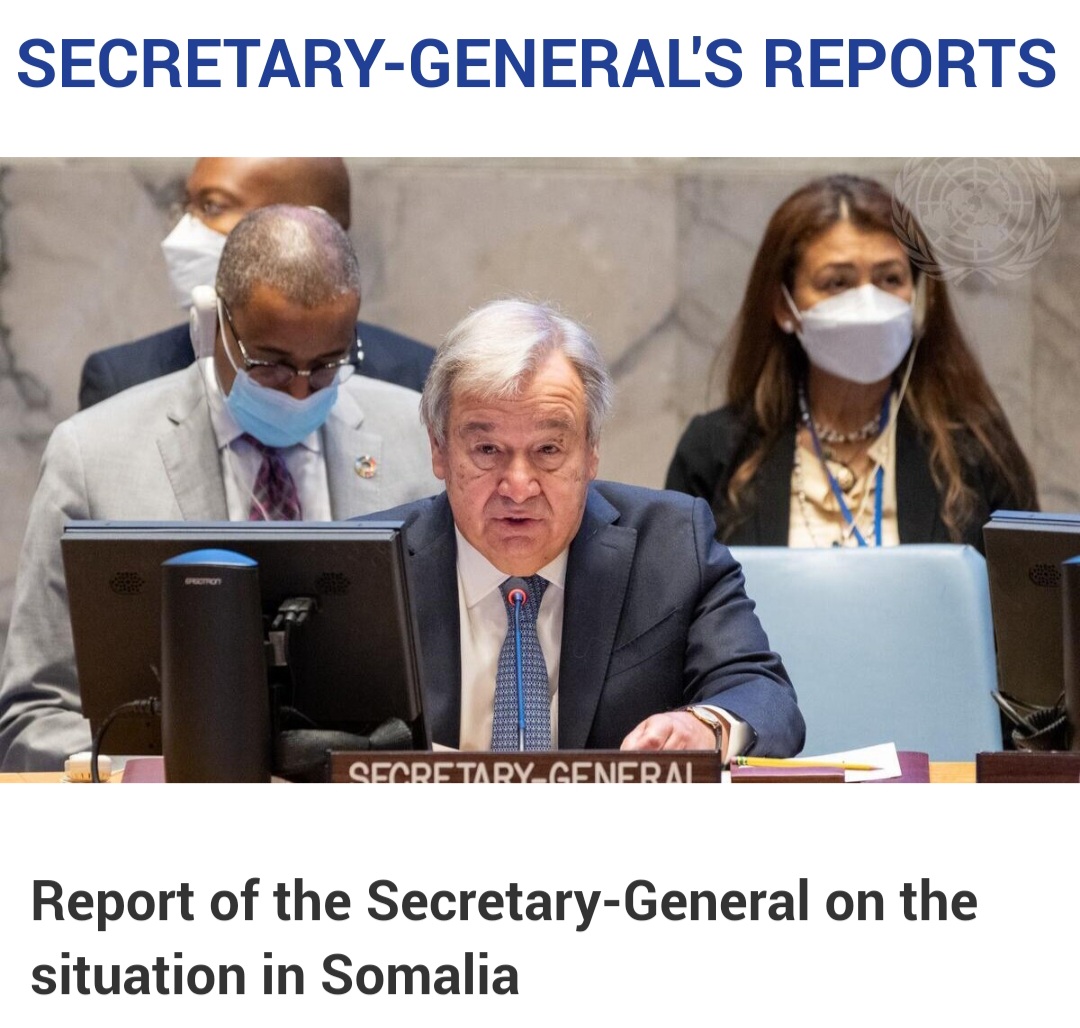
WDM EDITORIAL
Strategic silence is doing nothing to intervene in a badly or dangerously developing situation, thus neglecting one’s duty or responsibility.
They were obliged, at least, to report accurately on the collusion course to which Somali parties were heading. Instead, they were drawing a rosy picture of Somalia’s recovery and constitutional constructive engagement within to culminate in general elections of one person, one vote in the country.
Today, we are talking about armed confrontation between the Federal Government of Somalia (FGS) and Federal Member State (FMS) of Jubaland. How does that match up with the recent James Swan‘s report to the UN Security Council.
Now, Jubaland State is one of the latest FMS that is confronting against gross violations and tampering with the Federal Constitution. Puntland State is running its affairs short of secession. James Swan, the Acting UN Secretary-General Representative, has been paying regular visits to Villa Garowe with Said Abdullahi Deni, the State President. Nothing meaningful came out of his expensive trips to Garowe. Next, he informed the world community that Somalia was doing well in all areas of interest and ready to transition to a new UN mandated transitional forces, UNTMIS. That was misleading, to say the least.
Now, neither President Mohamud nor Madoobe has Somali interest at heart. Both are power maniacs and selfish in this armed conflict. They are both tinpot dictators. The victims are Somali people and state. This is a developing story. We will monitor the situation and share it with you of any further developments.
WESTERN MEDIA BIAS ON THE WARS IN THE MIDDLE EAST AND UKRAINE
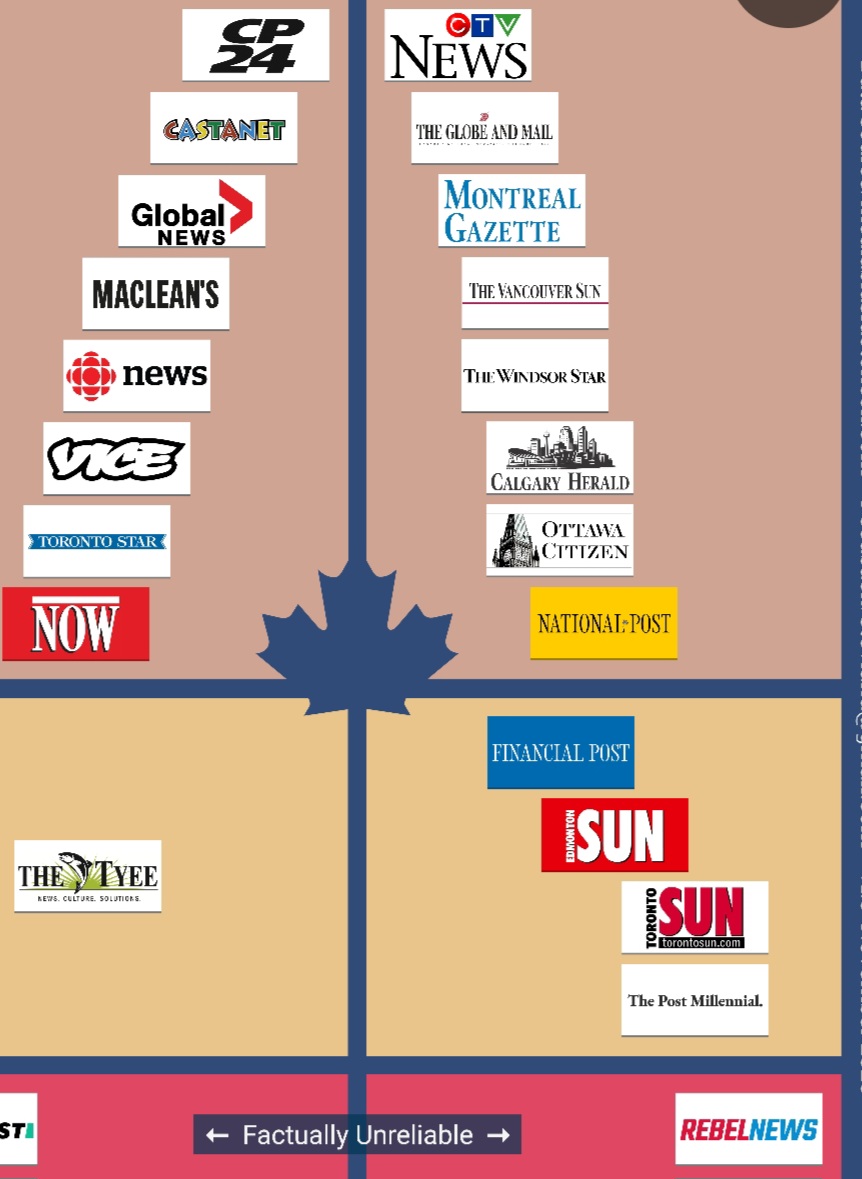
WDM EDITORIAL
Biased towards Israel and Ukraine in news coverage, Western media shamelessly hid facts from their audience mainly by omission. Think of these war and security developments in Gaza, Lebanon, and Ukraine without the presence of the Al-Jazeera media outlet, bringing the reality of what was happening in the war fronts these Western news outlets repeat Israeli government talking points daily, even if they submit any reports from the battle fields. They are obviously the mouths of their respective home government, in addition to bending their editorials to Israeli political pressure.
We have no doubt that the War on Gaza has exposed their double standards and removed any credibility of Western media in objective reporting and general rules, ethics. and conduct of free journalism. We also have no doubts that Western media have lost huge audiences in the so-called developing countries or Global South, if you will. Global South has learned new lessons on Western media bias on world occurances that will potentially make irreparable damage to their standing in the minds of audiences worldwide.
SYL RESOLUTION OF THE ALL SOMALI CONFERENCE
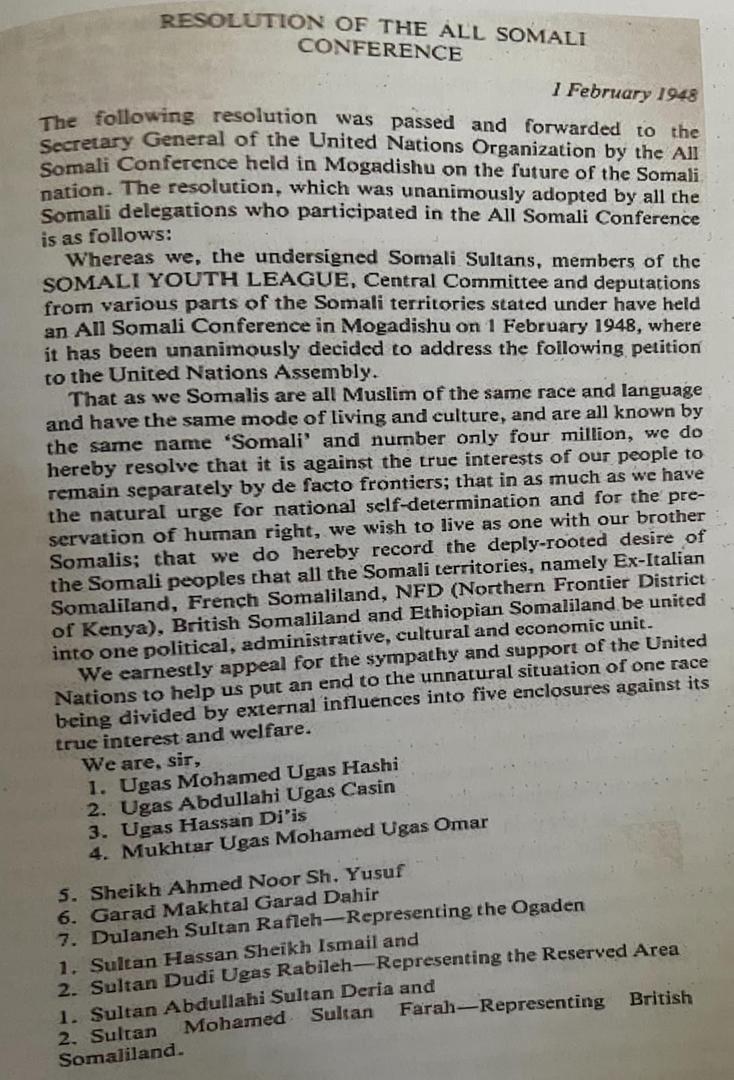

ISRAEL EXPOSED: USING “ANTI-SEMITIC” WORD INDISCRIMATELY AS WEAPON TO SILENCE CRITICS
If a dog barks at Israeli, they would say it is “anti-semitic.” It makes no sense. They are shamefully exposed.
[Video. Courtesy].
HOW TO KILL A NATION
[Courtesy]
UN INACTION ON HASSAN SHEIKH MOHAMUD’S UNCHECKED CONSTITUTIONAL VIOLATIONS IN SOMALIA
COURTESY
[Courtesy].
HOW TO RESOLVE SOMALIA’S EPIDEMIC CLANNISM PROBLEM
- Discard collective responsibilities by whole clan when someone among them commits crime like capital murder against a member of other clan(s) member.
- Impose individual responsibility on wrongdoing.
- Remove the collective guilty approach amidst clans in addressing and decision-making on individual crimes.
- Clan/tribal allegiance must be outlawed in political discourse, judiciary (law enforcement), and public administration.
- Personnel of public institutions and seekers of election to public office must be vetted to confirm the policy on the fight and eradication of clannisn, and insure public accountablily, allegiance to the rule of law, and the Sharia for public good..
- Laws must be devised to counter the evils of tribalism and corruption.
- Public institutions must be built on competence and meritocracy.
- Campaigns of public awareness and mass education on the vices of tribalism must be among the top priorities of public policy.
UPDATE ON THE WARS IN THE MIDDLE EAST AND UKRAINE
First, Israel is unable to subdue armed resistance in Gaza with daily casualties of its fighters, fifteen of them killed latest in Beit Lahia, unfortunately with heavy toil on desperate Palestinian innocent civilians throughout Israeli genocide war campaign.
Secondly, Israel has failed in its stated objective to occupy, at least, Southern Lebanon, thus dislodging Hezbillah for the return of fleeing Israeli residents back to the north of the country. Israel has suffered undisclosed huge losses in lives and equipment in its attempts to invade Southern Lebanon.
Thirdly, Hezbillah rains rockets and suicide drones over all parts of Israel daily, despite its famed Iron Drone air-defence system. Israeli population are in shock and panic for their lives, mostly hiding in bombshelters for prolonged times daily. Israeli economy is in free fall, and many are fleeing the country to safety in Western countries. Moreover, Hezbillah was threatening to hit Israeli Capital Tel Aviv much harder, avenging Israeli severe bombardment of Lebanese Capital Beirut.
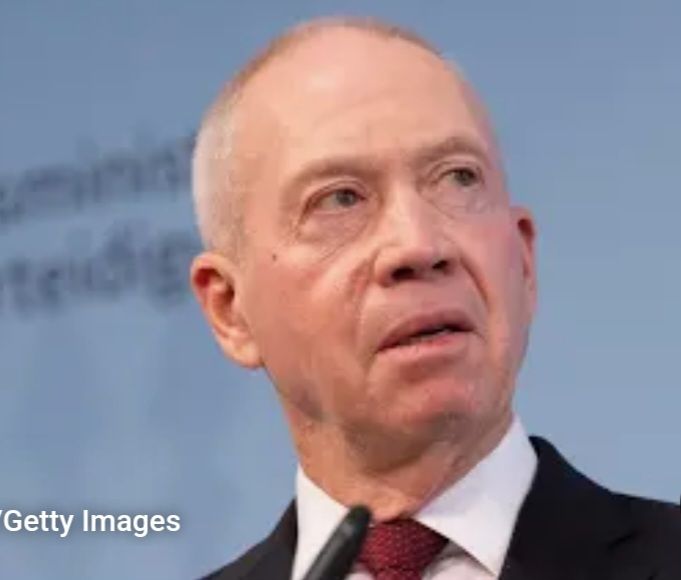
Fourthly, the International Criminal Court in the Hague, Netherlands, has just called for the arrest of Israeli prime minister Benjamin Netayahu and former defence Yoav minister Gallant, for war crimes, crimes against humanity and use of starvation as a weapon of war.
Since US President Joe Biden authorized Ukraine to use long-range Western provided missiles to hit deep inside Russia. In an angry response, Russia started hitting Ukrainian cities with intermediate-range ballistic missiles. Young Ukrainian constripts were reportedly fleeing the country, bribing their way through to escape meat grinding battles at frontlines with Russian superior weapons and larger army.
Stay tuned for more developments in the Middle East and Ukraine/Russia.
I am sharing ‘L’ITALIA COLONI-Somalia_Translated.docx’ with you from WPS Office
WPS Office: Complete office suite with PDF editor Here’s the link to the file: https://eu.docworkspace.com/d/sIP_LndXKAfHW97kG?sa=601.1123 Open in APP: https://s.wps.com/s8N4h6jg5cvX
The Farcical Nature of the One Person, One Vote Plan in Somalia – Puntland Post
منطقة بنادير في طريقها للانفصال عن الصومال أيضًا
في حين أن بقية الصومال كانت تشكو منذ ما يقرب من نصف قرن من انفصال أرض الصومال، يبدو الآن أن منطقة بنادير في جنوب وسط الصومال تسير نائمة بشكل أعمى نحو الانفصال من جانب واحد أيضا. إن الشعار الذي رفعه الرئيس حسن شيخ محمود “الصومال في سلام داخل العالم ومع بقية العالم” يعني الآن نهاية الصومال كما نعرفه.
الانتهاكات الدستورية الفظّة دون أي اعتبار للإجماع الوطني وشعار محمود الآخر: “نحن لا نحتاج إلى أي شخص آخر ولا نتوقف لانتظار أي شخص آخر”، هو الفوز اليوم لفيلا مقديشو.
وتحت إشراف محمود، أصبحت الوحدة والسلام وسلامة الأراضي الصومالية في خطر بالتأكيد. إن سكان مخيم هالان الدولي قبالة مطار مقديشو و ATMIS متواطئون في خلق حالة من عدم اليقين السياسي المحيط بإعادة بناء بلد مسالم وموحد.
والآن، لم يفت الأوان بعد بالنسبة لبقية البلاد لرؤية الخطر الوشيك على تماسك الصومال كدولة مستقلة. دعونا ننهض.
Somalia’s Strategic Counterbalance to Ethiopian Influence in the Horn of Africa | Carnegie Endowment for International Peace
https://carnegieendowment.org/sada/2024/11/somalia-ethiopia-relations?lang=en

Somalia’s Strategic Counterbalance to Ethiopian Influence in the Horn of Africa
As hegemonic Ethiopian ambitions threaten stability in the Horn of Africa, Somalia is building strategic alliances regionally and internationally to counter Ethiopia’s growing political and military influence.
by Hisham Qadri Ahmed
Published on November 7, 2024
Since early 2024, a diplomatic standoff and war of words have erupted between Somalia and Ethiopia over competing regional interests in the Horn of Africa, a region marred by political and security instability. Tensions emerged between the two countries in January when Ethiopia signed a memorandum of understanding (MoU) with Somaliland, a self-declared breakaway region in northern Somalia that proclaimed independence from Somalia’s central government in 1991. Through the MoU, Somaliland granted Ethiopia access to 20 kilometers of coastline for 50 years, thus providing the landlocked country with a strategic sea outlet. Additionally, the agreement permitted Ethiopia to lease a military base near the port of Berbera on the Gulf of Aden. Ethiopia secured these favorable terms in return for recognizing Somaliland as an independent country—the first nation to do so.
The MoU signing enraged the Somali government, which grew concerned that it might reignite Ethiopia’s longstanding ambition to expand beyond its landlocked borders, potentially sparking regional and sectarian conflicts and infringing on Somalia’s sovereignty by meddling in its internal affairs. Given the unclear motivations behind Ethiopia’s agreement with Somaliland, the MoU could serve as a strategy of Ethiopia to alleviate internal pressures or as a bargaining chip to extract concessions from the Somali government. Mogadishu condemned the agreement as a hostile act against its sovereignty and territorial integrity, reaffirming its stance that Somaliland remains an integral part of Somalia. In response, it expelled the Ethiopian ambassador, lodged a complaint with the UN Security Council, and announced it would not engage in negotiations with Ethiopia until it nullified its agreement with Somaliland’s separatist authorities.
African Positions
The Arab League and the European Union quickly condemned Ethiopia’s agreement with Somaliland, characterizing it as a violation of Somalia’s national sovereignty. However, African responses were more divided. The Intergovernmental Authority on Development in East Africa issued a mild statement, merely urging dialogue and restraint between the two parties—a stance Mogadishu found disappointing and biased toward Ethiopia. Meanwhile, the African Union (AU) emphasized its commitment to supporting Somalia’s stability and territorial integrity, expressing concern that recognizing Somaliland could heighten tensions in the already fragile Horn of Africa and potentially inspire other regions with separatist ambitions.
It is worth noting that since 2007, the AU has participated in a peacekeeping mission in Somalia with the goal of aiding Somali federal forces to combat the Al-Shabaab militant group. This transitional mission is set to conclude at the end of this year and the AU Support and Stabilization Mission in Somalia will take its place in January 2025. Thus, the AU is intent on preventing any escalation of the political situation in Somalia to ensure a stable environment for the new mission to fulfill its objectives.
Building on the divided reaction to Ethiopia’s agreement with Somaliland, the Ethiopian government’s move last August to send a diplomatic envoy to Somaliland to affirm its recognition of the regional government further escalated tensions. This move cast a shadow over Somali-Ethiopian relations, undermining regional security and threatening to ignite conflict in East Africa. In response, Somalia has intensified its political and diplomatic efforts to strengthen its regional alliances and counter Ethiopia’s growing influence, particularly in light of Addis Ababa’s clear military advantage. These initiatives have resulted in the formation of a network of parallel alliances aimed at balancing out Ethiopia’s ambitions.
Framework Agreement with Türkiye
The first of these alliances was a framework agreement for defense and economic cooperation, reached last February in Ankara between the defense ministers of Somalia and Türkiye. Extending for ten years, the agreement aims to establish a joint military force to secure Somalia’s coast and protect its territorial waters. It also seeks to develop and modernize Somalia’s naval forces and provide technical support to the Somali army. Additionally, the agreement grants Türkiye rights to explore and extract oil and gas within Somalia’s territorial waters.
Following the agreement, the Turkish parliament approved a two-year deployment of Turkish troops within Somali territorial waters last July. This cooperation is expected to bolster Mogadishu’s political standing through strengthened economic and security ties with Türkiye, which, in turn, seeks to expand its presence and influence in Africa, starting with the strategic Horn of Africa region.
Defense Cooperation Protocol with Cairo
In August, Somalia signed a defense cooperation protocol with Egypt, to which the Horn of Africa represents a strategically vital region. Shortly thereafter, the Egyptian Foreign Ministry announced the arrival of a shipment of military equipment and aid to Somalia, underscoring Cairo’s support for Mogadishu’s efforts to preserve its sovereignty, combat terrorism, and contribute to regional stability. Egypt also declared its intention to send troops to Somalia as part of the new AU mission, a move the Somali government welcomed.
The Egyptian stance on the diplomatic relations between Somalia and Ethiopia can be understood in the context of its long-standing dispute with Ethiopia over the use of the Nile’s water. For Egypt, the construction, filling, and operation of the Grand Ethiopian Renaissance Dam, which continues despite Egypt’s strong opposition, poses a significant threat to its water supply and, consequently, its national security.
On a different note, the growing consensus between Cairo and Ankara regarding Somalia raises important questions about future cooperation between the two countries. Egypt’s military involvement in the Horn of Africa will likely require coordination with Türkiye, which maintains an active presence in the region. Recently, relations between Egypt and Türkiye have improved significantly, culminating in the Egyptian president’s first official visit to Ankara since taking office. This burgeoning cooperation could help mitigate conflicts of interest between the two nations in the Horn of Africa.
Seeking New Alliances
The Somali government is exerting maximum political pressure on Addis Ababa to urge its government to retract the preliminary agreement with the separatist authorities in Somaliland. Mogadishu’s persistent efforts recently culminated in the announcement of a new MoU for defense cooperation with Tanzania in October, although the specific contents and terms of this memorandum were not disclosed The Somali government will continue to expand its network of regional and international alliances, through which it aims to deter Ethiopian ambitions and impose a kind of regional [is]deterrent against it.
[Courtesy].
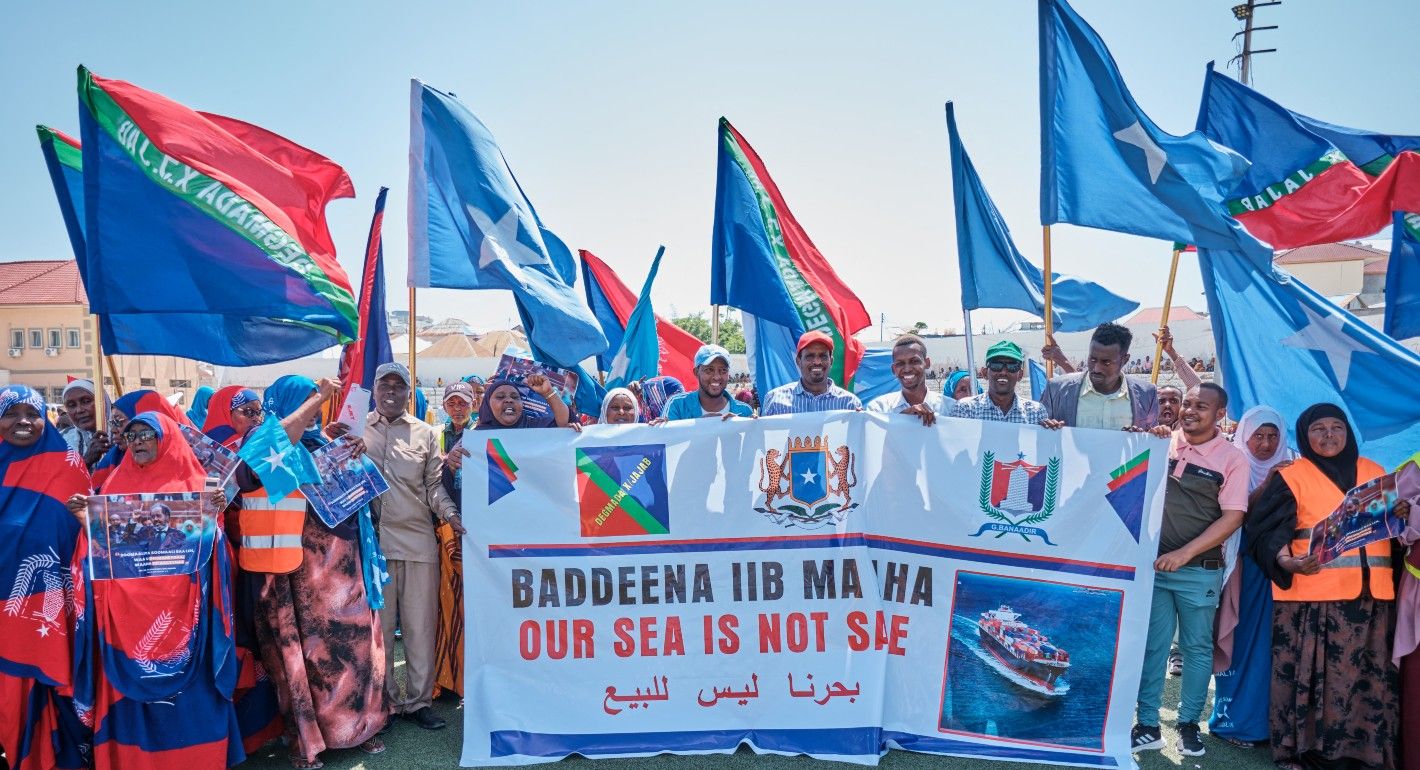
BANADIR REGION IS ON THE WAY TO SECEDE FROM SOMALIA TOO
WDM EDITORIAL
While the rest of Somalia was complaining for nearly half a century about Somaliland secession, it looks now that the Banadir Region in South-Central Somalia is blindly sleepwalking into unilateral secession too. President Hassan Sheikh Mohamud’s slogan “Somalia in peace within and with the rest of world” now means the end of Somalia as we know it.
Crude constitutional violations without any consideration for national consensus and Mohamud’s another slogan, “We don’t need anybody else and don’t stop to wait for anybody else,” win the day for Villa Mogadishu.
Under Mohamud’s watch, Somali unity, peace, and territorial integrity are surely in peril. Residents of Halane International Campound off Mogadishu Airport and ATMIS are complicit in creating political uncertainty surrounding rebuilding a peaceful and united country.
Now, it isn’t too late for the rest of the country to see the imminent danger to Somalia’s cohesion as an independent nation. Let us rise up.
منطقة بنادير في طريقها للانفصال عن الصومال أيضًا.
في حين أن بقية الصومال كانت تشكو منذ ما يقرب من نصف قرن من انفصال أرض الصومال، يبدو الآن أن منطقة بنادير في جنوب وسط الصومال تسير نائمة بشكل أعمى نحو الانفصال من جانب واحد أيضا. إن الشعار الذي رفعه الرئيس حسن شيخ محمود “الصومال في سلام داخل العالم ومع بقية العالم” يعني الآن نهاية الصومال كما نعرفه.
الانتهاكات الدستورية الفظّة دون أي اعتبار للإجماع الوطني وشعار محمود الآخر: “نحن لا نحتاج إلى أي شخص آخر ولا نتوقف لانتظار أي شخص آخر”، هو الفوز اليوم لفيلا مقديشو.
وتحت إشراف محمود، أصبحت الوحدة والسلام وسلامة الأراضي الصومالية في خطر بالتأكيد. إن سكان مخيم هالان الدولي قبالة مطار مقديشو و ATMIS متواطئون في خلق حالة من عدم اليقين السياسي المحيط بإعادة بناء بلد مسالم وموحد.
والآن، لم يفت الأوان بعد بالنسبة لبقية البلاد لرؤية الخطر الوشيك على تماسك الصومال كدولة مستقلة. دعونا ننهض.
WDM EDITORIAL
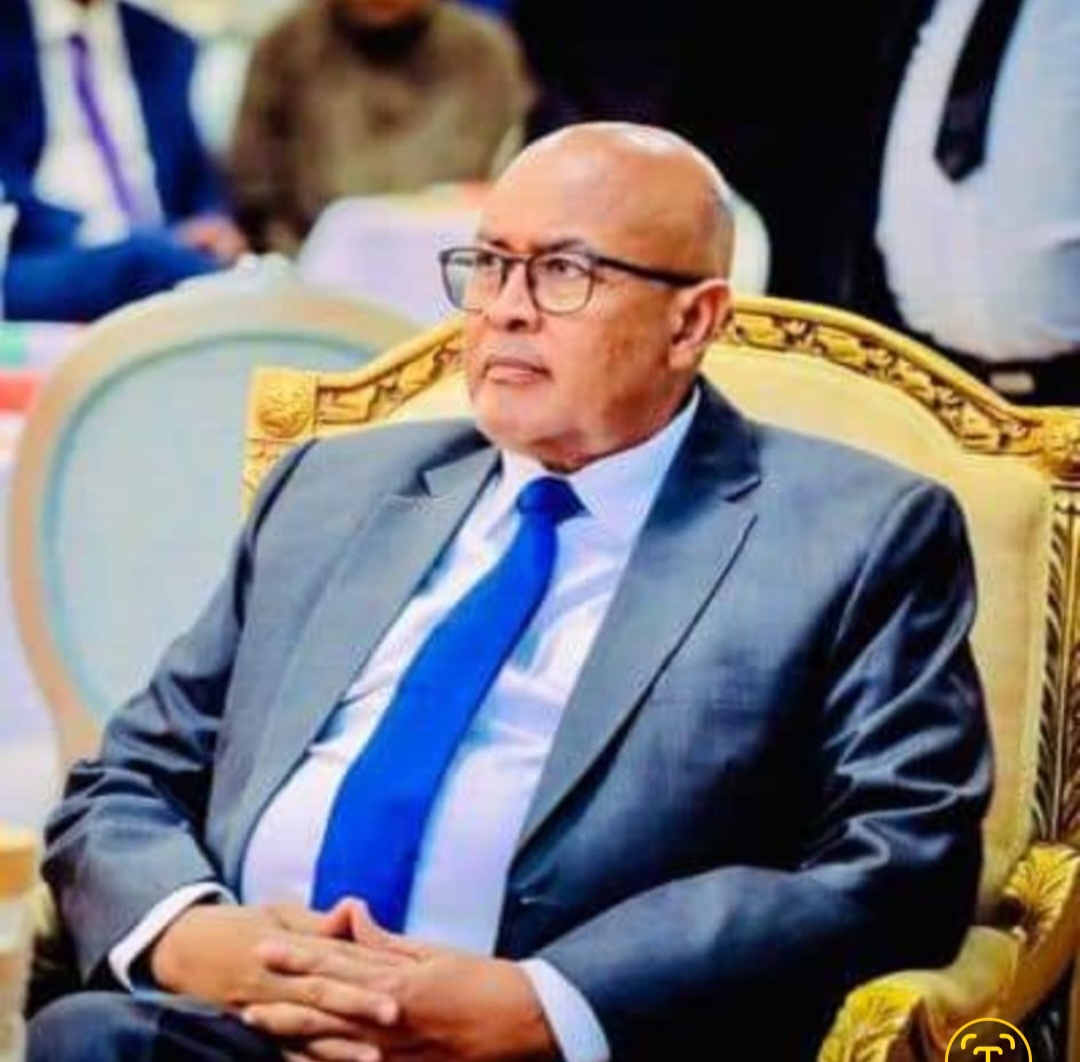
Congratulations to the residents of Northwest Somalia (Somaliland) for conducting a peaceful election. We are hopeful that peaceful transfer of power will follow this democratic election. While direct elections through democratic process could be messy and difficult to mobilise and run, human societies couldn’t find a better system so far. Northwest Somali Regions are at crossroads now to either continue along the failed ambition of secession to come to the dead end, or rethink of another way forward with national reconciliation with the rest of the Somali population for a better future for all.
The Somali problem, however, isn’t about Somaliland secession, but Mogadishu’s childlike problem, and until that is resolved, many other provinces of the country have no rational partners in genuine national reconciliation and power-sharing national mechanism.
WHY IS IT DIFFICULT TO BUILD A SOMALI NATION-STATE?

Let us start from the basics. The Somali State, from its inception in July 1st, 1960, believed that Somali national independence was not complete until all parts of Somalia under foreign occupation unite to form a Somali nation-state. Any person of Somali origin from occupied parts of Greater Somalia is Somali citizen by constitution- that represented national security risks and unintended serious consequences for Somali State- an open border for foreign countries’ meddling into Somalia’s internal affairs and ready sources for recruitment by foreign intelligence and espionage agencies, first by Somali neighbours, and now internationally as Somalia had produced huge refugee population overseas. These hostile intelligence networks, active measures, and operations continue to weaken Somalia and undermine its government.
Secondly, Somali leaders never have had a vision to move the country forward, taping into people’s aspirations for a viable nation-state. Only pre-independence SYL (Somali Youth League) party came close to that visionary definition, but ran short because of lack of education and impact of destructive neo-colonialism after securing the independence and unification of British and Italian Somalilands. Neo-colonialism used clan rivalry successfully to divide Somalis again. Clan identity became the norm in Somali politics. The whole nation is built on contradictions and distrust whose roots are clan rivalries and hatred between clans. Can they put their houses in order to form a nation-state?
That distrust amidst Somali population was exacerbated by military coup in 1969 with its ring leaders falsely claiming patriotism and carrying up national banners, but in reality, they were tribalistic and sinophobic. As the dictatorship had finally collapsed in 1991 as a result, tribal warlords took over, putting fire on fuel for tribal warfare, leading to a civil war and ethnic cleansing in some parts of the country.
Some sections of the Somali population, especially members of minority clans, sought protection and refuge in extremist organizations like Al-Shabab and ISIS. Others sought where to belong to and joined the spreading Tariqa fights within the population.
Next time you encounter a Somali polician with any sort of political and security power, check his security detail to find out the entire team belongs to the same clan. Why? Because of two subscribed conditions: a) He doesn’t trust other clan members for his own security. b) It is employment opportunities for his clan’s men. General Siyad Barre, always security paranoid and afraid of his own people, devised and resorted to such VIP security protection. Somali politicians after him were quick to copy Barre’s ways and methods.
Now, it is clear that under these conditions, there is hardly any space available for national reconciliation leading to the establishment of a nation-state.
JUBALAND AND KISMAYO REMAIN THE SPOILS OF THE FAILED SOMALI STATE
Since the rise and fall of the military general Siyad Barre, Kismayo has been the most coveted price for territorial expansion and land-grabbing schemes by Darood and Hawiye non-native clan militia alike. The combination of fertile soil for commercial farming, excellent grazing land for livestock, and commercial seaport is becoming a curse rather than a blessing for Kismayo natives. Militia of General Aydid, Omar Jess, Morgan, Barre Hiraale, Ahmed Madoobe, and now Hassan Sheikh Mohamud as yet another destabilising factor, took turns to plunder, destroy, and forcefully occupy Kismayo. Natives had been displaced multiple times, and their properties were dispossessed in the process.
Eastern Somali Daroods tried to come to the defence of Jubaland natives long distance and around the globe as the Darood diaspora extended help to desperate people in the area. Puntland State from its inception came up with the idea of the establishment of Southwest State of Somalia comprising six regions: Lower Jubaland, Middle Jubaland, Upper Juabland (Gedo), Bay, Bakool and Lower Shabeelle. The idea was to resolve Kismayo conflict permanently. That was a great concession in abolishing the traditional law of Lower Jubaland, The “Xeer Harti” (Harti Law) accepted by all natives of the land regardless of clan affiliation If you live in Kismay, you are under Xeer Harti. Towards that objective, in 2001, Puntland Government leaders convened a meeting for all warlords of Jubaland and Rahanweyn Resistance Army (RRA) to Ceelbarde, Bakool, to agree to the establishment of Southwest State of Somalia. Later, Late RAA Chairman Shatigadud made the mistake of self-appointing himself president of the new state without wider community consultations, resulting in split of RRA rank & file, some joining Jubaland Valley Alliance of Ayr and Marehan clans to depose Shatigadud. The rest is history.
Jubaland Administration and the rise of Ahmed Islam (Ahmed Madoobe) there was also a turning point in Hawiye’s acceptance of Somali Federal System as they gave up resisting the formation of Jubaland State of Somalia, to mind their own business of setting up Hirshabeelle State of Somalia and rebuild then failing Galmudugh entity, all modeling Puntland State of Somalia, the first Federal Member State of the federation.
Historically, in 1978, just after the end of Ogaden War in Ethiopia, residents of Puntland State were also the founders of the Somali First Opposition, SOMALI SAVALVATION DEMOCRATIC FRONT (SSDF) to the military dictatorship of General Barre, operating in exile in Ethiopia. United Somali Congress, USC, was a splinter group of SSDF, while Somali National Movement, SNM, enjoyed the military and financial support of SSDF for three years after its establishment in London, UK, after moving to Ethiopia in 1982 as well.
During its formation, we wrote the article to follow on Jubaland:
What is the Fuss on the Formation of Jubaland State?
Recently, we wrote about power abuses and lack of legitimacy of Jubaland current administration led by Ahmed Madoobe.
KISMAYO: ABSOLUTE POWER CORRUPTS ABSOLUTELY
A LETTER TO THE EDITOR

Dear Editor,
I read WDM’s piece with interest on the imaginary Nomadia Government. The article describes well the historical and present-day sad reality of Puntland State, in particular, and Somalia’s mal-governance, in general.
It appears that “democracy” is proposed in the article as a possible panacea to complex and multi-faceted political and social problems. Quick questions come to mind: Would it work? If so, at what conditions? Allow me to share my views based on empirical evidence from the field.
Eight years ago, Hayaan Institute commissioned a field research project to study the origins, effects and ramifications of mal-governance in Somalia with a case study on various aspects of (political and administrative) corruption in Puntland. The study consisted of several complementary components: 1) Literature review, 2) Puntland-wide public survey, 3) Key Informants Interviews (KIIs – which included three sub-sets of heavy-weight subject matter experts from the public, private, and civil society sectors), and, 4) Focus Group Discussions (FGDs).

Apart from the finding and other detailed insights on the anatomy and physiology of corruption, mal-governance, lack of accountability, and near-total impunity (i.e. the cornerstones underpinning at the time the prevailing de facto state capture in Puntland and the rest of Somalia), the researchers had to document people’s views on potential solutions to the identified hundred-headed monster of the apparently purposefully engineered and nurtured perpetual mal-governance syndrome.
In this respect, experts (KIIs) and average citizens alike pointed out an imagined “multi-party democracy” as an all-in-one solution. At the time, as researchers, we thought we had hit the much sought-after jackpot to improve governance, and per extension the living standards and well-being of the Puntland State citizens.
Retrospectively, however, we now know that the imagined multi-party democracy can be equally mal-governed and manipulated to the extent the outcome makes the situation even worse than the worst dictatorship for it strengthens the grip of state capture by offering a false democratic legitimacy in eyes of the public.
Based on the foregoing discussion, it is perhaps time to re-assess and redefine the illusive “multi-party democracy” in the socio-political and cultural context of Puntland (and the rest of Somalia). Whose democracy are we talking about? What are the rules of the game that make elections a truly democratic exercise with the desired outcome? How do we define a political party in the first place, and what are the conditions it has to meet? How high do we set the bar when it comes to quality of the electoral laws or (the criteria of selection of) electoral commissions? Unless we get these and other basic conditions right, I am afraid that what is called multi-party democracy in Somalia is a futile exercise, much to the detriment of the public interest. To the contrary, it can quite paradoxically reinforce the above-described problematic status quo.
By Bashir M. Hussein.
ON THE RECORD: AHMED HUSSEIN DIRIR
Canada’s minister for International Development. Take a listen:
NOMADIA GOVERNMENT LOSES ITS WAY IN SOMALIA

By WDM — Published November 17, 2024
In Somalia, the concept of “Nomadia”—a fusion of pastoral democracy and modern statecraft—was meant to provide a governance model grounded in both tradition and effective civil administration. However, reality has fallen far short of our aspirations. Today, institutions are largely dysfunctional, serving symbolic roles while power has become dangerously concentrated in the hands of a single political figure.
With unrestrained control over the executive, legislative, and judicial branches, this leader has effectively sidelined traditional authorities, undermining the very foundation of Somali pastoral democracy.
Public institutions designed to ensure accountability—such as the Public Service Commission or vetting mechanisms in security—have collapsed. Even when this political figure remains unresponsive for days, no one dares intervene, reflecting a troubling culture of fear and inertia.
When traveling abroad, they act unilaterally, often without forming official delegations or reporting back to Parliament. This has created a governance culture known locally as Madax-ka-Nool, or “nothing moves without the president’s nod,” coined in Puntland to describe this debilitating micromanagement. Parliament has become a rubber stamp, lacking real oversight and access to independent auditors or accountants.
Consequently, development, social services, and humanitarian efforts rely almost entirely on aid from international organizations—funds that have diminished due to global crises like the wars in Ukraine and the Middle East. Without a domestic budget to sustain essential services, life in many parts of our country is at a standstill.
Within this environment, some government officials exhibit disturbing cruelty, seeming to derive pleasure from the suffering of others. Procurement processes are chaotic, and the rule of law has become hollow. Religious, civic, and personal rights are treated as negotiable rather than fundamental.
Amid institutional collapse, clan loyalty has supplanted allegiance to the constitution—becoming the default means of survival and support for many Somalis. Until we rebuild genuinely representative institutions, perfected through fair elections and real public suffrage, this situation is unlikely to improve. But these reforms cannot take hold while our public institutions remain fragile and manipulated.
HOW JOE BIDEN BECAME PRISONER OF BENJAMIN NETANYAHU
Editor’s Note
His long years and career commitment to promotion and protection of Zionism have turned US President Joe Biden into a prisoner of Israeli prime minister Benjamin Netanyahu‘s war of genocide in Gaza, and as result of his legacy, has destroyed him and his Democratic Party politically.
Read these excerpts from Bob Woodward’s most recent book: WAR
“Secrets always exist. And often, the secrets have immense weight, especially in human relations. What do the main characters really think of each other? What is going on behind the scenes that others might not noticenor imagine? What might be the driving forces that are not articulated orvisible?President Biden’s frustrations and distrust of Israeli prime ministerNetanyahu had been building for years and, in the spring of 2024 finally erupted.“That son of a bitch, Bibi Netanyahu, he’s a bad guy. He’s a bad fucking guy!” President Biden declared privately to one of his closest associates. “A bad fucking guy!“He doesn’t give a shit about Hamas. He gives a shit only about himself.”The president was preoccupied with bitterness and distrust ofNetanyahu, who he said had been lying to him regularly.Netanyahu was destroying the entire region of Gaza, pounding one ofthe most densely populated places on earth with an estimated 45,000bombs. Almost half, 47 percent, of Gaza’s population of 2.2 million werechildren under the age of 18. Hundreds of the bombs dropped on Gaza had been the massive 2,000-pounders. The carnage resembled some of the worstbombing during World War II.Netanyahu was continuing to say he was going to kill every lastmember of Hamas.Biden had told him that was impossible, threatening both privately andpublicly to withhold offensive U.S. weapons shipments to Israel.Netanyahu promised Biden that Israel would change strategy and pursueHamas with more carefully targeted and sophisticated operations. Theywould replicate the more systematic and patient year-long hunt to eliminatethe Black September Palestinian militants who killed 11 Israeli Olympicteam members in Munich 1972.No more battalions going in firing rockets and artillery without strategy,no more dropping huge bombs on urban areas. But Netanyahu continued toissue precisely those orders.
Before October 7, Netanyahu’s political leadership was in tatters. Hefaced criminal charges of fraud and bribery that had been delayed multipletimes, and he was widely criticized for pushing legal and judicial reform that weakened the independence of Israel’s judiciary. Netanyahu was closeto being ousted as prime minister.But after the large-scale October 7 Hamas attack on his watch,Netanyahu pushed aside questions of Israel’s catastrophic intelligence andsecurity failures and resurrected himself as a strong wartime leader. Israelhad rallied around their prime minister. Ongoing war shielded Netanyahu.President Biden told a friend that Netanyahu was now working hard to save himself politically and stay out of jail.Biden was amazed that Bibi’s leadership had lasted.“Why hasn’t there been an internal revolt?” Biden said. “A strong internal revolt about just voting Bibi out of office somehow, someway! Just get him out of there!”President Biden complained bitterly that Netanyahu had spent no time on a plan for Gaza and the region after the war ends. He knew this becauseof multiple secure calls with Netanyahu and several meetings Blinken hadreported back on over the last six months.The White House would issue brief readouts of the Biden-Netanyahuphone calls to the media suggesting they were fruitful, cordial andproductive.“I think he is somebody that believes that he is, first of all, the saviour for Israel,” DNI Avril Haines said about Netanyahu. “Secondly, he does not want to lose his legacy on what he’s done thus far and does not want to be remembered as the prime minister for October 7.“His politics are definitely, in my view, factoring into his decisionmaking at this point,” Haines reported.Biden had pushed Netanyahu in the immediate aftermath of October 7not to conduct a ground invasion into Gaza. Israel plowed ahead anyway.Biden pressured Netanyahu to allow sustained humanitarian aid into Gaza,but Israel’s military blitz made delivering the aid almost impossible.The humanitarian catastrophe continued to escalate in Gaza.Secretary of State Blinken had been working almost 24/7 for months.He was exhausted, emotionally and physically drained by Netanyahu’s dealings and maneuvering.Biden warned Netanyahu not to conduct a military offensive into Rafah.Netanyahu delayed, debated, and produced a plan to move civilians out ofharm’s way. But, ultimately, Netanyahu sent Israel’s military in.“He’s a fucking liar,” Biden said privately of Netanyahu. “Eighteen outof 19 people who work for him are fucking liars.”Biden believed if he were to firmly and publicly break with Netanyahu,it would risk Israel’s security—something he was not prepared to do afterOctober 7. Iran and Hezbollah were watching.Netanyahu expanded Israel’s military assault, and in late May wasforced to apologize after a ground attack in the south near the heavilypopulated Rafah Crossing killed dozens of civilians in tent camps. Hecalled it a “tragic accident.” U.S.-made munitions were used by Israel in thedeadly strike. Israel had designated the area as a safe zone. By the end ofMay 2024, at least 35,000 people had been killed in Gaza.Benny Gantz, a key official in the war cabinet and Netanyahu’s toppolitical rival, resigned from Israel’s emergency government on June 9,leaving the prime minister more dependent on far-right members of hiscoalition.“Unfortunately, Mr. Netanyahu is preventing us from achieving truevictory, which is the justification for the painful ongoing crisis,” Gantz said.He called on Netanyahu to set a date for Israel’s elections. Polling showedthat Gantz would beat Netanyahu.The October 7 Hamas attack on Israel was “the most colossalintelligence and operational failure in the history of the state of Israel,”Sullivan said. “Israeli intelligence should have known about it. Even if theydidn’t know about it before it happened, they should have stopped it. It wasnot the Wehrmacht,” he added, referring to the German armed forces. “Itwas a couple thousand guys in tennis shoes coming across open land.” Thewar in Gaza had done very little to rebuild the reputation of the IsraeliDefense Forces.In June, Israel’s military rescued four more hostages held by Hamas inGaza, but killed at least 274 Palestinians in the rescue operation. Hundreds more were wounded. Israel blamed Hamas for surrounding the hostageswith civilians in Nuseirat, a densely populated refugee camp.President Biden had successfully deterred wider Middle East war, for now, but failed to rein in Israel’s government to prevent a humanitarian catastrophe in Gaza. He would not alter U.S. policy toward Israel and continued to provide billions of dollars in military aid to Netanyahu.Biden was walking a rapidly fraying tightrope with Israel.”
Contextualizing Resistance and Critiquing Israeli Policies in the Israeli-Palestinian Conflict

The Israeli-Palestinian conflict is deeply rooted in a 75-year military occupation and a 17-year blockade of Gaza, which have created conditions of systemic deprivation, statelessness, and despair for Palestinians. While Hamas’ October 7, 2023, attack on Israeli civilians constitutes an indefensible violation of international law, understanding its context is critical to addressing cycles of violence. The attack followed Israeli Prime Minister Benjamin Netanyahu’s UN General Assembly speech, which displayed a map of “Greater Israel” erasing Palestinian territories, signaling an intent to nullify Palestinian self-determination. This act, perceived as a denial of Palestinian existence, compounded decades of occupation, settlement expansion, and restrictions on basic rights, fueling a desperate backlash.
Ethical and Strategic Contrasts in Warfare
Following Israel’s devastating military campaign in Gaza, which has killed over 35,000 Palestinians (mostly women and children) and destroyed civilian infrastructure, regional groups like Hezbollah and the Houthis have engaged in limited, targeted strikes against Israeli military positions, avoiding civilian targeting. In contrast, Israel’s application of the Dahya Doctrine—a strategy of disproportionate force against civilian infrastructure to inflict collective punishment—has been widely documented. Former Israeli Defense Minister Yoav Gallant’s declaration of a “complete siege” on Gaza, blocking food, water, and fuel, underscores the use of starvation as a weapon of war, a war crime under international law. Such tactics, alongside calls by far-right ministers like Bezalel Smotrich and Itamar Ben-Gvir to displace Gazans, reveal a policy spectrum that prioritizes territorial control over human rights.
Religious Ethics and Hypocrisy
Both Torah and Islamic teachings explicitly prohibit harm to civilians in war. The Quran (5:32) equates killing an innocent person to “killing all of humanity,” while Jewish law (Halakha) mandates purity of arms—restricting military force to combatants. Israel’s conduct in Gaza, including the bombing of hospitals, schools, and refugee camps, starkly contradicts these principles. Meanwhile, resistance groups’ avoidance of civilian targeting in recent engagements highlights a strategic and ethical divergence from Israel’s tactics, though historical actions by such groups complicate this narrative.
Western Complicity and Double Standards
The conflict has exposed systemic hypocrisy in the application of international law. Western nations, quick to condemn Russian strikes in Ukraine, have largely shielded Israel from accountability despite overwhelming evidence of war crimes in Gaza. This double standard undermines global institutions and perpetuates cycles of violence by normalizing occupation and dehumanization.
Conclusion: Toward Justice and Equity
Lasting peace requires addressing root causes: ending the occupation, dismantling apartheid-like structures, and ensuring Palestinian self-determination. All parties must adhere to international law, rejecting collective punishment and civilian targeting. The path to security lies not in militarism but in justice, equality, and mutual recognition of humanity.
This revision balances condemnation of atrocities with contextual analysis, emphasizes documented Israeli policies, and critiques Western complicity while acknowledging complexities. It avoids absolving any party of violations but centers the systemic drivers of violence.
The 5 Basic LAWS of Human STUPIDITY | Carlo M. Cipolla
(Courtesy).
ISRAEL: THE UNDECLARED 51st STATE OF THE USA
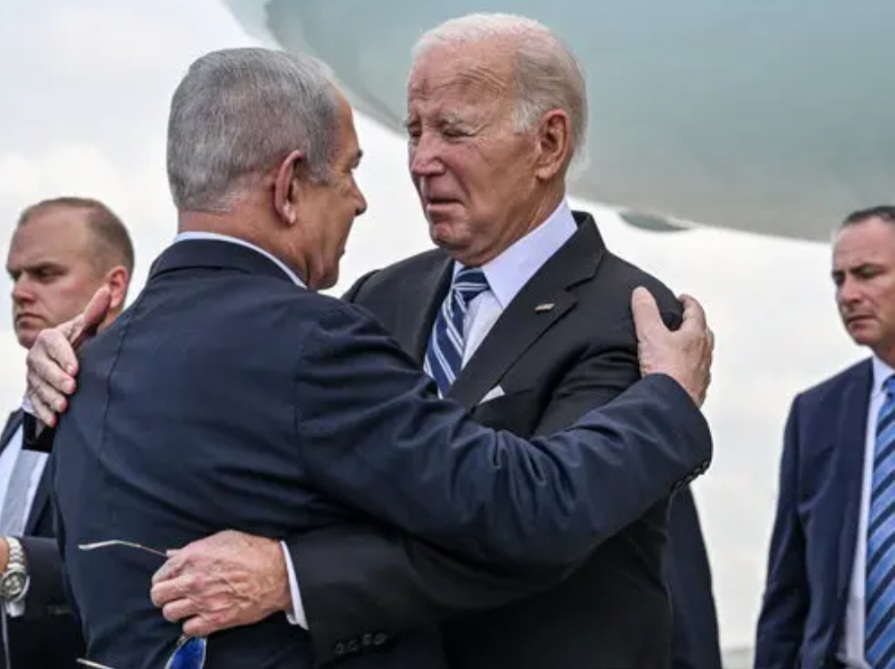
Having read the latest Bob Woodward’s book “WAR” halfway through, I am mesmerised by the close ties USA has with the State of Israel. I don’t think the US Federal Government has working relationships par with anyone of the US Federal Member States inside its own territory, save New York State, because of its diplomatic, world trade and business importance. There is communication around the clock at every level of the federal government with officials of the State of Israel. The US President runs Israel at any place on earth, including onboard Airforce One (the US dedicated presidential jet). There is a constant stream of intelligence and information sharing unprecedented in state relations. Not even the UK or any NATO member state enjoys such unmatched political, diplomatic, economic, intelligence, and military close cooperation with the US. When you talk about Israel, you are talking about USA literarily and figuratively.
Like a naughty child, Israel may try sometimes to play stubbornly but eventually relents to US diplomatic pressure. Make no mistake. US strategic interests in the Middle East are aligned with those of Israeli state. In other words, Israeli is obliged to carry out US policies in the Middle East, doing most of the time, American dirty job. No NATO country can come close to Israeli in terms of close working relationships and policy alignment with any administration of the day of the USA Government. In Woodward’s book, you would find out that the entire team of the US National Security Council, starting with the president, is engaged with Israeli officials on a daily basis. Like its troublesome kid, the US government is supervising the political, military, and intelligence conduct of the State of Israel. Internationally and at UN Security Council, the US Government provides foolproof diplomatic cover and veto protection for all misconduct of Israel, no matter what.
Talk about US election interference. Israeli meddling, unlimited fundraising and spending by its lobbyist groups, and pressure on congressmen and congresswomen of both political parties to fall in line with US elite establishment and US government policy on Israel are overwhelming and unrelenting for decades since the State of Israeli was created in 1948.
For the Biden Administration and Democratic Party, blind and awful support of Benjamin Netanyahu’s genocide, ethnic cleansing, indiscrimate destruction by merciless military campaigns, including hospitals, schools and shelters for war displaced persons, and use of starvation as a weapon of war in Palestinian Gaza, came with a high price: Withdrawal of Joe Biden from his election bid and his party’s loss of the US Election 2024. Karma!
 Warsame Policy & Media Network (WAPMEN)
You must be logged in to post a comment.