GOOD LIFE’S ASSESSMENT

ISMAANDHAAF KALAMAAN KU SAABSAN COVID-19

https://ismailwarsame.blog

Annual subscription

$37.00

أزمة الغذاء في الصومال في ظل جائحة كورونا

نشرت بواسطة: محمد عبدالرزاق حيدري  في بحوث5 أبريل، 20200 172 زيارة

تمهيد:

يعيش العالم اليوم حالة من الفزع والقلق إثر انتشار الوباء العالمي “Covid-19” في جميع القارات وغالبية دول العالم، وكنتيجة للعولمة فقد تفشى الفيروس بسرعة رهيبة بين كافة الشعوب في العالم، وقد وصل إلى الصومال في السادس عشر من مارس 2020م حيث اكتشفت أول حالة مصابة بالفيروس في مطار مقديشو، ثم توالت الحالات حتى وصلت اليوم إلى 5 حالات، مع ترقب اكتشاف حالات جديدة، واحتمال وجود حالات غير مكتشفة في طول البلاد وعرضها، وفي ظل ذلك نلقي الضوء في هذه الدراسة على أزمة الغذاء المرتقبة في الصومال، كنتيجة لانكماش العولمة وتراجع التجارة العالمية بسبب الفيروس.ولكي نتعرف على حقيقة أزمة الغذاء وتأثيرها على المواطنين، سنتحدث عن مقوّمات المعيشة في الصومال، ومصادر الغذاء التي يعتمد عليها الصوماليون، ثم نعرّج على الأسباب التي تحول دون تحقيق الاكتفاء الذاتي في الصومال، وما هي الآثار الغذائية المحتملة للفيروس على الصوماليين.لقراءة المزيد، انقر على الرابط أعلاه.

KENYA JOKES

I have been keeping this newspaper cartoon clip safely since 2005. What is your takeaway from this cartoon?

Let me give you a description of the Standard Newspaper Cartoon. People fighting at top are the TFG members of Parliament. President KIBAKI is sending AYA off, saying Nairobi can’t handle two local heads of State and AYA has to go.

AYA isn’t sure which way he could head to: Jowhar, Djibouti or Addis Ababa. It was in 2005.

https://ismailwarsame.blog

Annual subscription

$37.00

LA TIMES: Today’s Headlines April 6, 2020. Top U.S. health officials are warning of a difficult week ahead in the coronavirus crisis

Today’s Headlines April 6, 2020 Top U.S. health officials are warning of a difficult week ahead in the coronavirus crisis. TOP STORIES The ‘Hardest, Saddest’ Days Ahead With the U.S. coronavirus death toll nearing 10,000 people yesterday, Surgeon Gen. Jerome Adams warned that the coming week will be “the hardest and saddest of most Americans’ lives.” He likened the projected loss of life to “our Pearl Harbor moment, our 9/11 moment.” He was not alone in that assessment. Dr. Anthony Fauci, the government’s top infectious disease expert, predicted that the next eight or nine days would be “shocking to some.” His advice: “Just buckle down, continue to mitigate, continue to do the physical separation, because we’ve got to get through this week that’s coming up.” As for President Trump‘s message? On Saturday, he said America’s “toughest week” of the coronavirus crisis is coming up, but by Sunday, he was largely eschewing talk of dire days, instead expressing hopes for a “leveling-off in the hottest spots” of infection. Trump also continued to push back against criticism of his administration’s performance, including states being forced to compete against one another and an Associated Press report showing federal agencies largely waited until mid-March to begin placing bulk orders of N95 respirator masks, ventilators and other equipment needed by front-line healthcare workers. In Europe, the picture was mixed. Deaths were still climbing in the United Kingdom, where Prime Minister Boris Johnson was hospitalized and Queen Elizabeth II tried rallying the nation. But Italy — the European epicenter — said Sunday that its daily toll was at a two-week low, with officials crediting strict lockdowns for seemingly slowing the progress of new infections. Hard-hit Spain, too, reported signs of a leveling-off. The Search for Treatments Over the past several days, Trump has repeatedly touted chloroquine and hydroxychloroquine — used to treat malaria, rheumatoid arthritis and the autoimmune disease lupus — as a potential “game changer.” But those are far from the only drugs that scientists are testing in hopes of finding a proven, effective treatment for COVID-19. Among the best known are some antiviral medications — remdesivir, lopinavir and ritonavir — that were developed to treat Ebola and AIDS, along with a range of less celebrated drugs and therapies. Inhaled nitric oxide is also being tested as an experimental treatment for COVID-19 and may prove helpful in protecting healthcare workers on the front line of the pandemic from getting sick. Church Vs. Stay at Home Trump tweeted this weekend that he would be “tuning in” on Sunday to listen to Greg Laurie, the Southern California megachurch pastor who organizes the annual Harvest Crusade. Laurie held online services from his empty Riverside campus, which would normally be bustling. But across the country, including in California, pastors have revolted against stay-at-home orders, pitting public health concerns against claims of religious freedom. At the Godspeak Calvary Chapel in Thousand Oaks, the congregants lined up six feet apart on Palm Sunday, waiting to take communion from Pastor Rob McCoy, who resigned his position on the Thousand Oaks City Council to violate stay-at-home orders. In the church parking lot, protesters lined up their cars and honked their horns, disturbed that the church would so brazenly flout stay-at-home orders from Ventura County and the state, put in place to battle the coronavirus pandemic. And in Lodi, police officers greeted the pastor of Cross Culture Christian Centerabout an hour before he intended to hold an in-person service. More Top Coronavirus Headlines — In a bid to slow the coronavirus, California judicial leaders are expected today to adopt a statewide emergency order setting bail at zero for misdemeanor and lower-level felony offenses. They may also suspend evictions and foreclosures and allow for the expansion of court hearings held by video or telephone. — While efforts to prevent the coronavirus’ spread by reducing the adult prison population are underway, policies for the early release of juvenile detainees are more complicated. That’s leaving hundreds of them in L.A. County detention centers, which have barred in-person family visits and those of community-based organizations. — Nursing homes and assisted-living centers across California continue to see significant increases in coronavirus cases, alarming officials who are trying to slow the spread. — How can the same virus affect people so differently — killing some while leaving others blissfully unaware that they have been infected at all? Two infectious disease experts outline the unknowns. — School from home is the new reality. What will the next three months look like? It’s uncharted territory. — A federal investigation is underway after 39 million masks never materialized at hospitals. Plus, here are some tips on getting through the days ahead. For more, sign up for Coronavirus Today, a special edition of The Times’ Health and Science newsletter. As with all our newsletters, it’s free: — How to care for someone with COVID-19. — How to keep your coronavirus face mask clean. — Twenty easy ways to manage stress eating during quarantine.

NON-WHITE COMMUNITIES ARE AT GREATER RISKS OF CORONAVIRUS, SAYS UK PAPER

Non-white communities could be at greater risk of coronavirus, report finds Comment A nurse takes a swab at a Covid-19 drive-through testing station for NHS staff (Picture: Getty) Share this article via facebookShare this article via twitter 191 SHARES Joe Roberts Monday 6 Apr 2020 7:43 am Non-white communities could be at greater risk of developing critical coronavirus, new data suggests. Around a third of people analysed who were critically ill with Covid-19 were from black, Asian or minority ethnic (BME) backgrounds. Of 2,249 critically ill coronavirus patients analysed by the Intensive Care National Audit and Research Centre (ICNARC), more than 30% were from BME backgrounds, compared to 64.8% white. A total of 13.8% were Asian, 13.6% were recorded as black and 6.6% described themselves as other. Researchers say they want to find out more about the worrying trend (Picture: PA) BME communities represent around 13% of the UK population according to the 2011 census. The figures have been noticed by the South Asian Health Foundation (SAHF) who had previously highlighted anecdotal suggestions that disproportionate numbers of younger South Asian people were critically ill with the virus. For our Coronavirus live blog click here. For all the latest news and updates on Coronavirus, click here. Scientists are now telling people to take advice of messages on social distancing to prevent the spread of the disease. Kamlesh Khunti, professor in primary care diabetes and vascular medicine at the University of Leicester, said researchers want to learn more about the trend. He said: ‘We have been concerned about this issue based on anecdotal reports and now this data is showing a signal regarding what we have been saying. MORE: UK Lockdown could be lifted soon if you ‘play your part and stay at home’ ‘This is a signal, but at this stage that’s all it is. ‘We now need more data, so we are therefore embarking on a mission to learn more through research.’ Wasim Hanif, professor of diabetes and endocrinology at University Hospitals Birmingham, urged everyone to ‘respect the Government’s public health messages’. He said: ‘By following some simple measures, we all have the best chance of staying healthy, and in doing so, help ease the pressure on the NHS
Read more: https://metro.co.uk/2020/04/06/non-white-communities-greater-risk-coronavirus-report-finds-12514038/?ito=cbshareTwitter: https://twitter.com/MetroUK |

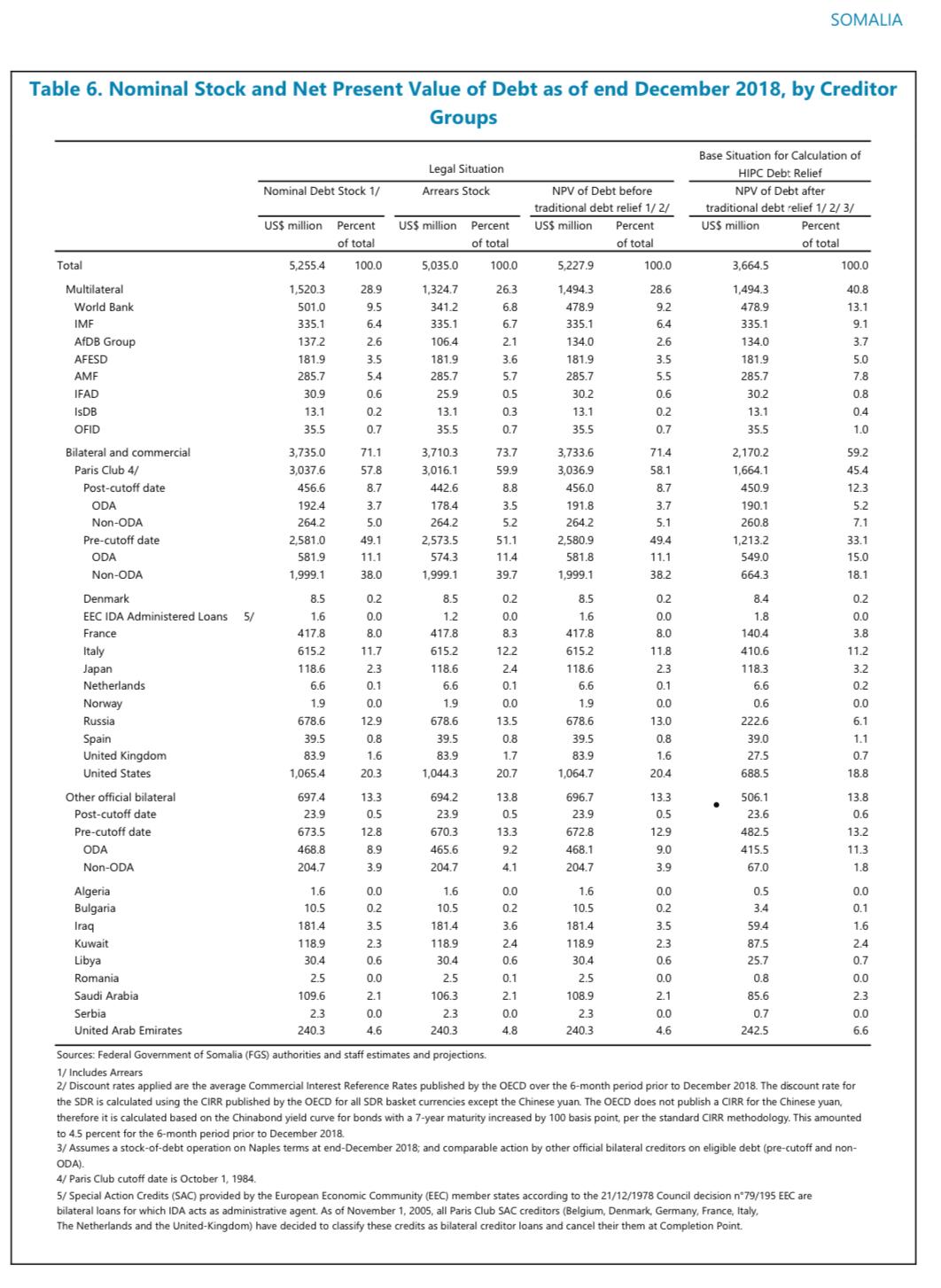
WHO OWNS SOMALIA’S DEBT?

https://ismailwarsame.blog

Annual subscription

$37.00