
(Credit: The Guardian)
Carly Nyst
Yassmin Abdel-Magied’s experience matches those of journalists and activists around the world targeted by online hate mobs trying to suppress criticism of those in power
- Carly Nyst is a technology and human rights consultant
Wed 12 Jul 2017 19.00 BSTLast modified on Thu 13 Jul 2017 09.55 BST

The story is increasingly a familiar one: a journalist or activist speaks out against the status quo, and is confronted with a barrage of abusive and violent remarks online. Public figures, representing the status quo under threat, encourage or endorse the abuse, either through action or inaction. The target of the attack is intimidated into silence. The status quo holds strong.Advertisement
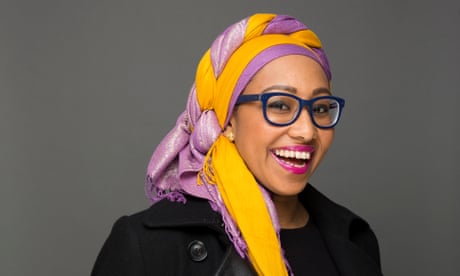
That is the story of Yassmin Abdel-Magied, engineer, writer and social advocate, who was bombarded with hateful Twitter and Facebook posts after several outspoken remarks brought her within the crosshairs of Australian politicians. It is also the story of dozens of other journalists and activists across the world. Each of them has been the target of online hate mobs wielding violent and abusive threats in an attempt to suppress legitimate criticism of those in power.
‘Go back to where you came from’ is an ugly trademark of Australian racism
Antoun Issa Read more
In some countries, the state itself incites such attacks, urging its supporters to exploit the virility and familiarity of social media to amplify government messages and take down dissenting voices. In other cases, the government’s role is more oblique; individual politicians and media personalities fuel online campaigns aimed to discredit critics, while the government leverages the incident for political gain.
Each of these is a case of what we call “patriotic trolling”. An international research coalition, of which I am part, has been studying this phenomena for over a year, working to catalogue and dissect these attacks in an attempt to describe their origins and impacts in a forthcoming report.Advertisement
In countries from Venezuela to Turkey, Ecuador to India, we have documented cases in which journalists and activists have been deliberately targeted with violent, misogynistic and hateful messages online at the behest, or with the endorsement or implicit approval, of the state. Armed with memes and hashtags, and deploying not only abusive language but bots, malware and doxing, patriotic trolls seek to muzzle, discredit and abuse those who criticise or advocate against the status quo.
The attack against Abdel-Magied resembles others we have documented against journalists in China, Finland and India
Abdel-Magied’s case is emblematic of what is arguably the most insidious form of patriotic trolling attacks, in which government-backed actors fuel existing social media campaigns, manipulate public biases, and leverage online abuse for offline intimidation. In Abdel-Magied’s case, a blaze of social media abuse in response to a controversial Anzac Day tweet was further fuelled by a tweet by a member of parliament, George Christensen, who encouraged Abdel-Magied to consider “self-deportation” and called for her firing from a casual presenting position at the ABC. Australia’s immigration minister, Peter Dutton, called the activist a “disgrace” and welcomed the subsequent cancellation of her television show.
The attack against Abdel-Magied resembles others we have documented against journalists in China, Finland and India; like the Australian writer, those journalists were likewise sent death threats, rape threats and videos of beheadings. The attack also contains echoes of patriotic trolling campaigns in Turkey, where pro-government media personalities have sparked Twitter attacks against journalists reporting on the Gezi Park protests and the July 2016 coup attempts.
In Turkey we witnessed the increasing sophistication of patriotic trolling attacks over just a few short years: whereas early attacks were ignited by ruling party figures, over time they have appeared increasingly remote from the government, as the task of inciting and fuelling patriotic trolling attacks shifted to pro-government media proxies.
The auto-virility of patriotic trolling campaigns is one of their most disturbing features: states need only implicitly encourage patriotic trolling campaigns, referencing them with approval or leveraging them for political gain, to create an environment in which online hate mobs will self-ignite and self-sustain in pursuit of the government’s own objectives.Advertisement
The emergence of patriotic trolls puts at risk human rights and values that are critical to the proper functioning of any democracy. Patriotic trolling attacks undermine the rights of individuals to freely impart and receive ideas, of journalists to report free from arbitrary influence, and of activists to live free from invasions of their privacy and personal safety.
What are they so afraid of? I’m just a young brown Muslim woman speaking my mind
Read more
But these campaigns harbour an even more pernicious import. Among the many promises that technology offers, there is this: as the ability of governments to control information is subverted, despotic regimes will no longer thrive under the cover of media censorship and state propaganda. A worldwide web of internet-connected flashlights will illuminate the dark places where human rights violations multiply and evil flourishes, so the promise goes. With the help of technology we may never see another Pol Pot, another Pinochet, or another Hitler, again.
Yet, although this may be the reality that we want (and, as a privacy advocate, I’m not sure it is), without widespread and radical change, it will certainly not be the reality we get. Instead, governments the world over are co-opting digital technologies to serve their own ends, with perverse consequences for human rights. Having ceded control of information, states are seeking to exploit its abundance: monitoring their citizens online, manipulating social media, spying on journalists and activists and, now, sending online hate mobs after those who would criticise them.
Online platforms and the mainstream media both have a responsibility to deprive patriotic trolling campaigns of the exposure and sensationalism that feeds them. But we, ordinary citizens, also have a role to play; we must take a more critical and investigative eye to what we too often cynically cast as innocuous and isolated instances of online harassment. Otherwise, we may never see another Martin Luther King, another Glenn Greenwald, another Yassmin Abdel-Magied.
Since you’re here…
… we have a small favour to ask. More people are reading and supporting The Guardian’s independent, investigative journalism than ever before. And unlike many news organisations, we have chosen an approach that allows us to keep our journalism accessible to all, regardless of where they live or what they can afford. But we need your ongoing support to keep working as we do.
The Guardian will engage with the most critical issues of our time – from the escalating climate catastrophe to widespread inequality to the influence of big tech on our lives. At a time when factual information is a necessity, we believe that each of us, around the world, deserves access to accurate reporting with integrity at its heart.
Our editorial independence means we set our own agenda and voice our own opinions. Guardian journalism is free from commercial and political bias and not influenced by billionaire owners or shareholders. This means we can give a voice to those less heard, explore where others turn away, and rigorously challenge those in power.
We need your support to keep delivering quality journalism that’s open and independent. Every reader contribution, big or small, is so valuable. Support The Guardian from as little as $1 – and it only takes a minute. Thank you.Support The Guardian


 Warsame Policy & Media Network (WAPMEN)