HOW THE PARLIAMENT OF PUNTLAND HAD FAILED PEOPLE’S ASPIRATIONS

Annual subscription

$37.00

Annual subscription

$37.00

← Back

Thank you for your response. ✨

890f3-img00101-20091023-2023

September 11, 2018
Following its foundation in 1998 after disappointing failures in many attempts and trials at Somali National Reconciliation Conference to re-instate the failed State of Somalia, the people of Puntland demonstrated their full trust in the State intitutions, while keeping the peace and security in the regions. They generously supported the successive Puntland administrations with tax revenue and patience on inadequate public service delivery.There were trying times for the continued survival of State as a functioning autonomous administration amid continued and stubborn chaos of South-Central Somalia.
As a shining example, a young man from the diaspora told me his experience when he traveled to visit his relatives in the City of Galkayo a few years ago. In town, one day he went to visit his aunt, a small shop owner. As he approached her shop, she was about to close the door to go somewhere for an half hour. The man asked her to let him in for a minute to discuss something with her. She told him she couldn’t do that as she was rushing out to pay her tax to the government. Surprised, the young guy asked her, “how could you pay tax when you don’t get any services in return?” Her response was stunning. “If the government pays the salary of these wild militia, me and my shop will be safe, and that is good enough for me”, she said.
Successive Puntland administrations, however, abysmally failed in the “Democratization Process” mandated for every elected leader, save the founding administration of 1998. Puntland failed to extirpate itself from the founding clan power-sharing arrangement, which is increasingly becoming a recipe for election violence disharmony and a threat to peace, security and unity.
Of particular disappointment in Puntland State of Somalia is the legacy of last Puntland Election in January 8, 2014, when the incumbent administration was installed amid dangerous electoral tension with a narrow minority mandate, and on a strong pledge by its Leader, Dr. Abdiweli Mohamed Ali (Gaas), to work towards multi-party Municipal and State elections by suffrage through “One Person One Vote” in 2019. It is unfortunate that we have to repeat that painful exercise one more time in 2019 Puntland Presidential Election.
The people of Puntland State of Somalia want and expect from their leaders, from now on, to solemnly commit themselves to:
  1. Lberating occupied parts of Puntland, strethening of unity and deepening peace and security in the State.
  2. Fighting against corruption in all its manifestations.
  3. Fostering socio-economic and socio-political performance and progress in both public and private sectors, while introducing and maintaining public policy initiatives and regulations for rigorous fiscal responsibility.
  4. Enlisting political pluralism, starting preparatory work from day one of the new mandate.
  5. Improving cooperation with the FGS and playing leadership role in strenthening federalism and constitutionality of Federal public institutions and operations.
The people of Puntland has been showing extreme patience for too long as they suffer under false promises and pledges on better lives by unscrupulous politicians and leaders. The time has come to demand accountability from Puntland political establishment.
A POLITICAL PLATFORM of a candidate is necessary and important to electors to know. A candidste must have a political program and a conviction to put this into actionable pledges. Ordinary person in the street should be able to know what that aspirant to public office stands for. People are tired of entertaining someone’s wish to be president without plan for action after election.
By Ismail H. Warsame

SOMALIA’S LEADERS: COMING EMPTY-HANDED AND EMPTY-HEADED, AN EMBARRASSMENT AT BILATERAL AND INTERNATIONAL MEETINGS. (Warsame Digital Media. Annual subscription US$37 via Sahal Account 496091 or e-Dahab Account 77731) Tel: +252 90 703 4081 or +252 66 1783707)


Annual subscription

$37.00

Mogadishu, June 12, 2019

Somali political leaders attend bilateral and multi-lateral meetings unprepared, not only to contribute ideas and initiatives to the gathering, but also to get any benefits from such settings.They go there empty-handed and empty-headed. No preparation of any type precedes their attendance – not even SOMALIA’S country profile, just to forget about their national priorities, national vision and policies towards the sub-region, world peace and international security. Look, they aren’t even familiar with note-taking at meetings. The enire delegation line up at opposite side of the table devoid of pens and papers, while their counterparts are busy recording the deliberations. Empty-headed has nothing to record for posterity and doesn’t need a follow-up of events.


The root cause of this problem is not because Somalis are stupid, but because it is due to that fact that when a Somali leader is elected (selected, to be exact), his/her only concern is how to form an administration on the basis of clan and regional balance – no any attempt to seek qualified politicians, competent personnel to run the state bureaucracy and subject experts, men and women with experience in statecraft.


Take any recent conference, and you will find out that Somali delegation went there to just warm up the seats. Particular embarrassing situations happen when the Somali Head of the Delegation discuss bilateral cooperation with a host country, and since Somalis come unprepared, they cannot produce any policy documents, reports of any field, feasibility studies, state statistics in any field, state priorities or areas they need for bilateral cooperation.


Under this unfortunate situation, the fallback and favorite subject Somalis would always like to discuss about is the security sector (mainly about Al-Ashabab and ISIS). They have nothing else to offer to the bilateral deliberations. They talk about their country’s needs for military training and logistics, and complain about UN Arms Embargo. To every bilateral meeting they bring along a shopping list of items Somalia’s security sector requires.


This problem wouldn’t be fixed and wouldn’t go away unless Somalia’s leaders are ready to break from the past experiences and approach to state-building. Efficient and apolitical state bureaucracy is all that Somalia needs to avoid everyday’s embarrassment in dealing with the world community.


IsmailWarsame.blog
@ismailwarsame


HISTORICAL DEVELOPMENT

SHARING A PERSONAL MEMORY

Garaad Jaamac, Dr. Ali Khalif Galayr and Ali Isse never understood the historic foundation and development of Puntland. They never fathom its significance and rise in a failed Somalia’s central authority. Hence, the Somali saying: “Taladaada ma qaate, tiisa ma mahadiye, tuu falay ku qabsatay” ee haatan haysata Madaxda Puntland, reer Sool, Cayn iyo Sanaag, nasiib-darro.

Perceiving Illusions — THE MIND OF RD REVILO

SOMALIS ARE LOOKING FOR ACRES OF DIAMOND


Following this advice, the story tells us, the rich man sold everything he had and started looking for that elusive diamond he could not find in his own homeland. He traveled to far off places across continents in search of the magic wealth and finally ended up in the land of
Yuugga and Yamaajuuja(China) where, after miserable existence, lost his life in Yangtze River, feeding his own corps to the hungry crocodiles.
Many years ago I read a story under the title: Acres of Diamonds. I believe it was one of the stories by Russell H. Conwell, a Yale College student in the 18th century. This is the summary of that story as I recollect what I read at that time since different people tell different versions of the same story. Once upon a time there was a rich man somewhere in the Indian subcontinent. He had a lot of properties including huge agricultural lands, cattle and many workers to attend his wealth. One day, a man (perhaps a devil) came to visit him and told him: “Sir, I see you are too tired because of the hard work you are doing day in and day out to manage your businesses. I want to help you out by giving you a piece of useful advice: a small piece of precious stone called “diamond” so small that you can hold it in your palm and is worth many times your entire net worth. Besides, there is no work to do except to sit back, relax and wait for its price to increase everyday and for ever”.
While attending his work one day, the new owner of the farms saw something glittering on a plot of the land to discover surprisingly an acre of diamonds. Yes, acres of diamonds in his own backyard!
The moral lesson of the story is that Somalis were blessed with a wonderful, strategic, prosperous spot of the globe where they could be better off than any other peoples on the planet if they were fortunate enough to realize only that fact to live in peace and harmony among themselves and their environment. Instead, they were destroying not only their own entire historical endeavor and achievements, but also themselves as well, creating a massive human exodus of refugees in the process, an uphill that destroyed families, hopes and future of many generations- the pain and deprivations that can never be adequately described, a dark and shameful stain in the history of a nation known for her poetic pride and unrivalled culture of brotherhood and kinship.
Somalia 's fractious leaders take an oath: They bear direct responsibility for their country's plight

Somalia ‘s fractious leaders taking an oath.

Because of poor political leadership and bad governance, Somalis should not be perishing in the high seas of the globe and the Libyan Desert in search of diamonds while the Almighty has provided them at home with all the possible blessings of life for their comfort (acres of diamonds and more in their backyards). Think of the children, the elderly and women in depriving refugee camps. Think of disintegration of families and lost kids to gangs’ war of drugs or languishing in repeat-offender prisons in the West. Think of the Somali beauty models thrown to the wolf. Think of the Somali educated and experienced elite that do not fit into the work environment of Western countries. Think of the personal echo preventing Somalia’s yesterday ministers, director-generals of department, police and military generals and other high ranking civil servants and Somali government officials in Europe and North America to accept and take low-paying jobs to support themselves and their families. Think about the tragedy of losing one’s pension after a lifetime of hard labor. And think of the old saying: “East or West, home is the best” (“Dhul Shisheeyee dheef Male Habeen Dhixid Mooyaane”, Somali poem on Nuur Cali Qonof as he returned, after a long absence, to his native town of Qardho, Bari region of Puntland State).
Somalis must create tools for survival and prosperity to remain in their homeland. Tested, responsible and accountable leadership in all fields of public service and peace within their communities is the sole key to all other aspirations and future plans of the nation. Stay and remain in your homeland. You are better off there.
Needless to repeat what is obvious to all of us; the world community is watching and evaluating us as people and as a country every day. I vividly remember the speech President Museveni of Uganda gave at the Opening Ceremony of the Somali Reconciliation Conference in the Kenyan City of Eldoret in 2002. He said, and I quote, “Somalia is the best country in Africa by negative example”. Japan, he said, was a country with no natural resources. “Because she invested in her own citizens, Japan is one of the richest countries in the world today. And you, Somalis? What have you been doing to your own people? Killing each other”? President Museveni’s speech was remarkable among those given by some IGAD Heads of State and Government attending the gathering that included the late Meles Zenawi and Daniel Arab Moi.
Listening to that speech, I looked around the big hall and noticed no emotions from the faces of the many Somali warlords comfortably seated in that Opening Session of the Conference in our effort to create the Transitional Federal Government (TFG). It is unfathomable to many that shortly after that auspicious, if not, historical meeting, a group of mostly Mogadishu Warlords led by Muse Suudi Yalaxow, Mohamed Afrax Qanyare, Osman Ali Aato, Omar Jess, Jama Ali Jama .. Etc. formed a Warlord Faction Club, calling themselves the G-8, an euphemism for their growing power and influence in Somali clan politics (which also explains again why the New Technical Committee for the screening of the new members of Somalia’s Federal Parliament had difficulties with Mogadishu Warlords recently). The G-8 demanded more delegate seats than the 4.5 Clan Power-sharing Formula could provide them and aggressively challenged the Technical Committee that was set up for the implementation of the formula and technical management of the Mbagathi Conference of 2002-2004. The Head of that Committee was the late veteran Kenyan diplomat-politician, Mr. Mwangele, before he was replaced by another career diplomat called Mr. Kiplagat as Kenya elected Mwai Kibaki President at the time. While the Conference was still in the Rift Valley city of Eldoret, the G-8 organized a protest demonstration against the Technical Committee’s handling of the allocation of clan representation. Demonstration participants were mostly Mogadishu women delegates of the NGOs and other civil societies’ members. Painfully as it is, Somali women were chanting slogans like, “Macna darada Mwangele, madfacca Suudi Yalaxow baa nooga roon” (the mass and indiscriminate shelling by Suudi Yalaxxow’s militia at Mogadishu residents is better for us than the meaningless Technical Committee’s Procedures by Mr. Mwangele). This clearly demonstrates how all of us failed as a society and this is what went wrong in Somalia.
Somali faction leaders Hussein Mohamed Aidid, Musa Sudi Yalhow and the Prime Minister of Transitional National Government Hassan Abshir in Eldoret 31 October 2002.

Somali faction leaders Hussein Mohamed Aidid, Musa Sudi Yalhow and the Prime Minister of the Transitional National Government Hassan Abshir in Eldoret 31 October 2002 for the Somali Reconciliation Conference before it was moved to Mbagathi. (Photo: AFP).

One may recall that the G-8 finally succeeded in persuading half of that newly formed members of the Transitional Federal Parliament including its Speaker, Sharif Hassan, and Deputy Prime Minister and Minister for Information, Mohamoud Sifir, to break away from the main stream TFG institutions and dug in in Mogadishu in order to prevent peace and governance restored to that unfortunate city, in particular and Somalia, in general. They were finally beaten off badly and chased out from Mogadishu by the Union of the Islamic Courts (The UIC), kicking off and leading to dramatic security developments of major foreign military intervention in Somalia’s Civil War for the first time after UNISOM. “Ciilow ba’ay talo xumaan cudur ka roonayne”-Sayid Maxammed Cabdulle Xasan, on the dangerous consequences of bad advice and lack of wisdom.
This hell of our situation has created the madness called Fadhi-Ku-Dirir or the Somali losing devil’s workshops in teashops around the world as nothing else is left in life for these once decent men to do. This is another huge dimension of the tasks waiting for Somalia’s new leaders to address urgently if they were willing to make a difference.

By Ismail Haji Warsame
E-Mail: ismailwarsame@gmail.com
____

The author is a regular contributor to WardheerNews. He is a former Puntland Presidency Chief of Staff and a long-time participant of most of the Somali National Reconciliation Processes since 1995. He currently lives in Toronto, Canada.
____________________________________________________________________

Copyright © 2012 WardheerNews.com

AN OPEN LETTER TO SOMALIA’S FEDERAL PARLIAMENT

← Back

Thank you for your response. ✨

AN OPEN LETTER TO THE NEW MEMBERS OF THE SOMALI PARLIAMENT
By: Ismail Haji Warsame

August 28, 2012

The members of the New Somalia Parliament have no place to hide in order to choose only one of two options:
  1. Somalia
  2. Personal/clan interest
The Parliament exercise/deliberations during the next few days in Mogadishu will undoubtedly make or break Somalia.
It has been said that those who repeat their mistakes are condemned to repeat them. One cannot expect or hope for a different better result from repeated action of the same thing over and over again. The outdated practice of judging persons to hold public office based on their respective clan constituencies or affiliation would lead us nowhere other than poor leadership, the core of the entire Somalia’s intractable governance problems. If experience and modern Somali history were of any value and lesson to us and our people serious to move forward as a nation-state or rather , at moment, Somalia to be, we must move and seek quality-based criteria for choosing our leaders.
A government is a dangerous enterprise in the sense that if the reigns of power are entrusted in shorted-sighted, selfish, clannish and irresponsible officials, it would do more harm than good and put the nation in peril. Recall what other people before us said about leaders peoples have: “people get the leaders they deserve’. You are what your leaders are. Don’t complain about your country’s state of affairs after you cast your destiny vote.
But, what quality-based criteria are we talking about to elect our leaders at this crucial moment in our history?
To tackle with this issue, I acknowledge that different people have different opinions on the subject. What is common though is that Somalia seemingly emerging from the ashes of one of the longest Civil War in history, has immediate priorities which include peace and security stabilization, revival of public institutions and public service delivery, tremendous reconstruction projects, sound economic policy, fight against corruption and misappropriation of public wealth.
Equally important are issues of protection of the environment, safeguards for human rights and personal personal freedoms as well as fostering innovation and entrepreneurial talents.
To realize the above national goals (priorities) one would understand that we cannot achieve them alone without the genuine support of international players. To interact with the world community requires sophistication, the diplomatic soft skills and cross-cultural abilities to think and operate at the same level as world leaders. Most Somali leaders have functional disabilities in the form of cultural barriers. Such barriers are historically the biggest obstacle to positively connect with the international community to create friends of Somalia and sponsors of our aspirations.
Not understanding how the world community is interlinked leads a country to an international isolation, suspicion of its leaders’ action, negative impression and even sanctions. Good examples of such unenlightened leadership include Sadam’s Iraq, Libya, Iran, Syria, Eritrea, Apartheid South Africa and a host of other countries on and off. Good example of how to beat off economic and political strangulation by a super power is Castro’s Cuba because of its powerful diplomatic engagement with countries of Latin America, Eastern European Block nations and other Third world countries. Cuba survived where even the Soviet Union could not, proportionally producing more medical doctors and engineers than any other nation on earth.
A classical history lesson we ought to remember and learn is the humiliating diplomatic defeat Somali leaders suffered in their struggle with Ethiopia, Kenya, United Kingdom and France to unite Somalis under one flag mainly because of their lack of understanding of international diplomacy and vital national interests of other nations in the region. Big powers sided against Somalia. Even OAU supported Ethiopia in Cairo meeting at that time with Jamal Abul Nasser at its Chairperson. Miscalculation of the Ogaden War of 1977-1978 is another best example of misreading the world community.
At this junction in the history of our Republic, it is imperative to take note of the fact that certain countries and some corners of the world are entertaining the idea that Somalia would be considered as ‘spoils’ of its civil war and a country that has been. Think about it. And it is happening faster than these corners would have been thinking for Somalia to cease to be. Wake up to the immediate threats to Somalia’s national sovereignty and territorial integrity. We marched a long way from the concept of ‘Somali Weyn’ to the brink of the Somali Republic disappearing from the geographical map.
To reverse this dangerous trend and imminent national calamity, Somalia is in desperate need of able men and women to unite the nation and act immediately for Somalia to be.
The above are huge responsibilities, unenviable tasks to fall on someone’s shoulders.
It is obviously clear now that persons of exceptional capacities in terms of character, experience, education, vision, diplomatic skills, hard work and stamina are urgently required to step in in the positions of leadership and I am not talking about one person, a President, a House Speaker or a Prime Minister. The concept embraces all levels of leadership to dig Somalia out of the deep ditch.
A word about the most criticized clan power-sharing formula: 4.5.
In the absence of a uniform governance throughout the country, the impossibility of holding elections on one man/woman one vote, the existence of defacto decentralization of the country amid a severe civil war, distrust and clan rivalry and the baseless claims by some clans to be more numerically than others, the negotiators of a series of national reconciliation conferences had to move the process forward rather than choosing to be stuck in a political stalemate. To hold a congress would require an allocation and distribution of delegates among constituencies/clans. Since there was no credible population census, a difficult political compromise arrangement had to be made. The result was the famous or infamous 4.5 clan formula. It was meant to be temporary subject to a national population census and a general democratic election. I would urge those criticizing the current clan formula to come up with a workable concept before a nation-wide election.
Another thing worth mentioning. They say in a democracy the rule of the majority is the law of the land. But, that is far as it guarantees the rights of the minority and avoids the tyranny of the majority. Unexpectedly, in today’s Somalia, the minority communities do not seem to respect the numerical superiority of their majority communities. This further complicated Somalia’s governance structures. This issue should be responsibly dealt with as soon as it is feasible for there lies the bulk of the 4.5 criticism by both sides of the argument.
A piece of advice to the members of the international community interested in or currently holding stakes in Somalia affairs: “There is an Amharic saying, if you hold a tiger by the tail, don’t release it’ because if you do it will definitely kill you. They must make sure that Somalia is no longer a danger to itself and to the world at large.
By Ismail Haji Warsame,
E-Mail: ismailwarsame@gmail.com
The author is the former Puntland Presidency Chief of Staff and long-time participant of most Somali National Reconciliation Process since 1995. He lives in Toronto, Canada.

OUTSIDE VIEW


Building a secure Somalia

Somalia has had perhaps the most turbulent statehood in modern history but perhaps that is turning into an era of peaceful leadership.

Published: Jan. 25, 2013

By WHITNEY GRESPIN, UPI Outside View Commentator

ALEXANDRIA, Va., Jan. 25 (UPI) — The territory of the Federal Republic of Somalia has had perhaps the most turbulent statehood — or marked lack thereof — in modern history. Somalia has been an ambiguous conglomeration of entities that struggled to provide any semblance of order for its estimated 10 million citizens over the past two decades.

U.S. President George H.W. Bush and the wider international community publicly conceded that Somalia had ceased to exist as a state in the early 1990s, as the country collapsed spectacularly into a series of brutal civil wars fueled by resource and power competition between warring clans.

For the next 20 years warlords, rival clans, transitional governments and myriad coalitions attempted to quell the violence and offer any sort of governance that would elicit international recognition. None succeeded for nearly a quarter of a century, until last week.

The era of ambiguity ended for the Somali people and government of the Federal Republic of Somalia on Jan. 17, 2013, when Somali President Hassan Sheik Mohamud traveled to Washington to meet with U.S. President Barack Obama and U.S. Secretary of StateHillary Clinton.

After their meetings, the U.S. government formally recognized the government of Somalia, a development Mohamud said was, “A very turning moment of the history — of the recent history of Somalia and the relationship — and the diplomatic relationship between the United States government and the government of Somalia.”

Mohamud was elected as Somalia’s leader last September after choosing to stay in the country following the outbreak of civil war in the 1990s. In the passing years he worked both as a professor and alongside international organizations to advance institutional capability in Somalia.

In 2011 he was selected to be a member of Parliament and was then chosen by his peers to replace incumbent President Sharif Sheik Ahmed in a run-off election.

Mohamud summed up his understanding of the challenge had undertaken when he spoke Jan. 17 to a full house at the Center for Strategic and International Studies.

“Twenty-two years of lack of functioning state and institutions and 12 years of transition is enough for us to reclaim our sovereign territorial integrity and our people. We are now ready to lay down strong institutions with good governance,” he said.

Mohamud publicly acknowledged the pivotal role that private companies have played in delivering improved technology and opportunity to the people of Somalia. In addition to ongoing aid and development programs through intermediary institutions such as non-governmental organization and U.N. agencies, Mohamud credited private contractors for their ongoing support of Somali interests.

For example, the performance of specialized technical work and investment of private money has resulted in Somalia having one of the fastest growing telecommunications infrastructures on the continent.

When asked what the Somali diaspora could do for the fledgling government, Mohamud touched on the dearth of technical expertise and practical know-how in the public and commercial sectors.

He went on to explain: “In our way, in our vision, private-public partnership is the only way out. The Somali government has no capacity. The international community will never come [on] time. So it’s the private who has been [addressing needs].”

A number of forward-leaning private entities have already started working with local authorities and recognized stakeholders to lay the groundwork for success in the relegitimized state.

What is perhaps the lynchpin of success for the new government is the ability to build stable institutions that will incubate improved security throughout the country.

Mohamud realizes this and admitted, “Institutions are the basis of good governance, and in Somalia, there are no institutions, no resources to make institutions easily and even no capacity in certain areas.”

He went on to say, “One of our main challenge[s] is to build our security forces, who are now doing a good job compared to previously. This is an area we would need the international community’s help and assistance.”

Security sector reform and capacity building are areas with which both the U.S. government and private sector have much recent experience.

Mohamud volunteered: “The United States’ government is the largest contributor to Somalia in the past 22 years. The limited security forces that we have today is existing with the support of the United Statesgovernment.”

As skilled military and civilian personnel depart from postings in Iraq and Afghanistan, there may be great opportunity to realize synergies between those individuals’ mentoring experiences and the needs of the nascent Somali federal force.

The Somali National Armed Forces is composed of veteran fighters. They don’t need to learn how to fight; they need to learn how to administer and develop a professional army that is proficient in upholding the rule of law and promoting a responsible monopoly on the use of force.

(Whitney Grespin is an operations specialist at Atlantean, a provider of specialized services to the U.S.government and private sector clients around the world. She has overseen operations for private firms operating in Afghanistan, Kenya, United Arab Emiratesand Somalia as well as managed development and educational programs on four continents.)

(United Press International’s “Outside View” commentaries are written by outside contributors who specialize in a variety of important issues. The views expressed do not necessarily reflect those of United Press International. In the interests of creating an open forum, original submissions are invited.)

A New Year Message From One Of The Key Founders of Puntland State of Somalia 


A New Year message from one of the key founders of Puntland State of Somalia
 
The idea behind the creation of Puntland State of Somalia was of two-fold:
 
  1. To bring stability, peace, harmony, organisation and good governance to the inhabitants of Northeastern Somalia, restoring, creating and delivering vital public services to the entire communities in multiple regions of the new state.
 
  1. To act and lead the way to the reinstatement and re-construction of Somalia as one of its top priorities.
 
It was a creation fully supported by grass-root movement that evolved many years during the Civil War and finally boiled down to the establishment of the state as a series of Somalia’s peace and reconciliation conferences abysmally failed to restore Somalia’s central government, and emphatically it couldn’t be realised from top down,thus Puntland’s coining of the “building block” concept.
 

It was based on unique approach to governance: the foundation of state based on traditional values, its historical zonal self-government experience, married with modern system of administration, and most importantly, discontinuation of colonial legacy with regards to governance as the support of the traditional leadership took centre stage as a critical mechanism for conflict resolution and sound consultation.

 
As a starting framework for its leadership legitimacy, an indirect democratic selection of legislative members was mandated by its constituency membership through deliberate and exhaustive criteria enshrined in a well prepared charter by any reputable international standards.
 
There were a number of political and constitutional crisis in the short history of Puntland existence as a state. Each time Puntland State survived mainly because of its strong founding principles and historically binding evolution ofpeople’s aspirations and wishes against the whims of its leadership of the day.
 
However, Puntland State has been always lacking behind in its further democratisation process, unable after more than a decade, to move forward in implementing the general election of “one man, one vote”. That is why one sees leadership crisis towards the end of each leader’s term in office.
 
In exactly the same fashion, one witnesses now self-made political tension that may lead to instability and threaten to law and order. It is the same story playing out again. It is therefore self-evident that there is something seriously wrong in Puntland State governance. That has to be fixed quickly and wisely in the best interest of the people and for public good. Put aside leadership ambitions and personal interests because such inclination will serve no one in the end and endanger Puntland State peace, stability and unity. Don’t play with fire to score political points. Always keep in mind that Puntland state is the outcome of many sacrifices and irreplaceable human and economic resources.
 
For the opposition, the disputed one year extension of the President’s term in office should not be the focus because the stakes are much higher here. Instead, they should be concentrating the democratisation process, while the current leadership provides an atmosphere conducive to dialogue between all stake-holders and parties, and embark upon consensus building. I may remind all of the fact that civil strife takes place when parties fail to talk to each other- in other words, in the absence of dialogue. As long as there is a debate on all issues of mutual concern,there is unlikely that conflagration could occur.
 

Finally,PuntlandStatehistory showed that when there is a political crisis, there are always external actors ready to step in to further destabilise the state. We should be very careful here not to give devils and dark forces in-waiting any chance.

In conclusion, I wish you all a Happy 2013.

 
Ismail H. Warsame
Formerly Chief of Staff, Puntland State Presidency.


AN IMPORTANT INTERVIEW WITH MINISTER ABDI FARAH JUXA

Annual subscription

$37.00

The Interview

AN IMPORTANT INTERVIEW

Please hook up Minister Juxa

IMPORTANT ANNOUCEMENT

Garowe, May 9, 2019

This is to kindly notify to all ismailwarsame.blog readers that broadcast of new articles via WhatsApp list has come to an end effective immediately.

Free subscriptions, however, are stayed until further notice.

ismailwarsame.blog

@ismailwarsame

WHY SOMALIS COMPLAIN ABOUT 4.5 CLAN POWER-SHARING FORMULA


The difficulty in the 4.5 lies in the fact that its authors fell short when it comes to power-sharing, to be exact, in the allocation of parliamentary seats among stake-holders within each clan. This is where everybody feels injustice done in Mbagati Conference of 2002-2004 because of the unacceptable political concessions made to accommodate unjustified sub-clan demands in an attempt to diffuse internal conflicts within each clan. That approach to the problem had created a situation, where sub-clans continue to hold on to those seats as their right and ignore the fact that the allocation was a temporary political compromise and subject to change, while others feel left out of the new Somalia political arrangements.

This is why Somalis complain about the 4.5 formula. I see no easy resolution of this issue at the moment until that time Somalia stands strongly on its feet once again and able to hold a free and fair general election.
For clarification purpose and to understand the complexities or difficulties cascading from the 4.5 formula, one must be briefed on how the concept was devised in the first place during the long process of the national reconciliation (see also An Open Letter to the New Members of the SomaliParliament ).
Following the collapse of the Somali central government in 1991, Southern clans claimed that they were not only the victors of the Civil War, but also have the biggest share of the Somali population. This claim was not based on credible statistics or population census. Seemingly powerful warlords then in Mogadishu spearheaded this claim with massive propaganda within foreign diplomatic circles and humanitarian organizations involved in the tragic Somalia story. The advantage of these warlords in disseminating this fallacy effectively to the outside world was that they were in charge of the Capital, Mogadishu. Somalia being a one City State at that time, that argument was powerful and the outside world started to buy it.
As the country fell into clan enclaves and de facto decentralization, talks of national reconciliation had to be started to bring the nation back together again. A series of such efforts hit the rocks. These initial talks took place in Mogadishu, Nairobi, Djibouti, all ending up in abysmal failure and creating more confusion on how to get out of the quagmire we had created in Somalia’s political vacuum.
In 1996 the National Salvation Council (NSC) known as The Sodere Group was formed in Ethiopia. The initiative to bring Somali stake-holders together in another attempt in the town of Sodere outside Addis Ababa belongs to the Late Somali President, Abdullahi Yusuf Ahmed. Incidentally, in London, UK, where Abdullahi was receiving a medical attention at that time, I was the one who drafted Yusuf’s letter to the Late Prime Minister of Ethiopia, requesting for the latter’s help in hosting such gathering. Meles Zenawi positively responded to Yusuf’s request immediately.
Within a matter of months, the Sodere Group was formally formed with a Central Committee and Executive Branch with five Co-chairmen ( Abdullahi Yusuf, Osman Atto, Abdulkadir Soobe, General Aden Gabyow and Ali Mahdi) representing all major and minor political fronts of Somalia save Somaliland and Salbalaar (Hussein faction) entity.
Subsequently, in 1997 The NSC members agreed upon and resolved to organize a national congress in Bosaso, Northeast Somalia (now Puntland State of Somalia) to form a broad-based government. You may recall that the Arta Conference big tents were bought by OAU /IGAD/Partners and shipped to Bosaso. They were returned from Bosaso to IGAD Secretariat in Djibouti as Egypt sabotaged that Conference. The difficulty in organizing such a gathering though lied in the allocation and distribution of delegates along clan lines while still Mogadishu warlords demand a lion’s share of the delegates. To resolve this issue, separate talks between Hawie and Darood faction leaders took place in Sodere in early 1997. In those meetings, the only credible Somali populations found was that one organized and conducted by the United Nations in 1950s in which Darood numbered 38% and Hawie 22%. Hawie faction leaders had to recognize that census, but requested for Hawie to be equal with Darood in the spirit of national reconciliation. Darood faction leaders accepted that request.
What happened next was that Digil and Mirifle faction leader, Abdulkadir Soobe, approached Darood leaders and requested for the same treatment for his clan to be equal with Hawie. After initial consultations among the Daroods, Digil and Mirifle was given the same equal status in clan numerical proportionality. In turn, Hawie, Darood and Digil and Mirifle gave Northern and Southern Dir clans equal clan status as well, designating the remainder of the population as “others” at that time translating to a half ( 50%) of a major clan.
Following the failure of the Somali Conference in Cairo towards the end of 1997, which brought NSC and Salbalaar together with a hidden Egyptian intention to foil the scheduled Bosaso Congress with the help of Ethiopian leaders’ naivety on Somali politics, the 4.5 Somali Clan Power-sharing Formula was applied for the first time in Arta (Djibouti) Conference of 2000 as the basis of Abdulqassim Hassan Government.
Another thing worth mentioning here was the historical outcome of the Cairo Conference despite its failure. This was:
  1. The Collapse of NSC and Salbalaar
  2. The agreement and resolution by Cairo Conference participants, in principle, to form the future Somali governance institution on the basis of federalism, a long time SSDF demand.
To conclude, our people should choose to see the bigger picture, which is Somalia as a secure, viable, democratic and prosperous nation. If 4.5 Formula is a bitter medicine along the way to achieve that noble goal, let us close our eyes and swallow it.
By Ismail Haji Warsame,
E-Mail: ismailwarsame@gmail.com____
The author is the former Puntland Presidency Chief of Staff and long-time participant of most Somali National Reconciliation Process since 1995. He lives in Toronto, Canada.
______________________________________

Copyright © 2012 WardheerNews.com

Ideas for Self Care

Take care of yourself, lady’s readers!

https://wp.me/p6hql3-Bc

SOMALIA: SITUATION REPORT AND SECURITY ASSESSMENT

Declassified

November 10, 2006
SOMALIA: SITUATION REPORT
POLITICAL AND SECURITY ASSESSMENT
1. TRANSITIONAL FEDERAL INSTITTUTIONS (TFIs) OF SOMALIA
2. ISLAMIC COURTS UNION ( ICU)
1.1 Recent successes of the Transitional Federal Institutions include
a) Acceptance without any preconditions in the participation of the Khartoum Three Somali Talks at high level delegation led by a Deputy Prime Minister, Abdullahi Sheikh Ismail despite the gross violations by ICU of the provisions of the Khartoum One and Two through reckless territorial expansion.
b) Khartoum Three talks collapsed not due to causes or obstacles created by TFG/TFIs, but by the preconditions put forward by the ICU as their prerequisite to enter into talks with the Government in their attempt to buy time for their jihadist war.
c) Co-chairmanship of IGAD through Kenya of the Somali Peace Talks under the proposal of TFG at recent meeting with the Somalia International Contact Group (ICG) held in Nairobi, Kenya. ICU were attempting to divide IGAD and drive a wedge between TFIs and IGAD member states through a proxy war between Ethiopia and Eritrea with the ICU aim of blocking an AU Peace Mission to Somalia in order to maintain the Arms Embargo while TFG continued to maintain its good diplomatic relations with the core and critical IGAD member states of Kenya, Ethiopia, Uganda and the Sudan.
d) Exposure of the terrorist nature of the ICU on concrete examples and crimes committed by them to the diplomatic and international community at high level forums.
e) TFG was staging international diplomatic offensive for the UN to lift the Arms Embargo based on its National Security and Stabilization Plan (NSSP) and AU Peace Mission Plan for Somalia.
f) TFIs have been drastically improving governance and security conditions in Bay and Bakool regions of Somalia as strong and launching bases for extending their rule to other regions of the country.
g) The President of the TFG was paying official and successful visits to China and a number of Far-east Asia countries in a diplomatic offensive to secure both diplomatic and financial support for TFIs
h) For the first time since the collapse of the Somalia Central Government in 1991, TFG has succeeded to issue new and fraud-proof Somali National machine-readable passport and IDs. This will significantly help in the fight against terrorism for terrorists will not be able now to use Somali passports as was happening in the past.
i) TFG Cabinet has now started making the first steps to create the Government bureaucracy and institutions of administration.
1.2 TFIs’ DIFFICULTIES IN THE SEPARATION OF POWERS
The Speaker of the Transitional Federal Parliament (TFP), Sharif Hassan Sheikh Aden led the TFI delegation to Khartoum Two Somali Peace Talks under a mandate given by the TFG President despite the fact that this role falls into the constitutional jurisdiction of the Executive Branch. This mandate could be either extended or withdrawn without a lot of political or institutional or diplomatic interventions. The Speaker, however, traveling on non-official visits to Nairobi and Jeddah, decided not to return to the Seat of the TFIs for consultation with the rest of the leadership on the Peace Talks, Khartoum Three in particular despite the TFG President’s request for the Speaker to do so. Instead, the Speaker was positioning himself as the Government Chief Negotiator in the planned Khartoum Three Talks without a fresh and agreed upon mandate as he also continued to appoint unilaterally some members of the TFP as contact persons with the ICU in the preliminary intermediate meetings for confidence-building purposes between the two sides before Khartoum Three as the provisions of Khartoum Two stipulated. This unilateral conduct of the Talks by the Speaker on behalf of the TFIs was seen as lacking transparency and devoid of the leadership and participatory role of the Executive Branch. Nevertheless, the Speaker was voted on to lead the TFIs delegation to Khartoum Three Talks. Surprisingly, the Speaker initiated a TFIs parallel delegation of his own choice to the Talks and declined to depart for Khartoum on 30th of October unless he was authorized to have his own delegation with him, ignoring the constitutional reality that any agreement entered into by the Government is subject to the ratification of the Parliament he himself chairs. Hence, a blurring up of the fundamentals of the TFIs Constitution on the Separation of Powers of the State.
1.3 To make the above situation worse, two dramatic developments occurred afterwards:
a) The Speaker, in a vain attempt, tried to lead a parallel TFIs delegation to Khartoum while he ignored the President’s request to join him in Baidoa for setting up a consensus TFIs delegation.
b) The Speaker, after the collapse of the Peace Talks, led a small group of MPs again in a unilateral fashion to Khartoum enter into talks with the ICU leadership, a move that made the Speaker look like a rebel. The Speaker even refused the advice of the Cabinet to go to Khartoum via Baidoa for urgent consultations.
c) Unilateral decision-making by any top officer of the TFIs gave chance or opportunity to the “ spoilers” on both sides of the equation.
1.4 The above developments are a clear demonstration of the institutional difficulties being experienced by the TFIs.
2. ISLAMIC COURTS SOMALIA (ICU)
2.1 In their attempt to divide the TFIs, the ICU leadership invited the Speaker of the Transitional Federal Parliament to Mogadishu . Top ICU figures such as Hassan Dahir Aweys and Sheikh Sharif Sheikh Ahmed have been holding a series of meetings with the Speaker. The Speaker, having braved to go alone and ahead with talks with the ICU leadership, has put himself into a tight corner and situation of an unpredictable outcome.
2.2 While the power structure of the ICU is said to consist of:
a) The Leadership (Executive led by Sh. Sharif Sh. Ahmed and Shura by Hassan Dahir Aweys).
b) The Shabaab led by Alqaeda Commanders.
c) Hassan Dahir Aweys as the commanding link between the two,
It is now emerging that the influx of foreign jihadists to enlarge the ranks and file of the ICU include an additional power structure of Alqaeda Shura enjoying the real ICU power as this undeclared and secret Shura commands the fighting forces including a growing number of jihadist elements of foreign and locally trained men. Reliable sources confirm that the Foreign Shura in southern Southern (mainly in Mogadishu , Kismayo, and Merka) is a direct arm of the Alqaeda International.
2.3 The source added that the Alqaeda is to use Somalia as training ground to recruit over 300,000 ( three hundred thousand) universal jihadist army from young Somalis of school age trained in suicide techniques to engage with the “enemy” anywhere in the world. Overrunning Somalia and its neighbors is not the primary objective of this strategy, they say. The fighting in Iraq, Afghanistan etc and worldwide counter-Alqaeda measures made Somalia the most suitable country for implementing Alqaeda objective of world domination through terror networks, according to this information.
2.4 It is a fact that most schools in Somalia are ran by religious groups and many students are now under ICU military training in Mogadishu and other southern cities. This information on students under intensive military training has been announced officially by the ICU in their latest declaration of jihad against Somalia, assuming that the TFIs are insignificant challenge given ICU/Alqaeda primary objectives.
Ismail Warsame, Director of NATTCO
Nairobi, Kenya.

Article: The 1 painfully obvious reason nobody follows you on social media

Awfully interesting article. Take a read.

The 1 painfully obvious reason nobody follows you on social media

http://flip.it/Sf8L9X

6 Ways of Forming Chinese Characters

Take a read.

https://educationplr.ga/?p=253

6 Reasons to Learn Logic

Learn logic from this?

https://educationplr.ga/?p=251

FROM THE INDIAN OCEAN NEWSLETTER

The Indian Ocean Newsletter can exclusively reveal Abu Dhabi’s secret strategy for countering Qatari influence in Somalia.

Following the visit to Hargeisa on 2 May by the Saudi ambassador to Kenya and representative for Somalia Mohammed Khayat, a more discreet visit by United Arab Emirates officials took place on 8 May. The Emirati delegation is understood to have partaken of an iftarwith members of the Somaliland government and other powerful personalities in Mogadishu from the Hawiye clan, which is actively trying to counter the resurgence of the Darod clan exemplified in the person of the current Somalian president, Mohamed Abdullahi Mohamed Farmajo (Darod/Marehan) ( ION 1484). The main purpose of the gathering was to strengthen bonds between Issaq and Hawiye politicians so that they can form an anti-Farmajo front for the 2020 Somalian presidential election and identify potential Hawiyepresidential candidates.
The other purpose was to agree on Hargeisa being used as the main clearing house for financial contributions intended for candidates in that election who have the backing of the Riyadh-Abu Dhabi axis, with Nairobi serving as a secondary point for the transiting of funds. The Hawiyespresent reportedly agreed to back Somaliland’s Kulmiye party in its efforts to isolate the Waddani opposition party both politically and diplomatically.
On 19 May, a high-level delegation led by Prime Minister [Minister of Internal Affairs], Mohamed Kahin Ahmed and composed of members of Kulmiye and the UCID opposition party travelled to Nairobi. On 22 May, they held a secret meeting with the Hawiyes, including the Wadajir Party chairman, Abdirahman Abdishakur Warsame. It seems they also all had talks with members of the Kenyan government and Emirati officials and agreed that, in the event of victory in 2020, the new government in Mogadishu would cooperate with Kenya in the ongoing dispute over the maritime border ( ION 1492, ION 1498) and the oil blocks. In return, Kenya would recognise Somaliland diplomatically.

SOMALIA: KIDS OF THE POOR SKIP SCHOOLING

Garowe, May 7, 2019

Monthly school fee starts from 15 US dollars per child. Do the math for a family having 5 kids. This is a country where most live much below the poverty line by local living standards.

The current public-private partnership in education sector is not addressing the serious issue of poor kids growing up without schooling. Charity organizations have neither the capacity nor the willingless to help out in the dire situation of poor families unable to send kids to school.

The issue is both moral and public obligation. What to do?

Historically, Somalia sent kids from poor families to schools for orphans. I see no reason why we can’t continue that tradition. Public-private partnership in education sector can too assign task-force to study options for meeting this challenge.

ismailwarsame.blog

Garowe Mayor’s Financial Transparency

Take listen.

Positive Thinking Benefits

https://wp.me/p6hql3-B6

Docorat bed room television 0592252192

via Docorat bed room television 0592252192

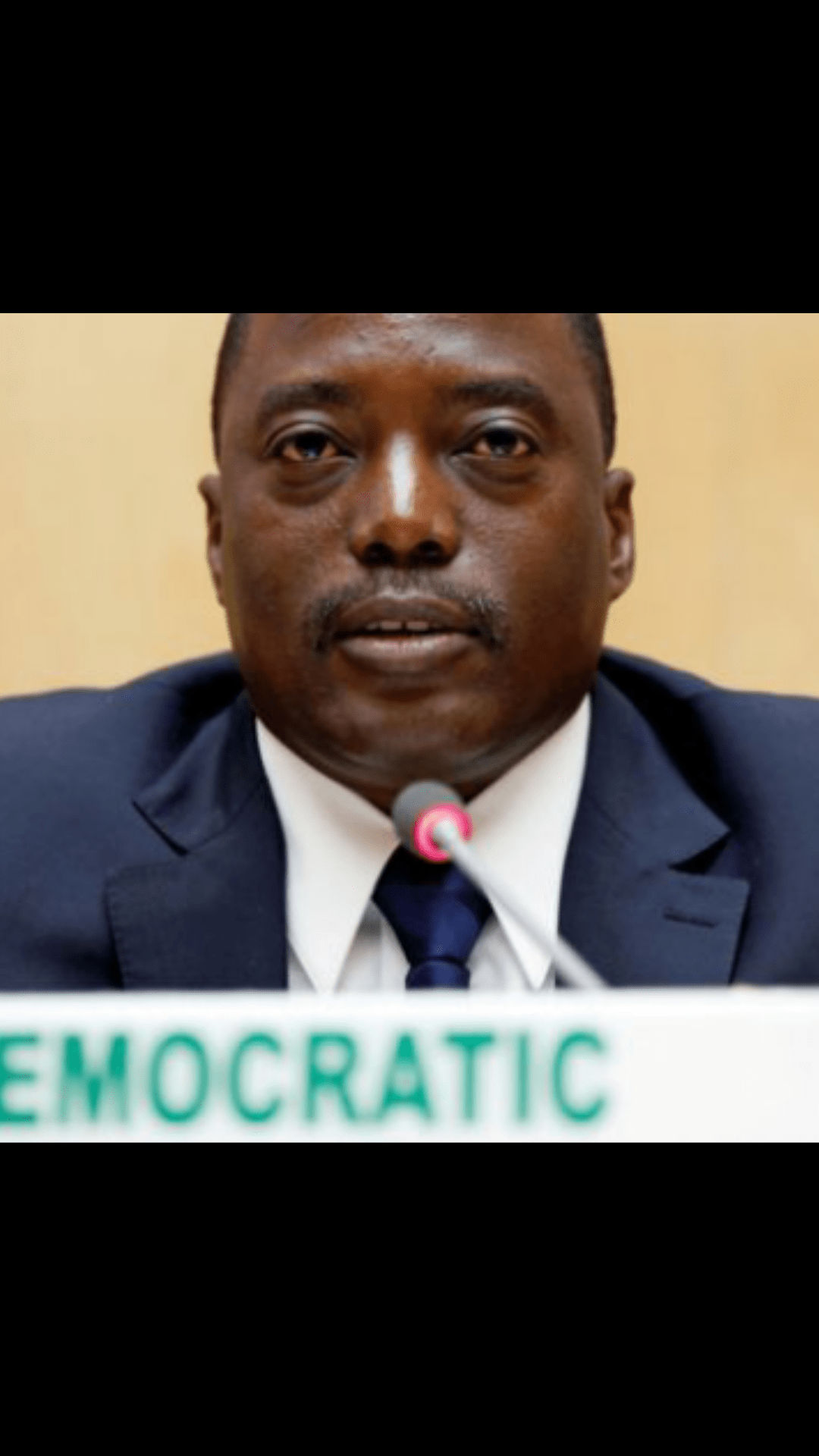
THE KABILAS

Take a read.

https://www.theeastafrican.co.ke/oped/comment/Kabila-the-Son-the-Father-and-now-the-Holy-Ghost/434750-5142854-84ib3kz/index.html

KENYA’S OIL MADNESS

Take a read

https://www.standardmedia.co.ke/article/2001328638/somalia-put-on-sale-lamu-oil-blocks-papers-show

CIVIL SERVICE REFORM CONSULTANCY FEES AND MORE IN SOMALILAND

Take a read.

Expert Fallacy – How The Civil Service Commission Spent 2 Million Dollars on Kenyan Consultants

By Somaliland Chronicle.


ismailwarsame.blog

FLASH-BACK

Posted July 28, 2013

  1. Puntland State of Somalia suspends its planned and ill-prepared multi-party elections, following local political violence where scores of people lost their lives and many others got hurt. The ruling political elite, who initially half-heartedly embraced the idea of pluralism on “My way or the highway” approach by using the instruments of political coercion, intimidation of public servants and use of public resources in a desperate attempt to stay in power or extend their term in power, has to fall back on the State’s political founding formula of sub-clan power-sharing through traditional selection process of members of Parliament along sub-clan lines, a scenario appropriate then at height of the Somalia’s Civil War, but no longer valid after nearly two decades of local self-government, a political stagnation and paralysis of vicious circle that Puntland State is unable to grow out of it.
    The multi-party experiment, or they call it, Democratization Process, was meant to fail as it was hastily ill-prepared for an already pre-determined election outcome in favor of the ruling group, thus creating the seeds of political confrontations and violent reactions to the government political maneuvering. Fragile, poorly-prepared and ill-equipped new political parties and the masses rightly noticed that there could be no fair play in the process as they also saw and predicted the danger of destabilization and threats to peace in Puntland.
    The local Parliament, another institution always bent on self-preservation rather than deliberating on and legislating genuine bills to move the country forward, has to quickly endorse political clannism in an Annex to the constitution. For the Puntland Parliament, it is business as usual as its members see the institution as permanent job for retirement without ever worrying about the obligations of public accountability, a dangerous source of political corruption and bad governance leading to facilitation of poor executive leadership in the State.
    Some elements among the so-called opposition are yesterday’s men whose capabilities, ideas and visions are even far below than that now in power in the State. They have been already tested when they had had their once in a life-time accidental opportunity and a shot at positions of leadership. One would wonder if those are still able to marshal at least animal instincts to search for a new generation of leadership and talents to take over next and lead the country. They are better advised to go quietly and retire for the good of their people, family and country.
    The time-tested traditional leadership of the various regions of Puntland now seems in disarray as the old generation gets aged and senile or passed away. The new generation of the traditional leaders are either inexperienced, pushed aside by or accommodated by the regime for its own agenda. The loss of Las Anod in Sool Region, the passing away of Islaan Mohamed Islaan Muse, Boqor Mohamud, Beldaaje Haji Farah, Garad Abdiqani Garad Jama and Ugaas Yassin is the greatest loss of PuntlandState since its foundation in August 1998 and the main causes of poor and unaccountable governance in the country. PuntlandState of Somalia was originally founded on the principle of over-whelming grass-root support led by the traditional leadership with the skills and art of modern statecraft equipped with all the three branches of government independent of each other with all checks and balance of power in place. Puntland State had had in its history incidents where a sitting President was removed by the Supreme Court, a Vice President impeached by Parliament and Ministers brought before Parliament for accountability and on Question Period on a Vote of Confidence. Unfortunately, that is no longer applicable to Puntland State of today. They got a serious governance problem. There is a lack of able, mature, wise men and women of vision, integrity and selfless commitment to efficient management of public affairs.
    The Role of International and Donor Community
    The International Donor Community acts in a wishy-washy fashion in Puntland Governance and Democratization Process. They tend to persuade their client leaders in the State for their poor Ad Hoc assessed positions on the agenda without a plan (B) to fall upon amid changing fluid situations. They have to re-assert the fact that there is no true democracy without the principle of one man (woman) one vote. There will be resistance to that principle by people who endured lawlessness for so long and there will be price to be paid by implementing it. By nature, people resist and ridicule anything new. If they are genuine in helping Puntland, in particular, and Somalia, in general, they have to be bold enough to push the Democratization Process forward and support the State contain the political violence that surely would occur. This should not be a trial and error exercise on their part. They must deliver for the sake of contributing to world peace and security at least.
    The Way Forward
    For Puntland State of Somalia, staying permanently in a vicious circle and political stagnation is not an option. Keeping multi-party democracy hostage to sub-clan patronage system for ever is not the solution to the current Puntland governance problems. Using public institutions and resources by the ruling elite for their own interests and advantage is to go alla Somalia Style of Siyad Barre. That would definitely lead to a total ruin of Puntland again.
    What is required now in Puntland is a genuine debate about not only to avoid political destabilization, but ways and means of how to lift Puntland out of its chronic political paralysis and bring it out of the woods on the road to good governance based on:
    The wishes and aspirations of its people demonstrated through fairly prepared elections.
    1. The equitable distribution and fair management of public resources
    2. Free market economy with no place for cronyism and despotism
    3. Political pluralism in a plane field to compete without violence and political intimidation, a fair game to produce quality result and sound popular leaders and talented statesmen.
    To achieve the above, Puntland state of Somalia has to renew itself by addressing its fatal problem of intellectual bankruptcy. There is no shortage of learned Puntlanders. They are all over the world and inside Puntland. There is a total brain-freeze though among these talented intellectuals. Their problem: they only see the bigger picture of Somalia, ignoring Puntland altogether. By the way, this is the problem of successive Puntland leaders as well-never concentrating on Puntland development as the first historic and founding pillar of Federal Somalia, for someone’s perspective, one of the first Mandates of the creation of Puntland State.
    The way forward for Puntland State of Somalia is not easy, but is worth doing it for the sake of present and future generations. Doing it is a great honor to those who sacrificed a lot in the foundation of State, in the first place, in order to re-instate and achieve a united, strong and prosperous Federal Republic of Somalia owned by free people of Somalia.

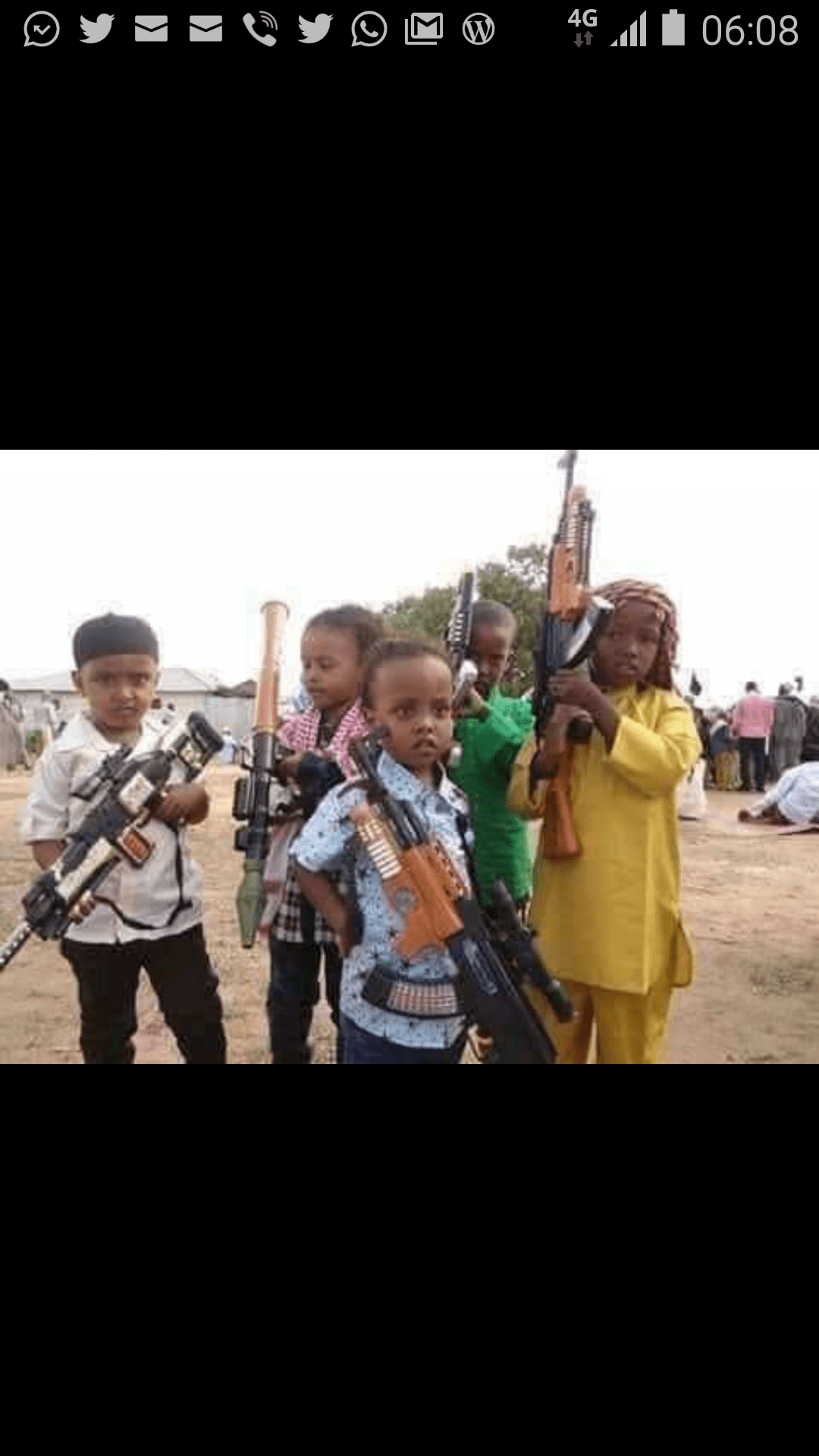
ARMED KIDS?

By Abdihafid Yasin

Garowe, Puntland

90% of children’s play in Eid are weaponry. Who said Arms embargo was lefted in Somalia?

This confuses us a lot as children are nothing but copycats of their fathers, hence, this implies or indicates to us that grown-ups aren’t prepared for peace and prosperity. I remember when I was in India, children’s play were mostly entertaining activities or none weaponry materials

The suppliers, mostly are opportunistic businessmen looking for quick benefits from any thing marketable to communities, from chemically and culturally toxic toys, to weaponry toys in this especial occasions, and worst, no one is regulating what they are supposed to sell to the people.

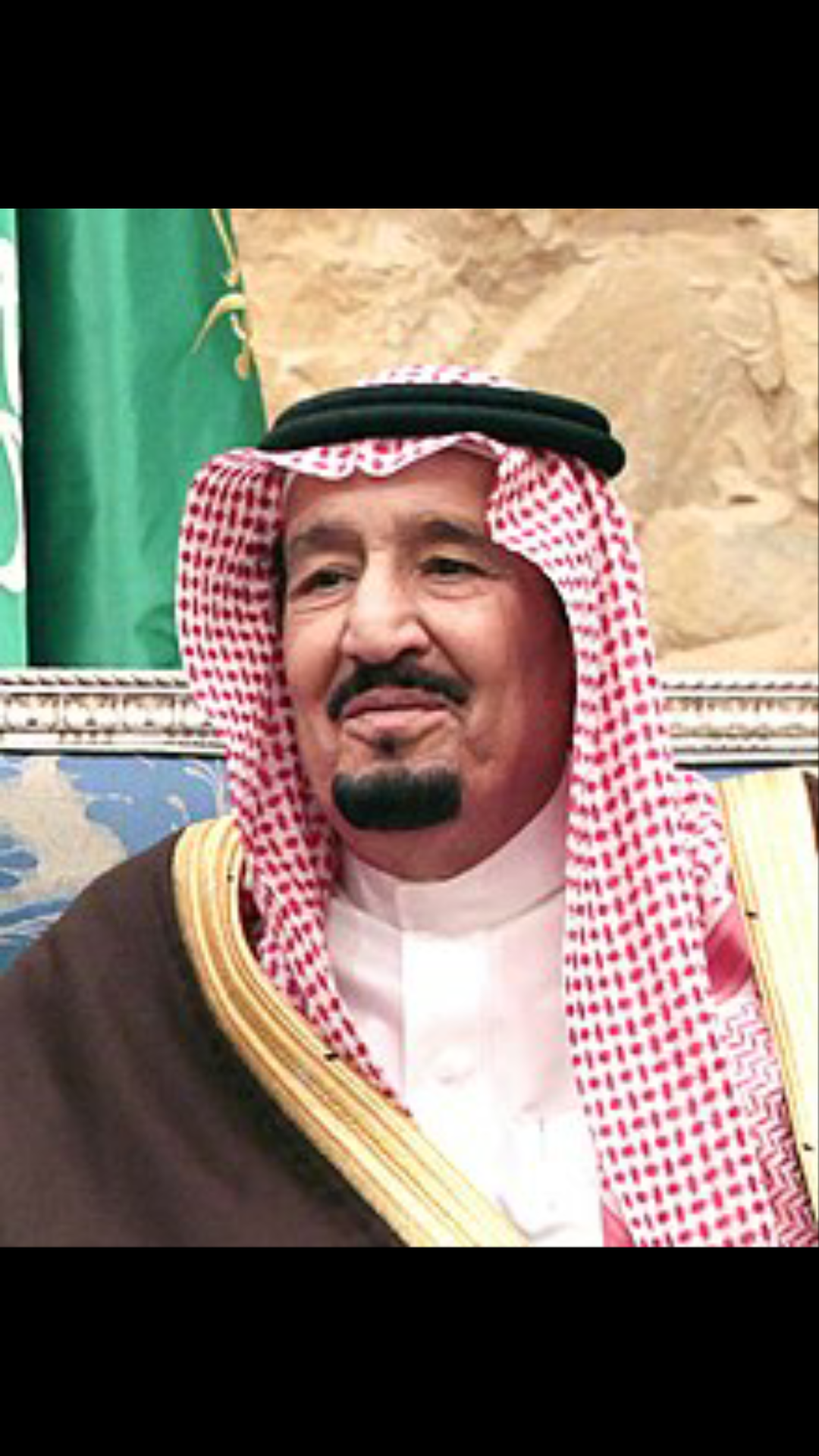
AWESOME DIPLOMATIC ENCOUNTER

The Saudi King Salman got heads-up in diplomacy with Pakistani Prime Minister, Imran Khan.