QIIMAYNTA CABDIWELI MAXAMED CALI GAAS EE WASIIR CALI XAAJI WARSAME 2015

KHAYRE’S HISTORIC MISS

Hambalyo dadweynaha Puntland ee maanta Dhagax Dhigay @Dekedda @Garacad oo Alle iskumar ku maneystay degaan, daaqsin xoolaad, badweynta India iyo barwaaqo kaluun. Dawladda Federaalku waa ka ilduuftay fursadaa taariikhiga ah.

Prime Minister of Somalia, Hassan Ali Khayre, has just missed an historic opportunity in laying the Foundation Stone for the construction of Garaad Port in Mudugh Region that constitutionally comes under the jurisdiction of The Federal Government.

ABAAL-LAAWE

via ABAAL-LAAWE

ABAAL-LAAWE

Labada nin keebaa abaal-laawe ah? Labada nin keebaa musuq-maasuuq maamulay? Labada nin keebaa siyaasiyan loo hiiliyey?

NEW SOMALI FILM

via NEW SOMALI FILM

NEW SOMALI FILM

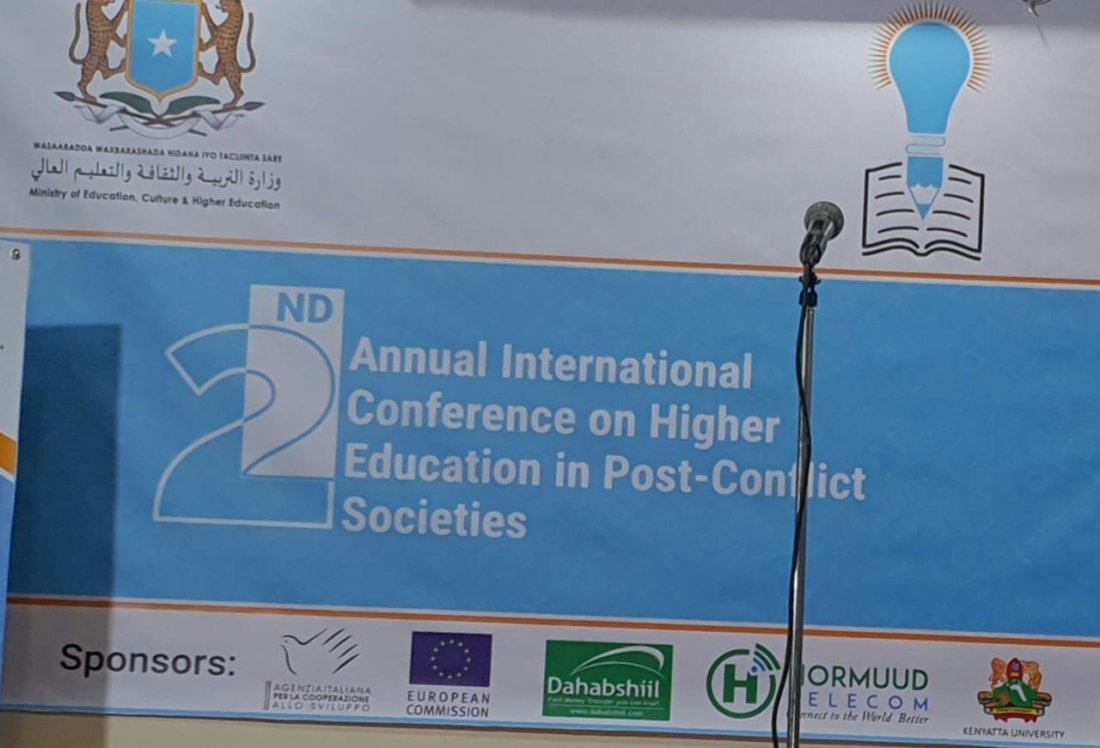
INTERNATIONAL ANNUAL CONFERENCE ON HIGHER EDUCATION IN POST-CONFLICT SOCIETIES

Take a listen:

Ku Dul-dhageyso Oomaar

Toronto Centennial Stadium this evening.

At Toronto Centennial Stadium this evening.

Watch here:

CAN YOU GUESS WHERE THE PREDICAMENT OF SOMALIA LIES?

via CAN YOU GUESS WHERE THE PREDICAMENT OF SOMALIA LIES?

SOCIAL MOBILITY IN PRACTICE: BAR PLACEMENT SCHEME

via SOCIAL MOBILITY IN PRACTICE: BAR PLACEMENT SCHEME

Thank you!

SOCIAL MOBILITY IN PRACTICE: BAR PLACEMENT SCHEME

19 July 2018
As part of the Bar Placement Scheme, Aisha Warsame spent three and a half days at a large commercial set of chambers, 4 New Square, shadowing barrister Stephen Innes. These are her thoughts on the experience, together with a Q&A that she conducted with Stephen.

I found out about the Bar Placement Scheme through the Social Mobility Foundation, an organisation dedicated to giving opportunities to students from low-income families, allowing them to discover their potential to excel in life and break down any barriers preventing them from pursuing their career ambitions.
Initially, when I arrived, I felt intimidated by the prospect of working one to one with a barrister, with my limited knowledge about law. I thought that I would feel out of place and uncomfortable in such a foreign environment. However, my initial reservations couldn’t have been further from the reality of working with the Bar. Immediately, I was made to feel comfortable and at ease, surrounded by friendly faces and open doors; and a promise that my barrister wasn’t here to test me, but merely give me the opportunity to engage in open discourse with him, and develop a taste for what life as a barrister is really like. As the week progressed, I found myself becoming increasingly confident, vocal in asking questions and assertive in my belief that I am capable of potentially pursuing a career in law.
The opportunity to be in the same environment as the extremely talented barrister I was with, Stephen Innes, allowed me to dispel the overly romanticised, glitzy perception of barristers inherent in the minds of most young students. Instead of seeing somebody who was only self-interested, I saw a friendly, hardworking individual who spends his hours motivated to succeed and to help people – a sentiment mirrored by all the barristers I came across. This has helped to grow my understanding of the qualities necessary to succeed as a barrister; somebody who is driven, ambitious and perseverant in the face of adversity and challenge. My experience has led me to understand that the Bar is not an isolated institution. Instead, every role from the clerks to staff members (with whom I also had an opportunity to interact) is irrefutably linked;and, whilst competition thrives, so does a sense of community and camaraderie.
I would strongly recommend the Bar Placement Scheme to other students. The opportunity to shadow a barrister and encounter cases that not only challenge and strengthen your legal knowledge, but also improve your literary skills and ability to think critically, is invaluable. Without the Scheme, it’s very possible that I would never have found the confidence or belief that a career in law is within reach despite any circumstances or financial limitations. Although much progress has been made to make social mobility easier, there are still students out there with infinite potential who find themselves constrained by societal expectations and their circumstances. However, on our first day in this scheme, we had the pleasure of meeting Lord Neuberger, past President of the Supreme Court, who, whilst looking into the eyes of 60 aspiring students, left us all with a simple yet resounding message that I believe is beneficial to anybody wishing to take part.
“Anything is possible, if you try.”
Q&A with Stephen Innes, barrister mentor, 4 New Square
What obstacles did you face in your path to becoming a barrister?
SI: I must confess that I came from a pretty traditional background, with very supportive parents, so I can’t claim to have faced any unusual obstacles. However, it is competitive and I do think that for everyone it does require hard work and determination.
What’s your opinion on the view that all barristers come from privileged backgrounds?
SI: Undoubtedly some do, but many don’t. The media likes stereotypes of posh and pompous barristers, but campaigns like #IAmTheBar are very important in highlighting the huge variety of different routes to the Bar.
Do you think it’s harder for someone from a non-traditional background to excel in a career in law and what do you think deters them from pursuing one?
SI: I have no doubt that some are deterred from applying for the Bar. I can’t speak for whether it is more difficult to excel whilst at the Bar, except to say that there are great examples of hugely successful barristers from all different backgrounds. There are lots of initiatives to try to encourage barristers and support them in, for instance, applying to become a QC or judge.
Why do you think the Bar Placement Scheme is important?
SI: It is vital for the Bar, and indeed for the public perception of law, that the Bar continues to attract the best students from all different backgrounds. I believe that the Scheme is very helpful to the students that take part in giving them an insight into the Bar and I always feel that the students grow in confidence hugely over the week. I also think that the scheme is very beneficial for the barristers and chambers who host students, in helping to broaden their horizons.
Do you think that the Bar has done enough to rid itself of its traditional/elitist reputation and increase diversity?
SI: The fact that in large part the public does still regard the Bar as traditional and elitist means that it undoubtedly has not done enough. However, it should be recognised that there has been significant improvement, and change cannot take place overnight. It is also the case that there is a lot of work which goes unrecognised because many do not know that it takes place. For instance I am aware that my Inn, Gray’s, does a huge amount of work on its outreach programmes with schools and universities, and no doubt the other Inns do too.
What do you think the future of the Bar is going to look like?
SI: Things have changed significantly in the 18 years I have been at the Bar and I am sure that they will continue on the same trajectory. The relationship between barristers and solicitors will change, with greater movement of personnel between the two branches of the profession, more work done on a direct access basis and increased opportunities for different business structures. Like many others, I am concerned about the future of the Criminal Bar in particular, unless it is better supported by the government.
Do you enjoy working with sixth form/university students and what do you take from the experience?
SI: I have hosted a number of students over many years, and I always hugely enjoy it. I never fail to be inspired by the infectious enthusiasm and interest shown by the students.

Aisha Warsame
Student, Bar Placement Week (London) 2018
©2018. The Bar Council

An Interview with Ali Haji Warsame

via An Interview with Ali Haji Warsame

An Interview with Ali Haji Warsame

Ali Haji Warsame: An Interview

SADEXDA (M) EE PUNTLAND

via SADEXDA (M) EE PUNTLAND

SADEXDA (M) EE PUNTLAND

Sadexda (M ) ee Puntland mudo-dheer ka taagnaa:

1. Maamul-Xumada Dawladda

2. Musuq-Maasuqqa Gaas

3. Muranka Sool Iyo Cayn

Hogaamiyihii aan diyaar u ahayn wax ka qabadka Sadexda (M) ee caanka ah meel dadka ha ka fariiso.

TUKARAQ

via TUKARAQ

TUKARAQ

TARTAN-BEELEDKA TUKARAQ
TAFAXAYDKA TUKARAQ
TANBAA U DAMBEYSAY

TAMARTA TUKARAQ
TUURTUURKA TUKARAQ
TANBAA U DAMBEYSAY

TAAHA TUKARAQ
TALO XUMIDA TUKARAQ
TANBAA U DAMBEYSAY

TAARIIKHTA TUKARAQ
TANBAA U DAMBEYSAY TUKARAQ

Waxaan ka codsanayaa akhriyaasha in ay music-kada iyo laxanka ku daraan oo ay ku heesaan.
Qore; Ismail Warsame, Toronto, July 11, 2018

THE ALARMING EPIDEMIC OF NEW ADDICTS.

In Toronto, Canada, I have decided to take an hour and a half of brisk walking today to a destination of a few kilometres from home. On my way, I saw a middle-aged black woman wearing red-colored kinky hair, standing up in the shadow of a big tree on the sidewalk to prevent herself from the burning heat of today’s Toronto weather. The lady didn’t notice me passing by as she was clued to her smartphone, browsing non-stop, unaware of the world around her. At first, I didn’t pay any attention as I thought she stopped there to respond to something urgent while walking somewhere.
On my way back, the woman was still standing up in the shadow of another tree not far off from the previous one one hour later, obviously, stepping out from one tree to another while she was pretty affixed to her phone.
Welcome to the world of smartphone addicts and the world population of mostly zombies because of the new exposure and experience.
Initially, I didn’t believe when a Somali writer, Mr. Faysal Roble wrote an article in the WardheerNews.com on the issue while describing the problem with Puntland President Dr Abdiweli Mohamed Ali (Gaas).
Now, a lot of people are at risk of losing their lives due to preventable accidents because of social media addiction on their smartphones. Many did hurt others as a result of the epidemic, not to mention how many perished already while inattentively staring at screens of their new entertainment media.

By Ismail Warsame

THE ALARMING EPIDEMIC OF NEW ADDICTS.

via THE ALARMING EPIDEMIC OF NEW ADDICTS.

SOMALILAND’s PROVERBIAL OSTRICH APPROACH TO EXISTENTIAL PROBLEMS

An existential, unattended problem has finally come to haunt Somaliland. In the past, Somaliland have had multiple ocassions and opportunities irreversibly missed to address the Sool-Sanaag issues:

1. An internationally supervised referendum for the peoples of Sool and Sanaag to freely express their wishes.

2. An admission of legitimate representatives of the peoples of Sool and Sanaag to participate in Somalia-Somaliland talks.

3. Appropriate and rightful power-sharing of the peoples of Sool and Sanaag Regions within the political system and administration of Somaliland.

4. Confederate relationships with Puntland with a Rotating Presidency as proposed by Puntland Administration.

5. Former President of Somaliland, the Late Mohamed Ibrahim Egal, with the support of Puntland, to claim Somalia’s leadership as the last legitimate Prime Minister of Somalia after the collapse of the Central Somalia’s Government in 1991.

6. Hargeisa to host Somalia’s National Reconciliation Conferences, an opportunity that might have led to the city eventually becoming the future Capital City of Somalia.

These, among others, are missed political opportunists that now seem a dream.The fate of a nation depends on bold leadership that can evaluate hard choices and take fateful decisions. A proverbial ostrich approach to existential national issues is now catching up with President Muse Bihi Administration. His is an accumulation of political miscalculations and deferred solutions to pressing problems.