Review of “Covert Action in Irregular Wars: Unraveling the Case of Timber Sycamore in Syria (2012–2017)” by Jonathan Hackett

Introduction
Jonathan Hackett’s article, published in Small Wars Journal, offers a critical examination of the CIA’s Timber Sycamore operation, a covert program aimed at overthrowing Syria’s Bashar al-Assad regime through support for rebel forces. Drawing on declassified documents, government records, and interviews, Hackett—a former Marine Corps interrogator and special operations specialist—argues that Timber Sycamore’s failures underscore systemic issues in U.S. covert operations, including oversight gaps, inadequate vetting, and accountability lapses. The article serves as a cautionary tale about the risks of blending Title 50 (covert) and Title 10 (military) authorities in irregular warfare.

Summary
Hackett traces Timber Sycamore’s origins to the Arab Spring, detailing how the CIA and SOCOM collaborated to train and equip Syrian rebels under competing objectives: regime change (CIA) and countering ISIS (SOCOM). The operation, funded by Congress and Gulf states, faced immediate challenges:

  • Weapons Diversion: Bulgarian and Romanian arms intended for “moderate” rebels were funneled to ISIS and Salafi-jihadist groups via black-market networks, including Jordanian intelligence intermediaries.
  • Vetting Failures: Trainees with ties to extremist ideologies, such as Hayat Tahrir al-Sham (formerly al-Qaeda affiliate Jabhat al-Nusra), infiltrated the program.
  • Bureaucratic Friction: Parallel State Department efforts and SOCOM’s costly Syria Train and Equip Program (STEP) created redundancies, with STEP spending $500 million to field fewer than five combat-ready fighters.

The operation’s nadir came with Russia’s 2015 intervention, which shifted U.S. focus to counter-ISIS efforts. Timber Sycamore’s legacy was further tarnished by human rights abuses by U.S.-trained forces and the ironic 2024 rise of Ahmad al-Sharaa (a former ISIS-linked figure) to power after Assad’s ouster—a outcome Hackett frames as a pyrrhic victory.

Analysis
Strengths:

  1. Primary Source Rigor: Hackett leverages FOIA disclosures, weapon lot numbers, and congressional records to substantiate claims of diversion and mismanagement. His military background lends credibility to critiques of interagency coordination.
  2. Legal Nuance: The article clarifies the blurred lines between Title 50 and Title 10 authorities, particularly “sheep dipping” (military personnel under CIA direction), and highlights exemptions from Leahy vetting laws that enabled human rights abuses.
  3. Historical Context: Comparisons to past failures (e.g., Phoenix Program, Iran-Contra) contextualize Timber Sycamore within recurring patterns of covert action overreach.

Weaknesses:

  1. Geopolitical Simplification: While Hackett notes Russian and Iranian support for Assad, he underplays their role in thwarting U.S. objectives. A deeper analysis of external actors could enrich the failure narrative.
  2. Bias Potential: The author’s special operations background may skew perspectives on CIA-SOCOM tensions, though he acknowledges both agencies’ missteps.
  3. Outcome Dichotomy: The article frames al-Sharaa’s rise as purely negative, yet briefly notes U.S. engagement with his regime. This paradox warrants further exploration: does pragmatism sometimes override ideological concerns in foreign policy?

Conclusion
Hackett’s article is a timely contribution to debates on U.S. covert operations, emphasizing the perils of lax oversight and short-termism. While dense, its empirical rigor and actionable insights—such as calls for stricter vetting and interagency transparency—make it essential reading for policymakers. However, the analysis would benefit from addressing how global power competition (e.g., U.S.-Russia tensions) shapes covert action efficacy. Ultimately, Timber Sycamore’s legacy—a fractured Syria under jihadist leadership—stands as a stark warning: without accountability, even well-resourced covert campaigns risk backfiring catastrophically.

Rating: ★★★★☆ (4/5)
A compelling, well-sourced case study that balances detail with broader lessons, though slightly constrained by its U.S.-centric lens.
MY DISILLUSIONMENT IN AMERICAN POLITICS AND JUSTICE

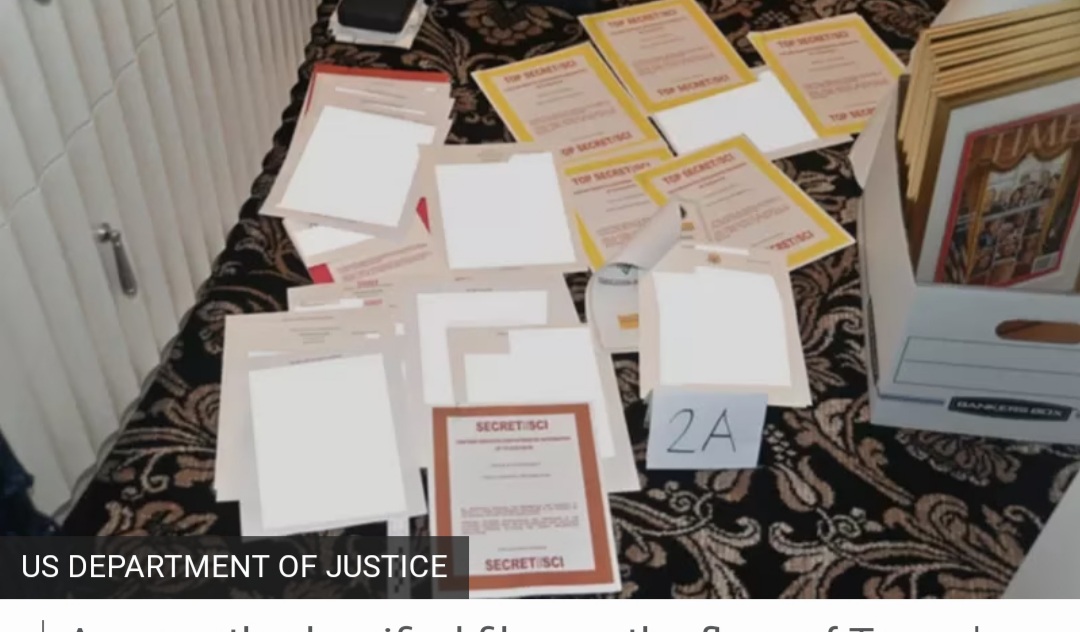
As a long time observer of US politics, I must admit that I have become increasingly ambivalent towards USA. It started during the unfolding drama of Donald J Trump in which he was twice impeached and investigated by Special Counsel, Robert S Mueller III. Trump got the last laugh in all cases and eventually nearly succeeded to “make America Great Again” (MAGA) by winning 2020 election. An obviously criminal former President difficult to bring him to justice, by neither the Congress nor by DOJ (Department of Justice). As if that was not enough crime for Trump, he went on to overthrow the US Government and almost succeeded decapitating it in a violent MAGA riot at Capitol in January 6, 2021. As if that was not enough crime for him, he refused to concede his election defeat, and to add an insult to US injury, he stole government top secret upon evacuating the White House on January 20, 2021 for his successor, Joe Biden, and now, nobody knows to whom he has passed them.

Donald J Trump has proved what cannot happen in most democracies can take place in the US: Violent coup. It means America is so fragile that they can produce not only a dictator, but a fascist leader worse than Hitler armed with dangerous modern weapon and nuclear warheads.

America is extremely important for the safety of humanity and world security. Those who don’t understand this reality, don’t know the potential dangers to their lives, if power falls to demagogues and deranged figures like Donald J Trump.

Russia is equally dangerous country and President Putin, though friendly with Trump, understood quite well that another hostile US leader could seize power and threaten Russia, this time with NATO at its borders. This makes Putin mad, causing him panic to push Russian security buffer zones further into Ukraine. It isn’t a war game. There is a potential for nuclear escalation and mutual annihilation.

The world is watching whether America can save itself from tyranny and Rise of Fascism Again (ROFA).

THE WAR IN UKRAINE SERVES NOBODY’S INTERESTS

Let us start with Russia. The war does not meet the minimum security objectives of President Putin – prevention of NATO expansion into the security buffer zone of the Russian Federation, with Europe’s neutral countries of Sweden and Finland now pondering to join NATO. The war in Ukraine may drag on, wiping out Russian economy and resources. Russia is already isolated and decoupled from major world business and financial networks, as a result of this war.

Ukraine War has caused European anxiety and feeling of security threat from Russia since World War II.

The war has shaken up entire economies of many countries beyond Europe – nations in the developing world, who rely on Russian-Ukraine wheat imports would suffer heavily.

The outbreak of this war would encourage proliferation of nukes and development of biological weapons from now on as deterrent among nations, including Ukraine.

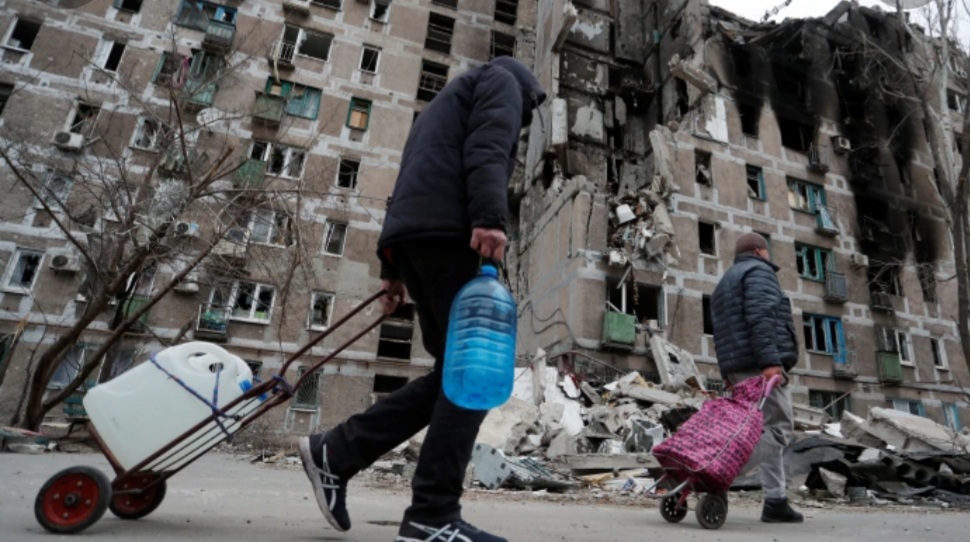
In conclusion, the Russian War (“Special Military Operation”) against Ukraine clearly demonstrates its foreign policy failure and diplomatic fiasco. Painfully, the Russian-Ukraine war is a slaughter between closely related slavic nationalities. It would have traumatic effect on children even beyond Ukraine. The hatred so caused here due to destruction of lives and livelihoods on both sides of the war would last for generations to come.

(Photo: courtesy to Aljazeera)

WHY DOES THE WORLD SEEM TO BE GANGING UP AGAINST RUSSIA?

The obvious reason is punishing Russia for Ukraine invasion. But, there are other non-obvious reasons, namely,

  1. Russia is increasingly becoming again a military, political and economic competitive after the collapse of the USSR (Soviet Union). Ukraine was a part of the Soviet Union.
  2. Rise of Russia has been historically considered a multifaceted threat to Europe.
  3. Ukraine has the potential to be a nuclear state, having inherited the know-how and technology of the Soviet Union. Russia wants prevent Ukraine from becoming a nuclear power as its neighbor, on the top of being a NATO and EU member.
  4. Russia considers Ukraine as part of greater Russia.
  5. Russia feels threatened by EU and NATO expansion towards Russia and breach of earlier commitments by USA and EU not to do that.
  6. Mistreatment of ethnic Russians by the current Ukrainian leadership in Kiev. There are reportedly fascist elements in Ukrainian society to which Russians don’t tolerate because of Hitler’s atrocities against Soviets in the WWII. There is also anti-Russian sentiments in Kiev and Western Ukraine.
  7. There are many other subtle reasons why Russia can’t leave Ukraine alone.