They say power corrupts and absolute power corrupts absolutely. The current administration of Jubaland has been in power for far too long in the hand of one man, Ahmed Madoobe. It is already rotten to the core and has run out of ideas to address the grave security situation in Kismayo, which is continually a target of terrorist attacks at major city landmarks like hotels. That is because the regime is frozen in time and space to learn from previous security incidents and vulnerabilities over many years now. Vast parts of Jubaland is still in the hands of terrorists and other extremist entities, with no one challenging them.
Ahmed Madoobe Regime has two objectives in Jubaland:
1. How to stay in power forever.
2. How to keep Kismayo and its seaport hostage to the current regime forever.
Forget about expanding Jubaland Administration beyond Kismayo. Neither Ahmed Madoobe nor Kenyan Defence Forces (KDF) attached to ATMIS are interested in confronting extremists. They want to maintain the status quo. Extremists, too, seem to prefer that way with occasional attacks in Kismayo to make their presence persistently relevance. No movement by either side. The alarming security situation in Jubaland is justification for the continued presence and influence of Kenya in that part of Somalia. They want to keep Alshabab in their security equation as a necessary evil for their stay there.
Those who dig graves for human burial to earn their livelihoods are interested in more persons to die everyday. Similarly, the presence of Al-Shabab and terrorist activities in Kismayo are much needed security menace for Jubaland regime and Kenyan policy-makers on Jubaland occupation.
Peaceful transfer of power captures the essence of democracy. In that sense, Kenya, Somalia’s neighbor, has made gigantic move forward and joined to world democracies with its African heritage of multiple tribes and numerous ethnic groups, proving most Somali analysts deeply wrong in their debates on the subject. Clans aren’t the problem in Somalia. It is the politicians who use them for opportunistic and selfish aims, cultivating divisions and hatred among clans in the process.
The cornerstone of democracy is respect and adherence to the spirit and letter of the constitution. That solemn civil contract is what binds the citizens to constitute a nation-state, exercising the laws of the land. Clans, in the case of Somalia, are positive forces of identification as genuine Somalis and belonging to a clan solidifies its ownership as a stakeholder. There is no other way to define or distort this reality. When discoverers of 4.5 Clan Power-sharing Formula in Somali politics introduced their invention, they struck at elusive discovery of Somali reality, hypocritically denied by many. Inventors of the Clan Formula didn’t hide the fact that it is good only before general free and fair elections take place, after which the Formula requires some adjustments for Power-sharing and clan balance reasons. For example, the Head of State and Head of Government cannot come from the same sub-clan of the 4.5 clan political configuration. There must be a clan balance in government. Even after general elections, you are dealing with the 4.5 sort of a scenario.
Welcome to Kenya, whereby save the President, every elected person is picked by his/her own constituency in most cases. In tribal politics, it is hard to discover a neutral party. Only laws are needed in place to make public servants apolitical. Other than that, accept the reality and move on.
I was in Kenyan capital, Nairobi, watching the local TV stations when late President Mwai Kibaki unilaterally crowned himself president of Kenya for 2nd term in office in December 2007. It happened in a such dramatic fashion that tallying election results were discontinued suddenly and Kibaki declared president in disbelief! Rival Raila Odinga then, his supporters and the whole country were in shock as they couldn’t fathom what was unfolding in the State House. By eight o’clock local time I could see through the windows of my apartment in Chester House that city streets were deserted for fear of election violence. Nairobi is the home of huge poverty-stricken slums like Kibera whose residents no army could stop them as they could storm the city in protest. The atmosphere breathed trouble for all. Many had lost their lives in Rift Valley towns and other precincts as a result. The controversy and election challenges continued for a year or two, prompting intervention and mediation by foreign statesmen, including late Secretary-General of the United Nations, Koffi Anan.
Looking back at that election incident, one would find that Kenya has history of election disputes and results were never accepted or conceded by the losing party.
By world election standards, there could be always some poll irregularities even in advanced democracies, but the final judgement lies in the fact whether these irregularities amount to a degree that significantly change the election overall results.
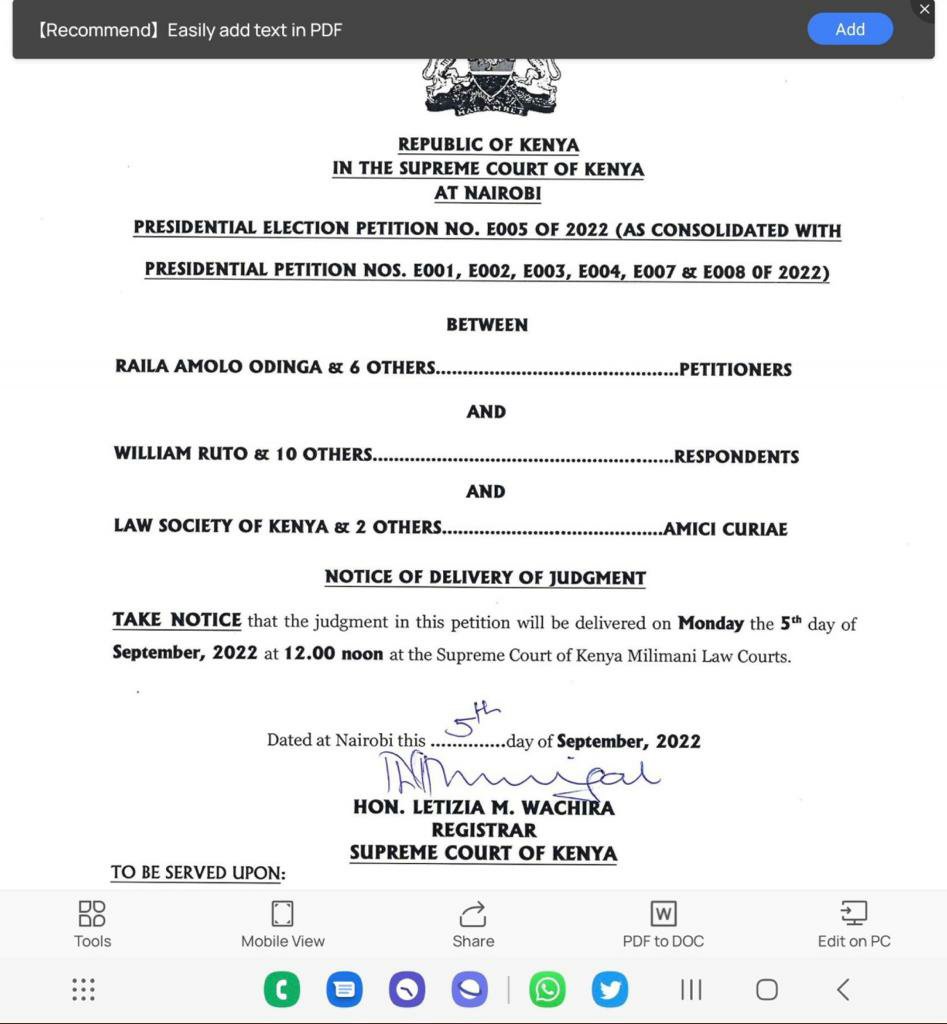
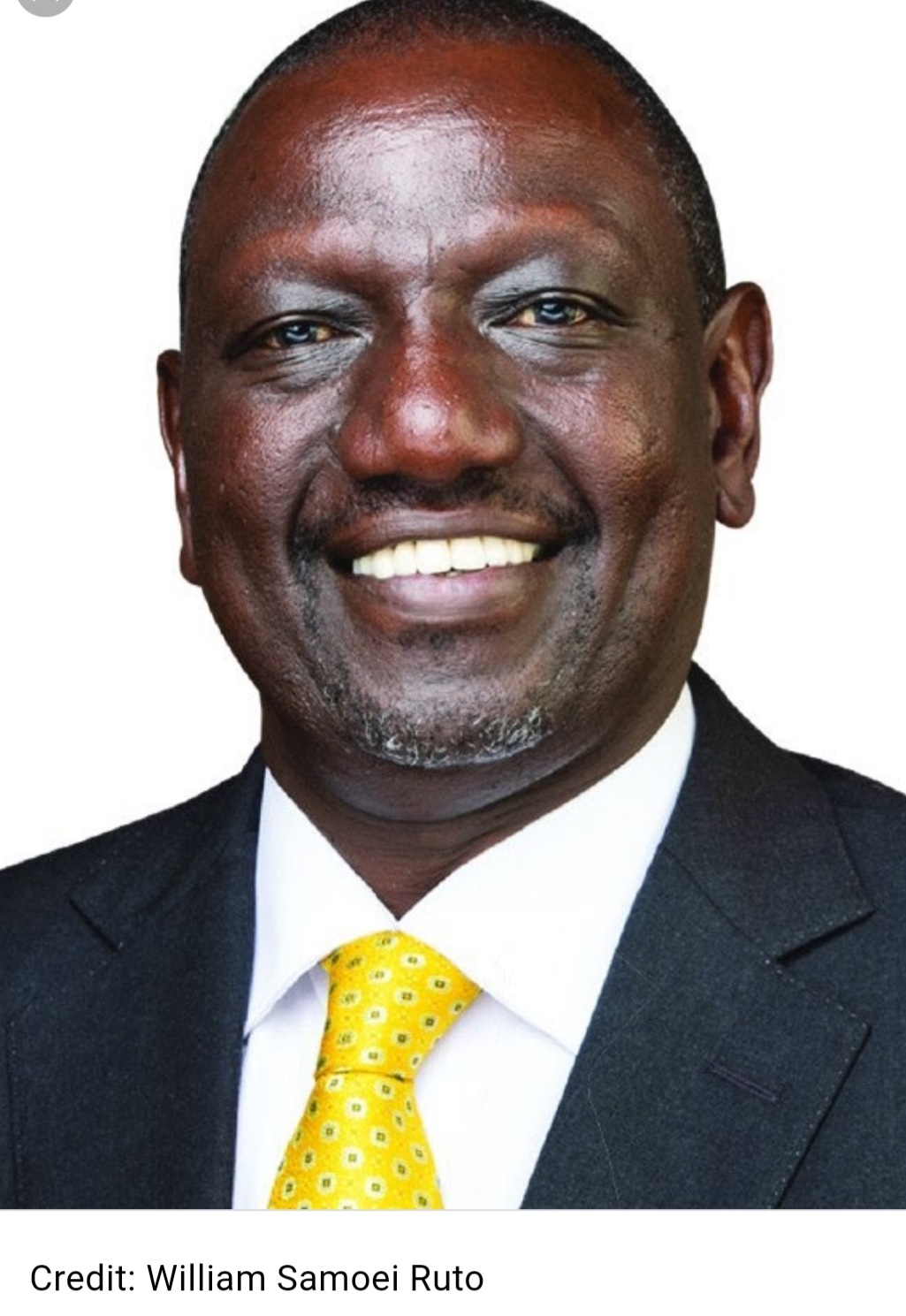
Enter 2022 general election. William Ruto has been just declared President-elect, this time by the Chairman of IEBC ( Independent Electoral and Boundary Commission). The Chairman, however, had some members of his team boycotting the ceremony for declaring Ruto President-elect, a typical scenario consistent with Kenya’s election history.
In this election, it is fair to say that there will be protests, even violence in some counties and court challenges, but the election win of William Ruto will prevail as this was the most transparent election in Kenya’s history. Despite its devastating culture of corruption, election manipulation and violence, Kenya has matured into a thriving democracy. Congratulations!
“IT IS GRATIFYING TO LIVE LONG ENOUGH TO LEARN WHAT YOUR SEEMINGLY FRIENDS THEN WERE DOING OR UPTO“, Ismail Warsame
Seyoum Mesfin, the late long-serving Ethiopian Minister for foreign affairs and Ambassador to the People’s Republic of China, and Abdeta Beyene, Executive Director of Ethiopia’s Center for Dialogue, Research and Cooperation (CDRD) and Director General of the same ministry, were people I knew and interacted with, as a member of the National Salvation Council (Sodare Group) 1996-1997, and as an official of Puntland Government (1998-2004). These two gentlemen authored an essay published in American Academy of Arts and Sciences (Daedalus) and called it “ThePracticality of Living with Failed States“. The issue is mainly explaining Ethiopian foreign policy towards the “Failed State of Somalia”. The authors had extensively deliberated how Ethiopia has been infiltrating into and meddling in the internal affairs of Somalia, using the excuse of lack of capacity on the part of Somalia to maintain internal stability and security at its borders with other countries like Ethiopia and Kenya. The authors tried to broaden the concept of Ethiopian Foreign Policy intervention of “Buffer Zone” (areas of influence and proxies) establishment as an academic discourse worthy of publication in reputable journals.
What is particular interesting in this essay is the unexpected and frank exposure of Ethiopian Foreign Policy towards different state and non-state actors inside Somalia, some of which they had intentionally created and others so formed on their own to provide “Buffer Zone” for Ethiopia’s security against Alshabab and other extremist groups. In dealing with stateless Somalia, the terms of sovereignty and territorial intergrity had lost any constraints in the thinking of Ethiopian policy makers, and paradoxically suggest to the international community some lessons to learn from Ethiopian experiences outside the constructs of international law and relations. Because of the security threats to Ethiopia from Somali regions of Gedo, Bay and Bakool, through the use of extremists as launching areas for attacks against neighboring countries, they said Ethiopia had to occupy forcefully these regions and create proxies like Raxanweyn Resistance Army (RRA) and SNF, according to the paper by these men. In Mogadishu, they claimed that Ethiopian forces entered to wipe out Islamic Courts Union (ICU) after it had threatened Ethiopia, and to support the fledgling Transitional Federal Government of Somalia (TFG). They also claimed that Ethiopian authorities helped Somali regional federal state in Central Somalia and South West after Ethiopia had benefitted from the security and stability in Puntland and Somaliland. They said, after some delay, Ethiopia helped Sunna Wal-Jamaac Group in its fighting with Alshabab, and to reconcile the group with Galmudugh authorities, which was treated as a buffer zone for Ethiopia.
The overarching objective of this exposition was to explain why Ethiopia was interfering in the internal affairs of Somalia, regardless of the letter and spirit of the International Law. Finally, they also asserted that Kenya was creating its own buffer zones with Somalia too, but unlike Ethiopia, Kenya was using Somali local Ogaden politicians to invade Jubaland. However, corruption had weakened Kenya’s efforts to manage its buffer zones successfully.
I would say, as a long time observer of this policy, there is nothing new here other than the frankness of the authors of this essay, for Ethiopia has been historically hell-bent to weaken and isolate Somalia from Emeror Menelik, onwards. Somali armed opposition fronts of SSDF, SNM, USC and others in the 1980s, were part of the proxies Ethiopia has been using, although to the opposition, there was no other option, but to work with the devil in order to get rid of Barre’s oppressive Military Regime in Mogadishu then.
Retrospectively, Prime Minister Hamse Barre has been an incompetent executive, but an effective enabler of President Hassan Sheikh Mohamud‘s (HSM’s) unconstitutional grab of all powers of the Executive Branch of the Somali Federal Government. Many were surprised when HSM appointed him on June 14, 2022, for reasons he only knew. But setting a historical precedence similar to Farmajo’s appointment of Hassan Ali Khayre wasn’t one of his reasons. What people didn’t know at the time was that Hamse was a decoy to musk Mohamud’s Dambul-Jadid‘s grand plan of HAG (Hawiye Action Group) agenda on avenging their historical grievances against Daroods.
This WDM editorial below under the above title was written after HSM had appointed Mr Barre. Ogaden Somalis received this editorial negatively at the time for emotional tribal reasons. They didn’t get it. We hope they read it differently today. Take a look:
WDM EDITORIAL
Historically and constitutionally, any person of Somali origin enjoys equal citizenship rights in Somalia. Equally, Ethiopia and Kenya consider any person of Darood/Ogaden subclan a citizen in each of their respective country. So, Prime Minister Barre, by virtue of his new position in his own country, automatically creates a bit of complications in their diplomatic and political relationships with neighboring Somalia.
It is worthnoting also to refer to former Somali President, Mohamed Abdullahi Farmajo, who couldn’t visit USA as Head of State of a foreign country with the full protection of diplomatic immunity as he was a US citizen. Accordingly, Farmajo was reported to have abandoned his US citizenship to visit America as a Somali President.
To avoid such potential strained relations with Kenya and Ethiopia, on top of already intractable disputes, historical conflict and violence, successive Somali regimes didn’t appoint or elect an Ogaden man to such highly visible position as Chief Executive.
While one may commend President Hassan Sheikh Mohamud for having made this decision in appointing Prime Minister Hamze Barre, someone may also be tempted to raise the question on whether he did due diligence to improve relationships with Somalia’s neighbors, given the historical burdens between Somalia, Ethiopia and Kenya.
Whatever the consequences of Mohamud’s appointment, all Somalis congratulate the New Prime Minister and wish him well.
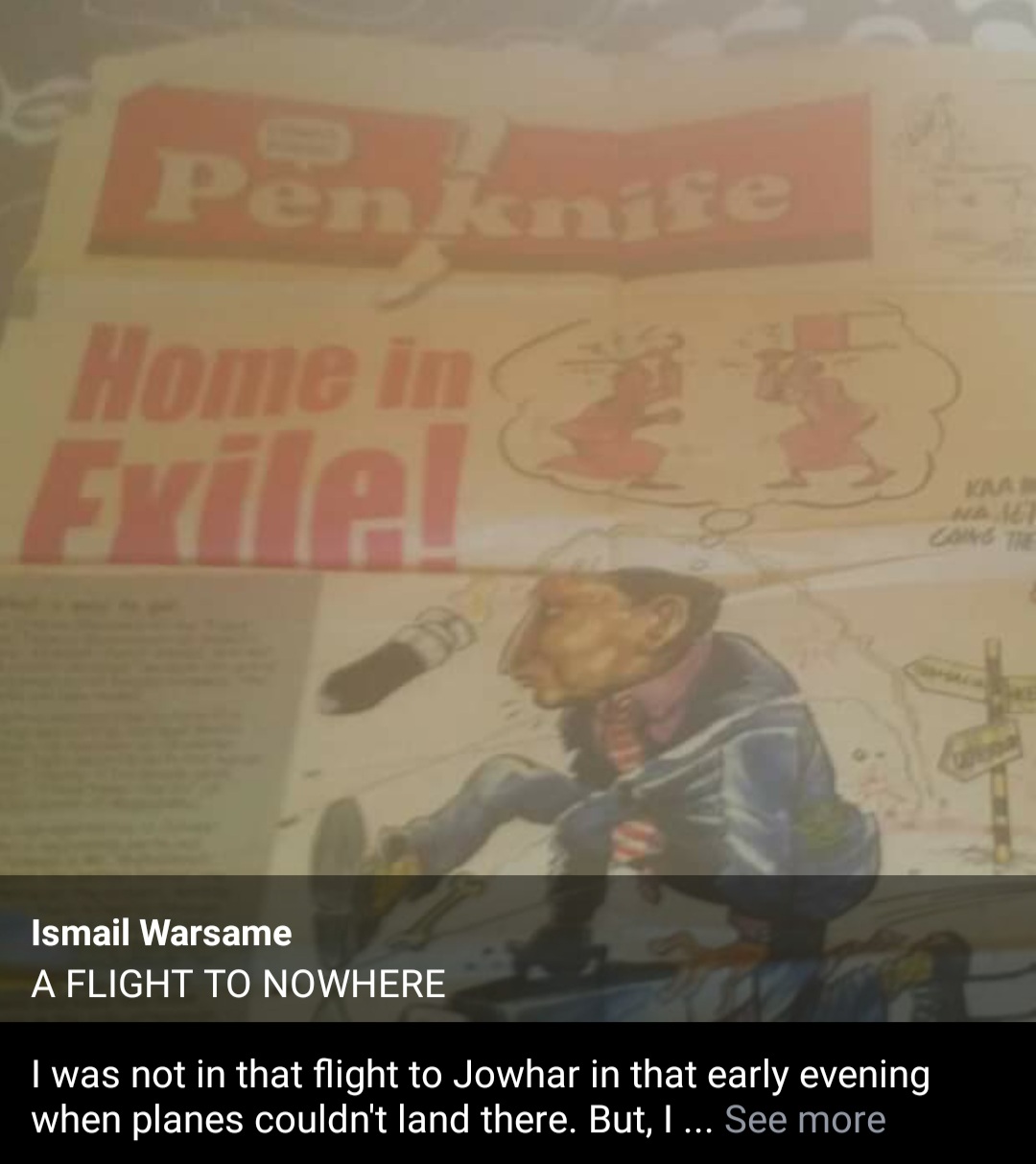
I was not in that flight to Jowhar in that early evening when planes couldn’t land there. But, I was in Nairobi, communicating on Thuraya satphone with Mayor of Jowhar, Mohamed Habeeb (Mohamed Dheere), throughout the evening. Dheere had been arranging enough cars with headlights blazing to light up the entire runway. I agree it was a risk flight too. There was no way Yusuf could return to Kenya as he was deemed extra burden on Kenyans having two presidents in town, blocking their streets traffic when moving around. Remember at time no aircraft could land in any of Somali airports at night, perhaps, Hargeisa ( I am not so sure), which was no go for Yusuf. It was a mistake done by the organizers of the President’s trip to Jowhar, making such a delay to fly into Jomo Kenyatta Airport. I could confirm President Kibaki had been at Airport throughout the day with Yusuf, waiting for that flight to take the later to Somalia. Why such a delay had occurred? Later I learned that a merchant of Qat had persuaded the trip organizers that he would pick up Yusuf in the same day after he transports Qat to Somalia. Such a mess and poor judgment. Also recall I was not with TFG at the time. In fact, I was communicating with Mohamed Dheere on the trip on my own to help out. It was me who informed Dheere that the President’s plane had landed in Djibouti, to his much needed relief. ( Below is a cartoon by Penknife, Sunday Nation on the occasion. It is dated June 19, 2005. I have been keeping it in possession since then). In the Cartoon President Kibaki of Kenya saying bye bye, you overstayed here. No home in exile!
WHY KENYA SHOULD ACCEPT ICJ RULING ON MARITIME DELIMITATION WITH SOMALIA
KENYA is a neighbor of Somalia. Here she has no choice. Kenya is a economic and diplomatic hub for mainland Somalia. Kenya is a home of hundreds of thousands of Somalis as its citizens and as host of a huge population of Somali refugees. Kenya is the first country to benefit from offshore oil and gas drilling in Somalia. Somalia and foreign oil firms would be needing Kenyan skilled labour and professional assistance in Somali oil industry. It is in the vital economic interests of Kenya to improve its diplomatic, security and political cooperation with Somalia.
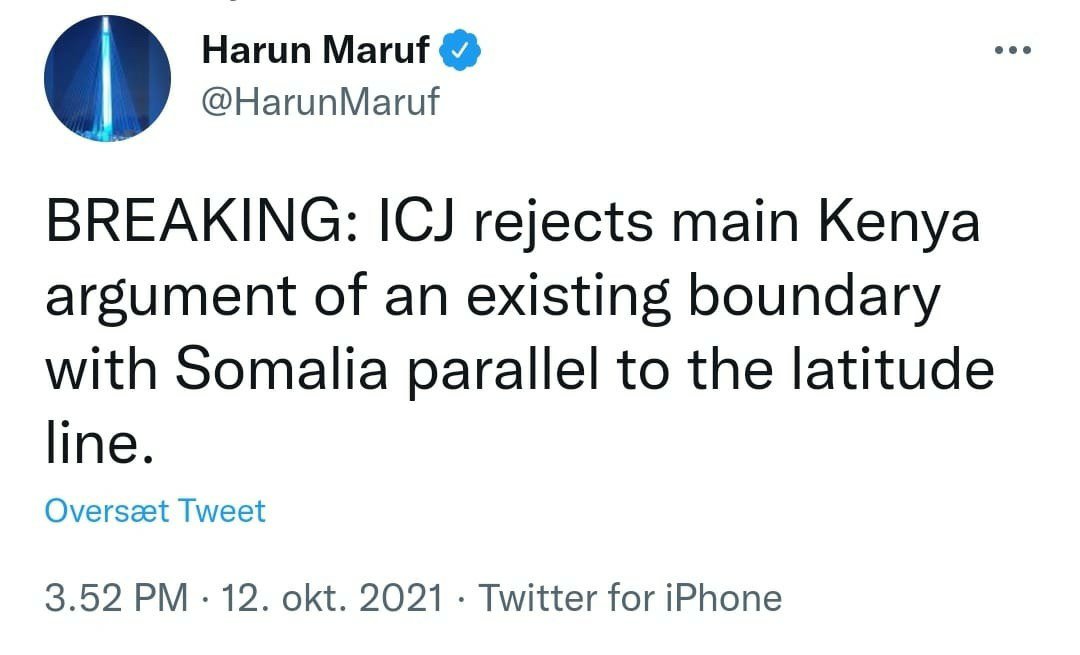
Still Kenya has gained a considerable portion of Somali waters of the Indian Ocean through through ICJ arbitration. Somalis were surprised to learn that the ICJ has been too generous to award Kenya with 15% of the maritime zone under dispute. Somalis consider this award unfair and political on the part of Court judges. Neverthertheless, Somalis don’t mind sharing marine resources with their Kenyan brothers and sisters and closest neighbor. Kenyan leaders should deliberate on this wisely. They have more to gain working with Somalis at home in Kenya proper and with Somalis in mainland Somalia. They should look before they leap.
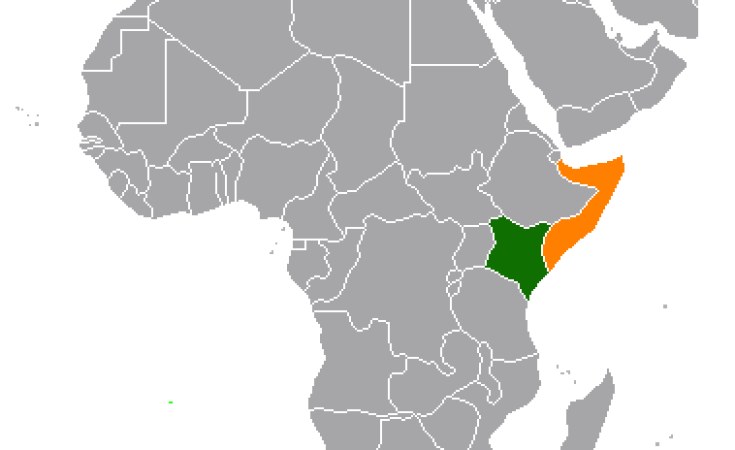
At ICJ decision today on the maritime border delimitation between Somalia and Kenya, Kenya didn't get all she wanted, but gained something out of her dispute with Somalia, with the latter winning most of her arguments. This map now shows today's decision. pic.twitter.com/bsn3sIMBCD
Kenya’s insatiable greed for Somalia’s waters begun following when Woodside petroleum company ended its offshore oil and gas explorations in western coast of Kenya in 2007, citing it was unable to find hydrocarbons in its Pompoo well.
Woodside petroleum disclosed in its press release issued on that day that according to satellite images it conducted on Somalia’s waters close to the border of Kenya and subsequent seismic tests found considerable traces of potential oil and gas deposits in the triangle area. With its deep knowledge of maritime laws, however, Woodside refused to take such risk of drilling oil and gas without the consent of Somali authorities.
Given this setback, in 2008 Kenya colluded with other multinational companies (MNCs) willing to steal Somalia’s resources with reduced costs, in the assumption that they can take unfair advantage of Somalia’s current circumstance and coerce its leaders to enter into dodgy bilateral agreement with Kenya, chipping away 100,000 square kilometres of Somalia’s maritime waters believed rich in oil and gas into Kenya.
To realise this strategic and economic objective and to build the confidence of MNCs investing in this area, Kenya launched the 2011 Operation Linda Chi and invaded Somalia on the premise of anticipatory self-defence, which is one of the reasons that the UN allows states to use force as set out under article 51 of the UN Charter: ‘Nothing in the present charter shall impair the inherent right of individual or collective self-defence if an armed attack occurs against a member…’
Not only did the attacks and the kidnapping incidents that Kenya cited as grounds for her invasion in Somalia were nowhere near the threshold that could trigger such military action, but also did the perpetrators behind those incidents themselves were Kenyans reacting to ATPU’s heavy handed tactics and extrajudicial killings meted out to coastal communities.
It is widely held that the low intensity insurgency hitherto brewing in Kenya’s coastal areas arose from the fact tacit government policies aimed to de-populate coastal communities & to transplant them to ethnic Kikuyus & Luo so that the demographic makeup in that area is permanently altered.
Rather than addressing those local grievances, Kenya has opted to externalise her domestic issues and policy failures with a view of adding another layer of external conflict driven by economic imperatives.
Kenya’s stated strategic objectives of its military intervention in Somalia was to drive Al Shabab out of the border area; establish a buffer zone; install an administration that is complaint to Nairobi; and use it as a bargaining chip to coerce Mogadishu government to accept Kenya’s terms.
Despite this, UK and France scrambled to the United Nation and African Union HQ to include Kenya in AMISOM troop contributing countries to save face and provide her with legal cover and international funding to realise her strategic and economic objectives by which both countries are allegedly direct beneficiaries
Throughout this period, Kenya has been at loggerheads with three successive Somali Federal governments. The latest of which is current FGS, which has come under a lot of pressure from Kenya to withdraw the case from ICJ, however, refused to budge & upheld Somalia’s sovereignty & territorial integrity
Kenya is on high alert ahead of next month’s judgment on the Indian Ocean boundary dispute with Somalia, which is expected within government circles to be adverse.
The International Court of Justice (ICJ) will announce the decision on October 12, ending a protracted case between the two neighbours that the war-torn Horn of Africa nation filed in 2014.
Its verdict is final. The timing of the judgment – it coincides with the 10th anniversary of Kenyan troops storming Somalia to fight the al-Shabaab terrorists – is also being considered a “slap in the face”.
The Nation has learnt Kenya will not accept a hostile ruling and a decision has been taken within the highest level of government to defy the court.
Disregarded
Some of the court’s verdicts have in the past been disregarded, including by the US, which in 2018 rejected the court’s order that sanctions against Iran should not include humanitarian aid or civil aviation safety.
And in 1986, the US had also attacked the court after it ruled America owed Nicaragua war reparations.
Kenya has also vowed not to accept what it considers “an illegitimate process” by an international entity.
“We are proceeding on the assumption that the verdict will be adverse. The manner in which the court conducted itself when dealing with Kenya, including rejecting a string of merited applications, is a key pointer,” a senior Kenyan official told Nation yesterday.
The official went on: “A lot is being done, including security-wise. It’s a matter with huge national security implications. A nation must guarantee the security and wellbeing of its people.”
According to the official, even what would be considered a compromise by the court would involve surrender of a part of the territory, which is unacceptable to Kenya.
Treated unfairly
Kenya contends the court treated it unfairly by rejecting a string of merited applications, including one asking that judge Ahmed Yusuf, a Somali, should step down over conflict of interest.
Justice Yusuf had been at the helm of the court since 2018 and was replaced as president of the ICJ in February by judge Joan Donoghue from the United States.
Kenya has also alleged some world powers with interests in vast minerals within the contested area have been meddling with the case to ensure Somalia, which attempted to sell some oil blocks at an international auction in London, UK, takes over the area.
Nairobi boycotted the ICJ’s public hearings, leaving Somalia to argue its case in one-sided proceedings that closed in March in The Hague.
Bias
Judge Donoghue then announced that even without Kenya’s participation, the court would rely on previous documents filed by Kenya, which accuses the world court of bias.
Before Kenya notified the court of its withdrawal from the case on March 11, it had applied to be allowed to submit new evidence that has been “missing” and is “highly relevant”.
“Most particularly, the Republic of Somalia (“Somalia”), while asserting that its 1988 Maritime Law’s reference to a ‘straight line’ refers to an equidistance line, conveniently failed to produce the map included in the law,” Kenya stated in court papers filed in February.
“This Somali map, which the court should reasonably expect Somalia to produce, is critical since it has the potential of undermining Somalia’s entire claim … Whatever Somalia’s missing map depicts is categorically not an equidistant line.”
Kenya argued that any consideration of the equidistant claim would set a dangerous precedent as it would not only reward Somalia’s belligerent conduct but also had the potential of disturbing already established boundaries, triggering disputes including with neighbouring Tanzania that could escalate to South Africa.
The dispute
As adjacent coastal states facing the Indian Ocean to the east-south east, the maritime claims of Somalia and Kenya overlap, including in the area beyond 200 nautical miles.
The parties disagree about the location of the boundary in the area where their maritime entitlements overlap, according to court records.
Somalia, which filed the case in 2014, argues the maritime boundary between the parties in the territorial sea, exclusive economic zone (EEZ) and continental shelf should be determined in accordance with the United Nations Convention on the Law of the Sea (Unclos) Articles 15, 74 and 83, respectively.
Article 15 of Unclos states: “Where the coasts of two states are opposite or adjacent to each other, neither of the two states is entitled, failing agreement between them to the contrary, to extend its territorial sea beyond the median line every point of which is equidistant from the nearest points on the baselines from which the breadth of the territorial seas of each of the two states is measured.”
But there is a rider. “The above provision does not apply, however, where it is necessary by reason of historic title or other special circumstances to delimit the territorial seas of the two states in a way which is at variance therewith.”
Article 74 states: “The delimitation of the exclusive economic zone between states with opposite or adjacent coasts shall be effected by agreement on the basis of international law, as referred to in Article 38 of the Statute of the International Court of Justice, in order to achieve an equitable solution.”
The same provision applies under Article 83 with respect to the delimitation of the continental shelf.
In both instances, the Articles provide where there is an agreement in force between the states concerned, questions relating to the delimitation of both the EEZ and continental shelf shall be determined in accordance with the provisions of that agreement.
Equidistance principle
Somalia’s argument is based on the use of the equidistance principle as the method of determining states’ maritime boundaries.
Accordingly, Somalia argues, in the territorial sea, the boundary should be a median line since there are no special circumstances that would justify departure from such a line.
With regard to the EEZ and continental shelf, Somalia contends, the boundary should be established according to the three step process that the court has consistently employed in its application of Articles 74 and 83.
But Kenya’s case is that a boundary along the parallel of latitude has developed through the consent of Somalia since 1979.
Since Somalia never protested for that long, Kenya contends that a boundary was established by a tacit agreement between the two states.
Straight line
Accordingly, Kenya’s position on the maritime boundary is that it should be a straight line emanating from the states’ land boundary terminus, and extending due east along the parallel of latitude on which the land boundary terminus sits, through the full extent of the territorial sea, EEZ and continental shelf, including the continental shelf beyond 200 nautical miles.Close
Kenya measures the breadth of its territorial sea and EEZ from a series of straight baselines covering the full length of its coast.
These baselines were first declared in the 1972 Territorial Waters Act and have been amended from time to time.
Kenya’s submission to the Commission on the Limits of the Continental Shelf (CLCS) is that the outer limit of its continental shelf lies fully 350m from its coast.
Kenya asserts that all its activities including naval patrols, fishery, marine and scientific research as well as oil and gas exploration are within the maritime boundary established by Kenya and respected by both parties since 1979.
However, in 2014, shortly before filing its case with the ICJ, Somalia claimed a maritime boundary along an equidistance line, ignoring the 35-year recognition of the maritime boundary along a parallel of latitude.
Court decision
The court will determine, on the basis of international law, the complete course of the single maritime boundary dividing all the maritime areas appertaining to Somalia and to Kenya in the Indian Ocean, including in the continental shelf beyond 200 nautical miles.
Also, the ICJ judges will determine the precise geographical coordinates of the single maritime boundary in the Indian Ocean.
The judges are Yusuf, Peter Tomka (Slovakia), Ronny Abraham (France), Mohamed Bennouna (Morocco), Antônio Augusto (Brazil), Xue Hanqin (China), Julia Sebutinde (Uganda), Dalveer Bhandari (India), Patrick Robinson (Jamaica), James Crawford (Australia) Nawaf Salam (Lebanon), Iwasawa Yuji (Japan) and Georg Nolte (Germany).
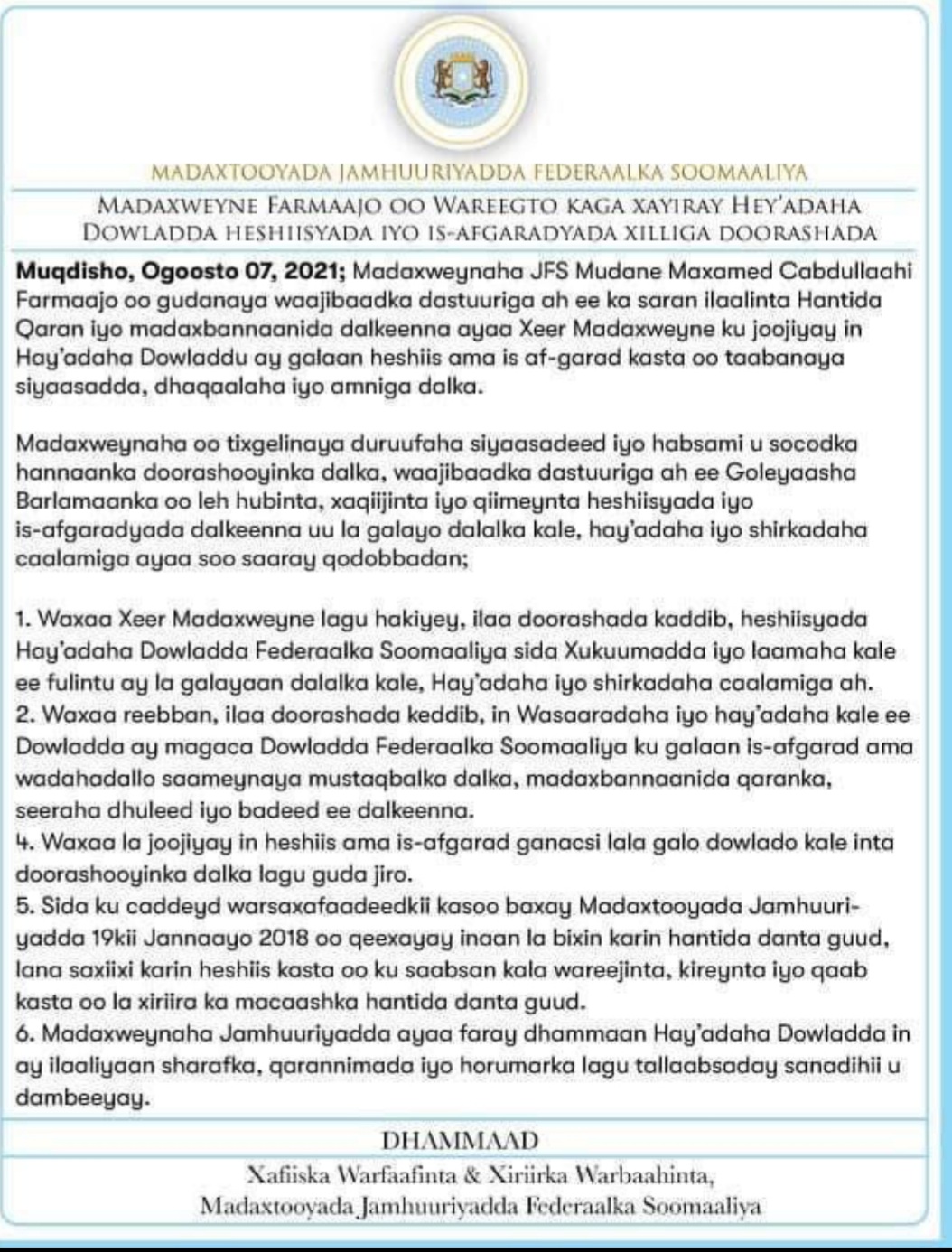
Mohamed Abdullahi Farmajo has been losing relevance in Somali politics lately. That is because he has no moral standards to understand that staying on after his tenure in Villa Somalia had expired in February 8, 2021, would bring him only humiliation. Squattering in the people’s House without any legitimacy is beyond the pale as it is shameless to issue notes that have no authority from his current residence. No wonder he had attempted to stage a legislative coup recently to cling to power illegally.
Mohamed H. Roble is his 2nd prime minister to abandon him upon finding the guy childish and immature to comprehend the complexity of Somalia’s governance, recent troubling history of this nation and centuries old historical burdens of the nations of East Africa, the Horn of Africa, in particular. Farmajo stayed on in the Villa to experience the ultimate embarrassment today when Kenyatta has by-passed him and over his head invited caretaker prime minister Roble to Kenya’s State House.
One wouldn’t been taken aback to witness Mohamed Abdullahi Farmajo campaigning for re-election soon, for he has no feeling of shame. This was the politician elected to protect the Federal Constitution only to grossly violate it, but still dared to stay on holed up in the Villa. Only persons who need their heads examined would now attempt to re-elect him. In a normal situation he has no chance to put his name forward for election to a public office again. But people should be warned against his shenanigans while he is still holed up illegally in the presidency.
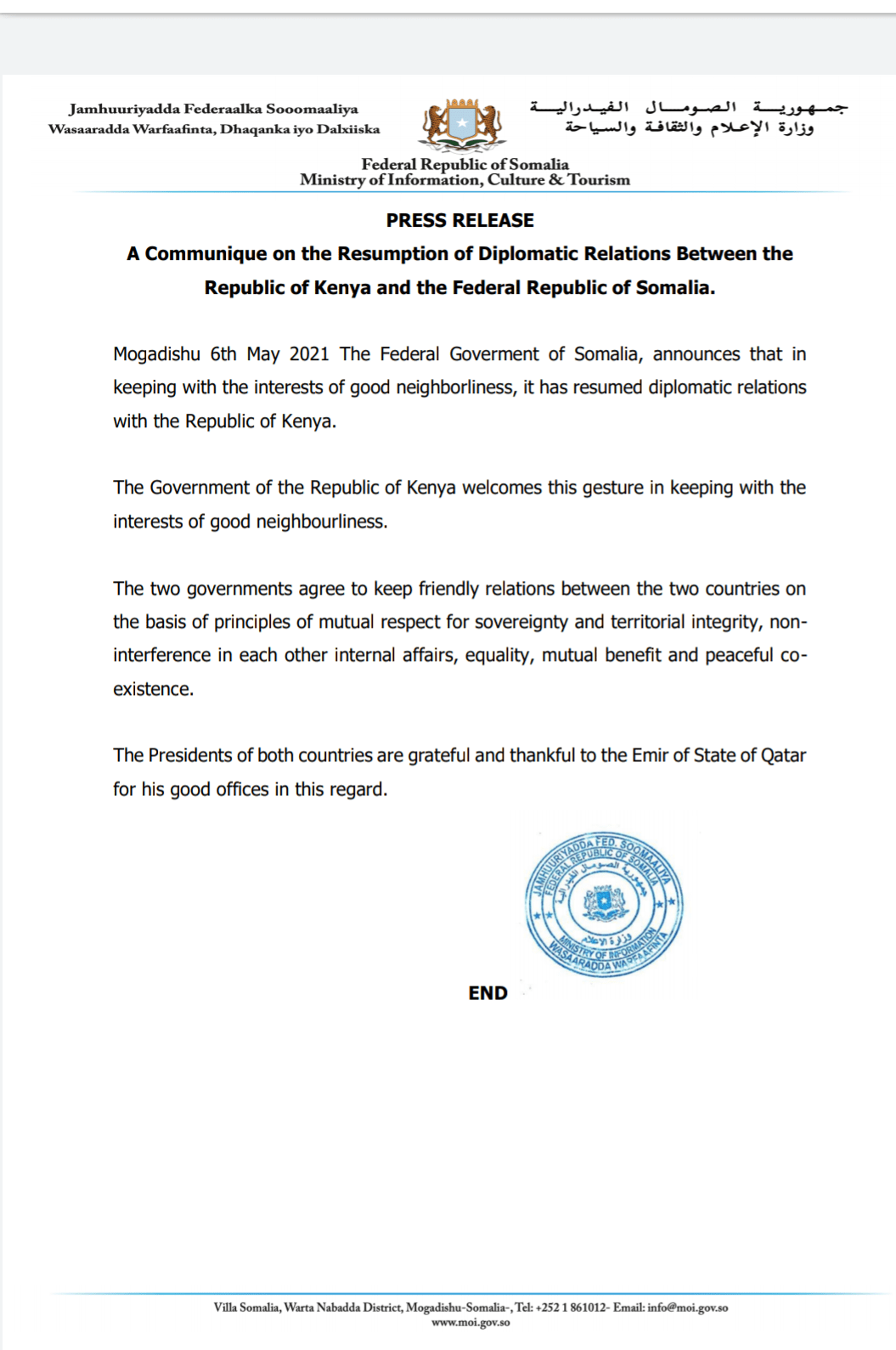
Somalia and Kenya have been experiencing lowest point in their diplomatic relations recently. That is because of two factors:
Mohamed Abdullahi Farmajo couldn’t balance Somalia’s political and diplomatic relationships with neighbors of Djibouti, Kenya and Ethiopia. Eritrea had poor or no ties with all countries in the Horn of Africa neighborhood. Now that Somalia, Ethiopia and Eritrea had entered into secret pact, Kenya felt left out in the regional power-play.
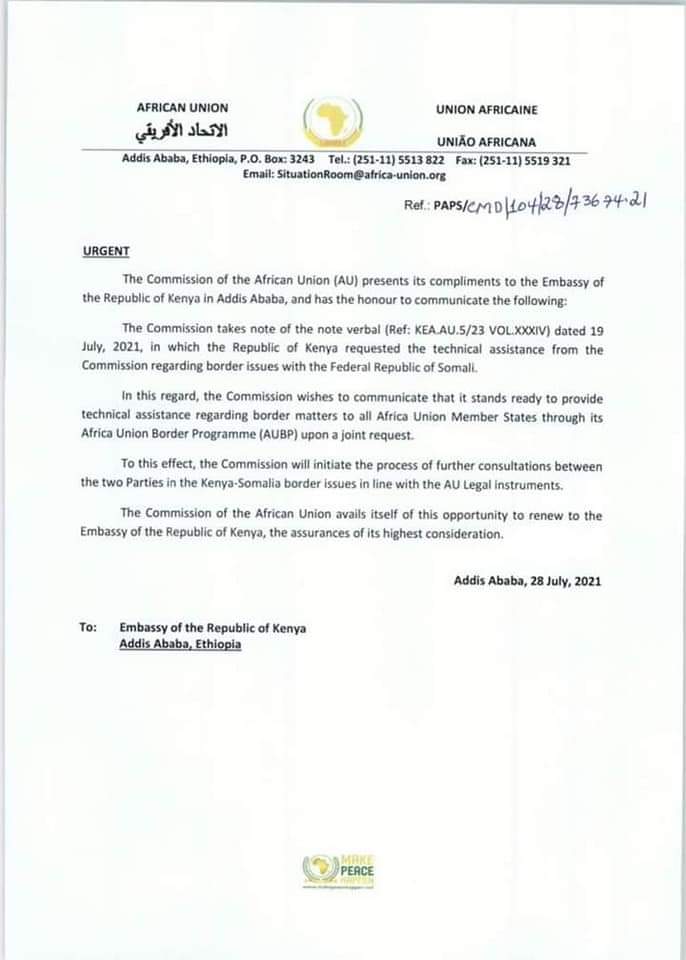
Kenya underestimated the diplomatic outreach of successive Somalia’s weak administrations in regard to its dispute on the continentalshelfmaritimedelimitation with Somalia or to put in other words, Kenya’s controversial and aggressive claim to a portion of Somalia’s waters of the Indian Ocean. That dispute went to ICJ for arbitration. Kenya, however, has been attempting to exert maximum diplomatic pressure on Somalia to agree to an out of court settlement. It looks that Kenya has failed in its diplomatic efforts to score points in its struggle with Somalia on the maritime dispute.
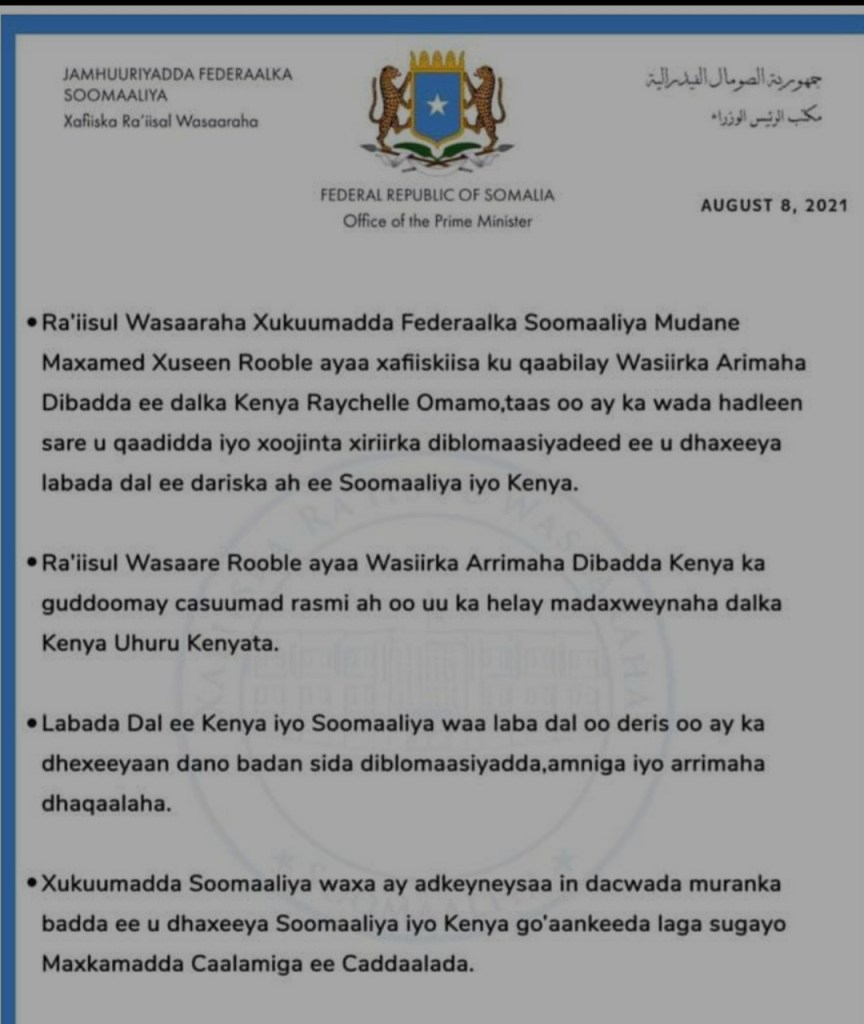
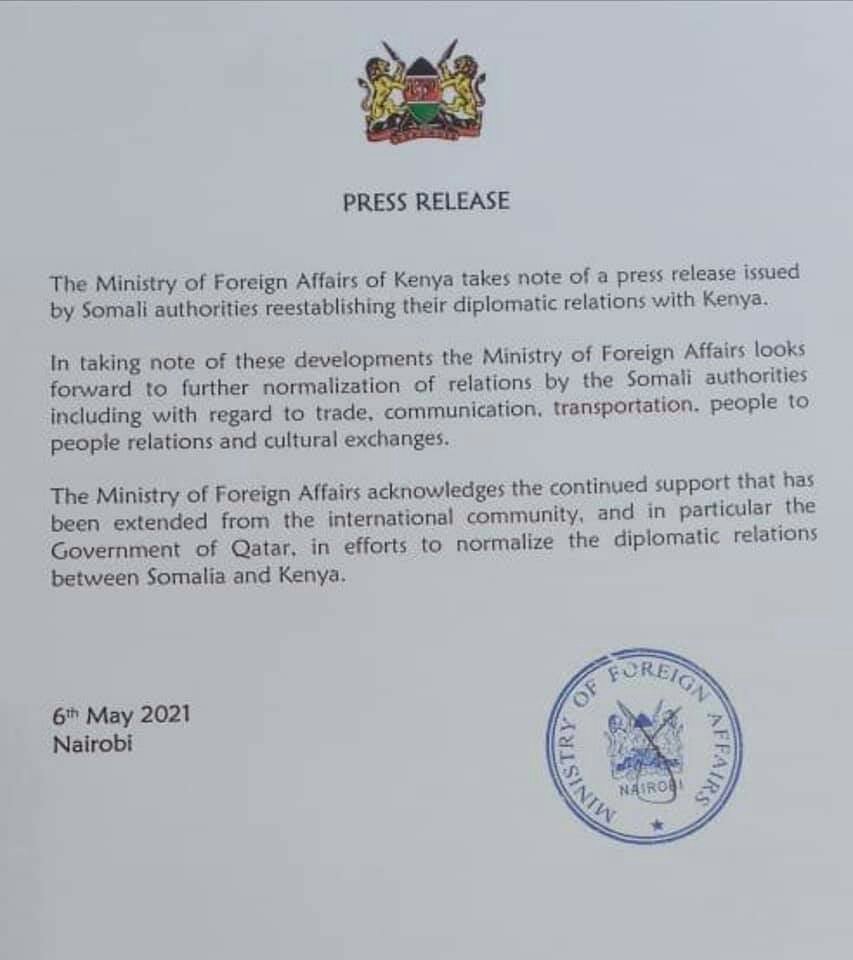
In the meantime, Kenyan leaders have been engaged in political sabotage against Farmajo. Now that he is lame duck president and in a weaker political position constitutionally, Kenya is hooking up with interim prime minister, Rooble, to ease tension with Somalia, open trade routes to Miraa qat and try to continue its campaign for settlement of maritime dispute out of court, a taugh proposition no Somali leader dare to entertain now as Rooble has rushed to clarify the issue in a note released today after he met with Ms. RachelleOmano, although they got her name wrong.
[While here, consider supporting WDM blog by subscribing to it. Send your request via WhatsApp # at +252 90 703 4081 or email at ismailwarsame@gmail.com.]
The visit of Foreign Minister, Ms Rachelle Omano, is being facilitated by the interim prime minister, MohamedHusseinRooble, a move contrary to the wishes of Farmajo, who has issued earlier a memo on unconventionalpresidential letterhead design to all government departments against entering into any international agreement with foreign powers, presumably with Kenya. This exposes Farmajo in his attempt to keep himself in low profile on the eve of elections and as a result of number of agreements between FGS and FMS, on the top of the fact that his constitutional mandate had run out in February 8, 2021. Moreover, the political scars he had sustained in his recent fight with the opposition elements in Mogadishu have not healed up yet. Issuance of that memo, though, is an indication that he was still around.
Kenyan President UhuruKenyatta has been working hard on Mohamed H. Rooble in a number of high profile encounters in Djibouti and London, UK, to bring about Omano’s visit to Mogadishu today with a reciprocal invitation to Rooble by President Kenyatta.
Now it looks that Farmajo and Rooble are in collusion course even before holding the elections. Based on the Federal Constitution, nature of caretaker government and agreements reached between FGS and FMS, the interim prime minister in cabinet session (not in isolation) has the executivepowers of the government.
Could you imagine the Government of the United States of America 🇺🇸 breaking diplomatic ties with the Government of the United Kingdom and Northern Ireland (Great Britain)? Could they do it successfully? It is the same thing Somalia trying to sever relationships with Djibouti, Kenya or Ethiopia. These relationships have been developing over many centuries in a multi-dimensional fashion, and most importantly, between peoples of these nations. Nairobi is now the irreplaceable Somali business and travel hub. An amateur and naive politician like Farmajo couldn’t simply appear in the scene and try blindly to do away the historically cemented relations without doing much harm to Somalia’s vital national interests and economic havoc in the entire region.
Even a Somali camel man grazing his herds in the country knows full well that cutting ties with Kenya isn’t only practical, but also infeasible and wrong, for he is, at least, aware of his relatives in refugee camps in Kenya. With today’s globalization, he is in constant communication with his kinship in Dhadhaab Refugee Camp, not to talk about others in all urban centres of Kenya.
This is not to say nice things about Kenyan Authorities – they share much of the blame in worsening relationships with Somalia. But, the unwise experiment in this diplomatic fiasco hurt not only many lives and livelihoods, but also did great damage to the national economies of both countries. The losses could be in the billions of dollars. I wonder if any lessons learned from this childish and futile exercise.
You hear these days that Egypt is seeking military and security cooperation or pact with Kenya, South Sudan, and even as far as Congo? Guess against whom? You know Somalia, Ethiopia and Eritrea had entered into similar accord or understanding, and you wonder against whom? You know big powers are in the game of seeking hegemony and spheres of influence in any corner of the globe. That may be understandable as USA, China, among others, are engaged in stiff rivalry and competition for resources and alliances. What isn’t clear is a small nation with limited economic and military resources trying swallow more than she can chew like Eritrea and Kenya. One possible explanation is that these ambitious small nations feel insecure and vulnerable to external security threats beyond their borders. They want to project an image of readiness to counter perceived security threats. In other words, they want to be seen as power-players in geopolitical terms. They are also sending signals to big powers that they should be counted for in the rivalry equation as far as their respective sub-region is concerned. To put it in a different form, small nations are trying to attract the attention of big powers for financial aid, resources and favors.
Put all these together, it is called regional or global power-plays.
Map of Jubaland State of Somalia (Photo credit: Wikipedia)
When something happens like an important public event such as elections, ruling by a court of justice .. etc, people affected by the new developments rise up either in relief and celebrations or express their indignation. If justice is served, people are happily relieved. The birth of Jubaland State of Somalia is a case in point where people are engaged in non-stop celebrations world-wide. Something must be right here in the creation of the New Federal State. Mogadishu leadership must embrace this hugely popular endeavor for the sake of its own political survival. The idea of Jubaland State of Somalia has been already planted deeply in the psyche of thousands of people for many generations to come. Take it seriously.
2013 might just be Somalia’s year. A confluence of events – the successful end of the political transition, the formation of a promising new government headed by a new guard of civil society leaders, and the rollback and significant weakening of the militant terrorist group al Shabaab – offers the best hope for a peace that Somalia has had in decades. But the challenges remain immense, and recent achievements can be easily reversed. Without an effective central government since 1991, parts of the country have been torn apart by decades of conflict, chronic poverty, inequality, food insecurity, and public health challenges. State institutions, where they exist, are a patchwork of colonial legacies that were never fit for the purpose of governing a sovereign state and delivering services to its people.
Any analysis that attempts to identify the underlying and precipitating causes of conflict in Somalia wades into turbulent waters. There are numerous competing narratives and differing interpretations of a complex and contentious twenty-year conflict. What is clear, however, is that the best chance of sustaining the peace in Somalia will be through ensuring the legitimacy of leadership and by addressing some underlying causal dynamics.
Understanding the drivers of conflict in Somalia
The root causes of the Somalia crisis can be traced to three phenomena: colonialism, Cold War politics, and the Barre dictatorship, perpetuated by a combination of both greed and grievance. The interaction of these forces in the post-colonial state ushered in the clan conflict of the 1980s and the two decades of perpetual violent anarchy that followed.
Two other actors that have been drivers in the conflict in Somalia are the criminal elements in the country and radical ideologies. Somalia’s extended coastline, – the longest in Africa – its strategic location as the gateway to the Gulf States, and the poor government controls have made the country very vulnerable to trafficking, smuggling and organised crime. The United Nations Office on Drugs and Crime (UNODC)[1] observed that established trafficking routes in the Horn of Africa expand elastically to smuggle or traffic all manner of illicit goods from people to weapons to illicit drugs. Somalia further serves as a quasi-free-trade zone with its neighbours, most notably Kenya, on a wide range of licit and contraband goods that, despite being smuggled, are still cheaper than buying domestically. Local criminal networks are quick to facilitate these kinds of illicit activities for any product for which a buyer can be found, and have used funds to infiltrate key trade and political sectors, using violence and intimidation to safeguard criminal activities. For these groups, which in some cases include powerful provincial leaders, armed militia groups, and business elites, there has been a vested interest in perpetuating conditions of lawlessness and disorder.
Al Shabaab, the extremist ideology that splintered off of the Ethiopian-funded Union for Islamic Courts movement at the beginning of the Millennium, has become the largest and most powerful Somali militia force in the country, controlling much of the South and, up until 2011, Mogadishu. Up until this time, Somalia’s civil war had been largely free from radical ideologies, but al Shabaab’s on-going insurgency against the African Union Mission in Somalia (AMISOM) has been the main source of armed conflict in the last five years[2]. However, the goals and actual grievances of al Shabaab are unclear, and have become more so since the self-proclaimed terrorist group has increased its international linkages to al Qaeda and other foreign extremist groups[3]. While on paper the group subscribes to the same long-term goals as international al Qaeda (namely global jihad), in reality al Shabaab leaders have focused on Somali priorities, evicting AMISOM and deposing the former Transitional Federal Government (TFG), and the agendas of international figures remains opaque[4]. This seems to suggest that while ideological extremism has been suggested to be a primary driver in the conflict in Somalia, in fact it is less ideology than control over strategic locations which may be at play here.
What hope for peace?
The perceived legitimacy of the state and its ability to provide security and deliver services to its people are absolutely critical to building a peaceful society. Furthermore, having robust legitimacy in place will decrease the likelihood that insurgent, terrorist or militant groups will attract mass support[5]. It is for this reason that the recent election of the new government may prove to be the key to breaking the protracted conflict, moving Somalia down the path to peace, security and development.
The selection of the three most pivotal positions in government – the President, Vice President and the Speaker of the Parliament – was, in part, the result of a civic mobilization by a coalition of “constructive elites” associated with the establishment of universities, schools, hospitals, charities, and businesses in Mogadishu over the past twenty years. Analysts consider it a positive indication that the 2012 Government of Somalia is being built around prominent civil society figures who have stayed in the region and who are part of network of civic and private sector actors with a real interest in promoting peace and governance,[6] as opposed to members of the old TFG guard. As emphasised at the high-level London Conference on Somaliain February 2012, ensuring peace dividends for the population, and introducing basic services into areas liberated from Al-Shabaab will be an important tool to reinforcing the new government’s position.
The protracted conflict in Somalia should also be understood as part of an inter-related web of conflicts that blight the Horn of Africa. Over the past two decades, external actors have frequently and increasingly been central protagonists in Somalia’s armed violence. This has taken numerous forms – international peace enforcement, protection forces, occupying armies, proxy wars, covert operations, smuggling of both commodities and illicit goods across borders, and as the source of policies or development resources that have inadvertently fuelled local conflicts.[7] There is little doubt that the actions of these external actors, whether positively or negatively intentioned, will continue to have considerable impact on the future of Somalia and the success of its state-building transition.
In particular, the on-going competing interests of neighbouring powers Ethiopia and Kenya continue to play out within Somalia’s borders, with financial interests coming quickly to the fore. A recent article in The Economist highlighted the growing unrest in the recently liberated port of Kismayo in South-Central Somalia. Formerly a bastion and primary resource generator for Al-Shabaab, the port was liberated by AMISOM in September 2012 and “is now run by a chaotic security committee on which Kenyans, Ethiopians and several competing Somali factions joust. A presidential delegation from Mogadishu, Somalia’s capital … was turned away when it tried to visit.” Kenyans are jockeying with local militia for control of the port (which generated an estimated $50 million in taxes under Al-Shabaab), as well as for the stockpile of illicit charcoal (estimated in the region of $40 million), in what threatens to become another episode in the Somali conflict.
As a potentially more positive example, the role of the diaspora as they engage with post-conflict Somalia is a variable in the country’s stability. Somalia has a very large, dynamic, and dedicated diaspora community. $1.3-2 billion are remitted into the country annually,[8] equivalent to approximately one third of the country’s GDP. Analysts who have examined the role of diaspora in conflict have broadly concluded that, historically, countries with large diaspora show a greater propensity towards armed conflict.[9] Indeed, the Somali diaspora has played a role in both fuelling armed conflict and supporting the peace in the past,[10] and is likely to continue to do so as the diaspora dominates large swathes of Somalia’s political and civic life, including the central government, provincial governments, Al-Shabaab, business communities and civil society groups.[11]
Similarly, while the international community seeks to support Somalia’s transition and to provide humanitarian relief and development dividends to its people, lessons must be learned from the past. Since Barre, the delivery, distribution of aid in Somalia has been a flashpoint for conflict. One of the most notorious cases was Operation Provide Relief, an airlift of 48,000 tonnes of food aid by the United States in 1992, which attracted armed militia from across the region and resulted in 80 per cent being looted and more than 200,000 famine related deaths.[12] Every effort should be made by the international community to ensure that the injection of external resources does not provoke conflict and exacerbate instability, and the growing presence of emerging donors such as Turkey and China will need to be monitored.
To avoid the new government being overwhelmed and marginalizedby international aid, funding should be channelled through legitimate state institutions in such a way that it builds local and national capacity to deliver services and maintain the rule of law.[13] Given the incredibly weak capacity of Somali institutions, some innovative solutions may be required. For example, a new trust fund established jointly by the British and the Danish, the “Somaliland Development Fund”, takes a shared governance and fund management model that will support the provincial government to meet its developmental priorities, improve service delivery capacity and support public financial management reforms, whilst at the same time ensuring transparency, accountability and limited international oversight.[14] The OECD International Network on Conflict and Fragility (INCAF) is piloting an approach by which national and international partners enter into “transition compacts” as a modality to better align international financial support to country-specific priorities and strengthen mutual accountability.
The quiet success of the provincial governments of Somaliland and Puntland in managing conflict and shifting into relative stability has offered insights into what a more universal model of state-building might look like. Somali communities in these provinces have developed an impressive array of informal systems to manage and mitigate conflict, and to provide citizens with modest levels of security and stability.[15] These have been most effective and resilient when built around hybrid coalitions of clan elders, women’s groups, professionals, clerics and business people. To offer one noteworthy example, community pressure has served to eject pirates from some coastal towns in Puntland. This coalition-based approach has also proven its utility in overcoming clan politics. The analogy of the “wagon train” was used by a senior EU official in an interview with the author in Hargeisa in May 2012, describing significant infrastructure investments that have been made even in contested areas, with all clans and factions paying a share, so that no single group would “shoot down the wagon train”. The potential for this kind of collaborative, mutually advantageous coalition turns clan politics from a zero-sum game into a positive sum game, and thus can and should be harnessed at the national level to create a compact towards a more stable future.
The most ubiquitous source of conflict management in Somalia is customary law, or xeer, which is applied and negotiated by traditional clan elders and dedicated peacemakers and, much like the examples given above, relies on a principle of collective responsibility.[16] In an effort to build state institutions and accelerate Somalia’s road to development, the international community needs to use caution in imposing modern civil law. Traditional community structures have legitimacy that derives from people’s shared beliefs and traditions, rather than from Western state models. Therefore, reinforcing support to such community structures and processes can help to safeguard against peace spoilers, and also prevent the growth of weak transitional state structures with the potential for greater corruption and exploitation by criminal actors and vested interests.
Conclusion
This analysis of conflict drivers and potential for peace-building concludes that while there is good reason to have hope for a brighter future for Somalia, this transition period will be characterised by enormous ambiguity, uncertainty and potential for a reversion to conflict. The willingness of both local and external actors to act in good faith and with a common purpose will be crucial to building a culture of trust and transparency.
The cornerstone of the debate rests with the new government, and whether they can break the greed-grievance cycle perpetuated by the governments that have gone before. If they can remain committed, and are empowered, to build a genuinely open, accountable and citizen-centric set of state institutions, then this might indeed be Somalia’s year.
— Scott Ross was lead editor of this article.
*Tuesday Reitano is an Assistant Director at STATT, a boutique consulting firm that specialises in fragile states and transnational threats. She is a senior research associate at the Institute of Security Studies, and has ten years of experience as a policy expert within the United Nations. She is currently focused on research on the impact of organised crime on democratic governance and statehood across Africa, as well as globally.
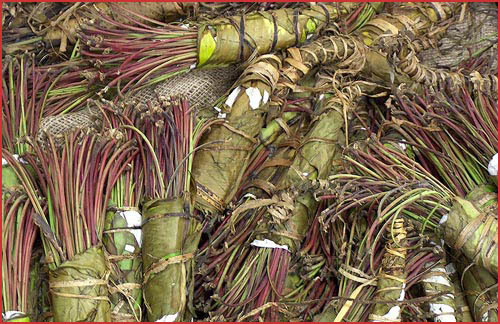
If Somalia is to survive as a nation-state and having at least a normal functioning government with even average bureaucratic operations, it must urgently find effective solutions to the epidemic of Kat addiction among its population as a national priority. The problem is more than socio-economic issue. It is a grave national security threat as well.
In the summer of 1997, I was a member of a delegation of the now defunct National Salvation Council (the NSC, aka Sodare Group) from Addis Ababa, Ethiopia, to Mogadishu, Somalia. The delegation members included NSC Co-chairmen, Ali Mahdi Mohamed and Abdullahi Yusuf Ahmed as well as Council members that included Mohamud Mohamed Guled (Gacmadheere), Duuliye Sare Abdi Osman Farah among others. We numbered about 13 men and one female. We were on our way to meet with an Italian delegation led by then Deputy Foreign Minister for Africa, Senator Serri, who was about to visit Mogadishu for the sole purpose of mediating between disputing Mogadishu warlords despite many other problems of Somalia. The vision of the Italian delegation on solving Somalia’s predicament was not beyond the Banadir Region at that particular time.
Abdullahi Yusuf’s intention in the mission was to disrupt the Italian visit (which he did successfully) while Ali Mahdi’s was to win over the Italian favor against Hussein Aidiid and Osman Ali Atto.
We made a two-day stop-over in Djibouti. The Prime Minister of Djibouti then,Barkat Gourad Hamadou, honored us with a lavish luncheon with tender baby-goat’s meat and other delicacies of Djibouti at his residence. After the lunch, we were taken to a large and well furnished room with an Arabic seating with soft cushions specifically designed for long-time session in comfort for Kat indulgence, gossiping experience, news and secrets debriefing under the “high” influence of the stuff. In front of every person a bazooka-like wrapping was placed and a large silver tray full of the tools of the trade: A big and tall golden tea thermos, crystal glasses, shining and engraved tea-mugs, various branded cold soft drinks in plastic Coca Cola –type bottles and commercially distilled water in gravines with swimming crystal clear ice-rocks, all to be consumed in the breezing air-condition of the room- an artificial weather hide-out from the environment of burning heat of the City of Djibouti.
After a few chit-chats, Prime Minister Hamadou noticed that none of the members of our delegation was using the stuff as they were all non-chewers, at least, at that period of time. The Prime Minister was a bit annoyed and asked: “Why are you in civil war then, if there is nothing to fight for?” I guess we spoiled the daily indulgence session for our generous, high-level Djibouti host. Luckily, the conversation didn’t break up as we a had had a lot to discuss on Somalia, Somalia-Djibouti past and future relationships and the Horn of Africa, in general.
During those few years, I discovered, in separate sessions, that Ismail Omar Gheleh, the current President of Djibouti, was pondering about his desire to join his tiny country with Ethiopia as he was desperately convinced that Djibouti would not survive on its own. There was rampant corruption in the seaport operations, the main revenue generating enterprise besides the high spending men of the French legionnaires at Djibouti night clubs. The City of Djbouti was on the verge of being taken over by the influx of Ethiopians, who needed no immigration papers to come in. It was only Puntland help in 1999 to commit him to Somalia’s National Reconciliation process, encouraging him to take it over from Ethiopia, an AU and IGAD Mandated Country for Somali National Reconciliation Process. President Abdullahi Yusuf convinced President Daniel arab Moi of Kenya to support President Ismail Omar Ghueleh to play the role. It was undoubtedly a diplomatic success that pushed Ethiopia aside from the Somali issues. One may guess already why Ethiopia was not happy with President Yusuf lately. The second help came to Djibouti from post-9/11 World Order. Besides God’s wish, it was only these two factors that saved Djibouti from voluntary union with Ethiopia. Unfortunately, he betrayed Puntland State during the initial phases of the Arta Conference, a rift that eventually undermined the TNG of Abdulkassim Salad Hassan to pave the way for holding Embagati (Kenya) all inclusive and broad-based Somali National Conference and finally, the establishment of the Transitional Federal Government of the Somali Republic (TFG) in 2004, transforming it into the Somali Federal Republic in 2012.
Suddenly, the Prime Minister shared with us the socio-economic devastation Kat consumption has been causing on Djibouti at the time. He informed us that Djibouti was paying Ethiopia a hundred thousand US dollars daily, and that was only the portion of the payments that goes though from bank to bank. Think about residents who buy the stimulant on their own from individual Chat traders on the top of train and air passengers who also bring sacks of the green leaves to their families, relatives and friends in Djibouti cities.
On a number of occasions, I stopped over in Djibouti for a short stay. On multiple times, arriving at Djibouti International Airport, I used to see popular demonstration-like commotion at the gates of the airport-population rushing to the airport when Kat cargo delivery from Ethiopia is delayed for only a few hours. One would see custom and passport control officers whose mouths are asymmetrically filled with Qat and chewing it on the job. Think about the officers’ mental judgment and decision-making capability under the influence of the hyper-leaves at country’s highly sensitive and main border entry point.
The situation is even worse in Somalia with a few millions of US dollars spent every day on the habit. With no credible fiscal statics available, the country may be fast sinking into public and personal bankruptcy. A failed state desperately trying to recover from decades of civil war and total collapse of public services and institutions, has also population wholly consumed by the epidemic of daily Chat use, effectively destroying the socio-economic fabric of its society, abysmally curtailing manpower productive hours and bringing havoc to family livelihoods and relationships while it is also at same sometime constitutes an instigator and main source of corruption and loose social morals. A country with the geographical size larger several times than Italy or UK with porous long borders with Ethiopia and Kenya requires alert and non-Chat chewing security personnel and efficient bureaucracy.
The irony is that Somalis nowadays like to talk about safeguarding their sovereignty and territorial integrity, while at sometime allowing their neighbor states to dump poisonous addictive Kat to their citizens, drain their economy, disable their manpower and threaten their vital national security interests. Think about the real double-talk and double standard with a proverbial ostrich attitude!
Somalia has to come up with a solution to the menace of the Qat. While fully it is understandable that it is tough to try to ban the habit outright, at least a committee of experts should be immediately setup to study the problem and submit recommendations to competent bodies for, at minimum, regulating it and eventually outlawing it. Massive public education and media programs relating to its dangerous hazards to personal and public health should be initiated and launched immediately to stop the spread of the habit to young generation. Somalia cannot afford to continue to ignore its greatest, silent killer of its productive members of the society and the gravest national calamity posed by Kat trade. Please wake up!











 Warsame Policy & Media Network (WAPMEN)
You must be logged in to post a comment.