
| Source: SOMALIA WATCH |
| By Federico Battera, Saturday, August 12, 2000 UNDOS Research Specialist, Professor Development Studies – University of Trieste, Italy Summary and purposes The crisis of the State in Africa goes back to the early 80s: postcolonial African state has been neither able ‘to rule’ economy, nor territorial policy. Ethnicity has spread all over the continent. However, after the failure of the consociative policies channeled through one-party systems, the most evident factor has been its territorial dimension. Since the middle of the 80s, as the State machine has been evidently unable to expand, politicization has taken over territory, giving ethnicity a new relevance as to contrast territorial legitimacy, which had been acquired by the State through the decolonization process.Somalia has not escaped the trend, sliding into a civil war since the beginning of the 80s. By early 90s it has become the paradigmatic example of the failure of the state. Centralization, as conceived by the collapsed regime, turned into a non-state existence, distinguished by independent areas controlled by different ‘fronts’ or ‘movements’ drawn up along clan lines. By mid 90s the situation improved in certain areas and stabilized in others. A de facto regionalization has gone out: since then, some areas has progressed to a ‘recovery’ condition, other has been classified by UN as ‘transition’ zones or ‘crisis’ zones, the latter characterized by a steadfast state of ravage and insecurity.The crisis of the State in Africa has generated in major cases conditions of democratic change. Constitutional processes has been the consequence of the change. Almost everywhere, it has been the output of a widely expressed need of strengthening democratic procedures. Only in few cases, the issue of territorial dimension of ethnicity has been addressed through strict federalist guidelines (as tried to do Ethiopia), but decentralization and devolution has remained the major question on the ground, together with democracy.’Recovery’ areas in Somalia (mainly Northwest and Northeast Somalia) around mid 90s gained momentum, as the situation in the rest of the country remained critical. Since then, new local conditions in the North have granted security and a certain stability, besides their differences. In 1991, the liberation struggle from Barre’s regime in Northwest Somalia ended with the declaration of independence of Somaliland. The constitutional process was the unavoidable following step. In 1993, a National transitional Charter were approved and accepted by all the communities in the region, giving full legitimization at the process. In 1997, a new (interim) Constitution were passed out, after a new Constitutional Conference that ended a two-years crisis. After that, Somaliland is waiting its international recognition.The constitutional process in Northeast Somalia has started later. As has been rightly stated by Farah, better conditions of peace and recovery do not necessarily lead to a climate favorable to a new institutional framework. Besides, Northeast Somalia did not share the same eagerness of Somaliland to acquire independence. Nevertheless, a constitutional process has started since the end of 1997. The aim of this paper is to outline the constitutional process and the main characteristics of the Charter approved and secondly to draw up the political effects of the new process on Somalia. After all, a new political entity has been originated from Somali disorder.As what concern the first point, the Charter, comparing to the Draft, stresses the Islamic identity of the new entity and its presidential biases. Regarding the political effects of the birth of the new regional state, it is personal opinion of the author that it will affect the entire reconciliation process in Somalia and, in a certain extent, the stability of Somaliland. Comparing to Somaliland, the territorial dimension of the new entity is openly averted. One reason is that a request for an international recognition is not on the agenda. However, an alternative explanation resides on the clan structure of the new state. Contrary to Somaliland, clan agreement has preceded any territorial definition. So far, Puntland has yet to be clearly defined on the map, a part the vague identification with Northeast Somalia. As we will see, important issues like that of decentralization of the state have not been avoided only with the intent of endorsing with more power the new political leadership (as trying to avoid the same fate of the country) but because of the naturally decentralized structure of Somali society. Seems like that the manifest ambiguities of the Charter has been provided in order to leave the door open for different future solutions. Indeed, the Charter is only provisional. Further alterations have not to be excluded, depending on internal and international conditions. As Somaliland, seven years later the first National Charter still in the middle of its constitutional process, Puntland might not easily finalized its one. The process, the participation degree and the informal institutional constraints that has been settled during the whole period more than its final document is the mirror of the vitality of the involved society. Focusing on it is not a vain academic exercise.The author had the opportunity to follow the meetings of the Preparatory Committee, which with the assistance of foreign consultants drafted the Charter that was later submitted to the Constitutional Conference. Comparing the Draft with the final Charter has been the main source of the paper. Such a method elucidates the needs and the expectations of the members of the Constitutional Conference in charged with its approval. Such a source has been compared to local sources as well as previous reports.BackgroundFollowing the pattern of the Booroma National Charter, which formalized the birth of Somaliland during 1993, a new entity – the Puntland State of Somalia – was established in July 1998 out of a long Constitutional process that lasted more than two months. As in Boorama, the Constitutional Conference produced a three-year provisional Charter and elected a political leadership, i. e. a President and an Executive Council (called Council of Ministers in the Boorama Charter).Boorama paved the way, but it is a fact that the Puntland Constitutional Conference has been the product of a longer process, which officially started during 1997 but went back to the second National Reconciliation Conference of Addis Ababa of 1993. Indeed, during the National Reconciliation Conference, the SSDF (Somali Salvation Democratic Front) leadership anticipated its ‘federalist’ view of the future of Somalia, unofficially disclosed during 1994 in a statement by the Somali Community Information Centre in London. During the last five years, the federalist position has gradually acquired substance, recognizing the de facto situation on the ground: a clan-divided Somalia. Finally, the failure of several national reconciliation processes, from Sodere (1996) to Cairo (1997), created the condition for an autonomous regional process, pending the formation of other regional entities and the establishment of a new Federal Somalia.The Features of the CharterThe Charter, however transitory, defines a presidential system with a President able to dismiss the unicameral Parliament or House of Representatives (see Art. 12.5 of attached Charter). The House of Representatives consists of 69 members, representing of all constituent regions (Art. 8). However, an other chamber (of elders) has been proposed, called the Isimada (Art. 30) whose constitutional powers are not clear but would ostensibly need to be defined by the future Constitution.Even though, the Isimada could play a significant role, since the Charter formally recognizes to it a role of mediation between institutions (both State and regions and districts), in case of stalemate or disputes among “the community” (i. e. Puntland community as well a single clan) (see Art. 30.2): power that, together with that of selecting the members of the House of Representatives (30.3), gives it potentially an important role. The selection of the members has been carried out thanks to a careful balance between the numerical relevance of all communities and their number, to avert the exclusion of any political minority. Hence, this was an indirect election, without direct competition between parties and candidates. This required long debates among the communities involved; debates characterized by opposing vetoes between and among the communities followed by the selection of suitable candidates. Being the local community the natural constituency, it has been a consequence that only the elders played a role, as stated by the Charter itself (see, Art. 8.6).Although the selection seems to have relied on territorial criteria, it closely follows more an ‘a-territorial’ and consociative model. Such a criteria has already settled on the issue of the ministerial posts as well of the departments, agencies, judiciary agencies etc. So far, these are the de facto base of the forthcoming decentralization of the State (Art. 1.8), waiting for the matter to be regulated by law (Art. 18.1). Meanwhile, the State, and the Executive in particular, will nominate the governors of the regions and the mayors of districts, but always after direct consultation with district elders (Art. 18.3). The matter of decentralization is particularly delicate because one of the reasons for the collapse of Somalia was the unbalanced relation between the political center and periphery. In this sense, the Charter is still unclear and vague. What is evident is that the Charter does not recognize any formal function to the District Councils (DCs) and definitely removes any pre-exisiting regional community council (Art. 9.5).The matter shall be resolved in the future by the Executive.Besides the legislative one, the House of Representatives has other important responsabilities (see Art. 10.3): the approval and the rejection of ministerial nominees proposed by the President, the ratification or rejection of agreements and negotiations to achieve a federal national solution with other regional entities, and of all the future proposals submitted by the Executive concerning decentralization. Moreover, the Charter bestows the power to remove the immunity of the President on the House of Representatives (the so-called impeachment; Art. 14.1) upon a two-thirds majority vote. The procedure must be submitted to the House by the Executive-nominated (but House-approved) Attorney General.The Judiciary must be independent of both the Executive and the Legislative (Art. 19.1). Three levels of proceedings have been put in force (Primary Courts, Courts of Appeal and Supreme Court) (Art. 19.2), but the Charter recognizes, encourages and supports “alternative dispute resolution” (Art. 25.4) in keeping with the traditional culture of Puntland. Therefore, the State directly recognizes the force of the xeer (the customary law), that so far has held more sway than penal codes in the region.Islamic jurisprudence (fiqh) is the “basis” of law (Arts. 2 and 19.1). An implicit recognition of the superiority of ?ari‘a law exists, even though the lawmakers have preferred to avoid the more mandatory “the only source” of law, as in other juridical contexts. This is an ambiguous formula aiming to both recognize the ongoing regional process of re-Islamization as well as defuse its excessive aspects. Therefore, the Charter continually emphasizes the values of Islam, the State religion (Art. 2). The President himself must be a practicing Muslim (Art. 12.3), a quality not required for the members of the House (Art. 9). The Constitutional Court, which shall come into force with the future Constitution, is entrusted with all the issues and conflicts that might arise between Islamic jurisprudence and the law of the State and the Constitution itself (Art. 21.5). This conformity to Islamic values and the general reference of the Charter to the Islamic identity of Puntland is, moreover, stressed by the good relations that, pending the creation of Federal Somalia, Puntland is willing to maintain with the Organization of Islamic Conference (OIC) (Art. 5.3), which the original Draft did not mention.The general stress on the Islamic identity is confirmed in the chapter on the fundamental rights and freedom (Art. 6). On this point, the Charter introduces the widest changes in respect to the Draft. The Charter recognizes the freedom of thought and conscience, but forbids any religious propaganda other than Islam (Art. 6.2). This was one of the more discussed issues, during the meetings of the Preparatory Committee, which introduced the Draft to the Conference. In its approved version, the Draft made no reference to such a prohibition. In Article 6.2.1, the Draft explicitly recognized other religious denominations without the limitations introduced later by the Charter, which prefers to consider other creeds as “freedom of thought and conscience“. So clarified, the prohibition of other religious propaganda is not intended to limit a fundamental right of thought, which is per se unlimitable. It is a fact, that almost all the future Puntland citizens are, practicing or not, Muslims. Such statements are probably intended to define more precisely the religious identity of the State, especially in respect to the outside Islamic world, in particular after allegations that Ethiopia stand behind the constitutional process had been spread in the country.Contrary to the Draft, the Charter necessitates the adoption of regulation of freedom of expression. Article 6.3 contains the prohibition of torture unless the person is sentenced by courts in accordance with Islamic law. This is an indirect admission of the legality of corporal punishments. Such punishment is admitted by Islamic law (as hudud) but not by Somali customary law (xeer). Defining this punishment as “torture” contradicts the new State’s (not the Charter) acceptance of the Universal Declaration of Human Rights (Art. 5.2). This evident contradiction has been obviously only a problem of lack of understanding between different linguistic versions. The Draft, originally written in English, strongly forbids torture (Art. 6.3) and any other degrading treatment – “no one shall be subjected to torture, cruel, inhuman or degrading treatment or punishment…“. The English version of the approved Charter cuts the sentence relating to the degrading treatment, introducing a misleading distinction between torture and Islamic (corporal) punishments – “no one shall be subjected to torture unless sentenced by the Islamic Courts“. This distinction is more evident in the Somali version of the Charter, with the word jir-dil (lit. “body-beaten”) replacing “torture” openly referring to corporal punishments.It is worth noticing that the Charter explicitly introduces a specific citizenship (Art. 1.11), regulated by law, but recognizing from now on the right of every Somali citizen, who respects the Charter and the law, to reside in Puntland and conduct any economic activity (Art. 1.5). The issue of citizenship was intentionally avoided by the Draft which preferred formulas as “the people of Puntland will accept only those limitations on their sovereignty that may arise from their obligations as citizens of a democratic Federal Somalia” (Art. 1.5 of the Draft)”. Moreover, the Charter, at the Article 1.9, cut the word “Democratic” from that of the Draft, preferring to label Somalia simply “Federal” (Art. 1.9). This thought-provoking omission (almost all present constitutional systems define themselves as ‘democratic’) probably should be understood as the product of the strong will to adhere to a re-established Somalia only at particular conditions leaving open other options, but saving the federal formula. In other words the present Charter is intended to give precise limitations to those who should participate in the name of Puntland in a constitutional process at the national level, affecting the agenda of future reconciliation processes.As far as this delicate point of the cession of sovereignty is concerned, the Draft introduced as Annex 1 (Powers and Functions that Puntland is willing to transfer to or share with the Federal Government of a democratic Federal Somalia) a fine distinction between transferable functions and shareable functions. The former is defined as functions exclusively belonging to the Federal Government, (mainly, the regulation of currency and Foreign affairs), and the latter as those belonging to the states, (the regulation of the seas and the airspace of Somalia, national defense, the determination of customs fees and the management of the Federal Bank). Of all these regulations remains scant in the final Charter apart from a reference in Article 1.6. This article leaves, in a very vague way, to the dialogue between states or between Puntland state and the Central government, after the approval of the House of Representatives (Art. 10.3), what will be transferred to the future Central Federal Government. Hence, Puntland is part of Somalia, and it is striving to recreate the unity of Somali people (Art. 1.4), but the modalities of realization remain only an option still to be negotiated. So far, in fact, Puntland has not advanced any international recognition.The effects of the birth of Puntland on the process of reconciliation and fragmentation in SomaliaAt a first glance, the Charter outlines the structure of the government as the Draft does, but more unbalanced to the presidency. First, the President has the power to dismiss the House of Representatives (Art. 12.5, h), a power the Draft did not grant. Second, the State of Emergency (Art. 12.5, l), limited by the Draft to six months, is totally unlimited in the Charter. The choice of the name of the chief of the Executive itself (President) instead of Chief Minister, as proposed in the Draft, comes from the need to ensure a stronger Executive, as was so clear during the long discussions within the Preparatory Committee. Most likely, the Preparatory Committee intended to reserve this title for the Federal Executive. Therefore, the House has no way to dismiss the Executive – but the same occurred in the Draft – except for the impeachment (requiring upon a two-thirds majority) and the rejection of other ministerial nominees (Art. 10.3, d).The Constitutional Conference itself empowered the President for a three-year transitional period. Cabdullahi Yuusuf, a prominent military and political leader of the now dissolved SSDF, was elected with more than 80% of the votes (377) cast out of the 469 members of the Community Constitutional Conference. This gives him a free hand for his three-year term of office, as is the case for other Arab and African presidential systems. Nevertheless, without any formal strong check and balance, the Executive does face an “informal” balance in the strong political autonomy of the traditional leaderships (isimo). Indeed, the Charter recognizes their crucial mediation functions (Arts. 30, 8 and 18); among the most important of them is the role of selecting the representatives. Differently from the Guurti of Somaliland, in this case the Isimo have preferred to renounce more defined roles that would have restricted their exercise of authority, preferring to maintain an uninstitutionalized ‘gray zone’ where they could intervene without any defined restriction and with much more flexibility in order to achieve a more widespread political consensus. It remains to be seen whether those recognized powers will remain in place in the more complex and complete Constitution to come, at the end of the transitional process.This unceasing search for the widest political consensus over issues and this concern about unanimity, manifested during the Constitutional Conference (which went far beyond the scheduled fifteen days) show how a political tradition both resists and adapts itself to modern politics. Freedom of association, including the right to form political parties, however admitted (Art. 6.2, b), is de facto bypassed by a non-party system, where different positions over issues are channeled through clan networks and interest groups (economic, regional, religious and family groups). That does not mean that opposition and disputes are definitively overcome, but that these are rather voiced through interest groups.The formation of Puntland itself is the result of an intercommunity agreement between all Harti (Majeerteen + Dhulbahante + Warsangeli) communities of the North. Is a matter of concern that this agreement should start a border conflict with the neighboring countries or the others de facto entities. Indeed, the Article 1. of the Charter establishes the borders along the former regions and districts which comprise a Harti majority: Bari, Nugaal, Sool, southern Togdheer (Buuhoodle district), Mudug (with the exception of Hobyo and Xarardheere districts) and Southern, Eastern and North-Eastern Sanaag. So defined, the Puntland State of Somalia claims sovereignty over territories that constitute part of Somaliland (Sanaag, Sool and Togdheer).That these regions and districts constitute parts of Somaliland may be matter of future conflicts between the two states. The communities of these districts did not completely take part in the first constituent congress (shir beeleed) of 1991 in Burco which declared independence, but did participate in the 1993 congress in Boorama which drew up the first Charter of Somaliland. Moreover, Somaliland, since the 1991 declaration, is in search of an international recognition relying on the legal basis of its previous short independence (only five days) before it merged with the former Italian Trusteeship Territory of Somalia in 1960.The creation of Puntland State of Somalia has, indeed, created a stalemate between the two entities. Fortunately, it has not so far deteriorated to a military conflict, maybe thanks to the Ethiopian political mediation between the two. The geographical proximity and the economic dependence on Ethiopia, together with the open hostility of Egypt and the Arab League towards the independence process in Somaliland lead to unalignment of the political position of Somaliland to that of Ethiopia.At the present, the government of Somaliland is, indeed, unable to exert a direct rule over its eastern part, which has largely joined Puntland. Maxmuud Fagadheh, a Dhulbahante from Eastern Somaliland, Foreign Affairs minister of the Cigaal government, is still in the government of Somaliland. In the meantime, 213 delegates out of the 469 to be present at the Constitutional Conference of Puntland came from Eastern Somaliland. Sool and Sanaag sent 27 of the 69 representatives to the Parliament of Puntland. Maxamed Cabdi Xaashi, the former leader of dismissed USP, the leading political and military faction in Eastern Somaliland, has been elected to the Vice-Presidency of Puntland, and three of the nine cabinet ministers of Puntland come from the contested regions. Moreover, an official statement of Harti traditional leaders (Isimo) of Eastern Somaliland associated themselves with the process of formation of Puntland and, so doing, legitimized this process, although the Isimo themselves are fully entitled to be part of the Guurti (the Senate of elders of Somaliland). In other words, Eastern Somaliland might become a buffer zone between the two entities, without clearly defined sovereignty.One of the first effects of the formation of Puntland might be that Somaliland government gives up its claim of independence. In this perspective, the recent declaration of President Cigaal in favor of a confederation system for a united Somalia, after his February journey in Egypt makes sense. A more long-term effect should be the proliferation of other new regional entities as the product of intercommunity (interclan) agreements. Besides, Puntland itself, as it appears today, could be easily named Hartiland. The Charter itself, in Article 1.2, leaves the door open to further additions to Puntland State, first of all “The community that participated in the Garowe consultancy meeting on February 1998“, the meeting which started the final phase of the constitutional process. This is a clear reference to the Marreexaan of Northern Galgaduud, which withdrew in the last stages of the process. Their further participation could transform Puntland from a Northern Hartiland to a Northern Daaroodland.In this perspective, Somalia should take the form on the ground, which was outlined by the SSDF network document in London 1994: a Federal Somalia founded on five entities corresponding to the five large clan confederations – Dir (Isaaq + Ciise + Gadabuursi) in the northwest, Northern Daarood in the north-east, Hawiye in the middle, Digil and Mirifle in the interiverine area (Bakool e Baay), Southern Daarood in the TransJuba area. A similar process is, indeed, restarting in the interiverine area after the push out of SNA from Baaydhaba by the RRA, with the support of Ethiopian troops. On the contrary, one in Hiiraan, the other in TransJuba had different experiences. In Hiiraan the process started in May 1998. It was led by five ex USC (United Somali Congress)-SNA factions (representing five different Hawiye clans of the region), after their successful ‘secession’ from Caydiid’s movement. This process is still incomplete because it tried to embrace the whole Hawiye clan family. A similar process in the TransJuba region has never started because of the internal conflict between factions, among different Daarood movements and the guri/galti (indigenous/newcomers) conflict. Finally, it was definitively halted by the recent seizure of Kismaayo by the combined forces of SNA and SNF.Among the main hindrances in the spreading of the pattern of regional reconstruction processes are: the pursuit of a centralist and anti-federalist approach by the joint administration of Mogadishu, and in particular by the SNA-Caydiid faction, and the anti-clan and unitary approach of the militant wing of the Islamist movement, based mainly in the Upper Juba region (Gedo) (but now threatened by the Ethiopian army), but with a strong political presence in both Banaadir and Mogadishu. These two factors are, in a certain way, bound together, even if the Islamist movement seems to have dropped its ‘taliban’ strategy of military conquest, after its failures at Boosaaso in 1992 and in the Ogaadeen between 1996 and 1997. This movement now prefer to affect local administrations through its social and juridical programs.Concluding remarks and options for the futureBoth northern regions, Somaliland and Puntland, were largely spared the civil conflict following the dramatic collapse of Barre regime. This fact gives them an undeniable asset in respect to the southern regions for a true implementation of reconciliation process. Even if they have not been completely free of clan strife, the northern regions still preserve strong societal ties. The institutional recognition of the role played by the traditional leadership in Puntland in the seven-year period of peaceful self-government in a stateless situation, has come only at the end of this process. However, the mediation role of the elders has not been so successful in other regions of Somalia for several reasons. Generally speaking, outside the Majeerteen context, Somali society lacks a stable hierarchy of paramount chiefs, and it follows that mediation can achieve only a local dimension. Nevertheless, in the northwestern regions (Somaliland) a regionalist feeling has widely spread in the last thirty years. In this part of Somalia, after the collapse of the State, the elders have collectively expressed this feeling better than the SNM, frequently paralyzed by leadership competition. Such regional affinities may be reached in the interiverine region, which has developed similar regionalist feelings after years of ravaging war and exploitation by the former regime, even if the civil conflict has left room for a confrontation between groups. Similar results are more hard to find in the Shabelle and Juba regions because of the confused societal situation complicated by the civil war and migrations.What is going on in Somalia from a political and constitutional point of view represents a defiance of the territorial principle and roots of international law. There is no doubt that international law is still playing and will play an important role in affecting the future juridical and constitutional framework of local governments, but what we are seeing throughout Somalia (and in other part of Africa) is a re-appropriation of imported institutional formulas by local political (and juridical) tradition. This involved the issue of the transplant of western institutions and their encounter with the so-called ‘informal’ sector, which as a concept has been by now enlarged to embrace not only the economic but the political and juridical dimensions. This issue is beyond the purpose of this paper, but has deep influence on contemporary Somalia.From a territorial point of view, the birth of Puntland not only reopens the whole question of internal borders in Somalia but also weakens the meaning of internal and external borders. They remain (in accordance with international law) and even produce a schizophrenic proliferation of district and sub-district boundaries defining community homelands but, in the meantime, generating the search for alternative and ‘informal’ solutions. This is one of the reasons for the failure or the incomplete success of the formal district governments and the better performances of the more flexible and aterritorial institutions such the guurti and isimo.From this point of view, the problem of sovereignty between Somaliland and Puntland that arises from the participation of Sool and Sanaag in the latter’s constitutional process is simply eluded by the participation of Harti in the parliamentary process and in the government of Somaliland. A similar process is smoothly developing between Puntland and the Somali region of Ethiopia: though not widely known, some Ethiopian Harti representatives sit in the Puntland House of Representatives.Similar problems between regional entities may arise and similar solutions may be found when other regional processes reach a more advanced stage. Hence, the formation of new entities will not necessarily mean conflict, but contested territories should play in the future a buffer role. The local concept of State sovereignty does not naturally match with the rigid concept of State territory. Instead, it should expand in the ‘official’ territory of other countries in a flexible way and wherever members of its community are found. This is exactly one of the options offered to end the conflict and to reconstruct Somalia by the LSE consultant to the European Union during 1995. Today, is effectively put into effect in all Somali regions without respect of internal and external borders. From another point of view, it is a slide back to a legal status of the community group, confirmed by a citizenship which corresponds to kinship. These are new elements of extreme importance to those who are directly or indirectly committed to developing alternative solutions in the African context, split up between State sovereignty and ethnic allegiance. What is advancing in Somalia is a more flexible and a more restricted idea of what the State is and means in Africa (and elsewhere). |
Tag: Africa
Eradicating Corrupt Leadership in Africa: The Path to Freedom and Prosperity
Introduction
Africa, a continent brimming with potential, grapples with a pervasive challenge: corrupt leadership. The legacies of Thomas Sankara of Burkina Faso and contemporary figures like Ibrahim Traoré underscore the transformative power of ethical governance. While Sankara’s revolutionary policies in the 1980s prioritized anti-corruption and social justice, Traoré’s recent rise highlights ongoing aspirations for accountability. This essay advocates for dismantling systemic corruption through democratic means, emphasizing the role of informed electorates, institutional reforms, and civic mobilization to usher Africa toward lasting freedom and prosperity.
Legacy of Visionary Leadership
Thomas Sankara, often called “Africa’s Che Guevara,” demonstrated that integrity and political will can drive change. During his brief tenure, he slashed government salaries, redistributed land, and invested in education and healthcare. Similarly, Ibrahim Traoré’s rhetoric against foreign exploitation and corruption resonates with youth and activists. However, their ascendancy through non-democratic means reveals a critical tension: sustainable progress requires systemic change, not just charismatic leaders. Sankara’s assassination and Traoré’s contested legitimacy remind us that enduring reform demands institutional, not personal, solutions.
The Corrosive Impact of Corruption
Corrupt leadership stifles development by diverting resources from critical sectors like healthcare and infrastructure. According to the African Union, corruption costs the continent over $148 billion annually, perpetuating poverty and inequality. Entrenched elites manipulate electoral systems, entrenching patronage networks that undermine democracy. Citizens, disillusioned by empty promises, often succumb to apathy or protests, as seen in recent uprisings in Sudan and Zimbabwe. The cycle of corruption and repression traps nations in stagnation leading to state failure. Somalia is the shining example of this African illness, necessitating urgent action.
Democratic Solutions: Voting Out Corruption
- Free and Fair Elections: Strengthening electoral commissions and enforcing transparency in voting processes are vital. Countries like Ghana and Botswana have shown that credible elections, monitored by civil society and international observers, can ensure peaceful transitions.
- Informed Electorate: Civic education empowers citizens to demand accountability. Mobile technology and grassroots campaigns, such as Nigeria’s #NotTooYoungToRun movement, can engage youth and combat voter apathy.
- Institutional Reforms: Anti-corruption agencies must operate independently, with prosecutorial power. Rwanda’s digitization of public services reduced bureaucratic graft, proving that systemic checks work.
Civil Society and Media as Watchdogs
Vibrant civil society organizations and a free press are bulwarks against tyranny. Investigative journalists, like Kenya’s John-Allan Namu, expose graft, while movements like #EndSARS in Nigeria mobilize public dissent. Social media amplifies marginalized voices, though governments often retaliate with repression. International partnerships, such as the African Peer Review Mechanism, can bolster local efforts without undermining sovereignty.
Challenges and Risks
Electoral fraud, voter intimidation, and disinformation campaigns persist. In nations like DR Congo, leaders cling to power by stifling opposition. Moreover, military coups—though sometimes popular—risk cyclical instability, as seen in Mali and Burkina Faso. True change requires patience: rebuilding trust in democracy is a marathon, not a sprint.
Case Studies: Lessons from Success
Botswana’s sustained democracy and low corruption levels stem from strong institutions and civic pride. Mauritius, ranking first in Africa for democracy, combines economic openness with robust welfare programs. These examples prove that cultural shifts toward accountability are achievable through persistence.
Conclusion
Africa’s journey to prosperity hinges on rejecting corruption and embracing participatory governance. While figures like Sankara and Traoré symbolize the hunger for change, lasting solutions lie in empowering citizens, reforming institutions, and upholding democratic principles. By voting out corrupt leaders and demanding transparency, Africans can reclaim their future—transforming the continent’s potential into tangible progress. The road is arduous, but collective resolve can turn the tide, ensuring freedom and prosperity for generations to come.
Review of “Ethiopia’s Red Sea Politics: Corridors, Ports and Security in the Horn of Africa” by Dr. Biruk Terrefe
By Warsame Digital Media I April 2, 2025
Overview
Dr. Biruk Terrefe’s study examines Ethiopia’s strategic maritime ambitions through the lens of its 2024 Memorandum of Understanding (MoU) with Somaliland, situating this within a century-long quest for sea access and broader geopolitical dynamics. The study, part of the XCEPT program, explores how infrastructure corridors and ports in the Horn of Africa intersect with state-building, sovereignty, and security. By analyzing Ethiopia’s Red Sea doctrine under Prime Minister Abiy Ahmed, Terrefe argues that Ethiopia’s port negotiations transcend commercial interests, reflecting ambitions to become a regional superpower amid perceived encirclement by hostile states like Egypt and shifting global alliances.
Strengths
- Interdisciplinary Depth: Terrefe skillfully integrates political science, geography, and development studies, offering a nuanced analysis of how infrastructure shapes (and is shaped by) political orders. His focus on the “infrastructure-security complex” highlights the dual economic and strategic roles of corridors like Berbera and Djibouti.
- Historical Context: The study provides a compelling historical narrative, tracing Ethiopia’s maritime aspirations from imperial-era policies to contemporary agreements, demonstrating continuity and rupture in foreign policy.
- Multi-Scalar Analysis: By examining sub-national tensions (e.g., Somali-Ethiopian territorial disputes), regional dynamics (e.g., Gulf and Türkiye’s influence), and global geopolitics (e.g., Red Sea security), Terrefe avoids oversimplification, emphasizing the interconnectedness of local and international actors.
- Methodological Rigor: The use of interviews, public statements, and archival research enriches the analysis, particularly in unpacking Ethiopia’s securitization discourse and Somaliland’s quest for recognition.
Weaknesses
- Speculative Elements: The classified nature of the MoU necessitates reliance on secondary sources and media reports, leading to speculative conclusions about its military and commercial terms.
- Ethiopia-Centric Perspective: While the study acknowledges regional tensions, it predominantly centers Ethiopian narratives, potentially underrepresenting Somali and Eritrean viewpoints. For instance, Somalia’s sovereignty concerns are noted but not deeply interrogated.
- Timeliness vs. Long-Term Impact: The analysis of events up to 2024 offers immediacy but limits assessment of long-term consequences, such as the viability of the Ankara Agreement or Somaliland’s electoral outcomes.
Contributions
Terrefe’s work advances understanding of how infrastructure projects serve as geopolitical tools, particularly in conflict-prone borderlands. By framing Ethiopia’s corridor diplomacy as a “Red Sea doctrine,” he illuminates the entanglement of development and security agendas, challenging traditional narratives of trade liberalization. The study also underscores the Horn of Africa’s role in global maritime politics, particularly amid competing Gulf and Turkish interests.
Critique
While the study adeptly links Ethiopia’s domestic politics to regional strategies, it occasionally conflates economic and security motivations. For example, the claim that Ethiopia seeks to “escape encirclement” is persuasive but could benefit from deeper exploration of economic data (e.g., trade diversification metrics) to balance the security-focused narrative. Additionally, the role of China—a key investor in Djibouti’s ports—is underexamined compared to Gulf states and Türkiye.
Conclusion
Dr. Terrefe’s study is a significant contribution to scholarship on the Horn of Africa’s political economy, offering fresh insights into the interplay of infrastructure, sovereignty, and security. Its interdisciplinary approach and multi-scalar framework make it valuable for policymakers and scholars navigating the region’s complex geopolitics. While constrained by the opacity of recent events, the study provocatively challenges assumptions about landlocked states’ strategies and sets a foundation for future research on evolving corridor politics. By centering Ethiopia’s ambitions, Terrefe invites critical reflection on how emerging powers recalibrate regional orders in an era of infrastructural competition.
Comprehensive Analysis and Expansion of Puntland’s Counter-ISIS Strategy in the Cal-Miskat Mountains
By Jama Haji Warsame, Puntland State, Somalia
Introduction
Puntland’s battle against ISIS in the Cal-Miskat Mountain Range is a pivotal effort to stabilize Somalia and curb regional extremism. While the original reports outline a strategic framework, a deeper dive into specific challenges, stakeholder dynamics, and innovative solutions is essential for a robust policy response.
Short-Term Security Challenges: Context and Data
- Tactical Adaptations by ISIS:
- ISIS has historically employed hit-and-run tactics in Somalia’s rugged terrain. For instance, in 2022, militants used similar strategies in the Golis Mountains, causing prolonged skirmishes. The use of IEDs has surged, with over 50 incidents reported in Puntland in 2023 alone, complicating troop movements and endangering civilians.
- Humanitarian Impact: The UN estimates 30,000 civilians have been displaced since operations began, straining resources in cities like Bosaso. Organizations like the Somali Red Crescent are providing aid, but funding gaps exceed $15 million.
- Financial Strain: Puntland’s annual security budget is 25 million dollars, yet counter−ISIS operations consume 4010 million dollars, the stabilization package, remains critical but insufficient.
Long-Term Consequences: Lessons from History
- Security Vacuum: The 2017 withdrawal of Ethiopian troops from central Somalia led to Al-Shabab’s resurgence. Puntland must avoid this by pre-positioning trained local forces in liberated areas.
- Economic Stagnation: The fishing and livestock sectors, contributing 60% of Puntland’s GDP, face disruption. Unemployment among youth (over 70%) heightens vulnerability to radicalization.
- Regional Spillover: ISIS affiliates in Mozambique and the DRC demonstrate the group’s capacity to exploit governance gaps. Cross-border intelligence-sharing with Kenya and Ethiopia is vital.
Stakeholder Roles: Collaboration and Challenges
- Local Leaders: In Somaliland, clan-led peace councils reduced intercommunal violence by 50% in 2020. Replicating this model could enhance trust in Puntland.
- Federal Government Tensions: Puntland’s boycott of Somalia’s National Security Council in 2023 over resource-sharing disputes risks fragmenting counterterrorism efforts. Mediation by the AU or IGAD is critical.
- International Partners: The U.S. AFRICOM provides drone surveillance and occasional airstrikes, while UAE trains PMPF troops. The UAE’s port investments in Bosaso could be further leveraged for more economic-security linkages.
Post-Conflict Engagement: Innovative Solutions
- Rehabilitation Programs:
- Nigeria’s “Operation Safe Corridor” DE radicalized 2,000 Boko Haram fighters via psychosocial support. Puntland could partner with UNICEF to replicate this, focusing on vocational training in agriculture.
- Infrastructure Development:
- Prioritize towns-Cal-Miskat road projects to enhance market access and security mobility. Mobile health clinics piloted in Galmudug, reduced maternal mortality by 30%, and could be expanded.
- Gender-Inclusive Strategies:
- Include women in community policing, as seen in Kenya’s “Nyumba Kumi” initiative, which improved local intelligence by 40%.
- Environmental Considerations:
- Mine-clearance efforts must integrate environmental NGOs to restore grazing lands. The HALO Trust’s work in Somaliland offers a blueprint.
The Way Forward: Integrated Strategies
- Phased Governance Rollout: Within 6 months of liberation, mobile administration units (MAUs) could be deployed to provide basic services, building on lessons from the Somali Regional State in Ethiopia.
- Economic Revitalization: Partner with the World Bank’s Somalia Urban Resilience Project to fund youth entrepreneurship in Bosaso, targeting sectors like renewable energy and digital services.
- International Coordination: Establish a “Cal-Miskat Stabilization Coalition” with the AU, EU, and Gulf states, modeled on the Global Coalition Against Daesh, to pool resources and intelligence.
Conclusion
Puntland’s success hinges on transcending military action to embrace holistic governance, economic inclusivity, and regional cooperation. By integrating lessons from global counterinsurgency efforts and addressing gaps in gender and environmental policy, Puntland can transform Cal-Miskat into a beacon of resilience, deterring extremism through sustainable development. The international community must act decisively, recognizing that stability in Puntland is a linchpin for regional security.
SOMALIA – CASE STUDY ON THE FRAGMENTATION OF AN ETHNICALLY AND CIVILIZATIONALLY HOMOGENEOUS STATE
Assoc. Prof. Alba Iulia Catrinel POPESCU, PhD*
Any lecture in geopolitics begins by stating that internal stability and territorial integrity of the state are the result of the interaction between secessionist, centrifugal forces, and unifying, centripetal forces. The same lecture in geopolitics also says that ethnic and confessional homogeneity falls into the category of the strongest centripetal forces, along with a round shape of the state territory, the centrality of the capital, a uniform distribution of transport and communications infrastructure, an equitable (as possible) distribution of wealth, of a strong national idea and will.
Ethnically and religiously, Somalia is a homogeneous state. Moreover, all these ethnics do not boast of an identity other than Somali, and they all speak Somali – the official language of the state, along with Arabic – the language of the Koran. Somalia does not have the huge linguistic diversity specific to other post-colonial African states, there are no cultural-civilizational differences, there are no major discrepancies in terms of regional development and distribution of communications and transport infrastructure in the territory. And yet, the Somali state is the expression of the notion of a failed state, ravaged by civil war, secessionism, maritime piracy, terrorism, organized crime and insecurity. In recent years, Somalia has been consistently ranked among the most dangerous destinations in the world. In the first half of 2021, it ranked sixth in the top of the riskiest tourist destinations, after Afghanistan, Syria, Iraq, South Sudan and Yemen1.
What are the causes of Somali secessionism and the collapse of the state? And, if we were to rank, according to the intensity of the effect, the secessionist factors acting on the territory of Somalia, what would be their order?
Keywords: Somalia; Horn of Africa; Gulf of Aden; Somaliland; Puntland; maritime piracy; terrorism; secessionism.
1 . Short geographical description
Somalia is located in the Horn of Africa, on the Southern coast of the Gulf of Aden, in the immediate vicinity of the strategic chokepoint Bab el Mandeb, and the Western Indian Ocean, on the transport corridor linking Europe and the Middle East to Asia. To the North, it borders Djibouti. To the West, it borders Ethiopia and Kenya. In the South, it is crossed by the Equator and, also in the South, are the hydrographic basins of the Jubba and Shebelle rivers (see the map in Fig.1). It has a wide seafront, of 3025 km, and a total area of 637,657 sqkm. There are deep natural harbors in Mogadishu, Berbera and Kismaayo, but dangerous coral reefs keep coastal traffic to a minimum2.
It is a continental state, with an elongated shape along the coast, without islands, with no enclaves and no exclaves on the territories of other states. The colonial-style state capital, Mogadishu, is located eccentrically, in the South, on the shores
”Carol I” National Defence University e-mail: albapopescu1@gmail.com
Figure 1 Physical-geographical map of Somalia3
of the Indian Ocean, far-away from the Northern regions of the country.
With the exception of a secluded mountainous area on the Northern coast, the relief of Somalia is flat, with no natural barriers restricting the mobility of humans and animals. In general, the climate is dry and warm, with irregular rainfall. There are also warm, humid, monsoon periods in the Northeast, from December to February, and in the Southwest, from May to October4. The vegetation is savannah and semi-desert5.
It is rich in uranium and has reserves, largely unexploited, of iron ore, tin, gypsum, bauxite, copper, sea salt, coal, natural gas and, most likely, oil6. Mineral sepiolite (sea foam) deposits in Central and Southern Somalia are among the largest known reserves in the world7. Terrestrial fauna has been largely decimated by hunting. Elephants in particular have been killed, causing major imbalances in the ecosystem, knowing that these mammals have the ability to find groundwater and to access it, preventing desertification8. The aquatic fauna was also destroyed by chemical pollution. Arable land represents only 1.75% of the territory’s surface9. Agricultural land represents 70.3% of the territory, of which 68.5% is permanent pasture10.
2 . Brief demographic description
In 2021, the total population of the African state was 12,094,640. According to data provided by the CIA WorldFactbook, in 2021 the ethnic structure of Somalia was overwhelmingly dominated by 85% of ethnic Somalis, and the religious structure was perfectly homogeneous, with 100% Sunni Muslims11 from Shāfiʿī law school12.
Somali ethnic groups are divided into clans and sub-clans. The largest are: Darod, Dir, Hawiye, Isaaq, Rahanweyn (Digil and Mirifle).
Somalia’s population is unevenly distributed. The Northeastern and Central, semi-desert regions, as well as the areas along the border with Kenya, are less populated, while the areas around the cities of Mogadishu, Marka, Boorama, Hargeysa and Baidoa have a dense population.
Like other African states, Somalia has the demographic profile of a state dominated by underdevelopment and poverty, characterized by:
- the age-based pyramid with a large base, as a result of the majority percentage, of 60%, of the young population, up to 25 years old;
- increased value of the gross birth rate, which in 2020 was 38.25 births / 1000 inhabitants (9th place in the world);
- increased fertility rate of 5.41 births / woman of childbearing age (9th place overall);
- increased value of the gross mortality rate of 11.82 deaths / 1000 inhabitants;
- low life expectancy at birth, of only 55.32 years (57.7 years women, 53.02 years men) – compared to 81.3 years in the European Union (EU) 13;
- huge infant mortality, of 88.03 deaths / 1000 live births (2nd place overall) – compared to
3.4 ‰ in the EU14;
- huge maternal mortality, of 829 deaths /
100,000 live births (6th place overall);
- increased mortality from infectious contagious diseases, which can be prevented by proper sanitation and hygiene15.
These statistical-demographic aspects are added the social ones, just as gloomy. The enrollment rate in primary education exceeds just 40%, there are only 0.02 doctors per 1,000 inhabitants and 0.9 hospital beds per 1,000 inhabitants, urbanization covers only 46.7% of the population and 27.5% of the population rural area does not have access to drinking water sources16. The median prevalence of malnutrition for the last three years among the Somali population was between 10-14.9%17.
3 . Political-administrative data
The Federal Republic of Somalia became an independent state on July 1st, 1960. It is a presidential republic, divided into thirteen administrative regions and five other regions claimed but not controlled by the central government in Somaliland.
These regions are represented by: Awdal, Bakool, Banaadir, Bari, Bay, Galguduud, Gedo, Hiiraan, Jubbada Dhexe (Middle Jubba), Jubbada Hoose (Lower Jubba), Mudug, Nugaal, Sanaag, Shabeellaha Dhexe (Shabeelle Middle), Hoose (Lower Shabeelle), Sool, Togdheer, Woqooyi Galbeed.
In turn, the regions are divided into seventytwo districts and eighteen other claimed but uncontrolled districts in Somaliland18.
Somalia is a failed state, whose central government no longer administers its entire national territory and no longer has a monopoly on the exercise of force at national level (SEE MAP IN Fig.2). Currently, within the Somali state there are separatist and / or self-declared autonomous territories such as:
- Somaliland, located in the North, selfdeclared sovereign state;
- Puntland, located in the Northeast, selfdeclared autonomous state with publicly stated secessionist intentions19;
- Khatumo, located in Southern Somaliland, self-declared autonomous but not recognized by the central government; • Galmudug, located in the Central area,
South of Puntland, self-declared autonomous; • Jubaland, located in the Southeast, on the border with Kenya, self-declared autonomous20.
As can be seen in the map in Fig. 2, the decentralization and dissolution of the Somali state is amplified by the existence of spaces controlled by Islamist authorities, governed by Islamic law and the ultra-conservative legal school, Ṭabaqāt al-Ḥanābilah. Existing mainly in the CentralSouthern regions, towards the Aden coast, these areas develop secessionist potential through the dogmatic and ideological conflict between the Shāfiʿī moderate, traditional, legal school, and the Ḥanābilah ultraconservative legal school, imported from the Arabian Peninsula and Egypt. A legal school that considers as apostasy any faith and dogma that does not belong to Ḥanābilah Sunni Islam22.
4 . Economic data
| Figure 2 The political situation in Somalia in 201721 |
With a GDP (PPP) estimated in 2021 of $ 5.37 billion23 and a GDP / Capita in 2020 of $ 309.4124, Somalia is one of the poorest countries in the world. Its main sources of income come from foreign aid, remittances and informal trade. About three-fifths of Somalia’s economy is made up of agriculture. Agricultural income comes from three sub-sectors: nomadic pastoralism, focused on raising goats, sheep, camels and cattle; traditional, subsistence farming, practiced by small farmers; intensive agriculture, with irrigated plantations along the lower Jubba and Shabeelle rivers. The
main crops and agricultural products are sugar cane, rice, cotton, vegetables, bananas, grapefruit, mango and papaya. Incense and myrrh are also harvested in the South, and savanna acacia forests provide timber. There is also an income from fishing, which is declining due to marine pollution and overfishing25.
Since after 1991 the construction of the hydroelectric dam on the Jubba River was stopped and the few power plants in Mogadishu, Hargeysa (Hargeisa) and Kismaayo, still defective, do not cover the energy needs of a modern production activity, the industrial sector is reduced to small craftsmen workshops belonging to the informal sector26.
The banking sector is controlled by the Central Bank of Somalia. The country’s currency, the Somali shilling, is in constant decline. The selfdeclared Republic of Somaliland issues its own currency, the Somaliland Shilling27.
There are no railways. The road network is only 2,900 km. In the rainy season, most rural settlements are not accessible to vehicles. In rural areas, the main means of transport remain camels, cattle and donkeys28.
5 . The geopolitical premises of current secessionism
The exceptional geopolitical and geostrategic value of the Horn of Africa began to assert itself in 1497, with the discovery of the road to the Indies by the Portuguese navigator Vasco da Gama (1460 / 1469-1524). The European colonization of Asia and the development of trade in timber and precious stones, spices and oriental silks, transformed the ports on both banks of the Gulf of Aden into mandatory destinations for ships carrying goods from the Orient and Africa to European countries (see map in Fig.3).
Later, in the contemporary period, the construction of the Suez Canal exponentially increased the geostrategic and geo-economic importance of the region, through the oil and natural gas transit from the Arabian Peninsula to European consumers and by intensifying maritime traffic generated by the Chinese and Indian economic recovery. The geostrategic importance of the region is also amplified by the presence of the Bab el-Mandeb maritime chokepoint, which separates the Gulf of Aden and the Indian Ocean from the Red Sea and, further, from the Suez Canal and the Mediterranean Sea. Closing this strategic strait would disconnect the Mediterranean Sea from the Indian Ocean, forcing carriers to bypass Africa through the Cape of Good Hope (with serious economic and military consequences). In 2018, approximately 6.2 million barrels per day of crude oil and refined petroleum products circulated through the Bab el-Mandeb chokepoint to Europe, the United States and Asia. In 2017, total oil flows through the Bab el-Mandeb Strait accounted for about 9% of the volume of oil globally traded at sea (crude oil and refined petroleum products)29.
The region has a pivotal character and a potential bridgehead character. Its domination facilitates the geostrategic control of Africa, the Middle East, South Asia and the Indian Ocean, which is why, since the post-war bipolarity of the international system, it has been the subject of intense dispute between the hegemonic powers. The geopolitical, geostrategic and geo-economic
Figure 3 Gulf of Aden30
stakes for the control of the region and, in extenso, for the control of North and East Africa and of the Arabian Peninsula, transformed this area of geopolitical compression between the maritime and the continental world, and between Christianity and Islam, in a ”shatterbelt”. An area subjected to fragmentation, conflict, underdevelopment and state failure.
In addition, deposits of hydrocarbons, uranium, strategic ores of bauxite, tin, copper, other nonferrous and ferrous ores have been discovered in the basement of the countries of the region and Islamic fundamentalism completes the already loaded political picture of this part of the world.
In the case of Somalia, from a geopolitical point of view, the elongated shape of the country and the eccentric capital predispose to secessionism, through the unequal distribution of the Mittelpunckt’s force of attraction over borders. On the other hand, the relief dominated by the plateau and the savannah vegetation favor the migrations and the mixture of the population, aspect that can potentiate the centripetal, unifying forces. Unsuccessful, however, as the population is strongly divided on clanocratic regional criteria, which significantly exceed the common ethnic origin, language and Islamic Shāfiʿī denomination, division favored by the uneven distribution of the population in the territory, conditioned by the presence of semi-desert relief.
The destruction of the environment, by marine pollution and excessive hunting, and the extremely low percentage of arable land, coupled with climate change that has increased the incidence of drought episodes followed by locust infestations, especially in the Northern regions of the country, create food crisis of famine31, with destabilizing internal and regional consequences, which can accelerate internal secessionist processes.
These internal challenges are added poverty, underdevelopment, clanocratic neopatriarchy that have undermined the idea of central administration, of identity and national idea, of state authority, favoring secessionism and state dissolution.
- The historical premises of the current secessionism
6.1. The period preceding the unification of the two Somalis, British and Italian
Local legends say that Islam entered Somalia in the eighth century, when a Yemeni imam, Mohamed Abdurahman Hambali, along with several followers, took refuge in the Galla tribe and started the process of converting the locals32. The current capital, Mogadishu, was founded in 900 AD by Arab merchants and locals converted to Islam.
Certainly, this time, as evidenced by historical sources, in the thirteenth century Islam was present in Somalia. The first regional state cores coagulated around its system of beliefs and values.
In the Northwest of the country the Sultanate of Adal was born. Later it entered into a bloody war of independence against Portuguese rule. The Ajuuraan Sultanate was formed in the Center and South of the country. Due to the animosities between the clans, nomadic attacks and Portuguese interference in local politics, in the 17th century, the territories ruled by the Warsangeli, Sanaag, Bari, Mogadishu, Benadir clans were conquered by the Arabs and, later, by the Ottomans. A century later, they would end up being colonized by Europeans. Local monarchies remained, with British support, until the twentieth century. A pragmatic support, in exchange for the protection provided by the sultans for the British merchant ships that transported goods from Indies33.
In the second half of the nineteenth century, however, the ”race for Africa” started to disturb the British rule in the Horn of Africa. France and, later, Italy tried to gain territories in the region and to limit British control over the Red Sea and the Gulf of Aden – where the Empire ruled the entire Nile Valley and the strategic port of Aden in Yemen – and over East Africa, where Kenya and Tanzania had become British colonies. As a result, the French, interested in Somali non-ferrous ore deposits, focused their interest on the Northeast of the country (present-day Djibouti), while the Italians, in full colonial expansion, took control of Southern Somalia.
Against this background of geopolitical competition between the colonial powers, in the first months of the twentieth century, the troops of Emperor Menelik II of Ethiopia (1844-1913), supported by the British Empire, occupied the Ogaden region in Western Somalia. The Ethiopian occupation of Ogaden was interrupted by the rebellion of the Northern ”dervishes”, led by the French-backed sub-clan Darod (Dulbahante). The two-decade-old War between Somalis and Ethiopians, between 1900 and 1920, killed more than a third of Northern Somalia’s population34. Although the population of Ogaden and Haud was predominantly Somali, following the agreement imposed by the British on July 24, 1948, the two regions returned to Ethiopia35. The arbitrary transfer of territories between the two states has become a permanent source of conflict and regional destabilization. The same agreement established that the territories of Southern Somalia should return to Kenya, under the name of the North-East District, and the territory of the North, near the Bab el-Mandeb Strait, populated by Afar and ruled by France, to become independent, under the name of Djibouti. The years of ”dervish” rebellion and regional instability have been paid by the economic and regional development, so that on July 1, 1960, there was a huge discrepancy between the two reunified independent Somalias, the British and the Italian one. An economic and social rift that fueled secessionism and the future civil war. In addition, in the South there was a strong Italian diaspora, which built colonial-type cities with extensive, prosperous and well-organized plantations. The Southern population, more easily colonized, benefited from the economic and cultural advantages of the colonizers. This aspect generated a fracture between the underdeveloped, anarchic North, crushed by clan fighting, and the peaceful and prosperous South. A hiatus amplified by cultural, linguistic and even by currency differences between the two Somalias. Consequently, at the Potsdam Conference of 1945, while Somalis in the Northern and Western regions advocated independence, those in the South wanted to remain under colonial rule36.
On the other hand, during the Second World War, the conflict between the Brits and the Italians was transferred to the territory of Somalia. The North of Somalia, dominated by the Brits, started to fight with the South of the country, incorporated by the regime of the fascist dictator Benito Mussolini (1883-1945) in the New Italian Empire of East Africa, along with Ethiopia and Eritrea. The victory of the British Empire was followed by the establishment of the Italian resistance in the South. Militarily supported by the Benito Mussolini regime, the resistance movement of the Italian colonists and the affiliated population of the South started a guerrilla war, which ended in 194337. After the war, the geopolitical competition between geostrategic players active in the region generated new rifts, by attracting Somali clans into different spheres of power and by using them as proxy-war vectors, so that, by the end of 1960s, the Somali clans had already their own paramilitary forces.
Against this background of intense fractionalization, the unification desired only by the North and the declaration of independence were overlapped, an aspect that brought with it the problem of the distribution of power between the Somali clans and sub-clans.
From the sequence of events presented above, the following sources of conflict and fragmentation can be distinguished:
- the discrepancy between the aspirations for self-determination and national liberation, shared by the British-dominated population in the North, and the desire to maintain the colonial status quo, of the Italian-dominated Somali population in the South;
- economic and development gap between the North and the South of the country,
- rivalries between clans over the distribution of power and wealth;
- the interference of the great powers interested in the local geopolitical game.
6.2. The Communist experiment
The de jure unification of the two Somalias was followed by administrative, legislative and, implicitly, military unification. But the military unification involved the dismemberment of paramilitary units and their transformation into troops of the new national army, subject to a single command, an issue that triggered the dissatisfaction of some of the Northern clans, increasingly vocal in the direction of separation from the rest of the country. On the other hand, the supporters of Somali unity pressed the pedal of pan-Somalism 38 and the rebuilding of the ”Greater Somalia”. Matters that brought to the forefront the issue of Ogaden, reheated the Ethiopian-Somali conflict, and internationalized it in the spirit of the geopolitical game of the Cold War (1947-1991). Re-erupted in 1964, the armed conflict between the two countries was followed by a ceasefire agreement. While the US focused its aid on Ethiopia and pushed for the signing of a mutual defense pact against Somali revisionism between Kenya and Ethiopia39, the Soviet Union, in exchange for the right to use Somali naval bases, developed a program to equip and train Somali troops. In this way, an entire generation of officers was influenced by Communist ideology, and from here to a military coup to replace democratic administration there was only a step40. The assassination of President Abdirashid Ali Shermarke (1919-1969) on October 15, 1969, by one of his bodyguards41 was the catalyst for the events that ended with:
- the takeover of power by Generals Salad
Gabeire Kediye (1933-1972) and Mohammad
Syiad Barre (1910-1995);
- the establishment of the Supreme
Revolutionary Council;
- the appointment of General Siad Barre as president of the country.
On October 21, 1969, the state was renamed the Democratic Republic of Somalia42 and became a Soviet satellite.
In the following years, the civil servants were replaced by the military43, the civil courts were closed, the religious ones lost their importance, the law being applied by the military courts. Also, a new secret service was set up, called National Security Service, charged with identifying and counteracting any ”counter-revolutionary” movement.
Like other African leaders of his generation, Barre became an autocrat. Self-entitled ”Victorious
Leader”, Barre was the author of a unique IslamicCommunist doctrine that combined the principles of Marxist-Leninist-Maoist ”scientific socialism” with Islamic teachings and was one of the founders of the Somali Socialist Revolutionary Party, affiliated to Moscow. Over time, although tribalism was considered a crime against national security, the political leadership of the state became the prerogative of three large clans, all from the North: Marehan (of Barre), Ogaden (of Barre’s mother) and Daarood-Dulbahante (of Barre’s sonin-law)44.
Relying on Soviet support, but without prior consultation with the Kremlin, on July 13, 1977, Siad Barre ordered the Somali army to attack Ethiopia and to occupy the Ogaden region. But the regional geopolitical game of 1977 no longer resembled that of 1969. In 1974, following the coup orchestrated by the Military Council, led by Lt. Col. Atnafu Abate (1930-1977), Emperor of Ethiopia, Haile Selassie I (1892-1975), abdicated. In 1975, Mengistu Haile Mariam came to the forefront of Ethiopian politics and, with Soviet support, imposed the Communist dictatorship. A brutal dictatorship, whose victims included the former Emperor, the nobility, the clergy and political opponents, such as the Patriarch of the Ethiopian Orthodox Church, Abuna Theophilos (1910-1979), and Atnafu Abate himself, accused of counter-revolutionary activities45.
Behind these geopolitical events were the Soviets, interested in consolidating their dominance in the Red Sea and Eritrea (which at that time was incorporated into Ethiopia), given that Southern Yemen was already under their influence, and in creating a ”corridor” to Central Africa, in order to boost future “democratic” movements on the continent. As a result, the Kremlin sided with Ethiopia in the war ignited by Siad Barre. Ethiopia ended diplomatic relations with the United States46, and a year later, in 1978, it recaptured the Ogaden. Under these conditions, Somalia denounced the Treaty of Friendship and Cooperation with the USSR, expelled Soviet diplomatic personnel and military attachés, severed diplomatic relations with Cuba, and Siad Barre faced a serious internal and image crisis. Although initially seemed to want to help Somalia, President Jimmy Carter’s administration, unwilling a new Vietnam, gave up the US involvement in the Ogaden affair. The Somali army has been decimated by Communist Ethiopia, Cuba and other fraternal countries. The war ended on March 23, 1978. In 1982, a new conflict broke out between Ethiopians and Somalis, with no major consequences.
The loss of Ogaden weakened the authority of the Siad Barre regime and allowed the clans to be re-armed. The decline of the Barre regime became apparent in 1986, when Siad Barre himself was targeted by an assassination attempt. Also, the Somali army was facing an accelerated process of fractionalization. On one side were positioned the constitutionalists, loyal to the regime, and on the other hand, the tribalists. The Barre regime lasted until 1991, when the collapse of the Soviet Empire and the change in the global geopolitical game led to the fall of totalitarian regimes, including the one in Somalia.
6.3. The Civil War
Somalia is divided into four large rival clans with a lot of subclans, covering about 85% of the population:
- Darod, which rules Puntland and the Northern region on the border with Kenya;
- Hawiye, which controls the territory along the coast, located North of Mogadishu;
- Isaaq, which dominates Somaliland;
- Rahanwein, who rules in the North, towards the border with Ethiopia47.
In 1991, Northern Somalia, dominated by the Isaaq clan, declared independence as Somaliland48, with its capital at Hargiesa, while the Southern Somalia was crushed by clan fighting. In the same year, several clans, reunited in the Somali Democratic Movement and the Somali Alliance, elected Ali Mahdi Muhammad (1939-2021) as President of Somalia. Their decision was challenged by other players on the political spectrum, represented by the Somali Unity Congress, led by General Mohamed Farrah Aidid (1934-1996), Somali National Movement, led by Abdirahman Ahmed Ali Tuur (1931-2003), and the Somali
Patriotic Movement, led by Colonel Ahmed Omar Jess. On the other hand, Barre’s followers in the Center and South of the country continued to fight for the “victorious leader” to return to power. Thus, were created the premises for the future civil war that would devastate the once stable and prosperous South.
Clan fighting and the drought, which affected the Horn of Africa in the 1980s, destroyed the infrastructure, the farms and the plantations in the fertile regions of Southern Somalia, causing famine and humanitarian disaster. UN intervened through the UNOSOM I mission, approved by the UN Security Council in 1992. The prerogatives of the UN military sent to Somalia were limited to defensive actions, which is why the United States formed a military coalition called UNITAF – Unified Task Force which, in December 1992, descended into Southern Somalia and restored order. In 1993, most UNITAF troops were replaced by UN forces in the UNOSOM II mission, which became the protagonists of an open conflict with General Aidid’s rebels, in which 80 Pakistani soldiers and 19 American soldiers were killed in the battle of Mogadishu49. In 1995, the UN decided to withdraw its troops, although the mission was not fully accomplished. In 1996, General Aidid was killed, the bloodiest local militia being “beheaded”.
In 1998, the Northeast region declared itself autonomous under the name of Puntland. It was followed by Jubaland in the Southwest. In 1999, a fourth region, located in the Central-Southern area, declared itself autonomous under the leadership of the Rahaweyn Resistance Army (RRA). Later, it remained under the jurisdiction of the Transitional Federal Government with the capital at Baidoa, the only internationally recognized government. But rivalries between the clans continued. The Northern provinces did not accept the legitimacy of the transitional government in Baidoa or that of President Abdullahi Yusuf Ahmed50, elected by lawmakers in the new capital. As a result, the country’s internal situation continued to deteriorate, with the government failing in its mission to ensure internal security, prosperity and stability. Somalia became a poor state, crushed by armed conflict between clans and subjugated by organized crime networks, piracy and terrorism.
6.4. The Islamist solution
Amid the collapse of the state and the food crisis (transformed into the greatest humanitarian crisis of all time51), the population turned to clanocracy and Islam. Gradually, Islamic courts replaced secular courts, restoring order in the coastal territories. If, traditionally, Somali Islam of the Shāfiʿī law school, was a moderated one, in the 1990s it began to be infiltrated by the ultra-conservative Ḥanābilah ideology brought by the petrodollars of the Arabian Peninsula. In 2000, the ultra-conservative Islamist forces behind these courts formed the Islamic Courts Union (ICU), which enjoyed widespread acceptance among the population. Six years later, an armed conflict broke out between the ICU and the ”warlords” gathered in the Alliance for the Restoration of Peace and Counter-Terrorism (ARPCT). At the end of the conflict, the Islamists took over control of the Central region. The transitional government, backed by Ethiopia and the United States, called on African Union aid, to send troops to restore “order”. Africans avoided getting involved. Instead, Ethiopia acted by launching an air offensive on Somalia, followed by armored and artillery attacks52. The Islamists were rejected beyond Mogadishu and the Americans and the Ethiopians restored the so-called transitional government, with Ali Mohammed Gedi as prime minister53.
On January 9, 2007, the United States intervened directly in the Somali conflict by bombing Islamist positions in the Ras Kamboni region. However, Islamist militias continued to attack Ethiopian troops and the transitional government. In December 2008, Abdullahi Yusuf Ahmed announced his resignation as President of Somalia, accusing the international community of not being involved in supporting the Baidoa government54. Also, in Djibouti, under the auspices of the UN, the Cooperation Agreement between the transitional government and the Alliance for the Liberation of Somalia (ARS) was signed.
Ethiopian troops were withdrawn, Islamist leader, Sharif Sheikh Ahmed, was elected president, Omar Abdirashid Ali Sharmarke, the son of the first Somali president, was designated prime minister.
And, last but not least, we have to mention the Islamists in Harakat al-Shabaab al-Mujahideen – The Mujahideen Youth Movement, a terrorist organization founded in 200655, affiliated with Al Qa’ida in the Arabian Peninsula and the Global Islamist Network56. Most likely detached from the ranks of UTI followers, Al-Shaabab defined himself as the main opponent of any Western and international support given to the faminestricken population and of any Western presence in the region. In August 2014, the US-backed Somali transitional federal government launched
Operation “Indian Ocean” to eliminate the Al Shabaab insurgency in the Southern and Central coastal regions of the country. On September 1, 2014, Ahmed Abdi Godane (1977-2014), the
(official) leader and founder of the organization, was killed57. Since 2015, Al-Shabaab has withdrawn from major cities, focusing on rural areas, where it has continued to operate.
6.5. Oil, pirates and geopolitics
Crude oil must not be left out of the picture. Though Somalia is not registered as an oilexporting state, after new oil-fields were discovered by Australians in Puntland, large companies such as CONOCO, AGIP and AMOCO invested huge sums in leasing hydrocarbon reserves on Somali territory58. Consequently, the American presence behind the scenes of the Somali civil war followed an obvious geopolitical logic and geostrategic logic. And equally logical were the attitudes of France, Russian Federation, China and Arab states, to reject American involvement in the ”Somali problem”.
The dissolution of the Somali state has paved the way for illicit activities and abuses, in which some local leaders and some companies and organized crime networks have been involved. The 2004 tsunami revealed a shocking event. In Somali waters, in the last decade of the last century, cans containing radioactive material and chemical waste, had been dumped. This highly toxic waste has been responsible for the occurrence, since the 1990s, of a significant number of congenital malformations, cancers and degenerative diseases among locals59.
At the same time, fishermen under various flags poached and fished without restrictions, commercial vessels dumped waste in Somali waters, leading to the destruction of the aquatic ecosystem, declining fish production and sentencing the population to starvation. From here, the emergence of piracy was only a step away. Originally appearing as a defensive reaction to ships violating the state’s maritime territory, piracy has become a social phenomenon, with wide popular acceptance, an important source of income for clans that controlled coastal areas60.
Piracy became so common in the region, that the Gulf of Aden was nicknamed the ”pirate alley”, with pirates becoming, willingly or unwillingly, actors in the regional geopolitical game. An incident in 2008 publicly showed practices that, until then, at least officially, had been classified as speculation. Somali pirates captured the Ukrainian cargo ship ”Faina”, which was carrying 33 American tanks destined for the Darfur rebels61, revealing the less visible facets of US-China competition in East Africa and confirming Somalia’s geostrategic importance.
According to the report prepared by the ICC International Maritime Bureau, in the first 6 months of 2012, 44 pirate attacks were reported in the Somali maritime space, 12 in the Red Sea and another 13 in the Gulf of Aden, resulting in the detention of 11 ships, 174 hostages, 2 sailors killed and one wounded and another 44 sailors abducted and held hostage for ransom62. According to the same document, the area of action of the Somali pirates stretched from the Gulf of Aden and the Southern Red Sea, to the Indian Ocean, off the Western coast of the Maldives archipelago. In return, the United States, the European Union, the Russian Federation, India, China and other states mobilized naval forces to protect maritime trade routes.
Moreover, China has justified its ”String of Pearls” strategy, of militarizing the Indian Ocean through a ”string” of naval bases located along the coast of Eurasia and Africa, by the need to secure the sea routes of the ”Silk Belt” in front of the attacks of the Somali pirates63. Turkey has built a military base in Mogadishu64, justifying its presence by the need to fight Al Shabaab terrorism and the maritime piracy. And the United States, Japan, France, Italy, Spain and, most recently, China and Saudi Arabia, have increased their military presence in the neighboring state of Djibouti, which controls the Western shore of the Bab el-Mandeb Strait, due to the need to secure the region against the attacks of the Somali pirates65.
Although much diminished, the phenomenon of piracy in the Gulf of Aden is not fully eradicated. At present, piracy attacks are taking place along the Western coast of Africa, which tends to become the second pole of African piracy66.
Conclusions
Somalia is a classic case of fragmentation of an ethnically, linguistically, denominationally and civilizationally homogeneous state, beneficiary of a flat relief, which favors migration and population mixing and, consequently, national unity.
Somali secessionism is generated by the convergent action of a combination of factors that potentiate the intrastate centrifugal forces, represented by:
- Social factors: neo-patriarchal society, clanocratic, tribal type; reduced access to education and healthcare; demographic profile specific to states dominated by underdevelopment and poverty; slipping into ultra-conservative Islam at the expense of moderate, traditional Islam, and replacing the secular Constitution with Islamic law, Shariah;
- Economic factors: poverty, underdevelopment, hunger, generated by the preponderance in the GDP structure of income from subsistence agriculture and informal trade; the precariousness of the road, data and energy transport infrastructure; conflicts and internal instability, which alienate potential investors; unskilled labor market, etc.;
- Ecological factors: massive coastal water pollution; the destruction of the hunting and fishing fund, which amplifies the effects of food crises and separatism;
- Historical factors: the historical conflict with Ethiopia over sovereignty over the Ogaden and Haud regions; the division of the national territory during the colonial period and the creation of the ”Two Somalias”, British and Italian; the interference of the two former metropolises in the internal affairs of the independent and reunified Somali state by supporting some clans against others; the transformation of the national territory into a theater of competition and confrontation between the two political blocs during the Cold War and between the main regional players in the period after the dismantling of the Soviet Empire; the state failure followed by its transformation into a safe haven for radical Islamists from the Arabian Peninsula and a center of maritime piracy in the Indian Ocean and Red Sea;
- Geopolitical and geostrategic factors: the elongated shape of the country and the eccentrically located capital, which predispose to secessionism, through the unequal distribution of the Mittelpunckt’s force of attraction over the borders; the unequal distribution of the population that enhances the grouping on the structure of clans and separatism; the exceptional geostrategic value of pivot and potential bridgehead of the geographical position in the Horn of Africa, in the immediate vicinity of the Bab el-Mandeb strategic maritime chokepoint, which exponentially amplifies the geopolitical stake of control and domination of the country; belonging to the subSaharan ”shatterbelt”, the area of geopolitical compression between the maritime, insular world and the continental world and of civilizational compression, between Christianity and Islam; the internal fracture line, between the majority Sunni Shāfiʿī population and the minority, but compact, Sunni Ḥanābilah, in the Central-Southern regions of the country.
If we were to prioritize the importance of these factors, the “time axis” indicates, at the origin and, later, throughout the geo-historical dynamics, the interference of external factors, in this case the colonial and neo-colonial powers, in the local geopolitical balance. Through divide et impera policies, these powers stimulated the fractionalization of the homogeneous ethnic, linguistic, confessional population, by exacerbating the clan identity at the expense of national identity, by undermining the national idea, generating regional partition and developing local ”patriotism”, tribalism, to the detriment of the national one.
The decline to extinction of the national identity, externally fed, favored the ground for conflicts. Conflicts triggered by competition between clans, for power and wealth, and amplified by external interference. Armed conflict has destroyed the economy and turned Somalia into a failed state. The government’s inability to ensure the security and prosperity of its people has amplified tribalism and secessionism. This way a vicious circle was created, in which tribalism generated the conflicts that threw the country into poverty, underdevelopment, famine, conflicts, that end up fueling tribalism. The piracy, initially generated by poverty, was exploited by the clans that control the coastal regions, in accordance with the geopolitical interests of some geostrategic players active in the region. The ultra-conservative Islamist network has found in Somalia the ideal ground for recruitment and safe-haven, with the terrorist organization Al-Shabaab being the local exponent of its armed branch.
In conclusion, Somalia is the classic example of atomizing a nation under the concentrated and concerted action of some dominant powers competing for control of the national territory, extremely valuable geopolitical and geostrategic, an action enhanced by internal collaborationism and civilizational features that predispose to secessionism through neo-patriarchy, tribalism, underdevelopment, poverty and dependence.
NOTES:
- Most Dangerous Countries in the World, World Population Review, https://worldpopulationreview.com/ country-rankings/most-dangerous-countries, accessed on 11.07. 2021.
- Economy of Somalia, Britannica, https://www. britannica.com/place/Somalia/Economy, accesat la data 11.07.2021.
- https://www.worldatlas.com/upload/be/75/1f/so-01.
jpg, accessed on 11.07.2021.
- Somalia, CIA – The World FactBook, https://www. cia.gov/the-world-factbook/countries/somalia/, accessed on 11.07. 2021.
- Jörg H.A. Janzen, Somalia, Encyclopedia Britannica, https://www.britannica.com/place/Somalia, accessed on 11.07.2021.
- Somalia, op.cit.
- Economy of Somalia, op.cit.
- Jörg H.A. Janzen, op.cit.
- Somalia – Arable Land (% Of Land Area), https:// tradingeconomics.com/somalia/arable-land-percent-of-landarea-wb-data.html, accessed on 11.07.2021.
- Somalia – Agricultural Land (% Of Land Area), https://tradingeconomics.com/somalia/agricultural-landpercent-of-land-area-wb-data.html, accessed on 11.07.2021.
- Somalia, op.cit.
- Jörg H.A. Janzen, op.cit.
- Mortality and life expectancy statistics, Eurostat, Mai 2021, https://ec.europa.eu/eurostat/statistics-explained/ index.php?title=Mortality_and_life_expectancy_ statistics#Infant_mortality, accessed on 11.07.2021.
- Mortality and life expectancy statistics, op. cit.
- Somalia, op. cit. 16 Ibidem.
- Somalia: Nutrition Cluster Snapshot (January – June 2020), op. cit.
- Ibidem; Somalia Map with Cities and Regions, https:// http://www.mappr.co/political-maps/somalia-map/, accessed on 11.07.2021.
- Somalia, CIA WorldFactBook, https://www.cia. gov/the-world-factbook/countries/somalia/#military-andsecurity, accessed on 11.07.2021.
- Somalia Map with Cities and Regions, op. cit.
- https://upload.wikimedia.org/wikipedia/commons/ thumb/9/9f/Somalia_map_states_regions_districts. png/466px-Somalia_map_states_regions_districts.png, accessed on 11.07.2021.
- Alba Iulia Catrinel Popescu, Analize incomode, Editura Militară, Bucureşti, 2020, pp.143-202.
- Somalia: Gross domestic product (GDP) in current prices from 2016 to 2026, Statista, https://www.statista.com/ statistics/863078/gross-domestic-product-gdp-in-somalia/, accessed on 11.07.2021.
- GDP per capita (current US$) – Somalia, https://data. worldbank.org/indicator/NY.GDP.PCAP.CD?locations=SO, accessed on 11.07.2021.
- Economy of Somalia, op. cit.
- Ibidem.
- Ibidem. 28 Ibidem.
- Justine Barden, The Bab el-Mandeb Strait is a strategic route for oil and natural gas shipments, US Energy Information Administration, 27.08.2019, https://www. eia.gov/todayinenergy/detail.php?id=41073, accessed on 11.07.2021.
- File:Gulf of Aden map.png, Wikipedia, the free encyclopedia, http://en.wikipedia.org/wiki/ File:Gulf_of_ Aden_map.png , accessed on 11.07.2021.
- Somalia: Nutrition Cluster Snapshot (January – June 2020), UNICEF, 21.07.2020, https://reliefweb.int/report/ somalia/somalia-nutrition-cluster-snapshot-january-june2020 , accessed on 11.07.2021.
- Margaret Castagno, Historical Dictionary of Somalia, African Historical Dictionaries, No.6, The Scarecrow Press, Metuchen, N.J., 1975, p.83.
- Margaret Castagno, op. cit., pp. xx-xxviii.
- Tibebe Eshete, TOWARDS A HISTORY OF THE INCORPORATION OF THE OGADEN: 1887-1935,
”Journal of Ethiopian Studies”, Vol. 27, No. 2 (December 1994), https://www.jstor.org/stable/41966038, accessed on 12.07.2021.
- Ethiopia / Ogaden (1948-present), University of Central Arkansas, https://uca.edu/politicalscience/dadmproject/sub-saharan-africa-region/69-ethiopiaogaden-1948present/, accessed on 13.07.2021.
- Margaret Castagno, op. cit., pp. xx-xxviii.
- How Italy was defeated in East Africa in 1941, Imperial War Museums, https://www.iwm.org.uk/history/ how-italy-was-defeated-in-east-africa-in-1941, accessed on 13.07.2021.
- Gilbert Ware, Somalia: From Trust Territory to Nation, 1950-1960, Phylon (1960) Vol. 26, No. 2 (2nd Qtr., 1965), Clark Atlanta University, https://www.jstor.org/ stable/273632, accessed on 11.07.2021.
- Wars between the East African neighbors of Ethiopia and Somalia, http://www.historyguy.com/ethiopia_somali_ wars.html, accessed on 11.03 2013
- Philippe Moreau-Defarges, Relaţii internaţionale după 1945, Institutul European, Bucureşti, 2001, pp.30 – 37.
- Mohamed Haji Ingiriis, Who Assassinated the Somali President in October 1969? The Cold War, the Clan Connection, or the Coup d’État, 15.03.2017, https://www. tandfonline.com/doi/abs/10.1080/19392206.2017.1305861, accessed on 13.07.2021.
- Leaders of Somalia, http://www.terra.es/personal2/ monolith/somalia.htm, accessed on 11.03 2013
- Somalia, Supreme Revolutionary Council, http:// http://www.somalinet.com/library/somalia/0033/, accessed on 11.03 2013.
- Peter Woodward, The Horn of Africa-Politics and international relations, London, Tauris Academic Studies, New York, 1996, p.65-69, http://books.google.at/ books?id=9RPO0BL24uQC&pg= PA67&lpg=PA67&dq=S upreme+Revolutionary+Council+Somalia&source=bl&ots= YB4hP97jgm&sig=LzkndNNE4huVrrr7Zl2z5Wo_
A58&hl=de&ei=Yf8PSsq5KMvu_AaGyKSqBA&sa= X&oi=book_result&ct=result&resnum=8#PPA68,M1, accessed on 11.03 2013.
- Paul B.Henze , Layers of Time: A History of Ethiopia, New York: Palgrave, 2000, p. 302.
- E.J. Keller, The politics of State Survival: Continuity and Change in Ethiopian Foreign Policy, ”The Annals of the American Academy of Political and Social Science”, 01.01.1987, p. 76-87.
- Holman Fenwick Willan, Somalia, the Gulf of Aden, and Piracy: An overview, and recent developments, http://www.hfw.com/publications/client-briefings/ somalia,-the-gulf-of-aden,-and-piracy-an-overview,-andrecent-developments, accessed on 15.03 2013
- Somaliland News, http://www.somalilandgov.com/, accessed on 18.03 2013
- Mark Bowden, The Legacy of Black Hawk Down, “SMITHSONIAN MAGAZINE”, January / February 2019, https://www.smithsonianmag.com/history/legacy-blackhawk-down-180971000/, accessed on 14.07.2021.
- David McKittrick, Abdullahi Yusuf Ahmed: Warlord who as president failed to restore order to Somalia, „The Independent”, 30 March 2012, https://www.independent. co.uk/news/obituaries/abdullahi-yusuf-ahmed-warlordwho-president-failed-restore-order-somalia-7604011.html, accessed on 18.03 2013.
- UN: Somalia Will Remain Largest Humanitarian Crisis, 25.01.2012 http://www.voanews.com/content/unsomalia-will-remain-largest-humanitarian-crisis-in-theworld–138113363/151126.html, accessed on 18.03 2013.
- Ethiopia declares war against Somali militants, The Associated Press, 24.12.2006, https://www.cbc.ca/ news/world/ethiopia-declares-war-against-somali-militants1.576842, accessed on 18.07.2021.
- News-Africa: So who is Ali Mohamed Gedi?, 05.11.2004, http://www.iol.co.za/index.php?set_id=1& click_id=68&art_id=qw1099640160473B254, accessed on 18.03 2013.
- Abdullahi Yusuf Ahmed resigns as President of Somalia, Formae Mentis NGO, 29.12.2008, http:// formaementis.wordpress.com/2008/12/29/abdullahi-yusufahmed-resigns-as-president-of-somalia/, accessed on 18.03 2013.
- “So Much to Fear”: War Crimes and the Devastation of Somalia, Human Rights Watch, 08.12.2008, https://www. hrw.org/news/2008/12/08/somalia-war-crimes-devastatepopulation, accessed on 18.07 2021.
- Data about the Global Islamist Network can be found in: Alba Iulia Catrinel Popescu, Analize incomode, Editura Militară, Bucureşti, 2020, pp.143-202.
- Farouk Chothia, Ahmed Abdi Godane: Somalia’s killed al-Shabab leader, BBC Africa, 09.09.2014, https:// http://www.bbc.com/news/world-africa-29034409, accessed on 18.07 2021.
- Vladimir Alexe, Războaiele cu procură din Africa, Dosare Ultrasecrete, Ziarul Ziua, 13.01.2007, http://www. ziua.ro/display.php?id=214119&data=2007-01-13, accessed on 18.03 2013.
- Jonathan Clayton, Somalia’s secret dumps of toxic waste washed ashore by tsunami, The Times, 04.03.2005, https://www.thetimes.co.uk/article/somalias-secret-dumpsof-toxic-waste-washed-ashore-by-tsunami-hk36dwtnp8j, accessed on 18.03 2013.
- George Vișan, La vânătoare de pirați!, 20.03.2012, http://civitaspolitics.org/2012/03/20/la-vanatoare-de-pirati/, accessed on 18.03.2013: “The modus operandi of the Somali pirates is quite simple. A series of light boats, skiffs, are launched by a base ship, when the ”prey” is identified – a merchant ship. On board the skiffs are Somali pirates armed to the teeth with small arms and sometimes with the rocket launcher, RPG-7. If the merchant ship is lucky, it has an armed detachment of a private security company on board, or it can call in a military ship patrolling pirate-infested waters. The pirates will try to board the ship and capture the ship’s crew and cargo. In exchange for the ship, the crew and the cargo, the pirates will demand a ransom”.
- Lucian Lumezeanu, Piraţii somalezi au stricat jocurile geopolitice din Africa de Est, Ziarul Curentul, 08.10.2008, https://www.curentul.info/in-lume/piratiisomalezi-au-stricat-jocurile-geopolitice-din-africa-de-est/, accessed on 18.03 2013.
- ICC Commercial Crime Services (CCS), http://www.iccccs.org, accessed on 18.03 2013.
- Anthony Sterioti, The Significance of China’s ‘String of Pearls Strategy’, 09.04.2017, https://papers.ssrn.com/sol3/ papers.cfm?abstract_id=2951903, accessed on 18.07.2021.
- Willem van den Berg, Jos Meester, Turkey in the Horn of Africa: Between the Ankara Consensus and the Gulf Crisis, Clingendael Institute, 01.05.2019, https://www.jstor. org/stable/resrep21324?seq=1#metadata_info_tab_contents, accessed on 18.07.2021.
- Sam Simon, Why are there so many military bases in Djibouti?, 30.06.2020, https://medium.com/@ LongTwentiethCentury/why-are-there-so-many-militarybases-in-djibouti-f8c579e961d5, accessed on 18.07.2021.
- Maritime piracy rises again in 2020, HDI, 04.03.2021 , https://www.hdi.global/infocenter/insights/2021/ piracy/, accessed on 18.07.2021.
REFERENCES
Abdullahi Yusuf Ahmed resigns as President of Somalia, Formae Mentis NGO, 29.12.2008, http://formaementis.wordpress.com/2008/12/29/ abdullahi-yusuf-ahmed-resigns-as-president-ofsomalia/
Africa Crisis Response Initiative, http://www.
globalsecurity.org/military/ agency/dod/acri.htm
Alexe V., Războaiele cu procură din Africa, Dosare Ultrasecrete, Ziarul Ziua, 13.01.2007
Great Somalia League, 1960, UNBISnet, http://unbisnet.un.org:8080/ipac20/ipac. jsp?session=1Q4103621A49V.b387108&profile= bib&uri=link=3100007~!461493~!3100001~!310
0040&aspect=alpha&menu=search&ri=1&source
=~!horizon&term=GREAT+SOMALIA+LEAGU E.&index=#focus
Henze P.B., Layers of Time, Palgrave, New
York, 1996
ICC Commercial Crime Services (CCS), www. icc-ccs.org
Keller E.J., The politics of State Survival: Continuity and Change in Ethiopian Foreign
Policy, ”The Annals of the American Academy of
Political and Social Science”, 01.01.1987
Leaders of Somalia, http://www.terra.es/ personal2/monolith/somalia.htm
Somalia, Supreme Revolutionary Council, http://www.somalinet.com/library/somalia/0033/
Moreau-Defarges Ph., Relaţii internaţionale după 1945, Institutul European, Bucureşti
News-Africa: So who is Ali Mohamed Gedi?, 05.11.2004, http://www.iol.co.za/index.php?set_ id=1&click_id=68&art_id=qw1099640160473 B254
Popescu A.I.C., Analize incomode, Editura Militară, București, 2020
Somalia. CIA – The World Factbook, https:// http://www.cia.gov/library/publications/the-worldfactbook/geos/so.html
The international Conference in support of the Somali Institutions and the African Union Mission in Somalia, 22-23 April, Brussels, http://www.unsomalia.org/
UN: Somalia Will Remain Largest
Humanitarian Crisis, 25.01.2012 http://www. voanews.com/content/un-somalia-will-remainlargest-humanitarian-crisis-in-the-world–
138113363/151126 .html
Visan G., La vânătoare de pirați!, 20.03.2012, http://civitaspolitics.org/2012/03/20/la-vanatoarede-pirati/
Wars between the East African neighbors of Ethiopia and Somalia, http://www.historyguy.com/ ethiopia_somali_wars.html
Willan H.F., Somalia, the Gulf of Aden, and Piracy: An overview, and recent developments, http://www.hfw.com/publications/client-briefings/ somalia,-the-gulf-of-aden,-and-piracy-anoverview,-and-recent-developments
“AFRICA MUST EARN RESPECT”
FRENCH PRESIDENT MACRON POLICY IS CONDEMNED
Inter-Racial Implications of the Ethiopian Crisis | Foreign Affairs
(Courtesy of ForeignAffairs.com)
Inter-Racial Implications of the Ethiopian Crisis A Negro View By W. E. B. Du Bois.
October 1935 Emperor Haile Selassie in Dessie, Ethiopia, February 1936 Wikimedia Commons Share Save THE hands which the Land of Burnt Faces is today stretching forth to the God of Things-that-be are both physical and spiritual; and today, as yesterday, they twine gnarled fingers about the very roots of the world. Physically, Ethiopia’s fingers are those rough mountain masses of Northeast Africa which form the defensive rampart of the continent and against which Egyptian and Persian and Turk, British and French and Italian, have so far hammered in vain. It is a great pear-shaped mountain mass, cut into island-like sections which are separated by deep gorges and ravines. “It looks,” says the traveller, “like a storm-tossed sea, suddenly solidified.” In these highlands both the Blue Nile and the Atbara rise, and thus Abyssinia commands a full half of the waters of the Nile. It was a German who said that the power which held the Abyssinian highlands could dominate the imperialism of Europe in Africa. On these stark physical facts is built a spiritual history almost as old as man and yet half forgotten even in the recent revival of strained interest in the Land of the Blacks. Why, for instance, is Haile Selassie Emperor of “Ethiopia” and not of “Abyssinia,” as his predecessors often called themselves? Abyssinia is a word of Semitic origin, but Ethiopia is Negro. Look at the pictures of Abyssinians now widely current. They are as Negroid as American Negroes. If there is a black race they belong to it. Of course there are not and never were any “pure” Negroes any more than there are “pure” whites or “pure” yellows. Humanity is mixed to its bones. But in the rough and practical assignment of mankind to three divisions, the Ethiopians belong to the black race. In the mountains of Abyssinia the black hordes from the region of the Great Lakes have been mixed with Semitic strains from the shores of the Red Sea, where Asiatic upheavals have driven Jews and Arabs to Africa. The trading station at Axum, near modern Adua, was a gateway for merchants and brought Ethiopia and Abyssinia in contact. This kingdom took its name “Abyssinia” from a Semitic tribe, “Habesh.” But the people of Habesh were neither contented nor safe in being simply Abyssinians. Trade and defense forced them toward ancient Ethiopia in the Nile valley, and they disputed with the Arabs and Nubians over the domination of the island of Meroe. Here they claimed sovereignty as early as 356 A. D., and actually destroyed the capital a century later. Greek and Roman influence filtered into Abyssinia from the East, and trade made Axum flourish. Myths about its origin began to arise: the Jewish myth of the descent of its royal house from Solomon; the Negro myth of its descent from Aethiopis, whose tomb was pointed out in Axum. The new Christian religion came to Abyssinia in the fourth century and thus a third great center of Christianity, after Rome and Constantinople, was established. Then came waves of conquest from the north, and the history of Abyssinia becomes dim and shadowy. As Gibbon has written, “Encompassed on all sides by the enemies of their religion, the Ethiopians slept near a thousand years, forgetful of the world by whom they were forgotten.” It was not until the sixteenth century that the Portuguese again brought Abyssinia to the attention of the world, by locating there the source of the legend of Prester John, that ghostly Christian ruler who during the Middle Ages was supposed to reign in Africa or India. Stay informed. In-depth analysis delivered weekly. Sign Up II This is the land that in 1935 comes suddenly to the world’s attention by being involved in war and rumors of war, a threat to the sanctity of international agreements, a crisis in Christianity, foreboding a new orientation in the problems of race and color. To understand this let us note the changes through which the color problem has passed. The mediæval world had no real race problems. Its human problems were those of nationality and culture and religion, and it was mainly as the new economy of an expanding population demanded a laboring class that this class tended here and there to be composed of members of alien races. The attempt, however, to expand the application of the factory system to the new land of America met difficulty: first, the opposition of right-thinking men and women to the methods of slave trading; and secondly, the democratic movement to lift the laboring classes. With the end of the slave trade and the general emancipation of slaves, the problems of race did not disappear but simply were transformed. The imperialist nations of Europe first used their African colonies as reservoirs from which to import slaves. But in the nineteenth century they began exploiting their African subjects on a large scale in the development of Africa itself. No problem of race and color need have arisen, under such circumstances, had there not been so wide a difference in cultural level between European and colonial peoples. The belief that racial and color differences made exploitation of colonies necessary and justifiable was too tempting to withstand. As a matter of fact, the opposite was the truth; namely, that the profit from exploitation was the main reason for the belief in race difference. When Germany, Belgium and Italy saw what chances for profit were furnished the other Powers through the possession of colonies, they determined to construct their own colonial empires. Indeed, they felt that if they were to follow the path of modern industrialism, they must do so or die. Asia, South America and Africa were the areas open to expansion, but in differing ways. Asia, the seat of highly developed civilizations and states, was less susceptible to direct political control by Europe than to its economic tutelage through capital investments. Yet before the war Japan alone seemed destined to escape European dominance. South America was protected from European political interference by the Monroe Doctrine. The white ruling classes there were served by the Indian peons and laborers, against whom racial discrimination was practiced, though not so sharply as in Asia and Africa. In Africa, however, and in the West Indies, the policy was definitely to dominate native labor, pay it low wages, give it little political control and small chance for education or even industrial training; in short, to seek to get the largest possible profit out of the laboring class. There were of course local variations of this general economic problem. In the United States, chiefly in the South, eight or ten million former slaves formed a laboring class with the nominal rights of free laborers but actually subject to caste. In the West Indies, both British and French, there was a similar condition, except that the exploiting capitalists were fewer and recruited their ranks from among the rich natives. Three black countries were nominally free: Haiti, by revolution; Liberia, by settlement of American blacks; and Ethiopia as a strange survival of one of the most ancient human states. Cutting across these economic arrangements, buttressed by theories of race and color, ran the effort of the Christian religion to spread its propaganda among the natives. The result is one of the most astonishing and baffling phenomena of modern times, one which because of the contradictory nature of the facts involved makes it almost impossible to argue about race problems. For instance, it is undoubtedly true that Christian missions were a great factor in the civilization of the African and American Negroes, and that they exercised some influence in Asia. On the other hand, there also is no doubt that industry and economic exploitation continually used Christianity as a smoke-screen to reduce the natives to submission and keep them from revolt. Sometimes the Christian workers were entirely unconscious of their rôle in this respect. At others, they rationalized the whole system and argued that the best thing which could happen to the poor natives was to become docile Christian workers under the profit-makers of Europe. One can see current cases of this sort in the work of the White Fathers in Uganda and of both Protestant and Catholic missions in the Belgian Congo. Such was the situation at the time of the World War. The war brought about a revolution of thought in regard to race relations. Japan, instead of being regarded as the exception, came to be looked upon as heralding a new distribution of world power. It was no longer considered the destiny of the white race to rule the world, but to share the world with colored races who more and more would become autonomous. The question was how thoroughly and how quickly they could assume self-rule. It was, for instance, generally admitted that when China got over the birth-pains of evolving a new order, she was going to be a self-ruling nation freed of white dominance. When the movement for self-rule in India became formidable, a small measure of self-government had to be granted, with the distinct promise that in the long run India would become a dominion within the British Empire. Haiti, after being occupied by the United States for twenty years, gained a nominal political freedom, though at the price of shouldering an enormous debt which will keep her in chains for many generations. Liberia was practically mortgaged to the Firestone Rubber Company after being threatened with absorption by both France and Great Britain. Ethiopia, on the other hand, had kept comparatively free of debt, had preserved her political autonomy, had begun to reorganize her ancient polity, and was in many ways an example and a promise of what a native people untouched by modern exploitation and race prejudice might do. Against the current of the new ideals strikes the program of Italy—a program conceived in the worst of the prewar ideology. It accuses Ethiopia of savagery because she is not an industrialized state and because she still harbors the institution of domestic slavery, forgetting that the slavery which survives in Ethiopia has nothing in common with the exploitation of slaves through the slave trade or modern industrialism. Italy proposes openly to deprive this African people of its land, always the first step toward rendering them economically and politically helpless. This was one of the first measures taken by England, France, Portugal and Belgium to establish their economic power in Africa. In India and in China it lies at the bottom of economic exploitation. But in most of these cases the process is hidden by legal phrase and chicanery. Seldom has it been so openly and brazenly declared as in the present case where Italy simply says that she needs the land of the Ethiopians for her own peasants. There seems to be little doubt that the demand of certain states to participate in an increased colonial exploitation of Africa was a principal cause of the World War, and that it heightens the danger of another similar conflagration. Germany before the war had economic footholds in Asia and Asia Minor which seemed to promise well for the future. But she was not satisfied in Africa; she regretted her loss of Uganda and the chance to share in the exploitation of the upper Nile valley. She undoubtedly proposed sooner or later to dispossess Belgium in the Congo, and she did not intend to allow France to monopolize Lake Chad and the upper valley of the Niger. Her determination to accomplish these objects was one of the reasons why she welcomed war. Today in somewhat the same way Germany is determined to have back her colonial empire and Italy is determined to make France and England fulfill to her the indefinite promises of the Treaty of London of 1915. Toward this end Mussolini and Hitler sought to cement an alliance, but the project was suddenly ended by the attempt of the Nazis to take possession of Austria. This alarmed both France and Italy and threw them into each other’s arms, with the result that France withdrew her opposition to Italian expansion in Ethiopia. But if Italy takes her pound of flesh by force, does anyone suppose that Germany will not make a similar attempt? Then, too, there are other fears. The Arabs hate Italy for the ruthless slaughter which accompanied her seizure of Tripoli and Cyrenaica. Japan has gained a considerable part of Ethiopia’s trade, while Indian merchants have invaded all of East Africa. This oriental influx has raised the problem of political rights and civil liberty in an acute form; the white exploiters of Africa have repeatedly asked that Asiatics be excluded. Italy has now mobilized against Ethiopia, in spite of the League of Nations, in spite of her treaty of arbitration, in spite of efforts at conciliation and adjustment. She does not disguise her intention to seize Ethiopian territory. She may not attempt complete subjugation—the inner citadel is very strong. But annexation of the plateau and economic strangulation would accomplish much that direct force cannot do immediately. All this is not pleasant reading for those who pin their faith on European civilization, the Christian religion and the superiority of the white race. Yet these are the bare facts. They might be differently interpreted and variously supplemented, yet under any form they remain a story of selfishness and short-sightedness, of cruelty, deception and theft. III The probabilities are that Italy, by sheer weight of armament and with the complaisance of Europe, will subdue Ethiopia. If this happens it will be a costly victory, both for Italy and the white world. There will be not only the cost in debt and death, but the whole colored world—India, China and Japan, Africa in Africa and in America, and all the South Seas and Indian South America—all that vast mass of men who have felt the oppression and insults, the slavery and exploitation of white folk, will say: “I told you so! There is no faith in them even toward each other. They do not believe in Christianity and they will never voluntarily recognize the essential equality of human beings or surrender the idea of dominating the majority of men for their own selfish ends. Japan was right. The only path to freedom and equality is force, and force to the uttermost.” Nor will Italy’s indefensible aggression prove to the dark peoples their weakness; rather it will point the path to strength: an understanding between Japan and China will close Asia to white aggression, and India need no longer hesitate between passive resistance and open rebellion. Even black men will realize that Europe today holds Africa in leash primarily with African troops, a religion of humility, vague promises and skilfully encouraged jealousies. One of these days the very troops by which Europe holds Africa may cease to play the part assigned them. Turning from this drear prospect of blood and waste, suppose we contemplate the possibility that Ethiopia succeeds in repulsing Italy or even in holding her for months in check. This does not now seem probable, but it is possible. What would be the result? A grim chorus from the dark worlds: “The spell of Europe is broken. It is the beginning of the end. White can no longer depend on brute force to make serfs of yellow, black and brown.” Such reasoning may be fallacious and fail to accord Europe and the white race due credit for bringing the mass of men into the circle of human culture. But it is inevitable. Italy has forced the world into a position where, whether or not she wins, race hate will increase; while if she loses, the prestige of the white world will receive a check comparable to that involved in the defeat of Russia by Japan. Black men and brown men have indeed been aroused as seldom before. Mass meetings and attempts to recruit volunteers have taken place in Harlem. In the West Indies and West Africa, despite the efforts of both France and England, there is widespread and increasing interest. If there were any chance effectively to recruit men, money and machines of war among the one hundred millions of Africans outside of Ethiopia, the result would be enormous. The Union of South Africa is alarmed, and in contradictory ways. She is against Italian aggression not because she is for the black Ethiopians, but because she fears the influence of war on her particular section of black Africa. Should the conflict be prolonged, the natives of Kenya, Uganda and the Sudan, standing next to the theater of war, will have to be kept by force from joining in. The black world knows this is the last great effort of white Europe to secure the subjection of black men. In the long run the effort is vain and black men know it. Japan is regarded by all colored peoples as their logical leader, as the one non-white nation which has escaped forever the dominance and exploitation of the white world. No matter what Japan does or how she does it, excuse leaps to the lips of colored thinkers. Has she seized Korea, Formosa and Manchuria? Is she penetrating Mongolia and widening her power in China itself? She has simply done what England has done in Hong Kong and France in Annam, and what Russia, Germany and perhaps even the United States intended to do in China. She has used the same methods that white Europe has used, military power and commercial exploitation. And yet in all her action there has been this vast difference: her program cannot be one based on race hate for the conquered, since racially these latter are one with the Japanese and are recognized as blood relatives. Their eventual assimilation, the accord of social equality to them, will present no real problem. White dominance under such circumstances would carry an intensification of racial differences. Conquest and exploitation are brute facts of the present era, yet if they must come, is it better that they come from members of your own or other races? To this question Italy is giving a terrible answer. Though the center of the Catholic Church and the home of the Renaissance of modern culture, she says flatly: We are going to subdue an inferior people not for their good but for ours. We are going to take Ethiopia just as we took Somaliland and as England took Kenya. We are going to reduce black men to the status of landless serfs. And we are going to do this because we have the power to do it, and because no white nation dare stop us and no colored nation can. The moral of this, as Negroes see it, is that if any colored nation expects to maintain itself against white Europe it need appeal neither to religion nor culture but only to force. That is why Japan today has the sympathy of the majority of mankind because that majority is colored. Italy’s action in Ethiopia deprives China of her last hope for aid from Europe. She must now either follow Japan or fall into chaos. In India, Gandhi made one of the finest gestures of modern days toward realizing peace and freedom in a distracted land. To this and other forces England has yielded enough not to endanger the profits of her investors or the domination of her army. Her skilful use of the differences between Mohammedans and Hindus, between the upper castes and the untouchables, between the princes and the popular leaders, may make real progress in India negligible for many generations. The result of Italy’s venture must inevitably tend to destroy in India whatever faith there is in the justice of white Europe. Let us turn now to the Africas, which may be said to include the British West Indies and the Negroes of the United States. In South Africa a small white minority of Dutch and English descent have already done much to reduce the natives to the position of landless workers. They propose to further this degradation by drastic means; to deprive of the right to vote even those few educated Negroes who now enjoy the franchise; and to continue to deny the colored population any representation in the legislature. Educational facilities for the blacks are to be increased very slowly, if at all. All this is to be done with the intention of forming an abject working class below the level of the white workers. This program the Union of South Africa is enforcing not only on its own black citizens but on those of its mandate, South West Africa. In order to make it uniform, the Union is trying to obtain control of the British colonies in Basutoland and the Rhodesias, thereby consolidating the serfdom of the black man in South Africa. Italy now proposes to do exactly what South Africa has done without the frank Italian statement of aims. South Africa rightly fears resentment and disillusionment among her own blacks, who are still being fed with the idea that Christianity and white civilization are eventually going to do them justice. For the more radical natives and the few with education, the Italian program merely confirms their worst fears. British East Africa consists of three parts: Tanganyika, Kenya and Uganda. In Kenya, a system of seizing native land and denying the natives education and all political rights has been persistently followed, with little real change even under the British Labor Government. The whites of Kenya have gone so far as to regard themselves as defending a modern Thermopylae against a new attack from Asia in the form of Indian merchants and Japanese commerce. They openly say that since Asia presents more and more limited opportunities for white exploitation, Europe must concentrate on the domination of African land and labor. In Tanganyika and Uganda, there have been different degrees of the celebrated British “indirect” rule, namely the method of supporting in power such native rulers as pursue policies favorable to the ruling whites. This method preserves native customs, but stifles reform and keeps education at a minimum. It brings peace, but usually peace without progress. This is the case in Tanganyika; but in Uganda, where there was considerable native culture before annexation, native development may break its bonds and go forward. Such peaceful and natural development, however, depends upon the faith which the people of Uganda have in the justice of the British. Such faith will not be increased by the action of Italy and the hesitation of white Europe. This venture of African conquest may well bring back to the intelligent people of Uganda a memory of the outrageous way in which Protestants, Catholics and Mohammedans murdered natives in Uganda for the glory of God. In British West Africa we find the widest development of the principle of indirect rule, which approaches autonomy in some cases. Moreover, these colonies were established and had some political power before the policy of land sequestration had begun. Thus black West Africa owns its own land and this gives it unusual economic power. Nevertheless, legislation is largely in the hands of the governors and the British Chambers of Commerce (a curious political development which has not been widely noticed), and there is in West Africa a continuous, overt, or partly concealed, battle between the educated blacks and the exploiting British. The British have lately tried to circumvent the black intelligentsia by increasing the power of the chiefs, even to the extent of conferring knighthood on two of them. In this situation the action of Italy and the weakness of the League will make a very unfavorable impression. The leaders of black West Africa, some of whom have been educated in the best English universities, will be convinced that the policy of submission and dependence upon the good will of Europe will never insure eventual autonomy and economic justice in black Africa. French and Portuguese Africa present quite different problems. The French have put forth every effort to make it possible for educated and ambitious natives to be absorbed into the French nation. Contrary to the British custom, the French schools are not blind alleys which prevent natives from going too far in education, but are articulated with the French university system. This does not mean, however, that education is widespread in French black Africa. The exploitation of labor precludes this. At most this liberty means a chance for the few that can take advantage of it; but they are very few, and the result is mainly to drain off and Frenchify the native leadership of the blacks. This class of educated natives becomes a part of the ruling French caste and leaves little to choose between white and black exploiter. The black man educated in France has no native ideals for the uplift of his fellows. There is, in Senegal, Algiers and Tunis, no such color line as one finds in India and South Africa and Sierra Leone. But there is, on the other hand, just as great poverty, exploitation and stagnation. Will not the masses of the French black world be taught by new white aggression in Africa that leadership from without offers nothing, even though that leadership is placed partially in black hands? In the Belgian Congo the unrest of the black masses has long been manifest. There the policy has been to educate no Negro leaders and to develop no black élite. There have been fierce native revolts, but there has been scarcely a single instance of an educated black leader whom Belgium has tried to use for the uplift of the black mass. Even without adequate leadership, the unrest will increase. The mulattoes of the British West Indies, and the richer and more intelligent blacks, have been so incorporated with the ruling British that together they hold the mass of black workers in a vise. The number of voters and landholders is limited. The means of livelihood depend entirely upon the employers, and the wage is low. Masses of the workers migrate here and there. They built the Panama Canal. They work in Cuban cane fields. They came to the United States. The unrest in these islands is kept down only by starvation and severe social repression. Only a word needs to be said concerning the Negroes in the United States. They have reached a point today where they have lost faith in an appeal for justice based on ability and accomplishment. They do not believe that their political and social rights are going to be granted by the nation so long as the advantages of exploiting them as a valuable labor class continue. Moreover, while some of them see salvation by uniting with the white laboring class in a forceful demand for economic emancipation, others point out that white laborers have always been just as prejudiced as white employers and today show no sign of yielding to reason or even to their own economic advantage. This attitude the action of Italy tends to confirm. Economic exploitation based on the excuse of race prejudice is the program of the white world. Italy states it openly and plainly. The results on the minds and actions of great groups and nations of oppressed peoples, peoples with a grievance real or fancied, whose sorest spot, their most sensitive feelings, is brutally attacked, can only be awaited. The world, or any part of it, seems unable to do anything to prevent the impending blow, the only excuse for which is that other nations have done exactly what Italy is ” https://www.foreignaffairs.com/articles/ethiopia/1935-10-01/inter-racial-implications-ethiopian-crisis#:~:text=Explore,what%20Italy%20is
THE RICHEST MAN IN HISTORY
SAD HISTORY OF AFRICA AND WEST
FREEDOM OF THE PRESS
In response to a reader:
This kind of journalism could happen neither in developing countries nor in totalitarian regimes of Russia and China
WDM subscribes to that school of journalism, but doesn’t conduct interviews. It issues articles of critical nature, analysis of socio-economic issues and current affairs rare in 3rd World countries. It is close to a miracle that it operates in Somalia. Suffice to read its bold articles at http://www.ismailwarsame.blog, or have a look at books “Talking Truth to Power in an undemocratic and Tribal Context” at http://www.amazon.com/author/ismailwarsame
https://www.smashwords.com/books/search?query=Ismail+warsame
Happy Puntland Day! August 1st.
Ismail Warsame, Opinion Columnist.
WORLD HEALTH ORGANIZATION AFRICA REGION ON CIVID-19 VACCINES
THE DIASPORA HISTORIC P0LITICAL MISTAKE
HERE THE “DIASPORA” REFERS TO DISPERSION OF JEWS AROUND WORLD AND THE TRAGIC HISTORICAL MISTAKE THEY MADE IN POLITICAL SELF-ISOLATION.
The Jews in-exile, mainly in Europe, North America, Middle East and Latin America, were people of talent and entrepreneurship. They were extremely successful in business and finance (banking and investment). They were also successful in education and culture. They, however, made an existential mistake in their continued survival in exile. They had isolated themselves from the political process in countries they lived. The result: Because of their hard work and self-made success, they had been attracting hatred and envy from the native populations. Thus, Jews slowly becoming the enemy target by hate groups and politicians of extremist views like Hitler in Germany and elsewhere. The outcome is that Jews had ended up in Hitler’s concentration camps. What is left of Jews in Germany fled for their lives to other countries around the world. Remember the “Krystal Nacht” (The Night of breaking Glasses) in Germany when Nazi activists broke into Jewish homes and synogogues at night to break up and burn things. What was their crime? They were blindsided by their success in business by thinking they were too strong community to be vulnerable, thus becoming complacent and comfortable with the status quo. Enventually, they had to pay high prices for ignoring the critical need for participation in the political process in their respective host countries. Jews had been suffering from this ostracism until the appearance of Zionism, an orthodox Jewish political ideology bent for world domination and reclaiming Palestine by chasing out their Arab neighbours.
Are the Somali communities in East, Southern and West Africa doing the same Jewish mistake? Somali-Kenyans and Ethio-Somalis, at least, finally started to understand of what I am talking about. They are now political forces to be reckoned with in Kenya and Ethiopia. What about Somalis in Southern and West Africa? There is a worrying trend that old-school businessmen are avoiding participation in the local political process, and not preparing their children to act as citizens of the countries they were born and raised – a Jewish mistake. They think that by fund-raising and supporting some native political candidates in election times as their future proteges is more than enough for their political protection in the host countries. They have to do more and prepare their offsprings to be full citizens and get elected to political bodies.
WDM YEARLY SUBSCRIPTION
Annual fee
$37.00
SOMALIA: UN Envoy in Puntland to discuss tropical cyclone response and forthcoming elections

SOMALIA: UN Envoy in Puntland to discuss tropical cyclone response and forthcoming elections.
Take It Seriously!

When something happens like an important public event such as elections, ruling by a court of justice .. etc, people affected by the new developments rise up either in relief and celebrations or express their indignation. If justice is served, people are happily relieved. The birth of Jubaland State of Somalia is a case in point where people are engaged in non-stop celebrations world-wide. Something must be right here in the creation of the New Federal State. Mogadishu leadership must embrace this hugely popular endeavor for the sake of its own political survival. The idea of Jubaland State of Somalia has been already planted deeply in the psyche of thousands of people for many generations to come. Take it seriously.
The Letters: How Al-Qaeda Failed in Mali and Somalia
|
Jubaland Close to Becoming Somalia’s Next State
Federalism in action, along the provisions of the provisional Federal Constitution of Somalia.
What hope for peace? Greed, grievance and protracted conflict in Somalia
Posted by Managing Editor for YaleJournal.org • April 2, 2013
by Tuesday Reitano*
Introduction
2013 might just be Somalia’s year. A confluence of events – the successful end of the political transition, the formation of a promising new government headed by a new guard of civil society leaders, and the rollback and significant weakening of the militant terrorist group al Shabaab – offers the best hope for a peace that Somalia has had in decades. But the challenges remain immense, and recent achievements can be easily reversed. Without an effective central government since 1991, parts of the country have been torn apart by decades of conflict, chronic poverty, inequality, food insecurity, and public health challenges. State institutions, where they exist, are a patchwork of colonial legacies that were never fit for the purpose of governing a sovereign state and delivering services to its people.
Any analysis that attempts to identify the underlying and precipitating causes of conflict in Somalia wades into turbulent waters. There are numerous competing narratives and differing interpretations of a complex and contentious twenty-year conflict. What is clear, however, is that the best chance of sustaining the peace in Somalia will be through ensuring the legitimacy of leadership and by addressing some underlying causal dynamics.
Understanding the drivers of conflict in Somalia
The root causes of the Somalia crisis can be traced to three phenomena: colonialism, Cold War politics, and the Barre dictatorship, perpetuated by a combination of both greed and grievance. The interaction of these forces in the post-colonial state ushered in the clan conflict of the 1980s and the two decades of perpetual violent anarchy that followed.
Two other actors that have been drivers in the conflict in Somalia are the criminal elements in the country and radical ideologies. Somalia’s extended coastline, – the longest in Africa – its strategic location as the gateway to the Gulf States, and the poor government controls have made the country very vulnerable to trafficking, smuggling and organised crime. The United Nations Office on Drugs and Crime (UNODC)[1] observed that established trafficking routes in the Horn of Africa expand elastically to smuggle or traffic all manner of illicit goods from people to weapons to illicit drugs. Somalia further serves as a quasi-free-trade zone with its neighbours, most notably Kenya, on a wide range of licit and contraband goods that, despite being smuggled, are still cheaper than buying domestically. Local criminal networks are quick to facilitate these kinds of illicit activities for any product for which a buyer can be found, and have used funds to infiltrate key trade and political sectors, using violence and intimidation to safeguard criminal activities. For these groups, which in some cases include powerful provincial leaders, armed militia groups, and business elites, there has been a vested interest in perpetuating conditions of lawlessness and disorder.
Al Shabaab, the extremist ideology that splintered off of the Ethiopian-funded Union for Islamic Courts movement at the beginning of the Millennium, has become the largest and most powerful Somali militia force in the country, controlling much of the South and, up until 2011, Mogadishu. Up until this time, Somalia’s civil war had been largely free from radical ideologies, but al Shabaab’s on-going insurgency against the African Union Mission in Somalia (AMISOM) has been the main source of armed conflict in the last five years[2]. However, the goals and actual grievances of al Shabaab are unclear, and have become more so since the self-proclaimed terrorist group has increased its international linkages to al Qaeda and other foreign extremist groups[3]. While on paper the group subscribes to the same long-term goals as international al Qaeda (namely global jihad), in reality al Shabaab leaders have focused on Somali priorities, evicting AMISOM and deposing the former Transitional Federal Government (TFG), and the agendas of international figures remains opaque[4]. This seems to suggest that while ideological extremism has been suggested to be a primary driver in the conflict in Somalia, in fact it is less ideology than control over strategic locations which may be at play here.
What hope for peace?
The perceived legitimacy of the state and its ability to provide security and deliver services to its people are absolutely critical to building a peaceful society. Furthermore, having robust legitimacy in place will decrease the likelihood that insurgent, terrorist or militant groups will attract mass support[5]. It is for this reason that the recent election of the new government may prove to be the key to breaking the protracted conflict, moving Somalia down the path to peace, security and development.
The selection of the three most pivotal positions in government – the President, Vice President and the Speaker of the Parliament – was, in part, the result of a civic mobilization by a coalition of “constructive elites” associated with the establishment of universities, schools, hospitals, charities, and businesses in Mogadishu over the past twenty years. Analysts consider it a positive indication that the 2012 Government of Somalia is being built around prominent civil society figures who have stayed in the region and who are part of network of civic and private sector actors with a real interest in promoting peace and governance,[6] as opposed to members of the old TFG guard. As emphasised at the high-level London Conference on Somaliain February 2012, ensuring peace dividends for the population, and introducing basic services into areas liberated from Al-Shabaab will be an important tool to reinforcing the new government’s position.
The protracted conflict in Somalia should also be understood as part of an inter-related web of conflicts that blight the Horn of Africa. Over the past two decades, external actors have frequently and increasingly been central protagonists in Somalia’s armed violence. This has taken numerous forms – international peace enforcement, protection forces, occupying armies, proxy wars, covert operations, smuggling of both commodities and illicit goods across borders, and as the source of policies or development resources that have inadvertently fuelled local conflicts.[7] There is little doubt that the actions of these external actors, whether positively or negatively intentioned, will continue to have considerable impact on the future of Somalia and the success of its state-building transition.
In particular, the on-going competing interests of neighbouring powers Ethiopia and Kenya continue to play out within Somalia’s borders, with financial interests coming quickly to the fore. A recent article in The Economist highlighted the growing unrest in the recently liberated port of Kismayo in South-Central Somalia. Formerly a bastion and primary resource generator for Al-Shabaab, the port was liberated by AMISOM in September 2012 and “is now run by a chaotic security committee on which Kenyans, Ethiopians and several competing Somali factions joust. A presidential delegation from Mogadishu, Somalia’s capital … was turned away when it tried to visit.” Kenyans are jockeying with local militia for control of the port (which generated an estimated $50 million in taxes under Al-Shabaab), as well as for the stockpile of illicit charcoal (estimated in the region of $40 million), in what threatens to become another episode in the Somali conflict.
As a potentially more positive example, the role of the diaspora as they engage with post-conflict Somalia is a variable in the country’s stability. Somalia has a very large, dynamic, and dedicated diaspora community. $1.3-2 billion are remitted into the country annually,[8] equivalent to approximately one third of the country’s GDP. Analysts who have examined the role of diaspora in conflict have broadly concluded that, historically, countries with large diaspora show a greater propensity towards armed conflict.[9] Indeed, the Somali diaspora has played a role in both fuelling armed conflict and supporting the peace in the past,[10] and is likely to continue to do so as the diaspora dominates large swathes of Somalia’s political and civic life, including the central government, provincial governments, Al-Shabaab, business communities and civil society groups.[11]
Similarly, while the international community seeks to support Somalia’s transition and to provide humanitarian relief and development dividends to its people, lessons must be learned from the past. Since Barre, the delivery, distribution of aid in Somalia has been a flashpoint for conflict. One of the most notorious cases was Operation Provide Relief, an airlift of 48,000 tonnes of food aid by the United States in 1992, which attracted armed militia from across the region and resulted in 80 per cent being looted and more than 200,000 famine related deaths.[12] Every effort should be made by the international community to ensure that the injection of external resources does not provoke conflict and exacerbate instability, and the growing presence of emerging donors such as Turkey and China will need to be monitored.
To avoid the new government being overwhelmed and marginalizedby international aid, funding should be channelled through legitimate state institutions in such a way that it builds local and national capacity to deliver services and maintain the rule of law.[13] Given the incredibly weak capacity of Somali institutions, some innovative solutions may be required. For example, a new trust fund established jointly by the British and the Danish, the “Somaliland Development Fund”, takes a shared governance and fund management model that will support the provincial government to meet its developmental priorities, improve service delivery capacity and support public financial management reforms, whilst at the same time ensuring transparency, accountability and limited international oversight.[14] The OECD International Network on Conflict and Fragility (INCAF) is piloting an approach by which national and international partners enter into “transition compacts” as a modality to better align international financial support to country-specific priorities and strengthen mutual accountability.
The quiet success of the provincial governments of Somaliland and Puntland in managing conflict and shifting into relative stability has offered insights into what a more universal model of state-building might look like. Somali communities in these provinces have developed an impressive array of informal systems to manage and mitigate conflict, and to provide citizens with modest levels of security and stability.[15] These have been most effective and resilient when built around hybrid coalitions of clan elders, women’s groups, professionals, clerics and business people. To offer one noteworthy example, community pressure has served to eject pirates from some coastal towns in Puntland. This coalition-based approach has also proven its utility in overcoming clan politics. The analogy of the “wagon train” was used by a senior EU official in an interview with the author in Hargeisa in May 2012, describing significant infrastructure investments that have been made even in contested areas, with all clans and factions paying a share, so that no single group would “shoot down the wagon train”. The potential for this kind of collaborative, mutually advantageous coalition turns clan politics from a zero-sum game into a positive sum game, and thus can and should be harnessed at the national level to create a compact towards a more stable future.
The most ubiquitous source of conflict management in Somalia is customary law, or xeer, which is applied and negotiated by traditional clan elders and dedicated peacemakers and, much like the examples given above, relies on a principle of collective responsibility.[16] In an effort to build state institutions and accelerate Somalia’s road to development, the international community needs to use caution in imposing modern civil law. Traditional community structures have legitimacy that derives from people’s shared beliefs and traditions, rather than from Western state models. Therefore, reinforcing support to such community structures and processes can help to safeguard against peace spoilers, and also prevent the growth of weak transitional state structures with the potential for greater corruption and exploitation by criminal actors and vested interests.
Conclusion
This analysis of conflict drivers and potential for peace-building concludes that while there is good reason to have hope for a brighter future for Somalia, this transition period will be characterised by enormous ambiguity, uncertainty and potential for a reversion to conflict. The willingness of both local and external actors to act in good faith and with a common purpose will be crucial to building a culture of trust and transparency.
The cornerstone of the debate rests with the new government, and whether they can break the greed-grievance cycle perpetuated by the governments that have gone before. If they can remain committed, and are empowered, to build a genuinely open, accountable and citizen-centric set of state institutions, then this might indeed be Somalia’s year.
— Scott Ross was lead editor of this article.
*Tuesday Reitano is an Assistant Director at STATT, a boutique consulting firm that specialises in fragile states and transnational threats. She is a senior research associate at the Institute of Security Studies, and has ten years of experience as a policy expert within the United Nations. She is currently focused on research on the impact of organised crime on democratic governance and statehood across Africa, as well as globally.
Is Carmo (Armo) National Somalia Police Academy being neglected by the Somali Federal Government?
The Armo (Carmo) National Police Academy is a Somali Federal institution invested heavily by Somalia with the help of international organizations for the purpose of training police officers at national level. A good number of police officers have graduating the school over the years. Former cadets of the academy are already active police officers in Mogadishu and Puntland State of Somalia.
The current Somali Federal Government looks neglecting that important institution despite its declared policy statements on national security as priority number one. If this were not intended as double talk, Carmo Police Academy should be fully utilyzed as important infrastructure in the country. They should not be sending cadets all the way to Uganda when they can do the same here at home.
Correspondence Corner
Dear Fernandez,
To answer your questions, inquiries on personal background are relevant because in the Somalia of today, and as a result of the most vicious civil war in its history, objectivity in political analysis becomes an issue. Emotions usually play out into Somali authors’ essays and descriptions of events in the country. Although Somalis are patriarchal in their lineages, my mother is Northerner while father is from Central Somalia regions. I was born in Northern Somalia and raised in Mudugh Region ( Galkayo) of Central Somalia and Banadir Region (Mogadishu) of Southern Somalia. I finished formal education (High School) in Mogadishu. I went overseas for higher learning and trained as Mechanical Engineer with Masters Degree in thermal power engineering. Since then, I have been acquiring other skills as well, including public administration and political science.
Since I was raised mostly in Mogadishu, I am deeply connected to Southern Somalia too. My political constituency is PuntlandState of Somalia in the North Eastern Somalia though. I therefore consider myself as someone having broad multi-clan background. I am not sure whether that makes sense to you.
I travel a lot in Europe, North America and East Africa and therefore I cannot say I am stationed in one place. My e-mail address, ismailwarsame@gmail.com, however, is permanent if someone wants to reach out to me. Right now, I am in Garowe, Puntland, Somalia.
With regards to your question on whether Somalia can become a Federal state, I attach my relevant views on the subject expressed in these articles found both in; http://Wardheernews.com and http://imailwarsame.com
The Way Forward for Somalia
Kismayo Solution: The South-West State of Somalia
The Current Status, Goals and Vision of the Transitional Federal Government
Public Trust Deficit in Somalia
Federalism, a Guarantor of Peace among Somali Clans
Self-Governance Options for Somaliland
Hope and Lessons in Somalia
Outside View: Building a Secure Somalia
TFG Top Priorities as Expressed by the President
Somalia, Foreign and International Conspiracy
AYA Response to Riyale’s Provocations
AYA Memo on Escalating Conflict in Somalia’s Northern Regions
Letter to Prime Minister Berlusconi
Other articles of interests are
EU and Africa Guiding principles for Cooperation
UN 2006 Security and Humanitarian Report on Somalia
UN Arms Embargo Monitoring Group Report
Presidential Briefing at ICG Meeting
European Union Policies on Multilateral issues
Somalia Aid Coordinating Body (SACB) Guiding Principles
Basis for European Union-Somalia Relationship
SACB Addis Declaration on Somalia
Declassified briefing to the European Union member states by the Author
Safarkii Dheeraa ee Wiilka Reer Miyiga
The Long Journey of the Nomadic Boy
Don’t get high on Khat (aka Kat, Qat, Chat); It is not worth it
In addition, there is a Provisional Federal Constitution to be adhered to by Somalia’s leadership as well as the basis for governance for new Somalia. Respecting that Constitution by all is the basis for restoring trust among people of Somalia.
I am not so sure if I understood well your question regarding the role of religion in Somalia. However, I must say that there are two permanent factors in the country.
1. Clan
2. Islam (in the form of Somali traditional Sunni sect).
Islamic religion in Somalia is now experiencing deep crisis as the new adherents of Saudi Wahabism make their presence felt and forcefully imposed upon the population, hence extremism and radicalism resulted in the creation of Al-Shabab, Al-Itihad, Al-Takfir, Al-Islah, among others of fundamentalist Islam. Wahabism now is a political and religious force to be reckoned with. You may be aware that Saudi Arabia has been extending religious scholarships to a huge number of Somali youths for decades. When these graduates came back to Somalia, the resulting effect is devastating for the stability of the country and religious harmony. That is the main source of the current religious intolerance never recorded in the history of religion in Somalia.
I hope this will give you a brief introduction to the “state of the union” in Somalia.
Regards,
Ismail
Dear Ismail
It is a pleasure to contact you and I appreciate your qick answer.
I found your blog through a Somali news site, named Wardheer News. An article signed by you and look up in the web who you are, and I found your blog. That`s all. It has been my first contact with the blog but it will not be, for sure, the last one.
I guess you are living in America (US or Canada), Aren’t you? Sorry for asking some personal questions. Are you a national Somali?, if so where are you or your family coming from in Somalia?, and, finally, which is your family clan?
My tow first (non personal) questions is basics and difficult. It is about the future of Somalia.
– Will Somalia be a real Federal state?
– Is Islam more than the nationalistic idea what is going to unify Somalia?
I have watched out about this three aspects of (name of the city omitted for privacy reasons). I am leaving the country before Summer what is a wise decission I took…
Thnaks in advance. Best regards.
Fernandez (name of the sender modified for privacy protection)
Updated
Kat (aka Qat, Chat, Khat) is Grave National Security Threat to Somalia
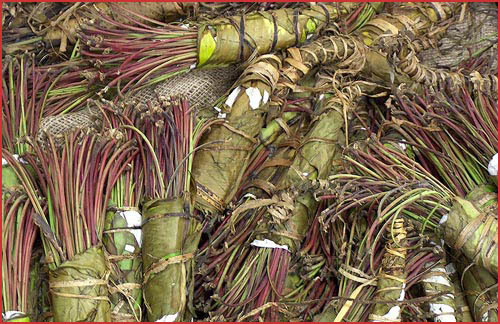 Courtsey of Wikipedia
If Somalia is to survive as a nation-state and having at least a normal functioning government with even average bureaucratic operations, it must urgently find effective solutions to the epidemic of Kat addiction among its population as a national priority. The problem is more than socio-economic issue. It is a grave national security threat as well.
In the summer of 1997, I was a member of a delegation of the now defunct National Salvation Council (the NSC, aka Sodare Group) from Addis Ababa, Ethiopia, to Mogadishu, Somalia. The delegation members included NSC Co-chairmen, Ali Mahdi Mohamed and Abdullahi Yusuf Ahmed as well as Council members that included Mohamud Mohamed Guled (Gacmadheere), Duuliye Sare Abdi Osman Farah among others. We numbered about 13 men and one female. We were on our way to meet with an Italian delegation led by then Deputy Foreign Minister for Africa, Senator Serri, who was about to visit Mogadishu for the sole purpose of mediating between disputing Mogadishu warlords despite many other problems of Somalia. The vision of the Italian delegation on solving Somalia’s predicament was not beyond the Banadir Region at that particular time.
Abdullahi Yusuf’s intention in the mission was to disrupt the Italian visit (which he did successfully) while Ali Mahdi’s was to win over the Italian favor against Hussein Aidiid and Osman Ali Atto.
We made a two-day stop-over in Djibouti. The Prime Minister of Djibouti then, Barkat Gourad Hamadou, honored us with a lavish luncheon with tender baby-goat’s meat and other delicacies of Djibouti at his residence. After the lunch, we were taken to a large and well furnished room with an Arabic seating with soft cushions specifically designed for long-time session in comfort for Kat indulgence, gossiping experience, news and secrets debriefing under the “high” influence of the stuff. In front of every person a bazooka-like wrapping was placed and a large silver tray full of the tools of the trade: A big and tall golden tea thermos, crystal glasses, shining and engraved tea-mugs, various branded cold soft drinks in plastic Coca Cola –type bottles and commercially distilled water in gravines with swimming crystal clear ice-rocks, all to be consumed in the breezing air-condition of the room- an artificial weather hide-out from the environment of burning heat of the City of Djibouti.
After a few chit-chats, Prime Minister Hamadou noticed that none of the members of our delegation was using the stuff as they were all non-chewers, at least, at that period of time. The Prime Minister was a bit annoyed and asked: “Why are you in civil war then, if there is nothing to fight for?” I guess we spoiled the daily indulgence session for our generous, high-level Djibouti host. Luckily, the conversation didn’t break up as we a had had a lot to discuss on Somalia, Somalia-Djibouti past and future relationships and the Horn of Africa, in general.
During those few years, I discovered, in separate sessions, that Ismail Omar Gheleh, the current President of Djibouti, was pondering about his desire to join his tiny country with Ethiopia as he was desperately convinced that Djibouti would not survive on its own. There was rampant corruption in the seaport operations, the main revenue generating enterprise besides the high spending men of the French legionnaires at Djibouti night clubs. The City of Djbouti was on the verge of being taken over by the influx of Ethiopians, who needed no immigration papers to come in. It was only Puntland help in 1999 to commit him to Somalia’s National Reconciliation process, encouraging him to take it over from Ethiopia, an AU and IGAD Mandated Country for Somali National Reconciliation Process. President Abdullahi Yusuf convinced President Daniel arab Moi of Kenya to support President Ismail Omar Ghueleh to play the role. It was undoubtedly a diplomatic success that pushed Ethiopia aside from the Somali issues. One may guess already why Ethiopia was not happy with President Yusuf lately. The second help came to Djibouti from post-9/11 World Order. Besides God’s wish, it was only these two factors that saved Djibouti from voluntary union with Ethiopia. Unfortunately, he betrayed Puntland State during the initial phases of the Arta Conference, a rift that eventually undermined the TNG of Abdulkassim Salad Hassan to pave the way for holding Embagati (Kenya) all inclusive and broad-based Somali National Conference and finally, the establishment of the Transitional Federal Government of the Somali Republic (TFG) in 2004, transforming it into the Somali Federal Republic in 2012.
Suddenly, the Prime Minister shared with us the socio-economic devastation Kat consumption has been causing on Djibouti at the time. He informed us that Djibouti was paying Ethiopia a hundred thousand US dollars daily, and that was only the portion of the payments that goes though from bank to bank. Think about residents who buy the stimulant on their own from individual Chat traders on the top of train and air passengers who also bring sacks of the green leaves to their families, relatives and friends in Djibouti cities.
On a number of occasions, I stopped over in Djibouti for a short stay. On multiple times, arriving at Djibouti International Airport, I used to see popular demonstration-like commotion at the gates of the airport-population rushing to the airport when Kat cargo delivery from Ethiopia is delayed for only a few hours. One would see custom and passport control officers whose mouths are asymmetrically filled with Qat and chewing it on the job. Think about the officers’ mental judgment and decision-making capability under the influence of the hyper-leaves at country’s highly sensitive and main border entry point.
The situation is even worse in Somalia with a few millions of US dollars spent every day on the habit. With no credible fiscal statics available, the country may be fast sinking into public and personal bankruptcy. A failed state desperately trying to recover from decades of civil war and total collapse of public services and institutions, has also population wholly consumed by the epidemic of daily Chat use, effectively destroying the socio-economic fabric of its society, abysmally curtailing manpower productive hours and bringing havoc to family livelihoods and relationships while it is also at same sometime constitutes an instigator and main source of corruption and loose social morals. A country with the geographical size larger several times than Italy or UK with porous long borders with Ethiopia and Kenya requires alert and non-Chat chewing security personnel and efficient bureaucracy.
The irony is that Somalis nowadays like to talk about safeguarding their sovereignty and territorial integrity, while at sometime allowing their neighbor states to dump poisonous addictive Kat to their citizens, drain their economy, disable their manpower and threaten their vital national security interests. Think about the real double-talk and double standard with a proverbial ostrich attitude!
Somalia has to come up with a solution to the menace of the Qat. While fully it is understandable that it is tough to try to ban the habit outright, at least a committee of experts should be immediately setup to study the problem and submit recommendations to competent bodies for, at minimum, regulating it and eventually outlawing it. Massive public education and media programs relating to its dangerous hazards to personal and public health should be initiated and launched immediately to stop the spread of the habit to young generation. Somalia cannot afford to continue to ignore its greatest, silent killer of its productive members of the society and the gravest national calamity posed by Kat trade. Please wake up!
Deficit of Public Trust in Somalia
Public Trust Deficit in
|
|
The Presidency of the Republic does not give the expected trappings of power, the magic of the highest leadership position in the land or the glory of the Office amid distrust and absence of loyalty within the population and regions of the country. That institutional empowerment must be earned nation-wide in the hard way, and in the case of Somalia, require hard work over many years to come for the future generations of Somalia to enjoy it. If successful, the new leaders can only pave the way for restoring that missing public trust. To accept any Somali President, Prime Minister or the Speaker of the House as a leader of all the people is a long shot, given the depth of distrust developed within the communities for the past 30 odd years towards government officials, or rather any institutions of governance unfortunately. In Somalia’s today the Presidency or any position of leadership is unenviable role for a decent person to play for it requires heavy personal sacrifices few are willing to commit to.
|
The very idea of bottom-up approach in rebuilding Somalia is primarily based on the restoration of that missing trust before the country has central institutions. Quite a number of Somali intellectual circles and many politicians inside and outside the country, particularly in Mogadishu, do not still appreciate how important the “Building-Blocks’ concept is, as we coined the term more than a decade ago in Puntland State of Somalia, as the shortest way to heal the deep wounds caused by the civil war and abuses of the Military Government, in addition to nepotism and rigging of elections by previous civilian governments. Creation of Federal Institutions starting with the TFG Charter and current Provisional Constitution is a hard fought negotiated outcome towards rebuilding that public trust. Anybody who believes that we can have a highly centralized system of government again in Mogadishu or elsewhere in the country is either of out of touch with reality in today’s Somalia or must have his/her sanity re-examined as this dream cannot be realized in the present political conditions of Somalia. The sooner we all embrace whatever type of federalism we accept as result of a negotiated settlement, the better off we are to re-construct our country. I may add, under the current political atmosphere, having a Federal President and Prime Minister hailing from South-Central Somalia is a recipe for failure and does not meet the necessary power-sharing legitimacy to move the country forward. If proven true (I hope not), the rumors flying around these days in Mogadishu and beyond on the selection of a Prime Minister do not give me sense of optimism for Somalia to be on the mend.
| Practical intellectual thinking and bold political leadership are required to brainstorm on why Somaliland and Puntland were created in the first place. While the First went to the extreme of outright unilateral declaration of seccession, the Second did not lose hope that Somalia can be rebuilt from the ashes of the Civil War and the deficit of public trust. For the benefit of those who were not closely following major political developments in the country during the past 15 years or so, or limited/exposed to only superficial sideline debates on Somalia, Puntland State spent considerable resources including brain power to see Somalia re-instituted. This is a major political capital investment that cannot be written off without paying a heavy national price. |
|---|
A simple political instinct is lacking among the intellectuals and politicians in Southern Somalia, i.e. they could not figure out that if Mogadishu is to remain the Capital City and enhance its status as attractive to the residents of Northwest and Northeast Somalia among other parts of the country, it should be subject to power-sharing. Someone cannot be expected to have both ways or as they say, “have their cake and eat it”, given what happened in that City during the vicious Civil War. Mogadishu leaders instead, for the sake of national unity, would have been smart enough to encourage others get elected to the presidency. That did not happen unfortunately despite the great expectation from the new President to deliver, and a lot of people are worried about the direction and the future of the country.
While it is not so popular to be an early pessimistic person, they say, a pessimist is a well informed optimist. Nevertheless, I have strong conviction that the best days of Somalia are still to come.
Somalia, Foreign Aid and International Conspiracy

The story of Somalia’s tragedy is too complex to summarize in a few pages. What I learned though in the course of the past two decades is the fact that when a country breaks up in the way the Somali State failed, it is too hard, if not impossible, to reconstruct it and put it back together again. That is because such a failure creates thousands of well-paid jobs and other beneficial opportunities for a huge number of expatriates or international aid workers and foreign diplomats. It does not take rocket science to figure out that those international employees and their decision-makers would not be acting against their own self-interests in order to see Somalia back on its feet again with all their goodwill intentions and humanitarian intervention. There is no incentive for this to happen. This is the first and most serious obstacle Somalis has to deal with to get Somalia back on track. The second biggest problem is Somalis themselves in abysmally failing to put their acts together by understanding that they are in peril and fatal danger of losing not only their sovereignty but also their country. This is the core of Somalia’s problem today.
Some, including these foreign expatriates and governments, would argue that the second problem is the crux of the issue as to why Somalis can not have their country back. That is true too as long as our people do not take responsibility for their own failure and are always quick to blame others for their misfortune and misery they have created onto themselves. Listen with purpose to Somali group debates, the so-called Fadhi-Ku-Dirirka (lazy losers’ shouting clan/personal debates), in coffee and teashops and amateur Radio and TV panel discussions and ever multiplying clan fox-hole websites. You notice that nobody is talking about the big picture of “Somalia first” and putting any political differences or clannish self-interests aside at the moment to save the nation as priority number one. After all that has been happening in Somalia for the last few decades, isn’t that a double tragedy? Some may conclude that Somalis are a punch of feuding clans that can not agree to have a nation-state, and therefore, under such circumstances, two scenarios are plausible:
Let neighbour states take over the country by dismembering it and dividing it among themselves.
Allow foreign re-occupation of the country until Somalis are ready and fit to govern themselves.
We should never give a chance that to happen at any cost. At moment, fieriest diplomatic lobby, intrigues and direct military intervention under the disguise of flashing out Al-Shabbab, another menace resulting from our too long inaction in the vacuum, perhaps also as a punishment for our collective sins and betrayal of our country, are ongoing to opt for the first scenario. Painful as it is, this is the same country whose pilots were flying supersonic jet fighters and producing the best neuro-surgeons decades ago and famous for holding first free and fair democratic elections in Africa.
Following the Ogaden War of 1977-1978 and as fallout of the lost war with the proliferation of clan-based and violent armed opposition fronts, huge refugee camps had been created in various parts of Southern Somalia. In reality, the Capital, Mogadishu, had been transformed to a big camp for refugees and internally displaced people, IDPs. With the influx of unlimited food aid from international donors at that time, residents ceased to buy food at markets altogether as it is readily available to have anyway. Even households of government officials had it delivered to their families. The result had been catastrophic, with local produce wiped out and bringing farmers to refugee camps as well. The citizens of the whole country had been reduced to mere beggars of foreign handouts. What had happened next was that the law of jangle of the fittest was ushered in and whatever left of the Somali State was up for grabs and Somalia irreversibly became a country nobody owns, leave alone someone to defend it from the imminent collapse. As the regulatory bodies disappeared, unscrupulous traders broke all rules of decency and lost moral compass to sell anything and everything Somalis owned to the highest bidder. Somalia went nuts and out of control. To understand why the Somali Civil War could not be contained, particularly in Mogadishu, one should appreciate the nature of the conflict. First, it is a family feud that will last for centuries in many forms and levels. Secondly, it is economic conflict in which a few greedy business criminals do not want it stopped to prevent the establishment of regulatory bodies of a government at any cost to avoid paying taxes. Theirs is: Deny any administration, regional or central to set up the rules of the road for their trade. Chaos, killings, and trade in expired food, medicine, and export of everything Somalis owned and adored for centuries are the only acceptable norms for their businesses to thrive. Take note that it was not the warlords, Islamic courts, and even Al-Shabab that kept the conflict in Mogadishu running so long. It is the Mogadishu new business tycoons and merchants of death and destruction that made it impossible to bring about law and order in Mogadishu.
International Conspiracy and Regional Power Play
As the Somali State finally collapsed with the disappearance of all public institutions without an exception in the height of the Civil War, Western donor countries under the framework of the international community devised economic and political plans for Somalia to fill in the power vacuum in the country. These plans are elaborate and act as a case study on neo-colonialism after the end of the Cold War. It would require volumes of books and extensive research to write on this particular subject.
In 1993, representatives of all countries interested in Somalia under the umbrella of OAU/IGAD/Partners with international Western humanitarian organizations gathered to discuss how to handle Somalia. Ironically, the venue of this gathering was Addis Ababa, Ethiopia. To make a long story short, the participants resolved to set up the infamous “Somali Aid Coordinating Body, SACB (search for how limited this name is in the Google entries), The SACB, an Exclusive Club of Western humanitarian organizations, UN agencies, European Union agencies (EC) and international NGOs. The SACB devised the following two serious documents:
WORKING WITH RESPONSIBLE SOMALI AUTHORITIES (implying here there is no authority in the country, amounting to merely working with clan leaders and local NGOs, possibly with Somaliland, Puntland State did not exist at that time).
SACB CODE OF CONDUCT (their internal regulations dealing with Somalis).
By the creation of this unresponsive, unapproachable, and invisible governing body for Somalia, The SACB, and Somalia’s sovereignty on land, air, and sea had been effectively taken over. All humanitarian aid assistance, monetary or material from donor countries must be channeled through the agencies of the UN, European Union and INGOs, who have the sole discretion and authority to allocate aid distribution as they wish without any input by or accountability to Somalis. To this day, no member country is allowed to unilaterally extend assistance to Somalia. An exception is Turkey, which does not fit into this framework and whose recent unilateral assistance to Somalia sparked off competition to do something about Somalia to preempt China’s growing and expanding influence in Africa The old SACB approach on Somalia continues to this day with different names like recent CMC (Coordination and Monitoring Committee setup to camouflage SACB as TFG appeared on the Somali political scene in 2004) with the same modus operandi. To call a spade a spade, SACB became the real Somali Government operating from luxury homes and executive suites in Nairobi while the report cards of the hundreds of its privileged expatriate employees show they are working inside war-torn Somalia on the most expensive life insurance coverage on earth for them and families. That is why we see signals and hear voices nowadays from individual Western countries that aid to Somalia would be channeled to “international agencies” and spelling that out once again after the election of the new Somali leaders in August this year. Perhaps the New Somali President knows better how to deal with them, having worked with these agencies for a long time. An extensive network of local NGOs mostly ran and operated by one man/one woman with a bag and laptops have been established in every corner of the country. Most of these local agencies do not follow the rules of associations and societies to be accountable to the Board of Directors, have secretaries of treasuries, the constitution, and mission to avoid duplication of the same activities by others Without their knowledge, many of these local NGOs (Non-Governmental Organizations) are the sources of information gathering for the “International Somali Government” based in Nairobi. These NGOs sometimes come under different fancy names as Non-State Actors (NSAs), Civil Societies, Non-For-Profit Organizations, Stake-holders and so on with the intention to avoid helping the establishment of effective Somali Government and in that way perpetuate the power vacuum in the country to justify the role of SACAB to the donor community and their tax-payers.
Welcome to the era of neo-colonialism, where Somalia is a rather blatant example of the “New World Order”. Or, rather, the Somali case is a direct rule by foreign powers. This unmasked way of running Somalia exposes the extent of the depth of the problem in Third World countries today and sheds light on Western political expectations from “Arab Spring” uprisings.
Every year, these international agencies compile what they call “Consolidated Humanitarian Aid Appeal For Somalia” amounting to hundreds of millions of dollars on behalf of Somalia. From various sources of their addressees, I had the unique privilege to see first hand and disturbed by the stunning Cover Letters enclosed with these “Humanitarian and Development Appeals. Cover letters addressed to foreign Western donors read, and I quote:
“ON BEHALF OF THE SOMALI PEOPLE” and continue to this day ignoring any Somali political leadership, institution (even “Responsible Authorities”).
It is equally important to note here that the European Union has been transformed into a collective body politic in the course of its existence in regards to its foreign aid to 3rd World countries (Developing Countries). To prevent unilateral aid by individual member countries to emerging markets and countries and avoid duplication of such assistance on shopping list by the leaders of developing countries, a document or an agreement called The Paris Declaration on Aid Effectiveness had been produced in February, 2005, effectively controlling who gets what and on what European terms are applicable to a specific country or block of countries. Since Somalia is not signatory to any accord after Lome’ (Togo) Convention of 1975-1989 on Trade and Aid between ACP (African, Caribbean and Pacific) and European Community countries, including Cotonou (Benin) Accord, its role and interests have been mandated and taken over by a small unit of individuals within European Commission Delegation to Kenya, called The Somali Unit, acting practically and effectively as the National Authorizing Officer (NAO) for Somalia, the very function a Somali Officer would have played if there were a government in Somalia.
Has anyone heard Italy, a longtime colonial power of Southern Somalia, producing a single initiative to help find solutions to Somalia’s predicament? Italy always claims in world forums on Somalia to have the exclusive rights of the Somali issues on the basis of being a former colonial power and legitimate authority to listen to and be respected with regards to Somalia while at the same has nothing to show for in deeds. Italy understood well that once her initiative on Somali peace and reconciliation fails, she will lose all credibility in the eyes of other powers and will be immediately out of the picture in Somalia. Italy’s strategy was reduced to sabotaging other powers’ help in resolving the Somali problem. Her political position has been quite detrimental to Somalia’s national interests and prolonged the agony of the Somali people.
How Other States Rate in the Somali Saga
On the Arab front, Somalia is a predominantly suuni liberal religious society. Over many years, however, the Saudis have been engaged in extending religious scholarships to thousands of Somali youths to indoctrinate them in their Wabi version, undeniably responsible for the current religious upthe country. This has created religious crises and conflicts within the community unrecorded before in the history of Somalia. People in Somalia now suffer a crisis of identity with regards to their religion (even crisis of attire and clothing as strange foreign fashion of Afghani, Pakistani and Arab tribal origin are imposed on them).
Sheikhdoms in the Gulf were pouring fuel into the fire in Somalia by paying Zakka to the extremist groups on an individual basis and through religious charities. Egypt, a country that has been boasting to have strong historical ties with Somalia, could not even provide safe passage within its territory to Somali refugees fleeing civil war. Yemen, with its meagre resources and its own severe tribal problems, has been overwhelmed by Somali refugees, many of whom had perished in the high seas of the Red Sea trying to reach it borders. In short, the Arabs have been disappointing to Somalis in their time of need. Ironically, it is only them that can extend meaningful assistance without strings attached to any decent administration in Somalia, but that is only if the country has a government that became difficult to achieve for decades.
Djibouti played more than its capacity with regards to the spoils of the Somali Sate by putting herself in the shoes of her mother Somalia at League of Arab States. Since the fall of the Somali Central Government, it has been hosting a number of improvised Somali reconciliation meetings to enhance its role among other power players in the region.
Kenya is a country that got the most benefit out of the Somalia’s misery as the HQ of the “International Somali Government” (foreign diplomats and expatriate aid workers of the donor community with hundreds of millions of dollars ear-marked for Somalia spent in Nairobi alone). Speak about the huge capital flight from Somalia, remittances from Somali Diaspora and investment and entrepreneurial talents shaping up Kenya as the East African business hub, not to mention about a broken and desperate people trying to calm their nerves with plane loads of stimulant drug mira (khat), another curse in the Somali tragedy, from Nairobi in exchange for cold cash dollars.
With regards to Ethiopia, a major issue of Somali foreign policy, everybody seems to have an opinion and knows better. Here, I would limit myself by saying that Somalis are forgiving, but Ethiopia has to choose only one of these two options:
Be a peaceful, friendly neighbour and regional ally by trying to help heal past wounds and reverse the historical burden between the two brotherly peoples. Ethiopia has to stop running Somali affairs from Addis Ababa and instruct its diplomats in foreign capitals to immediately cease their traditional diplomatic lobby undermining Somali unity It has to stop infiltrating into Somali society and bullying Somali leaders with its power plays.
Be an enemy in the region the Somalis have to deal with and risk losing all chances of being trusted ever again.
Eritrea seems to be more sincere and sympathetic to Somali cause than Ethiopia, but its rivalry with Ethiopia via proxy war has been causing havoc to ordinary Somalis in Southern Somalia.
Nevertheless, it would be rather mean not to recognize that the above-mentioned states and organizations have been doing something good as well that had saved lives, lessened pain, and suffering among the general population.
In conclusion, Somalia will rise up again, hopefully in my lifetime, and when it does, we will be stronger than ever before to be a force of good to reckon with.
By Ismail Haji Warsame
E-Mail: ismailwarsame@gmail.com
 Warsame Policy & Media Network (WAPMEN)
You must be logged in to post a comment.