IN MEMORY OF ALI MAHDI MOHAMED, LATE CHAIRMAN OF MANIFESTO/USC-SSA

Ali Mahdi, his popular political name, had a pleasant personality with a smile that contradicts his exploits as a warlord in cleansing Daroods from Mogadishu, following the fall of General Siyaad Barre in January 1991. He didn’t help even to spare the lives of his former colleagues and businessmen acquaintances in his area of influence in North Mogadishu. The ideologue of clan cleansing, however, was General Aideed. Mahdi led the demobilization and disintegration of the remnants of the Somali National Army after the collapse of the Central Government, using Ambassador Omar Arte, his then Prime Minister, in Mahdi’s capacity as Djibouti-sponsored Interim President of Somalia in 1993.

Reflecting on his personal history, he suffered from two political liabilities:

  1. He had “Goofka Banadir” mentality and attitude, never travelling across Somalia to develop cross-nation cultural abilities.
  2. He suffered from “Kaaraan Syndrome”, Abgaal leaders’ belief in Habargedir military and political supremacy in Mogadishu, as Ali Mahdi saw Somalia in the eyes of people in the Banadir Region, whose residents had suffered immensely from General Aideed’s mass human slaughter in Kaaraan. They had been conditioned to accepting Habargedir superiority, as a result.

As a leader of Mudulood, he had earned the admiration of residents of Kaaraan to withstand General Aideed’s onslaught against Abgaals in North Mogadishu. For four months, four hundred barrels of heavy artillery and mortars were focused on Kaaraan for constant bombardment, reducing it into rubble, and turning its residents into shell-shocked beings.

Ali Mahdi passed away in Nairobi this evening, after declaring in Mogadishu recently that he would return to using his “white gun” again, as a member of the opposition to Mohamed Abdullahi Farmaajo, the man squattering now in Villa Somalia.

Ali Mahdi was mainly to be blamed for the failure of Cairo Somali talks in 1997 as he had sabotaged the so-called Sodare Group in collaboration with Hussein Aided and Egyptian Government, and the reason why Bosaso Conference was aborted before moving it to Arta in Djibouti in the year 2000.

The difference between General Aideed and Ali Mahdi was that the former wanted to grab power by any means necessary and that the end justifies the means, and saw Darood cleansing from Mogadishu as means to that end with mass mobilization of Hawiye against Daroods, while the later didn’t know what he was doing.

Ali Mahdi was accused of entering into treasonous business contracts with Italian Mafia to dump industrial toxic wastes into Somalia’s territorial waters and even in wells on the land.

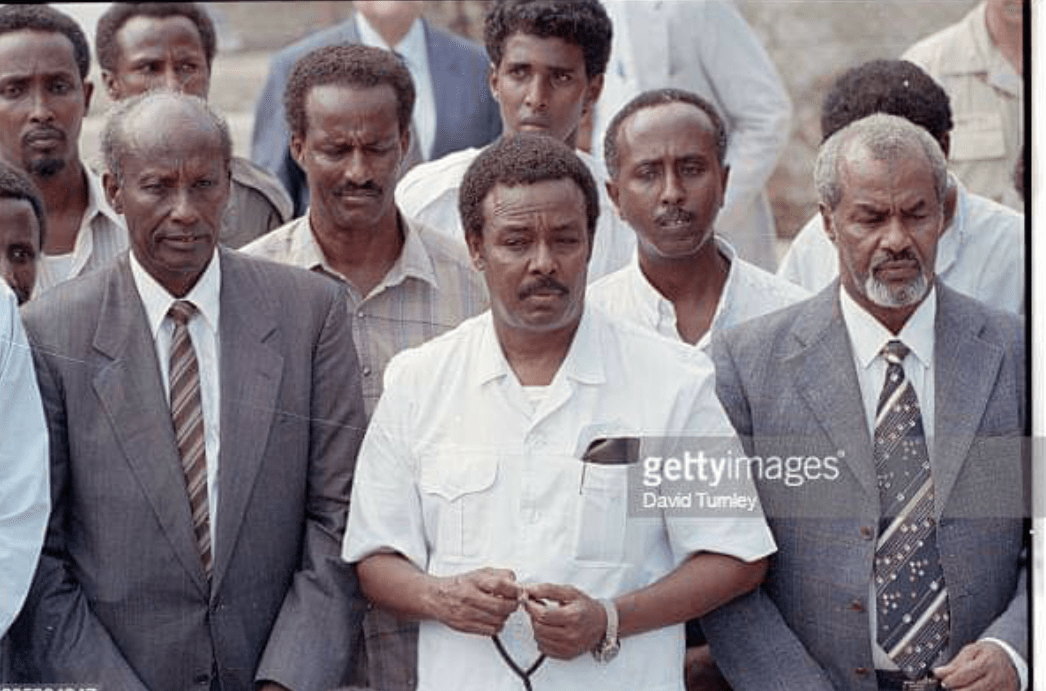
Both men had died before they were brought to justice. ( photo: courtesy, in the picture are at forefront from left General Aided, Ali Mahdi, Osman Ali Ato and Pilot Abdi Osman).

http://Amazon.com/author/ismailwarsame. Since you are here, support Free Press WDM for better Somalia. Send in your subscription of $37 a year to keep this blog running. Sahal Account 496091 or e-Dahab Account 77731) Tel: +252 703 4081.

Annual subscription

$37.00

ON WDM CONTRIBUTIONS

Those who want to contribute to WDM with articles, essays, opnion pieces and works of arts should send their submissions to ismailwarsame@gmail.com/WhatsApp number at +252 90 703 4081.

WDM reserves the right to edit the contents of the submissions.

You make take up or adopt a pen-name or title of “Staff reporter/writer” in your submissions.

ON PUNTLAND

PRESONAL OPINION DOESN’T REQUIRE PRESS CREDENTIALS

“One doesn’t have to own a journalist certificate to express his opinion “, Martin Hill, Amnesty International.

I was visiting my family in London, UK, sometime in 1999. At time, I was the Chief of Staff at Puntland Presidency. The President, Abdullahi Yusuf, was in London too, for a medical checkup. While there, I received a phone call from Mr. Martin Hill of Amnesty International, who wanted to meet me about an urgent matter concerning Puntland. We met at Chamberland Hotel Central London one morning. He reported to me that a journalist was arrested in Bosaso, Puntland. Amnesty International wanted that journalist released immediately. I told him that I hadn’t had the information yet, but would get back to him on the matter. I found out that a local pamphlet writer by the name of Deeq from Mudugh Region, had published an article falsely accusing Puntland authorities of dumping illegal substances into the Indian Ocean. It was dangerous fake news that provoked the Governor of Bari Region to order the detention of the journalist. Having reported the incident to the State President in London, we ordered the release of the journalist pending President’s return to Puntland State.

On getting back to Martin Hill, I told him we had ordered the release of the journalist, but complained to him that Deeq is neither a qualified journalist nor an ethical one. Mr Hill’s response was profound: “One shouldn’t hold a certificate to express his/her opinion”. The story now is repeating itself. Read Amnesty Statement here:

Somalia: Authorities must end arbitrary arrests and persecution of journalists in Puntland

SUPPORT FREE AND INDEPENDENT PRESS IN SOMALIA

Do you want an independent and free media in Somalia? Don’t you enjoy critical analysis of issues and impartial thought provoking media coverage on important topics of national interest,

If you do, support, donate and supscribe to the unique blog of its kind in Somalia, WDM (Warsame Digital Media). You could be anywhere in the world to keep this blog running. Act now.

“Serving you to think critically on issues that matter to you”

Contact info: Tel/WhatsApp/Acct: +252 90 703 4081

Chief Editor
Email: ismailwarsame@gmail.com

PS: Send us your contact info to receive our Letter of Appreciation.

http://ismailwarsame.blog

The Guardian: As Meghan has learned, the monarchy is still built on breeding, ancestry and caste


Opinion

Nadifa Mohamed

The treatment of the duchess by the royal family is, at its core, a sign of Britain’s inability to step into the modern world

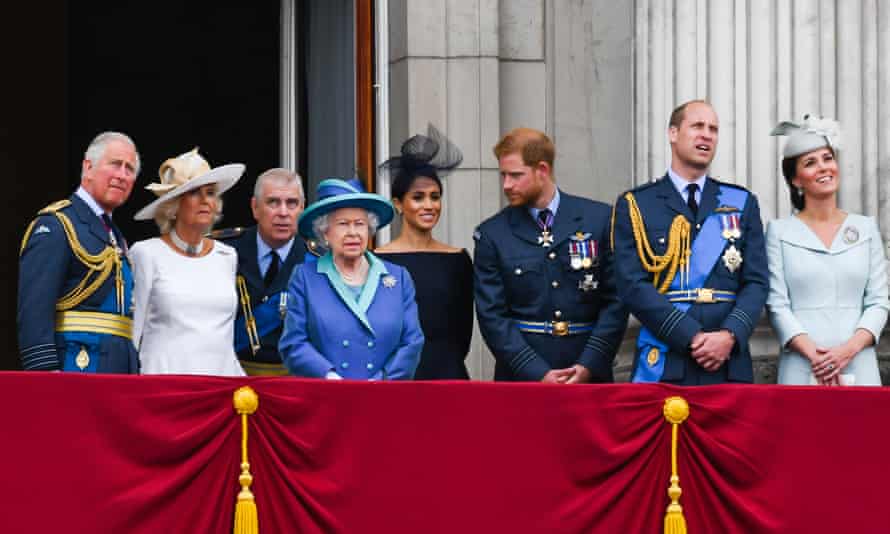
 The royal family stand on the balcony of Buckingham Palace to view a flypast in July 2018.

Mon 8 Mar 2021 18.16 GMT

They wanted to know how dark his skin would be. An unborn child about to enter the British royal family was already considered a potential worry and even a liability because one of his grandmothers happened to be African American, and the “stain” this might leave on his skin and their reputations had to be considered, and prepared for. These are among the many shocking revelations of Meghan and Prince Harry’s jaw-dropping interview with Oprah Winfrey.https://b8da0b329f2e6e61cb47e03d3afa39ce.safeframe.googlesyndication.com/safeframe/1-0-37/html/container.html

I’m not wholly surprised that a royal family member expressed concern about the “reputational” impact of having a dark-skinned child in their midst – considering the long history of exclusion of anyone Roman Catholic, non-aristocratic or disabled from their rarefied world. Yet to add to that sense of rejection, Archie has not been given either a title or security.The behaviour towards Meghan shows Britain learned nothing from Princess Diana’s treatment.

The intensity of this royal drama is startling considering the halcyon days around the time of the engagement and wedding of Harry and Meghan just three years ago. Indeed, when Meghan Markle was first linked with Harry, she looked much like her future sister-in-law, Kate Middleton – and I, like many people, did not know that Meghan had any Black ancestry at all. The poker-straight hair, the pale skin, the thin frame and expensive style made Meghan seem just another European royal bride out of central casting. But then tabloid headlines screeching “straight outta Compton” and poring over her mother’s “slave ancestry” made it clear that she wouldn’t be treated as such. The merest suggestion of Black genes entering the bloodstream of the Saxe-Coburg-Windsor dynasty made this already fragile little country start to tear apart.

Meghan has become the ghost at the table, an unwelcome reminder of this country’s inability to step forward into a modern world where women have their own opinions and desires, where the old caste system is dismantled, where the “piccaninnies” of our prime minister’s crude imagination represent our country abroad.

It is painful for me, as a republican, to have to step out in defence of any member of the royal family but I feel as though Meghan, Duchess of Sussex is receiving the ire intended for a much larger target of young Black women who have stormed into previously closed-off institutions. I have lost count of the times that I have been told I must have been accepted to Oxford because of positive discrimination (as if the university would ever adopt such a policy, as its woefully undiverse admissions record shows).

I’ve been told I was only published because I was “exotic”; and that any award I have received is a sign of “wokeism” or decreasing discernment among judges. All of these snide comments clearly reveal more about the insecurities and resentments of those making them than anything about me, but they do make me understand why Meghan would want to withdraw from such a toxic environment.

The noise recently against “cancel culture” clearly doesn’t extend to trying to protect Black women from coordinated and relentless attacks on their looks, abilities or motivations. The rearguard instinct to protect privilege and exclusion over all else is clearly a difficult one to overcome.

It is easy for me and others to adopt a posture of defensive silence, never talking about the toll of living, studying and working in environments where we are the only ones. As an insider, the minute you do speak up you are labelled as ungrateful, conniving, nasty or just plain unworthy.

I see the regular, almost feral attacks on Meghan by media figures such as Piers Morgan and others and wonder what he would do with that anger in other situations – for example, if he taught diverse and opinionated students in a university, or worked in an inner-city hospital. His rage is so disproportionate that many people would curl up if confronted with it. Other media figures appear to dismiss the skin-tone comments as “casual racism”, as if that’s acceptable.

I remember how I learned from an early age to bite my tongue, to laugh uncomfortably, to ignore “casual” racism in particular situations, and then to vent to friends who had experienced similar things.

The conversation between Meghan and Oprah is fascinating because of the frank way they talk; a huge, global audience watches as two Black women discuss the outrageous experiences of one of them and hear all of the gory, suppressed details for the first time. Oprah gasps as she hears what Meghan and Harry have had to put up with.

An ancient British institution tamed by an unprecedented level of public scrutiny from two world-famous Black women. I never expected to see it, the silenced becoming the silencer.

Discussions take place regarding who or what Meghan is, whether she is a “Black woman” or not, whether she is facing racism or not. Whatever, the truth is that blood and all the meaning that word carries is still very important in Britain and beyond. What you look like, what your parentage is, makes you belong somewhere if you’re lucky – or face rejection if you are not.

Breeding, ancestry, caste are the building blocks of the monarchy and aristocracy and still determine who we believe is superior and inferior. I dread to think what would have happened to Meghan if she’d had the temerity to marry the heir rather than the spare.

  • Nadifa Mohamed is a British-Somali novelist

SOMALI EXTREMIST MILITANTS WON’T ATTACK MOGADISHU SEAPORT AND AIRPORT. WHY?

By WDM STAFF WRITER

The fool would never ever wonder why extremist militants have not been attacking Mogadishu seaport and airport? Perhaps you should wonder too why camel/cattle owners don’t slaughter their lactating ones. It could be because you forgot that it is their airport and seaport too. That’s where they generate the bulk of their revenues.

Extrmists have entrenched themselves as a viable enemy of civilization. They have presented themselves as invisible and invincible entity. It is hard to see them in Somalia’s main urban centers. But, everyone feels, hears and touches their presence everywhere you go, almost on a daily basis. We feel them through their horrific acts of terror – explosions, complex attacks, assassinations, extortions, tax collection and racketeering, [in]justice courts, blockades and what not.

They have ubiquitous presence. Such a pervasive perception is based on reality. What else their presence be called, if they have already taxed tonight’s dinner and breakfast at Villa Somalia? Let’s stick with ubiquitous for now till we find a more appropriate word to describe it, as ubiquitous comes here handy.

Most of us, who have been on the receiving end of their relentless terror campaigns, know they are fools, spineless, heartless and horrendous. They attack everyone everywhere, including among themselves. They are indeed fools. All terrorists are.

But, for practical reasons, there are places that have been immune to their foolishness. Apparently, extrmists aren’t foolish enough to intentionally attack Mogadishu seaport and airport. This is for the same reasons that they won’t attack Bakaara market. Those are their assets and source of income that they co-own and manage with the Somali government.

What about the indirect/mortar attacks often reported to have been targeted at the airport’s compound? Extremist militants have not been targeting the airport – at least not the airport facilities directly: runways, parking lots, departure and arrival terminals. Before AMISOM’s departure, the Mogadishu sea and airport could suffer only collateral damages by the militants indirect attacks as they would neither have the capacity nor incentive to launch direct attacks on the sea/airport with AMISOM present.

Remember, it’s their airport too. Apart from the revenues they generate from the airport, militant leaders’ families, children as well as their agents, sympathizers and financiers all use the airport’s services for medical, educational and commercial purposes.

Don’t take them for fools – Not when it comes to their direct interests! For that reason, you should relax at those facilities as they won’t attack the seaport/airport, until their interests get threatened.

BREAKING NEWS

Is it a warm welcome in Halane for Ahmed Madoobe, one would wonder? Or is it a deterrent for him to avoid Halane or Airport hotels here afterwards? Is it a political and war economy entering into a new pre-election phase?

BREAKING NEWS

Presidents of Puntland and Jubaland are scheduled to arrive in Mogadishu today. Stay tuned for more information and further developments.

A MALICIOUS CAMPAIGN OF DISINFORMATION FOLLOWS BOSASO PRISON ATTACK

Somalia is a country still in civil war by other means. Stop it!

A LOGJAM IN SOMALI POLITICS

With opposition in disarray and Farmaajo still squattering in Villa Somalia, where do we go from here?
The expectation is that there will be a meeting soon, possibly at Mogadishu Airport vicinity, perhaps, in Halane Campound. But, this meeting between FGS and FMSs is increasingly looking like a formality, only to approve the contents of the understanding reached recently in Baydhabo by the Technical Committee on holding elections this year in Somalia.

No participation of the Council of Presidential Candidates (CPC) in the meeting is expected as the real players are FGS and FMSs, and rightly so because the opposition isn’t limited to only CPC, and partially because the CPC has just lost the momentum needed to stage a significant challenge to FGS, though they are still a political force to reckon with in Mogadishu.

Farmaajo, however, is under the illusion that he has won the battle with CPC, forgetting altogether that he has no formal legitimacy as president, having his mandate expired on February 8, 2021, and notoriously overstaying his stint in Villa Somalia. Nevertheless, Farmaajo has succeeded in dividing both the FMSs and opposition.This doesn’t guarantee him re-election, despite his political manipulations and resorting to survivalist instinct.The biggest loser here, in the long term, is Mr. Hussein Rooble, who has failed to show being his own man and to provide leadership despite the fact that the CPC were supposed to be his strong political card and home constituency. He has just lost his once in a lifetime chance in politics.

Puntland and Jubaland will not play a significant role in the next meetings as they are outgunned and outnumbered without the support of a meaningful opposition This is the legacy of their prolonged political self-isolationist stand.

Farmaajo can be dislodged only by the would-be New Federal Parliament 2021, which is at stake for all concerned.

CPC- PM Rooble meetings explained as a microcosm of Somalia’s power-sharing

By WDM Staff Reporter

The meetings between the council of presidential candidates (CPC) and FGS Prime Minister Mohamed Hussein Rooble was primed to face a technical conundrum. It’s deliberations is similarly bound to end up at a cul-des-ac because the meetings agenda or objectives were clearer in its concealment than in its revelation. So are the participants. As there is more to the faces than they revealed.

The dissection of thses variables could help shade insight into the layered aspects that make the PM Rooble-CPC meeting confounding. For instance, PM Rooble is well understood for who he doesn’t represent than who he represents. He doesn’t represent Farmajo. If he represents anyone, CPC is who Rooble represents. That’s the 4.5 business!.

Through the Decale jungle, Farmajo and CPC were preying on each other using Rooble as bait, or maybe, a Trojan Horse. On this, Rooble would deliver more for Farmajo than for CPC. Also in the mix is a whole deep state infrastructure, whose fate is intertwined with Farmajo. It’s plain Darwinism. CPC threats only alarms the deep state to throw more cordon around Farmajo to cushion him, and by extension, themselves, against CPC power grab.

FGS was awake to this fact. They brought the PM-CPC negotiation as a ploy to buy time and wiggle themselves out of the crisis that was created by the Feb. 19 nightly raid on two former presidents and other opposition candidates to suppress opposition’s anti-government protests.

Relying on the IC to fight its wars, the CPC pressed on them to join the chorus, declaring Farmajo’s continued stay in office beyond Feb. 8 illegitimate, the CPC was short on strategy against a more reticent, strategic and callously conniving FGS. A lethargic and reactionary CPC is too calculating, optimistic, garrulous and reliant on others to do their work for them.

That work was to produce for the CPC, despite not owning the means of production, something along the lines of the June 2008 Djibouti agreement. Unfortunately for the CPC, the ground had shifted on that long time ago. Rooble is no Nur Adde, CPC is no ICU (in composition yes, but not in leverage terms) and, fortunately for Farmajo, it was “being there done that” with his Kampala Accord experience. The more the CPC and allies underestimated Farmajo, the more he shocked them with unmitigated surprises.

Thrown into disarray by the Feb. 19 raid and subsequent FGS quashing of its planned protests, the CPC desperately embraced informally convened reconciliation meetings with the PM Rooble and other fellow constituents. Little did the CPC know that the informal nature of the meeting, which they conveniently mistook as formal, was because PM Rooble was under pressure to prove his worth by saving his position from the encroachment of the constituent that he represents in his position. Little did they also know that they were celebrating prematurely over the outcome of the Feb. 25 agreement at Decale prematurely because, as the bonafide representative of the constituent in the FGS, his apology on the Feb. 19 raid and suppressed protests was personal as opposed to official. With his successful last-minute cancellation of the CPC protests, PM Rooble made his boss satisfied with his efforts. That all the pre-hire tests they had run on Rooble were not in vain.

A series of badly managed messaging on an already anti-climaxed protests made CPC prospects of success not so promising. As the puppeteers of PM Rooble pre-occupied them with intra-constituency feel-good meetings, FGS tacticians have accelerated to the exit of their exit strategy. And Saturday’s eve, the big day of the weirdly so-called FGS-CPC joint protests (for “joint” is how the people understood), CPC was caught yapping. They again made it worse for themselves with their poor messaging about their reasons for canceling the protests. FGS, with its often superior communications, quickly thanked the CPC for responsibly canceling thé planned protests for totally unrelated, but convenient reasons to the ones CPC gave.

Decale was an exercise in deceit from the get-go. The parties were not committed to a treaty without their intentions to gain political advantage over each other and to renege. Such is the level of decadence and the extent that common decency has been eroded.

The CPC and allied FMS are determined to create a level playing field or at least narrow its power deficit with FGS. With the FGS frustrating CPC’s protests, the only means they had to get even with FGS was applying pressure tactics. But their timing was awful, as they were too slow in acting, and their preparation/organization even worse. With that, in all likelihood, the FGS will hold off against CPC protests long enough to make them impotent against the convening of the next national consultative forum to finalize the stalled elections process.

Halane venue is inevitable. But it is going to be neither as important for the CPC and allies as they wanted it to be nor as scary for Farmajo. The patriotic forces’s messaging was responsible for minimizing Halane’s importance as a meeting venue for future national consultative meetings. That message was, “Halane is a Somali territory. A territory that falls under President Farmajo’s jurisdiction.” Secondly, that there is really nothing left to talk about after the technical committee’s Baidoa agreement. All that was left was the formality of the signatories signing the agreement. And that Farmajo can do even in the darkness of the belly of a Beast.

The CPC have been played!

THE GUARDIAN: First Thing: Explosive Meghan interview reveals racism and royal neglect

Meghan said palace had not supported her when she was left feeling suicidal, and had asked how dark her son’s skin would be. Plus, officer charged with killing George Floyd will be tried todayPrince Harry and Meghan talk to Oprah Winfrey

 The Duchess of Sussex said she ‘didn’t want to be alive any more’ following her treatment in the tabloid press. Photograph: Harpo Productions/Joe Pugliese/Getty Images


Molly Blackall


Good morning.

The Duchess of Sussex revealed that she was left with suicidal thoughts as a result of her treatment by the tabloid media and the royal family, and that despite her reaching out for support with her mental health, the palace had failed to protect her. This was one of a number of explosive revelations that came to light during the eagerly anticipated interview between Meghan, Prince Harry and Oprah Winfrey, which aired primetime in the US last night.

Perhaps the most shocking allegation made during the interview was that a member of the royal family had raised concerns with her husband over the skin colour of their baby, with “conversations about how dark his skin might be” taking place while she was pregnant.

Harry also revealed that his father, Prince Charles, stopped taking his calls, and that the family had stopped paying for the couple’s security at the start of 2020 – with this apparently motivating the decision to take on lucrative deals with Netflix. You can read a summary of the key allegations from the interview here, including news that they married in secret three days before their Windsor Castle wedding.

  • Royal commentators were pranked into criticising the couple’s performance before they had seen the interview, with two YouTube stars setting up a fake media company and paying leading commentators, including the Queen’s former press secretary, to give their views days before the interview was broadcast. Some were also duped into discussing false topics supposedly covered in the Oprah interview, including Meghan’s support for a London donkey sanctuary and refusal to have the coronavirus vaccine.

IN MEMORY OF LATE CAPT./PILOT MOHAMUD HAJI ELMI ABDULLE DIRIR (HAJI DHAGAX)

CITY OF GAROWE IN 1968

Garowe, May 6, 2019

“General, I have no decent place to house you in Garowe”, said the junior official representating the Central Government of the Somali Republic, inconveniently posted in Garowe, when General Ainaanshe’s small passenger plane had crash-landed in Garowe airstrip one day in 1968. That tells the story of this city and the extent of backwardness it has been evolving since 1968, and in fact, nothing much had changed for better in the town, until it had luckily become the Capital City of the State of Puntland in 1998.

General Ainaanshe was flying on his way to Hargeisa, the capital city of Northwest regions, when his two-engine plane lost one over Laas Anood, now regional capital of Sool Region. The plane’s pilot was the famous captain Haji Dhagax, now a Puntlander. Garowe airstrip used to be located in what is now a densely residential area in the middle of the City.

According to the captain Haji Dhagax, Garowe had neither a hotel nor a guest house for a visitor to stay overnight. That is why the Government Representative at time was in shock, not because of crash-landing of General Ainanshe’s plane, but his immediate worry about where to find a place to put up the General for the night in Garowe.

While the General was still at Garowe airstrip, someone had to run to the house of Ms. Maryan Muuse Mataan (RIP) to inform her of the new guest’s troubles in town. Maryan quickly took the General and his pilot to her home to smooth up their stay for the following several days – on the top, providing a Land-Rover vehicle and sweet water from her rain-water reservoir at home.

After few days, another plane had flown to Garowe to bring spare parts for the damaged plane and pick up the General to Hargeisa.

Pilot Haji Dhagax, in appreciating for Maryan’s unique home service and hospitality, had made the plane available to her to fly about 50 persons of her choice from Garowe to Mogadishu.

Captain Haji Dhagax was surprised sometime later to see Maryan Muuse Mataan coming out of General Ainaanshe’s Office in Mogadishu. The captain immediately asked Maryan, “Maryan, what can I do for you, anything, please?” She responded, ” thanks, Haji. Look at this big bank cheque to compensate me for your troubles back in Garowe”

ismailwarsame.blog

Author: Warsame Digital Media WDM

FLASHBACK ON SOMALIA’S IMAGES

Statement on the death of Ambassador Nicolas Bwakira

MARCH 7, 2021 AMISOM PR/03/2021

PRESS RELEASE

(For Immediate Release)

Mogadishu, March 7, 2021 — It was with grief and immense sadness that AMISOM learnt of the passing away of its first Special Representative of the Chairperson of the African Union Commission to Somalia and Head of AMISOM, Ambassador Nicolas Bwakira.

Ambassador Bwakira was a true African. In very trying circumstances, he strategically positioned the Mission for the daunting tasks it was set to perform. This ensured the Liberation of the capital Mogadishu and the consolidation of the position of the fledgling Somali state institutions in the ensuing years.

AMISOM will remember Ambassador Bwakira for his mediatory role between the Transitional Federal Government of Somalia and other Somali stakeholders and his tireless effort in mobilizing regional and continental leaders and the international community at large, to better understand the plight of the Somali People and generously support the efforts for the restoration of peace and security in the country.

“We, the staff of AMISOM”, stand in salute and pay homage to this great son of Africa and convey our deep-felt condolences to Madame Bwakira, the children and other members of the bereaved family of Ambassador Nicolas Bwakira, to the people and the Government of Burundi, his beloved country. May his soul rest in eternal peace”, said Ambassador Madeira, Head of the African Union Mission in Somalia, AMISOM.

_________________________________

For more information contact
Snr. Communications Officer or Force Spokesperson
Ms. Gifty Bingley or Lt. Col. Daniel Mugoro Muiruri,
Email: au-amisomhom@africa-union.org
Cell phone: (Somalia) +252 617 682 175/+252 613 665 356; (Nairobi) +254 722 788 975

REPORT FROM FORMER SOMALIA’S ATTORNEY GENERAL ON MARITIME DISPUTE BETWEEN SOMALIA AND KENYA.

Take a listen:

CULTURAL CLASHES CONFRONTING MUSLIM IMMIGRANTS IN THE WEST – A TRUE STORY

In Stockholm, Sweden, a three-year Somali kid was put into a kindergarten with other native children whose parents mostly own dogs and puppies. Parents come to the nursery in cars to pick up kids home. They usually bring dogs in their cars. Sometimes kids play dogs at nursery. The Somali boy also enjoyed playing with the dogs with his nurserymates.

In an usually situation in a Somali family, their son requested from his parents to buy him a dog to play with at home just the way his friends do. By this request, the Somali parents were in shock, not knowing what to do with this strange kid’s request other than telling him that dogs are “haraam” (forbidden) in Islam. The kid responded, “then buy me a Muslim dog”.
The boy’s parent didn’t know what to do about the situation. Perhaps they could seek help and advice from their local Somali Sheikh, who also give Quranic lessons to the boy on weekends. This Sheikh advised the kid along the lines of his own parents – the boy repeating his demand that all he needed was buying a Muslim dog. It was a bad situation. Moreover, the kid was demoralised and depressed. He stopped talking to his parents and at home he didn’t want to get out of his room.

Luckily, a learned relative of the family was visiting Stockholm. Parents told him about the boy’s problem. The relative thought about the problem and decided to search for advice from other non-Somali Muslim communities in the city. He was advised to see a Palestinian Imam at local Mosque. This relative of the family struck a conversation with the Palestinian, whom he found out was knowledgeable about Somalis’ social integration issues of self-segregation and living in sub-clan enclaves even in the West, still not accepting the fact that was the culture that had destroyed their country of origin.
“Do you have dogs here at home, Sheikh?”, asked the learned relative.
“Yes, of course I have”, the Iman responded.
“Then, we need your help”. He told the Imam about the kid’s problem.
“Bring that kid to my home and let him stay and play with my kids and dogs for a week”, the Sheikh generously offered.

“Aren’t dogs haram in Muslim society?”, the man asked.
“Yes, but you don’t slaughter them and you don’t eat dog’s meat. Muslims in Arabian Peninsula use dogs to herd animals and for security reasons. There is nothing haram in that. Muslim also don’t isolate themselves from the non-Muslim society they live with, instead taking advantage of good values, expertise and technology. Muslims also have to share their values and religion with non-Muslims”.

This story has happy ending – the depressed boy had returned home after a week from the Imam’s house with the promise of getting a dog when he gets a bit older on the condition that he respects his parents, listen to them and do well in school. Problem solved.

(This article has been re-edited since posting).

CONFEDERALISM

COERCION vs CONFEDERALISM

https://ismailwarsame.blog/2020/01/20/cohersion-vs-confederalism/

Donate:

Annual subscription $37

HIIRAANONLINE: HAUD & RESERVED AREA

By Mohamed I. Trunji
Sunday, February 28, 2021

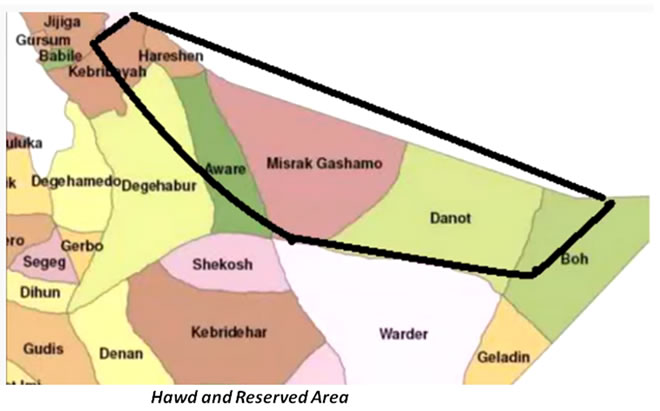
On this Day in 1955 Haud and “Reserved Area” were transferred by the British government to Ethiopia. Perhaps I may be permitted, before entering in the gist of this piece, to give a concise account of the changes which affected the Horn of Africa following the Italian-Abyssinian War of 1935.

After the invasion of Ethiopia, the Italian government had incorporated Eritrea, Ethiopia and Somalia into one regional bloc, forming the Italian East Africa Empire (IEAE).The Italian East African Empire, under Marshall Pietro Badoglio, was divided into five administrative governorates: Eritrea, Harar, Galla & Sidamo, Showa and Somalia.

One of the most significant adjustments the Italians introduced was the creation of a much larger Somali administration by detaching the Ogaden region from Ethiopia and combining it with Somalia, creating thus “La Grande Somalia, or ‘Greater’ Italian Somalia. However, while Ogaden became part of the Governorate of Somalia, with Mogadiscio as the provincial capital, Harar became part of the Hararghe Governorate. General (later Marshall) Rodolfo Graziani, who succeeded Pietro Badoglio as Viceroy of Ethiopia, found the way the regions were divided unfair to the Somalis.

In fact, he wrote the following telegram to Mussolini, spelling out his disagreement with the situation: “Separating Harar from the Governorate of Somalia would sound like severing the head from the body of Somalia. Harar is a Muslim centre to which the Somali population had aimed during the difficult military campaign paying a high price in blood. For all these reasons, and considering that the Galla population gravitating around Harar constitutes a minority compared to the Somalis, I am of the humble but firm opinion that the frontier of the Governorate of Somalia must be extended to include Hararghe up to Diri Dawa” (Del Boca).

In 1942, after occupying all former Italian colonies in East Africa, (Ethiopia, Eritrea and Somalia), followed by the return of Ethiopian Emperor Haile Selassie to his throne, Britain signed an agreement with Ethiopia under the terms of which it recognized Ethiopia’s independence. However, there was one important clause attached to the Agreement: the right of Britain to temporarily control the Ogadenia, the Haud, and “Reserved Area” The distinction, incidentally, between the Haud which was a pastoral area, south of the British Protectorate boundary with Ethiopia, and the “Reserved Area” to the north of Jigjiga, was that the latter was required by the British Military Administration, after the liberation of Ethiopia, to confront the pro-Nazi Vichy government in Djibouti  (J. Drysdale, 2000)While these areas were still under its control, Britain allowed the Ethiopian flag to be hoisted in parallel with the Union Jack on government buildings to symbolize Ethiopian sovereignty.

The Somalis were undoubtedly given some hope and stimulus immediately following World War II when the British administered all of the five Somali lands except French Somaliland and proposed a Greater Somaliland under British control. They were led to believe that, as a minimum, Britain might hold on to the Ogaden. This did not happen, and Ogaden was handed over to Ethiopia in 1948. The handing of Ogaden to the Abyssinians was completed on September 12, 1948, when Mustahil was transferred to the Ethiopian Administration.

Little more than one year later, on November 29, 1949, the General Assembly of the United Nations decided to place former Italian Somalia under Italian trusteeship for ten years.

The 1897 secret Treaty between Ethiopia and Britain

On 28 February 1955, while Ethiopia and Italy, the latter in her capacity as administering power for southern Somalia, were still engaged in inconclusive negotiations on the border demarcation dispute between Ethiopia and Somalia, Britain had returned Haud and the “Reserved Area” (65,000 kilometer square) to Ethiopia under a bilateral agreement concluded in 1954 referring to an unpublished Anglo-Ethiopian treaty dating back to 1897.  Needless to say, the Somalis were unaware of this Agreement and they did not believe it. The Agreement provided, among other things, “The right of tribes coming respectively from Ethiopia and Somaliland Protectorate to cross the frontier for the purpose of grazing, as originally set out in the Anglo-Ethiopian Treaty of 1897.  However, in 1960, following the independence of Somalia, the Ethiopians had terminated the grazing rights, thus nullifying the Treaty of London that had permitted Somali herders to move freely in and out of Ogaden.

 Somali Reaction

The transfer was viewed by the Somalis as a betrayal of the protectorate treaties that Britain had signed with clan leaders in 1884 and 1886. The Somalis had in fact challenged both the agreements of 1897 and that of 1954 between Britain and Ethiopia, and claimed that their own 1884 agreement with Her Majesty’s Government overrode these.  

A delegation comprising Michael Mariano, Leader of the National United Front Party, (NUF), Abdirahman Ali and Mohamed Dubeh were sent to London to protest against the agreement and to secure a postponement of its implementation. During their visit to London, they formally met and discussed the issue with the Secretary of State for the Colonies, Alan Lennox-Boyd. Somalia’s arguments were based on three points:

1. That the two treaties disregarded early agreements made with the clans, that had put them under British protection;

2. That the Somalis were not consulted on the terms of the treaties between Britain and Ethiopia and in fact had not been informed of their existence, and

3. That the treaties have violated the self-determination principle.

Mr. Lennox-Boyd stated in the House of Commons that the Somali delegation put their points of view “with dignity and force and made abundantly clear the value they attach to being under British administration”, adding: “I have had no alternative but to inform them that Her Majesty’s government must abide by their obligations in international law. I have made clear to them what those obligations are, and have told them there is no question of Her Majesty’s government’s repudiating international agreements.” (British Somaliland (Anglo-Ethiopian Agreement) HC Deb 23 February 1955 vol. 537 cc1281-9)

After the fruitless mission to London, a delegation of two members, Suldan Bihi Moumin and Michael Mariano was sent to New York to protest to the UN against the transfer by Britain of Haud and “Reserved Area” to Ethiopia. To cover the cost of the trip to New York, a flock of 6,500 sheep were sold by the nomadic tribesmen in British Somaliland. (6,500 Sheep Price of UN Delegation Trip, StarPhoenix, 22 Sept. 1955, p. 19)

At the United Nations the delegation urged, in vane, the case be referred to the International Court of Justice (ICJ)  “for an advisory opinion on the legal validity of the Anglo-Ethiopian treaties”. However, at the United Nations they learned that, since the Somaliland Protectorate was neither a member of the United Nations nor a Trusteeship Territory it had no the right to petition the United Nations for the redress of grievances.

Commenting on the highly questionable handover, I.M. Lewis wrote: “As the victim of fascist aggression, Ethiopia had naturally every right to the most consideration and generous treatment. But, it was unfortunate that in the process of satisfying her claims to reparation for the events of the past, protesting Somalis should be sacrificed and the collective Somali desire for national self-determination be cast aside as soon as it had achieved an articulate existence.” (I.M. Lewis)

 I was in Belet Uen

On 28 February, 1955, I was in Belet Uen. I remember vividly that day, not for anything else, but for the unique manner the people of that town had expressed their anger towards the transfer of Haud and “Reserved Area” to Ethiopia. The city was virtually brought to a standstill. All activities, including private business stopped running. It seemed that all able men and women agreed to gather early morning at “Buundo Koobaad”, (First Bridge), a popular site on the outskirts of the city, from where they then marched in long procession through the city in silence. The entire city came out in silence. Only the footsteps on the paved road could be heard. The procession assembled in the main square in front of the Prefecture. No written message was handed to the local authorities, no slogan was launched. The anger caused by the lost territory was atrocious to be expressed in words.


M. Trunji
Email: trunji@yahoo.com

UK FINANCIAL SANCTIONS ON INDIVIDUALS IN SOMALIA UPDATED

Watch “Reporter tries to invoke Trump during press briefing… it does NOT go well” on YouTube

JOIN THE WDM CLUB OF ENLIGHTENED READERS.

Thank you for following the WDM. We appreciate your interest in WDM critical articles. 
We recommend you to take the next step of subscribing to get access to the scrambled articles by acquiring personalized WDM ACCESS KEY.
This is to do it:
https://ismailwarsame.blog/2019/09/18/join-your-wdm-colleagues-readers-to-enjoy-articles-of-critical-analysises-on-somalia-and-region/

Send your subscriptions of $37 per year or any amount of donation, support to +252 90 703 4081
Chief Editor,

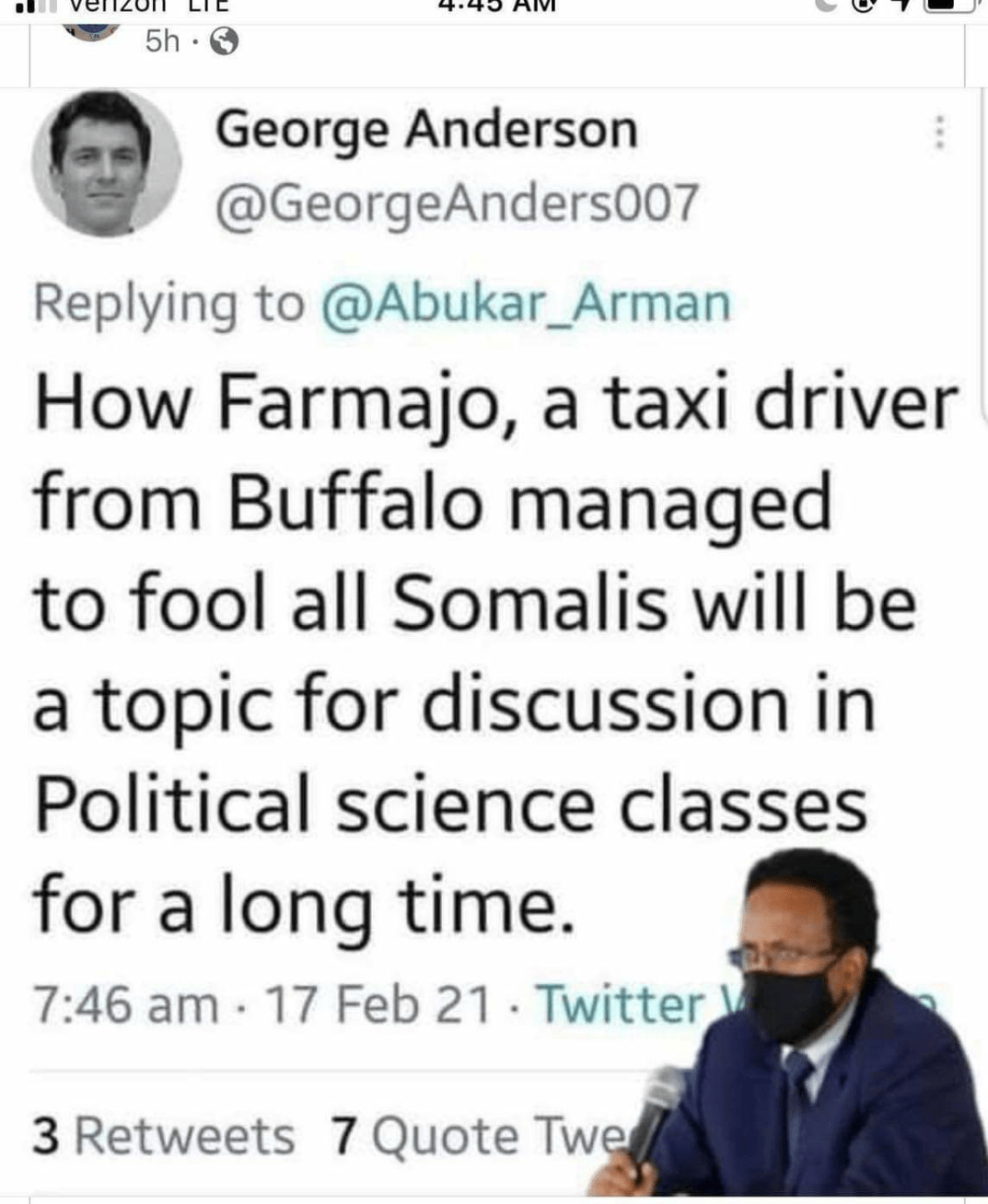
A TAXI DRIVER FROM BUFFALO

HISTORICAL LESSON TO LEARN FROM THIS INSTITUTIONAL MEMORY

Warlords vs ICU. Is 2021 a rematch of 2006?

By a Staff Reporter

The more things change, the more they remain the same. 2020/1 looks like a rematch of the Alliance for the Restoration of Peace and Counter Terrorism (ARPCT), commonly known us Warlords, and the Islamic Courts Union (ICU) in 2006. FGS is the Warlords and CPC+ is the ICU.

A keen look at the political stakes in 2020/21 takes one back in memory lane to 2006/7 Warlords vs ICU. There are striking similarities between 2020/21 and 2006/7. Similar in terms of the actors, issues and events. And in terms of composition, ideological alignment and behaviors of the actors. Of course there are a few “defections” here and there but, overall, the teams looks intact.

In team composition terms, the three pro-FGS regional administrations were members of the Warlords alliance (there’s a separate piece on this). The two anti-FGS and CPC (CPC+) are entirely all ICU, complete with their Amir.

In disposition terms, Warlords cut the image of a government since most of them were also members of the TFG. ICU was initially anti-Warlords but soon turned anti-government after routing the Warlords who prevented TFG from relocating to Villa Somalia, Mogadishu.

In terms of issues, the CPC+ is accusing the FGS of repression as did the ICU over Warlords. The difference this time is the public is mostly on the FGS side; regional actors ET and ER, who supported either side in 2006 are now backing FGS. Kenya who was neutral on Warlords-ICU, and UAE are now believed to be allied with the CPC+. Among the IC, although opinion is divided, the most influential appears to be accommodative of the FGS. Hence why FGS withstood post-February 8 CPC+’s illegitimacy tag/narrative.

In sum, 2021 Somalia politics bears a compelling semblance to that of 2006. If the results of the elections will confirm is only a mater of time.

PRESIDENT DENI OF PUNTLAND ON BOSASO ATTACK

WHY SOMALIA SLEEPWALKED INTO MARITIME DISPUTE WITH KENYA

WHY SOMALIA SLEEPWALKED INTO MARITIME DISPUTE WITH KENYA

Mogadishu (PP Features) — The maritime dispute between Kenya and Somalia surfaced in 2009, the year the former Transitional Federal Government of Somalia signed a Memorandum of Understanding with Kenya “to Grant to Each Other No-Objection in Respect of Submissions on the Outer Limits of the Continental Shelf beyond 200 Nautical Miles to the Commission on the Limits of the Continental Shelf.”

The second paragraph of the Memorandum of Understanding gives Kenya the right to claim a maritime territory of Somalia’s:

“The delimitation of the continental shelf between the Republic of Kenya and the Somali Republic (hereinafter collectively referred to as “the two coastal States”) has not yet been settled. This unresolved delimitation issue between the two coastal States is to be considered as a “maritime dispute”. The claims of the two coastal States cover an overlapping area of the continental shelf which constitutes the “area under dispute”.

In essence, the Transitional Federal Government of Somalia (TFG) accepted the argument that Kenya has a right to claim a portion of the Somali maritime territory, and that the dispute can be settled by both countries. No country has ever signed a MOA to put its territorial integrity into dispute. Abdirahman Abdishakur Warsame, the former TFG Minister for National Planning and the International Cooperation signed the MOA on Somalia’s behalf. 

Between 2005 and 2007 Kenya approached the Transitional Federal Government of Somalia led by President Abdullahi Yusuf Ahmed about “Memorandum of Understanding” on a non-existent sea boundary dispute. An informal meeting was held in Nairobi between a Kenyan diplomat and Somali diplomat. Kenya proposed an MOA with Somalia. The Somali diplomat shared  Kenya’s initiative with the former Somalia Foreign Minister Ismail Hurreh Bubaa. Mr Buubaa told the Somali diplomat that there was no maritime dispute between Somalia and Kenya and that the sea boundary between Kenya and Somalia was delimited.Ismail Hurreh: “There is no maritime dispute between Somalia and Kenya.”

In January 2009 a new Somali President was elected in Djibouti following the resignation of President Abdullahi Yusuf Ahmed in December 2008. The Transitional Federal Government of Somalia signed the MOA on April 7th 2009, almost three months Sharif Sheikh Ahmed was sworn in as the President of the Federal Republic of Somalia.President Hassan Sheikh Mohamud accused President Sharif, Prime Minister  Sharmarke and Abdirahman Abdishakur of high treason.

In 2016 President Hassan Sheikh Mohamud accused his predecessor President Sharif Sheikh Ahmed, Abdirahman Abdishakur Warsame, both Presidential Candidates then and now, and Omar Abdirashid Ali Sharmarke, a former Prime Minister and a 2017 Presidential Candidate, of high treason.

“It is unfortunate that those who have not taken seriously the risk to our maritime territory are now running for the highest office of the country. People must think twice about whom they elect to the highest office of the country” said President Hassan Sheikh Mohamud in 2016.

It is hardly a self-serving statement in an election time. Sharif Sheikh Ahmed and Abdirahman Abdishakur Warsame along with Prime Minister Omar Abdirashid Ali Sharmarke resolved to grant Kenya the right to claim a Somali maritime territory. No one was held accountable for damaging Somalia’s national interest. Former Prime Minister Omar Abdirashid A. Sharmarke shuns limelight to avoid questions about his role in the MOA with Kenya.

Alliance for the Reliberation of Somalia ( ARS) dominated the post-2008 Transitional Federal Government. As a face-saving gimmick for President Sharif, Prime Minister Sharmarke and Minister Abdishakur, the former Transitional Federal Parliament rejected the Memorandum of Understanding. A national legislature cannot rescind a Memorandum of Understanding between two sovereign countries.

 The Memorandum of Understanding questions Somalia’s maritime boundaries and article 1 of  1972 law promulgated by Major General President Mohamed Siad Barre.

.The article stipulates:

“The Somali territorial Sea includes the portion of the sea to the extent of 200 nautical miles within the continental and insular coasts, delimited according to the provisions of articles 2, and 3 of this Law.”

President Hassan Sheikh Mohamud reaffirmed Somalia’s maritime boundaries in a proclamation dated June 30th, 2014:

“The Exclusive Economic Zone of the Republic of  Somalia extends to a distance of two hundred ( 200) nautical miles from the baselines from which the breadth of the territorial waters are measured.”

Before 1991 the Somali Government representatives attended conferences on the law of sea. In 1984 Dr Mohamud Ali Turyare, a former Professor of International Law at the Somali National University represented Somalia at one such conference on United Nations Convention on the Law of Sea.

How Kenya Exploits the MOA with Somalia

On January 24th 2017 Kenya expressed reservations about some articles of the Convention on the law of the sea:

“The Government of the Republic of Kenya pursuant to Article 298 (1)(a)(i) of the United Nations Convention on the Law of the Sea, 1982, declares that it does not accept any of the procedures provided for in Part XV Section 2 of the Convention with respect to disputes concerning the interpretation or application of Articles 15, 74 and 83 relating to sea boundary delimitations, or those involving historic bays or titles.  The Republic of Kenya reserves the right at any time by a notification addressed to the Secretary General of the United Nations to add to, amend, or withdraw any of the foregoing reservations. Such notification shall be effective on the date of their receipt by the Secretary General.”

Kenya has reservations about section 2 of article 286 which states:

“Subject to section 3, any dispute concerning the interpretation or application of this Convention shall, where no settlement has been reached by recourse to section 1, be submitted at the request of any party to the dispute to the court or tribunal having jurisdiction under this section.”   

In 2014, the Federal Government of Somalia submitted the maritime dispute to the International Court of Justice, a decision backed up by the very article about which Kenya has expressed reservations.  Both Somalia and Kenya signed the United Nations Convention on the Law of the Sea on December 10th 1982. Kenya prefers out of court settlement to adjudication by the International Court of Justice.Abdirahman Abdishakur signed an MOA with Kenya on Somalia’s behalf. He said the buck stops with President Sharif Sheikh Ahmed.

In 2009, a delegation led by the former Prime Minister of the Transitional Federal Government of Somalia Omar Abdirashid Ali Sharmarke visited  London. At a ceremony for the visiting delegation held in London Abdirisaq Osman Jurrile, Posts and Telecommunications Minister, defended the decision to sign the Memorandum of Understanding with Kenya. “Who said ‘we have sold our sea’”? I swear to God we did not sell our sea” he told the audience.President Sharif Sheikh Ahmed refuses to answer questions about the MOA signed with Kenya.

President Hassan Sheikh Mohamud, is a member of, along with Abdirahman Abdishakur Warsame and Sharif Sheikh Ahmed, the Alliance of Somali Presidential Candidates. He criticised the incumbent President Mohamed Abdullahi Mohamed for not putting effort into winning the maritime dispute with Kenya.  The irony is that a group of Somali politicians who came to the political scene on nationalist sentiment against the Ethiopian intervention in Somalia had signed a Memorandum of Understanding and plunged Somalia into a maritime dispute that Kenya has cunningly manufactured. If the same people, who put Somalia in a difficult legal position, are seeking the Somali Presidency, there is no guarantee that Somali leaders will not sign agreements that damage Somalia’s territorial integrity.
A part of President Hassan Sheikh Mohamud’s speech in which he accused his predecessor, a former Prime Minister and Abdirahman Abdishakur of high treason.

© Puntland Post, 2021

Al Shabaab militants storm Somali jail, seven soldiers killedAl Shabaab militants storm Somali jail, seven soldiers killed


FRI MAR 5, 2021 / 6:53 AM EST

Abdiqani Hassan

BOSASO, Somalia (Reuters) – At least seven soldiers were killed when fighters of the Somali Islamist group al Shabaab stormed a jail in the semi-autonomous state of Puntland early on Friday, police and the group said.

Al Shabaab said it had freed at least 400 prisoners, many of them its members, in its assault on the main prison in Bosaso, Puntland’s largest city, in the early hours of Friday. The authorities did not confirm that figure.

“Last night many well-armed men attacked us from various directions. We fought back but finally they entered the central jail by force using explosions. They freed the prisoners and took most with them,” Mohamed Abdi, a prison guard, told Reuters.

“There was a hellish battle… As I fought inside, we lost five soldiers.”

He said two other soldiers who had been sent to reinforce the regular prison guards were killed in their car which was set on fire.

Al Shabaab confirmed that its fighters had carried out the attack and said they had freed at least 400 prisoners. The group often exaggerates its successes in such assaults.

“The prisoners included men and women who were al Shabaab members and were in jail for over 10 years,” Abdiasis Abu Musab, al Shabaab’s military operations spokesman, told Reuters.

Al Shabaab frequently carries out such attacks in Somalia and elsewhere as part of its campaign to oust the central government in Mogadishu and establish its own rule based on its strict interpretation of Islamic sharia law.

Bosaso police commander, Col. Hussein Ali, said an operation was underway to recapture prisoners who had escaped or had been taken away by the fighters.

(Reporting by Abdiqani Hassan, Writing by Giulia Paravicini and Elias Biryabarema; Editing by Gareth Jones)

BOSASO ATTACK: FAILURE OF INTELLIGENCE

There must be thorough accountability for what has happened in BOSASO Prison attack last night. Attack of this severity and magnitude clearly shows not only lack of preparations, adequate security response, but also unprecedented failure of intelligence.

According to preliminary reports on the attack, militants had staged an attack on the main Bosaso Prison at around 11 PM local time by blowing up the doors to free some of their colleagues, who were convicted with death penalty pending for the heinous crimes they had committed. The inmates included the man, who had murdered the P&O Ports manager, Paul Anthony Formosa, one year ago. The militants had succeeded not only freeing their colleagues, but also had caused considerable damages in lives and properties. They said, many inmates have lost their lives in the crossfire and others had fled in all directions. According to people in the know, the militants whose main focus was on the Bosaso Prison, had had simultaneous plans to distract and confuse Puntland security response by attacking a security check-point and Bosaso airport as well.

It is important to note here that with all high tech and sophisticated weaponary available, the world couldn’t replace the need for human intelligence on the ground. This is where Puntland hadn’t built intelligence capacity to counter the security threats of extremism. This blog has been warning President Deni’s Administration of the importance of security sector reforms in Puntland. Although acknowledging that some progress in that regard has been made, the inadequate security response to BOSASO ATTACK last night demonstrates that Puntland State is not yet ready to handle such destabilizing security threats.

It looks that Puntland State wrongly understands intelligence as Counter-Terrorism. Intelligence is collection, analysis, processing of data to make good judgement of what to do with the information. The State needs human intelligence operators on the ground, competent intelligience analysts and adequate resources to do the job.

(This article has been updated since posting).

Postscript. According to unconfirmed preliminary reports from Bosaso, a hot pursuit of the militants by Puntland security forces, following Bosaso attack, resulted in the killing or capturing some of them. Puntland President now seems to be on war-footing with the militants hiding in eastern mountains of Bari Region.

DRIVING WRONG VEHICLES ON THE RIGHT SIDE OF THE ROAD

This article had been published in March 2, 2019.

Welcome to a country where people drive right-handed vehicles on right-hand side of the roads, where there are no rules of the road and pestetrians walk along in the middle of road, where extremely only slow driving speed saves lives and minimize road accidents, where there is no need for traffic police and not necessarily a driving license and therefore no age limit to drive a vehicle.

You guessed. It is the new Somalia emerging from the ashes of the Civil War. Guess how long it will take to bring that country back on track, how much rehabilitation works to be done on youth, regulations, institutions and infrastructure?

But, don’t despair. There is light at end of the tunnel. It is just digging it out of the deep hole.

PUNTLAND ISSUES ARE OUT OF DEBATE IN URBAN CENTRES OF THE STATE

For some, this is a worrisome trend. When residents of a federal state see their situation and concerns closer to home as sidetrack, the leaders of that state must see the writing on the world. The reasons for residents not paying much attention to their local issues could be multiple: a) They could be complacent and take many things at home for granted.
b) They may see dimishing returns in the future of their State
c) Their local leaders may be uninspiring
d) It could be that there is no active, informative and free press to raise issues on accountability in public service and ask hard questions. e) It could be that checks and balance of power aren’t in place, questionable or disfunctional
f) It could be that there is no constructive opposition to the government of the day, among many other possibilities.

In all scenarios, it doesn’t sound healthy and comfortable state of affairs. Puntland centres of influence must take this public paralysis as a clarion call to avoid a dead end to progress.

They say, the absence of tribal clashes at a given moment doesn’t mean there is peace. Whatever the case might be, the active participation of citizens in the affairs of their home state is a good indication of people’s hope and confidence in their future.

TIGREYAN PROPAGANDA OFFENSIVE

While there is no denying of gross human rights abuses, possibly massacres of civilians by joint Amhara militia, Ethiopian Federal forces and Eritrean Army in the Tigray military offensive, the defeated leaders of TPLF and its affiliates are stepping up disinformation and propaganda campaigns of unprecedented scale to discredit the administration of prime minister Abyi Ahmed. In this media and diplomatic offensive, remnants of TPLF, its supporting diaspora media outlets and connections are accusing Ethiopian Government of the same crimes they have been committing for over 27 years of misrule, but got away with heinous crimes against humanity. For nearly three decades TPLF has been hosting a military campaign of massacres against Somali Ethiopians, Oromo, Amharas, as they have been running turture prisons for anti-regime activitists of every nationalities in the country except Tigreyans. The same Tigreyans, who were silencing journalists and free press for decades, would like the world community now to listen to their plight with empathy. They say, what goes around comes around, unfortunately.

It is a twist of fate that people in power in Ethiopia today are either the victims of Tigreyan repression or insiders and eye-witnesses of TPLF abuses and atrocities.

Before jumping into conclusion, the international community should appoint investigators to look into what was happening in Ethiopia in terms of rights violations for the past three decades, avoiding to limit itself to current Tigreyan conflict only. The world community needs to know the root causes of this conflict to help Ethiopia not to repeat it.

(This article has been updated since posting).

CHECKS AND BALANCE OF POWER IN SOMALIA’S CONTEXT

Political friction between #FGS (Federal Government of Somalia) and #FMSs (Federal Member States) of #Somalia is a part and parcel of #federalism in a tribal society- a good thing, for it is the only feasible #checks and #Balance of power.

Conventional democracy doesn’t hold any water in Somalia, and most probably, in any developing country. Let us keep it that way.

Somali Comedy

Take a listen:

KENYA V SOMALIA

TRADITIONAL CONFLICT RESOLUTION AMONG SOMALI CLAN’S MEN

I must confess that I was overhearing the deliberations of a group of elders debating on how to resolve a land dispute in Garowe, Puntland, the other day. Not present in the discussions was a lady involved in the case. This is not out of the ordinary as women here are always represented by men at elders’ forums. They have no voice in the affairs of conflict resolution and in deciding civil and legal cases. They are either part of men’s households or blood properties of the women’s respective clans. As usual, the woman’s right to hearing was never raised in this particular discussion. The parties of only men to this dispute were present in the hearing.

One interesting take away from this particular deliberation is the proposal of one party to be satisfied with either one of two options for resolution of the dispute:
a) Sharia law
b) Customary law of clan system
The other party rejected to referring the case to the Sharia law on the basis of their opinion that today’s people have weak moral standing to trust them with truth-telling at legal bench as they are likely to swear in perjury.

In my experience as a grown-up person, this is the first time I heard a Somali person rejecting Sharia Law on the basis of losing faith in people’s honest to tell the truth under oath. Society is changing and requires updating tools for conflict resolution.

The deliberations went on to conclude in a typical elders’ mediation between parties, satisfying both parties as fair judgement on the case.

Land disputes are many and severe in Somalia nowadays, resulting in loss of lives. It is no longer the disputes over camel hustling.

(This article has been edited since posting)

Massive investment in social studies and civics education proposed to address eroding trust in democratic institutions

Washingtonpost Article

Education

By Joe Heim

March 2, 2021 at 2:00 a.m. GMT+3

It has been a bad 12 months for the practice of civics in America.

The U.S. Capitol attacked by thugs. An alleged plot to kidnap a state governor. Bogus claims of widespread election fraud. Violent protests in the streets. Death threats against public health officials. And a never-ending barrage of anger and misinformation on social media directed at, and by, politicians, leaders, pundits and an increasingly bitter and frustrated populace.Support our journalism. Subscribe today.

As the battles have raged, trust in institutions — government, media, the law — has plummeted.

So how did we get here? And how do we get out?

For many close observers, a direct line can be drawn from today’s civics crises to a long-standing failure to adequately teach American government, history and civic responsibility. Breadth has been emphasized over depth, they say, and the cost is a citizenry largely ignorant of the work needed to sustain a democracy.

Now, a diverse collection of academics, historians, teachers, school administrators and state education leaders is proposing an overhaul of the way civics and history are taught to American K-12 students. And they’re calling for a massive investment of funds, teacher training and curriculum development to help make that happen.

The Educating for American Democracy (EAD) initiative will release a 36-page report and an accompanying 39-page road map Tuesday, laying out extensive guidance for improving and reimagining the teaching of social studies, history and civics and then implementing that over the next decade.

“Civics and history education has eroded in the U.S. over the past fifty years, and opportunities to learn these subjects are inequitably distributed,” the report states. “Dangerously low proportions of the public understand and trust our democratic institutions. Majorities are functionally illiterate on our constitutional principles and forms. The relative neglect of civic education in the past ­half-century—a period of wrenching change—is one important cause of our civic and political dysfunction.”

After Capitol attack, social studies and civics teachers struggle with real-time history lessons

Work on the report began two years ago with $650,000 in grants from the Education Department and the National Endowment for the Humanities to come up with a plan to address what some have described as an existential issue for the country. The grant was later increased to $1.1 million. More than 300 individuals with experience at all levels of civics, political science and social studies education contributed to the project, including many with disparate views and ideas about how the work should be done.

That emphasis on diverse viewpoints and input was intentional and necessary, said Louise Dubé, executive director of iCivics, a nonpartisan nonprofit founded in 2009 by former Supreme Court justice Sandra Day O’Connor to promote and create content for civic education in schools. Dubé headed work on the report along with leaders in civics education from Harvard, Tufts and Arizona State universities.

“This project is about restoring the ability to self-govern, and clearly we have a serious problem with that right now,” Dubé said. “At the core of what self-government requires is for you to understand the history, to understand it from multiple perspectives to know more history, but also to be able to talk and discuss with others who disagree with you and to form a path forward. And all of those things are very critical right now.”

Less memorizing of dates

The report calls for an inquiry-based approach that would focus less on memorizing dates of wars and names of presidents and more on exploring in depth the questions and developments, good and bad, that have created the America we live in today and plan to live in well beyond the nation’s 250th anniversary in 2026. What students need, the report argues, is not a laundry list of facts, but a process that produces a better understanding of how the country’s history shaped its present.

Before social studies standards in Pennsylvania were revamped, teaching the subject was like preparing students to do well in a game of Trivial Pursuit, said Shannon Salter, a high school social studies teacher and curriculum designer in Allentown.

She rattled off some of the previous teaching requirements.

“Did you teach the War of 1812? Did you teach Teapot Dome? Can your students memorize the capitals of all 50 states and spout them in alphabetical order?” Salter said. “It was all a list of items that you could recite on a multiple-choice test and treating it as though that was meaningful learning in history and social studies.”

What students need, Salter said, is an awareness of how to get involved in the issues of their communities and a much better understanding of how systems work and how individuals can participate in the processes of electing, debating, governing and consensus-reaching.ADnull

With the new social studies standards, classes can build critical thinking skills that teach students “how to raise your voice in your community and advocate for your needs,” Salter said. “They’re learning to collaborate to solve problems and challenge the way things are so that the country continues to become that more perfect union that we envision.”

The new focus on educating students to become more knowledgeable citizens calls for an investment in teacher training, curriculum development and an approach that would emphasize teaching of history and civics to the same degree as STEM and English language arts courses. The report doesn’t provide an estimate of costs, but its goal is to reach 60 million students, 100,000 schools and 1 million teachers by the end of the decade.

“What we really need is national will to do this,” said Danielle Allen, director of the Edmond J. Safra Center for Ethics at Harvard University and one of the leaders of the EAD project. “We have had national will around investment in STEM education, and the results of that show themselves. My colleagues in STEM fields at the university level will say that they’re getting the best prepared students they’ve ever gotten. We can’t say the same thing in the domains of political science and history and things like that.”

As the election draws near, civics and government teachers walk a fine line

No national standards

But while the road map provides guidance for states on how to implement the new approach, getting buy-in from all 50 states, the District of Columbia, territories and tribal nations won’t be simple. Unlike with math and science, there is no nationally agreed upon set of standards for teaching social studies. Each state issues social studies guidelines for school districts to follow, and these requirements vary widely.

Stefanie Wager, president of the National Council for the Social Studies, said that there has long been a need for a common vision and guiding document for social studies and that the EAD report and road map will meet it. But there’s still a lot of work to be done before states will get on board.

“Part of the reason we’re in the mess that we are in as a country is that we are so different in terms of what happens in states across the country in terms of teaching social studies,” said Wager, a former teacher who until earlier this year worked for Iowa’s department of education. “The road map has a good possibility of moving us in the right direction, but if every state does something very different with it in terms of implementation, then it loses its magic. The devil, I think, is in the details of how it is implemented.”

How is the history of slavery taught in America’s schools

Paul Carrese, a member of the EAD’s executive committee and director of the School of Civic and Economic Thought and Leadership at Arizona State University, said it was important that the group provide not a national curriculum but a framework that all 50 states, the District, territories and tribal nations would take seriously and embrace. He acknowledged the challenge that presents but said the need is urgent.

“We obviously think education for informed and engaged citizens is fundamental to national security and as important to the country as economic preparedness and competitiveness,” Carrese said. “For the civic fabric of the country, the situation couldn’t be more grave than it is right now.”

OPEN LETTER TO NEW PRESIDENT OF SOMALIA

http://imailwarsame.blogspot.com/search?q=Cdrc&m=1

HAS PUNTLAND LOST ITS VISION FOR SOMALIA?

Many people, including Residents of its residents, are perplexed by the policies of the State of Puntland. Certainly, there are reasons for this confusion. Here are some of them:

  1. There were no enough deliberations of Puntland policies by its successive administrations towards Somalia for the past 22 years.
  2. Schools in Puntland don’t teach civic education as they are private shops with no public quality control and curriculum enforcement.
  3. There are no meaningful think tank centres in the State.
  4. There were no concerted efforts in the State to address youth issues.
  5. Centres of power and influence like traditional leadership and civil society organizations were left to their own devices for abuse by non-governmental actors.

The result is devastating for all to see and feel now.

Now the administration of President Deni is desperately trying to catch up with the lost time, but it finds itself doing an uphill battle to reorient, re-inform and re-educate the general public. The information gap is huge and will require tremendous efforts and resources to bridge. However, the critics of Puntland and opponents of federalism have been taking advantage of Puntland weaknesses. There is a battle for public opinion now raging in Puntland. In this regard, the next three years will be critical when you will see the dust settling in.