About the blogger:
This blog is associated with the former Chief of Staff in Puntland State Presidency, 1998-2004. He also worked with the UN and World Bank Joint Secretariat for Somalia’s Re-construction and Development Program (RDP), 2005-2006, as a Zonal Technical Coordinator for Puntland and later as National Aid Technical Coordinator with the Transitional Federal Government of Somalia and European Union. He is now an independent political analyst and commentator on current issues and occasionally gives historical perspective on modern Somalia’s politics. He lives and works in Toronto, Canada. He can be reached at: ismailwarsame@gmail.com
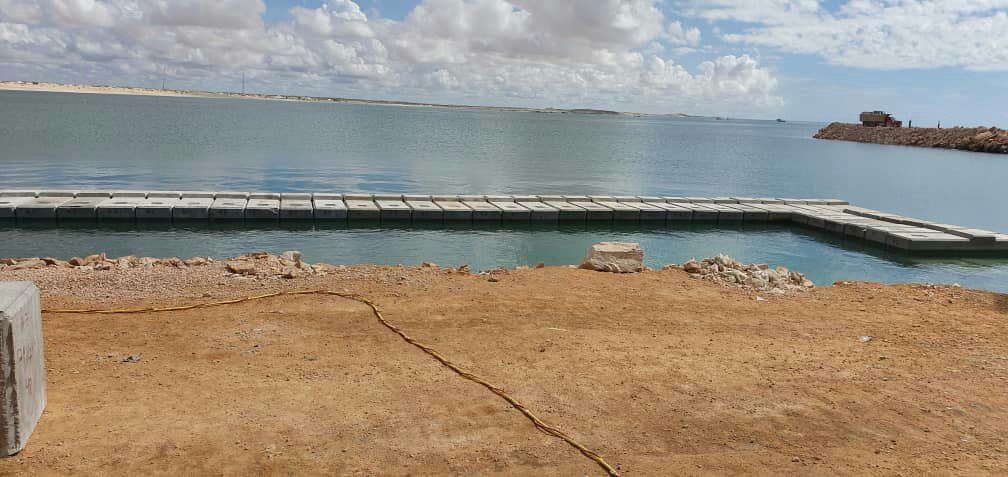
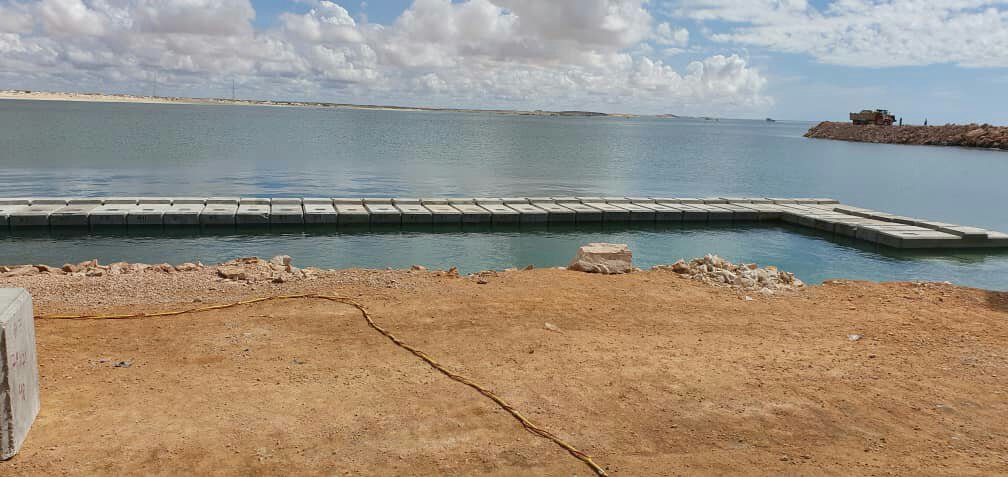
Many people have deemed it an impossible mission for Puntland to construct a seaport of that size, leave alone by a sub-clan of its constituency. These same skeptics are now mesmerized to watch the harbour coming live before their eyes. Read this article to look back its conception and dream of realizing it. Read this article.
It is a casual conversation at a hotel lobby in Garowe for afternoon tea or an early evening chat after breaking fast in Ramadan. It isa typical group of persons talking about different issues in the locality or beyond that on wider Somalia. It is customarily called “arm-chair fight” (Fadhi-ku-dirir), an exchange of views by some and, cynical personal take on politics and politicians by others. At times, it is passionate and lively. It is boring and pessimistic in other moments. Given the nature and type of participants, and perhaps, their backgrounds in life, you don’t expect original or novel ideas to come out from this setting. It is a deliberation along the old English phrase “killing the time”, not used or heard in modern times.
The takeaways of these conversations are always the same among the Somalis:
A conversation touches different topics in a scattered brain fashion.
There is a disregard for professionalism and a need for expert advice. It cites no authorities. It doesn’t refer to rich Somali poetry as they are common folks in society.
It is thinking along the same old lines while expecting a different result.
It is disregarding the other points of views.
The views are highly opinionated, full of unexamined falsehoods and half-truths.
It is devoid of any tendency to learn from the experience of the conversation.
It is about whining and blaming others for any misfortune. It is always someone else’s faulty. It is often playing the victim card. Occasionally, it is showing off someone’s perceived better clan heritage and superiority.
This is a typical debate in Somali society today. The conversation is only deemed civilized if participants refrain from personal attacks on the personal views of others on controversial issues in current affairs and politics. It is rare to see two Somalis concurring in their views on Somali regional or national politics. Think of consensus-building in such a society. When there is no common vision and collective national objectives and strategy, think of making a nation-state. Isn’t this where the core of all Somali problems lies? Have your say.
There are also serious misconceptions on the part of the opposition leaders and international community alike about their understanding of the nature of any regime – you can’t take some figures of the same regime in isolation. You have to take into account that Prime Minister Roble is part of Farmajo regime. He isn’t an independent policy maker. Political and diplomatic pressure on the regime as a whole must, therefore, be relentless to deliver the expected outcome.
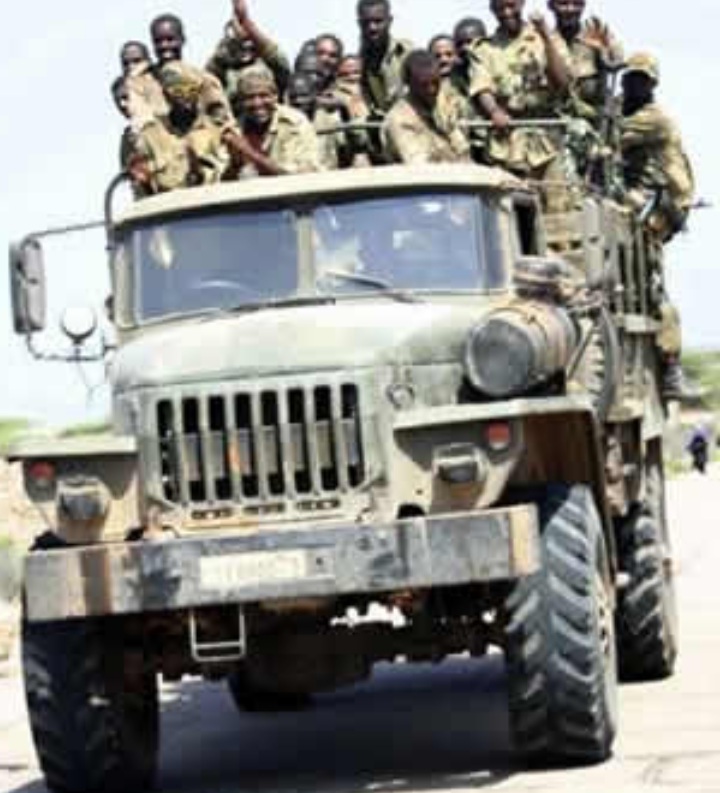
A friend of mine sent me a much circulated WhatsApp message the other day about an imminent or ongoing Ethiopian invasion of Somalia under the pretext of propping up Farmajo. I expressed my doubt about that possibility happening any time soon. My skepticism is based on the fact that Ethiopian forces had suffered heavily in Mogadishu during their occupation (2006-2009) at hands of Al-Shabab militants -they would think twice before coming back to Somalia.
To appreciate the extent of their losses and eventual defeat, I will share you a story. I wasn’t with or a member of the Transitional Federal Government (TFG), but I had volunteered to work on the release of a group of four young Somalis from Thailand prison. I was on my way to Bangkok via Addis Ababa. I flew from Mogadishu onboard a huge Ethiopian military transport aircraft full of wounded soldiers in late 2007. On the plane, the sound of moaning and crying of wounded soldiers were deadly shocking. The foul smell was suffocating and killing. Later in Addis Ababa, I had had a chance to visit the Ethiopian Ground Forces Hospital with the help of Hassan Taakilo, then the Military Affairs Coordinator at Abdullahi Yusuf’s Presidency (Villa Somalia) and his friends of TPLF military commanders on leave in Addis. By the way, based on my conversations with those TPLF military commanders from war front in Somalia, I discovered right there that, because of their long armed struggle with Mengistu Haile-Mariam Derg government, and the support they had received from Somalia then, the TPLF political/military establishment had had sympathy to Siyad Barre’s supporters and Marehan clan base. There, in the hospital, I saw hundreds, if not thousands of wounded and disabled Ethiopian soldiers brought from Mogadishu war theatre. It was the worst horror scene I had ever witnessed in my enire life.
Many Somalis don’t know about what had happened to the Ethiopians in Somalia. It was a military fiasco that shook the foundations of Melez Zenawi TPLF Government. It was an historic military defeat that would keep Ethiopia away from Somalia for a while. Somali Politicians, and especially the likes of Farmajo should know this recent history. Abyi Ahmed of Ethiopia isn’t too stupid to repeat the same historic blunder of Melez Zenawi in Somalia. Add to this, the military and political quagmire in Tigray Province of Ethiopia and its ramifications of international condemnation for war crimes and human rights violations by Abyi’s invading military with Eritrean help.
Let us give him the benefit of the doubt, and wish him every success in making through to the elections. It is true Somalis have little patience for slow delivery of public services, but they are equally good in giving a politician a chance to prove himself/ herself – not for a long time, though.
Sor far, Roble was careful not to outshine his boss, conceding his constitutional executive powers to Farmajo. Keeping a low profile may have saved him politicaly until now, on the one hand, while that might not have earned him leadership points he needs for a successful future political career, on the other hand.
It is now about time he shows leadership based on fair judgement, consensus building and political maturity. Any politician who becomes hostage to his/her immediate clan constituency cannot develop national leadership score and will not be able to lead by positive example. Mohamed Hussein Roble is now on the spotlight and will not be able to hide behind Farmajo as he has been doing since his appointment as prime minister. Good luck! They said the taste of pudding is in the eating. It is to be seen how Roble will handle, reconcile and synchronise a) Farmajo interference b) Ambitions of the Council of presidential candidates c) Puntland and Jubaland complaints against the Federal Government.
In response to a question by a WDM reader, who thought blog writing is an old fashion,
I totally agree. However, I thought it was necessary to dedicate a blog exclusively to Somali issues. Moreover, political figures don’t use websites – they either use blogs or podcasts. Scholars use blogs or journals. Some do interviews with reputable journalists to send their messages across. That is because mainstream media, including social media, don’t give the freedom of expression bloggers need to cover their fields of interest. Bloggers enjoy the creative works they do. You may not feel that until you become one or hook up with one regularly.
But, remember this: blogs are the most reliable tools for political writers and commentators living in countries where freedom of press doesn’t exist. In other words, blogs are media of the rebels, politically and morally brave. Blogs still exist and much relevant in all authoritarian and conservative regimes.
Finally, many readers of WDM articles, including diplomats, politicians and researchers, have confessed to me that they found WDM blog not only interesting, but also enlightening and useful. That is why many had subscribed to the blog. Don’t you agree?
Now that Somalia has narrowly come back from the brink of disaster caused by the outgoing President, Farmajo, the hard job of restoring trust and faith between Federal institutions and Federal Member States begins. Two points need to be raised here:
Will Farmajo stay away from interfering in the electoral process to which he said he entrusted in the prime minister?
Will Prime Minister Roble play fair in handling issues raised by Puntland and Jubaland with regards to thorny constituency issues and need for the independence of Federal Electoral Commission?
Farmajo is still the commander of the armed and security forces. It is to be seen how he would behave in keeping the forces politically neutral with regards to the electoral process.
Hawiye opposition leaders (mainly Council of Presidential Candidates, CPC) have organized militia and portion of residents of Mogadishu in their attempts to challenge Farmajo’s illegal extension of mandate in April 12, 2021. Would they scale back and demobolize these forces for political environment conducive to holding peaceful elections, or would they use this new anti-Farmajo movement for opportunistic political gains? We will know the turn of these trends in the coming weeks. But, one thing still holds true: These elections will be taugh and rocky. This is a price to pay for democracy.
WDM has the pleasure to share the news that more than 95% of articles of critical analysis on Farmajo’s “Nabad & Nolool” Administration during the course of three and half years have been proven not only right and but also prophetic. You have the freedom to refer to all those articles at https://ismailwarsame.blog to come to your own conclusions. This is also true to other issues covered with regards to Somalia and the sub-region.
Subscribe to the blog and support its free editorial policy based on independence of its contents without fear or favor. Don’t miss any article and get it delivered to your inbox immediately as posted.
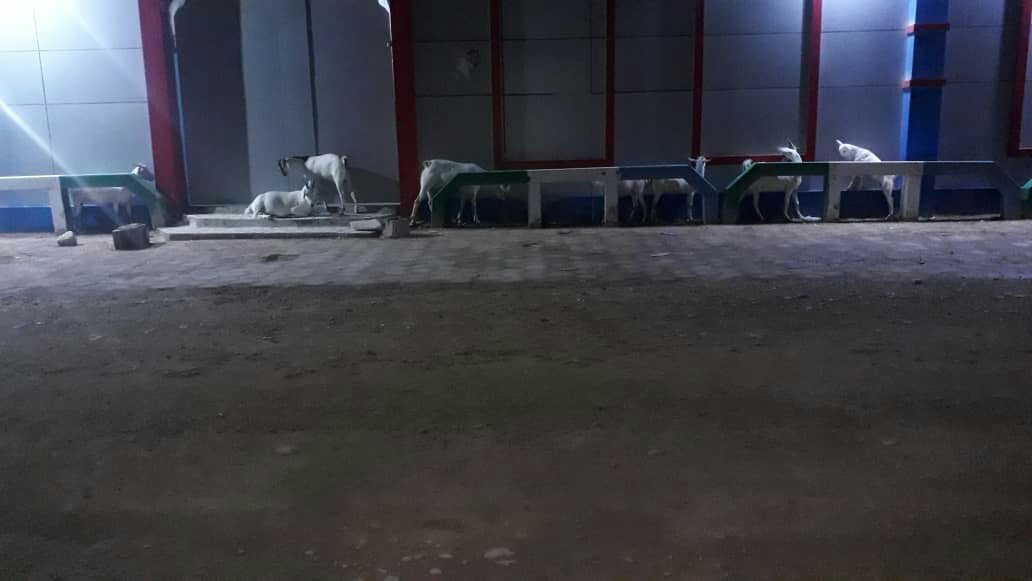
I was driving yesterday evening along a rough road infront of Golis Telecom HQ in Garowe, when I had noticed the entire building and its surroundings were taken over by goats like hungary locusts over a field of plantation. The local government of Garowe should revise its city council membership to consider electing some persons representing the undeniable numerical superiority of herd-resident population in Puntland Capital City, unless the existing members of the City Council consider themselves as representatives of the interests of growing population of herds here.
There are either no city regulations governing the mess that had been created by huge influx of herds into Garowe, or nobody cares to enforce such city by-laws. Now, goats loitering in Garowe City outnumber its human residents. Under these circumstances, there is a need to establish organizations for animal rights. The abusive owners of these invading herds too should lawyer up because there will be soon lawsuits against against them for turning the City into animal zoo with impunity.
There are no veterinary/medical centers in the entire city of Garowe for the welfare of huge number of goats and sheep lazily loitering at gates of every building to the inconvenience and annoyance of every citizen in town. Goats and sheep deliver their babies out in the streets with nobody caring for or looking after them. Vehicle drivers find it difficult to move around the city without crushing into flocks of herds blocking driveways and roads. Earlier, one commentator wrote that Garowe City couldn’t hire the required municipal workers for garbage collection because goats do that job for them to relieve the city of extra budget burden the City Council may otherwise allocate.
This is a dystopian world frightening every civilized person. Puntland State ought to intervene and do something about the ongoing animal cruelty, bad culture of the owners of animal herds in town, and poor job performance of the Garowe City Council in abysmally failing to regulate the chaos caused by roaming and trespassing herds.
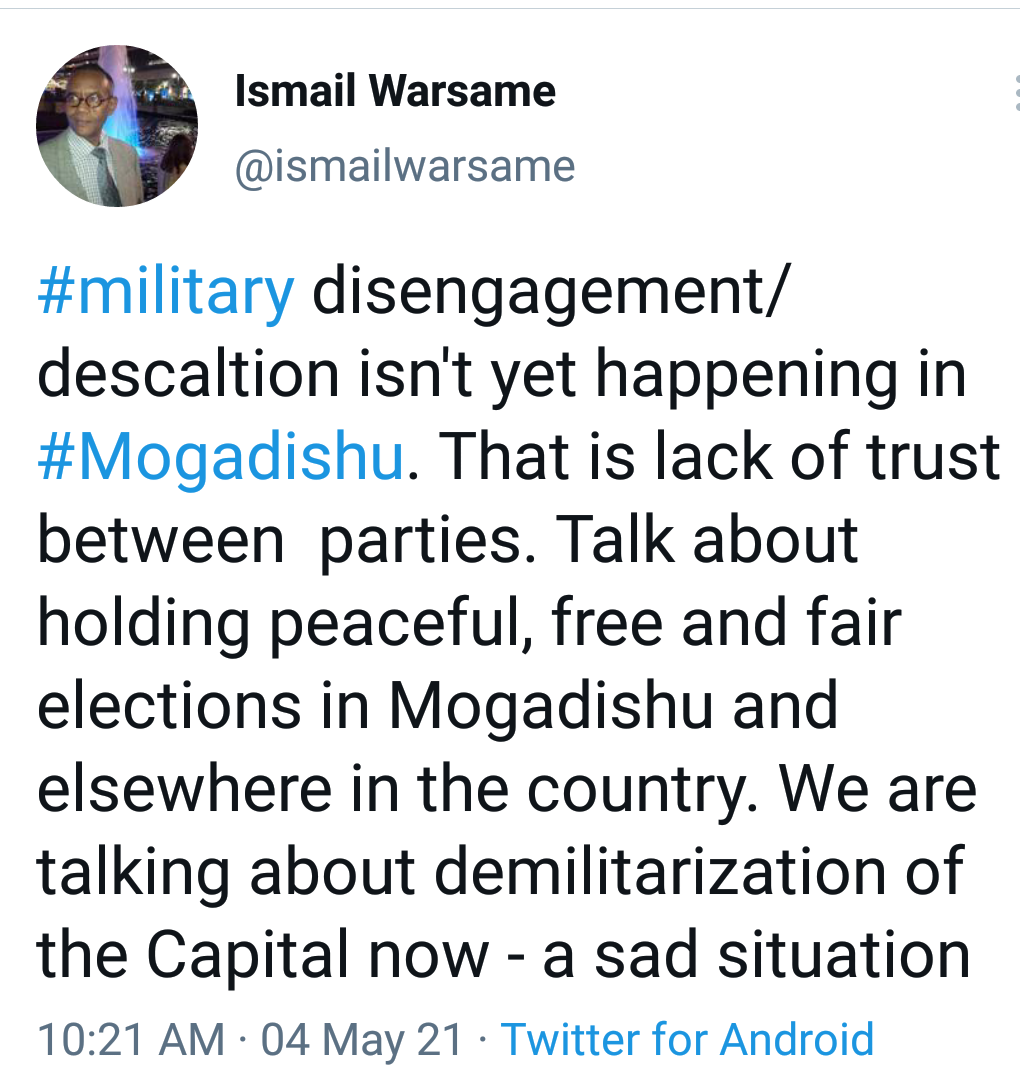
There is calm before the storm. What is happening in Mogadishu now is re-orentation of forces and weighing of strategic/political options by Farmajo, on one side, and the Hawiye opposition forces, on the other.
Farmajo is planning his next step. He had started with bringing more troops to Mogadishu, mainly from Gedo in Jubaland and Galgadud (DusaMareb) in Galmudugh. He had sought alternative sources of funding for his regime, mainly from Gulf States of Saudi Arabia, Qatar, Oman, and Turkey, among others, as Western aid to Somalia is about to dry up. He is engaged in counter-balancing his Hawiye opposition through divisions in their rank and file in seeking help from some former politicians like Hussein Aidid, Ali Mohamed Gedi, Mohamed Sheikh Gacmadheere and bunch of others. He is weighing his opinions to use the Lower House of Parliament for further political intrigues, but Somalis and world community expect them to rescind their recent controversial and unlawful act of April 12, 2021, extending Farmajo’s mandate to two more years. Farmajo sees power is slipping out of his grip. His so-called Somali National Army, SNA, is fragmenting alone sub-clan lines. Now, it is just a matter of time before he is pushed aside.
On the opposition side, there are mobilization campaigns of Hawiye political and armed militia to depose Farmajo under the pretext of holding elections. A series of meetings between Prime Minister Roble and Council of Presidential Candidates, CPC, are continually taking place in Mogadishu to seek consensus on how to handle Farmajo. They seem to have persuaded Hawiye leaders of Galmudugh and Hirshabelle, Qoor Qoor and Guudlaawe, respectively, to the side of the opposition, though reluctantly. Prime Minister Roble is using his Hawiye clan card to challenge Farmajo and to demonstrate that he is a relevant figure in Mogadishu political power plays that couldn’t be easily deposed by the Parliament like they did with former Prime Minister Hassan Ali Khaire. The opposition is also monitoring the activities of Farmajo’s henchmen, such as commanders of military, police and security forces.
Meanwhile, in their meetings, Hawiye opposition leaders were not talking about the two elephants in the room – Puntland and Jubaland.
Things are moving in Mogadishu in a fast pace. Stay tuned.
IT IS TIME TO LOOK AT AND RECORD THE BIOGRAPHIES AND BACKGROUNDS OF CURRENT SOMALI LEADERS.
DO WE KNOW WHERE THEY ARE COMING FROM AND WHAT THEY STAND FOR? HOW COME DO WE IGNORE THESE IMPORTANT FACTORS IN SOMALI POLITICS? HOW DO WE EXPECT TO FIND SOLUTIONS TO OUR POOR LEADERSHIP PROBLEMS AND NOT REPEAT THE SAME WRONGS OF YESTERDAY?
See the article in its original context from December 29, 1992, Section A, Reprints New York Times, enjoy full access to Times Machine—view over 150 years of New York Times journalism, as it originally appeared. This is a digitized version of an article from The Times’s print archive, before the start of online publication in 1996. To preserve these articles as they originally appeared, The Times does not alter, edit or update them. Occasionally the digitization process introduces transcription errors or other problems; we are continuing to work to improve these archived versions.
More than 100 religious leaders and business executives, a doctor and other prominent residents of this port city were hunted door to door and killed in three nights of terror that began on the eve of the American landing in Mogadishu, Somali witnesses and United States diplomats say.
The killings were directed by the clan leader who controls Kismayu in a move to eliminate educated Somalis who might support the Americans, United States officials in Somalia said in interviews over the past two days. All the victims were Harti, who have deep roots here and say they regard other clans as occupiers.
The clan leader was identified as Col. Omar Jess, a member of the Ogadeni clan, who seized control of the city in May. Recent public statements by him seem to support the assessment of the United States officials, who are directing more than 20,000 troops in securing relief supplies for this famine- and war-wracked country. The Night the Trucks Rolled
The night the killings began, trucks roared through town and wild gunshots could be heard as Harti were pulled from their homes and killed on the edge of the town, Somali witnesses said.
The killing is continuing, but sporadically, Somalis say, adding that the timing and the circumstances of the massacre show the treacherous terrain of clan politics that the Americans are stepping into in Somalia.
Colonel Jess, who has tried to ingratiate himself with the Americans, apparently used their impending arrival as an excuse to wipe out rivals, one associate said. On Dec. 19, 11 days after the first killings, Colonel Jess warmly welcomed President Bush’s special envoy to Somalia, Robert B. Oakley. The next day American troops arrived in Kismayu. A Roundup at 3 A.M.
The colonel also has a strong ally in Gen. Mohammed Farah Aidid, one of the two clan leaders who control Mogadishu and who have been the focus of Western diplomatic efforts.
[ General Aidid and his rival, Mohammed Ali Mahdi, embraced publicly in Mogadishu, renewing promises to end hostilities. Page A6. ]
Grim details of what happened in the killing spree were pieced together from Somalis who escaped or who hid Harti, and from Western relief workers whose agencies have tried to protect Harti employees.
Many Somalis interviewed in the last two days said they wanted the story to get out but, fearful of retribution, they insisted on anonymity.
One survivor, a man in his 20’s, said he was blindfolded with five others after loyalists to Colonel Jess broke into his house at 3 A.M. on Dec. 9. He said the women in the house were beaten with guns and the men were driven in a “technical” — a souped-up jeep with weapons mounted on it — to the beach.
The four Harti in the group were lined up and shot without questions, the survivor said in an interview here. The survivor and another man pleaded with the gunmen that they were not Hartis, and the killers took them to a Jess encampment until morning, then released them. A Surgeon Is Shot
One of the five Somali doctors at the Kismayu hospital, Mohammed Musa Sugule, a Harti, was shot in front of his wife and children, according to several Somalis and to an account given to Reginald Moreels, the president of the medical agency Doctors Without Borders.
Dr. Moreels, who arrived in Kismayu on Dec. 12, said he was told by a doctor at the hospital that Dr. Sugule, a well-known surgeon, left work one evening and joined his family in a place where there was “quarreling” with Jess fighters. Dr. Sugule was shot in the head, Dr. Moreels said.
“In the whole week after my arrival, there was a lot of clannic cleaning,” Dr. Moreels said in an interview from Brussels. “I was struck by the hate among the people. A lot of people were shot to be killed — they were shot in the head, the thorax, the abdomen. In war there are two types of injuries: to the limbs to handicap or, as in this case, to kill.” A Confusion of U.S. Goals
The American-led military intervention in Somalia has been repeatedly described by Washington as limited to securing routes for the delivery of aid.
But in the nearly three weeks since the troops landed, it has become clear that because so many of the hungry died before the foreign forces arrived, emergency food is perhaps a less critical issue than was originally outlined. Just as important now, say Western diplomats, aid workers and Somalis, is the need for political reconciliation, to allow Somalia some semblance of normality.
In the late afternoon before the Americans landed on the beach of Mogadishu, Colonel Jess called a rally in Kismayu and said the town had to be “cleared” of people who would cause problems, a member of his central committee said in an interview. The committee is a 74-member Ogadeni group, the Somali Patrotic Movement.
This was the go-ahead for the killings, the committee member said, adding that it was “obvious” that Colonel Jess’s main ally, General Aidid, was in collusion. General Aidid visited Kismayu briefly on Dec. 6, two days before the start of the killings. A Warning From the U.S.
Mr. Oakley, the Presidential envoy, said in an interview Saturday that he believed “over 100” people were killed in the clan purge. Mr. Oakley said he had told the Colonel that “we knew exactly what went on and we won’t forget it.”
The envoy, who visited each Somali town ahead of the troops to explain their role to local leaders, suggested that Washington’s possible response to the killings was limited. He said the Security Council resolution authorizing military intervention in Somalia made no provisions for trying suspects charged with war crimes.
“The legal situation is very clear,” Mr. Oakley said. “We are not an occupying power. We have no power of arrest. There is nothing in the Security Council resolution about war crimes, as there is with Bosnia.”
A Western diplomat acknowledged that by dealing with local leaders like Colonel Jess, the foreign forces ran the risk of giving them legitimacy. “Kismayu is a political problem, not a humanitarian problem,” the diplomat said. An Attempt at Isolation
Instead of taking direct action against Colonel Jess, Mr. Oakley said, attempts would be made to isolate him by encouraging traditional leaders to take part in new town committees. The American troops, joined by Belgians here, made their first moves against Colonel Jess today by surrounding a compound where he keeps a number of armed vehicles, with the apparent intention of confiscating them.
Kismayu, which has a reputation in Somalia as a particularly vicious and volatile town, has been battered by waves of occupying armies over the past two years of Somalia’s civil war. But the killings in early December were the most systematic and brutal, Somalis witnesses said.
Dr. Moreels, of Doctors Without Borders, who stayed in Kismayu until Dec. 22, said he worked on “hundreds of war wounded” in the time he was there.
On his arrival, Dr. Moreels said, he went to see Colonel Jess to seek a guarantee that all the people, no matter what clan, would have access to the hospital. Many Harti, he said, were afraid to come to the hospital and Harti staff members were too scared to leave the hospital grounds, he said. ‘Just a Little Problem’
“Jess said it was just a little problem one night and things would go better,” Dr. Moreels said. “It was a complete lie because all the nights there were clannic cleanings.”
One of the most prominent people killed was Ali Warabe, a Harti elder, several Somalis said. His body, stripped of his expensive sarong, was found with nine others at Gobuen, 10 miles north of the city, according to a Somali friend. Among others in the group, all blindfolded, were Mohammed Abdi Hersi and Gura Hadji, two senior members of the clan.
Aid workers said they knew of one Harti man who had lost 17 members of his family in the purge.
For the Harti who escaped, daily life became a torment of fear.
A young educated Harti who supervises a center for an international aid agency in Kismayu said he was grabbed on Dec. 14 at the center and surrounded by five armed Ogadeni men who said they wanted to kill him.
“They shouted at me: ‘How can a Harti man work in a place occupied by the Somali National Alliance, especially in such a post,’ ” the young man recalled, a references to the group formed by Colonel Jess and General Aidid.
He was saved, the young man said, by sympathetic workers at the center who outmaneuvered the attackers. A Smooth Character
The killings in Kismayu did not seem out of character for Colonel Jess, both Americans and Somalis said. He is described as showing a smooth veneer and being practiced at a vocabulary that he thinks will impress Westerners; his public speech to Mr. Oakley on Dec. 19 was full of references to the emerging democracy in Somalia.
But, above all, he is known as a ruthless military man.
He was also a close colleague of Gen. Mohammed Said Hersi Morgan, the son-in-law of the ousted President, Mohammed Siad Barre, when General Morgan masterminded a war in 1988 against the Isaak clan in the northeastern city of Hargeisa.
Colonel Jess attended medical school in Italy, the former colonial power of the southern part of Somalia, but never finished, a colleague said. He received his military training in the former Soviet Union.
A member of Colonel Jess’s alliance said that three days after the killings began, a senior member of the central committee, Ali Haidar Ismael, criticized the colonel in public and called him a “criminal.”
The committee member said the colonel replied that he was not a criminal, and that the actions were the recommendation of the alliance’s “security committee” as “necessary for the security of the country.
The United States notes President Farmaajo’s April 28 commitment to return to the September 17 election agreement and resume talks immediately with Federal Member State leaders. We call on the President and Parliament to act swiftly to annul the April 12 mandate extension bill.
We commend Prime Minister Roble and the Federal Member State leaders for rejecting a mandate extension. We urge Somalia’s national and Federal Member State leaders to meet immediately to finalize a consensus-based electoral model and hold parliamentary and presidential elections as soon as possible on the basis of the September 17 agreement. All leaders must set aside their political aspirations and differences for the good of the Somali people and negotiate in good faith without preconditions and with a willingness to compromise.
We also call on Somalia’s security forces and all armed groups to stand down and allow political dialogue to resume in an atmosphere free from violence and intimidation. Continuing conflict will only serve to worsen conditions for the people of Somalia.
Waxaa muuqata sii kala fogaanshiyaha siyaasiyiintii mudaba halka doon wadasaarnaa, oo kala ah madaxwayne Farmaajo, RW Rooble iyo sadexda maamul goboleed ee Hirshabelle, Galmudug iyo Koonfur galbeed.
Sida ay ii sheegeen ilo xog ogaal ah, warsaxaafadeedyadii ka soo kala baxay xaafiisyada Galmudug, Hirshabelle iyo Ra’iisalwasaaraha ayaa waxaa ay baajiyeen go’aan ay qaateen madaxwayne Farmaajo iyo lataliyayaashiisa, kaasi oo ahaa in weerar lagu soo afjarayo xiisadda Muqdisho ay dawladdu ku qaado kooxaha mucaaradka ee ka soo horjeeda muddo kororsiga.
Shirkii caawa u socday RW Rooble, Labada maamul goboleed ee Galmudug iyo Hirshabelle iyo midawga musharixiinta ayaa diiradda lagu saaray laba qodob oo kala ah arrinta amniga Muqdisho iyo sidii loo aadi lahaa doorasho loo dhan yahay.
RW Rooble oo taageero ka helaya beesha Caalamka, maamul goboleedyada iyo midawga musharixiinta ayaa la filayaa in uu ku baaqo shir ay isugu yimaadaan maamul goboleedyada iyo qaybaha bulshada, kaas oo la filayo in uu ka dhaco muqdisho.
Beesha Caalmka oo la sheegay in ay la hadashay Gudoomiyaha Baarlamaanka mursal ayaa kula talisay in aanu qaadin talaabo ka hor imaanayso doorashada 17 September.
When the late Somali President Abdirashid Ali Sharma’arke was assassinated in 1969 during a presidential visit to the town of Las Anod, Sool Region, in Northern Somalia, his body was brought back to the Capital Mogadishu for burial in a state funeral ceremony. Residents of Wardhigley Quarter of Mogadishu (Banadir Region), where the National Cemetery was located had resisted allowing a final resting place for President Sharma’arke’s body, simply for tribal reasons. He was the wrong body.
When the Military Government of Siyad Barre had collapsed in 1991, and the brutal dictator was chased out of Mogadishu by mob led by the United National Congress (USC), the Hawiye prominent figures of Barre Regime were spared and embraced by the invading Hawiye rebels and looters. Regime’s well-known figures and personalities like Vice President Hussein Kulmiye and Jilicow, the notorious National Security Services Chief, were treated and accepted as members of USC. Non-Hawiye residents of Mogadishu of mostly Darood origin were either killed or fled to safety to other parts of the country and to all corners of the world.
When Hawiye politicians rose against the late of President of the Transitional Federal Government of Somalia, Abdullahi Yusuf, in 2008, members of his government, including Prime Nur Adde and deputy Prime Minister Ahmed Abdisalam, among others, continued to enjoy Hawiye support.
This tribal politics of Mogadishu residents, Hawiye politicians, intellectuals and elders is one of the main factors for the existence of a defacto federalism, following the Civil War.
Now, while Hawiye opposition politicians are fighting Farmajo Government, his Prime Minister, Mohamed Hussein Rooble, is getting full endorsement and support from them. That doesn’t mean that Farmajo should be left alone. He deserves to be stopped before he does irreversible damages to peace, stability of Somalia and modest and hard-earned gains of the people of Somalia during the course of three decades. This requires collective public approach instead of Hawiye tribal confrontations with Farmajo.
The question is now, is this about regime change along tribal lines or change of government policies, and as a matter of principle, bring about a better Government? How can you have faith in Mogadishu politics? Is there any hope left for Hawiye leaders to develop a national vision? Have your say.
Despite putting out brave face with his usual fake populist messages, talking indirectly to what he perceives as his political opponents in Puntland and Jubaland, and in contradiction to his claim of addressing the nation, here are the main takeaways from his speech, which was embedded in solemn sadness, showing deep personal stress and anger:
Return to the talks with Federal Member States on the electoral impasse on the basis of September 17 Agreement, 2020.
Reference to the House of the people, whose mandate had expired in December 2020 (he still didn’t get it or decided to keep violating the constitution).
Recognition of the statements issued by his allied Federal Member States of Galmudugh, Hirshabelle and Southwest, and Acting Federal Prime Minister Roble – surprising new political developments that acted as the straw that broke the camel’s back.
Acceptance of the inevitable reality demanding holding elections in Somalia
Avoidance to recognize the tremendous domestic political pressure and diplomatic isolation from world community, realities he had tried to hide from the same people he was claiming to address and inform. It was foolproof for all to see.
To paraphrase it, in a nutshell, Farmajo has accepted political defeat last night, while he was trying not to say it.
Having said that, it is hard to predict what Farmajo and his co- conspirators would do next. We wait to see it. It looks, though, that they have reached a point of no return.
PS: opposition leaders are disappointed that Farmajo didn’t go far enough to come clean from the political mess he had created.
There are only two options available to Farmajo tonight:
To resign immediately
To accept political defeat and put everything on the table for Somali stakeholders to decide his fate.
But, the damage is done to his political fortune. He has nobody to blame for this turn of events – it is self-inflicted and fatal to his political future. So much for a tin-pot dictator-to-be.
Now, the hard work of stabilizing Somali political theatre is just beginning. There is an urgent need to hold credible elections, do some damage control in restoring trust and faith of the international community in Somali state and institution-building, and finish the work of completing the incomplete Federal Constitution.
Restoring and rebuilding trust between Federal Institutions and Federal Member States constitute the cornerstone of the federal system. Establishing non-clan based national army and security services is essential to have faith in the Federal Government of Somalia. Respect for the rule of law and constitution should be treated as a vetting tool for any officer or official of the federal public institutions. There must be lessons learned from the governance mistakes and abuses of power and breach of public trust. The re-appearance of a “New Farmajo” in Somalia’s political scene must be prevented by law and regulations. Officials aspiring to hold a position of public trust must be vetted thoroughly.



















 Warsame Policy & Media Network (WAPMEN)
You must be logged in to post a comment.