
There are red lines in every fragile state.
One of them is civil aviation.
When a government begins to manipulate airports, flights, and passenger movements for narrow political ends, it is no longer governing — it is weaponising sovereignty.
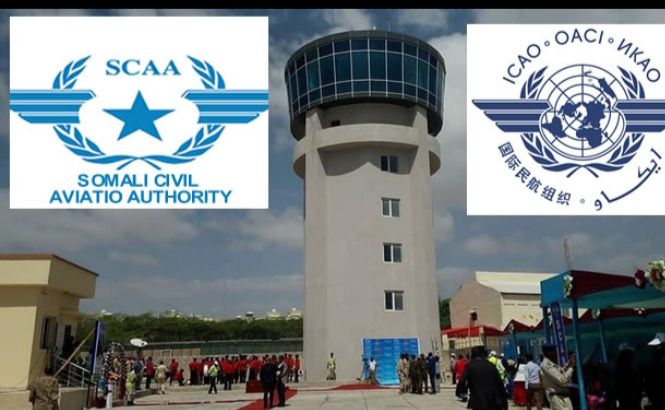
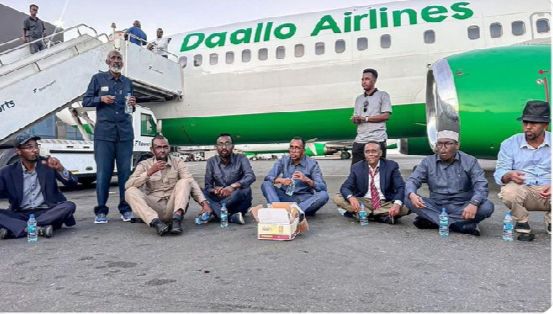
Today, members of the Federal Parliament scheduled to travel to Garowe were reportedly unable to complete their journey. The allegation is that the Somali Civil Aviation Authority, under pressure from Villa Somalia, engaged in irregular or politically motivated interference. This is not just bureaucratic incompetence. It is institutional sabotage.
Let us be clear.
Civil aviation is not a political toy. It is not a campaign tool. It is not an extension of presidential ego.
It is a national lifeline.
Aviation Is National Infrastructure — Not a Presidential Department
Somalia’s aviation system, centred around Aden Adde International Airport and connecting hubs like Garowe Airport, is one of the few functioning arteries linking federal member states, business communities, humanitarian actors, and citizens.
Interfering with scheduled travel for political calculations sends a dangerous message:
That federalism is conditional.
That mobility is subject to loyalty.
That institutions answer to personalities, not the law.
This is reckless governance.
And it exposes a deeper disease — the personalization of the state.
From Statecraft to Airspace Control Politics
If Villa Somalia is indeed directing aviation decisions to inconvenience political actors or regional leadership, then this is not administration — it is coercion through airspace.
Such behavior erodes:
Public trust in regulatory institutions.
Confidence of international carriers and investors.
The fragile federal compact already under strain.
Somalia’s recovery depends on predictable institutions. Investors, diplomats, and airlines cannot operate in a system where clearances and routes depend on political mood swings.
Once aviation becomes politicised, insurance premiums rise, confidence drops, and isolation deepens.
Is that the path Somalia wants?
Irresponsibility at a Dangerous Time
Somalia stands at a constitutional crossroads. Negotiations are fragile. Mandates are expiring. ATMIS drawdown is ongoing. Al-Shabaab remains active.
And instead of building confidence, some appear to be playing control games over airports.
This is not leadership.
It is insecurity masquerading as authority.
A state confident in its legitimacy does not block travel. It competes politically. It negotiates. It persuades.
Only a fragile regime interferes with movement.
The Real Damage
Today it is Garowe-bound members.
Tomorrow it could be:
Humanitarian flights.
Business delegations.
Medical evacuations.
Diplomatic missions.
Aviation governance requires neutrality and professionalism. The moment it becomes politicised, it becomes dangerous.
Somalia cannot afford that.
A Warning to the Custodians of the Sky
The Somali Civil Aviation Authority must remember:
It serves the nation — not Villa Somalia.
Its credibility depends on independence. Its mandate depends on legality. Its legitimacy depends on equal treatment of all regions.
If aviation is misused as a political instrument, history will record it as one of the subtle but fatal errors that further fractured the Somali state.
This Is Bigger Than a Flight
This is about whether Somalia is governed by institutions or by impulses.
Whether federalism is respected or managed through pressure.
Whether mobility is a right or a privilege granted by power.
Somalia’s leaders are playing with fire.
And once the skies are politicised, the fall is long and unforgiving.
Support WAPMEN— the home of fearless, independent journalism that speaks truth to power across Somalia and the region. Tel/WhatsApp: +252 90 703 4081.
 Warsame Policy & Media Network (WAPMEN)
You must be logged in to post a comment.