WAR FOR HEGEMONY: The United States, Israel, and Iran — A Struggle Rooted in History, Power, and Fear

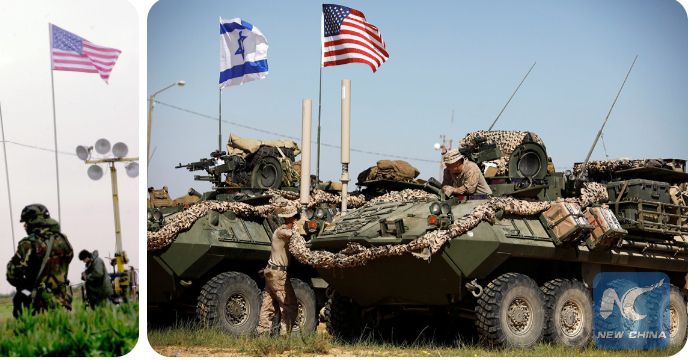
The war between the United States and Israel on one side, and Iran on the other, did not erupt in a vacuum. It is not about a single missile strike, a single assassination, or a single nuclear facility. It is about hegemony — who controls the Middle East, who defines its security architecture, and who writes its future.
Strip away the propaganda. Strip away the slogans. What remains is a brutal contest for regional dominance.
I. The Struggle for Middle Eastern Hegemony
At its core, this conflict is about power projection.
The United States seeks to maintain its global dominance and prevent any regional power from challenging its influence.
Israel, a small but militarily sophisticated state, seeks absolute security supremacy in its neighborhood.
Iran seeks regional leadership and strategic autonomy free from Western dictates.
This is not a clash of civilizations. It is a clash of strategic visions.


The United States: Guardian of the Order It Built
Since World War II, the United States has treated the Middle East as a strategic chessboard — oil routes, maritime choke points, and geopolitical leverage.
From Dwight D. Eisenhower Doctrine to po

st-9/11 wars, Washington has consistently intervened to shape outcomes:
Iraq
Afghanistan
Syria
Libya
And crucially — Iran.
The United States does not tolerate regional powers that operate outside its security umbrella. Iran does exactly that,


Israel: Security Through Superiority
Israel views Iran not just as a rival — but as an existential threat.
Why?
Because Iran funds and arms actors Israel considers hostile:
Hezbollah in Lebanon
Militias in Syria
Hamas in Gaza
Israel’s doctrine has always been clear:
Maintain overwhelming qualitative military superiority.
With U.S. backing, Israel has secured:
Advanced missile defense (Iron Dome, David’s Sling)
F-35 fighter jets
Intelligence and cyber capabilities
But Iran’s nuclear ambition challenges that supremacy. An Iran with nuclear capability — even as deterrence — would shatter Israel’s monopoly on strategic dominance.
For Israel, that is unacceptable.


Iran: The Long Memory of Empire and Humiliation
To understand Iran, one must go back to history — not just 1979, but 1953.
In 1953, the United States and the United Kingdom orchestrated the overthrow of Iran’s democratically elected Prime Minister Mohammad Mosaddegh, restoring the rule of Mohammad Reza Pahlavi.
For Iranians, this was not a minor episode.
It was a national humiliation.
The Shah’s regime, backed by Washington, ruled with an authoritarian force until the 1979 Revolution led by Ruhollah Khomeini.
From that moment, Iran’s foreign policy doctrine became clear:
Never again be dictated to.
Never again be vulnerable.
Never again be overthrown.
Iran’s nuclear ambition must be understood through this lens: deterrence against regime change.
Not merely ambition. Not merely ideology. But survival


The Nuclear Question: Deterrence or Domination?
Israel possesses undeclared nuclear capabilities.
The United States is a nuclear superpower.
Iran argues:
If others have nuclear deterrence, why not us?
But Washington and Tel Aviv argue:
An Iranian bomb destabilizes the region irreversibly.
Thus the security dilemma becomes vicious:
The more Iran arms itself for deterrence,
The more Israel and the U.S. see it as aggressive.
The more they act to weaken Iran,
The more Iran feels existentially threatened.
This is classic geopolitical escalation.


Beyond Ideology: This Is a Strategic Competition
Religion is often cited. Sectarian narratives are weaponized. But this war is not fundamentally Sunni vs Shia, West vs Islam, democracy vs theocracy.
It is about:
Control of maritime routes (Strait of Hormuz)
Influence over Iraq, Syria, Lebanon
Energy leverage
Strategic depth
The Middle East is not just territory — it is leverage over the global economy.


The Dangerous Spiral
The United States believes it must contain Iran.
Israel believes it must neutralize Iran.
Iran believes it must resist both to survive.
Each believes it is acting defensively.
Each sees the other as expansionist.
This is how great wars begin.


A Historical Pattern
The United States has historically intervened when regional powers challenge its architecture:
Iraq under Saddam Hussein
Libya under Gaddafi
Syria under Assad
Iran watched all of this.
Iran learned the lesson:
Countries without deterrence are vulnerable.
Thus, the drive for missile programs and nuclear capability is not irrational from Tehran’s perspective. It is strategic calculation shaped by history.


Conclusion: A War Rooted in Memory and Fear
The war between the United States, Israel, and Iran is not sudden.
It is layered:
1953 coup
1979 revolution
Proxy wars
Sanctions
Nuclear negotiations
Covert operations
It is a slow burn of mistrust.
Unless one side fundamentally rethinks its approach to hegemony — the region remains one spark away from catastrophic escalation.
The Middle East does not suffer from too much memory.
It suffers from too much unfinished history.
And history, when weaponized, becomes war.


WAPMEN Analysis:
Power without restraint invites resistance.
Resistance without calculation invites destruction.
And hegemony pursued without consensus breeds endless conflict.
THE PRESIDENT WHO WANTS TO REWRITE HISTORY — AND THE CONSTITUTION WITH IT


By WDM / WAPMEN Commentary & Critical Analysis


Hassan Sheikh Mohamud’s Obsession With the Constitution: A Dangerous Power Fixation
One must ask: Why is President Hassan Sheikh Mohamud so obsessively, almost feverishly, determined to amend the Provisional Federal Constitution unilaterally—without consensus, consultation, or even basic political courtesy?
Why is a national charter—a fragile peace document painstakingly built to end civil war—being treated by Villa Somalia as if it were the private property of a single faction?
The answer lies not in the present crisis alone, but in the deep psychological and political lineage that President Hassan Sheikh Mohamud carries, a lineage many younger Somalis and politically amnesiac elites no longer recognize.
The Aideed Doctrine: The Hidden Template Behind Hassan Sheikh’s Agenda
Those unfamiliar with Somalia’s political archaeology have forgotten a crucial detail:
Hassan Sheikh Mohamud is a student—directly shaped and ideologically influenced—by the worldview of General Mohamed Farah Aideed, the man whose militia rule devastated Mogadishu and triggered the darkest chapters of the Somali Civil War.
Aideed’s philosophy was simple:
“Whoever wins the war writes the constitution.”
Hassan Sheikh Mohamud has internalized that doctrine.
To him, the Provisional Federal Constitution of 2012 is an aberration—a document he privately believes was written by the victims (Darood) of the Somali Civil War, not by the victors.
This is not imagination. It is a worldview consistently reflected in:
His reckless unilateral amendments
His contempt for federalism
His aggressive state-capture campaign
His political war on Puntland and Jubaland
His attempt to shrink Federal Member States into Villa Somalia sub-districts
Hassan Sheikh believes—wrongly and dangerously—that those who were chased out of Mogadishu in 1991 had no moral right to co-author the national framework of today.
This is the root of his constitutional war.
The President Who Wants to Reverse the Peace Contract
What Hassan Sheikh Mohamud ignores—or chooses deliberately to erase—is that the Provisional Federal Constitution is the only consensus Somali document since the collapse of the state.
It emerged from:
Nationwide reconciliation
Years of consultative processes
Clan-balanced negotiations
Painful compromises
International mediation
Exhaustive political bargaining
This Constitution was not written by a clan, nor for a clan.
It was written to end a civil war, not restart one.
Yet Hassan Sheikh is now treating it as a tribal battlefield listing, attempting to reverse what he sees as a “historical injustice”—that federalism diluted Hawiye monopoly over Mogadishu’s political authority.
His message is blunt:
“If we didn’t write it in 1991, we will rewrite it in 2026.”
This is political madness disguised as constitutional reform.
A President Who Fears Consensus
Consensus terrifies Hassan Sheikh Mohamud because consensus limits power.
Consensus prevents him from dissolving the federal system
Consensus blocks him from imposing a Mogadishu-centric unitary state
Consensus denies him the ability to manufacture a permanent presidency through legal gymnastics
Consensus safeguards Puntland, Jubaland, and other Federal Member States
Consensus protects the balance struck after decades of bloodshed
Therefore, he avoids it with religious zeal.
In his worldview, consultation is a concession, and concession is defeat.
A Man at War With the Future
Hassan Sheikh Mohamud is not amending a constitution.
He is waging a political and psychological war against Somalia’s post-civil-war settlement.
He is trying to resurrect a failed 1990s hegemonic fantasy:
A fantasy where one group dictates the structure of the state
A fantasy where Mogadishu redistributes power at will
A fantasy where victors write and victims obey
But Somalia has moved on.
Federalism exists because Somalis refused to return to dictatorship, unitary domination, and political monopolization. The country cannot be glued back into a centralized autocracy simply because Hassan Sheikh Mohamud believes history cheated his faction.
The Price of Constitutional Sabotage
If Hassan Sheikh continues on this trajectory, he will:
Trigger political fragmentation
Accelerate the collapse of the federation
Invite foreign intervention
Strengthen secessionist forces
Push Federal Member States toward parallel governments
Risk the return of armed conflict
All because he wants to rewrite a document agreed upon by all Somalis—to satisfy an ideological ghost from 1991.
This is not leadership.
This is a personalized war against the very foundation of the Somali state.
Conclusion: Somalia Will Resist
Somalia is larger than any one man, any one faction, or any one historical grievance.
The Constitution must remain a Somali consensus document, not a Mogadishu revisionist project.
If Hassan Sheikh Mohamud insists on forcing unilateral amendments, he will only succeed in writing his own political obituary—not Somalia’s future.


WDM / WAPMEN — Commentary & Critical Analysis
Support WDM — the home of fearless, independent journalism that speaks truth to power across Somalia and the region.
Tel/WhatsApp: +252 90 703 4081

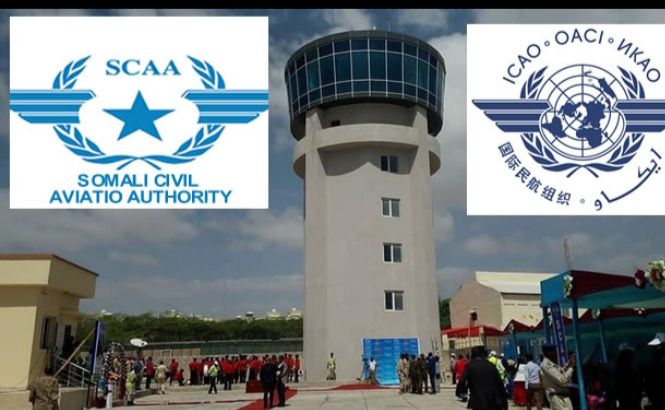
When the Skies Are Weaponised: Villa Somalia’s Reckless Interference in Civil Aviation


There are red lines in every fragile state.
One of them is civil aviation.
When a government begins to manipulate airports, flights, and passenger movements for narrow political ends, it is no longer governing — it is weaponising sovereignty.
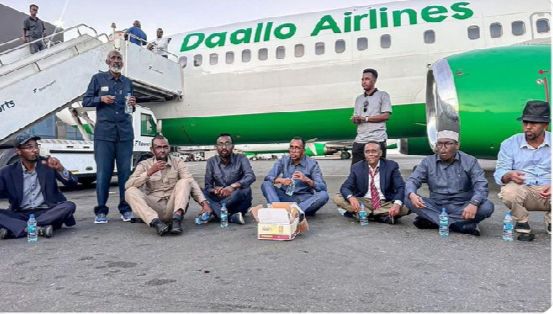
Today, members of the Federal Parliament  scheduled to travel to Garowe were reportedly unable to complete their journey. The allegation is that the Somali Civil Aviation Authority, under pressure from Villa Somalia, engaged in irregular or politically motivated interference. This is not just bureaucratic incompetence. It is institutional sabotage.
Let us be clear.
Civil aviation is not a political toy. It is not a campaign tool. It is not an extension of presidential ego.
It is a national lifeline.
Aviation Is National Infrastructure — Not a Presidential Department
Somalia’s aviation system, centred around Aden Adde International Airport and connecting hubs like Garowe Airport, is one of the few functioning arteries linking federal member states, business communities, humanitarian actors, and citizens.


Interfering with scheduled travel for political calculations sends a dangerous message:
That federalism is conditional.
That mobility is subject to loyalty.
That institutions answer to personalities, not the law.
This is reckless governance.
And it exposes a deeper disease — the personalization of the state.
From Statecraft to Airspace Control Politics
If Villa Somalia is indeed directing aviation decisions to inconvenience political actors or regional leadership, then this is not administration — it is coercion through airspace.
Such behavior erodes:
Public trust in regulatory institutions.
Confidence of international carriers and investors.
The fragile federal compact already under strain.
Somalia’s recovery depends on predictable institutions. Investors, diplomats, and airlines cannot operate in a system where clearances and routes depend on political mood swings.
Once aviation becomes politicised, insurance premiums rise, confidence drops, and isolation deepens.
Is that the path Somalia wants?
Irresponsibility at a Dangerous Time
Somalia stands at a constitutional crossroads. Negotiations are fragile. Mandates are expiring. ATMIS drawdown is ongoing. Al-Shabaab remains active.
And instead of building confidence, some appear to be playing control games over airports.
This is not leadership.
It is insecurity masquerading as authority.
A state confident in its legitimacy does not block travel. It competes politically. It negotiates. It persuades.
Only a fragile regime interferes with movement.
The Real Damage
Today it is Garowe-bound members.
Tomorrow it could be:
Humanitarian flights.
Business delegations.
Medical evacuations.
Diplomatic missions.
Aviation governance requires neutrality and professionalism. The moment it becomes politicised, it becomes dangerous.
Somalia cannot afford that.
A Warning to the Custodians of the Sky
The Somali Civil Aviation Authority must remember:
It serves the nation — not Villa Somalia.
Its credibility depends on independence. Its mandate depends on legality. Its legitimacy depends on equal treatment of all regions.
If aviation is misused as a political instrument, history will record it as one of the subtle but fatal errors that further fractured the Somali state.
This Is Bigger Than a Flight
This is about whether Somalia is governed by institutions or by impulses.
Whether federalism is respected or managed through pressure.
Whether mobility is a right or a privilege granted by power.
Somalia’s leaders are playing with fire.
And once the skies are politicised, the fall is long and unforgiving.


Support WAPMEN— the home of fearless, independent journalism that speaks truth to power across Somalia and the region. Tel/WhatsApp: +252 90 703 4081.

AFTER KHAMENEI: THE MIDDLE EAST ERUPTS

War Has Crossed the Rubicon
By WDM / WAPMEN — Commentary and Critical Analysis
It is no longer speculation.
It is no longer a rumor.
It is no longer psychological warfare.
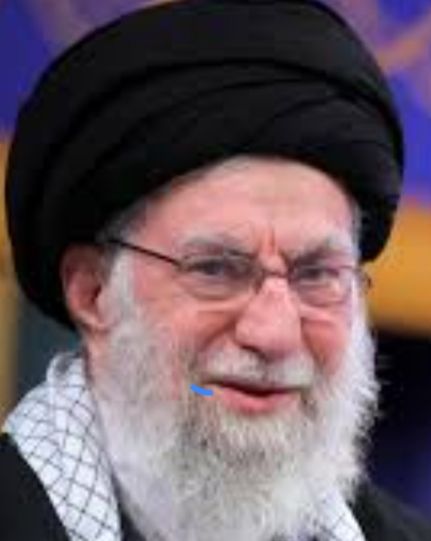
Ali Khamenei is dead.
The Islamic Republic of Iran has officially confirmed that its Supreme Leader was killed in the U.S.–Israeli airstrikes on Tehran.
This is not a tactical development.
This is a geopolitical earthquake.

A LEADER FALLS — A NATION HARDENS
You do not assassinate the supreme authority of a 90-million-person nation without unleashing forces beyond calculation.
Khamenei was not merely a cleric.
He was the axis of Iran’s state ideology, military doctrine, and nuclear calculus.
His killing will not fragment Iran.
It will fuse it.
Internal dissent is over.
Factional rivalry is over.
The debate inside Tehran is over.
The only remaining question now is retaliation — and it has already begun.

IRAN STRIKES BACK — WITH DEVASTATING PRECISION
Iran is no longer operating through proxies alone.
It is firing directly.
Missiles and drones have targeted:
U.S. military bases in Bahrain
Installations in Qatar
Facilities in the United Arab Emirates
Positions in Saudi Arabia
And additional regional assets
Air defenses have activated across Gulf capitals.
Explosions have shaken cities once marketed as “safe havens of stability.”
And for the first time in this escalation, the cost has become unmistakably human:
Three U.S. service members are confirmed dead.
This is no longer a brinkmanship.
This is an open war.


MISSILES OVER ISRAEL
Iranian missiles have also been launched toward Israeli territory.
Air-raid sirens.
Interceptors in the sky.
Explosions over multiple cities.
Israel is under sustained missile pressure.
This is not symbolic retaliation.
This is state-to-state confrontation.


☢️ THE NUCLEAR CALCULUS HAS CHANGED FOREVER
Before Khamenei’s death, Iran’s nuclear program was leverage.
Now it becomes insurance.
A regime that has just witnessed its Supreme Leader assassinated by foreign powers will not approach deterrence cautiously.
It will pursue it urgently.
The logic has shifted from negotiation to survival.
And once survival logic dominates, nuclear restraint evaporates.


REGIONAL WAR, GLOBAL CONSEQUENCES
The Middle East is no longer the only theater at risk.
Consider what is already in motion:
U.S. casualties confirmed
Gulf states under missile fire
Israeli cities targeted
Oil markets trembling
Shipping routes at risk
Superpowers recalculating
The Strait of Hormuz remains vulnerable.
Energy markets remain fragile.
Global inflation could surge overnight.
Financial systems could convulse within days.
This is how regional wars become global crises.

THE STRATEGIC BLUNDER OF A GENERATION
History will debate the tactical brilliance of the strike.
But it will not ignore its strategic consequences.
The killing of Iran’s Supreme Leader may be remembered as:
The moment Iran unified beyond repair
The spark that accelerated nuclear proliferation
The trigger for direct U.S.–Iran confrontation
The miscalculation that destabilized the global order
Wars are easy to start.
They are almost impossible to control once pride, retaliation, and martyrdom narratives take hold.


THE WORLD STANDS AT THE EDGE
This is not alarmism.
This is reality:
Iran has confirmed its Supreme Leader’s death.
Iran is retaliating across multiple sovereign states.
U.S. forces have suffered casualties.
Israeli territory is under missile fire.
The escalation ladder is no longer theoretical.
It is being climbed in real time.


FINAL WARNING
There are moments in history when leaders can still choose restraint.
This is one of them.
If immediate de-escalation does not occur:
The Gulf could become a permanent war zone
Nuclear thresholds could collapse
Global powers could be drawn in
World War dynamics could crystallize
The death of Khamenei was not the end of this crisis.
It was the beginning of a far more dangerous phase.
Stop this war now — before retaliation becomes total confrontation.
Stop this war — before deterrence becomes nuclear.
Stop this war — before the Middle East drags the world into its flames.


WDM / WAPMEN
Commentary and Critical Analysis