
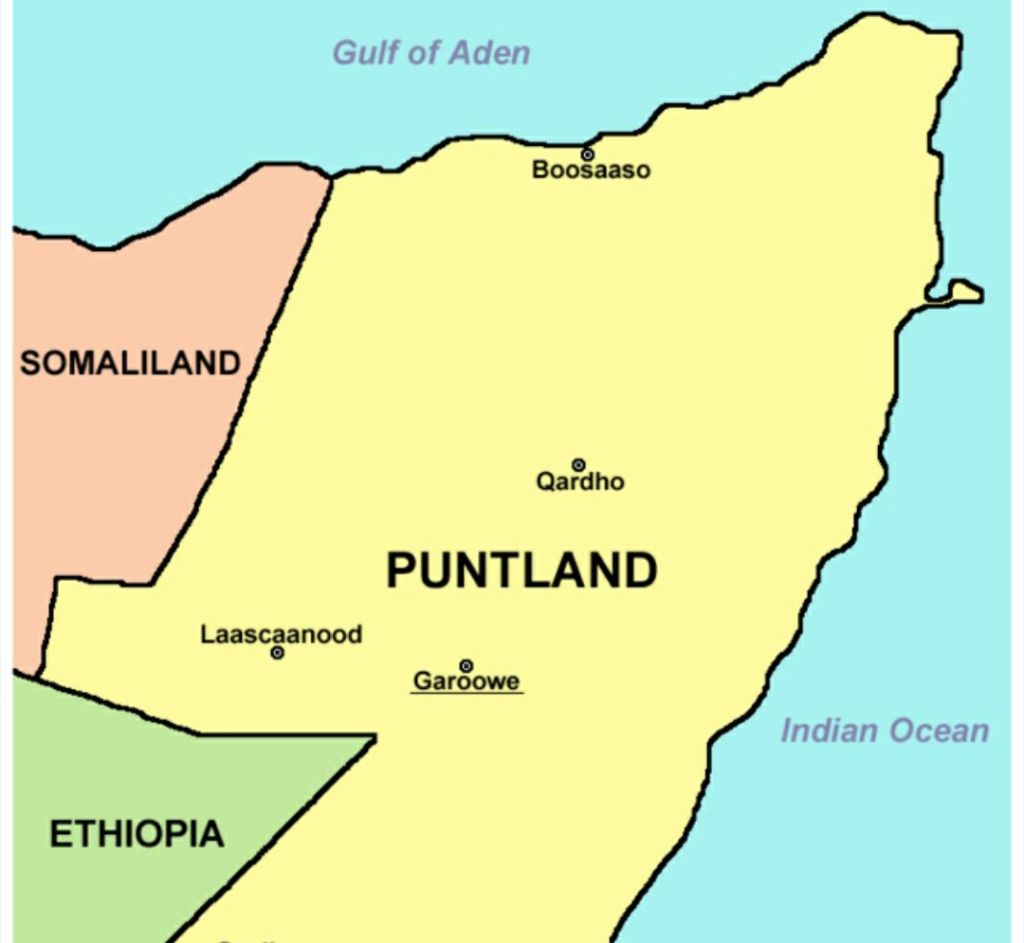
Puntland State of Somalia, once regarded as a beacon of stability and comparative governance in an otherwise volatile region, is now facing one of the worst crises in its history—both politically and economically. The situation unfolding today is not the result of external aggression or unforeseen disaster, but rather a direct consequence of internal mismanagement, political exclusion, and a leadership style that has effectively shut down the engines of government.
The One-Man Show Presidency: A Recipe for Collapse
At the heart of Puntland’s current woes lies an increasingly isolated and opaque presidency that has refused to open itself to the voices of its people, civil institutions, and political actors. President Said Abdullahi Deni’s administration has gradually morphed into a one-man show — closed to ideas, allergic to criticism, and resistant to any form of inclusive dialogue. This autocratic style of leadership has paralyzed institutions and crippled the public administration from the inside out, behaving like absolute monarch no accountability.
Deni’s presidency is widely viewed as inactive and disengaged. Reports and insiders frequently note that the President rarely reports to his place of work, has no visible daily governing schedule, and fails to convene meaningful cabinet or security meetings. In any functional state, especially one surrounded by both domestic and regional threats, such absentee leadership is catastrophic.
Dysfunctional Governance: Ministers in Name Only
Under this administration, ministries exist more in title than in function. Ministers are often appointed not on merit or experience, but through clan favoritism, nepotism, or cronyism. As a result, Puntland’s bureaucracy has been stuffed with incompetent and untrained officials who lack the expertise or authority to implement any meaningful policy.
Government offices are routinely described as ghost institutions. Ministries are devoid of operational budgets, technical staff, and policy direction. There is rampant duplication of duties, and many departments are essentially dead weight. Civil servants are unpaid, projects are frozen, and key state infrastructure has deteriorated beyond recognition. From health and education to justice and internal security, the system is simply not functioning.
Security Meltdown and Lawlessness
The policy of political isolation has extended into Puntland’s security domain. By alienating former allies, refusing meaningful cooperation with traditional community leaders, and undermining coordination with federal or neighboring regional authorities, Puntland’s leadership has allowed security to deteriorate dramatically.
Recent months have witnessed an alarming rise of inter-clan conflicts, ISIS, and organized political groups tearing Puntland State apart. Armed groups are regaining influence in previously pacified areas, and traditional elders — once integral to local dispute resolution — have been sidelined and disrespected. Even in urban centers like Garowe, Bosaso, and Galkayo confidence in security forces has eroded, with many units underfunded, demoralized, and factionalized.
Economic Paralysis and Poverty
Puntland’s economy is in a downward spiral. Once bustling ports like Bosaso, Galkayo’s central markets, and regional trade corridors are now stagnating due to poor infrastructure investment, rampant corruption, and the absence of any economic recovery strategy.
Small businesses are suffocating under rising costs and unpredictable regulations. Foreign investment has dried up. Infrastructure projects funded by donors or multilateral partners have been either hijacked for political gain or deliberately frozen to punish political adversaries. Civil servant salaries are months in arrears. The private sector, once a reliable engine for growth, is shrinking under pressure, forcing many youth into unemployment or out-migration.
This economic collapse is not just a matter of policy failure—it is the natural result of a leadership vacuum and absence of strategic planning.
Political Isolation and Eroding Legitimacy
President Deni’s decision to isolate Puntland politically — both internally and from the broader federal framework — has severely backfired. Where Puntland once played the role of a wise and steady elder in Somali politics, today it has no clear allies. Even regions and factions that historically aligned with Puntland’s interests have now distanced themselves, criticizing its political rigidity and lack of outreach.
The attempt to extend his powers without consensus has only deepened this legitimacy crisis. Civil society, traditional elders, opposition groups, and even sections of the diaspora have turned their backs on the administration, viewing it as illegitimate and out of touch. The public now sees the government not as a custodian of the state but as a personal enterprise led by a man who views public service as private entitlement.
Crossroads: To Be or Not To Be?
What’s happening in Puntland is not merely a governance failure — it is an existential threat to the state’s future. The once-proud region, known for pioneering Somali federalism, drafting the first post-civil war constitution, and creating relatively stable institutions, now teeters on the brink of disintegration.
Puntland is at a critical crossroads — to either reclaim its founding principles of participatory governance, rule of law, and decentralized democracy, or continue down this dangerous path toward autocracy, division, and collapse.
The people of Puntland — intellectuals, elders, youth, business leaders, and women — must now choose whether to remain silent in the face of growing dysfunction or to rise in defense of their future. Puntland’s survival depends not on one man but on a collective course correction. Without accountability, inclusivity, and strategic leadership, the Puntland model will become just another tragic chapter in Somalia’s long struggle for statehood.

Conclusion:
Puntland’s future is still salvageable — but not without immediate action. The time for cosmetic changes and hollow rhetoric has passed. Reform, renewal, and responsible leadership are now the only options. The cost of inaction is clear: political irrelevance, economic collapse, and security breakdown. The people of Puntland must act — and act now — before the window of opportunity closes permanently.
The WDM: The Voices of the People. The Mirror of the Nation.
 Warsame Policy & Media Network (WAPMEN)