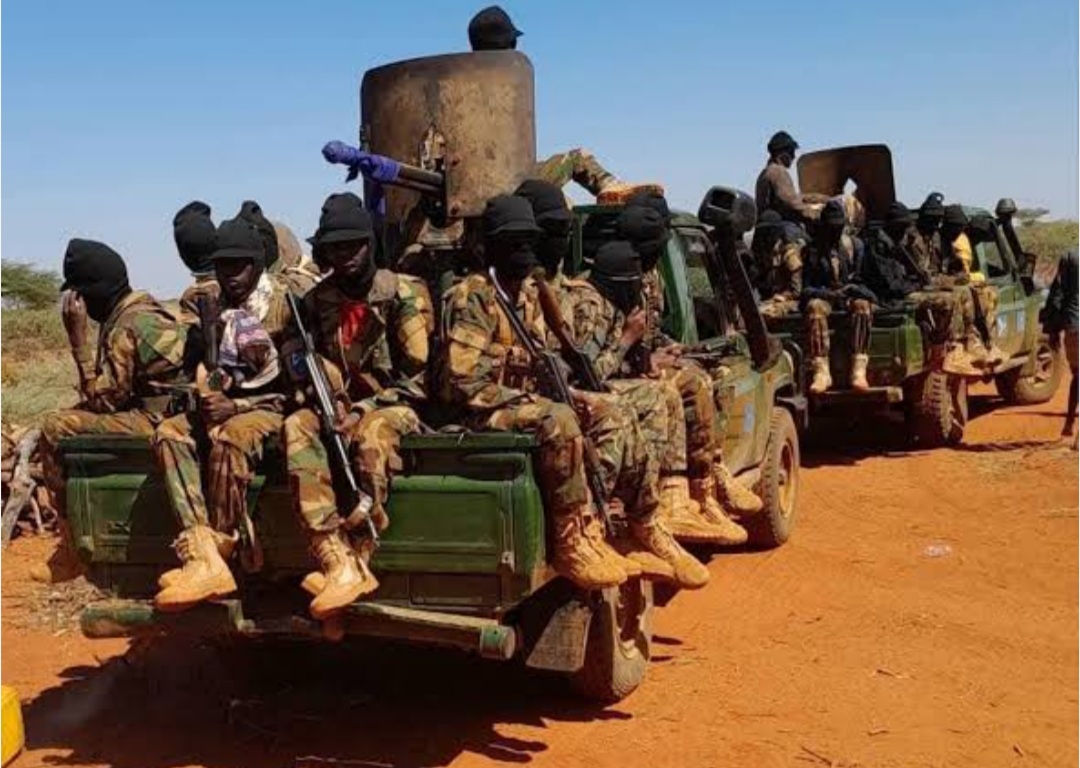
Essay: Somali Community in Nairobi Risks the Wrath of Robbers and Looters Amidst Widespread GenZ Protests in Kenya

Introduction

In recent months, Kenya has witnessed a growing wave of mass protests largely driven by the country’s youthful population, particularly Generation Z (GenZ). These protests, rooted in socio-economic frustrations, have sparked a national debate on governance, public finance, and political accountability. However, as with many large-scale public demonstrations, they have not been without collateral consequences. Amidst the legitimate voices of protest, anarchists, looters, and criminals have taken advantage of the unrest, using the chaos as cover to target vulnerable communities—chief among them, the Somali community in Nairobi.

The Somali community, a vibrant and entrepreneurial diaspora group that has contributed immensely to Kenya’s economic fabric, now finds itself on the frontline of collateral damage. Their businesses, properties, and safety are under threat in the very country they have invested in and helped develop. Despite remaining neutral in the ongoing protests, and despite a deeply ingrained cultural aversion to anarchy rooted in their own traumatic experiences with civil war, the Somali community in Nairobi is paying a high price for the instability.

The Somali Community: A Pillar of Enterprise in Kenya

The Somali community in Kenya, particularly in Nairobi, is a model of diaspora success. Over the years, they have transformed neighborhoods like Eastleigh into bustling commercial hubs that rival any economic center in East Africa. Dubbed “Little Mogadishu,” Eastleigh is home to one of the region’s largest shopping districts, attracting customers from across Kenya, neighboring countries, and beyond. The area boasts sprawling malls, wholesale outlets, logistics centers, and real estate developments funded by Somali entrepreneurs, many of whom are first- or second-generation immigrants.

This economic dynamism is not confined to Eastleigh alone. Somali-run businesses stretch across Nairobi, from South C to Kilimani. In Kilimani, a posh Nairobi suburb, stands a modern shopping complex fondly referred to by its community as “Garoobka Mall,” a name derived from the large number of diaspora Somali single mothers who have invested in it. These women, often returning from Europe and North America, are redefining female entrepreneurship in Nairobi—setting a new precedent for resilience, investment, and female-led economic independence.

Moreover, the community has significantly contributed to Kenya’s healthcare and hospitality industries. One notable example is a state-of-the-art three-story hospital, Ushirika Elite Hospital, headed by a young Somali woman polyglot, Amina. Amina is emblematic of a new generation of Somali leaders—multilingual, globally educated, and locally grounded—who are not only uplifting their own community but are also playing a vital role in Kenya’s broader development.

Neutrality in Protests and a Commitment to Law and Order

While GenZ protests are a legitimate response to long-standing grievances in Kenya, the Somali community has largely remained neutral. Having lived through decades of civil war, statelessness, and refugeehood, many Somali Kenyans are deeply wary of disorder. They know too well the long-term devastation that lawlessness and violent demonstrations can bring. Consequently, Somali youth, religious leaders, and elders have actively discouraged participation in the protests, urging their members to support stability, peace, and the rule of law.

This stance is not born out of fear or political cowardice but out of a conscious, experienced-based commitment to civic responsibility. Many Somali-owned businesses have remained operational, often serving as neutral grounds for all Kenyans, regardless of tribe or religion. In a country often grappling with ethnic tensions, the Somali community has shown that commerce, unity, and respect for public order can coexist.

Rising Security Concerns Amidst Looting and Vandalism

Despite their apolitical stance, the Somali community has unfortunately become an easy target for looters and robbers who exploit the chaotic nature of the protests. In the recent demonstrations, several Somali-owned businesses in Eastleigh and South C reported attempted break-ins, vandalism, and harassment. Mobs, emboldened by a lack of immediate police response and the anonymity of crowds, have singled out Somali commercial areas under the assumption that they are wealthy and underprotected.

This has prompted widespread fear within the community. Women-led businesses, small traders, and family-owned outlets—often built through hard-earned diaspora remittances—have been damaged or threatened. The Somali community, many of whom are law-abiding, tax-paying Kenyan citizens or long-term residents, are now forced to invest in private security or close early, which severely impacts their economic viability.

Government Response and Need for Continued Protection

To its credit, the Ruto administration has acknowledged the security threats faced by minority communities amidst the protests. Police and paramilitary units have been deployed in vulnerable neighborhoods, including Eastleigh and Kilimani, to deter looters and restore order. This visible presence has helped de-escalate tensions in certain areas, though much more remains to be done in terms of intelligence-led policing and swift prosecution of culprits.

The Kenyan Government fully recognizes the indispensable contribution of the Somali community to the national economy. Beyond their retail and commercial influence, Somali investors have created jobs for thousands of Kenyans, paid taxes, and contributed to community development. It is imperative that these contributions are met with equal protection under the law and that their rights as residents or citizens are respected and preserved.

Conclusion

The Somali community in Nairobi stands at a precarious crossroads—caught between the wrath of rogue elements hijacking a national protest movement and a government under pressure to maintain law and order. Their story is one of success, resilience, and deep-rooted civic responsibility. While they continue to enrich Kenya’s economy and maintain peace in their neighborhoods, they deserve reciprocal recognition, security, and inclusion in national conversations about governance and public protest.

At a time when Kenya is navigating political turbulence, the Somali community is setting an example of peaceful coexistence, economic innovation, and social contribution. It is now up to the government and the broader Kenyan society to ensure that this community is not sacrificed at the altar of political change or mob opportunism. In protecting the Somali community, Kenya protects not just an ethnic minority—but a vital part of its national soul and economic future.

By Ismail H. Warsame

A Nairobi Visitor (+254 70 444 2559)

Ismailwarsame@gmail.com

WhatsApp: +252 90 679 4548
@ismailwarsame

Puntland at a Crossroads: The High Cost of Dysfunctional Leadership and Political Isolation. A White Paper

Puntland State of Somalia, once regarded as a beacon of stability and comparative governance in an otherwise volatile region, is now facing one of the worst crises in its history—both politically and economically. The situation unfolding today is not the result of external aggression or unforeseen disaster, but rather a direct consequence of internal mismanagement, political exclusion, and a leadership style that has effectively shut down the engines of government.

The One-Man Show Presidency: A Recipe for Collapse

At the heart of Puntland’s current woes lies an increasingly isolated and opaque presidency that has refused to open itself to the voices of its people, civil institutions, and political actors. President Said Abdullahi Deni’s administration has gradually morphed into a one-man show — closed to ideas, allergic to criticism, and resistant to any form of inclusive dialogue. This autocratic style of leadership has paralyzed institutions and crippled the public administration from the inside out, behaving like absolute monarch no accountability.

Deni’s presidency is widely viewed as inactive and disengaged. Reports and insiders frequently note that the President rarely reports to his place of work, has no visible daily governing schedule, and fails to convene meaningful cabinet or security meetings. In any functional state, especially one surrounded by both domestic and regional threats, such absentee leadership is catastrophic.

Dysfunctional Governance: Ministers in Name Only

Under this administration, ministries exist more in title than in function. Ministers are often appointed not on merit or experience, but through clan favoritism, nepotism, or cronyism. As a result, Puntland’s bureaucracy has been stuffed with incompetent and untrained officials who lack the expertise or authority to implement any meaningful policy.

Government offices are routinely described as ghost institutions. Ministries are devoid of operational budgets, technical staff, and policy direction. There is rampant duplication of duties, and many departments are essentially dead weight. Civil servants are unpaid, projects are frozen, and key state infrastructure has deteriorated beyond recognition. From health and education to justice and internal security, the system is simply not functioning.

Security Meltdown and Lawlessness

The policy of political isolation has extended into Puntland’s security domain. By alienating former allies, refusing meaningful cooperation with traditional community leaders, and undermining coordination with federal or neighboring regional authorities, Puntland’s leadership has allowed security to deteriorate dramatically.

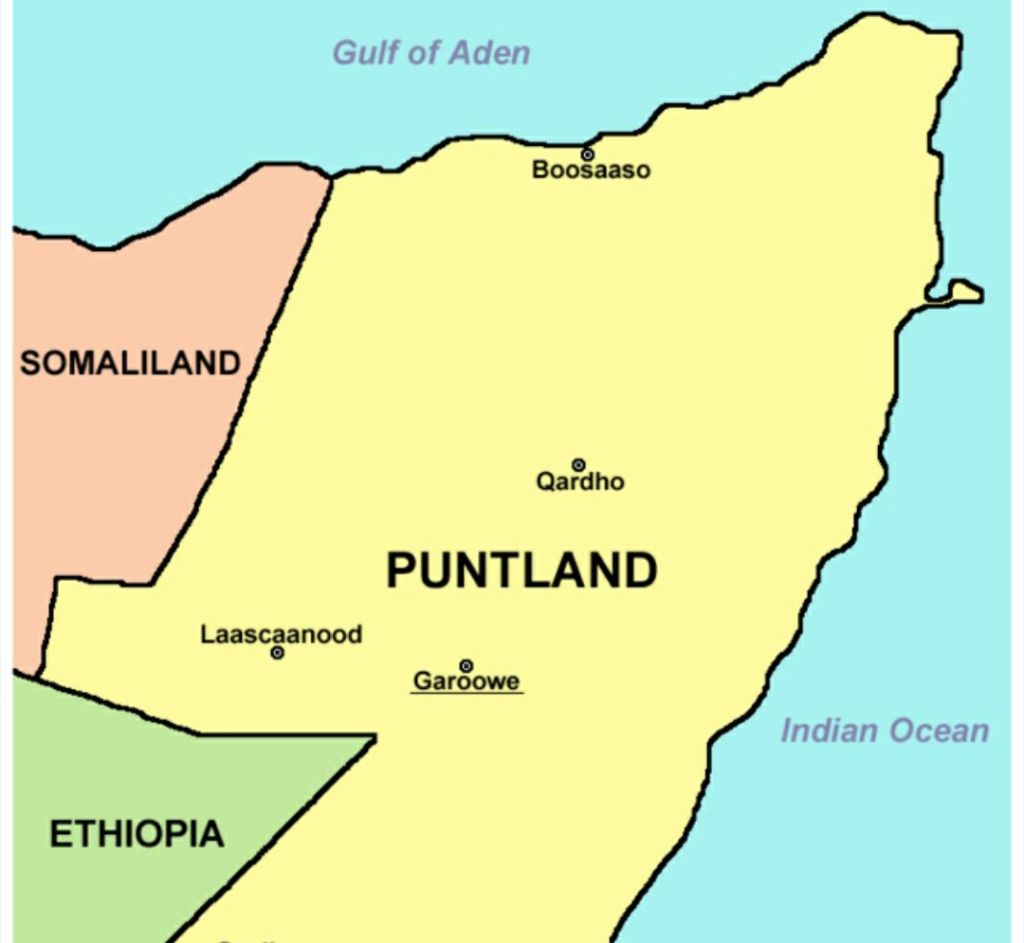
Recent months have witnessed an alarming rise of inter-clan conflicts, ISIS, and organized political groups tearing Puntland State apart. Armed groups are regaining influence in previously pacified areas, and traditional elders — once integral to local dispute resolution — have been sidelined and disrespected. Even in urban centers like Garowe, Bosaso, and Galkayo confidence in security forces has eroded, with many units underfunded, demoralized, and factionalized.

Economic Paralysis and Poverty

Puntland’s economy is in a downward spiral. Once bustling ports like Bosaso, Galkayo’s central markets, and regional trade corridors are now stagnating due to poor infrastructure investment, rampant corruption, and the absence of any economic recovery strategy.

Small businesses are suffocating under rising costs and unpredictable regulations. Foreign investment has dried up. Infrastructure projects funded by donors or multilateral partners have been either hijacked for political gain or deliberately frozen to punish political adversaries. Civil servant salaries are months in arrears. The private sector, once a reliable engine for growth, is shrinking under pressure, forcing many youth into unemployment or out-migration.

This economic collapse is not just a matter of policy failure—it is the natural result of a leadership vacuum and absence of strategic planning.

Political Isolation and Eroding Legitimacy

President Deni’s decision to isolate Puntland politically — both internally and from the broader federal framework — has severely backfired. Where Puntland once played the role of a wise and steady elder in Somali politics, today it has no clear allies. Even regions and factions that historically aligned with Puntland’s interests have now distanced themselves, criticizing its political rigidity and lack of outreach.

The attempt to extend his powers without consensus has only deepened this legitimacy crisis. Civil society, traditional elders, opposition groups, and even sections of the diaspora have turned their backs on the administration, viewing it as illegitimate and out of touch. The public now sees the government not as a custodian of the state but as a personal enterprise led by a man who views public service as private entitlement.

Crossroads: To Be or Not To Be?

What’s happening in Puntland is not merely a governance failure — it is an existential threat to the state’s future. The once-proud region, known for pioneering Somali federalism, drafting the first post-civil war constitution, and creating relatively stable institutions, now teeters on the brink of disintegration.

Puntland is at a critical crossroads — to either reclaim its founding principles of participatory governance, rule of law, and decentralized democracy, or continue down this dangerous path toward autocracy, division, and collapse.

The people of Puntland — intellectuals, elders, youth, business leaders, and women — must now choose whether to remain silent in the face of growing dysfunction or to rise in defense of their future. Puntland’s survival depends not on one man but on a collective course correction. Without accountability, inclusivity, and strategic leadership, the Puntland model will become just another tragic chapter in Somalia’s long struggle for statehood.

Conclusion:

Puntland’s future is still salvageable — but not without immediate action. The time for cosmetic changes and hollow rhetoric has passed. Reform, renewal, and responsible leadership are now the only options. The cost of inaction is clear: political irrelevance, economic collapse, and security breakdown. The people of Puntland must act — and act now — before the window of opportunity closes permanently.

The WDM: The Voices of the People. The Mirror of the Nation.

WDM EDITORIAL: Destabilization Schemes of SSC-Khatumo and Mogadishu’s Regime Against Puntland State

In recent developments, the Puntland State of Somalia is once again facing a familiar pattern of betrayal and political sabotage, orchestrated by the Mogadishu-based Federal Government and its current enablers in the SSC-Khatumo administration. As history tends to repeat itself, the people of Puntland are witnessing the reemergence of a destabilization campaign designed to fracture the state, weaken its institutions, and undermine its regional authority — all under the guise of federalism and unity.

The Historic Role of SSC in Undermining Puntland Unity

Since its inception, the SSC (Sool, Sanaag, Cayn) political project has wavered between opportunism and surrender. Over the years, successive SSC movements and leaders have promised to align with Puntland, only to defect to Somaliland under pressure or in pursuit of personal gain. This pattern has eroded public trust and has repeatedly compromised Puntland’s efforts to ensure the liberation and stability of disputed region like Sool.

Despite these betrayals, Puntland State has consistently shown restraint and political maturity. It invested blood and treasure to support the people of Laascaanood in resisting Somaliland’s military occupation. This pivotal role of Puntland helped pave the way for the emergence of the latest SSC-Khatumo administration. This new formation was expected to usher in a new era of cooperation, built on mutual respect and shared interests — particularly in securing and rebuilding the liberated territories. That cooperation, however, has been sabotaged before it even began.

SSC-Khatumo’s New Alliance with the Mogadishu Regime

Instead of honoring its historical and political connection with Puntland, the SSC-Khatumo leadership has chosen a different path: aligning itself with the Federal Government in Mogadishu, led by President Hassan Sheikh Mohamud. This regime has proven time and again to be hostile to Puntland’s autonomous status and political model. It seeks to centralize power under Mogadishu while undermining federal member states that resist domination — Puntland being the prime example.

SSC-Khatumo’s choice to bypass Puntland and instead deal directly with Mogadishu is not just a diplomatic slight; it is a dangerous political maneuver aimed at redrawing regional boundaries and upsetting the power balance. The federal regime has been emboldened by SSC-Khatumo’s support and is now actively promoting a narrative that seeks to carve Sanaag Region out of Puntland’s jurisdiction, effectively redrawing Somalia’s federal map through backdoor agreements and unconstitutional decisions.

Laascaanood: From Liberation to a Launchpad for Destabilization

Laascaanood, a town once symbolizing unity and resistance against external occupation, is now quickly becoming the center of a new political crisis. In recent weeks, the town has become a hub for destabilizing elements, flown in or funneled through Mogadishu. These include political opportunists, anti-Puntland activists, and intelligence operatives working under the cover of federal legitimacy. Their aim is clear: to transform Laascaanood into a rival political capital, capable of challenging Puntland’s governance in the regions of the north.

By hosting clandestine meetings, issuing unilateral declarations, and working with Mogadishu’s political machinery, SSC-Khatumo leaders are playing a dangerous game. They are not only undermining the sovereignty of Puntland but are also weakening the fragile trust that communities across Sool, Sanaag, and Cayn have placed in peaceful federal coexistence.

The Consequences of Political Short-Sightedness

SSC-Khatumo’s leaders must understand that the road they are on leads to disaster. By alienating Puntland and embracing Mogadishu’s power games, they risk plunging the region back into conflict, reversing hard-won gains, and exposing their own people to renewed instability. Puntland has shown remarkable patience, but its political and security institutions are fully capable of responding to threats against its territorial integrity.

If the current trajectory continues — with SSC-Khatumo acting as an extension of Hassan Sheikh Mohamud’s anti-federal regime — it will only hasten confrontation. Sanaag will not be surrendered. Puntland’s borders are not up for negotiation. Any attempt to redraw them through covert deals or misinformation campaigns will be met with firm resistance, both politically and militarily.

A Call for Accountability and Strategic Clarity

The Somali people, international partners, and regional observers must see this crisis for what it is: a federal-level conspiracy to weaken Puntland through divide-and-rule tactics. SSC-Khatumo, if it truly represents the people of Sool, Sanaag, and Cayn, must return to the table of honest dialogue with Puntland. The region’s future must be shaped by unity, not division; by cooperation, not confrontation.

Failure to heed this warning will only lead to renewed instability — and this time, Puntland will act not just in defense, but in the preservation of its legacy, borders, and the will of its people.

Conclusion: Puntland Will Stand Firm

The people and government of Puntland are alert. They are ready. They will not allow political adventurism, opportunism, or federal collusion to destroy decades of stability and unity. SSC-Khatumo’s reckless actions and Mogadishu’s sabotage campaigns will not succeed. Puntland remains the anchor of federalism, security, and institutional governance in Somalia — and no amount of scheming will change that reality.

Let this be a final call for reason. Let it also be a warning.Published by WDM Opinion Desk – Defending Puntland’s Integrity and the Truth.