
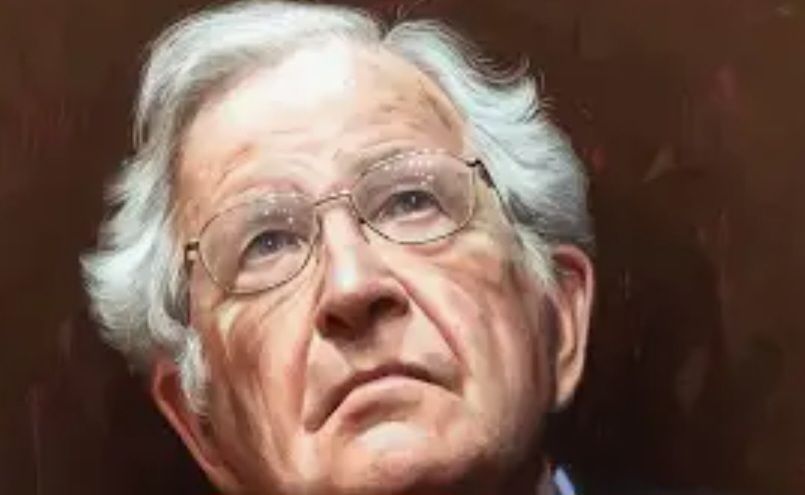
Noam Chomsky, one of the most influential intellectuals of the 20th century, has spent decades examining the dynamics of power, control, and media manipulation. In his book How the World Works, Chomsky provides a thought-provoking analysis of how societies are shaped by the limits imposed on acceptable discourse. One of his most powerful observations is encapsulated in the quote: “The smart way to keep people passive and obedient is to strictly limit the spectrum of acceptable opinion, but allow very lively debate within that spectrum. That gives people the sense that there’s free thinking going on, while all the time the presuppositions of the system are being reinforced by the limits put on the range of the debate.”
This concept is a cornerstone of Chomsky’s critique of modern media and its role in shaping public perception and maintaining societal order. Let’s delve into the deeper meaning behind this statement and explore its implications.
The Illusion of Free Thinking
Chomsky argues that by allowing a narrow range of opinions to be expressed while encouraging spirited debate within that range, those in power create an illusion of freedom and democracy. The debate may be heated, passionate, and seemingly unconstrained, but it never steps outside the bounds of what the system deems acceptable. This creates a situation where people feel they are participating in a free exchange of ideas, even as the underlying assumptions and power structures remain unchallenged.
For example, in the realm of mainstream politics, there might be fierce debates over specific policies or candidates, but the fundamental structures of economic and political power are rarely questioned. The media plays a crucial role in this process by framing the debate, selecting which voices are amplified, and which issues are deemed worthy of discussion. As a result, the public is kept within a mental framework that reinforces the status quo.
The Role of Media in Shaping Opinion
Chomsky’s observation draws attention to the subtle ways in which media can be used as a tool of control. By limiting the spectrum of acceptable opinion, the media ensures that certain ideas are never brought to light, while others are constantly reinforced. This is not necessarily through overt censorship, but through the more insidious process of agenda-setting and framing. The media decides which topics are worthy of discussion, which perspectives are given airtime, and which are marginalized or ignored altogether.
This process helps to maintain the power structures within society. For instance, economic debates often focus on how to manage capitalism rather than questioning the system itself. By restricting the debate to such issues, the media and those in power prevent alternative economic systems from gaining traction. The same can be said for debates on foreign policy, social issues, and other critical areas where the spectrum of acceptable opinion is carefully managed.
The Limits of Debate
Chomsky’s insight also raises important questions about the nature of debate and discourse in modern society. If the boundaries of debate are set by those in power, how can true change ever occur? Chomsky suggests that real change requires expanding the spectrum of acceptable opinion, questioning the assumptions that underpin the current system, and allowing for a truly free exchange of ideas.
This can be a daunting task, especially in a society where the media, education system, and other institutions are often complicit in maintaining the status quo. However, Chomsky’s work encourages us to be vigilant, to question the limits imposed on our thinking, and to seek out alternative perspectives that challenge the dominant narrative.
Conclusion
Noam Chomsky’s observation about the smart way to keep people passive and obedient is a powerful reminder of the importance of critical thinking and media literacy. By recognizing the ways in which debate is constrained and opinions are shaped, we can begin to challenge the assumptions that underlie our society and work towards a more open and inclusive discourse. In a world where the spectrum of acceptable opinion is often narrowly defined, it is up to us to push those boundaries, question the status quo, and seek out the truth.
For those interested in exploring these ideas further, Chomsky’s book How the World Works is an essential read, offering a deeper understanding of the forces that shape our world.
For Readers:Do you think the boundaries of acceptable opinion in our society are limiting true progress, and how can we push beyond them to foster meaningful change?
[Courtesy].
 Warsame Policy & Media Network (WAPMEN)
Great insight into Noam Chomsky’s perspective on the manipulation of discourse and media control! It’s fascinating how the illusion of free thinking can be maintained through a limited spectrum of acceptable opinion. How do you think individuals can actively challenge these boundaries and create a more diverse and inclusive discourse that facilitates meaningful change?
LikeLiked by 1 person