AL-SHABAB AND AMISOM UNEASY COEXISTENCE

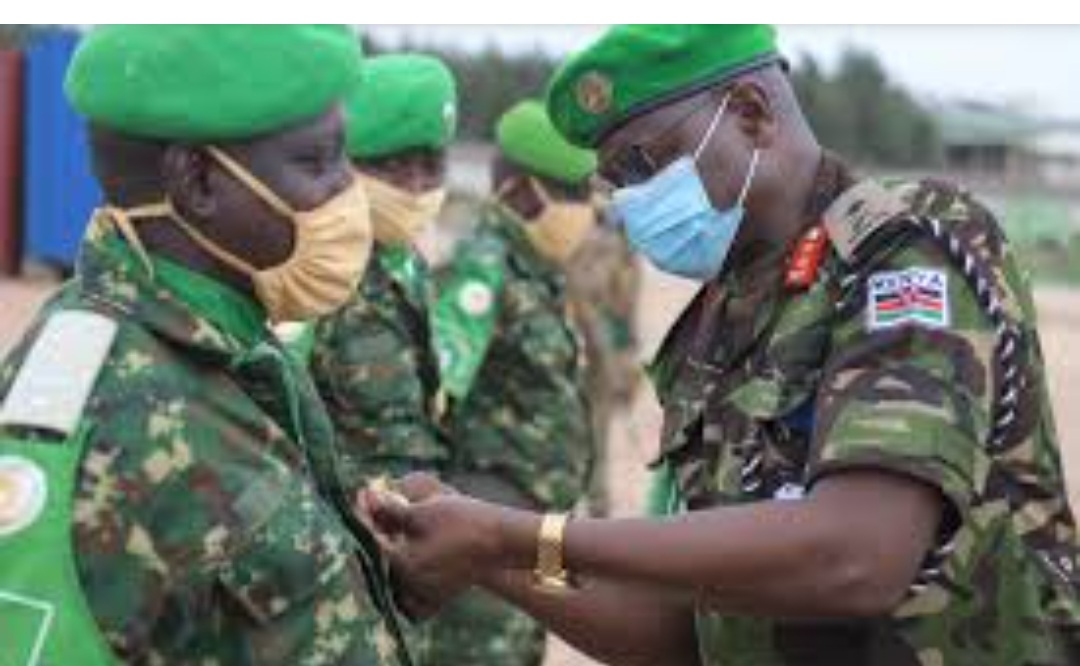
Uneasy coexistence and mutual deterrent co-relationship become status quo or modus operandi between Somalia’s extremists and African Union Mission in Somalia, AMISOM, now transitioning  into African Union Transition Mission in Somalia. ATMIS is a multi-layer and thriving political, diplomatic, and security industry, which rarely engages in actual combat with the extremists lately, leaving poorly paid Somali government conscripts vulnerable on daily basis. This encourages Alshabab to be more aggressive and have all combat initiatives in their bombing campaigns, mainly in Mogadishu, where AMISOM forces are predominantly stationed.

Occasionally, one hears rare attacks directed at AMISOM, and  even then there is suspicion surrounding these incidents on whether they are inside jobs or instigated to justify continued presence of foreign troops and hugely profitable security industry of “Black Water” type.

In a wishy-washy project, FGS requested for the removal of AMISOM from Somalia, only to go back to its word, asking for the continuation of their stay. Mutual understanding of Mogadishu Regime and international community on the issue is that a security vacuum will enable Al-shabab to take over Somalia Ala Talaban.

Egypt and Ethiopia are now stepping up their Nile Water fights at expenses of  Somalia’s sovereignty and territorial integrity, adding a new dimension of complications for ATMIS contributing countries now taking up high stakes in lucrative security industry in Somalia.

Since Somali leaders are too naive and weak to come together by sorting out their petty political differences, ATMIS is here to stay as long as Western governments are willing to pay for it, and  eventually when their priorities change, they will leave Somalia to its own device.

Talk about Somalia’s security preparedness to find out a scandal of unheard scale –  name any country on earth which has diplomatic contact with Villa Somalia that doesn’t have a military shopping list from Somalia for arms and training of troops. What a joke!

(This article was edited after posting).

SCRAMBLE OVER SOMALIA’S GOVERNANCE

Puntland Federal Member State and Villa Somalia continue to be loggerheaded over ongoing Somalia’s political paralysis. The political and constitutional crisis is exacerbated by unilateral political and constitutional decisions, and lately, the mapping of natural resources and hydrocarbon explorations on the part of the federal government with the assistance of foreign powers, lately Turkey.

Noticeably, the Puntland Government lacks proactive policies and think-tank capacity, political consultancy, and research facilities. That is why one would expect only its reactive approach to FGS constitutional and political shenanigans.

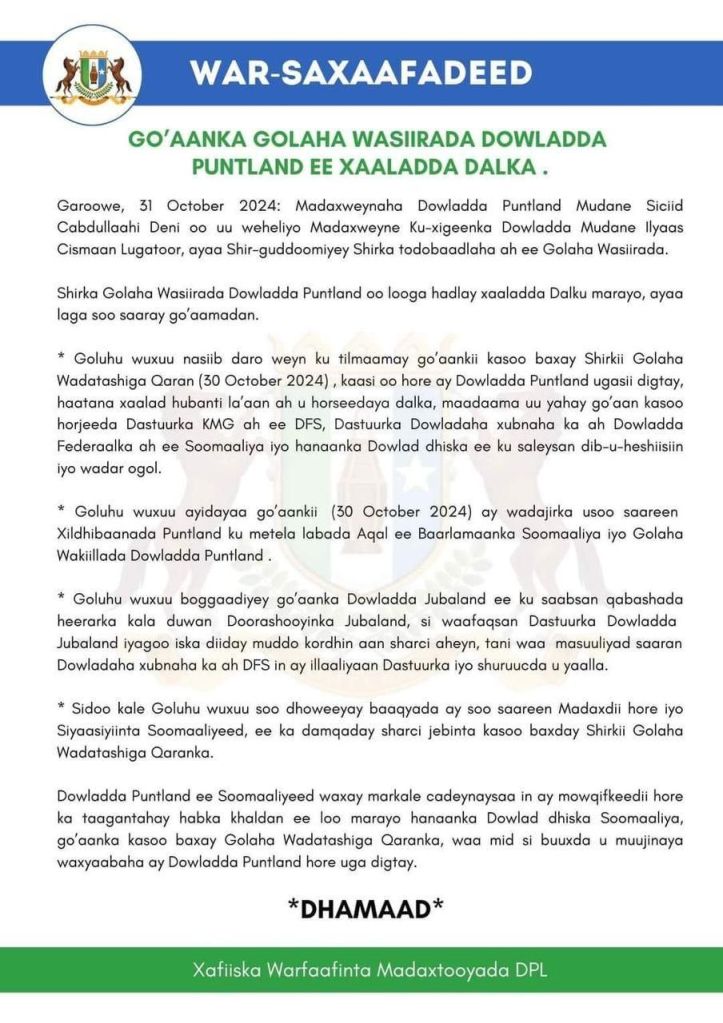
Here is the latest media salvo from the Puntland Government.

ARAB LEADERS REPORTEDLY HATE HAMAS

On October 15, the book titled ‘War’ was released and immediately became one of the best-selling books. It was written by Bob Woodward, a journalist specializing in investigative reporting on secret information. This book narrates shocking and surprising conversations and advice given by some Arab leaders when they privately met with U.S. Secretary of State Antony Blinken a few days after the attack X@m@s launched on Israel.

On Thursday, October 13, 2023, the plane carrying U.S. Secretary of State Antony Blinken landed at Ben Gurion Airport in Tel Aviv. He immediately headed to the special room where the war operations were being directed, where Benjamin Netanyahu and the war command officers were present.

The Secretary and Netanyahu exchanged brief words. “What do you need from us?” “We need ammunition, ammunition, ammunition.” “We stand with you at all times and in all places.” “What will you do about the civilians living in Gaza?” Netanyahu responded, “We will evacuate all of Gaza; we will push them into Egypt.” Blinken, in shock, said, “I will speak with the Arab leaders and get back to you!”

Antony Blinken did not sleep in Tel Aviv that night; instead, he flew to Jordan on the same Thursday, where he met with King Abdullah II of Jordan. The Jordanian King told the U.S. Secretary of State, “We have warned Israel many times about the danger of X@m@s; this group belongs to the Muslim Brotherhood. Israel must destroy this group, but I cannot publicly say this.”

Hours later, Blinken flew to Doha, Qatar, where he had a private meeting with the country’s Emir, Tamim bin Hamad Al-Thani. The Emir told the Secretary, “We have no information about the October 7 attack from the X@m@s leaders in Doha; it is likely only Sǐnŵ@r planned it.” Blinken, suspicious, told the Emir, “We will consider keeping the door open for negotiation, especially if it involves a prisoner exchange, but after that, the X@m@s leadership and its political office will no longer stay here in Doha.”

Just hours later, Antony Blinken flew again to Bahrain, where he met with the leaders of that country, and they gave him a response similar to that of the Jordanian King. Blinken and his exhausted delegation then headed to Riyadh, Saudi Arabia. It was the fourth country they visited. On the morning of October 14, the U.S. Secretary of State met with his counterpart, Saudi Foreign Minister Prince Faisal bin Farhan Al Saud.

Prince Faisal told Blinken, “Israel should never forgive X@m@s; this group is part of the Muslim Brotherhood. We have warned Israel many times about their danger. These terrorist groups are not only trying to destroy Israel but also to overthrow Arab leaders. We are very concerned about the potential outcome of Israel’s war on Gaza, as we fear for our security. The most troubling issue is who will replace X@m@s? Daesh came after Al-Qaeda, and they were far more dangerous.”

Antony Blinken asked Prince Faisal, “Will you participate in rebuilding Gaza after the war?” The Saudi Foreign Minister replied, “We will not contribute even $1 to repair the destruction Netanyahu caused!” After this, the U.S. Secretary of State flew to Abu Dhabi to meet with Mohammed Bin Zayed Al Nahyan. Mohammed Bin Zayed told Blinken that Israel should not stop the war until X@m@s is eradicated.

Bin Zayed also told Blinken, “We have warned Israel about this Muslim Brotherhood group many times. We can give Israel time to finish off this group, provided they allow us to send humanitarian aid to Gaza and take firm control over the violence that may erupt from the West Bank residents.”

That same day, Blinken returned to Riyadh to meet with Crown Prince Mohammed Bin Salman. The book’s author, Bob Woodward, notes that “Antony Blinken views Mohammed Bin Salman as an overly arrogant young man.” When they sat down together that evening, Bin Salman told Blinken, “I only want the aftermath and the consequences of October 7 to disappear.” Blinken asked, “How do you see the issue of normalization: establishing direct relations with Israel?” Bin Salman replied, “We are still working on that and are ready, but at this time, we cannot take any steps in that direction until the situation in Gaza settles.”

After this, the U.S. Secretary of State flew to Cairo to meet with Abdel Fattah el-Sisi. The book’s author states, “Sisi discussed two key points with Blinken: first, the preservation of the 1979 peace treaty between Egypt and Israel, and second, an assurance from the U.S. that the Palestinians would not be relocated to Egyptian land.”

Following this, Secretary Blinken and his delegation met with Sameh Shoukry, Egypt’s Foreign Minister, and Abbas Kamel, the head of Egypt’s intelligence service. The Egyptian intelligence chief presented Blinken and his team with maps and intelligence Egypt had gathered regarding the underground tunnels of X@m@s in Gaza. Abbas Kamel said, “X@m@s is deeply rooted in Gaza, and it will be difficult for Israel to defeat them.”

The Egyptian intelligence chief also asked the U.S. Secretary of State to convey a message to Netanyahu: “The Israeli army should not enter Gaza all at once but should do so gradually. They should also wait for the X@m@s leaders to emerge from their tunnels and then decapitate them all at once.” The author writes that Blinken and his team realized that Abbas Kamel was not joking, and they delivered this message and the tunnel maps to Netanyahu.

Finally, the U.S. Secretary of State’s plane returned to Tel Aviv, where he briefed Netanyahu on what he had gathered from the Arab leaders. He told Netanyahu, “I met with your friends and others who are neither your friends nor your enemies. The common theme I heard repeatedly is that they support what you are doing, but they cannot publicly say so because they fear public anger and uprisings.”

The book, which has been widely sold around the world, mentions that during the recent global climate summit, U.S. Vice President Kamala Harris met with several Arab leaders who told her they were feeling internal pressure and protests from their populations, growing stronger the longer the war in Gaza continues. Therefore, Israel must end X@m@s as quickly as possible.

According to the book, Kamala Harris prepared a report on these meetings with Arab leaders and sent it to President Biden. In the report, she said, “I saw that Arab leaders deeply despise X@m@s and are also ready to establish closer relations with Israel. However, they can not openly state this because they fear internal uprisings.”

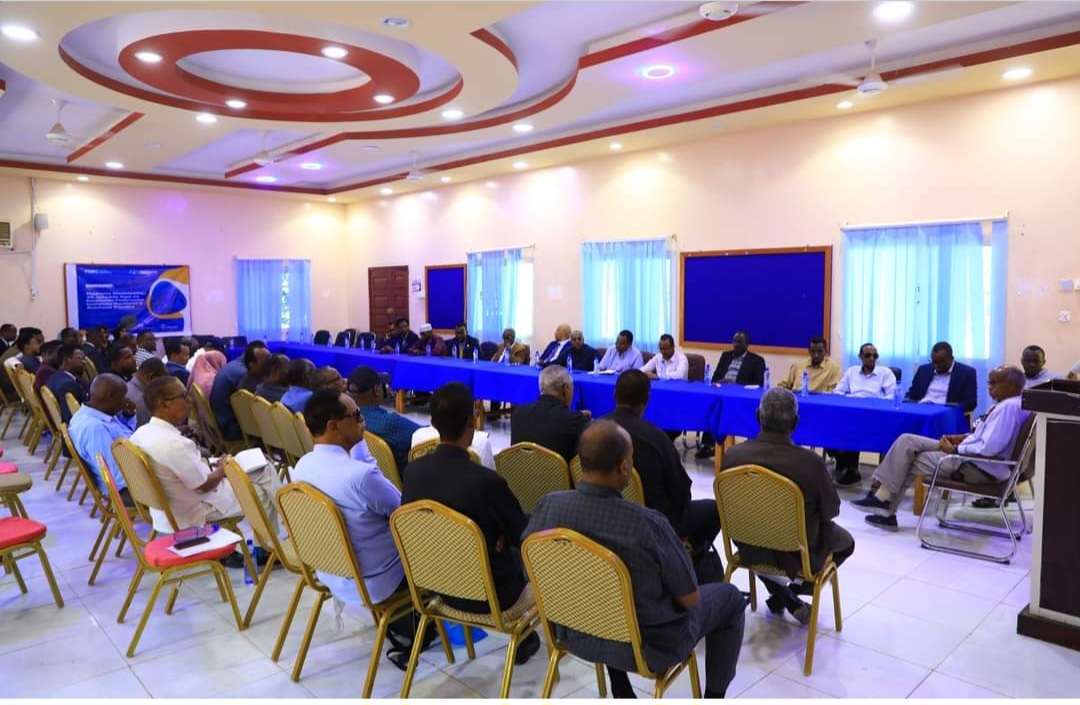
COMMINIQUE OF PUNTLAND INTER-PARLIAMENT CONFERENCE IN CONFERENCE

Take a listen.

WHAT IS WRONG WITH THE SOMALIS? WHY DON’T THEY AGREE TO PUT THEIR HOUSE IN ORDER?

Good questions? But, it is easier to ask than to answer. Why?  Mainly because of the following factors or reasons:

  1. Somalis have failed to reconcile after the Civil War and horrendous human rights abuses in Mogadishu, Hargheisa, and elsewhere. Mass human rights atrocities, looting, plunder of public, and private properties in Mogadishu and other major South-Central regions haven’t been addressed yet.
  2. The provisional National Charter to end the Civil War and rebuild Somalia on the basis of decentralisation of power (federalism) has been violated repeatedly by opportunistic politicians devoid of national spirit and vision to build a better Somalia.
  3. Lack of accountability and transparency in public affairs.
  4. Regional and international power plays meddling into Somali internal affairs, some bent on undermining Somali sovereignty, territorial integrity, and unity.
  5. Constitutional gridlock caused by dictatorial tendencies of political leaders unvetted for positions of power and public trust.
  6. The rise of Al-Shabab and other extremist militia, mainly in South-Central Somalia.
  7. Most importantly, the Civil War isn’t yet settled. Secession of Northwest Regions (Somaliland) is a major obstacle to Somalia’s settlement.
  8. Persistent contradictions of two schools of thought: City-state mentality vs decentralisation of power play a significant role in Somali political crisis.
  9. Overall, poor leadership at every level of Somali society.
  10. Absence of developed, enlightened, and proactive civil society.
  11. Divisive Somali diaspora community members playing opportunistic roles, exacerbating and exploiting socio-economic problems at home.
  12. Tariqa or religious factionalism in the country is getting worse than clan rivalry.

The list could go on. However, we believe that these are the main impediments to Somalia’s potential reconstruction.

What do you think? Have your say.

BREAKING

Puntland MPs and Senators at Somali Federal Parliament revisited the state to defend their unsatisfactory political and legislative positions on Puntland State interests in Mogadishu, Southern Somalia. In the current legislative term 2022-2026, unlike their MP colleagues from Dir, Hawiye and Southwest State of Somalia, Puntland State MPs in the Federal Parliament have become ready and handy playing cards for the political shenanigans of President Hassan Sheikh Mohamud in the Somali Capital. Are they redeemable? That has to be seen, having come to take questions from the public and consulted with their constituency in Puntland State of Somalia.

CHINA AMBITIOUS SPACE PROGRAM

Take a read:

IN REACTION TO WDM EDITORIAL

BREAKING NEWS

WDM readers in USA cities are sending us these 2024 election stckers.

Your vote counts!

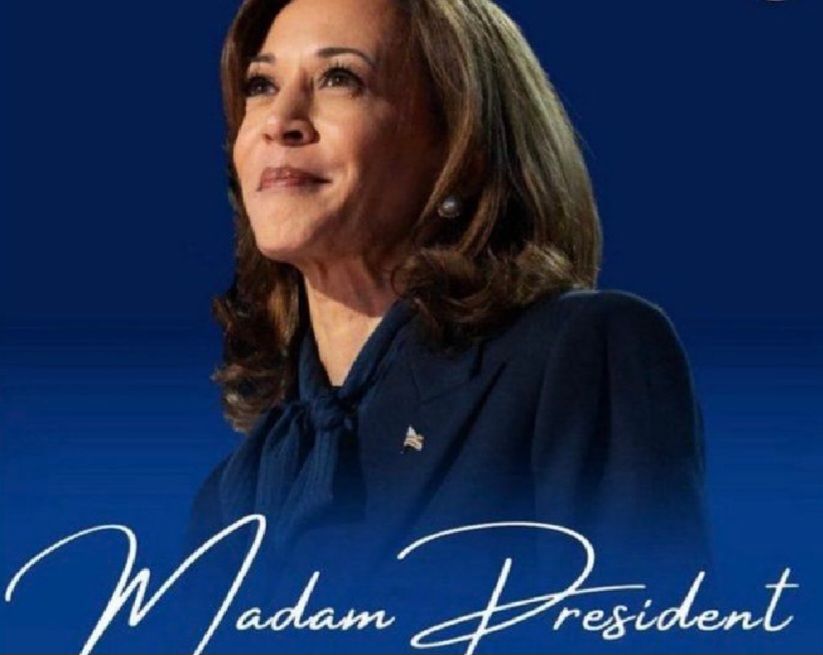
WDM ENDORSES KAMALA HARRIS FOR USA PRESIDENCY 2024-2028

WDM EDITORIAL

US President Joe Biden has shamelessly failed the Palestinian people of Gaza and Lebanon in every way imaginable in life, and even in death (mass graves). What is happening in those places is unconscionable moral failure in human history on the part of US and Israel, and we could say, on the part of the entire world community. In the eyes of many, no worse sufferings and abuses of life have ever been recorded in human existence –  thousands of people smashed under rubbles of multi-story buildings of  hospitals, schools and shelters holding war displaced refugees by mercilessly dropping 2000kg bombs on them.

October 7, 2023, massacre in Israel by Hamas, presumably representing the people of the Concentration Regugees Camps of Gaza, is neither nearly proportionate or nor remotely justifiable in modern time mass slaughter of innocent and defenceless Palestinian children, women and elderly. Most refugees in Gaza aren’t HAMAS. Surprisingly, HAMAS Israeli captives released during temporary ceasefire prison exchange looked relatively in good health condition, while those Palestinians let go by Israel showed signs of severe mistreatment and torture.

WDM is endorsing US presidential candidate Kamala Harris because the alternative Donald Trump is worse than Joe Biden in terms of respect for human rights, decency, and equality of races in the USA and around the world.

If elected, Kamala Harris would be a historic political figure in race relations in the United States and around the world.

(Courtesy)

WHY IMPLEMENTATION OF FEDERAL SYSTEM IN SOMALIA FACES CHALLENGES

Let us go straight to the facts. These are the unsaid and politically inconvenient facts:

  1. Almost all elected federal presidents starting from Sheikh Sharif Ahmed were anti-constitutionalists/anti- federalists.
  2. Almost all Federal Members States are artificial creations, lacking adequate community involvement in choosing their respective leaders, especially Hirshabelle, GalMudug, and Jubaland. Moreover, Jubaland, including Kismayo, is, in fact, an occupied land – natives have no say in running the pseudo-administration there, and have no representation.
  3. Puntland State isolationist policies for more than a decade gave way to anti-federalist forces in South-Central Somalia.
  4. The propaganda-prone, gullible, uninformed masses of Somalia fell victims to the falsehoods of Centralist and city-state proponents.
  5. The absence of counter-programing to the vicious falsehoods spread on federalism by Formajo’s Social Media Warriors (“Cayayaanka Baraha Bulshada CBB).”
  6. Turkey, a NATO state and major investor in Mogadishu and Villa Somalia, is a centralist and historically military government that is strongly opposed to decentralisation ideas in dealing with foreign countries.
  7. Bankrupt Somali intellectual power and theorists on the subject of Federalism.
  8. The inertia of old habits and thinking of older Somali generations that hardly pass away.
  9. Absence of competent, enlightened, free press in the country.
  10. Most importantly, poor, unrepresentative, rubber-stamped LEGISLATIVE bodies in all levels at State and Federal governments.

WHY ISRAELI AIR ATTACK AGAINST IRAN HAS FAILED BADLY

Take a listen:

[Courtesy: Judge Andrew Napolitano]

ATTEMPTS TO RE-IGNITE SOMALI CIVIL WAR

As we continue to further explore the primitive nature of the Somali society, which professes to believe in Islam, though unfaithfully, but in reality are pagan tribalistic, we open to read the pages of recent history of the Civil War. Although national peace/reconciliation was never done, Somali Civil War ended with the defeat of Hawiye clans. Puntland State of Somalia was established in 1998, while Hawiye clans were still fighting each other in Mogadishu and beyond. Puntland State became a model governance option for all regions of South-Central Somalia. A Somali Federal President, Abdullahi  Yusuf, hailing from Darood clan, was inaugurated in October 2004, replacing General Mohamed Siyaad Barre (Darood) at Villa Somalia after 13 years of stateless Somalia. Northern Dir clans declared unilateral secession from Somalia in 1991, following the collapse of the First Somali Republic.

Disappointed after defeat, Hawiye clansmen had campaigned to unseat the founder of the Somali Second RepublicAbdullahi Yusuf. For the purpose, they had created Al-Shabab extremists in South-Central Somalia. Their misguided intellectuals had organized three anti-unity and anti-peace centres, namely Hawiye Action Group (HAG); Somali Concern based in London, UK, and United Somali Alliance based in America. Most relatively high-profile Hawiye politicians belonged to these groups. They were successful in unseating Federal President Abdullahi Yusuf in 2008.

However, a compromise presidential candidate had to be found in the name of Sheikh Sharif Ahmed (Hawiye) in 2009. Hawiye inter-clan infighting started immediately, leading to the selection of Hassan Sheikh Mohamud in 2012 to carry out Hawiye unilateral plan of marginalising other Somali clans to turn the tide around their defeat in the Civil War. He failed them, leading to the election of Mohamed Abdullahi Farmajo (Darood) in 2017 as the federal president.

Like they campaigned against Abdullahi Yusuf,  Hawiye clans under the failed leadership of Hassan Sheikh Mohamud started a tribal/militia/political war against Mohamed Abdullahi Farmajo, this time with the help of other Somali clans. They had succeeded, leading to the re-election of Hassan Sheikh Mohamud, the current Federal President, in 2022. Still primitive in mentality and unreformed, it looks that he is entertaining historical grievances against Darood clans and trying to re-ignite the Civil War in Somalia. He is repeating his past First Term mistakes. He is a spoiler of peace and a source of disunity. He is bound to fail again because he is waging an unjust war against his own country people.

Interestingly, foreign powers have been historically putting fuel into the fire by meddling into Somali internal affairs in order to plant disunity and discourse. Now, supposedly, Muslim countries of Turkey, Qatar, Egypt, the Emirates, and others are adding their names to the historical list of Ethiopia and Kenya to destabilise Somalia. They should read former British prime minister Tony Blair’s recent memoir that Somalis and Afghans have similar characteristics of expelling successfully all intruders and invaders, not matter how powerful they may be.

THE DEVELOPMENT OF DOUBLE-FACE OR DOUBLE-STANDARD BY THE SOMALI CHARACTER

In the past, successive Somali governments hired or received foreign experts for multi-sector development programs in the Republic. These foreign advisers were treated differently in terms of compensation, standard of living, and accommodation, from native employees doing the same work.

This double-standard continues to date. In the private sector, an Indian or Bangladeshi manual construction worker in Garowe is paid four times more than than his Somali counterpart. Hired Kenyan employees in Somalia have preferential treatment and compensation packages than native employees of the same competence.  The private sector, like Somali public services, is infested by nepotism and cronyism. One interculator told us that when business owners couldn’t find suitable or qualified individuals among their respective subclans, they are likely to seek foreign workers instead of hiring someone from rival clans. Amazing! Also, because Somalis are quick in modelling business and enterprises, business owners are afraid of other Somalis imitating them.

One may argue that Somalis are less skilled. However, whose fault is it if potential native workers aren’t given the chance of skill-training.

Because this exercise or mistreatment of the Somali employee has been going on for decades, causing induced psychological impact on the Somali character, he/she could think that they were inferior, contrary to what used to be a proud Somali character, who believed that nothing was higher than him except God. If this double-standard is allowed to continue, the issue could have huge irreversible psychological damage on the Somali character and self-worth.

As a result, in dealing with foreign entities or persons, you would notice that even the leaders of Somalia at all levels of government have double standard – one for their own natives, and the other, for foreign persons. This is a serious issue that needs due attention and studies, for it would affect all Somalis negatively for generations to come.

THE LAW AND NOMADIC NATURE OF THE SOMALI MAN

There are three laws theoretically in Somalia. They are:

  1. Customary or traditional law
  2. Sharia
  3. Penal (criminal)/civil law

None is binding to the crude nature of a nomadic Somali man without strong state reinforcement. Nomads are free-wheeling and hateful of any restrictions against their impunity for any  action of their wish and wimps. Any law he may accept at minimum is the customary law of his clan because it has no enforcement mechanism and because he doesn’t want to lose the support system and the benefits he enjoys within the tribal councils.

A nomad considers Sharia and penal law as imposition against his free will and way of life, although he may not openly criticise the Sharia out of fear of getting into disfavour with his elders and the  clergy in the community.

Nomadic societies are historically backward because of  their way of life. lack of schooling and other tools of modern society. They lead a hard life, exposing them to a mentality of survival of the fittest. They have no sense of charitity, and hospitality with his meagre resources is done for the purpose of self-perservation and protection of clan reputation.

Most Somalis are of nomadic origin, and even though urbanisation is taking roots lately in Somalia due to increased tribal conflicts, civil war, negative impact of climate change, internal displacement as a result, and environmental deterioration, they have nomadic heritage. They need a lot of orientation and training to understand their obligations, rights, and responsibilities to fit into an organized modern society.

THE IDIOSYNCRACIES OF THE SOMALI MAN

Somalis are pseudo-Muslims and are almost pagan in behavior and ways of life. Murder, theft and acts of blasphemy are considered patches of honor. Public theft, abuses of entrusted position, revenge, and punishment of real or perceived opponents and rivals are fair games for both ordinary men and Somali public officials. It is only in Somalia where you hear the President of a Republic claiming that his kids have the right to take advantage of his position in acquiring undeserved government privileges and unearned wealth; government officials, including ministers, looting government coffers, on the top of misappropriating salaries of their employees in daylight with impunity, and remain a functioning official or minister in Cabinet. One can infer from this that the boss of that particular minister was doing the same and didn’t bother firing the corrupt subordinate. The list of similar behaviors goes down to the office messengers and cleaners.

“According to the Greeks, there are three types of people on earth:

  • The idiots
  • The tribesmen, and
  • Citizens

When the Greek used the word idiot, they didn’t use it as a curse word. Idiots are the people who just don’t care, if they write an exam, they’d cheat, if they’re in government, they’d steal. An idiot just doesn’t care at all. If he eats bananas, he throws the peels anywhere instead of putting it in a trash.

According to the Greek, some some societies have more idiots than tribesmen and citizens.

The next set of people are tribesmen, these are the set of people that look at everything from the point of view of their tribe. These are people who believe in you only if you’re part of their tribe. It can really be terrible to have a tribesman as a leader, he would alienate the rest.

When the Greeks talk about it, it’s not just about ethnicity, they also consider religion as a tribe. A great deal of Africans are tribes men because they view everyone from the point of view of their tribes. They trust only their tribesmen.

The last group of people are citizens. These people like to do things the right way, they will respect traffic light rules even if no one is watching them, they drive within speed limit. They respect laws, in an exam, they won’t cheat, if they’re in government, they won’t steal. They are compassionate people, they give to others to promote their well-being.

Some countries have more citizens than tribesmen and idiots, others have so many.

A tribesman can become a citizen through orientation, and an idiot can become a citizen by training and constant enforcement of the law.

Things will fall apart if you elect an idiot or a tribesman to lead if he has not been reformed,” truly reflecting most of the Somali men.

Based on this description, the Somali man is an extreme combination of the characters of THE IDIOT AND TRIBESMAN. Can he be reformed, and whose duty is it to do?

CHILDISH LEADERS OF FGS

USA presidential women candidate Kamala Harris, denouncing her rival, Donald Trump, said, “he is an unserious person, but the consequences of him being elected potentially is serious.”  She meant he was unfit to be president, for he was childishly dangerous. Similarly, one could say that the leaders of the Federal Government of Somalia are weaklings and childish in behaviour and governance. To display their stupidity, they have recently been showcasing an old makeshift Somali map produced and used by private foreign persons and entities for their own interests in Somalia’s petroleum explorations Puntland Government and Hirshabelle State (not in existence when this map was falsely produced) spokespersons have been fuming about this “Past and Copy” map ignorantly and carelessly displayed by President Hassan Sheikh Mohamud, who didn’t bother to double-check his aides’poor job and irresponsibility involved in the controversy.

They say poor is the nation looking for a hero.

The Economist this weekend. A special edition on innovation

October 26th 2024

Simon Cox
China economics editor

In 2007 I made my first trip to China to report on its vast technological ambitions. It was a daunting task. Even some of the country’s older innovations defeated me. In Shanghai, I made the classic mistake of biting too greedily into a soup dumpling, squirting warm juice across the table.

A year earlier China’s government had unveiled a 15-year plan to make the country an “innovation-oriented society” by 2020. In many ways it has succeeded. China now ranks 11th on the Global Innovation Index, an amalgam of 78 indicators published by the World Intellectual Property Organisation, far higher than you would expect for a middle-income economy. You can see where your own country stands here. The two most innovative countries may surprise you.

China has hit some bumps along the way. Jack Ma, the founder of Alibaba whom I interviewed in 2007, lost favour with China’s leaders; WuXi AppTec, a pharmaceutical firm I visited on the same trip, has been accused of mishandling American intellectual property; and Suntech, a renewable-energy firm I also visited, was ruined in 2013 by a glut of solar panels. At least Shanghai’s dumplings are as enticing as ever.

[Courtesy: The Economist].

WHERE IS THE QUESTION PERIOD IN PUNTLAND PARLIAMENT? ARE THEY COMFORTABLE BEING PERPETUALLY RUBBER-STAMPED LIKE THEIR COUNTER-PARTS IN SOUTH-CENTRAL SOMALIA?

WDM EDITORIAL

Puntland House of Representatives is currently holding its 55th Session. Among the dignitaries and guests in attendance are Puntland State MPs in the Federal Parliament in Mogadishu, South-Central Somalia. It is an important session, given the fact that Somalia is at crossroads between a failed state again and the survival of the Federal System Somalis agreed upon,  following the Civil War. We will be watching whether they can meet the challenges ahead.

In the meantime, let us remind ourselves that the main function of any parliament is government budget allocations and approval. This involves scrutiny, approval, and follow-up of expenditures consistent with budget allocations. It involves investigations of abuses and mismanagement of this budget. It ensures appropriate and competent financial personnel are appointed by an independent commission. It checks out that the government must have independent auditors and accountants in the financial system, starting with the Auditor-General and Chief Accountant. Barring major economic and natural calamities, the government budget must meet with approved allocations. If not, questions must be raised to expose any malpractices. Critical public services, public law and order, and government operations must be maintained as sine qua non for the state’s existence and survival.

Parliament committees must be active and engaging to carry out their duties as functioning representatives of the people. Government officials and executives, including the State President can be summoned anytime to answer parliament questions in the people’s interest, consistent with the principles of checks and balances of power. These legislative duties should be ongoing as a routine of parliament function. Without this, we can’t have an independent parliament. A dangerous situation develops when the Executive Branch unconstitutionally takes all power from the other two branches of the government, producing a rubber-stamped House of Representatives. When the State President becomes too powerful and unresponsive to an independent parliament, it leads to a government system called “Madax-ka-Nool” in Puntland State – a Somali term coined by the people of Puntland State many years ago, but now used widely throughout Somalia.

We wish them successful session.

‐————

Postscript. Puntlanders don’t realise that the State President has two functions – he is the Head of State and he is Head of Government (Prime Minister). As Head of Government, he is subject to scrutiny by the LEGISLATIVE like any other minister in the government.

MUSIC: THE PEOPLE OF PUNTLAND STATE

WOULD PUNTLAND GOVERNMENT FINALLY SEIZE OPPORTUNITIES TO RECONNECT WITH ITS MPs IN THE FEDERAL PARLIAMENT?

Most of Puntland State MPs in the Somali Federal Parliament are reportedly in town in Garowe. In the past Puntland Government grossly neglected this constituency in the Federal System, and as a result,  turned some of them into enemies of the Regional State, its ideals and history of its struggle for the  reinstatement of the failed Somali Republic. Many years ago, at the beginning of the First Term of Puntland State President Said Abdullahi Deni, WDM published the article to follow on the very issue.. Take a read:

Critical analysis, news and commentaries

Garowe, May 24, 2019

PUNTLAND REPRESENTIVES ARE FOOTBALL TEAM WITHOUT COACH

Puntland is a state twenty years old with people as old as the Pharaohs of Ancient Egypt, but have no strategic plan towards Somalia or how to deal with the rest of Somalia. An Amazing story to tell, you would say. Puntland successive governments had never thought of its urgent need and constitutional mandate to work out a permanent state strategic plan good for the thinking and operations of every Puntlander in Somalia and worldwide to follow and keep in mind for generations to come: be it a member of the Federal Institutions or Puntland officials attached to a foreign or international entities or an individual living or working in a global village. It is really a common sense to do so if she cares about the well-being and progress of the state, her people and position in Somalia and beyond.

Do the federal officials and MPs representing Puntland in Mogadishu have a strategic plan to follow on Somalia and Puntland issues? How does Puntland government expect them to operate, under which guidelines other than the constitutions and their individual gut feelings do they carry out their mission, tasks and responsibilities?

“Sending Puntland Representatives to Mogadishu without a plan of action, thinking or guidelines is like sending Puntland Football Team to Mogadishu without a coach”, to use my friend Abdi’s football analogy. “It is like sending a team of untrained Puntland camel boys to play ball in Mogadishu”.

Moreover, Puntland State is also a mother having kids there, who has properties and interests in other regional states of Somalia. How would our representatives in Mogadishu, Kismayo, Baydhaba and Dusa-Mareb takle with issues of common and Puntland interest? What are the Puntland channels of communication with those supposed to be looking after her interests in those regions? Is Puntland operating blindly in the dark, or she has no idea of what I am talking about?

On the internal affairs, you would say, there is nothing wrong with Puntland State except it is caught up and locked in bad governance that prevents her from moving foward in building strong state institutions, not to mention about her playing a leading role in Somalia’s reconstruction efforts.

That is good as long as you think that good governance includes elimination of corruption and changing the permanent perception by some of its constituent regions that it is a state dominated by a few privileged clans, doing away its persisting vulnerability to insecurity and lack of economic expansion and business investment, low and poor quality of education and skills training, absence of constructive engagement with the leaders of fedgling Federal Government.

Reasonable Puntlanders are OK with this thinking. But, is that all Puntland State and her people could do to build a bright future for her next generations?

I would say with confidence that Puntland State is frozen in time and space. Let me give you some examples. Puntland Government has the same salary scale for its personnel as we started 20 years ago. Puntland Government uses the same clan/regional power-sharing arrangements for the selection of members of the House of Representatives as we launched it 20 years ago. Puntland Government fell back to rely on clan militia forces for its security, which we had moved away 20 years ago. 20 years ago Puntland had an independent judiciary, independent parliament, independent auditor-general and independent accountant-general. None of above Puntland institutions of government are independent today. It is a big deal and alarming facts to ignore. This is a critical factor, among many, that Puntland President has absolute executive powers in the absence of checks and balance (Madax-ka-Nool).

What to do about the situation? Good question! Let us debate objectively without any attempt to spin. Let me start with my take of things here with a by-line from Garowe. First of all, let us find out areas we can begin work right away:

1. To fight corruption and maintain law and order, restore the independence of those institutions cited above.

2. Have a competent, transparent and independent public service commission right away.

3. Establish state strategic advisory board or commission that act as government think tank or experts on working out strategic plan for Puntland.

4. Puntland regional clan power-sharing arrangements for indirect selection/election had hit dead-end. Let us begin democratization process right away, starting.with local elections first.

5. Streamline state departments to eliminate redundancy, duplications and inefficiency. Make a smaller government by cutting down cumbersome bureaucracy.

6. Know that the Finance and security sectors are the Achelles Heels of Puntland State.

The current Administration of President Said Abdullahi Deni is on the spot and hot seat to deliver on his election promises to avoid the bad legacy of his predecessor. People of Puntland have no alternative but to rise up against corruption and mal-administration of their public affairs. They have to meet the challenges of the moment.

Finally, it was said by others before us, who too had been there that people get the leaders they deserve. This insight and wisdom is still true as it was then. People may give their leaders initially the benefit of the doubt, but not a free hand to a politician to do whatever he wishes to without making sure that he or she must be held accountable to the people individually and collectively.

One good thing about the people of Puntland is that they never give a 2nd chance to their leader, let alone a bad one. If President Said Abdullahi Deni wants to come back to power in Puntland, he could so by popular vote through democratization process starting right now.

SOMALI MEN ATTENDING UN ALL WOMEN CONFERENCE IN NEW YORK?

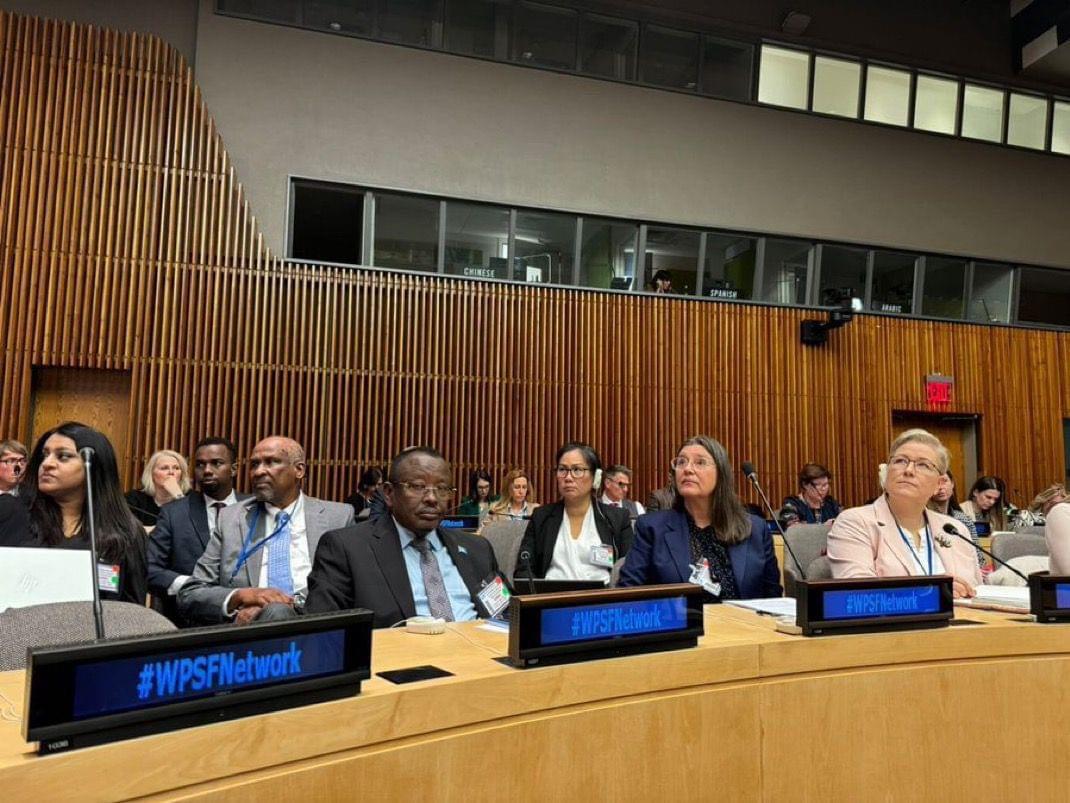
The federal  government of Somalia has a gender problem. It has sent men delegation to all women UN Conference recently. The phenomenon is perplexing all Somali people, and raising questions about whether the men sent there were transgenders. Or was it a total disregard of  Somali women’s rights, acknowledging that they even exist in the country? Nobody knows how this had happened, and confusion created here became a hot topic for social media circles and cartoonists alike. One WDM contact has come up with a Somali term: “Nimow Naag” (man woman).

Any conference is a venue for networking, follow-up exercises, and opening new communication channels long after the event ends. How would attending Somali men in all women conferences handle this? Would they claim that they had changed their gender to interact with foreign women in far places? How would they justify their participation in all women conference to Somsli women? There are many questions and answers that are difficult to come up with.

While we are at it, think of the nature and thinking of men in Villa Somalia to address multitudes of other complex problems of nation-building, when they even couldn’t figure out to let Somali women play their legitimate roles in society. No wonder Somalia had become too difficult to read and even to help.

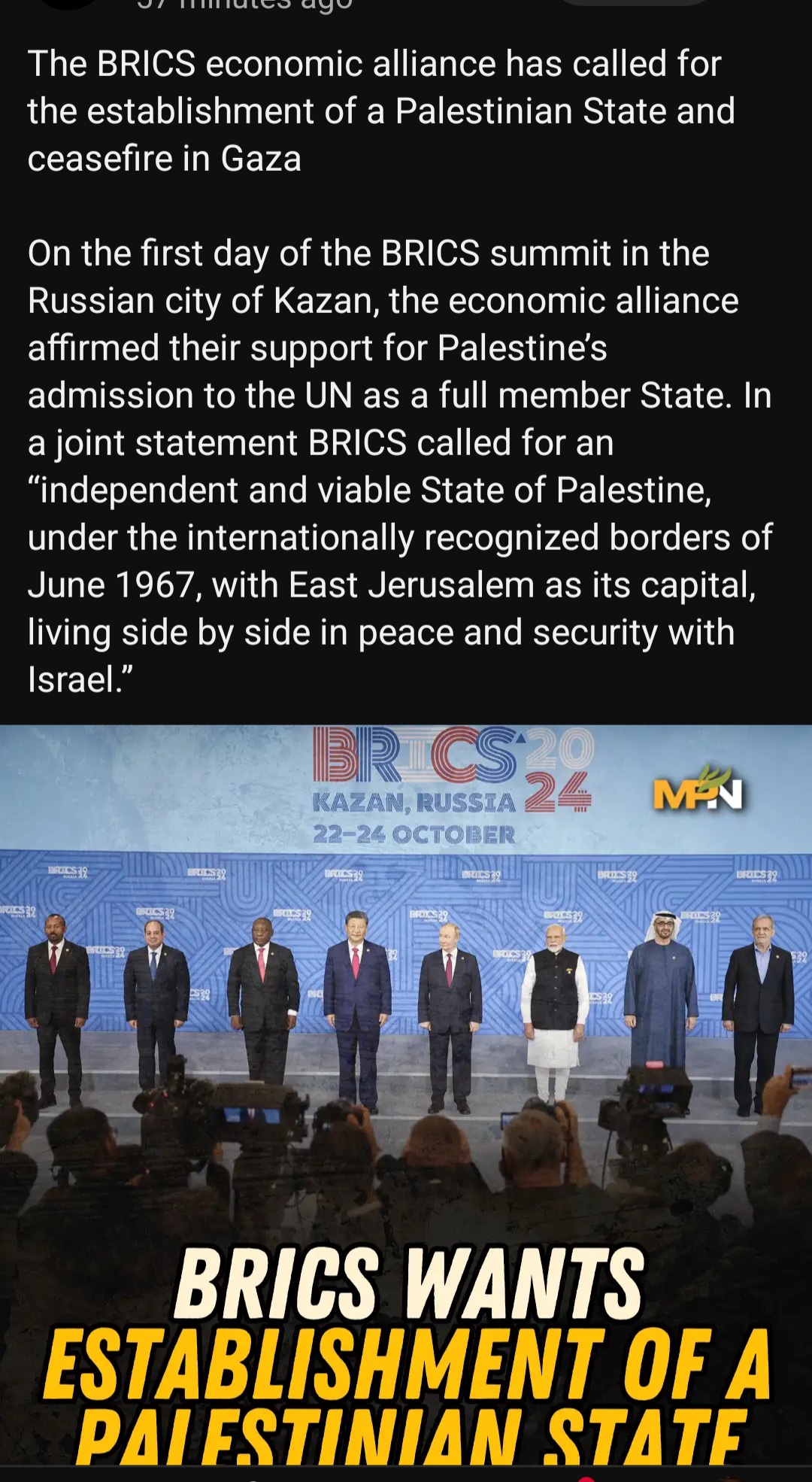
BRICS CALL FOR THE ESTABLISHMENT OF A PALESTINIAN STATE

BREAKING NEWS

http://youtube.com/post/Ugkxue_FzE4maDC80zM6P6gsv1eA36Rhp5d5?si=H9ZwNsLUbvccARcK

THE EXPANDING BRICS

IS AFRICA THE FUTURE OF THE WORLD?

I have been watching CNN Cable News lately and have noticed that there was a dedicated programing called “INSIDE AFRICA”. There had been programs of similar nature on BBC and other Western media. Paying attention a bit to these regularly scheduled radio and TV programs, one is reminded of the renewed interest in Africa and continent’s importance for the rest of world in terms of unexploited resources and manpower as Africa has a huge market as well. We see fierce competition between former colonial Western countries, Russia and China. China’s approach to the African countries involves coming in with know-how and cold cash/credits with construction of insfracture much needed in Africa, while Russia is engaged in boosting security and stability in a number of West Africa countries. Western countries are alarmed by Chinese-Russian recent in-roads into the African Continent. But, their problem is that they have no positive and constructive economic proposals to help and meet the needs of the people of Africa. They are still stuck in past failed and disastrous World Bank and IMF economic restructuring policies. They are doing the same thing over and over again to expect better outcome to keep and consolidate their colonial hold of the continent. It won’t work this time around. Already, we see the rising revolutionary spirit of peoples in Niger, Mali, Burkina Faso and more, to expel French troops and curtail French exploitation of these countries’ resources.

However, former colonial masters have cultural advantage over Russia and China. English, French, Portuguese, and even Dutch to lesser extent, are official business languages of the continent. Besides Somalia, Ethiopia and Egypt,  there are few African countries who have native official language.

For Russia and China to succeed in their approach to Africa in terms of economic and political cooperation, they need to develop people- to -people relationships with cultural aspects.

South Africa, an economic and cultural giant with progressive political leadership, is a founding member of BRICS, a huge trading block, can bring African countries along these lines.

EMERGING BRICS BLOCK SERIOUSLY CHALLENGES WESTERN DOMINATED WORLD ORDER

When the Soviet Union finally collapsed in the 1990s, followed by the end of the Cold War, it was a moment for celebrations in Western World. But, it was a historic disappointment for developing countries, and  Global South in general. That is because the world had lost the balance of power. There was a need for multipolar equibrillium to safeguard international peace and security. With Soviet Union as a counterweight to USA, it guaranteed a check and balance of power against USA hegemony and spheres of influence in many corners of the globe.

Now the rise of China as a major economic and military superpower power in the Southeast Asia is about to shakeup the old Western dominated economic construct and architecture with new challenges to USA sponsored financial instruments, including the US dollar. Russia is set to come back as a major power in world affairs. Moreover, Washington is unable to play China and Russia against each other as it did during the Cold War. If there is a silver lining in the raging Ukraine War, it brought Russia and China closer together, creating uneasiness or even alarm in Western capitals. To make their headaches even more severe, the creation of BRICS Block (Brazil, Russia, India, China and South Africa, and other important countries now joining in) constitutes an existential threat to the economic and military domination of Western World, the so-called the “New World Order”. American dominated World Bank and IMF, their financial clearing houses and SWIFT Code could be an experience of the past soon. Already, BRICS are launching inter-trade and monetary transactions among the block members, doing away the financial instruments of the West, including VISA, MASTERCARD, AMERICAN EXPRESS and other credit cards, replacing them with brand new BRICS cards.

Paradoxically, the genocidal war in the Gaza Stripe of Palestine has exposed the double standard and hypocritical nature of “Western World Order” on human rights, freedom of expression, self-determination and justice.

Now USA and its allies (in fact satellite states) have no any standing of moral high ground left to lecture on democracy, “Rule-based World Order” or fundamental human freedoms, given their role in the Gaza Genocide, war crimes and crimes against humanity- a mass slaughter of children, women and elderly in daylight before the eyes of the human race with USA lethal weapons of war,  2000kg bombs that smash whole neighbourhoods of schools, hospitals, shelters for war displaced persons and nursery homes. These barbaric war campaigns against defenceless people make the very existence of the United Nations and its Security Council irrelevant and shameless in the “Western Rule-based World Order”.

Further on BRICS, please read this article by Chinese Network:

https://www.kbc.co.ke/xi-jinping-putin-meet-in-kazan-russia/

SUUGAANTA MAANTA

Cabdirahmaan Ismaaciil

Dhagaysi wacan:

https://www.facebook.com/share/r/B3K5zD3J2WDb1xpP/

SOMALIA: POOR LEADERSHIP AND FAILED GOVERNANCE

A nation reeling from prolonged civil war, extremism and runaway corruption, combined with lack of clarity of political objectives and nation-building plan is now in a state of abyss with little hope for a potential recovery. At moment, there is no national cohesion mainly due to the fact that the only institution that once brought most Somalis together after the Civil War: The Provisional Provisional Constitution, has been repeatedly violated by the same elected leaders who were entrusted to safeguard it. Believe it or not, now there is nothing else left to unite Somali Federal System once that Constitution has been infringed and corrupted. Even same religion and tribal allegiance can no longer hold them together.

Amidst this confusion and lack of direction throughout Somalia’s landscape, what is the way forward for the oldest Federal Member State of Puntland? It too has lost its clarity of purpose and political direction. To revive the State in a condition of despair in all regions of Somalia, we have to point our finger to the core issues at hand now. They are issues of democratization where 33 elected District Councils urgently need capacity-building; where the State’s next general election on One Person One Vote basis must be organized sooner than later; where extremists in some pockets of the State must be eliminated before they are able to linkup with the Houthis in Yemen, potentially futher endangering international marine transport in the Red Sea, and where the modest Puntland Government Budget is required to be efficiently utilized to cover at least operating expenditure. These, among long list of important imperatives and socio-economic objectives, have to be published in a government white paper as a program of action now. There will be people, among the international community, who would listen to Puntland Government credible proposals for help on these critical issues.

As to the interactions with Villa Somalia and where we go from current constitutional and political paralysis in the country, immediate multi-party regional talks are needed to be held to do away all the constitutional illegalities done in Mogadishu under the auspices of Villa Somalia recently, and charge new course – for Puntland Government that would be the starting point for meaningful negotiations. If that isn’t done, we see no other magic formula that would keep Somalia together. In a federal arrangement, states make collective decisions on consensus. A Federal Member State has veto rights over important issue such as the national constitution. There could be no dictation from the Federal Government or a group of Federal Member States. It is: seek consensus or fail.

On the issue of secessionists in Nothern Somalia, Somaliland is nothing more than an illegally breakaway region of Somalia. Negotiations with Northwest Somalia Region must be based on giving them the opportunity to fold into the federal arrangement as another Member State – but categorically not on the basis of North-South fashion. People of Puntland State will never accept other than this arrangement. By the way, Somaliland is now benefiting tremendously from the federal arrangement without being a Member State.

VILLA SOMALIA SHAMELESSLY MANIPULATES AND VIOLATES THE CONSTITUTION AND RULES OF EAST AFRICAN LEGISLATIVE ASSEMBLY (EALA)

BREAKING NEWS

Somalia is a recent addition or a member of EALA. The election of EALA Member by respective national assembly is mandatory. At least, three local candidates must compete for each nationally allocated seat to EALA membership in each countries’s national assembly.

According to reliable reports from Mogadishu, Villa Somalia and leaders of the rubber-stamp Somali Parliament are allegedly attempting to bend and by-pass the Rules and Regualations of electing an EALA member. These Rules and Regulations include enlisting women and persons with disabilities. These Regulations  also outlaw selection or appointment of persons by country’s authorities. Please see the attachment.

Report from Qardho, the regional capital of Karkaar, Puntland State, Somalia.

I  have paid a short visit recently to Qardho, Karkaar Region of Puntland State. Upon arriving city, I have noticed that the residents here are getting older- elders constituting almost 80% of the population, according to my interculators in town. You would see elders either sitting idly at front of dilapidated teashops or lumbering heavily along poorly maintained stony and rough sidewalks. Asked about why residents are relatively being older and seemingly desolate, I have been told that youth had left the town to seek job opportunities elsewhere in the country or overseas. There is severe economic depression here.There are no government ministries, state agencies, or NGOs in town. Qardho has been traditionally behind the rest of Puntland towns in economic activities. But now it is getting even worse. Life seems to be paralyzed here. It looks Qardho is experiencing the same situation of Nugaal towns outside the state capital, Garowe, where there is a relatively better opportunity to warrant slow evacuation/migration from settlements in Dangoroyo, Eyl and others. In that sense, Puntland State is fast becoming a “city state” too. Sounds familiar? One can also gauge into the devasting impact of drying up of international funds for local NGOs in Puntland State. Thus, development programs and humanitarian projects throughout Puntland State are all nearly frozen. In the mix, Puntland Government barely meets its operating costs. If this trend continues, the negative economic and social impact upon, not only the regions of Karkaar, Nugaal, but beyond, will have long lasting consequences and hardships for the entire residents of Puntland State.

What has happened to the concept of Puntland State economic self-reliance!?