PEACEFUL TRANSFER OF POWER IN KENYA

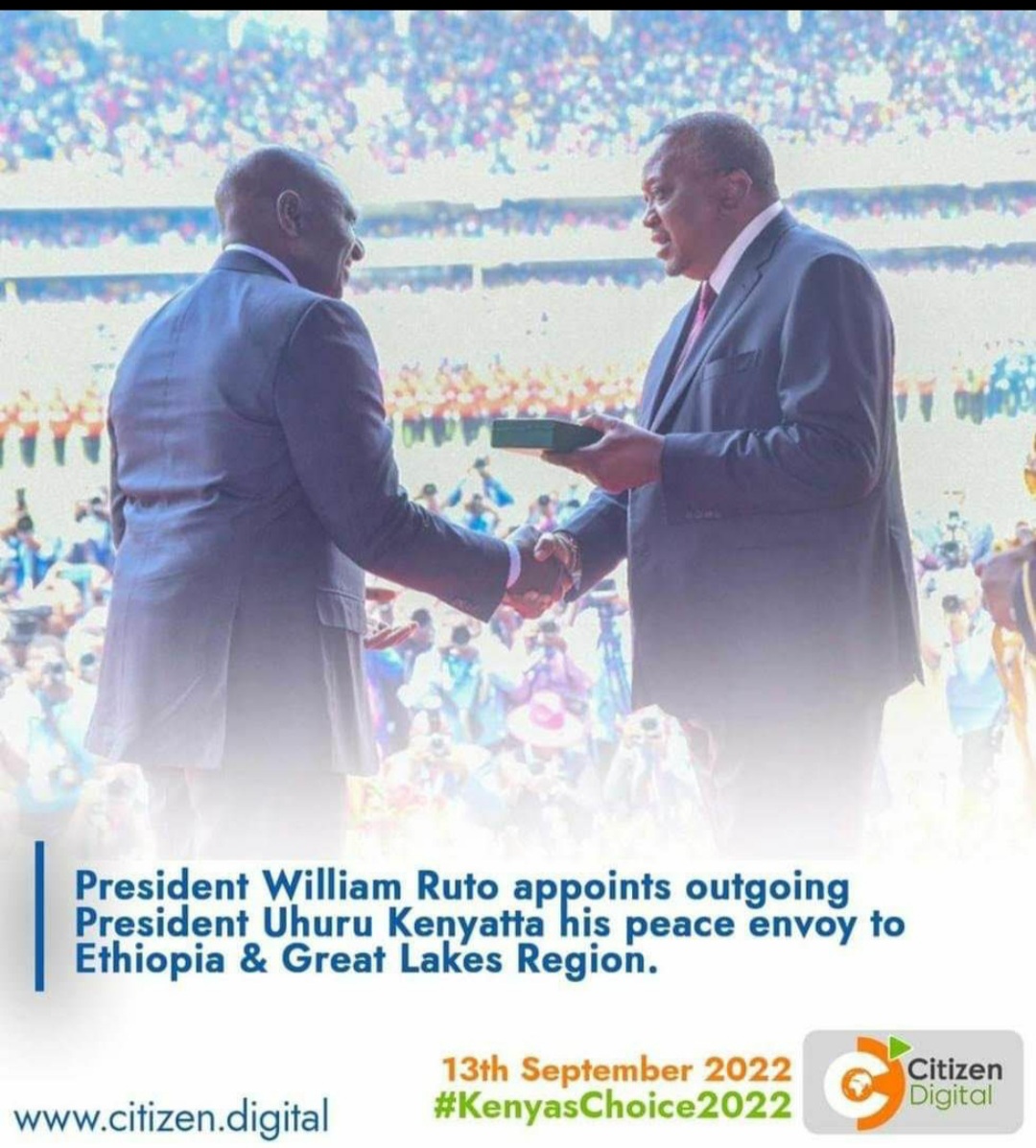
Peaceful transfer of power captures the essence of democracy. In that sense, Kenya, Somalia’s neighbor, has made gigantic move forward and joined to world democracies with its African heritage of multiple tribes and numerous ethnic groups, proving most Somali analysts deeply wrong in their debates on the subject. Clans aren’t the problem in Somalia. It is the politicians who use them for opportunistic and selfish aims, cultivating divisions and hatred among clans in the process.

The cornerstone of democracy is respect and adherence to the spirit and letter of the constitution. That solemn civil contract is what binds the citizens to constitute a nation-state, exercising the laws of the land. Clans, in the case of Somalia, are positive forces of identification as genuine Somalis and belonging to a clan solidifies its ownership as a stakeholder. There is no other way to define or distort this reality. When discoverers of 4.5 Clan Power-sharing Formula in Somali politics introduced their invention, they struck at elusive discovery of Somali reality, hypocritically denied by many. Inventors of the Clan Formula didn’t hide the fact that it is good only before general free and fair elections take place, after which the Formula requires some adjustments for Power-sharing and clan balance reasons. For example, the Head of State and Head of Government cannot come from the same sub-clan of the 4.5 clan political configuration. There must be a clan balance in government. Even after general elections, you are dealing with the 4.5 sort of a scenario.

Welcome to Kenya, whereby save the President, every elected person is picked by his/her own constituency in most cases. In tribal politics, it is hard to discover a neutral party. Only laws are needed in place to make public servants apolitical. Other than that, accept the reality and move on.

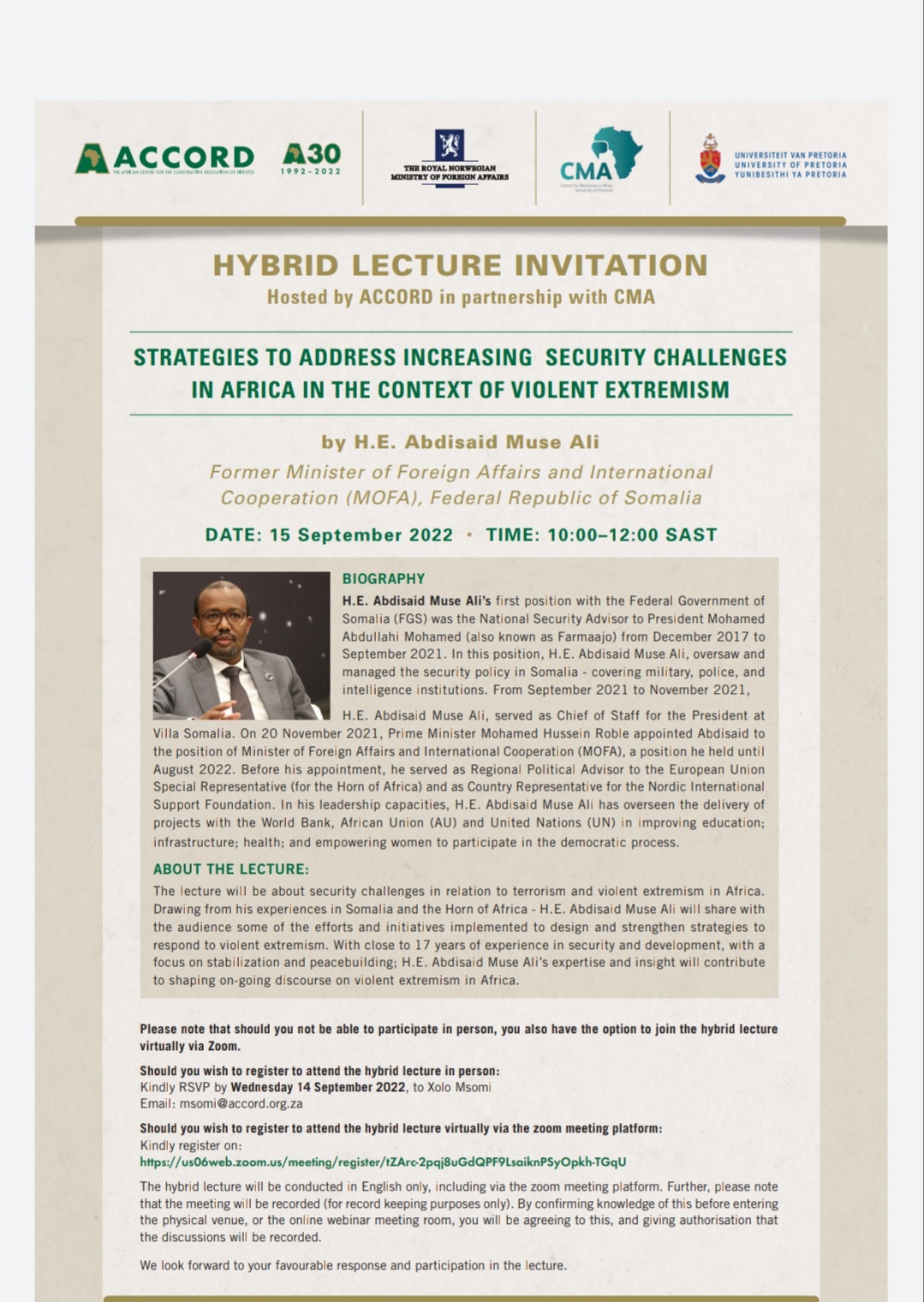
INVITATION TO ATTEND

SOMALIA’S INTERNATIONAL PARTNERS ENGAGE WITH FEDERAL MEMBER STATES

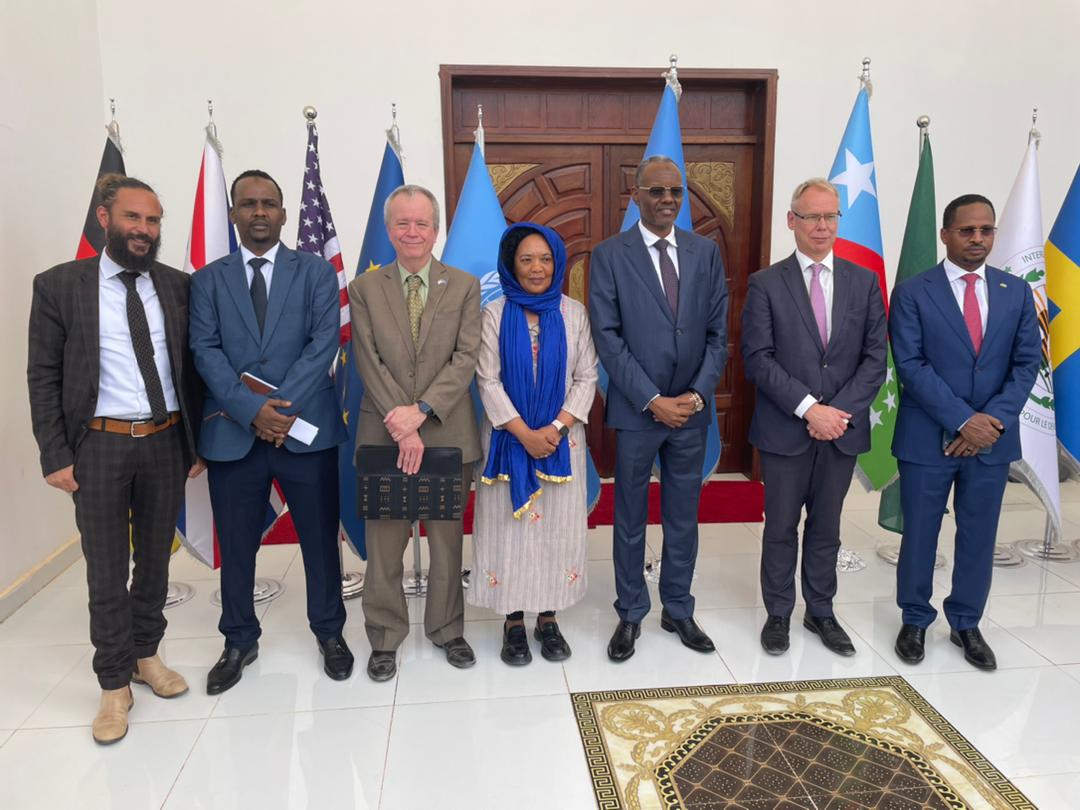
Following high profile visits by diplomats and military personnel recently from Western nations to Somalia’s capital city, Mogadishu, including the visit by EU High Representative for Foreign Affairs and Deputy President of the European Bloc, Josep Borrell, ambassadors of Somalia’s International Partners accredited to Somalia are showing signs of renewed interest also in the situation of the Federal Member States.

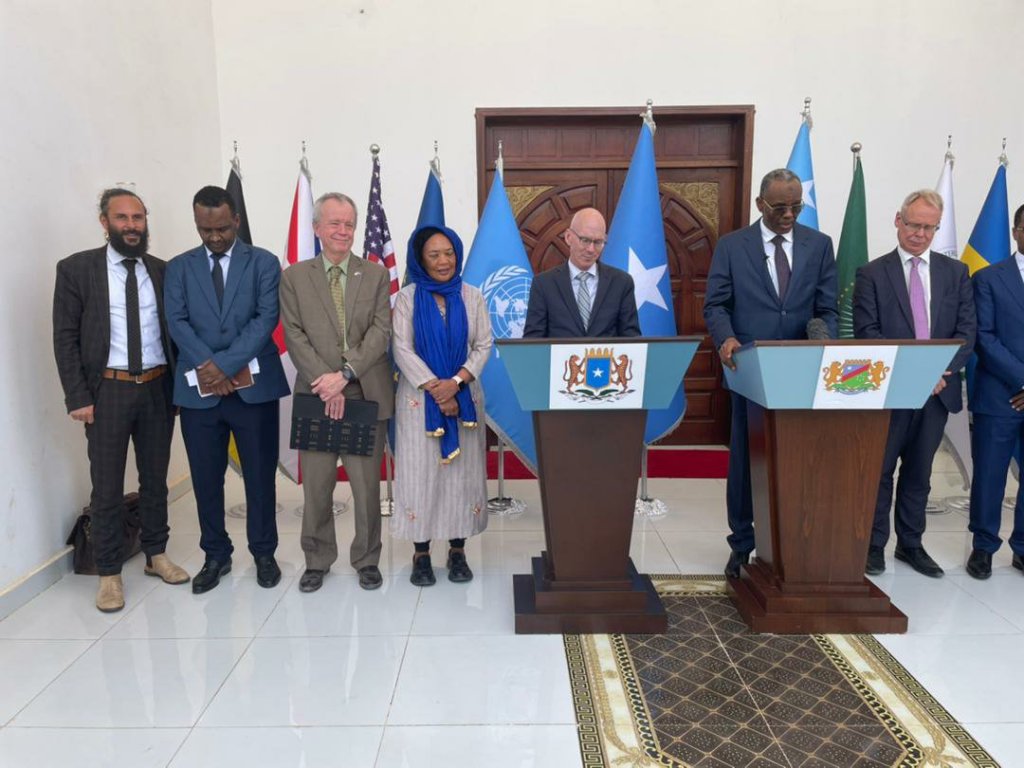
Among the diplomats, who are now paying diplomatic working visit to Baydhaba, Southwest State, include UN SRSG James Swan, US Ambassador to Somalia, Larry E. Andre Jr, AU Acting SRCC, Fiona Lortan, Swedish Ambassador, Per lindgärde, Ethiopia Ambassador, IGAD Representative, EU Rep, German Deputy Ambassador, among others. They held talks at State House in Baydhaba with the President AbdulAsis Laftagareen of Southwest State of Somalia.

This diplomatic visit to Baydhaba could act as the beginning of other visits to follow by the diplomats to a number of FMS. Certainly, among priorities for discussion, as far as Somalis are concerned, are the severe drought impacting upon all regions of Somalia and security issues.

Stay tuned.

TRANSFER OF TECHNOLOGY AND KNOW-HOW

Have you ever heard Marshall Plan? What about the rise of China as an economic and technological giant? What about Japanese progress after the 2nd World War? All these countries had benefitted from foreign investments and expertise.

“The Marshall Plan, also known as the European Recovery Program, was a U.S. program providing aid to Western Europe following the devastation of World War II. It was enacted in 1948 and provided more than $15 billion to help finance rebuilding efforts on the continent. The brainchild of U.S. Secretary of State George C Marshall”.

Democracies are like-minded people with common interest aligned to their governance. That is why they have confidence in investing in each other’s country. The key here is political stability. China is a different case, attracting Western investment because of its cheap, huge labor force, and automatically receiving transfer of Western technology and know-how, while still maintaining its communist regime status. The result is now stiff competition from China as the 2nd world economic power. Japan had been devastated by US retaliation after Pearl Harbor attack during the 2nd WW, suffering nuclear blasts in the towns of Hiroshima and Nagasaki, leading to its Armistice, an experience that never have to be repeated anywhere in the world. US had moral obligations to rebuild Japan. In my younger years I remember any manifactured item from Japan was looked down and 2nd rated. Now they talk about fine Japanese engineering.

But the purpose of writing this piece is to shed some light on the need to train future Somali workers for the coming investments in petroleum industries, mineral exploration and exploitation, fishery, meat processing plants and farming. Training Somali personnel must be an important component of any Foreign contracts in the future. Otherwise you risk importing labor force because your population is unskilled. How would you create jobs for people if you don’t prepare workers? How about vocational schools to take greater part of the burden in preparing Somali future workers? Can you dream of Somalia’s industrialization without native-born labour force? We must learn from the mistakes of the Arab Gulf States.

Somalia: Speech by High Representative/Vice-President Josep Borrell at the joint medal parade with EUCAP and EUTM Somalia

 11.09.2022  

Mogadishu

 EEAS Press Team

Thank you. Thank you, Commanders for hosting me today in Mogadishu. Thank you to all of you for joining this ceremony.  

Mogadishu is a long way from Brussels. I made this long way to come and see you, and the new leadership in Somalia.  

Somalia and its broader region remain critical for [the] Europeans’ security and interests.  This is why we are deploying here three missions [and operations] of our Common Security and Defence Policy (CSDP). And the European Union’s Delegation need to continue working side by side in Somalia.  And this is why the European Union needs to sustain its efforts in this difficult and troubled part of the world.  

But every policy needs men and women to implement it, and your personal efforts are crucial to implement this strategy.  

I commend your commitment and your hard work here in Mogadishu – I know that it must be difficult -, but also in Hargeisa, Garowe and Berbera. I know that it takes courage and resilience. And on behalf of the European Union, I have to thank you. 

Your dedication to promote and to protect the European Union’s values and interests here in Somalia, and in the region, is fully recognised in Brussels and across the European Union Member States.  

It is difficult, but we need to continue. We need you to continue to strive for tangible results. 

I just had a meeting with the Somali President [Hassan Sheikh Mohamud] and recalled to him that the EU Training Mission (EUTM) has already trained 8,000 Somali military [personnel] so far. And thanks to this mission and thanks to your work, the Somali National Army has increased its capacity to train its personnel by itself. Because we hope that we are not going to stay here forever, and they should be able to take their responsibilities. Recently, it took responsibility for a fully manned and equipped training centre in Mogadishu.  

Another tangible action on which we need to continue to build: two out of the four Somali National Army Battalions trained by us – by you, by this mission – have received equipment funded by the African Peace Facility. And now, with the European Peace Facility – a new financial tool – we are scaling up this support.  

And a last example that comes to my mind: in the port of Mogadishu, the EU Capacity Building Mission in Somalia (EUCAP Somalia) has considerably improved the efficiency and the working conditions for the Maritime Police Unit. I know that is not enough, and the Somalis are far away from being able to replace the EU Naval Force Somalia – Operation ATALANTA. But we have to look for an exit for the EU Naval Force Somalia – Operation ATALANTA.  

In the meantime, EU Naval Force Somalia – Operation ATALANTA’s contribution to maritime security on the coast of Somalia and the EUCAP [Somalia]’s efforts on shore to build the capacity of the Coast Guards and police continue and are mutually reinforcing.

When I will come back to Brussels, I will recommend the Member States to extend the mandate of [EUCAP Somalia and EUTM Somalia] missions by two years. This is part of our strategic engagement in Somalia.  

In the next two years, your missions will need to continue demonstrating professionalism and ambition; striving for concrete results. Neither EUTM [Somalia] nor EUCAP [Somalia] have yet fulfilled all their objectives – this is certainly an understatement.  

We have to continue. And I have discussed with the Somali President the reason why this is the case and the challenges facing Somalia and its security sector, in particular.  

I told the President that our objective is to continue to strengthen the security institutions while diminishing gradually our support to the African Union-led operation – the so-called ATMIS (African Union Transition Mission in Somalia).  

Somalia needs to take full ownership for its own security by the end of 2024. I assured the President that you would stand by the [Somali National] Army, by the Police and the Coast Guards of Somalia to help them to fulfil this objective. 

This is critical for Somalia in the first place, but it is also critical for European security. Our fellow citizens should know that their security starts far away from our borders. The security of Europe starts also in Mogadishu. That is why your missions, and your daily work, are so important.  

It was my honour to be here in Mogadishu today with so many men and women in uniform, as well as civilians serving this objective.

Thank you for that and keep up the good work.

CONTACT DETAILS

PETER STANO

Lead Spokesperson for Foreign Affairs and Security Policy

peter.stano@ec.europa.eu

+32 (0)460 75 45 53

JENNIFER SÁNCHEZ DA SILVA

Press Officer for International Partnerships/Foreign Affairs and Security Policy

Jennifer.Sanchez-Da-Silva@ec.europa.eu

+32 (0) 229 58316