
https://ismailwarsame.blog/2021/03/17/absence-of-professional-associations-in-puntland/
Annual Payment
$37.00

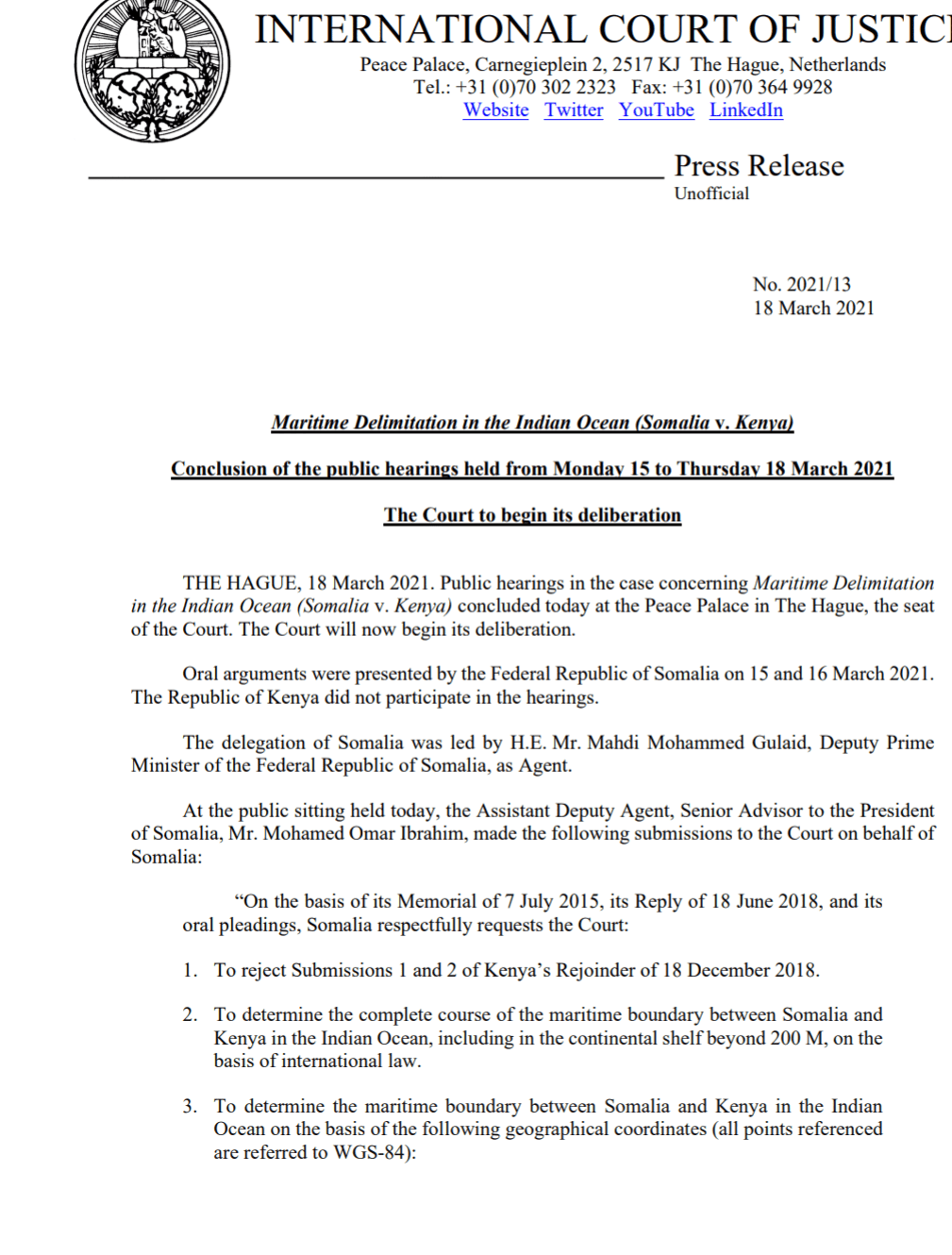
The Federal Government of Somalia had created the political and electoral impasse in the country. How?
One should read this article to understand how the Administration of Farmaajo-Khayre policies had created a situation that fundamentally reversed the democratic trend along which Somalia was expected to move forward: https://ismailwarsame.blog/2019/09/26/nn-political-roadmap-discovered-read-this-article-for-free/
The Federal Government has been engaged in a vicious campaign of dismantling the Federal Member States, putting in their places centrally approved governors, all with the intention of returning to power through sham elections in 2020-2021. This policy started with the forceful installation of Laftagaren in Southwest State, followed by Qoor Qoor of Galmudugh and Guudlaawe of Hirshabelle.
The political atmosphere so artificially and illegally created had set in a polarizing effect, the resolution of which will make or break Somalia. Add to this, multiple attempts were also made by the Federal Government to destabilize and marginalize Puntland and Jubaland in order to depose their leaders, Deni and Madoobe, as well. That is why Mohamed Abdullahi Farmaajo has difficulties with them today in a political deadlock nobody knows how it would end up.
It is solely the position and actions of the Federal Government that had led to this dangerous political paralysis and gridlock. In a scenario worse than that of Hassan Sheikh Mohamud, who spent half of his four-year stint fighting against the establishment of Jubaland State, Farmaajo has lost his own presidential legitimacy fighting for gaining absolute power by trying to destroy Somali federal structure. Farmaajo has succeeded in disabling all branches of the federal Government ( Parliament, Judiciary and Cabinet). We will watch out who blinks first. But, let us hope best for Somalia.
http://Amazon.com/author/ismailwarsame. Since you are here, support Free Press WDM for better Somalia. Send in your subscription of $37 a year to keep this blog running. Sahal Account 496091 or e-Dahab Account 77731) Tel: +252 703 4081.
Annual subscription
$37.00
(This article has been updated since posting).
By Mohammed Khelef with DW
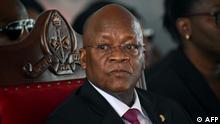
Tanzanian President John Pombe Magufuli has died after weeks out of the public eye. He will we be remembered for reasons both good and bad, says DW’s Mohammed Khelef.
Tanzania’s government says President John Pombe Magufuli died as a result of a heart condition. POLITICS | 17.03.2021
This follows weeks of speculation that his absence from public view would prove to be as ironic as it was tragic: that having ignored and laughed in the face of international guidelines published by the World Health Organization (WHO), the 61-year-old might have contracted COVID-19 himself.
Whatever the cause of death, his passing highlights the painful division that runs through the heart of Tanzania.
Many people sincerely believe President Magufuli was truly the best leader Tanzania ever had, tackling issues at every imaginable level of government. Many others think he was the worst president possible, crushing human rights and intimidating those who spoke against him.Advertisementhttps://5d49d3da3cb8a7f09165713ba9a08395.safeframe.googlesyndication.com/safeframe/1-0-37/html/container.html
Riding these two extremes was a talent that Magufuli knew how to use to his advantage.
Magufuli came to power in 2015 following a campaign in which he had declared war on corruption. Upon his victory, his supporters were quick to elevate him to the level of a savior sent to save their nation — despite the fact that the election win did not exactly come as a surprise since his Chama Cha Mapinduzi (CCM), party or its political predecessor, has been ruling Tanzania since the country’s independence in the early 1960s.
But part of the reason why Magufuli attracted so much attention was the fact that he managed to quickly establish his own brand of governance.
Magufuli used and misused the country’s constitution repeatedly to achieve his ends, even if that meant endangering lives and livelihoods. It doesn’t take a legal eagle to suggest that he singlehandedly managed to turn the presidential institution into something rather akin to a monarchy within a few short years, though many experts have indeed supported this view.
Magufuli ultimately built the Tanzania he wanted. He and his appointees within the government and his party even took to using the term “Magufuli’s Tanzania” — and they certainly meant it.
Instead of seeking consensus and compromise, Magufuli stood out for his dominating style of leadership, issuing commands and orders to those seen not to comply.
To his credit, his system worked — to some extent: there were several occasions on which he proved he could solve challenges big and small in almost an instant. He soon became known as a man who put his money where his mouth is — even though that money wasn’t always his to spend.
Magufuli knew how to sell that brand to the people: Once he was seen handing money to a woman whose pastry business had reportedly gone bankrupt. On other occasions, he would have directors of public bodies fired if those on the lower echelons of the ladder had filed complaints. His every move was an extension of his election and reelection campaign, making him a uniquely hands-on leader in the African context.
Within a few short years, he had become the problem-solver-in-chief, with people from all backgrounds approaching him to sort issues out for them. He took his popularity and turned it into populism.
Not only did Magufuli appear to distrust those working for him and under him, he also got much of the populace to follow his authoritarian style. Public harassment, humiliation and threats became common methods in dealing to those that Magufuli deemed to be in the wrong — and many citizens believed him and followed their leader, as true to his brand, everything was reportedly done for them.
Despite his questionable leadership, Magufuli will be associated with the construction of major infrastructures in Tanzania — such as the Central Railway Project, the Stiegler’s Gorge Dam, and the completion of some projects that had been started during past administrations. His aggressive way of getting things done was frequently referred to as Magunomics — especially by those who benefited from his actions.
But the other side to Magufuli that many did not like — Magucracy — will equally be remembered as part of his legacy; being laws, regulations and even the constitution to pursue his own ends while promoting this as the public good.
Some people saw through his deceit and turned against him; but many Tanzanians continued to support the president who would ban opposition parties from holding rallies between election seasons; the leader who banned pregnant girls from school after giving birth; the head-of-state who was happy to ignore international protocol in the fight against the coronavirus pandemic.https://imasdk.googleapis.com/js/core/bridge3.447.1_en.html#goog_38946235 02:10 mins.DW NEWS | 03.02.2021
In the immediate aftermath of Magufuli’s death, there will be public mourning and grief for the president; but as far as his longer term legacy goes, there will likely be tears for entirely different reasons.
Magufuli will also be remembered as the president who shut down the media, threatened journalists, detained the rich, activists and politicians, charging them with economic crime cases, as these are not bailable offences under Tanzanian law.
He was also the president who presided over the last two elections — local council elections in 2019 and the October 2020 general elections, both of which have been reported as being neither free nor fair. And in six short years, Magufuli turned Tanzania into little more than a single political party state, where his ruling CCM party dominated more than 90% of seats in public offices.
Admired to the same degree as he was disliked, Magufuli leaves a behind a country that has to find its identity again in the absence of its divisive leader.
Judging by his legacy, this might not be a bad

Political rumours are past time and way of life in societies lacking freedom of the media and strong public institutions. In these societies, there is no way of knowing the truth; no public access to information; no means of verifying the validity of rumours, and since they are informal means of communication, everyone uses them […]
THE RUMOURS
Annual Subscription
$37.00
The establishment of professional associations, cooperative societies and firms would take off heavy burden on the government and would make lives and livelihoods much easier.
The creation of professional societies is as important as democratization process in Puntland. It even makes democratization process easier and more organized. It is time for Puntland to think strategically about state and societal development. We need men and women to think daily on those lines and advise the authorities.
But, all these efforts would be in vain, if political leaders are not trained to listen to new ideas and ready to be challenged for their own personal growth.
These organizations don’t need government funding. They would operate on their own budget through levies of fees from their membership, fees for services and grants from the public and government.
Postscript: As a support for the contents of this article and in response to its posting, here is a statement by a professional CPA and Licensed Auditor , Ali H. WARSAME, on the issue:
“On my personal experience, when I became Minister of Education [Puntland] on Feb. 2014, I was informed that one of the vital educational institutions, namely Garowe Teacher Training College, was suspended from funding previously provided by SIDA of Swedish Government through Diakonia, due to audit noncompliance. The institution was literally grounded due to that sanctioning. I read the report first and I immediately recognised that the noncompliance was not a “material misstatement” to warrant such a drastic measure from the funder. I requested audience in Nairobi to meet Diakonia team and management. I first stated my professional background as a certified accountant and licensed auditor. Then I confidently explained to the team what went wrong and although it’s a misstatement, it doesn’t qualify to the level of sanctioning because it’s not “material”. In addition to that, I promised to follow up the misstatement to be rectified, reorganise & restructure the Board of Directors to contain at least 1 qualified professional accountant, change the finance director and give the director of the institute one-year conditional contract to make sure that he understands the situation. I did leave the meeting with full restoration of the funding and appreciation”
Biden Agrees Putin Is Killer, Says He’ll Pay Price for Meddling https://ground.news/article/c0e38d89-630e-49a4-8993-742cf0e972f6
When the State of Israeli was being established in the Middle East in 1948, drawing in Jewish communities from all over the world, they asked themselves one fundamental question for the success of the State: Who is going to do the hard work of building up that State, and make it sustainable in the face of Arab onslaught?
The answer was, “we the Jews”.
In pursuit of this objective, every Jew became the Jack of all trades – the professor became a labourer, farmer, construction worker, teacher, soldier etc. As Israel developed with confidence in their people, they became smarter to use Arab labour for hire. This is how the State of Israeli was built. Any extra assistance from Europe and USA was considered a God-sent and wasn’t relied upon.
The story of Israeli State is reminder and lesson for all Somalis, leaders in particular, on the importance national self-reliance and self-respect. No other countries or organisations will do Somalia’s bidding for continued survival, safeguarding of its sovereignty and success as a nation-state.
So, stop the childish behaviour and mundane existence in running Somalia. We aren’t interested in one man’s personal name or leadership without making it sure that he/she is servant of the people of the people of Somalia, and that we must have a mechanism in place to change leaderships at all levels of public endeavors whenever we feel that they aren’t up to the job.
Since you are here, support Free Press WDM for better Somalia. Send in your subscription of $37 a year to keep this blog running.
Annual subscription
$37.00
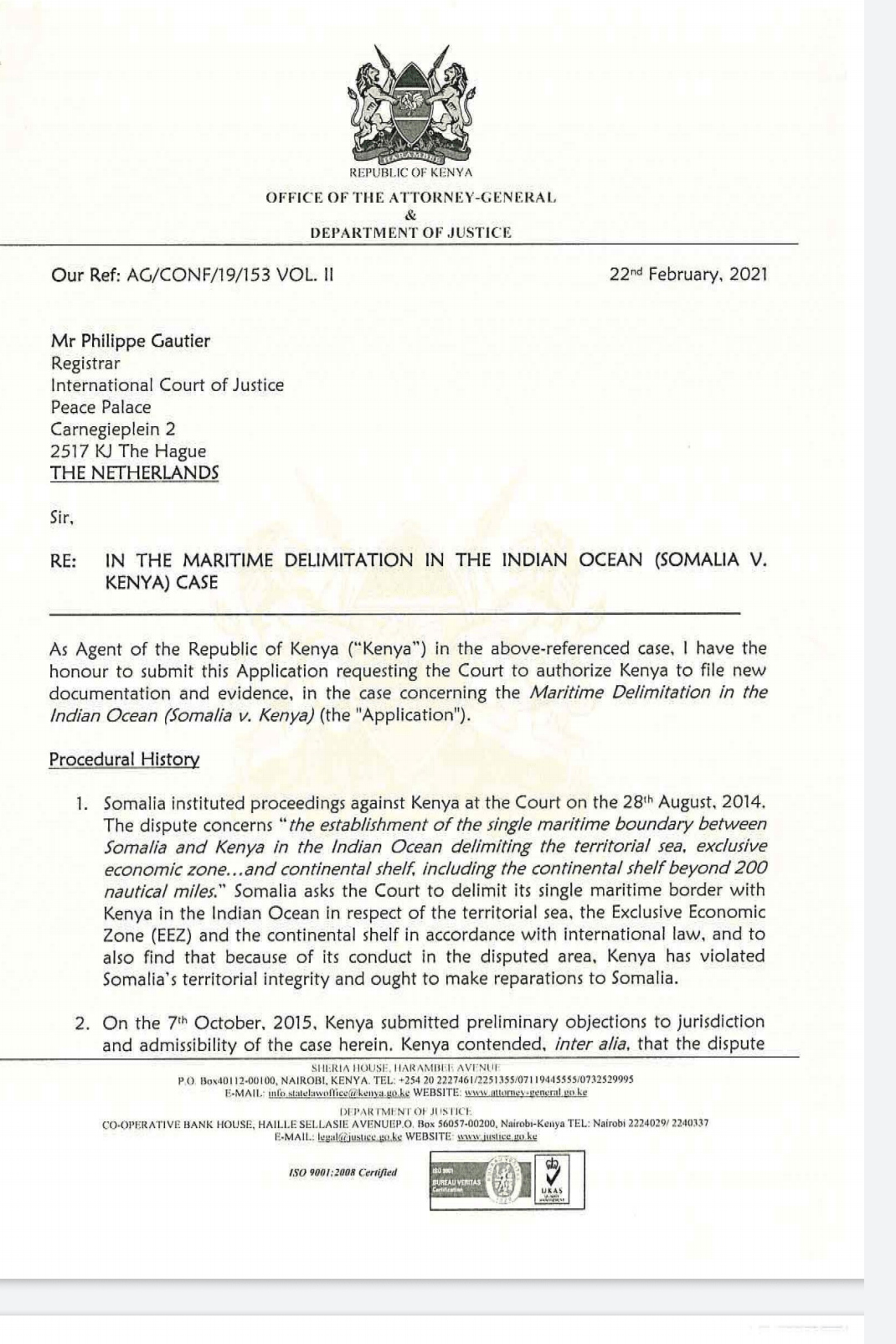
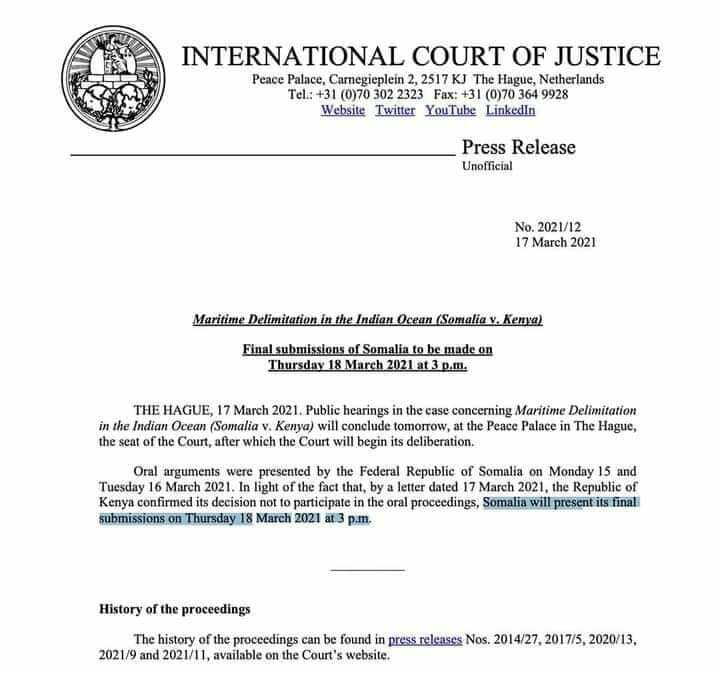
It is obvious that Kenya felt its maritime dispute with Somalia had no solid legal foundation. Kenya’s claim was based on deception and fraudulent misrepresentation of Somali position and documents such as the infamous MOU with Somalia, treating and submitting it as binding agreement between the two countries. Kenya claims also Somalia’s “Acquiescence” to Kenya’s unilateral claim to the disputed area of the ocean, saying falsely Somalia never refuted Kenya’s declaration on maritime boundary delimitation. Now Kenya’s withdrawal from the oral arguments before ICJ is strategic -Kenya is trying to rob legitimacy from ICJ potential ruling in favor of Somalia. Kenya decided to prolong its claim and fight on by other means, legal and non-legal. The ICJ ruling will not be the end of this dispute, I think. However, businesses and international firms will not risk their investments in parts of the Indian Ocean claimed by Kenya, after ICJ ruling in favor of Somalia. Somalia’s Team has been historically strong since the beginning of the case at ICJ.
Whatever the case, it is the people of #Somalia vs #Kenya at #ICJ, represented by their government of the day, whether it is #N_N, #M_Farmaajo or someone else. All Somalis support #M_Farmaajo in this challenging national case to repulse infringement against our sovereignty.
Just to make it clear to everybody to understand, Mahdi Guled, as a head of Somali government delegation was at ICJ to express the official view of the government and to explain to the Court the frustrations they had in negotiations with Kenya to reach at amicable solution to the boundary delimitation issue, and therefore the reasons that compelled Somalia to resort to international arbitration through the ICJ. I believe he has conveyed Somalia’s case well.
http://Amazon.com/author/ismailwarsameSince you are here, support Free Press WDM for better Somalia. Send in your subscription of $37 a year to keep this blog running. Sahal Account 496091 or e-Dahab Account 77731) Tel: +252 703 4081.
Annual subscription
$37.00
(This article has been updated since posting).
Dear WDM reader,
As your payment of WDM Subscription is received, you will get a personalized Letter of Appreciation, which reads:
Dear reader,
Thank you very much, indeed, for being our valued digital subscriber. Please, welcome on-board!
We are pleased to inform you that your subscription is good for one full year, starting from the day of your subscription. We are happy to serve you as our valued reader.
Congratulations on your wise decision on WDM subscription as our valued reader! We appreciate your membership and look foward to your feedbacks in the future as we move forward together to a better world of enlightenment and positive critical analysis.
With the compliments of
Warsame Digital Media WDM,
Contact Person:
Ismail H. Warsame
Ismailwarsame@gmail.com
@ismailwarsame
Dear WDM reader,
Do you intend to continue reading WDM articles and feature stories on Somalia? Subscribe to WDM to be delivered into your WhatsApp number instantly as every article is posted.
Send $37 for one year subscription to:
Sahal Account 496091 or e-Dahab Account 77731) Tel/WhatsApp/Acct :+252 90 703 4081.
Another payment option: Pay with PayPal at ismail@ismailwarsame.blog
Who can tell the spot, location and which part of Somalia is it? That vehicle is one of the car pool I had hired for the JNA studies for Somalia’s Reconstruction and Development Program (RDP) in 2005. The spot is located at GeelDoora Mountain in Calmadow in Sanaag. It takes six hours to cross from LasQoray on the Red Sea for a distance of less than 6 Kms.
This study a (synthesis of Puntland, Somaliland and South-central Somalia Needs Assessment Studies) had culminated in and used in the so-called “The New Deal” for Somalia, which was signed in Brussels during the stint of former Somali President Hassan Sheikh Mohamud.
This study came up with two billion dollars to be raised from donor community in a Conference somewhere in Europe on Somalia’s initial reconstruction needs as TFG was proclaimed in October 2004.


When I returned to Puntland from a life of diaspora, I had decided to acquire a new Puntland driving license, although not necessarily required here or strictly enforced to have one, to be on the road driving, a dangerous situation. I went to the Ministry of Public Works in Garowe, to get a replacement of my foreign driving license. Guessing that I was a new face in town, they decided to exort some extra money for “lunch” from me beyond the required fee, thus demanding to conduct a driving test. Surprisingly, one of the questions they asked me in Somali was: ” No sheg shanta walalaha e gariga” (tell us the five brothers of the car). How would you answer such a question?
I heard some noises coming from the steering wheel of my vehicle the other day. I drove to a repair autoshop nearby to sort out the noise issue. The repairman, a man in his late thirties checked it out. He reported to me in Somali, “ciladu garigu wa bada” (your car has sea problem). I never understood an iota of what he was saying. When I asked him to explain what he meant, he had made it even more confusing. I gave up understanding him. Would he be able to fix the problem? Yes, he could and he did it.
http://Amazon.com/author/ismailwarsame.
Since you are here, support Free Press WDM for better Somalia. Send in your subscription of $37 a year to keep this blog running. Sahal Account 496091 or e-Dahab Account 77731) Tel: +252 703 4081.
Annual subscription
$37.00
http://Amazon.com/author/ismailwarsame.
Since you are here, support Free Press WDM for better Somalia. Send in your subscription of $37 a year to keep this blog running. Sahal Account 496091 or e-Dahab Account 77731) Tel: +252 703 4081.
Annual subscription
$37.00
Right now, sitting at a tea-table opposite mine is a former minister of Puntland State, who is using a plastic bottle of water washing himself in preparation for Maqrib prayer in one of premium hotels in Puntland Capital City. Momentarily, I felt the temptation for advising him not to do it here. As I had a bowl of mixed fruits, I noticed that the waiter didn’t bring me napkins. Instead of waving up for a waiter to bring me some, I stood up to look for them on other tables in the hotel lobby. I located a bundle on a table in some distance. Again and surprisingly, at that table there was a young man of about 25 years of age, engaged in washing his bodies in the act of hurrying up to prayers. The practice is now a common sight in most Garowe hotels at call for prayers from numerous mosques in town, and most probably, in other establishments elsewhere in the State. Talk now about the necessary 3WWWs ( Wash your hands, Wear a mask and Watch your social distance) in this era of COVID-19.
This untraditional and unhealthy new misconduct and antisocial behavior of using hotel lobbies for washing one’s limbs has to stop immediately.
City governments in Puntland State should have a word with owners and hotel managers to curtail this bad and unhygienic practice.
http://Amazon.com/author/ismailwarsame.
Since you are here, support Free Press WDM for better Somalia. Send in your subscription of $37 a year to keep this blog running. Sahal Account 496091 or e-Dahab Account 77731) Tel: +252 703 4081.
9 March 2021 – Source: Radio Ergo – AMISOM MONITORING SERVICE
Fadumo Mohamed Gelle and her husband, Ali Hussein, both blind, elderly, and displaced, have been forced to beg in the streets of the central Somali town of Abudwaq, after losing their lifeline support that used to be sent by a relative abroad. The couple depended on US $100 sent monthly by their nephew, the son of Ali’s brother, who was working in Kenya until April 2020, when he was laid off due to COVID19 and could no longer send money. “We get between US $1-$3 on good days, which we use to buy milk and sugar that we feed on for that day. Other times when we are sick, we stay home,” said Fadumo, who is guided by her grandson when she goes out. The couple lives in Salaam IDP camp, on the outskirts of Abudwaq in Galgadud region. They are also worried about the seasonal rains that are expected to start in April, as they are living in a flimsy hut made of grass that cannot withstand the rain.
As many as 750 families in Salaam camp are facing food and water shortages, with 150 of them dependent on small remittances and donations from charity organisations, as well as local casual labour jobs, that have disappeared as a result of the pandemic. Sahra Abdi Samatar, a mother of eight, depended on US $150 a month sent by her brother-in-law in the United States to support her family. But for the past seven months he has not sent anything. As she gets nothing in the camp, she now survives on dry food she begs from the shops in Abudwaq town. “We survive on one meal a day. Before, we used to cook three times, but since we stopped getting the money, we only make tea during the day and cook at night,” said Sahra, whose husband suffers from a mental health illness. Sahra’s brother-in-law and benefactor was a taxi driver in the US, where his work stopped following the upsurge of the COVID-19 outbreak there. Sahra said that COVID19 had disrupted the livelihood of her family and if their current situation persisted their lives would be miserable. “A relative has given me 10kgs of rice and sugar. We will eke that out until we get more food,” she said.
Those living in the camp who relied on small jobs have also suffered as COVID19 has resurged in Somalia. Abdi Mohamed Dahir earned a living washing cars, but since the new wave of the virus was reported in Somalia his business had dried up. “Car owners parked their cars at a specific spot where we washed them but now there are no cars. Everyone washes their car at home for fear of COVID19,” said Abdi. The chairman of Salaam camp, Indiriis Adan Abdulle, told Radio Ergo that he had formed a committee of 11 people, who are going round the camp helping needy families by providing them with cooked food contributed by others in a better situation. He said organisations had issued aid cards but no food or cash or other assistance had been received for eight months.

April 27, 2014
By Ismail Warsame
Although I heard about it and reminded myself, on several occasions, to have a look at it, I, finally, had the opportunity to read Ahmed Jama Mohamed Ghalib’s book, The Cost of Dictatorship, 1995 Edition. While I commend the author’s efforts to record his own experience with the extremely repressive regime he served loyally for such a long time, and although I am, perhaps, a bit sympathetic to his inclination to the Somali unity, I found the author’s account in the book full of historical distortions, perhaps with intended omissions of facts and extreme partiality towards forces that led to the removal of Siyad Barre military dictatorship.
Cost of Dictatorship_Ghalib. When I read Ghalib’s book I suddenly remembered one incident involving the author during the Somali National Reconciliation Conference in Mbagati, Kenya, 2002-2004. For whatever reasons Mr. Ghalib avoided Hargeisa even when it fell to the forces of Somali National Movement (SNM) he claims that he was the key man in Mogadishu at the time to support its armed struggle against Barre; the General remained connected to Mogadishu even after the collapse of the Somali State. Whatever role he played within the reign of Mogadishu Warlords and their struggle to finish one another, the General finally decided to act as an active member of the Mogadishu civil society politicized organizations. Because of external donors’ manipulations, these organizations became the most serious obstacle to the restoration and re-institution of the Somali state. One day in 2004 at the Safari Park Hotel, Nairobi, the President of Uganda, Yoweri Musaveni, in his capacity as the Current Chairman of IGAD, and in an effort to reconcile severely opposing views and differences within the Somali parties at the Conference, met with predominantly members of the Mogadishu civil societies. During the briefings and discussions with M7 (Musaveni), a lady from Digil and Mirifle group, named Ms. Ardo, who later became a member of the Somali Transitional Federal Parliament, complained to Musaveni that the “warlords are giving no chance to anyone, including a claim to be members of the civil societies like my brother General Jama Mohamed Ghalib”. Ghalib was comfortably sitting there when President Musaveni looked at Ghalib and asked him,” aren’t you a General? What are you doing here?”
The point here is that General Ghalib can claim for himself any past societal status or role rightly or wrongly he so desires to be remembered of, but he cannot be allowed to distort modern history as we are all witnesses as well, and perhaps more informed than him with regards to the Somali movements established to fight against Barre Regime.
Let me set the record straight. The movements of SNM and USC that the esteemed General glorifies are nothing, but the work done by the Somali Salvation Democratic Front (SSDF) in its historical efforts to mobilize Somali masses against the military junta in Mogadishu. When some political leaders of prominently Issaks led by Mr Duqsi and Mr Jumcale, came to Addis Ababa, Ethiopia, and met with then leaders of the Somali Salvation Front (SSF), a successor of Somali Democratic Action Front (SODAF) in 1981, it was agreed to form a united front against the Regime. There was no SNM at that time. It was decided that Issaks had to organize themselves, either to join SSF individually and in groups, or to form their own movement with an intention to join forces later. The formation of SNM was announced in London, UK, in 1982 after SSF became SSDF with its merge with the Somali Communist Party led by Abdirahman Aidid, who was from Sool and Togdheer regions of Somalia, and Somali Workers’ Party led by Said Jama, hailing from North-western Somalia.
The SSDF sent a high level delegation composing of Mr. Jama Rabile Good (after he defected to SSDF) and Abdirahman Sugule Xaabsey to SNM leadership in London for unification talks. The SNM delegation led by the organization’s Secretary-General, Mr. Duqsi, came to meet with the SSDF leadership in Addis Ababa for unity talks. The talks continued for several weeks and ended in stalemate. The main reason for the failure of talks was the position of the SNM leaders that if they were to join with the SSDF, they might not secure the support of Issak masses as they were mostly bent to fighting against what they called southern domination. It was agreed that the SSDF, rich with Qadhafi money and huge and generous supply of modern arms, would bankroll the SNM and arm its forces for the next two years, or until the SNM could secure enough support from its own constituencies while the unity talks would continue in the foreseeable future. The SSDF shared its broadcasting radio studio, Radio Kulmis, and changed the name to Radio Halgan, the United Voice of the Somali Opposition. That cooperation continued through Sheikh Yusuf Madar/Issak/Habar-Awal until the SNM leadership of Col. Kosaar/Issak/Habar-Younis, who was assassinated, perhaps by Siyad Agents, in a Mustahiil (off Hiraan Region) SNM Military camp.
Ahmed Mohamed Silaanyo/Issak/Habar-Jeclo/Adan Madoobe was elected as Kosaar’s successor. The SSDF leadership ran into trouble with Mengistu Haile-Mariam. Then, the SSDF leader, Col Abdullahi Yusuf, was arrested by Mengistu because of serious political differences involving opposing national interests. There was a temporary lull in the activities of the SSDF. Then, the SSDF broke into two factions.
Jama Ghalib ignores the fact that the USC was a splinter group of the SSDF following the arrest of its leader in Ethiopia. The second and most influential figure in the USC leadership after General Aideed was the Late Mohamed Farah Jimcaale/Harbar-Gedir/Saad, a once Deputy Chairman of SSDF until General Aideed forced his way to remove Hussein Ali Shido/Harbar-Gedir/Suleiman with the support of Jimcaale at a militia camp at Somali – Ethiopian border. When General Aideed came to Ethiopia, in his initial attempt to remove Hussein Shido from the USC leadership, he was received by Mengistu. In that audience, Aideed requested for the release of Abdullahi Yusuf. Mengistu warned him not to try that again.
The trouble I have with Mr. Ghalib’s accounts is that he could know better, having a formal police and intelligence training–unless his intention is to distort facts—deny others of their historical role and glorify the works of yesterday’s political stooges of the hated regime. One should not stay with and serve a dictatorship for twenty-odd years, always in-waiting for an appointment to high office and higher promotion within the regime while claiming to be a staunch supporter of the opposition. You cannot be a police general and a member of the civil society at the same time!
In The Cost of the Dictatorship, Ghalib has no slightest fairness or guts to mention about the role of the first organized opposition to the Regime, The SSDF. Read and see his tendency towards not mentioning even once the name of its leader, Abdullahi Yusuf Ahmed, while he glorifies the names and noble contributions of his colleagues, including himself, in the Regime of Siyad Barre. He is easily exposed, however, when he ignores the fact regarding the SNM that an organization does not fight for liberation and independence while at the same time installing yesterday’s political stooges and security agents of the dictatorship as its new leaders. It makes no sense.
I, therefore, strongly believe that there are many distortions and twisting of facts in Ghalib’s book, The Cost of Dictatorship. Some stories recounted in the book must be re-examined and verified as its author seems emotionally partial, accompanied with a motive, I suspect, to deny his role and responsibilities in the gross misconduct of Somalia’s affairs, horrendous abuses of power and human rights violations during the period the author served not his country, but Siyad Barre’s junta.
Having said that, I am, however, a bit inclined to agree with General Ghalib’s overall assessment of the extent and the irreversible damages Issak intellectuals had done to undermine the existence and vital national interests of Somalia’s state in their blind fight against Siyad Barre Regime or the “southern domination”. In that regard, I recall one painful expression or rather a question relayed to me in a conversation in Nairobi, Kenya, a few years ago, with Mr Mohamud Jama “Sifir”, a longtime employee of the UN about the extra efforts of these intellectuals have been exerting in destroying Somalia as we knew it: “Who will ever dig Somalia out of the deep hole of our own making?” Sifir told me that the question was raised by one of his colleagues as they assessed the tremendous damages done not only to Siyad Barre Regime, but to Somalia to a much greater extent, during their anti-regime campaigns in foreign and Western capitals within the international community. No wonder Somalia becomes too difficult to fix.
Ismail Warsame
http://Amazon.com/author/ismailwarsame. Since you are here, support Free Press WDM for better Somalia. Send in your subscription of $37 a year to keep this blog running. Sahal Account 496091 or e-Dahab Account 77731) Tel: +252 703 4081.
Annual subscription
$37.00
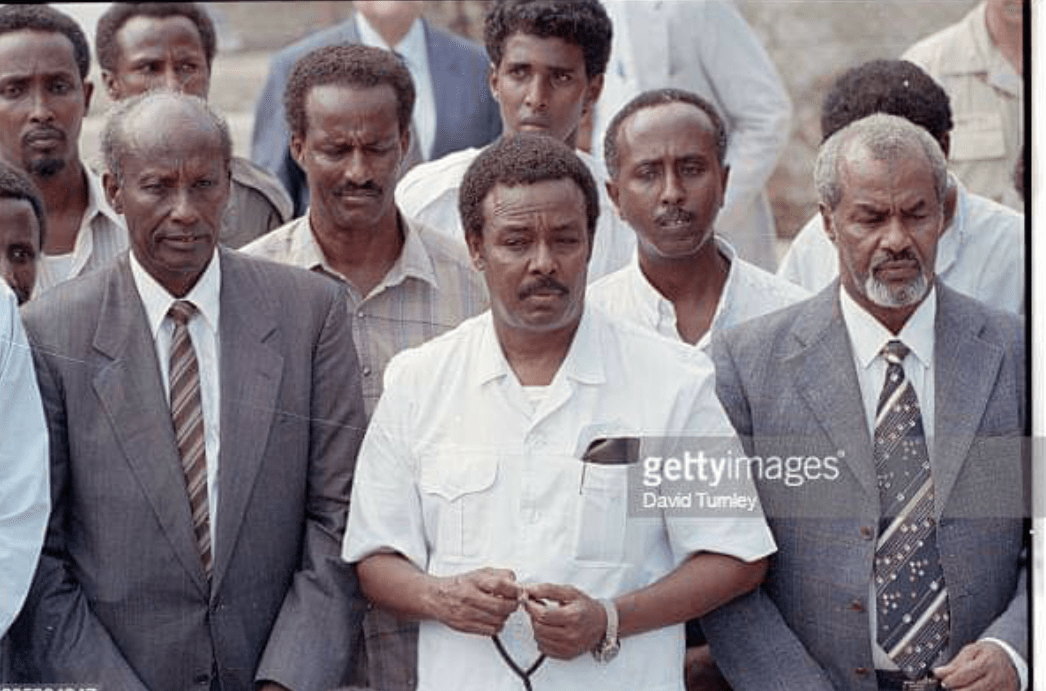
Ali Mahdi, his popular political name, had a pleasant personality with a smile that contradicts his exploits as a warlord in cleansing Daroods from Mogadishu, following the fall of General Siyaad Barre in January 1991. He didn’t help even to spare the lives of his former colleagues and businessmen acquaintances in his area of influence in North Mogadishu. The ideologue of clan cleansing, however, was General Aideed. Mahdi led the demobilization and disintegration of the remnants of the Somali National Army after the collapse of the Central Government, using Ambassador Omar Arte, his then Prime Minister, in Mahdi’s capacity as Djibouti-sponsored Interim President of Somalia in 1993.
Reflecting on his personal history, he suffered from two political liabilities:
As a leader of Mudulood, he had earned the admiration of residents of Kaaraan to withstand General Aideed’s onslaught against Abgaals in North Mogadishu. For four months, four hundred barrels of heavy artillery and mortars were focused on Kaaraan for constant bombardment, reducing it into rubble, and turning its residents into shell-shocked beings.
Ali Mahdi passed away in Nairobi this evening, after declaring in Mogadishu recently that he would return to using his “white gun” again, as a member of the opposition to Mohamed Abdullahi Farmaajo, the man squattering now in Villa Somalia.
Ali Mahdi was mainly to be blamed for the failure of Cairo Somali talks in 1997 as he had sabotaged the so-called Sodare Group in collaboration with Hussein Aided and Egyptian Government, and the reason why Bosaso Conference was aborted before moving it to Arta in Djibouti in the year 2000.
The difference between General Aideed and Ali Mahdi was that the former wanted to grab power by any means necessary and that the end justifies the means, and saw Darood cleansing from Mogadishu as means to that end with mass mobilization of Hawiye against Daroods, while the later didn’t know what he was doing.
Ali Mahdi was accused of entering into treasonous business contracts with Italian Mafia to dump industrial toxic wastes into Somalia’s territorial waters and even in wells on the land.
Both men had died before they were brought to justice. ( photo: courtesy, in the picture are at forefront from left General Aided, Ali Mahdi, Osman Ali Ato and Pilot Abdi Osman).
http://Amazon.com/author/ismailwarsame. Since you are here, support Free Press WDM for better Somalia. Send in your subscription of $37 a year to keep this blog running. Sahal Account 496091 or e-Dahab Account 77731) Tel: +252 703 4081.
Annual subscription
$37.00
Those who want to contribute to WDM with articles, essays, opnion pieces and works of arts should send their submissions to ismailwarsame@gmail.com/WhatsApp number at +252 90 703 4081.
WDM reserves the right to edit the contents of the submissions.
You make take up or adopt a pen-name or title of “Staff reporter/writer” in your submissions.
“One doesn’t have to own a journalist certificate to express his opinion “, Martin Hill, Amnesty International.
I was visiting my family in London, UK, sometime in 1999. At time, I was the Chief of Staff at Puntland Presidency. The President, Abdullahi Yusuf, was in London too, for a medical checkup. While there, I received a phone call from Mr. Martin Hill of Amnesty International, who wanted to meet me about an urgent matter concerning Puntland. We met at Chamberland Hotel Central London one morning. He reported to me that a journalist was arrested in Bosaso, Puntland. Amnesty International wanted that journalist released immediately. I told him that I hadn’t had the information yet, but would get back to him on the matter. I found out that a local pamphlet writer by the name of Deeq from Mudugh Region, had published an article falsely accusing Puntland authorities of dumping illegal substances into the Indian Ocean. It was dangerous fake news that provoked the Governor of Bari Region to order the detention of the journalist. Having reported the incident to the State President in London, we ordered the release of the journalist pending President’s return to Puntland State.
On getting back to Martin Hill, I told him we had ordered the release of the journalist, but complained to him that Deeq is neither a qualified journalist nor an ethical one. Mr Hill’s response was profound: “One shouldn’t hold a certificate to express his/her opinion”. The story now is repeating itself. Read Amnesty Statement here:
Somalia: Authorities must end arbitrary arrests and persecution of journalists in Puntland
Do you want an independent and free media in Somalia? Don’t you enjoy critical analysis of issues and impartial thought provoking media coverage on important topics of national interest,
If you do, support, donate and supscribe to the unique blog of its kind in Somalia, WDM (Warsame Digital Media). You could be anywhere in the world to keep this blog running. Act now.
“Serving you to think critically on issues that matter to you”
Contact info: Tel/WhatsApp/Acct: +252 90 703 4081
Chief Editor
Email: ismailwarsame@gmail.com
PS: Send us your contact info to receive our Letter of Appreciation.
The treatment of the duchess by the royal family is, at its core, a sign of Britain’s inability to step into the modern world
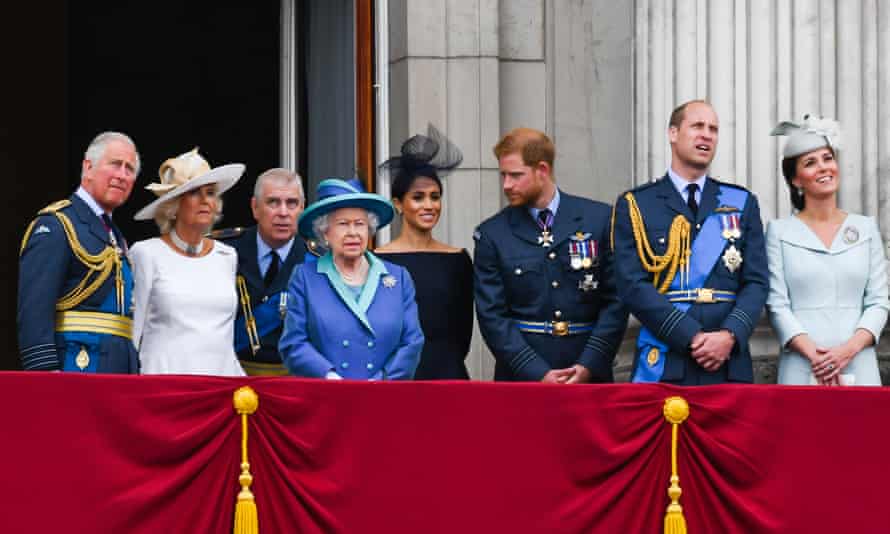
Mon 8 Mar 2021 18.16 GMT
They wanted to know how dark his skin would be. An unborn child about to enter the British royal family was already considered a potential worry and even a liability because one of his grandmothers happened to be African American, and the “stain” this might leave on his skin and their reputations had to be considered, and prepared for. These are among the many shocking revelations of Meghan and Prince Harry’s jaw-dropping interview with Oprah Winfrey.https://b8da0b329f2e6e61cb47e03d3afa39ce.safeframe.googlesyndication.com/safeframe/1-0-37/html/container.html
I’m not wholly surprised that a royal family member expressed concern about the “reputational” impact of having a dark-skinned child in their midst – considering the long history of exclusion of anyone Roman Catholic, non-aristocratic or disabled from their rarefied world. Yet to add to that sense of rejection, Archie has not been given either a title or security.The behaviour towards Meghan shows Britain learned nothing from Princess Diana’s treatment.
The intensity of this royal drama is startling considering the halcyon days around the time of the engagement and wedding of Harry and Meghan just three years ago. Indeed, when Meghan Markle was first linked with Harry, she looked much like her future sister-in-law, Kate Middleton – and I, like many people, did not know that Meghan had any Black ancestry at all. The poker-straight hair, the pale skin, the thin frame and expensive style made Meghan seem just another European royal bride out of central casting. But then tabloid headlines screeching “straight outta Compton” and poring over her mother’s “slave ancestry” made it clear that she wouldn’t be treated as such. The merest suggestion of Black genes entering the bloodstream of the Saxe-Coburg-Windsor dynasty made this already fragile little country start to tear apart.
Meghan has become the ghost at the table, an unwelcome reminder of this country’s inability to step forward into a modern world where women have their own opinions and desires, where the old caste system is dismantled, where the “piccaninnies” of our prime minister’s crude imagination represent our country abroad.
It is painful for me, as a republican, to have to step out in defence of any member of the royal family but I feel as though Meghan, Duchess of Sussex is receiving the ire intended for a much larger target of young Black women who have stormed into previously closed-off institutions. I have lost count of the times that I have been told I must have been accepted to Oxford because of positive discrimination (as if the university would ever adopt such a policy, as its woefully undiverse admissions record shows).
I’ve been told I was only published because I was “exotic”; and that any award I have received is a sign of “wokeism” or decreasing discernment among judges. All of these snide comments clearly reveal more about the insecurities and resentments of those making them than anything about me, but they do make me understand why Meghan would want to withdraw from such a toxic environment.
The noise recently against “cancel culture” clearly doesn’t extend to trying to protect Black women from coordinated and relentless attacks on their looks, abilities or motivations. The rearguard instinct to protect privilege and exclusion over all else is clearly a difficult one to overcome.
It is easy for me and others to adopt a posture of defensive silence, never talking about the toll of living, studying and working in environments where we are the only ones. As an insider, the minute you do speak up you are labelled as ungrateful, conniving, nasty or just plain unworthy.
I see the regular, almost feral attacks on Meghan by media figures such as Piers Morgan and others and wonder what he would do with that anger in other situations – for example, if he taught diverse and opinionated students in a university, or worked in an inner-city hospital. His rage is so disproportionate that many people would curl up if confronted with it. Other media figures appear to dismiss the skin-tone comments as “casual racism”, as if that’s acceptable.
I remember how I learned from an early age to bite my tongue, to laugh uncomfortably, to ignore “casual” racism in particular situations, and then to vent to friends who had experienced similar things.
The conversation between Meghan and Oprah is fascinating because of the frank way they talk; a huge, global audience watches as two Black women discuss the outrageous experiences of one of them and hear all of the gory, suppressed details for the first time. Oprah gasps as she hears what Meghan and Harry have had to put up with.
An ancient British institution tamed by an unprecedented level of public scrutiny from two world-famous Black women. I never expected to see it, the silenced becoming the silencer.
Discussions take place regarding who or what Meghan is, whether she is a “Black woman” or not, whether she is facing racism or not. Whatever, the truth is that blood and all the meaning that word carries is still very important in Britain and beyond. What you look like, what your parentage is, makes you belong somewhere if you’re lucky – or face rejection if you are not.
Breeding, ancestry, caste are the building blocks of the monarchy and aristocracy and still determine who we believe is superior and inferior. I dread to think what would have happened to Meghan if she’d had the temerity to marry the heir rather than the spare.

By WDM STAFF WRITER
The fool would never ever wonder why extremist militants have not been attacking Mogadishu seaport and airport? Perhaps you should wonder too why camel/cattle owners don’t slaughter their lactating ones. It could be because you forgot that it is their airport and seaport too. That’s where they generate the bulk of their revenues.
Extrmists have entrenched themselves as a viable enemy of civilization. They have presented themselves as invisible and invincible entity. It is hard to see them in Somalia’s main urban centers. But, everyone feels, hears and touches their presence everywhere you go, almost on a daily basis. We feel them through their horrific acts of terror – explosions, complex attacks, assassinations, extortions, tax collection and racketeering, [in]justice courts, blockades and what not.
They have ubiquitous presence. Such a pervasive perception is based on reality. What else their presence be called, if they have already taxed tonight’s dinner and breakfast at Villa Somalia? Let’s stick with ubiquitous for now till we find a more appropriate word to describe it, as ubiquitous comes here handy.
Most of us, who have been on the receiving end of their relentless terror campaigns, know they are fools, spineless, heartless and horrendous. They attack everyone everywhere, including among themselves. They are indeed fools. All terrorists are.
But, for practical reasons, there are places that have been immune to their foolishness. Apparently, extrmists aren’t foolish enough to intentionally attack Mogadishu seaport and airport. This is for the same reasons that they won’t attack Bakaara market. Those are their assets and source of income that they co-own and manage with the Somali government.
What about the indirect/mortar attacks often reported to have been targeted at the airport’s compound? Extremist militants have not been targeting the airport – at least not the airport facilities directly: runways, parking lots, departure and arrival terminals. Before AMISOM’s departure, the Mogadishu sea and airport could suffer only collateral damages by the militants indirect attacks as they would neither have the capacity nor incentive to launch direct attacks on the sea/airport with AMISOM present.
Remember, it’s their airport too. Apart from the revenues they generate from the airport, militant leaders’ families, children as well as their agents, sympathizers and financiers all use the airport’s services for medical, educational and commercial purposes.
Don’t take them for fools – Not when it comes to their direct interests! For that reason, you should relax at those facilities as they won’t attack the seaport/airport, until their interests get threatened.
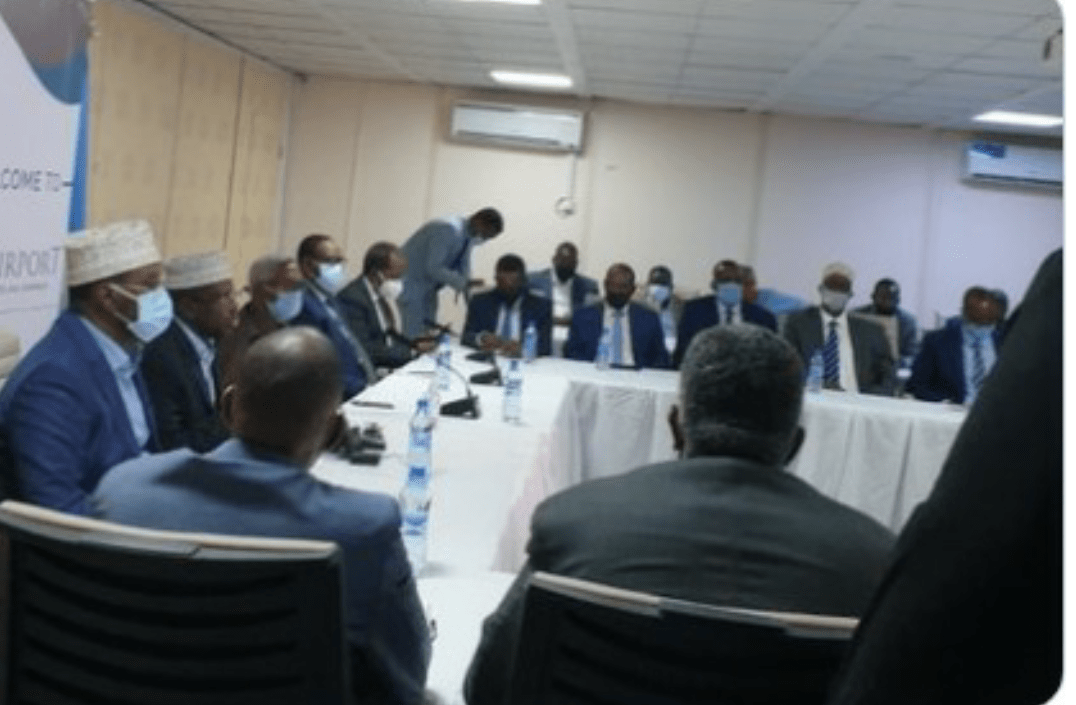
Is it a warm welcome in Halane for Ahmed Madoobe, one would wonder? Or is it a deterrent for him to avoid Halane or Airport hotels here afterwards? Is it a political and war economy entering into a new pre-election phase?

Presidents of Puntland and Jubaland are scheduled to arrive in Mogadishu today. Stay tuned for more information and further developments.

Somalia is a country still in civil war by other means. Stop it!

With opposition in disarray and Farmaajo still squattering in Villa Somalia, where do we go from here?
The expectation is that there will be a meeting soon, possibly at Mogadishu Airport vicinity, perhaps, in Halane Campound. But, this meeting between FGS and FMSs is increasingly looking like a formality, only to approve the contents of the understanding reached recently in Baydhabo by the Technical Committee on holding elections this year in Somalia.
No participation of the Council of Presidential Candidates (CPC) in the meeting is expected as the real players are FGS and FMSs, and rightly so because the opposition isn’t limited to only CPC, and partially because the CPC has just lost the momentum needed to stage a significant challenge to FGS, though they are still a political force to reckon with in Mogadishu.
Farmaajo, however, is under the illusion that he has won the battle with CPC, forgetting altogether that he has no formal legitimacy as president, having his mandate expired on February 8, 2021, and notoriously overstaying his stint in Villa Somalia. Nevertheless, Farmaajo has succeeded in dividing both the FMSs and opposition.This doesn’t guarantee him re-election, despite his political manipulations and resorting to survivalist instinct.The biggest loser here, in the long term, is Mr. Hussein Rooble, who has failed to show being his own man and to provide leadership despite the fact that the CPC were supposed to be his strong political card and home constituency. He has just lost his once in a lifetime chance in politics.
Puntland and Jubaland will not play a significant role in the next meetings as they are outgunned and outnumbered without the support of a meaningful opposition This is the legacy of their prolonged political self-isolationist stand.
Farmaajo can be dislodged only by the would-be New Federal Parliament 2021, which is at stake for all concerned.
Where Forbidden Knowledge Surfaces
Critical analysis, news and commentaries
Critical analysis, news and commentaries
Critical analysis, news and commentaries
Just another WordPress.com site
Breaking news and updates from Time.com. News pictures, video, Twitter trends.
Critical analysis, news and commentaries
Where Forbidden Knowledge Surfaces
Critical analysis, news and commentaries
Critical analysis, news and commentaries
Critical analysis, news and commentaries
Just another WordPress.com site
Breaking news and updates from Time.com. News pictures, video, Twitter trends.
Critical analysis, news and commentaries
 Warsame Policy & Media Network (WAPMEN)
You must be logged in to post a comment.