WDM SOMALIA MONITOR, a.k.a Warsame Digital Media WDM, would like to express deep gratitude and appreciation to all subscribers, who took the time and interest in reading WDM articles of critical analysis and media coverage on Somalia’s issues of national interest, and of wider Horn of Africa, in general.
We thank all those, who either renewed or applied for new annual subscriptions. WDM cannot exist without your generous support. It is our sincere hope that more others will join you in keeping the blog running and alive. Let us work all together for better Somalia, free of corruption and mal-administration, by exposing public issues of concern and talking truth to power without fear or favor.
To conclude, WDM SOMALIA MONITOR needs writers, reporters, media monitors – contributors, who have principles, convictions and commitment to fair and free press. This requires courage and vision for better Somalia today and tomorrow. Staying on the sideline while new Somalia is being created won’t cut. Get engaged beyond chat rooms and sharing other people’s stuff in the social media. Make a difference and make your own world with WDM.
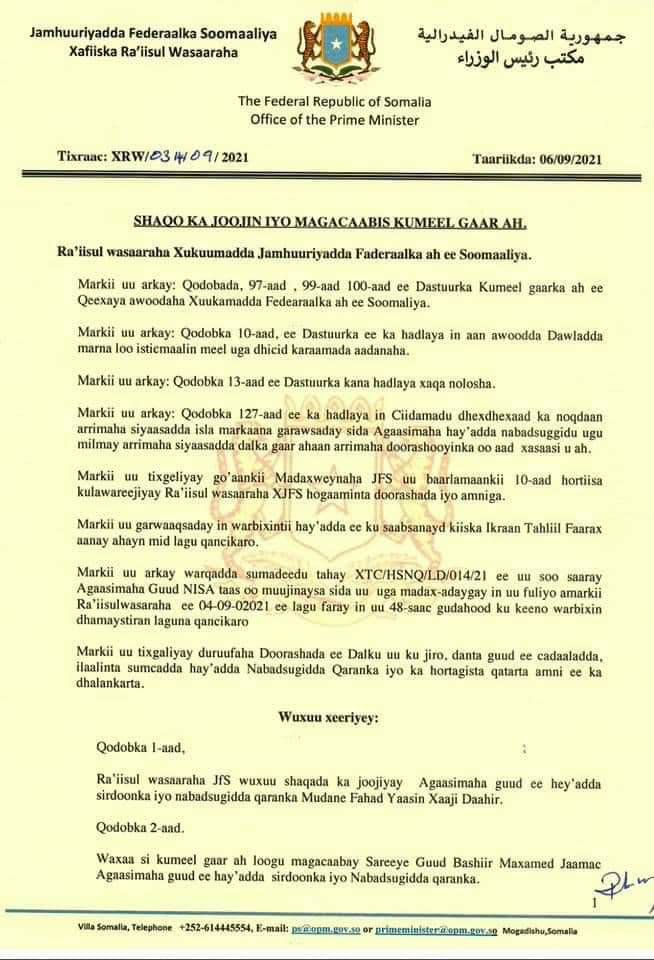
Garowe, March 31, 2021 A charter plane scheduled to fly a team of investors from United Arab Emirates (UAE) has been denied landing rights in the Indian Ocean town of Gara’ad by the Somali Civil Aviation Authority today. According to a reliable news source close to the Feferal Authorities, who declined to be identified said […]
A charter plane scheduled to fly a team of investors from United Arab Emirates (UAE) has been denied landing rights in the Indian Ocean town of Gara’ad by the Somali Civil Aviation Authority today. According to a reliable news source close to the Feferal Authorities, who declined to be identified said that advisors attached to Villa Villa Somalia took leading roles in aborting this flight from Garowe to Gara’ad.
Relations between the Federal Government of Somalia and UAE has been deteriorating since the election of Mohamed Abdullahi (Farmajo) in 2016, as Qatari and Turkish ties with the Mogadishu Regime grew steadily over the past four years. Puntland and Somaliland administrations maintain investment and trade relations with UAE against the wishes of Villa Somalia.
Somalia’s Civil Aviation Authority comes under the Federal Government jurisdiction.
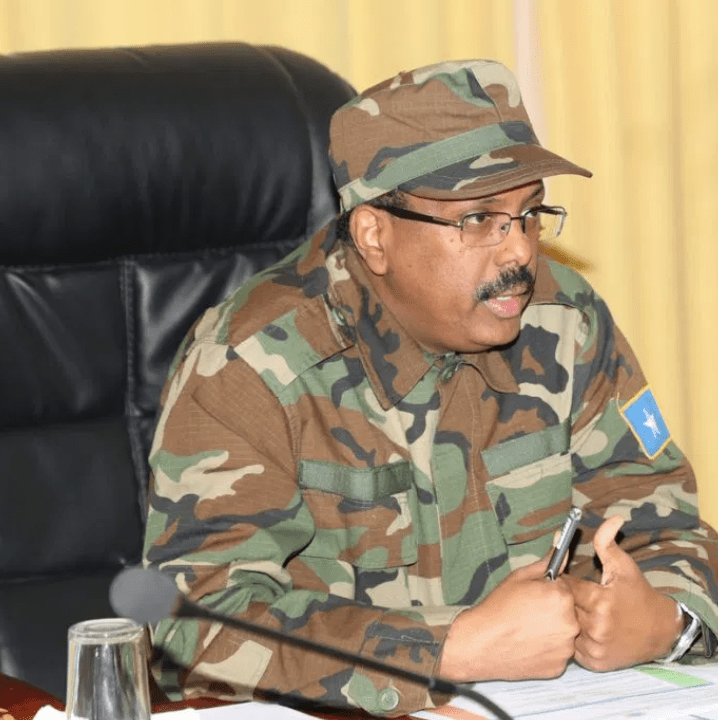
Mohamed Abdullahi (Farmajo) is now the new and most unexpected warlord in Mogadishu. He came to power in Somalia through sham and fraudulent parliament election in 2016, replacing an equally corrupt head of state, Hassan Sheikh Mohamud.
A warlord is a self-appointed personality and an outlaw, who respects neither the laws of God nor those by man. A warlord considers himself elected by divine authority and isn’t subject to accountability or public approval. His authority lies in brute force, intimidation and urges of his personal whims. You can’t argue on constitution and customary laws with a warlord.
The root-cause for the current political stalemate and electoral impasse in Somalia is mainly the dictatorial nature of a warlord, defying not only public opinion, but also the rule of law.
The new warlord in town is convinced that unaccountable Qatari Dinars, AMISOM security protection, antifederalist Turkish and Ethiopian support and newly recruited South Central Somalia clan-militia make him invincible against all calls to step down after he had found out that his time in Villa Somalia is up. This is unprecedented development in the entire troubling history of Somalia. Both Somalis and international community are anxious to see how the defiance of one man against all norms of tradition and constitution could end up.
The renewed escalation of armed clashes between the forces of Farmajo and Hawiye opposition in Mogadishu would certainly unravel the modest gains of the fledgling Federal Government of Somalia.
Mohamed Ibrahim Egal (RIP), the Late President of Somaliland is reported to have said, “the two Deeqas should leave me alone” ( “Labo Deeqo hay daayeen”). One Ms Deeqa was his wife, whom he decided to divorce, and the other, Deeqa Col-Ujoog, who was his Cabinet Minister at presidency at the time, and he wanted to fire her. Mr. Egal had divorced his wife, Deeqa, while letting Deeqa Col-ujoog go.
Today, however, was a great day to introduce the lifetime works of Ms. Deeqa Col-Ujoog, a book in the making for half a century, capturing the experience of the author in public service and contributions to her society. In this book, special attention or focus is given to the urgent need for peace-making and leadership skills necessary to realize peace and good governance.
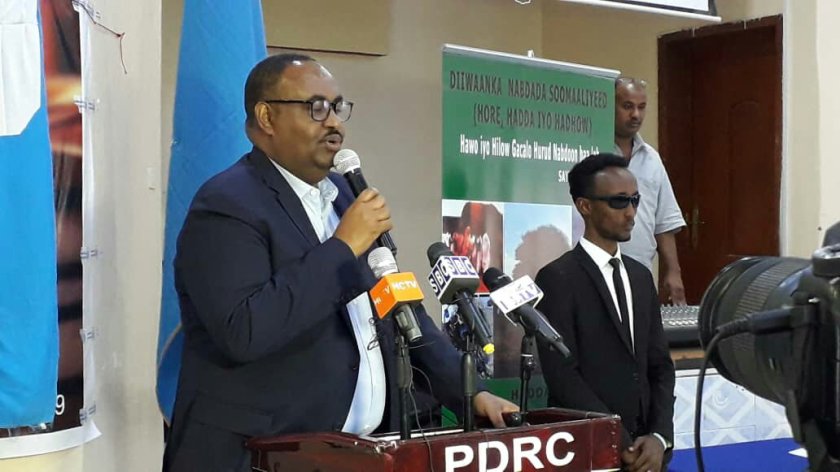
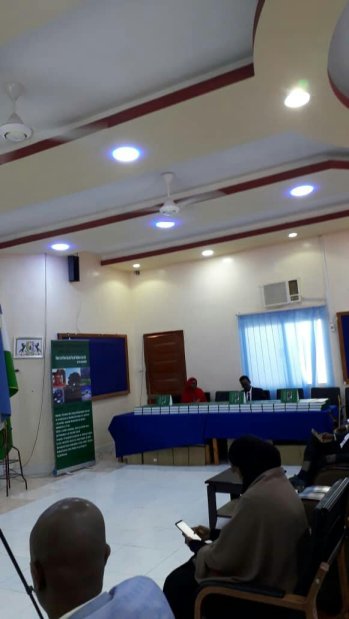
In this book-launching event held in Garowe, Puntland, at PDRC Conference Room, Deeqa had acted as her own Keynote Speaker in enlightening, colorful and moving manner that brought the audience to a standing ovation.
President Said Abdullahi Deni of Puntland State, who had participated in this book event, took the opportunity to offer peace proposal between Puntland and Somaliland.
The book-launching was well attended. Whether that translates into high book sales is yet to be noticed. But, make no mistake, this is a great work.
There is a movement towards resolution of the electoral impasse in Somalia – Heads of Federal Member States (FMSs) were engaged in sessions in the past few days to break the ice in the breakdown of communication between them and Mohamed Abdullahi Farmajo. They are not out of the woods yet, but, based on Somali culture, once dialogue gets started, there is high chance of a breakthrough in the talks.
There are two factors still unclear. 1. Would Farmajo join FMSs to conclude the talks successfully. 2. Will the Parliament Sessions in the next few days complicate the situation and hinder progress towards resolving the current political gridlock.
Right now, the focus is on Farmajo, and whether he will listen to the advice of his team, some of which are warning him against attempting to extend his mandate through illegitimate means in Parliament. They are in session tonight to work out a strategy. The situation will get clearer within the next two days. Stay tuned.
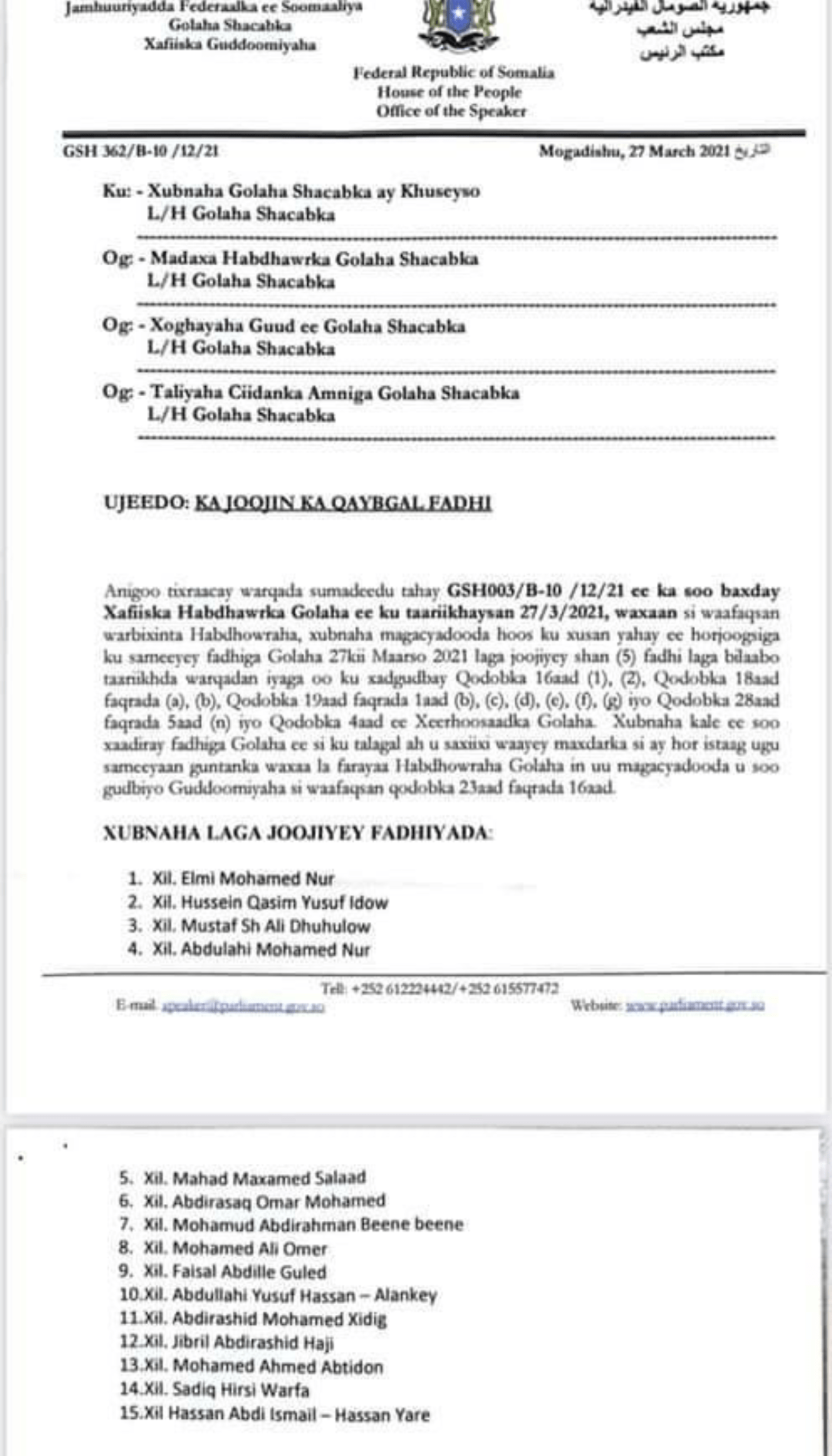
PS: Since posting this article, there were reports from Mogadishu saying this Monday’s planned session of the Federal Parliament was called off in anticipation of a breakthrough in the talks. The postponement also prevents potential disarray and violence in Parliament by opposition MPs, some of whom were suspended unilaterally by the House Speaker Mursal under pressure from Farmajo. So much for equal co-branch of the Government.
Support free press in Somalia. Keep bad governance exposed. Keep up your contributions to WDM SOMALIA MONITOR. Teach your kids in good essay writing and reporting skills in Somalia’s context. https://ismailwarsame.blog Email: ismail@ismailwarsame.blog
Reports from Mogadishu allege that Federal Lower House of Somalia is posed to illegally extend mandate of Mohamed Abdullahi #Farmajo in tomorrow's planned session. More than a dozen opposition MPs are barred from attending the #illegitimate session. It could be tragic to watch.
In Marxist Theory on revolutions (dialectical materialism) there is one notion that still sticks in my mind from university studies- the signs of the creation or existence of a revolutionary situation include when you see “the government is unable to govern as usual and the governed refuses to be governed as before”. This is the time you discover that the conditions are ripe for societal explosion. It starts with contradictions, conflicts within and an impasse on core issues of national governance. Infighting and finger-pointing for blame of failure start flying around. This is what is happening now with the Somalia’s Federal House of Parliament, whose legislative mandate has expired, and has no legal basis to be in session, let alone its Speaker sanctioning some of its members.
The theory goes on to advise that this is the time society in revolutionary situation desperately needs competent leadership to spearhead the movement for change. Will the opposition to Farmajo be able to provide this leadership? Or will it be another General Aydeed’s historical blunder and missed opportunity?
Is former House Speaker Mursal is as nuts as former president Farmajo? This is a developing story. Stay tuned.
The back and forth of Janan in the news has created mixed reactions. Farmajo’s fan-base are fired up that their hero has pulled off a hat trick at Jubaland and Kenya.
Farmajo’s political rivals are riled up him, saying Farmajo is politicizing the country’s security. Some even push a conspiracy theory that Janan’s escape was not a mere prison break. It was a move to deploy him as a Trojan Horse against Ahmed Madobe.
Either way, that projects Farmajo as a shrewd politician, proving himself to be a bit complicated to his opponents. To say Janan’s break from house arrest was FGS facilitated scheme in order to score political points against Ahmed Madobe is to paint Farmajo in a positive light. This would mean Janan’s failed military incursions into Beled Hawo was tactical by design.
Conversely, to say Farmajo negotiated his way to a deal with Janan is similarly accepting that was a stroke of political genius on his party, using non-military means to end what was both a political and security nightmare for his administration.
In the light of the above background, the government of the day has the mandate to protect its citizens and national territory against any and all threats by any means necessary. Negotiating and reaching a peace deal with Janan is definitely part of meeting that responsibility.
Those opposed to FGS deal with Janan are guilty of hypocrisy. It doesn’t matter at all that Janan stood accused of murder and other human rights violations. The government is duty-bound to enter into a negotiated settlement with any criminal, if it tried him/her and failed through its judiciary and military means to bring that criminal to justice.
Everything must be done to stop such a criminal from committing further rights abuses, including pardoning him/her from potential prosecution. This is what the amnesty program is all about. If it worked for high-level Al Shabaab defecters, as we know it, there is no way it shouldn’t work for suspected criminals who are accused of lesser crimes than pardoned terrorists.
Janan shouldnt be treated differently from the likes of Zakaria, Atam, Robow and so many others.
Of course, no one can be entirely absolved from crimes against humanity and human rights violations. Such crimes are not time-barred. Victims and their representatives can accuse them in a competent court of law anytime during the lifetime of a suspect.
Therefore, until such a a time that Somalia is ready for bringing past rights violators to account, let the government in power use non-military means to settle disputes with violent actors in exchange for their denunciation of violence.
Janan’s surrender to FGS is both a political and security win for Farmajo to the displeasure of his political opponents and to the pleasure of Beled Hawo and Garboharey residents.
(This article has been updated since posting; Photo courtesy to African Arguments).
You should you know that any strong and prosperous nation wants any other nation it deals with to be either rich to be benefit from or disadvantaged to exploit it.
WDM SOMALIA MONITOR advises its readers to always observe the 3WWWs: Wash your hands (with soap and running water, not with bottled water), Wear your mask and Watch your social distance. You keep these precautions in place even you get vaccinated. Some people claim that washing oneself in oblution five times a day is more than enough. Not so because you could be infected between oblutions. Washing hands means washing them often after you touch stuff. You also obeserve social distance in prayers. Stay at home unless you have to leave.
Ethiopia is already mending its relationships with USA by admitting atrocities in Tigray and the presence of Eritrean troops in that province. President Biden sent his best Senate friend to talk to Abyi on the issue. Abyi is a product of the West and intelligence officer trained in the USA. He is their man in Ethiopia. Have you ever heard them criticizing him after he had sent to jail thousands of opposition elements and dissidents, including high profile Oromo activist and US citizen Mohamed Jawar?
They say that all politics is local. There are sizable Eritrean-American citizens, including now a US Democratic senator, who are opposed to Afewerki, and an equal number of Tigreayans opposing Abyi. US government have to show them that they were doing something in Ethiopia. Remember, in a fifty-fifty Senate split, Democrats cannot afford the loss of a single vote in the Senate.
One doesn’t have to listen to Abyi’s speech. It is a pressure tactic on USA by Abyi and to express appreciation to Russia and China for their recent votes at UN Security Council. Unlike Mengistu Haile-Mariam, Abyi is a reader and thinker.
According to Dhalaaxnews Internet media outlet, Warsengeli elders had accused Isaak clans men of Garxajis subdivisions of aggressive territorial push towards Garabsare clan boundary. Garabsare is a subclan of Warsengeli/Harti, who inhabits in Puntland. This particular violent confrontation took place in a locality called Shidan in Warsengeli land, Sanaag, Hayland/Puntland. Somaliland (Northwest Regions) authorities were reportedly assisting Garxajis violence against Warsengeli, causing considerable loss of lives and properties. Take a listen to Garabsare elders:
Background story: The Isaaks have been engaged in land grab and waging territorial expansionist campaigns into Hartiland for the past 100 years. The sticking problem of Puntland-Somaliland dispute mainly rests on this matter.
Starvation, al-Shabaab and postponed elections have made the country a ready gun. If the trigger is pulled, global trade is at risk
Wed 24 Mar 2021 08.30 GMT
Frantz Fanon once quipped: “Africa is shaped like a revolver, and Congo is the trigger.”
More than 60 years later, I think the French philosopher’s assessment is only half true. It leaves out Somalia – which once held the crown as the “Switzerland of Africa”, but is now again on the verge of political disintegration.
To use a trigger, one must first ready the gun. Perhaps that was where Fanon should have added Somalia to his observation.
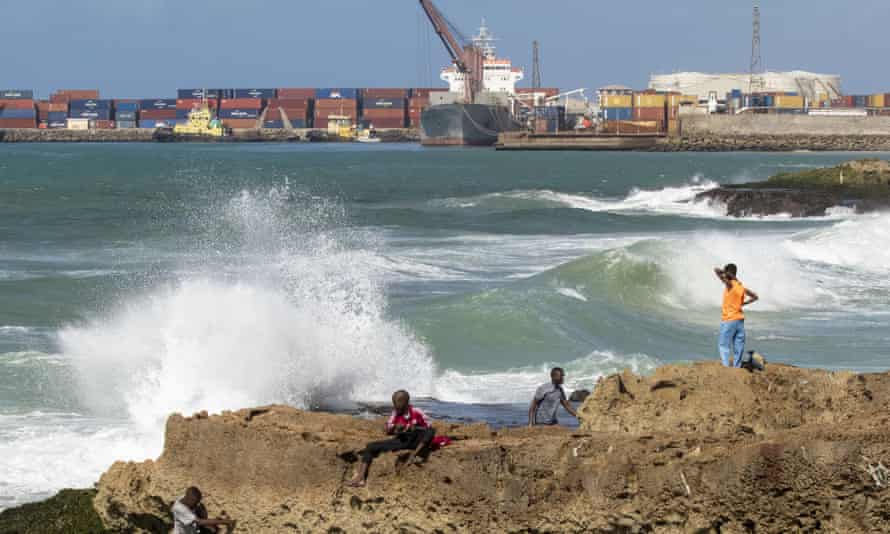
One of the reasons for Somalia’s pivotal role is its location. On one of the world’s busiest shipping routes, the locus of the Horn of Africa, Somalia lies on the Gulf of Aden, which, through the Bab-el-Mandeb and then the Red Sea, connects Europe and North America to east Africa, Asia and the Middle East. To avoid the Gulf of Aden would mean taking all imports and exports to and from the Middle East – including energy supplies – around the entire African continent to reach European and US markets.
The battle to pick up the greasy reins of a much beaten-down Somalia has resumed in winner-takes-all fashion. After the country’s 2021 presidential and parliamentary election was once again “postponed”, the obvious and important question is whose fingers will be in charge of the safety catch this time?
Will it still be those of western-backed President Mohamed Abdullahi Mohamed? Some influential clan leaders, including leaders of several federal states, do not want to see him re-elected.
Or will it be those of pirates off Somalia’s coast, hijacking ships in the Gulf of Aden; a serious threat to international shipping which gives an idea of the threat to international peace that another bout of state collapse in Somalia represents.
Or, worse, could the al-Qaida franchise al-Shabaab capitalise on the ongoing electoral impasse to overrun the capital Mogadishu?
If the international community still cares at all about Somalia, which already lags behind much of Africa in economic, health and development indicators, it should scale up state-building quickly. Playing midwife to free and fair elections as a gradual path to enhancing accountability – after 30 years of military rule, civil war and a lack of functioning government – is paramount.
In 2017, the international community hammered out a unique clan-based electoral system for a country that the UN labelled “the world’s most corrupt nation”. It gave clan elders the power to handpick a 14,000-strong electorate, who in turn voted for 275 members of the lower house and 54 senators.
That election, which saw President Mohamed come to power, was described by the Mogadishu-based anti-corruption group, Marqaati, as “the most expensive vote-buying campaign in human history”. The election not only created conflict between Mohamed and clan leaders, who felt cheated, but also hampered the ability of Somalia’s population of 16 million to hold their president accountable.
Will the next election be a new vote-buying exercise, denying Somalis another opportunity to improve governance and confront their country’s myriad challenges, including the insecurity that has seen so many Somalis leave as refugees and had such a knock-on effect on the rest of the region?
History has shown, time and again, that an undemocratic Somalia is a danger to itself and to international commerce
History has shown, time and again, that an undemocratic Somalia is a danger to itself and to international commerce. It is worth remembering what happened in 1991, when Somalia collapsed and Somaliland declared independence. No one predicted the obliteration of Somalia’s socio-economic tissue, leading to a million people, including 300,000 children, starving to death.
Now, 30 years on, the devastating drought, arid rainy seasons, and other disasters and diseases caused by the climate emergency, have made Somalia even more fragile than it was then. According to UN statistics, more than 2 million Somalis are still displaced, and about 2.2 million Somalis are now at risk of starvation.
To this, add the havoc that coronavirus is wreaking on Somalis and the growing al-Shabaab violence, gathering pace all the time, as disaffected and hungry young men join its ranks. If Somalia is left to descend into a constitutional crisis – leaving the security threats unchecked as a result – what chance have Somalia’s people of bringing back their nation from the brink?
The international community has a vested interest in what happens here – in that shipping lane as well as in that ticking militant timebomb. All is not lost.
Somalia has made great progress in recent years. The diaspora and younger people are becoming active in rebuilding their country, and there have been two transitions of power which have passed off in relative peace.
Events on the ground provide the new US administration of President Biden, working with regional powers, a fresh opportunity to side with Somali people fighting for free and fair elections.
But will the US and other world leaders seize the moment and side with Somalis instead of their corrupt leaders? The battle-weary people of Somalia don’t need any more triggers.






 Warsame Policy & Media Network (WAPMEN)
You must be logged in to post a comment.