Somali Government Welcomes Recognition of World Communities

Prime Minister welcomes G8 recognition of progress in Somalia

13 Apr – Source: Prime Minister’s Media Office 

His Excellency Prime Minister Abdi Farah Shirdon today welcomed the G8 statement in London praising recent progress in Somalia and emphasizing the international community’s continued support for the country.

“The Somali government has worked hard to entrench the recent progress on the political, security, economic and humanitarian fronts that we have made with the support of our international partners and I am immensely heartened to see the G8’s vote of confidence. We know we have a long way to go and we cannot make it alone but there is no turning back.”

In a statement issued in London today, “G8 Foreign Ministers welcomed the significant progress made in Somalia over the past 18 months on security, political transition and humanitarian conditions… G8 Ministers underlined the need for continued early international support to the new Somali Government.”

The G8 also pledged its political support as Somalia is set to re-engage with international financial institutions of the World Bank, International Monetary Fund and the African Development Bank.

“I am encouraged by the lead taken by the UK to support efforts to re-engage with the IFIs and the longer term process that may lead to arrears clearance. Without this we will not be able to receive sustained support from these organisations. And we understand the reciprocal obligations on us of strengthening the accountability and transparency of our public financial management systems. We look forward to making progress on this and many other critical issues at the London Conference on 7 May.”


PM hails IMF recognition of Somali government as milestone towards economic recovery

13 Apr – Source: Prime Minister’s Media Office 

His Excellency Prime Minister Abdi Farah Shirdon said the International Monetary Fund’s decision to recognise the Somali government after a break of 22 years is “a major milestone in the country’s long road to economic recovery”.

On Friday the IMF recognised the federal government of Somalia, paving the way for the resumption of technical assistance, policy advice and ultimately – subject to arrears clearance – borrowing rights. The Prime Minister welcomed the news as the latest in a series of developments supporting the government’s policy of strengthening relations with its international partners.

“The President is in Turkey today for talks with Somaliland, while I am returning from a visit to Djibouti, Uganda and Burundi. In less than a month we will be attending the Somalia Conference in London. The truth is that we are rejoining the community of nations and we must continue to demonstrate, both to Somalis and the world, that we justify this newfound confidence. There is much hard work ahead.”

The IMF said its decision was “consistent with broad international support and recognition of the Federal Government,” since His Excellency President Hassan Sheikh Mohamud took office last September. “The new administration has since enjoyed considerable support, including from the United Nations, the African Union, the European Union, the Organization of Islamic Cooperation, and many IMF member countries,” the Fund added.

Before Somalia can borrow from the Fund it must first clear outstanding arrears of approximately $352m. This issue will be at the heart of discussions at the forthcoming Somalia Conference in London on 7 May.


Source: AMISOM Monitoring Services

How to Create a Regional State in Somalia’s Context

There are a few simple steps along the way to establish a regional state in Somali context. These are critical steps to follow for a successful conclusion of the creation of a federal state:

1. Respectful of the Federal Constitution, two or more regions must have common political, security and economic interests and must have potential to operate as a cohesive political block as well as a viable and sustainable economic unit.

2. Regions must have overwhelming grass-root support for the idea of creating their own state. These include all levels of their masses, and traditional elders at forefront.

3. A fully representative people’s congress must be held initially as Consultative Conference to resolve and agree upon:

a) Endorsement of the very idea and need for the creation of the state

b) Selection of Constitutional Committee for drafting the state’s constitution

c) Selection of Preparatory Committee for the final Constitutional Congress

d) Selection of Chairing Committee of the Constitutional Congress

e) Selection of Fund-raising and Finance Committee

f) Selection of Security Committee

g) Selection of logistics and Accommodation Committee

h) Selection of the venue of the Constitutional Congress

i) Allocation of delegates to each participating region to the Constitutional Congress for the subsequent division among clans in each region along the traditional sub-clan proportionality.

j) Creation of an atmosphere of voluntarism and regional political activism to spark off enthusiasm for urgent people’s action and personal contributions.

k) Avoidance of confrontation with central authorities in the attempt to create the state.

4. Convention of Constitutional Congress to pass the draft Constitution.

5. Setting up an independent electoral or supervisory Committee with the formulation of criteria for their mandate.

6. Election of the Chief Executive Officers (e.g. President, Vice President) if they are to be elected by the Congress.
7. Selection of members of the Legislative Council (local parliament) by the participating regions either directly by the residents or in an indirect democratic fashion by their constituencies through traditional customs to be double-checked by the Electoral Committee; Election of the Speaker and his Assistants, and immediately the Chief Executive Officers by the newly constituted Assembly if they are to be elected that way.

8. Start of regional power-sharing negotiations to form the Cabinet.

Critical mistakes to avoid:

1. When forming a regional state, never start from power-sharing approach. This is a non-starter and a recipe for failure.
2. Avoid prematurely announcing candidates for leadership and never allow anyone to put their candidacy forward until the final execution of points 1-5 above. This is the main source of division within the participants and sure factor to fail the whole idea of successfully concluding the efforts.

3. Denounce anyone seeking special clan, regional privileges or status.

3. Suppress any hints of intimidation against Congress participants. Free will of people and expression must reign supreme. Everyone must feel comfortable and feel secure and safe in the Congressional environment. Everyone must feel ownership of the state to be created.

All successful Somali regional conferences including those of Puntland, Somaliland and TFG conform to the above simple steps. All those that failed violated them by starting first with power-sharing and leadership competitions.

-End-

Politics: work harder and retire early

Image

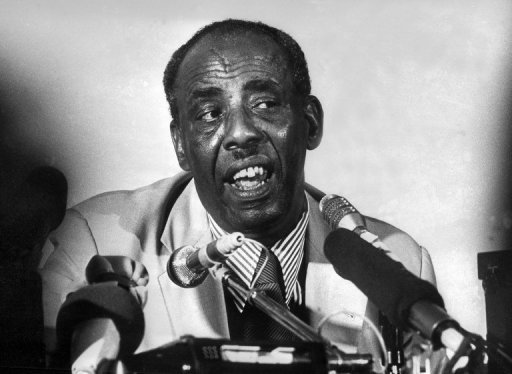
Former President Siyad Barre of Somalia (courtsey of Google, indepthAfrica)

As a keen observer of politicians, and specially those who leave behind positive and lasting legacy, I found out that their secret lies in working harder for their vision during their first and /or second term (s) and when that is done, they consistently choose to retire early even if their respective constitutions allow them for a re-run.

Most politicians/leaders who opted to stay in power too long would definitely end up in total failure and popular condemnation as shown in history consistently time again and again.

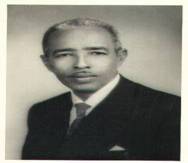
History also shows that those who do good work and retire early in their younger ages, have the potential to return to leadership with the accompanying value-added political skills and maturity.

Image

Former President Aden Abdulle Osman of Somalia(courtsey of Google)

In the case of political leadership in developing countries, the immediate families can be both the main source of their failures and successes and in most cases, it is the family that brings a leader’s downfall and disgrace.

Image

Former President Jerry Rawllings of Ghana (courtsey of Ghana Web)

The sooner a politician with a favourable rating leaves office, the better and positive legacy he or she leaves behind.

Former President Siyad Barre of Somalia (courtsey of Google)

Image

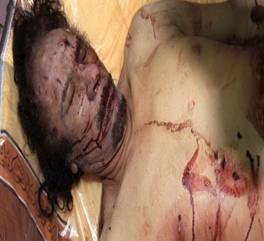
Former Leader of Libyan Jamahiriya (courtsey of Google)

Image

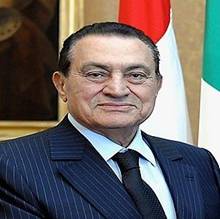
Former President Hosni Mubarak of Egypt (courtsey of wikipedia

Deficit of Public Trust in Somalia

Public Trust Deficit in
Somalia
By Ismail Haji Warsame
Oct. 02, 2012

The Presidency of the Republic does not give the expected trappings of power, the magic of the highest leadership position in the land or the glory of the Office amid distrust and absence of loyalty within the population and regions of the country. That institutional empowerment must be earned nation-wide in the hard way, and in the case of Somalia, require hard work over many years to come for the future generations of Somalia to enjoy it. If successful, the new leaders can only pave the way for restoring that missing public trust. To accept any Somali President, Prime Minister or the Speaker of the House as a leader of all the people is a long shot, given the depth of distrust developed within the communities for the past 30 odd years towards government officials, or rather any institutions of governance unfortunately. In Somalia’s today the Presidency or any position of leadership is unenviable role for a decent person to play for it requires heavy personal sacrifices few are willing to commit to.

The very idea of bottom-up approach in rebuilding Somalia is primarily based on the restoration of that missing trust before the country has central institutions. Quite a number of Somali intellectual circles and many politicians inside and outside the country, particularly in Mogadishu, do not still appreciate how important the “Building-Blocks’ concept is, as we coined the term more than a decade ago in Puntland State of Somalia, as the shortest way to heal the deep wounds caused by the civil war and abuses of the Military Government, in addition to nepotism and rigging of elections by previous civilian governments. Creation of Federal Institutions starting with the TFG Charter and current Provisional Constitution is a hard fought negotiated outcome towards rebuilding that public trust. Anybody who believes that we can have a highly centralized system of government again in Mogadishu or elsewhere in the country is either of out of touch with reality in today’s Somalia or must have his/her sanity re-examined as this dream cannot be realized in the present political conditions of Somalia. The sooner we all embrace whatever type of federalism we accept as result of a negotiated settlement, the better off we are to re-construct our country. I may add, under the current political atmosphere, having a Federal President and Prime Minister hailing from South-Central Somalia is a recipe for failure and does not meet the necessary power-sharing legitimacy to move the country forward. If proven true (I hope not), the rumors flying around these days in Mogadishu and beyond on the selection of a Prime Minister do not give me sense of optimism for Somalia to be on the mend.

 Practical intellectual thinking and bold political leadership are required to brainstorm on why Somaliland and Puntland were created in the first place. While the First went to the extreme of outright unilateral declaration of seccession, the Second did not lose hope that Somalia can be rebuilt from the ashes of the Civil War and the deficit of public trust. For the benefit of those who were not closely following major political developments in the country during the past 15 years or so, or limited/exposed to only superficial sideline debates on Somalia, Puntland State spent considerable resources including brain power to see Somalia re-instituted. This is a major political capital investment that cannot be written off without paying a heavy national price.

A simple political instinct is lacking among the intellectuals and politicians in Southern Somalia, i.e. they could not figure out that if Mogadishu is to remain the Capital City and enhance its status as attractive to the residents of Northwest and Northeast Somalia among other parts of the country, it should be subject to power-sharing. Someone cannot be expected to have both ways or as they say, “have their cake and eat it”, given what happened in that City during the vicious Civil War. Mogadishu leaders instead, for the sake of national unity, would have been smart enough to encourage others get elected to the presidency. That did not happen unfortunately despite the great expectation from the new President to deliver, and a lot of people are worried about the direction and the future of the country.

While it is not so popular to be an early pessimistic person, they say, a pessimist is a well informed optimist. Nevertheless, I have strong conviction that the best days of Somalia are still to come.


Somalia, Foreign Aid and International Conspiracy

The story of Somalia’s tragedy is too complex to summarize in a few pages. What I learned though in the course of the past two decades is the fact that when a country breaks up in the way the Somali State failed, it is too hard, if not impossible, to reconstruct it and put it back together again. That is because such a failure creates thousands of well-paid jobs and other beneficial opportunities for a huge number of expatriates or international aid workers and foreign diplomats. It does not take rocket science to figure out that those international employees and their decision-makers would not be acting against their own self-interests in order to see Somalia back on its feet again with all their goodwill intentions and humanitarian intervention. There is no incentive for this to happen. This is the first and most serious obstacle Somalis has to deal with to get Somalia back on track. The second biggest problem is Somalis themselves in abysmally failing to put their acts together by understanding that they are in peril and fatal danger of losing not only their sovereignty but also their country. This is the core of Somalia’s problem today.

Some, including these foreign expatriates and governments, would argue that the second problem is the crux of the issue as to why Somalis can not have their country back. That is true too as long as our people do not take responsibility for their own failure and are always quick to blame others for their misfortune and misery they have created onto themselves. Listen with purpose to Somali group debates, the so-called Fadhi-Ku-Dirirka (lazy losers’ shouting clan/personal debates), in coffee and teashops and amateur Radio and TV panel discussions and ever multiplying clan fox-hole websites. You notice that nobody is talking about the big picture of “Somalia first” and putting any political differences or clannish self-interests aside at the moment to save the nation as priority number one. After all that has been happening in Somalia for the last few decades, isn’t that a double tragedy? Some may conclude that Somalis are a punch of feuding clans that can not agree to have a nation-state, and therefore, under such circumstances, two scenarios are plausible:
Let neighbour states take over the country by dismembering it and dividing it among themselves.
Allow foreign re-occupation of the country until Somalis are ready and fit to govern themselves.
We should never give a chance that to happen at any cost. At moment, fieriest diplomatic lobby, intrigues and direct military intervention under the disguise of flashing out Al-Shabbab, another menace resulting from our too long inaction in the vacuum, perhaps also as a punishment for our collective sins and betrayal of our country, are ongoing to opt for the first scenario. Painful as it is, this is the same country whose pilots were flying supersonic jet fighters and producing the best neuro-surgeons decades ago and famous for holding first free and fair democratic elections in Africa.
Following the Ogaden War of 1977-1978 and as fallout of the lost war with the proliferation of clan-based and violent armed opposition fronts, huge refugee camps had been created in various parts of Southern Somalia. In reality, the Capital, Mogadishu, had been transformed to a big camp for refugees and internally displaced people, IDPs. With the influx of unlimited food aid from international donors at that time, residents ceased to buy food at markets altogether as it is readily available to have anyway. Even households of government officials had it delivered to their families. The result had been catastrophic, with local produce wiped out and bringing farmers to refugee camps as well. The citizens of the whole country had been reduced to mere beggars of foreign handouts. What had happened next was that the law of jangle of the fittest was ushered in and whatever left of the Somali State was up for grabs and Somalia irreversibly became a country nobody owns, leave alone someone to defend it from the imminent collapse. As the regulatory bodies disappeared, unscrupulous traders broke all rules of decency and lost moral compass to sell anything and everything Somalis owned to the highest bidder. Somalia went nuts and out of control. To understand why the Somali Civil War could not be contained, particularly in Mogadishu, one should appreciate the nature of the conflict. First, it is a family feud that will last for centuries in many forms and levels. Secondly, it is economic conflict in which a few greedy business criminals do not want it stopped to prevent the establishment of regulatory bodies of a government at any cost to avoid paying taxes. Theirs is: Deny any administration, regional or central to set up the rules of the road for their trade. Chaos, killings, and trade in expired food, medicine, and export of everything Somalis owned and adored for centuries are the only acceptable norms for their businesses to thrive. Take note that it was not the warlords, Islamic courts, and even Al-Shabab that kept the conflict in Mogadishu running so long. It is the Mogadishu new business tycoons and merchants of death and destruction that made it impossible to bring about law and order in Mogadishu.
International Conspiracy and Regional Power Play
As the Somali State finally collapsed with the disappearance of all public institutions without an exception in the height of the Civil War, Western donor countries under the framework of the international community devised economic and political plans for Somalia to fill in the power vacuum in the country. These plans are elaborate and act as a case study on neo-colonialism after the end of the Cold War. It would require volumes of books and extensive research to write on this particular subject.
In 1993, representatives of all countries interested in Somalia under the umbrella of OAU/IGAD/Partners with international Western humanitarian organizations gathered to discuss how to handle Somalia. Ironically, the venue of this gathering was Addis Ababa, Ethiopia. To make a long story short, the participants resolved to set up the infamous “Somali Aid Coordinating Body, SACB (search for how limited this name is in the Google entries), The SACB, an Exclusive Club of Western humanitarian organizations, UN agencies, European Union agencies (EC) and international NGOs. The SACB devised the following two serious documents:
WORKING WITH RESPONSIBLE SOMALI AUTHORITIES (implying here there is no authority in the country, amounting to merely working with clan leaders and local NGOs, possibly with Somaliland, Puntland State did not exist at that time).
SACB CODE OF CONDUCT (their internal regulations dealing with Somalis).
By the creation of this unresponsive, unapproachable, and invisible governing body for Somalia, The SACB, and Somalia’s sovereignty on land, air, and sea had been effectively taken over. All humanitarian aid assistance, monetary or material from donor countries must be channeled through the agencies of the UN, European Union and INGOs, who have the sole discretion and authority to allocate aid distribution as they wish without any input by or accountability to Somalis. To this day, no member country is allowed to unilaterally extend assistance to Somalia. An exception is Turkey, which does not fit into this framework and whose recent unilateral assistance to Somalia sparked off competition to do something about Somalia to preempt China’s growing and expanding influence in Africa The old SACB approach on Somalia continues to this day with different names like recent CMC (Coordination and Monitoring Committee setup to camouflage SACB as TFG appeared on the Somali political scene in 2004) with the same modus operandi. To call a spade a spade, SACB became the real Somali Government operating from luxury homes and executive suites in Nairobi while the report cards of the hundreds of its privileged expatriate employees show they are working inside war-torn Somalia on the most expensive life insurance coverage on earth for them and families. That is why we see signals and hear voices nowadays from individual Western countries that aid to Somalia would be channeled to “international agencies” and spelling that out once again after the election of the new Somali leaders in August this year. Perhaps the New Somali President knows better how to deal with them, having worked with these agencies for a long time. An extensive network of local NGOs mostly ran and operated by one man/one woman with a bag and laptops have been established in every corner of the country. Most of these local agencies do not follow the rules of associations and societies to be accountable to the Board of Directors, have secretaries of treasuries, the constitution, and mission to avoid duplication of the same activities by others Without their knowledge, many of these local NGOs (Non-Governmental Organizations) are the sources of information gathering for the “International Somali Government” based in Nairobi. These NGOs sometimes come under different fancy names as Non-State Actors (NSAs), Civil Societies, Non-For-Profit Organizations, Stake-holders and so on with the intention to avoid helping the establishment of effective Somali Government and in that way perpetuate the power vacuum in the country to justify the role of SACAB to the donor community and their tax-payers.
Welcome to the era of neo-colonialism, where Somalia is a rather blatant example of the “New World Order”. Or, rather, the Somali case is a direct rule by foreign powers. This unmasked way of running Somalia exposes the extent of the depth of the problem in Third World countries today and sheds light on Western political expectations from “Arab Spring” uprisings.
Every year, these international agencies compile what they call “Consolidated Humanitarian Aid Appeal For Somalia” amounting to hundreds of millions of dollars on behalf of Somalia. From various sources of their addressees, I had the unique privilege to see first hand and disturbed by the stunning Cover Letters enclosed with these “Humanitarian and Development Appeals. Cover letters addressed to foreign Western donors read, and I quote:
“ON BEHALF OF THE SOMALI PEOPLE” and continue to this day ignoring any Somali political leadership, institution (even “Responsible Authorities”).

It is equally important to note here that the European Union has been transformed into a collective body politic in the course of its existence in regards to its foreign aid to 3rd World countries (Developing Countries). To prevent unilateral aid by individual member countries to emerging markets and countries and avoid duplication of such assistance on shopping list by the leaders of developing countries, a document or an agreement called The Paris Declaration on Aid Effectiveness had been produced in February, 2005, effectively controlling who gets what and on what European terms are applicable to a specific country or block of countries. Since Somalia is not signatory to any accord after Lome’ (Togo) Convention of 1975-1989 on Trade and Aid between ACP (African, Caribbean and Pacific) and European Community countries, including Cotonou (Benin) Accord, its role and interests have been mandated and taken over by a small unit of individuals within European Commission Delegation to Kenya, called The Somali Unit, acting practically and effectively as the National Authorizing Officer (NAO) for Somalia, the very function a Somali Officer would have played if there were a government in Somalia.
Has anyone heard Italy, a longtime colonial power of Southern Somalia, producing a single initiative to help find solutions to Somalia’s predicament? Italy always claims in world forums on Somalia to have the exclusive rights of the Somali issues on the basis of being a former colonial power and legitimate authority to listen to and be respected with regards to Somalia while at the same has nothing to show for in deeds. Italy understood well that once her initiative on Somali peace and reconciliation fails, she will lose all credibility in the eyes of other powers and will be immediately out of the picture in Somalia. Italy’s strategy was reduced to sabotaging other powers’ help in resolving the Somali problem. Her political position has been quite detrimental to Somalia’s national interests and prolonged the agony of the Somali people.
How Other States Rate in the Somali Saga
On the Arab front, Somalia is a predominantly suuni liberal religious society. Over many years, however, the Saudis have been engaged in extending religious scholarships to thousands of Somali youths to indoctrinate them in their Wabi version, undeniably responsible for the current religious upthe country. This has created religious crises and conflicts within the community unrecorded before in the history of Somalia. People in Somalia now suffer a crisis of identity with regards to their religion (even crisis of attire and clothing as strange foreign fashion of Afghani, Pakistani and Arab tribal origin are imposed on them).
Sheikhdoms in the Gulf were pouring fuel into the fire in Somalia by paying Zakka to the extremist groups on an individual basis and through religious charities. Egypt, a country that has been boasting to have strong historical ties with Somalia, could not even provide safe passage within its territory to Somali refugees fleeing civil war. Yemen, with its meagre resources and its own severe tribal problems, has been overwhelmed by Somali refugees, many of whom had perished in the high seas of the Red Sea trying to reach it borders. In short, the Arabs have been disappointing to Somalis in their time of need. Ironically, it is only them that can extend meaningful assistance without strings attached to any decent administration in Somalia, but that is only if the country has a government that became difficult to achieve for decades.
Djibouti played more than its capacity with regards to the spoils of the Somali Sate by putting herself in the shoes of her mother Somalia at League of Arab States. Since the fall of the Somali Central Government, it has been hosting a number of improvised Somali reconciliation meetings to enhance its role among other power players in the region.
Kenya is a country that got the most benefit out of the Somalia’s misery as the HQ of the “International Somali Government” (foreign diplomats and expatriate aid workers of the donor community with hundreds of millions of dollars ear-marked for Somalia spent in Nairobi alone). Speak about the huge capital flight from Somalia, remittances from Somali Diaspora and investment and entrepreneurial talents shaping up Kenya as the East African business hub, not to mention about a broken and desperate people trying to calm their nerves with plane loads of stimulant drug mira (khat), another curse in the Somali tragedy, from Nairobi in exchange for cold cash dollars.
With regards to Ethiopia, a major issue of Somali foreign policy, everybody seems to have an opinion and knows better. Here, I would limit myself by saying that Somalis are forgiving, but Ethiopia has to choose only one of these two options:
Be a peaceful, friendly neighbour and regional ally by trying to help heal past wounds and reverse the historical burden between the two brotherly peoples. Ethiopia has to stop running Somali affairs from Addis Ababa and instruct its diplomats in foreign capitals to immediately cease their traditional diplomatic lobby undermining Somali unity It has to stop infiltrating into Somali society and bullying Somali leaders with its power plays.
Be an enemy in the region the Somalis have to deal with and risk losing all chances of being trusted ever again.
Eritrea seems to be more sincere and sympathetic to Somali cause than Ethiopia, but its rivalry with Ethiopia via proxy war has been causing havoc to ordinary Somalis in Southern Somalia.
Nevertheless, it would be rather mean not to recognize that the above-mentioned states and organizations have been doing something good as well that had saved lives, lessened pain, and suffering among the general population.
In conclusion, Somalia will rise up again, hopefully in my lifetime, and when it does, we will be stronger than ever before to be a force of good to reckon with.
By Ismail Haji Warsame
E-Mail: ismailwarsame@gmail.com

About

About the blogger

This blog is associated with the former Chief of Staff in Puntland State Presidency, 1998-2005. He also worked with the UN and World Bank Joint Secretariat for Somalia’s Re-construction and Development Program (RDP), 2005-2006, as a Zonal Technical Coordinator for Puntland and later as National Aid Technical Coordinator with the Transitional Federal Government of Somalia and European Union. He is now an independent political analyst and commentator on current issues and occasionally gives historical perspective on modern Somalia’s politics. He lives and works in Toronto, Canada. He can be reached at:

ismailwarsame@gmail.com

@ismailwarsame

A New Year message from one of the key founders of Puntland State of Somalia

Image

The idea behind the creation of Puntland State of Somalia was of two-fold:

 To bring stability, peace, harmony, organisation and good governance to the inhabitants of Northeastern Somalia, restoring, creating and delivering vital public services to the entire communities in multiple regions of the new state.

 To act and lead the way to the reinstatement and re-construction of Somalia as one of its top priorities.

 It was a creation fully supported by grass-root movement that evolved many years during the Civil War and finally boiled down to the establishment of the state as a series of Somalia’s peace and reconciliation conferences abysmally failed to restore Somalia’s central government, and emphatically couldn’t be realised it from top down,thus Puntland’s coining of the “building block” concept.

 It was based on unique approach to governance: the foundation of state based on traditional values, its historical zonal self-government experience, married with modern system of administration, and most importantly, discontinuation of  colonial legacy with regards to governance as the support of the traditional leadership took centre stage as a critical mechanism for conflict resolution and sound consultation.

 As a starting framework for its leadership legitimacy, an indirect democratic selection of legislative members was mandated by its constituency membership through deliberate and exhaustive criteria enshrined in a well prepared charter by any reputable international standards.

 here were a number of political and constitutional crisis in the short history of Puntland existence as a state. Each time Puntland State survived mainly because of its strong founding principles and historically binding evolution of people’s aspirations and wishes against the whims of its leadership of the day.

However, Puntland State has been always lacking behind in its further democratisation process, unable after more than a decade, to move forward in implementing the general election of “one man, one vote”. That is why one sees leadership crisis towards the end of each leader’s term in office.

 In exactly the same fashion, one witnesses now self-made political tension that may lead to instability and threaten to law and order. It is the same story playing out again. It is therefore self-evident that there is something seriously wrong in Puntland State governance. That has to be fixed quickly and wisely in the best interest of the people and for public good. Put aside leadership ambitions and personal interests because such inclination will serve no one in the end and endanger Puntland State peace, stability and unity. Don’t play with fire to score political points. Always keep in mind that Puntland state is the outcome of many sacrifices and irreplaceable human and economic resources.

 For the opposition, the disputed one year extension of the President’s term in office should not be the focus because the stakes are much higher here. Instead, they should be concentrating the democratisation process, while the current leadership provides an atmosphere conducive to dialogue between all stake-holders and parties, and embark upon consensus building. I may remind all of the fact that civil strife takes place when parties fail to talk to each other- in other words, in the absence of dialogue. As long as there is a debate on all issues of mutual concern,there is unlikely that conflagration could occur.

 Finally, Puntland State history showed that when there is a political crisis, there are always external actors ready to step in to further destabilise the state. We should be very careful here not to give devils and dark forces in-waiting any chance.

 In conclusion, I wish you all a Happy 2013.

 Ismail H. Warsame

Formerly Chief of Staff, Puntland State Presidency.