
| Source: SOMALIA WATCH |
| By Federico Battera, Saturday, August 12, 2000 UNDOS Research Specialist, Professor Development Studies – University of Trieste, Italy Summary and purposes The crisis of the State in Africa goes back to the early 80s: postcolonial African state has been neither able ‘to rule’ economy, nor territorial policy. Ethnicity has spread all over the continent. However, after the failure of the consociative policies channeled through one-party systems, the most evident factor has been its territorial dimension. Since the middle of the 80s, as the State machine has been evidently unable to expand, politicization has taken over territory, giving ethnicity a new relevance as to contrast territorial legitimacy, which had been acquired by the State through the decolonization process.Somalia has not escaped the trend, sliding into a civil war since the beginning of the 80s. By early 90s it has become the paradigmatic example of the failure of the state. Centralization, as conceived by the collapsed regime, turned into a non-state existence, distinguished by independent areas controlled by different ‘fronts’ or ‘movements’ drawn up along clan lines. By mid 90s the situation improved in certain areas and stabilized in others. A de facto regionalization has gone out: since then, some areas has progressed to a ‘recovery’ condition, other has been classified by UN as ‘transition’ zones or ‘crisis’ zones, the latter characterized by a steadfast state of ravage and insecurity.The crisis of the State in Africa has generated in major cases conditions of democratic change. Constitutional processes has been the consequence of the change. Almost everywhere, it has been the output of a widely expressed need of strengthening democratic procedures. Only in few cases, the issue of territorial dimension of ethnicity has been addressed through strict federalist guidelines (as tried to do Ethiopia), but decentralization and devolution has remained the major question on the ground, together with democracy.’Recovery’ areas in Somalia (mainly Northwest and Northeast Somalia) around mid 90s gained momentum, as the situation in the rest of the country remained critical. Since then, new local conditions in the North have granted security and a certain stability, besides their differences. In 1991, the liberation struggle from Barre’s regime in Northwest Somalia ended with the declaration of independence of Somaliland. The constitutional process was the unavoidable following step. In 1993, a National transitional Charter were approved and accepted by all the communities in the region, giving full legitimization at the process. In 1997, a new (interim) Constitution were passed out, after a new Constitutional Conference that ended a two-years crisis. After that, Somaliland is waiting its international recognition.The constitutional process in Northeast Somalia has started later. As has been rightly stated by Farah, better conditions of peace and recovery do not necessarily lead to a climate favorable to a new institutional framework. Besides, Northeast Somalia did not share the same eagerness of Somaliland to acquire independence. Nevertheless, a constitutional process has started since the end of 1997. The aim of this paper is to outline the constitutional process and the main characteristics of the Charter approved and secondly to draw up the political effects of the new process on Somalia. After all, a new political entity has been originated from Somali disorder.As what concern the first point, the Charter, comparing to the Draft, stresses the Islamic identity of the new entity and its presidential biases. Regarding the political effects of the birth of the new regional state, it is personal opinion of the author that it will affect the entire reconciliation process in Somalia and, in a certain extent, the stability of Somaliland. Comparing to Somaliland, the territorial dimension of the new entity is openly averted. One reason is that a request for an international recognition is not on the agenda. However, an alternative explanation resides on the clan structure of the new state. Contrary to Somaliland, clan agreement has preceded any territorial definition. So far, Puntland has yet to be clearly defined on the map, a part the vague identification with Northeast Somalia. As we will see, important issues like that of decentralization of the state have not been avoided only with the intent of endorsing with more power the new political leadership (as trying to avoid the same fate of the country) but because of the naturally decentralized structure of Somali society. Seems like that the manifest ambiguities of the Charter has been provided in order to leave the door open for different future solutions. Indeed, the Charter is only provisional. Further alterations have not to be excluded, depending on internal and international conditions. As Somaliland, seven years later the first National Charter still in the middle of its constitutional process, Puntland might not easily finalized its one. The process, the participation degree and the informal institutional constraints that has been settled during the whole period more than its final document is the mirror of the vitality of the involved society. Focusing on it is not a vain academic exercise.The author had the opportunity to follow the meetings of the Preparatory Committee, which with the assistance of foreign consultants drafted the Charter that was later submitted to the Constitutional Conference. Comparing the Draft with the final Charter has been the main source of the paper. Such a method elucidates the needs and the expectations of the members of the Constitutional Conference in charged with its approval. Such a source has been compared to local sources as well as previous reports.BackgroundFollowing the pattern of the Booroma National Charter, which formalized the birth of Somaliland during 1993, a new entity – the Puntland State of Somalia – was established in July 1998 out of a long Constitutional process that lasted more than two months. As in Boorama, the Constitutional Conference produced a three-year provisional Charter and elected a political leadership, i. e. a President and an Executive Council (called Council of Ministers in the Boorama Charter).Boorama paved the way, but it is a fact that the Puntland Constitutional Conference has been the product of a longer process, which officially started during 1997 but went back to the second National Reconciliation Conference of Addis Ababa of 1993. Indeed, during the National Reconciliation Conference, the SSDF (Somali Salvation Democratic Front) leadership anticipated its ‘federalist’ view of the future of Somalia, unofficially disclosed during 1994 in a statement by the Somali Community Information Centre in London. During the last five years, the federalist position has gradually acquired substance, recognizing the de facto situation on the ground: a clan-divided Somalia. Finally, the failure of several national reconciliation processes, from Sodere (1996) to Cairo (1997), created the condition for an autonomous regional process, pending the formation of other regional entities and the establishment of a new Federal Somalia.The Features of the CharterThe Charter, however transitory, defines a presidential system with a President able to dismiss the unicameral Parliament or House of Representatives (see Art. 12.5 of attached Charter). The House of Representatives consists of 69 members, representing of all constituent regions (Art. 8). However, an other chamber (of elders) has been proposed, called the Isimada (Art. 30) whose constitutional powers are not clear but would ostensibly need to be defined by the future Constitution.Even though, the Isimada could play a significant role, since the Charter formally recognizes to it a role of mediation between institutions (both State and regions and districts), in case of stalemate or disputes among “the community” (i. e. Puntland community as well a single clan) (see Art. 30.2): power that, together with that of selecting the members of the House of Representatives (30.3), gives it potentially an important role. The selection of the members has been carried out thanks to a careful balance between the numerical relevance of all communities and their number, to avert the exclusion of any political minority. Hence, this was an indirect election, without direct competition between parties and candidates. This required long debates among the communities involved; debates characterized by opposing vetoes between and among the communities followed by the selection of suitable candidates. Being the local community the natural constituency, it has been a consequence that only the elders played a role, as stated by the Charter itself (see, Art. 8.6).Although the selection seems to have relied on territorial criteria, it closely follows more an ‘a-territorial’ and consociative model. Such a criteria has already settled on the issue of the ministerial posts as well of the departments, agencies, judiciary agencies etc. So far, these are the de facto base of the forthcoming decentralization of the State (Art. 1.8), waiting for the matter to be regulated by law (Art. 18.1). Meanwhile, the State, and the Executive in particular, will nominate the governors of the regions and the mayors of districts, but always after direct consultation with district elders (Art. 18.3). The matter of decentralization is particularly delicate because one of the reasons for the collapse of Somalia was the unbalanced relation between the political center and periphery. In this sense, the Charter is still unclear and vague. What is evident is that the Charter does not recognize any formal function to the District Councils (DCs) and definitely removes any pre-exisiting regional community council (Art. 9.5).The matter shall be resolved in the future by the Executive.Besides the legislative one, the House of Representatives has other important responsabilities (see Art. 10.3): the approval and the rejection of ministerial nominees proposed by the President, the ratification or rejection of agreements and negotiations to achieve a federal national solution with other regional entities, and of all the future proposals submitted by the Executive concerning decentralization. Moreover, the Charter bestows the power to remove the immunity of the President on the House of Representatives (the so-called impeachment; Art. 14.1) upon a two-thirds majority vote. The procedure must be submitted to the House by the Executive-nominated (but House-approved) Attorney General.The Judiciary must be independent of both the Executive and the Legislative (Art. 19.1). Three levels of proceedings have been put in force (Primary Courts, Courts of Appeal and Supreme Court) (Art. 19.2), but the Charter recognizes, encourages and supports “alternative dispute resolution” (Art. 25.4) in keeping with the traditional culture of Puntland. Therefore, the State directly recognizes the force of the xeer (the customary law), that so far has held more sway than penal codes in the region.Islamic jurisprudence (fiqh) is the “basis” of law (Arts. 2 and 19.1). An implicit recognition of the superiority of ?ari‘a law exists, even though the lawmakers have preferred to avoid the more mandatory “the only source” of law, as in other juridical contexts. This is an ambiguous formula aiming to both recognize the ongoing regional process of re-Islamization as well as defuse its excessive aspects. Therefore, the Charter continually emphasizes the values of Islam, the State religion (Art. 2). The President himself must be a practicing Muslim (Art. 12.3), a quality not required for the members of the House (Art. 9). The Constitutional Court, which shall come into force with the future Constitution, is entrusted with all the issues and conflicts that might arise between Islamic jurisprudence and the law of the State and the Constitution itself (Art. 21.5). This conformity to Islamic values and the general reference of the Charter to the Islamic identity of Puntland is, moreover, stressed by the good relations that, pending the creation of Federal Somalia, Puntland is willing to maintain with the Organization of Islamic Conference (OIC) (Art. 5.3), which the original Draft did not mention.The general stress on the Islamic identity is confirmed in the chapter on the fundamental rights and freedom (Art. 6). On this point, the Charter introduces the widest changes in respect to the Draft. The Charter recognizes the freedom of thought and conscience, but forbids any religious propaganda other than Islam (Art. 6.2). This was one of the more discussed issues, during the meetings of the Preparatory Committee, which introduced the Draft to the Conference. In its approved version, the Draft made no reference to such a prohibition. In Article 6.2.1, the Draft explicitly recognized other religious denominations without the limitations introduced later by the Charter, which prefers to consider other creeds as “freedom of thought and conscience“. So clarified, the prohibition of other religious propaganda is not intended to limit a fundamental right of thought, which is per se unlimitable. It is a fact, that almost all the future Puntland citizens are, practicing or not, Muslims. Such statements are probably intended to define more precisely the religious identity of the State, especially in respect to the outside Islamic world, in particular after allegations that Ethiopia stand behind the constitutional process had been spread in the country.Contrary to the Draft, the Charter necessitates the adoption of regulation of freedom of expression. Article 6.3 contains the prohibition of torture unless the person is sentenced by courts in accordance with Islamic law. This is an indirect admission of the legality of corporal punishments. Such punishment is admitted by Islamic law (as hudud) but not by Somali customary law (xeer). Defining this punishment as “torture” contradicts the new State’s (not the Charter) acceptance of the Universal Declaration of Human Rights (Art. 5.2). This evident contradiction has been obviously only a problem of lack of understanding between different linguistic versions. The Draft, originally written in English, strongly forbids torture (Art. 6.3) and any other degrading treatment – “no one shall be subjected to torture, cruel, inhuman or degrading treatment or punishment…“. The English version of the approved Charter cuts the sentence relating to the degrading treatment, introducing a misleading distinction between torture and Islamic (corporal) punishments – “no one shall be subjected to torture unless sentenced by the Islamic Courts“. This distinction is more evident in the Somali version of the Charter, with the word jir-dil (lit. “body-beaten”) replacing “torture” openly referring to corporal punishments.It is worth noticing that the Charter explicitly introduces a specific citizenship (Art. 1.11), regulated by law, but recognizing from now on the right of every Somali citizen, who respects the Charter and the law, to reside in Puntland and conduct any economic activity (Art. 1.5). The issue of citizenship was intentionally avoided by the Draft which preferred formulas as “the people of Puntland will accept only those limitations on their sovereignty that may arise from their obligations as citizens of a democratic Federal Somalia” (Art. 1.5 of the Draft)”. Moreover, the Charter, at the Article 1.9, cut the word “Democratic” from that of the Draft, preferring to label Somalia simply “Federal” (Art. 1.9). This thought-provoking omission (almost all present constitutional systems define themselves as ‘democratic’) probably should be understood as the product of the strong will to adhere to a re-established Somalia only at particular conditions leaving open other options, but saving the federal formula. In other words the present Charter is intended to give precise limitations to those who should participate in the name of Puntland in a constitutional process at the national level, affecting the agenda of future reconciliation processes.As far as this delicate point of the cession of sovereignty is concerned, the Draft introduced as Annex 1 (Powers and Functions that Puntland is willing to transfer to or share with the Federal Government of a democratic Federal Somalia) a fine distinction between transferable functions and shareable functions. The former is defined as functions exclusively belonging to the Federal Government, (mainly, the regulation of currency and Foreign affairs), and the latter as those belonging to the states, (the regulation of the seas and the airspace of Somalia, national defense, the determination of customs fees and the management of the Federal Bank). Of all these regulations remains scant in the final Charter apart from a reference in Article 1.6. This article leaves, in a very vague way, to the dialogue between states or between Puntland state and the Central government, after the approval of the House of Representatives (Art. 10.3), what will be transferred to the future Central Federal Government. Hence, Puntland is part of Somalia, and it is striving to recreate the unity of Somali people (Art. 1.4), but the modalities of realization remain only an option still to be negotiated. So far, in fact, Puntland has not advanced any international recognition.The effects of the birth of Puntland on the process of reconciliation and fragmentation in SomaliaAt a first glance, the Charter outlines the structure of the government as the Draft does, but more unbalanced to the presidency. First, the President has the power to dismiss the House of Representatives (Art. 12.5, h), a power the Draft did not grant. Second, the State of Emergency (Art. 12.5, l), limited by the Draft to six months, is totally unlimited in the Charter. The choice of the name of the chief of the Executive itself (President) instead of Chief Minister, as proposed in the Draft, comes from the need to ensure a stronger Executive, as was so clear during the long discussions within the Preparatory Committee. Most likely, the Preparatory Committee intended to reserve this title for the Federal Executive. Therefore, the House has no way to dismiss the Executive – but the same occurred in the Draft – except for the impeachment (requiring upon a two-thirds majority) and the rejection of other ministerial nominees (Art. 10.3, d).The Constitutional Conference itself empowered the President for a three-year transitional period. Cabdullahi Yuusuf, a prominent military and political leader of the now dissolved SSDF, was elected with more than 80% of the votes (377) cast out of the 469 members of the Community Constitutional Conference. This gives him a free hand for his three-year term of office, as is the case for other Arab and African presidential systems. Nevertheless, without any formal strong check and balance, the Executive does face an “informal” balance in the strong political autonomy of the traditional leaderships (isimo). Indeed, the Charter recognizes their crucial mediation functions (Arts. 30, 8 and 18); among the most important of them is the role of selecting the representatives. Differently from the Guurti of Somaliland, in this case the Isimo have preferred to renounce more defined roles that would have restricted their exercise of authority, preferring to maintain an uninstitutionalized ‘gray zone’ where they could intervene without any defined restriction and with much more flexibility in order to achieve a more widespread political consensus. It remains to be seen whether those recognized powers will remain in place in the more complex and complete Constitution to come, at the end of the transitional process.This unceasing search for the widest political consensus over issues and this concern about unanimity, manifested during the Constitutional Conference (which went far beyond the scheduled fifteen days) show how a political tradition both resists and adapts itself to modern politics. Freedom of association, including the right to form political parties, however admitted (Art. 6.2, b), is de facto bypassed by a non-party system, where different positions over issues are channeled through clan networks and interest groups (economic, regional, religious and family groups). That does not mean that opposition and disputes are definitively overcome, but that these are rather voiced through interest groups.The formation of Puntland itself is the result of an intercommunity agreement between all Harti (Majeerteen + Dhulbahante + Warsangeli) communities of the North. Is a matter of concern that this agreement should start a border conflict with the neighboring countries or the others de facto entities. Indeed, the Article 1. of the Charter establishes the borders along the former regions and districts which comprise a Harti majority: Bari, Nugaal, Sool, southern Togdheer (Buuhoodle district), Mudug (with the exception of Hobyo and Xarardheere districts) and Southern, Eastern and North-Eastern Sanaag. So defined, the Puntland State of Somalia claims sovereignty over territories that constitute part of Somaliland (Sanaag, Sool and Togdheer).That these regions and districts constitute parts of Somaliland may be matter of future conflicts between the two states. The communities of these districts did not completely take part in the first constituent congress (shir beeleed) of 1991 in Burco which declared independence, but did participate in the 1993 congress in Boorama which drew up the first Charter of Somaliland. Moreover, Somaliland, since the 1991 declaration, is in search of an international recognition relying on the legal basis of its previous short independence (only five days) before it merged with the former Italian Trusteeship Territory of Somalia in 1960.The creation of Puntland State of Somalia has, indeed, created a stalemate between the two entities. Fortunately, it has not so far deteriorated to a military conflict, maybe thanks to the Ethiopian political mediation between the two. The geographical proximity and the economic dependence on Ethiopia, together with the open hostility of Egypt and the Arab League towards the independence process in Somaliland lead to unalignment of the political position of Somaliland to that of Ethiopia.At the present, the government of Somaliland is, indeed, unable to exert a direct rule over its eastern part, which has largely joined Puntland. Maxmuud Fagadheh, a Dhulbahante from Eastern Somaliland, Foreign Affairs minister of the Cigaal government, is still in the government of Somaliland. In the meantime, 213 delegates out of the 469 to be present at the Constitutional Conference of Puntland came from Eastern Somaliland. Sool and Sanaag sent 27 of the 69 representatives to the Parliament of Puntland. Maxamed Cabdi Xaashi, the former leader of dismissed USP, the leading political and military faction in Eastern Somaliland, has been elected to the Vice-Presidency of Puntland, and three of the nine cabinet ministers of Puntland come from the contested regions. Moreover, an official statement of Harti traditional leaders (Isimo) of Eastern Somaliland associated themselves with the process of formation of Puntland and, so doing, legitimized this process, although the Isimo themselves are fully entitled to be part of the Guurti (the Senate of elders of Somaliland). In other words, Eastern Somaliland might become a buffer zone between the two entities, without clearly defined sovereignty.One of the first effects of the formation of Puntland might be that Somaliland government gives up its claim of independence. In this perspective, the recent declaration of President Cigaal in favor of a confederation system for a united Somalia, after his February journey in Egypt makes sense. A more long-term effect should be the proliferation of other new regional entities as the product of intercommunity (interclan) agreements. Besides, Puntland itself, as it appears today, could be easily named Hartiland. The Charter itself, in Article 1.2, leaves the door open to further additions to Puntland State, first of all “The community that participated in the Garowe consultancy meeting on February 1998“, the meeting which started the final phase of the constitutional process. This is a clear reference to the Marreexaan of Northern Galgaduud, which withdrew in the last stages of the process. Their further participation could transform Puntland from a Northern Hartiland to a Northern Daaroodland.In this perspective, Somalia should take the form on the ground, which was outlined by the SSDF network document in London 1994: a Federal Somalia founded on five entities corresponding to the five large clan confederations – Dir (Isaaq + Ciise + Gadabuursi) in the northwest, Northern Daarood in the north-east, Hawiye in the middle, Digil and Mirifle in the interiverine area (Bakool e Baay), Southern Daarood in the TransJuba area. A similar process is, indeed, restarting in the interiverine area after the push out of SNA from Baaydhaba by the RRA, with the support of Ethiopian troops. On the contrary, one in Hiiraan, the other in TransJuba had different experiences. In Hiiraan the process started in May 1998. It was led by five ex USC (United Somali Congress)-SNA factions (representing five different Hawiye clans of the region), after their successful ‘secession’ from Caydiid’s movement. This process is still incomplete because it tried to embrace the whole Hawiye clan family. A similar process in the TransJuba region has never started because of the internal conflict between factions, among different Daarood movements and the guri/galti (indigenous/newcomers) conflict. Finally, it was definitively halted by the recent seizure of Kismaayo by the combined forces of SNA and SNF.Among the main hindrances in the spreading of the pattern of regional reconstruction processes are: the pursuit of a centralist and anti-federalist approach by the joint administration of Mogadishu, and in particular by the SNA-Caydiid faction, and the anti-clan and unitary approach of the militant wing of the Islamist movement, based mainly in the Upper Juba region (Gedo) (but now threatened by the Ethiopian army), but with a strong political presence in both Banaadir and Mogadishu. These two factors are, in a certain way, bound together, even if the Islamist movement seems to have dropped its ‘taliban’ strategy of military conquest, after its failures at Boosaaso in 1992 and in the Ogaadeen between 1996 and 1997. This movement now prefer to affect local administrations through its social and juridical programs.Concluding remarks and options for the futureBoth northern regions, Somaliland and Puntland, were largely spared the civil conflict following the dramatic collapse of Barre regime. This fact gives them an undeniable asset in respect to the southern regions for a true implementation of reconciliation process. Even if they have not been completely free of clan strife, the northern regions still preserve strong societal ties. The institutional recognition of the role played by the traditional leadership in Puntland in the seven-year period of peaceful self-government in a stateless situation, has come only at the end of this process. However, the mediation role of the elders has not been so successful in other regions of Somalia for several reasons. Generally speaking, outside the Majeerteen context, Somali society lacks a stable hierarchy of paramount chiefs, and it follows that mediation can achieve only a local dimension. Nevertheless, in the northwestern regions (Somaliland) a regionalist feeling has widely spread in the last thirty years. In this part of Somalia, after the collapse of the State, the elders have collectively expressed this feeling better than the SNM, frequently paralyzed by leadership competition. Such regional affinities may be reached in the interiverine region, which has developed similar regionalist feelings after years of ravaging war and exploitation by the former regime, even if the civil conflict has left room for a confrontation between groups. Similar results are more hard to find in the Shabelle and Juba regions because of the confused societal situation complicated by the civil war and migrations.What is going on in Somalia from a political and constitutional point of view represents a defiance of the territorial principle and roots of international law. There is no doubt that international law is still playing and will play an important role in affecting the future juridical and constitutional framework of local governments, but what we are seeing throughout Somalia (and in other part of Africa) is a re-appropriation of imported institutional formulas by local political (and juridical) tradition. This involved the issue of the transplant of western institutions and their encounter with the so-called ‘informal’ sector, which as a concept has been by now enlarged to embrace not only the economic but the political and juridical dimensions. This issue is beyond the purpose of this paper, but has deep influence on contemporary Somalia.From a territorial point of view, the birth of Puntland not only reopens the whole question of internal borders in Somalia but also weakens the meaning of internal and external borders. They remain (in accordance with international law) and even produce a schizophrenic proliferation of district and sub-district boundaries defining community homelands but, in the meantime, generating the search for alternative and ‘informal’ solutions. This is one of the reasons for the failure or the incomplete success of the formal district governments and the better performances of the more flexible and aterritorial institutions such the guurti and isimo.From this point of view, the problem of sovereignty between Somaliland and Puntland that arises from the participation of Sool and Sanaag in the latter’s constitutional process is simply eluded by the participation of Harti in the parliamentary process and in the government of Somaliland. A similar process is smoothly developing between Puntland and the Somali region of Ethiopia: though not widely known, some Ethiopian Harti representatives sit in the Puntland House of Representatives.Similar problems between regional entities may arise and similar solutions may be found when other regional processes reach a more advanced stage. Hence, the formation of new entities will not necessarily mean conflict, but contested territories should play in the future a buffer role. The local concept of State sovereignty does not naturally match with the rigid concept of State territory. Instead, it should expand in the ‘official’ territory of other countries in a flexible way and wherever members of its community are found. This is exactly one of the options offered to end the conflict and to reconstruct Somalia by the LSE consultant to the European Union during 1995. Today, is effectively put into effect in all Somali regions without respect of internal and external borders. From another point of view, it is a slide back to a legal status of the community group, confirmed by a citizenship which corresponds to kinship. These are new elements of extreme importance to those who are directly or indirectly committed to developing alternative solutions in the African context, split up between State sovereignty and ethnic allegiance. What is advancing in Somalia is a more flexible and a more restricted idea of what the State is and means in Africa (and elsewhere). |
Tag: Somalia
Talking Truth to Power
Preface
When I first compiled these essays into Talking Truth to Power, my purpose was simple: to memorialize the turbulent years of Somalia’s recent political history through independent critical analysis. What was written then, as commentary in real time, now reads like a record of warnings unheeded.
In 2025, the issues raised in these pages remain painfully relevant. Somalia’s federal experiment continues to falter, sabotaged from within by federal leaders who exploit clan identities for short-term power rather than building national institutions. The federal system, instead of evolving into a mechanism for cooperation and shared sovereignty, has become a battlefield of mistrust. The consequences are visible in the hollowing of governance, the erosion of public trust, and the weaponization of constitutional ambiguity.
Foreign interference, which I described years ago as “so many spearmen fighting over an ostrich,” has only deepened. Turkey, Qatar, the UAE, Ethiopia, and Kenya remain active players in Somalia’s politics—each pursuing strategic interests while Somalia itself remains fractured and vulnerable. Their money, weapons, and proxies have fueled division, leaving ordinary Somalis disillusioned and displaced.
At the same time, the Somali people are quietly voting with their feet. Cairo, Istanbul, Nairobi, Dubai, Kampala, and beyond now host growing Somali diasporas who left because of inflation, insecurity, and a sense that home offers little hope. This silent exodus, often overlooked in political debates, may prove one of the most significant shifts of our era: the loss of human capital and the quiet resignation of citizens who have ceased to believe in their state.
The essays in this volume—whether about Puntland’s lack of strategic vision, Mogadishu’s capture by foreign agendas, or the failures of leaders to rise above clan politics—stand as both analysis and indictment. They remind us that Somalia’s crises were neither sudden nor inevitable. They were cultivated by choices, by negligence, and by an elite class unwilling to learn from past mistakes.
Yet, there is still a lesson in these pages for the future. The Somali people have always shown resilience. SSC-Khatumo’s reassertion of political agency, Puntland’s insistence on federal rights, and civil voices demanding accountability are signs that the struggle for self-determination is not over. If anything, these scattered sparks point to the possibility of renewal—if only leaders can place principle above power, and citizens above clan.
This 2025 preface is not a republication of the book. It is a reminder that the fight to “talk truth to power” remains unfinished. My hope is that readers—whether students, diplomats, policymakers, or Somali citizens at home and abroad—will engage these writings not only as history, but as a challenge to act differently in the years ahead.
— Ismail H. Warsame
Garowe / Nairobi / Toronto, 2025
Report on the Political Implications of SSC-Khatumo’s Alignment with President Hassan Sheikh Mohamud’s Administration
May 2025
Prepared by WDM
Executive Summary
This report examines the political and strategic implications of the recent alignment between SSC-Khatumo and President Hassan Sheikh Mohamud’s federal government. This development is analyzed in the broader context of Somalia’s federal dynamics, inter-regional relations, and the symbolic and practical ramifications of SSC-Khatumo’s emerging role within the federal framework. While the move has been seen as a symbolic victory for SSC-Khatumo, it also exposes the fragile nature of federalism in Somalia and the complex interplay between legitimacy, recognition, and political leverage.
1. Introduction
The emergence of SSC-Khatumo as a political administration in northern Somalia has altered the federal landscape. Following its military victory over Somaliland forces and the liberation of Sool, Sanaag, and Cayn (SSC) territories, SSC-Khatumo has moved swiftly to assert itself within Somalia’s federal structure. Its recent political alignment with President Hassan Sheikh Mohamud’s administration marks a turning point with both opportunities and significant complications
2. Background and Context
SSC-Khatumo was born out of years of political marginalization, inter-regional contestation, and grassroots mobilization. Its roots lie in community resistance against both allegedly Puntland’s neglect and Somaliland’s expansionist policies. With the defeat of Somaliland forces in 2023–2024 with the assistance of Puntland State, SSC-Khatumo declared itself an autonomous administration seeking formal integration into the Somali federal system.
Simultaneously, the federal government under President Hassan Sheikh Mohamud has faced increasing isolation from influential federal member states (FMSs) like Puntland and Jubaland. This has left Villa Somalia with a diminished political coalition and a pressing need for new allies.
3. Analysis of SSC-Khatumo’s Alignment
3.1. Symbolic Recognition
SSC-Khatumo’s entry into the political orbit of Villa Somalia carries symbolic weight. It is viewed as a validation of its self-declared authority and an acknowledgment of its role in safeguarding Somali unity. The comparison to the Banadir Administration—Mogadishu’s local government entity without full FMS status—underlines the initial limitations of this recognition but still marks a step up from complete exclusion.
3.2. Practical Benefits and Risks
While symbolic recognition is important, practical benefits remain elusive. SSC-Khatumo lacks clear federal member state status and thus does not enjoy the same constitutional protections or budgetary entitlements as recognized FMSs. Furthermore, its relationship with the central government may expose it to co-optation risks, potentially undermining its grassroots legitimacy.
3.3. Proxy Representation of Puntland and Jubaland
In the vacuum left by Puntland and Jubaland, SSC-Khatumo is being perceived—rhetorically or otherwise—as a substitute voice in national politics. This dynamic places an unfair burden on a nascent administration and could invite tension with more established FMSs, particularly if SSC-Khatumo is seen as an instrument of Villa Somalia’s centralization agenda.
4. Implications for Somali Federalism
4.1. Fragility of the Federal System
The Somali federal model remains underdeveloped, and the selective recognition of regional entities exacerbates tensions. SSC-Khatumo’s ambiguous status is indicative of a system that lacks standardized criteria for inclusion, recognition, and political representation.
4.2. Risks of Political Fragmentation
Without a coherent framework, the piecemeal integration of new administrations could fuel further fragmentation. SSC-Khatumo’s rapid inclusion, juxtaposed with the exclusion of existing FMSs from key national processes, could provoke institutional instability and heighten inter-regional rivalries.
5. Geopolitical and Strategic Considerations
SSC-Khatumo’s emergence also affects Somalia’s geopolitical positioning. It challenges Somaliland’s claims over disputed territories, potentially reshaping diplomatic narratives. Moreover, its alignment with Villa Somalia could be leveraged in regional and international engagements, particularly regarding aid, security cooperation, and constitutional reform.
However, the symbolic recognition of SSC-Khatumo by the Federal Government could intensify the territorial disputes between Puntland and Somaliland. It challenges existing claims, alters political alliances, and adds complexity to Somalia’s federal dynamics. Resolving these disputes will require careful negotiation and a commitment to inclusive dialogue among all stakeholders
6. Recommendations
For the Federal Government:
Clarify SSC-Khatumo’s status within the federal constitution.
Ensure equitable resource distribution and institutional support.
Avoid politicizing the administration’s alignment for short-term gains.
For SSC-Khatumo:
Maintain independence in local governance to retain grassroots legitimacy.
Engage Puntland and Jubaland to avoid regional alienation.
Advocate for formal federal recognition through legal and political channels.
For International Partners:
Support inclusive dialogue on federalism and territorial administration.
Encourage a consistent framework for regional recognition.
Monitor political developments to ensure alignment with peace and stability goals.
7. Conclusion
SSC-Khatumo’s integration into President Hassan Sheikh Mohamud’s political alliance is both a symbolic step forward and a cautionary tale of Somalia’s federal experiment. It reflects the persistent gaps in institutional design, legitimacy, and political inclusion. The next phase of Somali state-building must prioritize consistency, dialogue, and transparency to prevent further fragmentation and to harness the energies of emerging regional actors like SSC-Khatumo for national unity and development.
Somalia at the Brink: Possible Responses if Mogadishu Falls to Al-Shabab
Introduction
Somalia stands at a perilous crossroads, as the threat of Mogadishu—the nation’s capital and symbolic center of governance—being overrun by Al-Shabab militants grows increasingly imminent. Al-Shabab, a jihadist group aligned with al-Qaeda, has persistently destabilized Somalia through guerrilla warfare, terror attacks, and the establishment of parallel administrations in rural regions. Should Mogadishu fall, it would mark not just a territorial setback, but a profound political, military, and psychological blow to the fragile Somali state. This essay explores the possible responses Somalia might undertake in such a scenario, including internal government reactions, regional and international interventions, civilian responses, and long-term strategic recalibrations.
—
1. Immediate Government and Military Response
Evacuation and Relocation of Government Apparatus:
If Mogadishu is lost, the Somali federal government (SFG) would likely relocate its operations to a more secure city, such as Baidoa, Beledweyne, or Garowe. The movement would aim to preserve continuity of governance and maintain diplomatic lines with the international community. Such a move would also be aimed at preventing a total collapse of state authority.
Counteroffensive Plans:
The Somali National Army (SNA), supported by regional state forces, would likely plan an immediate counteroffensive to retake the capital. This could involve conventional assaults, urban warfare tactics, and the solicitation of emergency support from international partners, particularly the African Union Transition Mission in Somalia (ATMIS), Turkey, and the United States.
Emergency Powers and Martial Law:
The government may invoke emergency powers or martial law, suspending normal governance structures to focus on security operations. This might include curfews, increased surveillance, and rapid conscription of local militias into government-aligned forces.
—
2. Regional and International Involvement
ATMIS (now AUSSOM) Reinforcement:
The African Union, under pressure from regional stakeholders such as Kenya, Ethiopia, and Uganda, may reinforce its presence in Somalia. This could involve deploying more troops or extending ATMIS’s mandate beyond its scheduled withdrawal. A fall of Mogadishu would rekindle fears of regional spillover, prompting action even from reluctant neighbors.
U.S. and Turkish Involvement:
The United States, which has conducted drone strikes and advisory missions in Somalia, may escalate its direct involvement. Similarly, Turkey, which has trained Somali forces and established significant influence in Mogadishu, might increase its support through intelligence sharing, equipment, and strategic guidance.
UN and Humanitarian Agencies:
The UN would likely ramp up humanitarian aid and may consider imposing sanctions or arms embargoes to prevent further destabilization. Humanitarian corridors might be negotiated to allow the evacuation of civilians and the delivery of aid.
—
3. Civilian Reaction and Internal Displacement
Mass Exodus from Mogadishu:
A takeover by Al-Shabab would trigger a massive wave of internally displaced persons (IDPs), overwhelming nearby towns and refugee camps. The humanitarian toll would be severe, with shortages of food, shelter, and medicine. International agencies would struggle to cope with the sudden influx.
Resistance Movements:
In historically resistant neighborhoods, local militias and civilians may form spontaneous resistance groups. This could lead to prolonged urban warfare within Mogadishu itself, turning it into a battlefield similar to other war-torn capitals like Aleppo or Kabul.
Potential Ethnic and Clan Fallout:
Given Somalia’s complex clan dynamics, a power vacuum or perceived favoritism could spark inter-clan conflict, especially if Al-Shabab’s takeover is seen as benefiting or facilitated by certain groups.
—
4. Long-Term Strategic Shifts
Political Realignments:
The fall of Mogadishu could force a renegotiation of Somalia’s federal structure. Regional states like Puntland or Jubaland may push for greater autonomy or even threaten secession, arguing that the central government failed to maintain national integrity.
Rebuilding from the Periphery:
If the capital is lost, the SFG might adopt a “periphery-first” strategy, rebuilding legitimacy from regional strongholds and gradually attempting to retake the capital through alliances with local power brokers.
Dialogue with Militants?
Though controversial, a devastating loss might prompt discussions—either directly or through intermediaries—about negotiating with elements of Al-Shabab. Such talks would likely focus on ceasefires or humanitarian access, not political recognition.
Cyber and Media Warfare:
Losing the physical capital would prompt an ideological war. The government and its allies might intensify propaganda campaigns to counter Al-Shabab’s narrative, using social media, religious leaders, and diaspora engagement.
—
Conclusion
The fall of Mogadishu to Al-Shabab would be a catastrophic turning point for Somalia, reverberating across East Africa and the wider international community. Yet it would not necessarily signify the end of the Somali state. The resilience of Somalia’s regional structures, the capacity for guerrilla resistance, and the potential for international support all suggest that the nation could recalibrate and respond—albeit through hardship. The key to survival and eventual recovery would lie in unity, strategic foresight, and the unwavering commitment of Somalis and their allies to reclaim their capital, their sovereignty, and their future.
Insecurity in Mogadishu and the Periodic Exodus of Federal Politicians and Employees
Mogadishu, Somalia’s capital, has long been a symbol of both resilience and chaos. For years, its residents have endured a relentless cycle of violence fueled by Al-Shabab insurgency, clan-based vendettas, and business-related revenge killings. This toxic environment has earned the city the grim moniker of a “hell on earth,” a reality that even the nation’s highest-ranking officials seem unable to withstand. Recent waves of Federal Government politicians and employees, including parliamentarians, ministers, and security escorts, fleeing to regions like SSC-Khatumo—a budding regional administration in northern Somalia—highlight a troubling pattern: Mogadishu’s insecurity is not only destabilizing daily life but also paralyzing governance, driving periodic exoduses that undermine public trust and institutional legitimacy.
The Security Crisis in Mogadishu
At the heart of Mogadishu’s turmoil lies the entrenched presence of Al-Shabab, an extremist group that continues to launch brazen attacks on government installations, hotels, and civilians. Despite sustained military campaigns, the group retains the capacity to strike with impunity, turning streets into battlegrounds and sowing fear among residents. Compounding this threat are clan-driven conflicts and revenge killings, often rooted in competition for resources or political influence. Business disputes, too, escalate into violence, as powerful actors resort to armed force to settle scores. For Federal officials, navigating this landscape means living under constant threat—a reality that has rendered Mogadishu increasingly ungovernable. Even President Hassan Sheikh Mohamud has faced criticism for his frequent travels, interpreted by many as an attempt to escape the capital’s dangers.
Historical Precedent: Puntland as a Refuge
The phenomenon of officials seeking respite outside Mogadishu is not new. For years, Puntland, a semi-autonomous state in northeastern Somalia, served as a sanctuary for politicians and bureaucrats weary of the capital’s volatility. Its relative stability, bolstered by local governance structures and geographic distance from Al-Shabab’s strongholds, made it a pragmatic escape route. However, this reliance on Puntland also underscored the Federal Government’s fragility, revealing a leadership more focused on survival than systemic reform.
The Rise of SSC-Khatumo as a New Haven
Recently, SSC-Khatumo has emerged as an alternative refuge. This region, which declared its autonomy in 2023 after decades of territorial disputes, offers a combination of strategic remoteness and nascent governance. For Federal officials, it represents not only a safer space but also a political opportunity. By engaging with SSC-Khatumo, Mogadishu’s elites may aim to strengthen federal alliances or legitimize their authority in contested areas. However, the optics of high-profile visits—such as Prime Minister Hamse Abdi Barre’s anticipated trip—risk being perceived as performative. Critics argue that these delegations prioritize photo-ops over substantive engagement, doing little to address the root causes of displacement.
Public Perception and Governance Implications
The exodus of officials has deepened public cynicism. To ordinary Somalis, the spectacle of leaders fleeing their posts reinforces a narrative of abandonment. Many view these trips as indulgent escapes rather than legitimate efforts to stabilize the country. This perception erodes trust in institutions already weakened by corruption and inefficiency. Moreover, the absence of key decision-makers from Mogadishu disrupts governance, delaying critical policies and security strategies. The psychological impact is equally dire: when leaders appear unwilling to share in the hardships of their citizens, it breeds disillusionment and apathy.
Conclusion: A Cycle in Need of Breaking
The periodic influx of Federal politicians and employees into regions like SSC-Khatumo is a symptom of Mogadishu’s unaddressed security decay. Until the government confronts Al-Shabab’s insurgency, mediates clan conflicts, and strengthens judicial mechanisms to curb impunity, such exoduses will persist. Sustainable solutions demand more than fleeting visits to safer regions; they require comprehensive security reforms, inclusive dialogue, and economic investments to dismantle the conditions breeding violence. For Somalia’s leaders, the choice is clear: either continue escaping Mogadishu’s chaos or commit to transforming it into a city worthy of their presence. The latter path, though arduous, is the only way to halt the cycle of fear and flight—and to restore hope in a nation weary of both.
Recurring Governance Failures in Somalia: A Cycle of Division and Instability
Introduction
Somalia’s political landscape has been marred by cyclical governance failures since the collapse of General Siad Barre’s military regime in 1991. Despite transitioning to a federal structure, successive governments, including President Hassan Sheikh Mohamud’s current administration, have repeated historical mistakes by sidelining national reconciliation and political inclusivity. This essay examines how these governance lapses—exacerbated by centralization, constitutional violations, and foreign interference—undermine Somalia’s fight against extremism and jeopardize its fragile state-building process.
Historical Context: Authoritarianism and Clan Fragmentation
The Barre regime (1969–1991) entrenched authoritarianism, suppressing dissent and manipulating clan divisions to maintain power. Its collapse plunged Somalia into civil war, fragmenting the nation along clan lines. Post-1991 efforts to restore stability, including the transitional governments of the 2000s, failed to address deep-seated grievances. The 2012 Provisional Federal Constitution (PFC) aimed to decentralize power through federalism but has been inconsistently implemented, perpetuating mistrust between Mogadishu and regional states.
The Recurring Failure of Reconciliation
A persistent flaw in Somali governance is the elite’s reluctance to prioritize national reconciliation. Power struggles among political actors, often rooted in clan loyalties, have taken precedence over inclusive dialogue. For instance, the 2017 electoral process, which marginalized opposition voices, and the violent aftermath of the 2021 delayed elections highlight this trend. Such exclusionary tactics mirror Barre’s playbook, fostering resentment and cyclical violence.
Mohamud’s Centralized Governance: “We Will Stop to Await Anybody”
President Hassan Sheikh Mohamud’s second term (2022–present) has intensified centralization. His dismissal of federal member states’ perspectives—exemplified by clashes with Puntland and Jubaland over resource management and security—reflects a top-down approach. By marginalizing opposition groups and regional leaders, Mohamud risks alienating critical stakeholders. His declaration, “We will stop to await anybody,” epitomizes this unilateralism, undermining the PFC’s federal principles and deepening intergovernmental rifts.
Security Implications: Fractured Unity Amidst Extremist Threats
Al-Shabab and ISIS remain potent threats, controlling swathes of territory and exploiting governance vacuums. Effective counterterrorism requires coordination between federal and state authorities, yet Mogadishu’s strained relations with regional governments have led to fragmented military efforts. For example, Jubaland’s resistance to federal interference in its local security operations and elections has weakened offensives against Al-Shabab. Meanwhile, Somalia’s reliance on the African Union Transition Mission in Somalia (ATMIS, now AUSSOM)) underscores the inadequacy of its nascent security forces, a vulnerability exacerbated by political disunity.
Constitutional Violations and Federalism Disputes
The PFC envisions a balance of power between Mogadishu and federal states, but its provisional status allows ambiguous interpretations. Recent controversies, such as the central government’s unilateral amendments to electoral laws and control over foreign aid, violate the PFC’s spirit of power-sharing. States like Puntland have responded by declaring autonomy, signaling a crisis of confidence in the federal project. These disputes hinder consensus on critical issues, including the constitution’s finalization and resource distribution.
Foreign Interference: Complicating Sovereignty
Somalia’s fragility has invited foreign actors to pursue competing interests. Ethiopia, Kenya, Turkey, and the UAE have invested in infrastructure, military bases, and political alliances, often exacerbating internal divisions. For instance, UAE support for certain regional leaders contrasts with Turkish backing of Mogadishu, creating parallel power centers. Such interference undermines national sovereignty and distracts from inclusive state-building.
Conclusion: Toward Inclusive Governance
Somalia’s path to stability demands breaking the cycle of exclusion. President Mohamud must prioritize dialogue with federal states and opposition groups, adhering to the PFC’s federal framework. International partners should condition support on inclusive processes rather than backing factions. Only through genuine reconciliation and shared governance can Somalia neutralize extremism, reduce foreign dependency, and achieve lasting peace. The alternative—a continuation of centralized, divisive politics—risks perpetuating the very crises that have plagued the nation for decades.
Final Reflection
Somalia’s governance challenges are a testament to the dangers of repeating past mistakes. Learning from history requires courage to embrace inclusivity, uphold the rule of law, and prioritize national unity over narrow interests. The stakes—a sovereign, stable Somalia—could not be higher.
White Paper: Overcoming Political and Constitutional Gridlock in Somalia
Proposing a Path to Inclusive Governance, Accountability, and Federal Equity
1. Context and Background
The Provisional Federal Constitution (PFC) of 2012 remains unimplemented in critical areas, enabling abuses of power. President Hassan Sheikh Mohamud’s administration has been accused of:
- Unilateral Decision-Making: Bypassing federal member states, using rubber-stamped compromised Parliament on constitutional amendments, security, resource management, and foreign policy.
- Constitutional Violations: Ignoring mandates for power-sharing and parliamentary oversight.
- Corruption and Illicit Sales: Auctioning public lands and properties in Mogadishu without legislative scrutiny.
- Secret Foreign Contracts: Signing international agreements (e.g., port/energy deals) without due process or ratification.
- Marginalization of Federal States: Excluding Puntland and others from key decisions, deepening distrust in federalism.
- Absentee Leadership: Prioritizing non-stop overseas travels over domestic governance, delaying critical problem-solving (e.g., drought response, federal-state mediation, and security reforms).
These actions have fueled grievances, destabilized state-building efforts, and risk fracturing Somalia’s fragile federal compact.
2. Root Causes of the Crisis
A. Erosion of Constitutional Governance
- Unilateral Executive Actions: Repeated disregard for the PFC’s federalism principles (Articles 43–54) and parliamentary ratification requirements (Article 71).
- Opaque Resource Management: Illegal sale of public assets in Mogadishu for private gain, bypassing federal and state oversight.
B. Systemic Corruption
- Elite Capture: Collusion between officials and private actors to exploit public lands and revenues.
- Lack of Accountability: Weak anti-corruption institutions and judicial complicity.
C. Exclusionary Federalism
- Centralization of Power: Marginalization of Puntland, Jubaland, and others in security, revenue-sharing, and foreign engagements.
- Asymmetric Federalism: Ad hoc negotiations favoring Mogadishu over member states.
D. Unchecked Foreign Engagement
- Secret Deals: Signing agreements (e.g., with Turkey, UAE) on ports, fisheries, and military bases without parliamentary or state-level input.
E. Absentee Leadership
- Neglect of Domestic Mandate: Excessive overseas travel undermines hands-on governance, exacerbating crises (e.g., delayed famine response, stalled federal-state talks).
- Power Vacuum: Frequent absences enable unaccountable decision-making by unelected officials.
3. Recommendations for Breaking the Gridlock
A. Restore Constitutional Order
- Immediate Compliance with the PFC:
- Suspend all unilateral executive decisions until reviewed by Parliament and member states.
- Establish a Constitutional Court to adjudicate violations (e.g., illicit land sales, unauthorized foreign agreements).
- Finalize the Constitution:
- Clarify federal-state resource-sharing (Article 44) and require parliamentary ratification for international treaties (Article 71).
B. Combat Corruption and Illicit Sales
- Independent Anti-Corruption Commission:
- Investigate and annul fraudulent land/asset sales in Mogadishu; reclaim public properties.
- Prosecute officials and private actors involved in graft.
- Transparent Asset Management:
- Digitize land registries and mandate public auctions under parliamentary oversight.
C. Ensure Transparent Foreign Engagement
- Parliamentary Ratification of Contracts:
- Nullify existing secret agreements (e.g., Turkey’s 2024 port deal) until reviewed and approved by Parliament.
- Publish all future foreign contracts for public scrutiny.
- Federal-State Consultation:
- Require consent from affected member states for region-specific agreements (e.g., hydrocarbon exploration in Puntland).
D. Address Marginalization of Federal States
- Federal-State Council:
- Create a permanent body (50% federal, 50% member states) to co-manage security, resources, and foreign policy.
- Equitable Revenue-Sharing:
- Adopt a formula allocating Mogadishu port revenues to member states, per Puntland’s demands.
- Reconciliation Conferences:
- Mediate disputes between Mogadishu and Puntland through IGAD-facilitated dialogues.
E. Strengthen Institutional Checks
- Parliamentary Oversight Committees:
- Investigate executive misconduct (e.g., unauthorized deals, asset sales).
- Judicial Reforms:
- Appoint judges through a federal-state consensus process to curb bias.
F. Curb Absentee Leadership and Prioritize Domestic Governance
- Travel Restrictions for Senior Officials:
- Cap overseas travel for the president and ministers at 30 days annually unless approved by Parliament for national interest.
- Require public reporting of travel costs and outcomes.
- Deputy Leadership Protocol:
- Designate the prime minister to lead daily governance per PFC during presidential absences.
- Domestic Crisis Response Fund:
- Redirect travel budgets to emergency programs (e.g., drought relief, clan mediation).
G. International Accountability
- Conditional Aid and Debt Relief:
- Link IMF/WB support to progress on anti-corruption, federal inclusion, and domestic governance benchmarks.
- UN Monitoring:
- Deploy experts to audit public asset sales, foreign contracts, and presidential travel expenditures.
4. Conclusion
Somalia’s survival as a functional state hinges on ending impunity, decentralizing power, and prioritizing national consensus over elite interests. President Hassan Sheikh Mohamud must refocus on his constitutional mandate to govern—not grandstand abroad—while institutions must enforce accountability. By anchoring governance in the rule of law, equitable federalism, and transparency, Somalia can break its cycle of crises. The international community must uphold accountability, but Somalis themselves must lead this transformative effort.
Endorsed by WDM
Date: April 3, 2024
This framework tackles Somalia’s specific challenges head-on, offering actionable steps to resolve corruption, unilateralism, federal marginalization, and absentee leadership while restoring constitutional legitimacy.
Review of “Ethiopia’s Red Sea Politics: Corridors, Ports and Security in the Horn of Africa” by Dr. Biruk Terrefe
By Warsame Digital Media I April 2, 2025
Overview
Dr. Biruk Terrefe’s study examines Ethiopia’s strategic maritime ambitions through the lens of its 2024 Memorandum of Understanding (MoU) with Somaliland, situating this within a century-long quest for sea access and broader geopolitical dynamics. The study, part of the XCEPT program, explores how infrastructure corridors and ports in the Horn of Africa intersect with state-building, sovereignty, and security. By analyzing Ethiopia’s Red Sea doctrine under Prime Minister Abiy Ahmed, Terrefe argues that Ethiopia’s port negotiations transcend commercial interests, reflecting ambitions to become a regional superpower amid perceived encirclement by hostile states like Egypt and shifting global alliances.
Strengths
- Interdisciplinary Depth: Terrefe skillfully integrates political science, geography, and development studies, offering a nuanced analysis of how infrastructure shapes (and is shaped by) political orders. His focus on the “infrastructure-security complex” highlights the dual economic and strategic roles of corridors like Berbera and Djibouti.
- Historical Context: The study provides a compelling historical narrative, tracing Ethiopia’s maritime aspirations from imperial-era policies to contemporary agreements, demonstrating continuity and rupture in foreign policy.
- Multi-Scalar Analysis: By examining sub-national tensions (e.g., Somali-Ethiopian territorial disputes), regional dynamics (e.g., Gulf and Türkiye’s influence), and global geopolitics (e.g., Red Sea security), Terrefe avoids oversimplification, emphasizing the interconnectedness of local and international actors.
- Methodological Rigor: The use of interviews, public statements, and archival research enriches the analysis, particularly in unpacking Ethiopia’s securitization discourse and Somaliland’s quest for recognition.
Weaknesses
- Speculative Elements: The classified nature of the MoU necessitates reliance on secondary sources and media reports, leading to speculative conclusions about its military and commercial terms.
- Ethiopia-Centric Perspective: While the study acknowledges regional tensions, it predominantly centers Ethiopian narratives, potentially underrepresenting Somali and Eritrean viewpoints. For instance, Somalia’s sovereignty concerns are noted but not deeply interrogated.
- Timeliness vs. Long-Term Impact: The analysis of events up to 2024 offers immediacy but limits assessment of long-term consequences, such as the viability of the Ankara Agreement or Somaliland’s electoral outcomes.
Contributions
Terrefe’s work advances understanding of how infrastructure projects serve as geopolitical tools, particularly in conflict-prone borderlands. By framing Ethiopia’s corridor diplomacy as a “Red Sea doctrine,” he illuminates the entanglement of development and security agendas, challenging traditional narratives of trade liberalization. The study also underscores the Horn of Africa’s role in global maritime politics, particularly amid competing Gulf and Turkish interests.
Critique
While the study adeptly links Ethiopia’s domestic politics to regional strategies, it occasionally conflates economic and security motivations. For example, the claim that Ethiopia seeks to “escape encirclement” is persuasive but could benefit from deeper exploration of economic data (e.g., trade diversification metrics) to balance the security-focused narrative. Additionally, the role of China—a key investor in Djibouti’s ports—is underexamined compared to Gulf states and Türkiye.
Conclusion
Dr. Terrefe’s study is a significant contribution to scholarship on the Horn of Africa’s political economy, offering fresh insights into the interplay of infrastructure, sovereignty, and security. Its interdisciplinary approach and multi-scalar framework make it valuable for policymakers and scholars navigating the region’s complex geopolitics. While constrained by the opacity of recent events, the study provocatively challenges assumptions about landlocked states’ strategies and sets a foundation for future research on evolving corridor politics. By centering Ethiopia’s ambitions, Terrefe invites critical reflection on how emerging powers recalibrate regional orders in an era of infrastructural competition.
White Paper: Exploring Asymmetrical Federalism and Confederalism in the Somali Context
Executive Summary
Somalia’s governance crisis demands innovative solutions. This paper evaluates asymmetrical federalism alongside a confederal system as potential pathways to address constitutional violations, federal-state discord, and security threats. While a confederal model prioritizes maximal decentralization, asymmetrical federalism offers a middle ground, granting tailored autonomy to regions like Somaliland, Puntland, and Jubaland while preserving a unified state. Both models present opportunities and risks, requiring careful calibration to Somalia’s complex realities.
1. Alternative Model: Asymmetrical Federalism
Definition:
Asymmetrical federalism allows for variable autonomy among member states, recognizing historical, cultural, or political differences. Unlike classical federalism (uniform powers) or confederalism (state supremacy), it enables negotiated, region-specific arrangements under a shared constitutional framework.
Examples:
- Canada: Quebec has distinct language and civil law privileges.
- Spain: Catalonia and the Basque Country enjoy fiscal and linguistic autonomy.
- India: Jammu and Kashmir (pre-2019) and Northeastern states had special status.
1.1 Key Features
- Flexible Power-Sharing: Core federal functions (defense, currency) remain centralized, while states negotiate additional powers (e.g., policing, resource management).
- Constitutional Recognition: Legally enshrined differences (e.g., Somaliland’s unique status).
- Equity Mechanisms: Redistributive policies to prevent disparities between stronger and weaker states.
2. Comparative Analysis: Federal vs. Confederal vs. Asymmetrical Federalism
| Aspect | Federal System | Confederal System | Asymmetrical Federalism |
|---|---|---|---|
| Sovereignty | Shared | Retained by states | Shared, with variable autonomy |
| Power Distribution | Uniform regional powers | Fully decentralized | Tailored to state needs |
| Conflict Resolution | Constitutional courts | Consensus-based | Hybrid (courts + negotiation) |
| Security | Centralized command | State-led | Mixed (central oversight + local operations) |
3. Opportunities of Asymmetrical Federalism for Somalia
3.1 Addressing Somaliland’s Secessionist Ambitions
- Grant Somaliland constitutionally recognized autonomy (e.g., control over security, customs, and education) while retaining symbolic ties to Somalia (e.g., flag, international representation).
- Example: Greenland’s self-rule within Denmark.
3.2 Resolving FG-FMS Deadlocks
- Allow Puntland and Jubaland to negotiate enhanced powers (e.g., oil revenue sharing, local policing) without dismantling federal institutions.
3.3 Mitigating Fragmentation Risks
- Maintain a unified military and foreign policy to counter Al-Shabaab/ISIS, while permitting states to manage local security operations.
3.4 Electoral Flexibility
- Adopt region-specific electoral models (e.g., Somaliland’s hybrid clan-system elections) under federal oversight to break national deadlocks.
4. Challenges of Asymmetrical Federalism
4.1 Complexity in Governance
- Negotiating and managing diverse agreements risks bureaucratic inefficiency and legal contradictions.
4.2 Inter-State Resentment
- States with fewer privileges (e.g., Hirshabelle, Galmudug) may reject perceived inequities, fueling new conflicts.
4.3 Constitutional Legitimacy
- Requires broad consensus to amend the PFC, which Mogadishu and distrustful FMS may resist.
4.4 External Exploitation
- Adversaries like Al-Shabab could exploit governance disparities to destabilize weaker regions.
5. Recommendations
- Constitutional Convention:
- Draft a new charter recognizing asymmetrical autonomy for Somaliland, Puntland, and Jubaland, while ensuring baseline federal protections for all states.
- Tiered Security Framework:
- Centralize national defense and intelligence under the FG, while delegating counterterrorism operations to capable states (e.g., Puntland’s Darawish forces).
- Asymmetrical Resource-Sharing:
- Let resource-rich states retain a higher share of revenues (e.g., Jubaland’s ports) but mandate contributions to a national cohesion fund.
- Phased Implementation:
- Pilot asymmetrical agreements in Puntland and Somaliland with AU/UN mediation before nationwide rollout.
- Strengthen Federal Institutions:
- Build impartial mechanisms (e.g., intergovernmental councils, courts) to resolve asymmetrical disputes.
6. Conclusion
Neither confederalism nor asymmetrical federalism alone can resolve Somalia’s crises. However, asymmetrical federalism offers a pragmatic compromise: it acknowledges Somalia’s diversity without abandoning unity. To succeed, it must be paired with guarantees of equity, robust conflict-resolution systems, and international support. Conversely, a confederal system risks institutionalizing fragmentation but could appeal if distrust in Mogadishu becomes irreparable. Somalia’s leaders must weigh these models against the catastrophic costs of inaction.
Endorsed by Warsame Digital Media
Date: March 11, 2025
This white paper underscores the urgency of reimagining Somalia’s governance. Whether through confederalism or asymmetrical federalism, the goal remains: a stable, inclusive Somalia capable of defeating extremism and fulfilling its people’s aspirations.
Somalia 2024: Fractured States, Foreign Patrons, and the Looming Storm of Conflict
Somalia 2024: Fractured States, Foreign Patrons, and the Looming Storm of Conflict
Puntland’s Bold Gambit: Autonomy, ISIS, and the SSC-Khatumo Flashpoint
In a seismic shift, Puntland severed ties with Mogadishu in January 2023, declaring itself an “independent government” in protest against constitutional amendments centralizing power. President Said Abdullahi Deni, buoyed by UAE patronage and Ethiopian security cooperation, now positions Puntland as a kingmaker in Somali politics. His ambitions clash directly with SSC-Khatumo, a union of the Sool, Sanaag, and Cayn regions demanding self-rule. SSC-Khatumo’s quest for autonomy has turned the Sool region into a battleground, with Puntland and Somaliland forces clashing as recently as February 2024. Deni’s critics accuse him of prioritizing UAE-backed port projects (e.g., Bosaso) over resolving local grievances, risking a prolonged conflict that could draw in clans and foreign actors.
New Frontlines: Puntland’s War on ISIS and Territorial Control
Puntland is mobilizing for a major offensive against ISIS-Somalia factions entrenched in the Cal-Madow and Galgala mountains—a strategic corridor near contested Somaliland territories. ISIS, though smaller than Al-Shabaab, has exploited governance vacuums since 2015, using smuggling routes to fund attacks. Deni’s campaign, backed by UAE logistics and Ethiopian intelligence, aims to neutralize ISIS while asserting territorial claims. Success could bolster Puntland’s sovereignty narrative but risks inflaming tensions with Somaliland, which views Galgala as part of its Sanaag region. Meanwhile, SSC-Khatumo leaders warn that the offensive may displace clans and deepen marginalization, further destabilizing the north.
Somaliland’s Geopolitical Play: Ethiopia’s Port Deal and Internal Repression
Somaliland’s January 2024 MoU with Ethiopia—granting naval access in exchange for potential recognition—marked a geopolitical coup for President Muse Bihi. The deal, tacitly backed by the UAE (a key investor in Berbera port), has angered Mogadishu and Puntland. However, Bihi’s authoritarian crackdown on dissent in Sool and Aynabo, where SSC-Khatumo support runs deep, threatens to ignite broader unrest. Somaliland’s reliance on UAE funds and Ethiopian security ties risks alienating clans caught between Hargeisa’s repression and Puntland’s intervention.
Jubaland: The Tinderbox of Gedo
Jubaland President Ahmed Madoobe’s feud with Mogadishu over control of the Gedo region has reached a boiling point. The Federal Government insists on deploying Somali National Army (SNA) units to secure the area for elections and counter Al-Shabaab, but Madoobe, backed by Ethiopian troops and UAE-funded militias, frames this as federal overreach. A February 2024 standoff near Beled Hawo underscores the volatility. Analysts warn that open conflict in Gedo could cripple counterterrorism efforts, allowing Al-Shabaab to exploit clan divisions and smuggling routes.
Central Somalia Under Siege: Al-Shabaab’s Resurgence
While northern conflicts dominate headlines, central Somalia faces escalating threats:
- Hirshabelle: Al-Shabaab’s late 2023 offensive in Hiraan region exposed federal weaknesses, with militants seizing villages and taxing supply routes to Ethiopia. Clan militias, nominally allied with the SNA, lack coordination, enabling the group to exploit Hawadle-Jajele sub-clan disputes.
- Galmudug: Galmudugh is unraveling as Al-Shabaab exploits local grievances between fractious Ahlu Sunna Waljama’a militia and regional authorities. Galmudugh and Hirshabelle regional states exist merely on the federal government’s lifeline.
Foreign Patrons: UAE and Ethiopia’s Divide-and-Conquer Tactics
- UAE: Abu Dhabi’s “ports-and-proxy” strategy invests in Berbera (Somaliland) and Bosaso (Puntland) to counter Turkish/Qatari influence. By backing Deni, Bihi, and Madoobe, the UAE ensures control over trade chokepoints.
- Ethiopia: Landlocked Addis Ababa prioritizes port access (Berbera, Kismayo) and security, backing Somaliland and Jubaland despite undermining Mogadishu.
Mogadishu’s Impossible Calculus
President Hassan Sheikh Mohamud’s government faces intersecting crises:
- Election Chaos: Disputes over the 2024 suffrage model threaten a repeat of the 2020 clan-vetted indirect elections.
- Foreign Meddling: UAE-Ethiopia alliances weaken federal authority, while Turkey and Egypt vie for influence via military aid.
- Al-Shabaab’s Resilience: Despite U.S. support, federal forces struggle to project power beyond cities, leaving rural zones to militants and underpaid militias.
The Storm Ahead: Fragmentation or Confederation?
Somalia’s instability is no longer local. As regional leaders prioritize foreign patrons over unity, the nation risks morphing into a confederation of client states. The SSC-Khatumo revolt, Puntland-Somaliland clashes, and Jubaland’s defiance could spark a perfect storm of interstate warfare, electoral crises, and insurgent resurgence. For ordinary Somalis, already weary of decades of strife, 2024 may bring neither peace nor progress—only deeper entanglement in global power struggles.
Why This Matters: The Horn of Africa’s stability hinges on Somalia. With the Red Sea a theater of U.S.-China rivalries and Middle Eastern power plays, the world can ill afford another collapse. Whether Somali elites reconcile or remain pawns will determine the fate of millions—and the security of one of the world’s most strategic waterways.
White Paper: Shaping Somalia’s Narrative – A Call for Responsible and Balanced Media Engagement
By Warsame Digital Media (WDM)
Introduction
Warsame Digital Media (WDM) recognizes the pivotal role of writers, narrators, and commentators in shaping Somalia’s story. As voices of influence, your words inspire perceptions locally and globally. While Somalia faces challenges, it also thrives with resilience, innovation, and hope. This white paper urges a shift toward balanced narratives that honor progress and foster unity, steering clear of defeatism and cynicism.
The Role of Media in Somalia’s Journey
Media bridges local and diaspora communities, amplifying voices and framing realities. In post-conflict societies, narratives can either fuel despair or ignite hope. Somalia’s story is multifaceted—acknowledging struggles while celebrating triumphs is vital for collective morale and nation-building.
The Challenge: Defeatism and Its Impact
Persistent negativity in discourse risks normalizing despair, deterring investment, and stifling grassroots efforts. Cynicism erodes trust in institutions and communal bonds. While critique is necessary, unchecked pessimism undermines Somalia’s progress.
The Power of Balanced Narratives
- Inspiration Drives Action: Stories of resilience, like youth-led startups or cultural revitalization, motivate societal engagement.
- Unity Over Division: Highlighting shared triumphs fosters national pride.
- Global Perception: Balanced narratives attract diaspora reinvestment and international partnerships.
Guidelines for Responsible Communication
- Avoid Absolutist Language: Replace “everything is broken” with “challenges persist, but progress is evident in…”
- Balance Critique with Solutions: Pair analysis of issues with examples of local solutions (e.g., community-led education initiatives).
- Amplify Positivity: Showcase entrepreneurship, art, tech innovation, and peaceful dialogue.
- Mind Emotional Impact: Consider how words affect vulnerable audiences, especially youth.
- Constructive Criticism: Offer actionable feedback instead of venting frustration.
- Collaborate: Partner with platforms like WDM to share uplifting stories.
Call to Action: Be Architects of Hope
WDM invites you to reframe Somalia’s narrative:
- Write with Purpose: Your pen can heal, unite, and inspire.
- Celebrate Quiet Victories: From small businesses to peacebuilding, every story matters.
- Engage Diaspora Thoughtfully: Bridge physical distance with cultural pride and optimism.
Conclusion
Somalia’s story is unfolding through its people. By choosing hope over cynicism, you become stewards of its future. WDM pledges support through resources, training, and platforms to amplify responsible storytelling. Together, let’s craft a narrative worthy of Somalia’s resilience.
Contact WDM: [iwarsame@ismailwarsame.blog/https://ismailwarsame.blog/@ismailwarsame]
“A nation’s greatness lies in its storytellers.” – Somali Proverb.
Message to Writers
Dear Change-Makers,
Your words shape destinies. As Somalia rebuilds, we urge you to wield your influence with care. Balance honesty with hope, critique with compassion. Share stories that ignite pride and possibility. Join WDM in fostering a narrative that reflects Somalia’s strength. Together, we rise.
With resolve,
Warsame Digital Media
TO STAY IN THE SOMALI FEDERATION, PUNTLAND STATE COULD STILL OPT FOR ASYMMETRICAL UNION
To navigate its quest for asymmetrical federalism within Somalia’s contentious political landscape, Puntland must leverage its unique resources, historical influence, and strategic priorities while balancing national unity. Below is a structured approach:
1. Legal and Constitutional Negotiations
- Amend the Provisional Constitution:
Advocate for constitutional recognition of asymmetrical federalism, allowing Puntland greater autonomy in governance, resource management, and security. This could mirror models like Quebec (Canada) or Zanzibar (Tanzania), where regions have distinct powers while remaining part of the state.- Key Demands: Control over marine resources (fishing, ports), cultural heritage preservation, and local security forces.
- Leverage International Mediation: Engage the AU, IGAD, or UN to broker talks with Mogadishu, framing autonomy as a stabilizing measure amid counterterrorism efforts.
- Draft a Puntland Charter:
Formalize its governance structure, rights, and obligations within Somalia’s federal framework, ensuring alignment with Somali cultural norms and international law.
2. Economic Leverage and Resource Management
- Negotiate Revenue-Sharing Agreements:
Demand a higher share of revenues from its natural resources (e.g., frankincense, myrrh, fisheries) to fund local development. Propose a model similar to Iraq’s Kurdistan Region, which retains 17% of federal oil revenues.- Ports and Trade: Use control of critical ports (Bosaso, Garacad) to negotiate trade autonomy or joint federal-state management.
- Develop Blue Economy Partnerships:
Partner with international entities (e.g., UAE, Turkey, EU) to invest in marine resource exploitation, positioning Puntland as a hub for sustainable fisheries and maritime trade.
3. Political Coalition-Building
- Form Alliances with Other Federal States:
Collaborate with Jubaland, Galmudug, and others to push for a decentralized federal system. Jointly advocate for constitutional reforms that empower states while preserving national cohesion. - Engage Clan and Civil Society:
Mobilize Puntland’s influential clans (e.g., Majeerteen, Warsangeli, Dhulbahante, Lelkase, others) and civil society to build grassroots support for autonomy, framing it as a safeguard against Mogadishu’s overreach.
4. Security and Counterterrorism as Bargaining Chips
- Link Autonomy to Regional Stability:
Highlight Puntland’s role in combating ISIS in Cal-Miskat and securing the Gulf of Aden. Argue that greater autonomy would enhance its capacity to address transnational threats, benefiting Somalia and global partners.- Request Security Sector Support: Seek direct international funding for PMPF, Darawiish, PSF (e.g., via UAE, EU, or U.S. AFRICOM) to reduce reliance on Mogadishu.
5. Public Diplomacy and Identity Politics
- Promote Puntland’s Historical Legacy:
Emphasize its pre-1960 political and administrative experience and leadership in Somali reconciliation efforts (e.g., 2004–2009). Use cultural heritage (e.g., ancient port cities like Qandala, Alula, Bargaal, Hafuun etc) to bolster claims to self-rule. - Media Campaigns:
Utilize platforms like Puntland TV and social media to frame autonomy as a democratic right and economic necessity, countering Mogadishu’s centralization narrative.
6. Confidence-Building Measures with Mogadishu
- Phased Implementation:
Propose transitional agreements (e.g., 5–10 years) to test asymmetrical governance, allowing Mogadishu to monitor outcomes without ceding permanent authority. - Joint Committees:
Establish federal-state committees on resource management, security, and constitutional reform to build trust and incremental collaboration.
7. International Advocacy
- Lobby for Recognition:
Leverage partnerships with Gulf states (UAE, Saudi Arabia) and Turkey, which have strategic interests in Puntland’s ports and resources, to pressure Mogadishu into concessions.- Engage Diaspora Networks: Mobilize Puntland’s diaspora in Europe and North America to advocate for autonomy through lobbying and remittance-funded development projects.
8. Mitigating Risks
- Avoid Secessionist Rhetoric:
Clearly distinguish asymmetrical federalism from Somaliland’s independence bid to retain domestic and international legitimacy. - Prevent Fragmentation:
Ensure autonomy demands do not alienate minority clans in Puntland, maintaining internal cohesion through inclusive governance.
Comprehensive Analysis and Expansion of Puntland’s Counter-ISIS Strategy in the Cal-Miskat Mountains
By Jama Haji Warsame, Puntland State, Somalia
Introduction
Puntland’s battle against ISIS in the Cal-Miskat Mountain Range is a pivotal effort to stabilize Somalia and curb regional extremism. While the original reports outline a strategic framework, a deeper dive into specific challenges, stakeholder dynamics, and innovative solutions is essential for a robust policy response.
Short-Term Security Challenges: Context and Data
- Tactical Adaptations by ISIS:
- ISIS has historically employed hit-and-run tactics in Somalia’s rugged terrain. For instance, in 2022, militants used similar strategies in the Golis Mountains, causing prolonged skirmishes. The use of IEDs has surged, with over 50 incidents reported in Puntland in 2023 alone, complicating troop movements and endangering civilians.
- Humanitarian Impact: The UN estimates 30,000 civilians have been displaced since operations began, straining resources in cities like Bosaso. Organizations like the Somali Red Crescent are providing aid, but funding gaps exceed $15 million.
- Financial Strain: Puntland’s annual security budget is 25 million dollars, yet counter−ISIS operations consume 4010 million dollars, the stabilization package, remains critical but insufficient.
Long-Term Consequences: Lessons from History
- Security Vacuum: The 2017 withdrawal of Ethiopian troops from central Somalia led to Al-Shabab’s resurgence. Puntland must avoid this by pre-positioning trained local forces in liberated areas.
- Economic Stagnation: The fishing and livestock sectors, contributing 60% of Puntland’s GDP, face disruption. Unemployment among youth (over 70%) heightens vulnerability to radicalization.
- Regional Spillover: ISIS affiliates in Mozambique and the DRC demonstrate the group’s capacity to exploit governance gaps. Cross-border intelligence-sharing with Kenya and Ethiopia is vital.
Stakeholder Roles: Collaboration and Challenges
- Local Leaders: In Somaliland, clan-led peace councils reduced intercommunal violence by 50% in 2020. Replicating this model could enhance trust in Puntland.
- Federal Government Tensions: Puntland’s boycott of Somalia’s National Security Council in 2023 over resource-sharing disputes risks fragmenting counterterrorism efforts. Mediation by the AU or IGAD is critical.
- International Partners: The U.S. AFRICOM provides drone surveillance and occasional airstrikes, while UAE trains PMPF troops. The UAE’s port investments in Bosaso could be further leveraged for more economic-security linkages.
Post-Conflict Engagement: Innovative Solutions
- Rehabilitation Programs:
- Nigeria’s “Operation Safe Corridor” DE radicalized 2,000 Boko Haram fighters via psychosocial support. Puntland could partner with UNICEF to replicate this, focusing on vocational training in agriculture.
- Infrastructure Development:
- Prioritize towns-Cal-Miskat road projects to enhance market access and security mobility. Mobile health clinics piloted in Galmudug, reduced maternal mortality by 30%, and could be expanded.
- Gender-Inclusive Strategies:
- Include women in community policing, as seen in Kenya’s “Nyumba Kumi” initiative, which improved local intelligence by 40%.
- Environmental Considerations:
- Mine-clearance efforts must integrate environmental NGOs to restore grazing lands. The HALO Trust’s work in Somaliland offers a blueprint.
The Way Forward: Integrated Strategies
- Phased Governance Rollout: Within 6 months of liberation, mobile administration units (MAUs) could be deployed to provide basic services, building on lessons from the Somali Regional State in Ethiopia.
- Economic Revitalization: Partner with the World Bank’s Somalia Urban Resilience Project to fund youth entrepreneurship in Bosaso, targeting sectors like renewable energy and digital services.
- International Coordination: Establish a “Cal-Miskat Stabilization Coalition” with the AU, EU, and Gulf states, modeled on the Global Coalition Against Daesh, to pool resources and intelligence.
Conclusion
Puntland’s success hinges on transcending military action to embrace holistic governance, economic inclusivity, and regional cooperation. By integrating lessons from global counterinsurgency efforts and addressing gaps in gender and environmental policy, Puntland can transform Cal-Miskat into a beacon of resilience, deterring extremism through sustainable development. The international community must act decisively, recognizing that stability in Puntland is a linchpin for regional security.
White Paper: Puntland State’s Strategic Options for Preserving Stability and Autonomy within the Somali Union
Executive Summary
The Puntland State of Somalia has long been a cornerstone of stability and governance in northeastern Somalia, playing a critical role in countering violent extremist groups such as ISIS and Al-Shabab. However, the lack of meaningful support from the Federal Government of Somalia (FGS) has exacerbated longstanding grievances, including concerns over constitutional adherence, economic marginalization, and disproportionate policies affecting Puntland’s residents. These challenges have reignited debates about Puntland’s future within the Somali Federation, particularly in light of Somaliland’s unilateral declaration of independence in 1991.
This white paper explores three strategic options for Puntland to address these challenges while preserving stability and autonomy: (1) convening a National Congress for Constitutional Reforms, (2) transitioning to a Confederation Model, and (3) pursuing a Declaration of Independence. Each option is analyzed for feasibility, challenges, and steps forward, with recommendations for prioritizing dialogue, engaging international mediators, and addressing security collaboratively. The paper concludes that while independence remains a last resort, incremental steps toward confederalism or constitutional reform could preserve Somali unity while addressing governance grievances.
Introduction
Puntland State has been a stabilizing force in Somalia for decades, contributing significantly to governance reconstruction and countering violent extremism. Despite these efforts, the Federal Government of Somalia (FGS) has failed to provide adequate support, leading to growing discontent over issues such as constitutional violations, economic marginalization, and inequitable policies. These tensions have prompted a reevaluation of Puntland’s role within the Somali Federation.
This white paper examines three potential pathways for Puntland to navigate its current challenges: constitutional reform, confederalism, and independence. Each option is assessed for its feasibility, potential challenges, and actionable steps, with the aim of providing a roadmap for Puntland’s leadership and stakeholders.
Option 1: National Congress for Constitutional Reforms
Feasibility and Challenges
Consensus-Building: A National Congress could foster dialogue between Puntland and the FGS, but success depends on Mogadishu’s willingness to engage. Historical precedents, such as the 2000 Arta Conference, highlight the difficulties of overcoming clan rivalries and centralization tendencies.
Legal Framework: The 2012 Provisional Constitution provides a foundation for reform, but amendments require broad political buy-in from federal states and Mogadishu.
International Support: Mediation by regional bodies like the African Union (AU) or the Intergovernmental Authority on Development (IGAD), as well as involvement from civil society and traditional leaders, could lend legitimacy to the process.
Steps Forward
Coalition-Building: Partner with other federal states, such as Jubaland and Galmudug, to form a united front advocating for constitutional dialogue.
Preconditions: Secure guarantees for equitable representation and international oversight to ensure Mogadishu’s compliance.
Phased Approach: Prioritize urgent issues like resource-sharing and security cooperation, while deferring contentious topics such as electoral models to later stages.
Option 2: Confederation Model
Feasibility and Challenges
Autonomy vs. Unity: A confederation would grant Puntland greater sovereignty, including independent security forces and fiscal control, while maintaining nominal Somali unity. However, Mogadishu is likely to resist ceding power.
Regional Dynamics: Neighboring states like Ethiopia and Kenya may oppose a confederation if it destabilizes Somalia, though some might tacitly support it to counter Al-Shabab.
Constitutional Hurdles: Transitioning from federalism to confederalism would require redefining the social contract, potentially through a referendum or inter-state treaty.
Steps Forward
Draft a Framework: Propose a confederal constitution outlining shared competencies (e.g., foreign policy, currency) and state-level powers (e.g., taxation, security).
Lobby Internationally: Highlight the confederation as a stability measure to international donors like the EU and UAE, emphasizing parallels with decentralized models such as the UAE’s federalism.
Pilot Cooperation: Initiate cross-state projects, such as joint counterterrorism operations and trade agreements, to demonstrate the benefits of confederalism.
Option 3: Declaration of Independence
Feasibility and Challenges
Legal and Diplomatic Barriers: Under international law, secession is rarely recognized without central government consent. Puntland would face significant challenges in gaining recognition, similar to Somaliland’s unresolved status.
Security Risks: Mogadishu could retaliate militarily, exacerbating conflict and providing opportunities for Al-Shabab to expand its territory.
Economic Implications: Loss of access to Somali financial systems and international aid (via Mogadishu) could cripple Puntland’s economy unless alternative partnerships are secured.
Steps Forward
Preparatory Measures: Strengthen governance institutions, diversify revenue streams (e.g., port fees, diaspora bonds), and seek bilateral aid from countries like the UAE and Ethiopia.
Regional Diplomacy: Court neighboring states for recognition, framing independence as a stabilization measure and leveraging Puntland’s role in countering extremism.
Gradual Unilateralism: Incrementally assert sovereignty (e.g., issuing visas, signing trade deals) while avoiding overt provocation until international backing is assured.
Recommendations
Prioritize Dialogue: Exhaust all avenues for constitutional reform and confederation before considering independence. A united front with other federal states increases leverage in negotiations with Mogadishu.
Engage International Mediators: Involve regional and international bodies such as IGAD, the AU, and key Somalia donors like Qatar and Turkey to pressure Mogadishu into meaningful negotiations.
Contingency Planning: Prepare discreetly for independence by building foreign alliances and securing revenue streams, while publicly advocating for reform.
Address Security Collaboratively: Propose a federal-state security pact with AU support (e.g., AUSSOM) to counter extremists, showcasing Puntland’s commitment to Somali stability.
Conclusion
Puntland’s strategic options—constitutional reform, confederalism, and independence—each present unique opportunities and challenges. While independence remains a last resort, incremental steps toward confederalism or constitutional overhaul could preserve Somali unity while addressing governance grievances. By prioritizing dialogue, engaging international mediators, and addressing security collaboratively, Puntland can navigate its current challenges and secure a stable and autonomous future within or alongside the Somali Federation.
This white paper serves as a foundation for informed decision-making by Puntland’s leadership, stakeholders, and international partners, ensuring that any path forward prioritizes stability, autonomy, and the well-being of all Somali people.
PUNTLAND STATE HAS TWO OPTIONS LEFT TO REMAIN IN THE SOMALI UNION
The defense of territorial sovereignty against foreign or extremist threats is a matter of utmost gravity. For years, the Puntland State of Somalia has borne the brunt of countering violent extremist groups, including ISIS and Al-Shabab, in the northeastern regions of Somalia. Despite these efforts, the Federal Government of Somalia (FGS) has yet to provide meaningful support to Puntland’s forces in this critical struggle. This absence of collaboration exacerbates longstanding grievances, including concerns over the FGS’s adherence to the Provisional Federal Constitution, perceived economic marginalization, and policies disproportionately affecting Puntland’s residents.
These tensions unfold against the backdrop of Puntland’s decades-long contributions to stabilizing Somalia and rebuilding governance structures after state collapse. Documented evidence underscores the human and material sacrifices made by Puntland’s people and institutions. Recent developments on the frontlines, however, highlight a troubling pattern of federal disengagement. Many in Puntland perceive the current administration’s failure to fulfill constitutional obligations as a dereliction of duty—a serious charge that merits scrutiny by Somalia’s legislative and judicial bodies.
The cumulative effect of these challenges has reignited debates about Puntland’s future within the Somali Federation, particularly following Somaliland’s unilateral declaration of independence in 1991. While remaining in the union with Banadir remains a possibility, the lack of reciprocity in governance and security cooperation has led some to consider alternatives. Any decision will require careful analysis of constitutional, political, and socioeconomic implications to ensure stability for all Somali people. Here are possible options, feasibility and how to go about each one:
1. National Congress for Constitutional Reforms
Feasibility and Challenges:
- Consensus-Building: A National Congress could foster dialogue, but success hinges on Mogadishu’s willingness to engage. Historical precedents (e.g., 2000 Arta Conference) show mixed results due to clan rivalries and centralization tendencies.
- Legal Framework: The 2012 Provisional Constitution provides a basis for reform, but amendments require broad political buy-in, including from federal states and Mogadishu.
- International Support: Mediation by regional bodies (AU, IGAD) or the UN could pressure stakeholders to participate. Civil society and traditional leaders might help legitimize the process.
Steps Forward:
- Coalition-Building: Partner with other federal states (e.g., Jubaland, Galmudug) to form a united front demanding constitutional dialogue.
- Preconditions: Secure guarantees for equitable representation and international oversight to ensure Mogadishu’s compliance.
- Phased Approach: Prioritize urgent issues (resource-sharing, security cooperation) while deferring contentious topics (e.g., electoral models) to later stages.
2. Confederation Model
Feasibility and Challenges:
- Autonomy vs. Unity: A confederation would grant Puntland greater sovereignty (e.g., independent security forces, fiscal control) while maintaining nominal Somali unity. However, Mogadishu is likely to resist ceding power.
- Regional Dynamics: Neighboring states (Ethiopia, Kenya) might oppose a confederation if it destabilizes Somalia, though some could tacitly support it to counter Al-Shabab.
- Constitutional Hurdles: Transitioning from federalism to confederalism requires redefining the social contract, potentially through a referendum or inter-state treaty.
Steps Forward:
- Draft a Framework: Propose a confederal constitution outlining shared competencies (e.g., foreign policy, currency) and state-level powers (e.g., taxation, security).
- Lobby Internationally: Highlight confederation as a stability measure to donors (EU, UAE) wary of state collapse. Emphasize parallels with decentralized models (e.g., UAE’s federalism).
- Pilot Cooperation: Initiate cross-state projects (e.g., joint counterterrorism operations, trade agreements) to demonstrate confederal benefits.
3. Declaration of Independence
Feasibility and Challenges:
- Legal and Diplomatic Barriers: Under international law, secession is rarely recognized without central government consent. Puntland would face an uphill battle for recognition, akin to Somaliland’s unresolved status.
- Security Risks: Mogadishu could retaliate militarily, exacerbating conflict. Al-Shabab might exploit the chaos to expand territory.
- Economic Implications: Loss of access to Somali financial systems and World Bank/IMF aid (via Mogadishu) could cripple Puntland’s economy unless alternative partnerships are secured.
Steps Forward:
- Preparatory Measures: Strengthen governance institutions, diversify revenue (e.g., port fees, diaspora bonds), and seek bilateral aid (e.g., UAE, Ethiopia).
- Regional Diplomacy: Court neighbors for recognition, framing independence as a stabilization measure. Leverage Puntland’s anti-extremism role.
- Gradual Unilateralism: Incrementally assert sovereignty (e.g., issuing visas, signing trade deals) while avoiding overt provocation until international backing is assured.
Recommendations
- Prioritize Dialogue: Exhaust all avenues for constitutional reform and confederation before considering independence. A united front with other federal states increases leverage.
- Engage International Mediators: Involve IGAD, the AU, potentially Mogadishu allies like Qatar/Turkey (key Somalia donors) to pressure Mogadishu into negotiations.
- Contingency Planning: Prepare for independence discreetly (e.g., building foreign alliances, securing revenue streams) while publicly advocating for reform.
- Address Security Collaboratively: Propose a federal-state security pact with AU support (AUSSOM) to counter extremists, showcasing Puntland’s commitment to Somali stability.
Ultimately, Puntland’s path must balance pragmatic diplomacy with firm advocacy for autonomy. While independence remains a last resort, incremental steps toward confederalism or constitutional overhaul could preserve Somali unity while addressing governance grievances.
White Paper: Addressing the Erosion of Institutional Memory and Governance in Somalia and Puntland
White Paper: Addressing the Erosion of Institutional Memory and Governance in Somalia and Puntland
Date: February 7, 2025
Executive Summary
Somalia’s failure to institutionalize historical knowledge, coupled with political leaders’ suppression of experienced talent, threatens national recovery and survival. This white paper synthesizes evidence from academic analyses, governance studies, and conflict reports to outline the dangers of neglecting institutional memory and propose actionable solutions. Key issues include clan-based governance, systemic corruption, and the deliberate erasure of historical education, all of which perpetuate instability and hinder state-building efforts.
I. Current Challenges
- Suppression of Institutional Memory
- Clan-Centric Governance: Political leaders in Somalia and Puntland prioritize clan loyalty over meritocracy, viewing experienced administrators as threats to their power. This undermines professional governance and entrenches nepotism
- Erasure of Historical Education: Schools have ceased teaching Somali history, disconnecting younger generations from lessons of past governance, conflict resolution, and state-building. This vacuum enables cyclical violence and poor policymaking.
- Fragmented Security Institutions: The Somali Police Force (SPF) and regional forces like Puntland’s lack cohesive institutional memory due to decades of fragmentation, reliance on international aid, and clan rivalries.
- Political Dysfunction
- Elite Power Struggles: Leadership crises, such as the 2021 clash between President Farmaajo and PM Roble over intelligence agency control, illustrate how personal interests override national stability.
- Weak Federalism: Somalia’s federal model has devolved into clan enclaves (e.g., Somaliland, Puntland), where regional leaders act as “independent rulers,” sabotaging national unity.
II. Consequences of Neglect
- Security Vulnerabilities
- Al-Shabaab exploits governance voids, offering dispute resolution and public services in areas neglected by the state. Clan militias and federal forces, lacking institutional coordination, fail to hold recaptured territories.
- Somaliland’s recent clan conflicts in Las Anod highlight how weakened institutions enable external actors (e.g., al-Shabaab, Gulf states) to destabilize regions.
- Economic and Social Stagnation
- Puntland’s corruption and mismanagement of resources exacerbate youth unemployment and infrastructure deficits, fueling resentment and radicalization.
- The 2023 famine, affecting 6.7 million Somalis, underscores how poor governance amplifies humanitarian crises.
- Loss of National Identity
- Clan-based administrations erase shared Somali identity, replacing it with fragmented loyalties. This undermines efforts to counter extremist ideologies like al-Shabaab’s.
III. Recommendations
- Revive Institutional Memory
- Historical Curriculum Reform: Integrate Somali history and governance lessons into school curricula, emphasizing pre-1991 state-building successes and post-collapse failures.
- Archival Projects: Collaborate with international partners (e.g., UNDP) to digitize historical records and oral histories, preserving knowledge for future leaders.
- Strengthen Governance Structures
- Merit-Based Appointments: Establish independent oversight bodies to ensure administrative roles prioritize competence over clan affiliation.
- Decentralized Power Sharing: Adopt Somaliland’s community-centric dispute resolution models to balance federal and local governance.
- Counter External Exploitation
- Regulate Foreign Interference: Limit Ethiopian and Gulf state interventions that fuel clan divisions. Leverage regional partnerships (e.g., AU) to enforce sovereignty.
- Redirect International Aid: Shift funding from militarization (e.g., U.S. counterterrorism) to capacity-building programs for education and infrastructure.
- Engage in Inclusive Dialogue
- Negotiate with Al-Shabaab: Explore conditional talks to secure humanitarian access and local ceasefires, as proposed by the International Crisis Group.
- Clan Reconciliation Forums: Revive traditional xeer (customary law) systems to mediate inter-clan disputes and integrate marginalized groups into governance.
IV. Call to Action
Somalia’s survival hinges on rebuilding trust in institutions and reclaiming its historical narrative. This requires:
- Political Will: Leaders must prioritize national over clan interests, as seen in Somaliland’s incremental state-building.
- International Collaboration: Donors should align aid with Somali-led reforms rather than imposing external agendas.
- Public Advocacy: Civil society and media must amplify grassroots demands for accountability and historical preservation.
Conclusion
The erosion of institutional memory is not merely a governance failure but an existential threat. By addressing these issues through education, inclusive governance, and strategic diplomacy, Somalia can break cycles of conflict and reclaim its path to stability.
References
[1] Stability Journal, Remembrance of Things Past: Somali Roads to Police Development
[2] Statecraft, Political Crisis Looms in Somalia
[3] Responsible Statecraft, Clan Fighting Threatens Somaliland
[4] SCIRP, Ineffective Leadership in Puntland
[5] Responsible Statecraft, Negotiate with Terrorists in Somalia
[6] Responsible Statecraft, US Military Exacerbates Violence
[7] Somali Times, Somalia’s Top 5 Security Threats
[8] Sciences Po, Puntland Social Analysis
[9] CFR, Somalia’s Political Paradoxes
[10] Brookings, Somalia’s Challenges in 2023
This white paper synthesizes insights from diverse sources to provide a roadmap for policymakers, educators, and civil society. For further details, consult the referenced articles.
Postscript:
Addressing the issue of forfeiting institutional memory in Somalia requires a multifaceted approach that tackles the root causes and implements sustainable solutions. Here are some key strategies:
- Documentation and Archiving:
- Establish comprehensive archives: Create physical and digital repositories to store government documents, records, and data. This includes everything from policy papers and legal documents to financial records and historical data.
- Develop standardized systems: Implement clear and consistent systems for organizing, classifying, and retrieving information. This will ensure that data is easily accessible and usable in the future.
- Invest in technology: Utilize modern technology to digitize existing records and create secure databases for storing and managing information.
- Capacity Building:
- Train staff in record management: Provide training to government employees on proper record-keeping practices, data management, and the use of archiving systems.
- Promote knowledge sharing: Encourage a culture of knowledge sharing within government institutions. This can be done through mentorship programs, workshops, and online platforms.
- Invest in education: Support educational institutions in developing programs that focus on archival science, library studies, and information management.
- Institutional Strengthening:
- Develop clear legal frameworks: Enact laws and regulations that mandate the preservation of institutional memory and outline clear procedures for managing government records.
- Establish independent oversight bodies: Create independent bodies to monitor and enforce compliance with record-keeping regulations and ensure the long-term preservation of institutional memory.
- Promote transparency and accountability: Foster a culture of transparency and accountability within government institutions. This will encourage employees to value and preserve institutional memory.
- Community Engagement:
- Involve civil society organizations: Partner with civil society organizations to raise awareness about the importance of institutional memory and to support initiatives aimed at preserving it.
- Engage with local communities: Work with local communities to document and preserve their own histories and traditions. This can help to complement official records and provide a more complete picture of Somalia’s past.
- Promote research and scholarship: Encourage research and scholarship on Somali history, culture, and institutions. This will help to ensure that institutional memory is used to inform policy-making and development initiatives.
- International Cooperation:
- Seek technical assistance: Collaborate with international organizations and experts to obtain technical assistance and training in record management and archival science.
- Share best practices: Participate in international forums and networks to share best practices and learn from other countries’ experiences in preserving institutional memory.
- Mobilize resources: Seek financial support from international donors to support initiatives aimed at preserving institutional memory in Somalia.
By implementing these strategies, Somalia can begin to address the issue of forfeiting institutional memory and ensure that its rich history and knowledge are preserved for future generations.
HOW TO RESOLVE POLITICAL FRICTION BETWEEN THE FEDERAL GOVERNMENT OF SOMALIA AND PUNTLAND STATE
Resolving the political friction between the Federal Government of Somalia (FGS) and Puntland State requires addressing deep-seated grievances over power-sharing, resource allocation, and constitutional interpretation, while fostering trust and institutionalizing cooperative governance. Below is a structured approach informed by Somalia’s political dynamics, federalism challenges, and lessons from similar conflicts:
1. Address Core Grievances
- Constitutional Clarity:
- Finalize and ratify Somalia’s provisional constitution to clarify federal-state powers, including:
- Revenue Sharing: Establish transparent mechanisms for distributing resources (e.g., port revenues, fisheries, oil/gas).
- Security Arrangements: Define roles for federal and state forces in combating terrorism (e.g., Al-Shabab, ISIS) and managing local militias.
- Ensure Puntland’s concerns about overcentralization are addressed, balancing autonomy with national unity.
- Finalize and ratify Somalia’s provisional constitution to clarify federal-state powers, including:
- Resource Management:
- Create joint committees to oversee natural resource exploration and revenue-sharing agreements (e.g., Puntland’s oil blocks).
- Adopt models like Nigeria’s derivation principle, where states retain a percentage of locally generated resources.
2. Institutionalize Dialogue Mechanisms
- National Reconciliation Framework:
- Revive platforms like the National Consultative Council (NCC), ensuring Puntland’s equal participation alongside other federal member states.
- Involve traditional elders (Guurti), civil society, and religious leaders to mediate disputes and legitimize agreements.
- Third-Party Mediation:
- Engage neutral actors (e.g., IGAD, AU, or Qatar/Turkey as trusted partners) to broker talks and guarantee implementation of deals.
3. Build Trust Through Incremental Steps
- Confidence-Building Measures:
- Jointly manage critical infrastructure (e.g., Bosaso Port) to demonstrate shared benefits.
- Cooperate on security operations against Al-Shabab/ISIS in contested areas (e.g., Galgala mountains).
- Symbolic Gestures:
- Publicly acknowledge Puntland’s historical role in stabilizing Somalia and its contributions to counterterrorism.
- Avoid inflammatory rhetoric; instead, emphasize shared Somali identity in official communications.
4. Learn from Past Failures and Successes
- Avoid Past Mistakes:
- The 2016 Mogadishu Declaration failed due to lack of implementation. Future agreements must include timelines, monitoring mechanisms, and penalties for non-compliance.
- Emulate Positive Models:
- Borrow from Ethiopia’s ethnic federalism (though imperfect) to balance regional autonomy with federal oversight.
- Study the Puntland-Somaliland dialogue (e.g., 2014 Tukaraq ceasefire) for lessons on conflict de-escalation.
5. Strengthen Federalism Through Equity
- Equitable Representation:
- Ensure Puntland holds influential positions in federal institutions (e.g., Parliament, Cabinet, Supreme Court).
- Development Parity:
- Direct international aid (e.g., World Bank, EU) to Puntland’s infrastructure and services to reduce perceptions of marginalization.
6. Mitigate External Interference
- Regional Actors:
- Counteract divisive roles played by Gulf states (e.g., UAE vs. Qatar rivalries influencing Somali federalism).
- Donor Coordination:
- Unify international partners (UN, U.S., EU) behind a coherent strategy supporting Somali-led solutions, not competing agendas.
7. Prepare for Political Transitions
- Electoral Reforms:
- Ensure Puntland’s buy-in to Somalia’s electoral model (e.g., one-person-one-vote vs. clan-based systems) to prevent boycotts.
- Leadership Engagement:
- Foster personal rapport between FGS and Puntland leaders (e.g., President Hassan Sheikh Mohamud and Puntland’s Said Abdullahi Deni).
Challenges and Risks
- Spoilers: Hardliners in Mogadishu or Garowe may sabotage deals to retain power.
- Resource Curse: Oil/gas discoveries could exacerbate tensions if not managed transparently.
- Security Vacuum: Stalemates risk ceding territory to ISIS/Al-Shabab, as seen in Galmudug and Bari regions.
Conclusion
The FGS-Puntland rift reflects broader struggles to reconcile Somali nationalism with federal autonomy. A sustainable solution requires constitutional finality, equitable resource governance, and inclusive dialogue backed by enforceable agreements. International partners should support Somali-owned processes without imposing external models. While compromise will be difficult, incremental progress—such as joint security operations or revenue-sharing pilots—can rebuild trust and demonstrate the benefits of cooperation over confrontation. Ultimately, Somalia’s stability depends on balancing the aspirations of its federal states with the imperative of a united, functional central government.
HANDLING THE SURRENDER OF HIGH PROFILE ISIS AND AL-SHABAB LEADERS

Handling the surrender of high-profile extremist leaders like Amir “Lahore” while ensuring justice for the victims is a complex and sensitive issue. Both Puntland and Somali Federal Governments have experienced this dilemma before. Federal Ministers for Religious Affairs Mukhtar Roobow and Defence “TikTok” were high-profile Al-Shabab leaders. The President of Juabaland State Ahmed Mohamed Islam (Ahmed Madoobe) also comes under those politically rehabilitated Al-Shabab leaders. Others included Al-Shabab leader in Galgala mountains of Bari Region in Puntland State, “Amir Atom,” exiled to Qatar some years back. These former extremist leaders denounced Al-Shabab, while Col. Hassan Dahir Aweys, leader of Al-Shabab and defunct Union of Islamic Courts, refused to abandon extremist ideology and preferred detention instead.
Drawing from historical cases such as Mukhtar Roobow, Ahmed Madoobe, Amir Atom, and Hassan Dahir Aweys, the following framework emerges that the Puntland government could consider to balance amnesty, justice, and long-term stability:
1. Conditional Amnesty
- The amnesty offered by the Puntland government could be conditional, requiring individuals like Lahore to provide actionable intelligence, disclose the locations of other fighters, and cooperate fully with authorities in dismantling extremist networks.
- This approach ensures that the surrender contributes to broader security goals while holding individuals accountable for their actions.
2. Transparent Legal Process
- Even if Lahore has surrendered under an amnesty, he should still face a transparent legal process. This could involve a public trial where evidence of his crimes is presented, and victims or their families are given a platform to share their experiences.
- A fair trial would demonstrate the government’s commitment to justice and the rule of law, while also addressing the grievances of those affected.
3. Victim-Centered Justice
- Establish mechanisms for restorative justice, such as truth and reconciliation commissions, where victims and their families can confront perpetrators and seek closure.
- Compensation or reparations for victims’ families could also be considered as part of the justice process.
4. Public Accountability
- The government should communicate clearly with the public about the terms of the amnesty and the legal process Lahore will undergo. Transparency is key to maintaining public trust and ensuring that the amnesty is not perceived as a free pass for serious crimes.
5. Rehabilitation and Reintegration
- For lower-level fighters who surrender, the government could focus on rehabilitation and reintegration programs to help them rejoin society. However, for high-profile leaders like Lahore, rehabilitation should only be considered after they have fully accounted for their actions and served any sentences imposed by the courts.
6. International Cooperation
- Given the transnational nature of groups like ISIS and Al-Shabab, Puntland could seek assistance from international partners, such as the African Union, the United Nations, the US and EU, to ensure that the legal process meets international standards and to provide additional resources for justice and reconciliation efforts.
7. Long-Term Security Measures
- While addressing individual cases like Lahore’s, the government should also focus on long-term strategies to prevent the resurgence of extremism. This includes addressing root causes such as poverty, lack of education, and political marginalization.
8. Balancing Amnesty and Justice
- The government must strike a delicate balance between offering amnesty to encourage defections and ensuring that serious crimes are not overlooked. Amnesty should not equate to impunity, especially for those responsible for mass atrocities.
By taking a multifaceted approach that prioritizes justice, transparency, and reconciliation, the Puntland government can address the immediate challenge of dealing with surrendered extremists while laying the groundwork for long-term peace and stability.
CAN PUNTLAND STATE OF SOMALIA FIGHT AND DEFEAT ISIS AND AL-SHABAB ALONE WITHOUT HELP FROM VILLA SOMALIA?
Certainly, she can. Here is why. Historically, any support of Puntland State to Somalia has always been one-sided or one-way street. Whether it was a fight for national independence, defence of national sovereignty and territorial integrity, or re-institution of the failed state. Puntland State has pioneered the current Somali governance system and country’s re-engagement with the international community. There was nothing worth talking about that came from Southern Somalia in the way of re-building this country. All that Mogadishu has offered to this country were sectarian violence, warlordism, corruption, and mismanagement of public affairs. Tribal agenda, sectarian violence, and divisions within will never help Somalia. Instead, Puntland has embarked upon self-government, self-reliance and self-defence, an experience that will enhance not only Puntland’s security, but will aid Somalia in particular, and the Horn of Africa in general to meet the challenges of extremism in the sub-region. Defeating ISIS and Al-Shabab is almost half done in Puntland State, and it is predicted that the fight shall be over before Ramadan. Next, after this campaign against extremists in the eastern mountains of Puntland State is to re-think a new military strategy to get rid of extremists throughout Somalia. Puntland State doesn’t need any permission from anybody to take the fight to extremists anywhere in the Somalia.
Apart from above assessment, let us tune now to various independent security analyses:
1. Puntland’s Capabilities and Challenges
- Security Capacity: Puntland has its own security forces, including the Puntland Dervish Force and the Puntland Security Forces (PSF, PMPF, Darawiish), which have demonstrated resilience in combating extremist groups. They have successfully conducted operations against Al-Shabab and ISIS-Somalia in remote areas like the Galgala Mountains.
- Territorial Knowledge: Puntland’s familiarity with its terrain and local clan networks gives it an advantage in counterinsurgency efforts.
- Resource Constraints: Despite these strengths, Puntland lacks the advanced weaponry, intelligence infrastructure, and sustained funding required for a prolonged, large-scale campaign. Without external support (including from Somalia’s federal government or international partners), its capacity to maintain momentum could diminish.
2. Federal vs. Regional Dynamics
- Political Tensions: Historical friction between Puntland and Mogadishu over resource-sharing, political representation, and security coordination complicates joint efforts. Puntland has often criticized the federal government for corruption and inefficiency.
- Fragmented Counterterrorism: Al-Shabab and ISIS exploit gaps in coordination between federal and regional forces. A unilateral Puntland campaign could leave vulnerabilities elsewhere in Somalia, as militants often regroup across regional boundaries.
3. The Role of Al-Shabab and ISIS
- Al-Shabab’s Resilience: Al-Shabab remains a potent force with revenue streams ($100+ million annually from extortion and smuggling), territorial control in south-central Somalia, and the ability to launch attacks nationwide. ISIS-Somalia, though smaller, has entrenched itself in Puntland’s mountains.
- Transnational Threats: Both groups have regional and international linkages, meaning localized victories in Puntland would not eliminate the broader threat without a Somalia-wide strategy.
4. International and Regional Context
- Foreign Support: The Somali National Army (SNA) and African Union Transition Mission in Somalia (ATMIS, AUSSOM) rely heavily on international funding and training. Puntland’s isolation from these channels could limit its operational reach.
- Regional Stability: The Horn of Africa’s interconnected security landscape (e.g., Ethiopia’s involvement in Somalia, Kenya’s counterterrorism efforts) means Puntland’s success depends partly on regional alliances.
5. The Claim of Victory “Before Ramadan”
- While Puntland has made gains in recent operations, declaring imminent victory is optimistic. Insurgencies are rarely eradicated quickly; they often adapt through guerrilla tactics, recruitment, and exploiting governance gaps. Sustainable success requires not just military action but also reconciliation, development, and governance reforms.
6. Legal and Political Authority
- Puntland’s authority to operate beyond its borders is legally contentious. The Somali Constitution designates security as a shared federal and state responsibility, but unilateral cross-regional operations could escalate tensions with Mogadishu and other federal member states.
Conclusion
Puntland has demonstrated significant resolve and capability in combating extremism, but complete victory without collaboration is unlikely. A cohesive, national strategy—backed by international partners—is critical to address the root causes of radicalization, such as governance failures and economic marginalization. While Puntland’s self-reliance is commendable, long-term stability in Somalia demands unity, resource-sharing, and trust-building between federal and regional entities.
WDM EDITORIAL: MOGADISHU DRAGS SOMALIA INTO A DESPAIR, DISINTEGRATION, AND AT THE MERCY OF CORPORATE GREED AND POLITICAL OPPORTUNISM

Mogadishu https://g.co/kgs/jDYYiaj
Mogadishu is in a world of trouble and the people of this city have no way of freeing themselves from the prevailing corporate greed of snatching all public wealth and properties with the assistance and facilitation of political opportunists, whose sole purpose in life is to enrich themselves at expenses of Somalia’s national sovereignty. Don’t they know that corruption, nepotism, and further weakening and disabling of fragile public institutions will surely lead to the collapse of the Somali state once again? Surely, unchecked arms trafficking, money laundering and looting of public funds will eventually lead to social explosion and violence unprecedented in the troubled Somali history. When that happens, it will be worse than the infamous 400-Day Mogadishu Battle in the 1990s.
Meanwhile, one wonders why the international donor community, financial institutions in particular, is silent about these huge money laundering schemes on real estate in Mogadishu, where, as reported, even the buildings of the Ministry of foreign Affairs and the Central Bank of Somalia are up for sale! Are they complicit in @HassanSMohamud’s power abuses and outright looting of Somali public wealth/taxation revenue and international financial aid in its many forms and instruments, including covert financial channels from the Gulf Monarchs among others, to Somalia? Are they in connivance with the unprecedented money laundering campaigns in the Somali Capital?
We need some answers from the world community, Somalia international partners, World Bank, and the IMF. They know full well that there is neither real parliament nor cabinet with any powers. They also know full well that a judiciary that can reign in President Mohamud’s runaway greed, corruption, and gross abuse of power is nonexistent.
As corruption and gross power abuse reign over @TheVillaSomalia, the rest of the country will drift away further from Mogadishu mayhem, ruling out any attempt to reunify the country. Clan conflicts will rage and spread like wildfire. This is already happening in many enclaves of the country. It is expected the worst is yet to come. Extremists will fill in the political vacuum, and Taliban-type takeover will occur, first in Mogadishu and throughout the South-Central Somalia. Given the political and security situation in the country, it is only a question of time, and possibly soon.
The consequences of extremist takeover of the country will be long-distance bombing of Somalia by Western powers and even Israel, followed by invasion of foreign powers. Why Israel? Because of Houthi fighters trying to gain foothold in the ISIS-held mountains of Eastern Puntland State over-looking the Red Sea.
As the invasion of Somalia begins, have no doubt about it, Turkey, Ethiopia, Qatar, and the UAE will side with the West, Washington will turn AUSSOM into an occupying force, and Xalane at Mogadishu Airport will transform into Baghdad-style Green Zone. Just like Syria, the system is already set and designed for invasion, and Al-Ashabab is just playing the useful idiot role for the West. Just as Al-Nusra, the al-Qaeda affiliate in Syria, was overnight rebranded into a moderate jihadists group by the West, al-Shabaab, al-Qaeda’s affiliate in Somalia, will too be rebranded. Given this sad saga, this then raises a series of questions about what the President knows and why he is lately behaving in such a strange way.
All these fatal scenarios will occur due to the treasonous crimes committed daily by our national leaders, political opportunists and selfish politicians at all levels of the Somali government and corporate greed, mainly in Mogadishu.
The survival of the nation and the Somali people is at stake. The stakes are too high to remain silent about the plight of our troubled nation. It is time to act and change course.
___________
If you enjoyed this story and would like to read more like it, consider supporting WDM work by subcribing to our Annual Subscription at +252 90 703 4081. Your support helps us to keep producing more content like this.
SOMALIA – CASE STUDY ON THE FRAGMENTATION OF AN ETHNICALLY AND CIVILIZATIONALLY HOMOGENEOUS STATE
Assoc. Prof. Alba Iulia Catrinel POPESCU, PhD*
Any lecture in geopolitics begins by stating that internal stability and territorial integrity of the state are the result of the interaction between secessionist, centrifugal forces, and unifying, centripetal forces. The same lecture in geopolitics also says that ethnic and confessional homogeneity falls into the category of the strongest centripetal forces, along with a round shape of the state territory, the centrality of the capital, a uniform distribution of transport and communications infrastructure, an equitable (as possible) distribution of wealth, of a strong national idea and will.
Ethnically and religiously, Somalia is a homogeneous state. Moreover, all these ethnics do not boast of an identity other than Somali, and they all speak Somali – the official language of the state, along with Arabic – the language of the Koran. Somalia does not have the huge linguistic diversity specific to other post-colonial African states, there are no cultural-civilizational differences, there are no major discrepancies in terms of regional development and distribution of communications and transport infrastructure in the territory. And yet, the Somali state is the expression of the notion of a failed state, ravaged by civil war, secessionism, maritime piracy, terrorism, organized crime and insecurity. In recent years, Somalia has been consistently ranked among the most dangerous destinations in the world. In the first half of 2021, it ranked sixth in the top of the riskiest tourist destinations, after Afghanistan, Syria, Iraq, South Sudan and Yemen1.
What are the causes of Somali secessionism and the collapse of the state? And, if we were to rank, according to the intensity of the effect, the secessionist factors acting on the territory of Somalia, what would be their order?
Keywords: Somalia; Horn of Africa; Gulf of Aden; Somaliland; Puntland; maritime piracy; terrorism; secessionism.
1 . Short geographical description
Somalia is located in the Horn of Africa, on the Southern coast of the Gulf of Aden, in the immediate vicinity of the strategic chokepoint Bab el Mandeb, and the Western Indian Ocean, on the transport corridor linking Europe and the Middle East to Asia. To the North, it borders Djibouti. To the West, it borders Ethiopia and Kenya. In the South, it is crossed by the Equator and, also in the South, are the hydrographic basins of the Jubba and Shebelle rivers (see the map in Fig.1). It has a wide seafront, of 3025 km, and a total area of 637,657 sqkm. There are deep natural harbors in Mogadishu, Berbera and Kismaayo, but dangerous coral reefs keep coastal traffic to a minimum2.
It is a continental state, with an elongated shape along the coast, without islands, with no enclaves and no exclaves on the territories of other states. The colonial-style state capital, Mogadishu, is located eccentrically, in the South, on the shores
”Carol I” National Defence University e-mail: albapopescu1@gmail.com
Figure 1 Physical-geographical map of Somalia3
of the Indian Ocean, far-away from the Northern regions of the country.
With the exception of a secluded mountainous area on the Northern coast, the relief of Somalia is flat, with no natural barriers restricting the mobility of humans and animals. In general, the climate is dry and warm, with irregular rainfall. There are also warm, humid, monsoon periods in the Northeast, from December to February, and in the Southwest, from May to October4. The vegetation is savannah and semi-desert5.
It is rich in uranium and has reserves, largely unexploited, of iron ore, tin, gypsum, bauxite, copper, sea salt, coal, natural gas and, most likely, oil6. Mineral sepiolite (sea foam) deposits in Central and Southern Somalia are among the largest known reserves in the world7. Terrestrial fauna has been largely decimated by hunting. Elephants in particular have been killed, causing major imbalances in the ecosystem, knowing that these mammals have the ability to find groundwater and to access it, preventing desertification8. The aquatic fauna was also destroyed by chemical pollution. Arable land represents only 1.75% of the territory’s surface9. Agricultural land represents 70.3% of the territory, of which 68.5% is permanent pasture10.
2 . Brief demographic description
In 2021, the total population of the African state was 12,094,640. According to data provided by the CIA WorldFactbook, in 2021 the ethnic structure of Somalia was overwhelmingly dominated by 85% of ethnic Somalis, and the religious structure was perfectly homogeneous, with 100% Sunni Muslims11 from Shāfiʿī law school12.
Somali ethnic groups are divided into clans and sub-clans. The largest are: Darod, Dir, Hawiye, Isaaq, Rahanweyn (Digil and Mirifle).
Somalia’s population is unevenly distributed. The Northeastern and Central, semi-desert regions, as well as the areas along the border with Kenya, are less populated, while the areas around the cities of Mogadishu, Marka, Boorama, Hargeysa and Baidoa have a dense population.
Like other African states, Somalia has the demographic profile of a state dominated by underdevelopment and poverty, characterized by:
- the age-based pyramid with a large base, as a result of the majority percentage, of 60%, of the young population, up to 25 years old;
- increased value of the gross birth rate, which in 2020 was 38.25 births / 1000 inhabitants (9th place in the world);
- increased fertility rate of 5.41 births / woman of childbearing age (9th place overall);
- increased value of the gross mortality rate of 11.82 deaths / 1000 inhabitants;
- low life expectancy at birth, of only 55.32 years (57.7 years women, 53.02 years men) – compared to 81.3 years in the European Union (EU) 13;
- huge infant mortality, of 88.03 deaths / 1000 live births (2nd place overall) – compared to
3.4 ‰ in the EU14;
- huge maternal mortality, of 829 deaths /
100,000 live births (6th place overall);
- increased mortality from infectious contagious diseases, which can be prevented by proper sanitation and hygiene15.
These statistical-demographic aspects are added the social ones, just as gloomy. The enrollment rate in primary education exceeds just 40%, there are only 0.02 doctors per 1,000 inhabitants and 0.9 hospital beds per 1,000 inhabitants, urbanization covers only 46.7% of the population and 27.5% of the population rural area does not have access to drinking water sources16. The median prevalence of malnutrition for the last three years among the Somali population was between 10-14.9%17.
3 . Political-administrative data
The Federal Republic of Somalia became an independent state on July 1st, 1960. It is a presidential republic, divided into thirteen administrative regions and five other regions claimed but not controlled by the central government in Somaliland.
These regions are represented by: Awdal, Bakool, Banaadir, Bari, Bay, Galguduud, Gedo, Hiiraan, Jubbada Dhexe (Middle Jubba), Jubbada Hoose (Lower Jubba), Mudug, Nugaal, Sanaag, Shabeellaha Dhexe (Shabeelle Middle), Hoose (Lower Shabeelle), Sool, Togdheer, Woqooyi Galbeed.
In turn, the regions are divided into seventytwo districts and eighteen other claimed but uncontrolled districts in Somaliland18.
Somalia is a failed state, whose central government no longer administers its entire national territory and no longer has a monopoly on the exercise of force at national level (SEE MAP IN Fig.2). Currently, within the Somali state there are separatist and / or self-declared autonomous territories such as:
- Somaliland, located in the North, selfdeclared sovereign state;
- Puntland, located in the Northeast, selfdeclared autonomous state with publicly stated secessionist intentions19;
- Khatumo, located in Southern Somaliland, self-declared autonomous but not recognized by the central government; • Galmudug, located in the Central area,
South of Puntland, self-declared autonomous; • Jubaland, located in the Southeast, on the border with Kenya, self-declared autonomous20.
As can be seen in the map in Fig. 2, the decentralization and dissolution of the Somali state is amplified by the existence of spaces controlled by Islamist authorities, governed by Islamic law and the ultra-conservative legal school, Ṭabaqāt al-Ḥanābilah. Existing mainly in the CentralSouthern regions, towards the Aden coast, these areas develop secessionist potential through the dogmatic and ideological conflict between the Shāfiʿī moderate, traditional, legal school, and the Ḥanābilah ultraconservative legal school, imported from the Arabian Peninsula and Egypt. A legal school that considers as apostasy any faith and dogma that does not belong to Ḥanābilah Sunni Islam22.
4 . Economic data
| Figure 2 The political situation in Somalia in 201721 |
With a GDP (PPP) estimated in 2021 of $ 5.37 billion23 and a GDP / Capita in 2020 of $ 309.4124, Somalia is one of the poorest countries in the world. Its main sources of income come from foreign aid, remittances and informal trade. About three-fifths of Somalia’s economy is made up of agriculture. Agricultural income comes from three sub-sectors: nomadic pastoralism, focused on raising goats, sheep, camels and cattle; traditional, subsistence farming, practiced by small farmers; intensive agriculture, with irrigated plantations along the lower Jubba and Shabeelle rivers. The
main crops and agricultural products are sugar cane, rice, cotton, vegetables, bananas, grapefruit, mango and papaya. Incense and myrrh are also harvested in the South, and savanna acacia forests provide timber. There is also an income from fishing, which is declining due to marine pollution and overfishing25.
Since after 1991 the construction of the hydroelectric dam on the Jubba River was stopped and the few power plants in Mogadishu, Hargeysa (Hargeisa) and Kismaayo, still defective, do not cover the energy needs of a modern production activity, the industrial sector is reduced to small craftsmen workshops belonging to the informal sector26.
The banking sector is controlled by the Central Bank of Somalia. The country’s currency, the Somali shilling, is in constant decline. The selfdeclared Republic of Somaliland issues its own currency, the Somaliland Shilling27.
There are no railways. The road network is only 2,900 km. In the rainy season, most rural settlements are not accessible to vehicles. In rural areas, the main means of transport remain camels, cattle and donkeys28.
5 . The geopolitical premises of current secessionism
The exceptional geopolitical and geostrategic value of the Horn of Africa began to assert itself in 1497, with the discovery of the road to the Indies by the Portuguese navigator Vasco da Gama (1460 / 1469-1524). The European colonization of Asia and the development of trade in timber and precious stones, spices and oriental silks, transformed the ports on both banks of the Gulf of Aden into mandatory destinations for ships carrying goods from the Orient and Africa to European countries (see map in Fig.3).
Later, in the contemporary period, the construction of the Suez Canal exponentially increased the geostrategic and geo-economic importance of the region, through the oil and natural gas transit from the Arabian Peninsula to European consumers and by intensifying maritime traffic generated by the Chinese and Indian economic recovery. The geostrategic importance of the region is also amplified by the presence of the Bab el-Mandeb maritime chokepoint, which separates the Gulf of Aden and the Indian Ocean from the Red Sea and, further, from the Suez Canal and the Mediterranean Sea. Closing this strategic strait would disconnect the Mediterranean Sea from the Indian Ocean, forcing carriers to bypass Africa through the Cape of Good Hope (with serious economic and military consequences). In 2018, approximately 6.2 million barrels per day of crude oil and refined petroleum products circulated through the Bab el-Mandeb chokepoint to Europe, the United States and Asia. In 2017, total oil flows through the Bab el-Mandeb Strait accounted for about 9% of the volume of oil globally traded at sea (crude oil and refined petroleum products)29.
The region has a pivotal character and a potential bridgehead character. Its domination facilitates the geostrategic control of Africa, the Middle East, South Asia and the Indian Ocean, which is why, since the post-war bipolarity of the international system, it has been the subject of intense dispute between the hegemonic powers. The geopolitical, geostrategic and geo-economic
Figure 3 Gulf of Aden30
stakes for the control of the region and, in extenso, for the control of North and East Africa and of the Arabian Peninsula, transformed this area of geopolitical compression between the maritime and the continental world, and between Christianity and Islam, in a ”shatterbelt”. An area subjected to fragmentation, conflict, underdevelopment and state failure.
In addition, deposits of hydrocarbons, uranium, strategic ores of bauxite, tin, copper, other nonferrous and ferrous ores have been discovered in the basement of the countries of the region and Islamic fundamentalism completes the already loaded political picture of this part of the world.
In the case of Somalia, from a geopolitical point of view, the elongated shape of the country and the eccentric capital predispose to secessionism, through the unequal distribution of the Mittelpunckt’s force of attraction over borders. On the other hand, the relief dominated by the plateau and the savannah vegetation favor the migrations and the mixture of the population, aspect that can potentiate the centripetal, unifying forces. Unsuccessful, however, as the population is strongly divided on clanocratic regional criteria, which significantly exceed the common ethnic origin, language and Islamic Shāfiʿī denomination, division favored by the uneven distribution of the population in the territory, conditioned by the presence of semi-desert relief.
The destruction of the environment, by marine pollution and excessive hunting, and the extremely low percentage of arable land, coupled with climate change that has increased the incidence of drought episodes followed by locust infestations, especially in the Northern regions of the country, create food crisis of famine31, with destabilizing internal and regional consequences, which can accelerate internal secessionist processes.
These internal challenges are added poverty, underdevelopment, clanocratic neopatriarchy that have undermined the idea of central administration, of identity and national idea, of state authority, favoring secessionism and state dissolution.
- The historical premises of the current secessionism
6.1. The period preceding the unification of the two Somalis, British and Italian
Local legends say that Islam entered Somalia in the eighth century, when a Yemeni imam, Mohamed Abdurahman Hambali, along with several followers, took refuge in the Galla tribe and started the process of converting the locals32. The current capital, Mogadishu, was founded in 900 AD by Arab merchants and locals converted to Islam.
Certainly, this time, as evidenced by historical sources, in the thirteenth century Islam was present in Somalia. The first regional state cores coagulated around its system of beliefs and values.
In the Northwest of the country the Sultanate of Adal was born. Later it entered into a bloody war of independence against Portuguese rule. The Ajuuraan Sultanate was formed in the Center and South of the country. Due to the animosities between the clans, nomadic attacks and Portuguese interference in local politics, in the 17th century, the territories ruled by the Warsangeli, Sanaag, Bari, Mogadishu, Benadir clans were conquered by the Arabs and, later, by the Ottomans. A century later, they would end up being colonized by Europeans. Local monarchies remained, with British support, until the twentieth century. A pragmatic support, in exchange for the protection provided by the sultans for the British merchant ships that transported goods from Indies33.
In the second half of the nineteenth century, however, the ”race for Africa” started to disturb the British rule in the Horn of Africa. France and, later, Italy tried to gain territories in the region and to limit British control over the Red Sea and the Gulf of Aden – where the Empire ruled the entire Nile Valley and the strategic port of Aden in Yemen – and over East Africa, where Kenya and Tanzania had become British colonies. As a result, the French, interested in Somali non-ferrous ore deposits, focused their interest on the Northeast of the country (present-day Djibouti), while the Italians, in full colonial expansion, took control of Southern Somalia.
Against this background of geopolitical competition between the colonial powers, in the first months of the twentieth century, the troops of Emperor Menelik II of Ethiopia (1844-1913), supported by the British Empire, occupied the Ogaden region in Western Somalia. The Ethiopian occupation of Ogaden was interrupted by the rebellion of the Northern ”dervishes”, led by the French-backed sub-clan Darod (Dulbahante). The two-decade-old War between Somalis and Ethiopians, between 1900 and 1920, killed more than a third of Northern Somalia’s population34. Although the population of Ogaden and Haud was predominantly Somali, following the agreement imposed by the British on July 24, 1948, the two regions returned to Ethiopia35. The arbitrary transfer of territories between the two states has become a permanent source of conflict and regional destabilization. The same agreement established that the territories of Southern Somalia should return to Kenya, under the name of the North-East District, and the territory of the North, near the Bab el-Mandeb Strait, populated by Afar and ruled by France, to become independent, under the name of Djibouti. The years of ”dervish” rebellion and regional instability have been paid by the economic and regional development, so that on July 1, 1960, there was a huge discrepancy between the two reunified independent Somalias, the British and the Italian one. An economic and social rift that fueled secessionism and the future civil war. In addition, in the South there was a strong Italian diaspora, which built colonial-type cities with extensive, prosperous and well-organized plantations. The Southern population, more easily colonized, benefited from the economic and cultural advantages of the colonizers. This aspect generated a fracture between the underdeveloped, anarchic North, crushed by clan fighting, and the peaceful and prosperous South. A hiatus amplified by cultural, linguistic and even by currency differences between the two Somalias. Consequently, at the Potsdam Conference of 1945, while Somalis in the Northern and Western regions advocated independence, those in the South wanted to remain under colonial rule36.
On the other hand, during the Second World War, the conflict between the Brits and the Italians was transferred to the territory of Somalia. The North of Somalia, dominated by the Brits, started to fight with the South of the country, incorporated by the regime of the fascist dictator Benito Mussolini (1883-1945) in the New Italian Empire of East Africa, along with Ethiopia and Eritrea. The victory of the British Empire was followed by the establishment of the Italian resistance in the South. Militarily supported by the Benito Mussolini regime, the resistance movement of the Italian colonists and the affiliated population of the South started a guerrilla war, which ended in 194337. After the war, the geopolitical competition between geostrategic players active in the region generated new rifts, by attracting Somali clans into different spheres of power and by using them as proxy-war vectors, so that, by the end of 1960s, the Somali clans had already their own paramilitary forces.
Against this background of intense fractionalization, the unification desired only by the North and the declaration of independence were overlapped, an aspect that brought with it the problem of the distribution of power between the Somali clans and sub-clans.
From the sequence of events presented above, the following sources of conflict and fragmentation can be distinguished:
- the discrepancy between the aspirations for self-determination and national liberation, shared by the British-dominated population in the North, and the desire to maintain the colonial status quo, of the Italian-dominated Somali population in the South;
- economic and development gap between the North and the South of the country,
- rivalries between clans over the distribution of power and wealth;
- the interference of the great powers interested in the local geopolitical game.
6.2. The Communist experiment
The de jure unification of the two Somalias was followed by administrative, legislative and, implicitly, military unification. But the military unification involved the dismemberment of paramilitary units and their transformation into troops of the new national army, subject to a single command, an issue that triggered the dissatisfaction of some of the Northern clans, increasingly vocal in the direction of separation from the rest of the country. On the other hand, the supporters of Somali unity pressed the pedal of pan-Somalism 38 and the rebuilding of the ”Greater Somalia”. Matters that brought to the forefront the issue of Ogaden, reheated the Ethiopian-Somali conflict, and internationalized it in the spirit of the geopolitical game of the Cold War (1947-1991). Re-erupted in 1964, the armed conflict between the two countries was followed by a ceasefire agreement. While the US focused its aid on Ethiopia and pushed for the signing of a mutual defense pact against Somali revisionism between Kenya and Ethiopia39, the Soviet Union, in exchange for the right to use Somali naval bases, developed a program to equip and train Somali troops. In this way, an entire generation of officers was influenced by Communist ideology, and from here to a military coup to replace democratic administration there was only a step40. The assassination of President Abdirashid Ali Shermarke (1919-1969) on October 15, 1969, by one of his bodyguards41 was the catalyst for the events that ended with:
- the takeover of power by Generals Salad
Gabeire Kediye (1933-1972) and Mohammad
Syiad Barre (1910-1995);
- the establishment of the Supreme
Revolutionary Council;
- the appointment of General Siad Barre as president of the country.
On October 21, 1969, the state was renamed the Democratic Republic of Somalia42 and became a Soviet satellite.
In the following years, the civil servants were replaced by the military43, the civil courts were closed, the religious ones lost their importance, the law being applied by the military courts. Also, a new secret service was set up, called National Security Service, charged with identifying and counteracting any ”counter-revolutionary” movement.
Like other African leaders of his generation, Barre became an autocrat. Self-entitled ”Victorious
Leader”, Barre was the author of a unique IslamicCommunist doctrine that combined the principles of Marxist-Leninist-Maoist ”scientific socialism” with Islamic teachings and was one of the founders of the Somali Socialist Revolutionary Party, affiliated to Moscow. Over time, although tribalism was considered a crime against national security, the political leadership of the state became the prerogative of three large clans, all from the North: Marehan (of Barre), Ogaden (of Barre’s mother) and Daarood-Dulbahante (of Barre’s sonin-law)44.
Relying on Soviet support, but without prior consultation with the Kremlin, on July 13, 1977, Siad Barre ordered the Somali army to attack Ethiopia and to occupy the Ogaden region. But the regional geopolitical game of 1977 no longer resembled that of 1969. In 1974, following the coup orchestrated by the Military Council, led by Lt. Col. Atnafu Abate (1930-1977), Emperor of Ethiopia, Haile Selassie I (1892-1975), abdicated. In 1975, Mengistu Haile Mariam came to the forefront of Ethiopian politics and, with Soviet support, imposed the Communist dictatorship. A brutal dictatorship, whose victims included the former Emperor, the nobility, the clergy and political opponents, such as the Patriarch of the Ethiopian Orthodox Church, Abuna Theophilos (1910-1979), and Atnafu Abate himself, accused of counter-revolutionary activities45.
Behind these geopolitical events were the Soviets, interested in consolidating their dominance in the Red Sea and Eritrea (which at that time was incorporated into Ethiopia), given that Southern Yemen was already under their influence, and in creating a ”corridor” to Central Africa, in order to boost future “democratic” movements on the continent. As a result, the Kremlin sided with Ethiopia in the war ignited by Siad Barre. Ethiopia ended diplomatic relations with the United States46, and a year later, in 1978, it recaptured the Ogaden. Under these conditions, Somalia denounced the Treaty of Friendship and Cooperation with the USSR, expelled Soviet diplomatic personnel and military attachés, severed diplomatic relations with Cuba, and Siad Barre faced a serious internal and image crisis. Although initially seemed to want to help Somalia, President Jimmy Carter’s administration, unwilling a new Vietnam, gave up the US involvement in the Ogaden affair. The Somali army has been decimated by Communist Ethiopia, Cuba and other fraternal countries. The war ended on March 23, 1978. In 1982, a new conflict broke out between Ethiopians and Somalis, with no major consequences.
The loss of Ogaden weakened the authority of the Siad Barre regime and allowed the clans to be re-armed. The decline of the Barre regime became apparent in 1986, when Siad Barre himself was targeted by an assassination attempt. Also, the Somali army was facing an accelerated process of fractionalization. On one side were positioned the constitutionalists, loyal to the regime, and on the other hand, the tribalists. The Barre regime lasted until 1991, when the collapse of the Soviet Empire and the change in the global geopolitical game led to the fall of totalitarian regimes, including the one in Somalia.
6.3. The Civil War
Somalia is divided into four large rival clans with a lot of subclans, covering about 85% of the population:
- Darod, which rules Puntland and the Northern region on the border with Kenya;
- Hawiye, which controls the territory along the coast, located North of Mogadishu;
- Isaaq, which dominates Somaliland;
- Rahanwein, who rules in the North, towards the border with Ethiopia47.
In 1991, Northern Somalia, dominated by the Isaaq clan, declared independence as Somaliland48, with its capital at Hargiesa, while the Southern Somalia was crushed by clan fighting. In the same year, several clans, reunited in the Somali Democratic Movement and the Somali Alliance, elected Ali Mahdi Muhammad (1939-2021) as President of Somalia. Their decision was challenged by other players on the political spectrum, represented by the Somali Unity Congress, led by General Mohamed Farrah Aidid (1934-1996), Somali National Movement, led by Abdirahman Ahmed Ali Tuur (1931-2003), and the Somali
Patriotic Movement, led by Colonel Ahmed Omar Jess. On the other hand, Barre’s followers in the Center and South of the country continued to fight for the “victorious leader” to return to power. Thus, were created the premises for the future civil war that would devastate the once stable and prosperous South.
Clan fighting and the drought, which affected the Horn of Africa in the 1980s, destroyed the infrastructure, the farms and the plantations in the fertile regions of Southern Somalia, causing famine and humanitarian disaster. UN intervened through the UNOSOM I mission, approved by the UN Security Council in 1992. The prerogatives of the UN military sent to Somalia were limited to defensive actions, which is why the United States formed a military coalition called UNITAF – Unified Task Force which, in December 1992, descended into Southern Somalia and restored order. In 1993, most UNITAF troops were replaced by UN forces in the UNOSOM II mission, which became the protagonists of an open conflict with General Aidid’s rebels, in which 80 Pakistani soldiers and 19 American soldiers were killed in the battle of Mogadishu49. In 1995, the UN decided to withdraw its troops, although the mission was not fully accomplished. In 1996, General Aidid was killed, the bloodiest local militia being “beheaded”.
In 1998, the Northeast region declared itself autonomous under the name of Puntland. It was followed by Jubaland in the Southwest. In 1999, a fourth region, located in the Central-Southern area, declared itself autonomous under the leadership of the Rahaweyn Resistance Army (RRA). Later, it remained under the jurisdiction of the Transitional Federal Government with the capital at Baidoa, the only internationally recognized government. But rivalries between the clans continued. The Northern provinces did not accept the legitimacy of the transitional government in Baidoa or that of President Abdullahi Yusuf Ahmed50, elected by lawmakers in the new capital. As a result, the country’s internal situation continued to deteriorate, with the government failing in its mission to ensure internal security, prosperity and stability. Somalia became a poor state, crushed by armed conflict between clans and subjugated by organized crime networks, piracy and terrorism.
6.4. The Islamist solution
Amid the collapse of the state and the food crisis (transformed into the greatest humanitarian crisis of all time51), the population turned to clanocracy and Islam. Gradually, Islamic courts replaced secular courts, restoring order in the coastal territories. If, traditionally, Somali Islam of the Shāfiʿī law school, was a moderated one, in the 1990s it began to be infiltrated by the ultra-conservative Ḥanābilah ideology brought by the petrodollars of the Arabian Peninsula. In 2000, the ultra-conservative Islamist forces behind these courts formed the Islamic Courts Union (ICU), which enjoyed widespread acceptance among the population. Six years later, an armed conflict broke out between the ICU and the ”warlords” gathered in the Alliance for the Restoration of Peace and Counter-Terrorism (ARPCT). At the end of the conflict, the Islamists took over control of the Central region. The transitional government, backed by Ethiopia and the United States, called on African Union aid, to send troops to restore “order”. Africans avoided getting involved. Instead, Ethiopia acted by launching an air offensive on Somalia, followed by armored and artillery attacks52. The Islamists were rejected beyond Mogadishu and the Americans and the Ethiopians restored the so-called transitional government, with Ali Mohammed Gedi as prime minister53.
On January 9, 2007, the United States intervened directly in the Somali conflict by bombing Islamist positions in the Ras Kamboni region. However, Islamist militias continued to attack Ethiopian troops and the transitional government. In December 2008, Abdullahi Yusuf Ahmed announced his resignation as President of Somalia, accusing the international community of not being involved in supporting the Baidoa government54. Also, in Djibouti, under the auspices of the UN, the Cooperation Agreement between the transitional government and the Alliance for the Liberation of Somalia (ARS) was signed.
Ethiopian troops were withdrawn, Islamist leader, Sharif Sheikh Ahmed, was elected president, Omar Abdirashid Ali Sharmarke, the son of the first Somali president, was designated prime minister.
And, last but not least, we have to mention the Islamists in Harakat al-Shabaab al-Mujahideen – The Mujahideen Youth Movement, a terrorist organization founded in 200655, affiliated with Al Qa’ida in the Arabian Peninsula and the Global Islamist Network56. Most likely detached from the ranks of UTI followers, Al-Shaabab defined himself as the main opponent of any Western and international support given to the faminestricken population and of any Western presence in the region. In August 2014, the US-backed Somali transitional federal government launched
Operation “Indian Ocean” to eliminate the Al Shabaab insurgency in the Southern and Central coastal regions of the country. On September 1, 2014, Ahmed Abdi Godane (1977-2014), the
(official) leader and founder of the organization, was killed57. Since 2015, Al-Shabaab has withdrawn from major cities, focusing on rural areas, where it has continued to operate.
6.5. Oil, pirates and geopolitics
Crude oil must not be left out of the picture. Though Somalia is not registered as an oilexporting state, after new oil-fields were discovered by Australians in Puntland, large companies such as CONOCO, AGIP and AMOCO invested huge sums in leasing hydrocarbon reserves on Somali territory58. Consequently, the American presence behind the scenes of the Somali civil war followed an obvious geopolitical logic and geostrategic logic. And equally logical were the attitudes of France, Russian Federation, China and Arab states, to reject American involvement in the ”Somali problem”.
The dissolution of the Somali state has paved the way for illicit activities and abuses, in which some local leaders and some companies and organized crime networks have been involved. The 2004 tsunami revealed a shocking event. In Somali waters, in the last decade of the last century, cans containing radioactive material and chemical waste, had been dumped. This highly toxic waste has been responsible for the occurrence, since the 1990s, of a significant number of congenital malformations, cancers and degenerative diseases among locals59.
At the same time, fishermen under various flags poached and fished without restrictions, commercial vessels dumped waste in Somali waters, leading to the destruction of the aquatic ecosystem, declining fish production and sentencing the population to starvation. From here, the emergence of piracy was only a step away. Originally appearing as a defensive reaction to ships violating the state’s maritime territory, piracy has become a social phenomenon, with wide popular acceptance, an important source of income for clans that controlled coastal areas60.
Piracy became so common in the region, that the Gulf of Aden was nicknamed the ”pirate alley”, with pirates becoming, willingly or unwillingly, actors in the regional geopolitical game. An incident in 2008 publicly showed practices that, until then, at least officially, had been classified as speculation. Somali pirates captured the Ukrainian cargo ship ”Faina”, which was carrying 33 American tanks destined for the Darfur rebels61, revealing the less visible facets of US-China competition in East Africa and confirming Somalia’s geostrategic importance.
According to the report prepared by the ICC International Maritime Bureau, in the first 6 months of 2012, 44 pirate attacks were reported in the Somali maritime space, 12 in the Red Sea and another 13 in the Gulf of Aden, resulting in the detention of 11 ships, 174 hostages, 2 sailors killed and one wounded and another 44 sailors abducted and held hostage for ransom62. According to the same document, the area of action of the Somali pirates stretched from the Gulf of Aden and the Southern Red Sea, to the Indian Ocean, off the Western coast of the Maldives archipelago. In return, the United States, the European Union, the Russian Federation, India, China and other states mobilized naval forces to protect maritime trade routes.
Moreover, China has justified its ”String of Pearls” strategy, of militarizing the Indian Ocean through a ”string” of naval bases located along the coast of Eurasia and Africa, by the need to secure the sea routes of the ”Silk Belt” in front of the attacks of the Somali pirates63. Turkey has built a military base in Mogadishu64, justifying its presence by the need to fight Al Shabaab terrorism and the maritime piracy. And the United States, Japan, France, Italy, Spain and, most recently, China and Saudi Arabia, have increased their military presence in the neighboring state of Djibouti, which controls the Western shore of the Bab el-Mandeb Strait, due to the need to secure the region against the attacks of the Somali pirates65.
Although much diminished, the phenomenon of piracy in the Gulf of Aden is not fully eradicated. At present, piracy attacks are taking place along the Western coast of Africa, which tends to become the second pole of African piracy66.
Conclusions
Somalia is a classic case of fragmentation of an ethnically, linguistically, denominationally and civilizationally homogeneous state, beneficiary of a flat relief, which favors migration and population mixing and, consequently, national unity.
Somali secessionism is generated by the convergent action of a combination of factors that potentiate the intrastate centrifugal forces, represented by:
- Social factors: neo-patriarchal society, clanocratic, tribal type; reduced access to education and healthcare; demographic profile specific to states dominated by underdevelopment and poverty; slipping into ultra-conservative Islam at the expense of moderate, traditional Islam, and replacing the secular Constitution with Islamic law, Shariah;
- Economic factors: poverty, underdevelopment, hunger, generated by the preponderance in the GDP structure of income from subsistence agriculture and informal trade; the precariousness of the road, data and energy transport infrastructure; conflicts and internal instability, which alienate potential investors; unskilled labor market, etc.;
- Ecological factors: massive coastal water pollution; the destruction of the hunting and fishing fund, which amplifies the effects of food crises and separatism;
- Historical factors: the historical conflict with Ethiopia over sovereignty over the Ogaden and Haud regions; the division of the national territory during the colonial period and the creation of the ”Two Somalias”, British and Italian; the interference of the two former metropolises in the internal affairs of the independent and reunified Somali state by supporting some clans against others; the transformation of the national territory into a theater of competition and confrontation between the two political blocs during the Cold War and between the main regional players in the period after the dismantling of the Soviet Empire; the state failure followed by its transformation into a safe haven for radical Islamists from the Arabian Peninsula and a center of maritime piracy in the Indian Ocean and Red Sea;
- Geopolitical and geostrategic factors: the elongated shape of the country and the eccentrically located capital, which predispose to secessionism, through the unequal distribution of the Mittelpunckt’s force of attraction over the borders; the unequal distribution of the population that enhances the grouping on the structure of clans and separatism; the exceptional geostrategic value of pivot and potential bridgehead of the geographical position in the Horn of Africa, in the immediate vicinity of the Bab el-Mandeb strategic maritime chokepoint, which exponentially amplifies the geopolitical stake of control and domination of the country; belonging to the subSaharan ”shatterbelt”, the area of geopolitical compression between the maritime, insular world and the continental world and of civilizational compression, between Christianity and Islam; the internal fracture line, between the majority Sunni Shāfiʿī population and the minority, but compact, Sunni Ḥanābilah, in the Central-Southern regions of the country.
If we were to prioritize the importance of these factors, the “time axis” indicates, at the origin and, later, throughout the geo-historical dynamics, the interference of external factors, in this case the colonial and neo-colonial powers, in the local geopolitical balance. Through divide et impera policies, these powers stimulated the fractionalization of the homogeneous ethnic, linguistic, confessional population, by exacerbating the clan identity at the expense of national identity, by undermining the national idea, generating regional partition and developing local ”patriotism”, tribalism, to the detriment of the national one.
The decline to extinction of the national identity, externally fed, favored the ground for conflicts. Conflicts triggered by competition between clans, for power and wealth, and amplified by external interference. Armed conflict has destroyed the economy and turned Somalia into a failed state. The government’s inability to ensure the security and prosperity of its people has amplified tribalism and secessionism. This way a vicious circle was created, in which tribalism generated the conflicts that threw the country into poverty, underdevelopment, famine, conflicts, that end up fueling tribalism. The piracy, initially generated by poverty, was exploited by the clans that control the coastal regions, in accordance with the geopolitical interests of some geostrategic players active in the region. The ultra-conservative Islamist network has found in Somalia the ideal ground for recruitment and safe-haven, with the terrorist organization Al-Shabaab being the local exponent of its armed branch.
In conclusion, Somalia is the classic example of atomizing a nation under the concentrated and concerted action of some dominant powers competing for control of the national territory, extremely valuable geopolitical and geostrategic, an action enhanced by internal collaborationism and civilizational features that predispose to secessionism through neo-patriarchy, tribalism, underdevelopment, poverty and dependence.
NOTES:
- Most Dangerous Countries in the World, World Population Review, https://worldpopulationreview.com/ country-rankings/most-dangerous-countries, accessed on 11.07. 2021.
- Economy of Somalia, Britannica, https://www. britannica.com/place/Somalia/Economy, accesat la data 11.07.2021.
- https://www.worldatlas.com/upload/be/75/1f/so-01.
jpg, accessed on 11.07.2021.
- Somalia, CIA – The World FactBook, https://www. cia.gov/the-world-factbook/countries/somalia/, accessed on 11.07. 2021.
- Jörg H.A. Janzen, Somalia, Encyclopedia Britannica, https://www.britannica.com/place/Somalia, accessed on 11.07.2021.
- Somalia, op.cit.
- Economy of Somalia, op.cit.
- Jörg H.A. Janzen, op.cit.
- Somalia – Arable Land (% Of Land Area), https:// tradingeconomics.com/somalia/arable-land-percent-of-landarea-wb-data.html, accessed on 11.07.2021.
- Somalia – Agricultural Land (% Of Land Area), https://tradingeconomics.com/somalia/agricultural-landpercent-of-land-area-wb-data.html, accessed on 11.07.2021.
- Somalia, op.cit.
- Jörg H.A. Janzen, op.cit.
- Mortality and life expectancy statistics, Eurostat, Mai 2021, https://ec.europa.eu/eurostat/statistics-explained/ index.php?title=Mortality_and_life_expectancy_ statistics#Infant_mortality, accessed on 11.07.2021.
- Mortality and life expectancy statistics, op. cit.
- Somalia, op. cit. 16 Ibidem.
- Somalia: Nutrition Cluster Snapshot (January – June 2020), op. cit.
- Ibidem; Somalia Map with Cities and Regions, https:// http://www.mappr.co/political-maps/somalia-map/, accessed on 11.07.2021.
- Somalia, CIA WorldFactBook, https://www.cia. gov/the-world-factbook/countries/somalia/#military-andsecurity, accessed on 11.07.2021.
- Somalia Map with Cities and Regions, op. cit.
- https://upload.wikimedia.org/wikipedia/commons/ thumb/9/9f/Somalia_map_states_regions_districts. png/466px-Somalia_map_states_regions_districts.png, accessed on 11.07.2021.
- Alba Iulia Catrinel Popescu, Analize incomode, Editura Militară, Bucureşti, 2020, pp.143-202.
- Somalia: Gross domestic product (GDP) in current prices from 2016 to 2026, Statista, https://www.statista.com/ statistics/863078/gross-domestic-product-gdp-in-somalia/, accessed on 11.07.2021.
- GDP per capita (current US$) – Somalia, https://data. worldbank.org/indicator/NY.GDP.PCAP.CD?locations=SO, accessed on 11.07.2021.
- Economy of Somalia, op. cit.
- Ibidem.
- Ibidem. 28 Ibidem.
- Justine Barden, The Bab el-Mandeb Strait is a strategic route for oil and natural gas shipments, US Energy Information Administration, 27.08.2019, https://www. eia.gov/todayinenergy/detail.php?id=41073, accessed on 11.07.2021.
- File:Gulf of Aden map.png, Wikipedia, the free encyclopedia, http://en.wikipedia.org/wiki/ File:Gulf_of_ Aden_map.png , accessed on 11.07.2021.
- Somalia: Nutrition Cluster Snapshot (January – June 2020), UNICEF, 21.07.2020, https://reliefweb.int/report/ somalia/somalia-nutrition-cluster-snapshot-january-june2020 , accessed on 11.07.2021.
- Margaret Castagno, Historical Dictionary of Somalia, African Historical Dictionaries, No.6, The Scarecrow Press, Metuchen, N.J., 1975, p.83.
- Margaret Castagno, op. cit., pp. xx-xxviii.
- Tibebe Eshete, TOWARDS A HISTORY OF THE INCORPORATION OF THE OGADEN: 1887-1935,
”Journal of Ethiopian Studies”, Vol. 27, No. 2 (December 1994), https://www.jstor.org/stable/41966038, accessed on 12.07.2021.
- Ethiopia / Ogaden (1948-present), University of Central Arkansas, https://uca.edu/politicalscience/dadmproject/sub-saharan-africa-region/69-ethiopiaogaden-1948present/, accessed on 13.07.2021.
- Margaret Castagno, op. cit., pp. xx-xxviii.
- How Italy was defeated in East Africa in 1941, Imperial War Museums, https://www.iwm.org.uk/history/ how-italy-was-defeated-in-east-africa-in-1941, accessed on 13.07.2021.
- Gilbert Ware, Somalia: From Trust Territory to Nation, 1950-1960, Phylon (1960) Vol. 26, No. 2 (2nd Qtr., 1965), Clark Atlanta University, https://www.jstor.org/ stable/273632, accessed on 11.07.2021.
- Wars between the East African neighbors of Ethiopia and Somalia, http://www.historyguy.com/ethiopia_somali_ wars.html, accessed on 11.03 2013
- Philippe Moreau-Defarges, Relaţii internaţionale după 1945, Institutul European, Bucureşti, 2001, pp.30 – 37.
- Mohamed Haji Ingiriis, Who Assassinated the Somali President in October 1969? The Cold War, the Clan Connection, or the Coup d’État, 15.03.2017, https://www. tandfonline.com/doi/abs/10.1080/19392206.2017.1305861, accessed on 13.07.2021.
- Leaders of Somalia, http://www.terra.es/personal2/ monolith/somalia.htm, accessed on 11.03 2013
- Somalia, Supreme Revolutionary Council, http:// http://www.somalinet.com/library/somalia/0033/, accessed on 11.03 2013.
- Peter Woodward, The Horn of Africa-Politics and international relations, London, Tauris Academic Studies, New York, 1996, p.65-69, http://books.google.at/ books?id=9RPO0BL24uQC&pg= PA67&lpg=PA67&dq=S upreme+Revolutionary+Council+Somalia&source=bl&ots= YB4hP97jgm&sig=LzkndNNE4huVrrr7Zl2z5Wo_
A58&hl=de&ei=Yf8PSsq5KMvu_AaGyKSqBA&sa= X&oi=book_result&ct=result&resnum=8#PPA68,M1, accessed on 11.03 2013.
- Paul B.Henze , Layers of Time: A History of Ethiopia, New York: Palgrave, 2000, p. 302.
- E.J. Keller, The politics of State Survival: Continuity and Change in Ethiopian Foreign Policy, ”The Annals of the American Academy of Political and Social Science”, 01.01.1987, p. 76-87.
- Holman Fenwick Willan, Somalia, the Gulf of Aden, and Piracy: An overview, and recent developments, http://www.hfw.com/publications/client-briefings/ somalia,-the-gulf-of-aden,-and-piracy-an-overview,-andrecent-developments, accessed on 15.03 2013
- Somaliland News, http://www.somalilandgov.com/, accessed on 18.03 2013
- Mark Bowden, The Legacy of Black Hawk Down, “SMITHSONIAN MAGAZINE”, January / February 2019, https://www.smithsonianmag.com/history/legacy-blackhawk-down-180971000/, accessed on 14.07.2021.
- David McKittrick, Abdullahi Yusuf Ahmed: Warlord who as president failed to restore order to Somalia, „The Independent”, 30 March 2012, https://www.independent. co.uk/news/obituaries/abdullahi-yusuf-ahmed-warlordwho-president-failed-restore-order-somalia-7604011.html, accessed on 18.03 2013.
- UN: Somalia Will Remain Largest Humanitarian Crisis, 25.01.2012 http://www.voanews.com/content/unsomalia-will-remain-largest-humanitarian-crisis-in-theworld–138113363/151126.html, accessed on 18.03 2013.
- Ethiopia declares war against Somali militants, The Associated Press, 24.12.2006, https://www.cbc.ca/ news/world/ethiopia-declares-war-against-somali-militants1.576842, accessed on 18.07.2021.
- News-Africa: So who is Ali Mohamed Gedi?, 05.11.2004, http://www.iol.co.za/index.php?set_id=1& click_id=68&art_id=qw1099640160473B254, accessed on 18.03 2013.
- Abdullahi Yusuf Ahmed resigns as President of Somalia, Formae Mentis NGO, 29.12.2008, http:// formaementis.wordpress.com/2008/12/29/abdullahi-yusufahmed-resigns-as-president-of-somalia/, accessed on 18.03 2013.
- “So Much to Fear”: War Crimes and the Devastation of Somalia, Human Rights Watch, 08.12.2008, https://www. hrw.org/news/2008/12/08/somalia-war-crimes-devastatepopulation, accessed on 18.07 2021.
- Data about the Global Islamist Network can be found in: Alba Iulia Catrinel Popescu, Analize incomode, Editura Militară, Bucureşti, 2020, pp.143-202.
- Farouk Chothia, Ahmed Abdi Godane: Somalia’s killed al-Shabab leader, BBC Africa, 09.09.2014, https:// http://www.bbc.com/news/world-africa-29034409, accessed on 18.07 2021.
- Vladimir Alexe, Războaiele cu procură din Africa, Dosare Ultrasecrete, Ziarul Ziua, 13.01.2007, http://www. ziua.ro/display.php?id=214119&data=2007-01-13, accessed on 18.03 2013.
- Jonathan Clayton, Somalia’s secret dumps of toxic waste washed ashore by tsunami, The Times, 04.03.2005, https://www.thetimes.co.uk/article/somalias-secret-dumpsof-toxic-waste-washed-ashore-by-tsunami-hk36dwtnp8j, accessed on 18.03 2013.
- George Vișan, La vânătoare de pirați!, 20.03.2012, http://civitaspolitics.org/2012/03/20/la-vanatoare-de-pirati/, accessed on 18.03.2013: “The modus operandi of the Somali pirates is quite simple. A series of light boats, skiffs, are launched by a base ship, when the ”prey” is identified – a merchant ship. On board the skiffs are Somali pirates armed to the teeth with small arms and sometimes with the rocket launcher, RPG-7. If the merchant ship is lucky, it has an armed detachment of a private security company on board, or it can call in a military ship patrolling pirate-infested waters. The pirates will try to board the ship and capture the ship’s crew and cargo. In exchange for the ship, the crew and the cargo, the pirates will demand a ransom”.
- Lucian Lumezeanu, Piraţii somalezi au stricat jocurile geopolitice din Africa de Est, Ziarul Curentul, 08.10.2008, https://www.curentul.info/in-lume/piratiisomalezi-au-stricat-jocurile-geopolitice-din-africa-de-est/, accessed on 18.03 2013.
- ICC Commercial Crime Services (CCS), http://www.iccccs.org, accessed on 18.03 2013.
- Anthony Sterioti, The Significance of China’s ‘String of Pearls Strategy’, 09.04.2017, https://papers.ssrn.com/sol3/ papers.cfm?abstract_id=2951903, accessed on 18.07.2021.
- Willem van den Berg, Jos Meester, Turkey in the Horn of Africa: Between the Ankara Consensus and the Gulf Crisis, Clingendael Institute, 01.05.2019, https://www.jstor. org/stable/resrep21324?seq=1#metadata_info_tab_contents, accessed on 18.07.2021.
- Sam Simon, Why are there so many military bases in Djibouti?, 30.06.2020, https://medium.com/@ LongTwentiethCentury/why-are-there-so-many-militarybases-in-djibouti-f8c579e961d5, accessed on 18.07.2021.
- Maritime piracy rises again in 2020, HDI, 04.03.2021 , https://www.hdi.global/infocenter/insights/2021/ piracy/, accessed on 18.07.2021.
REFERENCES
Abdullahi Yusuf Ahmed resigns as President of Somalia, Formae Mentis NGO, 29.12.2008, http://formaementis.wordpress.com/2008/12/29/ abdullahi-yusuf-ahmed-resigns-as-president-ofsomalia/
Africa Crisis Response Initiative, http://www.
globalsecurity.org/military/ agency/dod/acri.htm
Alexe V., Războaiele cu procură din Africa, Dosare Ultrasecrete, Ziarul Ziua, 13.01.2007
Great Somalia League, 1960, UNBISnet, http://unbisnet.un.org:8080/ipac20/ipac. jsp?session=1Q4103621A49V.b387108&profile= bib&uri=link=3100007~!461493~!3100001~!310
0040&aspect=alpha&menu=search&ri=1&source
=~!horizon&term=GREAT+SOMALIA+LEAGU E.&index=#focus
Henze P.B., Layers of Time, Palgrave, New
York, 1996
ICC Commercial Crime Services (CCS), www. icc-ccs.org
Keller E.J., The politics of State Survival: Continuity and Change in Ethiopian Foreign
Policy, ”The Annals of the American Academy of
Political and Social Science”, 01.01.1987
Leaders of Somalia, http://www.terra.es/ personal2/monolith/somalia.htm
Somalia, Supreme Revolutionary Council, http://www.somalinet.com/library/somalia/0033/
Moreau-Defarges Ph., Relaţii internaţionale după 1945, Institutul European, Bucureşti
News-Africa: So who is Ali Mohamed Gedi?, 05.11.2004, http://www.iol.co.za/index.php?set_ id=1&click_id=68&art_id=qw1099640160473 B254
Popescu A.I.C., Analize incomode, Editura Militară, București, 2020
Somalia. CIA – The World Factbook, https:// http://www.cia.gov/library/publications/the-worldfactbook/geos/so.html
The international Conference in support of the Somali Institutions and the African Union Mission in Somalia, 22-23 April, Brussels, http://www.unsomalia.org/
UN: Somalia Will Remain Largest
Humanitarian Crisis, 25.01.2012 http://www. voanews.com/content/un-somalia-will-remainlargest-humanitarian-crisis-in-the-world–
138113363/151126 .html
Visan G., La vânătoare de pirați!, 20.03.2012, http://civitaspolitics.org/2012/03/20/la-vanatoarede-pirati/
Wars between the East African neighbors of Ethiopia and Somalia, http://www.historyguy.com/ ethiopia_somali_wars.html
Willan H.F., Somalia, the Gulf of Aden, and Piracy: An overview, and recent developments, http://www.hfw.com/publications/client-briefings/ somalia,-the-gulf-of-aden,-and-piracy-anoverview,-and-recent-developments
WHERE IS THE QUESTION PERIOD IN PUNTLAND PARLIAMENT? ARE THEY COMFORTABLE BEING PERPETUALLY RUBBER-STAMPED LIKE THEIR COUNTER-PARTS IN SOUTH-CENTRAL SOMALIA?

WDM EDITORIAL
Puntland House of Representatives is currently holding its 55th Session. Among the dignitaries and guests in attendance are Puntland State MPs in the Federal Parliament in Mogadishu, South-Central Somalia. It is an important session, given the fact that Somalia is at crossroads between a failed state again and the survival of the Federal System Somalis agreed upon, following the Civil War. We will be watching whether they can meet the challenges ahead.
In the meantime, let us remind ourselves that the main function of any parliament is government budget allocations and approval. This involves scrutiny, approval, and follow-up of expenditures consistent with budget allocations. It involves investigations of abuses and mismanagement of this budget. It ensures appropriate and competent financial personnel are appointed by an independent commission. It checks out that the government must have independent auditors and accountants in the financial system, starting with the Auditor-General and Chief Accountant. Barring major economic and natural calamities, the government budget must meet with approved allocations. If not, questions must be raised to expose any malpractices. Critical public services, public law and order, and government operations must be maintained as sine qua non for the state’s existence and survival.
Parliament committees must be active and engaging to carry out their duties as functioning representatives of the people. Government officials and executives, including the State President can be summoned anytime to answer parliament questions in the people’s interest, consistent with the principles of checks and balances of power. These legislative duties should be ongoing as a routine of parliament function. Without this, we can’t have an independent parliament. A dangerous situation develops when the Executive Branch unconstitutionally takes all power from the other two branches of the government, producing a rubber-stamped House of Representatives. When the State President becomes too powerful and unresponsive to an independent parliament, it leads to a government system called “Madax-ka-Nool” in Puntland State – a Somali term coined by the people of Puntland State many years ago, but now used widely throughout Somalia.
We wish them successful session.
‐————
Postscript. Puntlanders don’t realise that the State President has two functions – he is the Head of State and he is Head of Government (Prime Minister). As Head of Government, he is subject to scrutiny by the LEGISLATIVE like any other minister in the government.
WHY FEDERAL CONSTITUTIONAL AMENDMENT IN SOMALIA IS NECESSARY
WDM EDITORIAL
The Provisional Federal Constitution is obviously dysfunctional and prone to abuse by the Executive. As things stand now, the Federal President took for himself all the powers of the Cabinet – turning the constitutional position of Prime Minister subservient to Villa Somalia. The President is utilizing the weakness and contradictions in the Provisional Constitution in order to exercise one man show. Other people are stuck in the notion that the Constitution is unfinished or incomplete, and until that is done away, nothing moves forward. This is frustrating to all concerned. President Hassan Sheikh Mohamud is, perhaps, justified to move the needle in this constitutional stalemate, in other words, shake things up. However, the President is handling the issue in the wrong way – this is a fundamental national document that requires extensive debates and wider consultations throughout the nation and in all constituencies. It requires time and a lot of public efforts devoid of foreign interferences and meddling beyond constitutional expertise.
By-passing consultations or inputs at constituencies’ level is a dangerous move to unravel the modest gains of two decades through ceasefire of the Civil War, formation of the 2nd Somali Republic and international recognition of the Federal Institutions. Rushing legislations through rubber-stamp parliament will lead to civil unrests and renewed clan confrontations, seeds of new civil wars and mistrust in the central institutions. Let us sober up now and do the right thing right.
‐———————-
While you are here, we request for your support in subscribing to WDM by submitting your annual reader subscription fee of $37 to Sahal account number at +252 90 703 4081 (WhatsApp) or EVCPLUS at 252 611 588 388. You can also use your PayPal account or inter-bank transaction at ismail.warsame@yahoo.ca. Please don’t forget to send us your WhatsApp number to receive WDM articles directly.
The Somali Youth League, Ethiopian Somalis andthe Greater Somalia Idea, c.1946–48
Journal of Eastern African Studies
ISSN: 1753-1055 (Print) 1753-1063 (Online)Journal homepage: http://www.tandfonline.com/loi/rjea20
Dr Cedric Barnes
To cite this article: Dr Cedric Barnes (2007) The Somali Youth League, Ethiopian Somalis and
the Greater Somalia Idea, c.1946–48,Journal of Eastern African Studies, 1:2, 277-291, DOI:
10.1080/17531050701452564
To link to this article: http://dx.doi.org/10.1080/17531050701452564
Published online: 24Jul 2007.
Submit your article to this journal
Article views: 1304
View related articles
Citing articles: 4 View citing articles
Full Terms & Conditions of access and use can be found at
http://www.tandfonline.com/action/journalInformation?journalCode=rjea20
Journal of Eastern African Studies
Vol. 1, No. 2, 277- 291, July 2007
The Somali Youth League, Ethiopian Somalis and the Greater Somalia Idea, c.1946-48
CEDRIC BARNES
School of Oriental and African Studies, University of London
ABSTRACT From 1946 to 1948 the Somali Youth Club (SYC) grew from a small Mogadishu based urban self-help group into a burgeoning nationalist organisation calling for the unification of all the Somali-speaking lands into Greater Somalia, changing its name to the ‘Somali Youth League’ (SYL) in the process. The reason for this rapid expansion and radicalisation was a conjuncture of several factors, but it is most immediately attributable to the international deliberations over the future of the Italian East African Empire. In 1946 the international community began to address the future of the Italian Empire, and the British raised the possibility of creating a Greater Somalia administration (under British trusteeship) as a basis for future independence. The SYC, which had until then concentrated on a more limited and arguably more achievable political programme for the furtherance of Somali interests in ex-Italian Somalia, became mesmerised by the idea of Greater Somalia. Greater Somalia became a popular rallying call for the expanding nationalist project. However, as this article argues, although the Greater Somalia project galvanised the SYC into a mass nationalist organisation (the SYL), the expansion of its activities into the greater Somalia hinterland, such as the Ethiopian Ogaden region, brought different priorities and perspectives to project. The differing histories of clans and regions dissipated the cohesion, discipline and aims of the SYL at a crucial historical juncture. Ultimately the SYL was unable to create a Greater Somalia, nor prevent the repartition of the Somali- lands and the return of former colonial and imperial powers.
From 1946 to 1948 the Somali Youth Club (SYC) grew from a small Mogadishu based urban self-help organisation into a burgeoning nationalist organisation calling for the unification of all the Somali-speaking lands into Greater Somalia, changing its name to the ‘Somali Youth League’ (SYL) in the process. The reason for the rapid expansion and radicalisation of the SYC/L was a conjuncture of several factors, but it is most immediately attributable to the international deliberations over the future of the Italian East African Empire. In 1946 the international community began to address the future of the Italian Empire, and the British raised the possibility of creating a Greater Somalia administration (under British trusteeship) as a basis for future independence. The SYC, which hitherto had concentrated on a more limited and arguably more achievable political programme for the furtherance of Somali interests in ex-Italian Somalia, became mesmerised by the idea of Greater Somalia. Once the idea of Greater Somalia gained public currency it became a popular rallying call for the expanding nationalist project.
Correspondence Address: Dr. Cedric Barnes, Department of History, School of Oriental and African Studies, London WC1H 0XG, UK. E-mail: cb62@soas.ac.uk
ISSN 1753-1055 Print/1753-1063 Online/07/020277 – 15 # 2007 Taylor & Francis
DOI: 10.1080/17531050701452564
278 C. Barnes
However, as this article argues, although the Greater Somalia project galvanised the SYC into a mass nationalist organisation (the SYL), the expansion of its activities into the greater Somalia hinterland, such as the Ethiopian Ogaden region, brought different priorities and perspectives to the project. The differing histories of clans and regions included in the Greater Somalia project dissipated the cohesion, discipline and aims of the SYL at a crucial historical juncture. Ultimately the SYL was unable to create a Greater Somalia, nor prevent the repartition of the Somali-lands and the return of former colonial and imperial powers.
Territorial Divisions in the Somali-lands
The territorial divisions of the Somali inhabited lands of Northeast Africa had been a problem from the outset of colonial administration in the Horn of Africa. In the late nineteenth century, the growing Ethiopian Empire and the Ethiopian defeat of the Italian colonial army at Adwa in 1896 made Ethiopia a direct threat to colonial possessions and spheres of influence in the region. Faced with an armed and aggressive African state, European colonial powers in the Somali-lands were forced to curtail their territorial claims for the sake of greater imperial stratagems.1 Colonial administrators in British Somaliland saw the territorial concession to Ethiopia as a mistake and the subsequent boundary agreement as unworkable, storing up problems for the future. The boundary with Ethiopia became an obsession upon which the many woes of an economically poor and administratively volatile colony were blamed. A similar case applied to Italian Somalia.2 However to the Ethiopians, for whom their independence and sovereign territory became an article of faith, any adjustment to colonial boundaries seemed like a concession to colonial aggrandisement. Soon, however, all the Somali-lands became engulfed in the twenty-year ‘Dervish’ religious revolt led by Sayyid Maxamad Cabdille Xasan, forcing Ethiopia, Britain and Italy to cooperate, and the differences over the boundaries faded from view.
In the 1920s and 1930s, as ‘peaceful’ administration returned to the borderland areas between the colonial Somali-lands and the Ethiopian Empire, the unresolved boundary issues came back into view. Throughout the inter-war period there were continual skirmishes on the boundaries between the Somali-lands, not only between the colonial administrations and Ethiopia, but also between the colonial administrations themselves.3 However it was on the boundary with Italian Somalia at the wells of Wal Wal that the issue became altogether more serious. A clash between Italian and Ethiopian border patrols well inside the Ethiopian boundary in the Ogaden region provided the pretext for the Italian invasion of Ethiopia. Despite the international outcry that the Italian annexation of Ethiopia occasioned, the absorption of the Ethiopian Empire into the Italian empire was quickly recognised by the British whose colonial territories shared the longest boundary with Ethiopia. After the invasion of Ethiopia in 1935- 36, the Italian Empire incorporated Eritrea, Ethiopia and Italian Somalia into one regional bloc of semi- autonomous governorships and rationalised some of the old international boundaries. One of the most significant adjustments the Italian Empire made was the creation of a much larger Somali administration by excising the Ogaden region from the Ethiopian governorships and combining it with the coastal colony of Italian Somaliland, creating a ‘greater’ Italian Somalia.
The SYL, Ethiopian Somalis and the Greater Somalia Idea 279
Britain’s initial sympathy and cooperation with the enlarged Italian Empire ended abruptly with the Italian entry into the Second World War, on the ‘wrong’ side. In 1940, as France capitulated and Italy joined the Axis powers, suddenly the Italian Empire changed from a benign modern administration (the very opposite, it was thought, of the ex-Ethiopian Empire), to a belligerent power in the midst of the British Empire in Africa. After initially successful Italian offensives, including the brief invasion and occupation of the British Somaliland Protectorate, British and Commonwealth forces aided by Ethiopian exiles and internal ‘patriot’ resistance defeated the Italian forces in East Africa. The collapse of the Italian East African Empire came surprisingly quickly, and the upshot of this rapid victory was the need for a British Military Administration (BMA hereafter) over the Empire’s vast area, now designated as Occupied Enemy Territory (since the Italian conquest had been legally recognised by the British in 1938). The occupation of this territory, justified as a military necessity, then became entwined with larger and older imperial questions in northeast Africa, such as frontier rectification and rationalisation.4 However, the British maintained territorial adjustments made by the Italians for the duration of the war, and left decisions over the future of the Italian Empire until the projected post-war peace conferences.
For the first year after the Italian defeat in 1941, the former Ethiopian Empire was administered as Occupied Enemy Territory since it was viewed as part of the Italian Empire. However the designation of Ethiopia as Occupied Enemy Territory was complicated by the presence of the Emperor of Ethiopia, Haile Sellasie, who had returned with the British Army. A formal political relationship between the BMA and the Emperor needed to be established and the result was the 1942 Anglo-Ethiopian agreement,5 which handed back a certain amount of administrative control to the Emperor over much of the former Ethiopian Empire, although the Emperor’s sovereign power was severely limited. Moreover, under the 1942 agreement (reluctantly agreed to by the Emperor), the BMA retained complete control over the railway line to Addis Ababa, the eastern railway town of Dire Dawa, and the eastern borderlands with French, Italian and British Somali-lands. The north-eastern part of this territory, including the borderlands with British Somaliland, known as the Hawd, and the main market town of Jigjiga (the traditional centre for Ethiopian government of their Somali borderlands), was known as the Reserved Areas (RA hereafter) and had its own small BMA administration. The south-eastern borderlands, the vast plains known as the Ogaden, that the Italians had excised from Ethiopia added to Italian Somalia, continued to be administered from Mogadishu (the capital of Italian Somalia) under a larger separate BMA. It is important to note here that although the British did not deny Ethiopian sovereignty over the RA and the Ogaden, they did not they clearly acknowledge it either. Moreover, as long as significant parts of Ethiopian territory remained under BMA, the British had a certain amount of leverage over the restored Ethiopian government, and retained the possibility of the territorial adjustments that the surrounding British colonies might desire. Plans and arguments for Greater Somalia and territorial adjustments in Northeast Africa constantly figure in the archival record for this period, demonstrating that in the minds of the British the future of the RA and the Ogaden was implicitly bound up with the fate of the ex-Italian Somaliland, to be decided at the end of the war.6
Despite the restoration of the Emperor Haile Sellasie to his throne, from 1941 to 1948 a significant proportion of the pre-1936 Ethiopian Empire was directly ruled by Britain as part of a de facto Greater Somalia administration. The restoration Ethiopian government,
280 C. Barnes
in nationalistic mood, baulked at the continuing curtailment of its sovereignty, but given the circumstances it could dolittle. Over the next few years, as the Ethiopian government gained strength and coherence, gradually assuming more territorial sovereignty, the Emperor’s officials began to press for the return of the eastern fringes of its Empire still under the BMA. During 1946 the BMA withdrew from Dire Dawa and the railway, but continued to administer a reduced Reserved Area of the Jigjiga district and the Hawd borderlands with British Somaliland. The Ogaden area continued to be ruled under the BMA of Italian Somalia. However, within the stipulations of a further Anglo-Ethiopian agreement of 1944, the Ethiopian government could give the BMA notice to quit Ethiopian territory (i.e. the RA and the Ogaden) within three months. The Ethiopian government did not do so for another two years, but meanwhile Somali nationalist organisations had begun to grow in ex-Italian Somalia, and their influence spread into the Somali inhabited areas of the Ethiopian Empire.7
The Somali Youth Club
The first Somali clubs and professional organisations had begun before the war in British and Italian Somali-lands but these were fairly small-scale organisations.8 However the social and economic experience of the expanded Italian empire, world war and the promise of a new post-war order under BMA had an encouraging affect on Somali political activity, and the most concrete result was the first recognisably Somali ‘nationalist’ organisation, the Somali Youth Club. Founded in Mogadishu on 15 May 1943, the club originally acted as an urban self-help organisation mostly restricted to Mogadishu.9 It was established against a background of wartime uncertainties, especially high food prices in urban markets dominated by non-Somali Arabs and Indian traders, and a rapidly increased population due to large numbers of demobilised soldiery.10 Club membership was restricted to Somalis between the ages of 18 and 32, drawn from what a British report described as the newly emerged ‘middle class’ of Somali, especially private traders and young men from monthly-salaried groups such as government clerks, servants of Europeans, medical dressers, and members of the Somalia Gendarmerie. By 1947 approximately 75 percent of the Somalia Gendarmerie stationed in Mogadishu were members of the club.11
By the mid-1940s, from its base in Mogadishu, the SYC began to spread to other urban centres in former Italian Somalia. As the club expanded in range and membership, its initial social welfare role developed into a more ambitious programme for the unification and progress of the Somali people. The club wished to confront and break down the pervasive clan system of Somali society and end divisive clan disputes, and promoted education and social improvement programmes.12 Although it appears that the club was an indigenous initiative, it was quickly recognised as a useful auxiliary organisation by the young and inexperienced BMA in ex-Italian Somalia, so hastily established after the unexpectedly rapid collapse of the Italian colonial armies in 1941.13 There developed a very close relationship between the BMA and the SYC in the early years. Club members appeared to be Anglophiles, and English classes given by teachers from the government schools were an important feature of club life. The British clearly regarded the club favourably; their only concern was an oath taken which bound the members not to reveal clan affiliation,but to admit only to being Somali, a practice that went against the British ideal of indirect rule.
FOLLOWING BITTER ELECTION CAMPAIGNS THE DUST HAS FINALLY SETTLED IN PUNTLAND

WDM EDITORIAL
Now that Puntland election is over and settled, let us move in unison to improve the livelihoods of our residents and re-assert the leading role of this state in Somalia’s reconciliation and reconstruction process. Puntland State has made policy mistakes, and it is imperative now to rectify them. While we all have to congratulate the President and Vice-president-elect for their election victory, we have to keep the pressure on them to move for better governance, sound institution-building and transparency in running Puntland public affairs.
Democratization, unity in purpose, better economic performance and secure environment for growth and prosperity are among our priorities as a state.
For President Said Abdullahi Deni, the learning curve is done and no further excuses for delays in managing effectively and competently a program of action to bring about positive changes in the lives of ordinary people.
A state policy of re-engagement and re-contribution with the rest of Somalia and international community is imperative. Puntland state must re-occupy and play its historical role in Somalia’s affairs and help re-shape its future.
HISTORIC, STRATEGIC AND POLITICAL MISCALCULATIONS OF PUNTLAND OPPOSITION
WDM EDITORIAL
People of Puntland State had spoken loud and clear when they lined up for the election of city councils in their thousands. Puntland opposition elements didn’t get this popular message, instead insisting on indirect selection of Puntland political leadership. Now, it doesn’t matter who selects the members of the House, the incumbent president or a nomadic elder, the result isn’t democratic election either way. Now those who opposed to even holding election of city councils yesterday have no case today to complain about their ugly legacy of misinterpreting popular discontent with the old clan-based system of selection that has outlived its usefulness long time ago. It isn’t still too late to learn from historic mistakes and political/strategic miscalculations of yesteryears. The way forward for Puntland State of Somalia is clear now. IPIV is the only way. Get the message!
President Hassan Sheikh Mohamud (HSM) Accused of Undermining Somalia’s Unity Through Constitutional Conspiracy

Reports have emerged alleging that President Hassan Sheikh Mohamud (HSM) of Somalia is involved in a perilous conspiracy that threatens the unity and stability of the Federal Republic of Somalia. According to a credible and well-informed news source based in London, UK, President HSM and his Damul-Jadid team have been secretly negotiating with the Somaliland Administration to amend the Provisional Federal Constitution. The proposed changes would allegedly favor the Northwest Regions (Somaliland) by creating a new executive position of Vice President, a move that could fundamentally alter the balance of power within the Somali government.
This alleged constitutional amendment is reportedly the driving force behind President HSM’s current campaign to revise the constitution before the Federal Parliament. The involvement of Abdikarim Guleed, HSM’s Special Envoy to Somaliland and former head of the Somali delegation during Somalia-Somaliland negotiations in HSM’s first term, further underscores the long-standing nature of this alleged conspiracy. Sources suggest that this plan has been quietly developing in the shadows, with collaboration between Damul-Jadid and Somaliland’s Muse Bihi administration. Now, it appears that the project is being actively pursued during HSM’s second term.
British Government’s Alleged Involvement Raises Alarm
What makes this situation even more alarming are the new political developments in London, which suggest the involvement of the British government in what some are calling an act of national treason against the Somali people. It is alleged that the British government has been persuaded to support Damul-Jadid’s unconstitutional agenda, which seeks to dismantle the national consensus embodied by the Provisional Federal Constitution. This constitution, a symbol of Somalia’s hard-fought unity, is now at risk of being undermined by what critics describe as an illegal and self-serving amendment process.
President HSM’s recent actions have only heightened concerns. During a federal delegation visit dominated by officials from Somaliland, including Deputy Prime Minister Salah Ahmed Jama, HSM’s agenda appeared to align suspiciously with the interests of Somaliland. This was further evidenced by the synchronized visit of Abdirahman Cirro, the leader of Somaliland’s Wadani opposition party and a presumptive candidate for Somaliland’s presidency, to London. According to sources, there is now an understanding between the parties to amend key provisions of the Provisional Federal Constitution, including the creation of a Vice President position. Such changes would disregard the constitution’s role as a national charter achieved through broad consensus and would instead serve the narrow interests of a select few.
HSM’s Alleged Abuse of Power
Critics argue that President HSM has repeatedly abused the Provisional Federal Constitution, overstepping his authority by assuming powers traditionally held by the Cabinet and Prime Minister. In doing so, he has effectively transformed himself into an executive president, contrary to both the letter and spirit of the constitution. This concentration of power has occurred with little to no checks and balances, raising concerns about the erosion of democratic governance in Somalia. Those who doubt these claims need only refer to the text of the Provisional Federal Constitution for evidence.
Broader Implications: Marginalization and Division
Beyond the constitutional crisis, there are fears that this conspiracy aims to politically marginalize certain prominent clans and key stakeholders within Somalia’s body politic. Such actions could deepen existing divisions and undermine the fragile unity of the nation. Additionally, critics have accused HSM of pursuing a sinophobic agenda, further complicating Somalia’s international relations and internal cohesion.
A Call to Action
The situation has reached a critical juncture, and the responsibility now lies with the Somali Federal Parliament and the Federal Member States to address this imminent threat. The next scheduled session of Parliament in Mogadishu presents a crucial opportunity to halt this alleged constitutional overreach and safeguard the unity and integrity of Somalia. The Somali people must remain vigilant and demand accountability from their leaders to prevent further erosion of their democratic institutions.
[Feature photo: Courtesy of The EastAfrican]
CALL FOR RE-EVALUATION OF NGOs OPERATING IN PUNTLAND STATE
WDM EDITORIAL
This imperative need for re-evaluation of Non-State Actors (NSAs) commonly called NGOs should screen these entities for acceptable organizational social behavior, job performance, mission compatability, ethical conduct, neutrality and adherence to apolitical conduct of their boards of directors, management and staff.
It is in the responsibilities of the government of Puntland State to re-assert that NGOs are not private businesses or clan organizations, but public institutions under the laws and jurisdictions of Puntland Government. Board of Directors and Executive Management of these organizations must be made to understand that they can be removed by relevant agency of the State, which can appoint respective temporary new boards of directors and management until their elections are held.
In the case of PDRC, Puntland people may not be aware of the fact that it is a government agency whose Executive Director is appointed by Puntland State President. Over the years, it has been given free hands to behave like an NGO in order to secure operating funds from peace, development and research-oriented international NGos of the Donor Community in Europe and USA. However, these well-wishing international donors must ensure that their tax-payers’ money should not be directed elsewhere under cleaverly and deceptively tailored programs to secure funds.
We are also aware of some international NGOs and UN agencies intentionally funding some non-state actors in Somalia to do more harm in creating societal dependency.
GOOFKA CULTURE IS ENTRENCHED HERE
Garowe is increasingly becoming a clan fox-hole or Goofka as the term is known in Somalia. The City is far from resembling the Seat of Puntland State, especially whenever there is a political debate or tension. In times of perils, wars, and threats to Puntland peace and security, Garowe residents take sole ownership of the town and mobilize armed rebellion and violence against the government of the day. Such continual or periodical behavior isn’t conducive to an operating environment for stable public institutions, and law and order needed for peaceful Puntland.
Therefore, one may contemplate relocating portions of government offices and international organizations to more peaceful cities. I had warned earlier that Garowe wasn’t ready to host this Parliament Session. People are now realizing this fundamental assessment of Garowe precarious security situation, and generally, obvious fragility here in maintaining a concentration of public institutions.
Unfortunately, Somalis never learn from history. Garowe historically has been an extreme clan fiefdom and a source of clan tension, initially between its own residents and between inhabitants of surrounding regions, but becoming lately politically tribalistic, land grabber and greedy.
We may recall that the city of Qardho was projected to become the Capital City of the future state of Puntland, until that town’s political and traditional establishments too messed up things and lost that historic opportunity. This clearly demonstrates the underdevelopment nature of a primitive clan society like ours.
Fortunately, there are towns in Puntland where such extreme nature of clannish contradictions could be managed and mitigated successfully. Let us think of alternative venues for building-up unhindered public institutions in the State.
Talo Soo Jeedin

July 12, 2023,
Mudanayaal iyo Marwooyin,
Waxaan idnku salaamayaa salaanta islaamka – As Salaamu Caleykum Waraxmatullahi Wa barakaatuhu.
Madaxweynaha Dowladda Federaalka Soomaaliya,
Mudane Xasan Sheekh Maxamuud iyo madaxdii hore ee qaranka iyo siyaanyiinta kale ee madashaan ku sugan.
Ujeeddo: Talo soo jeedin ku aaddan go’aannada Golaha Wadatahsiga Qaran (GWQ) ay soo jeediyeen in wax laga beddelo hannaanka siyaaasadda dalka.
Mudane Madaxweyne, waxaan kaaga mahad-celinaynaa soo dhowaynta iyo fursadda aad inoo siisay in aan talo ku biirinno go’aandii ka soo baxay Golaha Wadatashiga Qaran (GWQ) ee lagu qabtay magaalada Muqdisho bisha May 27keeda, sannadka 2023.
Waxaa ka muuqday go’aanada in aan la tixgelin muhiimadda dastuurku leeyahay iyo qaab sharciyeedka wax looga beddeli karo qodobada dastuurka oo ah in guddi heer qaran ah soo dhammays-tiro dastuurka qabyo-qoraalka ah lagana dodo wax ka beddelkiisa si looga heshiiyo.
Waxaan aaminsannahay in GWQ uusan sharci u haysan wax ka bedelidda dastuurka. Waxaanna welwel ka qabnaa in qaab aan dastuuri ahayn` arrimahaas lagu furdaamiyo ayna dib u dhac u keento geeddisocodka dowladnimada Soomaaliyeed.
Waxaa is xasuusin mudan in dowlad-goboleedka Puntland oo muhiim ka ah geedisocodka dib-u-dhiska dalka aan laga tixgelin arrimahaan masiiriga ah si loo ilaaliyo midnimada iyo wadajirka dalka.
Marka waxaan hadda mid mid u dul istaagayaa qodobada dastuuriga ah ee la soo jeediyey in isbeddel lagu sameeyo:
Qodobka 1aad:
Golaha Wadatashiga Qaran wuxuu soo jeediyay in dalku aado dooorasho qof iyo cod ah. Qodobkani waa mid Soomaali oo dhan ay wada sugaysay oo dalka u horseedaya in bulshada Soomaaliyeed ay dib u soo ceshato awooddeeda dastuuriga ah oo ay si xornimo leh ku soo doortaan madaxdooda heer qaran, hoggaankooda heer dowlad-goboleed iyo heer goleyaal deegaanba.
Talo #1. Qodobkaan waa soo dhowaynaynaa mabda’iyan maxaa yeelay qodobkani wuxuu ka mid yahay waxyaabaha ay hiigsadaan ummadda Soomaaliyeed in muddo ahna ku taamayeen. Hase ahaatee waxaa muhiim ah in laga heshiiyo arrimaha hoos ku xusan oo gogol-xaarka u noqon kara in dalka doorasho qof iyo cod ah si xasilooni ahna ku dhacda, dadkuna ay raalli ka yihiin laga hirgeliyo.
- Sugidda amniga dalka oo dhan iyo goobaha ay doorashadu ka dhacayso si aan cadwga uga faa’ideeysan.
- Sharciga doorashooyinka oo u baahan in la diyaariyo ka hor inta aan doorashada dhicin si looga baaraan-dego khilaafaadka imaan kara xilliga doorashada iyo xallintooda.
- In la dhameeystiro sharciga qofka muwaadinka
(citizentship law) lagana heshiiyo qabyotirkiisa.
- In la dhammaystiro sharciga axsaabta (xisbiyada badan) si waafaqsan dastuurka dalka.
- In laga heshiiyo cidda wax dooran karta oo xaq u leh in ay soo xaadirto maalinta iyo goobta doorashada sida:
- Shacabka Soomaliyeed ee gobollada waqooyi.
- Dadka barakacayaasha ku ah dalka gudahiisa iyo \ kuwa qaxootiga ku ah dalka dibaddiisa.
- Soomaalida dalka dibaddiisa ku nool.
- Soomaalida deggan xuduudaha dalka oo laba dal ka wada tirsan, iwm.
Nidaamka Doorashada
Barnaamijka doorashada laba qodob oo muhiim ah ayaan talo ka soo jeedineenaa:
- Guddiga doorashada heer qaran ma iskuma meteli karo doorashada heer qaran iyo midda dowlad-goboleedyada. Marka waa in dowladgoboleed walba yeelataa guddi doorasho oo u gaar ah si loo adkeeyo doorashada Dowlad-goboleedyada.
- Siyaadda dalka waxay ku dhisan tahay dheelitir beeleed oo ah 4.5, loomana boodi karo durba nidaam kale oo bulshadu aysan raali ka noqoneyn
- Doorashada meteladda isu-dheelitan (Proportianal representation) ee liiska xiran (closed list) iyo hal deeegaan doorasho waa in la waafajiyaa qaabka kuraasta beelaha ay maanta u qeybsadaan oo aan laga gudbin qeybhaas iyadoo aan shacabku ku heshiin ama aan la qaadin tirokoob dadweyne. Waxaan ogsoon nahay in jufooyinka beelaha Soomaaliyeed aysan maanta diyaar u ahayn in ay waayaan xubnaha oo ay hadda ay ku leeyihiin labada aqal ee barlamanka.
- Walow in laga gudbo 4.5 ay muhiim tahay, haddana waa in shacabka iyo oday dhaqameedyada Soomaaliyeed laga dhaadhiciyaa meesha loo socdo oo ay iyagoo raali ah la aado. Dhismaha dowladnimo waqti dheer buu qaataa, oo lama dedejin karo iyadoo aan ahayn wadar oggol.
- Doorashada liistada xiran ma xaqiijin karto metelaad beeleed ama mid deegaan.
- Metelaadda murashaxiinta golaha shacabka waa in ay ku dsaleeysan yihii dad iyo deegaan.
Qodobka 2aad:
Golaha Wadatashiga Qaran wuxuu soo jeediyey in dalka ka guuro nidaamka Baarlamaaniga ah oo uu aado nidaam madaxweyne (Presidential System).
Waxaa xusid mudan in Soomaaliya ay ka soo kabaneeyso dagaalo sokeeye iyo dowlad-xumo baahsan oo lga dhaxlay 30kii sano ee la soo dhaafay. Dowladnimada maanta aan haysanno waxay ku timid dadaal dheeri ah iyo kulamo siyaasadeed oo dalka dibaddiisa lagu qabtay oo keenay in la galo heshiis buslhadeed maadaama bulshadu kala irdhowday muddadii dagaalada sokeeye iyo in ay dadku dib isugu soo laabtaan oo dowlad wada sameeystaan iyagoo aan weli kala shaki bixin. Waxay isla garteen in dowlad federaali ah la dhiso oo ku salaysan nidaamka Barlamaaniga ah iyagoo ka fogaanaya in nidaamkii madaxweynenimo ee dalka burburka u horseeday uusan dib u soo laaban. Waxay isla garteen annagana nala quman in nidaamka Baarlamaaniga uu yahay:
- Nidaam dowladeed oo dheellitiran oo leh hay’ado is kabaya.
- Wuxuu leeyahay awood qaybsi Soomaalidu heshiis ku tahay.
- Wuxuu fudueeyaa isla-xisaabtan xukuumadda iyo Baarlamaanka.
- Wuxuu leeyahay waajibaadyo iyo masuuliyado qeexan oo kala baxsan haddii si dhab ah loo raaco dastuurka.
Golaha Wadatashiga Qaran wuxuu soo jeediyay in dalku qaato nidaam Madaxweyne iyo Madaxweyne ku-Xigeen. Sharciyan qodobkaaas wuxuu si toos ah uga hor imaanayaa Dastuurka dalka ee ku meel gaarka ah la ansixiyay bisha August 1deeda, 2012. Gaar ahaan:
- Qodobada: 58, 59, 60, 69, 71, 74 & 77 ee Cutubka 6aad: Barlamaanka Federaalka JS.
- Qodobada; 89, 90, 91, 92, 93, 94, 95 & 96. ee Cutubka 7aad:
Madaxweeynaha JFS,
- Qodobada; 97, 98, 99, 100, 101, 102, 103 & 104. ee Cutubka 8aad: laanta Fulinta,
Mudanayaal iyo marwwoyin
Talo #2: Ma qabno xaaladda uu dalku maanta ku jiro in nidaamka baarlamaaniga ah ee hadda noo shaqeeya la beddelo laguna beddelo nidaam madaxweyne qodobada hoos ku qoran awgood:
- In nidaamka baarlamaaniga ah la bedelo wuxuu u baahan yahay in dib loogu laabto heshiiska beelaha Soomaaliyeed oo ay dowladnimada dalku ku salaysan tahay.
- Isbeddel hadda la sameeyo wuxuu horseedayaa hoos u dhac ku yimaada awoodaha kala duwan ee hay’adaha dowliga iyo wada shaqeyntooda, awooduhuna isugu tagaan hal qof.
- Khilaafaadka Soomaalida dhexdeeda ka jira oo sii bata iyo in xasilooni darro ka dhalato meelo badan oo dalka ka mid ah.
Mudanayaal iyo Marwwoyin
Waxaan soo jeedinaynaa in aan nidaamka Baarlamaaniga ah ee aan haysano aan si dhab ah oo sharciga waafaqsan ugu dhaqanno oo aan helnaa Madxweyne iyo Ra’iisulwasaare tayo leh oo awoodahooda kala qeybsan yihiin, mid walbana loo daayo mas’uuliyadda dastuuriga ah ee loo igmaday.
Qodobka 3aad
Wax kabeddelka Nidaamka Xisbiyada
Dastuurku wuxuu qorayaa in dalku yeesho axsaab badan oo ay ka soo dhex baxaan axsaab kooban marka dalku doorashada galo kadib, axsaabtaas oo leh taageero baahsan oo dalka oo dhan ah oo ay markaa u tartamaan hoggaanka hay’adaha sare ee dalka.
Mudanyaal iyo Marwooyin
Talo #3: Ma qabno soo jeedintii GWQ ee ahayd in xisbiyada dalka lagu soo koobo laba xisbi oo keli ah oo aan la garanayn qaabka iyaga laftooda lagu soo xulayo iyo in ay yeelan karaan metelaad dhab ah oo shacabka Soomaaliyeed ay raali ka noqon karaan. Labada xisbi ee GWQ ku baaqeen wuxuu ka hor imaanayaa:
- Qaab dhismeedka siyaasadeed ee Soomaalidu heshiiska ku tahay.
- Labada xisbi waxay u muuqan karaan kuwa dhan u janjeera oo shacabku u arkaan in aan labada xisbi Soomaali u dhamayn.
- Waxaa hadda ka diiwaan gashan dalka tiro ka badan 100 xisbi oo abaabulan. Waxaa kale oo jira deegaano badan oo dhistay axsaab siyaasadeed oo hadda ka badan 2 oo shacabkuna soo doorteen.
Waxaan ku talinaynaa in loo daayo sida dastuurka qabo nidaamka axsaabta badan laguna asteeyo sharciga doorashooyinka shuruudaha lagu noqon karo xisbi rasmi ah oo doorashada dalka ka qeybgeli kara.
Qodobka 4aad
Doorashooyinka iyo Muddada Xil-haynta Hay’adaha Qaranka
GWQ wuxuu ku baaqay qodobka 8aad, Faqradiisa (a) in doorashada dalka ee heer federaal iyo heer dowlad-goboleed ay noqoto doorasho qof iyo cod ah oo shantii sanaba hal mar ah.
Muddadan waxay kasoo horjeedaa qodobada 60aad & 91aad ee Dastuurka dalka oo muddada Barlamaanka iyo Madaxweynaha ka dhigaya afar sano, sidoo kale qodobkaas muddo kordhinta wuxuu kasoo horjeedaa Qodobka 52/1 & 72/1 ee Dastuurka 1960kii, oo si cad u qeexaya in wax ka beddel muddo xileedka haddii la sameeyo aysan khuseeyn cidda xilka haysa markaas oo uu isbedelkaas bilaabanaayo mudda xileedka xiga.
Golaha Wadatashiga Qaran waxay ku dodayaan in la is waafajiyo mudada xilhaynta hay’adaha qaranka oo ay isla garteen in muddo sanad ah loo wada kordhiyo hay’adaha qaranka iyo dowlad-goboleedyada taasoo baalmarsan dastuurka dalka. Waxaa muhiim ah in dib loo fiiriyo qodobadaan:
- Dastuurka dalka wuxuu qeexayaa muddo xileedyo ay hay’aduhu ku shaqeeynayaan oo aan dacwad hore uga imaan, mana muuqato sabab loo bedelo.
- Haddii isbeddel lagu sameeynaayo muddo-xilaydka hay’adaha dowladda waxaa muhiim noqon doonta in marka hore la dhameystiro dastuurka qabyada ah.
Talo #4. Ma qabno in muddo kordhin waqtigan lagu sameeyo hogaanka dowladda Federaalka iyo Dowlad-goboleedyada. Hadii laga baaqsan waayo, waa in loo maraa dariiq dastuuri ah marka dastuurka lasoo dhameystiro. kordhin lagu sameeyo muddo xileedka hay’adaha dalka waxay noola muuqataa in ay hirgeli karto oo keliya marka muddo xileedka dowlada soo jeedisay laga gudbo oo dowlad cusub la doorto. Dowlad muddo xileedkeeda ku guda jirta ma sameyn karto muddo kordhin iyada khuseeysa.
Qodobka 5aad
Wax ka beddelka Dastuurka
Dastuurka ku meel gaarka ah wuxuu qeexayaa nidaam loo maro in isbeddel lagu sameeyo qodobada dastuurka ku qeexan oo dhan. Sidaa darteed waxaa muhiim ah in hay’adaha dowladdu ay mar walba u hoggaansamaan dastuurka iyaga lagu soo doortay.
Gebo-gabo:
In kastoo golaha wadatahsiga qaran ay leeyihiin mudnaantooda, haddana waxaa nala quman in aan dastuurka la baalmarin oo loo daayo hay’adaha loo asteeyay si ay waajibaadkooda dastuuriga ah u gutaan.
Mahadsaniddiin
Talosoojeedintan waxaa ku midaysan:
1. Madaxweyne Shiikh Shariif Sh. Axmed
- Guddoomiye Shariif Xassan Shiikh Aaden
- R/W Cumar Cabdirashid Cali
- Sharmake
- R/W Cabdiweli Cali Gaas
- R/W Xassan Cali Khayre
- R/w xigeen Ridwan Hirsi
- Wasiir Dr Cabdinuur Shiikh Maxamed
- Xil Abdulqaadir Cosoble Cali
- Dr.Cabdinasir Maxamed Cabdulle
DEYN CAFIS QARAN EE SOMALIA
July 10, 2023
DEYN CAFIS QARAN EE SOMALIA
Maamulka iyo Maaraynta Maaliyadda Dawladda Somalia
Somalia waxay qabtaa deyn qaran oo balaarran, qiyaastii shan milyaardi (five billion) doolar. Dulsaar malaayiin ah ayaa ku socda deyntaa qaran. Marka laga tago lafaha deyntaa, waxa haatan laga bixiyaa dulsaarkaa deynta lacaggaha deeqaha Somalia la siiyo.
Walwalka iyo walaacca Puntland wuxuu ku saleysanyahay deyn cafis Somalia loo sameeyaa waxaa ka imaankara halis mar kale Somalia gasho, markay ku dhaqaaqdo deyn qaadasho aan isla xisaabtan la hayn.
Sidaa awgeed, waa in la helaa hanaan la isku ogyahay oo ku salaeysan maamulka iyo maaraynta maaliyadda qaran. Maamul musuqmaasuq balaarran ku jira, laguma aamini karo Deyn Cafiska Somalia.
Xukuumadaha Somalia ka dhisan oo dhani iyo aduunka deynta Somalia ku leh waa in ay wada tashadaan Deyn Cafiska.
July 10, 2023
ON SOMALI NATIONAL DEBT RELIEF
Administration and Financial Management of the Government of Somalia
Somalia is burdened by a huge national debt, of about five billion dollars. Millions of dollars go to debt servicing in interest payments. The interest on this loan is now being paid from grants and foreign aid to Somalia.
Puntland’s concern about the proposed Debt Relief for Somalia is based on the potential risk involved that Somalia may again engage in irresponsible borrowing.
Therefore, there should be a system of acceptable terms and agreements based on the administration and management of national finances. A corrupt government in Somalia cannot be trusted with Debt Forgiveness.
All levels of government in Somalia and the rest of the world who own debts to Somalia should discuss the best way forward on National Debt Relief.
Puntland Government should reach out to Somalia’s International Partners and donor community to send a strong message on its deep concerns regarding Somalia’s proposed debt relief.
Drafted by Ismail H Warsame
Heshiiska Gobolka Mudug 1994 Abdullahi Yusuf Ahmed iyo Mohamed Farah Caydid
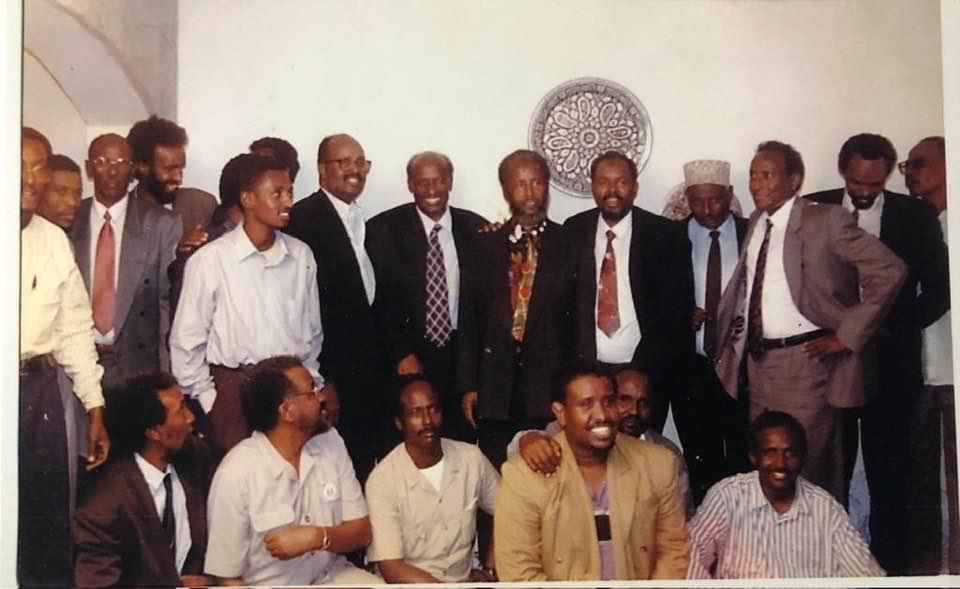
BREAKING NEWS

A two-day consultative meeting organized and conducted by officials of Puntland Ministry of Interior, Federal Affairs and Democratization at Rugsan Hall has ended successfully today in Garowe. The meeting was well attended by the members of Puntland Technical Committee for Federal Negotiations, TCFN, Director-Generals of Puntland various ministries, Head of UNDP Area Office as a guest speaker, PUNSAA, individual organizations representing Puntland civil societies, university representatives and other prominent personalities in town.
In the course of the two-day event, major presentations on governance, Somali Federalism, constitution-making, strained working relationships between Puntland and Federal governments, in particular, and between Federal Member States and Federal Government, in general, were conducted. Debates on issues that followed presentations were lively and substantive.
Of particular interest were the critical roles played by members of the TCFN in articulating subject matter issues in the expansive agenda of the meeting, covering all aspects of the federal power-sharing, fiscal federalism, with special emphasis on areas of conflict and tension in federal institutional structures.
Some prominent participants of the meeting, while acknowledging these difficult relations with the current administration of FGS, and noting the historical nature of these working relations between successive Puntland governments and FGS, have recommended and called for talks on establishing clear New Working Protocols between FGS and FMS as the only way to untangle the current political stalemate. Others argued that the disputes are based on constitutional grounds which FGS kept ignoring or violating them, and until FGS returns to work within the framework of the Provisional Federal Constitution, there is little flexibility or interest from Puntland Government to talk about talks with the Central Government. Many, however, acknowledged that the current gridlocks will sooner or later end up in negotiations. Puntland administration should be prepared to set out its conditions and priorities now.
ANOTHER LOOK AT SOMALI FEDERALISM
Garowe, May 14, 2023
By ISMAIL HAJI WARSAME
ON FEDERALISM
When political opponents say that Puntland State is the mother of federalism, people of Puntland think that they are being praised and recognized for the State’s tremendous sacrifices in men, material and minds in founding the 2nd Somali Republic, the current Federal Republic of Somalia (First Somali Republic existed from 1960-1991). In fact, what protagonists are saying here is that Puntland alone came up with unpractical federal concept that was not applicable nationwide. Sadly also, the history of who had spear-headed in salvaging Somalia from total disintegration and its disappearance from the world map, following the Civil War, had been hidden and buried in the same way that the history of self-government, sultanates and kingdoms that existed in Puntland regions long before European colonial powers came to Somalia, were buried to be never told in Somalia’s political and history narratives. We were made to believe that the history of the struggle of the people of Somalia to be free and own their state and government started from Derwish leader Sayid Mohamed Abdulle Hassan. That was how Siyad Barre was formulating Somali history for twenty-one years in power with iron fist.
Now, let us come back to our today’s theme: Federalism
Is Somalia’s federalism de facto or de jure? Was federalism a part of public debate in Somalia from 1960-1991? Other than the rise of SSDF as opposition movement against military regime and a small elements of intellectuals and former politicians from Digil&Mirifle before independence (inugu federaal fadnee?), was there any public awareness of desire for federalism? Was federalism imposed on Somali people by laws of government? Could someone do something to prevent it from happening at that time? Can anyone do something today to eliminate it from Somalia’s political discourse, body politic and laws of the land? What are the political consequences or the legacy of the Civil War? Isn’t the failure of the Somali State resulting in de facto “federalism” a part of Somali political narrative and outcome of the Civil War? Are the root causes of the Civil War still addressed? What guarantees in Somalia’s political and security situation today do we have to ensure that yesterday’s political blunders wouldn’t be repeated?
It is noteworthy to remind Somali people that
- Federalism and its variety of confederalism finds relevance in Somalia’s traditional clan society where most clans are more bonded by federation than by blood lineages. The infamous 4.5 clans are confederate clans. Most clans in Somalia are social constructs for strengthening them numerically for common protection. Nowadays, Somali Clan confederates are lately used for securing political edge in power-sharing rivalry.
- Still some shamelessly propagate that Somalia’s Federalism was derived or adopted from ethnic Ethiopian federalism. Knowing historical facts about national efforts of re-instating Somali State after its failure in January 1991, and having participated in most national reconciliation process, I confirm that Ethiopian involvement in the drafting of Somalia’s governance holds no water. Some Somalia’s constituencies were demanding federal system long before independence. It is a fallacy to interpret Somali federalism that way. It is just another anti-federalist tactics to unravel the modest gains of the Federal System and discredit its supporters. Unfortunately, many gullible Somali citizens bought this dangerous falsehood.
- Another misinformation is that Puntland State is part of Southern Somalia. That is the same as the notion that SSC is part of Somaliland now, given colonial history. Puntland State is located geographically in Northeast and parts of Northwest regions of Somalia and colonial borders had lost relevance after the Act of Union of 1960 forming the Somali Republic.
- Finally, Mogadishu and Hargheisa have same misleading policy on Puntland State: They propagate that Puntland is part of Southern Somalia and SCC is part of Somaliland. This is neither true nor acceptable to us.
The situation on the Somalia’s “Debt Relief” is worse than you think. Interest payments or “Debt Servicing” on Somalia’s Sovereign Debt is paid by the people of Somalia, including those in Puntland State. It is paid from portions of bilateral and international donations. The Central Government divides these donations into two portions, one going to debt Somalia’s servicing, and the other portion is further subdivided, small amounts of which are thrown to FMS in the same way you throw pieces of meat or fish at lunch table to the cats, and the bulk of it is burned in Mogadishu and used for non-stop international travels of President Hassan Sheikh Mohamud. People of Puntland are among those paying these big-ticket expenditures.
Make no mistake. “Fiscal Federalism” you hear about these days is being negotiated and conducted under these abnormal situation. Don’t expect any fair distribution of resources any time soon, if this course of action is maintained.
Legislations and institution-building are runaway power abuses and corruption. Best examples are recent laws of NISA, Petroleum, and Fishery, just to name a few. Who passes these laws in Federal Parliament, by the way? Yes, by the federal parliament representatives of Puntland State, among others, because if they don’t conform to the political dictations of Southern leaders, they wouldn’t be safe in Mogadishu.
Now, tell me how Puntland State could work with Mogadishu Regime, which respects no agreements and laws of the land with total disregard to the governance system most Somalis agreed upon? This gives you an idea on what is happening between FGS and Puntland State.
People say let us complete the Federal Constitution. More questions arise here:
The question is whose constitution is it?
- Is it a national constitution or a constitution of South Central Somalia?
- Where does Somaliland stand here?
- Are we talking about negotiations between South and North Somalia again, after a constitution for South Central Somalia is passed with potential Puntland State unwise consent?
- Where do Puntland’s SSC Regions stand here?
- What about one and half region state in Central Somalia supposed to be an “Interim administration”, but now having the same rights and status as Puntland State?
- What about other mini-states whose headquarters are located in or operating from Mogadishu, challenging Puntland State at Madasha Qaranka, and Mogadishu Regime is using them against Puntland State’s legitimate concerns?
- In conclusion, would Puntland State past MOUs and agreements with the Central Government since 2009 need ratification by Puntland constitutional bodies?
I leave you with these questions to ponder.
However, I warn you that the struggle between pros and cons of federalism will go on until one side wins the game. Keep fighting.
CONCLUSIONS
To reiterate, federalism is a de facto or force majeure that happened in Somalia following the vicious Civil War in the country. Puntland Vision from 1998 and TFG of Somalia Charter recognized this historical and socio-economic facts on the ground in Somalia.
Is the notion that federalism couldn’t function or isn’t feasible in Somalia holds truth? Could you improve this debate further to argue that this claim wasn’t consistent with historical facts and reality on the ground?
Since TFG of Somalia, the country had four presidential mandates: Sharif Ahmed, Hassan Sheikh Mohamud (HSM) 1.0, Mohamed Abdullahi Farmaajo and HSM 2.0? Tell me one of them, who had spent time making federalism work in Somalia? If you want to build a house, and do not move to realize the dream, would it be built by itself? These past and present Somali federal leaders were either undermining or trying to dismantle it. In other words, they were not converts of federalism. That is why opponents of federalism were quick to denounce federalism as incompatible for Somali culture and it couldn’t function well in Somalia. This is a fallacy. Federalism is a reality on the ground in Somalia. Puntland State is a living example that federalism does work in Somalia.
However, there is a vicious cycle in Federal Member States too. Federalism meant to decentralize authority or power to Elected District councils (remember federal government is three levels: FGS, FMS and District Councils). This never happened before Puntland State. That is good news for federalism in Somalia.
But federalism has many forms. There are asymmetrical, confederal and other forms of federalism. However, it takes two to a tango (single person doesn’t play dhaanto by himself/herself). Whom to talk to on this issue, if Mogadishu governments aren’t ready or interested. They are also against democratization and will of the people. There is one political position of Somaliland Administration I used to admire in my past political experience: “Whom to talk to in Southern Somalia?” This situation still holds true to Mogadishu political situation. Are there political space and environment in Mogadishu today to talk about fiscal federalism, common security architecture and federal legislations in parliament not sensitive to the concerns of FMS?
NEGATIVE NOISES SURROUNDING PUNTLAND COUNCIL ELECTIONS AND WISHES OF DOOMSDAY FOR THE STATE
WDM EDITORIAL
Unsettling noises about perils coming on the way of Puntland’s continued existence are not only misplaced, but they are also dangerous and unwarranted fear-mongering. From Somalia’s Head of State to a bunch of uninformed politicians on current Puntland internal situation, they are unleashing statements of ill-will for the residents of Puntland State. People and political associations here are in election campaign mood. They were busy registering themselves to participate in the re-envigorated democratization process – they don’t have time and space for sidetracks. They are ready to exercise their democratic rights as they grew tired of the old clan system that has been keeping the State politically stagnant for more than two decades.
Ironically, those former Puntland political leaders, who had abysmally failed to move democratic elections forward in their past stints are now making the biggest noises in opposing the long overdue transition to a better governance. Their negative attitudes toward holding, at least district council elections, are unfortunate, if not an outright disservice to the stability of the State.
In regard to President Mohamud’s recent misleading and ill-informed statement about perceived dangers confronting Puntland, one can only dismiss it as ill-wish, or rather sour grapes, for his administration has still a long way to catch up with the multifaceted progress Puntland State has been making over the years. Instead of commending the residents of Puntland State and their leadership for setting up the role model for the rest of Somalia, he has chosen words of despair and disillusion. Suffice to say that People of Somalia will move on with or without Hassan Sheikh Mohamud, no doubt about that.
WDM PRODUCTION OF KNOWLEDGE

WDM EDITORIAL
Most of us share or reproduce other people’s knowledge or experiences. Most of us don’t try to produce original ideas based on observations or personal experiments. The most obvious source of these reproductions of other people’s stuff is the internet, especially social media. We are made constantly busy browsing information from our social contacts. We have little time sitting down to produce and share our own original thoughts, observations, and records of our experiences. Consequently, we are accustomed to not thinking at all. We became the medium for transmission for other people’s disseminations of whatever good or bad ideas someone else may have.
This is where Warsame Digital Media WDM differentiates itself from many internet outlets to share original comments, critical analysis of events, and rational observations of multifaceted socio-economic developments in our world Keep reading WDM https://ismailwarsame.blog. Welcome onboard!
SOMALIA: A HARD NUT TO CRACK. WHY?
There are obvious reasons for political crises and stalemates in the country. But the main culprit is about not learning from the Somali character by both unsophisticated, unlearned native politicians, and diplomats of our International Partners. The Somali man responds negatively to threats and coercion. Historically, any meaningful collective act was attained through negotiations and consensus-building. No amount of marginalization and deprivation would compel this man to bend to servitude by another human being. To earn his goodwill, one has to recognize him as equal with full dignity. This is a fundamental truth about Somali anthropology. Read the experts on the issue – Sayyid Mohammed Abdulle Hassan, Abdi Sheikh Abdi, Richard Burton, I. M. Lewis, B W. Andrewiezky, Enrico Cerulli, among quite a few more.
Moreover, what complicated Somali political impasse further is the most ignored fact that Somalis went the wrong way to national reconciliation process, following a vicious civil war – a topic still considered a taboo. That means we are still in self-denial and no system or remedy is in place to right a wrong. Think about people’s trust-level in national or shared public institutions.
Enacting or rushing legislative bills through known corrupt parliament without proper consultations and public debates wouldn’t bring Somalis together. States would fight against what they perceive as centralist policies and dictatorial power grab. If you assume that Somalia has had an accepted Central Authorty, you have already missed the point.
Finally, Somalia’s Achilles Heels are Alshabab, ISIS, other extremists, and economic and financial cartels. But, worse than Alshabab is the epidemic of corruption, diseases and ignorance.
In the meantime, our International Partners would continue to urge for dialogue to resolve disputes. But, until the contentious issues are studied and properly addressed, we will go on doing business as usual. Thus, we shall all risk losing Somalia again. It is time to get real and serious about continued and potential survival of this nation.
ON SOMALIA’S HISTORY


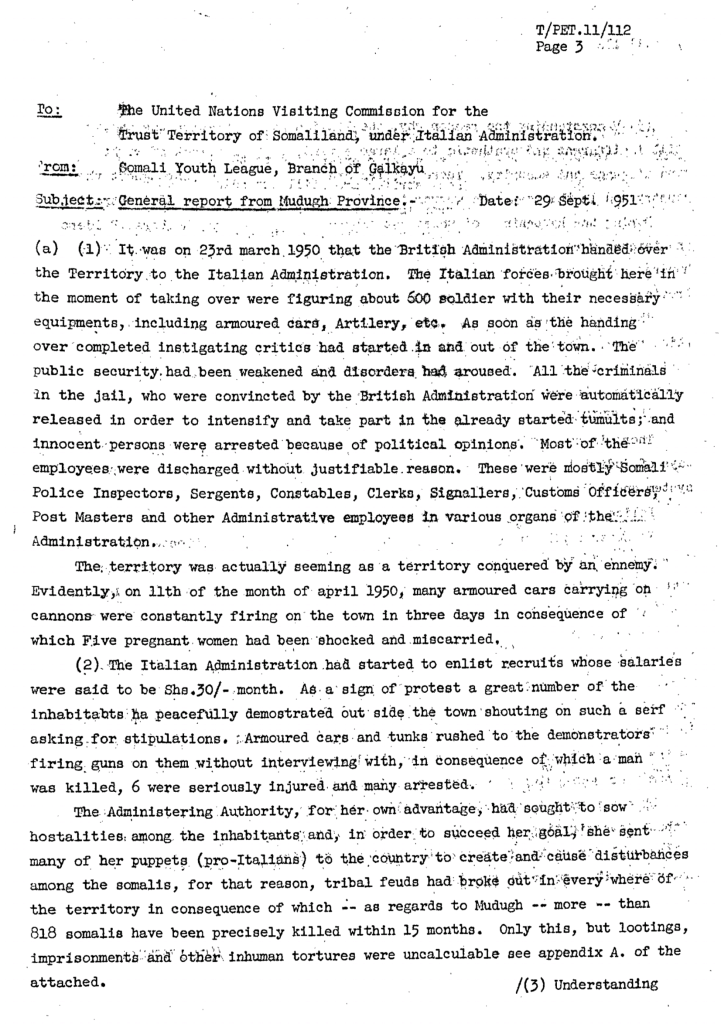

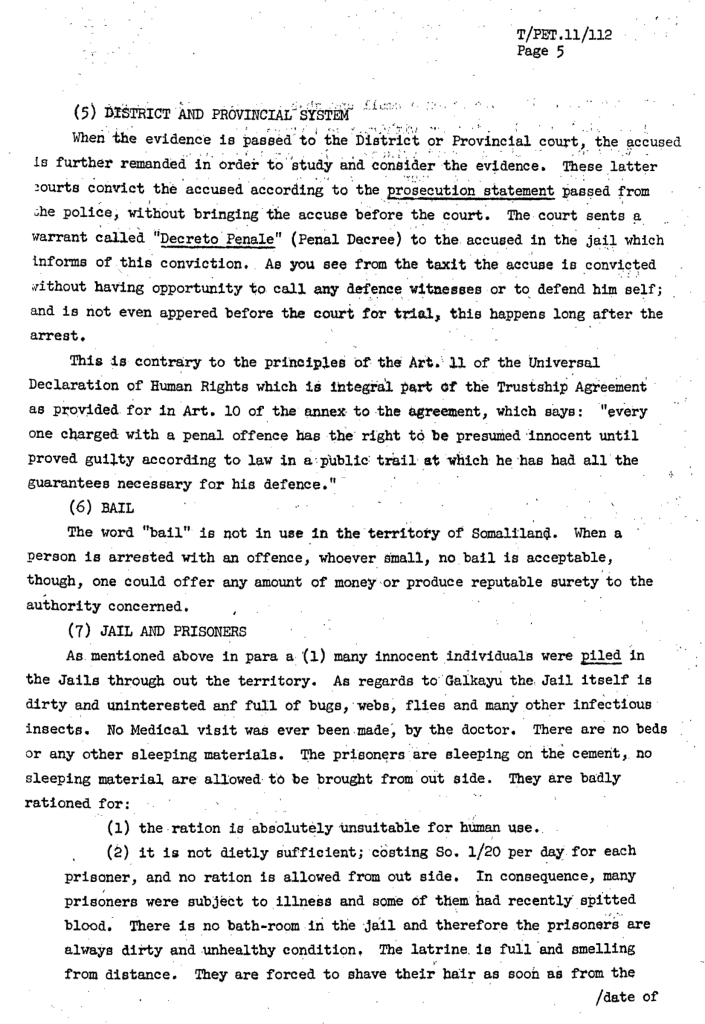

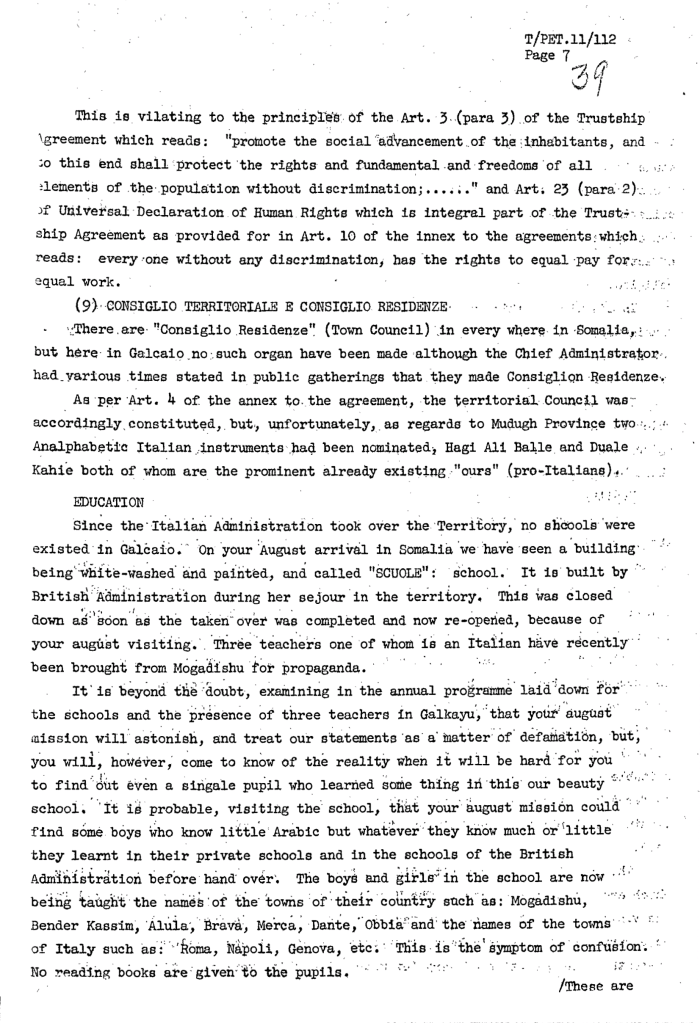


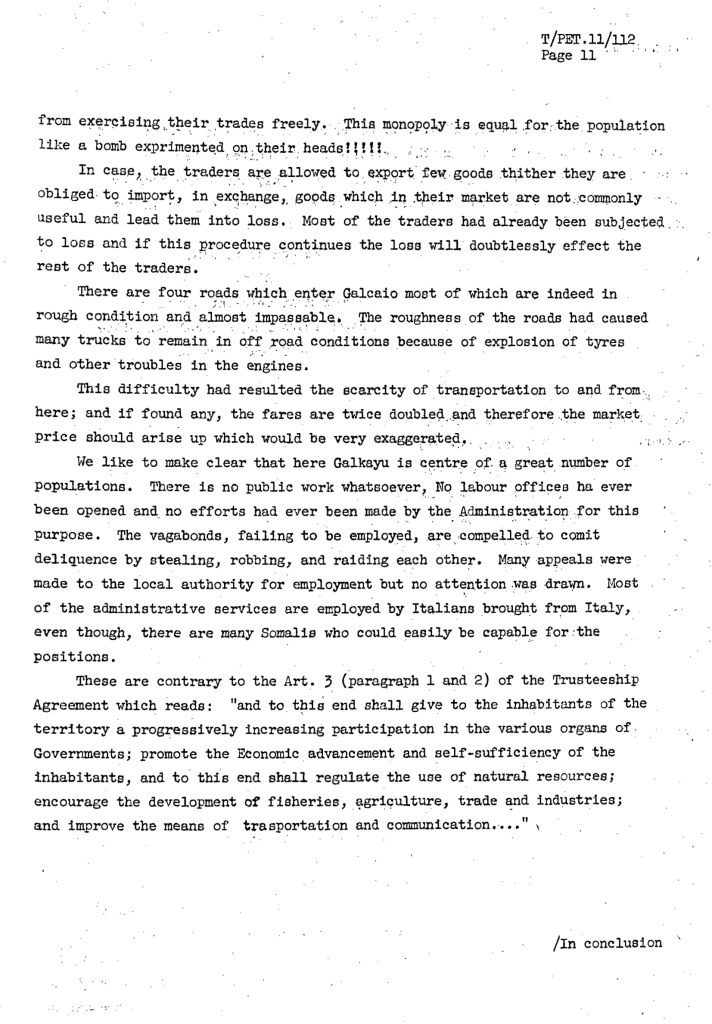

No Justice, No Peace: Al-Shabaab’s Court System
56 year old Hussein inherited land southwest of Mogadishu, Somalia. Having been a public servant prior to 1991, when he found himself in a land dispute over that same land, he did what any public servant would do: he took the case to court. Spending nearly 27,000 US dollars in the highly corrupt judicial system, he lost the initial trial and attempted to appeal the case. He still had hope for due process.
Then, the other party attacked his house. The police shot and killed two of his aunts while they tried to save their home. Soon after, his appeal stalled in court. Two years later, with his appeal still unaddressed, Hussein did the unthinkable. He took his case to Al Shabaab, a violent terrorist group that operates a shadow government in the country.
His story is far from unique: Hussein is just one of thousands who has had to turn to Al Shabaab in a country without justice.
The Situation in Somalia
Described as “the most failed state,” Somalia lacks a unified government. Since the collapse of Mohamed Siad’s authoritarian regime in 1991, Somalia has struggled to establish a government. Although nominally run by President Hassan Sheik Mohamud, who served as chief executive from 2012-2017, and was reelected in a much-delayed election in May 2022, much of the country isn’t under government control: Al Shabaab controls nearly 70% of South and Central Somalia. In the areas under its control, Al Shabaab conducts all the basic functions of a normal government: it taxes residents, offers security, and even provides welfare to needy populations. Through taxation, Al Shabaab brings in some 15 million dollars a month–almost as much as the legitimate Somali government. Somalia’s actual government, meanwhile, is consistently rated as one of the most corrupt countries in the world and relies heavily on international assistance to survive. The minister of Hirshabelle put it bluntly: “We have two governments. … They control more and generate more funds than us”.
Despite international efforts to counter its rise, Al Shabaab has thrived in the Horn of Africa. As such, while the Somali government remains corrupt, discriminatory, and otherwise untrusted, more people flock to Al-Shabaab. A 2018 study on recruited members of Al Shabaab found that, increasingly, the group’s messaging towards youth emphasized injustice and power abuse issues. A full two-thirds of recruited members say they joined because of clan discrimination, government corruption, or economic reasons. Given the struggles of the government in Somalia, it is unsurprising that Al Shabaab has gained a foothold in the Somali judicial system.
Al Shabaab’s “Justice”
Utilizing a combination of Xeer, the traditional legal system in Somalia, and Sharia law, a form of Islamic law, Al Shabaab has established a network of courts across the country. These “shadow courts” handle a wide variety of disputes. Somali researcher Hussein Yusuf Ali notes that Al Shabaab responds to a variety of needs for justice, especially arguments over natural resources, commercial disagreements, and accusations of clan discrimination. Land disputes are also frequently handled by Al Shabaab: one resident of Baido estimates that “80% of land disputes are taken to Al Shabaab and perhaps 20% go to formal courts.” Al Shabaab courts even handle issues of extortion, clan discrimination, corruption, and unlawful arrests, meaning Al Shabaab may prosecute government and law enforcement agents as well as civilians.
Even in areas officially controlled by the government, Somalia’s justice system is as dysfunctional as the government itself. Corrupt, fractured, and lacking the power to enforce its decisions, the judicial system rarely provides justice. The US State department described Somalia’s justice system as one where “impunity generally remained the norm,” and decisions are heavily influenced by clan based politics and corruption.
To fill this vacuum, Al Shabaab has become an arbiter of justice–not necessarily because the public actually supports the terrorist group, but because there is no other option. Aweys Sheikh Abdullah, who was a judge in the Banadir regional court from 2016-2018 told reporters that people turn to Al Shabaab because courts involve a “long process which can take years without the case proceeding, backlog resulting from lack of enough judges at the court and costly legal fees.”
Many Somalis see Al Shabaab’s courts as neutral, unbiased institutions which provide a free platform for arbitration. Those from minority clans, who are often wary of being discriminated against by government judges, are enticed by this promise of neutrality to use Al Shabaab. In government courts, one lawyer from Hodan said, “many people fear being killed if they bring their cases before courts. Some people are silenced. Some others receive death threats, which could later force them to withdraw their cases. For minority groups, they might face all those threats and risks with the addition that they have no powerful allies to help them.”
This, among other reasons, is why thousands now turn to Al Shabaab–even those living under government control–to adjudicate their disputes. Residents of Mogadishu, the government controlled capital, travel to nearby Al Shabaab areas to settle disputes. By some anecdotal accounts, even policemen and military officials are known to seek justice from Al Shabaab instead of the government.
Al Shabaab also has the power to enforce its decisions, while decisions by government courts are largely unenforceable. Al Shabaab’s courts successfully enforce their rulings by using threats of violence to do so. If someone does not comply, they risk the robbery, injury, or death of themselves and their loved ones. Residents of Bariire in Somalia reported that they have been forced to watch public executions, amputations, and more as a means to intimidate residents. While barbaric, this violence ensures respect for the institution–something which the government courts lack.
Al Shabaab’s draconian punishments highlight a frightening truth about the group: despite gaining legitimacy as a pseudo-government, Al Shabaab is just as violent, radical, and dangerous as ever. In the year 2021 alone, the organization killed more than 550 civilians. Al Shabaab has been accused of crimes against humanity, has conscripted child soldiers, and continues to exploit and abuse those under its control. It is no surprise that the people of Somalia, even those who may rely on the court system, want Al Shabaab gone.
Despite the group’s violence, interviews with lawyers, clan elders, and government officials indicate that Al Shabaab’s “reputation for lower levels of corruption,” lack of bias in the court (in that it is seen as not discriminating along clan lines), and ability to enforce court rulings (often through violence) have earned the group respect. Juxtaposed against the government courts, Al Shabaab is now seen as less corrupt and less discriminatory than government courts. In turn, Al Shabaab derives much of their power from a purported moral high ground, which they manage to achieve even in the face of barbaric human rights violations.
Legitimacy and Government
Al Shabaab’s shadow courts are only a case study of their larger strategy to delegitimize the government and take its place. After all, this is not the first time that Al Shabaab has sought to take over the role of the fragile government.
Following the 2017 drought in Somalia, as the government floundered, Al Shabaab began handing out food and water aid to impoverished farmers. More recently, Al Shabaab established COVID-19 healthcare centers in response to the pandemic, and has even established schools and programs to send fighters to universities abroad to receive education.
Doling out these goods and services, Al Shabaab has built its power on the inability of the government to provide for its people. The failures of the Somali government to bring about adequate justice and rule of law created the conditions for Al Shabaab to make its own courts, just as the failure of all governments offers an opportunity for Al Shabaab to rise to power.
Alexus G. Grynkewich, Commander of the US 9th force, describes this type of strategy as “welfare as warfare”, where a terrorist group provides services, humanitarian aid, or security in order to erode the legitimacy of the existing government. This hearts and minds approach helps counteract the violent, oppressive image of Al Shabaab that many Somalis have, thus making the group seem like a more benevolent ruling force.
If this strategy sounds familiar, that’s because it is: the practice of welfare as warfare is a tried and true means for terrorist groups to gain support and legitimacy. The Taliban employed this model for years, running a similar Sharia based court system in Afghanistan. One expert described Al Shabaab as a junior varsity version of the Taliban: like the Taliban, Al Shabaab operates courts, collects taxes, and provides aid to the public. This justice system, which legitimized the Taliban in the eyes of the public and gave the terrorist group valuable experience in running a country, likely helped contribute to the Taliban victory in Afghanistan in August 2021.
Also like the Taliban, Al Shabaab is pairing its legal efforts with a targeted propaganda campaign meant to make the government seem weak and ineffective. In 2021, Al Shabaab released a six part documentary about the failures of the Somali president, advocating for Sharia as a solution. Unlike typical terrorist propaganda, Al Shabaab’s documentary, which it marketed as “objective,” focuses on political problems rather than only radical ideology. Since then, another 12 part documentary about the problems of the Somali constitution has been released.
Without a functioning judicial system, Al Shabaab’s claims that the government is ineffective are more easily accepted across Somalia. The mere existence of a parallel legal system in Somalia, especially one run by a group who explicitly hopes to overthrow the existing government, shows that the Somali state is unable to uphold rule of law.
Al Shabaab courts have become more brazen too. The courts sometimes work directly with clans and elders, and are overturning already decided government cases. Al Shabaab even warns those under its control from stepping foot in government courts, threatening civilians that do so.
Ultimately, Somalia is trapped in a dangerous cycle: an illegitimate government is the but-for cause of Al Shabaab’s courts. Yet Al Shabaab’s courts also contribute to the perception of illegitimacy, while helping to resolve legitimate concerns that the government has not adequately handled.
The Road Ahead
Thankfully, the Somali government has begun paying attention to the issue: President Mohamud has put Al Shabaab’s courts at the center of his counterterrorism strategy in the past few weeks, declaring a war on the system. In September, Somali forces attacked an Al Shabaab-run courtroom in Basra near Mogadishu, the first such operation to specifically target the shadow judicial system.
The federal government has even fomented a clan uprising against Al Shabaab, weaponizing Somalia’s powerful clan militias. In previous administrations, authorities refused to provide government support to the clan militias, allowing Al Shabaab to consolidate control over clan territories. This novel approach to clan militias is already working. Just last week, 40 towns in the Hirab region were liberated from Al Shabaab rule with the help of the Macawisley militia.
This new strategy is vastly superior to a proposed military-only approach to Al Shabaab. A hyper-militarized counterterrorism strategy in Somalia risks killing and radicalizing civilians, shutting down potential negotiations, and will likely result in retaliatory escalation by all parties. While military operations may temporarily clear Al Shabaab out of a town, they do not solve the underlying problem relating to the lack of effective governance in the area. This makes it easy for Al Shabaab to fill the void in services once again.
In fact, using only military force to fight Al Shabaab, now that it operates as a pseudo-state in many areas, may even be counterproductive: because Al Shabaab is the provider of goods and services, attacks on the group risk disrupting vital governance, aid, and public services, leaving vulnerable communities in the lurch. Without a wider political strategy, military escalation will keep Somalia entrenched in conflict.
Additionally, instead of relying on bombing and raids, since Al Shabaab currently has a weakened military, the Somali government should seize this opportunity to build informal channels for peace and demobilization negotiations. The government should start at the local level, leveraging any connections it has to the group. The appointment of Mukhtar Robow, an ex-Al Shabaab leader turned government official, to the ministry of religion last month could give the government the credibility it needs with Al Shabaab to establish locally mediated negotiations. While there is a long-term goal for peace, in the short term negotiations about a ceasefire, halting bombings, and protecting civilians would be a significant step in the right direction.
The Somali government must beat Al Shabaab at its own game: as long the public sees Somalia’s judicial system as untrustworthy and corrupt, there will always be a demand for Al Shabaab and its courts. Therefore, Somalia must also take steps to address the corruption and costs in its legal system. A study of Somalis found that high costs were the largest access barrier to government courts. On top of this, Al Shabaab’s ability to enforce its court decisions is why the group is so successful in the legal field: the USAID study on Somalia concluded that the ability to enforce decisions swiftly is the largest “pull factor” of Al Shabaab’s courts. As one respondent put it with regards to the government system, “justice depends on your pockets.” Stronger anti-corruption regulations, assistance from the international community in lowering legal fees, and out-of-court arbitration options could go a long way towards lowering costs. However, for a country facing immense turmoil and violent terrorism, reforming the justice system will not be easy.
Somaliland, a breakaway region of Somalia, could also be a potential model for judiciary reform. Although Somaliland faces corruption, bias, and a lack of resources within its judicial system, it is consistently seen as more effective than the courts in the rest of the nation. Part of an “increasingly capable government,” the justice system in Somaliland still has a long way to go, but is a far better alternative than the current Somali equivalent. Somali leaders might be well served by working with Somaliland officials to reform their courts.
For almost two decades, Somalia has fought Al Shabaab on the battlefield. As the conflict moves to the courtroom, success seems uncertain: The country’s future is precarious, its government and justice system weak, and its people under attack by a violent terrorist group. The world has largely given up on Somalia.
But it is the constant struggle of the Somali people to bring justice, governance, and peace to their country which proves that Somalia is not a lost cause. Growing local resistance against Al Shabaab, demands for improvements to the government, and the peaceful transition of power this summer are all hopeful signs for the country.
It is past time for the government to rise to the goals of its people: President Mohamud has the opportunity now to fight Al Shabaab, build the government, and bring justice to the Somali people. So far, he has risen to the challenge. If he can maintain his momentum, and help the Somali government win the battle for judicial reform and create a comprehensive approach to counterterrorism, the country stands a chance against Al Shabaab. The fight for the future of Somalia has just begun.
[Courtesy to Havard International Review, HIR]
WHY FIGHTING FOR CONTINUED OCCUPATION OF SCC REGIONS MAKES NO SENSE FOR HARGHEISA ADMINISTRATION
WDM EDITORIAL
With meagre economic resources and limited fighting men, Somaliland is engaged in losing adventures in violence in Sool Region. 1st, it wouldn’t be able to subdue restive population moving forward. 2nd, it has irreversibly damaged its illusionary secessionist attempts. 3rd, it has lost irrevocably any remaining good standing within the international community, harming any working relationships with still remaining international and non-profit organizations operating out of Hargeisa. By its unprovoked violence in SSC regions, Somalilad has decimated its commerce and trade with the rest of Somali regions in Somalia and Ethiopia. That way Somaliland has turned its territories into dystopia.
HOW TO SALVAGE THE SITUATION
Hargheisa should either proceed to immediate arrangement of ceasefire in SSC regions, and hold talks with politicians and leaders in Laascaanod on its speedy forces’ withdrawal, or brave for crushing defeat, humiliation and subsequent unraveling of Somaliland pipe dreams of securing unilateral independence.
CONCLUSION
By mercilessly engaging in war crimes and crimes against humanity in SSC regions, Hargheisa has lost any previously doubtful moral compass to negotiate with its Somalia’s counterparts on the future governance arrangements.
 Warsame Policy & Media Network (WAPMEN)
You must be logged in to post a comment.