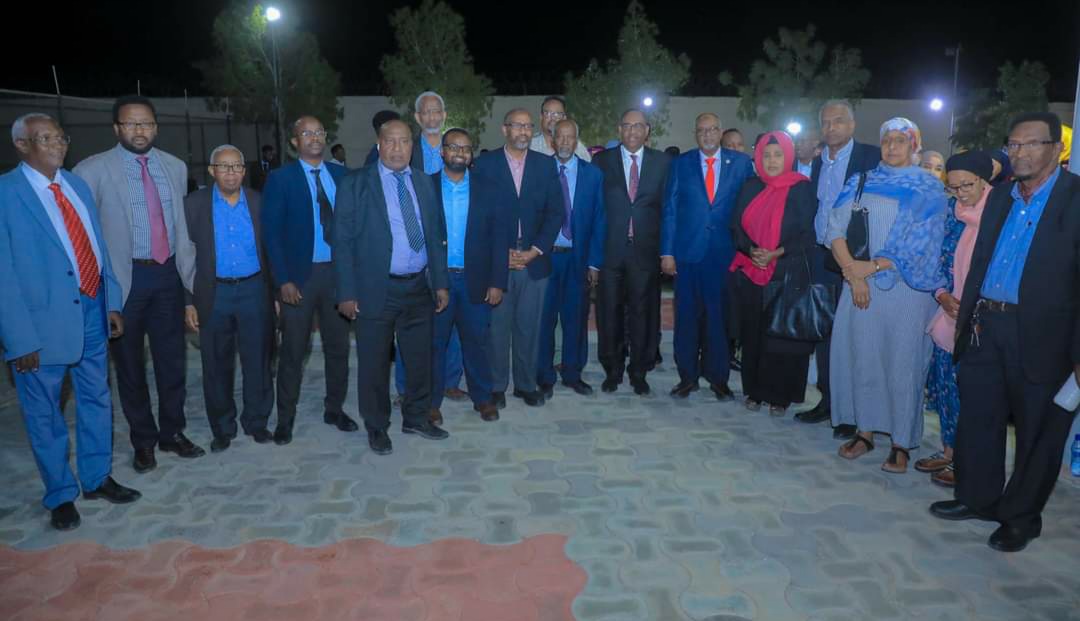
Insecurity in Mogadishu and the Periodic Exodus of Federal Politicians and Employees

Mogadishu, Somalia’s capital, has long been a symbol of both resilience and chaos. For years, its residents have endured a relentless cycle of violence fueled by Al-Shabab insurgency, clan-based vendettas, and business-related revenge killings. This toxic environment has earned the city the grim moniker of a “hell on earth,” a reality that even the nation’s highest-ranking officials seem unable to withstand. Recent waves of Federal Government politicians and employees, including parliamentarians, ministers, and security escorts, fleeing to regions like SSC-Khatumo—a budding regional administration in northern Somalia—highlight a troubling pattern: Mogadishu’s insecurity is not only destabilizing daily life but also paralyzing governance, driving periodic exoduses that undermine public trust and institutional legitimacy.

The Security Crisis in Mogadishu

At the heart of Mogadishu’s turmoil lies the entrenched presence of Al-Shabab, an extremist group that continues to launch brazen attacks on government installations, hotels, and civilians. Despite sustained military campaigns, the group retains the capacity to strike with impunity, turning streets into battlegrounds and sowing fear among residents. Compounding this threat are clan-driven conflicts and revenge killings, often rooted in competition for resources or political influence. Business disputes, too, escalate into violence, as powerful actors resort to armed force to settle scores. For Federal officials, navigating this landscape means living under constant threat—a reality that has rendered Mogadishu increasingly ungovernable. Even President Hassan Sheikh Mohamud has faced criticism for his frequent travels, interpreted by many as an attempt to escape the capital’s dangers.

Historical Precedent: Puntland as a Refuge

The phenomenon of officials seeking respite outside Mogadishu is not new. For years, Puntland, a semi-autonomous state in northeastern Somalia, served as a sanctuary for politicians and bureaucrats weary of the capital’s volatility. Its relative stability, bolstered by local governance structures and geographic distance from Al-Shabab’s strongholds, made it a pragmatic escape route. However, this reliance on Puntland also underscored the Federal Government’s fragility, revealing a leadership more focused on survival than systemic reform.

The Rise of SSC-Khatumo as a New Haven

Recently, SSC-Khatumo has emerged as an alternative refuge. This region, which declared its autonomy in 2023 after decades of territorial disputes, offers a combination of strategic remoteness and nascent governance. For Federal officials, it represents not only a safer space but also a political opportunity. By engaging with SSC-Khatumo, Mogadishu’s elites may aim to strengthen federal alliances or legitimize their authority in contested areas. However, the optics of high-profile visits—such as Prime Minister Hamse Abdi Barre’s anticipated trip—risk being perceived as performative. Critics argue that these delegations prioritize photo-ops over substantive engagement, doing little to address the root causes of displacement.

Public Perception and Governance Implications

The exodus of officials has deepened public cynicism. To ordinary Somalis, the spectacle of leaders fleeing their posts reinforces a narrative of abandonment. Many view these trips as indulgent escapes rather than legitimate efforts to stabilize the country. This perception erodes trust in institutions already weakened by corruption and inefficiency. Moreover, the absence of key decision-makers from Mogadishu disrupts governance, delaying critical policies and security strategies. The psychological impact is equally dire: when leaders appear unwilling to share in the hardships of their citizens, it breeds disillusionment and apathy.

Conclusion: A Cycle in Need of Breaking

The periodic influx of Federal politicians and employees into regions like SSC-Khatumo is a symptom of Mogadishu’s unaddressed security decay. Until the government confronts Al-Shabab’s insurgency, mediates clan conflicts, and strengthens judicial mechanisms to curb impunity, such exoduses will persist. Sustainable solutions demand more than fleeting visits to safer regions; they require comprehensive security reforms, inclusive dialogue, and economic investments to dismantle the conditions breeding violence. For Somalia’s leaders, the choice is clear: either continue escaping Mogadishu’s chaos or commit to transforming it into a city worthy of their presence. The latter path, though arduous, is the only way to halt the cycle of fear and flight—and to restore hope in a nation weary of both.

Somalia 2024: Fractured States, Foreign Patrons, and the Looming Storm of Conflict

Somalia 2024: Fractured States, Foreign Patrons, and the Looming Storm of Conflict

Puntland’s Bold Gambit: Autonomy, ISIS, and the SSC-Khatumo Flashpoint
In a seismic shift, Puntland severed ties with Mogadishu in January 2023, declaring itself an “independent government” in protest against constitutional amendments centralizing power. President Said Abdullahi Deni, buoyed by UAE patronage and Ethiopian security cooperation, now positions Puntland as a kingmaker in Somali politics. His ambitions clash directly with SSC-Khatumo, a union of the Sool, Sanaag, and Cayn regions demanding self-rule. SSC-Khatumo’s quest for autonomy has turned the Sool region into a battleground, with Puntland and Somaliland forces clashing as recently as February 2024. Deni’s critics accuse him of prioritizing UAE-backed port projects (e.g., Bosaso) over resolving local grievances, risking a prolonged conflict that could draw in clans and foreign actors.

New Frontlines: Puntland’s War on ISIS and Territorial Control
Puntland is mobilizing for a major offensive against ISIS-Somalia factions entrenched in the Cal-Madow and Galgala mountains—a strategic corridor near contested Somaliland territories. ISIS, though smaller than Al-Shabaab, has exploited governance vacuums since 2015, using smuggling routes to fund attacks. Deni’s campaign, backed by UAE logistics and Ethiopian intelligence, aims to neutralize ISIS while asserting territorial claims. Success could bolster Puntland’s sovereignty narrative but risks inflaming tensions with Somaliland, which views Galgala as part of its Sanaag region. Meanwhile, SSC-Khatumo leaders warn that the offensive may displace clans and deepen marginalization, further destabilizing the north.

Somaliland’s Geopolitical Play: Ethiopia’s Port Deal and Internal Repression
Somaliland’s January 2024 MoU with Ethiopia—granting naval access in exchange for potential recognition—marked a geopolitical coup for President Muse Bihi. The deal, tacitly backed by the UAE (a key investor in Berbera port), has angered Mogadishu and Puntland. However, Bihi’s authoritarian crackdown on dissent in Sool and Aynabo, where SSC-Khatumo support runs deep, threatens to ignite broader unrest. Somaliland’s reliance on UAE funds and Ethiopian security ties risks alienating clans caught between Hargeisa’s repression and Puntland’s intervention.

Jubaland: The Tinderbox of Gedo
Jubaland President Ahmed Madoobe’s feud with Mogadishu over control of the Gedo region has reached a boiling point. The Federal Government insists on deploying Somali National Army (SNA) units to secure the area for elections and counter Al-Shabaab, but Madoobe, backed by Ethiopian troops and UAE-funded militias, frames this as federal overreach. A February 2024 standoff near Beled Hawo underscores the volatility. Analysts warn that open conflict in Gedo could cripple counterterrorism efforts, allowing Al-Shabaab to exploit clan divisions and smuggling routes.

Central Somalia Under Siege: Al-Shabaab’s Resurgence
While northern conflicts dominate headlines, central Somalia faces escalating threats:

  • Hirshabelle: Al-Shabaab’s late 2023 offensive in Hiraan region exposed federal weaknesses, with militants seizing villages and taxing supply routes to Ethiopia. Clan militias, nominally allied with the SNA, lack coordination, enabling the group to exploit Hawadle-Jajele sub-clan disputes.
  • Galmudug: Galmudugh is unraveling as Al-Shabaab exploits local grievances between fractious Ahlu Sunna Waljama’a militia and regional authorities. Galmudugh and Hirshabelle regional states exist merely on the federal government’s lifeline.

Foreign Patrons: UAE and Ethiopia’s Divide-and-Conquer Tactics

  • UAE: Abu Dhabi’s “ports-and-proxy” strategy invests in Berbera (Somaliland) and Bosaso (Puntland) to counter Turkish/Qatari influence. By backing Deni, Bihi, and Madoobe, the UAE ensures control over trade chokepoints.
  • Ethiopia: Landlocked Addis Ababa prioritizes port access (Berbera, Kismayo) and security, backing Somaliland and Jubaland despite undermining Mogadishu.

Mogadishu’s Impossible Calculus
President Hassan Sheikh Mohamud’s government faces intersecting crises:

  • Election Chaos: Disputes over the 2024 suffrage model threaten a repeat of the 2020 clan-vetted indirect elections.
  • Foreign Meddling: UAE-Ethiopia alliances weaken federal authority, while Turkey and Egypt vie for influence via military aid.
  • Al-Shabaab’s Resilience: Despite U.S. support, federal forces struggle to project power beyond cities, leaving rural zones to militants and underpaid militias.

The Storm Ahead: Fragmentation or Confederation?
Somalia’s instability is no longer local. As regional leaders prioritize foreign patrons over unity, the nation risks morphing into a confederation of client states. The SSC-Khatumo revolt, Puntland-Somaliland clashes, and Jubaland’s defiance could spark a perfect storm of interstate warfare, electoral crises, and insurgent resurgence. For ordinary Somalis, already weary of decades of strife, 2024 may bring neither peace nor progress—only deeper entanglement in global power struggles.

Why This Matters: The Horn of Africa’s stability hinges on Somalia. With the Red Sea a theater of U.S.-China rivalries and Middle Eastern power plays, the world can ill afford another collapse. Whether Somali elites reconcile or remain pawns will determine the fate of millions—and the security of one of the world’s most strategic waterways.

THE WAR AGAINST ISIS IS NOT OVER YET

The completion of Puntland’s military operation against ISIS in the Cal-Miskaat mountains marks a critical juncture. To consolidate gains, prevent resurgence, and bring remaining leaders like Abdulkadir Mumin to justice, Puntland should adopt the following best practices, informed by counterterrorism strategies globally and regionally:


1. Secure Cleared Territories

  • Maintain a security footprint: Deploy forces to hold recaptured areas (bases, caves, villages) to deter ISIS reinfiltration. Establish checkpoints, patrols, and mobile units to monitor movement.
  • Leverage technology: Use drones, satellite imagery, and motion sensors to surveil remote mountain areas and coastal zones, where fleeing fighters might regroup.
  • Block escape routes: Coordinate with neighboring regions (e.g., Somaliland, Galmudug) and international partners (e.g., EU Naval Force, US AFRICOM) to enforce land, air, and maritime blockades.

2. Intelligence-Driven Manhunt for Leaders

  • Human intelligence (HUMINT): Engage local communities to gather tips on ISIS leaders’ whereabouts. Offer protected anonymity and incentives (e.g., rewards) for credible information.
  • Electronic surveillance: Monitor communication networks (e.g., phones, radios) used by ISIS remnants. Collaborate with international agencies (e.g., INTERPOL, CIA) to track financial flows or encrypted messaging.
  • Targeted raids: Use specialized units (e.g., PDF commandos) for precision strikes based on actionable intelligence to avoid civilian casualties.

3. Community Engagement and Reconciliation

  • Address grievances: Partner with clans, elders, and religious leaders to resolve local disputes (e.g., resource access, land rights) that ISIS exploited for recruitment.
  • Humanitarian aid: Provide immediate relief (food, medicine, shelter) to displaced civilians to build trust and counter ISIS propaganda about government neglect.
  • Counter-radicalization programs: Launch deradicalization initiatives for former ISIS recruits and their families, focusing on education, vocational training, and psychosocial support.

4. Strengthen Governance and Development

  • Restore services: Rebuild infrastructure (schools, hospitals, water sources) in liberated areas to demonstrate tangible benefits of government control.
  • Economic opportunities: Create jobs for youth through public works programs (e.g., road construction, agriculture) to reduce vulnerability to extremist recruitment.
  • Local governance: Appoint credible administrators (preferably locals) to manage recaptured zones, ensuring fair representation and accountability.

5. Regional and International Cooperation

Cross-border collaboration: Share intelligence with Ethiopia, Kenya, and Yemen to disrupt ISIS smuggling routes or safe havens.

International support: Seek funding and training from partners (e.g., UAE, UN) to build capacity in intelligence, logistics, and community policing.


6. Legal and Judicial Frameworks

  • Prosecute captured fighters: Establish transparent, fair trials for ISIS detainees to legitimize counterterrorism efforts and deter future recruitment. Use evidence from seized ISIS materials (documents, videos) to build cases.
  • Sanction facilitators: Work with the UN Security Council to impose travel bans and asset freezes on ISIS-linked individuals and businesses.

7. Counter-Ideological Campaigns

  • Religious outreach: Partner with moderate clerics to challenge ISIS’s extremist interpretations of Islam through mosque sermons, radio programs, and social media.
  • Media strategy: Publicize ISIS’s defeats (e.g., destroyed bases, surrendered fighters) to undermine its image as an invincible “caliphate.”

8. Continuous Assessment and Adaptation

  • Monitor threats: Establish early-warning systems to detect ISIS attempts to regroup, such as small-scale attacks or propaganda resurgence.
  • Evaluate operations: Conduct after-action reviews to identify gaps (e.g., leadership evasion, civilian harm) and adjust tactics.

Key Risks to Mitigate

  • Civilian harm: Avoid heavy-handed tactics that alienate communities. Train PDF forces in international humanitarian law (IHL).
  • Over-reliance on militarization: Pair security operations with governance and development to address root causes of extremism.
  • Leadership vacuums: If Mumin is killed or captured, anticipate ISIS attempts to appoint successors. Preemptively target mid-level commanders.

Conclusion

The “best practice” approach combines securitygovernance, and community trust to transform short-term military gains into lasting stability. Neutralizing leaders like Mumin requires patience, precision, and partnerships, but Puntland’s success will ultimately depend on its ability to offer civilians a credible alternative to extremism.

WDM Vision for Puntland State Progress

 February 23, 2025 


Introduction: Unleashing the Power of Puntland’s Global Network
Imagine a future where Puntland’s diaspora—scattered across continents as doctors, engineers, entrepreneurs, and advocates—becomes the backbone of the region’s transformation. According to World Bank estimates, diaspora remittances already fuel 15-30% of Puntland’s GDP, but their potential extends far beyond finances. Their skills, innovation, and cultural ties are untapped goldmines. At Warsame Digital Media (WDM), we propose a bold, structured vision to channel this potential into security, stability, reconstruction, and inclusive growth. Ad-hoc contributions are over; it’s time for systemic, accountable collaboration.


The WDM Vision

To transform Puntland’s diaspora into architects of sustainable development through transparent partnerships, innovation, and shared purpose.


Strategic Priorities: A Blueprint for Impact

  1. Security Enhancement
    • Strengthen defense capabilities and counterterrorism resilience.
  2. Stability Promotion
    • Foster governance reforms and community-led peacebuilding.
  3. Reconstruction & Infrastructure
    • Rebuild critical assets with sustainable, diaspora-driven investments.
  4. Economic Growth
    • Ignite job creation through entrepreneurship and SME support.
  5. Trust & Transparency
    • Embed accountability at every level of engagement.

Policy Framework: From Ideas to Action

A. Security Sector Support

  • Diaspora Defense Fund (DDF):
    A transparent platform for contributions (cash, equipment, expertise) to the Puntland Defense Forces.
    • Example: Fund community-led drone surveillance in conflict zones, inspired by Kenya’s Nyumba Kumi model.
    • Oversight: Independent audit committee with diaspora reps to review quarterly impact reports.
  • Expertise Exchange Program:
    Deploy diaspora professionals (e.g., cybersecurity experts) for PDF training via virtual workshops or on-site missions.

B. Stability & Governance

  • Diaspora Peacebuilding Grants:
    Fund NGOs and elders leading reconciliation programs, like inter-clan dialogues in Galgala Mountain ranges.
  • Humanitarian Aid Coordination:
    Partner with diaspora NGOs for targeted aid delivery (e.g., drought relief in Nugal).
  • Diaspora Advisory Council:
    Formalize diaspora input on anti-corruption reforms, modeled on Ethiopia’s diaspora boards.

C. Reconstruction & Infrastructure

  • Adopt-a-Project Scheme:
    Sponsor schools, hospitals, or roads with naming rights (e.g., “Garowe Tech Hub by Toronto Somali Association”).
  • Transparency Portal:
    Real-time digital dashboard tracking budgets and progress, akin to Somalia’s Wadajir Platform.
  • Tax Incentives for PPPs:
    10% tax rebates for diaspora investments in renewables or port infrastructure.

D. Economic Growth & Innovation

  • Diaspora Investment Authority (DIA):
    A one-stop shop for expedited licensing, land leases, and mentorship.
  • Venture Capital Fund:
    Match diaspora investments in high-growth sectors like agriculture, fishery, animal husbandry, and solar energy (see Djibouti’s agro-processing success).
  • Job Creation Rewards:
    3-year tax holidays for businesses creating 50+ local jobs.

E. Accountability & Trust-Building

  • Anti-Corruption Safeguards:
    Mandate competitive bidding for diaspora-funded projects + whistleblower protections.
  • Diaspora Oversight Committees:
    Include diaspora reps in procurement reviews to ensure accountability.

Implementation Roadmap: Steps to Success

  1. Launch a Diaspora Liaison Office (2025):
    Resolve disputes, streamline processes, and provide real-time updates.
  2. Host Annual Diaspora Summit (2026):
    Rotate between Garowe, Galkayo, and Bosaso to align priorities and celebrate contributors.
  3. #PuntlandRising Campaign:
    Viral social media drive showcasing diaspora success stories.

Why This Works: Incentives & Impact

  • Recognition: Annual “Diaspora Patriot of the Year” awards.
  • Cultural Bonds: Sponsor heritage tours for diaspora youth to reconnect with roots.
  • Measurable Outcomes: Annual reports tracking GDP growth, jobs created, and security gains.

Conclusion: A Call to Build Together

Puntland’s future hinges on turning its global diaspora from spectators into nation-builders. This framework—rooted in transparency, innovation, and inclusivity—offers the blueprint.

To the Puntland Government: Institutionalize this policy to harness global Somali expertise.
To the Diaspora: Invest your skills, capital, and voice in a homeland ready to rise.

Together, a secure, prosperous Puntland isn’t just a dream—it’s within reach.


Warsame Digital Media | Bridging Policy and Progress
February 23, 2025 | https://ismailwarsame.blog | @ismailwarsame

Engage With Us:

  • What project would you sponsor under the Adopt-a-Project Scheme? Comment below!
  • Share your vision for Puntland using #PuntlandRising.

White Paper: Puntland State’s Strategic Options for Preserving Stability and Autonomy within the Somali Union

Executive Summary
The Puntland State of Somalia has long been a cornerstone of stability and governance in northeastern Somalia, playing a critical role in countering violent extremist groups such as ISIS and Al-Shabab. However, the lack of meaningful support from the Federal Government of Somalia (FGS) has exacerbated longstanding grievances, including concerns over constitutional adherence, economic marginalization, and disproportionate policies affecting Puntland’s residents. These challenges have reignited debates about Puntland’s future within the Somali Federation, particularly in light of Somaliland’s unilateral declaration of independence in 1991.

This white paper explores three strategic options for Puntland to address these challenges while preserving stability and autonomy: (1) convening a National Congress for Constitutional Reforms, (2) transitioning to a Confederation Model, and (3) pursuing a Declaration of Independence. Each option is analyzed for feasibility, challenges, and steps forward, with recommendations for prioritizing dialogue, engaging international mediators, and addressing security collaboratively. The paper concludes that while independence remains a last resort, incremental steps toward confederalism or constitutional reform could preserve Somali unity while addressing governance grievances.

Introduction
Puntland State has been a stabilizing force in Somalia for decades, contributing significantly to governance reconstruction and countering violent extremism. Despite these efforts, the Federal Government of Somalia (FGS) has failed to provide adequate support, leading to growing discontent over issues such as constitutional violations, economic marginalization, and inequitable policies. These tensions have prompted a reevaluation of Puntland’s role within the Somali Federation.

This white paper examines three potential pathways for Puntland to navigate its current challenges: constitutional reform, confederalism, and independence. Each option is assessed for its feasibility, potential challenges, and actionable steps, with the aim of providing a roadmap for Puntland’s leadership and stakeholders.

Option 1: National Congress for Constitutional Reforms
Feasibility and Challenges
Consensus-Building: A National Congress could foster dialogue between Puntland and the FGS, but success depends on Mogadishu’s willingness to engage. Historical precedents, such as the 2000 Arta Conference, highlight the difficulties of overcoming clan rivalries and centralization tendencies.

Legal Framework: The 2012 Provisional Constitution provides a foundation for reform, but amendments require broad political buy-in from federal states and Mogadishu.

International Support: Mediation by regional bodies like the African Union (AU) or the Intergovernmental Authority on Development (IGAD), as well as involvement from civil society and traditional leaders, could lend legitimacy to the process.

Steps Forward
Coalition-Building: Partner with other federal states, such as Jubaland and Galmudug, to form a united front advocating for constitutional dialogue.

Preconditions: Secure guarantees for equitable representation and international oversight to ensure Mogadishu’s compliance.

Phased Approach: Prioritize urgent issues like resource-sharing and security cooperation, while deferring contentious topics such as electoral models to later stages.

Option 2: Confederation Model
Feasibility and Challenges
Autonomy vs. Unity: A confederation would grant Puntland greater sovereignty, including independent security forces and fiscal control, while maintaining nominal Somali unity. However, Mogadishu is likely to resist ceding power.

Regional Dynamics: Neighboring states like Ethiopia and Kenya may oppose a confederation if it destabilizes Somalia, though some might tacitly support it to counter Al-Shabab.

Constitutional Hurdles: Transitioning from federalism to confederalism would require redefining the social contract, potentially through a referendum or inter-state treaty.

Steps Forward
Draft a Framework: Propose a confederal constitution outlining shared competencies (e.g., foreign policy, currency) and state-level powers (e.g., taxation, security).

Lobby Internationally: Highlight the confederation as a stability measure to international donors like the EU and UAE, emphasizing parallels with decentralized models such as the UAE’s federalism.

Pilot Cooperation: Initiate cross-state projects, such as joint counterterrorism operations and trade agreements, to demonstrate the benefits of confederalism.

Option 3: Declaration of Independence
Feasibility and Challenges
Legal and Diplomatic Barriers: Under international law, secession is rarely recognized without central government consent. Puntland would face significant challenges in gaining recognition, similar to Somaliland’s unresolved status.

Security Risks: Mogadishu could retaliate militarily, exacerbating conflict and providing opportunities for Al-Shabab to expand its territory.

Economic Implications: Loss of access to Somali financial systems and international aid (via Mogadishu) could cripple Puntland’s economy unless alternative partnerships are secured.

Steps Forward
Preparatory Measures: Strengthen governance institutions, diversify revenue streams (e.g., port fees, diaspora bonds), and seek bilateral aid from countries like the UAE and Ethiopia.

Regional Diplomacy: Court neighboring states for recognition, framing independence as a stabilization measure and leveraging Puntland’s role in countering extremism.

Gradual Unilateralism: Incrementally assert sovereignty (e.g., issuing visas, signing trade deals) while avoiding overt provocation until international backing is assured.

Recommendations
Prioritize Dialogue: Exhaust all avenues for constitutional reform and confederation before considering independence. A united front with other federal states increases leverage in negotiations with Mogadishu.

Engage International Mediators: Involve regional and international bodies such as IGAD, the AU, and key Somalia donors like Qatar and Turkey to pressure Mogadishu into meaningful negotiations.

Contingency Planning: Prepare discreetly for independence by building foreign alliances and securing revenue streams, while publicly advocating for reform.

Address Security Collaboratively: Propose a federal-state security pact with AU support (e.g., AUSSOM) to counter extremists, showcasing Puntland’s commitment to Somali stability.

Conclusion
Puntland’s strategic options—constitutional reform, confederalism, and independence—each present unique opportunities and challenges. While independence remains a last resort, incremental steps toward confederalism or constitutional overhaul could preserve Somali unity while addressing governance grievances. By prioritizing dialogue, engaging international mediators, and addressing security collaboratively, Puntland can navigate its current challenges and secure a stable and autonomous future within or alongside the Somali Federation.

This white paper serves as a foundation for informed decision-making by Puntland’s leadership, stakeholders, and international partners, ensuring that any path forward prioritizes stability, autonomy, and the well-being of all Somali people.

White Paper: Addressing the Erosion of Institutional Memory and Governance in Somalia and Puntland

White Paper: Addressing the Erosion of Institutional Memory and Governance in Somalia and Puntland

Date: February 7, 2025


Executive Summary

Somalia’s failure to institutionalize historical knowledge, coupled with political leaders’ suppression of experienced talent, threatens national recovery and survival. This white paper synthesizes evidence from academic analyses, governance studies, and conflict reports to outline the dangers of neglecting institutional memory and propose actionable solutions. Key issues include clan-based governance, systemic corruption, and the deliberate erasure of historical education, all of which perpetuate instability and hinder state-building efforts.


I. Current Challenges

  1. Suppression of Institutional Memory
    • Clan-Centric Governance: Political leaders in Somalia and Puntland prioritize clan loyalty over meritocracy, viewing experienced administrators as threats to their power. This undermines professional governance and entrenches nepotism
    • Erasure of Historical Education: Schools have ceased teaching Somali history, disconnecting younger generations from lessons of past governance, conflict resolution, and state-building. This vacuum enables cyclical violence and poor policymaking.
    • Fragmented Security Institutions: The Somali Police Force (SPF) and regional forces like Puntland’s lack cohesive institutional memory due to decades of fragmentation, reliance on international aid, and clan rivalries.
  2. Political Dysfunction
    • Elite Power Struggles: Leadership crises, such as the 2021 clash between President Farmaajo and PM Roble over intelligence agency control, illustrate how personal interests override national stability.
    • Weak Federalism: Somalia’s federal model has devolved into clan enclaves (e.g., Somaliland, Puntland), where regional leaders act as “independent rulers,” sabotaging national unity.

II. Consequences of Neglect

  1. Security Vulnerabilities
    • Al-Shabaab exploits governance voids, offering dispute resolution and public services in areas neglected by the state. Clan militias and federal forces, lacking institutional coordination, fail to hold recaptured territories.
    • Somaliland’s recent clan conflicts in Las Anod highlight how weakened institutions enable external actors (e.g., al-Shabaab, Gulf states) to destabilize regions.
  2. Economic and Social Stagnation
    • Puntland’s corruption and mismanagement of resources exacerbate youth unemployment and infrastructure deficits, fueling resentment and radicalization.
    • The 2023 famine, affecting 6.7 million Somalis, underscores how poor governance amplifies humanitarian crises.
  3. Loss of National Identity
    • Clan-based administrations erase shared Somali identity, replacing it with fragmented loyalties. This undermines efforts to counter extremist ideologies like al-Shabaab’s.

III. Recommendations

  1. Revive Institutional Memory
    • Historical Curriculum Reform: Integrate Somali history and governance lessons into school curricula, emphasizing pre-1991 state-building successes and post-collapse failures.
    • Archival Projects: Collaborate with international partners (e.g., UNDP) to digitize historical records and oral histories, preserving knowledge for future leaders.
  2. Strengthen Governance Structures
    • Merit-Based Appointments: Establish independent oversight bodies to ensure administrative roles prioritize competence over clan affiliation.
    • Decentralized Power Sharing: Adopt Somaliland’s community-centric dispute resolution models to balance federal and local governance.
  3. Counter External Exploitation
    • Regulate Foreign Interference: Limit Ethiopian and Gulf state interventions that fuel clan divisions. Leverage regional partnerships (e.g., AU) to enforce sovereignty.
    • Redirect International Aid: Shift funding from militarization (e.g., U.S. counterterrorism) to capacity-building programs for education and infrastructure.
  4. Engage in Inclusive Dialogue
    • Negotiate with Al-Shabaab: Explore conditional talks to secure humanitarian access and local ceasefires, as proposed by the International Crisis Group.
    • Clan Reconciliation Forums: Revive traditional xeer (customary law) systems to mediate inter-clan disputes and integrate marginalized groups into governance.

IV. Call to Action

Somalia’s survival hinges on rebuilding trust in institutions and reclaiming its historical narrative. This requires:

  • Political Will: Leaders must prioritize national over clan interests, as seen in Somaliland’s incremental state-building.
  • International Collaboration: Donors should align aid with Somali-led reforms rather than imposing external agendas.
  • Public Advocacy: Civil society and media must amplify grassroots demands for accountability and historical preservation.

Conclusion
The erosion of institutional memory is not merely a governance failure but an existential threat. By addressing these issues through education, inclusive governance, and strategic diplomacy, Somalia can break cycles of conflict and reclaim its path to stability.

References
[1] Stability Journal, Remembrance of Things Past: Somali Roads to Police Development
[2] Statecraft, Political Crisis Looms in Somalia
[3] Responsible Statecraft, Clan Fighting Threatens Somaliland
[4] SCIRP, Ineffective Leadership in Puntland
[5] Responsible Statecraft, Negotiate with Terrorists in Somalia
[6] Responsible Statecraft, US Military Exacerbates Violence
[7] Somali Times, Somalia’s Top 5 Security Threats
[8] Sciences Po, Puntland Social Analysis
[9] CFR, Somalia’s Political Paradoxes
[10] Brookings, Somalia’s Challenges in 2023


This white paper synthesizes insights from diverse sources to provide a roadmap for policymakers, educators, and civil society. For further details, consult the referenced articles.

Postscript:

Addressing the issue of forfeiting institutional memory in Somalia requires a multifaceted approach that tackles the root causes and implements sustainable solutions. Here are some key strategies:

  1. Documentation and Archiving:
  • Establish comprehensive archives: Create physical and digital repositories to store government documents, records, and data. This includes everything from policy papers and legal documents to financial records and historical data.
  • Develop standardized systems: Implement clear and consistent systems for organizing, classifying, and retrieving information. This will ensure that data is easily accessible and usable in the future.
  • Invest in technology: Utilize modern technology to digitize existing records and create secure databases for storing and managing information.
  1. Capacity Building:
  • Train staff in record management: Provide training to government employees on proper record-keeping practices, data management, and the use of archiving systems.
  • Promote knowledge sharing: Encourage a culture of knowledge sharing within government institutions. This can be done through mentorship programs, workshops, and online platforms.
  • Invest in education: Support educational institutions in developing programs that focus on archival science, library studies, and information management.
  1. Institutional Strengthening:
  • Develop clear legal frameworks: Enact laws and regulations that mandate the preservation of institutional memory and outline clear procedures for managing government records.
  • Establish independent oversight bodies: Create independent bodies to monitor and enforce compliance with record-keeping regulations and ensure the long-term preservation of institutional memory.
  • Promote transparency and accountability: Foster a culture of transparency and accountability within government institutions. This will encourage employees to value and preserve institutional memory.
  1. Community Engagement:
  • Involve civil society organizations: Partner with civil society organizations to raise awareness about the importance of institutional memory and to support initiatives aimed at preserving it.
  • Engage with local communities: Work with local communities to document and preserve their own histories and traditions. This can help to complement official records and provide a more complete picture of Somalia’s past.
  • Promote research and scholarship: Encourage research and scholarship on Somali history, culture, and institutions. This will help to ensure that institutional memory is used to inform policy-making and development initiatives.
  1. International Cooperation:
  • Seek technical assistance: Collaborate with international organizations and experts to obtain technical assistance and training in record management and archival science.
  • Share best practices: Participate in international forums and networks to share best practices and learn from other countries’ experiences in preserving institutional memory.
  • Mobilize resources: Seek financial support from international donors to support initiatives aimed at preserving institutional memory in Somalia.
    By implementing these strategies, Somalia can begin to address the issue of forfeiting institutional memory and ensure that its rich history and knowledge are preserved for future generations.

HOW TO RESOLVE POLITICAL FRICTION BETWEEN THE FEDERAL GOVERNMENT OF SOMALIA AND PUNTLAND STATE

Resolving the political friction between the Federal Government of Somalia (FGS) and Puntland State requires addressing deep-seated grievances over power-sharing, resource allocation, and constitutional interpretation, while fostering trust and institutionalizing cooperative governance. Below is a structured approach informed by Somalia’s political dynamics, federalism challenges, and lessons from similar conflicts:


1. Address Core Grievances

  • Constitutional Clarity:
    • Finalize and ratify Somalia’s provisional constitution to clarify federal-state powers, including:
      • Revenue Sharing: Establish transparent mechanisms for distributing resources (e.g., port revenues, fisheries, oil/gas).
      • Security Arrangements: Define roles for federal and state forces in combating terrorism (e.g., Al-Shabab, ISIS) and managing local militias.
    • Ensure Puntland’s concerns about overcentralization are addressed, balancing autonomy with national unity.
  • Resource Management:
    • Create joint committees to oversee natural resource exploration and revenue-sharing agreements (e.g., Puntland’s oil blocks).
    • Adopt models like Nigeria’s derivation principle, where states retain a percentage of locally generated resources.

2. Institutionalize Dialogue Mechanisms

  • National Reconciliation Framework:
    • Revive platforms like the National Consultative Council (NCC), ensuring Puntland’s equal participation alongside other federal member states.
    • Involve traditional elders (Guurti), civil society, and religious leaders to mediate disputes and legitimize agreements.
  • Third-Party Mediation:
    • Engage neutral actors (e.g., IGADAU, or Qatar/Turkey as trusted partners) to broker talks and guarantee implementation of deals.

3. Build Trust Through Incremental Steps

  • Confidence-Building Measures:
    • Jointly manage critical infrastructure (e.g., Bosaso Port) to demonstrate shared benefits.
    • Cooperate on security operations against Al-Shabab/ISIS in contested areas (e.g., Galgala mountains).
  • Symbolic Gestures:
    • Publicly acknowledge Puntland’s historical role in stabilizing Somalia and its contributions to counterterrorism.
    • Avoid inflammatory rhetoric; instead, emphasize shared Somali identity in official communications.

4. Learn from Past Failures and Successes

  • Avoid Past Mistakes:
    • The 2016 Mogadishu Declaration failed due to lack of implementation. Future agreements must include timelines, monitoring mechanisms, and penalties for non-compliance.
  • Emulate Positive Models:
    • Borrow from Ethiopia’s ethnic federalism (though imperfect) to balance regional autonomy with federal oversight.
    • Study the Puntland-Somaliland dialogue (e.g., 2014 Tukaraq ceasefire) for lessons on conflict de-escalation.

5. Strengthen Federalism Through Equity

  • Equitable Representation:
    • Ensure Puntland holds influential positions in federal institutions (e.g., Parliament, Cabinet, Supreme Court).
  • Development Parity:
    • Direct international aid (e.g., World Bank, EU) to Puntland’s infrastructure and services to reduce perceptions of marginalization.

6. Mitigate External Interference

  • Regional Actors:
    • Counteract divisive roles played by Gulf states (e.g., UAE vs. Qatar rivalries influencing Somali federalism).
  • Donor Coordination:
    • Unify international partners (UN, U.S., EU) behind a coherent strategy supporting Somali-led solutions, not competing agendas.

7. Prepare for Political Transitions

  • Electoral Reforms:
    • Ensure Puntland’s buy-in to Somalia’s electoral model (e.g., one-person-one-vote vs. clan-based systems) to prevent boycotts.
  • Leadership Engagement:
    • Foster personal rapport between FGS and Puntland leaders (e.g., President Hassan Sheikh Mohamud and Puntland’s Said Abdullahi Deni).

Challenges and Risks

  • Spoilers: Hardliners in Mogadishu or Garowe may sabotage deals to retain power.
  • Resource Curse: Oil/gas discoveries could exacerbate tensions if not managed transparently.
  • Security Vacuum: Stalemates risk ceding territory to ISIS/Al-Shabab, as seen in Galmudug and Bari regions.

Conclusion

The FGS-Puntland rift reflects broader struggles to reconcile Somali nationalism with federal autonomy. A sustainable solution requires constitutional finalityequitable resource governance, and inclusive dialogue backed by enforceable agreements. International partners should support Somali-owned processes without imposing external models. While compromise will be difficult, incremental progress—such as joint security operations or revenue-sharing pilots—can rebuild trust and demonstrate the benefits of cooperation over confrontation. Ultimately, Somalia’s stability depends on balancing the aspirations of its federal states with the imperative of a united, functional central government.

HANDLING THE SURRENDER OF HIGH PROFILE ISIS AND AL-SHABAB LEADERS

Handling the surrender of high-profile extremist leaders like Amir “Lahore” while ensuring justice for the victims is a complex and sensitive issue. Both Puntland and Somali Federal Governments have experienced this dilemma before. Federal Ministers for Religious Affairs Mukhtar Roobow and Defence “TikTok” were high-profile Al-Shabab leaders. The President of Juabaland State Ahmed Mohamed Islam (Ahmed Madoobe) also comes under those politically rehabilitated Al-Shabab leaders. Others included Al-Shabab leader in Galgala mountains of Bari Region  in Puntland State, “Amir Atom,” exiled to Qatar some years back. These former extremist leaders denounced Al-Shabab, while Col. Hassan Dahir Aweys, leader of Al-Shabab and defunct Union of Islamic Courts, refused to abandon extremist ideology and preferred detention instead.

Drawing from historical cases such as Mukhtar Roobow, Ahmed Madoobe, Amir Atom, and Hassan Dahir Aweys, the following framework emerges that the Puntland government could consider to balance amnesty, justice, and long-term stability:

1. Conditional Amnesty

  • The amnesty offered by the Puntland government could be conditional, requiring individuals like Lahore to provide actionable intelligence, disclose the locations of other fighters, and cooperate fully with authorities in dismantling extremist networks.
  • This approach ensures that the surrender contributes to broader security goals while holding individuals accountable for their actions.

2. Transparent Legal Process

  • Even if Lahore has surrendered under an amnesty, he should still face a transparent legal process. This could involve a public trial where evidence of his crimes is presented, and victims or their families are given a platform to share their experiences.
  • A fair trial would demonstrate the government’s commitment to justice and the rule of law, while also addressing the grievances of those affected.

3. Victim-Centered Justice

  • Establish mechanisms for restorative justice, such as truth and reconciliation commissions, where victims and their families can confront perpetrators and seek closure.
  • Compensation or reparations for victims’ families could also be considered as part of the justice process.

4. Public Accountability

  • The government should communicate clearly with the public about the terms of the amnesty and the legal process Lahore will undergo. Transparency is key to maintaining public trust and ensuring that the amnesty is not perceived as a free pass for serious crimes.

5. Rehabilitation and Reintegration

  • For lower-level fighters who surrender, the government could focus on rehabilitation and reintegration programs to help them rejoin society. However, for high-profile leaders like Lahore, rehabilitation should only be considered after they have fully accounted for their actions and served any sentences imposed by the courts.

6. International Cooperation

  • Given the transnational nature of groups like ISIS and Al-Shabab, Puntland could seek assistance from international partners, such as the African Union, the United Nations, the US and EU, to ensure that the legal process meets international standards and to provide additional resources for justice and reconciliation efforts.

7. Long-Term Security Measures

  • While addressing individual cases like Lahore’s, the government should also focus on long-term strategies to prevent the resurgence of extremism. This includes addressing root causes such as poverty, lack of education, and political marginalization.

8. Balancing Amnesty and Justice

  • The government must strike a delicate balance between offering amnesty to encourage defections and ensuring that serious crimes are not overlooked. Amnesty should not equate to impunity, especially for those responsible for mass atrocities.

By taking a multifaceted approach that prioritizes justice, transparency, and reconciliation, the Puntland government can address the immediate challenge of dealing with surrendered extremists while laying the groundwork for long-term peace and stability.

CAN PUNTLAND STATE OF SOMALIA FIGHT AND DEFEAT ISIS AND AL-SHABAB ALONE WITHOUT HELP FROM VILLA SOMALIA?

Certainly, she can. Here is why. Historically, any support of Puntland State to Somalia has always been one-sided or one-way street. Whether it was a fight for national independence, defence of national sovereignty and territorial integrity, or re-institution of the failed state. Puntland State has pioneered the current Somali governance system and country’s re-engagement with the international community. There was nothing worth talking about that came from Southern Somalia in the way of re-building this country. All that Mogadishu has offered to this country were sectarian violence, warlordism, corruption, and mismanagement of public affairs. Tribal agenda, sectarian violence, and divisions within will never help Somalia. Instead, Puntland has embarked upon self-government, self-reliance and self-defence, an experience that will enhance not only Puntland’s security, but will aid Somalia in particular, and the Horn of Africa in general to meet the challenges of extremism in the sub-region. Defeating ISIS and Al-Shabab is almost half done in Puntland State, and it is predicted that the fight shall be over before Ramadan. Next, after this campaign against extremists in the eastern mountains of Puntland State is to re-think a new military strategy to get rid of extremists throughout Somalia. Puntland State doesn’t need any permission from anybody to take the fight to extremists anywhere in the Somalia.

Apart from above assessment, let us tune now to various independent security analyses:

1. Puntland’s Capabilities and Challenges

  • Security Capacity: Puntland has its own security forces, including the Puntland Dervish Force and the Puntland Security Forces (PSF, PMPF, Darawiish), which have demonstrated resilience in combating extremist groups. They have successfully conducted operations against Al-Shabab and ISIS-Somalia in remote areas like the Galgala Mountains.
  • Territorial Knowledge: Puntland’s familiarity with its terrain and local clan networks gives it an advantage in counterinsurgency efforts.
  • Resource Constraints: Despite these strengths, Puntland lacks the advanced weaponry, intelligence infrastructure, and sustained funding required for a prolonged, large-scale campaign. Without external support (including from Somalia’s federal government or international partners), its capacity to maintain momentum could diminish.

2. Federal vs. Regional Dynamics

  • Political Tensions: Historical friction between Puntland and Mogadishu over resource-sharing, political representation, and security coordination complicates joint efforts. Puntland has often criticized the federal government for corruption and inefficiency.
  • Fragmented Counterterrorism: Al-Shabab and ISIS exploit gaps in coordination between federal and regional forces. A unilateral Puntland campaign could leave vulnerabilities elsewhere in Somalia, as militants often regroup across regional boundaries.

3. The Role of Al-Shabab and ISIS

  • Al-Shabab’s Resilience: Al-Shabab remains a potent force with revenue streams ($100+ million annually from extortion and smuggling), territorial control in south-central Somalia, and the ability to launch attacks nationwide. ISIS-Somalia, though smaller, has entrenched itself in Puntland’s mountains.
  • Transnational Threats: Both groups have regional and international linkages, meaning localized victories in Puntland would not eliminate the broader threat without a Somalia-wide strategy.

4. International and Regional Context

  • Foreign Support: The Somali National Army (SNA) and African Union Transition Mission in Somalia (ATMIS, AUSSOM) rely heavily on international funding and training. Puntland’s isolation from these channels could limit its operational reach.
  • Regional Stability: The Horn of Africa’s interconnected security landscape (e.g., Ethiopia’s involvement in Somalia, Kenya’s counterterrorism efforts) means Puntland’s success depends partly on regional alliances.

5. The Claim of Victory “Before Ramadan”

  • While Puntland has made gains in recent operations, declaring imminent victory is optimistic. Insurgencies are rarely eradicated quickly; they often adapt through guerrilla tactics, recruitment, and exploiting governance gaps. Sustainable success requires not just military action but also reconciliation, development, and governance reforms.

6. Legal and Political Authority

  • Puntland’s authority to operate beyond its borders is legally contentious. The Somali Constitution designates security as a shared federal and state responsibility, but unilateral cross-regional operations could escalate tensions with Mogadishu and other federal member states.

Conclusion

Puntland has demonstrated significant resolve and capability in combating extremism, but complete victory without collaboration is unlikely. A cohesive, national strategy—backed by international partners—is critical to address the root causes of radicalization, such as governance failures and economic marginalization. While Puntland’s self-reliance is commendable, long-term stability in Somalia demands unity, resource-sharing, and trust-building between federal and regional entities.

FOLLOWING BITTER ELECTION CAMPAIGNS THE DUST HAS FINALLY SETTLED IN PUNTLAND

WDM EDITORIAL

Now that Puntland election is over and settled, let us move in unison to improve the livelihoods of our residents and re-assert the leading role of this state in Somalia’s reconciliation and reconstruction process. Puntland State has made policy mistakes, and it is imperative now to rectify them. While we all have to congratulate the President and Vice-president-elect for their election victory, we have to keep the pressure on them to move for better governance, sound institution-building and transparency in running Puntland public affairs.

Democratization, unity in purpose, better economic performance and secure environment for growth and prosperity are among our priorities as a state.

For President Said Abdullahi Deni, the learning curve is done and no further excuses for delays in managing effectively and competently a program of action to bring about positive changes in the lives of ordinary people.

A state policy of re-engagement and re-contribution with the rest of Somalia and international community is imperative. Puntland state must re-occupy and play its historical role in Somalia’s affairs and help re-shape its future.

PUNTLAND ELECTORAL IMPASSE


It was said that since time immemorial that those who put you in power rarely keep you in power. That is because you owe gratitude to those supporters, and that automatically translates into power over you as long as you keep these advisers and share power with them. Consequently, you either become hostage to them or try to get rid of them. In the end, some of these advisers, if not all, would turn against you as you try to develop your own independent political thoughts and initiatives. If you do the latter, that is when all hell breaks loose. This is what has been happening in Puntland State. A small lobbyist and political brokers group called “Aaraan Jaan”, in Puntland political jargon, who mostly hail from Nugaal Region of Puntland were critical in President Deni’s ascent to the State’s Presidency. Paradoxically, this tiny lobby group has practically no political influence beyond the Seat of Puntland State, Garowe. The rest of the country loathe them. As expected and by historical experience time and time again, yesterday’s supporters of the President are trying to remove him from power. President Deni is fighting them back with no plan B besides One Person One Vote project for which he has been wasting a lot of time and man-hours in implementing this “fighting back” project. Because Deni is fond of delaying tactics and indecision bordering on direlection of duty, he has already put Puntland governance in multiple political clashes and violent confrontations with his yesterday’s allies to hang on to power. That strategy is increasingly putting Puntland Stability at great risk.

There are also many other factors in play here, mainly two contradictory schools of thought- Traditional Clan Indirect democracy and direct popular suffrage with increasingly youth demand for participation. Youth constitute at least 75% of the population. In addition, there are marginalized various political figures who failed to have any public attraction. They are split between President Deni and Aaran Jaan political brokers, basically directionless and bandwagoning either of them. The general public is caught in the crossfire and deeply illusioned.

Most importantly, there are external players in the mix also that are engaged in Puntland destabilizion, mainly UAE and leaders of Somali Federal Government separately supporting one side or the other.

In a nutshell, there are two factions responsible for Puntland current Electoral Impasse: President Deni and Aaran Jaan – yesterday’s allies.

The famous traditional leadership of Puntland regions is increasingly losing traction with slowly fading moral authority they enjoyed so long.

Puntland State salvation now lies in potential rise of a “Third Party” either in alternative or mediation role, and possibly that is the only way to avoid the imminent civil and armed clashes, and Puntland destabilizion.

[This article has been updated since posting].

CALL FOR RE-EVALUATION OF NGOs OPERATING IN PUNTLAND STATE

WDM EDITORIAL

This imperative need for re-evaluation of Non-State Actors (NSAs) commonly called NGOs should screen these entities for acceptable organizational social behavior, job performance, mission compatability, ethical conduct, neutrality and adherence to apolitical conduct of their boards of directors, management and staff.
It is in the responsibilities of the government of Puntland State to re-assert that NGOs are not private businesses or clan organizations, but public institutions under the laws and jurisdictions of Puntland Government. Board of Directors and Executive Management of these organizations must be made to understand that they can be removed by relevant agency of the State, which can appoint respective temporary new boards of directors and management until their elections are held.
In the case of PDRC, Puntland people may not be aware of the fact that it is a government agency whose Executive Director is appointed by Puntland State President. Over the years, it has been given free hands to behave like an NGO in order to secure operating funds from peace, development and research-oriented international NGos of the Donor Community in Europe and USA. However, these well-wishing international donors must ensure that their tax-payers’ money should not be directed elsewhere under cleaverly and deceptively tailored programs to secure funds.

We are also aware of some international NGOs and UN agencies intentionally funding some non-state actors in Somalia to do more harm in creating societal dependency.

WDM BREAKING NEWS

ONE DAY IS SAID TO BE A LONG TIME IN POLITICS.

and THREE MONTHS MONTHS REMAING IN THE CONSTITUTIONAL MANDATE OF CURRENT PUNTLAND GOVERNMENT ARE LIFETIME TO HOLD AN ELECTION.

Puntland Administration can feasibly conduct the proposed State Presidential and Parliament Elections on One Person One Vote exercises, given the bulk of legislative bills and electoral laws required are already in place, and over 400,000 voters are registered with the option of registering more voters throughout the regions.

In all probability, districts opposing even holding District Council Elections could boycott the General Elections as well, instigating the rest of state residents to by-pass Nugaal Region again. Thus, Nugaal Region risks forfeiting its allocated Members in Puntland State House of Representatives. If that were to happen, Puntland Capital City of Garowe would have no representation in Puntland Parliament. From there, chain reactions would ensue that could compel relocation of Capital City elsewhere because of potential apperance of clan-based insurgency n the Middle Region of Puntland against the State, followed by attempts to suppress these destabilizing armed rebellion by Puntland forces from Bari and Mudugh Regions with the assistance of forces from SSC, the so-called “Hiil Walaal” army to deter existential security threat to Puntland State.

When the dust of such potential conflict settles, residents of Nugaal Region would be required to renegotiate for a political space and participation again in Puntland governance structures, but probably Garowe would lose its Capital Status as a result.

Let us think now before we leap into the unknown.

(This WDM breaking news has been updated since posting).

GOOFKA CULTURE IS ENTRENCHED HERE

Garowe is increasingly becoming a clan fox-hole or Goofka as the term is known in Somalia. The City is far from resembling the Seat of Puntland State, especially whenever there is a political debate or tension. In times of perils, wars, and threats to Puntland peace and security, Garowe residents take sole ownership of the town and mobilize armed rebellion and violence against the government of the day. Such continual or periodical behavior isn’t conducive to an operating environment for stable public institutions, and law and order needed for peaceful Puntland.

Therefore, one may contemplate relocating portions of government offices and international organizations to more peaceful cities. I had warned earlier that Garowe wasn’t ready to host this Parliament Session. People are now realizing this fundamental assessment of Garowe precarious security situation, and generally, obvious fragility here in maintaining a concentration of public institutions.

Unfortunately, Somalis never learn from history. Garowe historically has been an extreme clan fiefdom and a source of clan tension, initially between its own residents and between inhabitants of surrounding regions, but becoming lately politically tribalistic, land grabber and greedy.

We may recall that the city of Qardho was projected to become the Capital City of the future state of Puntland, until that town’s political and traditional establishments too messed up things and lost that historic opportunity. This clearly demonstrates the underdevelopment nature of a primitive clan society like ours.

Fortunately, there are towns in Puntland where such extreme nature of clannish contradictions could be managed and mitigated successfully. Let us think of alternative venues for building-up unhindered public institutions in the State.

Talo Soo Jeedin

July 12, 2023,

Mudanayaal iyo Marwooyin,  

Waxaan idnku salaamayaa salaanta islaamka – As Salaamu Caleykum Waraxmatullahi Wa barakaatuhu.

Madaxweynaha Dowladda Federaalka Soomaaliya,          

Mudane Xasan Sheekh Maxamuud iyo madaxdii hore ee qaranka iyo siyaanyiinta kale ee madashaan ku sugan.

Ujeeddo:  Talo soo jeedin ku aaddan go’aannada Golaha Wadatahsiga Qaran (GWQ) ay soo jeediyeen in wax laga beddelo hannaanka siyaaasadda dalka.   

Mudane Madaxweyne, waxaan kaaga mahad-celinaynaa soo dhowaynta iyo fursadda aad inoo siisay in aan talo ku biirinno go’aandii ka soo baxay  Golaha Wadatashiga Qaran (GWQ) ee lagu qabtay magaalada Muqdisho bisha May 27keeda, sannadka 2023.  

Waxaa ka muuqday go’aanada in aan la tixgelin muhiimadda dastuurku leeyahay iyo qaab sharciyeedka wax looga beddeli karo qodobada dastuurka oo ah in guddi heer qaran ah soo dhammays-tiro dastuurka qabyo-qoraalka ah lagana dodo wax ka beddelkiisa si looga heshiiyo.  

Waxaan aaminsannahay in GWQ uusan sharci u haysan wax ka bedelidda dastuurka. Waxaanna welwel ka qabnaa in qaab aan dastuuri ahayn` arrimahaas lagu furdaamiyo ayna dib u dhac u keento geeddisocodka dowladnimada Soomaaliyeed.  

Waxaa is xasuusin mudan in dowlad-goboleedka Puntland oo muhiim ka ah geedisocodka dib-u-dhiska dalka aan laga tixgelin arrimahaan masiiriga ah si loo ilaaliyo midnimada iyo wadajirka dalka.  

Marka waxaan hadda mid mid u dul istaagayaa qodobada dastuuriga ah ee la soo jeediyey in isbeddel lagu sameeyo:

Qodobka 1aad:  

Golaha Wadatashiga Qaran wuxuu soo jeediyay in dalku aado dooorasho qof iyo cod ah. Qodobkani waa mid Soomaali oo dhan ay wada sugaysay oo dalka u horseedaya in bulshada Soomaaliyeed ay dib u soo ceshato awooddeeda dastuuriga ah oo ay si xornimo leh ku soo doortaan madaxdooda heer qaran, hoggaankooda heer dowlad-goboleed iyo heer goleyaal deegaanba.

Talo #1. Qodobkaan waa soo dhowaynaynaa mabda’iyan maxaa yeelay qodobkani wuxuu ka mid yahay waxyaabaha ay hiigsadaan ummadda Soomaaliyeed in muddo ahna ku taamayeen. Hase ahaatee waxaa muhiim ah in laga heshiiyo arrimaha hoos ku xusan oo  gogol-xaarka u noqon kara in dalka doorasho qof iyo cod ah si xasilooni ahna ku dhacda, dadkuna ay raalli ka yihiin laga hirgeliyo.  

  1. Sugidda amniga dalka oo dhan iyo goobaha ay doorashadu ka dhacayso si aan cadwga uga faa’ideeysan.  
  2. Sharciga doorashooyinka oo u baahan in la diyaariyo ka hor inta aan doorashada dhicin si looga baaraan-dego khilaafaadka imaan kara xilliga doorashada iyo xallintooda.
  3. In la dhameeystiro sharciga qofka muwaadinka

(citizentship law) lagana heshiiyo qabyotirkiisa.

  1. In la dhammaystiro sharciga axsaabta (xisbiyada badan) si waafaqsan dastuurka dalka.
  2. In laga heshiiyo cidda wax dooran karta oo xaq u leh in ay soo xaadirto maalinta iyo goobta doorashada sida:  
    1. Shacabka Soomaliyeed ee gobollada waqooyi.
    1. Dadka barakacayaasha ku ah dalka gudahiisa iyo \ kuwa qaxootiga ku ah dalka dibaddiisa.
    1. Soomaalida dalka dibaddiisa ku nool.
    1. Soomaalida deggan xuduudaha dalka oo laba dal ka wada tirsan, iwm.

Nidaamka Doorashada

Barnaamijka doorashada laba qodob oo muhiim ah ayaan talo ka soo jeedineenaa:

  1. Guddiga doorashada heer qaran ma iskuma meteli karo doorashada heer qaran iyo midda dowlad-goboleedyada. Marka waa in dowladgoboleed walba yeelataa guddi doorasho oo u gaar ah si loo adkeeyo doorashada Dowlad-goboleedyada.
  2. Siyaadda dalka waxay ku dhisan tahay dheelitir beeleed oo ah 4.5, loomana boodi karo durba nidaam kale oo bulshadu aysan raali ka noqoneyn
    1. Doorashada meteladda isu-dheelitan (Proportianal representation) ee liiska xiran (closed list) iyo hal deeegaan doorasho waa in la waafajiyaa qaabka kuraasta beelaha ay maanta u qeybsadaan oo aan laga gudbin qeybhaas iyadoo aan shacabku ku heshiin ama aan la qaadin tirokoob dadweyne. Waxaan ogsoon nahay in jufooyinka beelaha Soomaaliyeed aysan maanta diyaar u ahayn in ay waayaan xubnaha oo ay hadda ay ku leeyihiin labada aqal ee barlamanka.
    1. Walow in laga gudbo 4.5 ay muhiim tahay, haddana waa in shacabka iyo oday dhaqameedyada Soomaaliyeed laga dhaadhiciyaa meesha loo socdo oo ay iyagoo raali ah la aado. Dhismaha dowladnimo waqti dheer buu qaataa, oo lama dedejin karo iyadoo aan ahayn wadar oggol.  
    1. Doorashada liistada xiran ma xaqiijin karto metelaad beeleed ama mid deegaan.
    1. Metelaadda murashaxiinta golaha shacabka waa in ay ku dsaleeysan yihii dad iyo deegaan.  

Qodobka 2aad:  

Golaha Wadatashiga Qaran wuxuu soo jeediyey in dalka ka guuro nidaamka Baarlamaaniga ah oo uu aado nidaam madaxweyne (Presidential System).

Waxaa xusid mudan in Soomaaliya ay ka soo kabaneeyso dagaalo sokeeye iyo dowlad-xumo baahsan oo lga dhaxlay 30kii sano ee la soo dhaafay. Dowladnimada maanta aan haysanno waxay ku timid dadaal dheeri ah iyo kulamo siyaasadeed oo dalka dibaddiisa lagu qabtay oo keenay in la galo heshiis buslhadeed maadaama bulshadu kala irdhowday muddadii dagaalada sokeeye iyo in ay dadku dib isugu soo laabtaan oo dowlad wada sameeystaan iyagoo aan weli kala shaki bixin. Waxay isla garteen in dowlad federaali ah la dhiso oo ku salaysan nidaamka Barlamaaniga ah iyagoo ka fogaanaya in nidaamkii madaxweynenimo ee dalka burburka u horseeday uusan dib u soo laaban. Waxay isla garteen annagana nala quman in nidaamka Baarlamaaniga uu yahay:

  1. Nidaam dowladeed oo dheellitiran oo leh hay’ado is kabaya.
  2. Wuxuu leeyahay awood qaybsi Soomaalidu heshiis ku tahay.
  3. Wuxuu fudueeyaa isla-xisaabtan xukuumadda iyo Baarlamaanka.
  4. Wuxuu leeyahay waajibaadyo iyo masuuliyado qeexan oo kala baxsan haddii si dhab ah loo raaco dastuurka.  

Golaha Wadatashiga Qaran wuxuu soo jeediyay in dalku qaato nidaam Madaxweyne iyo Madaxweyne ku-Xigeen. Sharciyan qodobkaaas wuxuu si toos ah uga hor imaanayaa Dastuurka dalka ee ku meel gaarka ah la ansixiyay bisha August 1deeda, 2012. Gaar ahaan:  

  1. Qodobada: 58, 59, 60, 69, 71, 74 & 77 ee Cutubka 6aad: Barlamaanka Federaalka JS.
  2. Qodobada; 89, 90, 91, 92, 93, 94, 95 & 96. ee Cutubka 7aad:

Madaxweeynaha JFS,

  • Qodobada; 97, 98, 99, 100, 101, 102, 103 & 104. ee Cutubka 8aad: laanta Fulinta,

Mudanayaal iyo marwwoyin

Talo #2: Ma qabno xaaladda uu dalku maanta ku jiro in nidaamka baarlamaaniga ah ee hadda noo shaqeeya la beddelo laguna beddelo nidaam madaxweyne qodobada hoos ku qoran awgood:

  1. In nidaamka baarlamaaniga ah la bedelo wuxuu u baahan yahay in dib loogu laabto heshiiska beelaha Soomaaliyeed oo ay dowladnimada dalku ku salaysan tahay.
    1. Isbeddel hadda la sameeyo wuxuu horseedayaa hoos u dhac ku yimaada awoodaha kala duwan ee hay’adaha dowliga iyo wada shaqeyntooda, awooduhuna isugu tagaan hal qof.
    1. Khilaafaadka Soomaalida dhexdeeda ka jira oo sii bata iyo in xasilooni darro ka dhalato meelo badan oo dalka ka mid ah.

Mudanayaal iyo Marwwoyin

Waxaan soo jeedinaynaa in aan nidaamka Baarlamaaniga ah ee aan haysano aan si dhab ah oo sharciga waafaqsan ugu dhaqanno oo aan helnaa Madxweyne iyo Ra’iisulwasaare tayo leh oo awoodahooda kala qeybsan yihiin, mid walbana loo daayo mas’uuliyadda dastuuriga ah ee loo igmaday.

Qodobka 3aad

Wax kabeddelka Nidaamka Xisbiyada   

Dastuurku wuxuu qorayaa in dalku yeesho axsaab badan oo ay ka soo dhex baxaan axsaab kooban marka dalku doorashada galo kadib, axsaabtaas  oo leh taageero baahsan oo dalka oo dhan ah oo ay markaa u tartamaan hoggaanka hay’adaha sare ee dalka.

Mudanyaal iyo Marwooyin  

Talo #3: Ma qabno soo jeedintii GWQ ee ahayd in xisbiyada dalka lagu soo koobo laba xisbi oo keli ah oo aan la garanayn qaabka iyaga laftooda lagu soo xulayo iyo in ay yeelan karaan metelaad dhab ah oo shacabka Soomaaliyeed ay raali ka noqon karaan.  Labada xisbi ee GWQ ku baaqeen wuxuu ka hor imaanayaa:  

  1. Qaab dhismeedka siyaasadeed ee Soomaalidu heshiiska ku tahay.
  2. Labada xisbi waxay u muuqan karaan kuwa dhan u janjeera oo shacabku u arkaan in aan labada xisbi Soomaali u dhamayn.
  3. Waxaa hadda ka diiwaan gashan dalka tiro ka badan 100 xisbi oo abaabulan. Waxaa kale oo jira deegaano badan oo dhistay axsaab siyaasadeed oo hadda ka badan 2 oo shacabkuna soo doorteen.

Waxaan ku talinaynaa in loo daayo sida dastuurka qabo nidaamka axsaabta badan laguna asteeyo sharciga doorashooyinka shuruudaha lagu noqon karo xisbi rasmi ah oo doorashada dalka ka qeybgeli kara.

Qodobka 4aad

Doorashooyinka iyo Muddada Xil-haynta Hay’adaha Qaranka

GWQ wuxuu ku baaqay qodobka 8aad, Faqradiisa (a) in doorashada dalka ee heer federaal iyo heer dowlad-goboleed ay noqoto doorasho qof iyo cod ah oo shantii sanaba hal mar ah.  

Muddadan waxay kasoo horjeedaa qodobada 60aad & 91aad ee Dastuurka dalka oo muddada Barlamaanka iyo Madaxweynaha ka dhigaya afar sano, sidoo kale qodobkaas muddo kordhinta wuxuu kasoo horjeedaa Qodobka 52/1 & 72/1 ee Dastuurka 1960kii, oo si cad u qeexaya in wax ka beddel muddo xileedka haddii la sameeyo aysan khuseeyn cidda xilka haysa markaas oo uu isbedelkaas bilaabanaayo mudda xileedka xiga.

Golaha Wadatashiga Qaran waxay ku dodayaan in la is waafajiyo mudada xilhaynta hay’adaha qaranka oo ay isla garteen in muddo sanad ah loo wada kordhiyo hay’adaha qaranka iyo dowlad-goboleedyada taasoo baalmarsan dastuurka dalka. Waxaa muhiim ah in dib loo fiiriyo qodobadaan:

  • Dastuurka dalka wuxuu qeexayaa muddo xileedyo ay hay’aduhu ku shaqeeynayaan oo aan dacwad hore uga imaan, mana muuqato sabab loo bedelo.   
  • Haddii isbeddel lagu sameeynaayo muddo-xilaydka hay’adaha dowladda waxaa muhiim noqon doonta in marka hore la dhameystiro dastuurka qabyada ah.

Talo #4. Ma qabno in muddo kordhin waqtigan lagu sameeyo hogaanka dowladda Federaalka iyo Dowlad-goboleedyada. Hadii laga baaqsan waayo, waa in loo maraa dariiq dastuuri ah marka dastuurka lasoo dhameystiro. kordhin lagu sameeyo muddo xileedka hay’adaha dalka waxay noola muuqataa in ay hirgeli karto oo keliya marka muddo xileedka dowlada soo jeedisay laga gudbo oo dowlad cusub la doorto. Dowlad muddo xileedkeeda ku guda jirta ma sameyn karto muddo kordhin iyada khuseeysa.

Qodobka 5aad  

Wax ka beddelka Dastuurka  

Dastuurka ku meel gaarka ah wuxuu qeexayaa nidaam loo maro in isbeddel lagu sameeyo qodobada dastuurka ku qeexan oo dhan. Sidaa darteed waxaa muhiim ah in hay’adaha dowladdu ay mar walba u hoggaansamaan dastuurka iyaga lagu soo doortay.

Gebo-gabo:

In kastoo golaha wadatahsiga qaran ay leeyihiin mudnaantooda, haddana waxaa nala quman in aan dastuurka la baalmarin oo loo daayo hay’adaha loo asteeyay si ay waajibaadkooda dastuuriga ah u gutaan.

Mahadsaniddiin  

Talosoojeedintan waxaa ku midaysan:  

1. Madaxweyne Shiikh Shariif Sh. Axmed

  • Guddoomiye Shariif Xassan Shiikh Aaden
  • R/W Cumar Cabdirashid Cali 
  • Sharmake 
  • R/W Cabdiweli Cali Gaas
  • R/W Xassan Cali Khayre
  • R/w xigeen Ridwan Hirsi
  • Wasiir Dr Cabdinuur Shiikh Maxamed
  • Xil Abdulqaadir Cosoble Cali
  • Dr.Cabdinasir Maxamed Cabdulle

BREAKING NEWS

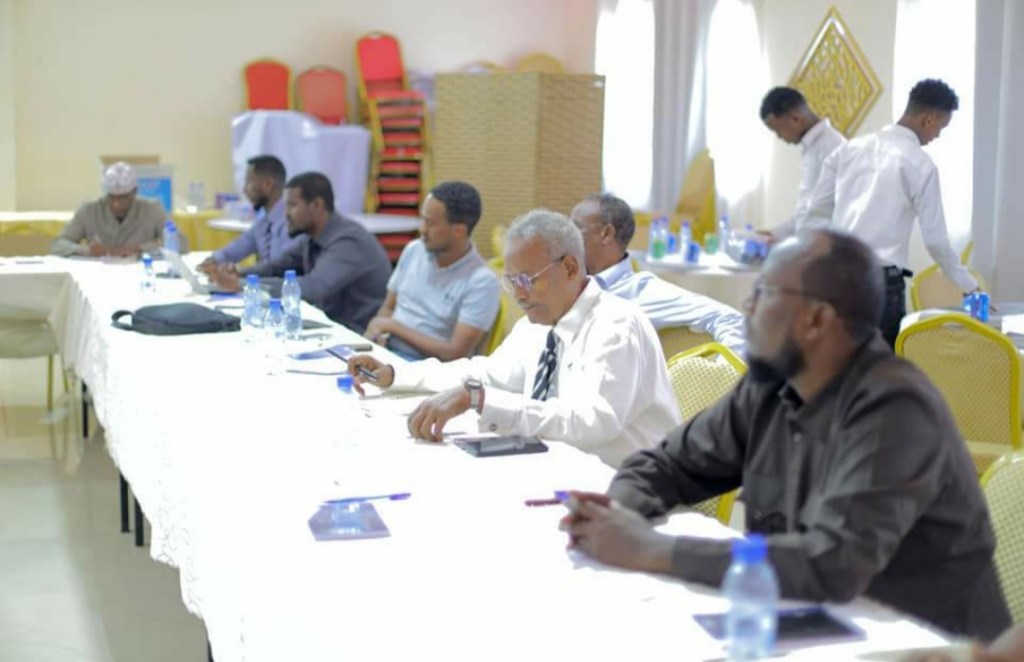
A two-day consultative meeting organized and conducted by officials of Puntland Ministry of Interior, Federal Affairs and Democratization at Rugsan Hall has ended successfully today in Garowe. The meeting was well attended by the members of Puntland Technical Committee for Federal Negotiations, TCFN, Director-Generals of Puntland various ministries, Head of UNDP Area Office as a guest speaker, PUNSAA, individual organizations representing Puntland civil societies, university representatives and other prominent personalities in town.

In the course of the two-day event, major presentations on governance, Somali Federalism, constitution-making, strained working relationships between Puntland and Federal governments, in particular, and between Federal Member States and Federal Government, in general, were conducted. Debates on issues that followed presentations were lively and substantive.

Of particular interest were the critical roles played by members of the TCFN in articulating subject matter issues in the expansive agenda of the meeting, covering all aspects of the federal power-sharing, fiscal federalism, with special emphasis on areas of conflict and tension in federal institutional structures.

Some prominent participants of the meeting, while acknowledging these difficult relations with the current administration of FGS, and noting the historical nature of these working relations between successive Puntland governments and FGS, have recommended and called for talks on establishing clear New Working Protocols between FGS and FMS as the only way to untangle the current political stalemate. Others argued that the disputes are based on constitutional grounds which FGS kept ignoring or violating them, and until FGS returns to work within the framework of the Provisional Federal Constitution, there is little flexibility or interest from Puntland Government  to talk about talks with the Central Government. Many, however, acknowledged that the current gridlocks will sooner or later end up in negotiations. Puntland administration should be prepared to set out its conditions and priorities now.

ANOTHER LOOK AT SOMALI FEDERALISM

Garowe, May 14, 2023

By ISMAIL HAJI WARSAME

ON FEDERALISM

When political opponents say that Puntland State is the mother of federalism, people of Puntland think that they are being praised and recognized for the State’s tremendous sacrifices in men, material and minds in founding the 2nd Somali Republic, the current Federal Republic of Somalia (First Somali Republic existed from 1960-1991). In fact, what protagonists are saying here is that Puntland alone came up with unpractical federal concept that was not applicable nationwide. Sadly also, the history of who had spear-headed in salvaging Somalia from total disintegration and its disappearance from the world map, following the Civil War, had been hidden and buried in the same way that the history of self-government, sultanates and kingdoms that existed in Puntland regions long before European colonial powers came to Somalia, were buried to be never told in Somalia’s political and history narratives. We were made to believe that the history of the struggle of the people of Somalia to be free and own their state and government started from Derwish leader Sayid Mohamed Abdulle Hassan. That was how Siyad Barre was formulating Somali history for twenty-one years in power with iron fist.

Now, let us come back to our today’s theme: Federalism

Is Somalia’s federalism de facto or de jure? Was federalism a part of public debate in Somalia from 1960-1991? Other than the rise of SSDF as opposition movement against military regime and a small elements of intellectuals and former politicians from Digil&Mirifle before independence (inugu federaal fadnee?), was there any public awareness of desire for federalism? Was federalism imposed on Somali people by laws of government? Could someone do something to prevent it from happening at that time? Can anyone do something today to eliminate it from Somalia’s political discourse, body politic and laws of the land? What are the political consequences or the legacy of the Civil War? Isn’t the failure of the Somali State resulting in de facto “federalism” a part of Somali political narrative and outcome of the Civil War? Are the root causes of the Civil War still addressed? What guarantees in Somalia’s political and security situation today do we have to ensure that yesterday’s political blunders wouldn’t be repeated?

It is noteworthy to remind Somali people that

  1. Federalism and its variety of confederalism finds relevance in Somalia’s traditional clan society where most clans are more bonded by federation than by blood lineages. The infamous 4.5 clans are confederate clans. Most clans in Somalia are social constructs for strengthening them numerically for common protection. Nowadays, Somali Clan confederates are lately used for securing political edge in power-sharing rivalry.
  2. Still some shamelessly propagate that Somalia’s Federalism was derived or adopted from ethnic Ethiopian federalism. Knowing historical facts about national efforts of re-instating Somali State after its failure in January 1991, and having participated in most national reconciliation process, I confirm that Ethiopian involvement in the drafting of Somalia’s governance holds no water. Some Somalia’s constituencies were demanding federal system long before independence. It is a fallacy to interpret Somali federalism that way. It is just another anti-federalist tactics to unravel the modest gains of the Federal System and discredit its supporters. Unfortunately, many gullible Somali citizens bought this dangerous falsehood.
  3. Another misinformation is that Puntland State is part of Southern Somalia. That is the same as the notion that SSC is part of Somaliland now, given colonial history. Puntland State is located geographically in Northeast and parts of Northwest regions of Somalia and colonial borders had lost relevance after the Act of Union of 1960 forming the Somali Republic.
  4. Finally, Mogadishu and Hargheisa have same misleading policy on Puntland State: They propagate that Puntland is part of Southern Somalia and SCC is part of Somaliland. This is neither true nor acceptable to us.

The situation on the Somalia’s “Debt Relief” is worse than you think. Interest payments or “Debt Servicing” on Somalia’s Sovereign Debt is paid by the people of Somalia, including those in Puntland State. It is paid from portions of bilateral and international donations. The Central Government divides these donations into two portions, one going to debt Somalia’s servicing, and the other portion is further subdivided, small amounts of which are thrown to FMS in the same way you throw pieces of meat or fish at lunch table to the cats, and the bulk of it is burned in Mogadishu and used for non-stop international travels of President Hassan Sheikh Mohamud. People of Puntland are among those paying these big-ticket expenditures.

Make no mistake. “Fiscal Federalism” you hear about these days is being negotiated and conducted under these abnormal situation. Don’t expect any fair distribution of resources any time soon, if this course of action is maintained.

Legislations and institution-building are runaway power abuses and corruption. Best examples are recent laws of NISA, Petroleum, and Fishery, just to name a few. Who passes these laws in Federal Parliament, by the way? Yes, by the federal parliament representatives of Puntland State, among others, because if they don’t conform to the political dictations of Southern leaders, they wouldn’t be safe in Mogadishu. 

Now, tell me how Puntland State could work with Mogadishu Regime, which respects no agreements and laws of the land with total disregard to the governance system most Somalis agreed upon? This gives you an idea on what is happening between FGS and Puntland State.

 People say let us complete the Federal Constitution. More questions arise here:

 The question is whose constitution is it? 

  1. Is it a national constitution or a constitution of South Central Somalia? 
  2. Where does Somaliland stand here? 
  3. Are we talking about negotiations between South and North Somalia again, after a constitution for South Central Somalia is passed with potential Puntland State unwise consent?
  4. Where do Puntland’s SSC Regions stand here? 
  5. What about one and half region state in Central Somalia supposed to be an “Interim administration”, but now having the same rights and status as Puntland State? 
  6. What about other mini-states whose headquarters are located in or operating from Mogadishu, challenging Puntland State at Madasha Qaranka, and Mogadishu Regime is using them against Puntland State’s legitimate concerns? 
  7. In conclusion, would Puntland State past MOUs and agreements with the Central Government since 2009 need ratification by Puntland constitutional bodies?

I leave you with these questions to ponder.

 However, I warn you that the struggle between pros and cons of federalism will go on until one side wins the game. Keep fighting.

CONCLUSIONS

To reiterate, federalism is a de facto or force majeure that happened in Somalia following the vicious Civil War in the country. Puntland Vision from 1998 and TFG of Somalia Charter recognized this historical and socio-economic facts on the ground in Somalia.

Is the notion that federalism couldn’t function or isn’t feasible in Somalia holds truth? Could you improve this debate further to argue that this claim wasn’t consistent with historical facts and reality on the ground?

Since TFG of Somalia, the country had four presidential mandates: Sharif Ahmed, Hassan Sheikh Mohamud (HSM) 1.0, Mohamed Abdullahi Farmaajo and HSM 2.0? Tell me one of them, who had spent time making federalism work in Somalia? If you want to build a house, and do not move to realize the dream, would it be built by itself? These past and present Somali federal leaders were either undermining or trying to dismantle it. In other words, they were not converts of federalism. That is why opponents of federalism were quick to denounce federalism as incompatible for Somali culture and it couldn’t function well in Somalia. This is a fallacy. Federalism is a reality on the ground in Somalia. Puntland State is a living example that federalism does work in Somalia.

However, there is a vicious cycle in Federal Member States too. Federalism meant to decentralize authority or power to Elected District councils (remember federal government is three levels: FGS, FMS and District Councils).  This never happened before Puntland State. That is good news for federalism in Somalia.

But federalism has many forms. There are asymmetrical, confederal and other forms of federalism. However, it takes two to a tango (single person doesn’t play dhaanto by himself/herself). Whom to talk to on this issue, if Mogadishu governments aren’t ready or interested. They are also against democratization and will of the people. There is one political position of Somaliland Administration I used to admire in my past political experience: “Whom to talk to in Southern Somalia?” This situation still holds true to Mogadishu political situation. Are there political space and environment in Mogadishu today to talk about fiscal federalism, common security architecture and federal legislations in parliament not sensitive to the concerns of FMS?

WOULD FMS ACCEPT THIS FGS UNILATERAL PROPOSAL ON FOREIGN AID?

KHAYRAADKA PUNTLAND

WDM EDITORIAL BOMBSHELL REVELATION

BINDING AGREEMENT BETWEEN TRANSITIONAL FEDERAL GOVERNMENT OF THE SOMALI REPUBLIC AND PUNTLAND STATE OF SOMALIA ON RESOURCES AND POWER-SHARING, INSTITUTIONAL AND CAPACITY- BUILDING

This Agreement is as valid and binding between parties today as it was in 2007. Puntland State entered into this Agreement with the Federal Government, on behalf of then existing and future FMS. There is no legal venue for FGS today to ignore this solemn undertaking. Puntland State and every FMS has the legal right to demand for implementation of this official document.

MAXAA KA JIRA DHANKA FGS IYO PUNTLAND

LINE UP TO CAST YOUR VOTES

Watch “Xoraynta Laascaanood” on YouTube

DHIBKA SOOL WAA JOOGIDDA SOMALILAND

PUNTLAND DEMOCRATIZATION

Democratization

WDM EDITORIAL

WHY PEACE IS IMPORTANT TO ALL IN PUNTLAND STATE

Media reports in Puntland State indicate that a group of politicians and former government officials are reportedly raising and mobilizing clan militiamen from Nugaal Region against current Administration of President Said Abdullahi Deni. If true, this could be another violent chapter to destabilize the State and disrupt peaceful development and democratization of Puntland State. Such a scenario must be avoided by all at any cost. It doesn’t benefit anyone. Based on WDM assessment, majority of the residents of Puntland support democratization, and any opposition to the notion of direct elections will fail. Besides, for a revolt to succeed, it must have a credible leader and popular support. This attempt has none.

Look back at short history of Puntland – no one, who first started violence through armed rebellion, had ever been successful, while counter-offensives against violators of peace had been always victorious. There must be reason for this historical fact. It is the residents of Puntland State that made possible for the gains of the regions to continue and be sustainable. Repeat, nobody had ever gained from violence in Puntland, be warned.

[This editorial has been updated since posting.]

ON PUNTLAND DEMOCRATIZATION PROCESS

ON PUNTLAND HISTORY

[COURTESY to Abdikadir Dooy]

REFLECTIONS ON HISTORY OF PUNTLAND

Watch “Somalia resembles Liberia” on YouTube

Warm reception for US Congresswoman Ilhan Omar in Garowe, Puntland,Somalia

ON THE RECORD

https://fb.watch/hyX5OEzYfK/?mibextid=RUbZ1f

Watch “Puntland Diaspora Summit successfully concluded in Garowe, Puntland, today” on YouTube

PDF Breaking News

A great event of Puntland Diaspora (Puntland Diaspora Forum, PDF) is about to kick-start in Martisoor Hotel in Garowe, Puntland State of Somalia. Said Abdullahi Deni, Puntland State President, is expect to open this Diaspora Summit. PDF Event in Garowe, attracting important Somali personalities and professionals from all over the world, is already turning out not only to be a full house, but also a ran-away convention event.

ON THE CONTINUING SAGA OF GARA’AD PORT

Opening Ceremony

EXPOSING IMPORTANCE OF FUTURE GARA’AD PORT FOR LANDLOCKED ETHIOPIA TO LATE PREMIER MELEZ ZENAWI

In 1999, interacting with late premier of Ethiopia, Melez Zenawi, on the economic and security importance of still to be built Gara’ad Port was an eye-opener for him. The late Puntland President and I came to his office at Arati-Killo in Addis Ababa one day on appointment. At his campound gate, there were only two security guards. The campound seemed deserted with no visible security detail, unlike presidential buildings of most Somali leaders in Villa Somalia and capital cities of the Federal Member States. At door we were met by a sole office worker. We went through a narrow passage with a number of closed doors on each side, presumably offices, until we reached a sitting place where the premier was waiting for us. Melez was chain-smoking his cigarette brand of Rothmans, I noticed, while Yusuf was unusually nervous as he indicated that by his constant scratching on the edge of the sofa. I put my hand over his to stop him scratching persistently.

During a little chit-chat, Melez asked Mr Yusuf, “tell me about your cousins”. Yusuf responded, “you know Generals Gabyoy and Morgan better than I do, for you interacted with them when TPLF was a rebel organization based in Mogadishu during Siyad Barre regime, and you and I know how General Omar Haji Masale misbehaved during Somali Talks in Cairo in 1997”.

We started talking business. Melez was a good listener and habitually never interrupts someone, based on my earlier encounters with him. Among our priorities for discussion included our plan to construct Gara’ad Port on the shores of the Indian Ocean in Mudugh Region of Puntland. Somehow, Melez sounded that he heard about our desire to have a seaport there, but he seemed not to have paid any attention before. He looked concerned about Eritrean issue and frictions with Isaiah Afewerke.

Abullahi Yusuf explained to Melez how would-be Gara’ad Port could become a game-changer in terms of Ethiopian economy and marine transport needs, especially for Eastern Ethiopia. Mr Yusuf briefed him that in the event Ethiopia wanted to pump Shilabo gas through pipes to tankers at sea, there are three routes, the shortest and most secure of which would be Gara’ad Port. The route to Gara’ad Port passes through Darood sub-clans while the routes to Berbera and Obbiyo pass through multiple Somali sub-clans, who were traditionally antagonistic to each other. The operation of gas pumps have to consider safety as a priority. Melez had warmed up to the idea of Ethiopia having an alternative and safer sea-route to the Indian Ocean. Ethiopia should now take advantage of the newly built Gara’ad Port. They should invest in the construction of well-built highways to Gara’ad Port.

WHY THE PORT OF GARA’AD IS NEEDED – A BRIEF PERSONAL ACCOUNT

https://ismailwarsame.blog/2018/08/13/why-the-port-of-garaad-is-needed/

PUNTLAND BREAKING NEWS

Diplomats of mostly Western nations, accredited to Somalia, IGAD and AU have been gathering in Garowe, Puntland, to participate in round-table discussions on Puntland forthcoming Council Elections and to express donor support to Puntland efforts on the democratization process. The high profile diplomats, including UN Secretary-General Representative to Somalia, AU and IGAD Representatives, ambassadors of USA, Sweden, Britain and representatives from Norway, among others, are all in-hand in Garowe, the Capital City of Puntland State.

It is a crucial exposure of Puntland elections to the International Community. Western donor support is a critical component to conduct these historic elections.

CORRECTION: Earlier in this Breaking News, we reported incorrectly arrival of CNN and Al Jazeera news outlets in Garowe. An apology to our readers.

Stay tuned.

Postscript

Diplomats visiting Puntland State House today had issues and questions to the authorities here, according to persons familiar with the subjects discussed. IC and donors wanted clarifications on a number of topics involving forthcoming Council polls, urging authorities to conduct free and fair elections in a competitive and inclusive environment. A successful Puntland Council elections would set a precedent and model for the rest of Somalia, they urged. Puntland authorities have expressed commitment to seeing this process through.

Watch “Puntland waa in ay doorasho aadaa” on YouTube

Watch “Support Political Associations to be viable Political Parties” on YouTube