Eradicating Corrupt Leadership in Africa: The Path to Freedom and Prosperity

Introduction
Africa, a continent brimming with potential, grapples with a pervasive challenge: corrupt leadership. The legacies of Thomas Sankara of Burkina Faso and contemporary figures like Ibrahim Traoré underscore the transformative power of ethical governance. While Sankara’s revolutionary policies in the 1980s prioritized anti-corruption and social justice, Traoré’s recent rise highlights ongoing aspirations for accountability. This essay advocates for dismantling systemic corruption through democratic means, emphasizing the role of informed electorates, institutional reforms, and civic mobilization to usher Africa toward lasting freedom and prosperity.

Legacy of Visionary Leadership
Thomas Sankara, often called “Africa’s Che Guevara,” demonstrated that integrity and political will can drive change. During his brief tenure, he slashed government salaries, redistributed land, and invested in education and healthcare. Similarly, Ibrahim Traoré’s rhetoric against foreign exploitation and corruption resonates with youth and activists. However, their ascendancy through non-democratic means reveals a critical tension: sustainable progress requires systemic change, not just charismatic leaders. Sankara’s assassination and Traoré’s contested legitimacy remind us that enduring reform demands institutional, not personal, solutions.

The Corrosive Impact of Corruption
Corrupt leadership stifles development by diverting resources from critical sectors like healthcare and infrastructure. According to the African Union, corruption costs the continent over $148 billion annually, perpetuating poverty and inequality. Entrenched elites manipulate electoral systems, entrenching patronage networks that undermine democracy. Citizens, disillusioned by empty promises, often succumb to apathy or protests, as seen in recent uprisings in Sudan and Zimbabwe. The cycle of corruption and repression traps nations in stagnation leading to state failure. Somalia is the shining example of this African illness, necessitating urgent action.

Democratic Solutions: Voting Out Corruption

  1. Free and Fair Elections: Strengthening electoral commissions and enforcing transparency in voting processes are vital. Countries like Ghana and Botswana have shown that credible elections, monitored by civil society and international observers, can ensure peaceful transitions.
  2. Informed Electorate: Civic education empowers citizens to demand accountability. Mobile technology and grassroots campaigns, such as Nigeria’s #NotTooYoungToRun movement, can engage youth and combat voter apathy.
  3. Institutional Reforms: Anti-corruption agencies must operate independently, with prosecutorial power. Rwanda’s digitization of public services reduced bureaucratic graft, proving that systemic checks work.

Civil Society and Media as Watchdogs
Vibrant civil society organizations and a free press are bulwarks against tyranny. Investigative journalists, like Kenya’s John-Allan Namu, expose graft, while movements like #EndSARS in Nigeria mobilize public dissent. Social media amplifies marginalized voices, though governments often retaliate with repression. International partnerships, such as the African Peer Review Mechanism, can bolster local efforts without undermining sovereignty.

Challenges and Risks
Electoral fraud, voter intimidation, and disinformation campaigns persist. In nations like DR Congo, leaders cling to power by stifling opposition. Moreover, military coups—though sometimes popular—risk cyclical instability, as seen in Mali and Burkina Faso. True change requires patience: rebuilding trust in democracy is a marathon, not a sprint.

Case Studies: Lessons from Success
Botswana’s sustained democracy and low corruption levels stem from strong institutions and civic pride. Mauritius, ranking first in Africa for democracy, combines economic openness with robust welfare programs. These examples prove that cultural shifts toward accountability are achievable through persistence.

Conclusion
Africa’s journey to prosperity hinges on rejecting corruption and embracing participatory governance. While figures like Sankara and Traoré symbolize the hunger for change, lasting solutions lie in empowering citizens, reforming institutions, and upholding democratic principles. By voting out corrupt leaders and demanding transparency, Africans can reclaim their future—transforming the continent’s potential into tangible progress. The road is arduous, but collective resolve can turn the tide, ensuring freedom and prosperity for generations to come.

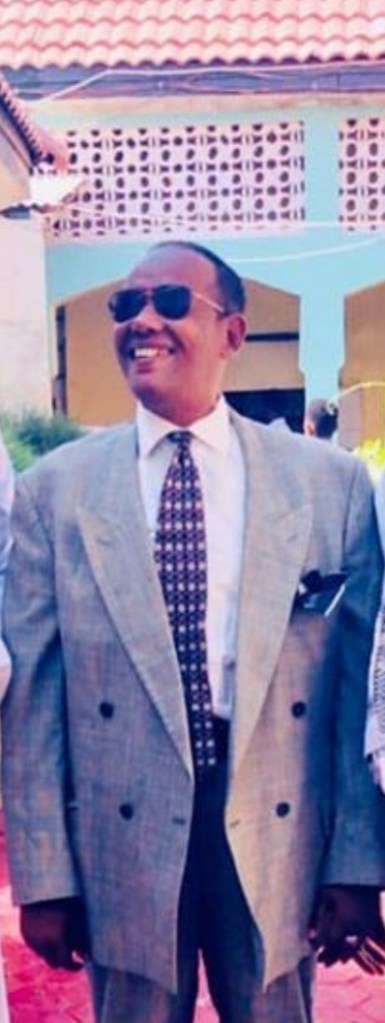
WHY ORDINARY PEOPLE PERCEIVE POLITICIANS AS DISHONEST AND LIARS

By Ismail Warsame
Opinion Columnist

Politicians have difficult decisions to make that is almost always incompatible with being nice or fair to all. Politicians cannot please everybody as it is practically impossible to do so. On the one hand, if a politician in power tries to show soft public image, political opponents and vast number of the population take it as weakness. On the other hand, if a politician plays taugh all the time, that politician is perceived as cruel. There is a fine line to walk here. Historically, a leader of men was considered a warrior, among multiple other characteristics.

The bulk of the population in any nation is ignorant and irrational. They are all bad in abstract thinking. Mostly, they are visual and judge things through images, not by deliberation and critical thinking. They see better such things as construction of roads, bridges etc rather than listening policy objectives and vision for the future. They mostly take things in through personal, group and tribal interests.

In terms of leadership, they hate and respect might and power equally. Being nice to them doesn’t necessarily pay dividends or political capital to a politician, but being taugh with them earns one both respect and hatred. Sometimes they want to witness awe and sheer power. As Niccolò Machiavelli advised in his 16th Century classic book, The Prince, for a politician, it is better to be feared than loved. This is the choice of a politician in a position of power or leadership. There is nothing nice about sheer power and therefore nothing nice about real politics. Administration of Justice for all is an empty expression that cannot be achieved fully in a society. The concept of justice is relative. It is good politics, though, to strive to achieve justice for as many people as possible in a society, but there is no absolute social justice for all. Be realistic.

Deceptions, lies and political manipulations etc, sometimes with good intentions, all come with the job of a politician in power. To think politics otherwise is ultimate naivety. But understand that nobody says that politics is inherently dishonest – it is just the nature of politics and being a politician, who is often confronted to decide between death and life scenarios.

https://amazon.com/author/ismailwarsame

LEADERSHIP

By Ismail Warsame
Opinion Columnist

Leadership entails many qualities. But we aren’t here to give a lecture on leadership 101 in any field of human endeavor and capacity. We want lo look at menu of limited characteristics that are critically important to do the business of leadership in most areas of human organization.

Two items in our menu of quality leadership are management and vision. The two items are closely inter-linked. A manager without vision doesn’t know where he is going to lead his team to, clear objectives and goals to realize. Lacking management skills makes one unable to lead by example, and to persuade the team willingly to deliver quality works in the pursuit of reaching at common objective or product – in political terms, to carry out well-thought policy objectives with the use of potential talent and competence of your team members, giving credit openly where is due. That is how you prepare and groom future leaders. Don’t engage in “After me the dèluge”.

[While here, consider supporting WDM blog by subscribing to it. Send your request via WhatsApp # at +252 90 703 4081 or email at ismailwarsame@gmail.com.]

At administrative and policy levels, leadership entails consultations at team and public levels. A leader doing it alone isn’t informed and his efforts would end up in one-man show. That isn’t leadership for he doesn’t understand the importance of shared responsibilities and delegation of power to tested, competent and trusted team members. In the absence of this principle, you can only blame yourself for imminent policy failures that will surely happen in the end. A leader should strive to build sustainable system that would outlast him. That means building institutions and infrastructure that would outlive him. You can’t build all these by acting as a lone gunman, preventing anyone else from sharing the credit with you. This one-man show approach is also egocentric and mean to your team.

An African colleague of mine in high government position told me decades ago two memorable stories about his experience in managing the presidency of a well-known African president:

  1. “My boss takes credit for all policy objectives that went well”.
  2. “My boss blames others in the team for all policy failures”.

I asked my colleague whether his boss listened and consulted with the people. He responded “yes, but with the wrong people. He doesn’t consult with the subject matter experts. He consults with only liked-minded persons. That is why we have policy implementation problems”.

https://amazon.com/author/ismailwarsame

RECOGNITION AND ROLE MODELS

By Ismail Warsame
Opinion Columnist

In governance, especially in good governance, strong nations have some values in common: Recognition of the services and contributions by their past leaders in all fields of human endeavors. They have ideals and role models for citizens to follow and aspire to be. Have you ever seen any Somali leader recognizing and quoting the good works done by his predecessor (s)? Yes, in literature only. But that has nothing to do with the subject under discussion. Are Somali leaders in the business of “après moi, le dèluge” ( after me, the flood.)

If you don’t recognize the positive contributions of others, how would you expect people to remember you after you are gone? Does your leadership role today have any historical significance to your nation to remember and thank you for it? Do you expect any prayers for you from people you served so well while you were at command?

In religion, people quote leaders of faith and their good deeds in the service of good on earth. Strong nations of Europe and North America have ideals played so well by role models in their respective history. The so-called “Asian Tigers” have their Mahathir Mohameds.

History of nations are taught in schools to impress and prepare the youth for future leadership roles in their areas of interest.

[While you are here, please consider subscribing to WDM.)

Annual subscription

$37.00

Do Somalis have a history to learn from? How could they avoid repeating the same mistakes over and over again? I truly believe that one of the main factors why Somalis couldn’t put their acts together is their disregard to reference of history and absence of official role models for the new generations to take cues from. If you are too mean to your predecessors, history will not be kind to you too.

https://www.smashwords.com/books/search?query=Ismail+warsame

Happy Holidays to all!

Ismail Warsame
Opinion Columnist

WHY WOMEN ARE MARGINALIZED IN SOMALI POLITICS

One Person One Vote (1P1V) didn’t bring about gender equality in Somaliland elections. Not a single woman candidate has won a seat in the local parliament. This is the closest indication that 1P1V wouldn’t help the cause of women in somalia’s general elections either. Foreign missions to Somalia and gender sensitive countries of Scandinavian types keep pushing for higher percent of women participation in Somali political bodies. foreign experts and advisers to those governments don’t bother studying the issue before demanding women quota in Somali political and administrative systems. Nobody knows where the core of the issue lie in Somali society.

Foreign proponents of gender equality should know that the issue is rooted in Somali traditional system on the top of Islamic tradition and teachings. Before we try to impose women quotas in Somali governance, we have to look into the role of women in traditional clan leadership. Why don’t women play a role there? Why aren’t there women titled elders in Somali clan system (isimmo, nabadoonno)? How do you expect to break the political barriers before you dismantle the traditional obstacles along the way to a woman leadership? Don’t we need studies on that issue before we complain about lack of gender equality? Isn’t it imperative for women to focus on resolving the core impediments along the way to women leadership role in the society?

We would like to see debates along this line of thinking to enhance women position in Somali politics. Foreign demands for gender equality in Somalia are counterproductive and dangerous to Somali core values and national unity. It has to stop. We, Somalis, have to find local solutions to this societal problem and build upon our own native approaches.

http://amazon.com/author/ismailwarsame

SO FAR, MOHAMED HUSSEIN ROBLE AS PRIME MINISTER WAS NOT IMPRESSIVE

Let us give him the benefit of the doubt, and wish him every success in making through to the elections. It is true Somalis have little patience for slow delivery of public services, but they are equally good in giving a politician a chance to prove himself/ herself – not for a long time, though.

Sor far, Roble was careful not to outshine his boss, conceding his constitutional executive powers to Farmajo. Keeping a low profile may have saved him politicaly until now, on the one hand, while that might not have earned him leadership points he needs for a successful future political career, on the other hand.

It is now about time he shows leadership based on fair judgement, consensus building and political maturity. Any politician who becomes hostage to his/her immediate clan constituency cannot develop national leadership score and will not be able to lead by positive example. Mohamed Hussein Roble is now on the spotlight and will not be able to hide behind Farmajo as he has been doing since his appointment as prime minister. Good luck! They said the taste of pudding is in the eating. It is to be seen how Roble will handle, reconcile and synchronise a) Farmajo interference b) Ambitions of the Council of presidential candidates c) Puntland and Jubaland complaints against the Federal Government.

Get your copies of these best seller books at https://amazon.com/author/ismailwarsame

A New Year message from one of the key founders of Puntland State of Somalia

Image

The idea behind the creation of Puntland State of Somalia was of two-fold:

 To bring stability, peace, harmony, organisation and good governance to the inhabitants of Northeastern Somalia, restoring, creating and delivering vital public services to the entire communities in multiple regions of the new state.

 To act and lead the way to the reinstatement and re-construction of Somalia as one of its top priorities.

 It was a creation fully supported by grass-root movement that evolved many years during the Civil War and finally boiled down to the establishment of the state as a series of Somalia’s peace and reconciliation conferences abysmally failed to restore Somalia’s central government, and emphatically couldn’t be realised it from top down,thus Puntland’s coining of the “building block” concept.

 It was based on unique approach to governance: the foundation of state based on traditional values, its historical zonal self-government experience, married with modern system of administration, and most importantly, discontinuation of  colonial legacy with regards to governance as the support of the traditional leadership took centre stage as a critical mechanism for conflict resolution and sound consultation.

 As a starting framework for its leadership legitimacy, an indirect democratic selection of legislative members was mandated by its constituency membership through deliberate and exhaustive criteria enshrined in a well prepared charter by any reputable international standards.

 here were a number of political and constitutional crisis in the short history of Puntland existence as a state. Each time Puntland State survived mainly because of its strong founding principles and historically binding evolution of people’s aspirations and wishes against the whims of its leadership of the day.

However, Puntland State has been always lacking behind in its further democratisation process, unable after more than a decade, to move forward in implementing the general election of “one man, one vote”. That is why one sees leadership crisis towards the end of each leader’s term in office.

 In exactly the same fashion, one witnesses now self-made political tension that may lead to instability and threaten to law and order. It is the same story playing out again. It is therefore self-evident that there is something seriously wrong in Puntland State governance. That has to be fixed quickly and wisely in the best interest of the people and for public good. Put aside leadership ambitions and personal interests because such inclination will serve no one in the end and endanger Puntland State peace, stability and unity. Don’t play with fire to score political points. Always keep in mind that Puntland state is the outcome of many sacrifices and irreplaceable human and economic resources.

 For the opposition, the disputed one year extension of the President’s term in office should not be the focus because the stakes are much higher here. Instead, they should be concentrating the democratisation process, while the current leadership provides an atmosphere conducive to dialogue between all stake-holders and parties, and embark upon consensus building. I may remind all of the fact that civil strife takes place when parties fail to talk to each other- in other words, in the absence of dialogue. As long as there is a debate on all issues of mutual concern,there is unlikely that conflagration could occur.

 Finally, Puntland State history showed that when there is a political crisis, there are always external actors ready to step in to further destabilise the state. We should be very careful here not to give devils and dark forces in-waiting any chance.

 In conclusion, I wish you all a Happy 2013.

 Ismail H. Warsame

Formerly Chief of Staff, Puntland State Presidency.