Overview Dr. Biruk Terrefe’s study examines Ethiopia’s strategic maritime ambitions through the lens of its 2024 Memorandum of Understanding (MoU) with Somaliland, situating this within a century-long quest for sea access and broader geopolitical dynamics. The study, part of the XCEPT program, explores how infrastructure corridors and ports in the Horn of Africa intersect with state-building, sovereignty, and security. By analyzing Ethiopia’s Red Sea doctrine under Prime Minister Abiy Ahmed, Terrefe argues that Ethiopia’s port negotiations transcend commercial interests, reflecting ambitions to become a regional superpower amid perceived encirclement by hostile states like Egypt and shifting global alliances.
Strengths
Interdisciplinary Depth: Terrefe skillfully integrates political science, geography, and development studies, offering a nuanced analysis of how infrastructure shapes (and is shaped by) political orders. His focus on the “infrastructure-security complex” highlights the dual economic and strategic roles of corridors like Berbera and Djibouti.
Historical Context: The study provides a compelling historical narrative, tracing Ethiopia’s maritime aspirations from imperial-era policies to contemporary agreements, demonstrating continuity and rupture in foreign policy.
Multi-Scalar Analysis: By examining sub-national tensions (e.g., Somali-Ethiopian territorial disputes), regional dynamics (e.g., Gulf and Türkiye’s influence), and global geopolitics (e.g., Red Sea security), Terrefe avoids oversimplification, emphasizing the interconnectedness of local and international actors.
Methodological Rigor: The use of interviews, public statements, and archival research enriches the analysis, particularly in unpacking Ethiopia’s securitization discourse and Somaliland’s quest for recognition.
Weaknesses
Speculative Elements: The classified nature of the MoU necessitates reliance on secondary sources and media reports, leading to speculative conclusions about its military and commercial terms.
Ethiopia-Centric Perspective: While the study acknowledges regional tensions, it predominantly centers Ethiopian narratives, potentially underrepresenting Somali and Eritrean viewpoints. For instance, Somalia’s sovereignty concerns are noted but not deeply interrogated.
Timeliness vs. Long-Term Impact: The analysis of events up to 2024 offers immediacy but limits assessment of long-term consequences, such as the viability of the Ankara Agreement or Somaliland’s electoral outcomes.
Contributions Terrefe’s work advances understanding of how infrastructure projects serve as geopolitical tools, particularly in conflict-prone borderlands. By framing Ethiopia’s corridor diplomacy as a “Red Sea doctrine,” he illuminates the entanglement of development and security agendas, challenging traditional narratives of trade liberalization. The study also underscores the Horn of Africa’s role in global maritime politics, particularly amid competing Gulf and Turkish interests.
Critique While the study adeptly links Ethiopia’s domestic politics to regional strategies, it occasionally conflates economic and security motivations. For example, the claim that Ethiopia seeks to “escape encirclement” is persuasive but could benefit from deeper exploration of economic data (e.g., trade diversification metrics) to balance the security-focused narrative. Additionally, the role of China—a key investor in Djibouti’s ports—is underexamined compared to Gulf states and Türkiye.
Conclusion Dr. Terrefe’s study is a significant contribution to scholarship on the Horn of Africa’s political economy, offering fresh insights into the interplay of infrastructure, sovereignty, and security. Its interdisciplinary approach and multi-scalar framework make it valuable for policymakers and scholars navigating the region’s complex geopolitics. While constrained by the opacity of recent events, the study provocatively challenges assumptions about landlocked states’ strategies and sets a foundation for future research on evolving corridor politics. By centering Ethiopia’s ambitions, Terrefe invites critical reflection on how emerging powers recalibrate regional orders in an era of infrastructural competition.
Somalia 2024: Fractured States, Foreign Patrons, and the Looming Storm of Conflict
Puntland’s Bold Gambit: Autonomy, ISIS, and the SSC-Khatumo Flashpoint In a seismic shift, Puntland severed ties with Mogadishu in January 2023, declaring itself an “independent government” in protest against constitutional amendments centralizing power. President Said Abdullahi Deni, buoyed by UAE patronage and Ethiopian security cooperation, now positions Puntland as a kingmaker in Somali politics. His ambitions clash directly with SSC-Khatumo, a union of the Sool, Sanaag, and Cayn regions demanding self-rule. SSC-Khatumo’s quest for autonomy has turned the Sool region into a battleground, with Puntland and Somaliland forces clashing as recently as February 2024. Deni’s critics accuse him of prioritizing UAE-backed port projects (e.g., Bosaso) over resolving local grievances, risking a prolonged conflict that could draw in clans and foreign actors.
New Frontlines: Puntland’s War on ISIS and Territorial Control Puntland is mobilizing for a major offensive against ISIS-Somalia factions entrenched in the Cal-Madow and Galgala mountains—a strategic corridor near contested Somaliland territories. ISIS, though smaller than Al-Shabaab, has exploited governance vacuums since 2015, using smuggling routes to fund attacks. Deni’s campaign, backed by UAE logistics and Ethiopian intelligence, aims to neutralize ISIS while asserting territorial claims. Success could bolster Puntland’s sovereignty narrative but risks inflaming tensions with Somaliland, which views Galgala as part of its Sanaag region. Meanwhile, SSC-Khatumo leaders warn that the offensive may displace clans and deepen marginalization, further destabilizing the north.
Somaliland’s Geopolitical Play: Ethiopia’s Port Deal and Internal Repression Somaliland’s January 2024 MoU with Ethiopia—granting naval access in exchange for potential recognition—marked a geopolitical coup for President Muse Bihi. The deal, tacitly backed by the UAE (a key investor in Berbera port), has angered Mogadishu and Puntland. However, Bihi’s authoritarian crackdown on dissent in Sool and Aynabo, where SSC-Khatumo support runs deep, threatens to ignite broader unrest. Somaliland’s reliance on UAE funds and Ethiopian security ties risks alienating clans caught between Hargeisa’s repression and Puntland’s intervention.
Jubaland: The Tinderbox of Gedo Jubaland President Ahmed Madoobe’s feud with Mogadishu over control of the Gedo region has reached a boiling point. The Federal Government insists on deploying Somali National Army (SNA) units to secure the area for elections and counter Al-Shabaab, but Madoobe, backed by Ethiopian troops and UAE-funded militias, frames this as federal overreach. A February 2024 standoff near Beled Hawo underscores the volatility. Analysts warn that open conflict in Gedo could cripple counterterrorism efforts, allowing Al-Shabaab to exploit clan divisions and smuggling routes.
Central Somalia Under Siege: Al-Shabaab’s Resurgence While northern conflicts dominate headlines, central Somalia faces escalating threats:
Hirshabelle: Al-Shabaab’s late 2023 offensive in Hiraan region exposed federal weaknesses, with militants seizing villages and taxing supply routes to Ethiopia. Clan militias, nominally allied with the SNA, lack coordination, enabling the group to exploit Hawadle-Jajele sub-clan disputes.
Galmudug: Galmudugh is unraveling as Al-Shabaab exploits local grievances between fractious Ahlu Sunna Waljama’a militia and regional authorities. Galmudugh and Hirshabelle regional states exist merely on the federal government’s lifeline.
Foreign Patrons: UAE and Ethiopia’s Divide-and-Conquer Tactics
UAE: Abu Dhabi’s “ports-and-proxy” strategy invests in Berbera (Somaliland) and Bosaso (Puntland) to counter Turkish/Qatari influence. By backing Deni, Bihi, and Madoobe, the UAE ensures control over trade chokepoints.
Ethiopia: Landlocked Addis Ababa prioritizes port access (Berbera, Kismayo) and security, backing Somaliland and Jubaland despite undermining Mogadishu.
Mogadishu’s Impossible Calculus President Hassan Sheikh Mohamud’s government faces intersecting crises:
Election Chaos: Disputes over the 2024 suffrage model threaten a repeat of the 2020 clan-vetted indirect elections.
Foreign Meddling: UAE-Ethiopia alliances weaken federal authority, while Turkey and Egypt vie for influence via military aid.
Al-Shabaab’s Resilience: Despite U.S. support, federal forces struggle to project power beyond cities, leaving rural zones to militants and underpaid militias.
The Storm Ahead: Fragmentation or Confederation? Somalia’s instability is no longer local. As regional leaders prioritize foreign patrons over unity, the nation risks morphing into a confederation of client states. The SSC-Khatumo revolt, Puntland-Somaliland clashes, and Jubaland’s defiance could spark a perfect storm of interstate warfare, electoral crises, and insurgent resurgence. For ordinary Somalis, already weary of decades of strife, 2024 may bring neither peace nor progress—only deeper entanglement in global power struggles.
Why This Matters: The Horn of Africa’s stability hinges on Somalia. With the Red Sea a theater of U.S.-China rivalries and Middle Eastern power plays, the world can ill afford another collapse. Whether Somali elites reconcile or remain pawns will determine the fate of millions—and the security of one of the world’s most strategic waterways.
Any lecture in geopolitics begins by stating that internal stability and territorial integrity of the state are the result of the interaction between secessionist, centrifugal forces, and unifying, centripetal forces. The same lecture in geopolitics also says that ethnic and confessional homogeneity falls into the category of the strongest centripetal forces, along with a round shape of the state territory, the centrality of the capital, a uniform distribution of transport and communications infrastructure, an equitable (as possible) distribution of wealth, of a strong national idea and will.
Ethnically and religiously, Somalia is a homogeneous state. Moreover, all these ethnics do not boast of an identity other than Somali, and they all speak Somali – the official language of the state, along with Arabic – the language of the Koran. Somalia does not have the huge linguistic diversity specific to other post-colonial African states, there are no cultural-civilizational differences, there are no major discrepancies in terms of regional development and distribution of communications and transport infrastructure in the territory. And yet, the Somali state is the expression of the notion of a failed state, ravaged by civil war, secessionism, maritime piracy, terrorism, organized crime and insecurity. In recent years, Somalia has been consistently ranked among the most dangerous destinations in the world. In the first half of 2021, it ranked sixth in the top of the riskiest tourist destinations, after Afghanistan, Syria, Iraq, South Sudan and Yemen1.
What are the causes of Somali secessionism and the collapse of the state? And, if we were to rank, according to the intensity of the effect, the secessionist factors acting on the territory of Somalia, what would be their order?
Keywords: Somalia; Horn of Africa; Gulf of Aden; Somaliland; Puntland; maritime piracy; terrorism; secessionism.
1 . Short geographical description
Somalia is located in the Horn of Africa, on the Southern coast of the Gulf of Aden, in the immediate vicinity of the strategic chokepoint Bab el Mandeb, and the Western Indian Ocean, on the transport corridor linking Europe and the Middle East to Asia. To the North, it borders Djibouti. To the West, it borders Ethiopia and Kenya. In the South, it is crossed by the Equator and, also in the South, are the hydrographic basins of the Jubba and Shebelle rivers (see the map in Fig.1). It has a wide seafront, of 3025 km, and a total area of 637,657 sqkm. There are deep natural harbors in Mogadishu, Berbera and Kismaayo, but dangerous coral reefs keep coastal traffic to a minimum2.
It is a continental state, with an elongated shape along the coast, without islands, with no enclaves and no exclaves on the territories of other states. The colonial-style state capital, Mogadishu, is located eccentrically, in the South, on the shores
”Carol I” National Defence University e-mail: albapopescu1@gmail.com
Figure 1Physical-geographical map of Somalia3
of the Indian Ocean, far-away from the Northern regions of the country.
With the exception of a secluded mountainous area on the Northern coast, the relief of Somalia is flat, with no natural barriers restricting the mobility of humans and animals. In general, the climate is dry and warm, with irregular rainfall. There are also warm, humid, monsoon periods in the Northeast, from December to February, and in the Southwest, from May to October4. The vegetation is savannah and semi-desert5.
It is rich in uranium and has reserves, largely unexploited, of iron ore, tin, gypsum, bauxite, copper, sea salt, coal, natural gas and, most likely, oil6. Mineral sepiolite (sea foam) deposits in Central and Southern Somalia are among the largest known reserves in the world7. Terrestrial fauna has been largely decimated by hunting. Elephants in particular have been killed, causing major imbalances in the ecosystem, knowing that these mammals have the ability to find groundwater and to access it, preventing desertification8. The aquatic fauna was also destroyed by chemical pollution. Arable land represents only 1.75% of the territory’s surface9. Agricultural land represents 70.3% of the territory, of which 68.5% is permanent pasture10.
2 . Brief demographic description
In 2021, the total population of the African state was 12,094,640. According to data provided by the CIA WorldFactbook, in 2021 the ethnic structure of Somalia was overwhelmingly dominated by 85% of ethnic Somalis, and the religious structure was perfectly homogeneous, with 100% Sunni Muslims11 from Shāfiʿī law school12.
Somali ethnic groups are divided into clans and sub-clans. The largest are: Darod, Dir, Hawiye, Isaaq, Rahanweyn (Digil and Mirifle).
Somalia’s population is unevenly distributed. The Northeastern and Central, semi-desert regions, as well as the areas along the border with Kenya, are less populated, while the areas around the cities of Mogadishu, Marka, Boorama, Hargeysa and Baidoa have a dense population.
Like other African states, Somalia has the demographic profile of a state dominated by underdevelopment and poverty, characterized by:
the age-based pyramid with a large base, as a result of the majority percentage, of 60%, of the young population, up to 25 years old;
increased value of the gross birth rate, which in 2020 was 38.25 births / 1000 inhabitants (9th place in the world);
increased fertility rate of 5.41 births / woman of childbearing age (9th place overall);
increased value of the gross mortality rate of 11.82 deaths / 1000 inhabitants;
low life expectancy at birth, of only 55.32 years (57.7 years women, 53.02 years men) – compared to 81.3 years in the European Union (EU) 13;
huge infant mortality, of 88.03 deaths / 1000 live births (2nd place overall) – compared to
3.4 ‰ in the EU14;
huge maternal mortality, of 829 deaths /
100,000 live births (6th place overall);
increased mortality from infectious contagious diseases, which can be prevented by proper sanitation and hygiene15.
These statistical-demographic aspects are added the social ones, just as gloomy. The enrollment rate in primary education exceeds just 40%, there are only 0.02 doctors per 1,000 inhabitants and 0.9 hospital beds per 1,000 inhabitants, urbanization covers only 46.7% of the population and 27.5% of the population rural area does not have access to drinking water sources16. The median prevalence of malnutrition for the last three years among the Somali population was between 10-14.9%17.
3 . Political-administrative data
The Federal Republic of Somalia became an independent state on July 1st, 1960. It is a presidential republic, divided into thirteen administrative regions and five other regions claimed but not controlled by the central government in Somaliland.
These regions are represented by: Awdal, Bakool, Banaadir, Bari, Bay, Galguduud, Gedo, Hiiraan, Jubbada Dhexe (Middle Jubba), Jubbada Hoose (Lower Jubba), Mudug, Nugaal, Sanaag, Shabeellaha Dhexe (Shabeelle Middle), Hoose (Lower Shabeelle), Sool, Togdheer, Woqooyi Galbeed.
In turn, the regions are divided into seventytwo districts and eighteen other claimed but uncontrolled districts in Somaliland18.
Somalia is a failed state, whose central government no longer administers its entire national territory and no longer has a monopoly on the exercise of force at national level (SEE MAP IN Fig.2). Currently, within the Somali state there are separatist and / or self-declared autonomous territories such as:
Somaliland, located in the North, selfdeclared sovereign state;
Puntland, located in the Northeast, selfdeclared autonomous state with publicly stated secessionist intentions19;
Khatumo, located in Southern Somaliland, self-declared autonomous but not recognized by the central government; • Galmudug, located in the Central area,
South of Puntland, self-declared autonomous; • Jubaland, located in the Southeast, on the border with Kenya, self-declared autonomous20.
As can be seen in the map in Fig. 2, the decentralization and dissolution of the Somali state is amplified by the existence of spaces controlled by Islamist authorities, governed by Islamic law and the ultra-conservative legal school, Ṭabaqāt al-Ḥanābilah. Existing mainly in the CentralSouthern regions, towards the Aden coast, these areas develop secessionist potential through the dogmatic and ideological conflict between the Shāfiʿī moderate, traditional, legal school, and the Ḥanābilah ultraconservative legal school, imported from the Arabian Peninsula and Egypt. A legal school that considers as apostasy any faith and dogma that does not belong to Ḥanābilah Sunni Islam22.
4 . Economic data
Figure 2The political situation in Somalia in 201721
With a GDP (PPP) estimated in 2021 of $ 5.37 billion23 and a GDP / Capita in 2020 of $ 309.4124, Somalia is one of the poorest countries in the world. Its main sources of income come from foreign aid, remittances and informal trade. About three-fifths of Somalia’s economy is made up of agriculture. Agricultural income comes from three sub-sectors: nomadic pastoralism, focused on raising goats, sheep, camels and cattle; traditional, subsistence farming, practiced by small farmers; intensive agriculture, with irrigated plantations along the lower Jubba and Shabeelle rivers. The
main crops and agricultural products are sugar cane, rice, cotton, vegetables, bananas, grapefruit, mango and papaya. Incense and myrrh are also harvested in the South, and savanna acacia forests provide timber. There is also an income from fishing, which is declining due to marine pollution and overfishing25.
Since after 1991 the construction of the hydroelectric dam on the Jubba River was stopped and the few power plants in Mogadishu, Hargeysa (Hargeisa) and Kismaayo, still defective, do not cover the energy needs of a modern production activity, the industrial sector is reduced to small craftsmen workshops belonging to the informal sector26.
The banking sector is controlled by the Central Bank of Somalia. The country’s currency, the Somali shilling, is in constant decline. The selfdeclared Republic of Somaliland issues its own currency, the Somaliland Shilling27.
There are no railways. The road network is only 2,900 km. In the rainy season, most rural settlements are not accessible to vehicles. In rural areas, the main means of transport remain camels, cattle and donkeys28.
5 . The geopolitical premises of current secessionism
The exceptional geopolitical and geostrategic value of the Horn of Africa began to assert itself in 1497, with the discovery of the road to the Indies by the Portuguese navigator Vasco da Gama (1460 / 1469-1524). The European colonization of Asia and the development of trade in timber and precious stones, spices and oriental silks, transformed the ports on both banks of the Gulf of Aden into mandatory destinations for ships carrying goods from the Orient and Africa to European countries (see map in Fig.3).
Later, in the contemporary period, the construction of the Suez Canal exponentially increased the geostrategic and geo-economic importance of the region, through the oil and natural gas transit from the Arabian Peninsula to European consumers and by intensifying maritime traffic generated by the Chinese and Indian economic recovery. The geostrategic importance of the region is also amplified by the presence of the Bab el-Mandeb maritime chokepoint, which separates the Gulf of Aden and the Indian Ocean from the Red Sea and, further, from the Suez Canal and the Mediterranean Sea. Closing this strategic strait would disconnect the Mediterranean Sea from the Indian Ocean, forcing carriers to bypass Africa through the Cape of Good Hope (with serious economic and military consequences). In 2018, approximately 6.2 million barrels per day of crude oil and refined petroleum products circulated through the Bab el-Mandeb chokepoint to Europe, the United States and Asia. In 2017, total oil flows through the Bab el-Mandeb Strait accounted for about 9% of the volume of oil globally traded at sea (crude oil and refined petroleum products)29.
The region has a pivotal character and a potential bridgehead character. Its domination facilitates the geostrategic control of Africa, the Middle East, South Asia and the Indian Ocean, which is why, since the post-war bipolarity of the international system, it has been the subject of intense dispute between the hegemonic powers. The geopolitical, geostrategic and geo-economic
Figure 3Gulf of Aden30
stakes for the control of the region and, in extenso, for the control of North and East Africa and of the Arabian Peninsula, transformed this area of geopolitical compression between the maritime and the continental world, and between Christianity and Islam, in a ”shatterbelt”. An area subjected to fragmentation, conflict, underdevelopment and state failure.
In addition, deposits of hydrocarbons, uranium, strategic ores of bauxite, tin, copper, other nonferrous and ferrous ores have been discovered in the basement of the countries of the region and Islamic fundamentalism completes the already loaded political picture of this part of the world.
In the case of Somalia, from a geopolitical point of view, the elongated shape of the country and the eccentric capital predispose to secessionism, through the unequal distribution of the Mittelpunckt’s force of attraction over borders. On the other hand, the relief dominated by the plateau and the savannah vegetation favor the migrations and the mixture of the population, aspect that can potentiate the centripetal, unifying forces. Unsuccessful, however, as the population is strongly divided on clanocratic regional criteria, which significantly exceed the common ethnic origin, language and Islamic Shāfiʿī denomination, division favored by the uneven distribution of the population in the territory, conditioned by the presence of semi-desert relief.
The destruction of the environment, by marine pollution and excessive hunting, and the extremely low percentage of arable land, coupled with climate change that has increased the incidence of drought episodes followed by locust infestations, especially in the Northern regions of the country, create food crisis of famine31, with destabilizing internal and regional consequences, which can accelerate internal secessionist processes.
These internal challenges are added poverty, underdevelopment, clanocratic neopatriarchy that have undermined the idea of central administration, of identity and national idea, of state authority, favoring secessionism and state dissolution.
The historical premises of the current secessionism
6.1. The period preceding the unification of the two Somalis, British and Italian
Local legends say that Islam entered Somalia in the eighth century, when a Yemeni imam, Mohamed Abdurahman Hambali, along with several followers, took refuge in the Galla tribe and started the process of converting the locals32. The current capital, Mogadishu, was founded in 900 AD by Arab merchants and locals converted to Islam.
Certainly, this time, as evidenced by historical sources, in the thirteenth century Islam was present in Somalia. The first regional state cores coagulated around its system of beliefs and values.
In the Northwest of the country the Sultanate of Adal was born. Later it entered into a bloody war of independence against Portuguese rule. The Ajuuraan Sultanate was formed in the Center and South of the country. Due to the animosities between the clans, nomadic attacks and Portuguese interference in local politics, in the 17th century, the territories ruled by the Warsangeli, Sanaag, Bari, Mogadishu, Benadir clans were conquered by the Arabs and, later, by the Ottomans. A century later, they would end up being colonized by Europeans. Local monarchies remained, with British support, until the twentieth century. A pragmatic support, in exchange for the protection provided by the sultans for the British merchant ships that transported goods from Indies33.
In the second half of the nineteenth century, however, the ”race for Africa” started to disturb the British rule in the Horn of Africa. France and, later, Italy tried to gain territories in the region and to limit British control over the Red Sea and the Gulf of Aden – where the Empire ruled the entire Nile Valley and the strategic port of Aden in Yemen – and over East Africa, where Kenya and Tanzania had become British colonies. As a result, the French, interested in Somali non-ferrous ore deposits, focused their interest on the Northeast of the country (present-day Djibouti), while the Italians, in full colonial expansion, took control of Southern Somalia.
Against this background of geopolitical competition between the colonial powers, in the first months of the twentieth century, the troops of Emperor Menelik II of Ethiopia (1844-1913), supported by the British Empire, occupied the Ogaden region in Western Somalia. The Ethiopian occupation of Ogaden was interrupted by the rebellion of the Northern ”dervishes”, led by the French-backed sub-clan Darod (Dulbahante). The two-decade-old War between Somalis and Ethiopians, between 1900 and 1920, killed more than a third of Northern Somalia’s population34. Although the population of Ogaden and Haud was predominantly Somali, following the agreement imposed by the British on July 24, 1948, the two regions returned to Ethiopia35. The arbitrary transfer of territories between the two states has become a permanent source of conflict and regional destabilization. The same agreement established that the territories of Southern Somalia should return to Kenya, under the name of the North-East District, and the territory of the North, near the Bab el-Mandeb Strait, populated by Afar and ruled by France, to become independent, under the name of Djibouti. The years of ”dervish” rebellion and regional instability have been paid by the economic and regional development, so that on July 1, 1960, there was a huge discrepancy between the two reunified independent Somalias, the British and the Italian one. An economic and social rift that fueled secessionism and the future civil war. In addition, in the South there was a strong Italian diaspora, which built colonial-type cities with extensive, prosperous and well-organized plantations. The Southern population, more easily colonized, benefited from the economic and cultural advantages of the colonizers. This aspect generated a fracture between the underdeveloped, anarchic North, crushed by clan fighting, and the peaceful and prosperous South. A hiatus amplified by cultural, linguistic and even by currency differences between the two Somalias. Consequently, at the Potsdam Conference of 1945, while Somalis in the Northern and Western regions advocated independence, those in the South wanted to remain under colonial rule36.
On the other hand, during the Second World War, the conflict between the Brits and the Italians was transferred to the territory of Somalia. The North of Somalia, dominated by the Brits, started to fight with the South of the country, incorporated by the regime of the fascist dictator Benito Mussolini (1883-1945) in the New Italian Empire of East Africa, along with Ethiopia and Eritrea. The victory of the British Empire was followed by the establishment of the Italian resistance in the South. Militarily supported by the Benito Mussolini regime, the resistance movement of the Italian colonists and the affiliated population of the South started a guerrilla war, which ended in 194337. After the war, the geopolitical competition between geostrategic players active in the region generated new rifts, by attracting Somali clans into different spheres of power and by using them as proxy-war vectors, so that, by the end of 1960s, the Somali clans had already their own paramilitary forces.
Against this background of intense fractionalization, the unification desired only by the North and the declaration of independence were overlapped, an aspect that brought with it the problem of the distribution of power between the Somali clans and sub-clans.
From the sequence of events presented above, the following sources of conflict and fragmentation can be distinguished:
the discrepancy between the aspirations for self-determination and national liberation, shared by the British-dominated population in the North, and the desire to maintain the colonial status quo, of the Italian-dominated Somali population in the South;
economic and development gap between the North and the South of the country,
rivalries between clans over the distribution of power and wealth;
the interference of the great powers interested in the local geopolitical game.
6.2. The Communist experiment
The de jure unification of the two Somalias was followed by administrative, legislative and, implicitly, military unification. But the military unification involved the dismemberment of paramilitary units and their transformation into troops of the new national army, subject to a single command, an issue that triggered the dissatisfaction of some of the Northern clans, increasingly vocal in the direction of separation from the rest of the country. On the other hand, the supporters of Somali unity pressed the pedal of pan-Somalism 38 and the rebuilding of the ”Greater Somalia”. Matters that brought to the forefront the issue of Ogaden, reheated the Ethiopian-Somali conflict, and internationalized it in the spirit of the geopolitical game of the Cold War (1947-1991). Re-erupted in 1964, the armed conflict between the two countries was followed by a ceasefire agreement. While the US focused its aid on Ethiopia and pushed for the signing of a mutual defense pact against Somali revisionism between Kenya and Ethiopia39, the Soviet Union, in exchange for the right to use Somali naval bases, developed a program to equip and train Somali troops. In this way, an entire generation of officers was influenced by Communist ideology, and from here to a military coup to replace democratic administration there was only a step40. The assassination of President Abdirashid Ali Shermarke (1919-1969) on October 15, 1969, by one of his bodyguards41 was the catalyst for the events that ended with:
the takeover of power by Generals Salad
Gabeire Kediye (1933-1972) and Mohammad
Syiad Barre (1910-1995);
the establishment of the Supreme
Revolutionary Council;
the appointment of General Siad Barre as president of the country.
On October 21, 1969, the state was renamed the Democratic Republic of Somalia42 and became a Soviet satellite.
In the following years, the civil servants were replaced by the military43, the civil courts were closed, the religious ones lost their importance, the law being applied by the military courts. Also, a new secret service was set up, called National Security Service, charged with identifying and counteracting any ”counter-revolutionary” movement.
Like other African leaders of his generation, Barre became an autocrat. Self-entitled ”Victorious
Leader”, Barre was the author of a unique IslamicCommunist doctrine that combined the principles of Marxist-Leninist-Maoist ”scientific socialism” with Islamic teachings and was one of the founders of the Somali Socialist Revolutionary Party, affiliated to Moscow. Over time, although tribalism was considered a crime against national security, the political leadership of the state became the prerogative of three large clans, all from the North: Marehan (of Barre), Ogaden (of Barre’s mother) and Daarood-Dulbahante (of Barre’s sonin-law)44.
Relying on Soviet support, but without prior consultation with the Kremlin, on July 13, 1977, Siad Barre ordered the Somali army to attack Ethiopia and to occupy the Ogaden region. But the regional geopolitical game of 1977 no longer resembled that of 1969. In 1974, following the coup orchestrated by the Military Council, led by Lt. Col. Atnafu Abate (1930-1977), Emperor of Ethiopia, Haile Selassie I (1892-1975), abdicated. In 1975, Mengistu Haile Mariam came to the forefront of Ethiopian politics and, with Soviet support, imposed the Communist dictatorship. A brutal dictatorship, whose victims included the former Emperor, the nobility, the clergy and political opponents, such as the Patriarch of the Ethiopian Orthodox Church, Abuna Theophilos (1910-1979), and Atnafu Abate himself, accused of counter-revolutionary activities45.
Behind these geopolitical events were the Soviets, interested in consolidating their dominance in the Red Sea and Eritrea (which at that time was incorporated into Ethiopia), given that Southern Yemen was already under their influence, and in creating a ”corridor” to Central Africa, in order to boost future “democratic” movements on the continent. As a result, the Kremlin sided with Ethiopia in the war ignited by Siad Barre. Ethiopia ended diplomatic relations with the United States46, and a year later, in 1978, it recaptured the Ogaden. Under these conditions, Somalia denounced the Treaty of Friendship and Cooperation with the USSR, expelled Soviet diplomatic personnel and military attachés, severed diplomatic relations with Cuba, and Siad Barre faced a serious internal and image crisis. Although initially seemed to want to help Somalia, President Jimmy Carter’s administration, unwilling a new Vietnam, gave up the US involvement in the Ogaden affair. The Somali army has been decimated by Communist Ethiopia, Cuba and other fraternal countries. The war ended on March 23, 1978. In 1982, a new conflict broke out between Ethiopians and Somalis, with no major consequences.
The loss of Ogaden weakened the authority of the Siad Barre regime and allowed the clans to be re-armed. The decline of the Barre regime became apparent in 1986, when Siad Barre himself was targeted by an assassination attempt. Also, the Somali army was facing an accelerated process of fractionalization. On one side were positioned the constitutionalists, loyal to the regime, and on the other hand, the tribalists. The Barre regime lasted until 1991, when the collapse of the Soviet Empire and the change in the global geopolitical game led to the fall of totalitarian regimes, including the one in Somalia.
6.3. The Civil War
Somalia is divided into four large rival clans with a lot of subclans, covering about 85% of the population:
Darod, which rules Puntland and the Northern region on the border with Kenya;
Hawiye, which controls the territory along the coast, located North of Mogadishu;
Isaaq, which dominates Somaliland;
Rahanwein, who rules in the North, towards the border with Ethiopia47.
In 1991, Northern Somalia, dominated by the Isaaq clan, declared independence as Somaliland48, with its capital at Hargiesa, while the Southern Somalia was crushed by clan fighting. In the same year, several clans, reunited in the Somali Democratic Movement and the Somali Alliance, elected Ali Mahdi Muhammad (1939-2021) as President of Somalia. Their decision was challenged by other players on the political spectrum, represented by the Somali Unity Congress, led by General Mohamed Farrah Aidid (1934-1996), Somali National Movement, led by Abdirahman Ahmed Ali Tuur (1931-2003), and the Somali
Patriotic Movement, led by Colonel Ahmed Omar Jess. On the other hand, Barre’s followers in the Center and South of the country continued to fight for the “victorious leader” to return to power. Thus, were created the premises for the future civil war that would devastate the once stable and prosperous South.
Clan fighting and the drought, which affected the Horn of Africa in the 1980s, destroyed the infrastructure, the farms and the plantations in the fertile regions of Southern Somalia, causing famine and humanitarian disaster. UN intervened through the UNOSOM I mission, approved by the UN Security Council in 1992. The prerogatives of the UN military sent to Somalia were limited to defensive actions, which is why the United States formed a military coalition called UNITAF – Unified Task Force which, in December 1992, descended into Southern Somalia and restored order. In 1993, most UNITAF troops were replaced by UN forces in the UNOSOM II mission, which became the protagonists of an open conflict with General Aidid’s rebels, in which 80 Pakistani soldiers and 19 American soldiers were killed in the battle of Mogadishu49. In 1995, the UN decided to withdraw its troops, although the mission was not fully accomplished. In 1996, General Aidid was killed, the bloodiest local militia being “beheaded”.
In 1998, the Northeast region declared itself autonomous under the name of Puntland. It was followed by Jubaland in the Southwest. In 1999, a fourth region, located in the Central-Southern area, declared itself autonomous under the leadership of the Rahaweyn Resistance Army (RRA). Later, it remained under the jurisdiction of the Transitional Federal Government with the capital at Baidoa, the only internationally recognized government. But rivalries between the clans continued. The Northern provinces did not accept the legitimacy of the transitional government in Baidoa or that of President Abdullahi Yusuf Ahmed50, elected by lawmakers in the new capital. As a result, the country’s internal situation continued to deteriorate, with the government failing in its mission to ensure internal security, prosperity and stability. Somalia became a poor state, crushed by armed conflict between clans and subjugated by organized crime networks, piracy and terrorism.
6.4. The Islamist solution
Amid the collapse of the state and the food crisis (transformed into the greatest humanitarian crisis of all time51), the population turned to clanocracy and Islam. Gradually, Islamic courts replaced secular courts, restoring order in the coastal territories. If, traditionally, Somali Islam of the Shāfiʿī law school, was a moderated one, in the 1990s it began to be infiltrated by the ultra-conservative Ḥanābilah ideology brought by the petrodollars of the Arabian Peninsula. In 2000, the ultra-conservative Islamist forces behind these courts formed the Islamic Courts Union (ICU), which enjoyed widespread acceptance among the population. Six years later, an armed conflict broke out between the ICU and the ”warlords” gathered in the Alliance for the Restoration of Peace and Counter-Terrorism (ARPCT). At the end of the conflict, the Islamists took over control of the Central region. The transitional government, backed by Ethiopia and the United States, called on African Union aid, to send troops to restore “order”. Africans avoided getting involved. Instead, Ethiopia acted by launching an air offensive on Somalia, followed by armored and artillery attacks52. The Islamists were rejected beyond Mogadishu and the Americans and the Ethiopians restored the so-called transitional government, with Ali Mohammed Gedi as prime minister53.
On January 9, 2007, the United States intervened directly in the Somali conflict by bombing Islamist positions in the Ras Kamboni region. However, Islamist militias continued to attack Ethiopian troops and the transitional government. In December 2008, Abdullahi Yusuf Ahmed announced his resignation as President of Somalia, accusing the international community of not being involved in supporting the Baidoa government54. Also, in Djibouti, under the auspices of the UN, the Cooperation Agreement between the transitional government and the Alliance for the Liberation of Somalia (ARS) was signed.
Ethiopian troops were withdrawn, Islamist leader, Sharif Sheikh Ahmed, was elected president, Omar Abdirashid Ali Sharmarke, the son of the first Somali president, was designated prime minister.
And, last but not least, we have to mention the Islamists in Harakat al-Shabaab al-Mujahideen – The Mujahideen Youth Movement, a terrorist organization founded in 200655, affiliated with Al Qa’ida in the Arabian Peninsula and the Global Islamist Network56. Most likely detached from the ranks of UTI followers, Al-Shaabab defined himself as the main opponent of any Western and international support given to the faminestricken population and of any Western presence in the region. In August 2014, the US-backed Somali transitional federal government launched
Operation “Indian Ocean” to eliminate the Al Shabaab insurgency in the Southern and Central coastal regions of the country. On September 1, 2014, Ahmed Abdi Godane (1977-2014), the
(official) leader and founder of the organization, was killed57. Since 2015, Al-Shabaab has withdrawn from major cities, focusing on rural areas, where it has continued to operate.
6.5. Oil, pirates and geopolitics
Crude oil must not be left out of the picture. Though Somalia is not registered as an oilexporting state, after new oil-fields were discovered by Australians in Puntland, large companies such as CONOCO, AGIP and AMOCO invested huge sums in leasing hydrocarbon reserves on Somali territory58. Consequently, the American presence behind the scenes of the Somali civil war followed an obvious geopolitical logic and geostrategic logic. And equally logical were the attitudes of France, Russian Federation, China and Arab states, to reject American involvement in the ”Somali problem”.
The dissolution of the Somali state has paved the way for illicit activities and abuses, in which some local leaders and some companies and organized crime networks have been involved. The 2004 tsunami revealed a shocking event. In Somali waters, in the last decade of the last century, cans containing radioactive material and chemical waste, had been dumped. This highly toxic waste has been responsible for the occurrence, since the 1990s, of a significant number of congenital malformations, cancers and degenerative diseases among locals59.
At the same time, fishermen under various flags poached and fished without restrictions, commercial vessels dumped waste in Somali waters, leading to the destruction of the aquatic ecosystem, declining fish production and sentencing the population to starvation. From here, the emergence of piracy was only a step away. Originally appearing as a defensive reaction to ships violating the state’s maritime territory, piracy has become a social phenomenon, with wide popular acceptance, an important source of income for clans that controlled coastal areas60.
Piracy became so common in the region, that the Gulf of Aden was nicknamed the ”pirate alley”, with pirates becoming, willingly or unwillingly, actors in the regional geopolitical game. An incident in 2008 publicly showed practices that, until then, at least officially, had been classified as speculation. Somali pirates captured the Ukrainian cargo ship ”Faina”, which was carrying 33 American tanks destined for the Darfur rebels61, revealing the less visible facets of US-China competition in East Africa and confirming Somalia’s geostrategic importance.
According to the report prepared by the ICC International Maritime Bureau, in the first 6 months of 2012, 44 pirate attacks were reported in the Somali maritime space, 12 in the Red Sea and another 13 in the Gulf of Aden, resulting in the detention of 11 ships, 174 hostages, 2 sailors killed and one wounded and another 44 sailors abducted and held hostage for ransom62. According to the same document, the area of action of the Somali pirates stretched from the Gulf of Aden and the Southern Red Sea, to the Indian Ocean, off the Western coast of the Maldives archipelago. In return, the United States, the European Union, the Russian Federation, India, China and other states mobilized naval forces to protect maritime trade routes.
Moreover, China has justified its ”String of Pearls” strategy, of militarizing the Indian Ocean through a ”string” of naval bases located along the coast of Eurasia and Africa, by the need to secure the sea routes of the ”Silk Belt” in front of the attacks of the Somali pirates63. Turkey has built a military base in Mogadishu64, justifying its presence by the need to fight Al Shabaab terrorism and the maritime piracy. And the United States, Japan, France, Italy, Spain and, most recently, China and Saudi Arabia, have increased their military presence in the neighboring state of Djibouti, which controls the Western shore of the Bab el-Mandeb Strait, due to the need to secure the region against the attacks of the Somali pirates65.
Although much diminished, the phenomenon of piracy in the Gulf of Aden is not fully eradicated. At present, piracy attacks are taking place along the Western coast of Africa, which tends to become the second pole of African piracy66.
Conclusions
Somalia is a classic case of fragmentation of an ethnically, linguistically, denominationally and civilizationally homogeneous state, beneficiary of a flat relief, which favors migration and population mixing and, consequently, national unity.
Somali secessionism is generated by the convergent action of a combination of factors that potentiate the intrastate centrifugal forces, represented by:
Social factors: neo-patriarchal society, clanocratic, tribal type; reduced access to education and healthcare; demographic profile specific to states dominated by underdevelopment and poverty; slipping into ultra-conservative Islam at the expense of moderate, traditional Islam, and replacing the secular Constitution with Islamic law, Shariah;
Economic factors: poverty, underdevelopment, hunger, generated by the preponderance in the GDP structure of income from subsistence agriculture and informal trade; the precariousness of the road, data and energy transport infrastructure; conflicts and internal instability, which alienate potential investors; unskilled labor market, etc.;
Ecological factors: massive coastal water pollution; the destruction of the hunting and fishing fund, which amplifies the effects of food crises and separatism;
Historical factors: the historical conflict with Ethiopia over sovereignty over the Ogaden and Haud regions; the division of the national territory during the colonial period and the creation of the ”Two Somalias”, British and Italian; the interference of the two former metropolises in the internal affairs of the independent and reunified Somali state by supporting some clans against others; the transformation of the national territory into a theater of competition and confrontation between the two political blocs during the Cold War and between the main regional players in the period after the dismantling of the Soviet Empire; the state failure followed by its transformation into a safe haven for radical Islamists from the Arabian Peninsula and a center of maritime piracy in the Indian Ocean and Red Sea;
Geopolitical and geostrategic factors: the elongated shape of the country and the eccentrically located capital, which predispose to secessionism, through the unequal distribution of the Mittelpunckt’s force of attraction over the borders; the unequal distribution of the population that enhances the grouping on the structure of clans and separatism; the exceptional geostrategic value of pivot and potential bridgehead of the geographical position in the Horn of Africa, in the immediate vicinity of the Bab el-Mandeb strategic maritime chokepoint, which exponentially amplifies the geopolitical stake of control and domination of the country; belonging to the subSaharan ”shatterbelt”, the area of geopolitical compression between the maritime, insular world and the continental world and of civilizational compression, between Christianity and Islam; the internal fracture line, between the majority Sunni Shāfiʿī population and the minority, but compact, Sunni Ḥanābilah, in the Central-Southern regions of the country.
If we were to prioritize the importance of these factors, the “time axis” indicates, at the origin and, later, throughout the geo-historical dynamics, the interference of external factors, in this case the colonial and neo-colonial powers, in the local geopolitical balance. Through divide et impera policies, these powers stimulated the fractionalization of the homogeneous ethnic, linguistic, confessional population, by exacerbating the clan identity at the expense of national identity, by undermining the national idea, generating regional partition and developing local ”patriotism”, tribalism, to the detriment of the national one.
The decline to extinction of the national identity, externally fed, favored the ground for conflicts. Conflicts triggered by competition between clans, for power and wealth, and amplified by external interference. Armed conflict has destroyed the economy and turned Somalia into a failed state. The government’s inability to ensure the security and prosperity of its people has amplified tribalism and secessionism. This way a vicious circle was created, in which tribalism generated the conflicts that threw the country into poverty, underdevelopment, famine, conflicts, that end up fueling tribalism. The piracy, initially generated by poverty, was exploited by the clans that control the coastal regions, in accordance with the geopolitical interests of some geostrategic players active in the region. The ultra-conservative Islamist network has found in Somalia the ideal ground for recruitment and safe-haven, with the terrorist organization Al-Shabaab being the local exponent of its armed branch.
In conclusion, Somalia is the classic example of atomizing a nation under the concentrated and concerted action of some dominant powers competing for control of the national territory, extremely valuable geopolitical and geostrategic, an action enhanced by internal collaborationism and civilizational features that predispose to secessionism through neo-patriarchy, tribalism, underdevelopment, poverty and dependence.
Most Dangerous Countries in the World, World Population Review, https://worldpopulationreview.com/ country-rankings/most-dangerous-countries, accessed on 11.07. 2021.
Economy of Somalia, Britannica, https://www. britannica.com/place/Somalia/Economy, accesat la data 11.07.2021.
Mortality and life expectancy statistics, Eurostat, Mai 2021, https://ec.europa.eu/eurostat/statistics-explained/ index.php?title=Mortality_and_life_expectancy_ statistics#Infant_mortality, accessed on 11.07.2021.
Mortality and life expectancy statistics, op. cit.
Somalia, op. cit. 16 Ibidem.
Somalia: Nutrition Cluster Snapshot (January – June 2020), op. cit.
Alba Iulia Catrinel Popescu, Analize incomode, Editura Militară, Bucureşti, 2020, pp.143-202.
Somalia: Gross domestic product (GDP) in current prices from 2016 to 2026, Statista, https://www.statista.com/ statistics/863078/gross-domestic-product-gdp-in-somalia/, accessed on 11.07.2021.
GDP per capita (current US$) – Somalia, https://data. worldbank.org/indicator/NY.GDP.PCAP.CD?locations=SO, accessed on 11.07.2021.
Economy of Somalia, op. cit.
Ibidem.
Ibidem. 28 Ibidem.
Justine Barden, The Bab el-Mandeb Strait is a strategic route for oil and natural gas shipments, US Energy Information Administration, 27.08.2019, https://www. eia.gov/todayinenergy/detail.php?id=41073, accessed on 11.07.2021.
File:Gulf of Aden map.png, Wikipedia, the free encyclopedia, http://en.wikipedia.org/wiki/ File:Gulf_of_ Aden_map.png , accessed on 11.07.2021.
Somalia: Nutrition Cluster Snapshot (January – June 2020), UNICEF, 21.07.2020, https://reliefweb.int/report/ somalia/somalia-nutrition-cluster-snapshot-january-june2020 , accessed on 11.07.2021.
Margaret Castagno, Historical Dictionary of Somalia, African Historical Dictionaries, No.6, The Scarecrow Press, Metuchen, N.J., 1975, p.83.
Margaret Castagno, op. cit., pp. xx-xxviii.
Tibebe Eshete, TOWARDS A HISTORY OF THE INCORPORATION OF THE OGADEN: 1887-1935,
How Italy was defeated in East Africa in 1941, Imperial War Museums, https://www.iwm.org.uk/history/ how-italy-was-defeated-in-east-africa-in-1941, accessed on 13.07.2021.
Gilbert Ware, Somalia: From Trust Territory to Nation, 1950-1960, Phylon (1960) Vol. 26, No. 2 (2nd Qtr., 1965), Clark Atlanta University, https://www.jstor.org/ stable/273632, accessed on 11.07.2021.
Philippe Moreau-Defarges, Relaţii internaţionale după 1945, Institutul European, Bucureşti, 2001, pp.30 – 37.
Mohamed Haji Ingiriis, Who Assassinated the Somali President in October 1969? The Cold War, the Clan Connection, or the Coup d’État, 15.03.2017, https://www. tandfonline.com/doi/abs/10.1080/19392206.2017.1305861, accessed on 13.07.2021.
Peter Woodward, The Horn of Africa-Politics and international relations, London, Tauris Academic Studies, New York, 1996, p.65-69, http://books.google.at/ books?id=9RPO0BL24uQC&pg= PA67&lpg=PA67&dq=S upreme+Revolutionary+Council+Somalia&source=bl&ots= YB4hP97jgm&sig=LzkndNNE4huVrrr7Zl2z5Wo_
A58&hl=de&ei=Yf8PSsq5KMvu_AaGyKSqBA&sa= X&oi=book_result&ct=result&resnum=8#PPA68,M1, accessed on 11.03 2013.
Paul B.Henze , Layers of Time: A History of Ethiopia, New York: Palgrave, 2000, p. 302.
E.J. Keller, The politics of State Survival: Continuity and Change in Ethiopian Foreign Policy, ”The Annals of the American Academy of Political and Social Science”, 01.01.1987, p. 76-87.
Holman Fenwick Willan, Somalia, the Gulf of Aden, and Piracy: An overview, and recent developments, http://www.hfw.com/publications/client-briefings/ somalia,-the-gulf-of-aden,-and-piracy-an-overview,-andrecent-developments, accessed on 15.03 2013
David McKittrick, Abdullahi Yusuf Ahmed: Warlord who as president failed to restore order to Somalia, „The Independent”, 30 March 2012, https://www.independent. co.uk/news/obituaries/abdullahi-yusuf-ahmed-warlordwho-president-failed-restore-order-somalia-7604011.html, accessed on 18.03 2013.
Ethiopia declares war against Somali militants, The Associated Press, 24.12.2006, https://www.cbc.ca/ news/world/ethiopia-declares-war-against-somali-militants1.576842, accessed on 18.07.2021.
Abdullahi Yusuf Ahmed resigns as President of Somalia, Formae Mentis NGO, 29.12.2008, http:// formaementis.wordpress.com/2008/12/29/abdullahi-yusufahmed-resigns-as-president-of-somalia/, accessed on 18.03 2013.
“So Much to Fear”: War Crimes and the Devastation of Somalia, Human Rights Watch, 08.12.2008, https://www. hrw.org/news/2008/12/08/somalia-war-crimes-devastatepopulation, accessed on 18.07 2021.
Data about the Global Islamist Network can be found in: Alba Iulia Catrinel Popescu, Analize incomode, Editura Militară, Bucureşti, 2020, pp.143-202.
Vladimir Alexe, Războaiele cu procură din Africa, Dosare Ultrasecrete, Ziarul Ziua, 13.01.2007, http://www. ziua.ro/display.php?id=214119&data=2007-01-13, accessed on 18.03 2013.
George Vișan, La vânătoare de pirați!, 20.03.2012, http://civitaspolitics.org/2012/03/20/la-vanatoare-de-pirati/, accessed on 18.03.2013: “The modus operandi of the Somali pirates is quite simple. A series of light boats, skiffs, are launched by a base ship, when the ”prey” is identified – a merchant ship. On board the skiffs are Somali pirates armed to the teeth with small arms and sometimes with the rocket launcher, RPG-7. If the merchant ship is lucky, it has an armed detachment of a private security company on board, or it can call in a military ship patrolling pirate-infested waters. The pirates will try to board the ship and capture the ship’s crew and cargo. In exchange for the ship, the crew and the cargo, the pirates will demand a ransom”.
Anthony Sterioti, The Significance of China’s ‘String of Pearls Strategy’, 09.04.2017, https://papers.ssrn.com/sol3/ papers.cfm?abstract_id=2951903, accessed on 18.07.2021.
Willem van den Berg, Jos Meester, Turkey in the Horn of Africa: Between the Ankara Consensus and the Gulf Crisis, Clingendael Institute, 01.05.2019, https://www.jstor. org/stable/resrep21324?seq=1#metadata_info_tab_contents, accessed on 18.07.2021.
Sam Simon, Why are there so many military bases in Djibouti?, 30.06.2020, https://medium.com/@ LongTwentiethCentury/why-are-there-so-many-militarybases-in-djibouti-f8c579e961d5, accessed on 18.07.2021.
Abdullahi Yusuf Ahmed resigns as President of Somalia, Formae Mentis NGO, 29.12.2008, http://formaementis.wordpress.com/2008/12/29/ abdullahi-yusuf-ahmed-resigns-as-president-ofsomalia/
Alexe V., Războaiele cu procură din Africa, Dosare Ultrasecrete, Ziarul Ziua, 13.01.2007
Great Somalia League, 1960, UNBISnet, http://unbisnet.un.org:8080/ipac20/ipac. jsp?session=1Q4103621A49V.b387108&profile= bib&uri=link=3100007~!461493~!3100001~!310
The international Conference in support of the Somali Institutions and the African Union Mission in Somalia, 22-23 April, Brussels, http://www.unsomalia.org/
Wars between the East African neighbors of Ethiopia and Somalia,http://www.historyguy.com/ ethiopia_somali_wars.html
Willan H.F., Somalia, the Gulf of Aden, and Piracy: An overview, and recent developments,http://www.hfw.com/publications/client-briefings/ somalia,-the-gulf-of-aden,-and-piracy-anoverview,-and-recent-developments
To cite this article: Dr Cedric Barnes (2007) The Somali Youth League, Ethiopian Somalis and the Greater Somalia Idea, c.1946–48,Journal of Eastern African Studies, 1:2, 277-291, DOI: 10.1080/17531050701452564 To link to this article: http://dx.doi.org/10.1080/17531050701452564
Journal of Eastern African Studies Vol. 1, No. 2, 277- 291, July 2007
The Somali Youth League, Ethiopian Somalis and the Greater Somalia Idea, c.1946-48
CEDRIC BARNES School of Oriental and African Studies, University of London
ABSTRACT From 1946 to 1948 the Somali Youth Club (SYC) grew from a small Mogadishu based urban self-help group into a burgeoning nationalist organisation calling for the unification of all the Somali-speaking lands into Greater Somalia, changing its name to the ‘Somali Youth League’ (SYL) in the process. The reason for this rapid expansion and radicalisation was a conjuncture of several factors, but it is most immediately attributable to the international deliberations over the future of the Italian East African Empire. In 1946 the international community began to address the future of the Italian Empire, and the British raised the possibility of creating a Greater Somalia administration (under British trusteeship) as a basis for future independence. The SYC, which had until then concentrated on a more limited and arguably more achievable political programme for the furtherance of Somali interests in ex-Italian Somalia, became mesmerised by the idea of Greater Somalia. Greater Somalia became a popular rallying call for the expanding nationalist project. However, as this article argues, although the Greater Somalia project galvanised the SYC into a mass nationalist organisation (the SYL), the expansion of its activities into the greater Somalia hinterland, such as the Ethiopian Ogaden region, brought different priorities and perspectives to project. The differing histories of clans and regions dissipated the cohesion, discipline and aims of the SYL at a crucial historical juncture. Ultimately the SYL was unable to create a Greater Somalia, nor prevent the repartition of the Somali- lands and the return of former colonial and imperial powers.
From 1946 to 1948 the Somali Youth Club (SYC) grew from a small Mogadishu based urban self-help organisation into a burgeoning nationalist organisation calling for the unification of all the Somali-speaking lands into Greater Somalia, changing its name to the ‘Somali Youth League’ (SYL) in the process. The reason for the rapid expansion and radicalisation of the SYC/L was a conjuncture of several factors, but it is most immediately attributable to the international deliberations over the future of the Italian East African Empire. In 1946 the international community began to address the future of the Italian Empire, and the British raised the possibility of creating a Greater Somalia administration (under British trusteeship) as a basis for future independence. The SYC, which hitherto had concentrated on a more limited and arguably more achievable political programme for the furtherance of Somali interests in ex-Italian Somalia, became mesmerised by the idea of Greater Somalia. Once the idea of Greater Somalia gained public currency it became a popular rallying call for the expanding nationalist project.
Correspondence Address: Dr. Cedric Barnes, Department of History, School of Oriental and African Studies, London WC1H 0XG, UK. E-mail: cb62@soas.ac.uk ISSN 1753-1055 Print/1753-1063 Online/07/020277 – 15 # 2007 Taylor & Francis DOI: 10.1080/17531050701452564
278 C. Barnes
However, as this article argues, although the Greater Somalia project galvanised the SYC into a mass nationalist organisation (the SYL), the expansion of its activities into the greater Somalia hinterland, such as the Ethiopian Ogaden region, brought different priorities and perspectives to the project. The differing histories of clans and regions included in the Greater Somalia project dissipated the cohesion, discipline and aims of the SYL at a crucial historical juncture. Ultimately the SYL was unable to create a Greater Somalia, nor prevent the repartition of the Somali-lands and the return of former colonial and imperial powers.
Territorial Divisions in the Somali-lands The territorial divisions of the Somali inhabited lands of Northeast Africa had been a problem from the outset of colonial administration in the Horn of Africa. In the late nineteenth century, the growing Ethiopian Empire and the Ethiopian defeat of the Italian colonial army at Adwa in 1896 made Ethiopia a direct threat to colonial possessions and spheres of influence in the region. Faced with an armed and aggressive African state, European colonial powers in the Somali-lands were forced to curtail their territorial claims for the sake of greater imperial stratagems.1 Colonial administrators in British Somaliland saw the territorial concession to Ethiopia as a mistake and the subsequent boundary agreement as unworkable, storing up problems for the future. The boundary with Ethiopia became an obsession upon which the many woes of an economically poor and administratively volatile colony were blamed. A similar case applied to Italian Somalia.2 However to the Ethiopians, for whom their independence and sovereign territory became an article of faith, any adjustment to colonial boundaries seemed like a concession to colonial aggrandisement. Soon, however, all the Somali-lands became engulfed in the twenty-year ‘Dervish’ religious revolt led by Sayyid Maxamad Cabdille Xasan, forcing Ethiopia, Britain and Italy to cooperate, and the differences over the boundaries faded from view. In the 1920s and 1930s, as ‘peaceful’ administration returned to the borderland areas between the colonial Somali-lands and the Ethiopian Empire, the unresolved boundary issues came back into view. Throughout the inter-war period there were continual skirmishes on the boundaries between the Somali-lands, not only between the colonial administrations and Ethiopia, but also between the colonial administrations themselves.3 However it was on the boundary with Italian Somalia at the wells of Wal Wal that the issue became altogether more serious. A clash between Italian and Ethiopian border patrols well inside the Ethiopian boundary in the Ogaden region provided the pretext for the Italian invasion of Ethiopia. Despite the international outcry that the Italian annexation of Ethiopia occasioned, the absorption of the Ethiopian Empire into the Italian empire was quickly recognised by the British whose colonial territories shared the longest boundary with Ethiopia. After the invasion of Ethiopia in 1935- 36, the Italian Empire incorporated Eritrea, Ethiopia and Italian Somalia into one regional bloc of semi- autonomous governorships and rationalised some of the old international boundaries. One of the most significant adjustments the Italian Empire made was the creation of a much larger Somali administration by excising the Ogaden region from the Ethiopian governorships and combining it with the coastal colony of Italian Somaliland, creating a ‘greater’ Italian Somalia.
The SYL, Ethiopian Somalis and the Greater Somalia Idea 279 Britain’s initial sympathy and cooperation with the enlarged Italian Empire ended abruptly with the Italian entry into the Second World War, on the ‘wrong’ side. In 1940, as France capitulated and Italy joined the Axis powers, suddenly the Italian Empire changed from a benign modern administration (the very opposite, it was thought, of the ex-Ethiopian Empire), to a belligerent power in the midst of the British Empire in Africa. After initially successful Italian offensives, including the brief invasion and occupation of the British Somaliland Protectorate, British and Commonwealth forces aided by Ethiopian exiles and internal ‘patriot’ resistance defeated the Italian forces in East Africa. The collapse of the Italian East African Empire came surprisingly quickly, and the upshot of this rapid victory was the need for a British Military Administration (BMA hereafter) over the Empire’s vast area, now designated as Occupied Enemy Territory (since the Italian conquest had been legally recognised by the British in 1938). The occupation of this territory, justified as a military necessity, then became entwined with larger and older imperial questions in northeast Africa, such as frontier rectification and rationalisation.4 However, the British maintained territorial adjustments made by the Italians for the duration of the war, and left decisions over the future of the Italian Empire until the projected post-war peace conferences. For the first year after the Italian defeat in 1941, the former Ethiopian Empire was administered as Occupied Enemy Territory since it was viewed as part of the Italian Empire. However the designation of Ethiopia as Occupied Enemy Territory was complicated by the presence of the Emperor of Ethiopia, Haile Sellasie, who had returned with the British Army. A formal political relationship between the BMA and the Emperor needed to be established and the result was the 1942 Anglo-Ethiopian agreement,5 which handed back a certain amount of administrative control to the Emperor over much of the former Ethiopian Empire, although the Emperor’s sovereign power was severely limited. Moreover, under the 1942 agreement (reluctantly agreed to by the Emperor), the BMA retained complete control over the railway line to Addis Ababa, the eastern railway town of Dire Dawa, and the eastern borderlands with French, Italian and British Somali-lands. The north-eastern part of this territory, including the borderlands with British Somaliland, known as the Hawd, and the main market town of Jigjiga (the traditional centre for Ethiopian government of their Somali borderlands), was known as the Reserved Areas (RA hereafter) and had its own small BMA administration. The south-eastern borderlands, the vast plains known as the Ogaden, that the Italians had excised from Ethiopia added to Italian Somalia, continued to be administered from Mogadishu (the capital of Italian Somalia) under a larger separate BMA. It is important to note here that although the British did not deny Ethiopian sovereignty over the RA and the Ogaden, they did not they clearly acknowledge it either. Moreover, as long as significant parts of Ethiopian territory remained under BMA, the British had a certain amount of leverage over the restored Ethiopian government, and retained the possibility of the territorial adjustments that the surrounding British colonies might desire. Plans and arguments for Greater Somalia and territorial adjustments in Northeast Africa constantly figure in the archival record for this period, demonstrating that in the minds of the British the future of the RA and the Ogaden was implicitly bound up with the fate of the ex-Italian Somaliland, to be decided at the end of the war.6 Despite the restoration of the Emperor Haile Sellasie to his throne, from 1941 to 1948 a significant proportion of the pre-1936 Ethiopian Empire was directly ruled by Britain as part of a de facto Greater Somalia administration. The restoration Ethiopian government,
280 C. Barnes in nationalistic mood, baulked at the continuing curtailment of its sovereignty, but given the circumstances it could dolittle. Over the next few years, as the Ethiopian government gained strength and coherence, gradually assuming more territorial sovereignty, the Emperor’s officials began to press for the return of the eastern fringes of its Empire still under the BMA. During 1946 the BMA withdrew from Dire Dawa and the railway, but continued to administer a reduced Reserved Area of the Jigjiga district and the Hawd borderlands with British Somaliland. The Ogaden area continued to be ruled under the BMA of Italian Somalia. However, within the stipulations of a further Anglo-Ethiopian agreement of 1944, the Ethiopian government could give the BMA notice to quit Ethiopian territory (i.e. the RA and the Ogaden) within three months. The Ethiopian government did not do so for another two years, but meanwhile Somali nationalist organisations had begun to grow in ex-Italian Somalia, and their influence spread into the Somali inhabited areas of the Ethiopian Empire.7
The Somali Youth Club The first Somali clubs and professional organisations had begun before the war in British and Italian Somali-lands but these were fairly small-scale organisations.8 However the social and economic experience of the expanded Italian empire, world war and the promise of a new post-war order under BMA had an encouraging affect on Somali political activity, and the most concrete result was the first recognisably Somali ‘nationalist’ organisation, the Somali Youth Club. Founded in Mogadishu on 15 May 1943, the club originally acted as an urban self-help organisation mostly restricted to Mogadishu.9 It was established against a background of wartime uncertainties, especially high food prices in urban markets dominated by non-Somali Arabs and Indian traders, and a rapidly increased population due to large numbers of demobilised soldiery.10 Club membership was restricted to Somalis between the ages of 18 and 32, drawn from what a British report described as the newly emerged ‘middle class’ of Somali, especially private traders and young men from monthly-salaried groups such as government clerks, servants of Europeans, medical dressers, and members of the Somalia Gendarmerie. By 1947 approximately 75 percent of the Somalia Gendarmerie stationed in Mogadishu were members of the club.11 By the mid-1940s, from its base in Mogadishu, the SYC began to spread to other urban centres in former Italian Somalia. As the club expanded in range and membership, its initial social welfare role developed into a more ambitious programme for the unification and progress of the Somali people. The club wished to confront and break down the pervasive clan system of Somali society and end divisive clan disputes, and promoted education and social improvement programmes.12 Although it appears that the club was an indigenous initiative, it was quickly recognised as a useful auxiliary organisation by the young and inexperienced BMA in ex-Italian Somalia, so hastily established after the unexpectedly rapid collapse of the Italian colonial armies in 1941.13 There developed a very close relationship between the BMA and the SYC in the early years. Club members appeared to be Anglophiles, and English classes given by teachers from the government schools were an important feature of club life. The British clearly regarded the club favourably; their only concern was an oath taken which bound the members not to reveal clan affiliation,but to admit only to being Somali, a practice that went against the British ideal of indirect rule.
Addis Abeba – The Ministry of Mines & Petroleum today received the first gas reserves certificate following the completion of a four month study verifying the extent of oil and natural gas reserves in Ethiopia and how to extract them. The study document revealed the the presence of seven trillion cubic feet (TCF) in the Ogaden Basin, located in Somali regional state.
The certificate was handed over to Takele Uma, Minister of Mines and Petroleum, by the American company Netherland, Sewell & Associates, Inc (NSAI), American based petroleum property analysis and consulting firm with offices in Dallas and Houston,Texas, which conducted the study.
Speaking at the handing over ceremony of the document, presence of the new study helps to create a system of accountability, the Minister said, adding works were underway to materialize the study into practice.
“This document is a confirmation certificate of Ethiopia’s natural gas volume and economic viability. With this certificate, we can invite companies with technological, financial and investment potential at the international level. It also empowers the government’s bargaining power,” Takele said.
Minister Takele further said that in the past, it was only known that that oil and natural gas reserves existed in Ethiopia, but not the amount. “I believe it [the certificate] will also be a good wake up call to the companies that are holding our wealth captive with misinformation.”
It is to be recalled that in March this year, the Ministry issued a list of conditions to be met by Chinese owned POLY-GCL Petroleum Group Holding Limited, related to its years of activities in the Ogaden Basin. The Ministry warned the company that failure to comply with the ultimatum will result in the “termination of the PPSAs… without a need for further notice.”
The letter, seen by Addis Standard, says that the Ministry is “convinced that POLY-GCL failed to maintain the required financial capability and it is necessary to take corrective measures to that effect.” Accordingly, the Ministry set three ultimatums to be met by the petroleum group.
However, the Minister did not mention the names of companies in his remark today. In December 2021, the ministry had donated 50 million birr that it said was collected from mining and oil companies operating in the Somali regional state to the regional president Mustafe Omer. The money was earmarked to build infrastructure facilities in the region, including schools and health facilities.
In October 2019, Dr Kuang Tutlan, then State Minister of Mines & Petroleum announced a new formula which was being devised outlining revenue share between the federal government and regional states where oil exploration incomes are generated from. According to Dr. Kunag, the revenue share formula will see 50% share for the federal government and the remaining 50% will be disbursed to a given regional state where the resource is found.
Out of the 50% revenue to be disbursed for a given region where the resource is found, 10% of it will be allocated for the specific area where the resources is found, while the remaining 40% of it will be for other parts of the region including the specific area where resource is found. Out of the 50% federal revenue, the 25% will be disbursed to other regional states, Dr Kuang Tutlan said at the time. It is not clear if the formula was implemented since.
Inter-Racial Implications of the Ethiopian Crisis A Negro View By W. E. B. Du Bois.
October 1935 Emperor Haile Selassie in Dessie, Ethiopia, February 1936 Wikimedia Commons Share Save THE hands which the Land of Burnt Faces is today stretching forth to the God of Things-that-be are both physical and spiritual; and today, as yesterday, they twine gnarled fingers about the very roots of the world. Physically, Ethiopia’s fingers are those rough mountain masses of Northeast Africa which form the defensive rampart of the continent and against which Egyptian and Persian and Turk, British and French and Italian, have so far hammered in vain. It is a great pear-shaped mountain mass, cut into island-like sections which are separated by deep gorges and ravines. “It looks,” says the traveller, “like a storm-tossed sea, suddenly solidified.” In these highlands both the Blue Nile and the Atbara rise, and thus Abyssinia commands a full half of the waters of the Nile. It was a German who said that the power which held the Abyssinian highlands could dominate the imperialism of Europe in Africa. On these stark physical facts is built a spiritual history almost as old as man and yet half forgotten even in the recent revival of strained interest in the Land of the Blacks. Why, for instance, is Haile Selassie Emperor of “Ethiopia” and not of “Abyssinia,” as his predecessors often called themselves? Abyssinia is a word of Semitic origin, but Ethiopia is Negro. Look at the pictures of Abyssinians now widely current. They are as Negroid as American Negroes. If there is a black race they belong to it. Of course there are not and never were any “pure” Negroes any more than there are “pure” whites or “pure” yellows. Humanity is mixed to its bones. But in the rough and practical assignment of mankind to three divisions, the Ethiopians belong to the black race. In the mountains of Abyssinia the black hordes from the region of the Great Lakes have been mixed with Semitic strains from the shores of the Red Sea, where Asiatic upheavals have driven Jews and Arabs to Africa. The trading station at Axum, near modern Adua, was a gateway for merchants and brought Ethiopia and Abyssinia in contact. This kingdom took its name “Abyssinia” from a Semitic tribe, “Habesh.” But the people of Habesh were neither contented nor safe in being simply Abyssinians. Trade and defense forced them toward ancient Ethiopia in the Nile valley, and they disputed with the Arabs and Nubians over the domination of the island of Meroe. Here they claimed sovereignty as early as 356 A. D., and actually destroyed the capital a century later. Greek and Roman influence filtered into Abyssinia from the East, and trade made Axum flourish. Myths about its origin began to arise: the Jewish myth of the descent of its royal house from Solomon; the Negro myth of its descent from Aethiopis, whose tomb was pointed out in Axum. The new Christian religion came to Abyssinia in the fourth century and thus a third great center of Christianity, after Rome and Constantinople, was established. Then came waves of conquest from the north, and the history of Abyssinia becomes dim and shadowy. As Gibbon has written, “Encompassed on all sides by the enemies of their religion, the Ethiopians slept near a thousand years, forgetful of the world by whom they were forgotten.” It was not until the sixteenth century that the Portuguese again brought Abyssinia to the attention of the world, by locating there the source of the legend of Prester John, that ghostly Christian ruler who during the Middle Ages was supposed to reign in Africa or India. Stay informed. In-depth analysis delivered weekly. Sign Up II This is the land that in 1935 comes suddenly to the world’s attention by being involved in war and rumors of war, a threat to the sanctity of international agreements, a crisis in Christianity, foreboding a new orientation in the problems of race and color. To understand this let us note the changes through which the color problem has passed. The mediæval world had no real race problems. Its human problems were those of nationality and culture and religion, and it was mainly as the new economy of an expanding population demanded a laboring class that this class tended here and there to be composed of members of alien races. The attempt, however, to expand the application of the factory system to the new land of America met difficulty: first, the opposition of right-thinking men and women to the methods of slave trading; and secondly, the democratic movement to lift the laboring classes. With the end of the slave trade and the general emancipation of slaves, the problems of race did not disappear but simply were transformed. The imperialist nations of Europe first used their African colonies as reservoirs from which to import slaves. But in the nineteenth century they began exploiting their African subjects on a large scale in the development of Africa itself. No problem of race and color need have arisen, under such circumstances, had there not been so wide a difference in cultural level between European and colonial peoples. The belief that racial and color differences made exploitation of colonies necessary and justifiable was too tempting to withstand. As a matter of fact, the opposite was the truth; namely, that the profit from exploitation was the main reason for the belief in race difference. When Germany, Belgium and Italy saw what chances for profit were furnished the other Powers through the possession of colonies, they determined to construct their own colonial empires. Indeed, they felt that if they were to follow the path of modern industrialism, they must do so or die. Asia, South America and Africa were the areas open to expansion, but in differing ways. Asia, the seat of highly developed civilizations and states, was less susceptible to direct political control by Europe than to its economic tutelage through capital investments. Yet before the war Japan alone seemed destined to escape European dominance. South America was protected from European political interference by the Monroe Doctrine. The white ruling classes there were served by the Indian peons and laborers, against whom racial discrimination was practiced, though not so sharply as in Asia and Africa. In Africa, however, and in the West Indies, the policy was definitely to dominate native labor, pay it low wages, give it little political control and small chance for education or even industrial training; in short, to seek to get the largest possible profit out of the laboring class. There were of course local variations of this general economic problem. In the United States, chiefly in the South, eight or ten million former slaves formed a laboring class with the nominal rights of free laborers but actually subject to caste. In the West Indies, both British and French, there was a similar condition, except that the exploiting capitalists were fewer and recruited their ranks from among the rich natives. Three black countries were nominally free: Haiti, by revolution; Liberia, by settlement of American blacks; and Ethiopia as a strange survival of one of the most ancient human states. Cutting across these economic arrangements, buttressed by theories of race and color, ran the effort of the Christian religion to spread its propaganda among the natives. The result is one of the most astonishing and baffling phenomena of modern times, one which because of the contradictory nature of the facts involved makes it almost impossible to argue about race problems. For instance, it is undoubtedly true that Christian missions were a great factor in the civilization of the African and American Negroes, and that they exercised some influence in Asia. On the other hand, there also is no doubt that industry and economic exploitation continually used Christianity as a smoke-screen to reduce the natives to submission and keep them from revolt. Sometimes the Christian workers were entirely unconscious of their rôle in this respect. At others, they rationalized the whole system and argued that the best thing which could happen to the poor natives was to become docile Christian workers under the profit-makers of Europe. One can see current cases of this sort in the work of the White Fathers in Uganda and of both Protestant and Catholic missions in the Belgian Congo. Such was the situation at the time of the World War. The war brought about a revolution of thought in regard to race relations. Japan, instead of being regarded as the exception, came to be looked upon as heralding a new distribution of world power. It was no longer considered the destiny of the white race to rule the world, but to share the world with colored races who more and more would become autonomous. The question was how thoroughly and how quickly they could assume self-rule. It was, for instance, generally admitted that when China got over the birth-pains of evolving a new order, she was going to be a self-ruling nation freed of white dominance. When the movement for self-rule in India became formidable, a small measure of self-government had to be granted, with the distinct promise that in the long run India would become a dominion within the British Empire. Haiti, after being occupied by the United States for twenty years, gained a nominal political freedom, though at the price of shouldering an enormous debt which will keep her in chains for many generations. Liberia was practically mortgaged to the Firestone Rubber Company after being threatened with absorption by both France and Great Britain. Ethiopia, on the other hand, had kept comparatively free of debt, had preserved her political autonomy, had begun to reorganize her ancient polity, and was in many ways an example and a promise of what a native people untouched by modern exploitation and race prejudice might do. Against the current of the new ideals strikes the program of Italy—a program conceived in the worst of the prewar ideology. It accuses Ethiopia of savagery because she is not an industrialized state and because she still harbors the institution of domestic slavery, forgetting that the slavery which survives in Ethiopia has nothing in common with the exploitation of slaves through the slave trade or modern industrialism. Italy proposes openly to deprive this African people of its land, always the first step toward rendering them economically and politically helpless. This was one of the first measures taken by England, France, Portugal and Belgium to establish their economic power in Africa. In India and in China it lies at the bottom of economic exploitation. But in most of these cases the process is hidden by legal phrase and chicanery. Seldom has it been so openly and brazenly declared as in the present case where Italy simply says that she needs the land of the Ethiopians for her own peasants. There seems to be little doubt that the demand of certain states to participate in an increased colonial exploitation of Africa was a principal cause of the World War, and that it heightens the danger of another similar conflagration. Germany before the war had economic footholds in Asia and Asia Minor which seemed to promise well for the future. But she was not satisfied in Africa; she regretted her loss of Uganda and the chance to share in the exploitation of the upper Nile valley. She undoubtedly proposed sooner or later to dispossess Belgium in the Congo, and she did not intend to allow France to monopolize Lake Chad and the upper valley of the Niger. Her determination to accomplish these objects was one of the reasons why she welcomed war. Today in somewhat the same way Germany is determined to have back her colonial empire and Italy is determined to make France and England fulfill to her the indefinite promises of the Treaty of London of 1915. Toward this end Mussolini and Hitler sought to cement an alliance, but the project was suddenly ended by the attempt of the Nazis to take possession of Austria. This alarmed both France and Italy and threw them into each other’s arms, with the result that France withdrew her opposition to Italian expansion in Ethiopia. But if Italy takes her pound of flesh by force, does anyone suppose that Germany will not make a similar attempt? Then, too, there are other fears. The Arabs hate Italy for the ruthless slaughter which accompanied her seizure of Tripoli and Cyrenaica. Japan has gained a considerable part of Ethiopia’s trade, while Indian merchants have invaded all of East Africa. This oriental influx has raised the problem of political rights and civil liberty in an acute form; the white exploiters of Africa have repeatedly asked that Asiatics be excluded. Italy has now mobilized against Ethiopia, in spite of the League of Nations, in spite of her treaty of arbitration, in spite of efforts at conciliation and adjustment. She does not disguise her intention to seize Ethiopian territory. She may not attempt complete subjugation—the inner citadel is very strong. But annexation of the plateau and economic strangulation would accomplish much that direct force cannot do immediately. All this is not pleasant reading for those who pin their faith on European civilization, the Christian religion and the superiority of the white race. Yet these are the bare facts. They might be differently interpreted and variously supplemented, yet under any form they remain a story of selfishness and short-sightedness, of cruelty, deception and theft. III The probabilities are that Italy, by sheer weight of armament and with the complaisance of Europe, will subdue Ethiopia. If this happens it will be a costly victory, both for Italy and the white world. There will be not only the cost in debt and death, but the whole colored world—India, China and Japan, Africa in Africa and in America, and all the South Seas and Indian South America—all that vast mass of men who have felt the oppression and insults, the slavery and exploitation of white folk, will say: “I told you so! There is no faith in them even toward each other. They do not believe in Christianity and they will never voluntarily recognize the essential equality of human beings or surrender the idea of dominating the majority of men for their own selfish ends. Japan was right. The only path to freedom and equality is force, and force to the uttermost.” Nor will Italy’s indefensible aggression prove to the dark peoples their weakness; rather it will point the path to strength: an understanding between Japan and China will close Asia to white aggression, and India need no longer hesitate between passive resistance and open rebellion. Even black men will realize that Europe today holds Africa in leash primarily with African troops, a religion of humility, vague promises and skilfully encouraged jealousies. One of these days the very troops by which Europe holds Africa may cease to play the part assigned them. Turning from this drear prospect of blood and waste, suppose we contemplate the possibility that Ethiopia succeeds in repulsing Italy or even in holding her for months in check. This does not now seem probable, but it is possible. What would be the result? A grim chorus from the dark worlds: “The spell of Europe is broken. It is the beginning of the end. White can no longer depend on brute force to make serfs of yellow, black and brown.” Such reasoning may be fallacious and fail to accord Europe and the white race due credit for bringing the mass of men into the circle of human culture. But it is inevitable. Italy has forced the world into a position where, whether or not she wins, race hate will increase; while if she loses, the prestige of the white world will receive a check comparable to that involved in the defeat of Russia by Japan. Black men and brown men have indeed been aroused as seldom before. Mass meetings and attempts to recruit volunteers have taken place in Harlem. In the West Indies and West Africa, despite the efforts of both France and England, there is widespread and increasing interest. If there were any chance effectively to recruit men, money and machines of war among the one hundred millions of Africans outside of Ethiopia, the result would be enormous. The Union of South Africa is alarmed, and in contradictory ways. She is against Italian aggression not because she is for the black Ethiopians, but because she fears the influence of war on her particular section of black Africa. Should the conflict be prolonged, the natives of Kenya, Uganda and the Sudan, standing next to the theater of war, will have to be kept by force from joining in. The black world knows this is the last great effort of white Europe to secure the subjection of black men. In the long run the effort is vain and black men know it. Japan is regarded by all colored peoples as their logical leader, as the one non-white nation which has escaped forever the dominance and exploitation of the white world. No matter what Japan does or how she does it, excuse leaps to the lips of colored thinkers. Has she seized Korea, Formosa and Manchuria? Is she penetrating Mongolia and widening her power in China itself? She has simply done what England has done in Hong Kong and France in Annam, and what Russia, Germany and perhaps even the United States intended to do in China. She has used the same methods that white Europe has used, military power and commercial exploitation. And yet in all her action there has been this vast difference: her program cannot be one based on race hate for the conquered, since racially these latter are one with the Japanese and are recognized as blood relatives. Their eventual assimilation, the accord of social equality to them, will present no real problem. White dominance under such circumstances would carry an intensification of racial differences. Conquest and exploitation are brute facts of the present era, yet if they must come, is it better that they come from members of your own or other races? To this question Italy is giving a terrible answer. Though the center of the Catholic Church and the home of the Renaissance of modern culture, she says flatly: We are going to subdue an inferior people not for their good but for ours. We are going to take Ethiopia just as we took Somaliland and as England took Kenya. We are going to reduce black men to the status of landless serfs. And we are going to do this because we have the power to do it, and because no white nation dare stop us and no colored nation can. The moral of this, as Negroes see it, is that if any colored nation expects to maintain itself against white Europe it need appeal neither to religion nor culture but only to force. That is why Japan today has the sympathy of the majority of mankind because that majority is colored. Italy’s action in Ethiopia deprives China of her last hope for aid from Europe. She must now either follow Japan or fall into chaos. In India, Gandhi made one of the finest gestures of modern days toward realizing peace and freedom in a distracted land. To this and other forces England has yielded enough not to endanger the profits of her investors or the domination of her army. Her skilful use of the differences between Mohammedans and Hindus, between the upper castes and the untouchables, between the princes and the popular leaders, may make real progress in India negligible for many generations. The result of Italy’s venture must inevitably tend to destroy in India whatever faith there is in the justice of white Europe. Let us turn now to the Africas, which may be said to include the British West Indies and the Negroes of the United States. In South Africa a small white minority of Dutch and English descent have already done much to reduce the natives to the position of landless workers. They propose to further this degradation by drastic means; to deprive of the right to vote even those few educated Negroes who now enjoy the franchise; and to continue to deny the colored population any representation in the legislature. Educational facilities for the blacks are to be increased very slowly, if at all. All this is to be done with the intention of forming an abject working class below the level of the white workers. This program the Union of South Africa is enforcing not only on its own black citizens but on those of its mandate, South West Africa. In order to make it uniform, the Union is trying to obtain control of the British colonies in Basutoland and the Rhodesias, thereby consolidating the serfdom of the black man in South Africa. Italy now proposes to do exactly what South Africa has done without the frank Italian statement of aims. South Africa rightly fears resentment and disillusionment among her own blacks, who are still being fed with the idea that Christianity and white civilization are eventually going to do them justice. For the more radical natives and the few with education, the Italian program merely confirms their worst fears. British East Africa consists of three parts: Tanganyika, Kenya and Uganda. In Kenya, a system of seizing native land and denying the natives education and all political rights has been persistently followed, with little real change even under the British Labor Government. The whites of Kenya have gone so far as to regard themselves as defending a modern Thermopylae against a new attack from Asia in the form of Indian merchants and Japanese commerce. They openly say that since Asia presents more and more limited opportunities for white exploitation, Europe must concentrate on the domination of African land and labor. In Tanganyika and Uganda, there have been different degrees of the celebrated British “indirect” rule, namely the method of supporting in power such native rulers as pursue policies favorable to the ruling whites. This method preserves native customs, but stifles reform and keeps education at a minimum. It brings peace, but usually peace without progress. This is the case in Tanganyika; but in Uganda, where there was considerable native culture before annexation, native development may break its bonds and go forward. Such peaceful and natural development, however, depends upon the faith which the people of Uganda have in the justice of the British. Such faith will not be increased by the action of Italy and the hesitation of white Europe. This venture of African conquest may well bring back to the intelligent people of Uganda a memory of the outrageous way in which Protestants, Catholics and Mohammedans murdered natives in Uganda for the glory of God. In British West Africa we find the widest development of the principle of indirect rule, which approaches autonomy in some cases. Moreover, these colonies were established and had some political power before the policy of land sequestration had begun. Thus black West Africa owns its own land and this gives it unusual economic power. Nevertheless, legislation is largely in the hands of the governors and the British Chambers of Commerce (a curious political development which has not been widely noticed), and there is in West Africa a continuous, overt, or partly concealed, battle between the educated blacks and the exploiting British. The British have lately tried to circumvent the black intelligentsia by increasing the power of the chiefs, even to the extent of conferring knighthood on two of them. In this situation the action of Italy and the weakness of the League will make a very unfavorable impression. The leaders of black West Africa, some of whom have been educated in the best English universities, will be convinced that the policy of submission and dependence upon the good will of Europe will never insure eventual autonomy and economic justice in black Africa. French and Portuguese Africa present quite different problems. The French have put forth every effort to make it possible for educated and ambitious natives to be absorbed into the French nation. Contrary to the British custom, the French schools are not blind alleys which prevent natives from going too far in education, but are articulated with the French university system. This does not mean, however, that education is widespread in French black Africa. The exploitation of labor precludes this. At most this liberty means a chance for the few that can take advantage of it; but they are very few, and the result is mainly to drain off and Frenchify the native leadership of the blacks. This class of educated natives becomes a part of the ruling French caste and leaves little to choose between white and black exploiter. The black man educated in France has no native ideals for the uplift of his fellows. There is, in Senegal, Algiers and Tunis, no such color line as one finds in India and South Africa and Sierra Leone. But there is, on the other hand, just as great poverty, exploitation and stagnation. Will not the masses of the French black world be taught by new white aggression in Africa that leadership from without offers nothing, even though that leadership is placed partially in black hands? In the Belgian Congo the unrest of the black masses has long been manifest. There the policy has been to educate no Negro leaders and to develop no black élite. There have been fierce native revolts, but there has been scarcely a single instance of an educated black leader whom Belgium has tried to use for the uplift of the black mass. Even without adequate leadership, the unrest will increase. The mulattoes of the British West Indies, and the richer and more intelligent blacks, have been so incorporated with the ruling British that together they hold the mass of black workers in a vise. The number of voters and landholders is limited. The means of livelihood depend entirely upon the employers, and the wage is low. Masses of the workers migrate here and there. They built the Panama Canal. They work in Cuban cane fields. They came to the United States. The unrest in these islands is kept down only by starvation and severe social repression. Only a word needs to be said concerning the Negroes in the United States. They have reached a point today where they have lost faith in an appeal for justice based on ability and accomplishment. They do not believe that their political and social rights are going to be granted by the nation so long as the advantages of exploiting them as a valuable labor class continue. Moreover, while some of them see salvation by uniting with the white laboring class in a forceful demand for economic emancipation, others point out that white laborers have always been just as prejudiced as white employers and today show no sign of yielding to reason or even to their own economic advantage. This attitude the action of Italy tends to confirm. Economic exploitation based on the excuse of race prejudice is the program of the white world. Italy states it openly and plainly. The results on the minds and actions of great groups and nations of oppressed peoples, peoples with a grievance real or fancied, whose sorest spot, their most sensitive feelings, is brutally attacked, can only be awaited. The world, or any part of it, seems unable to do anything to prevent the impending blow, the only excuse for which is that other nations have done exactly what Italy is ” https://www.foreignaffairs.com/articles/ethiopia/1935-10-01/inter-racial-implications-ethiopian-crisis#:~:text=Explore,what%20Italy%20is
“IT IS GRATIFYING TO LIVE LONG ENOUGH TO LEARN WHAT YOUR SEEMINGLY FRIENDS THEN WERE DOING OR UPTO“, Ismail Warsame
Seyoum Mesfin, the late long-serving Ethiopian Minister for foreign affairs and Ambassador to the People’s Republic of China, and Abdeta Beyene, Executive Director of Ethiopia’s Center for Dialogue, Research and Cooperation (CDRD) and Director General of the same ministry, were people I knew and interacted with, as a member of the National Salvation Council (Sodare Group) 1996-1997, and as an official of Puntland Government (1998-2004). These two gentlemen authored an essay published in American Academy of Arts and Sciences (Daedalus) and called it “ThePracticality of Living with Failed States“. The issue is mainly explaining Ethiopian foreign policy towards the “Failed State of Somalia”. The authors had extensively deliberated how Ethiopia has been infiltrating into and meddling in the internal affairs of Somalia, using the excuse of lack of capacity on the part of Somalia to maintain internal stability and security at its borders with other countries like Ethiopia and Kenya. The authors tried to broaden the concept of Ethiopian Foreign Policy intervention of “Buffer Zone” (areas of influence and proxies) establishment as an academic discourse worthy of publication in reputable journals.
What is particular interesting in this essay is the unexpected and frank exposure of Ethiopian Foreign Policy towards different state and non-state actors inside Somalia, some of which they had intentionally created and others so formed on their own to provide “Buffer Zone” for Ethiopia’s security against Alshabab and other extremist groups. In dealing with stateless Somalia, the terms of sovereignty and territorial intergrity had lost any constraints in the thinking of Ethiopian policy makers, and paradoxically suggest to the international community some lessons to learn from Ethiopian experiences outside the constructs of international law and relations. Because of the security threats to Ethiopia from Somali regions of Gedo, Bay and Bakool, through the use of extremists as launching areas for attacks against neighboring countries, they said Ethiopia had to occupy forcefully these regions and create proxies like Raxanweyn Resistance Army (RRA) and SNF, according to the paper by these men. In Mogadishu, they claimed that Ethiopian forces entered to wipe out Islamic Courts Union (ICU) after it had threatened Ethiopia, and to support the fledgling Transitional Federal Government of Somalia (TFG). They also claimed that Ethiopian authorities helped Somali regional federal state in Central Somalia and South West after Ethiopia had benefitted from the security and stability in Puntland and Somaliland. They said, after some delay, Ethiopia helped Sunna Wal-Jamaac Group in its fighting with Alshabab, and to reconcile the group with Galmudugh authorities, which was treated as a buffer zone for Ethiopia.
The overarching objective of this exposition was to explain why Ethiopia was interfering in the internal affairs of Somalia, regardless of the letter and spirit of the International Law. Finally, they also asserted that Kenya was creating its own buffer zones with Somalia too, but unlike Ethiopia, Kenya was using Somali local Ogaden politicians to invade Jubaland. However, corruption had weakened Kenya’s efforts to manage its buffer zones successfully.
I would say, as a long time observer of this policy, there is nothing new here other than the frankness of the authors of this essay, for Ethiopia has been historically hell-bent to weaken and isolate Somalia from Emeror Menelik, onwards. Somali armed opposition fronts of SSDF, SNM, USC and others in the 1980s, were part of the proxies Ethiopia has been using, although to the opposition, there was no other option, but to work with the devil in order to get rid of Barre’s oppressive Military Regime in Mogadishu then.
“XASAN SHIIKH MAXAMUUD INTUU YAQAANAY WAA DHAAFTAY” (Hassan Sheikh Mohamud is doing more than he could handle).
“Wada Ogool” (Governing by Consensus) and “Soomaali Wada Heshiis ah, Dunidana Heshiis la ah” (Somalis in agreement with themselves and with the world community) were big slogans and promises President Hassan Sheikh Mohamud repeatedly uttered during his presidential campaign for election or re-election, given he broke the Somali Doctrine for the first time in Somali history (winning re-election). That was quite impressive. But election campaign promises became inconvenient to keep once elected, and now he is doubling-down on Former President Farmajo’s disdain for consensus building and working with Federal Member States. Strangely, he started governing by non-stop foreign visits without his new government in place, something even Farmajo couldn’t do. He made high profile appointments immediately after he was sworn-in. It took him more than a month to screen out able and potential candidates for efficient Cabinet. While he was busy in unilateral decision-making on Cabinet formation and foreign visits without even his foreign policy team instituted, a few things were happening:
Alshabab got bolder and deadlier;
Ethiopia stepped in to reconnect with Federal Member States;
Scramble for Miraa import from Kenya was occurring in Mogadishu among supporters and non-supporters of Hassan Sheikh Mohamud in Mogadishu.
Since his campaign promises meant nothing now, political cynicism sets in in most Somali regions. It looks that Mohamud didn’t take advantage of popular optimism generated by the recent change of guard in Villa Somalia. Can he mend things and regain lost momentum? Some observers say that HSM’s mind on governance is already set like his predecessor, but in the case of HSM, he is a micromanager, who wouldn’t delegate even to his Prime Minister.
It looks that Ethiopia is back on its past tracks to infiltrate and divide Somalis in order to weaken Somalia. In Hargeisa and elsewhere in the Federal Member States, public visits by Ethiopian security officers are being conducted. Whether it is security concern on the part of Abyi Government, given recent attacks by Al-Shabab in Southern and Eastern Ethiopian boundary line, or provocative move to destabilize President Hassan Sheikh Mohamud’s Government for geopolitical reasons, isn’t clear yet. One thing is known – President Mohamud had close relations with Tigray Regime of Ethiopia and that is enough justification and reasoning for an African despot to get suspicious and annoyed. Tigrayan Provincial leaders were among the first to congratulate President Mohamud on his victory in the recent Somalia’s Presidential Race.
Whatever the case may be, Somalia has to mend its neighborly relations with Ethiopia. Somalia’s relationships with Ethiopia carry huge historical burden and shared cultural heritage that require careful consideration and risk management exercises. Hassan Sh. Mohamud must rise up to the occasion to improve relations with Ethiopia and outgrow Tigrayan hangover.
Ethiopia has been left out in Somali President’s Blitzkrieg diplomatic offensive in Somalia’s neighbors. It is not yet known whether Ethiopia was reluctant to receive him, given the security instability in that country. However, there is no disagreement on the cooling off of relations with Hassan Sh. Mohamud”s presidency, knowing his predecessor, Farmajo, enjoyed close ties with previous Ethiopian leadership. Mohamud had had warm relations with TPLF Regime and even attended TPLF’s festivities in Makele, the provincial capital of Tigray, during the reign of TPLF. TPLF leadership were among the first to congratulate Mohamud on his presidential victory for a 2nd term this time. Mohamud lost no time to appoint Hamse Abdi Barre considered an Ethiopian because Ethiopia assumes he hails from Ogaden Region under Ethiopian administration, a historically disputed territory mainly inhabited by ethnic Somalis. Already, there is an escalation of violence and armed confrontation between Alshabab fighters and Ethiopian forces at long stretch of border between the two countries, with likely possibility of Ethiopian incursion into Somalia in hot pursuit.
Nile waters is synonymous to the existence of Egypt itself as they believe that Egypt cannot be without Nile River flowing to the desert and oasis of that country. Because of this natural and geographical fact, strained relations between Somalia and Ethiopia are in the vital interest of Egypt, making Somalia an strategic asset for Egypt in the same way Israel is for the United States in the Middle East. Hassan Sheikh Mohamud may be playing with fire in paying an early visit to Egypt, while he still doesn’t have his foreign policy team in place. It is too early to do that before weighing Somalia’s foreign policy options. Mohamud’s current visit to Egypt doesn’t even look like a calculated risk. Here, we see a lone president without a Cabinet sailing in troubled waters. Somali observers worry that the President may risk diplomatic blunders even before his government took office.
Retrospectively, Prime Minister Hamse Barre has been an incompetent executive, but an effective enabler of President Hassan Sheikh Mohamud‘s (HSM’s) unconstitutional grab of all powers of the Executive Branch of the Somali Federal Government. Many were surprised when HSM appointed him on June 14, 2022, for reasons he only knew. But setting a historical precedence similar to Farmajo’s appointment of Hassan Ali Khayre wasn’t one of his reasons. What people didn’t know at the time was that Hamse was a decoy to musk Mohamud’s Dambul-Jadid‘s grand plan of HAG (Hawiye Action Group) agenda on avenging their historical grievances against Daroods.
This WDM editorial below under the above title was written after HSM had appointed Mr Barre. Ogaden Somalis received this editorial negatively at the time for emotional tribal reasons. They didn’t get it. We hope they read it differently today. Take a look:
WDM EDITORIAL
Historically and constitutionally, any person of Somali origin enjoys equal citizenship rights in Somalia. Equally, Ethiopia and Kenya consider any person of Darood/Ogaden subclan a citizen in each of their respective country. So, Prime Minister Barre, by virtue of his new position in his own country, automatically creates a bit of complications in their diplomatic and political relationships with neighboring Somalia.
It is worthnoting also to refer to former Somali President, Mohamed Abdullahi Farmajo, who couldn’t visit USA as Head of State of a foreign country with the full protection of diplomatic immunity as he was a US citizen. Accordingly, Farmajo was reported to have abandoned his US citizenship to visit America as a Somali President.
To avoid such potential strained relations with Kenya and Ethiopia, on top of already intractable disputes, historical conflict and violence, successive Somali regimes didn’t appoint or elect an Ogaden man to such highly visible position as Chief Executive.
While one may commend President Hassan Sheikh Mohamud for having made this decision in appointing Prime Minister Hamze Barre, someone may also be tempted to raise the question on whether he did due diligence to improve relationships with Somalia’s neighbors, given the historical burdens between Somalia, Ethiopia and Kenya.
Whatever the consequences of Mohamud’s appointment, all Somalis congratulate the New Prime Minister and wish him well.
What Might Happen If Abiy Ahmed Falls By Nic Cheeseman and Yohannes Woldemariam November 5, 2021
Marching in Addis Ababa, October 2021 Tiksa Negeri / Reuters
In October, Ethiopian Prime Minister Abiy Ahmed ordered an offensive against the Tigrayan rebel forces that control much of the country’s northern Tigray region and part of the neighboring Amhara and Afar regions. His aim was to force the insurgents into a final stand on their home turf, ultimately concluding a yearlong war that has claimed thousands of lives and uprooted more than 1.7 million people. Instead, the gambit appears to have backfired. Not only have Ethiopian troops failed to advance but they have suffered a series of defeats that have left the capital, Addis Ababa, open to attack—forcing Abiy to declare a state of emergency this week and to call on residents to take up arms to defend the city. Even if Abiy’s military offensive had succeeded, he would have faced a major challenge in reintegrating Tigray and restoring a sense of national identity. Now that he appears on the brink of failure, however, the prime minister has called into question his own capacity to govern and, potentially, the very existence of the Ethiopian state in its current form. The political geographer Richard Hartshorne famously argued that the viability of any state depends on whether its centripetal (unifying) forces outweigh its centrifugal (dividing) ones. The former includes government efforts to build infrastructure, provide services, and strengthen borders, as well as efforts to persuade citizens to buy into the idea of the state—whether by promoting a shared national culture, language, economy, or other unifying visions. The latter includes large or unwieldy territory, weak infrastructure, lack of resources, and entrenched ethnic or social divisions. Abiy’s fundamental challenge is that the centrifugal forces in Ethiopia have grown stronger than the centripetal ones. In addition to Tigray, a number of other long-running insurgencies and cycles of interethnic violence have persisted and, in some cases, intensified. Ethnic and regional tensions have been further inflamed by the deployment of propaganda by all sides and by social media platforms such as Facebook and Twitter that have facilitated the spread of hate speech and helped fuel atrocities.
Ethiopia has become a source of instability rather than a bulwark against it. Of Ethiopia’s festering conflicts, the one in Tigray has been the most destabilizing because it has torn apart the governing alliance that has ruled Ethiopia since 1991. The war pits Abiy’s government against the Tigrayan People’s Liberation Front (TPLF), which once dominated Ethiopia’s government but has raised a formidable rebel army and now seeks to conduct a referendum to determine the future of Tigray and to secure greater autonomy. Both sides have at times framed the conflict in ethnic terms, raising the risk of widespread ethnic violence, and each regards the other’s vision for how to govern Ethiopia as fundamentally incompatible with its own. The conflict has also sucked in a range of foreign powers—including China, Egypt, Eritrea, Somalia, Sudan, Turkey, the United Arab Emirates, and the United States—which in turn has prompted each side to accuse the other of selling out Ethiopia’s sovereignty and has raised the risk that Ethiopia will fall victim to proxy wars between rival regional and world powers. As East Africa’s largest nation and arguably its most powerful one, Ethiopia has long been held up by its allies as a force for stability in an otherwise volatile region. It has been a close counterterrorism partner of the United States, and its military has played a leading role in the fight against al Shabab extremists in neighboring Somalia. Yet even before the recent crisis, critics pointed out that Ethiopian intervention in Somalia often did more harm than good. And as the conflict in Tigray has intensified, it has become increasingly clear that the country has become a source of instability rather than a bulwark against it. Even if the fighting can be halted, fierce disagreements about who should govern Ethiopia and how will persist. Without a compelling and widely shared vision for the Ethiopian state, neither Abiy nor any potential successor will be able to prevent the centrifugal forces from overwhelming the centripetal ones. “The state must have a reason for existing,” Hartshorne wrote. If Ethiopia is to survive in its current form, it will need to come up with one. UPHILL BATTLE The war in Tigray erupted in November 2020, after months of simmering tensions between Abiy’s government and the TPLF, which refused to join his new Prosperity Party. Initially, Abiy portrayed the conflict as a quick “policing operation” necessary to root out what he claimed were corrupt and recalcitrant members of the TPLF elite. Ethiopian government forces, backed by troops from neighboring Eritrea, rapidly took control of key Tigrayan towns and the city of Mekelle. But Abiy underestimated how hard it would be to hold this territory. Having fought a successful guerrilla war against the Marxist-Leninist Derg regime from 1974 to 1991, the TPLF fell back, fanned out, and launched an insurgency to retake control. The conflict soon became a thorn in Abiy’s side, with military setbacks going hand in hand with evidence of widespread human rights abuses that tarnished his carefully cultivated image as a reformer. Abiy should have anticipated how hard it would be to surgically eliminate the leadership of the TPLF. After all, he was an intelligence chief in the previous government, known as the Ethiopian People’s Revolutionary Democratic Front (EPRDF), which ruled Ethiopia for almost three decades before he became prime minister in 2018. The TPLF dominated this government, and its leaders enjoyed plum military postings and controlled much of the economy. They were never going to simply step aside. Yet Abiy failed to appreciate how ferociously the TPLF would resist any attempt to invade Tigray or to hold its territory by force. He sought to establish an interim administration, even handpicking new officials who were ethnic Tigrayans. But these administrators were either incapable of winning back hearts and minds or actively working with the TPLF.
Abiy campaigning in Jimma, Ethiopia, November 2021 Tiksa Negeri / Reuters Despite the government’s repeated claims that it was winning the war, the Tigrayan forces fought an effective rear-guard action and were ultimately able to wrestle back control of most of the region in June, forcing Ethiopian troops to make an embarrassing withdrawal from Tigray. Worse still for Abiy, the Tigrayan forces went further, invading parts of the neighboring Amhara and Afar regions in an attempt to force the regional government there to relinquish control of a disputed area now commonly referred to as Western Tigray. Abiy’s latest offensive was designed to push the Tigrayan forces out of the Amhara and Afar regions and cut off their supply lines so that they could no longer provide for the Tigrayan people. Instead, Ethiopian troops not only failed to win back territory but lost control of the cities of Dessie and Kombolcha in Amhara, likely giving the rebels access to an airport and thwarting Abiy’s efforts to block access to the region. Even more troubling for Abiy’s government, Tigrayan forces have begun coordinating with the Oromo Liberation Army (OLA), which has intensified a long-running insurgency and is closing in on the capital from the southwest. Recent press reports suggest that both rebel movements may join together with other opposition groups to forge an anti-Abiy alliance under the banner of the United Front of Ethiopian Federalist Forces. At this point, it is possible to envision four outcomes to the conflict, all of which could ultimately threaten the survival of the Ethiopian state. The first is a joint Tigrayan and Oromo rebel victory over the Ethiopian army, which is rumored to be collapsing. Such an outcome would resolve the conflict with Abiy’s government but require the TPLF and the OLA to find a way to jointly govern the country, large parts of which are hostile to them. Having to share power would also likely bring long-standing tensions between the two groups to the fore, increasing the risk of further political instability. The second possible outcome would involve some kind of negotiated settlement. Recognizing that a military victory could land them in the same impossible position as Abiy—trying to hold a large territory against an inevitable insurgency—the TPLF could decide not to march on Addis Ababa but instead to sue for peace on favorable terms. Among other things, Tigrayan leaders could demand a referendum on greater autonomy and protections for Tigray. But such an arrangement would likely heighten tensions with the OLA, which claims the capital as the heart of Oromia. It would also leave the underlying drivers of the conflict unresolved, raising questions about the durability of such a solution. Abiy could join the growing list of recently deposed African leaders. A third possible scenario would see Abiy removed from his position, likely by his own military officers. Once feted as a peacemaker and a reformer, the prime minister increasingly looks like a liability, and it is not impossible to imagine that he will join the growing list of recently deposed African leaders that includes Guinea’s Alpha Condé and Mali’s Bah Ndaw. But a coup would not necessarily bring the conflict any closer to resolution, since Ethiopia’s military appears internally divided and unable to defeat the TPLF and the OLA through force alone. A final possible outcome would be a prolonged stalemate. Ethiopian troops could hold on to the capital and to the train line that connects Addis Ababa to Djibouti but fail to win back any of the territory now controlled by Tigrayan and Oromo forces. Should this happen, Abiy would come under even greater pressure to pursue a negotiated settlement. But although there have been backroom discussions between representatives of both sides in the Kenyan capital of Nairobi, there has been little progress, in part because both teams include hard-liners who see compromise as betrayal. In other words, whichever way the current conflict plays out, the stability and, ultimately, the survival of the Ethiopian state will require the country’s leaders to devise a new vision for the country—one they currently seem incapable of delivering.
THE FORCES OF DIVISION The crisis in Tigray has underscored the severity of the risk of national fragmentation, but the seeds of Ethiopian instability were not sown in 2020 or even 2012, when longtime EPRDF leader Meles Zenawi passed away. Rather, they have been lying just beneath the surface all along. At no point in history have Ethiopians agreed on who their legitimate leaders are or how they should share power between different ethnic groups. Take the founder of modern Ethiopia, Emperor Menelik II. The Amhara generally revere him as a national hero, but many Oromo, Somalis, and Tigrayans see him as an imperialist slave owner and land grabber. The same is true of Haile Selassie, emperor of Ethiopia from 1930 to 1974, who spent much of his tenure attempting to put down insurgencies. In fact, Abiy, who recently ordered controversial airstrikes on Mekelle, is not the first Ethiopian leader to attempt to bomb Tigray into submission. Haile Selassie did the same after returning from exile during World War II, calling in the British Royal Air Force to try to snuff out a Tigrayan campaign for autonomy. Indeed, Ethiopia has rarely known internal peace. The era of the Derg, which lasted from 1974 to 1991, was also characterized by intense war, instability, and famine. After ousting Haile Selassie in a military coup, Colonel Mengistu Haile Mariam sought to impose his vision of socialism on the country. But disagreements about how to govern Ethiopia and to accommodate its different ethnic communities persisted. Between 1977 and 1979, Mengistu attempted to strengthen his hold on power through a series of purges known as the Red Terror that killed thousands of people. In 1977, Somalia invaded the Ogaden region of Ethiopia, causing internal conflicts to blend with external ones. So great was the political fragmentation during this period that it set in motion Eritrea’s independence from Ethiopia and the ascendance of TPLF and EPRDF insurgencies, which went on to take power by force in 1991. By comparison, the period of EPRDF rule was relatively stable. But many of the tensions and disagreements that had animated the Haile Selassie and Mengistu eras were papered over rather than resolved. Meanwhile, the EPRDF’s mode of governance gave rise to fresh quarrels. Many Tigrayans regard this as a golden era, marked by rapid development, poverty reduction, and strong international support. Yet many more non-Tigrayans remember the rampant repression of these years and the rigged elections that maintained EPRDF dominance over the country and Tigrayan dominance of the EPRDF. This viewpoint has hardened since Abiy came to power, and especially since the war began in Tigray, with the prime minister’s supporters using it to deflect criticism of the government’s human rights record. Foreigners have no right to criticize Abiy, they argue, because they were silent when the EPRDF intimidated, tortured, and imprisoned its rivals. At no point in history have Ethiopians agreed on who their legitimate leaders are or how different ethnic groups should share power. It is easy to see these divisions as an inevitable outgrowth of the country’s immense size and diversity: Ethiopia is the 27th-largest country in the world by landmass and home to more than 80 different ethnic groups. But neither geography nor demography is destiny. Successive Ethiopian leaders have fueled ethnic and regional tensions, each one ruling in a way that has given at least one community a reason to feel aggrieved. The current Tigray crisis is a case in point. Abiy’s government has been careful to claim that it is fighting a battle against the TPLF, not the people of Tigray. But its actions, including removing many Tigrayans from government positions, have undermined this contention. Ethiopian and Eritrean forces have committed atrocities, including against civilians, and Abiy’s government has blocked humanitarian aid, creating near famine conditions in Tigray. Deacon Daniel Kibret, a close ally of Abiy’s, has called for the total elimination of the TPLF, and the prime minister himself previously celebrated the idea that the “the weed is being removed from our country.” Coupled with reports of ordinary Tigrayans being detained and beaten in non-Tigrayan regions, this kind of rhetoric has fanned fears of genocide and strengthened the bond between the TPLF and the people of Tigray, who feel that their community is under attack and that they would not be safe or well treated under a regional government loyal to Abiy. At the same time, the Tigrayan forces have been accused of committing human rights abuses of their own, including during the recent fighting in Amhara. These reports, in turn, have stoked fears among other communities about what a Tigrayan and Oromo rebel invasion of Addis Ababa could bring. Over the past two years, Ethiopia’s divisions have been hardened by the spread of hate speech on social media. The Ethiopian government has built a powerful propaganda machine that disseminates pro-Abiy material on satellite networks and on Facebook, Twitter, and WhatsApp, while censoring dissent. At the same time, rebel groups and their supporters are pushing their own narratives on social media and through outlets such as the Tigray Media House—often with the help of incendiary falsehoods. Last March, the Ethiopian parliament introduced a measure requiring social media companies to remove hate speech within 24 hours but failed to explain exactly how this should happen or what consequences would befall companies that failed to comply. Similar ambiguities undercut other laws governing hate speech on social media. Even if Ethiopia had a clear regulatory framework, it would be difficult to stop the spread of dangerous misinformation online. Identifying and removing such content requires understanding both the language and the context. During the COVID-19 pandemic, however, Facebook sent many of its human content moderators home, relying instead on algorithms that are not as good at detecting hate speech that involves local idioms or is written in languages not spoken globally. In Ethiopia, Facebook has not even made its community standards available in Amharic, one of the country’s most widely spoken languages. The result has been a proliferation of hate speech, some of which has turned deadly. As the Facebook whistleblower Frances Haugen told U.S. senators in a hearing in October, “Dangerous online talk has led to actual violence that harms and even kills people.” She cited the case of Ethiopia specifically, acknowledging that the social media giant has contributed to the fragmentation of the state.
Airstrikes in the capital of Tigray, Ethiopia, October 2021 Reuters Ethnic and regional grievances, supercharged by social media, have been further aggravated by deep inequalities. As the development economist Frances Stewart has argued, when economic inequalities break down along ethnic or religious lines and thereby reinforce subnational identities, the risks of intercommunal conflict increase significantly. Overall income inequality is relatively low in Ethiopia, but unemployment stands at 27 percent and the benefits of economic growth have mainly been enjoyed by the urban elite. Inequalities, or perceived inequalities, between regions and ethnicities have added to the problem. During the years it was in power, the TPLF was accused of funneling a disproportionate share of government resources to Tigray. Now, Abiy, who hails from the region of Oromia, is seen by some as favoring his own group and by others as not doing enough to aid the impoverished Oromo youth who enabled his political rise. Competition between these groups, often over land or resources, tears at the fabric of the Ethiopian state and claims hundreds of lives each year in Afar, Amhara, Oromia, the Somali region, and elsewhere. Economic inequalities can sometimes be managed during times of prosperity, when most citizens feel optimistic and that their lot is improving. But Ethiopia is in the midst of a painful economic downturn. Disruptions caused by the war in Tigray have pushed up food prices dramatically, and the government has been forced to devalue the Ethiopian currency, the birr. At the same time, large government deficits and weak fiscal and monetary policies have accelerated the downward economic spiral. Graft within state enterprises, the expansion of the black market, and considerable spending on the 2021 general elections have all aggravated the situation. Against this backdrop, the name Abiy selected for his new political vehicle, the Prosperity Party, is a constant reminder of his failure to meet the expectations of the Ethiopian people. At least 13 different ethnic groups are currently demanding either greater autonomy or regional status. Resolving these tensions has proved to be particularly challenging not only because the central government has in practice refused to allow communities to exercise their right to secession, which the constitution gives them in theory, but also because some of their claims are contradictory. For example, regions such as Tigray and Amhara claim parts of each other’s territory and have been locked in long-running border disputes. Other disputes are even more complicated: the Sidama and Wolayita ethnic groups wish to break away from the country’s Southern region, which lumps together 56 different ethnic groups, some of which oppose letting the Sidama and Wolayita go—in part because the region’s capital, Hawassa, is also the capital of the Sidama region and therefore has economic and symbolic importance. Partly as a result, this area has become a hotbed of protests and clashes that often occur along ethnic lines. Such examples underscore the immense difficulty of managing Ethiopia’s complex ethnic mosaic and the urgent need for a unifying vision if the country is to remain intact. “A REASON FOR EXISTING” In Ethiopia as elsewhere, civil war has destroyed much-needed infrastructure, such as roads, factories, and telecommunications equipment, and has also eroded the fabric of national identity. To prevent the disintegration of the state, Ethiopia’s leaders must find a way to put the country back together again, both physically and symbolically. Doing so will require three things, none of which will be easy: securing a lasting peace, reconstructing Tigray and the other parts of the country affected by the war, and forging a consensus on the idea of Ethiopia. None of these issues can be resolved by military conquest alone. When Abiy’s forces have captured territory, they have struggled to hold it. The same would be true for Tigrayan and Oromo fighters, should they succeed in toppling Abiy’s government. And if the winning side commits more atrocities or human rights abuses on its road to victory, it will only intensify the distrust and animosity on the other side of the conflict. The problems presented by outright military conquest will be even worse if that victory is enabled by foreign powers. According to Tigrayan leaders and some Western officials, Ethiopian troops have used armed drones supplied by China, Turkey, and the United Arab Emirates to conduct controversial airstrikes on Tigrayan towns. It is also clear that despite Abiy’s denials, Eritrean forces fought alongside Ethiopian troops in the early days of the conflict. Eritrean troops are reportedly now stationed near the border with Sudan, likely in an effort to prevent Tigrayan forces from accessing a sanctuary in Sudan. This collaboration with Ethiopia’s erstwhile enemy has opened Abiy up to accusations of selling out his country and doing the bidding of Eritrean President Isaias Afwerki. As long as this apparent alliance endures, Abiy will be handing the TPLF a propaganda victory and complicating the task of restoring national unity. Yet Ethiopia’s military is unlikely to be able to hold out without foreign military support. The only solution is to pursue a negotiated settlement that secures at least some buy-in from the leaders of the TPLF and the OLA. It is unclear exactly what terms the TPLF would accept, especially now that it has gained the upper hand. At a minimum, its leaders would hope to press their current military advantage and demand reinstatement as the regional government, greater autonomy for the region, funds to rebuild after the war, and a guaranteed safe route in and out of the region. If the TPLF ends up joining forces with the OLF and other rebel and opposition groups, their demands are also likely to include the removal of Abiy himself and the formation of a transitional government. At present, however, Abiy appears unwilling to make even the more modest of these concessions, even though doing so may be the only way to preserve the integrity of the country. Ethiopia’s leaders must find a way to put the country back together again, both physically and symbolically. Once the parties reach a settlement, the process of national reconstruction must begin. Whether Abiy or some other leader is in power, the most effective way to approach this would be to rebuild the nation’s infrastructure and its national identity at the same time. Research on countries with politicized ethnic cleavages such as Kenya and Sri Lanka has shown that investment in public goods that benefit all citizens equally makes it easier to build an inclusive national identity. Similarly, investment in a common language and national symbols can create a stronger and more resilient sense of national identity. Former Tanzanian President Julius Nyerere’s decision to promote Swahili as a lingua franca and to emphasize national unity in civic education has often been credited with fostering that country’s political stability. Doing something similar in Ethiopia will not be easy, however. Historically, the country’s deep linguistic fragmentation has prevented the emergence of a single national language. And far from building unity, efforts to promote Amharic by successive rulers since Menelik II, who reigned from 1889 to 1913, have been seen as ethnic favoritism, in part because they have gone hand in hand with the neglect and in some cases suppression of other languages. In theory, the powerful Orthodox Church should be a unifying force, given its deep roots in Amhara and Tigray, but in practice, it is riven by deep divisions. Achieving national unity may therefore require new symbols to be found and promoted—ones that all communities will be able to buy into. But that will be possible only if agreement can be reached on the most difficult task of all: forging a shared vision for the Ethiopian state. The country has tried two very different formulations, but both have been discredited. Under the EPRDF, the main legitimizing principle of the state was ethnic federalism, which promised each community the right to self-determination in theory, if not always in practice. The failure of this arrangement to treat all groups equally spurred protests by groups such as the Oromo and the Amhara—and ultimately led the EPRDF to choose Abiy, a self-proclaimed reformer born to an ethnic Oromo father and Amhara mother, as the country’s new prime minister following Hailemariam Desalegn’s resignation in 2018. Yet Abiy’s attempt to replace ethnic federalism with a more centralized model has also failed. His decision to supplant the EPRDF with his own party strained relations with the TPLF and contributed to the outbreak of the fighting in Tigray, while doing little to ease tensions among other ethnic groups. Abiy has characterized his approach to government as medemer, or synergy, even writing a book with that title and promoting it across the country. Medemer can be understood in two ways: first, as synthesizing all previous attempts to build the Ethiopian nation; and second, as better integrating the country’s ethnic groups into a common identity. The practical implications of this philosophy are unclear, but some have interpreted it as meaning that Abiy wished to transform a “mosaic into a melting pot,” pursuing a strategy similar to Nyerere’s attempt to build a coherent core identity out of the country’s fragmented regional governments.
Ethiopian refugees queuing for food, Al-Qadarif, Sudan, November 2020 Mohamed Nureldin Abdallah / Reuters This view of medemer is no longer credible given events in Tigray. And even if a future government were to follow Abiy’s strategy for forging a collective national identity, there are reasons to think it would fail, at least in the short term. The first and most obvious is that the prime minister has not unified Ethiopia but further polarized it. Although the war in Tigray empowered Abiy to unite many Ethiopians against the TPLF, it has exacerbated a dangerous ethnopolitical cleavage and made the disintegration of the country more likely. And although Ethiopian state media spun Abiy’s landslide election victory in June as evidence that he has the backing of the vast majority of Ethiopians, critics pointed out that by “winning” 410 out of the 436 available seats in the federal parliament in elections that were neither free nor fair, Abiy was simply using the same strategy—and repeating the same mistakes—as the EPRDF. The second problem is that while the model of ethnic federalism promoted by the EPRDF has been discredited, few communities are willing to give up the group-based representation and self-determination that it promised. As a result, anyone seeking to build a more coherent state and national identity will be starting from a very different place than Nyerere did: whereas the Tanzanian leader governed a society made up of a large number of small ethnic groups recently united by the struggle against colonial rule, Ethiopian leaders preside over a smaller number of large ethnoregional groups whose identity has long been enshrined in the country’s political system. Persuading these groups to give up their aspirations and trust the federal government may prove just as challenging in the rest of the country as it has been in Tigray. Finally, the kinds of policies the government would need to implement in order to craft a successful melting-pot strategy would also make it harder to achieve a lasting peace in Tigray. Before they agree to lay down their guns, the TPLF will almost certainly want more regional autonomy, not less. And the same is likely to be true for the OLA. The problem Abiy faces, therefore, is that his favored approach to nation building seems destined to exacerbate the country’s most pressing political crisis. THE BEGINNING OF THE END? In the absence of a unifying vision for how to rebuild the country, Ethiopia’s future is perilously uncertain. Both ethnic federalism and political centralization have been tried and found wanting. This has fueled speculation that Ethiopia’s only path to survival runs opposite to the one Abiy has charted: toward a loose confederation of largely self-governing regions. The name of the mooted alliance of opposition and rebel forces, the United Front of Ethiopian Federalist Forces, certainly points in this direction. Such a path might help end the conflict with the TPLF, but there are good reasons to think that it would further entrench ethnoregional identities and so exacerbate the centrifugal forces pulling the country apart. If a rebel coalition is formed, any autonomy offered to Tigray would have to be extended to the country’s other larger communities. In the absence of any agreement on ideology or how to share resources, such a confederation would risk simply creating stronger regions that would be better placed to defy the central government if they feel they are not receiving their due. A move toward a looser federation may be inevitable, then, but it could also invite more attempts at secession and thereby the end of the country as Ethiopians know it. Abiy would almost certainly reject such a plan, which would be a personal humiliation and see him go down in history as the man who broke Ethiopia. This may explain why he seems increasingly determined to find a military solution to a political problem. As the resilience of the Tigrayan insurgency has shown, however, force alone will not subdue a country so large and diverse, with so many armed groups that know how to sustain insurgencies. For this reason, it would be foolish to think that a military victory for either side will lead to greater political stability. Abiy is not the first leader to have tried and failed to resolve Ethiopia’s internal contradictions. Every government for the last hundred years has sought to build a viable state and a unifying national identity. So far, none have found a formula that has worked for more than a couple of decades.
Basically, Abyi has formed a government by Oromo and Amhara. It is a war cabinet marginalizing Tigreans. Somalis were never a part to the Ethiopian political establishment. They were historically a marginal entity. But, it is the first time they were allowed to join the main ruling party of the day, the Abyi’s Prosperity Party, PP.
Hopelessness is a dangerous dead-end. As with people, nations need a sense of hope to exist and deal with the inevitable challenges confronted throughout their development and existence. But that sense of hope must be grounded on reality; otherwise, it turns into delusion.
With the so-called election being around the corner in Somalia, it is fair to say that this systematically eroding nation is in the thick of that season of delusional self-assurance. Positive change is inevitable without making any change in method and mindset.
Many candidates are lined up to replace the de facto President, Hassan Sheikh Mohamud, whose term has ended on September 10th, who is enjoying an extension without mandate, who himself is a candidate. The Parliament is sidelined as in 2011 right before the transitional period came to an end. Worse, there is no Constitutional Court to judicially arbitrate.
These candidates, by and large, have only one thing in common: the conviction that “The president must go.” This sentiment which resonates with the majority of Somalis has ironically rendered any substantive inter-candidate debate on critical issues unnecessary, at best.
Most seem confident that a replacement would automatically bring about the direly needed change to repair brokenness and rectify ills. However, history reminds us of successive disappointments that resulted from such false assumption in the past decades.
Governance by Tourism
Four years ago, I have privately counseled and publicly cautioned that the newly elected President was bound to fail if his government does not provide direly needed public services, make genuine reconciliation and transparency to end corruption his top priorities. And fail, he did.
Against this backdrop, President Mohamud has been expanding his authority by issuing unconstitutional decrees that are intended to become part of the policies shaping the electoral process. His effective tactics worked like this: He would issue a decree that clearly overreaches the legislative authority of the Parliament, and then swiftly, before any public outcry or any candidate could react, IGAD and UNSOM would issue their respective congratulatory statements. Implementation ensues.
Meanwhile, in order to present a façade of legitimacy, the coopted Speaker of the Parliament is granted a symbolic seat at the so-called National Leadership Forum. The NLF is an IGAD concocted and international community supported political sham that grants a handful of regional actors and government officials with clear conflict of interest the exclusive political authority to decide Somalia’s existential fate. Make no mistake; this can only lead into a never-ending process of transitioning out of transition, bloodshed and perpetual dependency.
Smoke-screened by this political theatrics, the reinvention of President Mohamud is smoothly underway. He is in effective hands of professional image-makers who are capable of making miserable failures look like exemplary successes. In this recent article with all dramatic visual and sound effects, President Mohamud, the man under whose watch Ethiopia got a blank check to run the Somali political affairs and al-Shabaab became more lethal than ever before, claims to have a new plan to restore security and defeat that terror group.
On their part, the Council of Ministers has completed the National Development Plan or the cosmetically enhanced version of the cash-sucking New Deal Somali Compact 52 days before their term expired. The subsequent political fanfare by the advocates of status quo was hardly surprising.
Never mind that the current leadership are yet to designate national currency and are yet to address how having US dollar, the Ethiopia’s Bir, and Kenya’s Shilling–the national de facto currencies—contribute to inflation and make life economically unbearable for the average Somali. People are led to believe that these same leaders whose ‘national budget’ is made of salaries and operation costs, who are yet to set up a single government-funded clinic or feeding and housing centers for the nearly one million internally displaced persons (IDPs) in Mogadishu alone, are set to improve the Somali per capita income and reduce poverty.
Meanwhile, suits are pressed, shoes are shined and suitcases are packed. The Somali leadership team is anxiously waiting for the next great conference being convened somewhere across the seas.
Coercive Institutionalization of clan federalism
Ever since certain members of the political elite accepted that clan-based federalism is a viable governance system; that false narrative has neither faced serious scrutiny nor serious setback. Well, at least not until the government, IGAD, and UNSOM have at various times attempted to lure, pressure, and coerce the traditional leaders of Hiiraan to merge into an arbitrary union with Middle Shabelle and immediately form a federal-state before the upcoming election. Apparently this trio has forgotten Hiiraan’s historical reputation as the womb of Somali patriotism.
So, Hiiraan became ‘Laf dhuun ku taagan’ or the ‘bone that stuck in the throat’ of the trio and a major setback against the political formula engineered to make the reconstitution of the Somali state impossible, and inter-clan perpetual enmity and bloodshed the political order.
Which of the Presidential Candidates might be the right one?
In identifying the right person, it is critical to establish criteria through which each candidate could be evaluated. None should be granted advantage based on name recognition, clan affiliation, or cash cushion. Election or selection should be criteria-based:
– Does he or she have a clear vision, grand strategy and a viable implementation plan to help him or her shake up the current externally manipulated political order?
– Is he or she willing to cut the umbilical cord of dependency and spearhead a nation willing to mainly rely on itself?
– Is he or she willing to put genuine reconciliation, public service and transparency on top of his or her priority list?
– Is he or she willing to pushback against IGAD & UNSOM diktats and accept the fact that the authority to govern comes from the people, and that he who grants you that authority can also take it away from you?
– Does he or she recognize the existential importance of having one or two strategic partners instead of an array of states and interest groups of conflicting interests?
If these criteria seem too difficult to meet, rest assured, they are. No one should be misled to believe otherwise.
Sowing Before Harvesting
The succeeding president and government will not make substantive change so long as they do not put genuine reconciliation, followed by constitutional convention that addresses all critical issues ignored by the current counterfeit document, at the top of their priority list.
The new constitution must overhaul the political order of the day. It may acknowledge the social relevance of clan structure but must declare in no uncertain terms the separation of clans and state and ensure that clans have no political authority and that clan-based distribution of political power is done with. In their very nature, clans promote exclusive rights and perpetual zero-sum strife against other clans.
Somalia may not get a candidate who meets every aspect of the criteria but it cannot afford not to raise the bar. It is time for the public to demand accountable leaders with transformational vision. It is time to resist getting intoxicated with political rhetoric. It is time to end the mirage-chasing game.
USA pressure on Abyi regime is bearing fruits with Eritrean army pullout from Tigray and retreat of Ethiopian forces from major cities there, including the regional capital, Mekelle. Addis Ababa leadership is losing ground in the war. Ethiopia had benefitted from Western assistance since time immemorial against its real and perceived enemies like Somalis and surrounding muslim countries. This time Prime Minister Abyi had ignored Ethiopian history and ventured out into uncharted foreign policy adventures. The result is that Ethiopia has lost its traditional Western allies.
It looks that Abyi has given in, under pressure, to negotiate with TPLF leaders. Ethiopian internal situation is now chaotic and unpredictable. It is also unclear whether Abyi would be able to hang on to power in a turbulent Ethiopia, and whether his expected gesture for peaceful negotiation would settle and calm things down in Ethiopia.
TPLF would unlikely push towards Addis Ababa, for they would experience the same Western pressure as Abyi has suffered from. They would be forced to negotiate with either Abyi or his would-be successors.
The new political and military developments in Ethiopia would have impact on Somalia as well, especially with regards to the recent unholy alliance between Farmajo, Afewarki and Abyi. It would also negatively impact on the Somali Regional state and its current Addis-appointed nominal leader, Mustafe Cagjar, who relied heavily on Abyi and supported Farmajo’s shenanigans in Somalia. This is still a developing story. Stay tuned.
Mohamed Abdullahi Farmajo Government has just started bartering Somali maritime resources with the import of Qaat, a highly addictive stimulant used mostly by low-income residents of Somalia, from Ethiopia 🇪🇹. The drug has been destroying the social fabric of the society for generations now, with breakdown of traditional values and family bond. It has been reducing labour productivity drastically. Most security personnel in Somalia 🇸🇴 are addicted to the drug, a danger to public and national security. Below is an article I had authored a few years ago.
Kat (aka Qat, Chat, Khat) is Grave National Security Threat to Somalia
(Photo: Courtsey of Wikipedia; Twitter message by Faisal Roble)
If Somalia is to survive as a nation-state and having at least a normal functioning government with even average bureaucratic operations, it must urgently find effective solutions to the epidemic of Kat addiction among its population as a national priority. The problem is more than socio-economic issue. It is a grave national security threat as well.
In the summer of 1997, I was a member of a delegation of the now defunct National Salvation Council (the NSC, aka Sodare Group) from Addis Ababa, Ethiopia, to Mogadishu, Somalia. The delegation members included NSC Co-chairmen, Ali Mahdi Mohamed and Abdullahi Yusuf Ahmed as well as Council members that included Mohamud Mohamed Guled (Gacmadheere), Duuliye Sare Abdi Osman Farah among others. We numbered about 13 men and one female. We were on our way to meet with an Italian delegation led by then Deputy Foreign Minister for Africa, Senator Serri, who was about to visit Mogadishu for the sole purpose of mediating between disputing Mogadishu warlords despite many other problems of Somalia. The vision of the Italian delegation on solving Somalia’s predicament was not beyond the Banadir Region at that particular time.
Abdullahi Yusuf’s intention in the mission was to disrupt the Italian visit (which he did successfully) while Ali Mahdi’s was to win over the Italian favor against Hussein Aidiid and Osman Ali Atto.
We made a two-day stop-over in Djibouti. The Prime Minister of Djibouti then,Barkat Gourad Hamadou, honored us with a lavish luncheon with tender baby-goat’s meat and other delicacies of Djibouti at his residence. After the lunch, we were taken to a large and well furnished room with an Arabic seating with soft cushions specifically designed for long-time session in comfort for Kat indulgence, gossiping experience, news and secrets debriefing under the “high” influence of the stuff. In front of every person a bazooka-like wrapping was placed and a large silver tray full of the tools of the trade: A big and tall golden tea thermos, crystal glasses, shining and engraved tea-mugs, various branded cold soft drinks in plastic Coca Cola –type bottles and commercially distilled water in gravines with swimming crystal clear ice-rocks, all to be consumed in the breezing air-condition of the room- an artificial weather hide-out from the environment of burning heat of the City of Djibouti.
After a few chit-chats, Prime Minister Hamadou noticed that none of the members of our delegation was using the stuff as they were all non-chewers, at least, at that period of time. The Prime Minister was a bit annoyed and asked: “Why are you in civil war then, if there is nothing to fight for?” I guess we spoiled the daily indulgence session for our generous, high-level Djibouti host. Luckily, the conversation didn’t break up as we a had had a lot to discuss on Somalia, Somalia-Djibouti past and future relationships and the Horn of Africa, in general.
During those few years, I discovered, in separate sessions, that Ismail Omar Gheleh, the current President of Djibouti, was pondering about his desire to join his tiny country with Ethiopia as he was desperately convinced that Djibouti would not survive on its own. There was rampant corruption in the seaport operations, the main revenue generating enterprise besides the high spending men of the French legionnaires at Djibouti night clubs. The City of Djbouti was on the verge of being taken over by the influx of Ethiopians, who needed no immigration papers to come in. It was only Puntland help in 1999 to commit him to Somalia’s National Reconciliation process, encouraging him to take it over from Ethiopia, an AU and IGAD Mandated Country for Somali National Reconciliation Process. President Abdullahi Yusuf convinced President Daniel arab Moi of Kenya to support President Ismail Omar Ghueleh to play the role. It was undoubtedly a diplomatic success that pushed Ethiopia aside from the Somali issues. One may guess already why Ethiopia was not happy with President Yusuf lately. The second help came to Djibouti from post-9/11 World Order. Besides God’s wish, it was only these two factors that saved Djibouti from voluntary union with Ethiopia. Unfortunately, he betrayed Puntland State during the initial phases of the Arta Conference, a rift that eventually undermined the TNG of Abdulkassim Salad Hassan to pave the way for holding Embagati (Kenya) all inclusive and broad-based Somali National Conference and finally, the establishment of the Transitional Federal Government of the Somali Republic (TFG) in 2004, transforming it into the Somali Federal Republic in 2012.
Suddenly, the Prime Minister shared with us the socio-economic devastation Kat consumption has been causing on Djibouti at the time. He informed us that Djibouti was paying Ethiopia a hundred thousand US dollars daily, and that was only the portion of the payments that goes though from bank to bank. Think about residents who buy the stimulant on their own from individual Chat traders on the top of train and air passengers who also bring sacks of the green leaves to their families, relatives and friends in Djibouti cities.
On a number of occasions, I stopped over in Djibouti for a short stay. On multiple times, arriving at Djibouti International Airport, I used to see popular demonstration-like commotion at the gates of the airport-population rushing to the airport when Kat cargo delivery from Ethiopia is delayed for only a few hours. One would see custom and passport control officers whose mouths are asymmetrically filled with Qat and chewing it on the job. Think about the officers’ mental judgment and decision-making capability under the influence of the hyper-leaves at country’s highly sensitive and main border entry point.
The situation is even worse in Somalia with a few millions of US dollars spent every day on the habit. With no credible fiscal statics available, the country may be fast sinking into public and personal bankruptcy. A failed state desperately trying to recover from decades of civil war and total collapse of public services and institutions, has also population wholly consumed by the epidemic of daily Chat use, effectively destroying the socio-economic fabric of its society, abysmally curtailing manpower productive hours and bringing havoc to family livelihoods and relationships while it is also at same sometime constitutes an instigator and main source of corruption and loose social morals. A country with the geographical size larger several times than Italy or UK with porous long borders with Ethiopia and Kenya requires alert and non-Chat chewing security personnel and efficient bureaucracy.
The irony is that Somalis nowadays like to talk about safeguarding their sovereignty and territorial integrity, while at sometime allowing their neighbor states to dump poisonous addictive Kat to their citizens, drain their economy, disable their manpower and threaten their vital national security interests. Think about the real double-talk and double standard with a proverbial ostrich attitude!
Somalia has to come up with a solution to the menace of the Qat. While fully it is understandable that it is tough to try to ban the habit outright, at least a committee of experts should be immediately setup to study the problem and submit recommendations to competent bodies for, at minimum, regulating it and eventually outlawing it. Massive public education and media programs relating to its dangerous hazards to personal and public health should be initiated and launched immediately to stop the spread of the habit to young generation. Somalia cannot afford to continue to ignore its greatest, silent killer of its productive members of the society and the gravest national calamity posed by Kat trade. Please wake up!
The Somali Salvation Front – SSF, (Jabhadda Badbaadinta Soomaaliyeed), the first Somali Political and armed opposition against the Military Junta of General Siad Barre was formed by Somalis in-exile and defectors from the Somali National Army on the 8th of February 1979, and launched a powerful broadcasting short-wave station -The Radio Kulmis, at the same day. The SSF 23-strong Central Committee was hailing and composed from all parts of Somalia. This included:
Mustafe Haji Nur, the Secretary-General of the SSF, was from Hargeisa, Isak Community, Habar Awal.
Hagi Omar Mohamed Sterling, First Deputy, from Mogadishu, Hawiye Community, Abgaal.
Col. Cabdullahi Yusuf Ahmed, Second Deputy, from Galkayo, Majertein Community, Omar Mohamud.
Mohamed Mohamud Shandiile, Third Deputy, from Dhusamareb, Hawiye Community, Cayr.
Osman Nur Ali Qonof, from Qardho, Majeerten, Osman Mahamud.
Ismail Daud Egal, from Barbera, Isak Community, Habar Awal.
Ali Hamdulle Togdheer, from Burco, Isak Community, Habar Yunis.
Col. Abdulkadir Warsame Galbeyti (Abdulkadir-Ex) from Hobyo, Hawiye Community, Sa’ad.
Yusuf Dirir Cabdi, from Erigabo, Isak Community, Habar Yunis.
Abdi Ahmed Rooble, from Bali-Gubadle, Isak Community, Arab.
Col. Abshir Muse Said, from Qardho, Majertein, Osman Mahamud.
Saleman Dahir Afqarshe, from Las-Anod, Dhulbahante, Naaleye Axmed.
Dr. Abdisalam Aw-Samatar, from Garowe, Majertein Community, Isse Mahamud.
Col. Awil Jama Hersi, from Gaashamo, Isak Community, Habar Yunis.
Dr. Hassan Ali Mireh, from Galkayo, from, Majertein Community, Omar Mohamud.
Cabdullahi Ali Hassan, from Adaado, Hawiye Community, Saleman.
Col. Mohamed Ali Hoori, from Dhahar, Warsangeli, Dubeys.
Abdirahman Sugulle Haabsay, from Galkayo, Majertein, Omar Mohamud.
Mahamud Einanshe Guled, from Odweyne, Isak Community, Habar Yunis.
Col. Mohamed Abshir Ali Weyrah, from Burtinle, Darood, Awrtable.
Hersi Magan Isse, from Galkayo, Majertein, Osman Mahamud.
Sayidiin Hassan Jabaan, from Bosaso, Majertein, Wabeneye.
Abdullahi Hagi Elmi, from Kismayo, Majertein, Isse Mahamud. Taken from SSF/SSDF/Q/Archives.
You hear these days that Egypt is seeking military and security cooperation or pact with Kenya, South Sudan, and even as far as Congo? Guess against whom? You know Somalia, Ethiopia and Eritrea had entered into similar accord or understanding, and you wonder against whom? You know big powers are in the game of seeking hegemony and spheres of influence in any corner of the globe. That may be understandable as USA, China, among others, are engaged in stiff rivalry and competition for resources and alliances. What isn’t clear is a small nation with limited economic and military resources trying swallow more than she can chew like Eritrea and Kenya. One possible explanation is that these ambitious small nations feel insecure and vulnerable to external security threats beyond their borders. They want to project an image of readiness to counter perceived security threats. In other words, they want to be seen as power-players in geopolitical terms. They are also sending signals to big powers that they should be counted for in the rivalry equation as far as their respective sub-region is concerned. To put it in a different form, small nations are trying to attract the attention of big powers for financial aid, resources and favors.
Put all these together, it is called regional or global power-plays.
1. They are for strong central governments in their respective countries.
2 They are anti-federalist and anti-devolution of power.
3 They are tin-pot dictators.
4. They repressive demagogues.
5. They have agreed to seize Somalia through joint military force under the pretext of propping up Farmajo, but, perhaps with wider strategic political objectives.
5. They have regional, political and strategic designs for East Africa, replacing IGAD as a regional block.
6. Ironically, each of them came to power through deceptive populism and false promises of better government and life for their respective peoples.
7 in the end, each of them had turned out to be the enemy of the people. They must be stopped before they do more harm.
Special Envoy for the Horn of Africa Jeffrey Feltman has just completed his first visit to the region as U.S. Special Envoy for the Horn of Africa, traveling to Egypt, Eritrea, Sudan, and Ethiopia from May 4 to 13, 2021.
The Horn of Africa is at an inflection point, and the decisions that are made in the weeks and months ahead will have significant implications for the people of the region as well as for U.S. interests. The United States is committed to addressing the interlinked regional crises and to supporting a prosperous and stable Horn of Africa in which its citizens have a voice in their governance and governments are accountable to their citizens.
A sovereign and united Ethiopia is integral to this vision. Yet we are deeply concerned about increasing political and ethnic polarization throughout the country. The atrocities being perpetrated in Tigray and the scale of the humanitarian emergency are unacceptable. The United States will work with our international allies and partners to secure a ceasefire, end this brutal conflict, provide the life-saving assistance that is so urgently needed, and hold those responsible for human rights abuses and violations accountable. The crisis in Tigray is also symptomatic of a broader set of national challenges that have imperiled meaningful reforms. As Special Envoy Feltman discussed with Prime Minister Abiy and other Ethiopian leaders, these challenges can most effectively be addressed through an inclusive effort to build national consensus on the country’s future that is based on respect for the human and political rights of all Ethiopians. The presence of Eritrean forces in Ethiopia is antithetical to these goals. In Asmara, Special Envoy Feltman underscored to President Isaias Afwerki the imperative that Eritrean troops withdraw from Ethiopia immediately.
The political transition in Sudan is a once-in-a-generation opportunity that can serve as an example for the region. As Special Envoy Feltman underscored to Sudan’s leadership, the United States will continue to support that country’s ongoing transition to democracy so that Sudan can claim its place as a responsible regional actor after three decades as a destabilizing force. We are also committed to working with international partners to facilitate resolution of regional flash points—such as the dispute over the Grand Ethiopian Renaissance Dam (GERD) and conflict on Sudan’s borders—so they do not undermine the fragile progress made since the revolution.
As Special Envoy Feltman discussed with leaders in Addis Ababa, Cairo, and Khartoum, Egypt and Sudan’s concerns over water security and the safety and operation of the dam can be reconciled with Ethiopia’s development needs through substantive and results-oriented negotiations among the parties under the leadership of the African Union, which must resume urgently. We believe that the 2015 Declaration of Principles signed by the parties and the July 2020 statement by the AU Bureau are important foundations for these negotiations, and the United States is committed to providing political and technical support to facilitate a successful outcome.
The Special Envoy will return to the region in short order to continue an intensive diplomatic effort on behalf of President Biden and Secretary Blinken.
A friend of mine sent me a much circulated WhatsApp message the other day about an imminent or ongoing Ethiopian invasion of Somalia under the pretext of propping up Farmajo. I expressed my doubt about that possibility happening any time soon. My skepticism is based on the fact that Ethiopian forces had suffered heavily in Mogadishu during their occupation (2006-2009) at hands of Al-Shabab militants -they would think twice before coming back to Somalia.
To appreciate the extent of their losses and eventual defeat, I will share you a story. I wasn’t with or a member of the Transitional Federal Government (TFG), but I had volunteered to work on the release of a group of four young Somalis from Thailand prison. I was on my way to Bangkok via Addis Ababa. I flew from Mogadishu onboard a huge Ethiopian military transport aircraft full of wounded soldiers in late 2007. On the plane, the sound of moaning and crying of wounded soldiers were deadly shocking. The foul smell was suffocating and killing. Later in Addis Ababa, I had had a chance to visit the Ethiopian Ground Forces Hospital with the help of Hassan Taakilo, then the Military Affairs Coordinator at Abdullahi Yusuf’s Presidency (Villa Somalia) and his friends of TPLF military commanders on leave in Addis. By the way, based on my conversations with those TPLF military commanders from war front in Somalia, I discovered right there that, because of their long armed struggle with Mengistu Haile-Mariam Derg government, and the support they had received from Somalia then, the TPLF political/military establishment had had sympathy to Siyad Barre’s supporters and Marehan clan base. There, in the hospital, I saw hundreds, if not thousands of wounded and disabled Ethiopian soldiers brought from Mogadishu war theatre. It was the worst horror scene I had ever witnessed in my enire life.
Many Somalis don’t know about what had happened to the Ethiopians in Somalia. It was a military fiasco that shook the foundations of Melez Zenawi TPLF Government. It was an historic military defeat that would keep Ethiopia away from Somalia for a while. Somali Politicians, and especially the likes of Farmajo should know this recent history. Abyi Ahmed of Ethiopia isn’t too stupid to repeat the same historic blunder of Melez Zenawi in Somalia. Add to this, the military and political quagmire in Tigray Province of Ethiopia and its ramifications of international condemnation for war crimes and human rights violations by Abyi’s invading military with Eritrean help.
Map of Jubaland State of Somalia (Photo credit: Wikipedia)
The obvious contradictions in the rushed agreement between Jubbaland and Federal Government of Somalia show that the talks have actually collapsed, and heads of the international community there and Ethiopian Leaders could not face the failure for their own sake. The stakes were even higher for them than the negotiating parties. They had to bring a lot of pressure to bear on the parties to save face by producing a signed paper and a photo opportunity for the occasion.The result is a confusing document which creates more problems and itself a source of future conflicts and everlasting tension in the region for all concerned. One thing is sure. Jubaland constitution and the conference that produced it were not acknowledged, consistent with FGS earlier position, but they had to swallow the fact that they won’t have their way unless they face the reality on the ground in Jubba and negotiate with Ahmed Madobe as the de facto Head of the three regions. That is the only plausible outcome of Addis Talks. It is one step forward and two steps back, in my opinion.http://allafrica.com/stories/201308290096.html
allAfrica.com: Somalia: Jubaland Gains Recognition After Intense Bilateral Talks in Ethiopia
allafrica.com
allAfrica.com: Somalia: Jubaland Gains Recognition After Intense Bilateral Talks in Ethiopia
allafrica.com
allAfrica: African news and information for a global audience
If Somalia is to survive as a nation-state and having at least a normal functioning government with even average bureaucratic operations, it must urgently find effective solutions to the epidemic of Kat addiction among its population as a national priority. The problem is more than socio-economic issue. It is a grave national security threat as well.
In the summer of 1997, I was a member of a delegation of the now defunct National Salvation Council (the NSC, aka Sodare Group) from Addis Ababa, Ethiopia, to Mogadishu, Somalia. The delegation members included NSC Co-chairmen, Ali Mahdi Mohamed and Abdullahi Yusuf Ahmed as well as Council members that included Mohamud Mohamed Guled (Gacmadheere), Duuliye Sare Abdi Osman Farah among others. We numbered about 13 men and one female. We were on our way to meet with an Italian delegation led by then Deputy Foreign Minister for Africa, Senator Serri, who was about to visit Mogadishu for the sole purpose of mediating between disputing Mogadishu warlords despite many other problems of Somalia. The vision of the Italian delegation on solving Somalia’s predicament was not beyond the Banadir Region at that particular time.
Abdullahi Yusuf’s intention in the mission was to disrupt the Italian visit (which he did successfully) while Ali Mahdi’s was to win over the Italian favor against Hussein Aidiid and Osman Ali Atto.
We made a two-day stop-over in Djibouti. The Prime Minister of Djibouti then,Barkat Gourad Hamadou, honored us with a lavish luncheon with tender baby-goat’s meat and other delicacies of Djibouti at his residence. After the lunch, we were taken to a large and well furnished room with an Arabic seating with soft cushions specifically designed for long-time session in comfort for Kat indulgence, gossiping experience, news and secrets debriefing under the “high” influence of the stuff. In front of every person a bazooka-like wrapping was placed and a large silver tray full of the tools of the trade: A big and tall golden tea thermos, crystal glasses, shining and engraved tea-mugs, various branded cold soft drinks in plastic Coca Cola –type bottles and commercially distilled water in gravines with swimming crystal clear ice-rocks, all to be consumed in the breezing air-condition of the room- an artificial weather hide-out from the environment of burning heat of the City of Djibouti.
After a few chit-chats, Prime Minister Hamadou noticed that none of the members of our delegation was using the stuff as they were all non-chewers, at least, at that period of time. The Prime Minister was a bit annoyed and asked: “Why are you in civil war then, if there is nothing to fight for?” I guess we spoiled the daily indulgence session for our generous, high-level Djibouti host. Luckily, the conversation didn’t break up as we a had had a lot to discuss on Somalia, Somalia-Djibouti past and future relationships and the Horn of Africa, in general.
During those few years, I discovered, in separate sessions, that Ismail Omar Gheleh, the current President of Djibouti, was pondering about his desire to join his tiny country with Ethiopia as he was desperately convinced that Djibouti would not survive on its own. There was rampant corruption in the seaport operations, the main revenue generating enterprise besides the high spending men of the French legionnaires at Djibouti night clubs. The City of Djbouti was on the verge of being taken over by the influx of Ethiopians, who needed no immigration papers to come in. It was only Puntland help in 1999 to commit him to Somalia’s National Reconciliation process, encouraging him to take it over from Ethiopia, an AU and IGAD Mandated Country for Somali National Reconciliation Process. President Abdullahi Yusuf convinced President Daniel arab Moi of Kenya to support President Ismail Omar Ghueleh to play the role. It was undoubtedly a diplomatic success that pushed Ethiopia aside from the Somali issues. One may guess already why Ethiopia was not happy with President Yusuf lately. The second help came to Djibouti from post-9/11 World Order. Besides God’s wish, it was only these two factors that saved Djibouti from voluntary union with Ethiopia. Unfortunately, he betrayed Puntland State during the initial phases of the Arta Conference, a rift that eventually undermined the TNG of Abdulkassim Salad Hassan to pave the way for holding Embagati (Kenya) all inclusive and broad-based Somali National Conference and finally, the establishment of the Transitional Federal Government of the Somali Republic (TFG) in 2004, transforming it into the Somali Federal Republic in 2012.
Suddenly, the Prime Minister shared with us the socio-economic devastation Kat consumption has been causing on Djibouti at the time. He informed us that Djibouti was paying Ethiopia a hundred thousand US dollars daily, and that was only the portion of the payments that goes though from bank to bank. Think about residents who buy the stimulant on their own from individual Chat traders on the top of train and air passengers who also bring sacks of the green leaves to their families, relatives and friends in Djibouti cities.
On a number of occasions, I stopped over in Djibouti for a short stay. On multiple times, arriving at Djibouti International Airport, I used to see popular demonstration-like commotion at the gates of the airport-population rushing to the airport when Kat cargo delivery from Ethiopia is delayed for only a few hours. One would see custom and passport control officers whose mouths are asymmetrically filled with Qat and chewing it on the job. Think about the officers’ mental judgment and decision-making capability under the influence of the hyper-leaves at country’s highly sensitive and main border entry point.
The situation is even worse in Somalia with a few millions of US dollars spent every day on the habit. With no credible fiscal statics available, the country may be fast sinking into public and personal bankruptcy. A failed state desperately trying to recover from decades of civil war and total collapse of public services and institutions, has also population wholly consumed by the epidemic of daily Chat use, effectively destroying the socio-economic fabric of its society, abysmally curtailing manpower productive hours and bringing havoc to family livelihoods and relationships while it is also at same sometime constitutes an instigator and main source of corruption and loose social morals. A country with the geographical size larger several times than Italy or UK with porous long borders with Ethiopia and Kenya requires alert and non-Chat chewing security personnel and efficient bureaucracy.
The irony is that Somalis nowadays like to talk about safeguarding their sovereignty and territorial integrity, while at sometime allowing their neighbor states to dump poisonous addictive Kat to their citizens, drain their economy, disable their manpower and threaten their vital national security interests. Think about the real double-talk and double standard with a proverbial ostrich attitude!
Somalia has to come up with a solution to the menace of the Qat. While fully it is understandable that it is tough to try to ban the habit outright, at least a committee of experts should be immediately setup to study the problem and submit recommendations to competent bodies for, at minimum, regulating it and eventually outlawing it. Massive public education and media programs relating to its dangerous hazards to personal and public health should be initiated and launched immediately to stop the spread of the habit to young generation. Somalia cannot afford to continue to ignore its greatest, silent killer of its productive members of the society and the gravest national calamity posed by Kat trade. Please wake up!


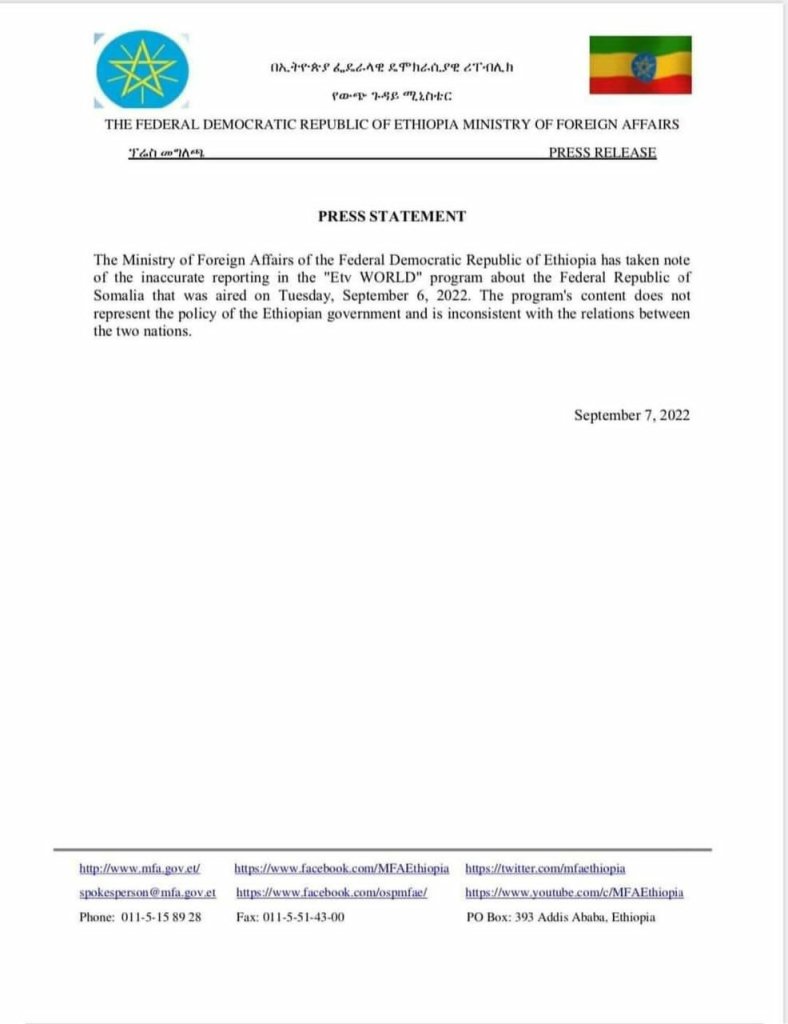

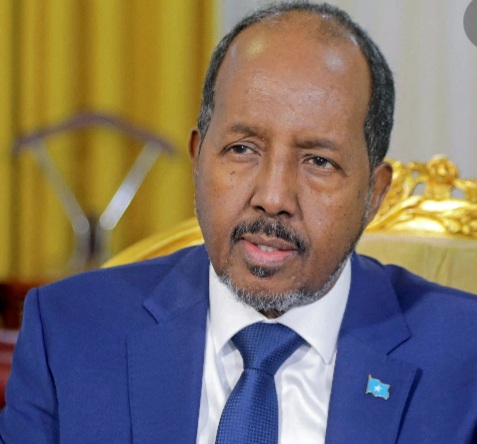


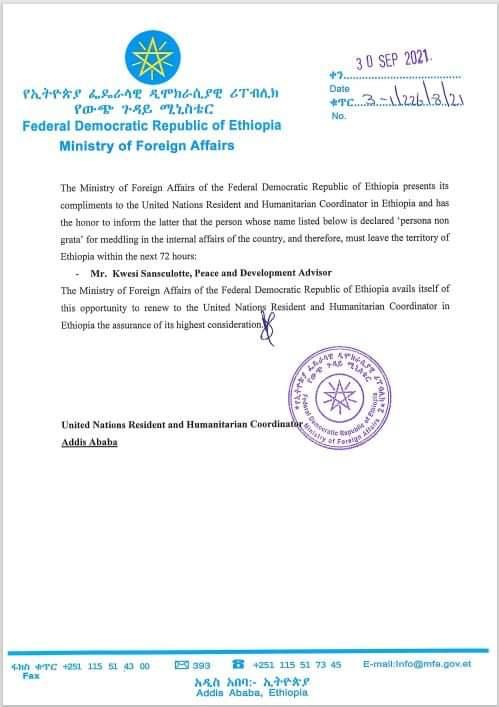
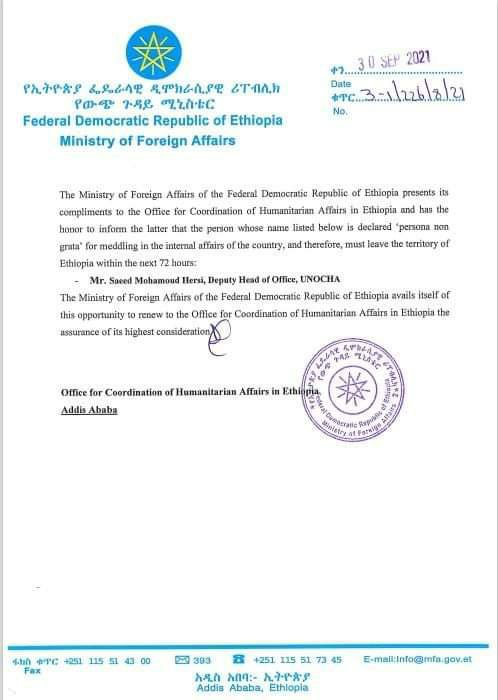
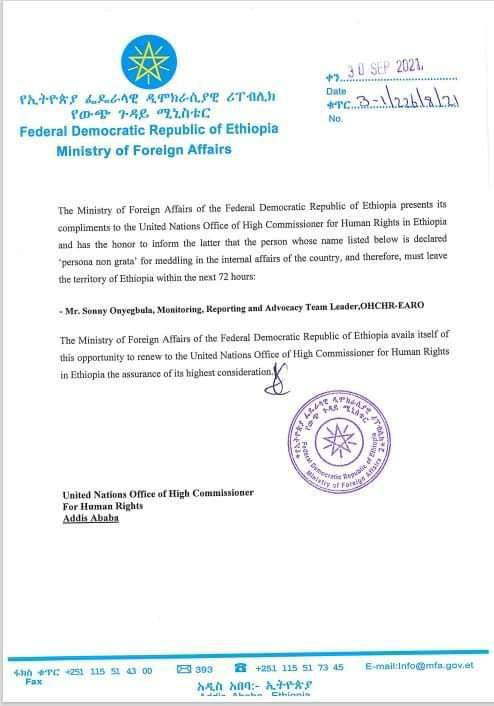
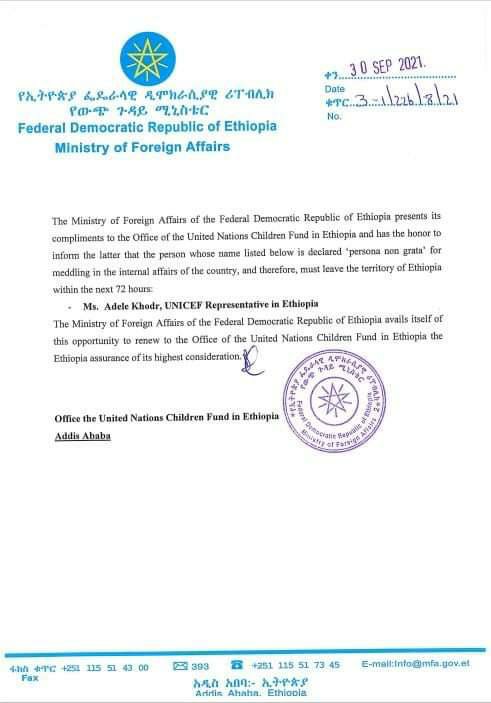
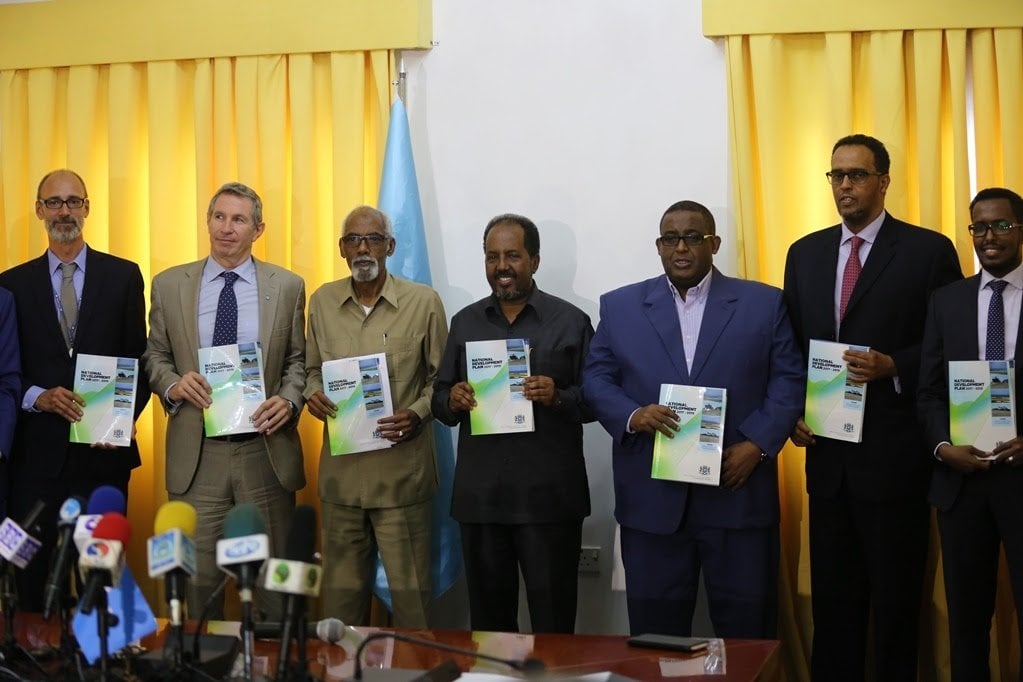


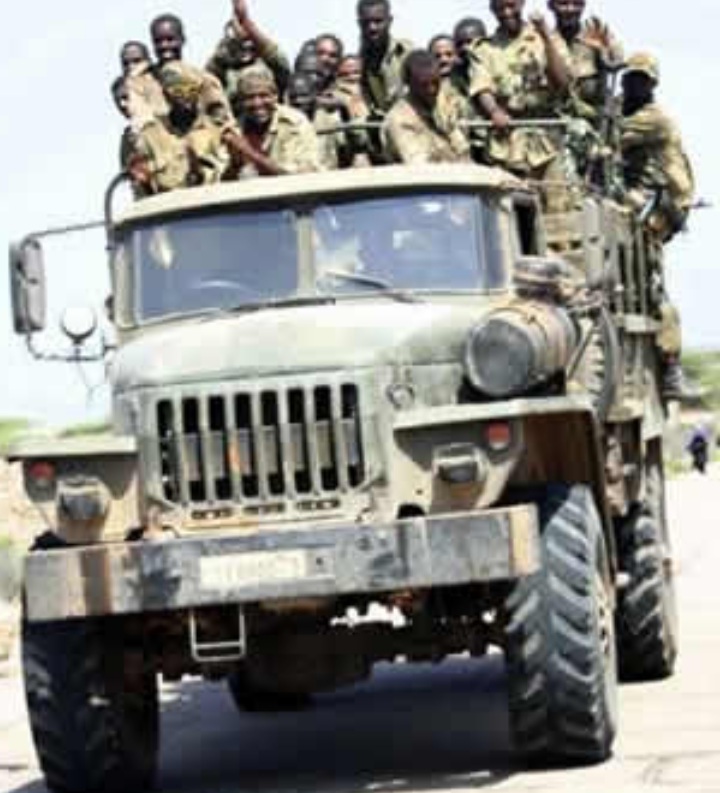

 Warsame Policy & Media Network (WAPMEN)
You must be logged in to post a comment.