EGYPT HAS BEEN HISTORICALLY A FACTOR IN SOMALIA’S FOREIGN AFFAIRS

Ethiopia has been left out in Somali President’s Blitzkrieg diplomatic offensive in Somalia’s neighbors. It is not yet known whether Ethiopia was reluctant to receive him, given the security instability in that country. However, there is no disagreement on the cooling off of relations with Hassan Sh. Mohamud”s presidency, knowing his predecessor, Farmajo, enjoyed close ties with previous Ethiopian leadership. Mohamud had had warm relations with TPLF Regime and even attended TPLF’s festivities in Makele, the provincial capital of Tigray, during the reign of TPLF. TPLF leadership were among the first to congratulate Mohamud on his presidential victory for a 2nd term this time. Mohamud lost no time to appoint Hamse Abdi Barre considered an Ethiopian because Ethiopia assumes he hails from Ogaden Region under Ethiopian administration, a historically disputed territory mainly inhabited by ethnic Somalis. Already, there is an escalation of violence and armed confrontation between Alshabab fighters and Ethiopian forces at long stretch of border between the two countries, with likely possibility of Ethiopian incursion into Somalia in hot pursuit.

Nile waters is synonymous to the existence of Egypt itself as they believe that Egypt cannot be without Nile River flowing to the desert and oasis of that country. Because of this natural and geographical fact, strained relations between Somalia and Ethiopia are in the vital interest of Egypt, making Somalia an strategic asset for Egypt in the same way Israel is for the United States in the Middle East. Hassan Sheikh Mohamud may be playing with fire in paying an early visit to Egypt, while he still doesn’t have his foreign policy team in place. It is too early to do that before weighing Somalia’s foreign policy options. Mohamud’s current visit to Egypt doesn’t even look like a calculated risk. Here, we see a lone president without a Cabinet sailing in troubled waters. Somali observers worry that the President may risk diplomatic blunders even before his government took office.

[This article was updated since posting.]

Postscript: Press report following Mohamud’s visit to Egypt: https://www.thenationalnews.com/mena/2022/07/25/egypt-and-somalia-condemn-ethiopia-over-nile-dam-dispute/
HOW DO YOU UNDERSTAND REGIONAL POWER-PLAYS?

You hear these days that Egypt is seeking military and security cooperation or pact with Kenya, South Sudan, and even as far as Congo? Guess against whom? You know Somalia, Ethiopia and Eritrea had entered into similar accord or understanding, and you wonder against whom? You know big powers are in the game of seeking hegemony and spheres of influence in any corner of the globe. That may be understandable as USA, China, among others, are engaged in stiff rivalry and competition for resources and alliances. What isn’t clear is a small nation with limited economic and military resources trying swallow more than she can chew like Eritrea and Kenya. One possible explanation is that these ambitious small nations feel insecure and vulnerable to external security threats beyond their borders. They want to project an image of readiness to counter perceived security threats. In other words, they want to be seen as power-players in geopolitical terms. They are also sending signals to big powers that they should be counted for in the rivalry equation as far as their respective sub-region is concerned. To put it in a different form, small nations are trying to attract the attention of big powers for financial aid, resources and favors.

Put all these together, it is called regional or global power-plays.

While you are here, don’t forget to get your copies of the best selling books at https://amazon.com/author/ismailwarsame

Travel by U.S. Special Envoy for the Horn of Africa Jeffrey Feltman

Special Envoy for the Horn of Africa Jeffrey Feltman has just completed his first visit to the region as U.S. Special Envoy for the Horn of Africa, traveling to Egypt, Eritrea, Sudan, and Ethiopia from May 4 to 13, 2021.

The Horn of Africa is at an inflection point, and the decisions that are made in the weeks and months ahead will have significant implications for the people of the region as well as for U.S. interests. The United States is committed to addressing the interlinked regional crises and to supporting a prosperous and stable Horn of Africa in which its citizens have a voice in their governance and governments are accountable to their citizens.

A sovereign and united Ethiopia is integral to this vision. Yet we are deeply concerned about increasing political and ethnic polarization throughout the country. The atrocities being perpetrated in Tigray and the scale of the humanitarian emergency are unacceptable. The United States will work with our international allies and partners to secure a ceasefire, end this brutal conflict, provide the life-saving assistance that is so urgently needed, and hold those responsible for human rights abuses and violations accountable. The crisis in Tigray is also symptomatic of a broader set of national challenges that have imperiled meaningful reforms. As Special Envoy Feltman discussed with Prime Minister Abiy and other Ethiopian leaders, these challenges can most effectively be addressed through an inclusive effort to build national consensus on the country’s future that is based on respect for the human and political rights of all Ethiopians. The presence of Eritrean forces in Ethiopia is antithetical to these goals. In Asmara, Special Envoy Feltman underscored to President Isaias Afwerki the imperative that Eritrean troops withdraw from Ethiopia immediately.

The political transition in Sudan is a once-in-a-generation opportunity that can serve as an example for the region. As Special Envoy Feltman underscored to Sudan’s leadership, the United States will continue to support that country’s ongoing transition to democracy so that Sudan can claim its place as a responsible regional actor after three decades as a destabilizing force. We are also committed to working with international partners to facilitate resolution of regional flash points—such as the dispute over the Grand Ethiopian Renaissance Dam (GERD) and conflict on Sudan’s borders—so they do not undermine the fragile progress made since the revolution.

As Special Envoy Feltman discussed with leaders in Addis Ababa, Cairo, and Khartoum, Egypt and Sudan’s concerns over water security and the safety and operation of the dam can be reconciled with Ethiopia’s development needs through substantive and results-oriented negotiations among the parties under the leadership of the African Union, which must resume urgently. We believe that the 2015 Declaration of Principles signed by the parties and the July 2020 statement by the AU Bureau are important foundations for these negotiations, and the United States is committed to providing political and technical support to facilitate a successful outcome.

The Special Envoy will return to the region in short order to continue an intensive diplomatic effort on behalf of President Biden and Secretary Blinken.

Politics: work harder and retire early

Image

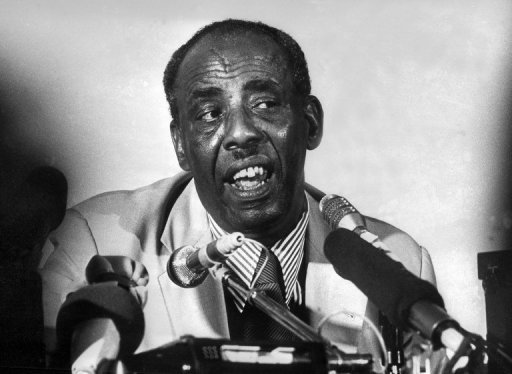
Former President Siyad Barre of Somalia (courtsey of Google, indepthAfrica)

As a keen observer of politicians, and specially those who leave behind positive and lasting legacy, I found out that their secret lies in working harder for their vision during their first and /or second term (s) and when that is done, they consistently choose to retire early even if their respective constitutions allow them for a re-run.

Most politicians/leaders who opted to stay in power too long would definitely end up in total failure and popular condemnation as shown in history consistently time again and again.

History also shows that those who do good work and retire early in their younger ages, have the potential to return to leadership with the accompanying value-added political skills and maturity.

Image

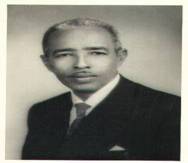
Former President Aden Abdulle Osman of Somalia(courtsey of Google)

In the case of political leadership in developing countries, the immediate families can be both the main source of their failures and successes and in most cases, it is the family that brings a leader’s downfall and disgrace.

Image

Former President Jerry Rawllings of Ghana (courtsey of Ghana Web)

The sooner a politician with a favourable rating leaves office, the better and positive legacy he or she leaves behind.

Former President Siyad Barre of Somalia (courtsey of Google)

Image

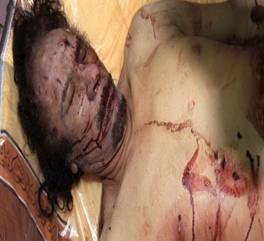
Former Leader of Libyan Jamahiriya (courtsey of Google)

Image

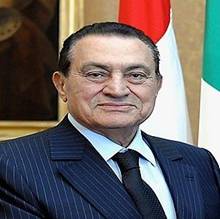
Former President Hosni Mubarak of Egypt (courtsey of wikipedia