RECOLONIZATION OF THE HORN OF AFRICA

Take a listen

Watch “Shirkii Carta, Djibouti, Puntland, Somalia” on YouTube

Watch “How DJIBOUTI erred in its relations with Puntland” on YouTube

HOW PUNTLAND HAD SAVED DJIBOUTI FROM UNION WITH ETHIOPIA

ON THE HISTORY OF PUNTLAND-DJIBOUTI RELATIONS

In 1991 [corrected] Djibouti, under the late President Hassan Guled Abtidon, hosted a Somali Peace Conference. Former Somali top officials, including Abdirisaq Haji Hussein and Mohamed Haji Ibrahim Egal attended the conference. Djibouti treated Somali dignitaries differently, offering preferential hosting treatment to delegates from Mogadishu, a fact that caused the resentment of late prime minister, Abdirisaq H. Hussein. Mr Hussein, famous for his wits in Somali language, reminded Hassan Guled of the fact that Djibouti “received some of us as brothers and some of us as friends”. Hassan Guled was stunned. He immediately drew the attention of his aides to discontinue such different standards for Somali guests.

In 1996 Abullahi Yusuf and I passed through Djibouti from Addis Ababa on our way to the commercial city of Northeast, Bosaso. We checked in Sheraton Hotel Djibouti for two nights to prepare our flight connection to Bosaso. We were officials of the National Salvation Council (the Sodare Group). While there, Ismail Omar Ghuelleh, the Chief of Staff at Djibouti presidency and Director of Intelligence then, heard about our presence in town. One afternoon Guelleh invited us for a tea at his home. We met him in his Qat-chewing room. We also learned later that Djibouti First Lady was having her own Qat session next room. Ghuelleh was watching a large TV screen on the wall with Ethiopian Satellite channel on. Further into our chit-chat, he informed us that Djibouti couldn’t survive on its own. They were contemplating about Djibouti joining Ethiopia. Abdullahi Yusuf advised him not to do that and that Djibouti should better hang on while we are trying to revive the failed state of Somalia. Guelleh seemed unpersuaded. The rest is history. Djibouti didn’t join Ethiopia because of our help in the Somali peace and reconciliation process.

Later as Ghuelleh became president of Djibouti, we met him again and submitted a letter to urge him to take up Somali peace and reconciliation process from foreign hands as he was a Somali man himself. He agreed.

From our side, we had mobilised the entire Somalia’s political elites, factions and warlords to help Djibouti take up the job of Somalia’s national reconciliation process. We had convinced the international Community to abandon parallel initiatives on Somali talks and persuaded Kenyan President, Daniel Arab Moi, to hold off any plans of convening Somali conference in Nairobi, as we asked him to talk to Meles Zenawi to help Ismail Omar Ghuelleh to be able to host Somali peace conference. He agreed. Thus, we developed the concept of “Frontline States” working together on Somalia’s issues. But the problem was that Ethiopia was an AU-sponsored “Mandated Country” then for Somalia’s Peace and National Reconciliation. Puntland and Djibouti jointly had successfully pushed this agenda despite Zenawi’s annoyance and disappointment.

Meanwhile, we convened all Somali factions, except Hussein Aideed’s Salbalaar faction, to Garowe to establish a new alliance, the Somali Peace Alliance (SPA). Puntland had led this alliance as one delegation to Djibouti. We met with Ghuelleh in his office at Presidency.. He said, “you have done more than half the job”.

Enter our next meeting with President Ghuelleh in Djibouti. Abullahi Yusuf and I were transiting through Djibouti on our way to London via Addis Ababa. It was private medical check-up for Puntland President in the UK. While there, Ghuelleh wanted to see Abdullahi Yusuf. The encounter so happened that Ismail Thani, Ghuelleh’s Chief of Staff, visited us in Sheraton Hotel and informed us that President Ghuelleh wanted to see President Abullahi Yusuf. We both stood up to go to the Presidency. Thani advised me to stay behind as Ghuelleh wants only Mr Yusuf. At presidency, Thani too was asked to leave the two Presidents alone. Nobody knew what had happened between the two men, save what Mr. Yusuf told me afterwards. However, Mr Yusuf returned to our hotel annoyed, Here lies the extreme rift between Puntland and Djibouti, or rather, disagreement between the two men. It is my understanding, though, that Abdullahi Yusuf felt the same resentment Abdirisaq Haji Hussein had expressed then in 1991, after the former met privately with Mr Ghuelleh.

See related topic:

https://ismailwarsame.blog/2022/09/20/how-djibouti-erred-in-its-relations-with-puntland-2/

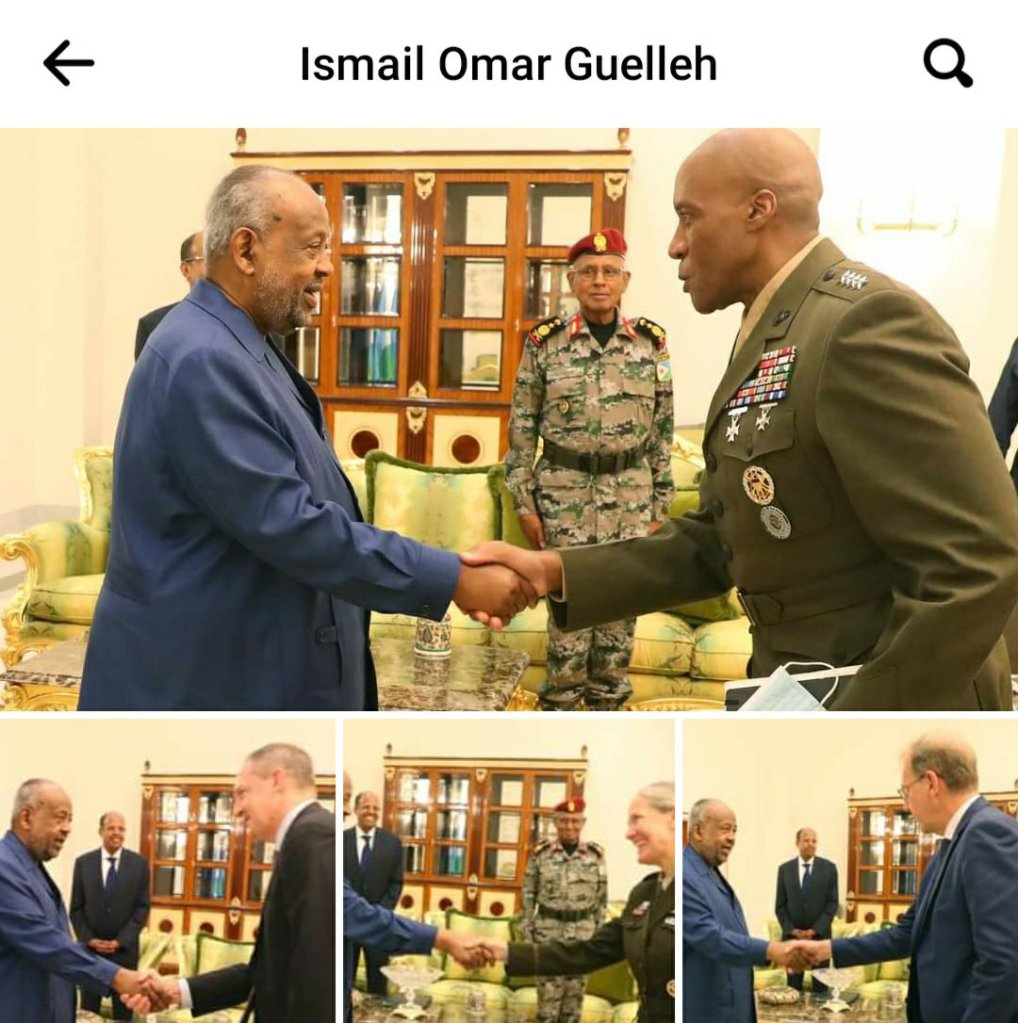
PRESIDENT GUELLEH’S 3RD PERSON SPEAK IN HIS SOCIAL MEDIA ACCOUNT

Le Président de la République, Son Excellence Ismail Omar Guelleh, a reçu ce mercredi, en fin de matinée, au Palais de la République, le nouveau Chef du Commandement des Etats-Unis pour l’Afrique (AFRICOM), le général Michael Langley, à Djibouti dans le cadre d’une tournée dans les pays de la région.

Cette audience servit tout d’abord de cadre à une première prise de contact entre le Président Guelleh et le nouveau Responsable en Chef de l’AFRICOM.
Elle servit ensuite d’occasion propice à l’évocation des relations excellentes que les deux nations entretiennent dans tous les secteurs de coopération, notamment dans le domaine précis de la Défense et de la Sécurité.

Le choix porté sur Djibouti pour abriter continûment, depuis 20 ans maintenant, l’unique base américaine en Afrique est l’illustration parfaite des liens privilégiés entre notre pays et les Etats-Unis sur le plan militaire.

La collaboration soutenue que les deux parties entretiennent autour du processus visant à accroitre le niveau de pacification, de sécurisation et de stabilisation de la région compte également au titre de partenariat stratégique liant les deux pays dans le domaine de la Défense.

Lors de sa visite au Président de la République, le Général Michael Langley était accompagné d’une délégation militaire de haut rang de son pays.
L’Ambassadeur des Etats-Unis d’Amérique auprès de la République de Djibouti, Son Excellence Jonathan Pratt, a également pris part à cette audience.

Côté djiboutien, outre le Ministre des Affaires étrangères et de la Coopération internationale, M Mahamoud Ali Youssouf, le Chef d’Etat-major général des Forces Armées Djiboutiennes, le Général Zakaria Ibrahim Cheick, le Chef d’état-major de la défense, le Général Taher Ali Mohamed et le Chef de la Sécurité nationale, M Hassan Said Kaireh, ont participé à cette rencontre.

3rd person speak

HOW DJIBOUTI ERRED IN ITS RELATIONS WITH PUNTLAND

By a staff writer

How violations of its own entry visa permits had backfired on Djibouti in 1998. Two officials of then newly created Puntland State, having multiple Djibouti entry visas on Somali diplomatic passorts were denied entry into Djibouti, annulling their visas on arrival at airport. They were Hassan Abshir Farah Waraabe, the late Puntland New Minister of Interior and Ismail Haji Warsame, the New Chief of Staff at Presidency.

This diplomatic incident had impacted negatively on Djibouti-Puntland relationships, Arta Somali Peace Conference of 2000, in particular.

Ironically, the two Puntland officials were traveling with a UN delegation to deliver hostages freed at time by Puntland new authorities from pirates in the Red Sea to the French Government in Djibouti.

Later, we had learned that Djibouti authorities were annoyed by Radio France International broadcasting the news of Puntland transferring French hostages at Airport, but also they cancelled visas to prevent Puntland officials from meeting with French diplomats at embassy in Djibouti. Strangely, Puntland had no authority or influence over the French Radio newscast. but, since Djibouti was fearful and couldn’t challenge France diplomatically, they had decided to target the New Puntland Administration as a scapegoat. It was a diplomatic miscalculation. Puntland officials spent the night at airport transit hall, refusing to exit it without written apology from Djibouti authorities. They flew to Garowe onboard UN plane next morning. At the time, Puntland State was several days old.

Since 1998, Puntland- Djibouti relationships have never fully recovered.

https;//amazon.com/author/ismailwarsame

SOMALIA: THE POITICS OF WISHY -WASHY BACKFIRES

Could you imagine the Government of the United States of America 🇺🇸 breaking diplomatic ties with the Government of the United Kingdom and Northern Ireland (Great Britain)? Could they do it successfully? It is the same thing Somalia trying to sever relationships with Djibouti, Kenya or Ethiopia. These relationships have been developing over many centuries in a multi-dimensional fashion, and most importantly, between peoples of these nations. Nairobi is now the irreplaceable Somali business and travel hub. An amateur and naive politician like Farmajo couldn’t simply appear in the scene and try blindly to do away the historically cemented relations without doing much harm to Somalia’s vital national interests and economic havoc in the entire region.

Even a Somali camel man grazing his herds in the country knows full well that cutting ties with Kenya isn’t only practical, but also infeasible and wrong, for he is, at least, aware of his relatives in refugee camps in Kenya. With today’s globalization, he is in constant communication with his kinship in Dhadhaab Refugee Camp, not to talk about others in all urban centres of Kenya.

This is not to say nice things about Kenyan Authorities – they share much of the blame in worsening relationships with Somalia. But, the unwise experiment in this diplomatic fiasco hurt not only many lives and livelihoods, but also did great damage to the national economies of both countries. The losses could be in the billions of dollars. I wonder if any lessons learned from this childish and futile exercise.

https://amazon.com/author/ismailwarsame

The Politics of Wishy-Washy

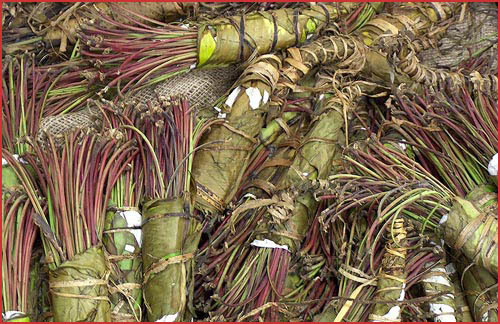
Kat (aka Qat, Chat, Khat) is Grave National Security Threat to Somalia

image001Courtsey of Wikipedia

 If Somalia is to survive as a nation-state and having at least a normal functioning government with even average bureaucratic operations, it must urgently find effective solutions to the epidemic of Kat addiction among its population as a national priority. The problem is more than socio-economic issue. It is a grave national security threat as well.

 In the summer of 1997, I was a member of a delegation of the now defunct National Salvation Council (the NSC, aka Sodare Group) from Addis Ababa, Ethiopia, to Mogadishu, Somalia. The delegation members included NSC Co-chairmen, Ali Mahdi Mohamed and Abdullahi Yusuf Ahmed as well as Council members that included Mohamud Mohamed Guled (Gacmadheere), Duuliye Sare Abdi Osman Farah among others. We numbered about 13 men and one female. We were on our way to meet with an Italian delegation led by then Deputy Foreign Minister for Africa, Senator Serri, who was about to visit Mogadishu for the sole purpose of mediating between disputing Mogadishu warlords despite many other problems of Somalia. The vision of the Italian delegation on solving Somalia’s predicament was not beyond the Banadir Region at that particular time.

Abdullahi Yusuf’s intention in the mission was to disrupt the Italian visit (which he did successfully) while Ali Mahdi’s was to win over the Italian favor against Hussein Aidiid and Osman Ali Atto.

We made a two-day stop-over in Djibouti. The Prime Minister of Djibouti then, Barkat Gourad Hamadou, honored us with a lavish luncheon with tender baby-goat’s meat and other delicacies of Djibouti at his residence. After the lunch, we were taken to a large and well furnished room with an Arabic seating with soft cushions specifically designed for long-time session in comfort for Kat indulgence, gossiping experience, news and secrets debriefing under the “high” influence of the stuff. In front of every person a bazooka-like wrapping was placed and a  large silver tray full of the tools of the trade: A big and tall golden tea thermos, crystal glasses, shining and engraved tea-mugs, various branded cold soft drinks in plastic Coca Cola –type bottles and commercially distilled water in gravines with swimming crystal clear ice-rocks, all to be consumed in the breezing air-condition of the room- an artificial weather hide-out from the environment of burning heat of the City of Djibouti.

After a few chit-chats, Prime Minister Hamadou noticed that none of the members of our delegation was using the stuff as they were all non-chewers, at least, at that period of time. The Prime Minister was a bit annoyed and asked: “Why are you in civil war then, if there is nothing to fight for?” I guess we spoiled the daily indulgence session for our generous, high-level Djibouti host. Luckily, the conversation didn’t break up as we a had had a lot to discuss on Somalia, Somalia-Djibouti past and future relationships and the Horn of Africa, in general.

During those few years, I discovered, in separate sessions, that Ismail Omar Gheleh, the current President of Djibouti, was pondering about his desire to join his tiny country with Ethiopia as he was desperately convinced that Djibouti would not survive on its own. There was  rampant corruption in the seaport operations, the main revenue generating enterprise besides the high spending men of the French legionnaires at Djibouti night clubs. The City of Djbouti was on the verge of being taken over by the influx of Ethiopians, who needed no immigration papers to come in. It was only Puntland help in 1999 to commit him to Somalia’s National Reconciliation process, encouraging him to take it over from Ethiopia, an AU and IGAD Mandated Country for Somali National Reconciliation Process. President Abdullahi Yusuf convinced President Daniel arab Moi of Kenya to support President Ismail Omar Ghueleh to play the role. It was undoubtedly a diplomatic success that pushed Ethiopia aside from the Somali issues.  One may guess already why Ethiopia was not happy with President Yusuf lately. The second help came to Djibouti from post-9/11 World Order. Besides God’s wish, it was only these two factors that saved Djibouti from voluntary union with Ethiopia. Unfortunately, he betrayed Puntland State during the initial phases of the Arta Conference, a rift that eventually undermined the TNG of Abdulkassim Salad Hassan to pave the way for holding Embagati (Kenya) all inclusive and broad-based Somali National Conference and finally, the establishment of the Transitional Federal Government of the Somali Republic (TFG) in 2004, transforming it into the Somali Federal Republic in 2012.

Suddenly, the Prime Minister shared with us the socio-economic devastation Kat consumption has been causing on Djibouti at the time. He informed us that Djibouti was paying Ethiopia a hundred thousand US dollars daily, and that was only the portion of the payments that goes though from bank to bank. Think about residents who buy the stimulant on their own from individual Chat traders on the top of train and air passengers who also bring sacks of the green leaves to their families, relatives and friends in Djibouti cities.

On a number of occasions, I stopped over in Djibouti for a short stay. On multiple times, arriving at Djibouti International Airport, I used to see popular demonstration-like commotion at the gates of the airport-population rushing to the airport when Kat cargo delivery from Ethiopia is delayed for only a few hours. One would see custom and passport control officers whose mouths are asymmetrically filled with Qat and chewing it on the job. Think about the officers’ mental judgment and decision-making capability under the influence of the hyper-leaves at country’s highly sensitive and main border entry point.

The situation is even worse in Somalia with a few millions of US dollars spent every day on the habit. With no credible fiscal statics available, the country may be fast sinking into public and personal bankruptcy. A failed state desperately trying to recover from decades of civil war and total collapse of public services and institutions, has also population wholly consumed by the epidemic of daily Chat use, effectively destroying the socio-economic fabric of its society, abysmally curtailing manpower productive hours and bringing havoc to family livelihoods and relationships while it is also at same sometime constitutes an instigator and main source of corruption and loose social morals. A country with the geographical size larger several times than Italy or UK with porous long borders with Ethiopia and Kenya requires alert and non-Chat chewing security personnel and efficient bureaucracy.

The irony is that Somalis nowadays like to talk about safeguarding their sovereignty and territorial integrity, while at sometime allowing their neighbor states to dump poisonous addictive Kat to their citizens, drain their economy, disable their manpower and threaten their vital national security interests. Think about the real double-talk and double standard with a proverbial ostrich attitude!

Somalia has to come up with a solution to the menace of the Qat. While fully it is understandable that it is tough to try to ban the habit outright, at least a committee of experts should be immediately setup to study the problem and submit recommendations to competent bodies for, at minimum, regulating it and eventually outlawing it. Massive public education and media programs relating to its dangerous hazards to personal and public health should be initiated and launched immediately to stop the spread of the habit to young generation. Somalia cannot afford to continue to ignore its greatest, silent killer of its productive members of the society and the gravest national calamity posed by Kat trade. Please wake up!