Here is the article you have been searching for, in regards to what was happening to Somalia during the decades of Somali people’s slumber and sleep-walking. This story had also appeared in WardheerNews under the same author.
Take a read.
The story of Somalia’s tragedy is too complex to summarize in a few pages. What I learned though in the course of the past two decades is the fact that when a country breaks up in the way the Somali State failed, it is too hard, if not impossible, to reconstruct it and put it back together again. That is because such a failure creates thousands of well-paid jobs and other beneficial opportunities for a huge number of expatriates or international aid workers and foreign diplomats. It does not take rocket science to figure out that those international employees and their decision-makers would not be acting against their own self-interests in order to see Somalia back on its feet again with all their goodwill intentions and humanitarian intervention. There is no incentive for this to happen. This is the first and most serious obstacle Somalis have to deal with to get Somalia back on track. The second biggest problem is Somalis themselves in abysmally failing to put their acts together by understanding that they are in peril and fatal danger of losing not only their sovereignty, but also their country. This is the core of Somalia’s problem today.
Some, including these foreign expatriates and governments, would argue that the second problem is the crux of the issue as to why Somalis cannot have their country back. That is true too as long as our people do not take responsibilities for their own failure and always quick to blame others for their misfortune and misery they have created onto themselves. Listen with purpose to Somali group debates, the so-called Fadhi-Ku-Dirirka (lazy losers’ shouting clan/personal debates), in coffee and teashops and amateur Radio and TV panel discussions and ever multiplying clan fox-hole websites. You notice that nobody is talking about the big picture of “Somalia first” and putting any political differences or clannish self-interests aside at the moment to save the Nation as priority number one. After all what has been happening in Somalia for the last few decades, isn’t that a double tragedy? Some may conclude that Somalis are a punch of feuding clans that cannot agree to have a nation-state and therefore under such circumstances, two scenarios are plausible:
-
Let neighbor states take over the country by dismembering it and dividing it among themselves.
-
Allow foreign re-occupation of the country until Somalis are ready and fit to govern themselves.
We should never give a chance that to happen at any cost. At moment, fieriest diplomatic lobby, intrigues and direct military intervention under the disguise of flashing out Al-Shabbab, another menace resulting from our too long inaction in the vacuum, perhaps also as a punishment for our collective sins and betrayal of our country, are ongoing to opt for the first scenario. Painful as it is, this is the same country whose pilots were flying supersonic jet fighters and producing the best neuro-surgeons decades ago and famous for holding first free and fair democratic elections in Africa.
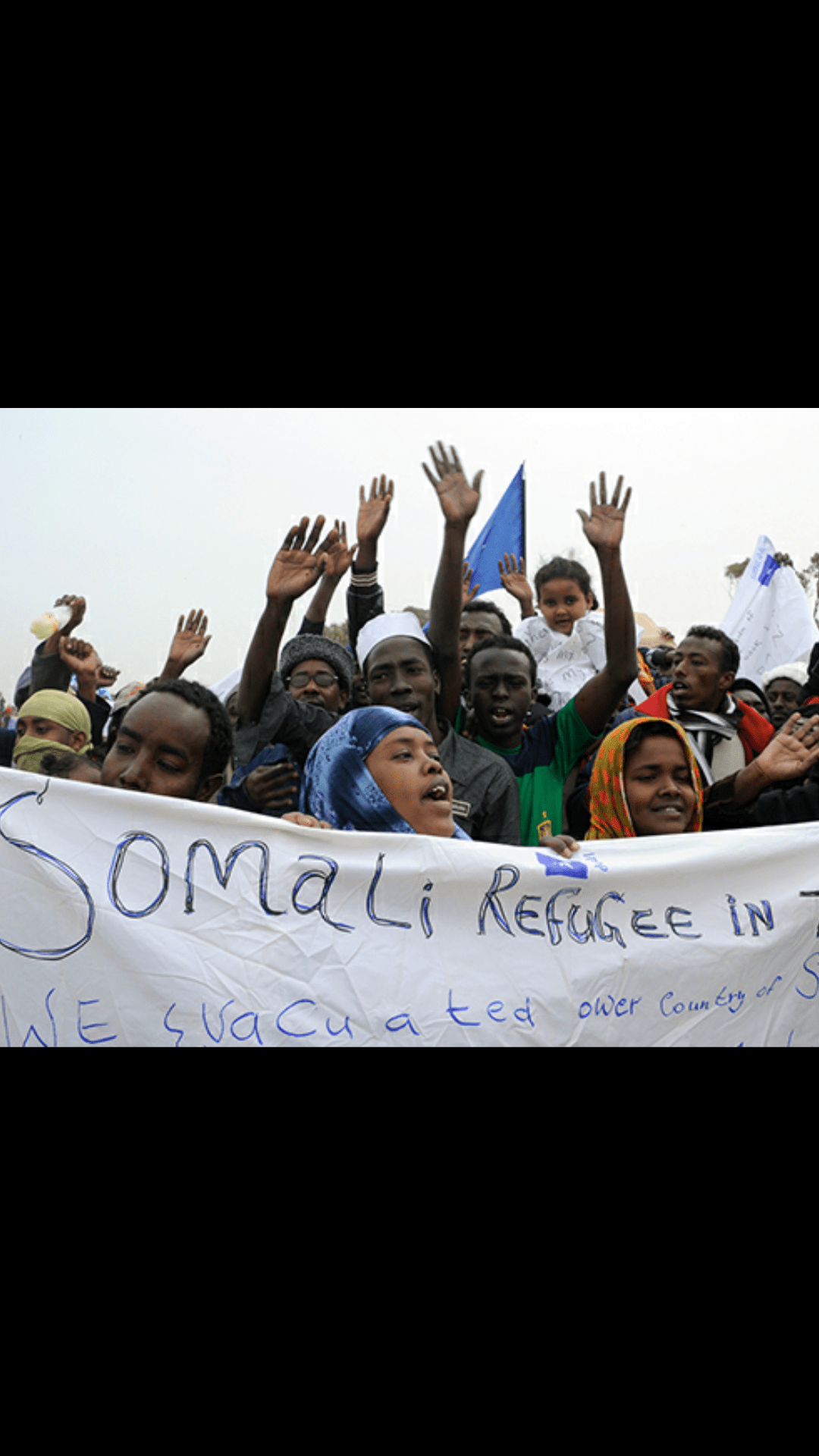
Following the Ogaden War of 1977-1978, and as fallout of the lost war with the proliferation of clan-based and violent armed opposition fronts, huge refugee camps had been created in various parts of Southern Somalia. In reality the Capital, Mogadishu, had been transformed to a big camp for refugees and internally displaced people, IDPs. With the influx of unlimited food aid from international donors at that time, residents ceased to buy food at markets all together as it is readily available to have anyway. Even households of Government officials had it delivered to their families. The result had been catastrophic with local produce wiped out and bringing farmers to refugee camps as well. The citizens of the whole country had been reduced to mere beggars of foreign handouts. What had happened next was that the law of jangle of the fittest was ushered in and whatever left of the Somali State was up for grabs and Somalia irreversibly became a country nobody owns, leave alone someone to defend it from the imminent collapse. As the regulatory bodies disappeared, unscrupulous traders broke all rules of decency and lost moral compass to sell anything and everything Somalis owned to the highest bidder. Somalia went nuts and out of control. To understand why the Somali Civil War could not be contained, particularly in Mogadishu, one should appreciate the nature of the conflict. First, it is a family feud which will last for centuries in many forms and levels. Secondly, it is economic conflict in which a few greedy business criminals do not want it stopped to prevent the establishment of regulatory bodies of a government at any cost to avoid paying taxes. Theirs is: Deny any administration, regional or central to setup the rules of the road for their trade. Chaos, killings and trade in expired food, medicine and export of everything Somalis owned and adored for centuries are the only acceptable norms for their businesses to thrive. Take note that it was not the warlords, Islamic Courts and even Al-Shabab that kept the conflict in Mogadishu running so long. It is the Mogadishu new business tycoons and merchants of death and destruction that made impossible to bring about law and order in Mogadishu.
International Conspiracy and Regional Power Play
As the Somali State finally collapsed with the disappearance of all public institutions without an exception in the height of the Civil War, Western donor countries under the framework of the international community devised economic and political plans for Somalia to fill in the power vacuum in the country. These plans are elaborate and act as a case study on neo-colonialism after the end of the Cold War. It would require volumes of books and extensive research to write on this particular subject.
In 1993 representatives of all countries interested in Somalia under the umbrella of OAU/IGAD/Partners with international Western humanitarian organizations gathered to discuss on how to handle Somalia. Ironically, the venue of this gathering was Addis Ababa, Ethiopia. To make a long story short, the participants resolved to set up the infamous “Somali Aid Coordinating Body, SACB (search for how limited this name is in the Google entries), The SACB, an Exclusive Club of Western humanitarian organizations, UN agencies, European Union agencies (EC) and international NGOs. The SACB devised the following two serious documents:
-
WORKING WITH RESPONSIBLE SOMALI AUTHORITIES (implying here there is no authority in the country, amounting to merely working with clan leaders and local NGOs, possibly with Somaliland, Puntland State did not exist at that time).
-
SACB CODE OF CONDUCT (their internal regulations dealing with Somalis).
By the creation of this unresponsive, unapproachable and invisible governing body for Somalia, The SACB, and Somalia’s sovereignty on land, air and sea had been effectively taken over. All humanitarian aid assistance, monetary or material from donor countries must be channeled through the agencies of the UN, European Union and INGOs, who have the sole discretion and authority to allocate aid distribution as they wish without any input by or accountability to Somalis. To this day no member country is allowed to unilaterally extend assistance to Somalia. An exception is Turkey which does not fit into this framework and whose recent unilateral assistance to Somalia sparked off competition to do something about Somalia to preempt China’s growing and expanding influence in Africa. The old SACB approach on Somalia continues to this day with different names like recent CMC (Coordination and Monitoring Committee setup to camouflage SACB as TFG appeared on the Somali political scene in 2004) with the same modus operandi. To call a spade a spade, SACB became the real Somali Government operating from luxury homes and executive suites in Nairobi while the report cards of the hundreds of its privileged expatriate employees show they are working inside war-torn Somalia on the most expensive life insurance coverage on earth for them and families. That is why we see signals and hear voices nowadays from individual Western countries that aid to Somalia would be channeled to “international agencies” and spelling that out once again after the election of the new Somali leaders in August this year. Perhaps the New Somali President knows better how to deal with them having worked with these agencies for a long time. An extensive network of local NGOs mostly ran and operated by one man/one woman with a bag and laptops have been established in every corner of the country. Most of these local agencies do not follow the rules of associations and societies to be accountable to Board of Directors, have secretaries of treasuries, constitution and mission to avoid duplication of same activities by others. Without their knowledge, many of these local NGOs (Non-Governmental Organizations) are the sources of information gathering for the “International Somali Government” based in Nairobi. These NGOs sometimes come under different fancy names as Non-State Actors (NSAs), Civil Societies, Non-For-Profit Organizations, Stake-holders and so on with the intention to avoid helping the establishment of effective Somali Government and in that way perpetuate the power vacuum in the country to justify the role of SACAB to the donor community and their tax-payers.
Welcome to the era of neo-colonialism where Somalia is a rather blatant example of the “New World Order”. Or rather, the Somali case is a direct rule by foreign powers. This unmasked way of running Somalia exposes the extent of the depth of the problem in Third World countries today and shed light on Western political expectations from “Arab Spring” uprisings.
Every year, these international agencies compile what they call “Consolidated Humanitarian Aid Appeal For Somalia” amounting to hundreds of millions of dollars on behalf of Somalia. From various sources of their addressees, I had the unique privilege to see first hand and disturbed by the stunning Cover Letters enclosed with these “Humanitarian and Development Appeals. Cover letters addressed to foreign Western donors read and I quote:
“ON BEHALF OF THE SOMALI PEOPLE” and continue to this day ignoring any Somali political leadership, institution (even “Responsible Authorities”).
Equally important to note here that the European Union has been transformed to a collective body politic in the course of its existence in regards to its foreign aid to 3rd World countries (Developing Countries). To prevent unilateral aid by individual member countries to emerging markets and countries and avoid duplication of such assistance on shopping list by the leaders of developing countries, a document or an agreement called The Paris Declaration on Aid Effectiveness had been produced in February, 2005, effectively controlling who gets what and on what European terms are applicable to a specific country or block of countries. Since Somalia is not signatory to any accord after Lome’ (Togo) Convention of 1975-1989 on Trade and Aid between ACP (African, Caribbean and Pacific) and European Community countries, including Cotonou (Benin) Accord, its role and interests have been mandated and taken over by a small unit of individuals within European Commission Delegation to Kenya, called The Somali Unit, acting practically and effectively as the National Authorizing Officer (NAO) for Somalia, the very function a Somali Officer would have played if there were a government in Somalia.
Has anyone heard Italy, a longtime colonial power of Southern Somalia, producing a single initiative to help find solutions to Somalia’s predicament? Italy always claims in world forums on Somalia to have the exclusive rights of the Somali issues on the basis of being a former colonial power and legitimate authority to listen to and be respected with regards to Somalia while at the same has nothing to show for in deeds. Italy understood well that once her initiative on Somali peace and reconciliation fails, she will lose all credibility in the eyes of other powers and will be immediately out of the picture in Somalia. Italy’s strategy was reduced to sabotaging other powers’ help in resolving the Somali problem. Her political position has been quite detrimental to Somalia’s national interests and prolonged the agony of the Somali people.
How Other States Rate in the Somali Saga
On the Arab front, Somalia is predominantly suuni liberal religious society. Over many years, however, the Saudis have been engaged in extending religious scholarships to thousands of Somali youths to indoctrinate them in their Wabi version, undeniably responsible for the current religious uphill in the country. This has created religious crisis and conflicts within the community unrecorded before in the history of Somalia. People in Somalia now suffer crisis of identity with regards to their religion (even crisis of attire and clothing as strange foreign fashion of Afghani, Pakistani and Arab tribal origin are imposed on them).
Sheikhdoms in the Gulf were pouring fuel into the fire in Somalia by paying Zakka to the extremist groups on individual basis and through religious charities. Egypt, a country that has been boasting to have strong historical ties with Somalia, could not even provide safe passage within its territory to Somali refugees fleeing civil war. Yemen with its meager resources and its own severe tribal problems has been overwhelmed by Somali refugees, many whom had perished in the high seas of the Red Sea trying to reach its borders. In short the Arabs have been disappointing to Somalis in their time of need. Ironically, it is only them that can extend meaningful assistance without strings attached to any decent administration in Somalia, but that is only if the country has a government, which became difficult to achieve for decades.
Djibouti played more than its capacity with regards to the spoils of the Somali Sate by putting herself in the shoes of her Mother Somalia at League of Arab States. Since the fall of the Somali Central Government, it has been hosting a number of improvised Somali reconciliation meetings to enhance its role among other power players in the region.
Kenya is a country that got the most benefit out of the Somalia’s misery as the HQ of the “International Somali Government” (foreign diplomats and expatriate aid workers of the donor community with hundreds of millions of dollars ear-marked for Somalia spent in Nairobi alone). Speak about the huge capital flight from Somalia, remittances from Somali Diaspora and investment and entrepreneurial talents shaping up Kenya as the East African business hub, not to mention about a broken and desperate people trying to calm their nerves with plane loads of stimulant drug mira (khat), another curse in the Somali tragedy, from Nairobi in exchange for cold cash dollars.
With regards to Ethiopia, a major issue of Somali foreign policy, everybody seems have an opinion and knows better. Here I would limit myself by saying that Somalis are forgiving, but Ethiopia has to choose only one of these two options:
-
Be a peaceful, friendly neighbor and regional ally by trying to help heal past wounds and reverse the historical burden between the two brotherly peoples. Ethiopia has to stop running Somali affairs from Addis Ababa and instruct its diplomats in foreign capitals to immediately cease their traditional diplomatic lobby to undermine Somali unity. It has to stop infiltrating into Somali society and bullying Somali leaders with its power plays.
-
Be an enemy in the region the Somalis have to deal with and risk losing all chances of being trusted ever again.
Eritrea seems to be more sincere and sympathetic to Somali cause than Ethiopia, but its rivalry with Ethiopia via proxy war has been causing havoc to ordinary Somalis in Southern Somalia.
Nevertheless, it would be rather mean not to recognize that the above mentioned states and organizations have been doing something good as well that had saved lives, lessened pain and suffering among the general population.
In conclusion, Somalia will rise up again, hopefully in my lifetime and, when it does, we will be stronger than ever before to be a force of good to reckon with.
By Ismail Haji Warsame
E-Mail: ismailwarsame@gmail.com
https://ismailwarsame.blog/2013/01/06/somalia-foreign-aid-and-international-conspiracy/


 Warsame Policy & Media Network (WAPMEN)