
The Airport Compound Whispers of a Power Shift
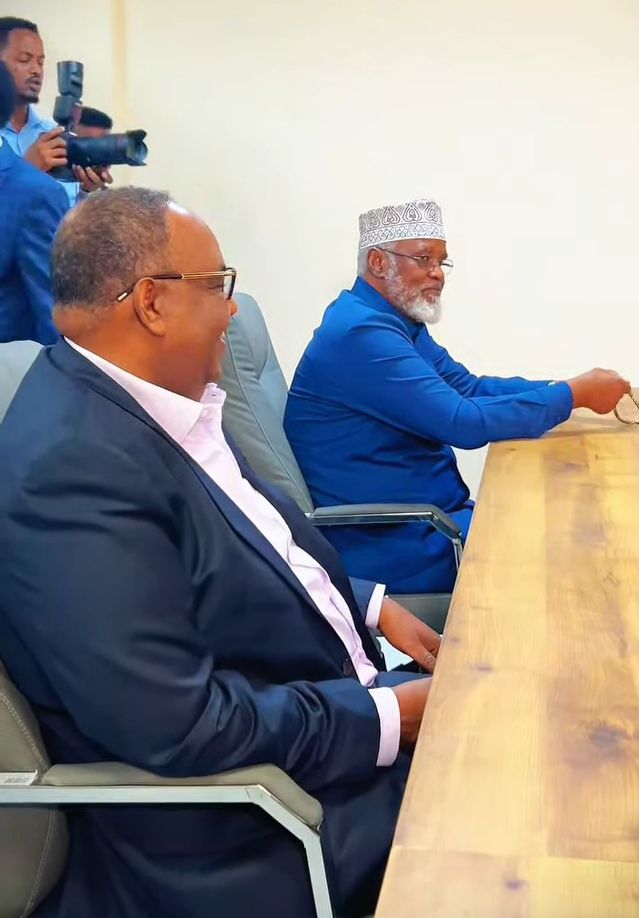
There are moments in Somali politics when nothing official has happened — yet everything has changed.
Right now, Mogadishu feels different.
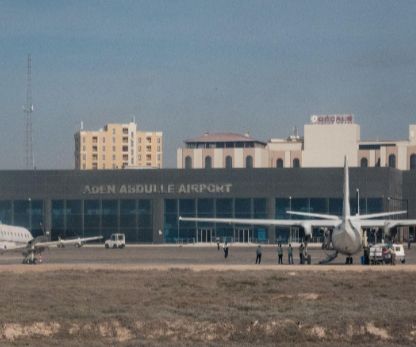
The air is thick. The corridors are restless. The tea houses are whispering. And inside the fortified Airport Compound — that strange hybrid of sovereignty and supervision — two residences have suddenly become the epicenter of national gravity: those of Said Abdullahi Deni and Ahmed Mohamed Islam.
You can measure power in Somalia not by decrees, but by footsteps.
And the footsteps are heading in one direction.
The Airport Compound: Somalia’s Real Political Thermometer
For years, Villa Somalia pretended to be the center of gravity.
But in truth, real politics in Somalia often unfolds inside the blast walls of Aden Adde Airport — where federal leaders, regional presidents, diplomats, and intelligence brokers circle one another in cautious choreography.
And right now?
There is a steady procession of MPs, business elites, clan elders, former ministers, and foreign envoys walking into two particular residences.
Not for courtesy calls.
For calibration.
Ahmed Madoobe: The Stabilizer
Let us be clear.
Ahmed Mohamed Islam (Madoobe) is not expected to run for Villa Somalia. He does not need to. His leverage lies elsewhere. He represents continuity in Jubaland, regional autonomy, and a bloc that can tilt any federal equation.
His presence in Mogadishu right now is strategic, not theatrical.
He is the stabilizer — the man who can either neutralize a transition or accelerate it.
When Mogadishu politicians visit him, they are not asking about Kismayo.
They are asking about the future alignment of power.
Deni: The Wild Card Returns
But the real temperature spike is around Said Abdullahi Deni.
Let us not romanticize it.
Let us analyze it.
In 2022, Deni was seen as energetic but politically premature. He misread Mogadishu’s subterranean clan arithmetic. He underestimated the entrenched networks around Villa Somalia. He was bold — but not calibrated.
This time feels different.
There is composure.
There is calculation.
There is maturity.
The stream of visitors is not accidental. It reflects three emerging realities:
Fatigue with centralized micromanagement.
Fractures within the ruling coalition.
Donor and regional actors quietly hedging their bets.
Somali politicians have one instinct sharper than ideology: survival.
And survival instincts are pulling them toward where they sense momentum.
Hassan Sheikh’s Shrinking Orbit
Power in Somalia erodes quietly before it collapses publicly.
When leaders begin to lose informal control — when MPs stop seeking daily validation — when foreign diplomats begin making “courtesy visits” elsewhere — when elders hedge their loyalties — that is when the clock begins ticking.
Villa Somalia may still command protocol.
But protocol is not power.
The psychological center of gravity appears to be shifting.
And in Somali politics, perception becomes reality faster than ballots do.
The Clan Equation Recalculates
Let us be intellectually honest.
Somalia does not operate on ideology. It operates on alliances. Fluid, temporary, transactional alliances.
Deni’s recent outreach — to defectors, to rival constituencies, to Banadir circles — signals that he has finally internalized this truth.
Ahmed Madoobe’s alignment signals that regional presidents are no longer willing to be reduced to ceremonial governors under a centralizing presidency.
This is not rebellion.
It is recalibration.
The International Dimension
Do not underestimate Halane’s quiet diplomacy.
Regional actors — Egypt, Ethiopia, Türkiye, UAE — are all watching.
They do not invest in political nostalgia. They invest in trajectories.
And trajectories right now are under review.
When the international community intensifies shuttle conversations without press releases, it means one thing: contingency planning has begun.
Is Change Inevitable?
Somali politics is notorious for sudden reversals.
Today’s front-runner becomes tomorrow’s exile.
But there are early warning indicators of transition:
Increased political pilgrimage to alternative power centers.
Growing silence from once-dominant presidential networks.
Subtle shifts in media tone.
Business community hedging behavior.
All four are visible.
Change is not declared.
It is felt.
And Mogadishu feels like a city preparing for rearrangement.
The Deeper Question
Here is the uncomfortable question for Somalia:
Is this merely a shift in personalities —
or a shift in governance philosophy?
If Deni rises, will he decentralize power genuinely?
Will federalism be strengthened or instrumentalized?
Will institutions be built — or simply captured?
Somalia has replaced leaders before.
It has rarely replaced political culture.
That is the real test.
Conclusion: The Quiet Before the Announcement
Something is brewing inside those blast walls.
It may not erupt tomorrow.
But it is moving.
Somali politics has entered its pre-election psychological phase — where alliances form quietly, loyalty becomes negotiable, and power begins to migrate before the official announcement.
The Airport Compound is humming.
The visitors keep coming.
And Mogadishu — that eternally unpredictable capital — is once again reminding us:
In Somalia, power does not fall.
It shifts.
And right now, it is shifting.
——
Support WAPMEN — the home of fearless, independent journalism that speaks truth to power across Somalia and the region. Tel/WhatsApp: +252 90 703 4081.
 Warsame Policy & Media Network (WAPMEN)