
WAPMEN Editorial Essay
Somali politics is not a contest of ideas. It is a tournament of attrition. Leaders do not rise because they are the best; they rise because everyone else collapses at the wrong moment. Victory in Somalia is rarely earned—it is inherited from the weakness of rivals.
This is the ugly, unspoken rule of our political marketplace: timing beats talent; exhaustion beats excellence; collapse beats competence.
Re-election by Default, Not by Design
When Hassan Sheikh Mohamud returned to Villa Somalia on May 15, 2022, history was made—but not progress. Yes, he became the first Somali president to be re-elected. No, it was not because Somalia suddenly endorsed a visionary second act.
He returned because Mohamed Abdullahi Mohamed (Farmaajo) imploded politically—isolated, overreached, and abandoned by allies who had grown tired of endless brinkmanship. Hassan Sheikh did not win the future; he survived the present. Parliament voted not for him, but against the chaos they feared more.
Somalia did not choose leadership. It chose fatigue management.
The Myth of Experience as Vision
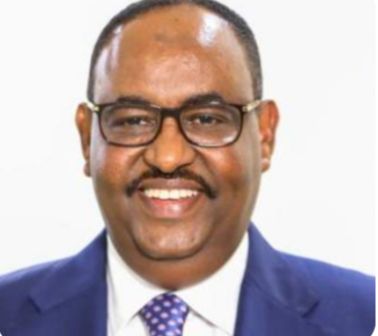
As 2026 looms, the political bazaar once again advertises “experience” as if it were a substitute for belief. Said Abdullahi Deni stands out on paper: twice elected in Puntland, former federal minister, parliamentarian, businessman. By résumé alone, he eclipses many rivals—arguably even Hassan Sheikh himself.
But Somalia’s tragedy is that experience has become cosmetic. We collect titles the way failed states collect donor logos—abundant, meaningless, and unaccountable.
Deni’s record raises an uncomfortable truth: we know what he has done, but we do not know what he believes. What is his governing philosophy? What is his national project? What does he decentralize, what does he centralize, and why? Silence answers none of these questions.
Micromanagers in a Country That Needs Builders
Here is the cruel symmetry: Hassan Sheikh and Deni—often framed as opposites—share the same governing flaw.
Both micromanage power.
Both distrust institutions.
Both hoard authority while preaching reform.
Hassan Sheikh’s creed is at least visible: transactional politics, donor choreography, and an instinctive hostility to genuine decentralization. He negotiates power the way a broker trades futures—short-term gains, long-term instability.
Deni’s problem is worse: opacity. Hassan Sheikh’s politics are objectionable but legible. Deni’s are unreadable. Somalia cannot afford leaders whose beliefs must be inferred from silence, mood, or tactical improvisation.
Somalia’s Electoral Curse
Somalia does not run elections; it manages exits. Leaders leave not because they failed the people, but because they failed their alliances. New leaders arrive not with mandates, but with clear paths through a field of political corpses.
This is why every “new era” feels recycled. Why every presidency disappoints. Why federalism is discussed but never practiced. Why institutions exist on paper while power lives in rooms.
Until Somalia elects leaders for what they stand for—rather than for who collapsed before them—Villa Somalia will remain a waiting room for mediocrity, not a command center for national renewal.
WAPMEN Bottom Line
Somalia’s crisis is not a shortage of experienced politicians. It is a shortage of believers—leaders willing to articulate a vision, delegate power, and trust institutions more than personal control.
Re-elections without reform are not milestones.
Experience without ideology is not leadership.
And power gained by default will always govern by improvisation.
Somalia deserves more than survivors. It deserves architects.
 Warsame Policy & Media Network (WAPMEN)