
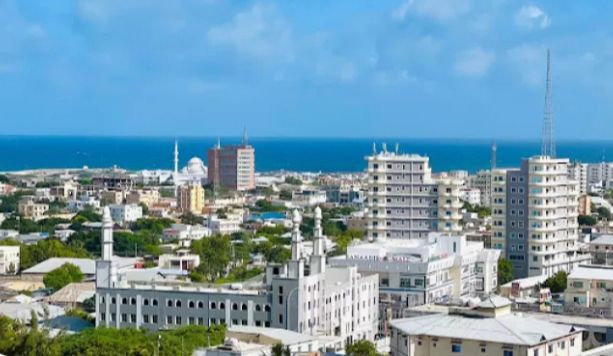
WAPMEN Satire
Mogadishu has entered its most unnatural political condition yet: restraint.
With Said Abdullahi Deni and Ahmed Mohamed Islam (Ahmed Madoobe) back in town, the familiar Mogadishu sport of selective prosecutions, midnight indictments, and constitutional gymnastics has been abruptly suspended. The Banadir District Court indictment of Ahmed Madoobe? Vanished into thin air. Deni’s political isolation? Quietly shelved like an embarrassing memo from the Attorney General’s office.
Suddenly, Hassan Sheikh Mohamud is discovering the limits of presidential omnipotence. The free hand he once enjoyed in running Mogadishu like a personal municipality has been gently—but firmly—guided back into his pocket.
Why? Because the grown-ups have entered the room.
From Halane Camp to Nairobi, the international community accredited to Somalia is now watching Mogadishu politics with the intensity of air-traffic controllers during a storm. Shuttle diplomacy is back in fashion. WhatsApp groups are buzzing. Embassy SUVs are moving again.
And hovering above Mogadishu’s political theater are the usual regional spectators: Egypt, Ethiopia, Turkey, the United Arab Emirates, and the AUSSOM troop-contributing countries—each peering in, counting moves, calculating interests, and pretending this is all about “Somali-led processes.”
For once, Mogadishu is not the only actor on its own stage.
The irony is delicious. The moment federal leaders show up in the capital, the law suddenly remembers its manners. Courts lose their courage. Security agencies rediscover neutrality. Political witch-hunts go on temporary leave. Apparently, the rule of law in Somalia works best when witnesses are powerful enough to object.
Meanwhile, the Somali people wait—anxiously, patiently, and with the skepticism of a population that has seen too many “breakthrough moments” end in press releases and photo ops. They are not asking for miracles. They are asking for one positive outcome that doesn’t collapse by sunset.
Will this monitored Mogadishu produce dialogue instead of decrees? Negotiation instead of intimidation? Federal coexistence instead of center-stage domination?
No one knows. But one thing is clear:
When Mogadishu is left alone, it misbehaves.
When watched, it suddenly learns civics.
Perhaps Somalia’s real missing institution is not a constitution, a parliament, or a court—but oversight.
Until then, Mogadishu remains on pause.
The strongmen are seated.
The referees are watching.
And the nation waits—again.
 Warsame Policy & Media Network (WAPMEN)