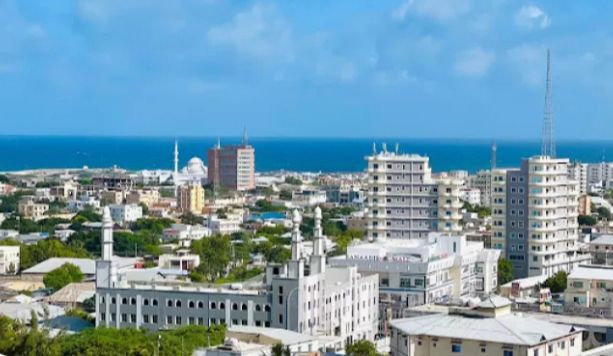
Civics Lesson: Mogadishu Learns Manners Under International Observation


WAPMEN Satire
Mogadishu has entered its most unnatural political condition yet: restraint.
With Said Abdullahi Deni and Ahmed Mohamed Islam (Ahmed Madoobe) back in town, the familiar Mogadishu sport of selective prosecutions, midnight indictments, and constitutional gymnastics has been abruptly suspended. The Banadir District Court indictment of Ahmed Madoobe? Vanished into thin air. Deni’s political isolation? Quietly shelved like an embarrassing memo from the Attorney General’s office.
Suddenly, Hassan Sheikh Mohamud is discovering the limits of presidential omnipotence. The free hand he once enjoyed in running Mogadishu like a personal municipality has been gently—but firmly—guided back into his pocket.
Why? Because the grown-ups have entered the room.
From Halane Camp to Nairobi, the international community accredited to Somalia is now watching Mogadishu politics with the intensity of air-traffic controllers during a storm. Shuttle diplomacy is back in fashion. WhatsApp groups are buzzing. Embassy SUVs are moving again.
And hovering above Mogadishu’s political theater are the usual regional spectators: Egypt, Ethiopia, Turkey, the United Arab Emirates, and the ATMIS troop-contributing countries—each peering in, counting moves, calculating interests, and pretending this is all about “Somali-led processes.”
For once, Mogadishu is not the only actor on its own stage.
The irony is delicious. The moment federal leaders show up in the capital, the law suddenly remembers its manners. Courts lose their courage. Security agencies rediscover neutrality. Political witch-hunts go on temporary leave. Apparently, the rule of law in Somalia works best when witnesses are powerful enough to object.
Meanwhile, the Somali people wait—anxiously, patiently, and with the skepticism of a population that has seen too many “breakthrough moments” end in press releases and photo ops. They are not asking for miracles. They are asking for one positive outcome that doesn’t collapse by sunset.
Will this monitored Mogadishu produce dialogue instead of decrees? Negotiation instead of intimidation? Federal coexistence instead of center-stage domination?
No one knows. But one thing is clear:
When Mogadishu is left alone, it misbehaves.
When watched, it suddenly learns civics.
Perhaps Somalia’s real missing institution is not a constitution, a parliament, or a court—but oversight.
Until then, Mogadishu remains on pause.
The strongmen are seated.
The referees are watching.
And the nation waits—again.

Somalia by Decree: When One Man Becomes the Constitution

WAPMEN EDITORIAL

There was a time when Somalia at least pretended to be governed by a constitution. Today, that document has been reduced to a disposable napkin—used, crumpled, and thrown away by Hassan Sheikh Mohamud whenever it inconveniences his next political maneuver.
What we are witnessing is not subtle, not technical, and not accidental. It is a public, shameless violation of the Provisional Federal Constitution, carried out in broad daylight, on the eve of supposed “national negotiations” with the Golaha Mustaqbalka Soomaalia. If this were a courtroom drama, the crime would already be proven; all that remains is the sentence. Unfortunately, the judge, the jury, and the executioner are the same man.
Divide, Neutralize, Dominate
Hassan Sheikh’s first success was not governance—but fragmentation. The once-touted Golaha Samatabixiinta Soomaaliya has been surgically dismantled. Heavyweights like Omar Abdirashid Ali Sharmarke were carefully derailed, isolated, and politically neutralized. Divide the opposition, then invite the fragments to Halane for “dialogue.” Classic playbook. Nothing original—just ruthlessly effective.


The Halane Camp Bazaar
Enter the new theatre: Halane Camp, Somalia’s real capital. Not Villa Somalia. Not Parliament. Not the courts. Halane—where legitimacy is negotiated like commodities in a duty-free shop.
Said Abdullahi Deni, after months of resistance, finally sits down. Call it pragmatism if you like; history will likely call it capitulation.
Ahmed Mohamed Islam (Ahmed Madobe) edges closer to de facto recognition as an “elected” leader—without an election worth the name.
Meanwhile, other Federal Member State leaders—Ahmed Abdi Karie (Qoor-Qoor), AbdulAsis Laftegreen, and Ali Abdullahi Hussein (Guudlaawe)—are reduced to outside observers, spectators in a game where the cards were stacked long before they arrived.
Federalism, once sold as shared power, now looks like a loyalty test administered from Halane.


Institutions in Name Only
Let us dispense with illusions:
Federal Parliament? A ceremonial hall for rubber stamps.
Judiciary? Politically sedated.
Council of Ministers? Extinct. Absorbed into the President’s personal command center.
Somalia today is governed by presidential instinct, not constitutional order. Executive authority has swallowed the legislature, strangled the judiciary, and now mocks federalism as a nuisance.


Negotiations Without Good Faith
And yet, we are asked—straight-faced—to believe that these negotiations will save Somalia. Save it how? By rewarding constitutional arson with another term in office? By validating coercion as a political method? By teaching future leaders that power flows not from law, but from proximity to foreign embassies?
This is not reconciliation. It is managed submission.


Any Way Back?
Is there a positive outcome? Only if Somalia first admits the truth:
You cannot reverse national collapse by negotiating with the man who engineered it. You cannot restore institutions by applauding their burial. And you cannot save a constitution by allowing one individual to treat it as a personal obstacle.
Somalia does not suffer from lack of dialogue. It suffers from the absence of constitutional restraint.
Until that changes, Halane will remain the capital, the constitution will remain optional, and the country will continue its slow march from fragile federalism to one-man rule—smiling for the cameras all the way down.

——-
Support WAPMEN — the home of fearless, independent journalism that speaks truth to power across Somalia and the region.
Tel/WhatsApp: +252 90 703 4081.