WAPMEN Editorial- Somalia’s Politics of Pretence: Hassan Sheikh Mohamud vs. Golaha Mustaqbalka Soomaalia

Hassan Mohamed (Binge) contributed to this editorial
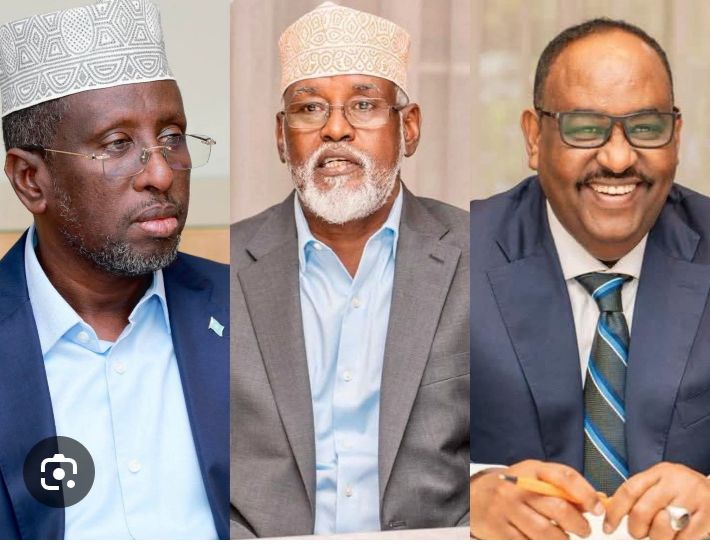

Political Figures from Golaha Mustaqbalka Soomaalia

Somalia today is not short of “forums,” “councils,” or “initiatives.” It is short of honesty.
The uneasy tango between President Hassan Sheikh Mohamud and the so-called Golaha Mustaqbalka Soomaalia exposes, once again, a political culture built on deception, clannish calculations, and naked personal ambition—thinly disguised as national salvation.


Let us strip away the theatrics.
Hassan Sheikh’s Reluctant Engagement: A PR Exercise, Not a Peace Offering
President Hassan Sheikh Mohamud did not engage Golaha Mustaqbalka Soomaalia out of conviction or national urgency. He did so reluctantly, under pressure, and with one eye firmly fixed on donors and international partners.
This was not statesmanship; it was damage control.
The meeting—forced by ultimatum rather than goodwill—reeks of bad faith. It fits a familiar pattern: engage opponents just enough to neutralize pressure, then return to unilateralism once the cameras are gone. Hassan Sheikh’s Somalia is one where dialogue is weaponized, not respected; where consultation is cosmetic, not consequential.
For Villa Somalia, Golaha Mustaqbalka is not a partner—it is a nuisance to be managed, diluted, and eventually discarded.


Golaha Samatabixiinta: Soft Gloves for a Familiar Regime
If Hassan Sheikh is acting in bad faith, Golaha Samatabixiinta Soomaaliya is acting in a bad conscience.
Their approach to the president has been timid, evasive, and disturbingly indulgent. Despite presiding over constitutional violations, mandate overreach, and the erosion of federal consensus, Hassan Sheikh is treated with kid gloves.
Why?
Because this is not merely a political grouping—it is also a Hawiye comfort zone. Hard questions are avoided. Red lines are blurred. Accountability is postponed indefinitely. The language is conciliatory where it should be confrontational; diplomatic where it should be surgical.
A “salvation council” that cannot confront power—especially power from its own social base—is not a salvation council at all. It is an echo chamber.


Ahmed Mohamed Islam: Recognition Politics Disguised as National Struggle
Ahmed Mohamed Islam’s role inside Golaha Mustaqbalka Soomaalia is neither ideological nor principled. It is transactional.
His objective is clear: personal recognition from Hassan Sheikh Mohamud. The council is merely a bargaining chip—a ladder, not a platform. National rhetoric is deployed selectively, not to reform Somalia, but to secure political validation from Villa Somalia.
This is politics reduced to personal advancement: collective struggle hijacked for individual legitimacy.


Said Abdullahi Deni: The Wild Card with a Presidential Eye
Then there is Said Abdullahi Deni—the only actor in this drama who is not pretending.
Deni is not negotiating for relevance. He is positioning for power.
He sees Villa Somalia not as a partner to be persuaded, but as a fortress to be taken. His ambition is clear, his objective unmistakable: unseat Hassan Sheikh Mohamud. And unlike others in the council, Deni understands that Somali politics is not won by communiqués, but by alliances, endurance, and—critically—resources.
If Deni secures substantial external financial backing, this contest will not end in compromise. It will end in confrontation. Bitter. Prolonged. Unforgiving.
In this sense, Deni is the only honest variable in an otherwise dishonest equation.


The Tragic Bottom Line
What we are witnessing is not a national rescue mission—it is a collision of different agendas, conflicting intentions, and opposing endgames, all wrapped in the language of patriotism.
Hassan Sheikh seeks survival and donor appeasement.
Golaha Samatabixiinta seeks comfort without confrontation.
Ahmed Mohamed Islam seeks recognition, not reform.
Said Abdullahi Deni seeks Villa Somalia itself.
And Somalia? Somalia is once again reduced to a stage where elites rehearse their ambitions while the state continues to fracture.
Until Somali political actors stop mistaking personal projects for national causes, every “Golaha,” every “initiative,” and every “dialogue” will remain exactly what this one is: a performance without salvation.

——-
Support WAPMEN — the home of fearless, independent journalism that speaks truth to power across Somalia and the region. Tel/WhatsApp: +252 90 703 4081.
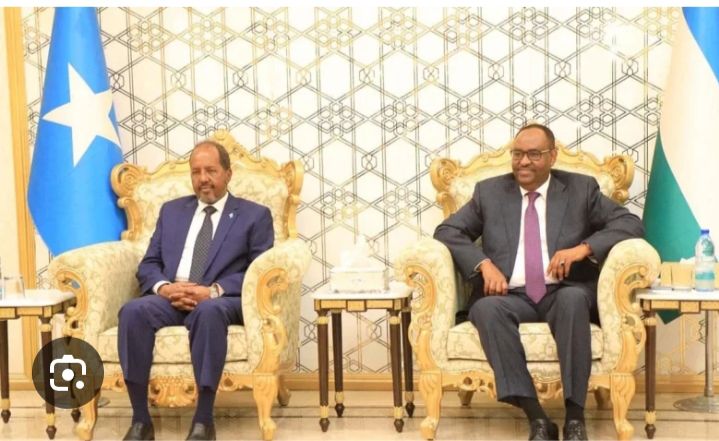

The Duel of Defeats: When Everyone Wins and Somalia Loses

A WAPMEN satirical essay

Somali politics has perfected a rare art: the ability for all principal actors to win their personal battles while the country itself collapses in the background. The latest “interesting take” making the rounds claims that President Hassan Sheikh Mohamud has politically defeated Puntland President Said Abdullahi Deni, while Deni, in turn, has defeated the will and aspirations of Puntland society. The final scoreline? Somali federalism lying on a hospital bed, connected to tubes, while politicians argue over who owns the oxygen tank.
At first glance, the argument sounds clever—almost elegant in its symmetry. Hassan beats Deni. Deni beats his people. Federalism loses. Curtain closed. Applause. But let us open the curtain again, because the tragedy is not that one man defeated another; it is that both men have been playing different games on the same broken field.


Hassan Sheikh: The Grandmaster of Checkmates on Paper
From Mogadishu, President Hassan Sheikh Mohamud appears to have outmaneuvered Puntland politically. He has centralized authority, dictated the tempo of national debate, and reduced federal member states to guests who must RSVP to Villa Somalia. Jubaland is scolded, Puntland is isolated, SSC-Khaatumo is instrumentalized, and federalism is rebranded as a “consultative suggestion” rather than a binding constitutional arrangement.


If political victory is measured by dominating the narrative, then yes—Hassan Sheikh is winning. But this is the kind of victory achieved by a man who burns down the house to prove he owns the keys. His triumph is not over Deni alone; it is over the very idea that Somalia is a negotiated union rather than a Mogadishu-issued decree.
This is not statesmanship. It is an administrative conquest dressed up as constitutional reform.


Deni: The President Who Defeated His Own Constituency
President Said Abdullahi Deni, meanwhile, has achieved something even more extraordinary. Without tanks, without Mogadishu’s budget, without international backing, he has managed to politically exhaust Puntland society itself. He promised democratization and delivered postponement. He promised decentralization and delivered presidential solitude. He promised leadership and delivered long absences.
If Hassan Sheikh defeated Deni politically, Deni responded by turning inward and defeating the very constituency that legitimizes him. The public’s aspirations—for security, participation, institutional governance, and a coherent Puntland voice in Somali affairs—have been quietly shelved in favor of survival politics and personal calculus.
This is not resistance. It is retreat disguised as dignity.


Federalism: The Real Casualty, Without a Funeral
Here is where the assessment becomes painfully accurate: the cumulative result is the near collapse of Somali federalism. Federalism cannot survive if Mogadishu treats states as disobedient provinces and state leaders treat their societies as inconvenient audiences. Federalism is not sustained by communiqués or summits; it survives on mutual restraint, constitutional respect, and leaders who fear their people more than they fear each other.
Today, Hassan Sheikh rules as if federalism is a temporary inconvenience on the road to centralization. Deni governs as if Puntland society is a passive spectator, not a stakeholder. Between them, federalism is neither defended nor reimagined—it is simply used.


Do I Agree With the Assessment?
Yes—but with a sharper conclusion.
Hassan Sheikh did not defeat Deni because he is politically superior; he defeated him because the federal system has no enforcement mechanism against a determined centralizer.
Deni did not defeat Puntland society because he is powerful; he defeated it because prolonged disappointment eventually looked like consent.
And federalism did not collapse because of one man or one presidency—it collapsed because Somalia’s political class treats governance as a zero-sum duel rather than a shared burden.


Final Satirical Note
Somalia today resembles a boxing ring where:
One fighter wins by refusing to follow the rules,
The other wins by refusing to fight,
And the referee—called the Constitution—was knocked out in the first round.
In the end, both presidents may claim victory. History, however, will record something far less flattering: that when Somalia needed leadership, it got rivalries; when it needed federalism, it got feudalism; and when it needed statesmen, it got men busy defeating everyone except the problems.

———

WAPMEN — fearless, independent journalism that refuses to clap while the house burns.

📢 Notice to WAPMEN Subscribers & Readers

To keep WAPMEN (Warsame Policy & Media Network) independent journalism strong, credible, and effective, we kindly ask for your continued support.
In a volatile world—where the old international order is collapsing and Somalia faces mounting internal and external challenges—fearless, independent journalism is not a luxury; it is a necessity.
Please renew your annual subscription and donate whatever you can. Your support sustains honest analysis, accountability, and Somali-centered solutions beyond donor influence and political agendas.
📌 WAPMEN Contact (Subscriptions & Support)
📧 Email:
iwarsame@ismailwarsame.blog
ismailwarsame@gmail.com
📞 Tel / Sahal / WhatsApp: +252 90 703 4081
💳 EVC Plus: +252 611 588 388
💰 Annual Subscription Fee: US$37 only
Your support is not a donation alone—it is a partnership in defending independent thought and public truth.
— WAPMEN
Fearless. Independent. Accountable Journalism.