
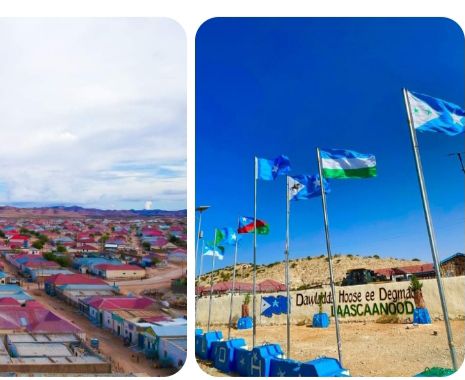
The arrival of Hassan Sheikh Mohamud in Laascaanod today is not an act of reconciliation. It is a political signal flare—aimed simultaneously at Somaliland’s secessionist leadership and at Said Abdullahi Deni of Puntland State. But rather than calming a volatile landscape, this visit pours fuel on an already smoldering fire.
Somalia today does not suffer from a shortage of symbolism; it suffers from a deficit of wisdom. In choosing provocation over dialogue, theatrics over trust-building, Villa Somalia once again demonstrates its inability—or unwillingness—to govern a fragile federation with restraint and strategic foresight.
Provoking Puntland Is Not Governing Somalia
Puntland is not a peripheral actor to be toyed with. It is a foundational pillar of Somalia’s federal architecture, a state that has borne the brunt of stabilizing the northeast while Mogadishu oscillated between paralysis and overreach. To treat Puntland as an adversary—especially in Laascaanod—is to misunderstand both history and political reality.
The Federal President had a choice: extend an olive branch to Puntland, acknowledge its central role in the liberation and protection of SSC territories, and use Laascaanod as a venue for reconciliation. Instead, he chose a confrontational posture, signaling exclusion rather than inclusion. That choice deepens mistrust, widens fractures, and accelerates Somalia’s drift toward ungovernability.
SSC-Khaatumo’s Strategic Amnesia
Equally troubling is the conduct of SSC-Khaatumo leadership. Their current trajectory reflects a dangerous case of strategic amnesia. SSC did not emerge in a vacuum. Its survival—political, military, and humanitarian—was inseparable from Puntland’s support, sacrifice, and steadfastness when others looked away or colluded with aggression.
To now alienate Puntland, or worse, to assemble in Laascaanod a coalition of openly anti-Puntland elements, is not only ungrateful—it is reckless. This is not statesmanship; it is short-term opportunism that risks long-term isolation. SSC-Khaatumo cannot secure its future by burning bridges to its most reliable ally.
Laascaanod Must Be a Bridge, Not a Battlefield
Collecting anti-Puntland actors in Laascaanod under the guise of federal outreach is not neutrality. It is provocation. In a region still healing from conflict, such moves can reasonably be interpreted as hostile political action. Laascaanod should be a bridge between Somali stakeholders, not a stage for zero-sum power games.
If Somalia’s leadership continues to weaponize symbolism while ignoring consensus, the outcome is predictable: further destabilization, hardened positions, and the erosion of federal legitimacy. Unity is not declared by presidential visits; it is earned through inclusive politics, respect for federal partners, and an honest reckoning with past alliances.
A Final Warning
Somalia is already dangerously fragmented. To govern it by provocation is to hasten its unraveling. The Federal President must decide whether he wants to be remembered as a unifier who repaired a broken federation or as a spectator who presided over its further disintegration. SSC-Khaatumo leaders, too, must choose between fleeting political applause and durable strategic partnerships.
History will not be kind to those who mistook theatrics for leadership.
——-
Support WAPMEN— the home of fearless, independent journalism that speaks truth to power across Somalia and the region. Tel/WhatsApp: +252 90 703 4081.
 Warsame Policy & Media Network (WAPMEN)