Strategic Silence Is Not Neutrality — It Is a Choice

WAPMEN Editorial

When a sovereign state is openly violated, silence is never innocent. It is calculative.
In the wake of Israeli aggression—recognizing a region of Somalia as an independent state in brazen violation of international law—the world did not speak with one voice. Many did the right thing. Regional blocs, international organizations, and responsible states rose to defend Somalia’s territorial integrity, the sanctity of borders, and the fragile legal order that still pretends to govern international relations.
Others chose to wait.
This strategic silence—particularly from Somalia’s immediate neighborhood—is neither accidental nor benign. It reveals two uncomfortable truths that Mogadishu, Garowe, Hargeisa, and every Somali citizen must confront without illusion.


Silence Option One: Sinister Self-Interest


Some actors see Somalia not as a state to be defended, but as a chessboard to be exploited.
In a region already saturated with proxy wars, port rivalries, military basing, and intelligence games, Somalia’s fragmentation is not a tragedy—it is an opportunity. Silence, in this context, is consent by omission. It keeps doors open for future leverage:
Access to ports and airspace
Strategic footholds along the Red Sea and Gulf of Aden
Influence over fractured Somali authorities desperate for recognition or protection.
For these actors, condemning Israeli recognition would be inconvenient. It would limit their room to maneuver. So they wait, watch, and calculate—hoping Somalia’s weakness will ripen into concession.


Silence Option Two: Extortion by Delay


Others are practicing a more refined diplomacy: transactional patience.
They are withholding public support not because they disagree with Somalia’s position, but because they want something in return—quietly, privately, and urgently.
Votes. Contracts. Security arrangements. Diplomatic alignment. Intelligence cooperation.
This is not principled neutrality. It is leverage politics. Somalia’s sovereignty becomes a bargaining chip; its crisis, a negotiating table.
Time, they believe, will soften Somalia’s resolve.


International Law Is Not a Buffet


Let us be clear: the recognition of a breakaway region without the consent of the parent state violates the UN Charter, the principles of the United Nations, and the founding norms of the African Union. If these rules apply only when convenient, then no African state is safe—least of all those with internal tensions and unfinished nation-building projects.
Those who remain silent today are not hedging; they are eroding the very rules that protect them tomorrow.
Somalia Must Read the Room—Coldly
Somalia should welcome the solidarity it has received. But it must also document the silence.
History remembers who spoke when it mattered—and who calculated instead. Strategic ambiguity has consequences. When the precedent is set that borders can be redrawn by external actors, silence becomes complicity.
Somalia does not need heroes. It needs clarity.
And clarity begins with naming silence for what it is:
either self-interest masquerading as diplomacy,
or concessions dressed as patience.
Time will tell—but only if Somalia stops waiting for it to speak.


WAPMEN
Fearless analysis. Uncomfortable truths. No strategic silence.
Who Is Watching the Fire While the House Burns? Inflation, Dollarization, and the Crisis of Priority in Somalia

There is a silent emergency stalking Somalia—not always announced by sirens, rarely the central debate in parliament, and too often a footnote in presidential speeches. It is the slow, grinding violence of an economic system that imports its prices and exports its sovereignty. The most damning question is not whether anyone is watching, but whether the watching is matched by action that reaches the poor.

A Country with a Currency It Cannot Control
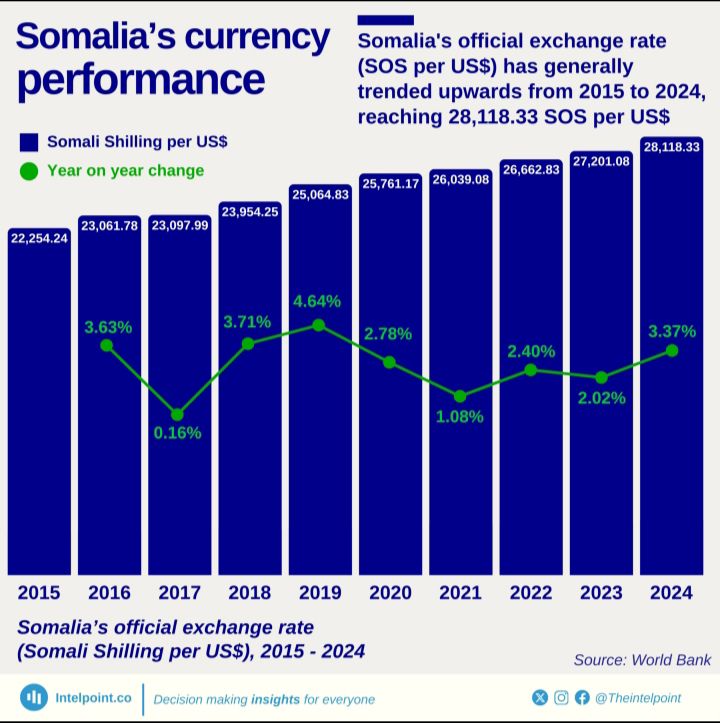
Somalia’s economy runs on the US dollar, a foreign currency whose value is decided in Washington and global markets. When shocks hit—wars, banking crises, or interest rate hikes abroad—Somali households pay the price immediately. Bread costs more. Fuel spikes overnight.

This is the brutal arithmetic of a country that imports over 60% of its GDP. The poor are left naked before global storms. The woman selling vegetables earns in shillings but buys wholesale in dollars. The displaced family negotiates rent in a currency tied to recessions an ocean away.

The Illusion of Neutrality in a Digital Dollar Economy
Dollarization is not neutral; it is a regressive tax on the poor, but its mechanism is more modern than cash. The economy survives on fragile inflows of dollars from remittances (about 27% of GDP) and aid, which flow out just as fast to pay for imports, creating a chronic trade deficit exceeding $5 billion.

Most transactions use digital dollars via telecom networks. However, these companies can use the hard currency they collect for their own external business, creating an artificial scarcity of physical cash within Somalia. This paradox—a digital dollar economy starving for paper cash—drives up costs for everyone, especially those outside the digital fold.

The Chasm Between Institutional Reform and Daily Survival
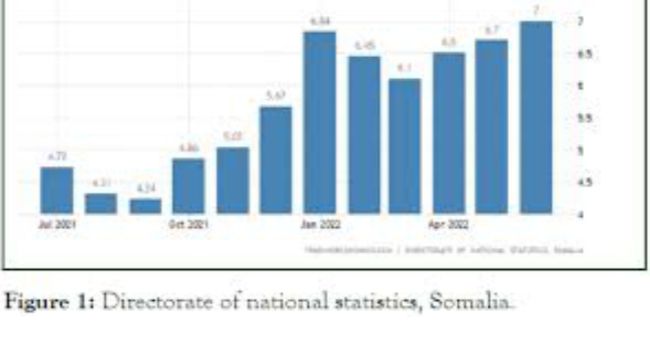
Contrary to the claim that no one is watching, institutions are trying to build the watchtower in the middle of the storm. The Somali National Bureau of Statistics reports inflation, which was 3.9% as of October 2025. The Central Bank of Somalia (CBS) is actively reforming, with a dedicated policy group and a sequenced plan: first, build financial infrastructure and regulate mobile money; later, perhaps reintroduce a national currency.

Yet, these vital but technical reforms exist in a parallel universe to the daily crisis faced by the 54% of the population (over 10 million people) living below the poverty line. With nearly 400,000 youth entering the job market each year in a stagnant economy, per-capita income does not grow. This is the core disconnect: while experts design payment systems and regulations, mothers count coins that buy less every week.

Leaders Argue Over Power While the Foundation Cracks
The political sphere remains consumed by survival—the survival of leaders. Disputes over elections, federal power-sharing, and clan arithmetic create paralysis, preventing a unified response to the economic emergency.

While they quarrel, foreign powers and businesses deal with Somalia not as a sovereign state but as an unmanaged space, extracting ports, security contracts, and political loyalty. The state fragments, and the demographic pressure cooker ticks: 70% of the population is under 30, waiting for a future that is not being built at the speed it is needed.

What Must Be Said: The Fire and the Firehouse
A country that debates inflation statistics while ignoring the cost-of-living anguish is in crisis. A leadership that obsesses over staying in office while citizens sink into poverty is losing its way.

Somalia’s tragedy is not a lack of plans. It is the agonizing gap between long-term institutional rebuilding and immediate human desperation. The Central Bank is trying to rebuild the firehouse—creating a Financial Stability Committee, drafting new banking laws, launching national payment systems. But for the family watching their purchasing power burn, the reforms feel like a blueprint delivered as the embers fly.

The question is not “Who is watching the fire?” The CBS is watching. The Bureau of Statistics is measuring the smoke. The real, unanswered question is: Who will bridge the chasm between the reform documents in Mogadishu and the empty market stalls in Baidoa, Garowe, and Kismayo?

Until inflation, currency sovereignty, and social protection are treated with the same urgency as political survival, Somalia will remain what it is today: a nation where the house burns, not for lack of firefighters, but because they are building the fire engine next to the flames.

Support Independent Journalism
To continue fearless, fact-based reporting that speaks truth to power across Somalia and holds both suffering and reform to the light, support independent journalism.
Tel/WhatsApp: +252 90 703 4081.