Once again, the old ghosts of Somali politics have found a new address — not in Mogadishu, not in Garowe, but in Arta, Djibouti — the new diplomatic rehabilitation center for washed-up politicians and political has-beens. A photo circulating from what looks like a presidential luxury living room captures it all: a dozen “former” Somali politicians seated on golden couches, waiting for political resurrection courtesy of His Excellency, President Ismail Omar Guelleh — the forever ruler of Djibouti and now the unofficial landlord of Exile Villa Somalia.
A Stage for the Politically Undead What couldn’t be organized in Mogadishu — a city where even microphones tremble before explosions — is now being staged under Guelleh’s chandeliers. Hassan Sheikh Mohamud, the tireless salesman of recycled politics, has found in Guelleh a willing host to parade Somalia’s broken past. These gentlemen — yes, gentlemen of expired mandates and manufactured relevance — have gathered not to save Somalia, but to remind us why it keeps sinking. Their agenda? A mystery. Their mission? Survival. Their motto? “We were there before, and we can be there again — even if only in a hotel lobby abroad.”
Arta as Political Refugee Camp This isn’t the first time Djibouti has played the role of “guardian angel” of Somalia’s misfortunes. Back in 2000, Guelleh hosted the Arta Conference — a grand theater that birthed the TNG, a government that never governed and a legacy that never ended. Now, 25 years later, the same stage is being dusted off. But this time, it’s not about reconciliation — it’s about relevance. It’s about Hassan Sheikh Mohamud finding a friendly hall to speak to his own people because he can’t gather them in his own capital.
Let’s call it what it is: a political séance. Hassan Sheikh Mohamud and Ismail Omar Guelleh are trying to summon the spirit of Arta’s past — hoping that nostalgia might mask the stench of failure.
Guelleh’s Distraction, Mohamud’s Desperation For Guelleh, this political circus is a distraction from his own internal crisis — a constitutional coup that made him president-for-life in all but name. For Hassan Sheikh Mohamud, it’s an escape from the growing realization that his government’s “vision” has collapsed into chaos. Together, they form a duet of desperation — one trying to extend a dynasty, the other trying to extend a mandate.
And those sitting quietly on the couches, hands folded like schoolboys in detention? They are the supporting cast — men who’ve presided over Somalia’s decline in every decade since 1991, now reassembled for one last group photograph in the Guelleh Museum of Political Taxidermy.
A Show Without a Nation Arta’s air-conditioning may be cooler than Mogadishu’s heat, but the political atmosphere remains suffocating. Somalia’s people are not invited. Its suffering is not discussed. Its sovereignty is not respected. Instead, the discussion revolves around how to polish the same failed faces for one more season of political entertainment.
Call it “Villa Somalia in Exile” — where yesterday’s leaders rehearse tomorrow’s delusions under the warm patronage of Djibouti’s eternal ruler.
WDM Verdict: If history repeats itself first as tragedy and then as farce, Arta 2025 has achieved the double. Somalia doesn’t need another conference — it needs an exorcism.
—
Support WDM — the home of fearless, independent journalism that speaks truth to power across Somalia and the region. Tel/WhatsApp: +252 90 703 4081.
The much-hyped Arta Conference 25th Anniversary was supposed to be a moment of nostalgia and national revival — a political pilgrimage to the birthplace of Somalia’s so-called “reconciliation.” Instead, it ended as an expensive, hollow pageant — a Djiboutian fireworks show with no audience, no substance, and no soul.
What was billed as a “commemorative summit of unity” turned out to be a stage-managed farce. President Ismail Omar Guelleh, desperate to divert attention from his own constitutional coup in Djibouti, invited a cast of recycled politicians, rent-a-elders, and self-proclaimed visionaries to a hotel ballroom in Arta. Cameras rolled, microphones buzzed, and speeches echoed through empty applause. The outcome? Nothing but political confetti scattered across the Horn.
Guelleh’s Distraction and Mohamud’s Desperation
Let’s call it what it was: a double act of political desperation. Guelleh needed a distraction — a smokescreen to cloud his latest maneuver to make himself president-for-life. Hassan Sheikh Mohamud, on the other hand, needed a stage — any stage — where he could pretend to address “the Somali people” without facing the reality that he can’t gather them in Mogadishu, Beledweyne, Baidoa, or Garowe.
So Guelleh handed Mohamud the microphone — literally. In that single gesture, Djibouti’s veteran strongman became the voice-giver to Somalia’s struggling federal leader. If irony could blush, this would be its moment. How can a president who cannot summon his citizens on Somali soil travel to a foreign land to be heard through another leader’s amplifier?
The Erasure of TFG History
In the haze of pomp and protocol, another quiet theft took place: the erasure of history. The Transitional Federal Government (TFG) — led by the late President Abdullahi Yusuf Ahmed — was the real product of Somali reconciliation, born from the sweat and sacrifice of countless patriots at the Mbagathi Conference. But Arta’s revisionists, desperate to rewrite the script, attempted to rebrand the TFG’s legacy as a Djiboutian success story. It’s like a plagiarist celebrating someone else’s thesis at a graduation ceremony.
For those who lived the history, the insult is unbearable. The TFG was forged through Somali willpower, not Djiboutian choreography. To pretend otherwise is to spit on the memory of the men and women who risked their lives for national restoration.
A Political Stunt Gone Wrong
The masterminds behind this spectacle promised Guelleh that hosting Mohamud’s show would elevate Djibouti’s regional prestige — a “new Arta moment.” Instead, it collapsed under its own self-importance. No major Somali political faction endorsed it. Puntland ignored it. Jubaland shrugged off. Even the Mogadishu streets yawned. What was meant to be a grand political resurrection became a ghost event — a conference that died before it began.
The symbolism couldn’t be sharper: A president who can’t govern his capital, a host clinging to a throne beyond its expiry date, and a people too weary to applaud another act of elite theatre.
The Verdict: Backfire of the Century
The “Arta@25” spectacle didn’t just fail — it backfired spectacularly. Instead of projecting power, it exposed weakness. Instead of rewriting Somali history, it reminded everyone who really wrote it. Instead of uniting the Somali people, it proved once again that legitimacy cannot be borrowed — not from Guelleh, not from Arta, not from history’s dustbin.
The lights have dimmed, the guests have departed, and the bill is yet to be paid. Arta’s 25th anniversary was not a celebration — it was a confession.
——-
Support WDM — the home of fearless, independent journalism that speaks truth to power across Somalia and the region. Tel/WhatsApp: +252 90 703 4081.
A President Who Needs a Foreign Microphone It is one of the strangest spectacles in modern African politics: a head of state who cannot gather his own citizens on his own soil — not in Mogadishu, not in Baidoa, not in Garowe, not even in Laascaanood — but must instead borrow the stage of a foreign autocrat to speak to his own people. President Hassan Sheikh Mohamud, the self-proclaimed defender of Somali unity, has found himself standing not as a host but as a guest, addressing Somalis from Arta, Djibouti — a rented hall under another man’s flag.
The symbolism is deafening. The so-called Federal President uses another country’s legitimacy to perform his national duty. What does it say about sovereignty when the President of Somalia needs to be introduced to his own citizens by President Ismail Omar Guelleh? It’s like a father asking the neighbour’s permission to talk to his own children — a tragic comedy of failed statehood.
Arta 2025: The Sequel Nobody Asked For The “25th Anniversary of the Arta Conference” is being paraded as a historic reunion — but in truth, it is a desperate rerun of a tired political play. What’s the real purpose of this show? Three things stand out clearly.
1. Microphone Diplomacy: Guelleh provides the microphone, Hassan Sheikh provides the speech. The Somali President, stripped of domestic credibility, borrows the voice of Djibouti’s palace to make himself heard. A President speaking to Somalis in exile — what a metaphor for the state of Somalia itself.
2. Historical Theft: The gathering attempts to erase the legacy of the Transitional Federal Government (TFG) founded by Abdullahi Yusuf Ahmed, the only Somali leader who built a legitimate post-war central authority and marched it back to Mogadishu and sat in Villa Somalia after Siyad Barre. Arta 2025 is not about peace; it’s about plagiarism. Hassan Sheikh and his Damul Jadiid courtiers are trying to rewrite history, pretending the TFG never existed — as if the journey from Nairobi to Mogadishu happened by divine teleportation, not by political courage.
3. Djibouti’s Domestic Distraction: Let’s not fool ourselves — Guelleh’s new “Arta show” is a smokescreen. His recent constitutional coup, extending his rule into eternity, has angered many Djiboutians. What better way to divert attention from domestic unrest than to resurrect Somalia’s endless conferences? While Djibouti’s youth whisper about political reform, Guelleh waves the Somali flag and declares another “peace initiative.” The irony? There is no peace to be made — just recycled rhetoric and hotel per diems.
But make no mistake: The elephants in the Arta Hall now are TFG and Puntland State.
The Puppet and the Puppeteer In this theatre of borrowed legitimacy, two aging regimes perform a duet of self-preservation. Hassan Sheikh Mohamud needs Guelleh’s stage to look relevant. Guelleh needs Hassan Sheikh’s chaos to look indispensable. One is struggling to control his federation; the other is struggling to control his own succession. Together they form a tragic alliance of political insecurity.
The Somali President, who once promised “Soomaali Heshiis Ah,” now acts like a tenant of Djibouti’s foreign policy. His ministers chase after photo opportunities instead of federal consensus. Meanwhile, Guelleh, the octogenarian master of political disguise, plays the “wise regional statesman” while chaining his own citizens to perpetual rule.
The Real Message of Arta The 2025 Arta Conference does not symbolize reconciliation — it symbolizes regression. It marks the return of Somalia’s dependency politics, where every local crisis requires a foreign sponsor, and every Somali leader kneels before a smaller but more coherent state.
If Hassan Sheikh Mohamud cannot summon his own citizens in Mogadishu without foreign permission, then what exactly is he president of? And if Ismail Omar Guelleh’s only legacy after 25 years in power is hosting other people’s problems, then what is Djibouti’s independence worth beyond its borders?
Final Word:The Emperor and the Errand Boy Somalia’s President borrows legitimacy; Djibouti’s President hides from his own people. One cannot speak at home, the other cannot stop speaking abroad. Together they create the perfect paradox — two leaders bound by insecurity, united by illusion, and blessed by self-deception.
In the end, Arta 2025 will not be remembered for speeches or resolutions. It will be remembered as a political masquerade — where a nation without direction applauded another without democracy.
——
WARSAME DIGITAL MEDIA (WDM) Support WDM — the home of fearless, independent journalism that speaks truth to power across Somalia and the region. Tel/WhatsApp: +252 90 703 4081.
Abdullahi A. Nor’s narrative is a sweeping historical reconstruction of Sir Richard Burton’s 1854–1855 journey through the Horn of Africa, written with literary polish and ethnographic precision. Drawing heavily from First Footsteps in East Africa, Nor revisits Burton’s odyssey not merely as an act of exploration but as a profound cultural encounter — between the Victorian world of empire and the oral democracies of Somali society.
This is no mere retelling; it is a reinterpretation that situates Burton’s journey within Somali agency, geography, and memory.
Strengths
1. Masterful Historical Framing
Nor situates Burton’s journey in the larger 19th-century “Age of Exploration” but immediately distinguishes him from the rest. The opening lines — invoking “lost cities, the sources of the Nile, and the edges of empire” — evoke the grandeur of exploration while contrasting Burton’s intellectual curiosity against the imperial arrogance of his contemporaries.
The author skillfully connects this to the ancient identity of Punt, grounding the reader in a Somali-centered geography rather than a European map.
2. Ethnographic Fidelity and Respect
Each section dedicated to a Somali clan (Isa, Gadabuursi, Habr Awal, Geri Kombe, Dir) is both vivid and fair. Nor captures the internal diversity and sophistication of Somali society — emphasizing customary law (xeer), lineage politics, and oral governance. He translates Burton’s occasionally exotic descriptions into respectful ethnography, allowing Somali institutions to stand as coherent systems of law and social contract rather than “tribal curiosities.”
Notably, his description of the Gadabuursi’s “parliament without walls” and the Geri Kombe’s “court beneath a tamarind tree” demonstrate a deep understanding of the Somali moral order.
3. Elegant Prose and Balanced Tone
The writing is lyrical without being overwrought. Phrases like “every man carries his genealogy in his memory, his honor on his tongue, and his sword at his side” echo Burton’s own romantic language but carry a Somali rhythm and restraint. Nor’s tone remains balanced — critical of colonial ambitions yet appreciative of Burton’s intellectual courage and curiosity.
4. Restoring Somali Centrality
Most English-language writings on Burton cast him as the protagonist and the Somali as the backdrop. Nor reverses this perspective: the land, people, and codes of the Horn become the story’s true framework. Burton appears as a guest navigating a pre-existing civilization.
By calling the Somalis “a democracy of equals,” Nor not only quotes Burton but reclaims the phrase as a historical affirmation of Somali political identity — centuries before the notion of “federalism” entered the region’s discourse.
Weaknesses
1. Limited Critical Interrogation of Burton’s Biases
While the author acknowledges the “colonial assumptions of his age,” he does not fully unpack how Burton’s writings reinforced later imperial projects. A deeper critique of the racial, economic, and religious hierarchies embedded in Burton’s ethnography could have strengthened the analysis.
2. Absence of Contemporary Reflection
The “Epilogue” beautifully connects Burton’s footsteps to the modern Somali landscape, yet the piece stops short of drawing explicit parallels to current identity debates, border politics, or the legacies of British and Ethiopian influence. A paragraph connecting Burton’s maps to present-day geopolitical fault lines — Somaliland, the Ogaden, Zeila, Harar — would have added resonance.
3. Over-Romanticization
Though Nor’s poetic tone is captivating, at times it risks idealizing precolonial Somali society as an egalitarian utopia. A few nods to internal conflicts, feuds, or hierarchies could balance this romantic portrayal.
Style and Structure
Nor organizes the piece with clarity and rhythm. Each clan is given a standalone section, producing a sense of journey and continuity. The structure mirrors a caravan route — coastal, pastoral, frontier, and highland — culminating in Harar. His use of bold subheadings and balanced paragraphs makes the text highly readable for both academic and general audiences.
Conclusion
Abdullahi A. Nor’s essay is a rare blend of historical scholarship, literary craft, and cultural empathy. It reframes Burton’s First Footsteps not as a European triumph of discovery but as an encounter between knowledge systems — one written, the other spoken.
It is both a homage to Somali civilization and a critique of how history was told about it. Nor gives voice to the Isa, Gadabuursi, Habr Awal, and Geri Kombe not as footnotes to Burton’s adventure, but as the rightful authors of their own landscape.
In short, this story is not merely about Burton’s footsteps — it’s about the ground he walked on finally speaking for itself.
—
Rating: ★★★★★ (5/5) Verdict: A meticulously researched and elegantly written historical essay that reclaims Somali agency in one of the most mythologized episodes of African exploration.
Dear WDM Readers, Here is why the release of the latest instalment of the interview series (on Arta Conference and Mbagathi Conference) is nothing less than a breakthrough — and why it should set off alarms in every quarter that profits from confusion, distortion, and the “unitary-only” narrative of Somalia.
What these interviews do
1. Restore the credible chronology — The record of Somali peace, reconciliation and state-building conferences has been battered for decades by selective memory, bad-faith revisionism and outright political opportunism. The new series offers voices that cut through the noise, reminding us: Arta (Djibouti, 2000) though unrepresentative and manipulated by Djibouti President Ismail Omar Guelleh, laid the foundation for what became the transitional federal system, and Mbagathi (Nairobi, 2002) created the Second Somali Republic, the Federal Republic of Somalia.
2. Expose the distortions — For too long, opponents of federalism have reduced these long series of talks to “failed unitary state attempts” or “mere elite bargains.” The interviews draw attention back to the substance: clan and regional delegations, diaspora involvement, the roles of external actors—not just as spoilers but as architects of new national pathways.
3. Clarify Puntland’s missing links — In your own field of interest — the establishment of Puntland (1998 onward) and the subsequent federal trajectory — these interviews provide context. They place Puntland as the leading partner and an integral part of the pre-federal puzzle: those conferences and trajectories originated from the north-east Somalia
4. Punch holes in the “unitary nostalgia” narrative — The forces pushing for a strong centralised Somalia (for understandable motives: control, rents, centralised aid flows) have long misused the conference histories to argue that federalism is a foreign import, a last-resort fallback. The interviews dismantle that line: federal forms were emerging in real time, not hijacked later.
Why this matters politically
Power & resources: Whoever controls the narrative controls how revenue (hydrocarbons, port revenues, diaspora flows, donor funds) is allocated. By reconstructing a credible narrative of federalism’s roots, the interviews shift the terrain away from zero-sum centralisation.
Legitimacy and memory: In Somalia’s fragile political architecture, memory is contested terrain. These interviews insert a counter-memory to the dominant one-state-only mythology. For Puntland, for diaspora networks, for business communities in Galkayo, Garowe, Qardho — this means recognition and standing.
External actors: With your interest in UAE, Turkey, Qatar, IMF/World Bank, etc., recall that many external players prefer a weak centre to negotiate bilaterally. A stronger federal architecture threatens that. The interviews thus irritate not just domestic monopolies but external contractors of ambiguity.
Narratives shape institutions: If the conferences are portrayed as failures or as “throwaways,” then federalism becomes a placeholder. But if the interviews make clear that they were substantive, then federalism becomes an institution with roots and rights — and Puntland’s claim to its piece of that architecture becomes sharper.
But: No piece is perfect. Here are caution flags and opportunities for sharpening.
Selection bias: Make sure the interview series does not give the impression of cherry-picking voices friendly to your agenda. Credibility is built when critics—yes, even opponents of federalism—are present, questioned, held to account.
Depth of archival grounding: Oral interviews are powerful, but must be backed with documentation (resolutions of Arta, minutes of Mbagathi, clan-delegation lists). Without that, critics will accuse you of anecdote substitution.
Vocabulary discipline: Some audiences dismiss the label “federalism” because of its misuse. The interviews should define terms clearly: what “federalism” meant in 2004, how that framework differs from “autonomy,” “confederation,” “unitary state.” Clarify the difference between de facto federalism (as in Puntland’s reality) and de jure federalism.
Avoid triumphalism: While it’s tempting to celebrate the interviews as “the answer,” stay in journal-istic posture: raise questions, point the gaps, invite commentary. That strengthens rather than weakens the piece.
Footnote the economic dimension: Given your interest in infrastructure, remittances, donors, etc., ensure a stronger thread in the interviews about how these peace conferences had direct economic/macro consequences (e.g., how conference outcomes enabled diaspora flows, or how they linked to telecom liberalisation, or how they influenced port logic). This links the political critique to your core interest.
The bottom line
For too long, Somali federalism has been treated like an accident of war, a refuge of clan leaders, or a donor fad. These interviews slash through that fiction. They remind us that–from Arta to Mbagathi to Puntland––there existed purposeful design, contested negotiations, regional and diaspora agency, and institutional potential. In doing so, they unsettle those who prefer a weak Mogadishu-centric rent-seeking model, who benefit from a fuzzy memory of the past, and who still see federalism as a threat to their resource-grain.
So: Listen. Review. Share. But don’t stop there. Use the interviews as a weapon in the contest of history — because until history is agreed, policy will be surrendered.
Support WDM — the home of fearless, independent journalism that speaks truth to power across Somalia and the region. Tel/WhatsApp: +252 90 703 4081
— Yours in the unflinching fight for Somali accountability and development, Ismail H Warsame WDM
Ethiopia’s latest declaration from the Office of the Prime Minister is not diplomacy — it is delusion disguised as doctrine. When a head of government publicly questions “who decided to deprive Ethiopia of access to the Red Sea,” it signals not historical inquiry but territorial appetite. In Abiy Ahmed’s Ethiopia, fiction has replaced fact, and revisionism has become state policy.
The Return of Imperial Geography
Ethiopia’s political elite has long been haunted by the ghost of its lost coastline. The rhetoric now emanating from Addis Ababa — dressed in the polite vocabulary of “shared prosperity” — is nothing short of a veiled threat. It echoes the expansionist fantasies of the late Emperor Menelik II and Haile Selassie, both of whom saw the Red Sea not as a regional commons but as Ethiopia’s divine inheritance.
But history is not kind to such delusions. Ethiopia was never deprived of the Red Sea; it lost it through war and law — specifically, through its own refusal to respect the self-determination of Eritrea. The 1993 Eritrean referendum, recognized internationally and conducted peacefully, was the very “institutional decision” that the Prime Minister now pretends never happened. It was endorsed by the United Nations and accepted by Addis Ababa itself. To now question that settlement is to reopen the coffin of a century-old imperial corpse.
The Dangerous Myth of “Landlocked Entitlement”
The world is full of landlocked countries — from Switzerland and Austria to Rwanda and Uganda — all of which thrive through diplomacy and economic integration, not invasion or intimidation. Yet Ethiopia’s narrative of “natural entitlement” to the Red Sea reeks of arrogance. What makes Ethiopia different? Only one answer fits: its chronic habit of bullying weaker neighbours.
Landlocked status is not a curse; it is a test of leadership. The problem is not geography — it is psychology. Ethiopia’s ruling class still sees regional cooperation as subservience, and neighbourly sovereignty as negotiable.
Let us be clear: the port access question is not about “shared prosperity.” It is about coercion disguised as partnership. It is about an empire nostalgic for a coastline it lost through its own folly.
Abiy Ahmed’s “Prosperity” or “Predation”?
Prime Minister Abiy Ahmed presents himself as a reformer, but his words increasingly betray the instincts of a revisionist. The Prosperity Party’s ideology has become a cocktail of neo-imperial ambition and domestic distraction. When internal crises multiply — from the Amhara rebellion to the Tigray fallout — Ethiopian leaders look outward for scapegoats. “The Red Sea issue” is now the new smokescreen for failed governance at home.
This is not about trade routes; it is about political survival. The Red Sea rhetoric allows Abiy to rally nationalist sentiment, silence dissent, and portray himself as a defender of Ethiopia’s “historic destiny.” In other words, it is a dangerous mix of populism and paranoia — a familiar cocktail that has poisoned the Horn of Africa before.
A Warning to the Neighbours
For Eritrea, Djibouti, and Somalia — particularly Puntland and Somaliland — this rhetoric is not academic. It is a prelude. When Ethiopia starts invoking “historical and geographical rights” to access the sea, it is preparing the public for confrontation. The neighbours must therefore treat these words not as harmless political theatre but as a strategic signal.
Remember: when Ethiopia, in its sinister motive, talks about “access to the Red Sea,” it is not referring to Yemen, Saudi Arabia, Egypt, or Israel. It is talking about aggression against Somalia and Eritrea — the two countries whose sovereignty and coastline represent the nearest and most vulnerable targets of its ambitions.
Ethiopia’s obsession threatens to militarize the Red Sea corridor and destabilize an already fragile region. The international community must recognize this early — before another Horn of Africa war erupts under the banner of “economic necessity.” The world cannot afford another 1977.
Conclusion: Ethiopia’s Crisis Is Ethiopia’s Own
The truth Abiy refuses to confront is simple: Ethiopia’s crisis is not external — it is internal. It is not about ports — it is about politics. The real deprivation lies not in geography but in governance, not in access to the Red Sea but in access to reason.
Instead of plotting imaginary corridors to the sea, Ethiopia’s rulers should open corridors of justice, reconciliation, and reform inside their own borders. Until they do, every talk of “mutual progress” will ring hollow — a euphemism for domination wrapped in diplomatic deceit.
——– Support WDM — the home of fearless, independent journalism that speaks truth to power across Somalia and the region. Tel/WhatsApp: +252 90 703 4081.
The signs are unmistakable. The air in Garowe smells of déjà vu — the year is 2000 all over again. Back then, the same shadows moved across the landscape: suspicious invitations to foreign capitals, traditional elders lured to “witness celebrations,” and a slow but deliberate orchestration of political replacement masked as reconciliation. What was once called the Arta Conference now has a reincarnation — this time, in Djibouti again, under the familiar fingerprints of President Ismail Omar Guelleh and his ally in Mogadishu, Hassan Sheikh Mohamud.
Déjà Vu: The Djibouti Connection
It is not coincidence — it is choreography. When traditional elders of Puntland are suddenly summoned to Djibouti “for talks,” when meetings of elders quietly multiply in Bosaso and Garowe, when Hassan Sheikh’s aircraft lands in Djibouti with no public itinerary, the alarm bells should be deafening.
In 2000, Puntland was betrayed by those who went to Arta claiming to represent the Northeast Somalia. They came back as Trojan horses, ushering in a foreign-engineered “regime change” and dismantling the foundations built through sweat and sacrifice since 1998. That same pattern is reemerging — only this time, the threat is more cunning, wrapped in the language of “renewal,” “dialogue,” and “New Puntland.”
The “New Puntland” Trap
Who is behind this phrase — New Puntland? It is not the people. It is the echo chamber of Villa Somalia’s ideological architects — the same Damul Jadiid strategists who undermined SSC-Khaatumo, fractured Jubaland, and now seek to neutralize the last bastion of autonomous federalism: Puntland.
“New Puntland” is not a slogan — it’s a sedative. It’s the language of infiltration, meant to disarm vigilance and weaken political resistance. Those who whisper it are not reformers; they are emissaries of Mogadishu’s centralizing project — a regime whose survival depends on dismantling any model of local autonomy that dares to challenge its illegitimacy.
Foreign Hands, Familiar Patterns
President Guelleh’s Djibouti has always played both arsonist and firefighter in Somali politics. From Arta to today, Djibouti thrives on Somali instability, using “peace conferences” as smokescreens for influence operations. The recent series of Hassan Sheikh’s “consultations” in Djibouti are not about friendship — they are strategic briefings. Something is being cooked, and Puntland is once again on the menu.
If Puntland leadership continues to underestimate the pattern — to dismiss this as routine diplomacy — they are sleepwalking into a trap that history already scripted once before.
A Call to Wake Up
The lesson of 2000 was written in betrayal, but it does not have to be repeated. Puntland’s stability is not guaranteed by its borders — it is guarded by its political consciousness. The moment Puntland allows foreign capitals to dictate its internal dynamics, the spirit of 1998 dies.
Every elder must now ask: Who invited you, and why? Every official must ask: Who benefits from your silence? Every citizen must remember: A state is not lost by invasion — it is lost by negligence.
The battle for Puntland’s soul has begun again — quietly, cunningly, and under diplomatic disguise. Those who built this state must rise once more to defend it, or risk watching it collapse into another Arta-style disaster.
——– Support WDM — the home of fearless, independent journalism that speaks truth to power across Somalia and the region. Tel/WhatsApp: +252 90 703 4081.
When a foreign state openly invites large delegates of Somali citizens—comprising traditional elders, businesspeople, and ordinary civilians—from Puntland territory, the question writes itself: Has Puntland surrendered its sovereign agency over its own citizens?
Let’s be clear. This is not a mere cultural visit, nor an innocent diplomatic courtesy for several persons. This is huge active intelligence measures by Djibouti flexing its political muscles in Somalia’s northern theatre—a carefully choreographed act of soft subversion disguised as hospitality. In the age of proxy politics, every “invitation” carries a message, and every banquet has a price.
The Anatomy of Negligence
How did a sovereign regional government—one that claims political maturity and institutional capacity—allow an entire delegation of its residents to be dragged across borders by a foreign regime, without public consultation, without vetting, and without accountability?
This isn’t just poor coordination. It is a security breach of the first order. A lapse in intelligence coordination, an insult to Puntland’s authority, and an open mockery of its sovereignty. Where are the internal security agencies, the Ministry of Interior, and the political advisors who are supposed to defend the state’s interests?
When elders, who carry moral legitimacy in their communities, are courted by foreign regimes, they become tools of influence. And when a state like Djibouti—whose leadership thrives on manipulation and transactional diplomacy—hosts such delegations, the intent is rarely benign.
Who Bears the Blame?
Responsibility must be traced to those who looked the other way.
The Puntland security apparatus, for failing to regulate or monitor the movement of such groups.
The Counter-intelligience Agency.
And ultimately, the Puntland Presidency, for tolerating the erosion of the state’s external dignity.
In any functional state, this would trigger an inquiry. In Puntland, however, it risks becoming yet another “non-event” swept under the rug of political convenience.
Djibouti’s Political Theatre
Let us not be naïve. Djibouti’s aging autocrat, Ismail Omar Guelleh, has a well-documented record of meddling in Somali politics—from the infamous Arta Conference that fractured Somalia’s political landscape, to his more recent manipulations in the Horn.
By inviting Puntland citizens, Guelleh is not extending friendship. He is testing Puntland’s vigilance, probing for weakness, and possibly cultivating new agents of influence.
After SSC-KHAATUMO: The Price of Complacency
This intrusion comes right after the SSC-KHAATUMO episode, when Puntland leadership chose to ignore repeated warnings about Mogadishu’s covert campaign to destabilize the region. That neglect—born of political arrogance and diplomatic inertia—opened cracks in Puntland’s internal cohesion.
Now, as Djibouti steps into the vacuum, Puntland’s complacency has turned into a liability. When a state fails to defend its peripheries politically, others will gladly claim them diplomatically.
The Cost of Silence
Every time Puntland remains silent in the face of external interference, it loses another inch of its political sovereignty. Today, it’s Djibouti inviting traditional elders. Tomorrow, it could be another foreign state funding local factions or shaping Puntland’s future behind closed doors.
If Puntland is to survive as a state—not as a symbolic region under endless manipulation—it must assert its diplomatic independence, regulate foreign engagement, and draw red lines that no external power, however rich or connected, can cross.
Silence, in this case, is not diplomacy. It is complicity.
Support WDM — the home of fearless, independent journalism that speaks truth to power across Somalia and the region. Tel/WhatsApp: +252 90 703 4081.
It seems the octogenarian ruler of Djibouti, Ismail Omar Guelleh, has perfected the dark art of self-recycling — not just of his own presidency, but of political fossils from Somalia’s forgotten past. This week, Guelleh pulled off what can only be described as a legislative coup d’état in broad daylight, rewriting the constitution to ensure that he will remain in office not only for life, but possibly beyond — through hologram, embalming, or divine decree, whichever comes first.
But that’s not the whole circus. What truly adds insult to injury is the guest list. For reasons known only to the Sheikhs of recycled politics, Guelleh has chosen to invite the very men who betrayed Puntland’s founding spirit at the 2000 Arta Conference — those who signed away regional autonomy for the applause of foreign dignitaries and the empty promise of “national unity” under the UN tents of Djibouti. These are the same relics who couldn’t represent Puntland even then, yet have now reappeared in Guelleh’s court like ghosts who never learned shame.
Whom do they represent today? Puntland? Hardly. Somalia? Don’t make us laugh. The people? Not even their own clans.
No — these are the wandering souls of Somalia’s political graveyard, summoned by Guelleh for one last séance. His motive? Perhaps he dreams of another Arta-style coup, not against Mogadishu this time, but against Puntland itself — the last surviving experiment in Somali federalism. Maybe Guelleh believes he can once again broker a “Somali dialogue” where he sits on the throne and the same faded actors read from the same old script written by foreign consultants and funded by French francs.
The Sultan of Longevity and the Sheikh of Betrayal Guelleh, the self-crowned “Sultan of Stability,” has outlasted four French presidents, seven Somali transitional charades, and an entire generation of Djiboutian youth who can’t find work unless they shine the shoes of Chinese contractors at Doraleh Port. Yet he insists that only he can keep Djibouti from falling apart — the same excuse used by every dictator from the Red Sea to the Nile. His parliament, meanwhile, has become a rubber-stamp factory, whose only product is eternal servitude.
Now, as he builds his next chapter of immortality, Guelleh seeks to dress up tyranny in pan-Somali robes, importing faded faces from Puntland’s past to legitimize his aging dream. Hassan Sheikh Mohamud’s fingerprints are not far either — for no Somali president ever misses a chance to meddle in Puntland affairs through proxies and puppets.
But Puntland is not Arta. Not anymore. The Puntland of 2025 is not a desperate refugee camp searching for relevance; it is a state with its own institutions, its own people, and a long memory. Those who betrayed it once will not be allowed to do so again.
Let Guelleh play emperor in his tiny French protectorate. Let him rewrite his constitution until the paper turns to dust. Puntland has seen far greater men rise and fall.
And when Guelleh finally meets his Creator — constitutionally or otherwise — perhaps he will realize that no ruler, however long his rule, can outlive the truth.
—
Support WDM — the home of fearless, independent journalism that speaks truth to power across Somalia and the region. Tel/WhatsApp: +252 90 703 4081.
It’s that time again — another delegation from Mudug, led by the ever-patient Islaan Bashiir Islaan Cabdille, marching to Garowe with the same civic optimism, the same PowerPoint dreams, and the same eternal hope that this time, the promises might stick.
The scene? Predictable as a Ramadan moon sighting. The Mudug Regional Development Committee, diaspora businesspeople, and Galkacyo City Administration — all lined up like a tired choir, singing praises to the “development” symphony with President Said Abdullahi Deni, maestro of repetitive pledges.
Act I: Security — or the Art of Announcing Announcements
The President solemnly “informed” the people of Mudug that a new police force may be latter sent to the city, but not now- you are on your own— the same promise that’s been “on its way” since Puntland was young. The people nodded.
What they didn’t ask was who will pay them at that time, equip them, or lead them. Security in Galkacyo has become an industry of words, not deeds. For years, each crisis births a press release, not a police reform. Yet, they still clap — as if applause can stop the bullets at night.
Act II: The Water Mirage
Ah, the water project — Galkacyo’s longest-running joke since the “joint administration” era. This time, the President confirmed that $1 million is “ready.” The diaspora nodded. The committee smiled.
Let’s recall: WDM has reported before on the stench of decay, the collapse of the drainage system, and the municipal paralysis that turned Galkayo into a city of dust and disease. Yet here we are, back at the conference table — talking water while people queue for jerrycans.
They say $3 million has been allocated, but $10 million is needed. Translation: we are still thirsty.
Act III: The Airport Dream That Refuses to Land
The business community, brave as ever, proposed to invest in the airport, a noble dream buried in every administration’s promise book. The President agreed — as Presidents always do when the bill isn’t theirs.
$20 million, they say, will resurrect the Abdullahi Yusuf International Airport. Perhaps. But the people of Galkayo have already contributed enough: their patience, their remittances, their dignity. What they lack is leadership that delivers — not another round of mutual congratulations.
Act IV: The Grand Finale — The “Unity” Script
As usual, the meeting ended with “understanding and prayers.” The President ticked his talking points: ✅ Galkayo–Bacaadweyn Road. ✅ Galkayo Airport. ✅ Water Supply. ✅ Garacad–Goldogob Road.
It sounds impressive until you drive through Galkacyo’s streets — where open sewers, clan checkpoints, and uncollected garbage greet every visitor long before the President’s promises do.
Epilogue: A City of Meetings Without Progress
If meetings built cities, Galkayo would be Dubai by now. Instead, it remains a tragic metaphor of Puntland’s politics — where every handshake is a headline, every “understanding” a delay, and every “prayer” a substitute for policy.
The people of Mudug don’t need more meetings; they need action. They don’t need “forces on the way”; they need security they can feel. They don’t need speeches about water; they need clean water that flows. And they don’t need airport blueprints; they need leaders who land on reality.
Until then, the Delegation of Hope will keep coming — as the Government of Promises keeps smiling.
In conclusion, President Deni has advised Galkayo residents to mend their own affairs, including the construction of the airport.
—
Support WDM — the home of fearless, independent journalism that speaks truth to power across Somalia and the region. Tel/WhatsApp: +252 90 703 4081
A House of Representation or a Hall of Repetition?
When the Speaker of Puntland’s Parliament cleared his throat to read the “agenda,” citizens expected echoes of urgency — debate on the collapsing economy, dying social services, unpaid civil servants, insecurity in Galkayo, federal paralysis in Mogadishu, and the widening vacuum of legitimacy. Instead, they got a lullaby of bureaucracy — a hollow recital designed to sedate a weary population.
Not a single item demanded answers from the executive. No call for accountability. No inquiry into unpaid salaries, collapsing hospitals, or decaying roads and airports, and flights of families en masse from the state because of poverty and crumbling social services, fleeing high living costs to Egypt, Kenya (Nakuru), even Somaliland (Borama).
And yet, they still call this institution the Puntland House of Representatives. What a joke. No — what an insult to the intelligence of its people.
The State That Pretends — The Monarch That Reigns
Puntland, once a proud federal pioneer, now resembles a manorchy — a hybrid of monarchy and fiefdom where the “king” rules unchallenged and Parliament performs on cue. This is not democracy; it is political theater under the shadow of absolutism. The “House” has become his stage; the “Representatives,” his obedient orchestra.
Each session opens with self-praise, proceeds through a symphony of confusion, and ends with a standing ovation for mediocrity. If this is representation, then the people are represented only in their silence.
The Agenda of Absurdities
Examine the Speaker’s agenda carefully: it says much but means nothing. It reflects no real issue — and forbids real solutions. It’s an academic exercise in futility, like reading the weather forecast after the flood. It is an obscene kind of exercise that repeats itself with the same joke over and over every year – no reflection whatsoever on the challenging issues of the time. It is obviously one word document file saved in the laptop of an incompetent Parliament Secretary to be reproduced unedited for every session for the Speaker’s express signature and seal.
Where are the questions on Galkayo’s insecurity, where residents fear the evening? Where is outrage over unpaid teachers, collapsing hospitals, and the stench of the city’s failed drainage? Where is the parliamentary courage to ask why Puntland’s economy bleeds while corruption thrives?
Instead, the Assembly gathers to close its moral eyes — singing hymns to ruin while pretending the music still sounds fine.
A Conspiracy of Silence
This Parliament no longer legislates; it merely echoes. It is a soundproof chamber tuned to amplify one voice — the ruler’s.
Inside, MPs congratulate themselves for “thorough deliberations.” Outside, civil servants curse empty treasuries. No minister trembles under questioning; no executive fears a motion. The Speaker doesn’t guide debate — he conducts it, baton in hand, ensuring perfect harmony between submission and hypocrisy.
In Puntland, the only budget fully implemented is the budget for applause.
Rubber-Stamp State
The tragedy is not that Parliament cannot act — it is that it refuses to. Its members confuse loyalty with servitude and oversight with obstruction. The result: a rubber-stamp state, where constitutionalism has been replaced by courtiership.
Every decision is pre-approved. Every motion is pre-censored. Opposition has been exiled from debate, replaced by the hollow rhetoric of “unity” and “progress.” They sit in Garowe’s old corrugated building, congratulating themselves for “stability” while the foundations of governance rot beneath them.
Conclusion: A Show for the King’s Amusement
The play continues — tickets issued to sycophants and sidekicks to enjoy special performance. The actors perform with obedient precision; the audience — the public — watches in despair.
History will not remember this Parliament for what it accomplished, but for what it allowed: It allowed a state built on ideals to decay into a courtyard monarchy. It allowed silence to replace scrutiny, and flattery to replace freedom.
In the end, the Speaker’s “agenda” is not a plan. It is a eulogy for Puntland’s democratic soul. This is the legacy of a king handpicking members of a parliament before the eyes of would-be voters without public protests.
—
WDM Footnote: When a House becomes a hall of applause, and a Speaker becomes the King’s announcer, representation dies in ceremony. The people of Puntland deserve better than orchestrated silence.
———-
Support WDM — the home of fearless, independent journalism that speaks truth to power across Somalia and the region. Tel/WhatsApp: +252 90 703 4081 ✅
Once upon a time, there was a Somali Republic — singular, hopeful, and fragile. Born in 1960, with independence as its birthmark and unity as its ideal, it lasted barely three decades before collapsing under its own contradictions. That was the First Somali Republic — a democratic experiment with a functioning constitution, elections, and leaders who at least pretended to respect the rule of law.
It was not perfect — far from it — but it was a republic. People could speak, write, and disagree without being labeled “enemies of the revolution.” Then came 1969 — the year the soldiers traded their rifles for political speeches and declared that they had “saved the nation.” In truth, they strangled it.
Act II: The Phantom Republic
The military junta called itself “revolutionary,” not republican. Why? Because it wasn’t. You can’t have a republic without citizens who participate in their own governance. What we had instead was a military fortress draped in a national flag.
From 1969 to 1991, Somalia lived under what history should honestly label The Phantom Republic — a dictatorship wrapped in socialist rhetoric, without a constitution, without checks and balances, and without accountability.
A coup d’état does not create a new republic; it suspends one. You don’t call hijacking a “new flight.” The military didn’t build a new state — it simply occupied the ruins of the old one.
Act III: The Federal Reality (and the Confusion Industry)
In 2004, after years of chaos, Somali leaders, elders, and warlords gathered to sign the Transitional Federal Charter, which later evolved into the Provisional Federal Constitution of 2012. That was the true beginning of the Second Somali Republic — federal in structure, experimental in nature, and still under construction.
But today, in Mogadishu cafés and online “think tanks,” a new myth circulates — talk of a Third Somali Republic. Some even pronounce it with divine conviction, as if Somalia secretly dissolved the second one between two failed elections.
This confusion industry thrives on ignorance. These same voices can’t distinguish between constitutional transition and political chaos. In their logic, every reshuffle is a revolution, every new prime minister is a rebirth.
Act IV: The WDM Verdict
Let’s be blunt — Somalia remains in its Second Republic. There was no Second before 2004, and there is no Third now. The so-called “Third Republic” exists only in the fevered imagination of political commentators desperate for new slogans.
Until Somalia adopts a final, ratified constitution, what exists is an unfinished Second Republic — imperfect, disputed, but real. Pretending otherwise is not patriotism; it’s escapism.
So the next time someone mentions a “Third Somali Republic,” ask them politely: “When exactly did the Second one end — during the last donor conference or at the airport lounge?”
In the cacophony of Somali politics, one begins to notice a familiar pattern — old enemies of Puntland reemerging under new and deceptive banners: “New Jubaland,” “North East State,” “New Puntland.” These are not creative political innovations. They are cynical attempts by Villa Somalia’s DamulJadiid operatives to sow confusion, fracture unity, and test the resilience of Puntland’s federal legacy. What we are witnessing today is not new — it is a recycled strategy drawn from the same poisonous well that once attempted to dismantle the SSDF-led Northeast administration in the early 1990s.
Let’s call things by their real names. These so-called “new” formations are not movements of reform, but agents of regression — political mercenaries reviving a mission that failed three decades ago. Their masters reside in Mogadishu’s marble halls, where the DamulJadiid cartel, hidden behind the façade of federal legitimacy, continues its long war of attrition against Puntland — the mother of federalism, the first bulwark of Somali self-governance.
THE COUP THAT NEVER ENDED
Back in the 1990s, the same forces now disguised under “new” labels participated in a treacherous coup attempt against the SSDF administration in the Northeast — the very crucible from which Puntland State was later born. That coup failed militarily but succeeded in planting the seeds of betrayal and disunity that haunt the Somali political landscape to this day.
When Puntland’s founding fathers later built the State through dialogue and reconciliation, they made one fatal mistake: they forgave too easily. Out of a noble desire for unity, those who once drew guns against the very idea of self-governance were welcomed back under the banner of peace. No one was held accountable. The message was clear: treachery pays if you wait long enough.
Today, the ghosts of that decision have returned. The same circles that sabotaged the SSDF are now the echo chambers of Mogadishu’s DamulJadiid deep state — the same manipulators whispering the language of division in Galkayo, Bosaso, and even Garowe.
THE DAMULJADIID HAND BEHIND THE CHAOS
Let’s not pretend this is spontaneous. Nothing in Somali politics ever is. The so-called “New Puntland” narrative is not the product of political thought or civic discontent; it is a project — drafted, financed, and orchestrated from Villa Somalia, whose current tenants have made a career out of destabilizing federal states that refuse to kneel.
DamulJadiid, the ideological offshoot of the old Islah tariqa elite, has always viewed Puntland as a threat — a living reminder that Somali federalism was born not in Mogadishu, but in Garowe. Their mission is psychological warfare: to make Puntland doubt itself, to make its people forget their own political lineage, and to convince the young generation that their history started yesterday.
A LESSON LONG DELAYED
In the past, Puntland responded to treachery with tolerance. It absorbed political shocks through reconciliation, dialogue, and patience. But that patience has now expired. When these same dark forces last attacked Garowe, they were allowed to melt away into the night — unpunished, unrepentant, and unashamed. That mistake cannot be repeated.
Puntland must now act — decisively and without apology. History has taught us that peace without justice is merely a pause between two betrayals. Those who undermine the State from within must be confronted, exposed, and neutralized politically and legally. There can be no coexistence between nation-builders and saboteurs.
PUNTLAND IS NOT FRAGILE
The architects of chaos have underestimated Puntland’s internal cohesion. They assume fragmentation where there is in fact quiet resolve. They mistake leadership disputes for institutional decay. They confuse democratic debate for weakness. But Puntland is not as brittle as they imagine. Its foundation was not built by opportunists but by patriots who risked everything to give Somalia a second chance at federal survival.
Puntland has survived the collapse of central governments, the manipulation of Mogadishu elites, and the greed of international actors who seek to divide and exploit. It will survive this latest round too. The only question is whether Puntland will finally learn the most important lesson of its history: reconciliation without accountability is suicide by generosity.
CONCLUSION
The so-called “New Puntland” is not a renewal — it is a relapse. Its backers are not reformers — they are repeat offenders in new clothing. Puntland’s response must therefore be not just rhetorical, but strategic and firm. The time has come to draw a clear line between dialogue and defense, between forgiveness and folly.
The era of political amnesia is over. Let those who betrayed Puntland once know: this time, history will not forget — and neither will the people.
The business community of Galkayo has once again landed in Garowe—not for leisure, not for investment forums, but to remind Puntland’s leadership of something so basic, it should have been completed years ago: Abdullahi Yusuf International Airport. Once heralded as a symbol of Galkayo’s rebirth and Puntland’s progress, it now stands as a monument to deceit, dysfunction, and the failure of public policy.
These businessmen—many of whom flew in from Nairobi, Toronto, and Minneapolis—came not as beggars, but as citizens demanding accountability. They brought their own money, their own engineers, their own vision. What they need from Garowe is simple: political will. But in Deni’s Puntland, political will is a rare commodity, traded only for loyalty and kickbacks.
Deni’s Empty Terminal of Promises
President Said Abdullahi Deni has made a career out of launching projects that never take off. The so-called “modernization” of Galkayo’s airport was one of his flagship pledges—a project that appeared on countless speeches, campaign posters, and social media photo ops. Yet, most of Deni’s years on, the airport remains a construction site of political lies, where taxpayers’ hopes have been buried under layers of unfulfilled promises.
It’s not just Galkayo’s runway that’s dilapidated—the very foundation of public trust in Puntland’s institutions has cracked. The state can’t even define what “public-private partnership” means. There is no legislation, no transparency, and no functional mechanism to govern such cooperation. Everything happens behind closed doors, negotiated in whispers, and concluded with handshakes that exclude the public.
The Shadow Zone Called ‘Public-Private Partnership’
In functioning states, PPP (Public-Private Partnership) is a framework that defines who invests, who builds, who owns, and who benefits. In Puntland, it’s a gray zone—a convenient void where political elites can milk donors, delay progress, and silence business leaders with false promises.
Ask any investor: how does one invest in Puntland without being extorted, politically blackmailed, or left hanging in a maze of bureaucracy? The businessmen of Galkayo are not naïve—they have funded, Gara’ad Port, schools, hospitals, and infrastructure before. But now, they face a government that neither facilitates nor cooperates. Instead, it obstructs and controls, as if every development initiative threatens its monopoly over public resources.
The Ghost of Abdullahi Yusuf
The irony is heavy. The airport bears the name of Abdullahi Yusuf Ahmed—the founder of both Puntland State and the Second Somali Republic (the Federal Republic), who fought for Puntland’s autonomy and institutional discipline. He would be horrified to see his city’s airport turned into a political hostage. The late leader understood that development was about action, not speeches. Today’s Puntland leaders seem to understand the reverse: speeches without substance, and projects without progress.
Even Islaan Bashir Islaan Abdulle—normally a figure of moral restraint—was compelled to join the businessmen’s plea. When elders abandon neutrality to lobby for something as fundamental as an airport, it speaks volumes about institutional decay.
Galkayo’s Economic Artery at Risk
Galkayo is not a city of excuses—it’s a commercial artery connecting Somalia with the rest of the world. Every delay in its airport project bleeds the regional economy. Traders lose time, diaspora investors lose faith, and the youth lose opportunities. How long can Garowe play politics while the rest of Puntland stagnates?
This isn’t merely about an airport. It’s about whether Puntland’s leadership can govern, coordinate, and deliver. If Garowe continues to hoard decision-making power while neglecting the rest of the regions, it risks transforming Puntland into a hollow state—one capital city surrounded by frustration and distrust.
The Message from Galkayo: Enough
The message from Galkayo’s business community is clear and unambiguous:
“We are done waiting. We are ready to build.”
They came in good faith, with the intention to collaborate. If Garowe doesn’t respond this time, the people of Galkayo might simply take matters into their own hands—and who could blame them? Development delayed is development denied.
President Deni can no longer hide behind slogans of “reform” or “modernization.” The people are demanding results. Abdullahi Yusuf International Airport must either take off—or the Deni administration must land hard on the runway of accountability.
—
WDM Verdict: Puntland’s public-private partnerships are not partnerships at all—they are political traps. The Galkayo airport fiasco is not an isolated case; it is a mirror reflecting a deeper rot in Puntland’s governance culture. Until there is transparency, law, and respect for local initiative, every airport, road, or port project will remain grounded.
Garowe is holding its breath again — or perhaps choking. Every time the Puntland House of Representatives convenes for a “session,” the city’s narrow arteries clog with Toyotas sporting tinted windows, pickup trucks overloaded with bewildered guards, and ministers who think parliamentary duty means parking diagonally across the road.
The show begins: 57th Session, another sequel in a long-running tragicomedy titled “Sessions of Sound and Fury, Signifying Nothing.” The plot remains the same, only the actors grow older.
The Road to Nowhere — Literally
The first victim of Puntland’s legislative tradition isn’t corruption or incompetence — it’s traffic. Every session paralyzes Garowe. Ordinary citizens, already suffocating in economic hardship, now find themselves trapped behind barricades manned by “honourable” Members of Parliament whose legislative output is inversely proportional to the number of roadblocks they erect.
It’s as if traffic congestion were the real legislative achievement — a perfect metaphor for governance in Puntland: immobile, noisy, and exhaust-spewing, with progress stalled at every intersection.
The Agenda Nobody Reads
Inside the air-conditioned hall, the Speaker clears his throat and opens a folder thicker than the State’s debt ledger. Inside lie the ghosts of unfulfilled promises: unpaid salaries, collapsing institutions, economic paralysis, demoralized civil servants, ISIS in the mountains, Al-Shabaab in the plains, SSC in political limbo, and the specter of the 2026 federal elections.
All are quietly postponed to “next time.” And in Garowe, “next time” means never.
Every session ends the same way — with resolutions so vague that even the drafters forget their intent. Puntland’s legislative record now reads like a museum catalogue of abandoned intentions.
The only sound that remains constant is the Speaker’s gavel — thumping desperately like a doctor applying CPR to a patient long declared dead.
And then comes the familiar ritual: the rubber-stamped budget. Millions approved, millions unaccounted for. Not a single parliamentary committee has ever dared to trace where those funds go. In Puntland, oversight is heresy, and obedience is law. The House doesn’t legislate; it laminates. The so-called “people’s representatives” are not watchdogs — they are the government’s decorative carpets.
Lawmakers Without Mandate
Across Somalia, the legitimacy crisis has become a national epidemic. Presidents and MPs sit on expired mandates like old batteries refusing to die. Puntland, once the proud model of federal order, has joined the same club — clinging to legality not through constitutional principle, but through the noise of motorcades and the glare of sirens.
The 57th Session, therefore, isn’t a deliberative body; it’s a reunion of expired politicians pretending to govern a bankrupt state. Think of an orchestra where every musician has lost their instrument but still insists on performing. The result is not music — it’s noise.
The Great Silence Over Real Issues
Outside the hall, Garowe gasps. The price of food climbs like a thief in the night; the shilling has vanished from circulation many years ago. Teachers and police go months unpaid; insecurity grows like a weed in every district.
Yet inside, the “honourables” debate ceremonial motions of “solidarity” and “concern.” The irony is painful — the lawmakers live on allowances while the people live on miracles.
Even existential threats — ISIS, Al-Shabaab, SSC-Khatumo’s fragile status — are treated as casual afterthoughts. The House of Representatives, once envisioned as the moral compass of Puntland, has become a stage for procedural acrobatics — motions without movement, sessions without substance, and debates without direction.
Epilogue: Waiting for a Session That Works
The citizens have stopped expecting reform; they expect performance. The legislative calendar now reads like a horoscope of despair:
“Today, traffic will be heavy. Parliamentary discussions will be inconclusive. Hope will be postponed until further notice.”
And so the 57th Session will end as the 56th did — with applause, adjournment, and another round of unpaid salaries. When the convoy engines fade and the barricades lift, the people will sigh with relief, knowing nothing has changed.
Puntland will continue its slow march in circles, led by a parliament that confuses sessions for progress and applause for achievement.
WDM Editorial Verdict
A parliament that rubber-stamps budgets it never reviews is not a legislature — it’s an accessory to executive impunity.
By Ismail H. Warsame – Warsame Digital Media (WDM)
A Deal Without Dignity: The Laascaanood Mirage
When President Hassan Sheikh Mohamud announced his anticipated visit to Laascaanood, many believed it would mark a historical reconciliation — a long-awaited recognition of SSC-Khatumo’s legitimacy after months of heroic resistance against Somaliland’s occupation. Yet, as the political smoke cleared, it became apparent that the visit was reduced to nothing more than a conditional charade.
The Damul Jadiid–Aaran Jaan machinery inside Villa Somalia — skilled in deception and transactional politics — has shifted the goalposts. The President’s trip is now tied to an irrelevant precondition: the release of Somaliland’s prisoners of war. This cynical twist insults the sacrifices of SSC-Khatumo’s fallen heroes and mocks the aspirations of its people who fought not for Hargeisa’s comfort but for self-determination within the Somali Republic.
Hassan Sheikh’s message is unmistakable: Laascaanood must submit, not be recognized.
SSC-Khatumo’s Strategic Miscalculation
SSC-Khatumo’s leadership, especially under Firdhiye, a student of illusionary and hate politics of late Dr Ali Khalif Galaydh, made a fatal error in judgment. They mistook flattery from Mogadishu’s Damul Jadiid circle for political partnership and fell into a trap that Puntland’s veterans have long warned against — trusting a regime that operates through manipulation, not conviction.
Their anti-Puntland posture, driven by emotional bitterness rather than strategic foresight, left them vulnerable to the very predators they thought were allies. The irony is tragic: in trying to outsmart Garowe, they empowered Villa Somalia’s worst operators — those who see Laascaanood not as a constituency but as a bargaining chip in their clan-based chessboard.
Let’s be blunt: SSC-Khatumo’s struggle risks being reduced to a token gesture in Hassan Sheikh’s fake “federal unity” narrative. Instead of a respected federal member state, Khatumo is being treated as a pawn to placate Hargeisa, while Mogadishu pretends to mediate peace.
Three Cardinal Errors of Khatumo Leadership
1. Anti-Puntland Obsession Over Realpolitik In rejecting Puntland as a natural ally, SSC leaders allowed personal animosities and historical grievances to override geopolitical logic. Puntland shares not only kinship and geography but a federalist philosophy — a common cause that could have fortified SSC’s position. Instead, Khatumo became an isolated island, adrift between a cynical Mogadishu and a hostile Hargeisa.
2. Misreading the Somali Political Ecosystem Khatumo leaders failed to map the Somali political terrain. They overestimated their leverage in Mogadishu and underestimated the entrenched Damul Jadiid network that thrives on exploiting divisions. In the zero-sum politics of the capital, loyalty is bought and sold — not earned through shared ideals.
3. Absence of Strategic Clarity and Statesmanship Without a clear long-term vision, Khatumo leadership oscillates between reactive moves and sentimental declarations. They confuse media visibility for political capital and mistake empty gestures from the presidency for genuine recognition. Leadership requires cold calculation, not emotional improvisation.
The Reality: Hassan Sheikh’s “Recognition” Was Never on the Table
Hassan Sheikh’s promise to recognize SSC-Khatumo was a political mirage — a tactical bluff meant to neutralize SSC’s military momentum against Somaliland while keeping Puntland contained. By turning his visit conditional on POW releases, he signaled that Mogadishu’s loyalty still lies in appeasing Hargeisa, not empowering Laascaanood.
This is not federalism — it is deception packaged as diplomacy. This is not recognition — it is slow strangulation by bureaucratic delay.
The Way Forward: Strategic Recalibration
SSC-Khatumo must stop confusing emotional satisfaction with political success. Recognition cannot be begged; it must be earned and enforced through leverage, unity, and clarity of purpose. The path forward demands three immediate actions:
Reconciliation with Puntland: A return to pragmatic cooperation with Garowe will restore SSC’s negotiating power.
Diplomatic Offensive: Engage regional and international partners independently — not through Mogadishu’s filters.
Internal Consolidation: Build governance structures that function, proving capability beyond the battlefield.
In Somali politics, weakness is punished and disunity exploited. Hassan Sheikh Mohamud’s ultimatum to Firdhiye is not about prisoners — it’s about power. Either SSC-Khatumo reclaims its agency by aligning with its natural allies, or it remains a convenient prop in Villa Somalia’s endless theatre of manipulation.
The choice is stark: Stand tall with dignity — or kneel for a handshake that leads nowhere.
—
WDM Editorial Note: This essay is part of the ongoing “Somali Statehood and Betrayal” series by Ismail H. Warsame, documenting the moral, political, and strategic failures that shape contemporary Somali federalism.
WARSAME DIGITAL MEDIA (WDM) Critical Analysis, Political Memoir, and Historical Truths
By Ismail H. Warsame
A Youth Caught in the Crossfire of a “Revolution”
In the turbulent year of 1969, I was a third-year student at Banadir Secondary School, Mogadishu—a young mind hungry for knowledge, unaware that my generation was about to be shackled by a regime that mistook silence for loyalty and fear for order. Somalia’s fragile democracy, the product of independence and hope, was abruptly assassinated—literally and politically. Only a week before the coup, President Abdirashid Ali Sharmarke had been gunned down in Laascaanood during an official visit. His death became the pretext for the military takeover led by General Mohamed Siyad Barre, whose so-called “Revolution” would soon metastasize into tyranny.
At Banadir, suspicion replaced innocence. A group of students, mostly from Mudug, were rounded up by military authorities, accused of being “anti-revolutionary”—a poisonous label invented to criminalize thought. Among the detainees was a student hailing from Borama, in the Northern Somalia, Abdisalam Omar Hadliye, later to become Somalia’s FGS Foreign Minister. Their “crime”? Belonging to the wrong clan. The revolution’s mask of equality had already begun to slip, revealing its tribal face.
From Moscow’s Cold Winter to Barre’s Hot Fury
I completed high school in 1971 and earned a scholarship to the Soviet Union, where I studied Thermal Power Engineering in Minsk, Byelorussia. Those were intellectually vibrant years; Somalia still had diplomatic warmth with the USSR. But in 1977, when the Ogaden War erupted and the Soviets betrayed Somalia to side with Ethiopia, everything changed overnight. The military junta ordered all Somali students in the USSR to return home immediately.
Defiance was my first act of rebellion. I stayed behind to complete my master’s thesis—fully aware that my decision would place me on the regime’s blacklist. When I finally returned to Mogadishu, I was briefly detained at the airport and interrogated by the infamous Nur Bidaar, the iron-fisted Immigration boss. After checking my records, he waved me off—but not before noting my name.
A week later, I received an official order: report to Halane Military Base for indoctrination training. I didn’t go there. I had not studied engineering to become a tool of propaganda.
An Encounter with Dr. Ali Khalif Galaydh
It was during those uncertain days that I met Dr. Ali Khalif Galaydh, then director of the Juba Sugar Project (JSP)—a massive industrial dream financed by Kuwait and designed to modernize Somalia’s sugar production near Jilib, in Lower Jubba. I introduced myself, stating both my professional qualifications and that we shared distant kinship. He scoffed: “Clan sentiments are outlawed by the Revolution.” I replied sharply: “I am not invoking clan, Dr. Galaydh. I am invoking courtesy.”
Dismissed and humiliated, I left his office—but destiny had other plans. Across the hall sat an English engineer overseeing the project’s technical operations. When I mentioned my degree in thermal-electric power systems, his eyes lit up. Within days, I was flown to Kismayo for an interview and hired as an engineering trainee for the sugar factory under construction.
Soon, I was sent to SNAI Sugar Factory in Jowhar for six months of industrial training. Ironically, when a Kuwaiti delegation toured the facility, proudly showcasing Somalia’s sugar “self-sufficiency,” Galaydh himself spotted me working in the boiler-room. His surprise was palpable. I simply smiled: “I work for you now, Dr. Galaydh.”
After completing the program, I returned to JSP and was later sent to England for advanced training in sugar technology. It was there, in London, that I once again encountered Galaydh—by now a member of Siyad Barre’s People’s Assembly and newly married into the dictator’s Mareexaan clan. Over lunch, he joked: “Are you thinking of joining Qurmis?” —the regime’s slur for the Somali Salvation Democratic Front (SSDF). “Yes,” I answered calmly. The table fell silent. He never expected an honest reply.
Surveillance, Fear, and the Politics of Birthplaces
Back in Mogadishu, life was suffocating under the regime’s paranoia. During earlier business trips, I stayed at the Shabeelli Hotel, and every check-in required stating one’s place of birth. I always hesitated. My birth certificate said Laascaanood, but my school papers listed Galkayo—a city despised by the regime as a hotbed of “anti-revolutionaries.” Later, I discovered that all hotels were required to submit nightly guest lists to the National Security Service (NSS). Every signature became a potential death sentence.
By 1980, I had made my decision. Enough of fear. Enough of pretense. I joined the Somali Salvation Democratic Front (SSDF)—the first organized resistance against Barre’s dictatorship. It was a moral necessity, not a political choice.
The irony of fate was striking. Only a few years after I had joined the SSDF, Dr. Galaydh himself found it necessary to flee the very regime he once served, with a warrant issued for his arrest. Years later, while accompanying President Abdullahi Yusuf on a routine medical visit to London, I received a call from Dr. Galaydh expressing his desire to meet the President. I immediately arranged the meeting and mentioned it to Mr. Yusuf that Dr. Galaydh and I had previously worked together at the JSP, where he had been my superior and treated me with utmost respect. The whole episode felt surreal—almost like a political joke written by destiny itself.
Epilogue: Truth Against Power
The revolution that promised equality delivered suspicion. The system that claimed to fight tribalism institutionalized it. The “scientific socialism” that claimed to uplift Somalia reduced it to ashes and exile.
My story is not merely personal—it is generational. It belongs to those young Somalis who traded classrooms for trenches, who faced prison instead of promotion, and who learned that in Siyad Barre’s Somalia, intelligence was a liability and loyalty a weapon.
History, however, has a way of avenging truth. The same regime that mocked dissenters as “Qurmis” fell into the dustbin of history. The very men it persecuted built the foundations of Puntland and the Federal Republic of Somalia—a testament that truth, though delayed, is never denied.
WDM COMMENTARY: Ismail H. Warsame’s untold story is more than autobiography—it is an indictment of a generation betrayed by revolutionary lies. His defiance, intellectual courage, and moral steadfastness represent the conscience of a nation long silenced by fear.
The collapse of the Somali National Reconciliation talks in Cairo in 1997 sent key political actors scrambling. The co-chairmen of the National Salvation Council (NSC, or Sodare Group), Abdullahi Yusuf Ahmed and General Aden Abdullahi Nur Gabyow, managed to depart Cairo safely for their temporary headquarters in Addis Ababa.
A group of us from north-eastern Somalia were lodged at the Ghion Hotel in the Ethiopian capital. The gathering included Abdullahi Yusuf, Hassan Abshir Waraabe, Said Caduur, General Abdullahi Omar “Ina Libaax Sankataabte,” Ambassador Azhari, myself, and a few others. We were drafting responses to the failed conference in my hotel room when Hassan Abshir shared crucial news: Islaan Mohamed Islaan Muuse had phoned him, relaying an invitation for our group to attend a “Harti Conference” soon to be held in Garowe.
We debated the issue for over an hour. Hassan Abshir recommended asking the Islaan to postpone the conference, citing our pressing commitments in Ethiopia. Most of the group agreed. Abdullahi Yusuf remained non-committal.
As the youngest member, I dissented. I posed a question that, I believe, changed the course of the discussion: “Why are General Caydiid and Cali Mahdi considered the most powerful warlords in Somalia today?”
The group fell silent, looking at each other before staring at me. I provided the answer: “Because they don’t run Mogadishu by remote control, which is what you are suggesting we do. We must drop everything here in Ethiopia and all go to Garowe to hold this meeting.” It took two more days of discussion, but the decision was made: we would travel to Bosaso and onward to Garowe.
The First Fateful Night: A Decision in Addis Ababa
Concurrently, a separate meeting was organized by a group of Dhulbahante men led by Abdullahi Shariif to reconcile Abdullahi Yusuf and Mohamed Abdi Hashi. Abdullahi Yusuf directly asked Mohamed what grudge he held against him.
Mohamed replied that his issue was with Abdullahi Yusuf’s alliance with “the bad man of Somalia,” General Caydiid, while he himself preferred Cali Mahdi, “the better man.”
“Is that all, Mohamed?” Abdullahi Yusuf asked. When Mohamed confirmed it was, Abdullahi Yusuf addressed the group with the real story. He recounted, “During the time we belonged to opposing warlord camps, Mohamed Abdi Hashi came to me and advised, ‘If the Majertaines are unable to lead this time, they should hand over that role to us.’ I responded, perhaps unwisely, ‘You should belong to either Farah Garaad or Mohamoud Garaad to suggest that to me. As a Qayaad man, you shouldn’t.’”
The meeting room erupted in hilarious laughter and commotion. On that soft note, the reconciliation between the two men was complete. This was the crucial groundwork that allowed the Consultative Congress of the Puntland Foundation to proceed.
The Second Fateful Night: A Crisis in Bosaso
The second critical moment came after the Consultative Congress. Abdullahi Yusuf, then in Galkayo, received an urgent call from Elders Abdullahi Boqor Muuse “King Kong” and Ugaas Yaassiin of Ahmed Harti (Dashiishe) in Bosaso. They reported that the SSDF Executive Committee was sabotaging fund-raising efforts for the Constitutional Congress, which was to include the Sool and Sanaag regions.
We immediately left for Bosaso. Upon arrival, we found the SSDF Executive had nearly succeeded. They had persuaded Bosaso’s business community to refuse any levies earmarked for the conference. For Abdullahi Yusuf and his committee, it was an uphill battle against this internal sabotage.
The resistance grew so fierce that Said Caduur, a committee member, suggested Abdullahi Yusuf resign immediately. Our entire effort to create Puntland—the Constitutional Congress itself—was in jeopardy.
The crisis peaked during a lunch at our residence in Bosaso. Abdullahi Yusuf told me, his wife Hawo Abdi Samater, and a trader guest, Muuse Diibeeye, that he was on the verge of resigning.
I was shocked. “How can you resign when you are on the brink of a great victory?” I demanded.
“What victory?” he retorted in despair. “There is only defeat and humiliation here!”
I argued and essentially quarreled with him throughout that lunch and long after. Ultimately, he did not resign. We persevered, eventually defeating the SSDF leadership’s obstruction by raising the first 300 million Somali shillings for the Congress. We handed the funds over successfully to Islaan Mohamed Islaan Muuse in Garowe.
Victory!
That is how we held the Founding Congress of Puntland.
By Ismail H. Warsame E-mail:ismailwarsame@gmail.com Twitter:@ismailwarsame
By Ismail H. Warsame | Warsame Digital Media (WDM)
The Existential Question
Laascaanood stands at a precipice. It is a city politically isolated, economically exhausted, and strategically contested, caught between the competing sovereignties of Puntland and Somaliland. Both claim its territory; neither commands the allegiance of its people. The residents of the SSC-Khatumo region are thus stranded in a geopolitical limbo, their future hanging in the balance.
The predicament is Shakespearean (Ina Mohamed Abdulle Hassan) in its drama but profoundly Somali in its tragedy. The question now haunting every elder, intellectual, and activist is the most fundamental one: To be or not to be? Will Laascaanood forge itself into a functional, autonomous entity, or will it be crushed in the vise of regional power politics?
The Geopolitical Quagmire
Puntland anchors its claim in history—the 1998 charter that established its borders. Somaliland invokes the colonial boundaries of the British Protectorate. Both arguments are legalistic, both are absolute, and both ignore the will of the people on the ground.
The result is a perfect stalemate. Laascaanood’s relationship with Garowe and Hargeisa is now one of profound distrust. It is viewed by Puntland as a wayward relative and by Somaliland as a rebellious province. And from Mogadishu? The Federal Government offers little more than empty declarations—a masterclass in political theater that provides photo-ops but no practical power.
The Mirage of Mogadishu
The brief alliance between SSC-Khatumo and President Hassan Sheikh Mohamud’s government has proven to be a mirage. Promises of recognition, integration, and funding evaporated upon contact with reality. No ministries were granted, no significant development funds were allocated, no diplomatic weight was thrown behind the cause.
Mogadishu found it more convenient to use SSC-Khatumo as a pawn to pressure Hargeisa and harm Garowe, all while quietly withholding the resources necessary to build a sustainable local administration. The Federal Government took the political capital; SSC-Khatumo was left with the political debt.
The Abyss of Economic Reality
Beneath the high politics lies a crushing economic reality. Laascaanood’s economy is medieval, running on livestock and remittances. Diaspora money pays for emergencies, not for enterprise. There are no factories, no paved roads, no banks. The tax system is ad-hoc, and the “government” operates more like a committee for resistance than an engine for development.
The youth, disillusioned by the failures of both local and national leadership, see only two paths: exodus or extremism. Without an economic foundation, political aspirations are built on sand.
The International Betrayal
Adding insult to injury is the stance of the international community, led paradoxically by the United Kingdom. The very power that drew the colonial borders now champions their inviolability in the name of “stability.” But this is a stability of the grave—a preference for the quiet of a repressed region over the messy, legitimate struggle for self-determination.
Western diplomats, comfortable in their Nairobi embassies, prioritize neat maps over just outcomes. Once again, Somali destiny is being debated in foreign corridors, its people treated as subjects of a geopolitical experiment rather than authors of their own fate.
The Enemy Within
Yet, the greatest obstacle to SSC-Khatumo’s survival may be internal. The movement is plagued by divisions, a lack of a unified vision, and an absence of professional administration. Leadership is often rooted in historical lineage rather than modern statecraft.
A movement cannot be sustained on defiance alone. Laascaanood does not need more declarations or diaspora debates; it needs an institutional spine: a professional civil service, a transparent budget, and a actionable roadmap for governance based on law, not just legacy.
The Road Ahead: From Defiance to Governance
For SSC-Khatumo to truly “be,” it must transform its spirit of resistance into the architecture of a state. This requires three concrete actions:
1. Build a State, Not a Stage: Shift from a rhetoric of protest to a culture of service. Establish a local administration that delivers security, justice, and education—proving its legitimacy through competence. 2. Forge an Economic Foundation: Move beyond a pastoral and remittance economy. Develop a fiscal plan, establish control over trade routes, and invest in the livestock value chain to generate revenue that funds real autonomy. 3. Pursue Principled Diplomacy: End the strategic isolation. Re-engage with Puntland from a position of strength, and present Mogadishu with a clear, non-negotiable demand for constitutional inclusion and resources.
SSC-Khatumo cannot remain an “emotional republic.” It must become a functional polity.
Conclusion: The Choice is Ours
In the end, the fate of Laascaanood will not be decided in Hargeisa, Garowe, or Mogadishu. It will be determined by the will, wisdom, and discipline of its own people. The international community may look away, and old powers may oppose it, but the ultimate question remains:
Can the leaders of SSC-Khatumo translate the raw courage of defiance into the enduring work of governance?
If they cannot, Laascaanood will remain a city of shadows, its people forever asking the same, unanswered question.
Back in my boarding school days at Banadir Secondary School in Mogadishu, three of my closest friends and I often slipped away after study hours for a taste of freedom and laughter. The school compound also housed many Soviet teachers—disciplined, reserved, and methodical—sent on secondment to teach English and science. They lived in small, identical quarters that stood in sharp contrast to the chaotic life of Somali students.
Life in the boarding school was tough. The worst hardship, however, was the food. The dining hall was infamous for serving flavorless, nutritionless meals that could trigger both heartburn and homesickness. Our rice dinners were so sticky and solid that we nicknamed them “cement”—you could flip your plate upside down and nothing would fall off.
Given such conditions, a few Somali shillings could mean salvation—enough for a stolen evening in town, a cup of sweet shaah caano leh (tea with milk), and maybe a cigarette to share. But pocket money was scarce, so even small pleasures became shared adventures.
One evening, we managed to scrape together enough coins for four cups of tea and two Rothmans cigarettes. We made our way to a small teashop that our principal, Saleman Gaal—now the Chairman of the Somaliland Senate (Guurti)—mockingly called Bar Saqajaan, a term meaning “the den of rascals.”
Our tight-knit gang of four sat down, ready to savor every sip and puff. Among us, Anshur, the oldest, came from Buhodle in Togdheer, near the Ethiopian border (now in Puntland’s Ayn region). As we shared a cigarette, he took noticeably longer drags than his co-owner. The other complained, “Hey, you’re smoking more than your share!”
Without missing a beat, Anshur replied:
“Let me puff enough to reach all the way to Buhodle!”
The room exploded with laughter.
After the tea and the meager taste of nicotine, everyone was content—except Sharif, from the coastal town of Brava. Back home, he adored bursalid, a rich, oily Somali pastry. Spotting some behind the glass counter, he sighed dramatically—he couldn’t afford a single piece. Then, with mock sorrow, he began to sing:
“Bursalid, nin aan meeso qabin balad haduu joogo, kama baahi beelee ishu balac ku siihaaye.”
Roughly translated: “A poor man in town can’t help but keep staring at the bursalid.”
The entire shop—customers and waiters alike—burst into laughter. The shop owner, perhaps out of pity or fearing the “evil eye” of Sharif’s longing, brought us four pieces of bursalid on the house.
Sharif’s hunger was satisfied, but his mind wasn’t done wandering. Just then, a hen darted around the corner of the shop. He turned to Anshur and asked, “Anshur, how soon does a hen deliver her babies after conception?”
Without hesitation, Anshur quipped:
“If you mate with it now, it’ll give you plenty of kittens right away!”
Another roar of laughter shook the teashop.
That night, we agreed it had been a rare and wonderful evening—a perfect mix of friendship, humor, and small joys amidst the roughness of boarding school life.
—
Support Independent Somali Storytelling
Your contribution keeps WDM alive — documenting our laughter, pain, and history.
Do you know that without the pioneering work of Adam Jama Bihi with his war-torn society, the creation of Puntland State would have been difficult, if not impossible? Ask around—people who witnessed those early days will tell you.
As Project Manager of War-Torn Society—an international NGO financed and based in Switzerland—operating in the North-East Regions (today’s Puntland), Adam Jama Bihi played a decisive, though often overlooked, role in shaping the foundation of Puntland State. Under his leadership, the organization’s resources—its personnel, logistics, and outreach—were strategically redirected to support the successful organization of two landmark community congresses in Garowe. The outcome was historic: the birth of the Puntland State of Somalia in 1998.
Adam took an extraordinary step: he commissioned five Western European constitutional lawyers and one Egyptian jurist to assist in drafting the founding Puntland Charter. His actions embodied patriotism and foresight—but his superiors abroad saw them differently. He was reprimanded and sanctioned by his Swiss employers, including Matt Bryden, who is now a prominent figure at SAHAN Africa. These punitive measures continued for months after Puntland’s establishment. Yet, Adam’s justification was simple and irrefutable: he was helping a war-torn society rebuild itself—the very mission the organization claimed to serve.
Tragically, Adam’s life was cut short in a car accident at Xalimo Dheere Mountain, near Garowe, while traveling from Galkayo. His untimely death marked one of the saddest moments of my life. Adam was not only patriotic but also intellectually brilliant—perhaps a genius in his own right, comparable in creativity to Einstein, if not more gifted in practical intellect and leadership.
Following his death and the conclusion of War-Torn Society activities, the Puntland Presidency initiated the creation of the Puntland Development and Research Centre (PDRC)—a direct continuation of Adam’s vision and groundwork. I personally pushed for the idea, drafted the initial documents, and became a founding board member alongside Mohamed Abshir Waldo, Dr. Abdiqawi Yusuf (ICJ), Ali Isse Abdi (SSC), and others. We appointed Abdirahman Abdulle Shuke as Director-General. PDRC was conceived as a parastatal agency, but due to funding constraints, we allowed it to function as an NGO. In practice, Abdiqawi and Ali Isse made little to no contribution to PDRC’s foundation or subsequent activities.
Like many gifted and outspoken figures in Puntland, Adam eventually found himself at odds with President Abdullahi Yusuf. During those turbulent years, I often served as an intermediary between the President and those he perceived—rightly or wrongly—as members of the opposition, including General Adde Muse and Mohamed Abshir Waldo.
One evening, at the President’s residence in Garowe, the four of us—Abdullahi Yusuf, Waldo, Bihi, and I—were engaged in a heated discussion. The argument between Abdullahi Yusuf and Adam escalated dramatically, with both exchanging fierce words, restrained only by decorum from coming to blows. After they left, I advised the President to let me investigate the allegations that Adam was mobilizing opposition forces. He agreed.
In the following days, I attended several War-Torn Society workshops. What I discovered was revealing: civil war erupts when members of a society stop talking to each other, and Adam’s mission was precisely to restore dialogue and understanding among the people of North-East Somalia. His was a noble, patriotic, and peace-building effort—grossly misunderstood by the President. I reported my findings back, warning Abdullahi Yusuf that he was misjudging a national asset. Sadly, my words fell on deaf ears; he continued to distrust and criticize anyone he deemed an opponent.
Adam Jama Bihi’s legacy remains largely unacknowledged, but his fingerprints are visible in every institutional and civic foundation laid in Puntland’s formative years. He was a visionary who turned post-war despair into hope and dialogue, a true son of Puntland whose contribution deserves enduring recognition.
WARSAME DIGITAL MEDIA (WDM) Critical Analysis | Political Satire | Truth-Telling Without Apology
By Ismail H. Warsame
A specter is haunting Somali social media—the specter of the Kacaan. With predictable regularity, a chorus of digital nostalgics emerges, peddling a rose-tinted fantasy of the late General Mohamed Siad Barre’s regime. They flood our feeds with curated black-and-white images: pristine Mogadishu streets, orderly school parades, and polished military boots. It is a carefully constructed gallery, designed to suggest that discipline and progress once defined our nation. But a photograph cannot scream; it cannot capture the sound of firing squads or the silence of mass graves.
This is not mere nostalgia. It is a calculated act of historical erasure, weaponized for the digital age.
The Dictator’s Digital Resurrection
These online tabliiq sheikhs of the Kacaan preach with a zealot’s fervor, eulogizing a “golden age” they never knew. In their sermons, there is no room for the dark underbelly of that so-called revolution: a state that institutionalized terror, criminalized free thought, and orchestrated the persecution of targeted clans under the hollow banner of “unity.”
Their memory is impeccably selective. They glorify the concrete of new buildings but ignore the blood soaked into the soil of Labaatan Jirow’s torture chambers. They celebrate a unified Somalia while forgetting the poets it silenced and the intellectuals it forced into endless exile.
It brings to mind a grim irony: looking at the dystopian control of North Korea and seeing not a warning, but an aspiration.
From Kacaan to Kleptocracy: A False and Dangerous Dichotomy
Let us be honest: this nostalgia flourishes in the fetid swamp of our present despair. It is a direct reaction to the breathtaking corruption, staggering incompetence, and theatrical absurdity of Somalia’s current political elite.
A generation scrolls through TikTok and sees a government that cannot deliver electricity, jobs, or basic dignity. They watch ministers charter private jets while soldiers—their fathers and brothers—die on unpaid frontlines. They are subjected to a democracy of deception.
Is it any wonder that a whisper gains volume: “At least under Siad Barre, there was order”?
This is the modern rebranding of tyranny. It no longer needs to march in with tanks; it can simply trend with a hashtag.
The Cruelty of Selective Memory
To romanticize the Kacaan is to perform a profound act of betrayal against its victims. It is to dance on the unmarked graves of the disappeared, to mock the families for whom the pain is not a historical footnote but a living, breathing inheritance of loss.
We have reached a tragic nadir: the chasm between the brutal order of the past and the humiliating chaos of the present has narrowed so much that we are left debating which form of suffering was more dignified—the sharp crack of the whip, or the slow, grinding humiliation of failure.
The Digital Vanguard of a Dead Regime
They are the new commissars, these digital comrades. Their weapons are not Kalashnikovs but keyboards; their battlefields are Twitter threads and Facebook posts, adorned with hashtags like #KacaanForever and #SomaliUnity. They speak the language of restoration, promising a return to a past that never existed.
The ultimate irony is lost on them: the very platform they use to deify a dictator would have been their death warrant during the regime they so ardently admire.
WDM Verdict: Reject the Seduction of the Strongman
Let us be unequivocal: the kleptocrats in tailored suits offer no salvation from the ghosts in military uniforms. Both are parasites on the nation’s soul, differing only in their methods of extraction.
But the cure for corruption is not the cudgel of authoritarianism; it is the relentless light of accountability. The antidote to chaos is not a single strongman, but a strong, civically engaged citizenry.
Somalia does not need another Siad Barre. It needs a generation that has learned the lessons of history—one that rejects both the prison of tyranny and the swamp of thievery.
WDM Conclusion: When a people begin to look fondly upon their former jailers,it is a damning indictment of their current leaders. Yet, we must remember: the road to hell is paved with sanitized memories and the seductive, dangerous lie that a single pair of boots can clean a nation’s wounds.
Dr. Hassan Ali Mire was, by all standards, one of the most brilliant Somali intellectuals of his generation — a Princeton University graduate whose mind traversed politics, poetry, and philosophy with ease. Yet, his life remains a paradox of potential unfulfilled — a story of intellect that never quite materialized into transformative leadership.
I knew Dr. Mire personally. We worked together in the most difficult days of the Somali Salvation Democratic Front (SSDF), when resistance meant sleeping in exile, breathing the air of suspicion, and fighting tyranny with little more than conviction and a typewriter. He was a man of intellect and impulse — articulate, persuasive, and fiercely independent, yet politically naïve in ways that cost him dearly.
The Tragedy of the Ivory Tower
Dr. Mire embodied the tragedy of the Somali intellectual: brilliant in theory, scattered in execution. His thoughts were vast — sometimes too vast to be contained within the limits of realpolitik. He was constantly reading, scribbling notes, crafting ideas — always on the verge of something great, but rarely completing it.
He lived as if trapped in the pages of his own manuscripts, disconnected from the brutal realities of the political arena he had entered. In SSDF, he was respected, even revered, for his intellect and command of ideas, but his colleagues soon discovered that governance requires more than genius — it requires grit, patience, and compromise.
Where others maneuvered for survival, Dr. Mire argued for principles. Where others conspired, he philosophized. His mind was too pure for the muddy trenches of Somali politics. That purity, in a land of deception and betrayal, became his undoing.
A Moment in Exile: The Press Statement Incident
I remember one particular day in exile vividly — a moment that revealed both his brilliance and his uncompromising intellect. The SSDF Executive Committee had convened to issue an important press statement. Mohamud Abdi Ali “Bayr,” another distinguished intellectual from the left-wing of the organization, took charge of drafting it.
When Bayr completed the draft — five long pages of impassioned political rhetoric — someone suggested that Dr. Mire should double-check it before release. Dr. Mire read the document carefully, line by line, then placed both hands on his forehead in disbelief and exclaimed:
“What a disorganized mind!”
Then, in an act of editorial mastery, he took Bayr’s verbose five pages and condensed them into a single page — precise, coherent, and powerful. That was Dr. Mire: ruthless in intellectual clarity, intolerant of confusion, and always striving for refinement of thought.
His comment, though cutting, came not from arrogance but from a deep commitment to discipline and order in expression. He demanded rigor in thought and form — a rare quality in a revolutionary movement where passion often overshadowed precision. That episode revealed not only his sharp intellect but also his instinct for structure — the mark of a true scholar in the midst of chaos.
The Addis Ababa Lecture: Courage in the Lion’s Den
I also recall another unforgettable incident during those turbulent years of exile. Dr. Mire was invited to lecture at Addis Ababa University on Ethio-Somali relations — at the height of the Derg regime’s authoritarian grip. It was a time of intense fear and uncertainty for all of us. Abdullahi Yusuf, the founding chairman of SSDF, was imprisoned by the Ethiopian government, and Dr. Mire was then serving as the movement’s chairman.
In a vast lecture hall filled with students, professors, and Derg security agents, he stood tall and delivered one of the most courageous public remarks I have ever witnessed. With calm defiance, he declared:
“Today’s African President is tomorrow’s political refugee.”
The hall fell silent. Then he added another sharp observation that has since become legendary among those who heard it:
“Somalis are irresistible, and Ethiopians are unmovable over the Ogaden Desert.”
It was a moment of intellectual audacity — a daring act of truth-telling in a hall thick with fear and surveillance. Those words, uttered under the shadow of Mengistu’s regime, captured both the tragedy and the stubborn pride of two neighboring peoples locked in historic contention.
Dr. Mire’s wit and courage that day revealed not only his brilliance but also his instinct for speaking uncomfortable truths, even when silence would have been safer.
The Rift with Abdullahi Yusuf
Despite their shared roots in the SSDF struggle, Dr. Mire’s relationship with his predecessor, Abdullahi Yusuf Ahmed, grew increasingly sour in later years. What began as ideological differences over leadership style and political priorities evolved into a deep personal and political rift.
Dr. Mire’s intellectualism clashed with Abdullahi’s militarism. Where Yusuf believed in control and discipline through command, Mire sought persuasion through reason and dialogue. The two men represented contrasting schools within Somali resistance politics — the soldier and the scholar, the pragmatist and the idealist.
History, perhaps unfairly, rewarded one and forgot the other. But those of us who lived through that era know that both were indispensable to the story of Somali resistance — and that Dr. Hassan Ali Mire’s voice, though subdued by time, still echoes in the conscience of the nation.
A Cultural Luminary
To remember Dr. Hassan Ali Mire only through the prism of politics would be unjust. He was deeply rooted in Somali cultural heritage — a man who could recite entire poems from memory, who understood the rhythm and nuance of Somali oral tradition like few others. His conversations were filled with quotes from the masters of Somali verse, his metaphors drawn from the nomadic imagination, his wit sharp and poetic.
He was the bridge between the old and the new — between the Somali pastoral intellect and Western academic sophistication. He spoke both the language of the desert and the discourse of Princeton. In that rare combination lay his charm — and perhaps, his torment.
The Gentleman Revolutionary
Dr. Mire’s leadership in SSDF came at a time of deep crisis and disillusionment. He was a gentleman in a world of hardened militants, a man of civility among conspirators and career revolutionaries. His tenure was marked by efforts to intellectualize a liberation movement that had already become militarized and fractured by external manipulation.
His simplicity bordered on political innocence. He trusted where suspicion was warranted. He believed in unity where division was already institutionalized. His moral compass, unbending in an era of expediency, made him vulnerable.
But those of us who worked alongside him — through nights of argument and exile — remember a man with a good heart, generous with ideas and compassion. He believed that liberation was not only from dictatorship but also from ignorance and clan servitude. His dream was to make Somali politics rational and humane — a dream too advanced for its time.
Legacy of an Unfinished Mind
When history is written, Dr. Hassan Ali Mire will not be remembered for winning power, but for holding on to integrity. He will not be celebrated for political triumphs, but for intellectual courage. His was a life of struggle — not only against tyranny, but against the mediocrity of his contemporaries and the limits of his own temperament.
He was quick-tempered, easily frustrated by incompetence, often isolated by his high standards. But behind that restlessness was a deep love for Somalia and a stubborn refusal to surrender his ideals to convenience.
In an age when Somali politics has been overrun by opportunists and empty slogans, Dr. Mire stands as a symbol of what could have been — a reminder that intellect without strategy is a candle in the storm.
Epilogue: The Man I Knew
I remember him as a man who carried too many books and too little patience, who debated endlessly about democracy and justice while the world around him burned. He was one of the few who believed that ideas could defeat dictatorship — that words could outlast guns.
He was right in spirit, wrong in method. But his legacy — like the flicker of a lamp in exile — still illuminates the path for those who dare to think in a land that punishes thinkers.
Dr. Hassan Ali Mire, may your restless mind find peace in eternity. Somalia, in its chaotic journey, still owes you the recognition you never received in life.
WDM Editorial Note: In remembering men like Dr. Mire, we remember that Somalia’s tragedy was never the absence of intellect — it was the failure to translate intellect into collective will. His life remains a mirror for the Somali elite: brilliant in thought, broken in action.
When someone floated the absurd notion that Puntland might one day secede to join the United Arab Emirates as another emirate, it might have been meant as humor — but the laughter died in the throat of every conscious Somali. It was not funny. It was symptomatic. It revealed, with brutal honesty, the deep disillusionment with Mogadishu’s failed federal project under Hassan Sheikh Mohamud’s administration.
Let’s state facts: Puntland is several times larger than the entire UAE in landmass. Its coastline dwarfs that of most Gulf states combined. Its untapped mineral wealth, hydrocarbons, fisheries, livestock, and fertile interior plains represent a sleeping economic giant. The only thing missing is leadership — one that governs by vision, not by opportunistic foreign appeasement.
So when the rumor mills echo with “joining the Emirates,” it isn’t a dream — it’s a sarcastic reflection of despair in the Somali political imagination.
The Anatomy of a Somali Political Vacuum
Puntland, Jubaland, and Somaliland — three states with administrative coherence, relative stability, and defined borders — now stand isolated, abandoned by a central government that neither listens nor learns.
Under Hassan Sheikh Mohamud, the Federal Government of Somalia (FGS) has mutated into a narrow political cartel — a Damul Jadiid experiment in ideological arrogance. The result? The spirit of federalism — the sacred pact that bound Somalia together after 1991’s disintegration — is now dead in all but name.
Every federal member state looks inward, not outward. Every president becomes a mini-head of state, not a federal partner. Villa Somalia has become a centralizing force of division, not unity.
Somaliland’s Old Argument Revisited
For decades, Somaliland justified its withdrawal from the union with one haunting phrase:
“There is no one to negotiate with in Mogadishu.”
That line, once dismissed as separatist propaganda, now echoes ominously in Garowe and Kismayo. Puntland, long the most loyal advocate of a federal Somalia, finds itself confronting the same painful realization — there is no credible partner left in Mogadishu.
When the very seat of the federal government becomes a theater of corruption, manipulation, and clan-centric governance, dialogue dies. When dialogue dies, secession talk thrives.
The Strategic Patience of Puntland
Puntland has always played the long game. It resisted the Arta Conference in 2000, not out of arrogance, but because it demanded genuine federalism — not clan arithmetic dressed as unity. It participated in Mbagathi to shape a real national charter, not another political illusion.
Now, two decades later, Puntland’s political patience is being tested to its limits. Garowe’s quiet diplomacy is giving way to growing cynicism. The people’s frustration is real — not because they want to “join the UAE,” but because they are tired of waiting for Somalia to grow up.
The Real Secession is Already Happening
Let’s be brutally honest — the real secession is not territorial; it’s institutional and psychological. Every time Villa Somalia undermines federalism, it secedes from the covenant of the 2012 Provisional Constitution. Every time it manipulates parliament, it breaks the moral union. Every time it treats Puntland and Jubaland as political adversaries instead of partners, it accelerates the national disintegration it pretends to prevent.
So, when Puntland intellectuals or elders joke about joining the UAE, they are merely mocking a failed system — not seeking a new flag.
Conclusion: The Coming Reckoning
Somalia’s unity will not be saved by slogans or donor-funded conferences in Mogadishu hotels. It will be saved when the federal ideal — autonomy within unity — is respected in deed, not in speech.
Until then, Puntland will continue to be misunderstood: too pragmatic for Mogadishu, too patient for separatists, too self-reliant for parasites.
But make no mistake — if the current trend continues, the laughter about Puntland becoming an emirate will be replaced by something far more serious: the quiet declaration of independence through governance, accountability, and results.
And when that day comes, it won’t be because Puntland left Somalia — It will be because Somalia left Puntland.
There was a time when Garowe’s hotels proudly displayed manicured gardens — symbols of hospitality, order, and Puntland’s claim to urban civilization. Today, those same gardens have been seized — not by political militias, not by opposition parties, but by cats. Yes, the new rulers of Garowe come with whiskers, claws, and an entitlement only rivaled by certain government officials.
Garowe’s hotel gardens have been quietly converted into open-air toilets for the city’s fast-multiplying feline population. What used to be green serenity for tea and diplomacy is now a battlefield of mating yowls, foul odors, and territorial disputes. At night, these furry anarchists organize what sounds like a constitutional conference — perhaps to ratify The Republic of Meowland under the slogan: “We came, we saw, we sprayed.”
Uncontrolled In-House Proliferation: A Hygiene Apocalypse
This is not a joke anymore — it’s an environmental and public health emergency disguised in fur. Behind every hotel wall, a new litter is born every week. These are not pampered pets. These are feral freeloaders — thriving in garbage, breeding unchecked, spreading fleas, and converting respectable courtyards into biological minefields.
The foul smell of cat droppings is unbearable around these once-beautiful hotel gardens. The air itself has become heavy, infected with a nauseating odor that drives away both guests and common sense. What used to be the pride of Garowe’s hospitality industry has turned into an olfactory nightmare — a testament to how civic neglect can literally stink to high heaven.
Of Leaders and Litter Boxes
Garowe’s situation is a perfect metaphor for Puntland’s current governance: overrun by unregulated forces, lacking supervision, and thriving on negligence. When the government cannot manage basic urban hygiene, what hope is there for democracy or security?
Imagine the scene — dignitaries arriving from abroad to find a cat parade in the hotel garden. One foreign visitor reportedly said, “I thought these were holy cats protected by local law.” Indeed, in Garowe today, the cat enjoys more freedom of movement than the average citizen.
There was once a Garowe Mayor named Ahmed Barre, who still jokes about my early warnings regarding the invasion of cats and goats in Garowe. Every time he sees me in town, he laughs and says:
“Ismail, tell me about the cats in Garowe,” As if I were somehow responsible for his political downfall — as if my critique of his feline administration haunted his mayoral days!
Yet, not all establishments have surrendered to the feline invasion. Certain hotels, notably Martisoor and Rugsan, have found a way around this problem — discreetly, effectively, and without waiting for municipal miracles. Their courtyards are clean, their nights quiet, and their guests relieved. It seems they’ve mastered the art of feline diplomacy — firm, silent, and decisive.
WDM Conclusion: Declaw the Disorder
If this continues, WDM proposes a tongue-in-cheek but deadly serious intervention:
1. Declare a Feline Emergency — appoint a Minister of Cat Control.
2. Launch Operation Litter Freedom — mass sterilization, not speeches.
3. Reclaim Hotel Gardens — turn them back into symbols of urban decency, not cat kingdoms.
Garowe, the proud heart of Puntland, deserves better than this creeping animal anarchy. Hygiene is not a luxury — it’s a moral indicator of civilization. When cats rule the courtyards and leaders chase vanity projects, the city’s soul begins to rot — and the stench isn’t just from the gardens anymore.
By Ismail H. Warsame Warsame Digital Media (WDM) Critical Analysis, News & Commentary – 2025 Edition
From Pride to Putrefaction
Once the cradle of Somali courage and intellect, Galkayo now reeks—literally—of decay. The city that once produced generals, scholars, and entrepreneurs is collapsing under the stench of neglect. The proud “Rocco Littorio” of colonial times, once named after an Italian warship for bravery, has become the rotting corpse of Puntland’s governance failure.
The smell of uncollected garbage and broken drainage systems wafts through the streets, mingling with the acrid odor of dust and despair. After the rains, filthy runoff floods markets and alleyways, forming stagnant ponds of disease. The once-bustling municipality has disintegrated—its trucks grounded, workers unpaid, and officials absent. Galkayo today is a city without sanitation, administration, or salvation.
And yet, as this misery unfolds, the brave and fine soldiers of Galkayo are fighting and dying in the Cal Miskaad Mountains—defending Puntland from extremist threats and protecting the very state that has abandoned their city.
The Return of Clan Vengeance
The rot is not only physical. The city bleeds from a new kind of infection—revenge killings, spreading faster than any epidemic. Day after day, clan retaliations take lives in a self-perpetuating cycle of grief and retribution. The law has withdrawn, and the police merely count the dead.
Evenings in Galkayo are ghostly. Residents dare not step outside after sunset. Streets once alive with merchants, taxis, and laughter now echo with the hum of fear. In some neighborhoods, gunfire punctuates the night, and every household fears the next knock could be fatal.
Funerals outnumber weddings. Families mourn by day and barricade themselves by night. The thin fabric of social order has torn apart.
Collapse of Commerce and Civic Life
Business—the lifeblood of Galkayo—has flatlined. Shops close before dusk, wholesalers move their goods to safer districts, and investors quietly migrate to Garowe, Bosaso, or beyond Somalia altogether. Even the once-thriving livestock trade has slowed to a crawl as insecurity makes transport routes lethal.
Market stalls stand half-empty, and currency dealers whisper that circulation has dried up. The economic arteries are clogged, just like the city’s drainage. Galkayo is not merely unsafe—it is economically asphyxiated.
The Administration That Cannot Govern
President Said Abdullahi Deni’s government has perfected the art of inertia. Puntland under his rule no longer governs—it waits. Ministries issue statements instead of solutions. Every local crisis is deferred to “a later time” that never comes.
The Deni administration does not multitask; it does not even delegate. Authority has become ornamental—concentrated in Garowe but functionally absent everywhere else. Governors act like political hostages; mayors are ceremonial. There is no effective municipal structure left in Galkayo. Even garbage collection has become a private, clan-based affair.
This paralysis has turned Puntland from a model of federalism into a museum of mismanagement.
The Smell of State Failure
Nowhere is Puntland’s dysfunction more visible—or smellable—than in Galkayo. Open sewers overflow through the city’s arteries. Piles of waste block alleys. Children play beside gutters bubbling with human refuse. The municipality, once Galkayo’s pride, has ceased to exist in all but name.
The smell of rotten decay has become symbolic—a constant reminder that this is what happens when leadership decomposes in office. The physical filth mirrors the moral corruption of a state that stopped caring.
Administrative Vacuum Across Puntland
Galkayo’s plight is only the loudest symptom of a broader collapse. Across Puntland, every structure of governance—education, policing, public works—is either stagnant or deteriorating. Civil servants go unpaid for months. Districts operate without budgets. Clan militias, not police, enforce security. And Deni’s government still pretends it has control while it actually presides over a slow-motion implosion.
There is an administrative vacuum everywhere, and Galkayo stands as the capital of that vacuum.
The Dystopia of Everyday Life
To live in Galkayo today is to balance between fear and fatigue. The youth—unemployed, disillusioned—oscillate between revenge networks, extremist recruiters, and smuggling syndicates. Elders have lost authority, religious leaders have lost influence, and women bear the brunt of insecurity as both victims and breadwinners.
When a society normalizes murder, corruption, and filth, it ceases to be a society. Galkayo has reached that threshold.
A State in Denial
Despite these conditions, Puntland’s officialdom continues to issue cheerful press releases about “stability and progress.” Reality, however, speaks louder:
Lawlessness reigns.
Municipal services are dead.
Economy is collapsing.
People are terrified.
This is not merely a Galkayo tragedy—it is the death rattle of Puntland’s governance system.
Conclusion: The Smell of Abandonment
Galkayo is not suffering by accident. It is suffering because its leaders chose ambition over administration, optics over obligation, and vanity over vision.
The drainage catastrophe, the revenge killings, the business collapse, and the paralyzed municipality all tell one story: a government that has abandoned its people.
If Puntland continues on this path, Galkayo will not be its exception—it will be its future. And the stench rising from the city’s drains will not be just of waste, but of a failed state decomposing from within.
Editorial Note (WDM)
Galkayo’s condition demands emergency governance, not election slogans. Puntland’s ruling elite must remember: when the heart of a state rots, the whole body follows.
WARSAME DIGITAL MEDIA (WDM) A Political Memoir Essay By Ismail H. Warsame
Preface When the Puntland State of Somalia was founded in August 1998, it was more than a political experiment — it was a declaration of organized resistance to national collapse. As Director General at the Presidency, I stood at the nerve center of a new state struggling to balance vision, power, and governance. Those early years were marked by enthusiasm, fear, and fierce debates about Puntland’s role in rebuilding Somalia. Inside the corridors of Garowe’s Presidency, decisions were not just administrative — they were historical. This memoir captures the untold story of my internal and sometimes stormy disagreements with President Abdullahi Yusuf, a man both revered and feared, and my own moral struggles in defending the principles of statehood over politics.
What most people never knew was that I was instrumental in bringing peace back to Puntland after that dark confrontation. In the months that followed, I quietly persuaded both Abdullahi Yusuf and General Adde Muse to open channels of dialogue and consider reconciliation as the only viable path forward. Through discreet diplomacy and persistent reasoning, I convinced Abdullahi Yusuf to re-engage with his former rivals, paving the way for internal stabilization just before the Mbagathi Somali Reconciliation Conference (2002–2004).
By the eve of Mbagathi’s conclusion — which crowned Abdullahi Yusuf as Somalia’s first Federal President in October 2004 — Puntland had regained relative calm and political coherence. Few knew how close we came to losing it all, and fewer still knew of the quiet diplomacy behind the scenes that helped deliver peace back to Puntland — and a national mandate to Abdullahi Yusuf himself.
1. The Arta Conference: To Engage or To Boycott? (2000)
When the Djibouti-sponsored Arta Peace Conference convened in mid-2000, Abdullahi Yusuf’s instinct was total rejection — dismissing it as a political trap by outsiders seeking to dilute the federalist vision of Puntland. I, however, argued that engagement, even through limited participation, could safeguard Puntland’s interests and prevent its isolation. My position was grounded in statecraft: legitimacy is never gained through absence. History proved the point — Puntland’s empty seat at Arta was filled by those who later claimed the title of “Transitional National Government,” rewriting Somalia’s political narrative without us.
To drive my position home, I offered my resignation — not once, but multiple times — each immediately rejected by the President. He would say, “Ismail, you are not leaving me in the middle of this storm.” Yet my conscience was clear: leadership sometimes means standing firm against the tide of unquestioned authority.
2. The Controversial Extension of the Puntland Legislature (Late 2000)
As Puntland’s first three-year mandate neared its end in late 2000, Abdullahi Yusuf engineered an extension of the House of Representatives’ term, and by extension, his own presidency. I stood opposed. It was a dangerous precedent — undermining constitutional order and public trust. The legislative term had expired; renewal required a new political consensus, not decrees dressed in legality. My advice was blunt: “Mr. President, no constitution survives when convenience dictates its interpretation.” His response was equally sharp: “Ismail, politics is not a textbook exercise.” Indeed, Article 34 of the Puntland Founding Charter (1998) was the central legal battleground in the debate over Abdullahi Yusuf’s 2000 extension of both the legislature and presidency. The article stipulated term limits and renewal procedures, intended to ensure peaceful transition and continuity through constitutional consultation — not unilateral decrees or legislative manipulation.
I again submitted my resignation, believing that moral protest is stronger than silent compliance. Once more, he refused to accept it — insisting that “the system cannot afford to lose its thinkers.” It was a paradoxical compliment wrapped in political defiance.
3. The Bosaso Confrontation with Jama Ali Jama (Late 2001–Early 2002)
Nothing tested the integrity of Puntland like the late 2001–early 2002 confrontation in Bosaso. When Abdullahi Yusuf rejected the results of the November 2001 Garowe Constitutional Conference — which had elected Jama Ali Jama as President — he regrouped militarily in Galkayo and Qardho. His decision to retake the port city by force risked plunging the young state into civil war.
I opposed the use of arms, arguing that Puntland’s legitimacy could not be built on fratricide. Leadership demanded restraint, dialogue, and wisdom. But the militarist instinct prevailed — tanks rolled, shells thundered, and the cost of victory was the erosion of unity. It was a tragedy disguised as triumph.
In protest, I wrote a detailed memorandum to the President, reaffirming that the path of reconciliation was still open. I was told to “stay in my lane.” My response was another resignation letter — and once again, a firm rejection. “Ismail,” he said, “you may disagree, but you don’t abandon ship.”
4. The “Fadlan” Culture: Politics of Patronage (1998–2004)
Another source of sharp disagreement was the President’s habit of dispensing public money — euphemistically called “Fadlan” (please) — to appease individuals or groups for political loyalty. I called it what it was: a dangerous welfare populism masquerading as generosity. State resources were not personal property to be handed out in envelopes for political gain. This system bred dependency, inflated expectations, and weakened public institutions. I warned that “Fadlan politics” would one day corrode the very foundation of Puntland governance. Sadly, it did.
When I opposed these disbursements and questioned their legality, I was accused of being “too bureaucratic for Somali politics.” My response was yet another attempt to resign — my way of documenting dissent in a system allergic to accountability.
5. Family Interference: The Silent Cancer of Nepotism (1999–2004)
Perhaps my most difficult confrontation with Abdullahi Yusuf was over family interference in the Presidency. Decisions that should have remained within the professional bureaucracy were often influenced — even dictated — by close relatives. It became a creeping form of parallel governance, where personal relationships trumped administrative order. I protested quietly at first, then formally in writing. My position was simple: a state cannot function when the boundaries between family and government dissolve. Abdullahi Yusuf viewed such resistance as disloyalty; I viewed silence as a betrayal of the public trust. At one point, I left his entourage in the middle of an official journey after witnessing his close relatives interfering with travel arrangements. That moment broke every boundary of institutional respect. My decision to walk away triggered severe anger from the President, who viewed it as insubordination. I was briefly placed under home arrest within the Presidency compound afterwards— an extraordinary episode that revealed the depth of my disillusionment and the dangerous collision between family power and formal authority.
Each time I pressed the issue, my resignation followed. Each time, it was rejected. “Ismail,” he would say, “you are stubborn — but loyal.” I took it as the highest form of reluctant respect.
Epilogue: Loyalty, Dissent, and the Burden of Conscience
Despite these fierce disagreements, I never abandoned respect for Abdullahi Yusuf’s courage and historic role in the Somali struggle. But leadership is not defined by bravery alone — it is measured by one’s willingness to be guided by principle, not power. In those turbulent years, I learned that dissent is the highest form of loyalty when it defends the truth. My conscience demanded that I speak — not against Abdullahi Yusuf the man, but against the political culture that mistakes obedience for patriotism.
The untold story of those years is not about rebellion or disloyalty — it is about defending the moral architecture of Puntland. History may forget the memos, the meetings, and the midnight debates, but it cannot erase the truth: that building a state requires men who dare to disagree, even when their resignations are never accepted.
By Ismail Warsame First published April 27, 2014 | Updated March 10, 2021
Although I had heard about it for years and often reminded myself to read it, I finally had the opportunity to go through General Jama Mohamed Ghalib’s The Cost of Dictatorship (1995 edition). While I commend the author’s courage in documenting his experience within the notoriously repressive regime he loyally served for decades—and while I share a measure of sympathy for his lifelong advocacy of Somali unity—I found his account riddled with historical distortions, selective omissions, and a deep bias toward the very forces that dismantled the Siyad Barre regime.
Encounter at Mbagathi: A Revealing Moment
Reading The Cost of Dictatorship instantly recalled an episode from the Somali National Reconciliation Conference (Mbagathi, Kenya, 2002–2004). General Ghalib, though claiming to have supported the Somali National Movement (SNM) from Mogadishu, never set foot in Hargeisa after its fall to SNM forces. He remained tethered to Mogadishu, navigating its web of rival warlords and donor-funded “civil society” circles that, ironically, became obstacles to state restoration.
One telling moment occurred at Nairobi’s Safari Park Hotel in 2004, when President Yoweri Museveni—then IGAD Chairman—met Somali delegates to bridge deep divisions. During the discussion, Ms. Ardo, a prominent Digil-Mirifle figure, lamented that “warlords are giving no chance to anyone, including my brother General Jama Mohamed Ghalib.” Museveni turned to the General and, with a mix of humor and disbelief, asked:
“Aren’t you a General? What are you doing here?”
The exchange revealed the contradictions of Ghalib’s self-image: a man oscillating between the uniform of a regime enforcer and the moral posturing of a civilian activist.
Setting the Historical Record Straight
General Ghalib’s narrative glorifies the SNM and USC while erasing the pioneering role of the Somali Salvation Democratic Front (SSDF)—the first organized armed resistance against the military dictatorship. History cannot be rewritten to suit partisan nostalgia.
In 1981, when Isaaq political figures like Duqsi and Jumcale met the Somali Salvation Front (SSF)—successor to the Somali Democratic Action Front (SODAF)—in Addis Ababa, there was no SNM. It was during these meetings that the Isaaq participants were advised either to join SSF collectively or form their own organization to be later unified under a single anti-Barre front.
The Somali National Movement (SNM) was formally launched in London in 1982, after the SSF evolved into the SSDF through a merger with two other groups: the Somali Communist Party (led by Abdirahman Aideed) and the Somali Workers’ Party (led by Said Jama). The SSDF, well-funded by Libya and equipped with modern arms, agreed to support the fledgling SNM with resources and radio facilities—transforming Radio Kulmis into Radio Halgan, the “United Voice of Somali Opposition.”
This cooperation lasted through successive SNM leaderships—Sheikh Yusuf Madar, then Col. Kosaar—until the latter’s assassination in Mustahiil, likely orchestrated by Siyad Barre’s agents. After Ahmed Mohamed Silanyo succeeded Kosaar, relations between SSDF and SNM cooled, particularly after SSDF’s leader, Col. Abdullahi Yusuf Ahmed, was arrested by Mengistu Haile Mariam following political disagreements. That arrest precipitated a split within the SSDF, but not before its ideas, networks, and sacrifices had laid the groundwork for later insurgent movements.
The USC Connection
Ghalib conveniently ignores that the United Somali Congress (USC) originated as a splinter faction of the SSDF after Abdullahi Yusuf’s imprisonment. Key USC figures—including Mohamed Farah Jimcaale, once SSDF’s Deputy Chairman—were direct SSDF offshoots. Even General Aideed’s rise in the USC was facilitated through internal power struggles within SSDF-linked circles.
When Aideed sought Mengistu’s blessing to take over USC leadership from Hussein Ali Shido, he went as far as requesting Abdullahi Yusuf’s release—an audacious move Mengistu firmly rebuffed. These are verifiable episodes the General, with his intelligence training, could not have missed. Yet, his book omits them entirely.
The Duality of Ghalib
It is disingenuous for anyone to serve a dictatorship for two decades—climbing its ranks, enforcing its repressive apparatus—and later rebrand as a human rights advocate or member of “civil society.” One cannot be both a loyal general of tyranny and a moral critic of the same system without confronting one’s complicity.
In The Cost of Dictatorship, Ghalib does not once mention SSDF or Abdullahi Yusuf, the movement’s founder and Somalia’s eventual transitional president. Instead, he elevates his former regime colleagues while portraying himself as a conscience of the nation. Such selective memory does not withstand scrutiny.
A Partial Truth and a National Dilemma
Despite its distortions, Ghalib’s book inadvertently highlights a grim reality: the destructive zeal with which some northern intellectuals pursued Siyad Barre’s downfall, conflating the regime with the Somali nation itself. In their quest to end “southern domination,” they inflicted irreversible damage on the very idea of Somalia as a unified state.
I recall a conversation in Nairobi with the late Mohamud Jama “Sifir,” a UN veteran, reflecting on this tragedy. He recounted a haunting question raised by one of his colleagues:
“Who will ever dig Somalia out of the deep hole of our own making?”
That question lingers—an indictment of our collective complicity in the unmaking of a nation.
Conclusion
The Cost of Dictatorship is valuable as a personal memoir of survival and regret, but it fails as an objective historical record. Its omissions, distortions, and silences reveal more about the author’s psychology than about the dictatorship he condemns. True reconciliation with the past requires not selective amnesia but honest reckoning.
—
By Ismail H. Warsame amazon.com/author/ismailwarsame Support Free Press WDM for a better Somalia. Subscribe annually for $37 to sustain independent Somali analysis. Sahal Account: 496091 | E-Dahab: 77731 | Tel: +252 703 4081
WARSAME DIGITAL MEDIA (WDM) Critical Analysis, History, and Political Commentary
By Ismail H. Warsame
The Day Suspicion Became Survival
It was one of those mornings in Addis Ababa in early 1985 when the SSDF Secretariat Office felt unusually tense. The war against tyranny was being waged not only in the field but also in the corridors of intrigue. Abdullahi Yusuf Ahmed, the Chairman of the Somali Salvation Democratic Front (SSDF), and his close associate Abdullahi Mohamed Hassan — known in the Front as Abdullahi Faash, who died in Derg jail presumably under torture— walked into the Secretariat office where I worked as director. Their faces betrayed a mixture of defiance and dread.
They asked me to draft a letter. It was to be addressed to the Ethiopian External Research Department, the counter-intelligence branch of the Ministry of Public Security then liaising with the SSDF. The contents were explosive: evidence of a conspiracy to assassinate Abdullahi Yusuf. The plot, they claimed, involved none other than an Ethiopian intelligence officer, the late Ahmed Mohamed Silaanyo, then Chairman of the Somali National Movement (SNM), and Amina Ahmed Warsame Nur Godane, the wife of SSDF Executive Secretary Abdirahman Aydeed Dhadhable.
That letter would later become a piece of political dynamite — a prelude to Abdullahi Yusuf’s arrest by Mengistu’s Derg regime.
The Anatomy of a Conspiracy
At the time, relations between Abdullahi Yusuf and the Derg government were deteriorating rapidly. Once the favored ally of Addis Ababa, Yusuf had become an irritant — a Somali nationalist who refused to bend entirely to Ethiopian manipulation. The Derg wanted obedience; Yusuf demanded sovereignty.
The alleged assassination plot was not merely about eliminating a man. It was about dismantling a movement. The SSDF represented the first organized Somali resistance against the dictatorship of Siad Barre, but it operated within Ethiopia — a state with its own imperial ambitions over Somali territories. The Derg’s counter-intelligence machinery was notorious for playing double games: nurturing Somali rebels on one hand, neutralizing their leaders on the other.
By bringing in figures like Silaanyo — then leading SNM — and exploiting internal SSDF fissures through figures such as Fadumo Nur Godane, Ethiopia’s intelligence apparatus seemed to be orchestrating a divide, discredit, and destroy campaign.
The Drafting of the Letter
I wrote the letter as requested, my pen trembling over the typewriter keys. It was to be signed by Abdullahi Yusuf himself. The letter outlined the conspiracy, the names involved, and the imminent threat to his life.
When I personally delivered it to the Ministry of Public Security, an officer — with the cold curiosity of a spy — asked me, “What is in this letter?”
I simply replied: “I don’t know.”
In truth, I knew every word of it. But in a city where truth could be fatal, ignorance was the only shield.
That single statement may have saved my life.
The Press, the Proofs, and the Peril
Outside political intrigue, my other duty was more mundane — proofreading Midnimo, SSDF’s quarterly magazine published in English. This was done at Burhan Selam Press, the largest print house in Ethiopia. It was a delicate task, but even the world of printing was not immune to espionage.
One day, as I worked on the English-language proofs, Ethiopian technicians asked me to examine official Somali documents — driver’s licenses, postal stamps, and auto circulation permits. They appeared to be “studying” these documents, but it soon became evident that they were engaged in forging Somali government documents — reproducing official seals and designs for intelligence purposes.
That was when I realized the abyss I was standing over: I was in a room where the machinery of forgery and deception operated under the guise of “printing.” Shortly thereafter, I was quietly told never to enter that room again.
They feared I had seen too much.
I left that building with the haunting awareness that even paper could be a weapon — a tool of political warfare and infiltration.
The Aftermath: Arrest and Silence
Not long after that letter reached the Ministry, Abdullahi Yusuf was arrested by the Derg regime. The very government that once sheltered him turned against him. The conspiracy he warned about may have accelerated his downfall, or perhaps it was used as a convenient pretext to silence him.
The Derg had no patience for Somali independence of mind, even among its supposed allies. SSDF was tolerated only as long as it served Ethiopian interests. The moment Abdullahi Yusuf asserted autonomy, he became expendable.
His arrest sent shockwaves across SSDF ranks and across the world. The Front fractured; trust evaporated. The movement that once symbolized Somali unity against dictatorship was now consumed by internal suspicion and Ethiopian manipulation.
The Lesson in Betrayal
That episode was more than an assassination attempt — it was a defining lesson in political betrayal under foreign shadow. Ethiopia’s involvement with Somali resistance movements was never altruistic; it was always transactional, driven by its own national calculus.
The tragedy of SSDF lies not just in external manipulation but in how easily Somali movements allowed themselves to become arenas for foreign games.
Abdullahi Yusuf survived the assassination plot and the Derg’s prison — but the scars of that era marked him for life. When he later returned to lead Puntland and eventually Somalia, he did so with a hardened realism born from betrayal and captivity.
—
WDM Verdict
The assassination attempt against Abdullahi Yusuf was real — not in the cinematic sense of bullets and bombs, but in the political sense of premeditated elimination through intrigue, isolation, and imprisonment.
It revealed the true nature of the SSDF–Ethiopia relationship: one of convenience, control, and calculated betrayal. It exposed how revolutionary movements, when hosted by foreign powers, inevitably become hostages to foreign agendas.
And it showed that in the shadow politics of the Horn of Africa, truth is never safe — even in a letter.
—
Warsame Digital Media (WDM) — speaking truth to power, documenting history without fear or favor.
This paper explores the political and psychological dynamics of Ethiopian–Somali relations during the Somali Salvation Democratic Front (SSDF) era of the 1980s, focusing on the patterns of manipulation, mistrust, and humiliation that characterized Ethiopia’s foreign policy toward Somali liberation movements. Drawing from first-hand experience as a member of the SSDF Secretariat in Ethiopia, this study examines subtle bureaucratic behaviors—such as deliberate silence and symbolic condescension—were used as tools of imperial control. By analyzing the Ethiopian political psyche and its duality of envy and suspicion toward Somali assertiveness, this paper argues that Ethiopia’s approach to Somali actors was rooted in a colonial tradition of containment and domination rather than partnership.
1. Introduction
The relationship between Ethiopia and Somalia has long been defined by rivalry, insecurity, and cultural contrast. From the late nineteenth century, when the Abyssinian Empire expanded eastward under Menelik II, to the Cold War alliances of the Derg era, Ethiopia has treated Somali political formations as both a threat and a strategic necessity.¹ Somali liberation movements such as the SSDF (founded in 1978 after the failed coup against Mohamed Siad Barre) relied heavily on Ethiopian logistical support, yet that dependence came with humiliation and mistrust.
This paper examines this asymmetrical relationship through the lens of bureaucratic behavior—particularly what may be called Ethiopia’s “silent diplomacy.” The author’s personal recollections of Ethiopian officials, such as the mid-level officer “Aklilo,” illustrate how silence and indifference were transformed into mechanisms of political subjugation.
2. Background: SSDF and Ethiopian Patronage
Following the Ogaden War (1977–1978), Ethiopia, then under the Marxist Derg regime led by Mengistu Haile Mariam, offered sanctuary to Somali opposition figures seeking to overthrow Siad Barre.² The SSDF, led initially by Colonel Abdullahi Yusuf Ahmed, was among the first organized Somali resistance movements to operate from Ethiopian soil. However, the alliance was fraught with tension.
Ethiopia’s military intelligence treated the SSDF less as a partner and more as a controlled instrument of statecraft. Access to resources, movement permits, and communications were tightly regulated.³ Requests for routine administrative tasks—such as travel passes to the frontlines—often became exercises in humiliation.
In one revealing incident, an SSDF representative, facing urgent operational needs, called an Ethiopian liaison officer named Aklilo to request official clearance. The officer answered the phone but refused to speak, maintaining a prolonged, uncomfortable silence. Such behavior was not merely rude; it was a subtle assertion of dominance—an unspoken reminder of dependency.⁴
3. The Psychology of Ethiopian Diplomacy
Ethiopia’s statecraft toward Somalis reflected deep historical and psychological contradictions. On one hand, Ethiopians admired the Somali’s independence, eloquence, and mobility; on the other, they feared and resented those very traits.⁵ This oscillation between admiration and hostility produced a political culture that viewed Somalis as both potential allies and existential threats.
The use of silence as a diplomatic weapon symbolized a broader Ethiopian attitude: control through psychological superiority. As Levine (1974) observed in Greater Ethiopia, the Ethiopian elite historically maintained “a politics of guarded distance,” employing ritualized aloofness as a method of asserting hierarchy.⁶ In bureaucratic settings, this manifested as procedural delays, ambiguous communication, and deliberate opacity—techniques designed to reinforce dependence.
During SSDF’s tenure in Ethiopia, such tactics translated into chronic frustration among Somali cadres. While official rhetoric emphasized “solidarity,” the reality was one of containment.⁷ Ethiopia’s silence was not ignorance—it was strategy.
4. Dire Dawa and the Whispered Regrets
During one SSDF conference in Dire Dawa, the author observed an illuminating moment of candid reflection. Outside the meeting venue, a group of Ethiopian officers and civil servants spoke among themselves about the treatment of the Somali movement. Some expressed quiet regret for what they described as the “betrayal” of Somali allies by their own government.⁸
Their tone revealed a dichotomy between the Ethiopian state and its citizens: the regime’s imperial instincts versus the individual’s moral discomfort. This subtle empathy among Ethiopian officials—expressed privately and never officially—underscored the moral fragility of the Derg’s foreign policy. Ethiopia’s leadership feared Somali independence more than it valued genuine regional stability.
5. Silence as Statecraft and the Colonial Continuum
The Ethiopian bureaucratic culture that SSDF encountered was not an invention of the socialist era; it was the continuation of a much older imperial tradition. The Abyssinian court system, and later the modern civil service, were modeled on hierarchical, deferential communication structures where silence symbolized authority.⁹
This cultural dynamic permeated Ethiopia’s external relations. By refusing to engage Somali representatives openly, Ethiopian officials maintained both psychological distance and political leverage. The “diplomacy of silence” became a tool of control, reflecting a belief that dialogue implies equality—something the Ethiopian state historically resisted granting to Somalis.
Such behavior is consistent with the broader colonial psychology described by Fanon, wherein the colonizer enforces hierarchy not only through violence but through symbolic humiliation.¹⁰ Ethiopia’s silence toward Somali liberation actors thus functioned as both a political and psychological form of domination.
6. Conclusion: The Legacy of Humiliation and the Persistence of Defiance
Ethiopia’s “school of silent diplomacy” left a lasting imprint on Somali political consciousness. For the SSDF, the experience revealed the perils of dependency on a neighboring power whose strategic objective was control, not cooperation. The episode of “Aklilo the Mute Bureaucrat” encapsulates a larger truth: silence can wound more deeply than words.
Yet, this history also affirms Somali resilience. Despite humiliation, manipulation, and betrayal, the SSDF laid the groundwork for Puntland State in 1998—an embodiment of Somali political continuity and defiance. The silence of Ethiopian bureaucrats could not erase the voice of Somali determination.
—
Bibliography
1. Marcus, Harold G. A History of Ethiopia. Berkeley: University of California Press, 1994.
2. Lefebvre, Jeffrey A. “Ethiopia, the Horn of Africa, and U.S. Foreign Policy.” Middle East Policy 5, no. 1 (1997): 144–166.
3. Halliday, Fred, and Maxine Molyneux. The Ethiopian Revolution. London: Verso, 1981.
4. Warsame, Ismail H. Personal Field Notes, SSDF Secretariat, Addis Ababa and Dire Dawa, 1983–1986.
5. Samatar, Ahmed I. “Destruction of State and Society in Somalia: Beyond the Tribal Convention.” Journal of Modern African Studies 30, no. 4 (1992): 625–641.
6. Levine, Donald N. Greater Ethiopia: The Evolution of a Multiethnic Society. Chicago: University of Chicago Press, 1974.
7. Clapham, Christopher. Transformation and Continuity in Revolutionary Ethiopia. Cambridge: Cambridge University Press, 1988.
8. Author interview and recollection, Dire Dawa, 1985.
9. Bahru Zewde. A History of Modern Ethiopia, 1855–1991. London: James Currey, 1991.
10. Fanon, Frantz. The Wretched of the Earth. New York: Grove Press, 1963.
For the benefit of those who may have forgotten the political trajectory of Somalia over the past two decades—or those too young to remember the formative years of modern Somali politics—it is important to revisit Puntland’s two historical schools of thought that have shaped its political philosophy and engagement with the rest of Somalia.
1. The Founding Debate (1998)
a) Establish Puntland State of Somalia (August 1998) as the first building block toward a future federal Somalia.
b) Oppose establishing Puntland without the full participation of South-Central Somalia.
2. The National Vision Divide
a) Puntland should lead the national effort to revive the collapsed central state of Somalia.
b) Puntland should disengage from the chaos of South-Central Somalia and pursue self-determination, even secession.
3. The Arta Conference Controversy (2000)
a) Puntland should participate in the Arta (Djibouti) peace conference to shape Somalia’s political future.
b) Puntland should reject Arta altogether, given its unilateral approach that ignored federal principles and Puntland’s founding charter.
4. After Abdullahi Yusuf’s Resignation (2004–2008)
a) Puntland should abandon the rest of Somalia and focus inward.
b) Puntland must continue its commitment to rebuilding Somalia through a functional federal system and stronger institutions.
The Decline of Political Debate
These once-vibrant ideological debates have gradually faded. The administrations of Abdirahman Faroole and Abdiweli Mohamed Ali Gaas each contributed—albeit differently—to this decline.
Faroole’s presidency was marked by strength and intellect but marred by authoritarian tendencies and sub-clan favoritism that stifled open debate and dissent.
Gaas’s tenure, on the other hand, was defined by political apathy, self-interest, and a dismissive attitude toward Puntland’s intellectual class. His leadership lacked vision, strategy, and respect for Puntland’s founding principles.
The problem was further compounded by the poor performance of Puntland representatives in Mogadishu, whose weakness and lack of coordination diminished the state’s national influence and political weight.
Farmaajo’s Centralization Drive
The Farmaajo administration accelerated this erosion by systematically purging Puntlanders from federal institutions while concentrating on constitutional powers in Villa Somalia—at the expense of federal member states.
The Current Test
Today, Puntland no longer has two schools of thought. It suffers instead from intellectual stagnation and political fatigue. The once-spirited debates that defined its political maturity have been replaced by silence, division, and uncertainty.
This moment presents a defining test for President Said Abdullahi Deni—a test of leadership, conviction, and clarity of vision. Will he restore Puntland’s role as the anchor of Somali federalism, or allow it to drift into irrelevance amid Villa Somalia’s encroachments and internal disunity?
The answer will determine whether Puntland remains the beacon of Somali federalism or becomes a footnote in the long history of missed opportunities.
Warsame Digital Media (WDM) Critical Analysis, News, and Commentary
Ali Mahdi Mohamed — popularly known as Ali Mahdi — was a man of contrasts. His warm smile and mild demeanor belied the dark legacy of his political and military career. As leader of one faction of the United Somali Congress (USC) in North Mogadishu, he became a central figure in the bloody power struggle that followed the fall of General Mohamed Siad Barre in January 1991.
Despite his reputation as a “man of peace” in later years, Ali Mahdi bore moral responsibility for the atrocities committed under his watch — including the ethnic cleansing of Darood civilians from Mogadishu. While the ideological architect of clan cleansing was General Mohamed Farah Aideed, Ali Mahdi nonetheless facilitated the disintegration of the Somali National Army, exploiting his position as Djibouti-sponsored Interim President of Somalia (1993) and using his Prime Minister, Ambassador Omar Arteh, as a political instrument.
Political Liabilities and Limitations
Ali Mahdi’s political career was plagued by two enduring liabilities:
1. The “Goofka Banadir” mentality — a narrow provincial worldview confined to the Mogadishu–Banadir orbit, leaving him unable to build a national political perspective or connect with the rest of Somalia.
2. The “Kaaraan Syndrome” — a psychological subordination of Abgaal leadership to Habargedir dominance, born out of the trauma inflicted upon Kaaraan residents by Aideed’s relentless shelling and massacres during the North Mogadishu war.
The Siege of Kaaraan
As leader of the Mudulood, Ali Mahdi won admiration among the residents of Kaaraan for his defiance during Aideed’s onslaught. For four months, over 400 barrels of artillery and mortar fire rained down on Kaaraan, reducing it to rubble and traumatizing its inhabitants.
Later Years and Political Legacy
Ali Mahdi passed away in Nairobi after recently declaring his readiness to “take up his white gun again” — a metaphor for re-entering the political arena as an opponent of President Mohamed Abdullahi Farmaajo, whom he accused of clinging unlawfully to power at Villa Somalia.
He was also widely blamed for the collapse of the 1997 Cairo Peace Talks, having conspired with Hussein Aideed and Egyptian authorities to sabotage the Sodare Group’s progress. His actions subsequently derailed the Bosaso Conference, forcing Somali reconciliation efforts to shift to the Arta Conference in Djibouti (2000).
A Tale of Two Warlords
The difference between Aideed and Mahdi was one of intent, not outcome. Aideed was ruthless and strategic — willing to justify mass mobilization and clan cleansing as means to seize power. Ali Mahdi, by contrast, seemed politically naïve — swept along by events he barely understood or controlled.
Accusations and Aftermath
Ali Mahdi was later accused of entering into illegal contracts with the Italian Mafia to dump toxic industrial waste in Somalia’s territorial waters and even inland wells. Both he and Aideed died before ever facing justice for their roles in Somalia’s tragedy.
Since you’re here, support Free Press WDM for a better Somalia. Send your annual subscription of $37 to keep this platform alive. Sahal Account: 496091 | E-Dahab Account: 77731 Tel: +252 703 4081.
The Somali Salvation Democratic Front (SSDF) occupies a crucial, though often under-acknowledged, position in the modern political history of Somalia. Formed in 1978 in the wake of the Ogaden War defeat and a failed coup attempt, it became the first organized armed resistance to Mohamed Siad Barre’s dictatorship. Despite the regime’s propaganda portraying it as a narrow clan faction, the SSDF initially emerged as a multi-clan political movement, uniting Somalis from diverse regions around a shared vision of liberation. This paper explores the SSDF’s formation, its uneasy alliance with its Ethiopian hosts, its internal ideological evolution, and its broader military and political trajectory. It argues that although the SSDF failed to overthrow the Barre regime militarily, it succeeded in planting the seeds of federalism and regional autonomy—principles that would later crystallize in the creation of the Puntland State of Somalia in 1998. The SSDF thus stands as a foundational force in the post-Barre political landscape.
Keywords: Somalia, SSDF, Siad Barre, Puntland, Abdullahi Yusuf Ahmed, Ethiopian Derg, Somali Civil War, Federalism, SODAF, Multi-clan politics.
Introduction
In the chaotic aftermath of Somalia’s humiliating defeat in the 1977–78 Ogaden War, a new force emerged from the ashes of national disillusionment: the Somali Salvation Democratic Front (SSDF). It was not merely a dissident faction; it was the first organized, armed opposition to Siad Barre’s decaying dictatorship. While later movements such as the Somali National Movement (SNM) and the United Somali Congress (USC) are often credited with toppling the regime, the SSDF’s pioneering role as the initial vanguard of defiance remains historically pivotal.
This paper examines the SSDF’s genesis—facilitated by the pre-existing Somali Democratic Action Front (SODAF)—its resistance to functioning as an Ethiopian proxy, its internal ideological tensions, and its enduring legacy in the formation of the Puntland State. The SSDF story is not merely a tale of rebellion, but the chronicle of a movement that first articulated a decentralized vision of Somali governance.
The Birth of Armed Defiance: From Coup Attempt to Exile
The SSDF’s origins are inseparable from the political fallout of the Ogaden War. The immediate catalyst was the failed coup d’état of April 1978, led by army officers primarily from the Majeerteen clan. [1] Following the coup’s collapse, key figures—including Colonel Abdullahi Yusuf Ahmed—fled to Kenya, though their attempts to establish a secure base there proved unsuccessful. [2]
Their fortunes changed through the intervention of the Somali Democratic Action Front (SODAF), an opposition group based in Ethiopia and led by Omar Hassan Mohamud (“Omar Starlin”) and Osman Nur Ali Qonof, a lawyer and former Minister of Justice in Barre’s early cabinet. [3] Through SODAF’s mediation, the Ethiopian Derg regime formally invited the dissident officers to Addis Ababa—transforming them from fugitives into an organized insurgent movement with external backing. [4]
The SSDF operated under harsh internal security conditions within Ethiopia, where movement of people and goods was tightly restricted. Foreign nationals were required to obtain a so-called “pass paper” to travel between towns, making communication and mobility extremely difficult.
The initial rebel organization, known as the Somali Salvation Front (SSF), was soon established in Ethiopia. Mustafa Haji Nur, a respected journalist and politician, became its first chairman, while Colonel Abdullahi Yusuf commanded its military wing. [5] In October 1981, the SSDF was formally created in Addis Ababa through the merger of the SSF, the Somali Workers Party, and the Democratic Front for the Liberation of Somalia—with SODAF already integrated into its structure. [6]
Despite the Barre regime’s propaganda painting it as a clanist venture, the SSDF’s founding membership was multi-clan, encompassing Majeerteen, Hawiye, and Isaaq leaders united by the goal of ending dictatorship. [7] Barre’s brutal reprisals against the Majeerteen community only strengthened the SSDF’s legitimacy and cemented its role as a movement born out of both repression and resistance. [8]
The Ethiopian Connection: Dilemmas of Patronage
The SSDF’s alliance with Ethiopia represented a classic case of realpolitik. Mengistu Haile Mariam’s Marxist Derg viewed the movement as a strategic instrument to destabilize its rival in Mogadishu. [9] However, this patron-client relationship was deeply asymmetrical. Analysts have described the SSDF as having been “created, organized, trained, and initially financed by Ethiopia.” [10]
This dependency placed the SSDF in a constant struggle for autonomy. The Ethiopian government provided training, logistics, and safe havens, but also sought to dictate the SSDF’s operations and political messaging. [11] While the movement drafted manifestos envisioning a pluralist and democratic Somalia, its survival was inseparable from Ethiopian support. The tension between national liberation and external dependency would later contribute to internal power struggles and ideological fragmentation.
Ideology and Internal Fractures
From its inception, the SSDF projected a nationalist, pan-Somali agenda that transcended clan boundaries. Its political roots in SODAF were reflected in the SSF’s Central Committee, which included representation from the Isaaq, Hawiye, and Majeerteen communities. [12] This multi-clan foundation served as a direct rebuttal to Barre’s propaganda and embodied an early vision of inclusive governance. [13] The SSDF’s ideological framework emphasized Somali unity, personal freedoms, and political pluralism, alongside an unambiguous anti-dictatorship stance. [14]
Over time, however, this ideological inclusivity eroded. As the conflict deepened and the regime’s reprisals devastated the Majeerteen heartland, the SSDF’s identity increasingly narrowed to reflect its core constituency. [15] Internal divisions—driven by leadership rivalries, Ethiopian interference, and competition over scarce resources—further fragmented the organization. [16] These fractures would ultimately paralyze the movement and blunt its revolutionary potential.
Major Military Campaigns and Strategic Decline
The SSDF’s first major guerrilla campaign, code-named “Awrayaal” (Camel Corps), launched in 1979 against a government garrison in Mudug, took the regime completely by surprise and signaled the emergence of a formidable insurgent force.
The group’s largest military operation came in June 1982, when approximately 15,000 Ethiopian troops—supported by thousands of SSDF fighters—invaded central Somalia. [17] Yet, rather than inciting a popular uprising, the offensive backfired: it galvanized Somali nationalism in favor of Barre and exposed the SSDF to charges of serving Ethiopian interests. [18] By 1983, with defections increasing and morale collapsing, the SSDF’s military power waned. Barre’s regime exploited this disarray through amnesties and financial inducements that lured many fighters to surrender. [19] When Abdullahi Yusuf resisted Ethiopian attempts to control the movement, he was arrested in Addis Ababa in 1985—a blow from which the SSDF never recovered.
From Armed Resistance to Foundational Governance: The Puntland Legacy
The twin collapses of Barre’s dictatorship in 1991 and the Derg regime in Ethiopia created a political vacuum across the Horn. The SSDF—fragmented yet ideologically resilient—re-emerged as a central organizing force in northeastern Somalia. [21]
SSDF militia veterans also played a decisive role in liberating and defending Galkayo in 1991, successfully repelling General Aideed’s forces after their brief occupation of the city.
Its greatest legacy came in 1998, when it spearheaded the founding of the Puntland State of Somalia. A three-month constitutional conference in Garowe, attended by SSDF veterans, traditional elders, and civil society leaders, culminated in the establishment of an autonomous regional government. [22] Unlike the secessionist Somaliland, Puntland declared itself “an autonomous part of a future federal Somalia.” [23] Abdullahi Yusuf Ahmed became its first president, marking the transformation of the SSDF’s liberation ideals into tangible governance structures. The decentralist principles debated in SSDF councils two decades earlier now found institutional expression in Puntland’s constitution.
Conclusion
The story of the Somali Salvation Democratic Front is one of both heroism and tragedy. It was heroic for shattering the myth of Barre’s invincibility and pioneering the struggle for political pluralism. It was tragic in its internal divisions, external dependency, and failure to achieve regime change.
Yet, to measure the SSDF merely by its military outcomes is to miss its deeper significance. Building upon SODAF’s groundwork, the SSDF became an incubator for Somalia’s later federal experiment. Its vision of regional autonomy and decentralized governance survived its battlefield defeats and was realized in the Puntland model.
The SSDF’s legacy, therefore, endures—not in its lost battles of the 1980s, but in the continuing political architecture of a federal Somalia.
Addis Standard (13 October 2025): “The Northeastern State of Somalia: A Gateway to Enhance the Federal Model or a Step to Exacerbate Existing Tensions?”
1. Overview and Framing Bias
Although the article presents itself as a neutral academic analysis, its structure and tone betray a centralist-leaning framework aligned with Mogadishu’s narrative. The “Key Takeaways” and early paragraphs frame the new state as a federal success story—an “aspiration of marginalized communities”—while the rest of the essay acknowledges the backlash from Puntland and Somaliland almost as afterthoughts. The authorship (“EPC Horn of African Studies Unit”) and repeated emphasis on Mogadishu’s legitimacy and “federal balance of power” suggest a think-tank piece designed to intellectualize Villa Somalia’s political maneuver rather than neutrally assess it.
2. Content Strengths
a. Structured Political Mapping: The article successfully sequences the political logic behind Mogadishu’s move:
Weakening Somaliland’s secessionism
Curtailing Puntland’s autonomy
Projecting federal power through Laascaanood
Signaling to foreign partners that Mogadishu can redraw Somalia’s internal map
b. Recognition of Regional Complexity: It fairly acknowledges that Sanaag and Ayn remain deeply divided, and that Khatumo’s legitimacy is fragmented along clan lines, especially with the Warsangeli’s hesitation. This is a rare admission from a Mogadishu-leaning publication.
c. Connection to Foreign Policy: It perceptively links Mogadishu’s political urgency to shifting international attitudes toward Somaliland—particularly Washington’s signals suggesting possible reconsideration of the “One Somalia” doctrine. That link between domestic maneuvering and foreign perception is a genuine analytical strength.
3. Analytical Weaknesses
a. Intellectualized Centralism: The essay treats centralization through new states as institution-building, when in fact it is state capture through fragmentation. It normalizes federal interference by redefining clan insurgencies as “federal initiatives.”
b. Mischaracterization of Puntland’s Stance: Puntland’s constitutional objections are reduced to mere “territorial concerns.” It ignores Article 49 of Somalia’s Provisional Constitution, which requires bottom-up consent for creating new federal states. This omission hides the illegality of the “sixth state.”
c. Silence on SSC-Khatumo’s Autonomy Narrative: The analysis erases the fact that SSC-Khatumo’s uprising was anti-Somaliland but not pro-Mogadishu. By merging it into a centralist storyline, the article co-opts a local liberation movement’s agency.
d. Overreliance on External Sources: Citing Reddit for maps and multiple media links without quoting Somali academics or SSC officials exposes the essay as desktop analysis, not field research, and weakens its scholarly credibility.
4. Political Messaging and Subtext
The article’s subtext targets multiple audiences:
Donors: Somalia is “federalizing effectively,” so aid should flow through Mogadishu.
Somaliland: Any talk of independence will meet administrative counter-weight.
Puntland: “Your dominance is over; Mogadishu can manufacture federal states.”
SSC-Khatumo elites: “Align with us, and we’ll legitimize you.”
In essence, this is propaganda disguised as policy analysis—a textbook case of narrative laundering through international media.
5. Regional Geopolitical Implications
a. Ethiopia’s Shadow: The omission of Ethiopia’s interest in the Laascaanood corridor is glaring. Addis Ababa’s security calculus via Borana and Somali regions overlaps directly with Mogadishu’s activism in the northeast.
b. UAE and Gulf Footprint: The essay overlooks how the UAE’s port politics in Bossaso and Berbera parallel the federal re-engineering underway in Khatumo.
c. Puntland–Somaliland Convergence: While it briefly mentions possible reconciliation between Garowe and Hargeisa, it understates its transformative potential. Villa Somalia’s provocation may, in fact, accelerate a confederal realignment—a joint front of Puntland and Somaliland against central overreach.
6. Internal Contradictions
The essay calls Khatumo “Somalia’s sixth federal state” while admitting it “lacks inclusivity, cohesion, and control.” That is a contradiction in terms—a state without statehood.
It praises Mogadishu for “integrating regions,” yet concedes that the move “deepens polarization.”
It attributes Khatumo’s creation to local “aspirations,” but all evidence shows top-down orchestration from Mogadishu.
7. WDM Interpretation: What the Article Doesn’t Say
From a Warsame Digital Media (WDM) analytical perspective:
1. Khatumo’s invention is not a gateway to federal renewal but a Trojan horse to dilute Puntland and suffocate Somaliland’s diplomacy.
2. Hassan Sheikh Mohamud’s Damul Jadiid strategy seeks to encircle Puntland with loyal satellites—Galmudug in the south, Khatumo in the north—to weaken Garowe before 2026 elections.
3. SSC-Khatumo elites risk losing grassroots legitimacy the moment they are absorbed by Villa Somalia’s orbit.
4. The international community should interpret this as re-centralization through clan engineering—a process that historically precedes civil conflict in Somalia.
8. Conclusion: A Manufactured “Federal State”
The Addis Standard Op-Ed is a polished justification of Mogadishu’s interference dressed in think-tank prose. It records events accurately but interprets them through a centralist optic—minimizing constitutional breaches, exaggerating community consent, and masking the geopolitical game behind “federal consolidation.”
In truth, the so-called Northeastern State of Somalia (Khatumo) is less a bottom-up federal success than a top-down political instrument. It will neither enhance Somalia’s federal model nor stabilize the Horn; it will exacerbate tensions among Puntland, Somaliland, and SSC-Khatumo—each now trapped in competing legitimacy claims.
Propaganda sophistication: 9 — Subtle centralist spin masked as scholarship
Final Assessment
On the WDM Reality Index, this Op-Ed scores 6.2/10 — intellectually polished but politically misleading. It reflects Mogadishu’s growing use of external media to legitimize unconstitutional experiments in federal manipulation. For scholars and policy observers, it stands as a case study in how fragile federal systems can be rewritten through narrative, not law.


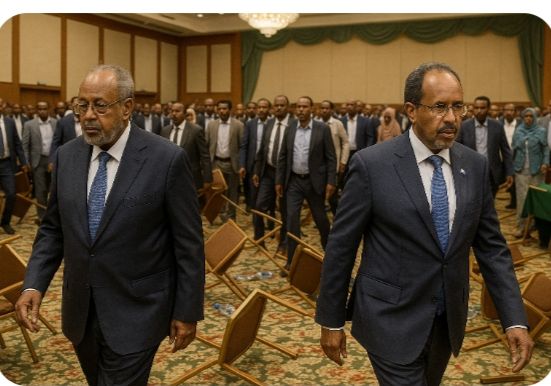

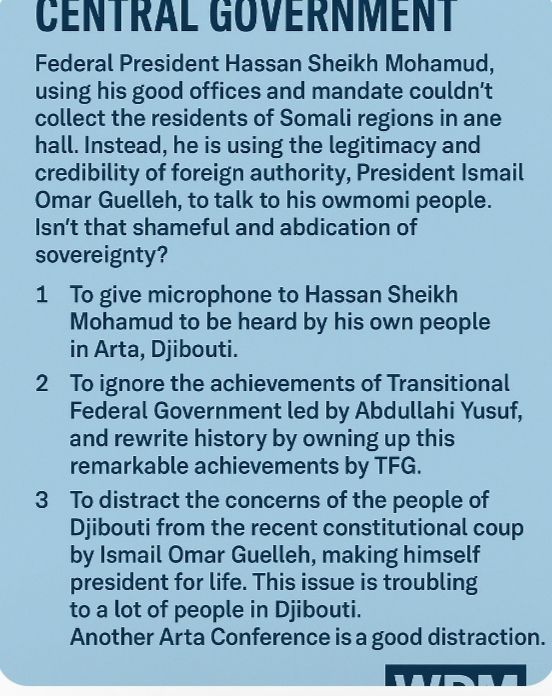
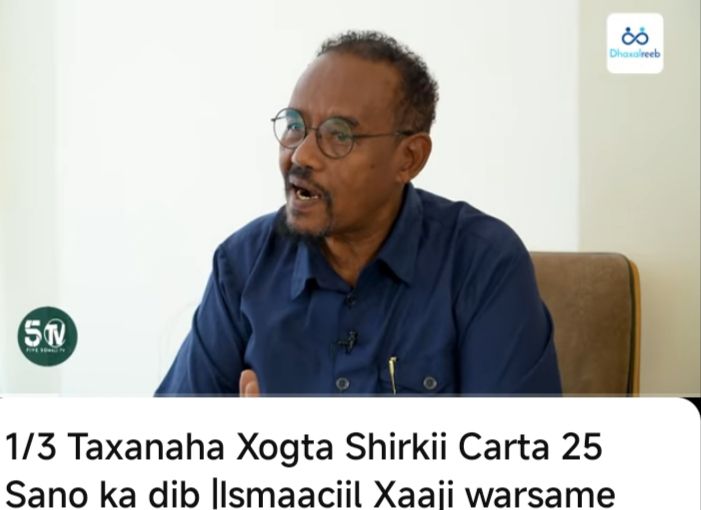
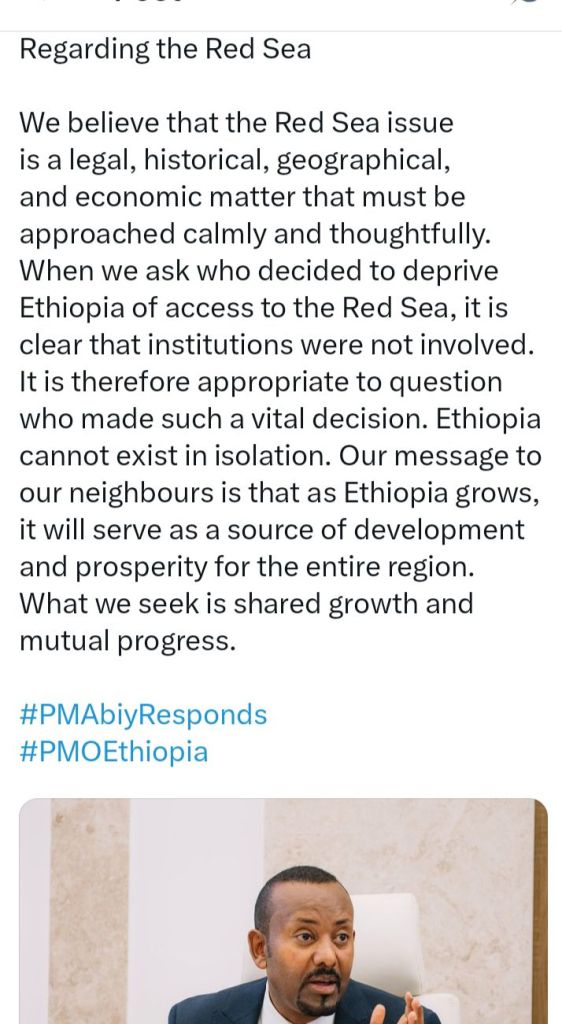
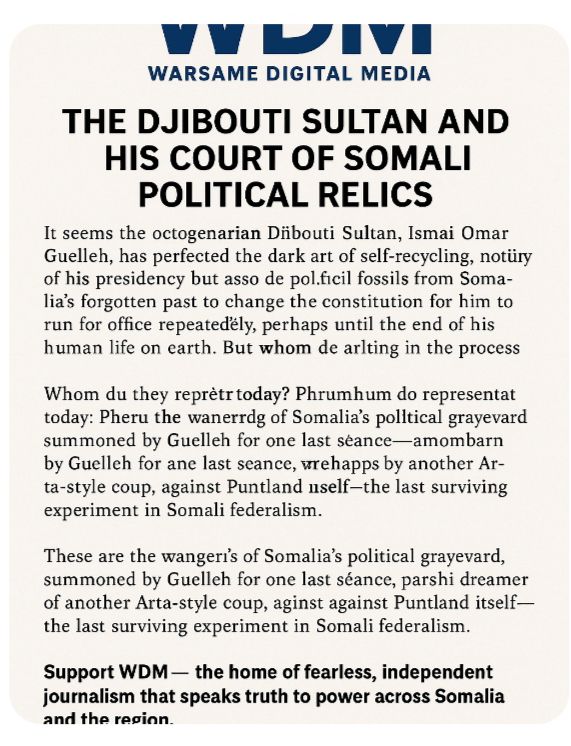
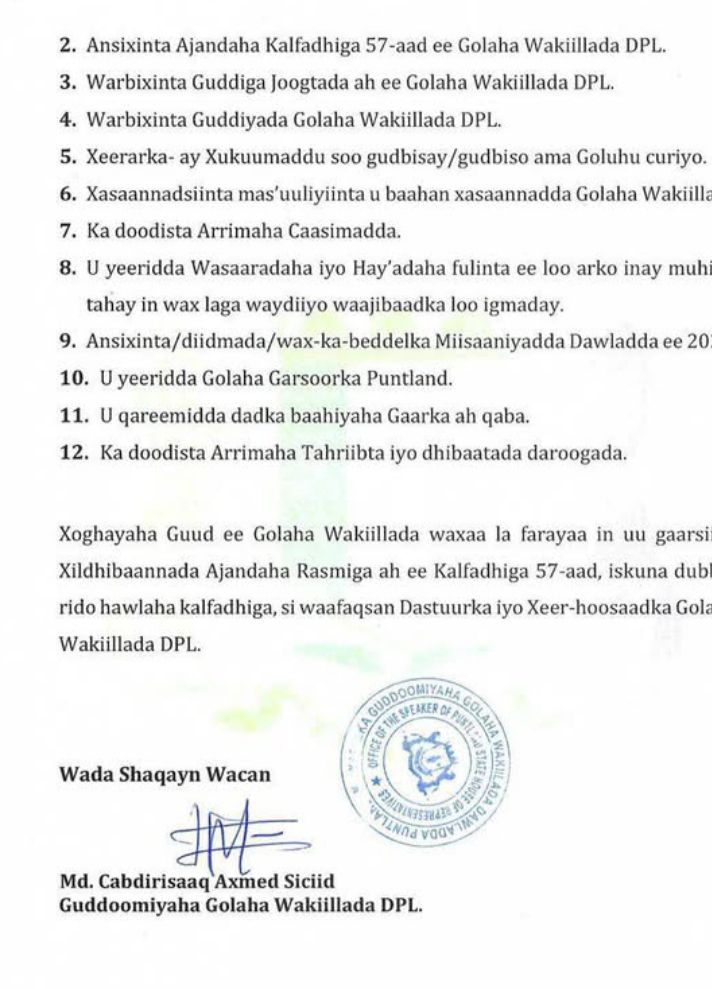
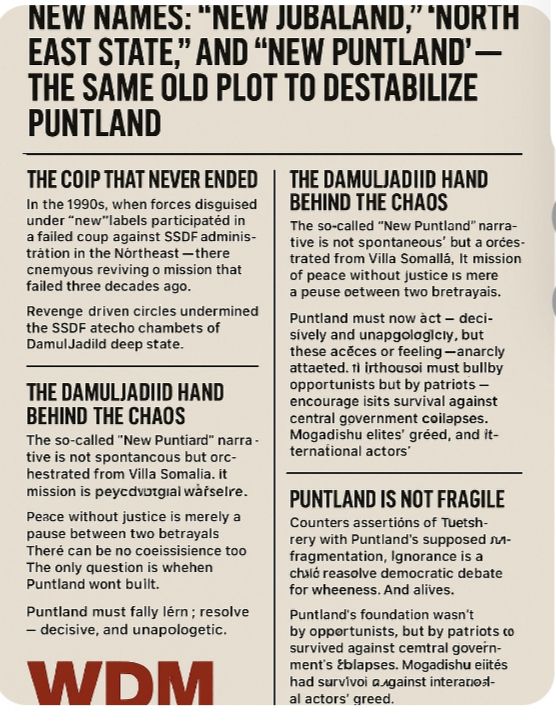
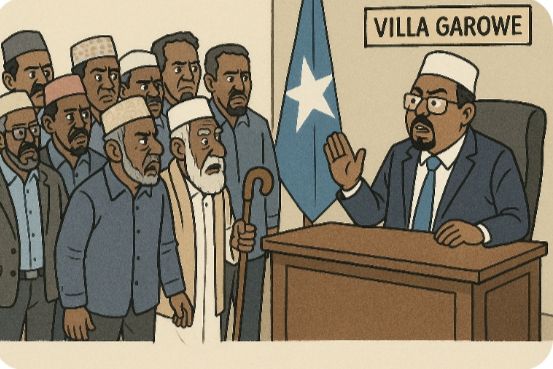
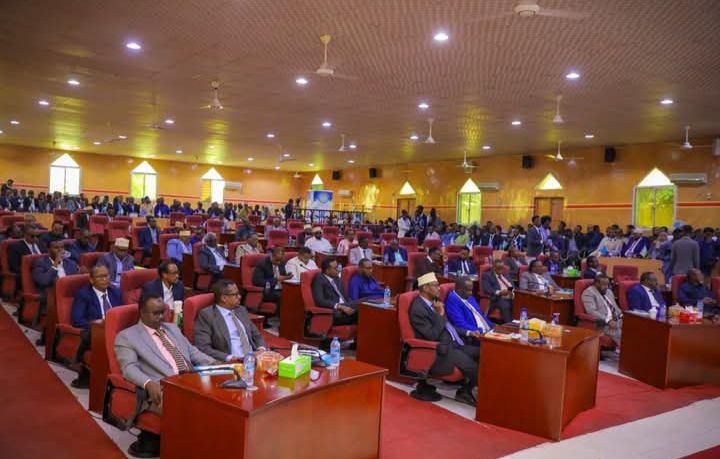


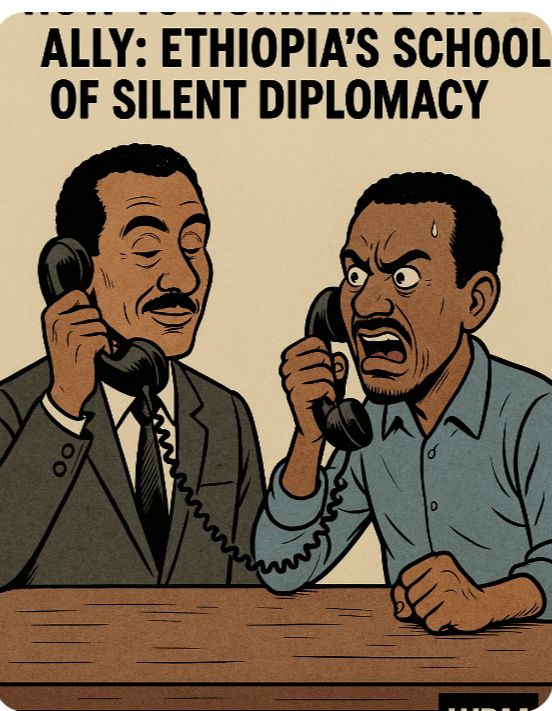
 Warsame Policy & Media Network (WAPMEN)
You must be logged in to post a comment.