
September 8, 2014
By Ismail H. Warsame
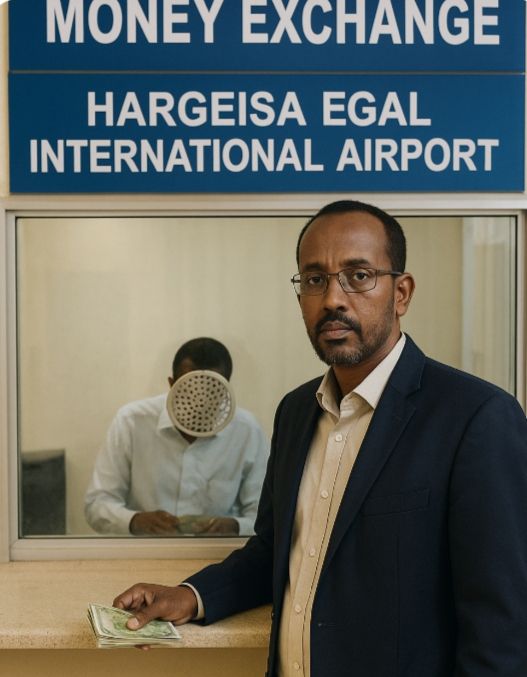
It was in April 2000, on the eve of the Arta Conference (May 2, 2000), when I transited through Egal International Airport in Hargeisa on my way to Bosaso, Puntland. I had flown in from London via Djibouti to visit my family. At the time, I was serving as Chief of Staff in the Puntland Presidency. Relations between Somaliland and Puntland were tense, and I was not at ease in the airport’s transit hall.
After two uneasy hours of waiting, I was relieved when boarding was announced for the small propeller plane to Bosaso. When I chose to pass through Hargeisa, I assumed—correctly, I thought—that no one would recognize me there. And even if they did, I trusted in the historical camaraderie once shared between the Somali Salvation Democratic Front (SSDF) and the Somali National Movement (SNM) against Siyad Barre’s dictatorship. In the back of my mind, I also hoped my maternal lineage—my grandmother, Ayeeyo Dhoofa, hailed from a dominant Isaaq clan—might shield me from any misfortune while transiting through Somaliland.
While waiting for my flight, I exchanged US dollars for Somaliland shillings. The sight of cash in my hands drew a stream of airport staff, each asking for shaxaad (handouts). When I offered them Somaliland shillings, they scoffed: “This is not real money. We want dollars. War ninyahow, dhabcaalsanidaa ma Majeertayn baa tahay?” (“Are you Majeertayn—how can you be so mean?”).
Onboard, I was seated next to a jovial businessman from Hargeisa, bound for Dubai via Bosaso. I will call him Dahir (not his real name). After casual introductions—where I kept my official position discreet—he suddenly asked me: “War nimankii Dhulbahante iiga warran?” (“Tell me about the Dhulbahante in Puntland.”).
Puzzled, I asked him to clarify. He explained that many Dhulbahante had left Somaliland because they were constantly stigmatized as Faqash. In gatherings, someone might casually mutter “War Faqash baa joogta” (“The Faqash are here”), forcing others to apologize profusely: “We didn’t mean you, cousin!” But the damage was done—the Dhulbahante felt alienated and unsafe.
Looking back, I doubt Dahir grasped the deeper reason why Dhulbahante and Warsangeli chose to co-found Puntland. It was not merely about insults; it was about survival in the absence of a functioning central government, and in the face of atrocities committed by both USC and SNM—atrocities denied to this day by their leaders. Denial of clan cleansing remains the greatest obstacle to reconciliation and rebuilding trust among Somali clans.
The Meaning of “Faqash”
Faqash became one of the most notorious codenames for human rights abuses in Somaliland’s northwest regions after the collapse of the Somali central state. Originally, northerners used it to describe conscripted soldiers from Somalia’s inter-river farming communities, imitating the sound of their marching boots. Under SNM, the word morphed into a weaponized label for Darood clan cleansing.
Prof. Lidwien Kapteijns, in her authoritative book Clan Cleansing in Somalia: The Ruinous Years of 1991–1992, details the codenames used during the civil war to legitimize mass violence: Looma-ooyaan (“No one sheds tears for them”), Lahaystayaal (“hostages”), Kacaan-diid (“anti-revolutionary”), Haraadi (“remnants of the old government”), among others. Each term stripped individuals of protection, marking them as fair game for abuse, dispossession, rape, and murder.
Targeting the Majeerteen
In Siyad Barre’s regime, labels like Kacaan-diid, Dib-u-socod, Daba-dhilif, and Haraadi were used primarily against the Majeerteen sub-clan of Darood. This was no accident—it was a deliberate political project. Barre recognized that the Majeerteen had the numbers, resources, history of self-governance, and leadership potential to challenge his absolute rule. From the first day of his coup, he sought to marginalize them, purge them from government, and turn the rest of Somalia’s clan system against them.
Once branded, a Majeerteen lost all rights of citizenship and became vulnerable to dispossession, abuse, or even the theft of his wife. Disturbingly, even Somalia’s educated class embraced Barre’s propaganda. To this day, any Majeerteen political ambition must confront that toxic legacy.
The “Mujaahidiin” That Became Mooryaan
Both SNM and USC called their militias Mujaahidiin (“holy fighters”). But when Siyad Barre fell on January 26, 1991, law and order collapsed. These “fighters” degenerated into Mooryaan—bandits who looted, raped, and massacred, particularly in Mogadishu, Gaalkacyo, Kismayo, Brava, and Baydhabo.
In their twisted hierarchy, rank was measured not by military discipline but by body count: tobanle (ten kills), kontonle (fifty kills), boqolle (a hundred kills). Many still roam Mogadishu, traumatized, unrehabilitated, and unfit for soldiering—yet celebrated by some as “pioneers of victory over Darood.”
Other Codenames of Horror
Looma-ooyaan: The unprotected, the abandoned—usually non-Hawiye individuals left in Mogadishu. If killed, no one would mourn them. This chilling mindset explains the fate of figures like singer Saado Ali Warsame and General Xayd.
Lahaystayaal: Minorities like the Reer Hamar and Bravanese, reduced to hostages, extorted for ransom, their women taken.
Dib-u-socod, Daba-dhilif, Haraadi: Political labels of dehumanization used to erase citizenship rights.
Prof. Kapteijns’ work remains the most meticulous study of this era, but even it cannot capture the full vocabulary of cruelty Somalis invented to justify barbarism.
The Unfinished Reckoning
The greatest tragedy is not only what happened during those years, but the continuing denial. Political elites who presided over clan cleansing still refuse to acknowledge it. Without truth-telling, reconciliation remains impossible. Without reconciliation, Somalia’s very survival as a nation is imperiled.
That, more than anything, is the looming tragedy still waiting for us.
Let us pray
Ismail H. Warsame
WardheerNews Contributor
ismailwarsame@gmail.com
@ismailwarsame

 Warsame Policy & Media Network (WAPMEN)
You must be logged in to post a comment.